55.1 F
Davis

Davis, California

Saturday, December 20, 2025
Home Blog Page 36

Best Egghead: Bookhead

It might not be finals week yet, but we’re still going to praise this beloved statue 


By SAIRAKSHA THIRUNAVUKKARASU — campus@theaggie.org


In an egg-straordinary race against four formidable opponents, the Bookhead sculpture has been voted the Best Egghead on campus. The sculpture depicts an egg with a humanlike face and its nose buried in a book, imitating a look similar to that of many students during finals season.

Located outside of the Shields Library front entrance, Bookhead has served as a symbol of academia, creativity and even good luck to many students on campus over the years. Students can be seen rubbing (or even kissing) the Bookhead in hopes of performing well on their exams.

Part of a series of five egghead installations, Bookhead was the first egghead to be installed on campus in 1991. The other eggheads include Eye on Mrak (also known as Fatal Laff), See No Evil/Hear No Evil, Yin & Yang and Stargazer.

The late artist behind the eggheads, UC Davis Professor Robert Arneson, made Bookhead the only one of the set painted in light blue as opposed to white so it would match the exterior of Shields Library.

After Bookhead’s installation, Arneson wrote in a letter to New York art dealers that “it’s ready for students to enrich it.” Since then, Bookhead and the other eggheads have served as sites of celebration and protests alike.

The eggheads are not only unique pieces of contemporary art but are also a deviation from Arneson’s usual style which largely involved ceramic sculptures, much of which were self-portraits. He radicalized the view on ceramics as a medium for tools into a medium for art and sculpture.

Though they don’t utilize the same ceramic medium which cemented much of Arneson’s legacy as an artist, some believe the eggheads to be a product of how Arneson viewed himself and his purpose as a professor. This is reflected in the way the eggheads were installed as ground-level fixtures instead of on a pedestal, as initial sketches depicted. By placing the eggheads in areas easily accessible to students, he made it possible for them to connect with the works by observing them up close or touching them.

The sculptures have become objects of pride for Davis, as students, faculty and alumni alike have used the eggheads as creative photo opportunities to mark memorable moments in their lives. Having marked the 30-year anniversary of the eggheads in 2024, Bookhead remains one of the most shell-sational eggheads through the decades. One can say it is indeed all it’s cracked up to be.
ASUCD Senate funds pre-health event by suspending bylaw at April 17 meeting

The bylaw suspension was done to bypass depleted funding from the Club FInance Council, though not without some debate


By JORDAN POLTORAK — campus@theaggie.org


The Senate passed Senate Bill (SB) #73 on April 17, authorizing over $500 to be allocated for an ASUCD and Middle Eastern North African Pre-Health Club Medical College Admission Test (MCAT) Success Night, after suspending a bylaw and holding a debate over the issue.

The main concern against funding the event was that the role of funding Registered Student Organizations (RSOs) is that of the Club Finance Council (CFC). The CFC is an ASUCD and Pepsi-funded program that allocates up to $3,000 a year to fund individual RSOs. As of spring quarter, they have depleted their $170,000 budget.

“I know that CFC is out of money, but this seems like ASUCD funding an event that should be funded by CFC,” Senator Ezra Rubin said. “This seems to be in violation of the bylaws.” 

Transfer Student Representative Safa Mohammad responded to Rubin by pointing out that senators often collaborate with RSOs.

 “This seems pretty standard for senators to do collaborations with RSOs,” Mohammad said. “The hope is that when [Senator Jenna Younes] tells us about these things, we bring more people and further the collaboration. This is something we have been doing all year.”

Rubin responded and said he was worried what this would mean for the future.

“I am worried that this sort of thing creates a precedent, where RSOs that have a connection to the Senate table have more of an advantage in getting funding for their events. Whereas, we should be providing funding on a more equal level to RSOs.”

“In the event that the maximum amount of funding from [CFC] has been reached, a Registered Student Organization may seek from the ASUCD Senate or other entity additional funds or co-sponsorship with a letter of support from the Club Finance Council Board,” ASUCD Bylaw 2903B reads. 

Due to the timing of the event, planned for April 24, many senators agreed that it should be voted on that night. Senator Dhilena Wickramasinghe set a motion to suspend the bylaw until the next Senate meeting. Rubin objected to this. 

After a vote, the table decided to suspend Bylaw 2903B in order to pass SB#73, over Rubin’s objection.

Senate Resolution (SR) #10, upholding students’ right to free speech regardless of political affiliation following the violence that occurred at the Turning Point USA event earlier this month, was tabled to be voted on the following week.

SR#10 had previously been on the meeting’s agenda, however Gender and Sexuality Commission Chair Tristen Dillard asked that they review the legislation before the Senate votes. 

By a vote of 5-5-3, yes-no-abstain, the legislation was tabled until the following week for review by several commissions.

Constitutional Amendment #93, which was previously tabled until fall quarter 2025, was also passed unanimously. The amendment would change the selection process for the ASUCD Student Advocate from being an elected position to an appointed one.

The Senate also passed SB#71, which would provide an incentives budget to encourage students to vote in ASUCD elections. 


Other Senate business

Unitrans General Manager Jeff Flynn delivered his unit’s quarterly report, noting that with over 22,000 daily riders and 175 active drivers, the service is back to where its numbers were pre-pandemic. 

“Phase One of our electric infrastructure plan is done,” Flynn said. “We have 14 charging stations for 14 electric buses. It was a $20 million project and will be completed later this month.”

Flynn also said that Phase Two of the plan has been placed “on hold” because it relies entirely on federal funding. 

“The current [presidential] administration is currently reviewing those funds,” Flynn said.

Ava Amos, vice president for the Disability Justice Committee and a fourth-year human development major, delivered the Office of Disability Justice and Advocacy report. Amos said that the committee is collaborating with the Student Disability Center to connect students to their resources. They have also put out a survey, so that students can express concerns about accessibility and inclusion on UC Davis’ campus. 

Later, Ramya Pondicherry, a fourth-year psychology major, was confirmed as Planet Her chair. She spoke about her plans for this year’s event.

“There were a lot of organizations that empower women, but there was not necessarily a focus on mental health,” Pondicherry said. “It’s so important to have a safe space for women to talk about the issues that are affecting them physically and mentally.” 

During open forum, Internal Vice President Aaminah Mohammad suggested interested senators should attend meetings with CFC in order to avoid the suspension of Bylaw 2903B in the future.

 “Circling back to the conversation about funding and RSOs, we didn’t have time to hash out a procedure with CFC, to allow that to be put into effect,” Mohammad said. “If any senators are interested in attending meetings with CFC, please let me know and I can add you to the meetings that are being set up with the CFC Grants Manager.”

The meeting was called to order at 6:15 p.m. and adjourned at 7:53 p.m. 

Written by: Jordan Poltorakcampus@theaggie.org

Volt Coffee, Tea & Taps hosts morning DJ event in collaboration with DRC Creatives

DJ Colin, Gavin and ENTO played a surprise set for customers


By RORY CONLON — city@theaggie.org


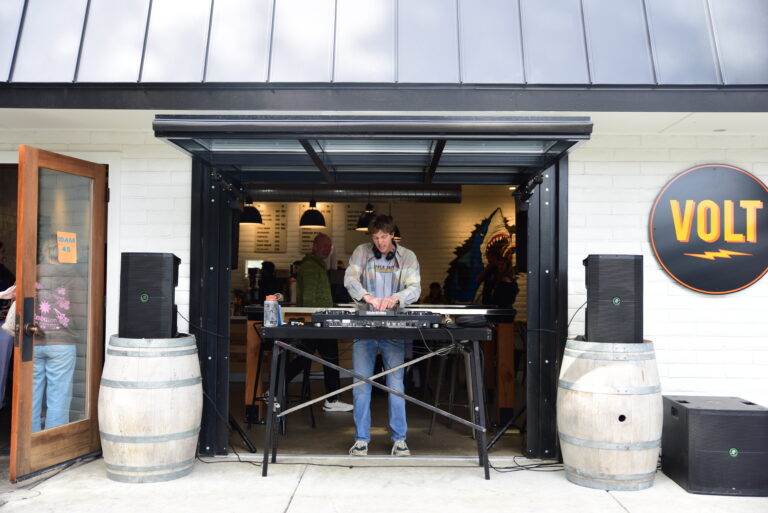
Volt Coffee, Tea & Taps, a shop located on Olive Drive, hosted a surprise DJ set in collaboration with Davis Rave Company (DRC) Creatives on April 7.

Caden Velasquez, the founder and chief executive officer of DRC Creatives, started the organization in 2022 to give a platform to artists in the Davis community. He said this is DRC’s third time hosting a live music event in collaboration with Volt.

“It’s this new initiative where we’re taking a unique approach towards music and the nightlife scene,” Velasquez said. “I love this event so much because when it ends around 2:30 [p.m.], you’ve met amazing people, you’ve danced and you’ve had a great start to your day.”

Mikaela Bailey, a fourth-year environmental science and management major, is a member of the promoter team for DRC Creatives. She said holding daytime events helps DJs reach a broader audience.

“[Electronic dance music] (EDM) nightlife comes with a bit of stigma,” Bailey said. “People have crazy ideas about what it’s gonna look like. Bringing it into the morning gives people the opportunity to dip their toes [in], figure out if they like it and give them a chance to experience [EDM through] a different lens.”

The event featured three artists: DJ Colin, Gavin and ENTO. DJ Colin, whose real name is Josh Ansel, said he incorporated a mix of music he’s been listening to over the last couple of months into his set.

“I started with some more hyperpop, electronic music, like Rebecca Black and Mura Masa,” Ansel said. “My heart is always with soul and groove funk music, so I put that in the middle to mellow it back out. Then, there was a stint where I listened exclusively to hard garage music and techy sort of sounds, and so I put that in at the end.”

This was the first time Ansel played a live set for DRC Creatives after participating in a YouTube series the organization recorded back in January. He also works with other Davis organizations, like Red Velvet Productions and Eclectic Collective, to play live gigs.

Ansel said he prefers making in-person connections as opposed to promoting himself online.

“It’s hard to get your name out there that way because everything is so saturated,” Ansel said. “[Social media] is accessible to a lot of people, which is really awesome, but I think it makes it hard to elbow your way through. So, I’m trying to do it the word-of-mouth way and see how it goes.”

Jacob Weller, a third-year English major, attended the event after hearing about it on Instagram. He said that, as a DJ himself, finding a community has been invaluable to him.

“I’m a DJ for the Sody Collective, and we just got funded last week,” Weller said. “We’re going to be doing our first-ever thing on Picnic Day.”

Weller said the most rewarding part of being a DJ is conceptualizing a show and engaging with live audiences.

“You feel the crowd, you know what the crowd is wanting and you fill that gap,” Weller said. “That is the fulfilling part of DJing — it’s so awesome. On top of that, there’s also a broad concept that a lot of DJs will have for what they’re trying to put out there, and when they get it exactly right, nothing feels better.”


Written By: Rory Conlon — city@theaggie.org

Spring 2025 ASUCD endorsements: consider the following

The Editorial Board encourages you to consider accountability, diversity and fiscal responsibility when casting your ballot


By THE EDITORIAL BOARD


From April 21 to 25, the ASUCD spring elections are open for students to cast their ballots for six senators, one executive ticket and three measures, as well as a number of other elected officials. The California Aggie’s Editorial Board encourages you to exercise your right to vote this election season, as the ASUCD directly affects your day-to-day life as well as the use of your student fees — you deserve to have a say in how your money is being spent. 

The Editorial Board invited all candidates for an interview and endorsed those we believe will best represent the needs and interests of the student body. Regardless of who you choose on your ballot, we hope you vote this election season. Please consider the following: 


While ASUCD elections use a ranked-choice system, the endorsed candidates below are not listed in order of preference. The Editorial Board has ranked Senate candidates alphabetically for purposes of this article.


Presidential Ticket: Aaminah Mohammad & Nanki Kaur (Unite slate)

Aaminah Mohammad, a third-year biopsychology and international relations double major, and Nanki Kaur, a third-year biomedical engineering major, are running for president and internal vice president positions of the ASUCD, respectively, as part of the Unite slate. This presidential ticket’s platforms are instating comprehensive wellness, affordability and accessibility programs, expanding healthcare outreach and equity and ensuring the student body has access to resources. Additionally, this ticket is focusing on outreach to STEM students and their representation within the administration. Mohammad and Kaur have actionable plans — such as extending free rides to off-campus students with disabilities and creating funding pathways for non-identity-based registered student organizations (RSOs). In addition to these, this presidential ticket has plans to utilize legal resources for undocumented students, expand and revamp study spaces and streamline the hiring process for ASUCD positions. With Mohammad’s experience as internal vice president and Kaur’s experience as a senator, as well as their understanding of the ASUCD’s financial outlook and potential budget cuts, the Editorial Board believes this presidential ticket to be in the best interest of ASUCD and the students of UC Davis.


External Affairs Vice President: Janani Sundaram (Bitches slate)

Janani Sundaram is a third-year political science — public service major with a minor in public health. Some of her primary campaign focuses include empowering students, creating equity in university policy and protecting the rights of students to protest. Additionally, Sundaram is a part of the Bitches slate, which prioritizes safety, transparency and equity. As an out-of-state student, Sundaram has developed a diverse and understanding perspective. She is also committed to bringing more transparency and accountability to the ASUCD. The Editorial Board believes Sundaram is earnest about her advocacy efforts and equally committed to bringing her important sense of compassion to the table. We believe Sundaram would excel in the role of external affairs vice president.


Student Advocate: Inbar Schwartz (Independent)

A third-year economics and international relations double major, Inbar Schwartz has been with the Student Advocate Office (SAO) for two years. She has served as a case advisor and head of staff and currently serves as the vice student advocate, ensuring that students receive proper guidance in their dealings with the Office of Student Support and Judicial Affairs. Her dedication to students and advocating for their fair representation and defense was clear in her interview, as was her knowledge of the role and the duties therein. Though the race for student advocate is unopposed, the Editorial Board has chosen to endorse Schwartz as a show of recognition of her hard work at SAO and her longtime commitment to student success.


International Student Representative: Robi Castaneda (Bitches slate)

Robi Castaneda, a third-year political science and music double major, is clearly passionate about protecting international students. Castaneda seeks to expand legal resources for students navigating the visa and immigration process and has called for the creation of a fund to help cover related paperwork costs. His well-rounded and thorough approach to having the Office of the International Student Representative meet international students where they are, and on the issues most pressing to them, impressed the Editorial Board. His experience within ASUCD as an external affairs commissioner and his assertion that the student government should provide all of the support it can to its international students to ensure they can focus on their academic success also helped his campaign stand out.


Transfer Student Representative: Kelly Zamudio (Empoderar slate)

Kelly Zamudio is a third-year political science — public service and sociology double major, as well as a member of the Empoderar slate. In her interview, Kelly displayed a clear understanding of struggles that transfer students often go through during their collegiate transition. She also shared unwavering support for the transfer student community and their success, readily responding to questions with confidence and resolve. Zamudio emphasized pillars of community development, professional and academic growth and personal wellness that she plans to implement into creating inclusive spaces in collaboration with RSOs for students. An element of her interview that stood out in particular was her idea to ensure that there is transfer student representation on every ASUCD commission to ensure that their perspectives are properly represented. Zamudio’s clear-cut plans for the role, knowledge of the non-traditional-student experience and plans to advocate for transfer students across the Davis campus made her a very strong candidate — one that the Editorial Board has gladly decided to endorse. 


Senator: Tianneh G. Bonardi (Empoderar slate)

Tianneh G. Bonardi is a first-generation, second-year political science and sociology double major, with an emphasis in law and society. Some of her campaign priorities include transparency and accountability, professionalism and collaboration and culture. She is also a proud supporter of Senate Resolution #7, which reaffirms protections for undocumented students. Bonardi is part of the Empoderar slate whose core values overlap with Bonardi’s campaign priorities. As a former interim senator, Bonardi’s understanding of the legislative process gives her a unique headstart as a candidate running for Senate. The Editorial Board was impressed with Bonardi’s commitment to inclusivity and increased cultural representation, and we believe she will thrive as a senator.


Senator: Hilda Cabello-Garcia (Independent)

As a first-generation student, Hilda Cabello-Garcia, a first-year political science major, is focusing her campaign on student well-being: aiming to ensure that all students, including low-income and mixed-status students, are provided with access to wellness and professional development services. Additionally, part of her campaign focuses on safety for the undocumented student population on campus. She is hoping to leverage her experience and interpersonal skills to make a positive impact on the student community, as well as looking to address injustice for students facing housing insecurity and environmental justice issues. The Editorial Board was impressed by Cabello-Garcia’s professionalism and vision, and we believe she will be both influential and successful as an ASUCD Senator. 


Senator: Siena Dill-Cruz (Bitches slate)

Siena Dill-Cruz, a second-year political science and cinema and digital media double major, is a strong candidate for the ASUCD Senate. Representing the Bitches slate, her main campaign priorities include women’s health and safety, basic needs and financial accessibility, career development and student-led sustainability. Dill-Cruz’s plans for the position include Arboretum cleanup walks, campuswide clothing swaps and reducing single-use plastics in on-campus food locations. With her extensive experience working within ASUCD, such as Aggie Studios and the Internal Affairs Commission, Dill-Cruz understands the inner workings of the Association. The Editorial Board has identified Dill-Cruz as a strong candidate for this year’s election cycle with her innovative ideas and ample experience in leadership roles. 


Senator: Pattarin Khajornchaikul (Unite slate)

Pattarin Khajornchaikul is a member of the Unite slate, as well as a first-year economics and theater double major. Khajornchaikul currently serves as ASUCD associate vice president for internal communications and expressed that a large priority for her is to expedite the process of onboarding for student employees. Her prior experience working as a leader and organizer, including working for local and state politics, contributed to our confidence in her readiness for  the role. Khajornchaikul’s platform emphasizes the necessity of basic needs for students; She hopes to help UC Davis expand the definition of basic needs to help students thrive, not just survive. This is particularly in regard to labor, which Khajornchaikul asserted should be considered a basic need in addition to necessities like food, transportation and housing. She also expressed interest in the quantitative element of the ASUCD Senate, backed up by experience working with and understanding budgets. Khajornchaikul also hopes to secure grants for RSOs, aiming to connect ASUCD to the student body by ensuring that students have the opportunity and the space to get involved. Her comfortability and knowledge of the behind-the-scenes operations of ASUCD impressed the Editorial Board, and we are confident that Khajornchaikul would excel in this position. 


Senator: Aubri Lee (Risers slate)

Aubri Lee, a second-year environmental engineering major, is running for senator as part of the Risers slate). Her campaign focuses include raising awareness about gun violence, leading environmentally conscious events and implementing professional practice exams for careers in fields like medicine, law and engineering. Lee currently is an external affairs commissioner and as a member of the rowing team, she is also a student athlete. As a STEM major, Lee recognizes the lack of STEM representation in the Senate and wants to improve upon these issues. With her candidacy, Lee wants to encourage fellow STEM students to make their voices heard and feel inspired to follow in her footsteps. The Editorial Board appreciates Lee’s assertion that ASUCD is not a for-profit entity and its primary goal should be to serve the students. We feel that her strong work ethic and thoughtful plans for the senator position will allow her to excel in this role and positively benefit the student body. 


Senator: Luis Leonardo Garcia (Empoderar slate)

Luis Leonardo Garcia has already proven himself a committed and capable student leader. As an interim senator in fall quarter 2024, he was consistently one of the most productive members of the Senate table and hosted the first Senate-sponsored event of the academic year. A second-year political science and communication double major, Garcia is running on the Empoderar slate to increase Hispanic representation within the ASUCD alongside fellow endorsed candidate Tianneh G. Bonardi. His recognition of the need for greater diversity amongst student leaders, and for the student government to reflect the undergraduates it represents, remains an increasingly important issue in this political landscape. The Editorial Board wholeheartedly endorses Luis Leonardo Garcia to return to the role he has proven uniquely adept at.


Vote “Yes” on ASUCD Constitutional Amendment #94

The Editorial Board encourages the student body to vote “yes” on Constitutional Amendment #94 to ensure that when there is a need for interim senators and other officeholders, they are held to democratic standards and their appointment process is transparent. 

This proposed amendment, introduced by Senator Ezra Rubin and co-sponsored by Senator Dhilena Wickramasinghe, provides much-needed reform to the appointment process for interim elected officials in the ASUCD. For those who may not know, the ASUCD Senate is composed of 12 elected senators and two elected representatives who oversee the needs of the student body and the ASUCD’s over-20-million-dollar operational budget. This responsibility necessitates that the Senate is democratically elected and held accountable by those who voted them into office. 

As it stands now, when vacancies arise outside of the typical election season (a senator steps down, graduates early or leaves offices early), interim senators are appointed by the ASUCD president. This amendment would make the appointment process of interim senators more democratic and decentralize executive powers. During fall quarter, five interim senators were appointed by the ASUCD president, meaning that nearly half of the Senate last fall was not elected by the student body. Constitutional Amendment #94 would have the Senate approve the appointment of interim senators, allowing for a public interview process where students can ask questions and share their opinions.


Vote “Yes” on ASUCD Constitutional Amendment #95 

ASUCD Constitutional Amendment #95 ensures there are stricter repercussions in place if the student body’s elected officials are unable to meet training and volunteer requirements. The Editorial Board encourages you to vote “yes” to ensure accountability for those in the ASUCD. 

This proposed amendment, introduced by Internal Affairs Commission Chair Amanda Clark and Senator Siddharth Jasthi, would incentivize senators to volunteer with units or committees to foster a stronger connection between entities within ASUCD. The amendment will also encourage senators to attend mandatory training seminars once sworn into office. While this is already mandated by ASUCD Bylaws, there are no clear enforcement mechanisms in place to incentivize participation. If passed, this amendment ensures that if a representative fails to meet their training requirements, their threshold for impeachment decreases by two points. If a representative fails to meet two volunteer hours with units or committees, their threshold for impeachment would decrease by one point.

Overall, the Editorial Board believes this amendment to be beneficial for senator engagement and the development of institutional knowledge. 


Our Thoughts on Transportation Equity Fee 

The Transportation Equity Fee proposes an additional five dollars per quarter (excluding summer session) for each undergraduate student. The Editorial Board advises you to look carefully at each of the proposed outcomes that come with voting “yes” or “no” to make the decision that best serves the student body as well as yourself. 

The UC Davis Transportation Services regulates parking policies as well as provides general transportation needs for the campus community. Although their main revenue comes from parking fees, the organization has been working to reduce reliance on parking — a task which the fee referendum states could lead to lack of sustained funding for the Transportation Services in the future. These changes, however, have led to raised parking rates that adversely affect people that have no choice but to commute to campus. 

If approved, the Transportation Equity Fee will provide a steady revenue stream for transportation demand management, bicycle safety programs and a transportation grant toward communities that are negatively impacted by high parking rates. However, the Editorial Board has not extended a full endorsement due to lack of clarity regarding the allocation of funds to grant programs and maintenance in the fee referendum’s language. While we understand that there are financial issues facing both Transportation Services and commuting students, we are unable to offer a full endorsement or rejection at this time. 

In order for this referendum to be passed, a voter turnout of at least 20% of the undergraduate student body is needed and 60% voting “yes.”

Editor’s Note: A previous version of this editorial, which ran in the April 24 print edition, incorrectly named the ASUCD entities which Senate candidate Siena Dill-Cruz has worked for. They are Aggie Studios and the Internal Affairs Commission, not KDVS and the CoHo.

Written by: The Editorial Board

2025 Spring Elections: Meet the Candidates

Meet the students running to serve the UC Davis community 


By AALIYAH ESPAÑOL-RIVAS — campus@theaggie.org


This ASUCD spring election cycle, there are two executive tickets, 12 candidates running for Senate, three for international student representative, three for transfer student representative, two for external affairs vice president and one for student advocate. Elections will be open from Monday, April 21 at 8 a.m. to Friday, April 25 at 8 p.m. Students can vote online at elections.ucdavis.edu.


Executive Ticket:


Amrita Julka and Dhilena Wickramasinghe (Bitches slate)


Amrita Julka: 

Second-year political science and human development double major 


Julka is running for ASUCD President alongside fellow Senator Dhilena Wickramasinghe. Julka is running with the Bitches slate, recognizing the marginalized communities on campus and the backlash they face to make their voices heard. The slate aims to give power to those silenced. Her priorities are safety, equity and transparency, which she aims to fulfill through the protection of students with legal resources and providing access to basic needs. As a senator, Julka believes there needs to be an expansion for gender and sexuality within the student population and basic needs. She plans on developing a stronger sexual assault prevention program, a comprehensive Harassment and Discrimination Assistance Prevention Program reform, increasing accessibility to free sexual health and menstrual products across campus and reworking the ASUCD budget website. Julka promises to unapologetically advocate for what is right regardless of any pushback from university administration.

“We are here to wholeheartedly support students and support what they want. We will never shy away from doing so.”


Dhilena Wickramasinghe: 

Third-year sociology major 


Wickramasinghe is running for ASUCD Internal Vice President (IVP) with the Bitches slate alongside Julka. Wickramsinghe currently serves as an ASUCD Senator and has advocated for marginalized communities while pushing for ethical spending and transparency within ASUCD. She aims to do this by reworking the ASUCD’s budget website, breaking down line by line where money is going to and offering students a sense of accountability regarding their student fees. She previously served as the pro tempore, presiding over Senate meetings and communicating regularly with the chancellor and vice chancellor. She was also a DJ for KDVS, worked at the Coffee House and has served as an ASUCD committee member, giving her a diverse perspective of the internal units of the ASUCD. Wickramasinghe wants to emphasize that student elected officials represent the interests of the students, with or without administration collaboration.

“These are elected positions by students, so we are here to represent student voices and their interests, not the [administration’s] interests.”


Aaminah Mohammad and Nanki Kaur (Unite slate)


Aaminah Mohammad: 

Third-year international relations and biopsychology double major 


Mohammad is running for ASUCD President, alongside current ASUCD Senator Nanki Kaur on the Unite slate. She currently serves as the IVP, spearheading different initiatives to improve student life, reforming hiring practices and ASUCD award funding programs. She believes that it is the ASUCD’s No. 1 priority to bridge any gaps between campus resources and what students need. Throughout her term, she has identified three things that have been overlooked: connecting underrepresented students to campus resources, expanding and improving basic needs and expanding student engagement. She hopes to reach these goals while continuing to advocate projects she started this academic year. These include continuing programs like Aggie Aid, the satellite pantries and emergency housing taskers. In addition, she wants to work on installing nap pods on campus and ensuring menstrual products are consistently stocked. Lastly, she plans on creating an intake program with a community clinic for students who are uninsured or undocumented, along with a health equity fund.

“I have a good understanding of how ASUCD works and what platforms are actually feasible and what can actually be done. Everything we’re running on is realistic and things we can actually accomplish and deliver.”


Nanki Kaur: 

Third-year biomedical engineering major 


Kaur is running for IVP, alongside current officeholder Aaminah Mohammad under the Unite slate. Kaur currently serves as an ASUCD Senator and hopes to provide outreach to students and registered student organizations (RSOs) to provide them with ASUCD resources. She believes her involvement in the Senate will provide valuable perspective as an IVP, ensuring transparent and consistent communication. She aims to expand and reimagine study spaces, adding murals and wellness resources. In addition, she hopes to bring together STEM students and the ASUCD. Kaur is a member of many RSOs at UC Davis and hopes to bring those perspectives to the table.

“I can bring both the perspective of a Senator and the perspectives from my community involvement to the IVP role. I bring a diverse perspective to this role and know what it takes to manage the Senate efficiently to serve students.”


International Student Representative (ISR):


Robi Castaneda (Bitches slate): 

Third-year political science and music double major


Castaneda is running with the Bitches slate because his priorities align with the campaign’s focus on safety, equity and transparency. Castaneda hopes to expand immigration law services for international students, as well as to create a micro loan program for those who may need help paying for visa processing fees or other paperwork, in addition to funds for legal consultations. Castaneda also plans on creating an emergency legal task force to provide a strong response team to any student facing sudden legal challenges given recent political developments. Castaneda currently serves as an external affairs commissioner, working to expand resources with the Know Your Rights initiative. He hopes to also increase communication with the Academic Affairs Commission to figure out a policy regarding the usage of language-translating websites being flagged as plagiarism. Moreover, he seeks to have “language hours” where native speakers and second-generation students can converse in a specified language to teach one another. 

The last thing international students should have to worry about is the ability to continue their studies. My priority is to ensure students can pursue an education without fear of repercussions.”


Alparslan Ege Erdogan (Empoderar slate): 

Second-year aerospace engineering major 


Erdogan is running with the Empoderar slate, because he wants to fight to bring forth transparency and accountability to the Office of the ISR and ASUCD. Erdogan served as exhibits director for Picnic Day 2025, gaining experience organizing events and collaborating with others. He aspires to support international students in multiple ways, including: representation for international students at university Cost of Attendance meetings, an airport shuttle during finals week, ASUCD international student scholarships and a 24/7 international student hotline. He aims to do this while maintaining clear communication with international students to find out what issues they face to create solutions. 

“I will be bringing engineering solutions to the problems international students face, with real agendas and doable promises. We’re not promising tomorrow, we’re promising today.” 


Darab Moazzam (Unite slate): 

Second-year computer science major


Moazzam is running with the Unite slate because he shares its common values, focused on connecting students with necessary resources. Moazzam lived around the world growing up, moving with his father who served in the United Nations, and remains committed to considering international perspectives. He seeks to create a stronger, inclusive and more accessible campus for international students. Moazzam aims to do this by directly speaking to students about their struggles through office hours and creating follow-up seminars for first-years to tackle issues that may arise within one’s first year on campus. He aims to advocate for international students securing the support they need to succeed. 

“I want to be able to connect with each individual international student to learn what issues they face so I can connect them to the resources they need. Every experience is unique.” 


Transfer Student Representative (TSR):


Saihaj Kang (Bitches slate): 

Third-year political science major 


Kang is running with the Bitches slate because it acknowledges the extra mile women of color have to go through to be heard and seeks to help lift the barriers underrepresented communities face on campus. She decided to run after her experience as a third-year transfer student, afraid to ask for help since she was older and scared to admit that she was confused. To combat this, she hopes to ease the transfer student experience through pre-existing ASUCD programs. She plans on doing this through implementing additional transfer advising, emphasizing the accessibility of resources and pushing for more academic and social events. Kang previously served as a senator and school delegate at her community college and hopes to collaborate with transfer students at UC Davis.

“It’s easy to fall behind academically and socially as a transfer student, so making sure there is an easier transition into the Davis environment is crucial to make [them] feel like they belong.”


Imani Nur (Unite slate):

Third-year political science and English double major 


Nur is running with the Unite slate because of its diverse backgrounds and their goal of connecting with RSOs. She aims to ease the overwhelming rush for transfer students, providing basic needs and other help for transfer students to build a stronger community. Nur was previously involved in the Muslim Student Association and a pre-law society at her community college, driving her to become more involved in student government. She understands how stressful it is for transfer students to attend larger institutions and wants to aid in this transition to solidify a foundation for students to feel less alienated in their journey at UC Davis.

“I just want to create and make connections with as many people as I can, finding the similarities between all of us as students, both transfers and non-transfers to unite us together.” 


Kelly Zamudio (Empoderar slate): 

Third-year political science public service and sociology double major


Zamudio is running with the Empoderar slate because she believes in the need for representation of Latinx and Hispanic students within the ASUCD. As a first-generation transfer student, she understands how difficult it is for others like her to integrate into the UC Davis community. At her community college, she was the vice president of student life. To support students on their path, she aims to help in three ways: community development, professional and academic growth and personal wellness. She plans on creating inclusive spaces for transfer students through events and collaboration with RSOs. To foster professional and academic growth, she wants to offer workshops to help students get involved with research, apply for graduate school and learn to connect professors. She also hopes to create a program that will give transfer students the opportunity to graduate with honors and expand counseling services. Additionally, she also wants to ensure there is transfer student representation on every ASUCD commission to ensure their perspectives are represented. 

“I want to focus on all the students that are labeled non-traditional and really break that stigma to emphasize that we are all UC Davis students, and all our journeys matter.”


External Affairs Vice President:


Zack Dollins (Independent): 

First-year political science major 


Dollins currently serves as an ASUCD Senator, having been elected in fall 2024, but seeks to be an advocate on a broader scale through the UC Student Association (UCSA). He hopes to advocate for state and federal policies that currently affect the lives of students on campus. He plans to fight for the freedom of speech for all students, wants to increase affordable housing for students and advocate for the environment. During his time as a senator, he has sponsored  increasing funding for The Pantry by $7,000, a textbook donation drive and is currently working on multiple projects. He seeks to provide prepaid laundry cards for students in need and a resolution that asks the administration to support and fund the Botanical Conservatory. Dollins is also the founder of the Kindness Collective Club, an organization devoted to service and inspiring compassion. He hopes to start a chapter of the club next year at Davis and aspires to expand it into a non-profit. Dollins wants to fight for the rights of all people, especially those who are facing political peril and persecution. 

“I seek to be an advocate and fight back against the attacks on democracy. I have a background of service and a deep devotion to fight for justice, and the rights of all people.”


Janani Sundaram (Bitches slate): 

Third-year political science — public service major


Sundaram previously served as the head of staff for the Office of the EAVP and currently serves as its organizing director. She chose to run with the Bitches slate because she resonates with the slate’s belief in transparency, equity and safety for students given the current political state of the country. She hopes to increase transparency for students and inform them of their rights as students at a campus, University of California system and national level. Additionally, she has also coordinated five UCSA campaigns and was recently nominated for the interim governance council for the United States Student Association. She aims to uplift every student voice and help others understand the struggles underrepresented, marginalized and undocumented students face by directly reaching out to RSOs and creating legislation to guarantee their concerns are addressed and their rights are protected. She also aims to expand immigration, undocumented and international resources for students. Sundaram’s platform emphasizes the importance of empathy during these difficult times, pushing for students to be more mindful of those around them and the hidden battles one may face. 

“I want to protect students when they speak their voice by creating safe and accessible places, ensuring they know they are protected on this campus by myself and the rest of ASUCD.”


Student Advocate: 


Inbar Schwartz (Independent):

Third-year international relations and economics double major


Schwartz has worked for the Student Advocate Office (SAO) for two years as a case advisor and head of staff, and she currently serves as the vice student advocate. She hopes to defend student rights and advise students through the Office of Student Support and Judicial Affairs process. She aims to do this through: establishing a clear Artificial Intelligence guideline with professors and department heads, reaching out to RSOs and on-campus resources to defend first amendment rights for first-generation, international and undocumented students and centralizing advising information. Previously, Schwartz also served as a commissioner for the Ethnic and Cultural Affairs Commission in the academic year 2023-24, hosting events on cultural appropriation and food product development. She wants to emphasize to students that they are always welcome to reach out to the SAO if they have any questions or concerns. 

“I think I’ve gotten to see the SAO office from all sides and have a lot of institutional knowledge to pass on and retain within the office. I encourage all students to utilize our services as much as possible. We’re here for you.”


Senate:


Tianneh G. Bonardi (Empoderar slate):

Second-year political science and sociology double major


Bonardi is running on the Empoderar slate because she wants to empower students through representation to help them accomplish their goals in college. Bonardi previously served as an interim senator in fall quarter 2024 and was motivated to run for Senate after feeling underrepresented on the table. She seeks to build a strong UC Davis community through highlighting different cultures on campus, creating a comfortable professional environment between students and professors and providing students with weekly updates on Senate matters. 

Bonardi also serves as the social chair for Danzantes del Alma (DDA), UC Davis’ student folklorico dance troupe and is a member of the Alpha Chi Omega sorority. She believes students should be aware of and take part in the conversations pertaining to decisions and projects senators carry out.

“You can’t decide or assume what students need. You simply have to ask, ‘What do you need or what are you working on so I can help you?’ That’s what I want to ask every student and RSOs that I can, so ASUCD and myself can help them.” 


Luis Leonardo Garcia (Empoderar slate): 

Second-year political science and communication double major


Garcia said he is running with the Empoderar slate because it seeks to change the lack of Latinx and Hispanic representation on the Senate table. Garcia emphasized the fact that UC Davis is an official Hispanic-Serving Institution (HSI), meaning 25% of the student population is Hispanic. Garcia previously served as an interim senator in fall quarter 2024, teaching him how ASUCD functioned and held events, workshops and panels, becoming the first senator to host an event this academic year, despite only holding the position for 10 weeks. In addition, Garcia is a part of the Movimiento Estudiantil Chicano de Aztlán (MEChA) club, Puente Club and works at the Early Academic Outreach Program. His campaign goals are: strengthening UC Davis culture across all student groups, transparency and accountability for ASUCD and increased professional development events for students. Garcia hopes that through his work, students feel supported by ASUCD and empowered for life after college. 

“We are running on ‘your future, our focus’ because we care. We want students to graduate knowing that they did everything they could do on campus and off campus by providing the resources and community they need to succeed.”


Harshpartap Dhillon (Unite slate): 

First-year biological sciences major 


Dhillon is running on the Unite slate because of the diverse perspectives and backgrounds it offers. He was inspired to run after helping current ASUCD Senator Nanki Kaur during her fall 2024 campaign and hopes to utilize the pre-existing resources ASUCD offers while also promoting them more to students. His three goals include: empowering marginalized communities on campus, making students aware of their rights and increasing affordability and food security for all students. This primarily includes expanding the Donations for Citations program by redirecting the donations to dorm community advisors to give to students facing food insecurity. Dhillon’s focus builds upon the structures ASUCD has built for students, while taking student feedback for what more can be done. 

“It’s about strengthening what’s already here. It’s about connecting the dots in our existing ASUCD structures to solve problems and making the most out of what we have.”


Pattarin Khajornchaikul (Unite slate):

First-year economics and theatre and dance double major


Khajornchaikul is running with the Unite slate because she wants to organize with the student body to create action. Her platform emphasizes the importance of basic needs, such as food, housing, transportation and, most crucially, labor. Khajornchaikul currently serves as ASUCD Associate Vice President for Internal Communications, filling out and processing many of the hiring paperwork for ASUCD workers, a system which she hopes to improve to avoid backlogging student employees. Beyond the hiring process, she hopes to outreach with RSOs to provide wellness grants and support. Additionally, she hopes to connect students and RSOs with more mental health resources on campus by bridging the gap between the Senate and students. Since the age of 13, Khajornchaikul has organized teams, events and resources as an organizing director for March for Our Lives, a youth-led movement to end gun violence. 

“I want to make sure that [ASUCD] outreach isn’t telling students, ‘Hey come up to the third floor if you want to connect with ASUCD,’ but actually go out to the Quad and emphasize these underutilized resources, meeting students halfway.” 


Aubri Lee (Risers slate):

Second-year environmental engineering major


Lee is running with the Risers slate because she wants to help uplift communities on campus. She cited her desire to run for Senate after noticing a lack of STEM and student athlete representation on the table; She is a member of the UC Davis varsity rowing team. She hopes to provide grants for student dues for club sports and working with the STEM committee to host practice exam events for the Law School Admission Test and Medical College Admission Test. She also currently serves as an external affairs commissioner where she has collaborated with fellow candidate and Risers running mate Phoenix List to push for the use of Aggie Cash in Downtown Davis and an alumni mentorship event for international students. She also hopes to continue Davis’ reputation of being a sustainable campus by making sure that companies and corporations the UC Davis campus supports are environmentally friendly. Lee hopes to help undergraduates of all backgrounds, ready to listen to and understand the issues students are facing to find solutions. 

“I’m here for the students. I am ready to talk to students one-on-one to directly make myself available because that’s what I’m here for.” 


Phoenix List (Risers slate):

Third-year international relations and philosophy double major


List is running with the Risers slate because he wants to work to “help the school rise up.” List currently serves as an external affairs commissioner, alongside running mate Aubri Lee, and has worked on expanding Aggie Cash in Downtown Davis and distributing flashlights for assault prevention. He is also working with Unitrans to create more bus routes and on a mentorship program for international students. His main goal is to support clubs and underrepresented communities on campus through providing more financial and promotional aid. List also serves as the vice president of his fraternity, Chi Phi, and also seeks to bridge the communication gap between ASUCD and Greek life organizations. 

“Clubs are an integral part of this campus and I want to promote and support all groups and organizations.”


Siena Dill-Cruz (Bitches slate):

Second-year political science and cinema and digital media double major


Dill-Cruz is running with the Bitches slate because it is female-focused. Dill-Cruz currently serves on the Internal Affairs Commission, reviewing budgets and legislation before it is passed to the Senate table, and is an assistant director for Aggie Studios. Her platform is built upon three pillars: sustainability, student club funding and career resources for students. For sustainability, her goal is to host quarterly Arboretum and Putah Creek clean-ups, campuswide clothing swaps and panels for guest speakers to discuss the importance of sustainable fashion. As for student club funding, she aims to host workshops to teach students how to apply for funding and offer other support to RSOs on campus. Lastly, she hopes to amplify the pre-existing career resources at the Career Center and offer more workshops.

“I want to uplift the student voice and make the resources known to them. There are so many resources within ASUCD for students and we need to be transparent and advertise what we do for them.” 


Jaliah Payne (Bitches slate):

Second-year African American studies and political science double major


Payne is running with the Bitches slate because she agrees with the slate’s emphasis on safety, equity and transparency. Payne cited her motivation to run after working under current ASUCD Senator Wickramasinghe and recognizing the lack of African American representation on campus. She aims to reform discrimination and harassment services on campus to better serve students. Additionally, she seeks to highlight minority and marginalized groups through advocacy within the ASUCD, while providing them with additional professional and financial resources. Payne hopes to increase ASUCD transparency of Senate meetings and allow students full access to the ASCUD budget. Moreover, Payne seeks to expand mental health resources by hiring more counselors to decrease wait times for appointments and host wellness events. 

“I want to have a very inclusive and diverse campus, and I feel like currently ASUCD does not represent everyone that is on our campus. It should. I want to fight for that representation.” 


Hilda Cabello-Garcia (Independent):

First-year political science — public service major 


Cabello-Garcia hopes to increase resource accessibility through the expansion of The Pantry and Aggie Eats, housing resources and mental health programs. Cabello-Garcia currently serves as a volunteer at Aggie House, a transitional housing shelter, training other volunteers to ensure residents are comfortable. She was previously involved with California Public Interest Research Group, specifically helping with their affordable books campaign. She aims to serve students in two aspects: wellness and professional development. Additionally, she wants to help undocumented students feel safe on campus and work closely to ensure first-generation students are supported. Cabello-Garcia has previous experience in advocacy, organizing through the Little Manila Rising organization and serving as a district intern for Josh Harder in Stockton.

“I believe it is the job of the senator to go to the students, to show up to their clubs, talk with their leadership and attend meetings to learn about the issues they are facing. Senators should not wait for the students to come to them, but go to the students and be present during their conversations.”


Aria Jalan (Independent): 

Third-year computer science and science technology double major 


Jalan’s platform focuses on safety and community engagement. For safety, she hopes to work with Unitrans to extend bus line times to accommodate students who have labs and student organization commitments in the evening. Additionally, she seeks to increase the Safe Ride budgets to hire more drivers and decrease wait times by half. Bridging safety and RSOs together, Jalan’s wants to enforce sexual assault prevention and hazing trainings for RSOs that have more than 60 registered members. As for community engagement, she hopes to create grants for RSOs with less than 30 registered members to help them grow and throw larger events to reach more audiences. Jalan previously served as the vice president of communications for Girls Who Code, public relations chair for moot court and is the current vice president of Diversity, Equity and Inclusion for the Kappa Alpha Theta sorority. Jalan hopes to bring forth more student engagement in ASUCD, informing students what ASUCD offers to support them. 

“My involvement in the UC Davis community has exposed me to the shortcomings that I can bring my perspective to ASUCD. I want to address the problems students are facing that no one is acknowledging.”


Ryan Kan (Independent):

Second-year political science and economics double major


Kan’s goals focus on three platforms: affordability, transparency and security. He aims to introduce a quarterly parking pass system to combat the price for on-campus parking and make printing free across campus. Kan also wants to obtain more student feedback on how ASUCD can better serve students through quarterly surveys where students can give input on how they think the budget can be spent. Kan’s security priority is to introduce a bike lock rental program to increase equitable access and combat the high prices of bike locks. He has previously served as an eagle scout, works at Latitude Restaurant and is a member of Phi Alpha Delta, the pre-law fraternity. 

“Giving students a voice in the Senate is the most important thing, because having some representation is more important than having no representation at all.”


Caleb Swaby-Pierce (Independent):

First-year economics major


Swaby-Pierce’s platform is to increase the publicity of clubs and organizations on campus. He aims to utilize ASUCD media to inform students about organizations they can join to foster a stronger sense of community on campus. He also aims to establish a second student involvement fair every quarter to help students build awareness of the various clubs UC Davis has to offer. Additionally, Swaby-Pierce aims to protect the UC Davis Botanical Conservatory, which has recently been threatened to close due to budget cuts. He is also a member of the Student Transition and Retention program at Davis, which serves first-generation college students.

“I want to be out there and represent all students. We’re all navigating college and I want to make sure we have access to resources and know what these resources can do to help us.”


Written by: Aaliyah Español-Rivas — campus@theaggie.org

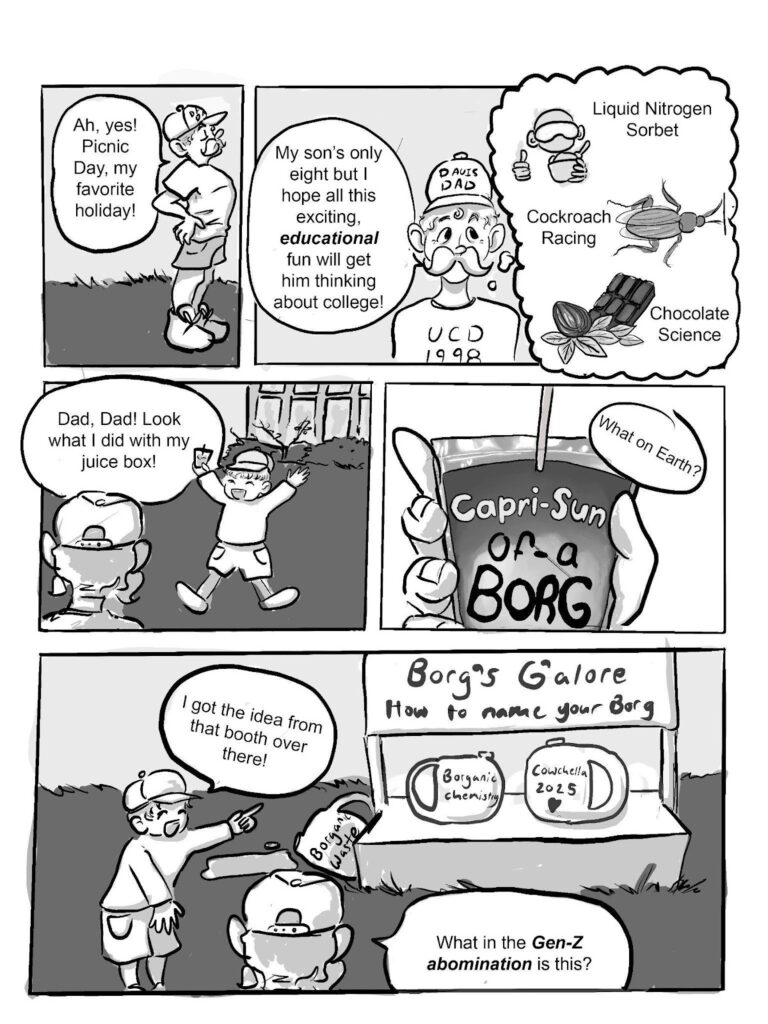
Picnic Day: a family-friendly ‘borganization’

By AILI KOGA— aakoga@ucdavis.edu


Disclaimer: (This cartoon is humor and/or satire, and its content is purely fictional. The story and names of “sources” are fictionalized.)

A spring fling for your heart: rom-com recommendations for the season

From picnic dates to golden sunsets, these rom-coms are to swoon over


By IQRA AHMAD — arts@theaggie.org


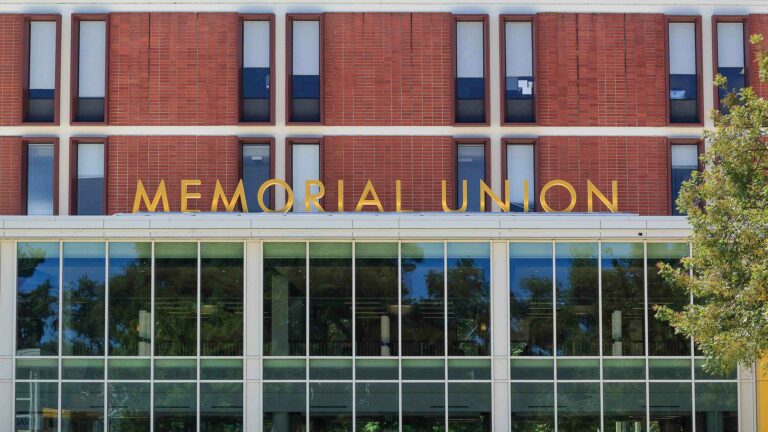
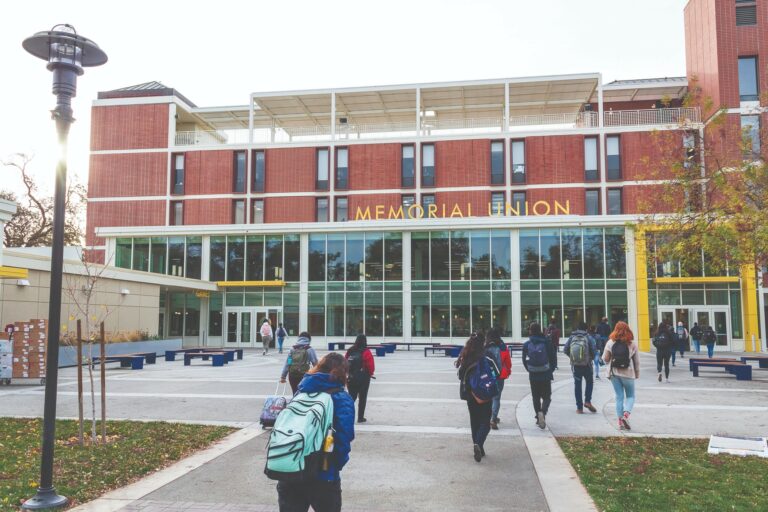
Flowers are blooming, birds are chirping and a soft breeze is drifting through the air — spring has officially arrived. So why not fall head over heels this season…into a good book (and maybe a little bit of romance)? These fun, feel-good reads are perfect for soaking up the sunshine in the afternoon at the Memorial Union hammocks or lounging around in the courtyard at Shields Library. So, let’s leave winter behind and get lost in love.


“Better Than the Movies” by Lynn Painter

Liz and Wes are the heart of this quintessential (and ultra cliche) young adult rom-com, packed with all the tropes we secretly (or not so secretly) love: fake dating, enemies to lovers and childhood neighbors turned into something more. The story kicks off when Liz sets her sights on capturing the attention of her childhood crush, Michael. She strikes a deal with her infuriating (but annoyingly cute) neighbor Wes in exchange for a prime parking spot, negotiation at its finest. It’s sweet, funny and effortlessly charming. With Wes’ witty remarks and Liz’s quick comebacks, it’s impossible not to fall for their dynamic and maybe even miss the chaos and drama of high school. It’s a sweet read that hits all the right beats, leaving you smiling long after the last page.


“Betting on You” by Lynn Painter

“Guys and girls can’t be friends.” That’s the notorious claim made by Charlie Sampson, or as Bailey Mitchell likes to call him, Mr. Nothing. Charlie is cynical, Bailey is genuine and their personalities couldn’t be any more different. But when Bailey schemes a plan to sabotage her mom’s relationship, she ropes Charlie into a fake-dating scheme that’s as chaotic as it is entertaining. But what about when you throw in some high-stake bets, clashing egos and a surprising spark? You’ve got a story that captures the funky, whimsical messiness of falling in love when you least expect it.


“Check & Mate” by Ali Hazelwood

Mallory Greenleaf is officially done with chess. Like, burn-the-board-and-walk-away done. After the game tore her family apart four years ago, her priorities remain steadfast on staying afloat. But one reluctant move at a charity tournament changes everything, because Mallory accidentally destroys the world champ, Nolan Sawyer, the so-called “Kingkiller.” Brooding, brilliant and definitely not used to losing. Suddenly, the girl who swore off chess is getting offers she cannot ignore and attention she definitely didn’t ask for. Weirdly, Nolan seems very interested in a rematch…and maybe even something more. Mallory’s back in a world she tried to leave behind. Turns out, the real games might not just be on the board.


“I Hope This Doesn’t Find You” by Ann Liang 

Ever write a hate email to your group project partner, listing every single petty complaint ranging from their lack of work ethic to the way they breathe — but then you never send it? Yeah, same. That’s basically Sadie Wen in a nutshell. The archetypal teacher’s pet, with her roles as school captain and valedictorian. But behind that polished smile? A drafts folder full of brutally honest emails she’d never send. And her not-so-secret coping mechanism? Venting about her clueless groupmates, power-tripping teachers and most importantly, her infuriating co-captain, Julius Gong. No one was ever supposed to read them…until someone does. As her carefully curated image crumbles, one person starts to see (and maybe even likes?) the unfiltered version of her: Julius, the boy she was basically born to loathe. Let’s just say it’s the “read” receipt she never expected.


“Highly Suspicious and Unfairly Cute” by Talia Hibbert 

Bradley Graeme is nothing short of flawless: star football player, academic overachiever and managing his obsessive compulsive disorder like a pro. Life is smooth, except in the classes he shares with his ex-best friend, Celine Bangura. Thriving in her own weird little corner of the internet, Celine is all about aliens, conspiracy theories and calling out capitalism. And while her followers love it, the popular kids? Not so much. Especially not Bradley, who ditched her years ago for the cool crowd (or at least, that’s the version Celine is sticking to). Now, they’re academic rivals who trade more barbs than smiles. But then they both end up in the same survival course in the literal woods and their only way out is working together. Between mud, forced teamwork and unresolved history, the tension starts to shift. From bitter to banter, from petty to maybe something else. Something like, “Are you flirting with me?” “You never asked me to stop.” It’s like enemies to lovers, but make it outdoorsy.


“The Seven Year Slip” by Ashley Poston

Falling for your roommate is awkward. Falling for your time-traveling roommate who lives seven years in the past? That’s a whole new level of emotionally inconvenient. Clementine’s life is meticulously planned, because heartbreak taught her that chaos is not cute. She’s got a solid career as an overworked book publicist, a decently predictable future and one metaphorical mission from her late aunt: chase the moon. Everything is mostly going to plan…until she walks into her aunt’s apartment and finds a stranger in the kitchen. He’s sweet, with a southern accent and somehow makes lemon pie even more irresistible. But there’s always a catch right? He’s also very much not from this timeline. Turns out, the apartment Clementine inherited is less of a home and more of a time glitch. A place where the past and present brush shoulders like two strangers at a bookstore. And now Clementine has a choice to either protect her carefully guarded heart or risk it all for a love story that may already be history, one that might be seven years too late.

“First-Time Caller” by B.K. Borrison

Aiden Valentine talks about love for a living…which is kind of awkward, considering he’s completely over it. He doles out dating advice like candy, as the voice behind Baltimore’s beloved romance hotline “Heartstrings,” while secretly wanting to ghost Cupid altogether. But then a precocious kid calls into the show, asking for help setting up her mom and the Internet does what it does best: spirals. Overnight, Aiden is viral, “Heartstrings” is trending and everyone suddenly wants a front-row seat to this would-be love story. Lucie Stone is that mom, successful, independent and content (or so she thought). But now her love life is a public spectacle, courtesy of her pint-sized matchmaker and a radio host with a broody voice and questionable boundaries. Now all of Baltimore’s tuned in to Lucie’s quest for romance. The chemistry? Undeniable. The microphone? On. And the line between scripted happily-ever-after and real feelings is getting fuzzier by the day. She might be on air, but this time, the final call is hers.


So whether you’re into swoony slow burns, sarcastic banter or falling in love somewhere between a chessboard and a time warp, there’s something here to make your heart do a happy little somersault. Spring is short and love is messy, so grab a blanket, claim your hammock and let these stories do what they do best — sweep you right off your feet (no dating app required).


Written by: Iqra Ahmad — arts@theaggie.org 


OSSJA fraternity conduct rulings spark disagreement between fraternity members, campus administrators

Students and faculty reflect on the changing relationship between fraternities and campus judicial affairs


By EMME DUNNING — features@theaggie.org


Recent disciplinary actions by UC Davis’ Office of Student Support and Judicial Affairs (OSSJA), including the suspension and disaffiliation of multiple Greek life organizations in the past year, have sparked disagreement on the role of campus administrators in the affairs of these organizations and brought up questions about the future of Greek life at UC Davis.

Stacy Vander Velde, the director of OSSJA, outlined the core goals of her organization in a written statement.

“The mission of the Office of Student Support and Judicial Affairs, or OSSJA, is to uphold standards of academic honesty and responsible behavior, promoting student development and assisting students in need,” Vander Velde said, adding that their major goals of student discipline are to “uphold university standards; provide fair resolution in cases of alleged misconduct with respect for the rights of students and organizations, reporting parties, and the campus community; promote the growth and development of students involved in the disciplinary process; and support the safety and security of the campus community.”

Despite these goals, some students don’t believe that OSSJA’s current operations are helping to create the environment that they claim to support.

Kobina Arkaah, a UC Davis alumnus with a Bachelor of Science in neurobiology, physiology and behavior and former member of Sigma Chi, is among these students.

While a UC Davis student, Arkaah served leadership roles within his fraternity as the master of ritual and coordinator of chapter character enrichment, as well as the new member educator. In addition, he held both vice president and president positions for the Interfraternity Council (IFC). Arkaah asserted that his involvement in Greek life and Sigma Chi specifically was instrumental in shaping his college experience.

“It taught me a lot about being a man and about being a better and more thoughtful leader,” Arkaah said. “I love how much people care and how much pride people take in being in Sigma Chi.”

Sigma Chi is among the fraternities currently dealing with revocations from OSSJA that have been instructed to cease all operations until the fall of 2029, according to the OSSJA website. These revocations were put in place after the fraternity was originally placed on “cease-and-desist” following hazing allegations this past fall and failed to adhere to the terms of their temporary cease-and-desist order.

Arkaah noted, however, that these “terms” of cease-and-desist can often be confusing and constraining to individual rights.

“One thing that’s been a big issue for my fraternity for a lot of people was that they were infringing on our rights as humans and not on our rights as members of our fraternity [during cease-and-desist],” Arkaah said. “They have jurisdiction over us as members of a fraternity but they do not have jurisdiction over us as humans.”

This is specifically an issue, Arkaah said, when gatherings of members of the fraternity are treated by OSSJA as equal to fraternal events, and therefore breaches of cease-and-desist in the same way as official fraternity-sponsored events. As many members of the fraternity have become a close-knit community in their own right and socialize outside of official events, this can blur the line between what is acceptable and what is not regarding conduct.

Other revoked fraternities like Alpha Epsilon Pi have continued to operate openly without affiliation from the school despite outlined sanctions.

Matthew Friedenthal, a fourth-year economics major and Alpha Epsilon Pi member, reflected on his experience being part of a disaffiliated fraternity and even noted some perceived benefits to their current situation.

“You have a lot more flexibility,” Friedenthal said. “You don’t really have to ask the school for permission for anything.”

Despite the added freedom, Friedenthal also recognized the drawbacks of this status, specifically the lack of ability to associate with other Greek life organizations.

“It evidently looks a little more sketchy,” Friedenthal said. “It’s a big pull when you are trying to recruit to say, ‘We’re a part of the greater Greek life, you’ll be able to meet so many people in sororities and fraternities.’ If you’re not affiliated, it’s significantly harder.”

This sentiment is substantiated by the UC Davis Center for Student Involvement website, which has a section on its misconduct page that outlines recommendations for interactions with disaffiliated organizations. For involvement with Alpha Epsilon Pi, the website asserts that “UC Davis and the Center for Student Involvement recommends strongly against joining or collaborating with this group.”

In spite of the hardships the fraternity has faced regarding its operations at UC Davis, Friedenthal asserted that due to the differing goals of both organizations, a reaffiliation is unlikely to happen.

“I don’t see us reaffiliating,” Friedenthal said. “The costs outweigh the benefits for both sides.”

Others, like Arkaah, believe that there is a path forward for improved relations, but say it will take significant work from both administration and fraternity members. He specifically believes that student IFC members should hold a more substantial role in investigations into Greek life.

“IFC should be working with OSSJA,” Arkaah said. “There’s no one to truly advocate for fraternities, and that should be the whole point of the IFC. I think the reason why people get elected into (IFC) positions is because they’re level-headed and they’re able to advocate for the people that they govern, and I think that should be important to OSSJA.”

Arkaah made clear that his envisioned role for IFC is not to blindly side with the fraternities that they represent, but rather ensure that a balanced perspective is given and appropriate steps are taken to remedy any wrongdoing in a manner that is timely and clear.

“IFC should be involved in gathering facts and advising on what should be done about a given situation,” Arkaah said. “The people in OSSJA aren’t in college, and they make decisions that may sometimes seem far-fetched and unfair, or maybe sometimes aren’t harsh enough. I think [the] IFC should be there to advocate for what should be a proper ruling.”

Arkaah also noted that fraternity members and OSSJA staff have a shared responsibility to contribute to the future of a successful relationship.

“I’ve worked with OSSJA closely, and I think these are good people,” Arkaah said. “OSSJA is not sitting around trying to catch people — their job is to deal with people who get reported. People need to be reporting things that are important. I think sometimes the less important things end up getting reported and the really important things don’t, and that is not their fault.”

While the future of the relationship between Greek life organizations and campus administrators is unknown, successfully continued operations and shared goals rely on the creation of a thriving campus and community environment. How these goals will align moving forward remains to be seen.

Written by: Emme Dunning — features@theaggie.org

Empower Yolo hosts annual ‘Shower the Shelter’ donation drive event

The sexual assault, human trafficking and domestic violence advocacy non-profit worked alongside UC Davis volunteers to collect donations for their shelter and its services


By MATTHEW MCELDOWNEY — city@theaggie.org


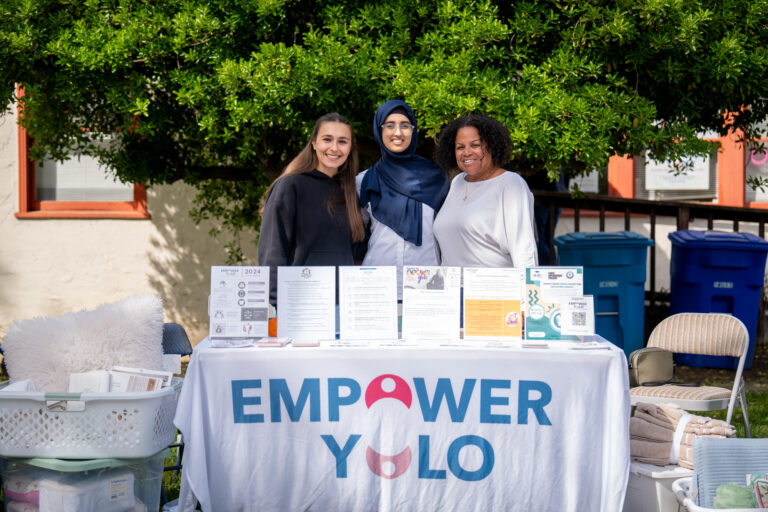
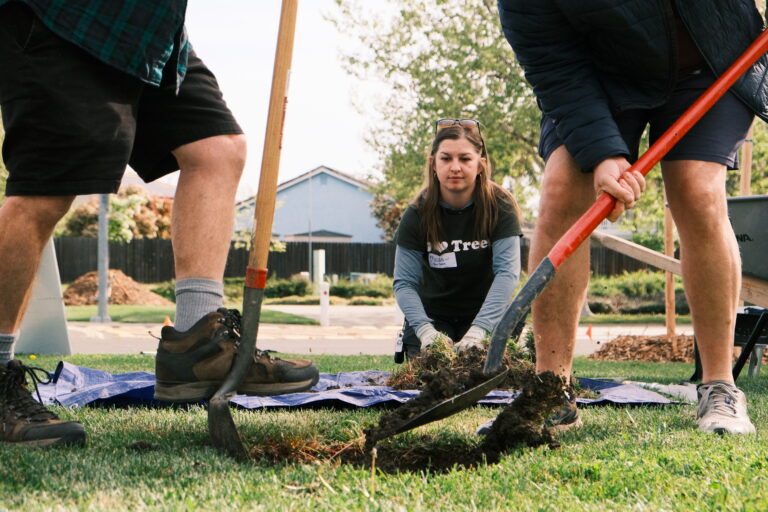
In recognition of Sexual Assault Awareness and Child Abuse Prevention Month, Empower Yolo collected essential donations for their Shower the Shelter event on April 5.

In collaboration with the student organization, Davis Emergency Medicine Organization (DEMO), Empower Yolo collected necessities such as basic cleaning supplies, clothing and bedding. Notably, representatives from Soroptimist International made a donation of 19 bags which included various necessities like clothing and water to support at-risk survivors.

Donations trickled in throughout the event, but just as importantly, Empower Yolo and DEMO were able to reach out to the Davis community about the invaluable resources for survivors facing housing or legal insecurity. Additionally, Empower Yolo provides a 24-hour crisis line, counseling and therapy services. The Empower Yolo website contains contact information, resources and dates for important events.

As the Chair of the Empower Yolo Board, Cathy Farman explained the importance of their mission.

“Empower Yolo provides wrap-around services for Yolo County’s neediest residents,” Farman said. “We really work to help people rise above whatever circumstances put them in need and move them toward a healthier, more resilient life.”

Natalie Baltazar, the director of development and community relations, is responsible for coordinating partnerships and organizing awareness events, such as Shower the Shelter.

“We love our partnerships with the university, especially because it is really nice to have the youth involved,” Baltazar said.

Empower Yolo continues to seek out the talent and voices of students to fill these board positions to this day. Empower Yolo has a volunteer training program for students interested in opportunities such as legal advocacy, social work and more — all of which can be accessed through their volunteer page, according to Baltazar.

However, for the most part, Baltazar coordinates with student organizations on campus to volunteer for in-person events like this one. As for this event, DEMO, a student organization dedicated to students passionate about emergency care, volunteered with Empower Yolo for the first time.

Skye Lentz, a second-year neurobiology, physiology and behavior major, described how much she learned about the organization’s impact by volunteering at this event.

“I did not realize how much of an impact this organization had made until I saw the backpacks that [Soroptomist International] came and donated to help people who have been in abusive relationships, victims of sexual assault or just people in general who need help,” Lentz said.

Calvin Chan, a first-year neurobiology, physiology and behavior major, shared his experience as this was the first time he had volunteered.

“I have never done anything like this before,” Chan said. “Oftentimes, […] we are focused on inside the campus — being out here, I learned a little more about actually what is beyond the classroom.”

From donors to volunteers, Davis residents and students alike played a large role in the Shower the Shelter event. Information regarding the donation of goods, money or time can be found on the Empower Yolo website.

On May 1, Empower Yolo will be attending Davis’ annual Big Day of Giving, an online donation event where each dollar donation has triple the impact — a two-dollar match for each dollar from the Starkweather family.

Baltazar encourages those interested who are unable to donate or volunteer to share resources and information about upcoming events. While Empower Yolo has experienced ups and downs with grant funding, Baltazar feels gracious for being able to lean on the community for support.

“I’m always in awe of the generosity that we see in Yolo County,” Baltazar said. “[It is] more than anywhere else that I have lived, so it is pretty awesome.”

Written by: Matthew Mceldowney city@theaggie.org


Aggie Mental Health to be centralized into Student Health and Wellness program

Students assured no jobs will be lost following creation of a petition protesting the ending of the program


By NOAH HARRIS — features@theaggie.org


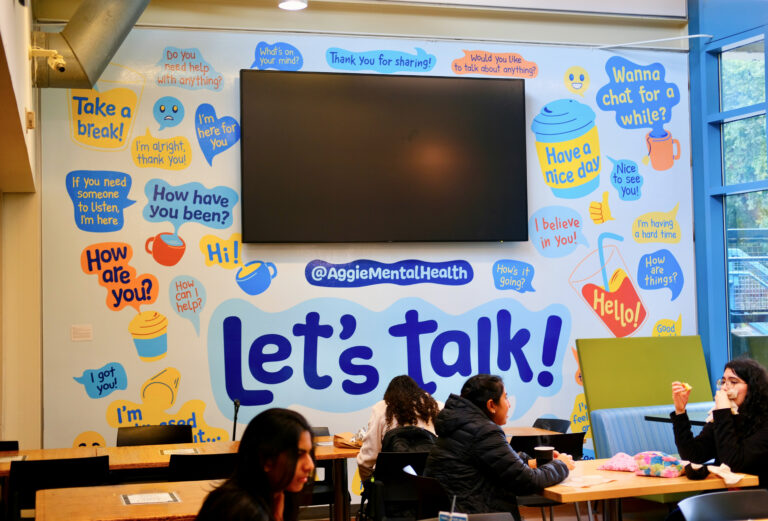
The Aggie Mental Health Ambassadors (AMHA), likely most recognizable for tabling at the Silo, Memorial Union and Shields Library, are being centralized with the Student Wellness Liaison (SWL) program. Both programs will be supervised by the Health Education and Promotion (HEP) team in Student Health and Counseling Services.

The AMHA and SWL programs will remain separate and one full-time staff member will be in charge of both programs. Student Wellness Liaison had already been under HEP, but the AMHA program was run by Public Health Sciences and Student Affairs.

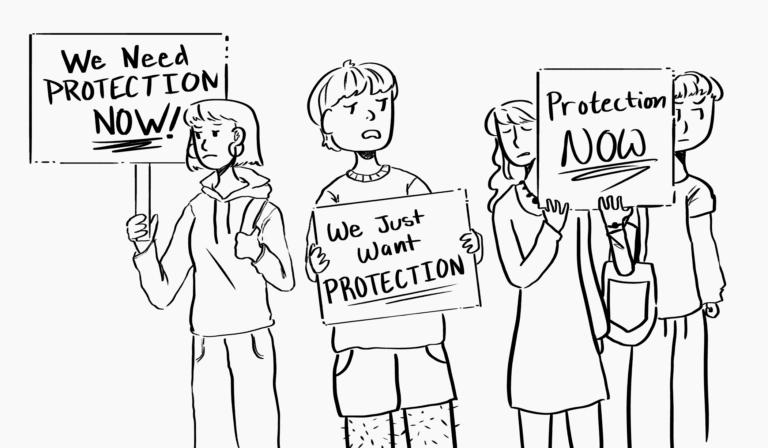
Initially, there was confusion among Aggie Mental Health Ambassadors, as they thought that their program was being defunded. This prompted a petition from its student workers, which has garnered over 1,000 signatures, as well as an Instagram account specifically created to save AMHA, @save.amha.

“We were recently informed by the Vice Chancellor of Student Affairs Pablo G. Reguerín that our program will be defunded beginning with the upcoming academic year,” the petition reads.

An open letter was also sent to Reguerín. Part of the letter states that “the decision to consolidate services into the Health Education and Promotion department will limit the accessibility of mental health resources designed for student use.”

Paul Kim, the interim associate vice chancellor at Student Health and Wellness as well as a director of Counseling Services, said that the petition wrongfully states that the program would be defunded.

On April 4, two days after the AMHA created their petition, Student Health and Counseling Services released a frequently asked questions (FAQ) page to address questions.

Kyle Tseng, a fourth-year neurobiology, physiology and behavior major who has worked as an AMHA since spring quarter 2024, described how AMHA student workers found out about the FAQ page.

“That [FAQ] website basically stated that the program is going to be centralized with Health Education and Promotion,” Tseng said. “Unfortunately, we were never informed of that as employees and so we had to find that website out [for] ourselves.”

The Student Wellness Liaison program has a much lower profile than AMHA, but the FAQ page makes it clear that this program will be expanding.

“Student Wellness Liaisons are embedded within various community and identity-based centers and serve as a bridge between those centers and SHCS/HEP, tailoring wellness initiatives to the specific needs of their communities,” the FAQ page reads.

Aside from tabling at popular places on campus, part of the job of those working in AMHA is to float, which is when they ask students how they are doing. For Alyssa Reid, a third-year psychology major who works at AMHA, floating is extremely important and is something not mentioned on the FAQ page.

“They specifically say outreach, instead of saying that we would still be doing direct peer-to-peer outreach or doing direct like floating,” Reid said. “We reach people who are not willing to go up to mental health resources already by themselves the most by floating.”

Kim wrote in the statement that AMHA will still be visible on campus.

“As communicated to AMHA staff and student ambassadors, student mental health support efforts will continue to be funded by Student Affairs, which will include campuswide, highly-visible mental health outreach activities,” Kim said.

Emerald Hue, a third-year psychology major working at AMHA, was focused on the impact this change would have on UC Davis students.

“The jobs are not what we’re concerned about,” Hue said. “We’re concerned about how the program is going to be facilitated in the future and how that impacts the community as a whole.”

On the FAQ page, the positions of student workers were guaranteed, but not full-time staff. However, Kim’s statement confirmed that no one would be losing their job.

“No AMHA career staff or students are losing their jobs as a result of this transition and all non-graduating AMHAs and SWLs will be able to remain in their programs,” Kim said.

Supervisors for Aggie Mental Health declined The California Aggie’s request for comment.


Written by: Noah Harris — features@theaggie.org


Answer the troll’s riddles for a chance at love

Riddle me this, Troll


By ALLISON KELEHER — adkeleher@ucdavis.edu


There’s a new trend developing on the UC Davis campus, and clearly, I need to know about it. Couples are flocking to the Arboretum in droves, with the hopes of strengthening their relationships. Some may think they are participating in the “love lock” tradition, going on a picnic or even just spending quality time together. However, this is much more serious than that. This involves a troll.

About a month ago, campus authorities discovered a troll residing under the love-lock bridge. He had a little bed made of discarded first-year dorm twin XL bedding and a stash of Shah’s Halal falafel. The troll is short and stocky, with a long ginger beard, and he frequently fashions a flannel and sweatpants that he also got from the first-year dorm dumpster.

Initially, campus authorities were unsure what to make of this troll. They watched him from afar for a couple of days and came to the conclusion that he was very boring. All the troll did was bathe in the Arboretum, eat and sleep. So, campus officials decided to follow their own logic and let the troll “come as you are.”

Once the troll was no longer under investigation, students began to observe the troll. Many were afraid to approach him, except for a few confident young men who decided to get some advice on their dorm situationships.

The troll, who hadn’t spoken throughout his residency, suddenly felt like he had something to say. As it turns out, he is an expert on love. Initially, people came in search of situationship advice, but after a week or so, the troll went mute and decided that he didn’t like answering the same questions over and over again.

Then, couples began to approach the troll in search of relationship advice. The troll was responsive to these questions, which solidified his role as the on-campus couples’ counselor for UC Davis. He attempted to give straightforward advice; however, these couples always ended up following their own advice instead. Enraged by the disrespect that he felt, the troll became more cryptic in his guidance. His sincere advice was replaced with metaphors and riddles.

Surprisingly, the students loved this. It felt more rewarding to mend their romantic pursuits when it seemed like it was their own idea. By solving this troll’s riddles, couples around campus were seeing magnificent progress in their romantic relationships. Jumping on the bandwagon of this success, couples around campus became obsessed with getting some face time with the troll. Some felt that if they were able to meet with the troll, their relationship would survive for eternity.

One of my sources claims their “relationship would have never made it past the three-month mark without the troll.” I doubted this, so I did some digging, and I acquired another source who revealed that “I’m only staying with my boyfriend because I don’t want to disappoint the troll.”

This logic seems flawed to me, but maybe that’s because I’m single. I’m surely unable to understand such complex nuances as advice from a troll.


Written by: Allison Keleher — adkeleher@ucdavis.edu


Disclaimer: (This article is humor and/or satire, and its content is purely fictional. The story and the names of “sources” are fictionalized.)

Culture Corner

The Arts Desk’s weekly picks for music, movies and more


By ELIZABETH BUNT — arts@theaggie.org


Book: “Small Things Like These” by Claire Keegan (2021)


“Small Things Like These” is the perfect book to break anyone out of their reading slump. Technically a novella, it clocks in at just over 120 pages, making it an easy new project to take on while dealing with spring quarter classes. Based in Ireland in 1985, this historical fiction novel follows the trajectory of a local coal merchant who discovers the scandal of the Magdalene Laundries. Claire Keegan asks her readers to consider the question of individual freedom in a town largely governed by the church. Keegan’s writing is sparse and simple, making the novella approachable and engaging for readers who may not have any historical knowledge of the subject.


Song: “The Bottom of It” by Fruit Bats (2019)


This is my current stuck-on-repeat song. It comes from the Fruit Bats’ 2019 album “Gold Past Life.” As an alternative-indie band, you might know Fruit Bats from other hits like “Humbug Mountain Song” and “You’re Too Weird.” “The Bottom of It” is a short, catchy tune with the band’s characteristic dreamy sound. Lead singer Eric Johnson’s unconventional voice turns this song from good to addictive. Anyone unfamiliar with Fruit Bats should definitely give them a listen, and this song is a great start.


Movie: “V for Vendetta” dir. James McTeigue (2005)


“V for Vendetta” is one of my all-time favorite movies. I have probably seen it six or seven times. The film takes place in a dystopian England that has been taken over by a corrupt government after a world war. V, an unnamed vigilante, fights against the fascist police state using terrorist tactics, eventually gaining an ally in a young woman named Evey Hammond, played by Natalie Portman. Equal parts action movie and social commentary, “V for Vendetta” explores the topic of government overreach and anarchy as a human requirement.


Book: “Paradise” by Toni Morrison (1997)


“Paradise” is the third novel in Nobel Prize winner Toni Morrison’s Beloved Trilogy. This unofficial trilogy consists of “Beloved” (1987), “Jazz” (1992) and “Paradise” (1997), each of which deals with the larger theme of dangerous love. “Paradise” is the culmination of this topic, dealing with the interplay between love of self and love of community. It takes place in fictional Ruby, Oklahoma, an isolated all-black town. Seventeen miles away is a closed-down convent, now inhabited by five women of different backgrounds and beliefs than the inhabitants of Ruby. The novel tracks the five generations of familial history that ends with an act of violence committed against the convent by Ruby men. This act both begins and ends the novel. As perfect and intricate as the more widely read “Beloved,” “Paradise” is a book that should be on every reader’s list, both because of Morrison’s writing prowess and because of the often-forgotten history it covers, starting with the Reconstruction Era and ending with the Civil Rights Movement.

Written by Elizabeth Bunt — arts@theaggie.org

The problematic politics of protectionism

Political statements that start and end with “protection” and “acceptance” reinforce targeted communities’ positions as a “victim” or an “other”


By GEETIKA MAHAJAN — giamahajan@ucdavis.edu


In early 2021, a video of Missouri father Brandon Boulware went viral. In the video, Boulware is condemning a ban against transgender athletes in Missouri by citing his own experiences raising his daughter as a trans woman. Ostensibly, it’s a heartwarming premise — a father desiring to defend his children’s rights by protesting a transphobic bill. The video was reposted by the American Civil Liberties Union (ACLU), and the father was hailed for his acceptance and kind regard toward the trans community.

However, the speech contained a quiet confession: Boulware admitted to not being as accepting of his daughter’s identity throughout her childhood.

“Truth be told,” Boulware said. “I did it to protect myself. I wanted to avoid those inevitable questions as to why my child does not look and act like a boy.”

The video did not go viral because it questioned the premise of the transphobic bill or because it offered any serious insight into the experiences of trans athletes. Most of those who watched the video on Twitter, now X, may not even know the outcome — the bill itself had passed, 100 to 51, in favor of banning transgender students from participating in sports teams that matched their gender identity.

There’s nothing wrong with the contents of the speech. Nothing wrong, even, with parents and children alike finding comfort in its contents. The issue arises when this kind of rhetoric — the kind that simply pushes for “acceptance” and “protection” — becomes politically charged. Personally, I think that the speech itself was very brave; It’s not easy to admit that you were in the wrong or to platform yourself to encourage others to not make the same mistakes. Even so, reformed bigots being hailed as paragons of social change distorts the root causes of homophobia and transphobia, shifting the axis of what true allyship is meant to achieve.

The issue with acting as though a lack of acceptance is the start and end of discrimination is that it can turn into a constant cycle of pushing for visibility: note Boulware’s message that “[he] learned to accept [his] daughter, and now it’s your turn to do the same.” This dialogue is unproductive because it circumvents the real issue.

Reframing basic acceptance as allyship and progress allows anyone to paint themselves as allies without doing any actual work in terms of questioning the systems that allow discrimination to persist. This is where the idea of protectionism comes in, a concept that has been widely adopted in social justice spaces. The phrase itself is problematic in how open-ended and ambiguous it is, because the natural response to a phrase like “protect trans kids!” is: protect them from what exactly?

Turning protection itself into a political act implies that the socially constructed threats against the existence of queer communities are and will be omnipresent. The key word “protect” is vague and unaccusative; it makes allyship accessible by not demanding more than a statement of solidarity. And, while this may seem like a good thing — of course, why shouldn’t anyone from companies to celebrities be able to express their support toward marginalized communities? — it’s also a very flimsy surface for equality. Proclaimed solidarity isn’t policy; it’s not anything, really, unless there’s actual action behind it.

The core of the problem with protection politics is that it makes it very simple to look like an ally and even easier to backtrack when it’s unfavorable. In the mid-2010s, every company was changing their Instagram profile pictures for Pride Month; now, several have removed their diversity signifiers from their websites. When social acceptance alone is used as a metric for equality, it allows the root cause of discrimination to go unexamined.

Within his speech, the Missouri father does two things: He emphasizes that he is there to protect his daughter’s rights, and he implores the acceptance of her identity as a woman. He does not question why it was assumed that his daughter would behave a certain way just because she was born a certain way. Nor does he rebut the bill itself, which assumes that children’s capacity in sports is primarily and most importantly determined by their sex assigned at birth, rather than their age, height or weight.

These are the assumptions that allow homophobia and transphobia to take root —  constantly searching for acceptance within a society that operates within parameters that are inherently hetero and cisnormative yields no actual quantifiable victories because the core issues remain. A father goes viral because he stopped stifling his daughter’s identity and is now imploring lawmakers to do the same, but the transphobic bill still passed with two-thirds of the vote.

Political statements that start and end with protection and acceptance do no actual work when it comes to pushing the needle toward positive change — they just reinforce such communities’ positions as a “victim” or an “other.”


Written by: Geetika Mahajan — giamahajan@ucdavis.edu

Disclaimer: The views and opinions expressed by individual columnists belong to the columnists alone and do not necessarily indicate the views and opinions held by The California Aggie.

Meet the UC Davis graduate fighting for street vendors’ rights

Owner of the popular churro stand, Churros El Rey, described the experiences of the street vendor community 


By LAILA AZHAR — features@theaggie.org


Gustavo Landeros Mireles has what some may consider to be the ideal job: He gets to taste churros several times a day. Mireles runs “Churros El Rey,” a stand in Downtown Davis that sells churros, elotes (Mexican street corn) and horchata.

Making the perfect churro is a careful science. As the outside temperature affects the flame used to cook the churros, Mireles must adjust the heat throughout the day, periodically checking the churros to ensure they taste perfectly.

Mireles has always been interested in starting his own business, and when he graduated from UC Davis in 2022, he began to notice the popularity of food trucks.

“A lot of food businesses were popping up during that time, and it caught my attention,” Mireles said. “We had to do a lot of research and development. We tried different things with the churros until we got it right.”

Mireles said his favorite part about working in Davis is the diversity of the town. While he sells Mexican food, his stand appeals to people from a wide range of backgrounds.

“I feel it’s amazing that I show a little part of my country, Mexico, to people in Davis,” Mireles said. “Everybody loves churros, and I think that’s the most amazing thing — the diversity of people you meet.”

Churros El Rey is a fixture in the Davis community, and UC Davis students cite the stand as a great spot to grab dessert. Danielle Rosario, a third-year political science major, said it’s perfect for those who want to grab a quick snack in Downtown Davis.

“The prices are really affordable and the location, right in downtown, is really convenient,” Rosario said. “I’ve definitely visited [the stand] after a long day of studying or a day in downtown with friends, and it’s always the perfect treat.”

Ella Nguyen, a second-year molecular and medical microbiology major, agreed, emphasizing the high quality of the food.

“They’re by far the best churros I’ve had,” Nguyen said. “The caramel churros are probably my favorite flavor. I definitely recommend them to anyone who hasn’t tried them.”

However, becoming a street vendor was not as legal an option until 2018, when California passed the Safe Sidewalk Vending Act to decriminalize street vendoring. While there are certain restrictions that can be imposed, such as permit programs or health regulations, vendors cannot face criminal charges.

While Churros El Rey operations had previously ceased for a few months, the stand is currently up and running, and Mireles is in the process of obtaining the permits he needs to remain open permanently.

Despite the Safe Sidewalk Vending Act, street food vendors often face harassment from law enforcement, according to Mireles. Though Mireles knew his rights as a street vendor, he discussed a threatened arrest by an officer a few months prior with an accusation of trespassing.

“The food vendor industry is dominated by Hispanic people,” Mireles said. “Most of them,

they’re undocumented, most of them don’t speak English. So the police take advantage of them because they don’t know how to defend themselves.”

As Mireles looks to the future, he is committed to empowering the street vendor community. He is currently studying for the law school admissions test and hopes to attend law school, where he plans to protect those whose food, culture and labor have contributed immensely to the vibrancy of California’s streets.

“Just imagine how terrifying it could be for undocumented people to be harassed,” Mireles said. “That motivated me to go to law school and fight for everybody, because we have to fight for a better world.”

Churros El Rey is located at 228 E Street and is open Friday to Sunday from 7 to 11 p.m. Students who are interested in staying up to date with the stand can follow their Instagram page, @_churros_el_rey.


Written by: Laila Azhar — features@theaggie.org


City of Davis partners with Tree Davis for annual Arbor Day celebration

The event welcomed members of the community to plant trees while spreading awareness about environmental health 


By YUENJO FAN — city@theaggie.org


On April 5, the city of Davis and Tree Davis co-hosted a tree-planting event at Robert Arneson Park in the Wildhorse neighborhood to celebrate Arbor Day. A day of observance that encourages the planting and preservation of trees, this year’s Arbor Day event saw volunteers from Tree Davis help plant trees while featured community organizations also set up tabling stands to promote other causes synonymous with the celebration.

The Tree Davis organization’s main goal is to promote the well-being of Davis’ climate readiness and health through planting trees and nurturing the natural landscape. A Davis-based non-profit founded in 1992, Tree Davis has planted over 12,000 new trees, adopted highways and held community workshops to help spread awareness about tree planting, maintenance and its importance to the environment.

Ann Daniel, the president of the Tree Davis organization, provided more insight into Tree Davis’ background and its contribution to this year’s Arbor Day celebration.

“It’s to promote trees and healthy green spaces and so the mission was originally to plant trees,” Daniel said. “We work in partnership with the city of Davis, and we have an agreement with them to plant trees and take care of it for its first five years of establishment. It’s really valuable to the community to plant trees in public spaces like parks as well as public easements and other public areas in the community.”

Daniel, who has been on Tree Davis’ board for over a year, first joined the organization after volunteering at one of their designated green spaces. These green spaces are areas within Davis that Tree Davis manages to promote climate friendliness. Now, as the president of the organization, Daniel works to help oversee the Arbor Day celebrations.

“It was a collaborative event with the city of Davis and Tree Davis,” Daniel said. “Then, we had some other community partners that tabled and provided information to residents that visited us as we were planting the trees and talking about the value of trees.”

The community organizations who tabled included the UC Davis Arboretum, Davis Picks It Up, Davis Community Action Network and Master Gardeners.

David Robinson, a longtime member of Tree Davis and former board president of 13 years, praised both the community groups and student volunteers.

“The various volunteer groups, like Davis Picks It Up, have a niche, just as we have a niche,” Robinson said. “All these groups that pop up every now and then are doing amazing work behind the scenes. UC Davis has also provided tons of volunteers over the years and they’ve been some of the best, as they are youthful and willing to get up and plant.”

As the summer and dry season approaches, much of Tree Davis’ focus will switch to watering and maintaining their trees until fall returns. In October, as the weather cools down, Tree Davis will return to hosting more tree-planting events and adding to their green spaces. The Tree Davis website also detailed its long-term plans to continue its work in ensuring a greener and healthier city.

“Future projects include working with the City of Davis to help create a 40-year urban forest management plan, plant 1,000 trees, and implement a career and college readiness program in Urban Forestry,” the website reads. “We are committed to educating the public about trees because we view urban and community forestry as an integral part of a healthy environment. Teaching people to plant and care for trees increases environmental awareness and empowers our citizens as stewards of our community, country, and the planet.”

More information about the organization’s mission, volunteer opportunities and newsletter can be found on the Tree Davis website.


Written By Yuenjo Fan — city@theaggie.org