55.5 F
Davis

Davis, California

Thursday, December 25, 2025
Home Blog Page 376

Research opportunities offer undergraduate students invaluable experiences

0

Despite obstacles in application process, researchers see benefits that reach beyond the classroom

UC Davis is widely renowned as one of the top public research institutions in the world, offering fields of concentration ranging from food science to religious studies. As a university that conducts research conducted by faculty in all sorts of fields, students are offered unique opportunities to get involved with research — allowing them a chance to delve further into their interests and develop skills that can’t be taught in a classroom setting. 

Undergraduate students typically find positions assisting current graduate students or professors who are involved in their own research, but research positions can vary in the form of internships, fieldwork or even leading their own projects. The research work helps students expand on information from their classes through real-life application of concepts.

Ethan Lindgren, a fourth-year psychology major, works as a research assistant in the vitreoretinal lab at the UC Davis Medical School. He finds that his work at the lab deepens the knowledge he gains through his classes. 

“Research is basically where you can kind of mess around and apply what you’re learning in a more practical sense,” Lindgren said. “For certain science classes, you have a lab where you apply what you learn in those classes, but those labs are kind of narrow and they don’t go into that much depth. Whereas in a research laboratory, you kind of get a more expansive view of what you can learn about school.”

Oftentimes, the work that undergraduate students do as part of the research teams are essential to the project itself. Carlyn Peterson, an animal biology Ph.D candidate who received both her bachelors and masters degrees from UC Davis, says that undergraduate students are a big part of the innovative work she’s done in dairy cattle nutrition and environmental management.

“There’s no way that I could do everything that has to be done in a live animal trial, so they help with all the day-to-day tasks — feeding all the animals, executing the research tasks, monitoring those animals, making sure they’re healthy, helping me enter all the data, helping me look at the data, make graphs, do a literature search, all those sorts of things,” Peterson said.

Some students, however, say contacting and starting a dialogue with individuals on campus spearheading research efforts can be difficult — especially because the application process differs for each research position offered. Lindgren, for example, found his current position with the medical school through Handshake, but his previous attempts at finding a position were not as successful.

“I’ve emailed professors multiple times and they’ve never emailed me back,” Lindgren said. “And I’ve interviewed with professors and not gotten positions, so it was definitely not easy. It’s a big school and it’s pretty competitive, so it’s not particularly easy to get involved.”

These difficulties in finding and applying for research opportunities pose as an obstacle for undergraduates, but Peterson said a lot of undergraduates don’t utilize the potential research network they have right within their grasp: graduate students. 

“Undergrads are generally in contact with grad students, almost everyday, and all of the grad students that they work with will have done research or will have to do research at some point, so the first point of contact is always reaching out to the TAs,” Peterson said. “Maybe their TA isn’t currently doing research, but there are other grad students that I work with that I can get some of those students in contact with those other resources. So it’s all about their network, and they have a huge network that they often don’t look into, which is their TAs that they have currently.”

While many undergraduates fill the research assistant roles of many large-scale projects, they can also show initiative within the project and expand their role for their own personal growth. Ke Huang-Isherwood, who currently works on projects with the Department of Communications after receiving her masters degree from UC Davis last year, recalled one such undergraduate student she had worked with on a study that looked at violence in video games and its impact on game players.

“As students, there’s an opportunity to try to become more engaged,” Huang-Isherwood said. “One of the undergraduate student research assistants took the initiative of participating in the undergraduate research conference. She took the initiative of taking a piece of that study, a piece of the video game and she ended up presenting that technical part of how it worked.”

Hosted annually by the undergraduate research center, the Undergraduate Research, Scholarship and Creative Activities Conference allows 700 students to present their work. The center offers other resources, including a chance for students to have their work published through the school’s multidisciplinary undergraduate research journal, Explorations. The California Aggie reached out to the undergraduate research center for comment, but the center was unavailable due to a lack of staff. 

The potential benefits of research, however, reach far beyond the publication of someone’s work. Peterson, who has been involved with undergraduate education for several years as a TA consultant, views research as a crucial opportunity for undergraduates to explore possible career trajectories.

“Education outside of the classroom is just as important if not more important for students to get while they’re in school and there’s so much opportunity to do that,” Peterson said. “Not only does it tell them what they want to do as a career — maybe they want to go into research — but it could also tell them what they don’t want to do, and what they don’t want as a career, which is just as important for figuring out what you want to do for your life.”

Prior to receiving her masters in communications at UC Davis, Huang-Isherwood received her J.D. at the University of Minnesota, and her perspective highlighted the role of undergraduate research in helping guide students on their career trajectory. 

“When I was an undergrad, I didn’t do much research,” she said. “But I think that if I had done it, I would have realized that I liked research earlier, and then maybe wouldn’t have required me to go through a professional degree to figure it out. Of course, there’s a lot to do as an undergraduate student, and you can’t do everything, but if possible, try to get some research experience while you are still a student and can easily get credit without as much pressure as a graded course.”

While reflecting on his research work as a student, Lindgren described the value of his experience, echoing both Peterson and Huang-Isherwood’s views on the importance of undergraduate research.

“I definitely enjoy it, and it’s not like the classroom, it’s less structured and it’s definitely pretty valuable just because everyday you get to do something new,” Lindgren said. “It’s one of the most valuable parts of my education and my time here at Davis, without a doubt.” 

Written by: Lei Otsuka — features@theaggie.org

We shouldn’t be afraid of horror films

Scary movies have more to offer than cheap thrills

Out of all the films nominated for best picture in Oscars history, only six have belonged to the horror genre. And although not every moviegoer takes pleasure in being scared, horror films are often more complex than jump scares and splattered blood. Many tell stories that are as, if not more, important than other genres, making them deserving of recognition and praise.

But in the past 92 years, horror films have seldom been in the running for the Academy Awards, with the best picture winners falling mainly under the drama and historical genres. Jonathan Demme’s “The Silence of the Lambs” was the only horror film to win the award, which begs the question: what constitutes a “best picture?” 

Is it a film’s ability to capture the human spirit? To tell stories that aren’t told? Perhaps it’s the films that ask the difficult questions and spark conversations. If so, horror movies should not simply be swept under the rug of lowbrow cinema.

There is no denying that many horror movies are known for their overused tropes and cheap scares. Many films are produced solely for entertainment purposes and momentary bursts of fear and laughter. The American film series “Scary Movie” pokes fun at many of these horror film conventions, parodying classics such as “Scream” or “The Haunting.” The haunted mansion and overeager white families are elements that many of us recognize and anticipate.

Underneath the intense music, however, often lies commentary on the horrors that exist in the real world. 

A prime example would be Jordan Peele’s Oscar-nominated “Get Out.” Instead of vengeful spirits and creepy nunneries, Peele manifested horror in the form of racism. By using the scary movie format, he created a compelling narrative that vilifies white supremacy while documenting the anxieties of being black in America. As groundbreaking and stirring as the film was, Guillermo del Toro’s “The Shape of Water” won best picture that year instead, leaving me and many others dumbfounded. 

For a genre that often relies on the uncanny, “Get Out” drew a bridge between horror and reality. Instead of shying away from the “uncomfortable topics” of race and oppression, the film did exactly what any best picture should do: It communicated these issues in a way that was digestible and memorable.

Yet some were turned off by the film’s message, with some Academy members saying that “Get Out” was “not an Oscar film” and another stating that it “was a great, fun, entertaining genre film, but I don’t read as much into it as others do.” 

Whereas historical drama films are often praised for showcasing past horrors, scary movies such as “Get Out” that highlight current evils are underplayed.

A film that tackles similar issues less directly is Drew Goddard’s “The Cabin in the Woods.” The movie follows every horror movie stereotype, from the eerie cabin to the blonde who dies first. It does nearly everything you’d expect it to, only with a layer of deeper meaning.

The movie can be interpreted in many ways, but it is commonly read as a metaphor for humanity’s instability or as a commentary of filmmaking itself. In a way, the film mocks the viewers who would otherwise dismiss the movie as another cheesy horror film. It forces us to reconcile that horror doesn’t live in our dark closets or under our beds. It’s within our governments, our prejudices and our own insecurities.

With the 92nd Academy Awards just around the corner, I was surprised to see that Jordan Peele’s sophomore film, “Us,” failed to receive any nominations. Although “Get Out” was arguably more dynamic, the chilling score in “Us” coupled with Lupita Nyong’o’s impressive dual performance seemed Oscar-worthy.

Still, it is understandable that many people evade horror films simply out of fear. As an avid Stephen King fan myself, it’s not easy recruiting friends to watch scary movies with me late at night. It’s simply not for everyone.

But no matter how terrifying, horror films deserve to be seen and analyzed just like any other genre. Sometimes we all need a shocking jolt to remind us that these monsters under our beds aren’t as far away as we’d hope.

Written by: Julietta Bisharyan — jsbisharyan@ucdavis.edu

Disclaimer: The views and opinions expressed by individual columnists belong to the columnists alone and do not necessarily indicate the views and opinions held by The California Aggie

Fleeing suspect apprehended at gunpoint at field off Hutchison Boulevard

CHP apprehended subject on pursuit from California State Route 113

At 6:39 p.m. on Jan. 26, California Highway Patrol (CHP) officers detained a suspect pursued into Davis from California State Route 113. Stationed at CHP’s Woodland headquarters, Officer Armando Ocampo provided details about the arrest.

On California State Route 113, CHP officers attempted to pull over the suspect for speeding, according to Ocampo. The suspect gave chase and took the Hutchison off-ramp in Davis, heading west down Hutchison Boulevard.

“It was for speeding initially,” Ocampo said. “Eventually, during the pursuit at some point, he […] struck another vehicle, which is a hit and run.”

After being pursued down Hutchison Boulevard, the suspect exited the vehicle and attempted to run across a sports field off Hutchison. It is unclear which specific field the suspect was detained at. 

“We had somebody at gunpoint, the driver of that vehicle,” Ocampo said. “He got out of the vehicle and fled on foot.”

Since the detainment took place in the vicinity of UC Davis, the UC Davis Police Department assisted CHP at the scene.

As the police report has not yet been concluded, some details about the event were unclear. Officer Ocampo summarized the events of the night. 

“In essence, a pursuit was started on 133 and then the subject exited at Westbound Hutchison Boulevard,” Ocampo explained. “At some point, that’s where he was apprehended — at a field off of Hutchison.”

The suspect is now detained at the Yolo County Detention Center. More details will become available once the police report is concluded. 

Written by: Eden Winniford –– city@theaggie.org

Professor who performs mental health evaluations on incarcerated individuals talks about California’s criminal justice system

Jason Roof discusses psychiatry and the criminal justice system

University professors, as experts in their fields of study, are in unique positions to apply their knowledge to real-world situations. Jason Roof, an associate clinical professor of psychiatry at UC Davis Medical Center, works in the forensic psychiatry field. His field includes performing mental health evaluations of incarcerated individuals in order to help them access the care they need and determining whether accused individuals are mentally fit to stand trial.

Roof is currently consulting on the trial of John Lee Cowell, a “transient” person who fatally stabbed Nia Wilson and stabbed and wounded her sister, Letifah Wilson, on BART in Oakland on July 22, 2018. Although the courts have been unable to determine whether the attack was racially motivated — Cowell is white and the Wilson sisters are black — Cowell stands accused of the murder of Nia and the premeditated attempted murder of Letifah. Although Roof was unable to discuss the specifics of the trial, he did talk about his extensive background in forensic psychiatry and what motivated him to pursue such a profession. 

Roof, also the associate training director of the Forensic Psychiatry Fellowship at the medical center, attended medical school at the University of Texas, Houston. He came to UC Davis after four years of generalized medical training and four years of residency training, eventually becoming a faculty member at the university, specializing in forensic psychiatry. 

Roof estimated that he spends 70–80% of his time in direct clinical care — which involves providing services for incarcerated individuals in the Sacramento area. He is also involved in consultations on both criminal and civil cases, describing his profession as “the cross-section between mental health and the law.” 

Criminal cases often include general evaluations, sanity evaluations, confidence to stand trial evaluations and risk of dangerousness evaluations. Mental health-related evaluations often occur when the accused individual cites psychiatric or psychological reasons for their actions. Meanwhile, civil cases often involve contested wills and assessing whether people have the mental capacity to make related decisions.

Roof finds deep meaning in the moral questions and quandaries posed by criminal cases.

“I think one of the things that drew me to this area is [that] the stories of what has happened are so compelling very often,” Roof said. “There’s often significant loss, significant tragedy. And I really enjoy being able to walk into a situation and help people understand. Mental health can be challenging because it’s hard to understand why people are doing things. The stakes can be tremendous.” 

Roof described his position as “gratifying,” explaining that he gets “the great privilege” of being involved in a trial in a way that many others can’t — “truly learning about individuals,” and how they live and think and about their relationships. 

Roof maintained that though mental health disorders do affect a significant portion of the imprisoned population, people accused of crimes may also claim they have a mental health disorder as a way to receive a more lenient sentence, such as in a state hospital rather than a prison. This phenomenon is called “malingering” and can significantly affect the outcome of a trial.

“You can find individuals who have lost their freedom, their reputation, their place in society frankly — maybe they are motivated to use something like a psychiatric symptom of some kind to explain why it is that they’ve done what they’ve done, despite the fact that there is, unfortunately, a stigma related to mental disorders,” he said. “Some individuals may weigh the pros and cons of presenting a mental disorder.” 

Judges, attorneys and jurors must take such factors into account during the trial process. In California, when someone is on trial, the court must see that they are “mentally present” and if they have their full mental capacity, Roof explained.

 “If someone has a mental disorder, we have to look at whether it’s active and we also have to think about whether it may be impacting their ability to [communicate] with their attorney and their defense,” he said. “If it’s impairing one or both of those, it’s the job of the court to freeze the trial and have that person receive care.”

California is home to approximately 115,000 inmates as of 2017 and it spends three times the national average per prisoner as of 2015, according to the Public Policy Institute of California (PPIC). Of the 35 state-owned facilities, 13 operate beyond the design capacity mandated by the Supreme Court, meaning that many prisoners live in overcrowded conditions. 

Other facilities are privately operated, so their inmates are not accounted for in the PPIC estimate. 

“About 15,000 additional inmates are not counted in the institutional population because they are housed in camps or in one of the eight contract facilities that the state does not own,” the PPIC article stated.

African-Americans continue to be overrepresented in the California prison population, while foreign-born Californians are not as likely to be imprisoned. Healthcare costs in prisons could be on the rise, since the number of prisoners over 50 has “more than quintupled” between 2000 and 2017.

Roof attributes the skyrocketing prison population to the defunding of mental institutions in the 1970s and 1980s, among other factors. 

“Incarceration rates over the past 50 years or so have significantly increased, and we found that the majority of mental health care that’s happening is happening inside of these institutions,” Roof said. “Not having funding has forced people into settings where they get caught up in the criminal justice system.”

Roof added that people accused of crimes frequently have problems with substance abuse. Particularly in the Sacramento area, he said, methamphetamine can be a prominent issue. Others who are accused may suffer from mental disorders. He added that the elderly, as well as people with intellectual disabilities, often struggle the most with being incarcerated. 

“When we’re in that setting, we want to be pretty aggressive about making sure that the individual is allied with the services they need,” he said.

According to Roof, the most challenging part of his job is witnessing the struggles of both accused individuals and victims in the criminal justice system.

“[What’s difficult is] the gravity of these kinds of cases, the true impact that [they have] on individuals and the major losses [they can] incur for some individuals,” Roof said. “In doing this work you have to get pretty granular about the events that may occur.”

The complex interplay of “human suffering,” having done harm to someone else and the “guilt and shame” around that is, at times, hard to look at.

“I don’t mean to suggest that if a person makes a decision to harm someone, [then they’re blameless],” he said. “But the setting of being in a jail, being away from individuals that are part of your support group, withdrawing from substances and the people that have access to them [can be hard].” 

Still, Roof described the opportunity to apply his professional skills in these court settings as “empowering” and “exciting.” He noted that the work he does can provide “closure” and “clarity” to people involved in the case, for both the accused and the victims.

Written by: Rebecca Bihn-Wallace — campus@theaggie.org

Using drones and predatory bugs, UC Davis researchers treat crop pests

Flying into the future of agriculture

Entomologists and engineers are collaborating on a new method of controlling agricultural pests. In Santa Monica, Calif., researchers flew drones with light-sensitive cameras over a strawberry field to locate pest-damaged plants. Armed with a map of leaf reflectance patterns, they deployed drones loaded with predatory bugs to spot treat the field. 

“Our goal is to eliminate the pests,” said Zhaodan Kong, a UC Davis professor of mechanical and aerospace engineering, whose research includes agricultural and environmental applications of drones. “We [use] sensors to detect the problem, and then do something to achieve the goal.” 

To find insect outbreaks, a drone equipped with a hyperspectral camera flies over the field and senses light reflected from the plants. 

  “If plants are healthy, they absorb a lot of sunlight for photosynthesis, but if they are less healthy from insect or drought stress, they reflect light in a different pattern,” said Elvira de Lange, a postdoctoral researcher in the department of entomology and nematology. “We can look at these differences and determine which plants need a little bit of extra care.”

Light reflectance data from the sensing drone informs the second part of the process. Another drone then delivers predatory mites directly to the infested plants. The mites are natural predators of agricultural pests and are an eco-friendly alternative to spraying pesticide. 

Although using predatory mites is an effective biocontrol method, they are much more expensive than pesticide per acre, “but we could potentially make it more attractive to use predators versus pesticides,” according to de Lange. To make the mites economically feasible for farmers, the bugs have to be deployed in small amounts with precision. This need for accuracy presents a new challenge researchers have to take into consideration: wind.

In perfect weather conditions, drones can deliver mites without a hitch. On a windy day, the programming becomes more complicated. These drones use a method called time series prediction to calculate the ideal location and time to release the pest control.

“The way that it works is like the stock market,” Kong said. “You use the wind direction and wind speed from the past few minutes to predict the wind for the next few seconds.” 

In theory, the programming works like a charm, but real-world variables — mainly weather conditions — leave room for improvement. Still, drones are poised to become a valuable tool for farmers to supplement current pest control practices and monitor crop health. 

“There are farmers in this area that are using drones regularly,” said Susan Ustin, a distinguished professor emeritus of environmental and resource sciences. “They have knowledge of how they’re managing the field and what to expect. [When] they have these patterns they don’t understand, they’re close enough to go check it out. It gives the farmers a lot more control over their own land.”

Even without mite-dropping capabilities, drones can revolutionize how farmers interact with their fields. Sensing drones are able to survey a large area in a short time, which could save hours of labor in the field. Using light-sensitive cameras can also detect pest activity early to prevent further crop damage. 

“With the sensor, you don’t have to wait until you can see the damage by eye,” de Lange said. “There are already very subtle differences occurring in how plants reflect light when they get attacked. We can find the problem and treat a smaller area with pesticide instead of the entire field.”

As the technology improves, drones are becoming more of a staple in the agricultural arsenal. Their designs are trending toward larger machines that can fly for longer durations, making them well-suited to regular use for monitoring crop health.

“This is 21st century agriculture,” Kong said. “We are trying to be more precise and intelligent instead of using inefficient and labor-intensive practices.”

Written by: Lauren Glevanik — science@theaggie.org

An ode to the Oakland Raiders and what the future holds

1

Raiders prepare for new era in Las Vegas with everything to prove

After a combined 47 seasons in the city of Oakland, the Raiders have officially began their transition to Las Vegas. 

Following a divorce with Oakland in 1981, which led to a 13-year stint in Los Angeles, most Raiders fans in the Bay Area never imagined they would have to go through an agonizing breakup for a second time. But another two decades of failed stadium proposals in an attempt to replace the 54-year old Oakland Coliseum left the team with no choice but to explore other options outside of Northern California. Although there is more than enough blame to go around amongst Oakland politicians and team executives, it has become increasingly clear that neither party had the wherewithal or resources to strike a deal that suited everyone.  

Narrowly missing out on a return to Los Angeles, where the Rams and Chargers are preparing to open a new stadium together, the Raiders eventually had to set their sights on “Sin City”. 

The team is expecting to move into the brand-new Allegiant Stadium — a 65,000-seat domed venue with an estimated price tag of $2 billion — in time for the 2020 season, which begins in August. Although the project has faced some recurring problems with the roof installation, team officials say the building is still on track to open its doors in July. 

This state-of-the-art structure, located just across the freeway from the Las Vegas Strip, will likely host a future Super Bowl, in addition to other major sports and entertainment events. Las Vegas already took a big step in this direction by successfully bidding to host the upcoming NFL Draft at the end of April.

The financial details of the Allegiant Stadium’s funding can be best described as questionable and bizarre. The primary reason why the Raiders settled on Las Vegas was because Clark County pledged a $750 million contribution in public funding to support the construction costs of the stadium. This unheralded donation of taxpayer money, which most cities in America would never consider, was secured through the sale of municipal bonds that will be repaid through increased hotel and tourism taxes in Las Vegas.

Nevada is taking a risk in gifting such a lucrative sum to a private entity like the Raiders. This stems from the state’s optimism about the economic benefits of housing a professional football team and the revenue that traveling fans will produce each time they’re in town for a home game. 

The politics of how this piece of legislation was passed by Nevada lawmakers are quite a mystery, but prominent casino owner and billionaire Sheldon Adelson was rumored to have played a pivotal role in persuading politicians to get on board with the plan. 

Adelson initially agreed to provide the Raiders a separate loan of over $600 million to cover a large chunk of the costs but later backed out of the deal altogether. Goldman Sachs then appeared ready to step in and provide the necessary financing, but later withdrew from negotiations. 

The Raiders finally found a partner in Bank of America and secured a mammoth $650 million loan that will go toward construction costs. If that wasn’t enough, the NFL also chipped in a $200 million loan. 

The Raiders will reach into their own pockets for the remainder of the cash, which will bridge the final $500 million funding gap. This money will mainly come from the sale of personal seat licenses, naming rights and other sponsorships. Conversely, the team must pay a $378 million relocation fee to the NFL, but they have received a special extension to pay off this debt over the next few decades. 

For those keeping track at home, that’s over $1.2 billion in loans and fees that will have to be repaid in the next 20-30 years. For some perspective, the entire franchise itself is currently valued at $2.9 billion.

The long-term viability of an NFL team in a small market like Las Vegas has been the subject of much debate. The Raiders are leaving a top-ten media market in exchange for a region with well under half as many people. The team managed to quickly sell all available personal seat licenses, generating $478 million, but 40% of these sales came from fans residing outside state boundaries. It will be interesting to see the level of commitment from those outsiders if the team disappoints on the field in upcoming years.

If season ticket holders decide to sell their seats on the secondary market, there could be a high degree of demand from visiting team fans. Even with the expansion of sports gambling around the country, Las Vegas remains a very attractive destination for a weekend getaway. NFL fans love to travel to new cities and see their teams play on the road, so the home field advantage at the new stadium could be negatively affected in this way. 

So what’s left of Oakland? Has the city officially written the last line in its long, storied football history? 

It’s hard to imagine Oakland landing another professional football team again. The possibility of expansion in the NFL always remains on the backburner, but recent history suggests the league would pursue international expansion in Mexico or the United Kingdom before adding another franchise stateside. 

Other startup leagues, such as the XFL or the recently deceased AAF, have taken their swing at breaking into the football market in the offseason, but those experiments have typically been short-lived. Even so, Oakland lacks a suitable facility to house such a team, considering that the Coliseum is still home to the MLB’s Oakland Athletics for the foreseeable future. The Athletics are in the midst of an ongoing stadium search of their own but are locked into a long-term lease at the Coliseum for the time being.

At the end of the day, two separations between Oakland and the Raiders in the span of four decades has seemingly diminished the need for another team in the Bay Area. The Raiders have long played second fiddle to the San Francisco 49ers, who have dominated the entire Northern California region since the early 1980s. The 49ers have enjoyed plentiful success on the field and were able to build Levi’s Stadium in Santa Clara, which opened in 2014.

The Raiders, on the other hand, were in complete shambles for much of their second tenure in Oakland, which spanned the past 25 years. With the exception of a few playoff runs in the early 2000s, the Silver and Black were plagued by laughably-bad management and decision-making through the entire organization. Late owner and general manager Al Davis, who served the team for nearly 50 years, progressively ran the organization into the ground in the final years before his death in 2011. The Raiders have never fully recovered from those dark days and continue to be caught in a never-ending cycle of incompetence under current owner Mark Davis. 

Under the leadership of a dozen different head coaches, the Raiders went 160-240 over their final quarter century in Oakland and suffered through 16 losing seasons, including seven of the last eight. The .400 winning percentage during this span was the third worst in the NFL, ahead of only the Cleveland Browns and Detroit Lions. Despite picking near the top of the NFL Draft on a yearly basis, Al Davis was notorious for his head-scratching player selections, most of which were total busts. You could put together a Hall of Fame-worthy roster with the collection of top talent that he passed on in the first round over the years. 

As losing seasons became the norm, fan support at the Coliseum took a noticeable hit. From 1995 to 2012, 80 of the 144 Raiders home games were blacked out on local television in Northern California because of the team’s inability to sell out the stadium. After 2012, the front office decided to place tarps on the towering “Mount Davis” seating structure on the east side of the stadium, which reduced capacity by over 10,000 seats. This made it easier for the team to meet ticket sales quotas so home games could be shown on local TV. 

Regardless, the greatness of Raider Nation has always been in its vast presence across the country and around the world. Wherever you go, you will find passionate Raider fans perpetually willing to support their team. What other NFL team could play in three different cities within thirty years and still retain an undying loyalty from its fan base?

In spite of that, many of the original Oakland Raiders fans from the 1960s never forgave the organization for leaving the first time. Although a lot of locals welcomed the team with open arms upon its return in 1995, things were never quite the same. 

For the past 25 seasons, Sundays at the Coliseum have featured a blend of Raiders fans from up and down the West Coast. Many travel up north from Southern California on a weekly basis to follow the team, but have no real connection to Oakland or any reason to care about relocation threats. 

No matter where they came from, Raiders fans displayed an unmatched loyalty to their team during one of the most dreadful stretches of any team in football history. Although the Coliseum was not always packed to capacity, the ample core of long-time season ticket holders never failed to show up each week with an animated level of passion rarely seen elsewhere around the league. 

The Coliseum is renowned for its epic tailgate scene across the spacious parking lots of 66th Avenue and Hegenberger Road, where fans would indulge in extravagant cookouts and typically consume obscene amounts of alcohol. For many years, the most diehard fans would start lining up outside the parking lot on Saturday evenings and spend the night in their cars, in eager anticipation of the gameday to follow. The Sunday morning tailgate parties would often be so intense that Raiders fans became accustomed to arriving at their seats fashionably late, almost never making it inside the stadium before kickoff. All in all, the Coliseum crowd was rightly recognized as one of the rowdiest and most unique in sports worldwide.

The Las Vegas Raiders will be in a better position than ever before. They finally have a home to call their own and modern facilities for players and fans. Ideally, this will provide the organization with the stability it so desperately needs and the necessary resources to put together a competitive roster. 

But with all this optimism comes just as much skepticism and pressure. Mark Davis has undertaken a historic amount of debt and his tenure as owner solely hinges on the Raiders’ ability to be a profitable and successful operation both on and off the field. If things continue along the same trajectory as the last few decades, Davis will soon be swimming in debt and have no choice but to forfeit control of the team. The shine of a new stadium will only last for a limited period of time. After that, the Raiders have to give fans a reason to keep showing up. 

No matter what happens in the next chapter of Raiders football, one thing remains clear: the fans of Oakland and the East Bay deserved so much better. They are a group that stuck by this team through thick and thin, with threats of relocation hanging over their head for two decades. In return, the Raiders delivered nothing but ineptitude and misery on a yearly basis, before ultimately turning their back on the city that provided so much support through it all. 

Oakland was doomed from the very beginning and was never in a position to dish out a dime of precious tax dollars that could be better utilized elsewhere. The city has a lot bigger problems to worry about solving than a multi-billion dollar sports team. Hopefully, down the road, rich sports franchises around the world will eventually realize that they are nothing without the fans that invest so much of their time and money to keep them afloat. 

But for now, the Raiders are on to Sin City and there’s no going back. As Al Davis always said, “the greatness of the Raiders lies in their future.”

Just win, baby.

Written by: Brendan Ogburn — sports@theaggie.org

Culture Corner with Liz Jacobson

The Arts Desk’s weekly picks for movies, books, music and television shows

Movie: “Parasite” directed by Bong Joon Ho

Earlier this month, while accepting the Golden Globe for Director of a Motion Picture, South Korean director Bong Joon Ho said, “Once you overcome the one-inch tall barrier of subtitles, you will be introduced to so many more amazing films.” “Parasite” is one of those amazing films. A true ensemble piece, the thriller and drama “Parasite” tackles class inequality in Seoul, South Korea. The film follows the semi-basement dwelling Kim family as they exploit different “tricks of privilege” to infiltrate the affluent Park family. Although his other movies “Okja” and “Snowpiercer” were filled with twists, Bong Joon Ho keeps viewers on the edge of their seats by meticulously building to jaw-dropping moments in “Parasite.” It was during the second viewing of the film that I could appreciate the humor and some of the more subtle elements, like how the score carries the film and the importance of intimacy and closeness. 

Book: “Where the Crawdads Sing” by Delia Owens

Out of the many books I read over Winter Break, this one was my favorite — the kind of book you finish by lamplight because you just can’t put it down. Owens’ novel follows Kya at two different points in her life while living in the marshlands of North Carolina. The first timeline is young Kya’s unique coming-of-age story, growing up as the Barkley Cove “Swampgirl.” After being abandoned by her family to survive on her own in the 1950s and 1960s, she is befriended by a young Tate Walker and the elderly couple Jumpin’ and Mabel. The second timeline follows the murder investigation of Barkley Cove’s golden boy: Chase Andrews. The two timelines eventually intertwine, making this novel a romance, murder mystery and love letter to the marshlands all in one. 

Album: “HOMECOMING: THE LIVE ALBUM” by Beyoncé

This 40-track album of Beyoncé’s showstopping two-hour 2018 Coachella set can be best described as powerful. “Homecoming” is a homage to the traditions of Historically Black Universities and Colleges and a celebration of black culture. Beyoncé is an unparalleled performer and artist. The album showcases the best of her catalogue; she brought her older songs back to life with new maturity and depth. Standouts include “Diva,” “Drunk in Love,” “Bug a Boo Roll Call – Interlude” and the three-song sequence that reunited Beyoncé with her Destiny’s Child groupmates Kelly Rowland and Michelle Williams. 

Television: “Fleabag” (Amazon Prime) 

            I’ll admit it. I only watched this show because President Obama put it on his best shows of 2019 list, and I now know that I should have watched it when my roommate recommended it to me three years ago. I also know now that Phoebe Waller-Bridge is a genius. Both the creator and the title character of the show (yes, Fleabag is her name), Waller-Bridge expertly breaks the fourth wall, seamlessly inviting the audience into her thought process as she deals with a Type-A sister, the death of both her mother and best friend, the plights of dating and managing a guinea-pig themed restaurant. Olivia Coleman as Godmother and Andrew Scott as Priest round out the cast. This series only has two seasons and is very bingeable — each episode is less than 30 minutes. 

Written by: Liz Jacobson — arts@theaggie.org

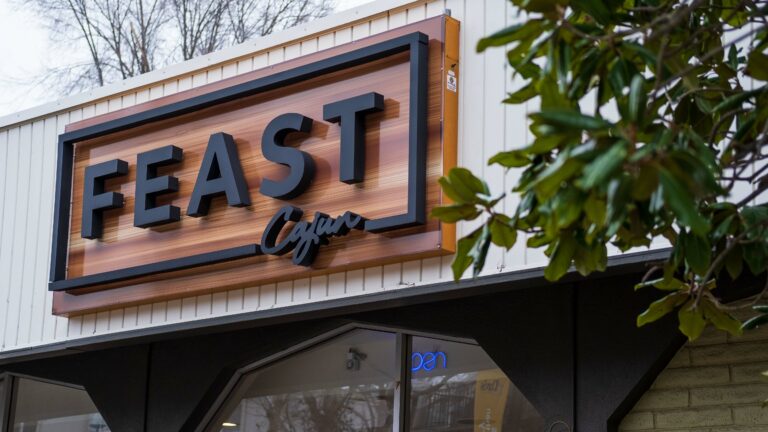
Familiar Asian dishes meet Southern Cajun cuisine at new restaurant Cajun Feast

UC Davis alumni open student-oriented restaurant in downtown

The formerly abandoned UC Davis bookstore located near the corner of 3rd and A St. is now the sight of an unfamiliar culinary experiment. Cajun Feast combines Southeast Asian cuisine with the Creole-French influenced decadence of Cajun flavors. Co-owner Larry Wong wants to give students the sit-down experience on their terms and within their price range and, as a former student, he may have just gotten it right.

The interior is clean and minimalist, yet warmed with wood and copper accents. The crowd is made up of both students and Davis residents, which speaks to Wong’s intention to reflect the local Davis landscape. Situated on each table is a copper “beer tower” that’s a step up in presentation from a pitcher — a small addition that elevates the dining experience for students. It’s also an interesting way to incorporate tactile eating, as diners can turn the faucet handle to pour themselves a glass of beer. A beer tower starts at $20.

“It’s a casual eating cafe,” said Wong. “There’s nothing fancy about it.”

Wong, a former UC Davis civil engineering major who works in the construction industry, talked about how he came to start a restaurant. 

“I’ve always wanted to invest in the restaurant industry, but every time I had to pass on it,” Wong said. “It wasn’t my time yet.”

He expressed his personal experiences with Asian cuisine and how being introduced to Cajun food inspired his desire to bring together the best of both worlds. 

“I pull inspiration from different areas [of the world] that I’ve been to,” Wong said. 

The first time I tasted the food, I could tell it was clearly Cajun-inspired. The savory smell of garlic and butter in the garlic noodles immediately showcased the French influence that’s a cornerstone of the cuisine. It was topped with fresh cheese and shallots. I admire that the meal was light and creamy at the same time. 

I was supposed to “try” the noodles, but I ate a whole bowl as we spoke. Priced at $5 for a large bowl, good affordable food is their expertise. Wong wants it to be a student go-to — and I’m sure it will. 

“The prices are suited for students,” Wong said. “I was a student once. I’m hoping to be able to make this into a canteen. [Students] can stop by for a quick bite and head out.”

Three large, whole shrimp came next. I’ve never experienced taking apart a whole shrimp, beady eyes and all, so this was a fun first for me. I enjoyed the tactile component. It’s fun to play with my food, but in a mature way. They were served with a peanut sauce that had a tangy cayenne back-of-the-throat spicy flavor.

I went home with chicken skewers that were accompanied by the house peanut sauce. Again, I liked being able to have hands-on experience. The chicken is blackened and juicy and when dipped in the peanut sauce, easily devourable. 

There is a spice-o-meter on the menu, and at the top is “Hell.” I asked about the few people who have tried the “Hell” level, and the consensus is that it lives up to the name. 

 As returning members of the Davis community, the Cajun Feast family wants to include students in their success. 

“It’s very important to me [to hire students] because they want to learn as we want to teach,” Wong said. “One thing about me is that I love to teach. This is a great way to start.” 

The menu and more information are available on their Yelp page and website

Written by: Josh Madrid — arts@theaggie.org

“The Rise of Skywalker” — the movie that divided the Star Wars fan base

 A review of Lucasfilm’s final movie of the saga

The Skywalker Saga, the last of the Star Wars sequel trilogy, has finally arrived. Directed by J.J. Abrams, “Star Wars: Episode IX — The Rise of Skywalker” opened in theatres on Dec. 20, 2019. With a budget of $275 million, it was one of the most expensive films to produce in history.

The film made over $1 billion in ticket sales, becoming the seventh Disney movie in 2019 to do so. Disney is on a record-breaking streak in the film industry. 

Rotten Tomatoes, however, did not seem to agree with the new movie’s success. The film received a shockingly low Tomatometer score of 52% — the second lowest score of Lucasfilms following the release of “The Phantom Menace” in 1999. 

Skywalker was not the only thing that rose on that Friday — so did the fan’s opinions. Right after the launch of the last film of the trilogy, the Star Wars fandom split due to the controversy. 

Let us try to uncover why this divide happened by recapping the film itself. The plot revolves around Emperor Palpatine, the infamous Sith Lord, getting in the heads of Kylo Ren and Rey and trying to turn them to the Dark Side. Kylo finds a Sith Wayfinder, which leads him to an unmapped planet, Exegol, where Palpatine hides out. 

For all of the main characters, finding Exegol is the primary mission of the film. Apparently, Luke Skywalker had been hunting the planet down for years, and so Rey takes it upon herself to finish the job. 

Kylo, however, is also trying to do this — thus, throughout the film, Kylo and Rey have frequent conversations via The Force. And let me say as a member of the audience, the line between flirting and hatred was slim. 

Then, Leia’s last breaths are used to get ahold of her son, Ben (also known as Kylo Ren), to dissuade him from The Dark Side. She prevails, and Kylo Ren ditches his name and goes back to being Ben. 

Now things get weird. Rey impales Kylo Ren, but then saves him. Even after he tried to kill her and coerce her to the Dark Side, she sensed the death of Leia and took pity on him. 

Rey proceeds to confront Palpatine on Exegol, and he tells her to kill him so that he can transfer his soul over to her as the new Sith Lord. Rey said, “No way José,” (well, not really), and then Ben comes to the rescue.

Rey uses the last of her life force to deflect Palpatine’s lightning, which then kills him and herself. Ben turns good and transfers his life force into her, but right before he dies in place of her… they kiss. 

In the end, the Resistance wins against the First Order, of course, and they celebrate. A brief kiss is exchanged between two female Resistance Fighters, which probably made Disney feel “woke,” but the rest of us were thinking, was that it? It is 2020 (2019 when the film was released) — is that the best Disney can do? If J.J. Abrams wanted to “represent” the LGBTQ+ community, he failed. 

In any case, Rey visits Luke’s childhood planet Tatooine and buries the last of the Skywalker Lightsabers. She whips out a brand-spanking-new yellow lightsaber, which she likely made herself — although it was not made clear in the film. A bystander then asks her what her name is and she responds, “Rey Skywalker.” The end. 

Once the screen turned black, three questions came to mind. 

One: Was the kiss really necessary? I get it, there was a lot of sexual tension between Rey and Kylo Ren, or “Ben,” in the film, but did they really have to kiss to seal the deal? Some Star Wars fans, including myself, were appalled by Disney’s poor choice in romanticizing enemy alliances given that he had previously tortured her in the first film and she had literally stabbed him. 

Some viewers, however, such as the “Reylos” — the Star Wars fandom ship name for Rey and Kylo — were relieved by the controversial kiss. It was bound to happen, so why not make it happen in the last film of the sequel trilogy? In the end, the Star Wars fandom divided into sides of either pro- or anti-kiss with strong opinions to back up their reasoning. 

Two: What was the secret Finn was waiting to disclose to Rey the whole movie? While Rey and Finn were sinking to their near-death in the quicksand scene, Finn yells out to Rey that he has something to tell her. But he never actually tells her. The producers tease the audience by mentioning the secret more than once after the scene, but Finn never actually uncovers his secret.  

If you were clinging to your seat in anger when the credits began, you were not alone. Abrams revealed to the audience during a Q&A that Finn was going to let the cat out of the bag that he is force-sensitive — the potential power of becoming a Jedi and using the Force. 

I know we all thought that Finn was going to put his heart out on the line and profess his love for Rey, but no. Talk about anticlimactic. 

Three: How in the world does Emperor Palpatine survive his death in “The Return of the Jedi,” released in 1983? The Sith Lord appeared to have fallen to his death when Darth Vader threw him down a giant reactor shaft, after his failed attempt to turn Luke Skywalker to the Dark Side. But here he is, in another Star Wars film.

Let’s back up a bit to fill in the missing pieces. Evidently, the movie quoted a line from the prequels which vaguely explains how the Emperor is still alive, “The dark side of the Force is a pathway to many abilities some consider to be unnatural.”  

As the story goes, the ability to cheat death is also the reason why Anakin was swayed to the Dark Side in the first place, but then why did Darth Vader not come back too? Essentially, Palpatine was able to resurrect himself from the powers of the Dark Side, but no real detail has been revealed other than surface-level information. 

And can we talk about Emperor Palpatine being a grandfather? Yikes! At the end of the film, the Sith Lord reveals to Rey that she is a Palpatine. Of course this explains Rey’s persistent internal struggles with being drawn to the Dark Side during the sequel trilogy, so it all makes sense. 

The mystery of Rey’s family-line finally comes to light — it only took the last movie to figure it out! Basically, Rey’s parents, one being the child of Palpatine, abandoned her on Jakku to protect her from her grandfather who knew of her special potential. 

But that is all we really get as an audience. “The Rise of Skywalker” was great at having news-breaking moments, but never really filled in the gaps as to how or why they happened. But do not fret, Lucasfilm will be releasing another Star Wars film in three years, so hang on tight, the game is not over. 

Written by: Sierra Jimenez — arts@theaggie.org

Rally held to honor Natalie Corona’s life on the one-year anniversary of her death

0

Gathering brings up current social issues, including Blue Lives Matter movement, impact of social media, more

The Davis community was rocked by a terrible tragedy last year, on Jan. 10, 2019: the death of Natalie Corona, a 22-year-old rookie police officer. Corona was fatally shot in the line of duty while responding to a car accident in Downtown Davis. To honor the life of the department’s “rising star,” community members gathered in front of the Davis Police Department earlier this month, on Jan. 10, to show their support and keep her memory alive.

The rally was organized by the group LEO: Law Enforcement Officer supporters. One of the founding members of the organization, John Freer, expanded on the efforts that were made to support Officer Corona. 

“Last Friday marked the one year anniversary of the tragic passing of Officer Natalie Corona,” Freer said. “We wanted to organize a rally to show support for the family and the Davis PD and to let them know that there are people out there that are on their side.”

During the rally, Corona’s former fellow officers unveiled a new park bench and plaque outside the department to honor her legacy. The plaque sits alongside a plaque of Officer Douglas Cantrill, who was killed in the line of duty in 1959.  

In addition to the new memorials added to the police department, a company by the name of Frisard’s Trucking Co. Inc. showed their support for Corona. Freer noted that the company has a strong attachment to law enforcement officers and, as a result, created a truck that has the names of all the fallen heroes from police departments across the country in 2019, which they drove from Louisiana in support of Corona. 

It was pointed out by the LEO organization that, over recent years, a disproportionate number of police officers have been killed in the line of duty. 

“It’s only the beginning of January and we have already lost ten officers across the country,” Freer said. “These people are human, just like you and me, and every year there are so many more police officers getting shot at. It’s ridiculous.”

Corona’s death sparked controversy at the UC Davis campus, when the ASUCD Senate attempted to pass a piece of legislation to honor her life and efforts. The ASUCD Ethnic and Cultural Affairs Commission responded to this proposal with a statement of their own, calling the Blue Lives Matter movement “anti-Black and disrespectful.” 

Freer touched on this sentiment, saying the dangers associated with being a police officer have become even more grave because of the negative portrayal police officers often have in the media.  

“Times have changed, and a simple traffic stop can be their last stop,” Freer said. “There are brave men and women that put their lives on the line to protect outs and I think that there are times that it is taken for granted. If you are sitting in the comfort of your home and something goes wrong, you can always call 911 and they are going to be there. Being an officer is a dangerous job and we want them to know that they have people supporting them.”

Freer expressed the need for community members to “protect the people that protect us,” and that joining organizations like LEO and the Sacramento Valley Backs the Blue is a good place to start. 

“It’s really tragic to see a beautiful 22-year old officer taken for no reason,” Freer said. “We just hope that the community continues to heal and that the family of Officer Corona knows that she will never be forgotten for the brave sacrifice that she made.” 

Written by: Sneha Ramachandran — features@theaggie.org

State and local government roles offer source of passion to two UC Davis students

0

From collecting signatures to protecting the delta, these roles would allow for greater student voice, representation within government

With its proximity to the state capitol, UC Davis is often a top choice for students who want to pursue a career in politics. Two students are already starting to take their political aspirations off-campus and are making runs for local and state positions in 2020. 

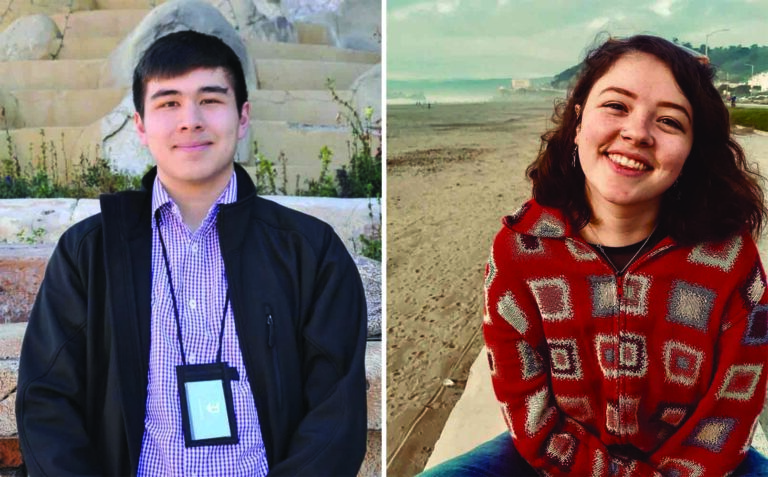
Francois Kaeppelin, a third-year political science major, is running to be a member of the Yolo County Democratic Central Committee (DCC) and Sophia Racke, a fourth-year international relations major, is running for the California State Assembly.

Kaeppelin has actually occupied this position since March 2019, ever since he sought it out and was appointed to the position. Kaeppelin noticed that the committee had a vacant spot, and is now running for reelection. He saw this role as an opportunity to bring a new voice to the DCC.

“I have speaking privileges during meetings, and I can take votes on resolutions,” Kaeppelin said. “It pretty much gives me a place at the table, and the students’ voice was desperately missing at the time.”

In addition to having the much-needed power to bring attention to pertinent issues that affect students, Kaeppelin also puts a lot of his focus on housing and security in the community and has been able to completely revamp the DCC’s online presence. When he began working for the committee, the website’s domain had expired, making it almost impossible for people to stay up-to-date on the committee’s proceedings. Kaeppelin said having adequate technology is imperative for the success of the committee — and the Democratic party — in the upcoming elections.

“The biggest thing for me is technology,” Kaeppelin said. “I designed the website and made sure that everybody is on the same page when it comes to technology. I’ve basically been setting up the infrastructure to make sure that a Democrat gets elected in 2020. Just setting up the infrastructure is crucial.”

Even though he is currently running for reelection, Kaeppelin is going through the campaign process for the first time, which provides him with a unique perspective. The most difficult part of the process so far, according to Kaeppelin, has been collecting 40 signatures from registered voters in California’s 4th district, which he needs just to appear on the ballot. Though 40 signatures may not seem overly challenging to some, many Davis residents — especially students — are ineligible to sign his papers because they are registered to vote in their home counties.

Racke encountered an issue quite similar to Kaeppelin’s. 

“I had to collect 40 signatures in one week, and it was finals week at Davis,” Racke said. “My campaign manager and I reached out to everyone we knew, […] but they had to be registered to vote in the 4th district.”

Racke decided to enter the race while studying abroad in London, leaving her with just one week between the time she returned from her program and the deadline to turn in her petition papers, requiring 40 signatures. After having only one day to find her final 10 supporters, she secured 11 — bringing her total signature count to 41 and securing her place on the ballot.

Racke’s decision to run is a direct product of her time in London. While studying at the London School of Economics, she became involved in conversations regarding United Kingdom students’ concerns about  Brexit. The more she talked to these students, however, the more she realized that many of them were uneducated on the details of the issue.

Racke began to examine her friends’ opinions on politics back in the U.S. and found that they were similarly passionate about certain federal issues, but at a loss regarding how to get educated and involved. Racke explained that this sparked her interest in having a more expansive role in California’s politics.

“[My friends and I] thought that we could get attention through [the California State Assembly] and get more people involved in local politics and get people to realize that you can make a difference no matter your age or background if you have the passion and desire to do so,” Racke said.

She put together a campaign team, partly composed of friends she met in London, all of whom are featured on her campaign’s instagram, @sophia.racke. They began to brainstorm what issues they felt most passionate about, and Racke and her team came up with five specific policy goals going into 2020.

“One of them is protection of the delta and its wildlife,” Racke said. “Another one of them is investment in wildfire prevention. Awareness, intervention and prevention of sexual assault, especially on our campuses. Awareness, intervention and prevention of elderly abuse, and the […] reorganization of political finance and regulations.”

Racke now needs to pass the primary elections on Mar. 3, 2020. If she does so, her name will appear on the ballot for the general elections in November. Her message to students? Get involved in local politics, whether that be here in the 4th district or in your hometowns.

“Local politics have policies that affect your life every day,” Racke said. “It can be as simple as your housing — as students [at UC Davis] we have a housing issue. Young people have a unique voice, and they should use it.”

Written by: Katie DeBenedetti — features@theaggie.org

“The cost of living is too damn high!” Petition circulators outside Shields Library tell their story

0

Circulators encourage students to get involved in politics

“It pertains to everything,” explained Mark Thomas, a 51-year-old petition circulator, about the sign hanging on his table. “Everything is too damn high.”

Outside the Peter J. Shields Library and the MU on the UC Davis campus, one or two individuals can sometimes be spotted sitting behind a small table, urging students to sign petitions. These individuals, associated with the Department of Elections, are paid petition circulators. They are paid to collect signatures from voters, all while briefly educating them on the cause. 

“The whole point is to try to get […] a million and a half signatures,” Thomas said. “There’s people all over California doing it.”

From consumer privacy to supporting stem cell research, the circulators are promoting a handful of measures that could appear on the 2020 elections ballot. According to Thomas, the Department of Elections trains petition circulators on each issue before they’re sent off to collect signatures. Nevertheless, it is still up to each circulator to study the ballots on their own.

“We read on them and keep up on them,” Thomas said. “We’re constantly trained on this stuff.”

According to the National Conference of State Legislatures (NCSL), there’s a variety of petition circulators, and different approaches to regulating them. Circulators have specific age and residency requirements, and they can be paid or volunteer.

A handful of states, such as Arizona and Florida, have banned the payment per signature model. In California, however, paid circulators are common and relied upon by most campaigns. The NCSL website explains that campaigns that can adequately fund petition circulators are more likely to qualify for the ballot.

Although petition circulators are usually paid between $1 and $3 per signature, Thomas said he doesn’t focus too much on that detail. He doesn’t like to count signatures, instead he observes the signed stacks at the end of each day.

For students wondering if UC Davis invited these circulators to campus, the answer is no. Associate Vice Chancellor for Student Life, Campus Community and Retention Services, Dr. Sheri Atkinson, noted that these petition circulators are exercising their First Amendment rights.

“UC Davis is a public campus that allows freedom of expression within proper time, place and manner regulations,” Atkinson said. “In public forums such as the Quad, the university may not regulate the content of speech.”

Although many students have noted that the circulators seem to be harmless, Atkinson added that students who feel uncomfortable about or concerned over the circulators or any outside party have the ability to reference the UC Davis Student Expression support page for services and support.  

Yolo County doesn’t have jurisdiction over petition circulators either, explained Armando Salud, program manager of Yolo County’s Assessor/Clerk-Recorder/Elections (ACE) department.

“We do not employ them, nor do we know who they are,” Salud said. “Our office serves as the signature verification technicians and will only verify that information if and when the proponent or their representative turns it in to our office and meets certain requirements.”

Salud’s and ACE’s responsibility is verifying petition signatures, not sending out petition circulators.

Thomas says those who turn away usually end up coming back — enthusiastic and eager to help make a change.

“There’s people that came and walk right past us before,” Thomas said. “And then they said, ‘Man, I’d been passing this up, but I didn’t know what this was all about.’”

Thomas says circulators enjoy tabling at college campuses because they appreciate college students’ concerns for issues like the ones included on the measures. He also made sure to point out that he and the other petition circulators come in peace. College campuses, he said, are filled with bright, young people who care. 

As a student signed the petitions and repeatedly thanked Thomas and his circulation partner for their presence, Thomas said one more thing. 

“Look around,” Thomas said. “You see all these kids walking? They are our future.”

Written by: Alana Wikkeling — features@theaggie.org

Humor: Yesterday’s weather forecast, tomorrow

Jan. 12, 2020

Here at the Aggie, we’re proud to bring you high quality news coverage around the clock. Unfortunately, that clock revolves not around the 24-hour day, but around what is typically a two- to three-week editing and publishing cycle, so sometimes we may not be able to provide the minute-by-minute updates that you need. Nonetheless, we do our utmost to bring you the most important and urgent breaking news stories, eventually. 

This commitment is stronger nowhere than at our meteorology desk, where we provide you with tomorrow’s weather forecast everyday, no matter how many days it takes. Since we have more days to prepare our daily weather forecast than your other typical newspapers and local television stations might, we are able to take our time and be far more accurate than other meteorologists. The last thing we would want to do is jump the gun and provide you with predictions that are not as accurate as possible. In fact, we often use the benefit of hindsight to retroactively predict the weather that has already happened with 100% accuracy. Our competitors can’t boast that!

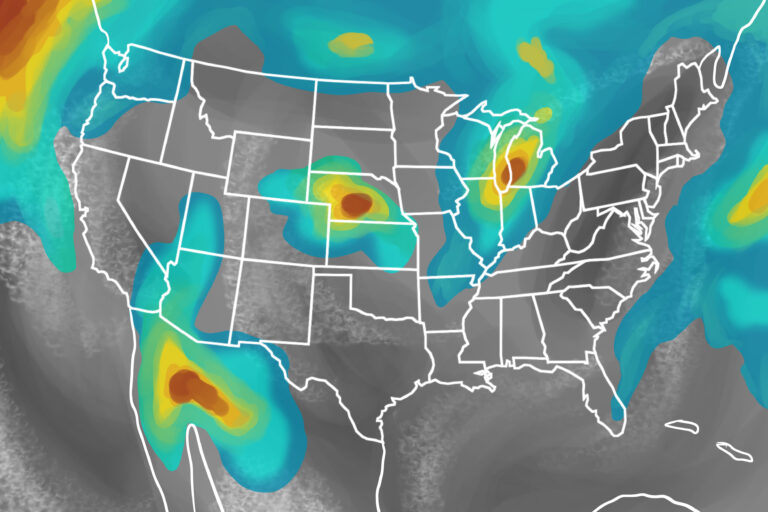
With that, I’d like to wish everyone a good start to Week 2 of Winter Quarter. Tomorrow, the 13th, we’re expecting a high of 58 degrees and an overnight low of 40 degrees. We can expect a chilly week to follow, with highs in the 50s and overnight lows getting close to freezing. There will also be dryness, humidity, winds, prevailing winds, wind chill, high pressure, low pressure, pressure gradients, visibility, air, air quality, air masses, cells, drafts, bursts, troughs and coldness — possibly due to a cold front, a cold snap or even a cold wave. There’s a jet stream somewhere, too. That’s important.

And you may also need to break out that rain jacket and umbrella toward the end of the week. We know how important it is to plan ahead and dress appropriately for the rain, especially for those bike commuters. Be sure to get those mud flaps on sooner rather than later, whenever sooner is. There’s a chance that sooner will have already come and gone by the time you read this, meaning you might have to settle for later. What day is this?

Pardon me, I got disoriented there for a second. Moving on. Regretfully, we can only run our retroactive forecast once a week due to our publishing schedule, so please click here to vote for which future previous days you’d like to receive more detailed hour-by-hour weather predictions and updates, after the fact.

We can also now retroactively predict with total confidence that it will’ve be 52 degrees and partly cloudy with a chance of rain on Thursday, Jan. 9, which is already only several weeks ago from now at this point, so we hope you are going to have post-emptively taken the time to have pre-planned behind accordingly, in advance.

Written by: Benjamin Porter— bbporter@ucdavis.edu

(This article is humor and/or satire, and its content is purely fictional. The story and the names of “sources” are fictionalized.)

Pilot injured in private plane crash at Yolo Airport on Jan. 1

County police, fire department respond to single-engine crash in Davis

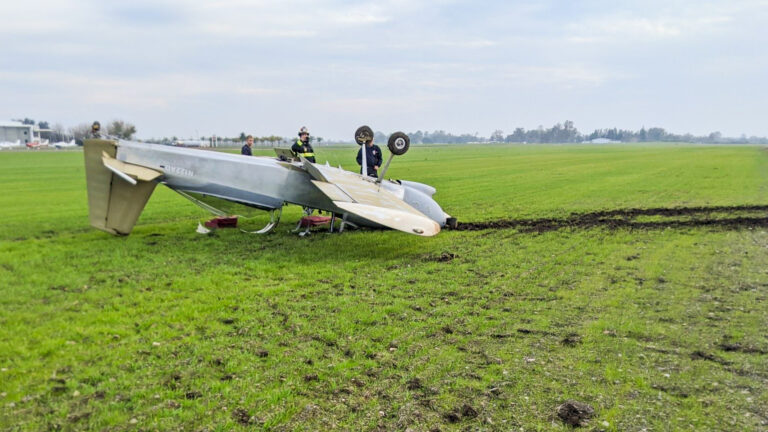
A homebuilt, single-engine aircraft crashed at Yolo County Airport on Jan. 1. The aircraft flipped upside down, injuring the pilot and the plane’s sole passenger, according to the West Plainfield Fire Department and Federal Aviation Administration (FAA). 

West Plainfield firefighters were the first to report the crash on Twitter, at 3:37 p.m. on Jan. 1.  

“Station 30 has been dispatched to AIR Aircraft Crash at AVIATION AVE, DAVIS, CA,” the post read.

In a later post on Facebook, the station said they received notice from a “third hand report” Yolo Emergency Communications Agency of a downed plane at Yolo Airport on Jan. 1 at 3:37pm — just down the road from their station near County Road 95 and County Road 31. 

Fire department, medical and police responders arrived on the scene to find the small plane overturned near one of the runways, said the West Plainfield Fire Department on Facebook. 

“The West Plainfield Fire Department, American Medical Response Ambulance, and the Yolo County Sheriff’s Office responded to the scene and found a single engine VANS RV-8 upside down off of Runway 34,” the post read.  

The post included photos that show the scene of the crash. Skidmarks ran from the runway to the crash site, where the small plane lay flipped upside-down — its cockpit window smashed and surrounded by debris. 

The pilot of the downed aircraft had been helped out of the plane’s cockpit by the time responders arrived, according to the fire department, and was later transported to a local hospital.  

The preliminary accident data has since been removed from the FAA’s website, but a cached page of the original incident report suggests that the pilot was the sole occupant of the plane at the time of the crash. The incident report notes that the pilot’s injuries were minor and that the crash occurred during the landing stage of the flight when the aircraft “veered off the runway.”

West Plainfield FD said in its Facebook post that investigation of the cause of the crash had been turned over to the Federal Aviation Authority (FAA). Lt. Matt Davis of the Yolo Sheriff’s office later said that the cause of the crash was undetermined and that his office would also be turning over the investigation of the crash to the FAA.   

Data from the plane’s FAA incident report confirms the plane’s model as the VANS Aircraft RV-8, a tandem, fixed-wing and single-engine experimental aircraft. VANS advertises the plane as a fast and “aerobatic” plane capable of performing loops and rolls in competitions.  

 According to a brochure from the airplane manufacturer’s website, the RV-8 is part of a line of airplane models built from a kit, which VANS says can be assembled at home in a garage or similar space and does not require professional experience to put together. 

“Building an RV requires a modest array of tools and a comfortable space about the size of a two-car garage,” the brochure read. “It does not require any special skill. Most RVs have been completed by people with no aircraft building background at all.”

The Yolo County Airport is listed as a General Aviation Airport on its webpage, meaning that it primarily serves private transport and recreational planes similar to the RV-8 that crashed on New Year’s Day, rather than commercial flights. 

Written by: Tim Lalonde — city@theaggie.org 

UC Davis continues to be a top school for sustainability

UC Davis is most sustainable university in U.S., third globally, according to GreenMetric Rankings

For the third year in a row, UC Davis has been named the “most sustainable” university in the U.S. and the third most sustainable university in the world, according to the 10th annual GreenMetric Rankings.

Between May and October of 2019, the 10th annual GreenMetric Rankings analyzed and evaluated data from approximately 799 universities globally, according to its website.

The Universita Indonesia launched the UI GreenMetric World University Ranking Initiative in 2010. According to the UI GreenMetric World University Ranking website, the goal of the project is to “provide the result of online survey regarding the current condition and policies relating to Green Campus and Sustainability in Universities all over the world.” 

Specifically, the Universita Indonesia hopes that “the rankings will be useful to university leaders in their efforts to put in place eco-friendly policies and manage behavioral change among the academic community at their respective institutions,” according to its website. 

“We are really proud, this is our third year to lock in number three in the world,” said Camille Kirk, the director of sustainability and a campus sustainability planner. “This particular metrics ranking is getting tougher every year. It’s pretty exciting to be able to keep our ranking.

Though just a number, these rankings are significant for the university.

“They give people a real foot hole in how […] we measure up,” Kirk said. “Especially because some of these things can feel so abstract, like greenhouse gas emissions. It’s really hard to imagine metric tons of an odorless, colorless gas. But rankings can give you a sense of how [we are] doing relative to others in the world. It also gives people pride.”

As a top university for sustainability, UC Davis is in a unique position to show other universities how its sustainability model can work across the world.

“We need to be modeling what to do,” Kirk said. “We need to be researching and getting the results out to the world so that we can help translate what we’ve learned into implementable action worldwide. We also need to make sure that students are ready to go out and be the best leaders and citizens they can possibly be. That, in this era, requires having sustainability literacy.” 

Setting and infrastructure, energy and climate change, waste, water, transportation and education and research make up the criteria that the UI GreenMetric World University Ranking utilizes when evaluating participating institutions, according to its website. 

These overarching categories are all assigned a weight when evaluating a university: setting and infrastructure accounting for 15%, energy and climate change for 21%, waste for 18%, water for 10%, transportation for 18% and education and research for 18%.

UC Davis is currently looking at two forms of metric systems — STARS and the UN SDGs — to “guide thinking” and inform the way UC Davis “thinks about sustainability,” Kirk said. 

Sustainability Tracking Assessment and Rating System, or STARS, “is a transparent, self-reporting framework for colleges and universities to measure their sustainability performance,” according to its website. The United Nations Sustainable Development Goals (SDGs) include “an urgent call for action by all countries — developed and developing — in a global partnership…that [tackles] climate change and [works] to preserve our oceans and forests,” among other things, according to the Sustainable Development Goals Knowledge Platform. 

UC Davis has had myriad initiatives aspiring to improve sustainability on campus. 

“We’re proposing a lot of direct action solutions, a lot of things we’re doing here at UC Davis,” Kirk said. “We are doing a lot of energy efficiency and conservation work. We’re implementing a lot of renewable energy, like our big, giant, 16.3 megawatt solar plant on campus. We’re also actively working on transportation systems for tomorrow.” 

For instance, Student Housing and Dining Service buildings located in Cuarto, Segundo and Tercero areas, uphold the Leadership in Energy and Environmental Design (LEED) standards, according to the UC Davis housing website.

One highlight of UC Davis’ sustainability efforts includes the “Big Shift,” a project currently underway. According to the UC Davis website, the “Big Shift” will cut the UC Davis’ “greenhouse gas emissions and water use by changing the way the campus heats its buildings.” Essentially, UC Davis will be switching from steam to low-temperature hot water in its heating system. 

Moreover, UC Davis hosts at least 283 sustainability-related events, like the Campus Sustainability Summit, according to the UC Davis website. 

The Campus Sustainability Summit, held May 31, 2019, is “an inaugural event to honor the achievements of the university, award those in this community who contribute to our campus’ sustainability goals and provide student programs an opportunity to present their accomplishments over the year,” according to the UC Davis website. 

“This year is the 50th anniversary of Earth Day,” Kirk said. “Our office is coordinating all sorts of collaborations with different sustainability stakeholders across campus for celebrations. We’re not looking at just one day, we’re looking at about a month worth of effort and activities.”

Looking towards the future, UC Davis will be engaging with the following upcoming actions: electrification of Unitrans, using biogas from the campus’ biodigester and installing solar thermal hot water heating for a research facility on West Campus. 

Written by: Aarya Gupta — campus@theaggie.org