59 F
Davis

Davis, California

Thursday, December 25, 2025
Home Blog Page 375

UC Davis men’s basketball drops second conference game at The Pavilion

0

Aggies bested at home again 

After a road trip that saw two victories on opponent’s courts, the UC Davis men’s basketball team failed to defend home court for the second time in conference play this season on Thursday night, dropping a close one to the Cal State Fullerton Titans. A game that went back and forth all night turned into a game that went down to the wire, but ultimately ended in a four-point loss for the Aggies.

“I don’t know if our guys have such a level of confidence in this building that they think they can just show up,” said UC Davis Head Coach Jim Les after the game. “But I think it shows a little bit of immaturity in our attitude. Again, part of that is on us as a staff getting guys ready, but the other part is on our seniors who understand how difficult it is home or away to grind out wins. They have to lead us with their energy and their effort.”

The Aggies decided to start Thursday night with a smaller, guard-heavy lineup that included freshmans Ezra Manjon and Elijah Pepper, sophomore Damion Squire and senior Joe Mooney along with senior center Matt Neufield. 

After the Titans jumped out to a quick 4-0 lead, a mid range jump shot by Manjon gave the Aggies their first points of the game and back-to-back threes by senior guard Stefan Gonzalez — who came into the game ranked seventh in the country in three-point percentage — gave the Aggies their first lead of the game. 

The next couple of possessions saw plenty of back and forth from both teams and a lot of physicality on both ends of the floor. After opening up an 11-7 lead with 14:41 remaining, the Aggies went ice cold for the next seven minutes of the game. Bad possessions, turnovers and hot shooting from deep by Titan sophomore guard Wayne Arnold led to a 10-0 run that gave Cal State Fullerton the lead, which it carried into the halftime break to go up 31-24. 

In the first frame, Squire and Gonzalez led the Aggies in scoring with six a piece, but the team struggled converting on the offensive end. UC Davis shot just 10-29 from the field and 3-15 from three to go along with seven turnovers. On the Cal State Fullerton side, the Titans shot 12-28 from the field and were led by senior guard Brandon Kamga, who poured in 12 points and three assists on 50% shooting. 

The start of the second half looked promising for the Aggies, as they received back-to-back threes by Mooney and Squire that cut the deficit to four. But the team’s sloppy play continued as UC Davis’ combination of bad shots and defensive lapses led to the Titans opening up a 49-39 lead with under 12 minutes left in the game. 

But just as they have done throughout this season, the Aggies fought back. The freshmen woke up and UC Davis responded with a 8-1 run. A few buckets from Manjon and a Pepper basket with the foul put the Aggies level for the first time since early in the first half at 52. 

With less than six minutes left in regulation, that last run proved to be all that the Aggies could really muster, as Arnold knocked down his third and fourth threes of the game and gave Cal State Fullerton a 62-54 lead with about two minutes remaining. 

The last two minutes saw a lot of fouls as UC Davis tried to claw their way back into the game, but the buzzer sounded and the Titans claimed their second straight win of conference play, moving their record to 2-3. Kamga finished with 21 points, four rebounds and three assists, but the key to this victory came from the hot shooting by Arnold, who finished with 14 points and shot 4-8 from distance — including those crucial makes down the stretch that secured the win.

“I thought they drove us,” Les said about the interior defense. “And then I thought our help was really soft so you come over soft and you are going to allow guys to make plays.” 

On the UC Davis side, Manjon led all scorers with 24 points, shooting 11-19 from the field along with five rebounds and four assists. Two other Aggies, Squire and Pepper, reached double digits with 10 apiece, but the night was overshadowed by the inability to make shots in crucial stretches and playing carelessly with the basketball. 

“If we miss shots, don’t execute, turn it over — those things happen,” Les explained. “But we are going to play with a level of intensity, aggressiveness, energy and enthusiasm that fits the tradition of that jersey. But we didn’t do that tonight and that’s on me.” 

The Aggies traveled to Honolulu on Saturday, where they took on Hawaii and suffered a heartbreaking 76-75 loss on a go-ahead three with 3.3 seconds left. UC Davis will return to the Pavilion once again on Thursday, where they will take on defending Big West Conference champions UC Irvine. 

Written by: Omar Navarro — sports@theaggie.org


Guest: Vote “yes” on Measure Q: Preserve the quality of life in Davis

Measure Q is a necessary sales tax that will support critical services and public utilities

Disclaimer: The views and opinions expressed by individual columnists belong to the columnists alone and do not necessarily indicate the views and opinions held by The California Aggie.

When I first arrived at the UC Davis campus in 1987 to start law school, I never imagined I would still be living here over 30 years later. But Davis turned out to be a great choice. After all, where else would I be able to ride my bike to school? And later in life, I would think, ‘Where else could I have found such an extraordinary place to live, work and raise a family?’ I am so glad that I chose to stay here. 

There are so many things that I have come to appreciate about Davis — the ability to ride my bike or walk just about anywhere, as well as the parks, public pools, bike paths, open spaces and the strong sense of community. I strongly suspect many of you have also come to enjoy the unique quality of life that our college town enjoys.

But we must take collective action to help preserve that quality of life. For this reason, I urge you to vote “yes” on Measure Q when you cast your ballot for the March 3 election. 

I know that for many participating in California’s March presidential primary election, national issues will be foremost on our minds. But if you live within the city of Davis and are registered to vote here, Measure Q is a critically important local measure that will go a long way toward maintaining the quality of life that Davis offers. 

Measure Q would continue the city’s existing 1% sales tax. Note that it is not a tax increase. Measure Q simply extends the existing tax which we last approved in 2014, and would otherwise expire at the end of 2020. This is a fair tax that is not applied to purchases of groceries of medicine.

The 1% sales tax currently generates approximately $8.6 million dollars annually. This revenue makes up nearly 16% of the city’s General Fund, which supports our police, firefighters,  bike paths, roads, parks and greenbelts, and many other services we all benefit from and appreciate. It’s also important to note that, unlike certain other taxes we pay, all revenue generated by this tax goes toward the city. 

Approval of Measure Q is essential if we want the city to maintain the services it provides.

Over the past year, I have had the privilege of serving on the city’s Finance and Budget Commission, which advises Davis on fiscal matters. This has given me the opportunity to gain a much better understanding of how hard our council members and city staff work to use our taxpayer dollars efficiently — to save money without compromising services. 

I’ve also learned more about the broad array of services the city offers. For example, I am very excited about the new daytime respite center that is being established here in town to provide support services for homeless individuals in Davis. I was especially impressed to see the compassion and engagement of UC Davis students who attended City Council meetings to advocate for this respite center. Part of the start-up funding for the homeless facility and for city staff who work in our community to address homelessness comes from the General Fund and, ultimately, the city’s sales tax, which Measure Q would renew. 

What makes Davis such a wonderful place, not only for UC Davis students, but for those who decide to stay here after graduation? I believe it is our active, engaged community, coupled with the city’s efforts to use our tax dollars to provide a high quality of life that we all appreciate. 

So, if you live in Davis and are eligible to participate in our city’s election, please register to vote. For details and deadlines, go to countyelections.org or sos.ca.gov. Then, on March 3, please vote “yes” on Measure Q. “Q” stands for the quality of life in Davis that we all enjoy, and that we must preserve.

Written by: Donna Neville 

Donna Neville is the former chief counsel of the California State Auditor and the State Board of Education and a member of the City of Davis Finance and Budget Commission.

To submit a guest opinion, please email opinion@theaggie.org

Letter to the Editor

UC Davis student responds to proposed tuition increase 

To the Editor: 

Re “Higher education should not come at a higher price” by the Editorial Board (editorial, Jan. 24): 

The proposed tuition hike is said to help fund student financial aid, but there are also other ways the UC system can help students save money. Every year, students have no choice but to spend an outrageous amount of money (about $1,200/year) on textbooks. In my first semester of college, I spent over $500 on books because I did not think I had any other choice but to buy the books that my professors assigned. I was worried that if I tried to save a few bucks on an older edition, I would only be confused due to a swapped chapter order or class requirements on access codes. Publishing companies have been taking advantage of students for too long, and the simple fix is to make educational material more accessible for all students. The CSU and California Community Colleges systems are already moving toward open textbook accessibility. Tuition is high enough, and textbooks should not be another reason I cannot afford an education.  

ANTONIO AGUILAR, THIRD-YEAR PHILOSOPHY MAJOR AT UC DAVIS 

To submit a letter to the editor, please email opinion@theaggie.org.

UC professors work on collaborative research to explain tiger stripes of Enceladus, Saturn’s tiny, icy moon

Reasoning for cracks, water eruptions from Saturn’s moon modeled in collaborative research

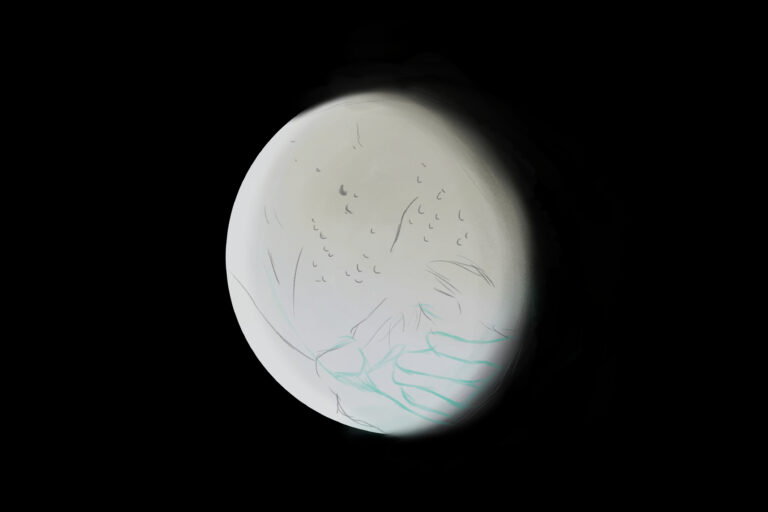
A tiny, frozen ocean world. Enceladus, the six largest of Saturn’s 62 confirmed moons, reaches only 310 miles in diameter, which, for reference, is about the size of the United Kingdom. An ice shell about eight miles in width covers the 20-mile deep ocean at its surface, which underneath contains a rocky core. Four straight, parallel fissures or “tiger stripes” cut across the moon’s south pole, with a constant flow of ocean water erupting out of the surface. 

The geological features of this icy moon lacked much understanding until three colleagues attempted to study it. Max Rudolph, an assistant professor of earth and planetary sciences at UC Davis; Douglas Hemingway, a planetary scientist at the Carnegie Institution for Science, Washington D.C.; and Michael Manga, a professor and department chair of earth and planetary sciences at UC Berkeley, began their research a decade ago to understand the interesting geological processes at play on Enceladus. 

The main questions they investigated included: Why these eruptions were occurring; why they were occurring in the south pole; why the fissures would break the ice but not freeze shut; why additional parallel cracks, around 21.75 miles apart, were occurring and why these processes have not been seen elsewhere in the solar system, Manga said.

“This has puzzled the astronomy and planetary science community,” Rudolph said. “There are a number of peculiar things about the fissures.”

After examining photographs, observing through telescopes, constructing physics-based computer models and computing differential equations, the colleagues believe they now know why these fissures are erupting.

The eruptions occur due to ocean water freezing, expanding and becoming more pressurized. Water is pushed up from the ocean, erupting out of the ice, which creates the first crack. When the water reaches the surface and hits the low-pressure existing in the vacuum of space, it spontaneously boils, creating the eruption, Hemingway said. 

“The idea is that if you put a container of water in the freezer, the water expands and pressurizes the container,” Manga said. “As the water freezes, it expands and pushes out on the container. The same thing happens on Enceladus.” 

The ice is thinnest at the poles, which explains why the cracks form in the south pole, however, they were equally likely to happen at the north pole, Manga said. Jupiter raises tides in the ocean, which create heat and friction that are strongest at the poles, making the ice thinner. 

The same tidal forces explain why the cracks do not freeze shut, even though the surface temperature of Enceladus is very cold, at 200 degrees Celsius. The main fissure continuously opens and closes as water from the ocean sloshes up and down it, making it thinner and hotter, Manga said.

Once the first crack formed, the built-up pressure from the freezing ocean released, so it did not create the other cracks. When the eruption from the main crack occurs, most of the materials go back onto the moon’s surface. The weight of the snow landing on the surface causes the ice to bend and, when the stress is great enough, another crack forms, Manga said. Each fissure is exactly 21.75 miles apart because that is where the stress is greatest.

“It turned out that by very reasonable assumptions about the ice shell, 35 km [21.75 miles] is a very natural number to get,” Hemingway said.  

Finally, these fissures have only been seen on Enceladus because of certain necessary conditions present. Enceladus is small and has weak gravity, so the compressing stresses are slight and the cracks can penetrate deep down, all the way to the ocean, Hemingway said. The combination of the bending stresses from the fissure ripping open and the weight of the ice holding it shut allows the crack to occur and stay open.

“The most interesting part of the paper, which we were not actually looking for, was why it only happens on Enceladus,” Hemingway said. “On bigger bodies of moons, the gravity is much stronger, like 10 times stronger, and when they start initiating a fracture, the overburden pressure of the weight of ice will hold it shut and not be able to open it.” 

Even though Enceladus was first discovered in 1789, this icy moon was not understood until recently. In the 1980s, the National Aeronautics and Space Administration’s (NASA) Voyager 1 and Voyager 2 space crafts passed by the moon and took its first close-up pictures. These images drew few conclusions about the moon, only showing that the terrain was fairly reflective and geologically youthful, according to NASA

More specific details about the moon were discovered in 2006, when NASA’s Cassini spacecraft started many flybys of it while orbiting Saturn. Cameras and instruments on the spacecraft took photographs of Enceladus, providing data and evidence to confirm the presence of an ocean and that the eruptions reach through the ice to this ocean, according to NASA.

“Cassini took beautiful photographs of what the surface looks like and the eruptions,” Manga said. “It also keeps track of where the spacecraft is and figures out the gravity. Knowing the gravity plus topography and elevation on the surface, we could figure out how thick the ice shell is.” 

The explanation for Enceladus’ first crack was initially thought of around 10 years ago, and Rudolph, Hemingway and Manga hoped to use this idea to address their further questions, such as with the eruptions, Hemingway said. 

The geological activity of the moon surprises many researchers because of its small size and old age at one billion years, Manga said. The icy surface, however, is younger, explaining the eruptions that spew icy particles into space.

Rudolph, Hemingway and Manga’s work took about a decade of collaboration, Manga said. Answering all of their questions required piecing together a lot of different bits of information. 

“We had terrible intuition,” Manga said. “We had other ideas about what would put a load on the surface. We always thought it was happening underground, and all the weight from the snow could be doing this. It took a long time to get there to figure it out.”

Rudolph, Hemingway and Manga’s work was published on Dec. 9, 2019 in “Nature Astronomy” and was presented at the fall meeting of the American Geophysical Union in San Francisco on Dec. 10, 2019. 

Next, Manga and Rudolph plan to look closer at the assumptions they made in their research. When solving the differential equations, many simplified assumptions had to be made. Manga said he wants to write a thorough and careful proposal to relax some of the assumptions that have not been taken into account yet. 

“We are trying to understand more of the details associated with these processes,” Rudolph said. “We presented a first-order model, but from the simplicity of the models, we want to add complexities and understand each step.”

Understanding ocean worlds like Enceladus is important because they help astrobiologists understand the evolution of these moons and whether they might be habitable and sustain life. Moons like Enceladus could uncover information about the context and origin of other lifeforms, Manga said. 

“It is a great place for life to persist if there is life inside the ocean,” Manga said.

Their work studying Enceladus was funded by NASA, the National Science Foundation and the Collaborative Institute for Dynamic Earth Research. 

“This research is motivated by our innate curiosity as humans about the diversity of planetary bodies in our solar system and beyond,” Rudolph said. 

Written by: Margo Rosenbaum — science@theaggie.org 

Review: “Dont F**k with Cats,” is lazy and distasteful

Netflix’s latest true crime series dehumanizes victims and glorifies perpetrators — as usual

Netflix released the controversial true-crime limited series “Don’t F**k With Cats: Hunting An Internet Killer” on Dec. 19, 2019. Directed by Mark Lewis, the documentary follows Canadian murderer Luka Magnotta who gained notoriety online after posting videos of himself killing cats. 

The series stars two internet sleuths who began investigating the case after Magnotta first posted a video of himself killing two kittens. Dianna Thompson, under the pseudonym Baudi Moovan online, was integral in discovering Magnotta’s identity.

According to Thompson, there is only one rule of thumb when navigating the dark web: “Don’t f**k with cats.” Due to the graphic nature of the videos Magnatta posted, he quickly gained a following of people trying to take him down. Because the video could not be located to a certain area, police investigations could not interfere. So members of a Facebook group enraged by the videos took it upon themselves to identify the killer. 

While the case is certainly fascinating, and it’s understandable why Lewis would create it, there are strong moral reasons why this series shouldn’t exist. A previous article in The California Aggie made an argument that true crime series can be damaging in the ways that they gloss over the lives of the victims and tend to glorify and perpetuate the narrative that killers create for themselves. This series further proves this argument. 

Magnotta was described as having narcissistic histrionic personality disorder. His whole life revolved around trying to get as much attention as possible. He created fake fan accounts and spread rumors in order to direct as much spotlight toward himself as he could. He broke the internet’s only rule in order to anger as many people as possible and build a following. He was arrested while reading news about himself in a cafe in Berlin.

Now there’s a three-part series all about Magnotta. “Don’t F**k With Cats” has been criticized for the tone it strikes and it’s lack of sensitivity toward the graphic content. 

“This dynamic alone sets up a major conundrum for the filmmakers. How do you accurately tell this story and depict Magnotta’s narcissism without playing into his fetish and glamorizing it?” Kayleigh Donaldson for Screenrant writes. “Sadly, the documentary stumbles hard with this problem. Its slick aesthetic plays heavily into Magnotta’s own style and the image he wanted to convey of himself.”

The series is also guilty of glossing over the life of Magnatta’s human victim — Jun Lin. Only one friend of Jun Lin was interviewed and there is no mention of him until late in the second episode. The documentary dismisses Jun Lin’s humanity, making him out to be merely a victim in Magnotta’s game. No one in the documentary seems to care about getting to know Jun Lin further, so the audience does not get to. He becomes a prop in the narrative and wasn’t given a life in the way Magnata was and thus was dehumanized. 

“The murder has robbed us not only of Lin Jun, but our ability to think and talk about him without feeling pain and shame,” his father said in a victim impact statement. It is painful to think of how those close to Jun Lin would feel to have his murderer be glamorized in the way the documentary does. 

It was discovered that Magnotta staged the murder off of a scene from “Basic Instinct.”

“He was playing a movie, and he was the star of this movie,” said a Montreal police officer. “And he wanted to be the star of the world.”

There is a half-hearted attempt to acknowledge the contradiction of making a documentary like this in the last episode of the series. Thompson faces the camera and asks the viewer directly if they, too, are “complicit” for watching the documentary until the end. It is a lazy and distasteful gimmick that only proves the lack of care they had over this fact because they made it anyway. 

Written by: Alyssa Ilsley — arts@theaggie.org

Public transportation is exactly what you need during vacation

Enrich your next urban adventure by leaving the car at home and deleting the Uber app

I have spent my entire life in the San Francisco Bay Area. My parents immigrated to the U.S. from Punjab in 1999, and we have been here ever since. Growing up, we always had family visiting, and one of our main activities were making trips to San Francisco. We got in our car and went to the same big tourist spots every time: the Golden Gate Bridge, Lombard Street, Pier 39 and Union Square.

I didn’t realize how many experiences I had missed out on in San Francisco until I was a junior in high school. Part of it is because my family never deviated from the same four destinations. But there was also the fact that driving a car to San Francisco meant incessant parking struggles as well as horrible traffic. There’s a very good chance that, on a particularly bad day of traffic, we would spend just as much time stuck in our car as we did actually enjoying the city outside. 

The summer before my first year at UC Davis, I had the chance to take the anti-car trip of a lifetime. I joined my extended family for their annual summer biking trip in Germany. On the way there, we stopped in Amsterdam, which, in terms of transit, is the antithesis of the Bay Area. 

Amsterdam was not a car-friendly place, and I liked that. Most of the streets were completely inaccessible to a car, and people mostly got around on bikes. This was the first time I was in a large, urban city where I could hear the voices of people and not the rush of traffic. The roads weren’t congested and run amuck with cars — they were lively, vibrant and bustling.

We took the Amsterdam Metro into the city, which gave us the chance to experience the city from a different perspective than the one from inside our car. Riding with other commuters, I had the chance to enjoy views of the city and the Dutch countryside without having to think about traffic, directions, parking or other minor annoyances that come with driving.

But what might have captivated me the most is that some of these train stations weren’t just transportation hubs — they were grand and beautiful centers that showcased the city’s art, culture and history. Although train stations are unlikely tourist destinations, New York City’s Grand Central Terminal and the Gent-Sint-Pieters railway station in Ghent, Belgium were the highlights of my trips. Public transit allows tourists to experience a city from a much deeper perspective, transporting you out of a superficial tourist escapade.  

I’ve come to appreciate how public transportation isn’t just a topic of mobility but an active and thriving institution that is vital to the functioning of a city or region. When I finally began to use BART, the Bay Area Rapid Transit, and the SF Muni to get around San Francisco, I realized how little I had experienced in a city that I had been to many times before. It wasn’t just that I gained a better understanding of the makeup and geography of San Francisco — I was captivated by the movement of its people into, outside and within the city. But most of all, I loved the creativity and lives that I saw on mass transit.

Of course going completely car-free is easier said than done. Even my great German biking trip required a car to take us from England to Germany before we could begin to meander through the countryside. A car can seem convenient by transporting you in a familiar setting and at your own pace and time. But being a tourist is about detaching yourself from mundane modes of familiarity and immersing yourself into a new way of life.

In places where public and mass transit are integral parts of the city, you shouldn’t rely on it as a back-up but utilize the service because it’s there to serve you. The bustle and noise of a city’s transit centers feel like a celebration of a wide and diverse community and its people. So maybe on your next trip, opt-out of using a rental car or Uber, and give the local light rail or rapid transit system a try. You might find yourself appreciating a city in an unexpected yet welcome way.

Written by: Simran Kalkat — skkalkat@ucdavis.edu 

Disclaimer: The views and opinions expressed by individual columnists belong to the columnists alone and do not necessarily indicate the views and opinions held by The California Aggie

Police Logs

Play your instruments in tune or else

January 10

“Gas powered leaf blower in the front lot.”

“Unknown address, excessive dogs, loud barking.”

“Male abandoned what appeared to be a metal toolbox.”

January 12

“Reporting party found four passports in the bushes at above location. Reporting party brought them home and has them for an officer to pick up.”

“Reporting party’s husband walked away from Safeway.”

January 14

“This morning, a subject walking by their building picked up rocks and threw them at the window panes several times, eventually breaking through the glass.”

“White SUV circling the area throwing eggs.”

“Male subject circling the neighborhood on foot, carrying a flashlight.”

January 15

“Male subject playing violin out of sync and causing reporting party to be upset. Reporting party has asked him repeatedly to move. On going problem for several years now, and it is causing undue stress to the reporting party and would like us to ask him to move to another corner.”

January 16

“No answer on call back. Message left.”

UC Davis staff, student employees enrolled in DuoMobile

System designed to prevent hacking through “second factor” identification

On Jan. 15, “all remaining unenrolled staff and student staff” were enrolled in DuoMobile, a multi-factor authentication program introduced in February of 2019 as part of the UCPath overhaul of personnel and payroll systems.

 DuoMobile is designed to prevent hacking by introducing a “second factor” into the login on UC Davis sites, although it can reportedly be used with other off-campus services and apps — including personal Gmail, Facebook and bank accounts — as long as the website or app also has a two-step security authentication system. Duo can function in international travel as well. 

The app requires users to enroll one of their devices, including a smartphone or cellphone, in Duo. A second device — a “backup” — must then be registered. This functions as a secondary method of authentication in the event that the primary method is not available. Typically, a temporary numeric code will be issued to access the account using Duo. 

“For most, the only change they’ll see starting Jan. 15 is that they’ll enter their Duo credentials when they log into Office 365, just like they do now for other campus accounts,” according to UC Davis News.

Faculty, students and others, however, are not yet required to use the app, and will still be able to access their email accounts without it. The article did not state when this would become a requirement.

Written by: Rebecca Bihn-Wallace — campus@theaggie.org

WarnMe test planned for Jan. 29

January test first of three planned for this year

A WarnMe test is planned for Jan. 29. WarnMe is a security system notifying the UC Davis community about emergencies and other urgent concerns taking place on or near the university campus.

 It will be the first of three tests for the calendar year. Faculty, staff, students and other individuals registered with WarnMe will receive a text message. It will also be posted on UC Davis Facebook and Twitter accounts.

Faculty and students are also registered automatically to receive notifications on their university email accounts.

The system caused controversy last year when it failed to adequately notify people about the fatal shooting of Police Officer Natalie Corona, which took place in downtown Davis. The message, which was supposed to alert 70,000 people about the shooting, reached only 20,000.

 The WarnMe vendor, Rave Mobile Safety, took responsibility for the glitch, which was apparently caused by the fact that only one system administrator had access to the key user lists. Since then, further tests have been successfully conducted.

Written by: Rebecca Bihn-Wallace — campus@theaggie.org

Best Music Videos of 2010s

The music videos that reflect this decade’s events

Music videos allow artists to add a visual element to their music. This past decade’s music videos point out issues concerning race and discrimination, the need for inclusion and more. These powerful themes have brought many artists together.

“Waka Waka (This Time for Africa)” (2010)

The decade started with this uplifting Shakira song which also served as the official 2010 FIFA World Cup anthem. The video includes scenes of past soccer matches, lyrics that address the fears players might have and words of encouragement. Multicultural children are also seen dancing around together, offering an inspiring image of diversity. 

“Gangnam Style” (2012)

This wacky dance video deserves some recognition, especially since it has more than 3 billion views. Psy, a South Korean songwriter and performer, created the unique dance routine that took the world by storm. The video features different groups performing the dance in different public spaces. It blew up the year it came out and defined 2012.

“Roar” (2013) 

Katy Perry has written many pop songs, but this song remains relevant throughout the decade. This video is just one of many videos with over 2 billion views, because of its power as an anthem for overcoming adversity. After the video came out, Perry performed the song during the Super Bowl XLIX halftime show while on top of an animatronic tiger. 

“See You Again” (2015)

Wiz Khalifa and Charlie Puth created this popular song for the seventh installation of the “Fast and Furious” franchise, but also in tribute to Paul Walker, who died in a car crash in 2013 before “Furious 7” finished filming. Fans of the film series were given the chance to see Paul Walker one last time alongside his co-stars, in a symbolic scene where Walker drives off in another direction. 

“Lemonade” (2016)

Beyoncé released a visual album artfully directed and centered around race, gender and political issues, as well as the infidelity of her husband, Jay-Z. Some of the videos are set in the 20th Century, due to her using the 1991 indie film “Daughters of the Dust” as her inspiration. This film highlights the importance of passing down traditions through generations of family members. These videos resonated with viewers and continued to remain relevant in this new decade. 

“Blood, Sweat and Tears” (2016)

K-Pop has found major popularity the last decade, and groups like BTS gained immense success from it. The production value for K-Pop groups’ videos seems limitless. The seven-member group first appears in an art museum and later, are seen floating in the air. The videos BTS creates are aesthetically appealing, with their lavish outfits and mesmerizing coordinated dance routines.

“Despacito” (2017)

Latin music is gaining more attention worldwide and becoming a more sought-after genre in the mainstream. Luis Fonsi and Daddy Yankee’s collaboration brought the genre even greater success in pop culture. The music video has about 6 billion views as of now, because listeners can’t help but dance to the rhythm of Latin music. 

“This is America” (2018)

Childish Gambino is unapologetic in the way he expresses his political views in this music video. It might be hard to watch the quick gun violence and Gambino’s dancing in an upbeat way right after, reminiscent of minstrelsy, but the startling structure shows Gambino’s perspective on racism and gun violence in the black community. 

“Earth” (2019) 

This animated music video brought together Snoop Dogg, Ariana Grande, Leonardo DiCaprio and many more to bring awareness to global warming. With the issue of global warming, it is easy to feel disheartened, but Lil Dicky’s comedic video with talking animals highlights the problems of global warming in a non-intimidating way. 

Written by: Gabriela Hernandez — arts@theaggie.org

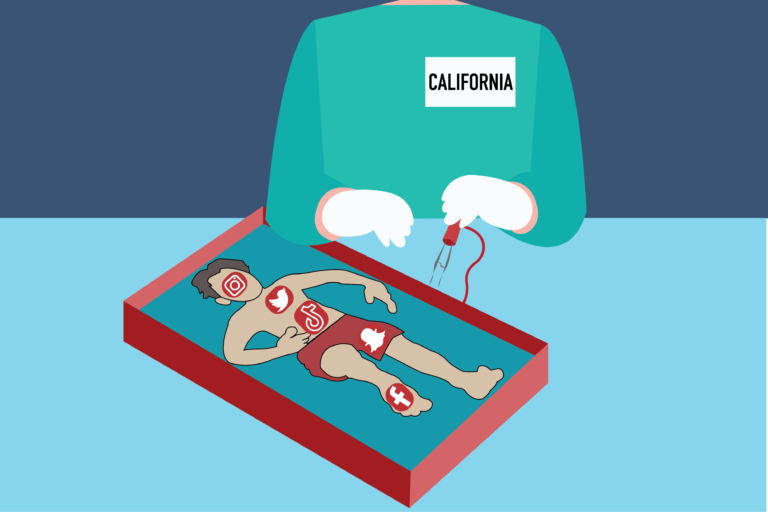
California is leading the way in the fight for privacy

CCPA the first step in race to take back our data privacy

In 1890, U.S. Supreme Court Justice Louis Brandeis called privacy “the right to be left alone.” But we live in a time where it is impossible to be left alone due to technology. Privacy in the digital age is difficult to even define. 

Your degree of privacy depends largely on who you are. What may be private information for one person may not be private for another. For example, the home of former Vice President Dick Cheney does not show up on Google Maps — a privacy that most of us don’t have.  

On Jan. 1, the California Consumer Privacy Act (CCPA) went into effect as the first major consumer privacy law in the United States. Its implications are yet to be seen, but it’s a crucial step toward figuring out what privacy is in this day and age and how we can get it back. The CCPA gives Californians the ability to own, control and secure their personal information that is collected by businesses and hold them accountable for the sale of users’ personal data. 

Your data is worth millions of dollars to businesses, but exactly how much it is worth is unknown. Many of the companies buying and selling data still don’t know what to do with it yet, but we do know that our data (and metadata) can be used against us to change the way we think. Based on voters’ metadata, Cambridge Analytica claimed that they had developed psychological profiles of every American voter, allowing campaigns to target their ads directly to those most persuadable.  

Our data is collected, assembled, analyzed and then weaponized to sell us products. Additionally, in trying to manipulate how we think, these products now include political candidates. This leads us to a question: How much of this manipulation do we want to allow in our society? In the other 49 states without a bill like the CCPA, theoretically, anything goes with user information — it can be sold and swapped to the highest bidder. 

Our data is immensely valuable, and yet we don’t personally see any returns on its sale. The core economy of the online world is our data, and we don’t even understand its value. Luckily, there are those who would like to change that.

Senator Mark Warner (D-VA) introduced a bill this summer that will require social media companies to be transparent in how they are capitalizing on our data. Senator Amy Klobuchar (D-MN) wants to implement a data tax that will punish companies that violate our privacy and sell our data. If companies are going to violate our privacy anyways, then we should at least be compensated. 

Gov. Gavin Newsom agrees with this sentiment in the form of a data dividend. Given that almost all of us exist online in one way or another, a data dividend would act as a universal basic income, from which we could all stand to benefit. In the same way that Alaskan residents get a check each year for the extraction of oil from the Alaskan Permanent Fund, a data dividend could do the same for infinite digital resources. 

An automated and tech-driven future that leaves humans behind is the fear of many, but a data dividend fund could ensure that those who will suffer the most in this future have a certain level of economic security.

California is leading privacy security in a way that the rest of our country needs to follow. As relentless users of social media, Americans need to win back our rights to personal and data privacy before it is too late. We need to have a better understanding of what should be private and what should be publicly accessible. 

There is no way to avoid the data world completely. We have to be aware of the tradeoffs we face when we make digital footprints — it is not something we can opt out of anymore. But what we can do is force those in power to do something about it. 

Our voices matter, as do these laws we vote on. Privacy must become a political issue across the country. We have a right and a duty to demand that our lawmakers change the rules of the game back in our favor. 

Written by: Calvin Coffee –– cscoffee@ucdavis.edu

Disclaimer: The views and opinions expressed by individual columnists belong to the columnists alone and do not necessarily indicate the views and opinions held by The California Aggie

Eighty food-insecure seniors requesting aid from Yolo County Meals on Wheels

Decline in funding for Meals on Wheels contributes to lengthy waitlist

Meals on Wheels is a nonprofit organization dedicated to delivering daily hot meals to food-insecure senior citizens. The program is partially funded by federal community development block grants, which have diminished by over $1 billion since 2001. This decline has contributed to a lengthy waitlist for the Meals on Wheels service in Yolo County. 

The Yolo County Meals on Wheels website describes its mission: “To nourish and enrich the lives of individuals in Yolo County with emphasis on those age 60 and older, by providing nutritious meals to active and home bound people; thereby, promoting their health, well-being and independence.”

Lisa DeAmicis, Program Coordinator of the Davis Senior Center, explained how the program improves the quality of life for food-insecure seniors. 

“It’s a nutritious meal that is planned by a dietician,” DeAmicis said. “Secondarily, it is a wonderful social outlet for people who are often on their own in their homes and may not have much contact with other people during the day.”

DeAmicis summarized the importance of Meals on Wheels’ role in Davis’ elderly community. 

“The Meals on Wheels program is a critical component of the services that are provided at the Davis Senior Center,” DeAmicis said.

The organization prepares 350 to 400 fresh meals daily from Monday to Friday, according to the Yolo County website. The food is then delivered to private residences and senior centers in Woodland, West Sacramento, Winters and Davis. 

Executive Director of Yolo County Meals on Wheels Christie Skibbins commented on the decrease in funding for the program. 

“There used to be a lot more government grant money and now there’s less available, but because all of the baby boomers are turning 60 years old, there are more people who need our services, and we’re able to serve less of them,” Skibbins said. 

To qualify for home-delivered meals, seniors must be over 60 years of age and be homebound, have a physical or mental disability or have trouble cooking. The only criteria for the community meals at various Senior Centers, however, is to be over 60 years old. Both programs are completely free for seniors, but there is a suggested donation of $4. 

The program’s Yolo County website lists its sources of income, which are primarily from fundraising, in addition to state and federal grants. Some of the federal funding takes the form of community development block grants, which have been declining steadily since 1980. 

Funding is used to cover all of Meals on Wheels’ expenses, including food, trays and employee payroll. 

There are roughly 80 food-insecure seniors on the waitlist for Meals on Wheels in Yolo County, according to Skibbins. She explained the limiting factors on the program’s capacity. 

“It’s the amount of money it takes to deliver the food and the amount of volunteers it takes to deliver the food,” Skibbins said. 

Despite this need, funding will continue to be cut in 2020. Meals on Wheels America released a statement regarding the federal budget for 2020.

“The proposed budget as presented would eliminate, or significantly cut, a number of critical funding sources that support the nationwide network of Meals on Wheels programs,” the website read. “Such cuts would put millions of vulnerable seniors in harm’s way.”

Currently, Yolo County Meals on Wheels is looking for student volunteers interested in helping in the Davis Senior Center Kitchen or in food distribution. Any interested students should contact Meals on Wheels Yolo County at volunteer@mowyolo.org or call (530) 662-7035.

Written by: Eden Winniford –– city@theaggie.org

Trump threatens to destroy Iranian cultural sites: a war crime

A series of tweets causes international outcry

Between 2017 and 2019, ISIS destroyed the remains of the ancient city of Palmyra, located in modern day Iraq, Syria and parts of Libya. What once housed centuries-old structures, columns and temples turned to rubble. Such acts of cultural destruction were strategic: to destroy the existence of a civilization that lived before and in contradiction to the Islamic State. 

In a series of tweets on Jan. 4, following the killing of Iranian General Qassem Soleimani, Trump threatened to destroy 52 targeted Iranian cultural sites if the U.S. was met with retaliation. Although Secretary of Defense Mark Esper said such actions would not be carried out, as they are war crimes, condemnation of the president’s proposal has nonetheless ensued. 

“In human history, humans have often destroyed each other’s gods or cultural property or looted the palaces of defeated rulers and so on,” said Dr. Heghnar Watenpaugh, a professor of art, art history and urban history of the Middle East. “It is important to think about what these things mean because they tell us that people understood images to have power. And so how do we neutralize the power of our enemies’ gods? Certain kinds of destruction of images can be understood in this way.”

After World War II, when Nazi Germany destroyed personal and public Jewish cultural artifacts as part of their attempt to fully rid the globe of evidence of Jewish existence, the U.S. emerged as a champion of cultural preservation. The Monuments Men, a “special military unit to safeguard monuments,” were created with this agenda in mind. 

“We’re at that point where there’s discussion that maybe it’s more important to preserve culture than to win this particular battle,” Watenpaugh said. “After the second World War, there was a whole series of international agreements and legal instruments that were created by individual states but also through international agreement between states that all point to the fact that the international community believes that culture and cultural heritage sites are a special category. And because they are the heritage of all of humanity, not just the country in which they are from.” 

One of these international agreements includes the United Nations Educational, Scientific and Cultural Organization’s World Heritage List (UNESCO). This list will “eventually contain all the significant cultural achievements of humanity from distant periods of human history,” according to Watenpaugh. There are internationally-supported protections and preservation plans to maintain the future well-being and posterity of sites inscribed on the list. 

Despite the formal international and political consensus that these sites must be protected, it begs the question: Why should the layman care for distant sites and cultures that may not be of their own descent? Watenpaugh cites the World Heritage concept to debunk that perspective. 

“The idea of World Heritage is that all of the cultural expressions of humanity, throughout its history, are an important part of the history and inheritance of all of us,” Watenpaugh said. “They don’t simply belong to us, but they have to be preserved for future generations. So even if we have no idea that the Buddhas of Bamiyan exist or we’re never going to visit them, they nonetheless are part of our inherent cultural inheritance. If they are, for whatever reason — earthquake or worse — destroyed, we are deprived of something whether we were aware of it or not.” 

This ideology views all items of cultural existence as evidence of human existence and human advancement. To Dr. Ali Anooshahr, a professor of Middle East and South Asia studies, the 2019 burning of the Notre Dame — which received international emotional outcry — serves as another primary example of this concept. 

“When the roof of the Notre Dame burnt down, it wasn’t just French people who were sad,” Anooshahr said. “People in all sorts of places felt connected to the destruction. I think their reactions reveal how people feel about [these sites] not just as the property of a state (France) or even the property of the present custodian (Macron, who’s the head of the French government) but, in fact, as part of a broader heritage.”

Despite the emotional response to the burning of Notre Dame, some may not feel the same emotional response to other less famous structures, with less media attention and commonality in everyday culture. To Anooshahr, the prevalence of the contemporary nation-state model may weaken the popular distribution of a world heritage perspective. 

“Obviously, there are places that we cannot see, we don’t always have immediate plans of accessing these sites and there are people who will never be able to visit them. But it’s not just about complete access,” Anooshahr said. “We’re used to thinking within the nation-state model. And in the nation-state model, we disregard humanity as a single being, with a common set of aspirations and achievements that thrives with culture, peace and education. So to think that human achievement in a certain place is irrelevant to me as long as I can’t see it, then I think that misses the point.” 

Cultural sites, according to Anooshahr, are the embodiment of changing empires — in the same geographic space, vastly different states have risen and fallen over dense periods of history. The fact these physical structures have survived for centuries is a testament of human accomplishment to preserve its evidence of existence. 

“Cultural sites, while they’re ever changing, they are absorbing information and experience every single day,” said Grace Landon, a graduate student of art history. “When you destroy that, it can’t come back. All that history can’t be rebuilt. When they’re gone, they’re gone. There’s a reason it’s a war crime.”

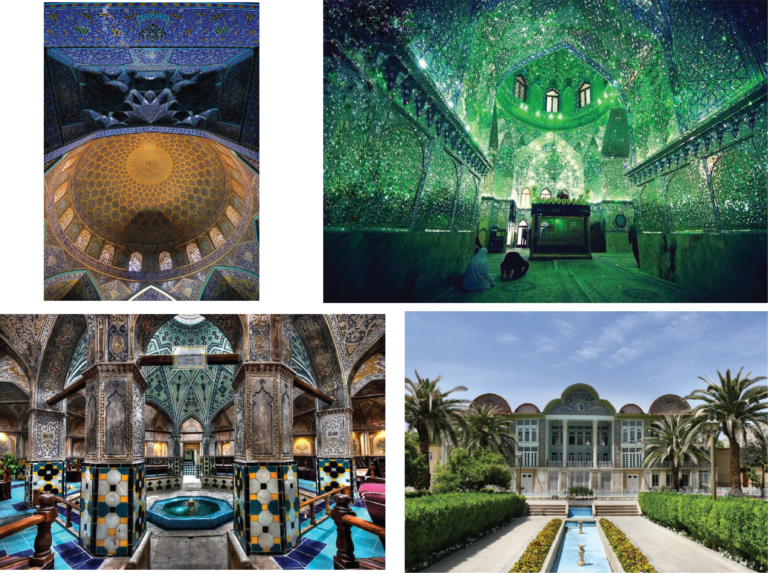
Although the specific 52 cultural sites that Trump targeted were not specified, Iran is “home to one of the world’s most storied ancient civilizations, has 22 cultural sites designated on the World Heritage List by UNESCO,” “including the ruins of Persepolis, the capital of the Achaemenid Empire later conquered by Alexander the Great. Others include Tchogha Zanbil, the remnants of the holy city of the Kingdom of Elam, and a series of Persian gardens that have their roots in the times of Cyrus the Great,” according to The New York Times

Persepolis was one of the first Universalist empires, said Anooshahr. Rather than enslaving the people of conquered nations, it attempted to assimilate them into the new empire. Destruction of these sites would mean losing physical evidence of such governmental and intellectual advancements. 

“[Iran has] mosques that are foundational to religious texts, architectural elements,” Landon said. “If that disappears, it not only affects the field of Islamic art history because you won’t be able to study them anymore, [but] it also destroys the influence it had on other cultures, specifically Chinese art, Western art. And you can see that influence in architectural elements, you can see that in manuscript production, and you can see that in paintings and tile work.”

Beyond the fact that historical evidence would have been lost in the proposed and purposeful destruction, great concern is rooted in that these threats of a war crime come from a president of an organized state. 

“In the last five or six years, we have seen intentional destruction of cultural heritage carried out by groups like ISIS,” Watenpaugh said. “We’ve seen it carried out during the civil war in Libya, in Mali, by people that we identify as terrorists, and we don’t think of them as good people that should be imitated. And so it is very shocking to see the President of the country that created the Monuments Men, and that has contributed so much to the idea of protection of cultural heritage.”

For Landon, although these tweets have not altered her already negative view of President Trump, it reminds her of a deep ideological change in America. 

“What America once was, we are so far from today,” Landon said. “We’re moving away from what I think are the essential values of what we should be.” 

What Trump may have considered a war-time strategy is a crime with repercussions more detrimental and sinister than possibly realized. 

“The state is supposed to be the custodian of cultural sites, so I assume that the thinking is the destruction of culture somehow delegitimizes the state as incapable of protecting them,” Anooshahr said. “But it doesn’t really work politically, it actually causes people to rally. It causes pain and anger among people, and it causes them to rally behind the state that they would not otherwise rally behind as in an emergency. It’s not just the state that suffers. People in the country suffer because it causes humiliation, pain.”

Written by: Caroline Rutten — arts@theaggie.org 

“Seinfeld” 20 Years Later

No hooks, no gimmicks. It was, and is, about, well, nothing  

I have no reservations saying that I am late to the party. But often, it’s better to be late, with a little sweat on your brow and a small huff in your breath, than to not show up at all. Throughout my time at UC Davis, I have often felt this way. I show up to a party happy to see friends, even though my bones are brittle and my spirit slowly fading. I enter Wednesday’s exceptional Funk Night after an hour of standing in line, a maligned, beaten down spectre of a man, yet one with a smile.

The same can be said of media and of media that truly touches you, which I classify in my mind as art. When you’re “late” to art, however, you really haven’t missed anything at all. In fact, you’re confirming one of art’s most beautiful qualities, which is that it moves in cycles. 

I am both delighted and thankful that the cycle has moved in such a way for me to be able to appreciate the 1990s television show and phenomenon “Seinfeld.” A self-described show about nothing, “Seinfeld” was the peak of ’90s televised entertainment, laughtrack and all. Yet, there was never any pressure to laugh at the subject matter, whether it was a live studio audience or pre-recorded. No hooks. No gimmicks. It was, and is, about nothing. That is, ostensibly, the magic of the show.

I always hear folks (often older), like my father and his cohorts in their thick Soviet accents, exclaim about whiskeys and the beautiful aging that comes with them. My father picked up whiskey as a hobby as soon as I left for Davis — a strange attempt at assimilating into American culture, as well as empty nesting. The best whiskey, he says, comes seemingly out of nowhere and has a good age, as it’s left in barrels for 10 or 20 years. He says the two decade period is an especially good indicator of telling if the people knew what they were doing or not. The same, strangely enough, could be said of television, and “Seinfeld” is no exception. 

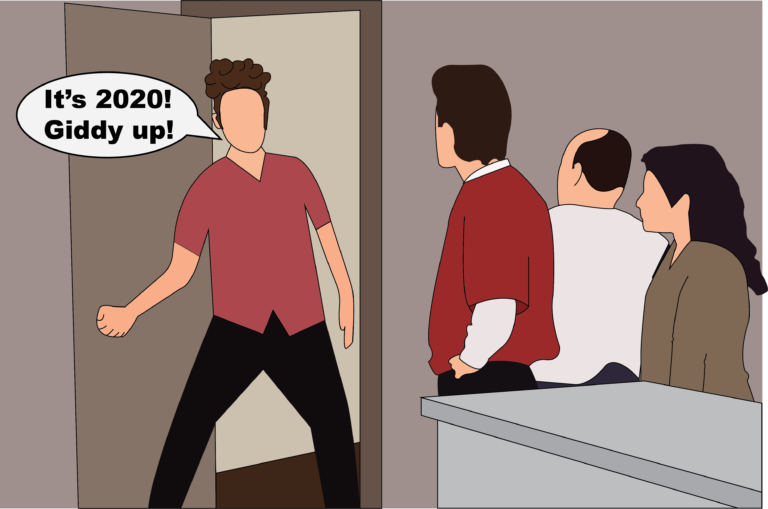
To say that “Seinfeld” has aged well would be a devilishly sly understatement. I have not laughed so hard in a very long time. In one episode, George Costanza, a lovable, bald oaf with a penchant for deep neuroticism, is planning something with Jerry, our titular protagonist. Both of them are waiting in the lobby of a building to “bump into” a lady Jerry met the other night, while at a birthday party, who informed him she worked there. George debates endlessly about what his cover should be. He’s always wanted to be an architect, but this guy, this veil of anonymity, should be an importer? An importer-exporter? A mixture of the two, perhaps?

They eventually settle on a guise for George. His name is Art Core Velay. And you’ll never guess — he’s an architect. When Jerry’s love interest, Vanessa, shows up, she questions them both, with Jerry deflecting quickly back to “Art Vandelay.” Art begins to go off about the love of his craft, while a beguiled Jerry looks to move past the whole thing.The situation is simply absurd in its entire construction. Jerry likes Vanessa and then orchestrates this entire stake out to get a chance at bumping into her. But he spends the entire time constructing a fake identity for George in case Vanessa asks them too many questions. In this moment, “Seinfeld” speaks to the absurdity of real life. 

Is this not the 1990s version of posting a specific story on Instagram to try and get a specific someone to reply to it? The emotional honesty here is refreshing, heartachingly real and most of all, hilarious.  

The cultural malaise that “Seinfeld” depicts is equally as fascinating, with profound relevance and almost alarming accuracy. How long you wait to call someone has been replaced with how long we must wait to send a DM or a text. Driving up to the Hamptons with your friends to see a friend’s newborn, only to discern that they’re the ugliest baby you’ve ever seen may sound hyper specific, but the heart of this is making a great effort to ultimately end up with nothing. The deft yet extensive list of side hustles each character gets into (most notably, George’s position as official car re-parker for Jerry’s block) hits home with any young person who feels as if they must be actively generating profit to make use of their time. Not to mention, sometimes people who work at trendy soup stands can just be really mean. These and so many more examples are on display while watching “Seinfeld,” and you notice that there is so much to glean, both culturally and metaphorically, that it’s almost impossible to overlook the influence the show has had. And yet, many do.

When asked if they remember “Seinfeld,” many students on campus were hard pressed to remember anything other than its catchy bassline of a theme. Many remember Jerry, but now see him as the “Comedians in Cars Getting Coffee” guy. This is just a tiny bit tragic, considering he used to be the star of the most popular show on television. 

“I remember that show!” said Hank Reich, a third-year environmental engineering major. “My parents threw it on over break while I was on my phone, and I didn’t look at it for the rest of the episode. I loved it.” 

Ignoring the show for 30 minutes is one thing, but actually enjoying it, as Reich remarked, is a clear marker that the show still has appeal, yet maybe doesn’t have the spread it deserves. 

Over Winter Break, I binged the first four seasons of “Seinfeld” on my couch. I had things to do. Friends I’d promised to see. Employers I fooled into hiring me. Grandparents for whom I swore to install Skype. All these things went out the window the moment I saw Jerry go up on stage at the end of an episode and do a little stand up set. I couldn’t stop. Even worse, I didn’t want to stop. I wanted to experience this slice of life, even if it was just four friends in pre-Giuliani New York City simply clowning around and revealing things about life in the process. 

In the very end, that slice of life, that glimpse into a truth, is all we can ask of art. For a show about nothing, “Seinfeld” really did make me feel everything. 

Written by: Ilya Shrayber — arts@theaggie.org

How to Winter Quarter

Students share how they make the most of the cold and fog

After an unfathomably short break, we return to Davis for Winter Quarter and hit the ground running during “syllabus” week, all while preparing for gray skies ahead. As we watch our semester-system peers enjoy another week or two of relief, we’re here, studying and biking with gloves on. 

Out goes the sunlight shining through the trees as you bike to class, and in its place comes rainy, remarkably short days that make it impossible to get any work done after 6 p.m. As bleak as these days may seem, there are ways we can bear, and even enjoy, these next few weeks. The California Aggie asked students for tips on how to conquer Winter Quarter. 

When it comes to staying dry, there are some great techniques that seasoned Winter Quarter-ers have. 

“Layer a sh-t ton,” said Makenzie Nye, a second-year international relations major. “I take the bus instead of biking, which is sad because I like biking.” 

“I wear rain pants,” said Kendall Siefert, a second-year biomedical engineering major. “[So] your butt doesn’t get wet when you ride a bike, and you don’t have to worry about the seat being wet.” 

Some people don’t even bother protecting themselves from the rain. 

“I don’t go to class to keep dry,” said Kate Heller, a fourth-year statistics and economics double major. 

So it sounds like the way to have the driest quarter possible is to ditch your bike, wrap yourself in plastic or just stay home. 

The Davis chill is so shocking that even the East Coast kids are complaining. 

“When you come to California, you expect it to be warm, so you don’t really dress to prepare, but it gets cold,” said Seifert, who is from Philadelphia, Pa. 

“You can’t be blasting the heat [all night], so when I wake up it’s so hard to get out of bed because it’s freezing,” said Antonia Sarria, a fourth-year neurobiology, physiology and behavior major. 

“Cold. Breezy. Gray. Snow. Shiver. I have been cold, I have been cold,” said Carwyn Gambling, a second-year civil and environmental engineering major. 

And if that doesn’t sum up Winter Quarter, what does? It’s chilly out here. But there are bright sides to the gloomy weather! 

As far as activities, people don’t seem to mind being forced to stay inside — “I lay in my warm bed with my heated blanket and do homework,” Siefert said. 

Nye hangs out at her friends’ apartments. 

“It’s quality time with people you love which is better than big parties,” Nye said. 

For some, staying inside also provides incentives to start exercising. 

“In the cold weather, I go to the gym more,” Heller said. Nye added that she enjoys inside exercise, like dance and yoga classes.

If you’re bored at home, put that New Year’s resolution in motion and head to the ARC.

Studying is also a good option when being outside is suddenly the worst part about going to class. Everyone crowds the usual study spots, and you can’t sit alone at the CoHo.

“You can find random empty classrooms to work at,” Sarria said. 

“I live at the Sycamore study lounge,” Heller continued. 

There is also snow. Not in Davis, of course, but we are relatively close to the slopes here in Northern California. If you get up early enough, you can make a day of it, without having to worry about lodging. But check the weather first — you don’t want to get caught in a storm. 

There’s no denying that Winter Quarter is a tough one, but we can see that there are some pros to this part of the year. If it weren’t for the chilling outdoors, the great indoors wouldn’t be as pleasant, and the possibility for productivity improves when more time is spent inside. If nothing else, Winter Quarter brings us together through our shared animosity toward this time of the school year and gives us the opportunity to appreciate the normalities of life. 

“I jump in puddles,” said Gambling. It’s the little things. 

Written By: Allie Bailey — arts@theaggie.org