59 F
Davis

Davis, California

Thursday, December 25, 2025
Home Blog Page 374

Measure G campaign seeks additional funding for better Davis K-12 teacher, staff pay

Measure G would implement parcel tax on Davis properties to offer competitive teacher, employee salaries

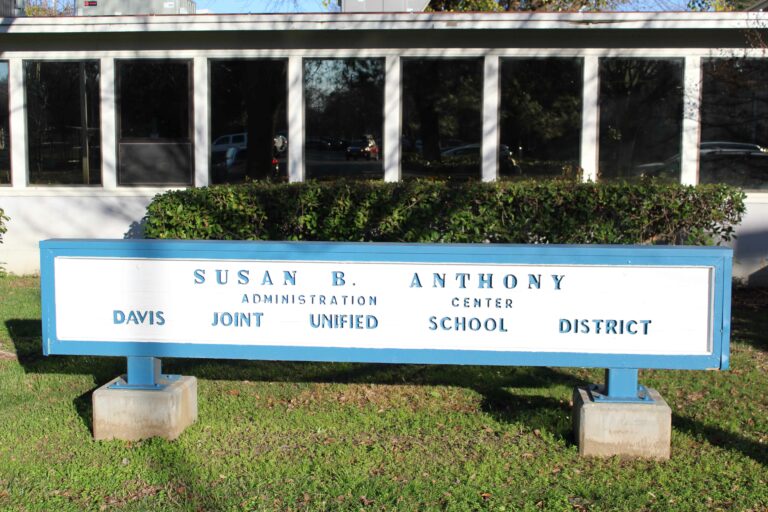
The Davis Joint Unified School District (DJUSD) and local education advocates are seeking support for Measure G, a citywide ballot proposition that would increase district teacher and employee pay through the implementation of a parcel tax. 

Measure G is one of two local ballot measures that Davis residents will vote on during the March 3 primary elections, along with Measure Q. Under California law, parcel taxes fall under special tax designation — meaning that two-thirds of voters will have to vote “yes” on the measure for it to pass. 

The ballot measure seeks additional funding for Davis schools in the DJUSD through the implementation of a parcel tax according to the text of Measure G. If passed, the measure would add a $198 annual tax for each parcel of taxable real estate for property owners in Davis, beginning on July 1, 2020. The tax would be increased annually to account for inflation. 

  The goal of this parcel tax, according to the text of the measure, is to generate funds for the school district to “attract and retain quality teachers and staff by keeping compensation competitive.” In other words, the funds raised by the tax would be used to increase DJUSD teacher and staff salaries. 

Joe DiNunzio, a trustee on the DJUSD Board of Education, said improving teachers and employee salaries is critical for the district to obtain and keep quality teachers and staff — and by extension, maintain Davis schools’ reputation for academic excellence.

“Delivering excellent public schools requires excellent teachers and staff — and to recruit and retain them, you have to have competitive compensation,” DiNunzio said. 

Davis teacher salaries lag behind comparable districts, DiNunzio said, which presents a challenge for the DJUSD to recruit quality staff in the future. 

“As [we] look at regional comparable districts — ones that are roughly the same size as us, with similar characteristics — on average, we pay our teachers and staff five to seven, in some cases, nine percent less,” DiNunzio said. 

Attracting new teachers will become a more pressing issue in the near future, as the district seeks to replace current teachers approaching retirement, according to DiNunzio. 

    “A lot of our teachers and staff are senior,” DiNunzio said. “We estimate between a quarter and a third of them are likely to retire in the next three to five to seven years. There’s a significant teacher shortage across the state of California, and the nation for that matter. So replacing these teachers will be critical and difficult.” 

Victor Lagunes, a teacher at Da Vinci Jr. High and President of the Davis Teachers Association, said that some DJUSD schools are already feeling the impact of an impending teacher shortage. 

“We’re starting to see the effects of [the teacher shortage] in our own district,” Langunes said. “There are plenty of examples to give, but one of the most notable ones right now: there’s a fifth-grade classroom that has had no teacher, the whole year.” 

Alan Fernades, another trustee on the DJUSD board, said that this classroom now has a teacher, but that the issue was “indicative of the early signs” of the challenges the district might face in the near future. 

The DJUSD is seeking to increase staff compensation to at or above the regional average, which requires an average three million dollars a year, DiNunzio said, roughly the sum that the proposed parcel tax will provide. 

Critics of Measure G, such as the Yolo Taxpayers Association, have argued that the district should find a way to increase staff pay by other means. An oppositional argument submitted to the Yolo Elections Board by the No Parcel Taxes PAC points to recent ballot measures over the past few years that increased Davis school funding. 

“In 2016 we approved Measure H, a $620/year parcel tax supporting Davis schools,” the rebuttal read. “In 2018 we approved Measure M, giving our schools 11 million annually for 30 years. Now, we are being asked to raise taxes yet again. Might existing funds be used to increase teacher salaries?”

But DiNunzio said that 85% of DJUSD funds already go to staff compensation, leaving few options for cost-cutting measures outside of cutting school programs or teaching jobs. The district’s need for additional funding is in part due to a dearth of funds from the state under California’s Local Control Funding Formula, according to DiNunzio. 

“Davis gets less than the average California district […] in large part because of the makeup of our students,” DiNunzio said. “So we’re already starting from a revenue gap. The only revenue tool we have as a local educational authority is a parcel tax.”  

Written by: Tim Lalonde — city@theaggie.org

Super Bowl LIV showcases strength of NFL

0

NFL shows no signs of slowing down as another successful year passes

After a two week layoff, Super Bowl LIV is finally upon us. This year’s big game, which caps off the 100th season of the NFL, has given fans a dream match-up featuring two of the most entertaining and historic teams the league has to offer. 

The San Francisco 49ers, representing the NFC, were the talk of the league all season long, jumping out to an 8-0 start and clinching the top seed in the conference. The 49ers boast the top rushing attack in the NFC, which surpassed 100 yards on the ground in 14 of 18 games, thanks to the efforts of tailbacks Raheem Mostert and Tevin Coleman. Mostert put up a record-setting performance in the 37-20 NFC Championship win over the Packers, running for 220 yards and four touchdowns. 

Defensively, cornerback Richard Sherman is the vocal leader of the best pass defense in the NFL, a unit that conceded under 170 yards per game on average. 

San Francisco also has a lethal pass rush, anchored by a group of four first round picks. The team already has nine sacks through two playoff games and will need to be disruptive in the backfield to have a chance to beat Kansas City. 

The team’s 13-3 finish was far beyond the wildest dreams of even the most optimistic fans. Nobody expected San Francisco to make such a significant jump from a 4-12 season in 2018 that landed it the No. 2 overall pick in the draft. The 49ers, an organization steeped in championships and all-time players and coaches, endured a miserable four-year stretch in which the team won less than 27% of its games. After the dismissal of former Head Coach Jim Harbaugh, San Francisco went through a period of significant turnover in its front office, coaching staff and roster. But those down years allowed the team to rebuild and eventually come out the other side under the leadership of Head Coach Kyle Shannahan and general manager John Lynch. 

The Kansas City Chiefs are making their first appearance in the Super Bowl in 50 years and hoping to finally deliver that elusive Lombardi Trophy to their loyal fans in the midwest. Head coach Andy Reid is also searching for the first title in his 20-year head coaching career. Reid lost to the Patriots in his only other appearance in the Super Bowl, which took place in 2005 when he coached the Philadelphia Eagles. 

Kansas City is an offensive juggernaut, boasting the top passing attack in the AFC and second-highest scoring offense overall. Third-year quarterback Patrick Mahomes, who captured last year’s MVP award when he threw 50 touchdown passes, turned in another sensational performance this season with over 4,000 passing yards in 14 games. Mahomes has a multitude of dangerous receivers at his disposal, including tight end Travis Kelce and wide receivers Tyreek Hill, Sammy Watkins and Mecole Hardman. 

The Chiefs have seen dramatic improvements in their defense under the guidance of first-year defensive coordinator Steve Spagnuolo, who helped turn around a unit that was simply dreadful last year. Kansas City employs a top-10 pass defense but has endured some struggles with stopping the run throughout the season, which does not bode well for their chances against the 49ers. However, the Chiefs should be playing with some confidence after holding star running back Derrick Henry under 70 yards in a 35-24 victory over the Titans in the AFC Championship. 

Apart from the action on the gridiron, the Super Bowl represents so much more off the field and has evolved to become arguably the most commercialized entertainment spectacle on the planet. 

Although Super Bowl Sunday is a pseudo-holiday for millions of diehard football fans across the country, it’s also a day when casual fans tune in for attractions such as the halftime show and in-game advertisement breaks. 

Singer Demi Lovato will perform the national anthem before kickoff, while notable artists Shakira and Jennifer Lopez will handle the halftime show which typically lasts 20-30 minutes. Throughout it all, viewers will be exposed to a heavy dose of commercials, with food and beverage products and automobile companies dominating the scene as usual. Since 2020 is a presidential election year, there will also be a chunk of political advertisements — the Donald Trump and Michael Bloomberg campaigns have already purchased 60-second slots. 

FOX, the broadcaster televising the game, is reportedly charging around $5.6 million for every 30-second space. The station had no trouble finding interested suitors as all available ad windows were sold out months before the game for the first time since 2013

The NFL enjoyed a steady rise in its TV ratings for the second year in a row, averaging 16.5 million viewers throughout the 2019 season. 

It was not long ago in 2015 that the league was reveling in its most-viewed season ever, drawing an average of over 18 million viewers, but things took a sudden turn in 2016 and 2017 when viewership dropped as low as 15 million on average. Many outsiders pointed to the impact of a political landscape undergoing great transition, as well as the polarizing protests and fallout involving former 49ers quarterback Colin Kaepernick. The NFL could not seem to escape the cloud of negative publicity surrounding it and people even started to question whether the league’s best days were behind it. 

Well, that mini “crisis” was short-lived as the NFL rebounded the past two seasons and saw steady growth in its television ratings and popularity. Across the 2019 season, each one of the league’s four broadcast partners — FOX, NBC, CBS and ESPN — witnessed a boost in their ratings. All in all, over 180 million individuals tuned in to at least one NFL game during the fall, and those contests accounted for 46 of the top 50 U.S. television broadcasts in 2019. That’s not to mention the expanded consumption of NFL games via streaming and mobile apps. 

The NFL is hoping a big audience on Sunday will help the league and its partners rebound from a slightly disappointing occasion last year. The highly anticipated match-up between the Patriots and Rams was the first Super Bowl since 2009 to dip under 100 million viewers, but was also the lowest-scoring affair in the game’s history. 

For perspective, Super Bowl XLIX in 2015 brought in an average of over 114 million eyeballs and stands alone as the highest-viewed television show in U.S. history. Although this year’s game might not reach that number, it’s poised to top the 100-million viewer mark as long as the contest is remotely competitive. The 49ers are one of the biggest brands in the sport, playing in one of the largest media markets in the U.S., while the Chiefs are led by a rising superstar in Mahomes and making their first Super Bowl appearance in a half century. 

The NFL is entering a critical period in which the collective bargaining agreement with the player’s association and TV contracts with the big networks are both set to expire in the next few years. The NFL has already begun talks regarding the new CBA, in hopes of avoiding a lockout like the one in 2011. On the television side of things, the league stands to reap massive profits in the next round of contracts and could see its rights fees rise by 20-30%. FOX, CBS, NBC and ESPN currently pay over $5 billion combined per season to show the games. 

In an era when traditional viewing habits are under transformation, with the rise of cord-cutting and expansion of streaming services such as Netflix and Hulu, live sporting events are one of the few remaining television products still bringing in massive audiences on a weekly basis. Although anybody can binge-watch their favorite scripted shows on-demand at their own leisure, nothing compares to the experience of reacting to a live sporting event in real time. As a result, advertisers will continue to target the millions of sports fans who tune in to watch their favorite leagues and teams. As long as advertisers are willing to keep paying exorbitant sums of money, TV networks will do whatever it takes to land the top sports and entertainment products they can get their hands on. 

With the legalization of sports betting in 20 states now, interest in the NFL will keep growing, which benefits all parties involved on the business side. The Chiefs are currently a 1.5-point favorite at most sportsbooks around the country, with a point total set around 54. In addition to the traditional wagers, the Super Bowl is known for its crazy proposition bets which range anywhere from the length of the national anthem to the color of the winning team’s Gatorade bath. 

The state of Nevada alone is expecting to break its own record and take over $160 million in wagers on the game. Many other states around the nation are preparing for similar circumstances and will be experiencing the chaos of Super Bowl Sunday for the first time. 

For fans hoping to attend the game in South Florida, tickets for Super Bowl LIV are on track to be some of the most expensive in the game’s history, with average prices hovering around $9,000 per seat and the cheapest options starting around $4,000. The newly-renovated Hard Rock Stadium in Miami Gardens holds around 65,000 seats, a relatively low number compared to most Super Bowl venues in recent history. Early weather forecasts show a slight chance of thunderstorms and showers, the same type of weather that occurred when the stadium last hosted this game in 2010. This would seem to favor the 49ers and their run-heavy offensive attack which is equally effective in any weather conditions. 

No matter who lifts the trophy on Sunday night, the NFL machine will keep chugging along. Even in an era when consumer habits are rapidly changing, the league has stayed as relevant as ever and continues to find ways to grab attention in a fast-paced society. The long-term concerns of the sport are well-documented, but there is no denying that football is truly ingrained into American culture.

Written by: Brendan Ogburn — sports@theaggie.org 


Here’s how five UC Davis students are fighting climate change through daily actions

Amid climate crisis, UC Davis students do their part to lessen their ecological footprints

In an article published by the Wall Street Journal from Jan. 15, 2020, scientists from NASA and the U.S. National Oceanographic and Atmospheric Administration (NOAA) confirmed that 2019 was the second warmest year to date, and the 2010s was the warmest decade in history. 

These increasing global temperatures, in conjunction with intensifying wildfires and natural disasters throughout the world, are indicative of the very real and imminent effects of the global climate crisis. Despite the bleak context climate change is often presented in in the news, there are huge strides being made — ranging from actions by huge corporations to individuals all aiming to mitigate the effects of climate change. 

It was recently announced that UC Davis had, for the third year in a row, ranked as the No. 1 “most sustainable” university in the country. The university emphasizes sustainability, and places huge value on reducing waste in the dining commons across campus, decreasing the ecological footprints of its buildings through LEED certification and providing education and resources for diverting waste on campus and in the community. This drive for sustainability has had an impact on students, who are also trying to make a difference both on campus and in the world.

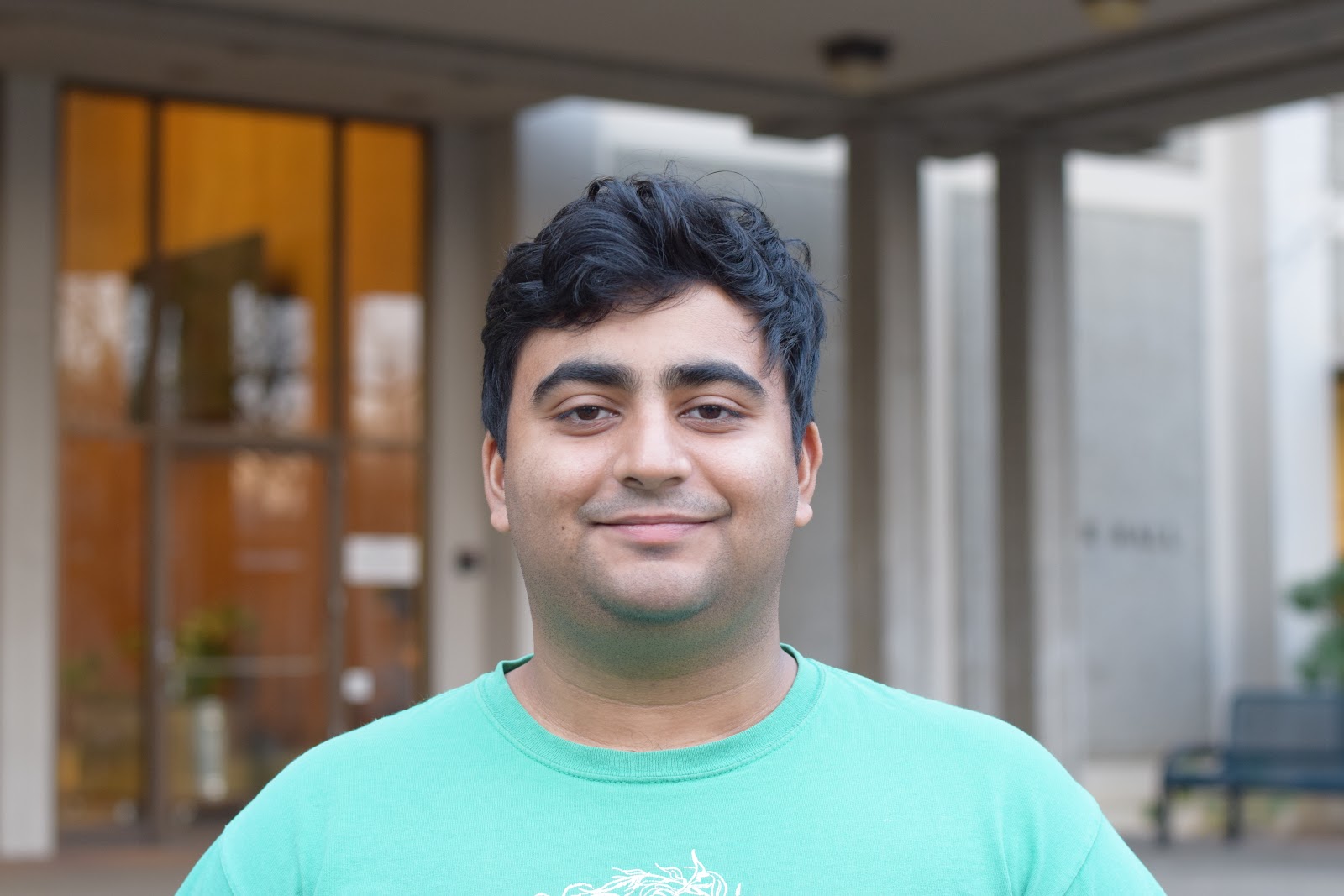
One resource that helps fellow climate change abolitionists connect is the UC Davis Strategies for Ecology, Education, Diversity and Sustainability (S.E.E.D.S.). According to Gautam Mathur, a fourth-year environmental science and management major and co-president of S.E.E.D.S., the club tries to promote ecological science, especially within marginalized communities. Mathur and Shona Paterson, third-year environmental science and management major and S.E.E.D.S. grant writer, believe the Davis community is economically aware and aims to be sustainable.

“I do think there is a lot of awareness [among] students,” Gautam says. “I would also say that people are in Davis for around four years and the cool thing is that [students] get to learn about [the ecological awareness] in Davis and when they graduate, they can implement all of the things that happen in Davis [elsewhere]. As an Aggie, it is our responsibility to learn more about what has happened to make Davis so sustainable, so when we move to other communities, we can make sure that those changes occur.”

Many feel that attending a globally-leading university in sustainability rubs off on their tendencies and outlooks as students. Some of their practices include the following: 

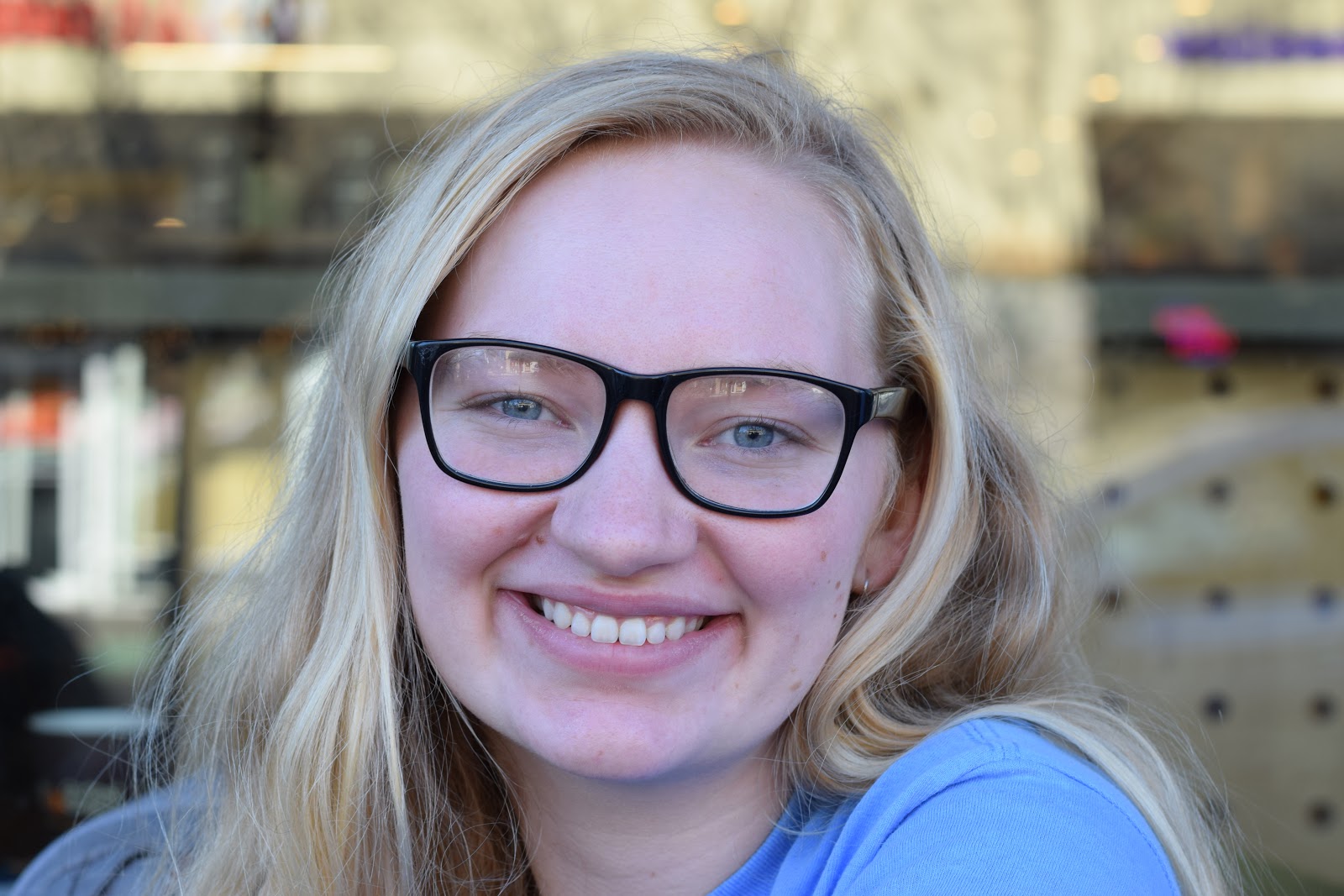
Grethe Steensgaard, second-year wildlife, fish and conservation biology major

Q: What actions should people implement to protect the planet?

A: The number one thing is simple awareness. I feel like people need to get more in touch with the ‘reuse, reduce, recycle’ idea and breaking away from that consumerism mindset.

Q: What are a few things that you do to help the planet?

A: I am the recycling stickler in my apartment, so I’ll often go through and resort the recycling, and I bought about 70% of my Christmas gifts in a sustainable, ethical fashion last year.

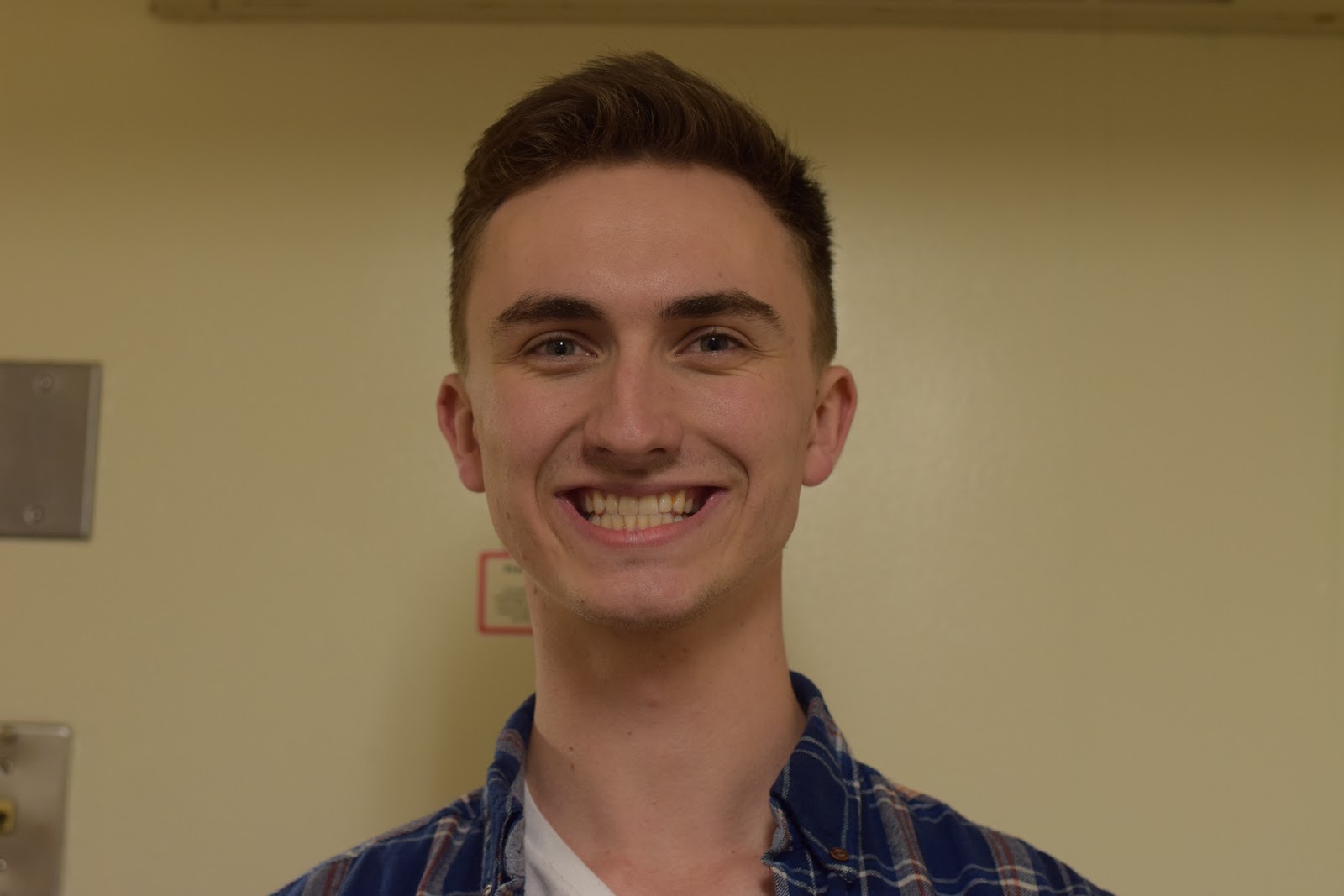
Alex Jackson, first-year biology and international relations double major

Q: What actions should people implement to protect the planet?

A: I don’t believe in individual social responsibility when it comes to climate change. It’s virtually impossible as individuals to make an impact. What I think is possible is working for system shifts. Vote to elect leaders who are talking about climate change and American policies that are dealing with human climate change and global warming […] and you can also support campaigns on social media by raising awareness.

Q: What are a few things that you do to help the planet?

A: I am getting an education in international relations and what I want to go into is natural resource management, environmental policy and working on protecting biodiversity. I will also use my vote in the 2020 election by only voting for a candidate who will make us a signatory on the Paris Climate Agreement.

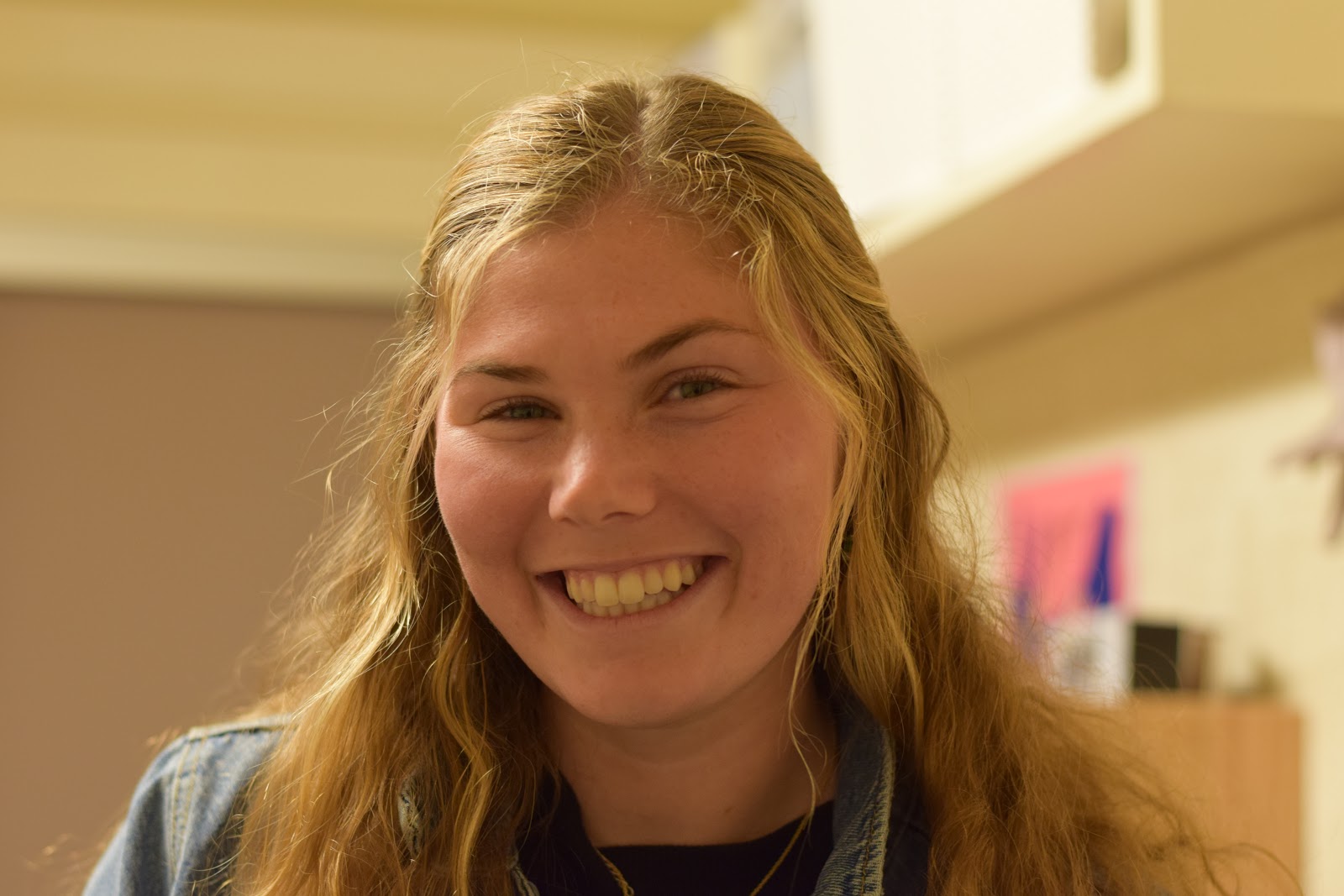
Lauren Remish, first-year psychology major

Q: What are a few things that you do to help the planet?

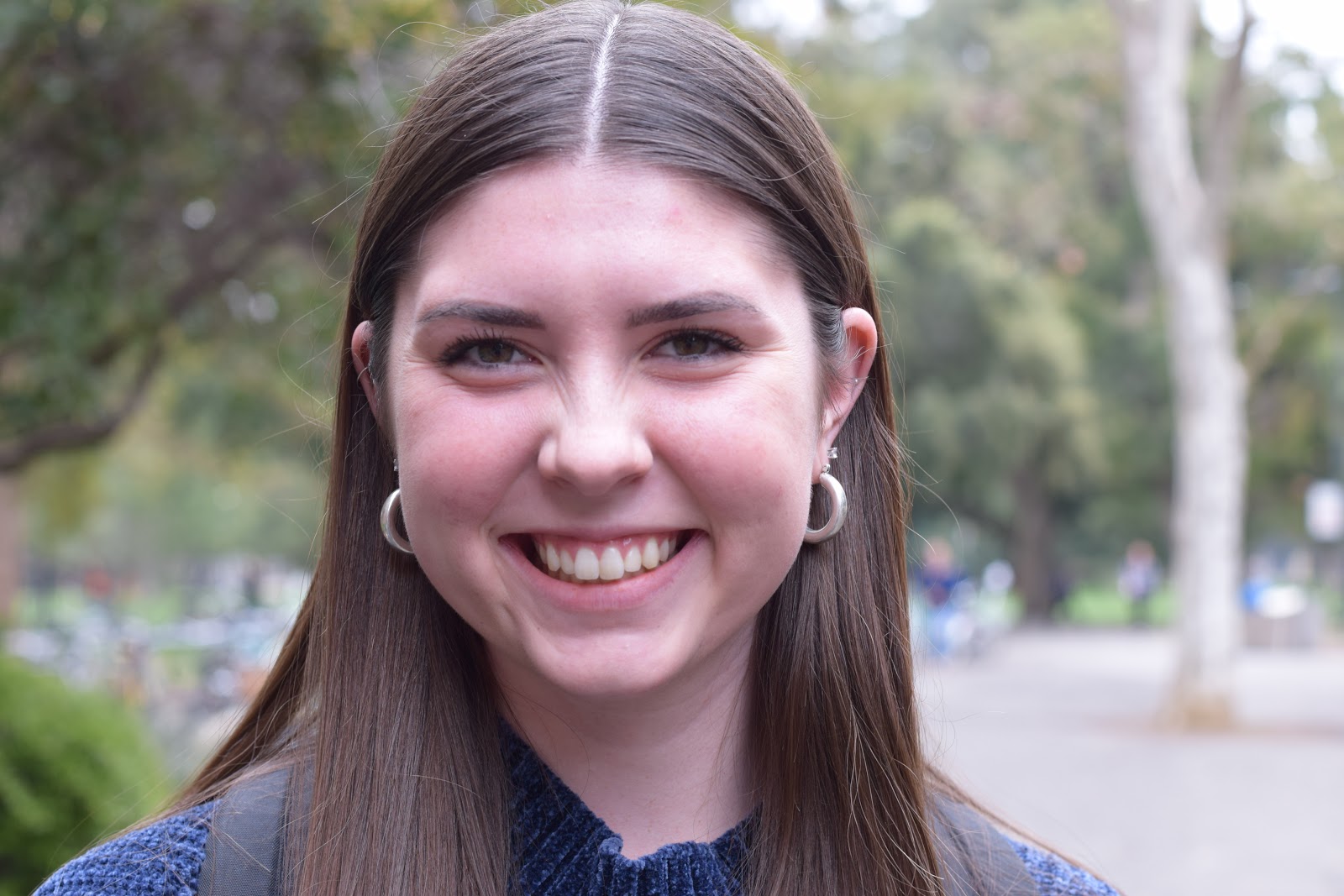
A: I think that recycling and bringing your own water bottle everywhere and not buying plastic water bottles can help. I carry my own shopping bags when I grocery shop, and since I’m a college student, I do bike everywhere which is really good for the environment.

Ella Sands, first-year political science-public service major

Q: What actions should people implement to protect the planet?

A: Day to day, I think conserving energy and making eco-friendly choices but also taking political actions and encouraging our political leaders to make structural change, because as individuals we don’t have as much power as the system does.

Q: What are a few things that you do to help the planet?

I try to use my bike and public transportation instead of cars, […] turning off the lights, using cold water for laundry and dishes, and I use a reusable water bottle.

Guatam Mathur, fourth-year environmental science and management major

Q: What are a few things that you do to help the planet?

A: I focus a lot on food, personally, because there are a lot of emissions related to food going on in the background. Researching where your food comes from, talking to farmers, going towards local products, cutting down on your meat [intake] can really reduce your carbon footprint, and if all of us do it I think it can have a large effect.


Written by: Katie DeBenedetti — features@theaggie.com


UC Davis researchers receive grant for wildfire mitigation, particle accelerator study

UC fee grants to be utilized to produce fire-resistant building materials, cancer-combative isotope

In an annual competition to promote multicampus projects in the UC, two UC Davis projects stood out. One is headed by Professor Michele Barbato in the department of civil and environmental engineering and centered around wildfire research. The other is connected to research on particle acceleration and headed by Eric Prebys, a professor and the director of the Crocker Nuclear Laboratory. 

“It’s called a UC fee grant,” Prebys said. “The University of California system actually manages Livermore laboratory and Los Alamos, […] part of their management fee goes into a fund and California universities can apply to that fund on a specific range of topics.”

Each project is to be conducted in collaboration with these labs and the other involved UC schools. These include UC Irvine, UCLA, UC Berkeley and UC Merced for the wildfire mitigation project headed by Barbato. 

“We received $3.75 million from the Office of the President and a little more than a million from Lawrence Livermore, Los Alamos and the Electric Power Research Institute,” Barbato said. “The project will start in March and we’re going to execute our research plan.”

The plan for the project is to develop a method to model and forecast smoke transport from wildfires and investigate the toxicology of the chemicals produced from the burning of different materials. Additionally, the research will include studying the effects of these chemicals on human health and comparing the effectiveness of different wildfire mitigation strategies. 

Of course, given the scale of wildfire impact in California, research alone would be ineffective. There is a need for communication, not only between the research teams and the government, but also between multiple levels of the government. This is where Eric Chu, an assistant professor in the department of human ecology, comes in. 

“The Office of the President that advertised the grant wanted a strong part of the project to lead to social impact,” Chu said. “Some sort of co-production of science-informed policy and engagement with public sector governments, but also to think through, ‘What is the best way to enable better wildfire monitoring, modeling and construction policy design in ways that make political sense in the context of existing policy.’”

Any practical discussion around wildfires must be multi-layered because of how they impact and get impacted by climate, water, housing, pollution and even transportation. With different portions of the government involved in the management and mitigation of this issue, there are many restrictions involved. 

Whereas Chu is focused on the human side of the project, namely decision making, planning and policy, Barbato intends to focus on the housing portion of it. He hopes to develop fire-proof housing materials by utilizing data from some preliminary projects. 

“The way that we are envisioning it is to use earth block construction, which is […] made using mainly soil,” Barbato said. 

This method produces highly durable structures through a process of stabilizing soil chemically. 

Eric Prebys, meanwhile, will be utilizing his grant to work with a cyclotron in order to use diamond as a semiconductor in high-speed instrumentation development. 

“A cyclotron is a type of particle accelerator,” Prebys said. “It uses a magnetic field to bend the charged particles into a path and then uses an alternating electric field to accelerate them so every time they go around they get a little more energy. Cyclotrons date back to the 1930s when that was really the first way people were able to make really high energy beams of particles. They still exist because they’re a fairly economical way to generate currents. This particular cyclotron has been operating since the 60s.”

The project will be a collaboration between UC Davis, UC Santa Barbara, UC Santa Cruz, Los Alamos National Laboratory and Lawrence Berkeley National Laboratory. The idea is to utilize synthetically produced diamond ingots, developed specifically for an X-ray free-electron laser. Such a laser produces very high-speed pulses of X-rays. 

“In that context, our cyclotron will provide a testbed for these detectors,” Prebys said. “Once we develop them we can use the beam from our cyclotron to test them, but then, in turn, we’ll be able to use these detectors we developed to study the particles in our cyclotron because even though this is a very old cyclotron, it’s very interesting.” 

Diamond is a semiconductor in the same way as silicon, but has advantages in its immunity to radiation, speed in which it transfers electrons and higher dynamic range, a property that allows a larger range of values to be measured. Because of such properties, diamond’s semiconductor abilities have many useful applications. For example, the production of a cancer treatment isotope called Astatine 211 requires a very high current and a diamond semiconductor makes this possible. 

Projects like these reflect a dedication not only toward scientific growth but improved quality of life. 

“We’re trying to prevent more losses in the future, we’re trying to better prepare the state against wildfires, against all these other different environmental changes and what can be done,” Chu said. 

Written by: Husn Kharabanda hkhara@ucdavis.edu

This year’s Campus Community Book Project focuses on gun violence in US

0

On-campus panel on Jan. 30 will feature speakers from Brady United Against Gun Violence

From natural disasters and global warming to mass violence, students today find themselves increasingly exposed to devastating events. These topics are delicate, scary and often avoided, but UC Davis’ Campus Community Book Project (CCBP) engages community members in tough conversations by spotlighting a relevant and pressing issue through a featured book and author chosen annually.

Megan Macklin, the project’s coordinator, says that the CCBP was initiated in the aftermath of 9/11 to help build community between the UC Davis campus and surrounding areas by giving people a forum to address controversial topics. Though the project is currently in its 18th academic year, its mission is still important and timely, Macklin said.

Throughout the years, the project has tackled issues including the wealth gap in America, developmental disorders, racial tensions and — this year — violence and gun violence. Macklin said the project committee always has a way of knowing what issues need to be covered before they even arise and, in the case of violence, it’s no different. 

She said college campuses openly talking about such a prominent issue in America is both important and necessary, as violence has been at the forefront of our “national consciousness,” especially in recent years.

“Unfortunately, more and more every day, it seems that there are reminders of how important this issue is for us,” Macklin said. “I think for a campus community like ours at UC Davis, selecting this theme is signalling [our] commitment and interest in engaging in conversation about a topic that is so critical. This project is only the start of the conversation that needs to be ongoing.”

This year’s selection is Another Day in the Death of America: A Chronicle of Ten Short Lives by Gary Younge, a journalist and previous editor-at-large for The Guardian. The book focuses on the gun violence that occurs on one randomly selected day and its effect on 10 children between the ages of nine and 19 throughout America. Younge’s piece humanizes the victims of gun violence in America, exposing a need for systemic change.

In addition to reading the book either independently or through enrollment in an annually-offered freshmen seminar class working in conjunction with the project, there are other ways for students to get involved. Students can attend any one of the on- or off-campus events on the CCBP event calendar. Macklin urges students and community members to attend an upcoming panel on Thursday, Jan. 30 at the Student Community Center.

“[This] panel is made up of various community members [speaking] about advocacy with respect to gun violence and gun violence prevention,” Macklin said. “It is really going to have a focus on ‘What now?’ and ‘What can we do?’”

The panel will feature multiple representatives from Brady United Against Gun Violence, as well as Austin Michael, an undergraduate student at Sacramento State and a member of Team Enough. Additionally, Margaret Kemp, an associate professor of theatre and dance, is working with students on upcoming projects in conjunction with the CCBP. She encourages students to attend the play Burials taking place this weekend, from Jan. 16–18, at the Veterans Memorial Theatre.

“It’s a rather intense questioning of gun violence from young peoples’ point of view,” Kemp said. “We are going to be tabling at that event so that people can write their responses to the play and make that a part of a memorial around gun violence.”

This play, as well as other events centering around gun violence and other social issues, is being put on through the Theater for Social Change organization, started by UC Davis students. Their memorial will be on display at Gary Younge’s program at the Mondavi Center on March 2.

In addition to attending these events, Macklin encourages students to further their involvement with the CCBP by joining their committees: the selection committee, which works to select the book and theme each year, and the program planning committee, which plans the events associated with the book. Macklin encourages all UC Davis students to explore the CCBP on campus and in the Davis community.

“[The project is] an opportunity to build community and to engage our campus community and broader communities of Sacramento and Davis around shared conversation, shared dialogue and collective learning opportunities around critical and controversial topics of our time,” Macklin said.

Written by: Katie DeBenedetti — features@theaggie.org

What it means to be a good friend: three sets of friends discuss

Aggies offer their own meaning of true friendship

What is the one thing you can’t live without? A good book? A loyal family dog? God forbid, your cell phone? Maybe, just maybe, an actual person popped into your head. Someone whose been there for you through thick and thin. Someone to laugh with, cry with or even someone to share in a much needed moment of silence. 

Predictably, friendship is found to have a tangible and profound impact on our happiness and fulfillment. Harvard’s Second Generational Study is a 75-year-old longitudinal study used to identify the most important factors in determining long-term happiness. The study found that having strong durable relationships was the single leading indicator for boosting happiness and having a long life — even more so than diet or physical exercise.

As important as friends are to our well-being and sanity, we may seldom take time to step back and ask ourselves what makes a friend a goodie. What separates the person you nonchalantly wave to in Wellman from the person that you would do just about anything for at the drop of a hat? Three sets of friends, all students at UC Davis, shared how they knew they’ve struck friendship gold.

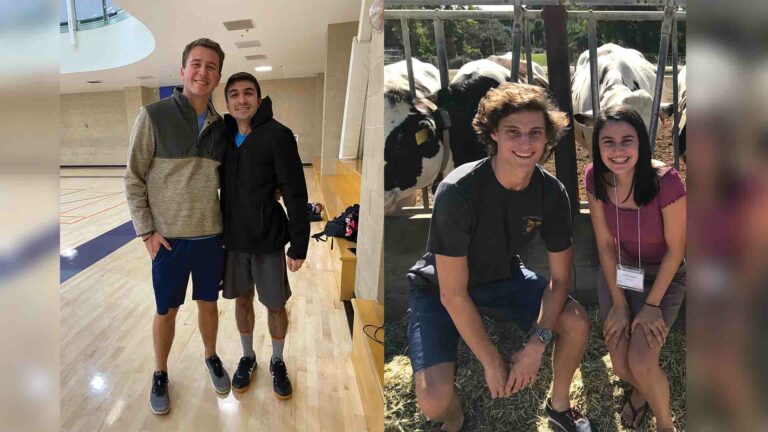
For Emma Roberts, a first-year neurology, biology and physiology major, being a good friend means reciprocation. Roberts stressed that effort shown on both sides works as a source of validation. 

“[A good friend is] someone who is going to reciprocate the amount of effort that I put into a friendship,” Roberts said. 

Roberts said showing that you respect and care about the person enough to go out of your way to make plans demonstrates that you value their time and company. 

Jazmine Dahi, a fourth-year environmental science major and friend to Roberts, noted that genuine interest in conversation and your life is a mark of a quality friend.

“They make you feel valued and are willing to listen,” Dahi said. “They show genuine interest in your life and your problems.” 

For Trevor Carpenter, a third-year computer science major, meaningful friendship means there needs to be a willingness to step out of your comfort zone to support and demonstrate that you care. 

“Everyone has things that they don’t want to do, and it’s a give and take between friends,” Carpenter said. “A good friend would be willing to be in an uncomfortable situation for you, but at the same time, a good friend also wouldn’t try to put you in an uncomfortable situation to begin with.”

Carpenter also elaborated on the necessity of mutual trust, which ensures that friendships can remain stable even through conflicting opinions and heated debate.

“I have friends who have different political opinions that I don’t agree with, but as long as there is mutual respect then that is your opinion and I don’t associate it with you as a person,” Carpenter said.

To Parsa Jamshidian, a third-year statistics major and close friend to Carpenter, a critical component to building a strong connection was trust.

“Someone that you can trust — 100% trust,” Jamshidian said. “You can open up to them and know that everything you say is between you and them.”

In addition to trust, Jamshidian also highlighted humor as an excellent way to start and uphold the bond and keep things light and fun. 

“Humor is huge for me, I love laughing,” Jamshidian said. “For example, Trevor is a good friend to me and I pretty much laugh at everything he says.”

Humor was the initial spark between friends Justin Prentice and Julia Cooper, both third-year political science and philosophy double majors.

“I think that [humor] helped bridge our gap because we were always really goofy when we first met and that helped us be friends, but we are very different people on many different levels and we give each other a bunch of crap,” Prentice said.

To Cooper, being a good friend means knowing them well enough to intuit when they are down and be there for them even when they don’t deliberately ask for support.

“I think [it’s about] knowing you so well that they know when you’re down and need help even if you don’t express it,” Cooper said. “Someone who believes in you and wants the best for you.”

Prentice said knowing your friends’ goals is an essential component to friendship.  He asserted that a valuable friend is motivated to support, nurture and guide you into growing and becoming the person you aspire to be.

“A good friend knows who you are at that moment and they know what you want to become,” Prentice said. “They help you become what you want to become while also supporting who you currently are.”

According to Prentice, in order to execute this, a good friend has to tailor their actions to what’s best for the individual.

“A good friend is someone who tells you what you need to hear about yourself and you trust them more than you trust yourself,” Prentice said. “It’s someone who is always honest with you but knows when to tell you something and knows when to hold off. It’s someone who knows how to tactfully deliver what you need to hear and how you need to hear it.”

The comments provided demonstrate the myriad ways to add value to and maintain friendships, but all of them boil down to effort. To harken on the often used, but never overused saying: you only get back what you give out. So maybe next time you grab a cup of joe with a promising new pal or partake in some downright tom-foolery with a day one, reflect on these ideas and consider what friendship means to you.

Written by: Andrew Williams — arts@theaggie.org

Body camera videos and audio recordings of deadly officer-involved shooting released

Davis Police Department released footage and audio files of confrontation that ended in death of Christopher Gray

Body camera videos and 911 audio recordings were released by the Davis Police Department, shedding more light on an officer-involved shooting at a North Davis residence last month. In the early morning of Dec. 19, 2019, Davis police officers responded to a 911 call at 435 Avocet Avenue which ended with two fatalities at the residence and minor injuries sustained by one officer. Carol Gray, who called emergency services, was allegedly murdered by her son Christopher Gray. The son was then shot by police officers during the confrontation.

In a press release issued by the Davis Police Department earlier this month, the incident was described in detail. Links of the radio dispatch audio, in addition to police body camera footage and the 911 call that drew officers to the scene, were released. 

“At 3:41 a.m., officers from the Davis Police Department (DPD) were dispatched to 435 Avocet Avenue regarding a report from Carol Gray that her son was being verbally aggressive and making non-specific threats,” the document read. “The emergency phone call ended with what sounded like a physical altercation.”

In the 911 audio recording, the caller can be heard saying, “My son just made threats to me. He said, ‘Go back to bed, you whore.’” Later in the call, an argument can be heard between two people, before it appears the caller screams and the call ends. 

Minutes later, officers arrived at the residence, where they were able to see, through the windows, that Christopher Gray was walking around the house, according to the police body camera videos. Police officers saw Carol Gray seemingly breathing under a sheet on the floor, and the officers entered the residence to help her. 

Christopher Gray was holding a knife throughout the video, and, at one point, the police attempted to taze him after asking him to drop his weapon. He managed to retreat into the kitchen and began throwing knives at the officers, who returned outside and repeatedly asked Gray to disarm himself. 

Minutes later, Gray charged at the officers and seven audible shots were fired. Out of the five officers present at the scene, three discharged their weapons. Gray was still moving and clutching his weapon on the ground before officers managed to remove the weapon and handcuff him. Officers can be seen applying bandages and performing CPR, but according to the press release, both Carol and Christopher Gray died at the scene. 

The police officers who fired their weapons were Corporal Alex Torres, Officer Ben Adams and Officer Francisco Talavera, who had 7.5, 15.5 and 14.5 years of experience, respectively. The officers were placed on temporary administrative leave but have since returned to their duties. 

Three separate investigations are in the process of reviewing the incident. Two external departments, the West Sacramento Police Department and the Yolo County District

Attorney’s Office, are investigating the use of deadly force. The Davis Police Department is conducting an internal investigation as well as the homicide investigation of Carol Gray’s death. 

Davis Deputy Police Chief Paul Doroshov described the complexity of the investigations, which could take several months to complete.

“The criminal investigation eventually gets analyzed by the district attorney’s office who decides if there’s any criminal culpability,” Doroshov said. “The shooting is also investigated in parallel by our Professional Standards unit which is basically an internal investigation that evaluates not just the criminal portion [but] any policy violations.”

The released audio and video files were edited “to ensure the confidentiality and privacy of those involved,” according to the press release. Doroshov explained that the editing process is “very cumbersome and lengthy” and is dictated by laws requiring some information to be released for transparency but other aspects to be edited out for the privacy of the individuals. 

More footage and audio is set to be released before 45 days after the incident, in accordance with state law, SB 1421.

During 2019, 16 contacts had been made with the Avocet residence, in which the reporting party describes, “blood smeared on front door,” according to the premise history released by the Davis Police Department. In total, the residence had 58 contacts since 2009, including 911 calls and physical altercations. 

Doroshov emphasized the impact that the altercations have had on the community and the Davis Police Department. 

“This is just a tragic event,” Doroshov said. “I think a lot of people in the department are affected by it.”

Written by: Madeleine Payne — city@theaggie.org 

What to do when there’s nothing to do

Different pastimes to pass the time 

Over Winter Break, I headed south to Villa Guerrero, Mexico. After a four-hour flight and a four-hour drive, I ended up in a quaint village with nothing to do. With only one book in hand and one bar of signal, I thought, “What am I going to do here for 10 days?” So here’s what I did to escape boredom. 

Board Games

As suggested by the name, board games are the best for when you’re bored. I have never played more dominoes in my entire life. I woke up every morning to my ten-year-old cousin whispering, “Wanna play dominos?” Although she’s only ten, she is surprisingly good at dominoes and respects the honor code to a T. The same can’t be said for Monopoly.

If you don’t have a box of dominoes at your disposal, I found it’s surprisingly easy to make them out of paper.

Board games were the most entertaining and relaxing pastime, especially since it was during this time that I got peace and quiet. When we played board games, everyone got really quiet as we thought of our next move, analyzing which domino was the best to put down at a certain time. So this suggestion is not only great in order to have something to do but to get some quiet time as well. The most you’ll hear during dominos is “it’s your turn.”

Eat

There were so many different foods to try out everywhere I went, which also helped beat my boredom. 

Although I had already tried all of the Mexican staples — tortas, tacos and sopes — they tasted drastically different, which I expected, but I was still surprised at all the different flavors. I took short walks with my cousins or my dad and we’d head into a restaurant to try something new. By the fifth day, I knew exactly what I wanted and exactly where to get it. It was a nice change of pace from all the fast food we consume in college. The chips have more flavor, the ice cream is creamier and the freshly squeezed orange juice was heavenly. A month after leaving, I already miss my morning chorizo tortas. 

Enjoy the Scenery

Because the village was small, we went everywhere on foot. One day, we walked to a church that was two hours away. Though I would have appreciated a warning that I would be going on a hike through the mountains, the scenery was beautiful. We were surrounded by trees, we passed by a couple of cows, the air was crisp and the sunrise made it worth ruining my favorite pair of shoes. 

Embroidery

At the risk of sounding like a grandmother, I have found that there is something calming about stabbing cloth with a needle over and over. And it’s a cheap hobby! I spent under $10 to get all of the supplies. For embroidery, you’ll need a hoop, some type of cloth, needles and thread. 

Hopefully you’ll have enough WiFi or cell signal to look up videos on different stitches, but it’s also easy enough to follow different outlines. Although this may not be everyone’s favorite pastime, it is a good way to pass time. It can take hours to stitch up one small part of a drawing. This activity does require patience, which is why I have only ever finished two drawings in these past ten years. This may not be the best activity for everyone — my thirteen-year-old cousin said she wouldn’t be able to do this, but she did enjoy watching, oddly enough. She said it was similar to watching ASMR videos.

Breathe 

I think the most underrated thing to do is to simply exist. There are many overused quotes that pose the question, “Are you living or are you just existing?” (Ahem, Oscar Wilde.) But there is nothing wrong with simply existing. We place so much value on doing something great in society that we forget that it’s okay to just be.

There were days where there was absolutely nothing to do. I was tired of dominos, I finished my book, my fingers hurt from embroidering and I didn’t understand how my dad could just sit in the kitchen, looking at the ceiling. He told me that he looks forward to the small moments to just be at peace with doing nothing, not worrying about when to wake up, not continuously setting alarms and not wasting the weekend on errands.

As students, we are so caught up in constantly doing something, it even feels odd to go home on Winter Break and not have anything to do. It feels like a trap. It feels like we don’t deserve to simply exist. But it’s so freeing to not have anything to do. It lets you breathe, be alone and just gather your thoughts. When you have nothing to do, here is what you should do: breathe and exist. 

Written by: Itzelth Gamboa —arts@theaggie.org

Aggies pick up victory over Bulldogs

Swim and Dive post numerous PR times on Senior Day en route to conference win

Saturday afternoon marked the last time this season that the UC Davis Swim and Dive team would be competing at Schaal Aquatic Center, and the final home meet for the team’s seniors. Seven seniors were honored, and in total the student-athletes have collectively accrued a number of Mountain Pacific Sports Federation All-Academic honors and hold team-best times in eight events this season. 

UC Davis went into this match as an underdog seeking its first head-to-head win of the season versus a Bulldogs side that was 4-1. But since reinstating their swim and dive program in 2008, Fresno State has yet to win a game against the Aggies, a streak head coach Barbara Jahn was looking to extend. 

“We have this rivalry — well maybe the coaches do,” said Jahn. “Coach [Jeanne] Fleck in her tenure as the Fresno State has never beaten UC Davis, home or away. It was nice to preserve that tradition. The seniors really stepped up and I was proud of them.”

The team started off the meet on the right foot, winning the initial race — the 200 yard medley — relay behind freshmen Ashleen O’Brien and Jay Jay Eaton, and seniors Mia Facey and Mia Cunnan. The squad continued to consistently stay competitive in every race, racking up points with top three finishes in all sixteen events. 

The lead and direction of the meet was up in the air until the Aggies took over after the first break. After honoring the seniors and acknowledging their accomplishments and future goals, the team came back with an unmatched fire. In the ensuing event, the 100 yard freestyle, UC Davis stole the top three spots. Senior Jamie Pincin, who led the way with a 52.47 finish, was followed closely by fellow senior Olivia Smith and freshmen Anna Lee. 

The team continued to place well throughout the afternoon starting with junior Kathryn Bockman, who led UC Davis with a lifetime-best finish of 10:27:20 and a second place showing in the 1000 Free. Lee, Eaton, Cunnan and Kyla Leacox all recorded first place finishes in the 200 Free, 50 Free, 100 Fly and 200 IM, respectively, to round out the individual swim events. Ultimately, it was a team of four seniors — Smith, Cunnan, Facey and Pincin — who finished first and scored 11 points for the Aggies with a first-place finish in the 400 Free Relay.

The dive team dominated both one and three meter events due to strong performances from sophomore Taylor Hornberger and freshman Sydney Wren, solidifying the UC Davis win. The final score was 172-128, which is coincidentally the identical score from when these two sides met back in November 2014. Jahn was thrilled about the win, lauding her team’s performance. 

“They did what we asked them to do. We knew it was going to be a close meet — within four to six points — and the placing could switch around. In some events it did, in others we were pleasantly surprised by going 1-2-3-4 in an event. But we had a lot of season best times and that bodes well going into our conference which is in four weeks.”

Jahn continued, praising the crowd and atmosphere at Schaal that afternoon as “really good” and “supportive.” The aquatics center was electric the whole afternoon, and was certainly one of the louder, more lively home meets in recent memory.

“Our team is smart,” Jahn concluded. “I know they can face the academic challenges coming up. Our senior class last quarter averaged a 3.4 GPA. They will all be very successful young women, I have no doubt about it. We just have to stay healthy.”

Jahn and the Aggies now have their sights set on their final dual meet on Saturday in Stockton against Pacific. After that, it’s on to the MPSF championships that begin on Feb. 19.

Written by: AJ Seymour — sports@theaggie.org

And the Oscar goes to…

Predictions for the 2020 Academy Awards

Best Picture: “Joker”

“Joker” is by far the most interesting approach to the character I’ve seen to date. In this portrayal, Joker starts out as his own worst enemy rather than immediately becoming the villain of everyone else. The incorporation of mental health is cautious and thoughtful, bringing positive attention to those who feel they’re on the outskirts of society. Joaquin Phoenix’s ability to discover new passages in a character, which many already thought had been explored, is why this film deserves “Best Picture.” Joaquin Phoenix received the Screen Actors Guild Award for “Male Actor in a Leading Role” earlier this year. 

Lead Actor: Jonathan Pryce, “The Two Popes”

Jonathan Pryce plays Cardinal Jorge Bergoglio before he ascended to the papacy, after Pope Benedict XIV stepped down in the wake of sexual misconduct and financial scandals. Pryce’s performance as an advocate of decency and human agency convinces the viewer that he cares about all the people in a changing world. 

Lead Actress: Charlize Theron, “Bombshell”

Charlize Theron proves yet again that her limit to the kinds of characters she can transform into is undefined. Theron plays Megyn Kelly in 2015 in the wake of sexual harassment allegations levied against Roger Ailes, the CEO of Fox, from multiple women, including herself. She emits the strength and grit it takes to come out the other end of a highly-publicized and personal battle. 

Supporting Actor: Brad Pitt, “Once Upon a Time in Hollywood”

Brad Pitt plays Cliff Booth, the easy-going, mellow stunt double to Rick Dalton (Leonardo DiCaprio), a near washed-up actor who’s neither easy-going nor mellow. Pitt demonstrates the importance of supporting roles by smoothing out the edges of key scenes, such as the quintessential Tarantino fight scene at the very end of the film. Pitt received the Screen Actors Guild Award for “Male Actor in a Supporting Role.”

Supporting Actress: Laura Dern, “Marriage Story”

Dern plays the successful lawyer to Nicole, played by Scarlett Johansson, a loving, yet cunning advocate for her clients whom she holds dear. Dern’s performance in this film highlights her ability to command an audience with power and grace. One monologue provides a refreshing take on the fight for gender equality.  Dern received the Screen Actors Guild Award for “Female Actor in a Supporting Role.”

Director: Quentin Tarantino, “Once Upon a Time… in Hollywood” 

This film is quintessential Tarantino. It really makes no sense, but the theatrics make up for the many questions the audience is left with at the end of each scene. The audience is constantly looking from one side of the screen to the next like googly-eyes on a cuckoo clock. The way Tarantino captures the naivety of Sharon Tate, played by Margot Robbie, as she watches her own movie through her acute body language exemplifies his directional capabilities.  

Original Screenplay: Noah Baumbach, “Marriage Story”

The dialogue in this film is intense from start to finish. “Marriage Story” spares none of the harsh realities that come with a relationship — or worse, one that’s slipping through our fingers. The screenplay expresses such raw emotion that it makes it difficult to look at the screen, and for some, the mirror. The writing in “Marriage Story” explores the deep crevices of a point no one wants the reach — the end. 

The 92nd Academy Awards will air on Feb. 9 on ABC. 

Written by: Josh Madrid — arts@theaggie.org

Culture Corner with Gabriela Hernandez

The Arts Desks’ weekly picks for movies, books, music and television shows

Movie: “Missing Link” directed by Chris Butler 

One can’t help but laugh at this wacky stop-motion animated film with its charming title character Missing Link, who takes everything too literally. From the producers who brought us “Caroline” and “Paranorman,” this film is filled with beautiful animation and received a Golden Globe Award for Animated Feature Film. The film follows the egotistical explorer Sir Lionel Frost (Hugh Jackman), a sweet creature Mr. Link (Zach Galifianakis) and a tough adventurer (Zoe Saldana) on a quest to reunite Mr. Link with his kind. The witty banter among these characters is heart-warming to watch and casually integrates an uplifting message throughout their journey; it is refreshing to see a film present a female character with her own agency.

Television: “Person of Interest” 

Of all the shows I tend to rewatch, I have lost count of how many times I’ve rewatched “Person of Interest.” The show revolves around artificial intelligence, created after 9/11, that produce different relevant and irrelevant social security numbers of individuals who will be either victims or perpetrators of future crimes. It is up to the government to look into the relevant numbers, but the irrelevant numbers are looked into by the creator of the AI, Harold Finch (Michael Emerson) and his ex-CIA friend John Reese (Jim Caviezel). The show later includes two powerhouse women, Root (Amy Acker), a hacker who brings a sadistic but charming personality to the show, and Shaw (Sarah Shahi), a cold-blooded killing machine who has a playful but meaningful relationship with Root. This show highlights the hard issues of morality to the point where AI gains an understanding and empathy for humanity. 

Album: “Parked Car Convos” by Kaash Paige 

Kaash Paige’s music career took off on SoundCloud and her success yielded a hit album by the age of 19. Paige’s music is a mix of rhythm and blues and indie, with an intimate, warm sound. The album’s name perfectly encapsulates the themes of her songs: honesty and intimacy. This is a great album to listen to if you want to relax and feel inspired.

Book: “A Wizard of Earthsea” by Ursula K. Le Guin 

If you’re a fan of magical books such as “The Hobbit” and the “Harry Potter” series, this is a great mini series to pick up and read. The magical realm is well-constructed and simple enough to follow. The meaning of names and the necessity of respecting the laws of nature are central to the novel. It is easy for readers to connect with the story and apply it to their own lives, especially when it brings to light the hurdles one has to overcome with adulthood and how they shape one’s moral identity.  

Written by: Gabriela Hernandez — arts@theaggie.org

Humor: Point/Counterpoint: Should the NFL rebrand as the “National Prolate Spheroid League” to achieve truth in advertising?

Two experts break down the controversy

The NFL has endured a number of controversies in recent years — increased awareness about concussions, domestic violence by players, Colin Kaepernick and the national anthem protests. But these little things, as we like to say, aren’t truly “about The Game.” 

Genuine intellectuals and sophisticates within the sports world know that scant squabbles about spousal abuse, minor “head injuries” and quasi-ambiguous racism pale in comparison to the philosophical debates about the meaning of football at its very core. No, not the significance and impact of The Game, but simply the definition of the word “football” itself, and why The Game is actually named after it.

“Football” is quite a confusing term for the smartest among us, as the ball is neither ball-shaped nor “footed” by the foot more than it is handled by the hand. In fact, some of The Game’s most quibbling, niggling, pettifogging fans argue that calling The Game “football” amounts to false advertising. They’ve even started a movement to rename the NFL based on a more accurate mathematical description of the “ball” — the prolate spheroid. To bring some clarity to what is arguably the most important question The Game faces in the 21st century, we listened to the opposing opinions of two experts.

Dr. Paul E. Nomeyulman, Ph.D., Department of Mathematics, Harvard University: It simply doesn’t make sense for [T]he [G]ame to be called “football” when the players hardly ever kick the thing with their feet, and especially when there’s already a far more elegant sport called “football” in which the players actually do propel the ball with the distal phalanges of their pedals. Couldn’t they at least call that other abomination “handball”? Well, the Oxford English Dictionary defines the improper noun “ball” as “a rounded geographical formation” and “a globe or spherical body, and related senses.” This definition classifies a “ball” as a “sphere,” suggesting that we cannot in good conscience refer to the American football as a “ball.”

If we really want to be accurate, we must rebrand [T]he [G]ame based on the actual geometry of the thing — a prolate spheroid, or even better, a lemon. As everyone surely knows and understands, the surface area of a “ball” or sphere is given by S = 4π R2, while that of the lemon, as approximated by the prolate spheroid, is given by S = 2π ∫ r(z) √ [1+ r’(z)]2 dx, with radius, r, as a function of z, given by r(z) = a√ [1-(z/c)2]. Thus, we obviously can’t say that a “ball” and a prolate spheroid are the same. Duh! 

For these reasons, the National Football League is blatantly misleading and defrauding the American people by not instead calling itself the National Prolate Spheroid League or the National Lemon League.

Buck “Thyroid” Thyroipt, Veteran Color Commentator, Fox Sports/ESPN: I’ll be damned if I’m gonna waste my valuable time grindin’ my noggin on the fancy schmancy words o’them hoity-toity muckety-mucks down the university there. Football’s the name of The Game. But I like the sounda my voice so I’ll give ya my two cents. I dunno bout all that math, but Dr. Numbers up there didn’t even check all the dictionarii, cause I got me one here that calls a ball “a round or roundISH body or mass: such as a spherical OR OVOID body used in a game or sport.” And hey Doc! I know I shouldn’ta expected any less from a research prof, always omitting unfavorable results and all, but ya skipped another pretty darned important definition of ball: “Slang: Vulgar. a testis.” Ball: as in it’s on accounta the testosterone we got the violence that puts the little word in question in football. That violence is why we love The Game, and we aren’t bouta be callin’ it some National Prostate Sphynx League. I know I’m speakin’ for my fellow broadcasters when I say that.

Written by: Benjamin Porter— bbporter@ucdavis.edu

(This article is humor and/or satire, and its content is purely fictional. The story and the names of “sources” are fictionalized.)

Owner of Anna’s Kitchen pays $100,000 settlement after UC Davis students got sick

Food sold to students on campus without permit

The Yolo County District Attorney’s Office has reached a settlement with Xin Jiang, a man who made several UC Davis students sick by selling them meals through his unlicensed business, Anna’s Kitchen. Anna’s Kitchen did not have a proper permit from the Yolo County Health Department for the sale and transportation of food, though it was advertised and operated through a popular Chinese app, WeChat. 

A press release issued by the Yolo County District Attorney’s office detailed the financial terms of the settlement. 

“Mr. Jiang will pay $106,997 in costs and penalties, and will forfeit an additional $90,000 in penalties if he is discovered operating Anna’s Kitchen or offering any type of food for retail purchase without a valid permit going forward,” the press release read. 

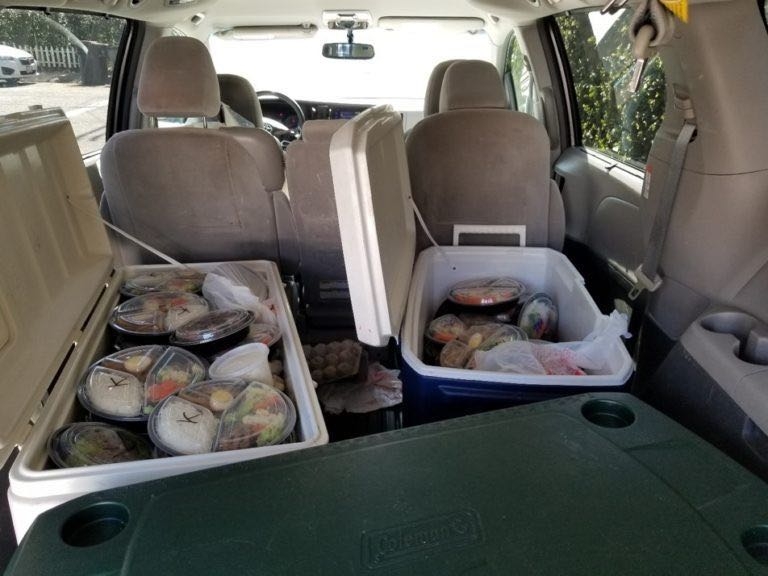
Jiang had been selling improperly handled food to students on campus, specifically in parking lots near Olson Hall and residential areas. Not only did Jiang lack a permit, but he also stored meals for longer than 30 minutes without proper heating or refrigeration, which increases the risk for foodborne illness. 

Deputy District Attorney Rachel Hilzinger, the prosecutor of the case, elaborated on how governmental agencies became aware of Anna’s Kitchen. 

“Chinese foreign exchange students had contacted Environmental Health and complained either about themselves getting sick or knowing friends, roommates or fellow classmates that reported becoming sick after ordering and eating food that was delivered to them by Anna’s Kitchen,” Hilzinger said.

Though it is hard to know how many students fell ill from consuming food prepared by Anna’s Kitchen, members of the UC Davis Environmental Health and Safety department acted quickly to prevent more illnesses. They contacted Jiang once they established a connection between Anna’s Kitchen and the prevalence of foodborne illnesses and referred him to the Yolo County Environmental Health Division. 

Lewis Kimble, the Supervising Environmental Health Specialist from Yolo County’s Consumer Protection Unit, explained that quick, preventative measures are crucial to limiting the spread of foodborne illness, and they rely on the responsiveness of the community, as in this case.

“We need people to tell us when they’ve eaten food from a restaurant, and they’ve gotten sick,” Kimble said. “Then, we can do an environmental assessment in a restaurant to see if it was the temperature, handling or preparation of the food that caused the foodborne illness.”

After the county gave him a notice of violation, Jiang still served students through Anna’s Kitchen. That is when the Yolo County District Attorney’s Office was contacted, according to Hilzinger.

“Our unit only really gets involved for the most recalcitrant or uncooperative individuals or businesses,” Hilzinger said. “The reason why this case had come to us was that it had escalated over time.”

The Yolo County District Attorney monitored WeChat for sales from Anna’s Kitchen and reached out to the students that had been affected. Anna’s Kitchen not only sold and distributed food without regulation, but it unfairly disadvantaged licensed restaurants in the Davis area, according to Hilzinger. 

“Think about all the other restaurants in Davis, or Chinese food restaurants in Davis, that are trying to do it properly,” Hilzinger said. “They are paying for the permit, they are delivering within the 30 minutes window and they are regulating the temperature of their food properly. It’s just not fair to businesses that are doing it lawfully when other people and other entities like Anna’s Kitchen can essentially profit off the fact that they don’t have a permit, and they aren’t doing it the right way.”

The Yolo County District Attorney’s Office works to ensure businesses are in compliance with a wide range of services that do not necessarily include the sale and distribution of food, such as hazardous waste and unlicensed contractors. Hilzinger mentioned that businesses are generally receptive once they realize they’ve been violating the law, as Jiang was. 

“Mr. Jiang was very cooperative with our prosecution, and he was very cooperative throughout the investigation,” said Hilzinger. “He really did — in good faith — stop operating after we explained to him what the case looks like against him.”

Jiang’s business was “basically an unpermitted home kitchen, that was also offering delivery services in Davis,” according to Hilzinger. Kimble said that though home kitchen operations were legalized in California through the passage of AB 626, Riverside County was the only county in the state that opted-in once the bill was passed, making home kitchen operations illegal in Yolo County. 

“Yolo County had decided to opt-out of it and our Board of Supervisors has supported that,” Kimble said. 

Written by: Madeleine Payne — city@theaggie.org 

2020 U.S. Census discussed at Jan. 16 Senate Meeting

Presentation highlights ways students are impacted by upcoming census

ASUCD Vice President Shreya Deshpande called the Jan. 16 Senate meeting to order at 7:09 p.m. Senators JB Martinez and Juan David Velasco arrived late.

The meeting began with a presentation from Jenny Tan, the communications coordinator for Yolo County, regarding the upcoming 2020 Census. The presentation highlighted the ways in which students at UC Davis will be impacted by the results of this year’s upcoming Census. 

Census data helps determine the amount of federal funding for state programs that directly impact students like CalFresh, employment services, mental health and social services, homelessness outreach and more. The Census also determines the number of electoral votes allocated to California in upcoming elections, including the presidential election happening in November. Due to lack of participation in the Census, there is fear that California will lose one of these electoral seats. Tan also stressed that all individuals living in California should register for the Census, regardless of citizenship status. There is no citizenship question on the Census — even international students should be counted.

“College students are some of the hardest people to count because there’s a miscommunication,” Tan said. “Most students think they’re getting counted back home.”

Tan stated that this is not the case — students attending college should register for the Census where they attend school. 

“If you miss out counting one to two people, that’s thousands of dollars that your community is missing out on,” Tan said.

After the report, the Senate moved into ex-officio reports. Elena DeNecochea, chair of the Gender and Sexuality Commission, announced the addition of four new members to the commission and addressed plans to establish an additional task force to focus specifically on different California Senate bills that impact women and deal with gender issues. DeNocochea views this potential task force as a way to engage additional students in local efforts to advance gender equality.

The Senate moved into consideration of old legislation. 

Among those discussed, SB #14 would amend language in the bylaws to allow the Entertainment Council greater flexibility when utilizing their large show reserves. In the past, due to the language of the Bylaws, it was unclear what the funds could be utilized for. Kimya Khayat, director of the Entertainment Council, spoke more about the bill’s necessity for Entertainment Council to have better access to its own funds. The bill passed without objections.

SB #18, would help solidify ASUCD’s transition to a paperless organization. This bill outlines Student Judicial Affairs’ commitment to help the association make this transition. Senators debated sacrificing the accessibility of using paper documents to help visitors navigate Senate agendas for the environmental benefit of going paperless. SB #18 also passed without objections.

Written by: Ally Russell — campus@theaggie.org

New public charge test should not equate wealth with worth

Supreme Court places immoral value on human lives in recent ruling

“Give me your tired, your poor, Your huddled masses yearning to breathe free, The wretched refuse of your teeming shore, Send these, the homeless, tempest-tost to me, I lift my lamp beside the golden door!” 

Written on the base of the Statue of Liberty, these words intend to represent U.S. values: freedom, opportunity and friendship between nations. Earlier this week, in a 5–4 vote, the Supreme Court rebuffed these values by allowing the Trump administration to move forward with a policy that will make it harder for immigrants who rely on public benefits and assistance to qualify for permanent legal status, otherwise known as green cards. 

Refugees, political asylum-seekers and immigrants arrive in the U.S. because they are fleeing unimaginable disaster and political turmoil — some of that turmoil resulting from U.S. intervention and occupation. It is pertinent that the U.S. rejects the hypocritical rhetoric that America and its values are the savior for war-torn countries, especially when the U.S. continuously discards heroism once people from countries “in need” arrive at its doorstep.

Last August, the Trump administration announced its plan to revise the so-called public charge rule. Under the current Department of Homeland Security policy, the criteria for determining if someone is a public charge is if they are likely to rely on cash benefits. Under the new policy, the definition of public charge would expand to include relying on non-cash benefits like housing, food assistance and healthcare for more than 12 months in a three-year period, according to The New York Times. The rule applies even to immigrants who are employed. 

It’s estimated that this new rule “will cause hundreds of thousands of individuals and households, in many cases noncitizens not even subject to public charge scrutiny, to forego public benefits for which they are eligible, out of fear and confusion about the consequences for their immigration status of accepting such benefits,” wrote lawyers for private groups challenging the policy. 

The Editorial Board vehemently disagrees with the Supreme Court’s ruling and likens this supposed public charge to a wealth test. We believe that it’s inhumane to treat refugees, asylum-seekers and immigrants like criminals who don’t deserve critical services — services for which they qualify. These are the tired, the poor, the homeless. And they deserve every opportunity that the U.S. promises. 

Only granting citizenship to financially self-sufficient applicants rejects the notion that the U.S. is the land of opportunity, for those with only a dream in their pocket. This decision will only serve to further disadvantage the already disadvantaged. This is not just an immigration issue, it’s a public health issue. 

But it’s important to acknowledge that not just refugees and political asylum-seekers should be able to access public assistance without fear of retribution. People who choose to make a life in the U.S. are just as deserving as refugees. Many students at UC Davis have parents who made sacrifices so that their children could have a better life. Those sacrifices should not be met with an immoral standard that those worthy of permanent resident status should not take advantage of life-saving programs.

Written by: The Editorial Board