59.5 F
Davis

Davis, California

Sunday, December 21, 2025
Home Blog Page 393

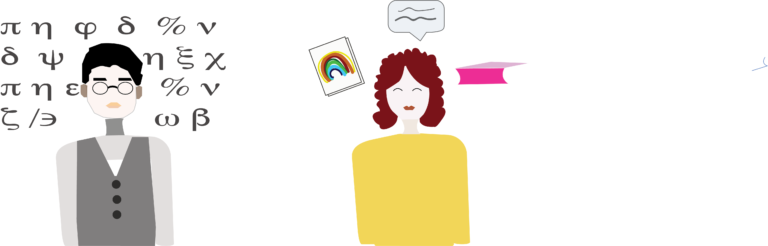
STEM vs. humanities majors: a closer look into their differences

0

A look inside the minds of Davis’s diverse academic community

UC Davis may be generally regarded as a STEM-focused school, but this view ignores the university’s considerably sized humanities departments. The perceived dominance of science, technology, engineering and mathematics on campus leads to interesting interactions between students of different majors — from the ways students form communities within their majors or view research opportunities to how much time they spend in class on a given week.

A number of students from a wide variety of majors spoke to The California Aggie. From these interviews, it appears that the sheer population size of the College of Biological Sciences and the College of Engineering makes it easier for new students to find classes and resources and to form communities as early as freshman year. 

Alexander Dillabaugh, a third-year neurobiology, physiology and behavior (NPB) and Spanish double major, described the differences he has observed between his two majors in terms of advising. 

“I usually see my Spanish advisor more often,” Dillabaugh said. “I feel like there’s so many NPB majors that I […] just ask people and use my friends as my advisors, or people older than me, but there’s not as many Spanish majors, so I go to [the advisors] for advice more.”

NPB and other popular STEM majors on campus such as biology and animal science, have well-developed resource programs that host events, such as major-specific meet-and-greets during Welcome Week — introductory events that are seemingly lacking for humanities students. 

Some STEM majors may also choose to get involved with mentorship programs wherein first-year students can ask questions and get advice from older students. Taylor Silva, a third-year NPB and English double major, is part of Mentor Collective — as part of the program, Silva helps one or two first-year students who are also science majors with their transition to college. 

These mentorships programs — such as BioLaunch Mentor Collective which, according to the UC Davis College of Biological Sciences website, “matches new and returning students for academic and social support” — are especially prevalent in the College of Biological Sciences.

Although the humanities departments are usually smaller in size and lack some of the university-sponsored programs that STEM majors have, humanities students, including Silva, said they had better luck forming relationships with their professors because it is easier to get one-on-one time with them.

This seems to be an experience shared by students who are studying both humanities and STEM curriculum — Dillabaugh also said he was more likely to go to office hours for his humanities courses because they felt more personal. 

“In my Spanish language or history classes, I always go to office hours because that’s the most helpful,” Dillabaugh said. “[In STEM classes], there’s more people, they just go through the material again. It’s not one-on-one help.”

Another misconception among students is that humanities majors might not have as much access to professors given that they may not work in labs and on trials with them. According to many students, however, humanities professors are just as eager to make connections with their students.

Along a similar vein, another difference relates to students’ opinions of the importance of STEM versus humanities research.

“It’s more of a stigma that STEM research is more important,” Dillabaugh said, adding that even though Spanish is his other major, he forgets that Spanish professors are also doing research.

As a research university, most every professor at UC Davis is involved in some kind of research. In general, more STEM students are involved with their professors’ research than humanities majors. And, because of this, humanities research may be overlooked.

“[Working in a lab] definitely would have been my answer [to what research is] in high school, but after being at Davis, it’s changed,” said Lauren Christie, a second-year human development major. 

Since coming to Davis, Christie sees research in a broader sense that includes data input and visualisation, the basis of much of the research being done in the humanities fields. Additionally, fourth-year communication major Julia Sabey said that questionnaires, surveys and online polls come to mind when she thinks of research, given that that is the type of research communication majors are generally exposed to in their classes. 

A majority of STEM majors, however, said they relate labs and hard sciences, first and foremost, to research. Hannah O’Toole, a fourth-year biomedical engineering major, said that her personal experience of working in a research lab shapes her view of research — “I think of experimental design and a lot of chemistry because that’s the kind of research I do,” O’Toole said.

STEM majors, on average, spend more time in class, with an average of about 20 hours of class a week. Humanities majors mostly responded that they spent 10 to 15 hours in class per week.

 First-year psychology and English double major Alik Sultan said he spends “around 10 hours” in class “and probably less than five” doing homework in an average week. Similarly, Sabey reported that she spends three hours a day in class on average and spends about nine to 10 hours doing homework while O’Toole said she spends 22 hours in class a week and around 25 to 30 hours a week on homework.

Despite inherent differences, studying both STEM and humanities curriculum can be mutually beneficial. For example, Dillabaugh does volunteer work with Clinica Tepati, a student-run clinic that serves the Latino and Hispanic communities in Sacramento.

“Most of the people there are STEM majors […] but it’s a great way for me to practice my Spanish,” he said. “It’s a great way for me to connect Spanish and [NPB].” 

Written by: Katherine DeBenedetti — features@theaggie.org

Trump’s perverse reverse of chlorpyrifos ban proves his corruption (again)

Why “drain the swamp” when profits from toxic pesticides are on the line?

In the fifth season of Mad Men, Don Draper zealously pitches to executives at Dow Chemical in a desperate plea to prise their business away from a competing advertising agency. When the conversation reaches a perverse point on the virtues of napalm, Draper confidently says, “The important thing is, when our boys are fighting and they need it, when America needs it, Dow makes it, and it works.”

Fictional ad man Don didn’t win Dow’s business, but the real-life Dow Chemical Company certainly won the real-life madman Don. I’m of course referring to our president, Donald J. Trump, who selflessly (cough) accepted a $1 million donation from Dow Chemical for his inauguration committee. He subsequently decided to eliminate an Obama-era rule that would ban chlorpyrifos, a dangerous and poisonous organophosphate pesticide sold by Dow. Chlorpyrifos is one of the most heavily used pesticides on crops throughout the country and is linked with a myriad of health problems for people and animals. Despite this, Trump and his goons have been more than happy to serve at Dow’s behest. One could easily say, “The important thing is, when our boys are lobbying and they need it, when Dow needs it, Donald Trump does it, and it works.”

In other words, Trump is a corrupt cretin. But we knew this much already. This is settled science, so to speak. As Bill Maher recently joked, “The only time corruption bothers Trump is when he’s not in on it.” But Trump said he’d “drain the swamp,” and the chlorpyrifos story is as swampy as it gets. To be fair to Trump, it would’ve been unfair to think he’d actually stick to that silly “drain the swamp” promise. That statement itself probably sounds pretty unfair and, believe me, I want nothing more than to be fair to poor Trump. I really mean that. That’s why I’m obliged to mention the fact that Trump eventually distanced himself from this rhetoric before stacking his cabinet (season one) with former lobbyists, eventually admitting that he never really believed in the slogan — that it was merely an applause line

But those people who applauded deserve more credit than Trump. I’d like to believe that they were genuine in their desire to “drain the swamp” by ridding Washington of the corrupt insiders and lobbyists who are more than happy to sell out the American people. And even if their applause was disingenuous, I’m sure they don’t want to get poisoned from pesticides that make money for people who know their products are poisonous. 

As I previously mentioned, Dow gave Trump’s inauguration committee $1 million. This came right before Dow CEO Andrew Liveris was afforded great access to Trump and other Administration officials. At this point, then-EPA Secretary Scott Pruitt decided to deny a longstanding petition to ban chlorpyrifos given the mounting scientific evidence of its harm. In July of this year, current EPA Secretary Andrew Wheeler formalized the agency’s decision to reverse the proposed ban by the Obama administration. With the courts creating additional confusion, members of the House and Senate introduced bills to ban chlorpyrifos once and for all, but Dow has sprayed about 27 times more campaign cash at bill opponents as compared to bill supporters.

Throughout this process, Dow has influenced the EPA to ignore its own scientists on the danger of chlorpyrifos. Meanwhile, both of Trump’s heads of the Interior Department have intervened to block reports on the extreme negative impacts of chlorpyrifos on endangered species after Dow urged the administration to “set it aside.”

Reviews of Dow’s own chlorpyrifos research show that it is fundamentally flawed, with severe mistakes and omissions throughout. But this is in keeping with the Trump administration’s view on science, which is that it should pre-determine industry-friendly results. New “transparent science” rules will help to do as much. Against the advice of scientists, this will ban the government from making decisions by using scientific studies that cannot be independently reproduced, which means any studies that rely on private and confidential medical data could not be used. This is (for lack of a better word) bad, as the on-the-ground impacts of chlorpyrifos are horrifying

A recent study found that there is no safe level of chlorpyrifos exposure for children. The odor is so foul it can produce headaches, shortness of breath, teary eyes and vomiting, especially for high-exposure groups like schoolchildren and farmworkers.  Pregnant women near fields where the poison is sprayed have an increased risk of having a child with autism. It causes lower IQs, memory problems, decreased lung function and reduced fertility. I could go on.

Technically, this all means that the administration is violating a part of the Food Quality and Safety Act, which states that, “the term ‘safe’, with respect to a tolerance for a pesticide chemical residue, means that the Administrator has determined that there is a reasonable certainty that no harm will result from aggregate exposure to the pesticide chemical residue, including all anticipated dietary exposures and all other exposures for which there is reliable information.” This could result in more litigation against the Trump administration. 

This all sounds pretty damning. But all this information has been out there for some time, and it’s just another addition to Trump’s bed of nails of political scandals. On the bright side, California recently decided to ban chlorpyrifos by 2020.

But on the national level, what happened to the Rachel Carson-powered outrage that produced a national ban on the pesticide DDT? Americans should be in agreement on something as cut and dry as this. This is peak “swamp.” Yet the combined efforts of every cog in the Trump disinformation machine — from his allies at Fox to his media surrogates to his cabinet secretaries — have so far succeeded in obfuscating and even putting a positive spin on what is quite literally one of the most rancid cases of political swamp ass in history.

Written by: Benjamin Porter— bbporter@ucdavis.edu 

Disclaimer: The views and opinions expressed by individual columnists belong to the columnists alone and do not necessarily indicate the views and opinions held by The California Aggie

Downtown Davis plan released for public review

0

City of Davis seeks public opinions about Draft Downtown Plan

The City of Davis released the Draft Downtown Davis Specific Plan and Draft Downtown Form-Based Code for a 90-day public review and comment period, starting Oct. 14 until Jan. 14, 2020. The public can submit their comments through the online comment form

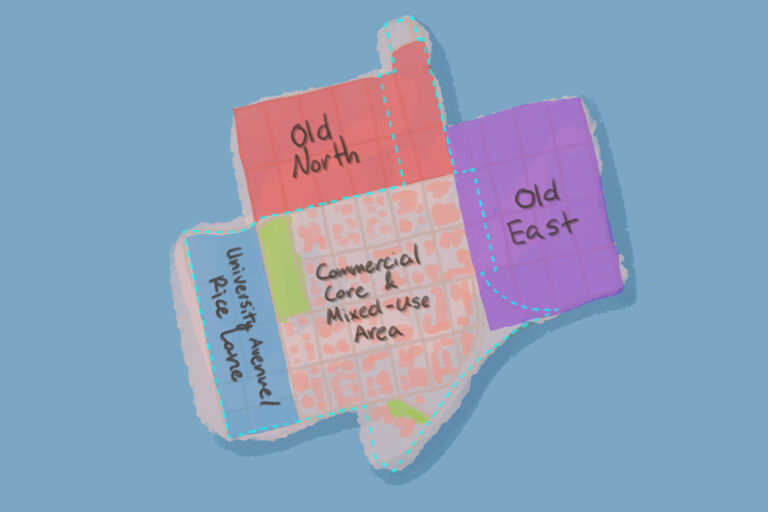
The plan will be centered around the commercial core and mixed-use area in Davis — it will include the established residential University Avenue-Rice Lane neighborhood and partially established neighborhood of Old North and Old East Davis. This plan identifies six key issues as a result of previous community engagement.  

Planner and project manager Eric Lee described the public review and comment period as a crucial stage.

 “It is a very important stage, a very important part of the process,” Lee said. “Up to now, there has been very intensive public participation and community engagement.”

Lee said the City of Davis will evaluate all the comments to identify new issues and general community concerns.

“We will present those comments to the Downtown Plan Advisory Committee and eventually to the Planning Commission and City Council,” Lee said. “We will be looking at those comments and make some revisions to the plan.”  

Larry Guenther, a member of the Downtown Plan Advisory Committee (DPAC), as well as a representative of Old East Davis, emphasized the influence of comments from the student body and faculty staff at UC Davis. 

“There has definitely been a lot of concerns with many other committee members about how this is going to affect students and what role students play,” Guenther said. 

Catherine Brinkley, a member of the DPAC and an assistant professor in the College of Agricultural and Environmental Sciences, specializes in Human Ecology and Community and Regional Development at UC Davis. She addressed current housing concerns for both students and people who work in Downtown Davis.

“Students are sleeping in the car, they are homeless and they are commuting very long distances, which is increasing greenhouse gas emissions,” Brinkley said. “It’s not just students. Two-thirds of people who work downtown commute from outside of Davis into Davis. There is a mismatch of housing availability and affordability.” 

Guenther described the current zoning for Davis as restrictive in terms of stories and building types.  

“There are very few people who live, actually, in the core downtown,” Guenther said. “One of the goals of the committee is to try to change the zoning so that we get more people [to] live downtown.”

The Specific Plan aims to enhance living and business environments in Downtown Davis. Lee said Davis has the potential to become better.

“The city has a lot to offer the community [and] downtown,” Lee said. “We are very unique in this region. We obviously have the university, all the students [and a] long history there.”

The DPAC, made up of 20 community members representing diverse aspects of the community, is a key component of community engagement in the whole planning process.

“There has been a lot of outreach with the community,” Guenther said. “And the idea behind having so many members in the committee was to really try to do a good job of representing the community and all the different voices.” 

The Specific Plan has a 20-year planning horizon through 2040 and will use a two-phase strategy. 

Written by: Rui Ding –– city@theaggie.org

Office of Research launches four specialized research centers

New efforts emphasize UC Davis’ commitment to interdisciplinary research

The Office of Research spearheaded four new special research programs through the Inter and Multidisciplinary Program to Accelerate Convergence and Transition (IMPACT) Centers program. This initiative is “designed to promote new, sustainable inter- and multidisciplinary research activity at UC Davis that responds to society’s greatest challenges and needs,” according to UC Davis’ Administered Programs website.

After receiving 64 proposals written by 750 individual faculty members, four ideas were selected to receive $1 million over three years: the Data Science Center, the Gene Therapy Center, the Global Migration Center and the Perinatal Origins of Disparities Center. 

“There is a lot of emphasis now on multidisciplinary research to address global challenges as well as the big societal problems,” said Dr. Prasant Mohapatra, the vice chancellor for research, at the launch event on Oct. 23. 

According to the UC Davis website, “scientific merit, plans for self-sustainability and potential for impact” were some factors taken into consideration during the selection process. 

“My expectations […] are very high,” Mohapatra said. “I want all the centers to be very successful in making an impact on the world. Each center by the end of the year […] should be able to say, […] ‘During the year we did research X, Y and Z which makes impacts in such a way.’”

Dr. Thomas Strohmer, a professor of mathematics of data science, is directing the Center for Data Science and Artificial Intelligence Research, also known as CeDAR. 

CeDAR’s goal is to “effectively respond to […] grand challenges of our society by advancing data science and AI foundations and applications in a transdisciplinary effort,” according to the PowerPoint presented at the launch event. 

“This is just the beginning,” Strohmer said. “We want to be really strong in philanthropy. We want to reach out to a lot of industries across the different sectors.” 

CeDAR is applying data science and artificial intelligence research to resolve fundamental problems in foundations, healthcare, agriculture and environment, veterinary medicine and biology and biomedical engineering. 

Dr. Jan Nolta, professor of cell biology and anatomy, is in charge of the Gene Therapy Center.

“A lot of this started with the stem cell program at UC Davis,” said Joseph Anderson, the assistant director of the Gene Therapy Center. “It started because we can use stem cells and genetically modify stem cells so we can develop these therapies as potential one time treatments.”

Currently, the center is working towards developing hematopoietic stem cell (HSC) gene therapies for various conditions, including leukemia, lymphoma, Tay-Sachs disease and sickle cell disease. 

The Global Migration Center, directed by Economics Professor Giovanni Peri, grapples with the causes and consequences of migration, policy concerning migrants and cross-disciplinary conversation regarding the political and social spheres of immigration. 

“Migration, how to deal with [migration], immigration, refugees and undocumented migrants are a huge theme of debate,” Peri said at the launch event. “Politics are made and unmade around this. This is an important thing.” 

The Migration Research Cluster, the “Comparative Studies,” initiative and the “Humanizing Deportations” project, coalesced to form the Global Migration Center. Twenty-five faculty members from 13 departments across five colleges, along with undergraduate and graduate students have united to tackle this topic. 

The Perinatal Origins of Disparities Center, or POD Center, is led by Dr. Leigh Ann Simmons, a professor and chair of the department of human ecology, and Dr. Janine LaSalle, a professor of medical microbiology and immunology. 

“We have four main goals,” Simmons said at the launch event. “They are focused on really leveraging innovation and technology from the basic sciences to clinical and community sciences.”

The POD Center’s research is centralized across three overarching core research threads including biobehavioral research, epidemiological research and research in clinical and community-based interventions.

“Our research is focusing on pregnant women, infants, on that early period and the families that are raising these young kids,” Simmons said. “We’re focusing specifically on populations that typically experience disparities in chronic diseases.” 

According to the UC Davis website, the four centers will have the opportunity to become IMPACT Centers by the end of their third year of establishment, if they demonstrate “strong research progress.”  

“I hope five years from now, if I do a Google search on any of the words that you see [on the screen], your center should come as the top one,” Mohapatra said as he addressed the directors in the crowd. 

Written by: Aarya Gupta — campus@theaggie.org

ASUCD representatives demand that UCD pay student workers immediately

Lack of action from the UC underscores negligence, irresponsibility

To the University of California Office of the President, 

We, as a representative body for undergraduate students at UC Davis, are writing to express our utmost discontent over the forceful transition into the new UCPath payroll system. Over these past several weeks, a plethora of complaints regarding UCPath have been brought up. Since its initial rollout on the UC Davis campus in October of 2019, there have been persistent issues with hiring and processing payroll for our student employees. Many students have either not been paid or have been receiving incomplete amounts on their checks. 

The Associated Students, University of California, Davis (ASUCD) employs upwards of 1,200 students, all of whom are vital to our daily operations and services. This means that our students — students who work at the Coffee House and serve our campus community on a daily basis, our workers at the Pantry who ensure folks don’t go home hungry and even our student bus drivers who, in addition to serving the city of Davis, make sure students are able to attend their classes —  have all been severely impacted by the UC’s mandate to roll out UCPath.

These same students have mouths to feed and a roof to keep over their head. The lack of transparency with students about this situation is concerning and the fact that students have not been paid is absurd. Various other UCs that have been forced to transition over to UCPath faced similar issues over missing and inadequate pay. The UC decided to gradually roll out the UCPath system across the UCs. The fact that there are still issues with the system and no action from the University of California shows undergraduate student employees the negligence and lack of responsibility of their university.  

Students are at the point where they can no longer stand waiting for the administration to take action. If the University of California is unable to provide a reliable system under UCPath, especially when the previous payroll system for ASUCD was functioning optimally and operated in-house, then there is no need for this transition. We demand that the University of California take responsibility for its actions and compensate monetarily for the delayed wages. 

The transition to UCPath has caused many students undue stress. Students on our campus live paycheck to paycheck and rely on their timely wages to pay rent and afford meals. They rely on their jobs while simultaneously pursuing an education at UC Davis. This is unacceptable. As ASUCD representatives, we stand in solidarity with our student workers and demand action be taken immediately. 

Shondreya Landrum, ASUCD Senator, Pro Tempore 

Shreya Deshpande, ASUCD Internal Vice President 

Victoria Choi, ASUCD Senator 

Anna Estrada, ASUCD Senator 

Justin Hurst, ASUCD President 

Kevin Rotenkolber, ASUCD Controller 

Sean Kumar, ASUCD Senator 

Maya Barak, ASUCD Senator 

Filip Stamenkovic, ASUCD Business and Finance Commission Chairman 

Adam Hatefi, ASUCD External Affairs Vice President 

Karolina Rodriguez, ASUCD Senator 

Jose A. Sanchez, ASUCD Senator 

Sahiba Kaur, ASUCD Senator 

Peiyuan Chen, ASUCD Senator 

Elena DeNecochea, ASUCD Gender and Sexuality Commission Chairperson 

Jonina Balabis, ASUCD Ethnic and Cultural Affairs Commission Chairperson 

Shelby Salyer, ASUCD External Affairs Commission Chairperson 

UC Davis Ethnic Studies Celebrates 50 Years

Critical importance of ethnic studies — from activism to academia

Born out of protest, it was just 50 years ago that the idea of an ethnic studies curricula emerged at UC Davis — which, at the time, was revolutionary.

With a political climate of anti-war, civil rights and women’s liberation movements, the 1960s embodied a time where change was being called for on all fronts. In academia, many students feared their universities were disconnected from real-world concerns and, even worse, complacent in the perpetuation of systems of oppression. 

In those years, California colleges and universities played a fundamental role in the inception of ethnic studies programs, specifically at UC Berkeley and San Francisco State University. The student group Third World Liberation Front (TWLF) organized multiple strikes in 1968 to advocate for the necessity of curriculum reform and increased diversity. 

At UC Davis, students organized their own TWLF chapter. It was also at this time that several cultural groups emerged, such as the Black Student Union, the Native American Student Association, Asian American Concern and the United Mexican American Students. From protests, newsletters, symposiums and more, these groups aimed to make their communities a priority for the university.

It was not long after the 1968 strikes that the first ethnic studies department was established on March 7, 1969 at San Francisco State University, sending a signal for other California colleges to continue mobilizing and push even harder. 

Just two months later, students organized a UC-wide strike on May 23. Several UC Davis student groups used the opportunity to present their demand for ethnic studies to then-Chancellor James Meyer. The demands were not mere lists of wants, but included detailed proposals with budgets and potential classes. 

“A number of 13 measures were put up and, at the basis, were asking for an intellectual agenda and a community agenda,” recalled Dr. Bettina Ng’Weno about the African and African American Studies program in particular. 

Notably, many of the first ethnic studies courses were offered at the School of Agriculture rather than the College of Letters and Science because they were seen as a fulfillment of the university’s land-grant mission to “pursue science and knowledge in service of the public.”

Some of the first instances of ethnic study on campus were about studying the farming and surrounding communities. The Asian American Studies Department in its early stages, for instance, shared close ties with the Applied Behavioral Sciences Department. 

Today, there are four ethnic studies departments on campus. Although much has changed since 1969, the university still has a long way to go. 

African and African-American (AAS) studies became the first ethnic studies major at UC Davis, with AAS classes appearing in the course catalog starting in 1971. It took until 2016, however, until the department was officially established. 

A similar struggle rings true for the other ethnic studies departments as well — for many years, academics questioned the legitimacy of ethnic studies programs. 

With fewer resources, high faculty turnover rates and departmental conflict, instability persisted until the late 1980s. Then, the Academic Senate voted to allocate six full-time employment positions for all ethnic studies departments, legitimizing the departments and ensuring perpetuity. 

The Native American Studies Department came to fruition in 1993 and the program began offering graduate degrees in 1999. The department is unique in that it makes UC Davis the second of only three institutions nationwide to offer doctorates in the field along with the University of Arizona and the University of Alaska Fairbanks. Many students and faculty think that this department is especially necessary given that UC Davis was built on the Patwin tribe’s land.  

Chicano and Chicana Studies and Asian American Studies became departments in 2008 and 2009, respectively, but courses had been established before then.

Unfortunately, even today several of the departments do not have the promised six full-time faculty members. For instance, African and African American Studies only has four. What’s more, many of the issues that catalyzed the creation of these departments are still ongoing today, making the continuation of these programs all the more necessary. 

Beyond their symbolism, these departments have come to embody vibrant pillars of the UC Davis community both academically and beyond. 

“I feel like its grounding, it gave me opportunities,” said Monica Valazquez, a fourth-year Chicana/o Studies and international relations double major.

Many of these programs and their related classes represent some of the first academic opportunities for Black, Chicanx, Native American and Asian American students to learn about their cultures and histories. Cynthia Johnson, a UC Davis alumna who studied Human Development and African and African-American Studies, said that that is a big reason she came to the major.

“My high school curriculum didn’t have that, but going into freshman year, I heard a lot of upper-classmen say, ‘Make sure you take AAS 10,’” Johnson said. “It was very informative, so it kind of brought me on the path of being more inquisitive about the department.”

Throughout the quarter, several of these departments will have events commemorating their 50 year history with and look toward the future. 

The Native American Studies is holding its 50th anniversary alumni reunion and 20th anniversary graduate program reunion Nov. 8 and 9 at the UC Davis Conference Center; the African and African American Studies Department will be having a 50th anniversary commemoration “Visioning 50 Years Forward” on Nov. 15 at the Student Community Center and the Asian American Studies’ “The Field and Its Future Symposium” will be held on Nov. 16 in California Hall. 

The culminating celebration of all the departments will be held in May 2020. More information can be found on each department’s website.

Written by: Nahima Shaffer — arts@theaggie.org 

Students living at West Village complain about construction noise

0

West Village responds to students’ complaints

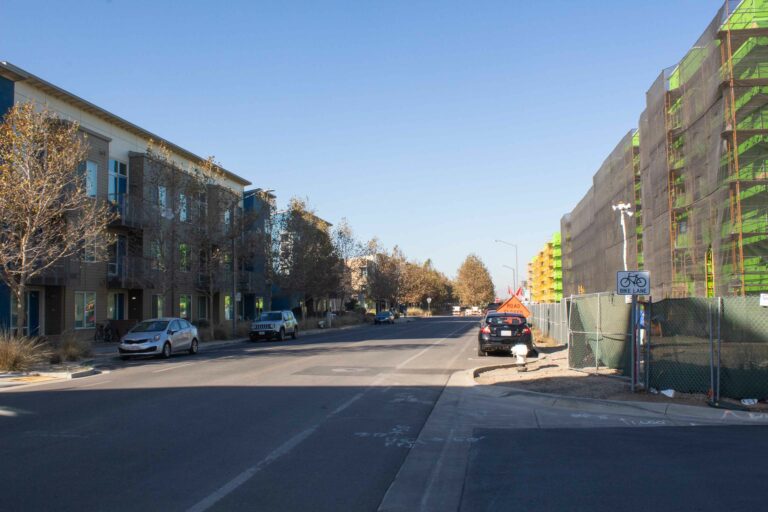
Construction of the new apartments in West Village, called The Green, began in Feb. 2019. Anticipated to hold approximately 1,000 beds by Fall 2020 and be ready for occupancy by Fall 2021, The Green is a part of UC Davis’ initiative to provide more housing for undergraduate students. The building is also aiming for Net Zero Energy, meaning the apartments will produce as much energy as it consumes on an annual basis. 

The Green is not owned by West Village, nor does West Village manage the construction. It is instead owned by UC Davis Student Housing, which is in charge of construction of the new undergraduate apartments in the West Village area. Currently, West Village, managed by Greystar Real Estate, resides on land owned by UC Davis. 

The construction of The Green, however, has proven to be a disturbance for current West Village tenants living across from the construction site. Tenants living adjacent to Tilia Street expressed concerns about the construction noises waking them up and bothering them when they are studying. 

“It’s Monday through Saturday, so it’s six days a week,” said Adam Graubart, a second-year chemical engineering major. “They start at about 7 a.m. every morning, so I’d say that more than half of the days, it wakes me up. We live about 30 feet from the construction site, so it’s insanely close.”

Some students have reached out to West Village management to complain about the noise, looking to receive some sort of compensation for the trouble. 

“This is supposed to be a quiet area,” Graubart said. “I can’t really study during the day. There have been times where I’m trying to record something on the piano, and the truck beeping in the back gets in the way and I’d have to rerecord it. It’s annoying. I didn’t sign up for this — there was nothing in the lease agreement that said anything about construction.”

After receiving complaints from their residents, West Village issued a notice to affected residents which was obtained by The California Aggie. 

“The Sol at West Village leasing office has received some complaints and concerns regarding the noise from the construction adjacent to our community,” the notice states. “Please be advised that this construction project is owned and managed by UC Davis. This is not our project, and we do not control the plans for the development or the related noise.  We have contacted Real Estate Services on behalf of our residents and asked that the developer be reminded that they are working in a housing area and that development noise needs to be limited in the early morning.”  

  The notice emphasizes the fact that the leasing office has no control over the project nor any control over construction schedules and all questions, comments or concerns are to be directed to UC Davis Real Estate Services at 530-752-3776.

Rumors have circulated about leasing agents at West Village lowering rent for certain tenants who have complained while maintaining original rent prices for tenants who did not complain. Officials from West Village did not comment on these allegations. 

This is not the first occasion at West Village concerning tenant complaints about construction noise, according to a 2011 article from The Aggie. At that time, most of West Village had been finished and it began leasing. Not all the Viridian units, however, were completed, yet management still leased finished units to new tenants. 

The graduate students living in these apartments were unhappy with their units because not all amenities they thought they were promised were given, they claimed their apartments were dirty and their appliances were not working. 

The noise from the construction of the rest of Viridian was also bothersome, so much so that management placed Viridian tenants in the Hyatt hotel rooms on campus. 

The construction of The Green is expected to be finished by Fall 2021. Until then, it is unknown how West Village will continue to handle the complaints they receive for current and future tenants.

Written by: Linh Nguyen — features@theaggie.org

Demands for SAT, ACT requirements to be dropped as UC enters debate on standardized testing

0

Interest groups say SAT, ACT tests discriminate on basis of race, disability, wealth

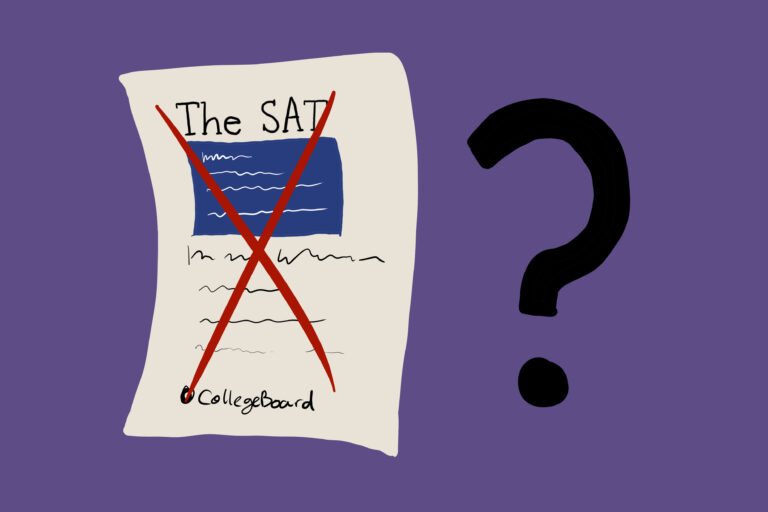
A letter sent to the UC Board of Regents on Oct. 29 and signed by several low-income student advocacy groups, including the Compton Unified School District, demanded the removal of SAT and ACT requirements from the UC application. The letter claimed that the standardized testing requirement on the application discriminates based on race, disability and wealth. The groups that signed on requested a meeting with the UC Regents within ten business days, stating their “hope that litigation is unnecessary.”

  The letter comes in light of the Regents’ general board meeting in mid-September, at which time a discussion on the impact of the standardized testing requirement on the application was first brought up.

In April of this year, the academic senate assembled a standardized testing task force as part of an effort to decide whether the UC would continue to include a request for SAT and ACT scores on its applications. The task force, chaired by Dr. Henry Sanchez of UCSF, has 17 UC professors from a variety of fields on the committee, as well as one student representative. They meet approximately once a month and often ask experts on standardized testing to speak at these meetings.

There are a variety of different courses of actions the task force could recommend: all or part of the standardized testing requirement may be eliminated, the tests may be made optional or different tests, such as the Smarter Balance Assessment Consortium may instead be used for admissions.

The task force is focused on current UC testing practices and assessing whether or not these practices provide an adequate assessment of applicants in the holistic review process. The task force will also be looking into how these testing practices are affecting the diversity of UC applicants. 

The recent letter sent to the Regents claims that current practices violate the California Constitution under the right to equal protection as well as several government codes. 

The task force hopes to make preliminary recommendations to the board by Feb. 2020, but the letter sent to the board emphasizes the urgency of the matter. It is unclear when any potential changes would be implemented, but members of the Regents hope to make changes soon.

UC Regent Eloy Ortiz Oakley, who is also the chancellor of California Community Colleges system, commented on the potential benefits if the test requirements were removed from the application process in an interview with The California Aggie. 

“The sooner the better,” Oakley said. “We have a lot of students spending a lot of money on the test prep and if we’re going to make a change they should know when and how we’re going to make the change. Most of the data that’s been clear across the nation [is] that standardized testing like the SAT/ACT say very little about a student’s ability to succeed in college. [It] says more about their wealth or their zip code.” 

Jenny Pelliconi, a first-year animal science major, agrees with Oakley’s view, especially given her ACT experience.

“I don’t think I did that well, but I feel like I’m doing really well here,” Pelliconi said. “People are not very good at taking tests sometimes, it’s a certain skill and some people don’t have that, even if they are successful.”

The numbers suggest that any decision made by the UC will have a widespread impact as the system is widely regarded as one of the best public higher education systems in the country, bringing in 176,695 freshman applicants across all UC campuses this year. 

If the UC were to eliminate the SAT and ACT requirement, it would be joining thousands of colleges across the U.S. that have already done so, including the University of Chicago and the University of San Francisco.

Though the board is focusing on admissions-based exams at the moment, other standardized tests, such as the Advanced Placement exams that many high school students take after the completion of an AP course to gain college unit credit, may also be assessed by the board in the future. 

Regardless of the outcome, there was a general consensus among the Board of Regents that an evidence-based decision will be of the utmost importance.

“We’ve been very careful not to insert any prejudgement about what recommendations they ultimately forward to this board,” President Janet Napolitano said during the general board meeting. “Whatever we do will be a national precedent, and so we want to get it right.” 

Written by: Lei Otsuka — features@theaggie.org


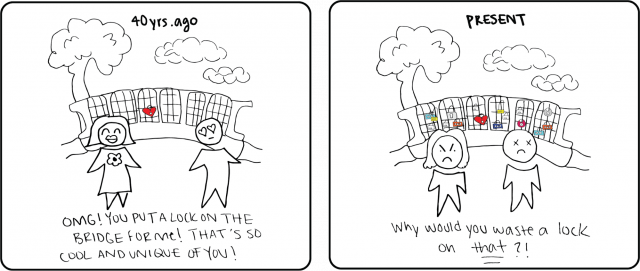
Cartoon: Everlasting Love?

MARIO RODRIGUEZ / AGGIE

Automated storytelling will never match the human authenticity of our favorite novels

A robot probably won’t create the next Great American Novel, but attempts to move AI in that direction are nevertheless alarming 

 I came across a weird tech discovery while listening to Reset, a podcast hosted by Arielle Duhaim-Ross. There have been developments in artificial intelligence that have given it the ability to write stories and aid in the creative process. The story was incredible and yet so bizarre. I am all for innovation and progress, but products like these make me pause. 

There is something unusual about artificial intelligence writing the books and stories we consume, which are beloved for the unique and creative qualities of their human authors. I don’t mean this to sound alarmist or dystopian, just skeptical. The next AI-generated Nicholas Sparks-esque novel sounds terrifying, but it won’t be what puts an end to the human race (hopefully). 

In the Reset episode, Duhaime-Ross talks to novelist Sigal Samuel about her experience with OpenAI’s GPT-2, which takes the sentence entered by a user and predicts the next sentences. Samuel enters text from her already published novel “The Mystics of Mile End” into GPT-2. 

“The algorithm is sort of analyzing your words, your syntax, and then it’ll spit out how it thinks your text should be continued,” she tells Duhaime-Ross.

Samuel seems impressed with how the program continues her text. Samuel sees the program as a helpful resource for writers. 

“As a writer, you don’t always have the luxury of being in the middle of an MFA workshop or just friends who you can bat around these ideas with,” Samuel said. “So it’s kind of nice to have this machine sounding board slash collaborator.”

Samuel’s experience with the GPT-2 model is just one example of artificial intelligence being used in the storytelling process. “Sunspring,” a nine-minute film directed by Oscar Sharp in 2016 is the first film entirely written by AI. It’s a weird and nonsensical film, proving that the likelihood of AI independently creating a well-written novel or screenplay is highly unlikely. But as Samuel has suggested, there is still room for collaboration between humans and machines.

Storytelling is so intrinsically human that there is something unnerving about AI involvement and collaboration in creative writing. Technology has found its way into every sector and realm of our public and private lives. In fact, I’d be surprised if our process of storytelling and writing doesn’t change within the next few years due to the involvement of AI. But it’s important to remember that people crave stories that stem from human creativity and personal experiences, whether an obscure interpretation of some socio-political event, an intimate memoir or an artful manifestation of a writer’s wildest dreams.

Technology and the humanities shouldn’t have to be in two different spheres of human intelligence and thinking. Literature, journalism and the broader humanities can be constructive in evaluating the impact of automated programming on humans, contextualizing and grounding technology on an intimate level. Technology is largely made to aid us in much of our work and interactions. For example, the advent of the computer has made writing (or rather, typing) stories easier and more accessible. It’s possible that in the future, technology could forge an even closer relationship between humans and the humanities in ways we couldn’t imagine. It could be a disaster, but maybe it won’t be all that bad. 

Like many others, I love storytelling for the creative brilliance of its authentic writers. When I think about the books that I have found most compelling and impactful, it’s not due to their entertainment value alone. In “Giovanni’s Room,” James Baldwin manages to capture the very human feelings of loneliness and confusion in a relatable and simultaneously unique, way. George Orwell’s “1984” is still relevant and respected today for its ability to see through the facade of a seemingly perfect society. These stories are personal and critical, as well as entertaining. 

Books take time, effort and dedication to create. To read a book is to engage in work that has been researched, thought out and mulled over a period of months, if not years. Context and life experiences matter in the storytelling process. Although it is hard to imagine artificial intelligence becoming adequate enough to assist or even replace writers, it’s disturbing to think of the automation of ideas we once saw as pure human brilliance and creativity.

Written by: Simran Kalkat — skkalkat@ucdavis.edu 

Disclaimer: The views and opinions expressed by individual columnists belong to the columnists alone and do not necessarily indicate the views and opinions held by The California Aggie.

Medication abortions to be administered at all California public universities starting 2023

With some states rolling back abortion rights, California becomes first state to offer this type of abortion on college campuses

Starting in 2023, both the UC and California State University (CSU) systems will provide on-campus access to medication abortions or “the abortion pill.” Signed on Oct. 11, the goal of Senate Bill 24 is to increase equity in regards to who has access to this procedure.

Written by California State Senator Connie Leyva, this bill is the first in any state to require such services be offered at public universities.

The idea for the bill first originated with Students United for Reproductive Justice at UC Berkeley. Soon after, the movement became a statewide campaign through the involvement of The Women’s Policy Institute and a multitude of other organizations. 

“Abortion is a protected right, and it is important that everyone — including college students — have access to that right, if they so choose,” Leyva said in a statement

Leyva has worked on the passage of this bill for three years — a previous version of the bill reached the desk of former Gov. Jerry Brown in 2018. Brown vetoed the bill, arguing that access to abortion services off-campus were widely available.

Students for Reproductive Freedom is a student-run organization associated with a chapter of Planned Parenthood at UC Davis. The organization works toward reproductive justice through education and advocacy. Lauren Low, a fourth-year community and regional development major, is the co-founder and current president of the UC Davis chapter. She stressed the importance of access to medication abortion, as it is a time-sensitive prodecure. 

“You can only get medicated abortion during the first 10 weeks of pregnancy,” Low said. “Most people don’t realize they’re pregnant until four to six [weeks].” 

Low stressed the safety of this procedure, saying “it’s safer than both Viagra and Tylenol.” 

“Carrying your pregnancy to term is significantly more risky than this procedure, especially for people of color and people who face implicit bias in the healthcare system,” Low said.

Approximately 62% of students at California’s public universities are more than 30 minutes away from the closest abortion facility when using public transportation, according to a 2018 study published by the Journal of Adolecent Health. The same study said that the average cost of a medication abortion was $604. 

At UC Davis, the nearest Planned Parenthood is in Woodland — 20 minutes away by car and an hour by public transportation. 

“There are some students who cannot bring their cars on campus,” said Jessy Rosales, campus coordinator of Southern California for JustCARE, an organization highly involved in the passage of SB 24. “There are some students who may not have the funds to even take public transportation [or pay for the fees of the procedure].”

JustCARE organized both student lobby days and days for students to go to committee hearings in order to voice their support for SB 24. Students for Reproductive Freedom encouraged UC Davis students to attend the committee hearings and, during lobby days, met with representatives to discuss its importance. 

In addition, Students for Reproductive Freedom held a phone bank stationed at the MU where they urged students to make a quick phone call to their representatives in order to voice support for the bill. They also advocated for voicing concerns via social media, tagging representatives and UC Davis’ chancellor on posts about the subject. 

SB 24 affects more than just students in California attending public university. At a time when other states are rolling back abortion access, the passage of this bill has served as inspiration for individuals across the state and the country.

“One of the big impacts of this bill is the fact that it [has] let this new generation of reproductive justice activists really become strong and solidified,” Low said, adding that SB 24 has “inspired a few people to actually start their own productive justice organs on their campuses.”

Now that JustCARE has completed its first goal of passing SB 24, it is turning its efforts toward working with students and health centers for the next three years “to make sure that this process is very seamless,” Rosales said.

Written by: Jessica Baggott — campus@theaggie.org

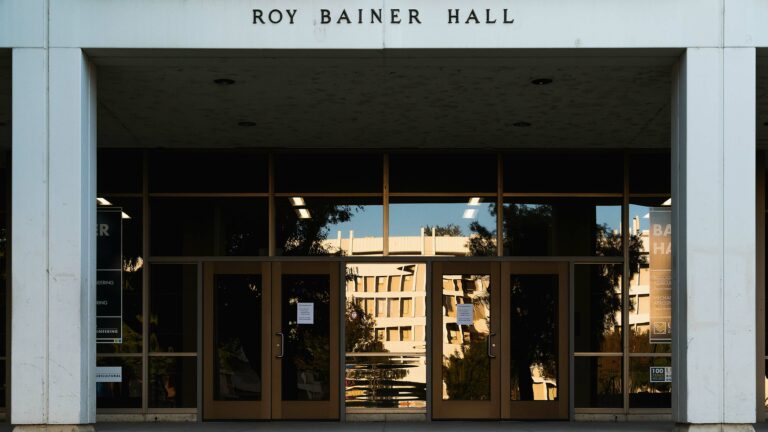
Campus police implement new security measures for Bainer Hall

Mechanical and aerospace engineering students kept informed

Following a spate of robberies in Bainer Hall throughout September and October, UC Davis Campus Police have implemented added security measures in the building. The building and security managers in Bainer recently sent an email to concerned students outlining these steps. 

“There has been much going on behind the scenes on hardening our security measures for Bainer at large, [mechanical and aerospace engineering] MAE spaces, and room 1236 in particular,” said the email, which was addressed to COE Student Team Leaders of OneLoop, UCD Formula Racing, Space & Satellite Systems, UCD Baja, and Eclipse Rocketry. Relevant MAE spaces have been re-keyed and re-coded. 

Additionally, the managers have “reviewed spaces with [campus police] using a multi-layered, defense in-depth approach, [including] deter, delay, detection, defense, and detaining.” There are now increased police officer and AggieHost patrols in and around the building, and the managers have requested improvements in outdoor lighting and video surveillance. 

Other measures include “installing hardware on certain vulnerable doors” as well as evaluating Bainer’s alarm system and reminding people to report suspicious activity and keep the building doors shut. Once the new security system is implemented in Bainer, the email said, “funding [will be secured] for a targeted key card access […] to exterior and high risk spaces.” 

“As you can see, there have been a variety of steps taken and we will continue to work on hardening our security measures as well as improving personal safety help,” the email said. “We are also collaborating on a plan to support the collective and individual student teams’ safety culture efforts.”

Written by: Rebecca Bihn-Wallace — campus@theaggie.org

UCPath was destined to fail at UC Davis. The administration rolled it out anyway.

Previous issues at other UCs should have been a warning — apologies won’t cut it now

The California Aggie’s Editorial Board was clear when it voiced its vehement disappointment with the university’s implementation of UCPath. The importance of paying employees, especially student employees, accurately and on-time cannot be understated.

As more time passes, our previous assertion that “the implementation of UCPath at UC Davis has been nothing short of an utter nightmare” continues to prove true. More and more students continue to come forward, and yesterday, student employees at the CoHo even staged a walk-out in protest of the botched rollout of this obviously flawed payroll system. The Editorial Board expresses its solidarity with those who courageously left their positions on Thursday to protest the university’s handling of UCPath. As issues continue to arise, Chancellor Gary S. May’s statement to the Editorial Board that “I think that the October 1 switchover was pretty smooth,” shows the lack of understanding that the administration has regarding students’ experiences with UCPath.

After yesterday’s walkout, UC Davis released a new statement, saying, “We are dismayed that some of our student employees have not received their pay in a timely manner and agree this is unacceptable. Chancellor May has directed that all student employees be paid what is owed them immediately.” The Editorial Board would like to thank UC Davis for this announcement while reminding the administration that student employees should have been paid long ago. This was an avoidable situation.

It even took yesterday’s protest for Vice Chancellor Kelly Ratliff and Interim Vice Chancellor Emily Galindo to send an email to the entire student body, informing them about emergency loan options. They wrote, “If you are in need of emergency funds, you are encouraged to apply online for a UCPath Emergency Pay Advance. Financial Aid will expedite approval, generally the same day. You will be notified of approval by email and can go to the Cashier’s Office in Dutton Hall to receive cash. Advances are up to $1,000, interest-free and are due on January 15.” Though this is an attractive option, the Editorial Board is still concerned that students will not be paid fully before this January deadline, putting them at risk of potentially missing the loan’s repayment deadline.

Our message is straightforward: There is no room for error when it comes to students’ hard-earned pay. Many students depend on the pay they receive from their on-campus jobs to pay for tuition, food, housing and other basic necessities. When we go without pay, our lives are put at risk. Platitudes and promises don’t matter, and we want more than an apology. 

In response to our first editorial, Christine Lovely, the associate vice chancellor of human resources, and Matt Okomoto, the university controller, wrote to “apologize that there have been pay issues impacting student employees.” The Editorial Board would like to take this time to respond to some points they raised in their letter to our paper.

1.“Payroll wasn’t perfect before UCPath and despite our best efforts, pay errors will continue to occur. With an implementation of this scale (nearly 40,000 paychecks), there are bound to be issues. When that happens, we absolutely prioritize solving pay-impacting issues.”

Our point is not that we should return to the pre-UCPath status quo. We recognize that the old payroll system needed to be brought into the 21st century, which UCPath has so far failed to do. Given the widespread errors that have occurred during the rollout of UCPath, it is painfully obvious that the university was completely unprepared to implement this system. No matter the scale, we are talking about people, not paychecks. A late or incorrect paycheck is a missed meal, a late rent payment or worse.

2. “Another change with UCPath is that processing new employees takes longer than it used to. It’s important for all new student employees to check with your department before starting work to ensure your paperwork is fully processed in the new system. If an employee does not exist in the system, it will not generate a timesheet and the student will likely not get paid on time.”

The quarter is 10 weeks long, and hiring for many student positions cannot begin until the quarter begins. The Aggie was proactive with hiring and did not close its applications until after the university’s involvement fair. UCPath is supposed to improve payroll and human resources processes, not increase processing times beyond what they used to be. In our case, we have a newspaper to put out, and we need a full staff to make that happen. As we said before, being told “to wait it out” by responsible university employees and administrators does not cut it.

3. “Please encourage your colleagues to reach out to their department if they need help. If they need to speak with someone in person, they can also visit Trailhead, a student employee resource center, located at 2100 Dutton Hall (through November 8) 10 a.m. to 4 p.m. and Memorial Union, Room 244 starting Tuesday, November 12 (hours to be determined).”

Only two of the nine members of the Editorial Board knew about Trailhead before this email. The one who visited the center found it unhelpful. Considering the breadth of issues that we student workers are facing, only having until Nov. 8 to visit the office is untenable. We have been coordinating with our supervisors who have been unable to help us because of UCPath’s frustrating hierarchy. Additionally, we needed a commitment of what hours staff would be available in the MU when we received this letter, not a promise of “hours to be determined.”

Every effort needs to be made now to ensure that no student waits another day for pay that they deserve. The UC and UC Davis are responsible for this catastrophic rollout. We have rent and bills to pay.

Written By: The Editorial Board

College football season hits stretch run

National championship race starts to take shape

As the calendar turns to November, the college football season has officially hit its final stretch run with four more weeks of games left to play. 

Fans have been treated to a heavy dose of drama, upsets, passion and feel-good stories throughout the fall, and overall interest in the sport is as high as ever. 

Unlike the past few seasons, the pool of National Championship contenders feels a lot wider than just Alabama and Clemson — the dominant duo that have squared off in three of the past four title games. This year, the group of title challengers includes LSU, Ohio State, Penn State, Georgia and Oregon, among others. 

There is still a lot of meaningful football left to play in November, so fans shouldn’t put too much stock into the initial rankings released by the College Football Playoff Selection Committee this week. Many division races are still wide open and the playoff picture will surely be shaken up with the many rivalry games that will be played this month. 

Considering there are 130 teams in the FBS, it can be hard to keep up with all the action each and every Saturday. Without further ado, here is a brief rundown of the top storylines in each of the power-five conferences. 

ACC: 

Clemson is miles ahead of every other team in the ACC and will likely walk to its fifth consecutive conference title. The Tigers are outscoring opponents by over 32 points per game and have turned things up a notch ever since a narrow one-point victory over North Carolina in late September when the Tar Heels came within a two-point conversion of upsetting the defending national champions. 

Sophomore quarterback Trevor Lawrence has found it slightly difficult to live up to enormous expectations following his stellar freshman season, but still leads the second-highest scoring offense in the country and has only looked stronger as the season has progressed. 

Wake Forest, currently ranked No. 22 in the AP Poll, has put together an impressive 7-1 season thus far, taking advantage of a relatively easy schedule. The Demon Deacons will have a chance to shock the world against Clemson in two weeks, but will be heavy underdogs. 

Virginia currently leads a wide-open and very mediocre ACC Coastal division, but will have to hold off teams like Pittsburgh, North Carolina and Miami. 

Big Ten:

Ohio State, currently ranked No. 3 with a record of 8-0, is first in the nation with an average scoring margin north of 40 points. The Buckeyes, led by sophomore transfer quarterback and Heisman trophy contender Justin Fields, have blown out every team on their schedule, including a recent 38-7 victory over Wisconsin two weeks ago.

On the other side of the ball, junior defensive end Chase Young has a legitimate shot at becoming the first defensive player to win the Heisman trophy since Charles Woodson in 1997. Young, a likely top pick in the upcoming NFL draft, leads the FBS with 13.5 sacks and is second with five forced fumbles. He is truly the definition of a “game wrecker” and will be a key component in Ohio State’s quest to return to the College Football Playoff for the first time since 2017.

Under first-year head coach Ryan Day, who took over from Urban Meyer, the Buckeyes have been able to stay laser focused every week and avoid any costly letdowns against inferior opponents. In each of the past two seasons, Ohio State suffered blowout road losses to massive underdogs Iowa and Purdue which were too much for the College Football Playoff Selection Committee to overlook. 

Undefeated Penn State, standing closely behind the Buckeyes, has every shot to reach the conference title game and make the Playoff for the first time. The Nittany Lions have yet to falter in any of their big games and have pulled out close wins over Pittsburgh, Iowa and Michigan. If Penn State can survive a road test versus No. 13 Minnesota on Saturday, that would likely set up a top-five showdown and playoff elimination game against Ohio State on Nov. 23 in Columbus. 

In the Big Ten West, Wisconsin made headlines with a 6-0 start to the season, but fell to Illinois in the biggest upset of the season a week before losing to Ohio State. Minnesota, currently at 8-0, has greatly exceeded expectations and is in the driver’s seat to win the division and play for its first Big Ten crown since 1967.

Big 12:

Oklahoma is the favorite to win the Big 12 title for the fifth year in a row, but is still recovering from a shock 48-41 road defeat to Kansas State on Oct. 26 that rocked the college football world. The Sooners almost roared back to snatch the win in the final minute, but ultimately couldn’t recover from an 18-point deficit. 

Similar to Ohio State, Oklahoma has benefited greatly from the play of a transfer quarterback. Senior Jalen Hurts, the former Alabama quarterback who led the Crimson Tide to consecutive National Championship games in 2017 and 2018, now leads the Sooner offense. Former Oklahoma quarterbacks Baker Mayfield and Kyler Murray have won the Heisman trophy the past two years, and Hurts has a very good chance at being named a finalist himself. 

The Sooners never have any trouble lighting up the scoreboard on offense, but that has only taken them so far in recent years. For a while, it looked like the eternally-porous Oklahoma defense had taken a big step forward this year, but the same problems of past seasons reappeared in the shootout loss to Kansas State. 

Oklahoma will have to win the rest of its games and hope that other top contenders around the country lose a game or two. The Sooners were able to sneak into the Playoff last season behind three undefeated teams, so their season is far from over. 

Baylor has been the other bright spot in the Big 12 this season, jumping out to a 8-0 record and a top-11 ranking. Much like Minnesota, the Bears have faced a relatively easy schedule so far and will have to keep racking up the wins to get more respect in the national conversation. There are more than enough opportunities for Baylor to prove itself, with consecutive home games against Oklahoma and Texas coming up later this month. 

Pac-12: 

The self-proclaimed “conference of champions” just experienced one of its most important weekends in at least three years, as division leaders Oregon and Utah kept their playoff hopes alive with big road wins in a pair of tough environments. Oregon overcame a slow start and whalloped USC 56-24, while Utah edged Washington by a final score of 33-28. 

In recent years, Pac-12 teams have had a tendency to beat up on each other, creating lots of parity and eliminating the conference from the playoff discussion early in the season. The victories for Oregon and Utah over the weekend were a huge step in the right direction for a league still fighting for national relevancy and its first playoff berth since the 2016 season.  

Oregon has a slight advantage over Utah, due to its close non-conference loss to Auburn in week one, but neither team can afford a second loss. It would be best for the Pac-12 if both sides went into the conference championship game at 11-1, giving the winner the best possible playoff resume. 

SEC:

The SEC has lived up to its esteemed reputation in every possible way this season, placing five teams in the top-12. 

No. 1 LSU has been the most surprising team in all of college football this season. The Tigers are putting up massive numbers on offense and already have signature wins over Texas, Florida and Auburn. Fourth-year head coach Ed Orgeron has the Tigers’ confidence level at an all-time high and there is a certain swagger around the program that was missing for the last several years. 

Quarterback Joe Burrow, in his second season in Baton Rouge after transferring from Ohio State, leads the country in completion percentage and is second in passing yards and touchdowns. Burrow is currently the favorite to win the Heisman trophy, with 6/5 odds at the Westgate in Las Vegas. 

To nobody’s surprise, Alabama is also undefeated and has all the pieces to make its fifth straight National Championship game. The Crimson Tide are averaging over 48 points per game with a plethora of extremely talented skill players and star quarterback Tua Tagovailoa striking fear into every defense in the nation. 

LSU and Alabama will face off this Saturday in Tuscaloosa in what many are dubbing the “game of the century”. This is the first time the top two teams in the AP Poll will face off in the regular season since this same match-up back in 2011, when LSU prevailed in overtime by a final score of 9-6. The two teams ended up playing a rematch in the National Championship game and Alabama got the last laugh, winning 21-0.

Tagovailoa suffered a right ankle injury in a win over Tennessee on Oct. 20, but is expected to play against LSU, whether he’s 100% healthy or not. No matter the outcome, both teams have a realistic shot at making the College Football Playoff due to their dominating success all year long. 

In the SEC East, No. 6 Georgia controls its own destiny after taking down No. 10 Florida last week 24-17. The Bulldogs suffered a shocking 20-17 loss to South Carolina in overtime last month, but can still make the top four by winning out in the regular season and beating either Alabama or LSU in the SEC championship game. 

Written by: Brendan Ogburn — sports@theaggie.org

Review: “The Lighthouse”: both a Surrealist painting and Greek tragedy

The Beauty of Eggers’ fully realized vision  

“The Lighthouse,” the most recent film from Robert Eggers, is an exploration of hysteria on the high seas, a piece of cinema that transcends Eggers from a director into a modern-day auteur. It is also the sole reason why future generations will avoid seagulls with deeply rooted apprehension. 

Eggers has had a life-long fascination with the paranormal, occult and outlandish — specifically those of days long past. His last film, “The VVitch,” was a 17th-century folk tale centered around an exiled New England family with the looming threat of a villain in the woods. Although “The VVitch” is an acclaimed debut and a solid film, “The Lighthouse” takes the seeds planted there and sows them into a beautiful, bountiful harvest. From top to bottom, Eggers’ most recent film is a vision, worked on by many, but whittled, crafted and perfected by the director himself. “The Lighthouse” tells the story of two men, Ephraim Winslow (Robert Pattinson) and Thomas Wake (Willem Dafoe), working the titular tower for what was intended to be just a season but ended up lasting an eternity.

Viewers are immediately struck by how the film actually appears on screen. Although shot on modern-day cameras, Eggers sought out archaic lenses from the 1930s and 1940s to imitate the look of old horror films. The result is an aspect ratio that is almost completely absent from mainstream film today: a boxy, narrow view that is known as Academy (1.19:1). These technical aspects set the stage for the directorial elements that make their way on screen. Eggers also chose to work in black and white, transporting us from the modern day into the old, desolate and claustrophobic landscape of the New England coast in the 1890s. 

And what a landscape it is. “The Lighthouse” uses the decision to forego a color palette to actively grab the viewer’s attention and to illuminate the life of a wikie, the period-appropriate slang for lighthouse keeper. This choice lends itself to creating visual intrigue for the audience. Textures pop incredibly on screen: the fuzz on Winslow’s sweater, every groove in a plank of wood, even the individual crests of a wave in the sea below become more visually enticing when seen in a monochromatic sense. The lack of color coaxes the audience even further into Eggers’ rabbit hole. It almost makes you think that everything before the 20th century was actually in black and white and no one is brave enough to talk about it, for fear of sounding like an idiot. 

Once your eyes adjust to the lack of hue and widescreen format (which happens deceptively quickly) you are immediately drawn into the plot of the film. Imbued with thick accents, Winslow and Wake work day in and day out, tending to the lighthouse and the duties entrusted to them. Winslow works under Wake, both figuratively and literally, shoveling coal and oiling the gears while his superior stands at the very top of the lighthouse, often appearing as if he isn’t doing anything up there. It is both Winslow’s desperate need for control and his curiosity of what’s at the lighthouse’s top that set in motion the events of the film, coupled with a mysterious absence of a relief ship at the end of the season. It’s in this moment, at the end of the first act, when the true horror of the film begins to set in. 

“The Lighthouse” has perhaps some of the most effective and refreshing horror that the genre has witnessed in recent memory and is one of the most powerful arguments for Eggers as an auteur. The film goes nowhere near the jump-scares of many blockbusters, nor is it in the same league as other arthouse horror films, which are often subtle in their terror. Here, fear comes from the unexplained, the unsettling and the simply strange, all of which become blatant as the film goes on. It’s why viewers feel a deep disconcerting terror when a seagull appears in front of Winslow and senses an even greater omen when he chooses to kill it in a fit of rage. Winslow, who is essentially our lense into this world, is the root of all this luridness. 

It becomes increasingly clearer as the film plays out that Winslow is not mentally stable, and that perhaps what we are seeing is not actually what is unfolding but, instead, the figments of a man going mad after months on a rock with just one other person. The imagery becomes steadily more grotesque and troubling, culminating in a final act that looks as if it was ripped out of a Surrealist painting and written out to be a Greek tragedy. The eerie nature of the film will make you deeply uncomfortable around the friendliest seagulls and inspire terror when you’re near the calmest bodies of water. It begs noticing that Thomas Wake’s surname means “a trail of disturbed water.”

The sonic elements Eggers utilized protrude as the crown jewel of “The Lighthouse.” The loud, blaring horn of the lighthouse becomes almost a character in itself, symbolizing the perpetual dread about to befall the two wikies. Mark Korven’s score is filled to the brim with thundering horns and unsettling strings, instruments that deftly communicate the madness that hangs over Winslow and Wake. The beauty is in its simplicity, never overbearing, embodying what a score should be: an audible manifestation of the mood. 

The influences found in “The Lighthouse” are vast and varied, yet weaved together seamlessly. The atmosphere of the film owes itself to Eggers’ passion for the strange and paranormal of the 19th century. With dialogue lifted directly from journals and books Eggers procured while writing, the film owes as much to old sea shanties as it does to early 20th century horror flicks. Thematically, Eggers captures the tales of sailors telling legends in the dead of night that emphasize superstition and a deep reverence for the sea. Cinematically, however, Eggers lands his work much closer to the modern day, channeling directors like Ingmar Bergman with deep close-up shots and startling monologues. The monologues are almost as beautiful as they are unnerving. The same could be said of the close-up shots, which are plentiful, and question the sanity of our characters, focusing on the intense fear in their expressions. 

If you scare easily, this is usually the part where many would tell you to avoid “The Lighthouse.” But I won’t. You should see it, again and again, if only to support the fully realized vision of a man doing something different and deeply fascinating. You should see it to experience the primordial joy of cinema, which is to simply get lost in a world. That, and to hear Willem Dafoe say “lobster” in his 19th century accent.

Written By: Ilya Shrayber — arts@theaggie.org