61.7 F
Davis

Davis, California

Sunday, December 21, 2025
Home Blog Page 392

UC Davis football gets back on track with offensive explosion

Aggies even record at 5-5 with two games remaining 

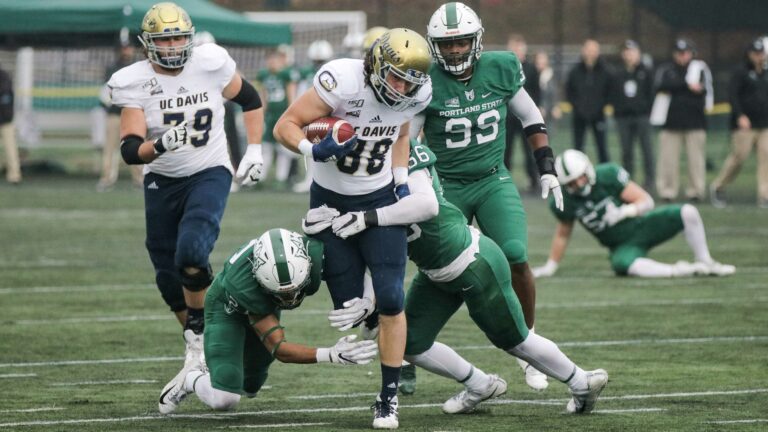
The UC Davis football team took full advantage of its bye week and came out focused and prepared in Saturday’s 45-28 win over Portland State in Hillsboro, Ore. 

The Aggie offense exploded for a season-high 649 total yards, averaging 8.95 per play, and benefited from an assortment of spectacular individual efforts. UC Davis struck serious damage with long yardage gains, gashing the Vikings on eight pass completions of 20 yards or greater and six runs of 15+ yards. 

“It’s not the wins that are satisfying,” said head coach Dan Hawkins during his weekly press conference on Monday afternoon. “It’s satisfying when you see guys step up, make growth, overcome obstacles, handle some issues. I think it was the first time this year we played off of each other in all three phases, which was really good to see.”

Redshirt freshman wide receiver Lance Babb II went off for the best performance of his young career, hauling in 10 of his 11 targets for 168 yards and a trio of touchdowns. 

“Lance Babb had a great game,” Hawkins said. “If you watch him practice, watch him train, watch his attention to detail and watch his passion, it’s really cool to see that come to fruition.” 

Babb wasn’t the only Aggie who enjoyed a career day, as sophomore running back Ulonzo Gilliam Jr. sprinted for a pair of scores and 242 yards on the ground. Gilliam’s rushing total, which included a career-long 75 yard touchdown run, was the fifth highest for a single game in program history.  

“It was probably the funnest thing to see him break the long one, which he’s been trying to get done, and how he handled the clock,” Hawkins said. “Some of his best runs were a lot more subtle, just in how he made people miss.”

Defensively, redshirt freshman linebacker Nick Eaton had one of the best games of his season as well, constantly flying around to the football and racking up a team-leading eight tackles and two forced fumbles, as well as a pair of sacks. The performance earned him Big Sky Defensive Player of the Week honors for the second time this season. In the week leading up to the game, Eaton was one of 24 players added to the watch list for the Jerry Rice Award, which honors the best freshman player in the FCS.

UC Davis never trailed in Saturday’s contest and was always within striking distance of putting the game out of reach, but the Vikings were able to hang around for three quarters. The Aggies put the finishing touches on their fifth victory of the season with a 21-point fourth quarter and will now set their sights on the home finale against Montana State this upcoming Saturday at UC Davis Health Stadium. 

“We got a great opportunity, versus a ranked football team, to be able to step up against some good competition and come back home and get after it,” Hawkins said.

The Aggies, currently at 5-5, are seemingly a longshot to make the FCS playoffs, largely due to a costly, three-game midseason losing streak. Even so, the team will get a shot to bolster its resume and make one final case to the selection committee if it can find a way to knock off Montana State and Sacramento State to close the regular season. Both opponents will be ranked in the top-10 entering week 12, so the opportunity is there for UC Davis to grab peoples’ attention and re-enter the playoff conversation. 

“We’re not blind to the situation,” Hawkins said. “We’re playing two ranked teams at the end of the year and we’ve got to take care of business. Should we get on the plus side of the ledger in both of those games, we’re a playoff team. There’s no doubt in my mind about that. We’ve played a tough schedule.”

The Ags struck first on their second possession of the game, going up 7-0 when Babb caught an inside screen pass and weaved his way untouched for 26 yards to the end zone.

 After Portland State leveled the score at the start of the second quarter, the Aggies immediately responded on an 80-yard scoring drive, with Babb accounting for 31 of those yards. On third and goal, senior quarterback Jake Maier took the snap and rolled out to his left before scrambling all the way back to the right and lofting an off-balanced throw to Babb, who leaped over two defenders in the back of the end zone and somehow came down with the football with one foot in bounds.

On the next Aggie possession, Babb snagged a wide-open 44-yard catch down the sideline that would have went for an easy touchdown if he didn’t have to dive for the football. Kicker Max O’Rourke finished the drive with a 23-yard field goal, but Portland State scored a touchdown in the final minute of the quarter to cut the Aggie lead to 17-14 at halftime. 

Midway through the third quarter, Gilliam evaded one tackler en route to a 75-yard touchdown run, the longest offensive play of the season. 

The Vikings answered with a chunk play of their own, completing a 55-yard touchdown pass that made it 24-21 as the fourth quarter approached. 

Once again, Babb came to the rescue for UC Davis and pulled off more heroics, this time leaping for a 23-yard touchdown reception in between two defenders.

The Vikings countered with another seven points, but UC Davis refused to back down, striking instantly when junior wide receiver Khris Vaughn wrestled the football away from a defender and strolled home for a 58-yard scoring play.

Gilliam iced the game in the final minute with a shifty 19-yard touchdown run and UC Davis was finally able to escape the brisk, damp conditions of the Pacific Northwest. 

The Aggies will entertain one more home game on Saturday with a 4 p.m. kickoff against Montana State. It promises to be an emotional afternoon with Senior Day festivities and the final send off for Maier, who will go down as one of the greatest players to ever don the blue and gold of UC Davis.

Written by: Brendan Ogburn — sports@theaggie.org


Senate endorsements: Consider the following

The Editorial Board endorses three candidates for ASUCD Senate

In anticipation of ASUCD’s Fall Election, which began on Nov. 12, the Editorial Board sat down with all 14 senatorial candidates to discuss their campaign platforms and attitudes toward ASUCD. While many of the candidates expressed enthusiasm for the position, the Editorial Board felt that the following three individuals gave concrete solutions to problems impacting the UC Davis student body. 

Khalil Malik — BASED

Second-year political science-public service major Khalil Malik is the Editorial Board’s top choice for ASUCD Senate. He plans to use his Senate tenure to improve communication between the Association and the student body by utilizing the ASUCD newsletter that all employees are required to subscribe to, as well as live streaming Senate meetings. The Board was impressed with Malik’s achievable goals for addressing students’ basic needs, which include allocating more funding to The Pantry, working with the administration to provide free menstrual products for all on-campus bathrooms and holding senators accountable for abuses of power. He also plans to extend his reach to off-campus issues like voter mobilization. His previous experience holding several positions within the association has proven his ability to work across the aisle, which is a valuable skill at an often-divided Senate table.

Michelle Hua — BASED

The Editorial Board hopes that political science and Asian American studies double major Michelle Hua will be able to implement her practical, concrete ideas. A transfer student from De Anza College, Hua brings to Davis an innate understanding of the role of student government and hopes that the adoption of the Brown Act will increase transparency and student participation in ASUCD. Hua plans to establish a safe, overnight parking program for students that are faced with homelessness, as well as further the university’s commitment to sustainability by banning the sale of single-use water bottles and paper towels. 

Camille Randolph — BASED

Camille Randolph, a second-year international relations major, is dedicated to being an advocate for underrepresented and marginalized students. Randolph wants to address serious issues like food insecurity and a lack of affordable housing during their time at the table. They impressed the Editorial Board with their amount of research and knowledge about the legal barriers that prevent affordable housing development in Davis. Randolph emphasized to the Board that student issues are not a partisan issue, and said they will work diligently to empower and support students, especially student workers. Randolph has already proved their ability to pass legislation as a student, and the Board looks forward to their continued advocacy as a senator.  

Although the Editorial Board was impressed during the endorsement interview by the experience and insight of Noah Dickman, who is listed on the ballot as McLovin, it ultimately chose not to endorse him. The Board felt it would be unfair to his fellow candidates who have demonstrated their commitment to running genuine campaigns and upholding the seriousness of ASUCD office. 

Students can vote online at elections.ucdavis.edu until Nov. 14 before midnight.

Written by: The Editorial Board

Members of ASUCD encourage students to vote in Fall Elections

1

Many hope that low ASUCD voter turnout is on the upswing

ASUCD’s last election — the Winter Elections — saw a voter turnout of 5,892 students, accounting for approximately 20% of the student population. Prior elections, however, have seen voter turnouts as low as 4%. Voter turnout for student government has been a constant struggle at UC Davis, but many express hope that it’s on an upward trend. 

ASUCD President Justin Hurst, a fifth-year international relations and evolution, ecology, and biodiversity double major, detailed the ASUCD elections process. 

“Voting happens online on the ASUCD elections website through a ranked-choice voting system,” Hurst said. “This quarter, the voting website will be active from [the] 12th until [the] 14th. Students have the opportunity to read through any ballot measures, there are several constitutional amendments this time around, and then see the candidates with their bios after. Any student can vote after logging in with their Kerberos ID.”

Hurst said voting gives students a chance to actively engage with the campus community. Voting takes little time out of students’ days, and whoever is elected onto the Senate will have an impact on students’ experiences at UC Davis. 

“As students, it is important for our voices to be heard and, in a representative system, voting is the best way to do so,” Hurst said. “This election, students will get to vote on half of their Senate. The most tangible reason to vote for senators will come in budget hearings come spring, as these Senators will have a say in [how] ASUCD’s budget is allocated. These senators also will vote on resolutions to show the official opinion of the student body.”

Marketing has been an issue with past elections. Voting and the election cycle itself are not always overly publicized, which may play a role in low voter turnout. In an attempt to counteract this problem, Hurst plans to send out emails encouraging students to participate in the elections process. 

“Our temporary elections committee will also have some funding to promote the elections through the purchasing of marketing materials, such as flyers,” Hurst said. “Social media, of course, is a traditional strategy.”

As president, Hurst has been working on reforms for election legislation.

“[I am] specifically looking at slates, since they have become more important to elections recently and need to be regulated for transparency purposes,” Hurst said. “I would also expect the Spring Elections — pending the approval on one of the constitutional amendments this election — to have a much more thorough marketing plan and turnout than this election.”

Third-year managerial economics major Neha Rathi expressed her feelings toward the ASUCD elections, saying she has felt a sense of disconnect between the student body and the administration.

“[I] was never aware of ongoing elections besides people changing their profile pictures on Facebook,” Rathi said. “I haven’t come across any candidates while elections were going on. Neither have I been able to see tangible results by any of the candidates or senators. People would be more willing to vote if we were told of the changes that senators in the past brought about.”

Rathi explained said she thinks low voter turnout can be attributed to lack of awareness and lack of incentives.

“I have friends in UC Berkeley that heavily advertise their candidacy by putting up tables during elections, hand out freebies and getting other students on their ‘team’ to help advertise further,” Rathi said. “At UC Davis, I’ve never come across anyone running for a position and neither have I seen posts by senators in the past showing any form of result that they brought about in their term.”

Some students feel that the current administration could take certain steps to achieve higher voter turnout and engage more students. Rathi feels that the first step to do so is education.

“If students were educated more about the benefits of being a part of such a democracy they would be more willing to vote,” Rathi said. “None of my friends even know what ASUCD is because they’ve never been inclined to learn more about the student government here. They also don’t know that they can make an impact here at Davis. High social media and in-person marketing would be required. The MU tables and the Quad should be full of students that are willing to run to become senator. This way students will be more willing to stop-by and hear more from them.”

Third-year neurobiology, physiology and behavior major, Sean Kumar, is a current ASUCD senator. He spoke about the previous election’s 20% turnout rate. He attributes the unusually high turnout to the fact that the Unitrans fee initiative was on the ballot — which was also highly advertised to the student body.

“Twenty percent is actually pretty high for ASUCD voting standards,” Kumar said. “I think this was due to the Unitrans fee referendum. After voting for the referendum, voters had the opportunity to vote for Senate. [But] I think the lack of voting is attributed to the lack of advertisement for ASUCD as a whole.” 

He elaborated on the lack of student awareness throughout the entire campus, saying regardless of an election, many students are simply unaware of what ASUCD is and how it directly impacts their lives.

“Not a lot of people at Davis know what we do,” Kumar said. “I spoke to a couple of fourth years and they were not aware about what the Senate does at all. People aren’t going to vote for something that they don’t have any knowledge about. Also, after speaking to people about the Unitrans fee referendum, voters told me that they just voted for the referendum because they felt that the voting process was too convoluted, the ranking system made no sense to them.”

Kumar said ASUCD is “always thinking of ways to advertise” itself. 

“I believe President Hurst’s efforts at improving freshman orientation will also help students gain more knowledge about ASUCD,” Kumar said. “However, I do wish candidates were allowed to campaign in student housing because it can introduce ASUCD to freshman early on in their college career.”

ASUCD does “really cool and impactful things” for UC Davis, according to Kumar. He, as well as most other senators, feel that voting is imperative in order to see specific changes made at the university level. ASUCD encourages students to take advantage of this unique opportunity to have their voice heard. 

Those interested in voting in the upcoming coming election can vote at https://elections.ucdavis.edu/vote/ until Nov. 14. 

Written by: Sneha Ramachandran  — features@theaggie.org

Review: Hulu adapts “Looking For Alaska” as its newest short series

Where the show falls flat and where it makes up for it

Hulu premiered “Looking for Alaska,” an eight-episode miniseries based on John Green’s 2005 novel of the same name, on Oct. 18. The show focuses on Miles “Pudge” Halter (played by Charlie Plummer) as the new kid at a boarding school with an ongoing prank war among students. While at school, Pudge finds new friends and falls in love with the unpredictable Alaska Young.

Back when I was in high school, John Green was the most well-known writer. With “The Fault in Our Stars” debuting as a movie adaptation, I had my eye on Green’s works and found my way to “Looking For Alaska.” Despite the Tumblr-worthy quotes and thought-provoking ideas of the afterlife, I still never liked the book. And for this reason, I decided to watch the show. 

The characters were my biggest qualm with the novel. Pudge’s group of friends consisted of misfits, and I wasn’t able to connect with any of the story lines. Green made sure he made each character strikingly different, which is where the novel failed. All of the characters had an obvious flaw that seemed more like a quirk. The characters were not relatable or  likeable, which is why it fell short.

While the show still isn’t something I would watch out of my own volition, it had its moments. That being said, it took three episodes for the show to pique my interest. The show stays true to the book’s early 2000s theme by bringing back a soundtrack that mixes The Killers, Kelly Clarkson and Coldplay.

The show incorporates new aspects that were missing in the novel. It brings in new perspectives — we don’t just follow Pudge around throughout the book. The Hulu adaptation also follows The Colonel (Denny Love) as he goes back home to visit his mom in the trailer park and Alaska (Kristine Frosteth) as she visits her boyfriend and thinks back on her life.

Pudge is the average lanky kid who never had too many friends in high school, so he moves to find a grand adventure: his “great perhaps.” But there isn’t much that his character carries other than that. The audience is aware that he likes to know the last words of people who have died, and that’s pretty much all they get from him. 

The characters do grow on you, however. When Alaska is mid-breakdown, with makeup running down her face, explaining to the dean of the school that going back to her hometown means staying there forever, it’s hard not to sympathize with her. Although the lack of character annoys me, the development appeals to me. 

“Looking For Alaska” is meant to center around issues such as racism, depression,  sexism and classism, but it really only scrapes the surface. Where there are glimpses of these issues, the characters themselves don’t grasp these issues well enough to be shown in the series. The teens’ personal epiphanies felt forced and over-the-top, even for television. Good writing has a way of enveloping you into feeling like you’re there, as if you’re with them inside the screen and in their lives. But that didn’t happen with “Looking for Alaska.”

Interest comes in waves: The show stalls midway, but in episode four, we get to know a little more of Dr. Hyde (Ron Cephas Jones), who is arguably the best part of the show. As he tells the story of a former boyfriend dying of AIDS, I found what I was looking for throughout the whole show — authenticity. 

What made up for the lack of substance among the main characters was found in the secondary characters. Dr. Hyde and Lara (Sofia Vassilieva) made the show worth watching. They gave background stories that were desperately needed in the show. 

It wasn’t until the end, around episode six, that I started to like Pudge. He got more sarcastic and a little pathetic about Alaska, but he was real. He was just a teenage boy that was upset because a girl didn’t like him back.

The small moments were the best ones: Dr. Hyde dreaming of dancing with his lover again and the Colonel dancing with his mother. The show was overall tolerable with moments of pure bliss that made it worth watching. 

Written By: Itzelth Gamboa — arts@theaggie.org

Scans with specially designed PET system for horses successfully executed by Veterinary Medical Teaching Hospital

UC Davis VMTH veterinarians, professors created PET scanning system to identify equine lesions

The UC Davis Veterinary Medical Teaching Hospital (VMTH) has successfully administered scans for horses using their new equine-specific PET system. The machine allows for the 3D scanning of horse limbs to detect lesions and injuries that other technologies cannot identify, according to Mathieu Spriet, an associate professor of diagnostic imaging at the UC Davis School of Veterinary Medicine. 

On Oct. 8, VMTH had the first safety demonstration, illustrating that a horse can safely step out of the machine if they move. So far, four horses have been scanned with the machine, and another set of horses will be scanned this week. 

PET (positron emission tomography) provides a 3D representation of tissue and is useful for detecting sites of high metabolism associated with injury and healing in bone, according to an email from Susan Stover, a professor in the department of surgical and radiological sciences in the School of Veterinary Medicine. Radioactive material is injected into an area, creating bright spots on the scanned images to show the injuries. 

UC Davis specifically developed this new machine to be used with racehorses. In racing, the primary injuries involved are in the sesamoid joint, which is in the horse’s ankle, or fetlock. “Breakdown,” which occurs when horses become very injured in their fetlocks through repeated racing, makes up about 50% of the fatal injuries in racehorses. It is very difficult for the horse to survive these kinds of injuries, said Rick Arthur, the equine medical director at the School of Veterinary Medicine.

“There’s a lot of catastrophic injury with horses breaking down in the fetlock,” Spriet said.  “That is why the focus was on the fetlock in the first study.”

PET scanning can identify preexisting lesions and horses that are predisposed to having these lesions. Certain types of lesions are not visible through other diagnostic techniques, according to Arthur. The goal is to avoid racing horses with these injuries to keep them sound, which is a term to describe a healthy horse.

“When we measured like 20 racehorse fetlocks, we saw a bunch of lighting up in the sesamoid bones in the fetlock,” Spriet said. “That is why it is very interesting to use it to better understand what is happening in these cases so we can change what we are doing before the horses break down.”

Since the machine is a round structure, it collects 3D information by scanning all the way around the limb. Other scanners such as ultrasounds, scintigraphy and radiographs only take 2D images, so they cannot identify all injuries, Spriet said.

“It may look normal in other scanners, but PET uses radioactive tracers,” Spriet said. “With molecular imaging, you can see some changes at the microscopic level, which is really important for us. Once you have a big hole in the bone, it is hard to repair, but if you can detect that something is happening before a big hole develops, that helps.”

The idea for using the technology for horses was developed about six years ago. A bioengineer recommended to use his newly developed PET scanner for horses, as he was writing a grant and was trying to show as many applications for the scanner as possible. Although that system did not end up working for horses, it gave Spriet the idea to use PET with horses. PET is usually used in oncology for detecting cancerous tumors in humans and other animals, so it was never really on Spriet’s radar. 

“That was the first time the idea came, so we are very grateful for [the bioengineer],” Spriet said.

Four years ago, VMTH got its first PET scanner. It had been developed for human heads, but by placing it on a cart, a horse’s limb could fit in it. Horses had to be anesthetized and laid down in order to use the machine, since the scanner had to go all the way around the horse’s limb, Spriet said..  

Horses should not be put under general anesthesia very often, however, because it is a dangerous and complex process, according to Spriet. With this machine, it would not be safe to use with a standing horse, since the horse’s limb could not get out of the cylinder if they moved. Therefore, they wanted to develop a system that they could use with a standing horse that would detach if a horse moved. 

“We did not want to bring [the machine] further up the limb because even if the horse is sedated, at some point they are going to want to move,” Spriet said. “We needed something that will open up.”

With a standing unit, the procedure is easier, faster, cheaper and less risky to administer, so clients will be more willing to use this type of diagnostic imaging, according to Arthur.

Last January, Spriet’s team created the first standing machine, however it was only able to scan the hoof. The machine involved the horse standing in a shallow hole, since it would not be safe for the horse’s whole leg to be encased in the machine, according to Spriet. 

Last spring, the team received funding to design and build a machine that disengages when a horse move. The arms open up so the horse can get out of the machine if they move. 

“The detectors are the same but the scanner itself is divided into three parts, and so it goes up and down on the limb to the foot, the big safety concept we need the horse to be able to step out of that if he gets stressed,” Spriet said. 

Now, the VMTH has two PET machines, one where horses lay down under general anesthesia and the new one where horses can stand up. With the standing machine, the images are a little more blurry since the horse has more motion, but the lesions can still be seen very clearly.

“What we can find under anesthesia, we can also find in the machine without,” Spriet said. “We are still exploring what is the best protocol and way to scan to be the most efficient. We are pretty excited about what we have demonstrated.” 

The standing PET machine will not stay in Davis for long. Since the funding for the machine came largely from the Grayson Jockey Club and the Santa Anita race track, the machine will move down to Southern California. It will be transported to Santa Anita either in the last week of November or the beginning of December. 

The next machine they want to develop is a hybrid of the two previously developed systems. Spriet said they want a system that opens up so standing horses can use it but that also has the ability to rotate 90 degrees so anesthetized horses can use it as well. This machine will stay at UC Davis to be used for clients. 

“Typically we will do radiographs and ultrasounds and then MRI,” Spriet said. “This will go instead of MRI or when MRI does not fully answer what is going on. These are more advanced cases. It will help us figure out what kinds of lesions are present, see what is happening and whether the racehorse needs some more rest or needs to change something in the training to reduce stress.”

Longmile Veterinary Imaging builds the PET machines that UC Davis uses. Not many places offer the technology yet, according to David Beylin, the executive director of Longmile Veterinary Imaging. In the next year Beylin said there will be more sites offering the technology.

This technology will be implemented in other contexts than racing and will be especially beneficial to other horse sports such as jumping, dressage and western events, according to Stover. 

“It is not going to be the magic thing that will solve all the problems, but it is one tool to really help understand the problem better,” Spriet said. “Ultimately, it will prevent the breakdown of horses and keep horses healthier and racing longer.”

Written by: Margo Rosenbaum — science@theaggie.org 

Nationals capture first World Series ever in a wild seven games

0

Celebration in the Nation’s Capital

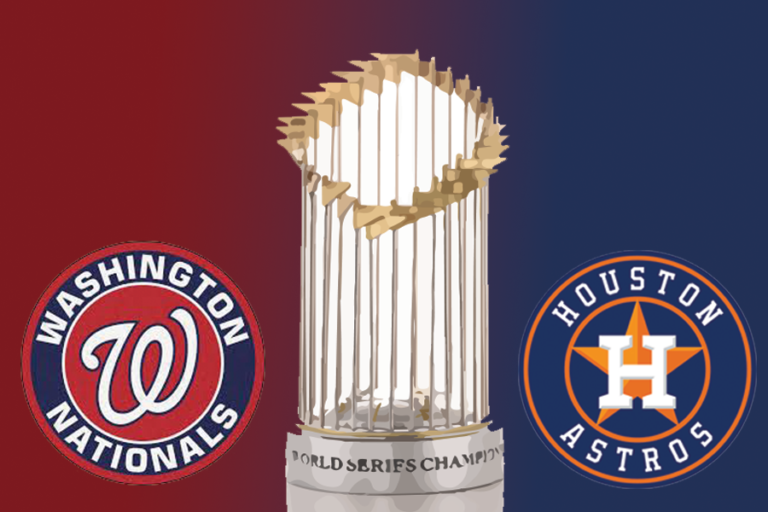
In front of a sold-out crowd of 43,326 at Minute Maid Park in Houston on Oct. 30, the Washington Nationals captured their first World Series title in franchise history. It was the first World Series won by a team in Washington D.C. since 1924. The road to this championship was not easy, however, as few experts and analysts thought they would achieve this level of success. 

As a result of both losing superstar outfielder Bryce Harper in free agency and starting the season 19-31 through the first 50 games, there was talk about the possibility of a rebuild early on. The tough start had many in the nation’s capital wondering how to move forward in the new Harper-less era. But the Nationals went 74-39 from that point forward and clinched a wild card spot during the last week of the season, which bought them a date with the Milwaukee Brewers. 

After going down 3-1 in the Wild Card game, many believed that the Nationals had blown it once again. With five outs to go and National League Reliever of the Year Josh Hader on the mound for Milwaukee, it seemed like there was little to no chance Washington could pull off a come-from-behind win. But after Hader hit a batter, gave up a single to Ryan Zimmerman and walked Anthony Rendon to load the bases, a hit to right field by Juan Soto got past outfielder Trent Grisham, cleared the bases and became the spark that led the Nationals deep into the postseason. 

Following the excitement of the huge win, the next task was even tougher for the Nationals, as they faced the best team in the National League, the Los Angeles Dodgers. After losing back-to-back World Series, the Dodgers were huge favorites to get back once again and finally get over the hump. After going down in the series 2-1, Washington proceeded to win game four. And down 3-1 in the eighth inning of game five, the Nationals hit two back-to-back solo home runs that would force extras in the deciding game. Finally, in the 10th inning, Washington’s Howie Kendrick hit a grand slam, blowing the game open and shocking the defending NL champs on their home field. 

             Riding high on the momentum, the Nationals traveled to St. Louis to play the Cardinals in the NL Championship Series. The Cardinals had also won in five games in the NLDS but in a much less dramatic fashion after they scored 10 runs in the first inning. This NLCS was unlike the previous for Washington, as the Nationals dominated all throughout. Behind dominant starting pitching and great at-bats, they proved to be too much for the Cardinals, sweeping them to win the NL Pennant. 

         The Nationals opened at +195 underdogs in the World Series against a loaded Houston Astros team, according to ESPN. The Astros had won their first World Series in 2017 and were back looking for another with an arguably better team. Behind an elite starting rotation of Justin Verlander, Gerrit Cole and Zack Greinke, Houston was -235 favorites, making them the largest favorites since 2007. 

The series began in Houston, but, again, the Nationals shocked many by winning the first two games of the series in dominant fashion. Going back to Washington up 2-0, the Nationals looked to finish off the series, but the veteran Astros were not going out without a fight. Houston managed to contain Washington’s explosive offense and win all three in D.C., flipping the momentum with two chances to finish the Nationals off back in Texas. 

After a rocky start in game six by Washington ace Stephen Strasburg, who gave up two runs in the first inning, the Nationals continued to fight. Strasburg bounced back by pitching into the ninth inning of the game and got more than enough run support to lift Washington to a 7-2 win. 

             Strasburg’s dominant showing set the stage for a pitching matchup for the ages in the deciding game seven. It was Max Scherzer on the bump for Washington and Zack Greinke on for Houston as both former Cy Young winners looked to win their team a championship. 

Houston seemed to get the best of Scherzer in game seven, as he only pitched five innings and gave up two earned runs. Clinging onto a 2-0 lead with Greinke pitching into the seventh inning, the Astros looked destined to claim their second title in three years. But as many had witnessed throughout the regular season and the postseason, the Nationals fought back. 

A solo home run by Anthony Rendon and a walk was enough to convince Astros manager A.J. Hinch to pull Greinke from the game. It was then Howie Kendrick who delivered once again for Washington, hitting a homerun to right field on the second pitch from Astros reliever Will Harris and giving the Nationals a lead that they would build from and never give up. 

The miraculous run by the Nationals included the first-ever World Series in which the road team won every game. They faced elimination five times in the postseason and all five times fell behind and clawed back for the win. As Washington celebrates its first World Series win ever, it faces several questions heading into the offseason that the club will eventually have to answer, like the contract situations for major contributors like Strasburg (who was named the World Series MVP) and Rendon. Strasburg is expected to opt-out of the remaining four years, with $100 million left on his deal and, after his postseason performance, will most likely get more. As for Rendon, he will likely be one of the best hitters on the market. After his clutch postseason hitting, he will certainly be looking for more than the seven years and $210 million he turned down earlier in the year. 

On the other side, this was another major disappointment for the Astros, who will enter 2020 with major contractual questions. Cole dazzled all season and will surely require a big contract, whether that’s in Houston or elsewhere. For a team with Verlander and Greinke on its rotation (two older players getting up in age), it will be interesting to see whether they will be willing to pay for the younger Cole. After the 2020 season, George Springer, Michael Brantley, Yuli Gurriel and Josh Reddick will all be free agents, so Houston will have big decisions on its hands in the upcoming offseasons. 

As we approach another winter of signings, teams that fell short again like the Dodgers and Yankees will look to replenish their rosters and try to make another push. While this offseason won’t have big names like last year’s offseason had, players like Madison Bumgarner, Aroldis Chapman, J.D. Martinez and many more will be available and could be the major pieces needed for another team to finally get over the hump and raise the Commissioner’s Trophy next October. 

Written by: Omar Navarro — sports@theaggie.org

Is YouTube the future of streaming? Exploring YouTube Originals, more

Students share why they’re drawn to the platform, what they think is in store

In the age of streaming and binge-watching on Netflix, Hulu, HBO, Amazon Prime and more, many people are also turning to YouTube for entertainment. YouTube is home to popular video series, like Vogue’s 73 Questions or Bon Appetit’s “It’s Alive!” But it is also branching out with “YouTube Originals.” 

A select few YouTube series have received nominations for Emmy’s, such as the series Epic Rap Battles of History which was nominated for “Outstanding Shortform Variety Series.” The idea of YouTube as a singular genre, however, is not fully developed, according to viewers. 

As viewers, students have different interests in what they like to watch. Carina Avila, a fourth-year psychology major, tends to only launch the YouTube app when she has homework.

“Most of the time, if I am on YouTube, it’s specifically for educational purposes,” Avila said. “But I sometimes use it to watch things you couldn’t find anywhere else, like old reruns of old shows or when trying to show someone a clip, you can look up the video and refer to it.” 

Fabrizzio Lopez, a third-year biopsychology major, enjoys YouTube for music or video games.

“When I go on YouTube it’s to listen to music I can’t see on Apple Music or to look at game plays, because when growing up my brothers told me I couldn’t play their video games so all I could do was watch it on YouTube,” Lopez said.

There are some YouTubers, like Shane Dawson, who are reinventing what YouTube was originally designed for: finding short video clips, like Janet Jackson’s famous Super Bowl costume mishap. Avila mentioned how Shane Dawson’s videos are “like a TV show, like a series; an investment where you have to genuinely be interested in it.” 

Lorena Cruz-Gutierrez, a fourth-year genetics and genomics major, shared her thoughts on Shane Dawson.

 “[He made] a really smart move — the documentaries he makes are really appealing to people, like the Chuck-E-Cheese documentary series he made,” Cruz-Gutierrez said. “People were really shocked.”

So far, Shane Dawson’s multi-part “documentary” on Jeffree Starr and his cosmetics company has racked up 90 million views. Their make-up collaboration stands to make each of them roughly $10 million, which just goes to show how much fans are invested in their content.

Because students view a wide variety of different content on YouTube, it is hard to encapsulate YouTube as one genre.

“YouTube is more like an umbrella term [since] there are other genres in it,” Lopez said. “I’d want YouTube to be more of its own category because I know that Facebook is also getting their own TV shows, but they are actually old YouTube videos. Right now, they are promoting their own shows and you can watch other TV shows on there too.” 

Cruz-Gutierrez added how viewers can see “all social media as a genre [with] … subgenres within it, just like YouTube. YouTube is just trying to copy Netflix, but now everyone is copying Netflix.”

YouTube might be advancing into the streaming service to catch up with competing entertainment services. Even with an original series, it’s not enough to earn a category at the Emmys. 

Written By: Gabriela Hernandez — arts@theaggie.org

New wage law prompts CoHo to raise prices

Minimum wage in California will be set to $15 by 2022, making it more costly to pay employees

An increase in prices at the CoHo at the start of Fall Quarter have drawn student backlash — “I don’t feel like [the increase] is fair, looking at how much we pay for tuition,” said Yara Habeeb, a third-year computer science major. The recent price increases, however, resulted from a California minimum wage law that goes into effect in 2022.

Public Information Officer for the California Department of Industrial Relations Paola Laverde explained that Senate Bill 3, signed into law by former Calif. Governor Jerry Brown in 2016, states that by 2022 the minimum wage of California will reach $15.

“It is a good thing that minimum wage is going up for workers, because the cost of living in California has increased,” Laverde said. “It had been stagnant for a while, so there was a push in 2016 to increase the minimum wage to $15 dollars.”

Darin Schluep, food service director for Associated Students Dining Services, said the CoHo management team never takes pricing decisions lightly, but, unfortunately, because of the increased minimum wage, this was a necessary and unavoidable decision. 

“The annual increase in minimum wage ($1.00 more per hour each year until it reaches $15.00/hr. in January 2022) means approximately $200,000 in added costs each year that we must take into consideration when setting our budget,” Schluep said via email. “Rather than looking at cutting staff, we have worked to find ways to increase efficiency and to leverage our buying power for better pricing on goods. But ultimately some of those additional costs must be passed on to the consumer in order for us to continue to operate on a break-even financial basis.” 

Written by: Isabella Beristain — features@theaggie.org

Humor: Confessions of a lost Hydro Flask

My interior is filthy and it’s getting dark

Captain’s Log. Day 1: It’s been approximately three days since I’ve left Stacey’s side and seen the mustard linings of her Fjallraven Kanken. Who would have thought that her 4 p.m. lecture would be our last time together?

I remember when I first came into her life. “Away with plastic water bottles!” she proclaimed as she pulled out a metal straw from her Amazon box. I never felt so special before, just sitting there, listening about her dreams of saving the turtles.

Our time together wasn’t always pretty. I’ll never forget the day her roommate commented on how pretentious my shade “lilac” was. Or how her boyfriend made some sick joke about my nickname, “Wide Mouth.” I didn’t even mind the tacky stickers she put on me. I embraced every part of her chaotic life.

And now I stand underneath an empty seat in Wellman. There’s gum underneath the chair that gently grazes my cap. It’s dark now and I’ve never felt more alone.

Day 2: This morning I awoke to an unfamiliar place. Although I hoped I had been found and placed on Stacy’s nightstand, I was instead shoved into a side pocket that’s much too small for my 32 oz hips. I knew this wasn’t Stacey because she would never buy a Jansport backpack. Trapped in this netted cage, I can now see why.

Day 3: I now find myself in a bedroom I have never seen before. I’ve been staring at a “Live, Laugh, Love” sign on the wall all day. Truthfully, I’m not sure how much more of this I can bear.

Day 4: Today I experienced the most surreal thing. Instead of the usual coffee table that I’ve been banished to, I was stationed in a row of several other Hydro Flasks. I asked the olive flask to my right what was going on. He told me that every few days, one of them gets taken away. He also told me to prepare to have my photo taken and be uploaded on some Facebook group. I must admit I’m afraid.

Day 5: Today is my last day in this prison. I will be taken to a new home tomorrow in exchange for some coins. I no longer feel the need to document these horrific experiences so I bid you all adieu. I hope this finds you in good hands and you remember to check for your loved one before you quickly leave a Davis lecture hall. And to Stacey, my first owner, if you’re still out there: He! Doesn’t! Love! You!

Written by: Julietta Bisharyan — jsbisharyan@ucdavis.edu

(This article is humor and/or satire, and its content is purely fictional. The story and the names of “sources” are fictionalized.)

Valley Clean Energy submits $300 million bid for PG&E assets

0

Energy provider is looking to own transmission and distribution infrastructure within Yolo County

Valley Clean Energy Alliance, the electricity provider for the City of Davis, recently proposed a $300 million bid for the assets owned by Pacific Gas and Electric (PG&E) within Yolo County. The goal of the proposal is to transfer control of the infrastructure used to distribute energy to customers, like power lines and poles, to Valley Clean Energy and is being submitted as part of PG&E’s bankruptcy proceedings.

Valley Clean Energy, a Community Choice Energy program, is a partnership between Woodland, Davis and unincorporated Yolo County. 

Lucas Frerichs, a board member of Valley Clean Energy and a member of the Davis City Council, said Valley Clean Energy is currently responsible for the purchasing and selling of electricity used by the county. This offers more renewable energy options than PG&E’s services. 

“We are intentionally buying or procuring greener, more renewable energy — more so than PG&E is providing,” Frerichs said. “One of the main reasons for this effort is that we think a locally-controlled utility would be better and more responsive to the needs of our customers.” 

Don Saylor, a representative from the Yolo County Board of Supervisors on Valley Clean Energy’s Board of Directors, said PG&E’s bankruptcy proceedings have given Community Choice Energy programs around the state another legal path to acquire electrical infrastructure.

“In the bankruptcy proceeding, some of the issues are likely to be resolved much more quickly and efficiently because it’s a more efficient court process,” Saylor said.

If approved, the bid would allow Valley Clean Energy to control the transmission and distribution infrastructure while continuing its role in purchasing and selling electricity. This would eliminate PG&E’s role in Yolo County’s energy system, and it could turn Valley Clean Energy into a municipal utility district. 

“For our customers, it would be a little more simple,” Saylor said. “They would see that both the transmission and power supply would be from Valley Clean Energy.” 

 The prospect of Yolo County having its own municipal utility district is a long way off, as placing the bid is only the first of many steps before the proposal can be approved. Even if it is approved, more restructuring and reorganization would occur for Valley Clean Energy, according to Jim Parks, Valley Clean Energy’s Director of Customer Care and Marketing. 

“If we municipalized and acquired the assets, we’re going to need to increase the technical side dramatically,” Parks said. “You’re going to need people to work on substations — transformers. You’re going to have to have linemen to help install new lines and repair lines.” 

Saylor added that there is a possibility to contract with other programs.

“We would need to increase our capacity for maintenance and operations,” Saylor said. “Currently, we don’t have that kind of a role, so this would mean that we would probably contract with another provider or expand our operations.”

Though the transition is destined to take several years, the short-term effect on customers’ bills remains uncertain. As Jim Parks said, however, the long-term financial effects for customers could be worth the change. 

“Once you pay off the bonds, now you’re free from the debt,” Parks said.  “You’re not for profit. Your rates are definitely going to be lower than investor-owned utility rates.” 

Community Choice Energy programs, also called Community Choice Aggregations, have been forming in California over the last ten years. They have been providing customers with more options for greener alternatives than investor-owned utilities. The 19 Community Choice Energy programs in California serve roughly 10 million customers, or a third of the population of California.

“Our bid is not the only one that’s being submitted by Community Choice Energy programs,” Saylor said. 

Other Community Choice Energy programs around the state, such as San Francisco’s CleanPowerSF, have placed bids as well, Saylor said. Since many Community Choice Energy programs are considering the same transition, Valley Clean Energy would have a lot of other energy programs to learn from. 

“There’s a lot of people in the industry that can help you with setting those things up to ensure everything is in place,” Parks said. “Plus, there are federal, state and local regulations and ordinances and so forth that ensure the health, safety and viability of the system.”

Written by: Madeleine Payne — city@theaggie.org 

Housing shortage addressed in public meetings with university, city, county officials

Representatives from UC Davis, city council, county board of supervisors hosted a yearly meeting on campus, special focus on student housing efforts

An annual public meeting between county, city and university representatives was hosted at the UC Davis Genome Center Auditorium on Oct. 17, during which officials discussed the measures currently underway to address a shortage of available housing in Davis. University officials delivered a follow-up presentation during the next city council meeting on Oct. 22. 

The university was represented by Chancellor Gary May, Vice Chancellor for Finance, Operations and Administration Kelly Ratliff and Associate Chancellor Karl Engelbach, according to the meeting notes. Mayor Brett Lee and Mayor Pro Tempore Gloria Partida, as well as council members Lucas Frerichs, Dan Carson and Will Arnold, represented the city government, while supervisors Dan Saylor and Jim Provenza represented the county. 

At the meeting, May delivered a presentation that both highlighted the university’s recent successes and cited efforts currently underway to build new student housing. May cited UC Davis’ recent rankings among other public universities in the U.S. — including placing fifth in the country by the Wall Street Journal/Times Higher Education ranking, fourth by Money Magazine and 11th by US News. He noted that UC Davis continues to rank first in the world for Agriculture and Veterinary Medicine and that UC Davis Medical Center was ranked the number one hospital in Sacramento. 

After touching on some of the administration’s efforts to address mental health and food insecurity among students, May moved on to the subject of housing. According to May’s presentation, the university has set the goal of 6,000 new beds by 2025. In early November, the university released a report detailing the progress of each of its new housing developments toward meeting this goal. 

Lee, representing the city, presented a table of data on the status of several pending, under-construction and completed housing developments in the city. The table included several student-oriented housing developments that had completed the planning review stage and were pending construction, including Nishi, Lincoln 40 and Davis Live. The pending developments would add 3,348 new beds to student housing. The chart also noted the recently completed Sterling 5th St Apt., slated to provide 540 beds by completion. 

Lee also noted other major developments within the city that targeted individuals, families and members of the workforce. In total, completed and pending developments listed on Lee’s chart would add 4,567 new beds of available housing in the city upon completion. Lee said he expects all of the pending construction to be completed between two to five years from now, according to the Davis Enterprise.

 “A lot more housing will be hitting the market soon,” Lee said, according to the Enterprise. 

Supervisor Don Saylor’s presentation focused mainly on the county’s participation in specific services offered on the UC campus, including CalFresh and mental health resources under the Mental Health Services Act. 

He did note several projects that may improve the commute of off-campus students, including an improvement project on I-80 that seeks to reduce traffic congestion through Davis and the launch of the Causeway Connect bus project. This will institute fully electric buses traveling between the UC Davis campus and the Sacramento medical center, with additional limited stops in Davis and Sacramento. The projected is targeted to launch in April 2020.

During the Oct. 22 city council meeting, administrators from Davis delivered a follow-up report on the college’s finances, which paid special attention to how UC Davis plans to address some of the housing pressures posed during the on-campus meeting.  

Megan Glide Villasenor, assistant director at UC Davis Shared Services Center, pointed to a goal set by UC President Janet Napolitano’s 2016 Student Housing Initiative which sought to add 14,000 new available beds in student housing across the UC system. Villasenor said that the UC system had exceeded that goal, with a projected 15,161 new beds added system-wide by Fall 2020. UC Davis will have instituted 2,190 of that number, according to Villasenor. 

“Davis has actually been an integral part of reaching the target we set for the fall of 2020,” Villasenor said.  

After the administrator’s presentation, Lee stressed the importance of continued collaboration between the university and city officials to address housing issues in the city. 

“The goal here is to mitigate some of the impacts that the student population has, but we need to be smart about it and work in partnership,” Lee said. 

Written by: Tim Lalonde — city@theaggie.org

Student organizations support DACA and “I Stand With…” solidarity campaigns

UC campaign comes just weeks before US Supreme Court hears case on DACA

The UC’s “I Stand With…” campaign, which launched on Oct. 22, aims to encourage campus community members voice their solidarity with undocumented students and encourage a show of support for the Deferred Action for Childhood Arrivals policy (DACA). 

The UC filed a brief in the U.S. Supreme Court in September challenging the Trump administration’s abrupt rescission of DACA. The Supreme Court will hear oral argument on the case on Nov. 12. 

The UC encourages individuals to write messages of support for both undocumented students and DACA recipients and share these on social media with related hashtags to promote the campaign. Additionally, the UC endorsed an online pledge to stand with DACA recipients. The pledge has since received over 8,000 signatures and will remain open as the case is brought to the Supreme Court. 

“I stand with undocumented students because they deserve justice and the opportunities all Americans enjoy,” wrote UC Davis Chancellor Gary S. May. 

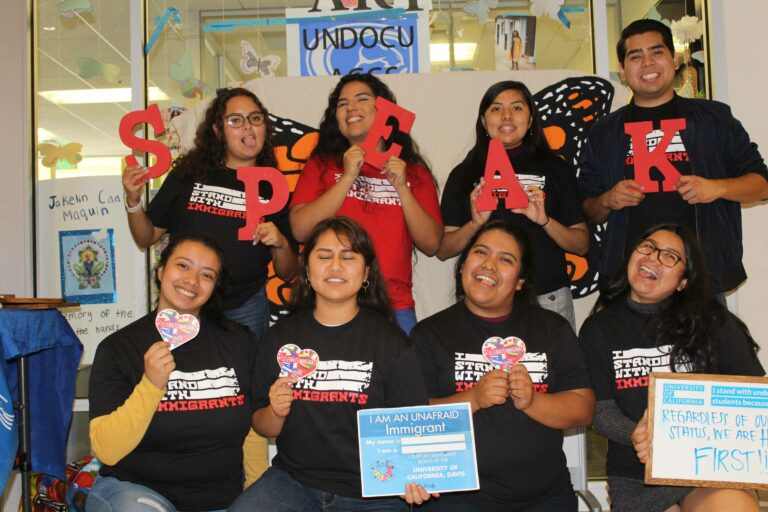
SPEAK, a student-run organization focused on supporting and empowering undocumented students at UC Davis, began promoting the “I Stand With Immigrants” and UC’s “I Stand With…” campaigns to raise awareness for the hearing. 

On Oct. 22, the National “I Stand With Immigrants” Day of Action, SPEAK gave out shirts and stickers to those who wrote messages of support to immigrants and undocumented students. Afterwards, SPEAK held a dialogue around the campaign and presented ways to support immigrants.  

“This year was crucial because of the DACA hearing,” said Angel Cardoza, a fourth-year and publicity coordinator for the AB540 and Undocumented Student Center and officer for SPEAK. “We were telling folks that 800,000 people’s lives are at stake. In 45 minutes to an hour, these DACA recipients’ lives are being chosen.” 

Of the nearly 700,000 undocumented young people who currently rely on DACA, commonly referred to as “Dreamers,” about 1,700 individuals are students enrolled in the UC system. 

“UC’s DACA students are studying to be the next generation of teachers, doctors, engineers, and other professions that make life better for everyone,” said UC President Janet Napolitano in a press release. “They are young people who simply want to continue to live, learn, and contribute to the country they consider home.” 

Adriana Lopez Torres, a UC Davis Undergraduate alumna and current UC Davis School of Education Ph.D. student, recalled how DACA had allowed her to work as an orientation leader, a peer adviser for Latinx students and a teaching assistant in the school of education without fear of deportation. Since receiving it in 2012, she said DACA has made a huge and positive difference.

“DACA has given me the ability to find work, which has provided financial stability not just for me but for my family,” Torres said in a UC News article

Once she completes her Ph.D., Torres hopes to go into educational policy to work in the Marin and Sonoma schools she attended as a child. She is interested in creating more constructive disciplinary practices, aside from suspension and expulsion, to increase student retention. 

“I want to work there to make education better and more accessible for everyone,” Torres said. 

Along with the possibility of losing security and financial stability, Torres said that a worse threat is being permanently separated from her parents and siblings, forcing her to leave the only country she’s ever known. Torres, along with the other hundreds of thousands of Dreamers, awaits the Supreme Court’s decision on DACA. 

“Being undocumented myself, I have longed for a future where I feel included and valued under the current socio-economic environment,” an anonymous source said. “I yearn to enjoy the privileges given to my citizen-born counterparts and have the same political freedom. My community has long been exploited and overlooked, constantly used a disposable resource. However, this campaign makes me hopeful that society is changing and that the circumstances faced by my community are being ameliorated.” 

For the past three years, over 170 colleges and universities have celebrated the “I Stand With Immigrants” Day of Action — and many UC Davis student organizations have continued to pledge their support to the movement. 

Cardoza said SPEAK and the AB540 and Undocumented Student Center have supported the “I Stand With Immigrants” campaign and other similar supportive efforts for the past three years. She credits fwd.us, a bipartisan political organization focused on “fixing the failed immigration and criminal justice systems,”  with powering the campaign. 

SPEAK hopes to bolster the efforts of other non-profit organizations in support of undocumented communities and Dreamers, according to Cardoza. She also highlighted the efforts of the Coalition for Humane Immigrant Rights of Los Angeles (CHIRLA) and other activist groups that are leading the #HomeIsHere march from New York City to Washington, D.C. to bring visibility to the contributions that DACA recipients make to the U.S. 

“We also want to reach out to other local organizations like M.E.Ch.A., Brown Issues [and] the Filipinx community because the undocumented community includes so many diverse identities within it,” Cardoza said. 

Hundreds of corporations, national security experts, colleges and universities — including the UC — as well as members of Congress have filed amicus briefs to pledge support for DACA. 

“The University of California is proud to lead this charge in support of DACA recipients at UC and across the nation,” Napolitano said. “It is heartening and invigorating to see so many standing with the university in pursuit of what is right.”

In anticipation of the oral arguments in the Supreme Court surrounding DACA, the UC Davis AB540 and Undocumented Student Center continues to provide holistic support and resources to their community. 

“Through education and campus outreach, we empower our community to overcome the obstacles before us,” the center said in a statement. “As the University of California asserts its support for undocumented and DACAmented students and advocates judicially for DACA, we will continue to enrich and seek justice for our community as we push for a clean Dream Act.”

Written by: Graschelle Fariñas Hipolito — campus@theaggie.org

Editor’s note: This article has been updated since its print publication on Nov. 7 to include additional statements from an anonymous source and the AB540 and Undocumented Student Center.

Review: “No Spectators: The Art of Burning Man” a new and outlandish world returns home

An unorthodox exhibit at the Oakland Museum of California is a can’t miss

As an Oaklander, I have always been proud of my roots grounded in the heart of the Bay Area. When I heard that the Oakland Museum of California was hosting a Burning Man exhibit, I hopped into my beaten-down car without hesitation and drove straight to my hometown to experience this extraordinary opportunity. 

Walking down the halls of the museum I grew up attending, I felt a new sense of love for my city — Oakland continues to enhance its rich culture and community bond. There were people from all walks of life gathered to view the exhibit, and I noticed how art connects people. 

“Why Oakland? A lot of reasons… The story originated here in the Bay Area, Burning Man was born on Baker Beach over thirty years ago and a lot of the artists are actually from the Bay Area surrounding the Oakland Community as well,” said Lindsay Wright, Associate Director of Communications at the Oakland Museum. 

The exhibit is currently on display in only two places nationwide: Oakland and Cincinnati. The “No Spectators: The Art of Burning Man” exhibit is currently on display at the Oakland Museum of California in the Great Hall from Oct. 12, 2019 to Feb. 16, 2020. Curators from the Oakland Museum went to the Smithsonian Renwick Gallery in Washington, D.C. and decided to reunite the art to its motherland. 

“We’ve always wanted to do something on Burning Man just because there’s such a deep history in California and the Bay Area specifically, so it seemed like a great opportunity to utilize what the Smithsonian had already put together and put our own spin on it a little bit with an Oakland focus,” Wright said. 

As I opened the doors to the Burning Man exhibit, I felt as though I were crossing a threshold into a new and outlandish world. The sounds of gong-like chimes set an eerie tone to the unusual journey I was about to embark on. The contrast of fluorescent and negative lights made it feel like I was a character in Tim Burton’s renowned movie, “Coraline.”

The exhibit is an orb of unorthodox and uniquely designed art and novel lenses on life. Ranging from fashion to transportation devices, plaques around the exhibit analyze and explain every aspect of the art’s deeper meaning to the core and history of Burning Man. 

The first thing you see in the exhibit are the “Ten Principles of Burning Man.” Co-founder Larry Harvey wrote these in 2004 as reflective guidelines of the communal code of behavior and culture of Burning Man. The principles are: Radical inclusion, decommodification, radical self-expression, civic responsibility, participation, gifting, radical self-reliance, communal effort, leaving no trace and immediacy. 

Throughout the exhibit, remarkable art pieces pulled me into a sort of hypnotic trance. One piece seemed to attract the largest crowd. Two large fluorescent paper mushrooms stood in the middle of the exhibit, changing color from the cool of blue and green to the warm of pink and orange. As an interactive piece, spectators had the power to change the shape of the mushroom-like sculpture by stepping on a circular slab at its base. Created in 2016, FoldHaus Art Collective assembled “Shrumen Lumen” out of LED lights that would react based on human interaction and simply from daylight itself. 

Another exhibit that caught my eye was a massive metal transportation device resembling a dragon made out of old kitchen appliances. Duane Flatmo created “Tin Pan Dragon” in 2008 in hopes of creating a mutant vehicle that could withstand the harsh environment of the desert. At Burning Man, these mutant vehicles act as a source of shelter from the intense winds and dust of Black Rock Desert. 

Transportation is not the only form of protection against the fluctuating nature of the desert. Fashion is a large part of the event as a functional strategy to stay cool in the 100-degree heat as well as below-freezing temperatures.

At Burning Man, there is freedom to break away from cultural norms and limitations. At the exhibit, many forms of fashion are displayed. Intricate costume-like dresses with minimal fabric, ornate masks to protect from dust and an overall unorthodox pageant. Through fashion, self-expression is applauded and at Burning Man, the audience is the entertainment. 

As explained in the plaque’s narration, the historical origins of Burning Man are what guide the art and the event’s core values. Thus, the history of the event is significant in truly understanding Burning Man itself. 

Every story has a beginning; Burning Man’s happens to be a stone’s throw from Davis — San Francisco. In 1986, Larry Harvey and Jerry James built and burned the first man on Baker Beach as a creative way to salute the summer solstice. 

“The figure represents nothing expressed or explicable, yet it s a physical and ethical guidepost … during at least one week of the year,” Harvey said, as displayed on a plaque at the exhibit. 

The magnetic nature of physically burning the man propelled annual Zone Trips, or a burning of the man on Baker Beach. Word spread and gained popularity.

In 1990, however, the San Francisco police department terminated the yearly ritual on Baker Beach due to public safety risks. That did not dissuade these nonconformists. Instead, they moved the party to Nevada on a three-day excursion, which they then called “Zone Trip #4: Bad Day at Black Rock.”

Kindled with an anti-establishment, hippie-centered culture, the core values of Burning Man evolved. The iconic “maker community” of the event originated from the Arts and Crafts Movement, a reactionary push against the capitalist nature of the Industrial Revolution. The act of making became an outlet for self-expression and for survival in the harsh fluctuating conditions of the desert. 

The brutal and relentless nature of the desert may not seem ideal to set up camp but to the founders of Burning Man, it was perfect. 

“On the other side of this line, everything will be different” co-founder, Michael Mikel said after drawing a line in the sand of Black Rock desert after first arriving.  

Burning Man, a one-of-a-kind experience in a desolate desert, was born. In fact, Harvey, referred to Black Rock Desert as tabula rasa — a blank slate of nothingness of the arid environment, but an opportunity to be filled with imagination and creativity. 

A crucial responsibility for the Burning Man participants is to deconstruct the community they built back to the unoccupied desert until the next year. The act of letting go serves as an expression of resistance to materialism, a simplistic lifestyle that Burning Man promotes.

“A city in the desert, a culture of possibility, a network of doers and dreamers,” read a description of the event itself from its organizers displayed at the Oakland Museum. 

The exhibit is titled “No Spectators” because there are no spectators at Burning Man. It is a participatory event in which the community comes together to create and gift these creations. Participants get a chance to experience an imperfect world and then actively build a society in which they want to exist. 

Gifting is an essential aspect of Burning Man. Nothing is for sale, everything from food to jewelry are gifted. Any sort of “Matter Out Of Place” (MOOP), or having a potential to be trashed, is highly advised against. Everything has a purpose, everything can be reused. 

Burning Man is a spiritual event. There are many core values and principles that produce and maintain a harmonious community. On display outside of the exhibit at the Oakland Museum, “The Temple” is hard to miss. People gather awe-struck by its grandiose and intricate beauty. This is a spiritual atmosphere for healing. 

“This Temple, created specifically for OMCA, is dedicated to people who mourn the loss of family from violence, deportation, immigration, incarcertaion, suicide, or alientation. It celebrates the people who create families of choice or build new families through foster care and adoption,” states the Temple’s plaque at the exhibit. 

The piece is a large ornate wooden structure,\ that has become a place of peaceful reflection, prayer and grieving amidst the chaos of Burning Man. The Temple is burned at the end of the event. However, rather than a celebratory ritual like the burning of The Man, it is characterized as more of a cathartic ritual. 

The Temple is where I ended my journey at the Burning Man exhibit. I felt as though I had come full circle; I had soaked up as much of the experience as I could without actually being at the event. 

Before attending the exhibit, I had an embarrassingly minimal knowledge on Burning Man. Now, the spiritual and unorthodox nature of Burning Man intrigues me and makes me question my current way of living. It made me see the beauty of every-day life, and also the aspects I wish I could change. The exhibit at the Oakland Museum was an extraordinary experience. Anyone who chooses to take the time to view it will not regret it. 

Written by: Sierra Jimenez — arts@theaggie.org

Honors societies stand for more than résumé fluffing

0

Prytanean, Phi Beta Kappa among most commonly joined organizations at UC Davis

Cayley Chan, a second-year environmental policy analysis and planning major and member of the Prytanean Women’s Honor Society said she sought out the society because of her interest in finding a group of distinguished young women who support one another and give back to the community. 

“Prytanean is the first women’s honor society in the United States,” Chan said. “It was started at UC Berkeley in 1952 when there were heavy disparities between men and women in universities. The founders of Prytanean wanted a space where they were able to have a voice at the university level along with bringing together a group of high-achieving women to support one another. Today, Prytanean women continue to promote the high ideals of scholarship, leadership and service wherever we go. We are a group of diverse women empowering one another to succeed in a world that seems to prevent us from doing so.”

Over the past few weeks, numerous honor societies have sent out emails to members of the student body regarding their respective application processes. These emails have been met, in part, with enthusiasm and also with criticism, as some believe honor societies aim to collect money and serve as an additional “one-liner” on a résumé. Chan, however, disputes this idea. 

“Membership fees are relatively low and are often waived for low-income applicants,” Chan said. “While putting an honor society does look good on a résumé, being part of an organization that is devoted to being high-achieving, but also well-rounded, has benefits well beyond just academic achievement and résumé building.”

Chan said her most valuable takeaway from her experience as a member of the Prytanean Women’s Honor Society is learning “how much one can truly grow, learn and achieve when in the presence of others who have the same desire to succeed.”

“In my personal experience, being in Prytanean has allowed me to remind myself to take time to give back to my community and have a social life outside of academics,” she said. “Prytanean allows me to have a network of both alumni and current members who I can reach out to personally and professionally.”

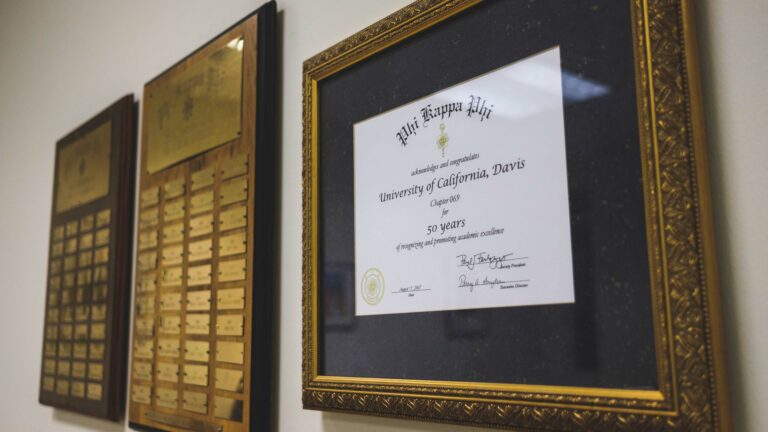
Phi Beta Kappa (PBK) is another well-known honor society and is one of the oldest and most prestigious honor societies worldwide. Only about 10% of US universities have PBK chapters and, of those universities, only about 10% of the top students are invited to join. Unlike other honor societies, PBK scouts for potential members by taking into account a student’s entire academic success and the breadth of their major curriculum. Some of the organization’s notable alumni include Ralph Waldo Emerson, Theodore Roosevelt, Ruth Bader Ginsburg and Barack Obama. 

Fourth-year political science major Eric Thai became a member of PBK in the fall of 2018. Thai said his interest in the organization piqued when he read through his professor’s curriculum vitae (CV) during his first year. Thai explained that being a member is not solely about achieving your goals. 

“It might help enhance your chance because your mindset is reoriented to the mission of the honor society and how you live reflects the mission of the organization you associate closely with […] if you associate closely with an organization and live out its ideals,” he said. “You can achieve a lot if your commitment to an honor society shapes your mindset and attitude to something that’s positive and productive.”

Animal behavior Ph.D. candidate Ryane Logsdon has been a member of PBK since her third year as an undergraduate. Logsdon said that although she tries not to rely on external validation, her invitation into PBK “was incredibly important” to her.

“Especially when I started graduate school and imposter syndrome kicked in,” Logsdon said. “Imposter syndrome is having the idea that you aren’t deserving to be where you are and that you’re a fraud who will eventually be found out. Most graduate students deal with it at some point in their career. It was reassuring to have this reminder that I have been recognized as someone with academic skills and I deserve to be in my Ph.D. program.”

Logsdon also said that attending PBK events has introduced her “to a myriad of brilliant, diverse individuals who have taught me a lot.” Logsdon’s membership in the organization has also helped her achieve both personal and professional goals. 

“Earlier this year, solely because of my initiation into Phi Beta Kappa as an undergraduate, I was eligible for a grant from the Phi Beta Kappa Northern California Association,” Logsdon said. “I applied for and received this grant, which helped fund my graduate work this year.”

As a result of the connections she made at this ceremony, Logsdon was invited to speak at a conference next year and has had an article written about her and her research.

“Opportunities like these are incredible,” she said. “They give me the chance to share my research with a group of individuals outside my specific field of study, which is one of my primary goals as a scientist: to increase scientific literacy and interest in the general public. Plus, receiving grants and being invited to conferences also continues to boost my CV and résumé.”

Logsdon advises students to seriously consider joining an honor society. 

“I would highly recommend joining,” Lodgson said. “Recognize that you have been selected not just for your grades, but because you are a well-rounded student with great potential. Membership is lifelong, and the opportunities, networking and connections it provides can help you long after you graduate college.”

Written by: Sneha Ramachandran  — features@theaggie.org

Review: “Bojack Horseman:” A stint in rehab sets Bojack on a new trajectory

Part one of final season begins on an unsettlingly positive note, feels like the calm before the storm 

The Netflix animated comedy “Bojack Horseman” first aired in 2014 and followed an anthropomorphised horse named Bojack, a washed-up 1990’s sitcom star who struggles with alcoholism and crippling self-loathing.

Five seasons later, “Bojack Horseman” maintains a cult following and has received numerous awards. Critics laud the series for its intelligent humor and powerful depictions of depression and addiction.

The sixth and final season was split into two parts with eight episodes each. The first part of the season aired on Oct. 25 and was met with positive reviews. These eight episodes are incredibly well thought out and set up the characters for their final arcs as the series comes to an end.  

In season five’s cliffhanger of a finale, the main characters of the show are all wrestling with major changes in their lives: Bojack has left for rehab, Mr. Peanut Butter cheated on his new fiance with his ex-wife Diane and Princess Carolyn has finally adopted an infant after struggling with miscarriages and infertility throughout most of the series. 

The first half of this season focuses on the ways in which the characters respond to these changes and attempt to grow from them. This is best exemplified through Bojack’s arc in rehab. 

Throughout the series, Bojack has been constantly running from his problems and his hatred of himself: he abused drugs and alcohol, pushed away those closest to him and hurt numerous people who happened upon his destructive path. In rehab, Bojack has to face up to his problems and learn to live with them.  

 “I wasted so many years being unhappy because I assumed that was the only way to be,” Bojack writes in a letter to Diane in the second episode. “I don’t want to do that anymore.”

While still haunted by the mistakes he has made in the past, Bojack begins taking action over his decisions in the present. He processes his abusive childhood and is able to pinpoint the source of his alcoholism and destructive tendencies. 

This is a new side to Bojack, and it is powerful to see. While he is just as snarky and cynical as ever, he begins to influence people around him in positive ways. After years of developing a co-dependent relationship with Diane, he selflessly encourages her to move to Chicago, knowing that it is the best thing for her. Such selfless actions are rare for Bojack — showing that, even if he is still sinking, he is done taking people down with him.  

This season also employs powerful visual storytelling devices and artistic symbolism. Episode two explores Princess Carolyn’s exhaustion and struggle to “do it all” as a new mother and high-powered business woman. The episode uses a beautiful and fascinating visual sequence that shows multi-colored carbon copies of Princess Carolyn doing several tasks at once, over and over again. The copies seem to duplicate on a loop, crowding the screen and highlighting the mental and physical exhaustion Princess Carolyn is experiencing.  

“I just think of myself as having multiple apps running at the same time,” another exhausted working mother tells Princess Carolyn. “I have my mom app and my career app and my wife app and my yoga body app! And they’re all just constantly going — all the time.”

For what feels like the first time, Princess Carolyn truly doubts herself and her abilities. As she is one of the strongest and most likeable characters in the series, it is heartbreaking to watch. 

The photorealistic galaxy projection from the planetarium where Sarah Lynn died in season three becomes a visual motif throughout these eight episodes as well. Sarah Lynn’s death is easily the most tragic repercussion of Bojack’s addiction, and this season lets viewers know that Bojack did not forget this. 

Everytime he thinks about his past or his mistakes, the image of the galaxy haunts him. It appears in the sky and in bottles of vodka — anywhere Bojack turns to get away from himself. It is a reminder of the fatalities of his destructiveness, but it is also a motivation to change. 

There were two truly standout episodes from the season. Episode four titled “Surprise!” became an instant “Bojack Horseman” classic. It contains all the elements of what makes the series so amazing — there is a ridiculous premise that features visual and physical comedy, as well as truly poignant and emotional interactions between smart dialogue and dramatic irony. 

“The Face of Depression” is the most impactful episode of the season. It is the penultimate episode that wraps everything up for the main characters. The final montage is set to James Henry Jr.’s tranquil “Take Me Down Easy” and suggests that the characters are truly growing as people. Princess Carolyn gains confidence in her relationship with her daughter and her ability to balance her working life and motherhood. Todd finds fullfilment working as a nanny for Princess Carolyn and meets someone on his asexual dating app. Diane takes antidepressants and begins to accept the good things in her life. 

Meanwhile, Bojack leaves the toxicity of Los Angeles and moves to be closer to his half-sister Hollyhock. He changes his wardrobe and cuts off his jet-black-dyed hair, revealing that he has gone gray. He stops holding on to his past self and is making efforts to change his ways. 

However, in typical “Bojack Horseman” fashion, the season doesn’t end on such a positive note. While Bojack is working on improving his own life for once, the ghosts of those he hurt in the past still linger. 

This is shown in the mid-season finale “A Quick One, While He’s Away.” Instead of featuring any of the main cast, this episode focuses on minor or guest characters that have appeared throughout the seasons. They are all characters who Bojack has hurt in one way or another: Kelsey Jannings is struggling to find work after Bojack got her fired, Gina Cazador is dealing with PTSD after Bojack strangled her in a drug-infused rage and Hollyhock meets someone directly involved with one of Bojack’s most shameful mistakes. All the while, a team of journalists start investigating the mysterious incidents surrounding Sarah Lynn’s overdose — which will inevitably lead them back to Bojack. 

This episode lays out the events of the second half and final part of the series. It will be interesting to see how a now sober, healthy-minded Bojack deals with the repercussions of his past self. 

“I subconsciously believe that I deserve to be punished but, being famous, I never get punished, so I act out even more,” Bojack rants to his therapist in episode six. “And since this pattern is so woven into my identify it is unfathomable to me that it can ever be curbed. So, instead, I drink.” 

Now Bojack is sober, and the world is ready to hold him accountable. The second half of the season will premiere on Netflix on Jan. 31, 2020.  

Written By: Alyssa Ilsley –– arts@theaggie.org