59.5 F
Davis

Davis, California

Sunday, December 21, 2025
Home Blog Page 394

Vaping-related illnesses and deaths continue rising

CDC, health practitioners advise everyone to stop vaping

In recent months, an “outbreak” has been established by the Centers for Disease Control (CDC) in cases of vaping-related lung injury, especially in the state of California. By the most recent count — updated every Thursday on the CDC website — on Oct. 29, there were 1,888 reported cases and 37 deaths by vaping-related illness across the country. And these numbers only continue to climb following CDC investigations. 

The lung illnesses — which the CDC has started collectively calling EVALI, which stands for “e-cigarette, or vaping, product use associated lung injury” — are overrepresented in male and younger populations. Seventy percent of 1,378 patients affected by the illness identify as male and 79% of 1,364 patients reported being under 35 years old. As of now, the median age for deceased patients is 53 years old.

It is understood that products containing THC and obtained informally off the street — through dealers, friends or family — are the root of most EVALI cases, especially when combined with frequent and extended use. Although cigarette use ties all patients together, research is still needed to determine what is actually causing lung injury and what chemicals, or mix of chemicals, are causing the most damage. 

Heat is needed to turn the oil or liquid compositions in a pod or cartridge into gas for inhalation. But this process might be making chemicals more dangerous, according to Dr. Nicholas Kenyon, the division chief of pulmonary, critical care and sleep medicine in the UC Davis Health department of internal medicine. 

The  plethora of products with unknown chemical makeups make it much harder for health providers to give advice beyond not using any e-cigarette or vaping products, whether or not they contain nicotine or THC.  

“I think we have to say that you should be worried simply because we don’t have a good handle on the situation right now,” Kenyon said. “It is true that some people have really just used nicotine products and ended up with vaping lung injury. It is certainly safest not to vape. We understand that this is a problem, that millions of young people are using these. It really doesn’t take very long for somebody to start to develop lung injury. Certainly the dose and the frequency of use does correspond with the development of lung injury, but even [with] infrequent use for some time, if you get an adverse reaction to some of the chemicals in these products, it is possible to get fairly severe lung injury.”

As of now, it is critical for health practitioners to be attuned to identifying EVALI cases in California and report all such cases to the local state health department and the CDC, according to Kenyon.

“It’s not very easy to recognize,” Kenyon said. “When these cases come in, they look like other forms of pneumonia just that they tend to be in young people so that’s a little bit unusual.”

Many students assume that the retail establishment prevalence and popularity of Juul, a major e-cigarette producer, make their products safer to consume. Despite the health community and the CDC being more concerned about black market and THC-containing products, even Juul products are now being called into question. In a lawsuit filed on Oct. 29, Siddharth Breja, a former executive of Juul, alleges that Juul knowingly “sold at least one million contaminated mint-flavored nicotine pods,” according to a New York Times article

“Mr. Breja detailed a culture of indifference to safety and quality-control issues among top executives at the company and quoted the then-chief executive Kevin Burns saying at a meeting in February: ‘Half our customers are drunk and vaping’ and wouldn’t ‘notice the quality of our pods,’” The Times reported. 

But a fourth-year pre-med student, who agreed to speak on the condition of anonymity, is not moved enough by all this news to quit just yet; she said she goes through a Juul pod about every two days.

“I just read it and I think it’s just more media stuff,” she said. “Juul was a hype and now anti-Juul is another hype. Anti-Juul culture.”

For her, a consensus merely telling her to stop vaping does not warrant quitting. The extremity of the cases she reads about also reassures her, because in comparison to those EVALI patients, her consumption is not that extreme. 

“Sometimes it’ll burn the back of my throat if my pod is burnt, but that doesn’t worry me just because I’m like, ‘That’s just a pod being burnt,’” she said. “It’s not anything.”

She started vaping five months ago with a Suorin but moved to Juuling, because the Suorin was “more powerful.” Sometimes she will feel “kind of weasy” from vaping because of her asthma, so she stops “hitting [the Juul] so much” until she’s fine. She said if she started noticing any adverse health effects, it would prompt her to stop sooner. 

“My usage sometimes does worry me just because I’m like, ‘I don’t want to do this everyday, all the time,’” she said. “I do believe I will stop in the future, but I don’t have a desire to right now. I don’t desire to be Juuling all my life.”

Another fourth-year student who has been vaping for about two years started off by slowly incorporating nicotine-containing juices into his Orion vape device.

“Before I started using e-nicotine devices, I was quite into vaping and learning tricks,” he said via email. “However, gradually I started to experiment with using 3mg juices and then 6mg juices, and I somehow ended up on the e-nicotine trend. I now use 50mg juices which is quite an upgrade from 3mg juice.”

He would puff his Orion “around 20 times per day” as he went about his “daily activities” like after eating, going to the gym, showering or waking up. The news has started to concern him though.

“As a e-cig smoker I am concerned of what this adverse habit will lead to,” he said. “At first I believed that vaping was relatively safe, due to the lack of research done with it. However after articles and news sources began releasing ‘vaping dangers’ and ‘vaping deaths’ reports, I am beginning to become quite worried of what I am putting in my body.”

For Kenyon, there is promise in young adults offering to help doctors and investigators with research efforts.

“People who are using these products would have to agree to have some of their breath or maybe some blood work sampled so that we can get a sense of what’s in these products,” Kenyon said. “It would require researchers as well as really many young people to help engage in understanding this.”

On a last but consequential note, the fourth-year pre-med student sighed as she tried to address how people around her have approached her nicotine addiction. As she stumbled for the right words, she expressed how people have snatched her Juul from her hands or chastised her when they see it, which she says hurts her more than it motivates her to quit.

“[I’ve] been experiencing a lot of judgment and shame behind using the Juul, and I think it’s very discouraging,” she said. “People taking it out of my hands and doing those things low key hurt[s] even though I know what I’m doing may not be good for my body and I know that they care, it’s still like actions speak louder. For people who do that, it can be kind of hurtful and it […] makes me feel more shameful than it does for me to encourage to be stopped.”

Kenyon admitted that the many methods of combating nicotine addiction — such as gums, patches, nasal sprays and addiction programs — have not been “overly successful.” He emphasized, however, that several attempts at quitting are often needed to overcome nicotine addiction. E-cigarettes are no different. 

“The average number of times it takes to quit nicotine cigarettes is about three to four [serious] quits,” Kenyon said. “When we talk to our patients, we always recommend, ‘Don’t get down on yourself. If you failed once keep trying.’ People can succeed on their third or fourth try.”

Two student sources were kept anonymous on account of them speaking to their drug use. 

Written by: Cecilia Morales — science@theaggie.org 

Culture Corner with Dominic Faria

The Arts Desks’ weekly picks for movies, books, music and television shows

TV Show: “Bosch”

Based on a series of novels by Michael Connelly, the show follows the life of a surly, jazz-appreciating Los Angeles Police Department homicide detective named Harry Bosch. He’s basically the John Wick of law enforcement, but with a bit less of the rogue assassin vibe. Bosch has no fear, hates bad guys and lets nothing stand in the way justice (“Get off your ass and go knock on doors” is written on a piece of paper posted on his desk at the precinct). “Bosch” may feature action scenes that are adrenaline-inducing, but it also contains an overarching sincere and poignant attitude. More than just an everyday crime action-drama, Bosch confronts themes of grief, loss, regret, redemption and atonement in a brutally honest way. But if that does not intrigue you, at least watch for the shots of Harry’s bitchin’ house in the Hollywood Hills. You can stream all five glorious seasons now on Amazon Prime and then wait in agony until season six airs in April.

Movie: “Burn After Reading”

In the year following Joel and Ethan Coen’s best picture-winning film, “No Country For Old Men,” the famed Coen brothers released this much less critically-acclaimed masterpiece — which is one of my personal favorites. An alcoholic CIA agent, a serial cheater, a guy named Chad who works at a fitness center and a woman who just wants a few “procedures” to make her feel pretty all somehow get mixed up in this ridiculous, dark and twisted comedy set in Washington, D.C. You can’t really go wrong with any film that features both Brad Pitt and George Clooney, but what truly ties this hilarious-but-gut-wrenching work together is the sheer smugness and anger of Osbourne Cox (played by John Malkovich) and the ditsy-yet-determined power of Linda Litzke (played by Frances McDormand). This is one of the few movies that will make you cackle and wince at the same time.  

Book: “East of Eden” by John Steinbeck

“Timshel” is probably the most important word in this lengthy masterpiece. Is it might, or may? Can one be both good and evil? And do we have a choice in which one we get to be? That’s for you to decide after you unpack Steinbeck’s profound and ornate tale that centers around two families in California’s Salinas Valley. “East of Eden” contains so much substance that it’s the only book I’ve ever read more than once, and it actually gets better the second time around. The novel is filled with biblical parallels, complex family relationships and stark juxtapositions that make it impossible to put down. It also has Lee, the novel’s best character and the dude I most wish I could hang out with in real life.

Album: “Tapestry” by Carole King

Despite being someone whose music taste varies with the day, I keep finding myself coming back to this album. In my younger years, my mother would play the entire album on repeat during long car rides — so often that I still have every track memorized. “Tapestry” is an irresistible mix of playful Motown rhythms, nostalgia-infused ballads and songs of self-empowerment (“you’re as beautiful as you feel”). My personal favorite from the album, “Way Over Yonder,” is smooth and uplifting — evoking pleasant memories while inspiring me to make it through the toughest of days. Even though the album was released in 1971, its emotional depth is as timeless as Carole King’s vocals. King is considered one of the most prolific and successful songwriters of the 20th century, and “Tapestry” was her breakthrough into singing. As one of the best-selling albums of all time, it’s a must-listen for anyone in our younger generation with an old soul.

Written By: Dominic Faria — arts@theaggie.org

Resolution in support of student debt cancellation bill passed at Oct. 24 Senate meeting

Joint ASUCD-Graduate Student Association Housing Task Force report presented

The Oct. 24 ASUCD Senate meeting was held in Meeting Room D at the Student Community Center (SCC). Vice President Shreya Deshpande called the meeting to order at 6:16 p.m. Controller Kevin Rotenkolber was absent. 

The planned election chairs committee confirmation was cancelled, as no candidates showed up to their interviews.

The table then moved into interim senator confirmation. Of the three interim senators nominated, only Jose Sanchez, a fourth-year political science and communication double major, was present. Sanchez said he hoped to tackle basic necessities and food insecurity during his term. He was confirmed with no objections.

The other two interim senators who had been nominated were not confirmed due to their absences.

The Senate then moved to ex-officio reports. Gender and Sexualities Commission Chair Elena DeNocochea shared plans to introduce resolutions focusing on gender-inclusive bathrooms and menstrual products across campus. External Affairs Vice President Adam Hatefi went to the Yolo County elections office to talk about leveraging ASUCD resources to spread census awareness. 

Rotenkolber, in his email report, suggested that half of the funds raised by University Preferred Partnership Program, or UP3, be put toward the yearly Mental Health Conference. Environmental Policy and Planning Committee (EPPC) Chair Kyle Krueger talked about his committee’s upcoming partnership with the UC Davis Office of Sustainability and a planned comprehensive environmental survey.

Ethnic and Cultural Affairs Committee Chair Jonina Balabis acknowledged Indigenous Peoples’ Day, talked about giving a cultural humility presentation to the Davis College Democrats and said her committee was discussing different ways to combat appropriation at the Whole Earth Festival. 

Deshpande said they were working on the Council on Student Affairs and Fees presentation and planned to present the upcoming ASUCD fee referendum proposal to the council soon. 

Elected officers gave their reports next. Senator Tony Chen said he would schedule an appointment with the TAPS director to talk about the recent $5 fine increase for parking violations. Senator Anna Estrada talked about pressuring the university and dorms to bring EBT to actual stores and also brought up the idea of starting a professional wear closet for students to rent professional clothing. Senator Karolina Rodriguez said she was searching for more Kosher options and working on rolling out an exclusively vegetarian and vegan menu for the South CoHo. Senator Maya Barak said she was writing a piece of legislation to codify the onboarding process for ASUCD. 

Senator Shondreya Landrum expressed concern that nobody was sitting in on interviews for commission members. 

“It’s not just one person’s job to be there,” Landrum said. “It’s all of our jobs to be there.”

In response, Senator Andre Spignolio apologized for not going to interviews and said he would make more time going forward and Senator Sean Kumar encouraged people to sign up for interviews for the Academic Affairs Commission positions. 

After reports, Business and Finance Commission Chair Filip Stamenkovic recommended six nominees for the commission. All six were confirmed without objections. EPPC confirmations followed, with seven nominees successfully confirmed. 

The confirmations were followed by a housing update from Don Gibson, chair of the joint ASUCD-Graduate Student Association Housing Task Force. Gibson attributed the 2000 implementation of Measure R to today’s lack of housing. 

“To build new housing now, the entire city of Davis has to vote,” Gibson said, citing Davis community members’ beliefs that Davis was growing too fast for a “quiet agricultural community.” 

UC Davis experienced a 50% increase in its campus population from 2000 to 2017 without any significant increases in off-campus housing, according to Gibson. Student homelessness and low vacancy rates motivated the Joint Housing Task Force to develop and release a May 2018 survey to look at housing insecurity and homelessness within the city. 

The survey found that for every 1,000 beds in the city of Davis, five were vacant — the vacancy rate has hovered around 0.5% since 2004. As a result, the survey found that 45% of students said their housing expenses were their greatest financial issue and 7% of students experienced temporary or sustained homelessness. Gibson asked ASUCD to dedicate more resources to the task force.
“I’d love to have undergrads re-establish the task force at an ad hoc level,” Gibson said.

He said the task force’s current work focused on developing a student-renters, majority-minority council district, improving the weak renter’s rights ordinance and supporting affordable housing in Davis. 

Following the housing update, KDVS General Manager Noel Fernandez and Assistant Manager Ammaar Vayani gave the unit’s quarterly report. Fernandez said KDVS Talks — events where creative types gave talks to members interested in the radio industry — were being planned. 

He also touched on returning to broadcasting industry standards, running on listener support by moving back to a single fundraiser and reviving the KDVS zine. Unfortunately, Fernandez said, the radio station still has not secured a new location — a necessary measure due to the planned demolition of Freeborn Hall. KDVS’ needs for space are specific. Another issue, he added, was the branding ASUCD rolled out via Creative Media. 

“It’s unjust for Creative Media to assign a logo without conversing with the community,” he said. “It’s also unfair to our in-house design director.” 

Landrum responded by telling Fernandez and Vayani to reach out to ASUCD if they needed assistance with publicizing fundraisers and events. 

“We can have a sit down and figure out what’s the best route,” she said about the KDVS logo. “We’re still talking to Creative Media and trying to figure out how to integrate with them.” 

The table took a break at 8:05 pm and resumed at 8:11 pm. 

Housing Advising for Undergraduate Students (HAUS) director J.J. Hsu gave the unit’s quarterly report. Hsu said in recent years an increasing amount of housing opportunities — which HAUS brings to students through Housing Day — have been around the city of Davis, rather than inside the city.

“Rent is going up and vacancy is going down,” he said, citing average Davis rent as $1,785. 

HAUS is now working with UC Davis Student Housing and holding walk-in advising hours while creating educational materials about renters’ rights with the Aggie Compass Basic Needs Center, Hsu said. Following his updates, Hsu was confirmed as the new Judicial Council chair without objections.

The Senate then moved to legislation. Emergency legislation, introduced by President Justin Hurst, concerned ASUCD elections petitions which were supposed to go up during the third week of the quarter, as required by the constitution. The absence of both a judicial council and elections chair, however, made it impossible to maintain that timeline. This resolution made it constitutional for the petitions to be put up in the fourth week of the quarter solely for Fall Quarter 2019. It passed without objections. 

Next, Hurst introduced Constitutional Amendment #60, an amendment intended to reform the Judicial Council such that it had a lower body — an oversight council — comprised of nine justices. 

“This reform will enable Judicial Council to focus on bigger-scale issues,” Hurst said. He also noted that the ASUCD Constitution defined Judicial Council as an appellate court and as the first court, and such a reform would rectify the definition’s clarity. 

Barak expressed doubt about the proposed changes.

“I don’t know how I feel about this amendment in general,” said Barak. “There are lots of simultaneous steps needed to create this body.” 

Kreuger also shared concerns, especially when Hurst said the amendment would functionally restore a third branch of ASUCD government. 

“Sometimes it’s not appropriate to structure ASUCD like the federal government,” Kreuger said. “For example, you’re there for life in the judicial branch. But we tend to have turn-over — it’s more likely that a new president could [appoint] whoever they want instead of a Judicial Council staying constant if the previous president leaves.” 

Hurst said he would alter the amendment to extend the justices’ stay on the council from one to two terms. He also changed the amendment such that the Judicial Council chair was elected by a two-thirds Senate majority. With those changes, the amendment was passed with no objections and will be placed on the ballot for fall elections.

Finally, Deshpande introduced Senate Resolution #3 in support of the Student Debt Cancellation Act, H.R. 3448, adding that Congressman John Garamendi would respond to an ASUCD statement.

“Forty-six percent of UC graduates graduate with student debt,” they said. “Student debt affects the welfare of everyone on campus, with students of color disproportionately affected by basic needs and housing insecurity caused by student debt costs. This isn’t a partisan issue, it’s a basic needs and a mental health issue.” 

Spignolio said he foresaw a chaotic future for the aforementioned bill. 

“The incentives that could result seem to be problematic,” he said. “It’s not a long-term solution because it sounds like it cancels debt of the students before us, but what about students after?” 

Isaac Flores, a fourth-year English and psychology major present at the meeting, said the reaction was irrational.

“Allowing entire generations of students to be shackled by massive amounts of student loan debt, that’s irrational,” Flores said. “Suggest solutions rather than saying, ‘This isn’t something I can get behind.’”

External Affairs Commission Chair Shelby Salyer talked about the discrepancy in her parents’ college experience and her own.

 “College was cheaper for our parents and grandparents,” Salyer said. “You could go to college with a minimum wage job and get by. Now, my partner struggles a lot financially so she won’t have to take out student loans, working 25 hours per week.” 

Salyer said that being an advocate for marginalized communities that have been shut off from education means doing anything to make the current student debt crisis better. 

Barak supported Spignolio, but said she also understood where her fellow senators and members of the public who came to support the resolution were coming from. The sentiments of the bill resonated with her, she said. Barak pushed for a change in the resolution’s language such that it said “ASUCD supports the sentiments of the act” instead of “ASUCD supports this passage of the act.”

Deshpande said the wording change diluted the power of the resolution. Instead, after further discussion from both the public and officials at the ASUCD Senate table, they accepted a language change proposed by Estrada — “ASUCD supports the passage of this act in its current form.” 

After a 6-2 roll call vote, the resolution passed. Barak and Spignolio voted against the resolution’s passage and Senators Sahiba Kaur and Tony Chen were absent. 

The meeting adjourned at 10:28 pm. 

Written by: Janelle Marie Salanga — campus@theaggie.org 

Letter to the Editor

Administrators respond to the Aggie’s editorial on UCPath

To the Editor: 

Re “Transition to UCPath has proved disastrous for student workers” by the Editorial Board (editorial, Nov. 1): 

We apologize that there have been pay issues impacting student employees. Payroll wasn’t perfect before UCPath and despite our best efforts, pay errors will continue to occur. With an implementation of this scale (nearly 40,000 paychecks), there are bound to be issues. When that happens, we absolutely prioritize solving pay-impacting issues.

We are working with departments to implement new proactive measures to ensure timely pay. However, even with those steps, it is imperative that students notify their department immediately if something is wrong with their paycheck. Our service teams are prepared to request and expedite emergency pay if an underpayment occurs.

Another change with UCPath is that processing new employees takes longer than it used to. It’s important for all new student employees to check with your department before starting work to ensure your paperwork is fully processed in the new system. If an employee does not exist in the system, it will not generate a timesheet and the student will likely not get paid on time.

We are planning upcoming forums for staff who hire student employees to help raise awareness across campus about the timeline and requirements in UCPath.

You can find additional UCPath information for students, like how to sign up for direct deposit, which is the fastest way to resolve a pay issue, on the UCPath website.

Please encourage your colleagues to reach out to their department if they need help. If they need to speak with someone in person, they can also visit Trailhead, a student employee resource center, located at 2100 Dutton Hall (through November 8) 10 a.m. to 4 p.m. and Memorial Union, Room 244 starting Tuesday, November 12 (hours to be determined).

Written by: Christine Lovely and Matt Okamoto 

Christine Lovely is the associate vice chancellor and chief human resources officer for UC Davis and Matt Okamoto is the assistant vice chancellor and controller of UC Davis. 

To submit a letter to the editor, please email opinion@theaggie.org.

Fall Quarter ASUCD elections move forward without elections chair

Scheduling delays, technical malfunctions pose rocky start for this round of elections

ASUCD finds itself without an elections committee chair and without any members of the elections committee — with 2019 Fall Quarter Senate elections just around the corner, the association is scrambling to prepare. The elections committee chair oversees elections preparation and helps candidates navigate the campaigning process; the former elections committee chair resigned from the position. Currently, Vice President Shreya Deshpande is taking on the role of overseeing elections.

So far this election cycle, petitions were released a week late due to website technical issues. ASUCD President Justin Hurst spoke about the circumstances that led to this situation.

“The chair is to be appointed by the Judicial Council chair at the end of Spring Quarter for the following academic year,” Hurst said. “Our previous Chair either did not do this, or failed to inform the Senate if he did.”

Former Elections Chair Rodney Tompkins unexpectedly submitted a resignation at the beginning of October. There was a student applicant Hurst hoped to confirm at the Oct. 24 Senate meeting, but that student withdrew their application at the last minute. Both of these unexpected circumstances have left ASUCD without a chair or a committee for the upcoming elections.

“This is definitely not common practice, but there have been extenuating circumstances this time around,” Hurst said.

During the Oct. 24 Senate meeting, senators voted to postpone elections by another week. The following week, during the Oct. 31 Senate meeting, senators introduced legislation to create a one-time Elections Committee for the upcoming election. The committee would consist of ex-officio members of the Senate.

“Logistically, we just need an Elections Committee for an election to run, in terms of logistics, for workshops, we just need one,” said Ashely Lo, Internal Affairs Commission chair and author of Senate Bill #10.

Senator Shondreya Landrum commented on the executive team’s work behind the scenes in trying to fill the position of Elections Committee Chair, saying “this is not their jobs, they have taken steps to diligently rectify this and as you can see there’s a bill in front of you now.”

Controller Kevin Rotenkolber allotted the emergency committee half of the budget set aside for the Elections Committee.

There has not been any traditional outreach efforts, however, for this campaign cycle and members of the public raised concerns about how this will impact the demographics of students who choose to run.

Although petitions for elections have been moved back, according to the ASUCD Constitution, voting must take place during the week of Nov. 11. That date has remained firm despite setbacks.

There was also a delay in the candidate application process. Due to website technical difficulties, prospective applicants were unable to submit their petitions. The website is now functional and candidates had until Nov. 1 to submit their petitions.

Jenna DiCarlo, a second-year international relations and history double major, is running for senate on the Thrive slate. Without oversight from ASUCD, students running for Senate are left looking to fellow slate members for guidance, she said.

“My main points of contact are probably the senior members of the slate,” DiCarlo said. “I haven’t had direction from ASUCD, but I’m getting advice from my friends on Thrive and people who have previously worked in ASUCD.”

Without an Elections Chair, ASUCD has relied on Creative Media’s efforts to advertise the election and encourage students to consider running as well as word of mouth.

As of the time of publication, 21 students have petitioned to run for six open Senate seats, according to ASUCD’s elections website. At least a few of the petitions appear to be joke petitions submitted under fake names including “Gunrock the Aggie,” “McLovin” and “No Boots.” Students hoping to run must be undergraduates in good academic standing, have completed at least 60 units of University credit and must obtain 125 signatures on their petitions.

Another issue that has arisen concerned the mandatory candidate workshop falling on Día de los Muertos. After a candidate raised concerns about this, the Elections Committee offered an alternative online workshop offered to candidates, to be completed at a later date.

Additionally, despite past discussions about eliminating Senate slates, students planning to run this fall will have the option to join UC Davis’ version of different political parties. Slates are, “any group of candidates and/or Tickets who run together under a common name or common slogan,” according to the ASUCD Bylaws.

In the past, slates have been accused of causing division among senators and the student body. Slates have previously created so much internal division that previous senators have cited them as the reason that led to their early resignations. Former Senator Danny Halawi referenced his frustration with the Unite! slate when discussing his decision to resign in an Aggie article. During the 2018-19 school year, three senators elected last Fall Quarter resigned before terming out.

Currently, the slates BASED and Unite! are represented in the Senate. In addition to the two currently active BASED and Thrive slates, students have the choice to run independently. There is currently no information available about different ASUCD slates on the ASUCD website.

Student petitions to run closed on Nov. 1 and the mandatory candidate workshop took place on Nov. 2. Voting will begin during Week 7 on Nov. 12 and votes will be counted on Nov. 15. 

Written by: Ally Russell — campus@theaggie.org 

The UC should remove SAT/ACT requirement for college admissions

Students are more than just a number: SAT/ACT does not reflect students’ worth, potential for success

The UC announced in September of 2018 that it would investigate whether or not SAT and ACT scores were an accurate measure of college success, according to the Los Angeles Times. Now, a year later, the UC Board of Regents is finally discussing the possibility of removing the SAT/ACT requirement for UC admissions.

After UC President Janet Napolitano requested that the Academic Senate “examine the current use of standardized testing for UC admission; review the testing principles developed in 2002 and revised in 2010; and determine whether any changes in admission testing policies or practices are necessary to ensure that the University continues to use standardized tests in the appropriate way,” Academic Council Chair Robert May created the Standardized Testing Task Force last January. This task force is comprised of professors from undergraduate and graduate programs across all 10 UCs, staff and a graduate student representative. It is supposedly going to produce preliminary results by February, even though it has not released any reports to date. The UC Regents aren’t expected to make a decision regarding the SAT/ACT admission requirement until some time in 2020.

A study from last year showed that out of 28 colleges and universities in the U.S. with a total sample size of over 950,000 applicants, the SAT and ACT fail to identify individuals’ potential to succeed in college. This has caused admissions decisions based upon these standardized tests to be moved “away from heavy reliance on measures increasingly deemed to provide a narrow assessment of human potential.” Likewise, the Undergraduate Students Association Council at UCLA called on the UC to remove the SAT/ACT requirement from its admissions and provide alternate ways to measure students’ abilities.

For the 2019–20 school year, the SAT costs $49.50 without the essay and $64.50 with the optional essay. The ACT costs $52 without the writing portion and $68 with it. But the heavier financial burden isn’t preparing for the test itself. Preparation courses or materials, tutors and actually sending the scores to individual colleges can cost thousands of dollars, which is much more than many students can afford. These tests greatly disadvantage those from low-income families who don’t qualify for fee waivers or who don’t have the extra time and resources to receive help preparing for the SAT/ACT. Minority students, especially those for which English is not their first language, tend to experience more difficulty as well, particularly in the writing sections.

Especially given that the UCs comprised the top six colleges that received the most amount of applications for admission in fall of 2018, the Editorial Board believes that the SAT and ACT are unfair admission barriers and should not be requirements for UC admissions. They are ineffective and decrease the diversity of the student body. The ability to choose the “right” multiple choice answer does nothing to help prepare students to think critically in the future — if anything, it does the opposite. Standardized tests take away students’ capability to think independently, and often kills their curiosity for learning. They do not test students’ competence, they do not reflect their potential and they do not prepare them for future careers. There is no justification for keeping the SAT and ACT. Our hope is that the UC will focus its attention on a more effective way to measure what these tests were originally intended to measure.

Written By : The Editorial board

Aggies secure top spot in Big West on senior day

UC Davis Men’s soccer triumphs over Sacramento State to close out league play

In front of a filled Aggie soccer field on Saturday, the UC Davis men’s soccer team brought home the perfect senior day celebration: a clutch win over the team from just across the Causeway that clinched the top seed in the Big West conference tournament. 

Going into the game, the Aggies were aware that the outcome of Saturday’s match would help to determine their position heading into the postseason. The pressure to secure the top spot was on, but they didn’t let that get in the way of playing their game. 

Fans arrived early, ready to honor the team’s five seniors, midfielders Marte Formico and Dylan Wood, forwards Kristian Heptner and Adam Mickelson, and goalkeeper Wallis Lapsley. This rivalry game had a lot at stake for both sides, as the Hornets likely needed a win to clinch a playoff spot and the Aggies wanted to retain their hold at the top of the conference. 

The two teams met nearly a month prior in Sacramento, where it was the Aggies who prevailed 2-1 thanks to a clutch Heptner free kick goal in overtime. That game on Oct. 5 was not designated as a Big West conference game, so that made Saturday’s contest all that more meaningful as the two sides clashed for the second time of the season.

The two teams played back and forth continuously in the first half, and at the break they remained locked in a 0-0 draw. But things began to open up in the second frame, and UC Davis took control of the match. 

Around the 62nd minute, what appeared to be an Aggie goal was negated by an offsides call. But UC Davis continued to apply the pressure, and it seemed as if it was only a matter of time before the Aggies would break through. All in all, the Aggies totaled 19 shots on the afternoon, four of which were on frame. It wasn’t until the 19th and final shot that UC Davis found the back of the net.

In the game’s 85th minute, sophomore forward Robert Mejia delivered the ball into the Sac State box on a long throw in. Getting on the other end of the ball was junior defender Jake Haupt, who was able to control the ball in time to sneak it past the Sac State goalkeeper for what proved to be the game-winning goal. 

“(Mejia) put it in the perfect spot for us to get a goal in,” Haupt said. “All the cards fell in my hands, and I was lucky enough to be there and put it away.” 

This all-important score sent the Aggies on to victory and cemented them squarely at the top of the Big West standings with 16 points. It also allows UC Davis to bypass the first round of the tournament and host their semifinal match. Aware of the importance of this game, Haupt understood what that goal meant for his team. 

“We have worked so hard for this moment,” Haupt explained. “To get that game-winner goal, it is unbelievable. It’s hard to put that into words.”

This was Haupt’s first goal of the year after starting all 17 regular season games. With all the chaos that occurs near the goal, he had to keep his composure to deliver for his team.

“There was a split second where I was gonna either shoot it or hold onto it for half a second longer, and luckily I held onto it for half a second longer — or else the goalie probably would’ve gotten it,” Haupt explained. “My mind was just running through the whole thing, ‘you gotta get the goal to send us through.’”

It was easy to tell that the team was elated once Haupt’s clutch strike found the back of the net, and the packed crowd at the Aggie soccer field made for even sweeter celebration.

“I was loving when the fans come to show up,” Haupt said. “It makes the game easier makes the game better. It was unbelievable to have those fans”

UC Davis closed its regular season with a 11-4-2 overall record, including a 5-1-1 record in conference play. Now the team will have time to gear up for the conference tournament, which will bring new levels to their game and to the home environment. 

“I remember when I was a freshman, I wasn’t even playing yet,” Haupt recalled. “All the fans packed the stands (for the playoffs). It was an unbelievable atmosphere, and I am just so excited for that to happen again.”

After coming up heartbreakingly short in each of the last two conference final games, the Aggies will try once again to overcome their Big West tournament demons this postseason. Their road to redemption begins Saturday at 2 p.m., when UC Davis will host the winner of wednesday’s quarterfinal matchup between Cal State Fullerton and Cal Poly.

“I know we are a tough team to beat,” Haupt said. “There [are] not a lot of teams that can stop what we do. We take it long, we play the ball short, we have big guys, we have small guys, we have fast guys […] We just gotta get our minds and bodies ready.”


Written by Frankie Veverka — sports@theaggie.org

The cultural evolution of the Birkenstock

How a 200-year-old shoe became a modern icon 

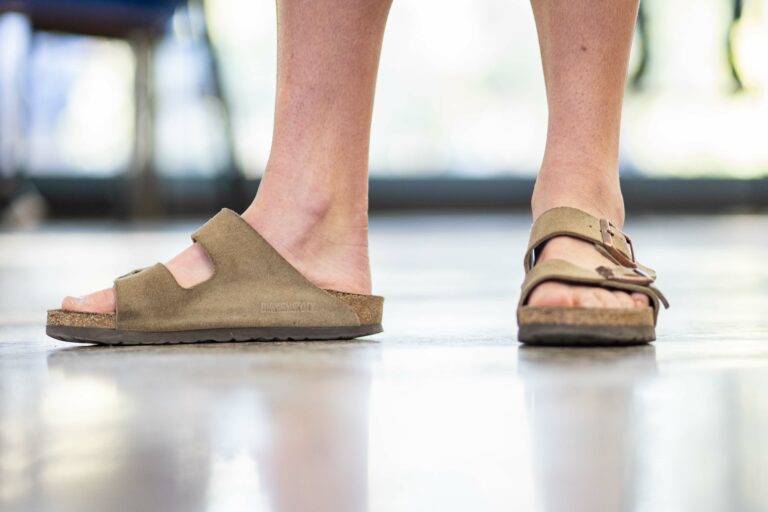
Take a stroll through any major metropolitan area and you’ll see them. Walk across campus and you’ll notice them, often in hordes. Even a venture out to the countryside would yield a sighting of two. Usually in shades of brown or black, with two or three straps and invariable simplicity, the prominence of the Birkenstock cannot be ignored. The world of fashion is an ephemeral one, where trends blaze like wildfire and one’s eye must always be trained on the next big thing. Against all odds, Birkenstock has persisted — even flourished — in an industry that quite literally phases out its inventory twice a year. But how did a shoe that was most famously associated with health food stores suddenly burst onto the cultural forefront?

In 1774, Johann Birkenstock registered as a shoemaker in a small village in Hesse, Germany. He was quite skilled, and the family trade was established shortly after. Over 100 years later in 1896, Johann Birkenstock’s  great-great grandson, would go on to found the company that is now synonymous with the shoe itself. The contoured insole was invented by Konrad Birkenstock and became an instant hit with soldiers for its exemplary orthopedic support. The company’s shoes were first introduced to the United States in 1966, where they quickly spread across the West Coast and then the rest of the nation. 

The Birkenstock couldn’t have come to America at a better time: it nudged itself neatly in the Summer of Love and the ensuing hippie movements. It was at this time that Birkenstock gained its reputation as the official footwear of peace, love and everything organic. In fact, Birkenstocks were only sold at health food stores until 1986, when Nordstrom gained distribution rights. 

For 20 years, the only spot to pick up a pair was in the same place you got vitamins and Omega-3 oils. The atmosphere that surrounded Birkenstocks for so long — one of a do-good liberal who was probably a vegetarian — was not completely unfounded. 

Nicole Smith, a recent UC Davis sociology graduate, calls them “vegan Jesus sandals.” 

So when did the jump to the fashion world occur? 

Perhaps what put Birkenstock back into the nouvelle vogue was its inherent rejection of it to begin with. Visually, the shoes have been largely unchanged for decades, embracing simplicity over all else. There have been introductions of new models, of course, but the beauty of Birkenstock shoes is their resistance to change, or, as the fashion world likes to call them, trends. 

Their current CEO, Oliver Reichert, when pressed for comment in 2017 at one of their shows in Paris, said “Birkenstock does not want to be a part of the fashion industry,” adding that they “just wanted to host a nice party,” when pressed as to why they put on a presentation in the first place. This does not, however, mean that they aren’t open to new ideas. 

While embracing the simplicity of their shoes, Birkenstock has collaborated with many brands to nudge their footwear into unexpected corners of the fashion world. The collaboration that was one of the farthest from their stereotypical consumer was one with Rick Owens, a contemporary designer known for his dark, long drapey pieces that invoke a goth-in-apocalypse aesthetic. Owens’ clothes are popular for obscuring gender, their overly luxurious material and the fact that, when worn correctly, one looks like a mystic of the Medieval times. He brought the same energy to Birkenstock, infusing the Arizona, their classic two-strap sandals, with horsehair, velour and, of course, his signature black hue. 

The result is an artist’s twist on a long-established classic. The concept of using the Birkenstock’s silhouettes as a canvas is a powerful one. Owens’ fingerprints are all over the aforementioned shoe, but in the end, it’s still an Arizona sandal. Birkenstock’s collaboration with Opening Ceremony, another high-fashion powerhouse, evokes the same feeling. Instead of dark grunge, Opening Ceremony embraces camp and maximalism, brightly sequinning Birkenstock’s Boston silhouette — a strapped, well-fitting clog. The partnership that may have attracted the most attention was one planned with Supreme, the crown jewel of streetwear. Instead of playing ball, Birkenstock pulled out, citing a disrespect for their shoes. 

Klaus Baumann, Birkenstock’s chief of sales chimed in, “It was never about function for them, just logos.” 

A staunch line has been drawn in the sand when it comes to the morals of Birkenstock, something that can’t be said for much of the fashion industry. 

For many, what’s most important and what most strongly attracts them to the brand is the actual fit of the shoes themselves. Because of the nature of the sole, Birkenstocks conform to your feet over time, becoming almost like an extension of your body after enough wear. 

“I wear them because they mold to my feet and last forever,” said Ariel Mendlin, a fourth-year political science major. “I can walk miles in them and my feet never hurt.” 

There’s a reason people wear them so devotedly around campus and even around cities; they’re supremely comfortable and create a fit that is tailored to each individual owner. The shoe becomes personalized and, in an age of algorithms and manufactured authenticity, there is something beautiful about having an analog object that was perfected by the very person wearing it. 

Students on campus may not be aware of the cultural heights that their footwear has climbed, but for most of them, that’s fine. Fran Neil, a second-year sustainable agriculture and food systems major, saw her mother wear them growing up. 

“They’re comfortable, and they represent an aesthetic,” Neil said. “I eat granola, but like, I want a job.” 

While the fashion collaborations and rejection of industry norms may propel Birkenstock into big cities and runways around the globe, perhaps it is the beauty in the unambiguous that has kept them relevant for over 200 years. What you see with their shoes is exactly what you get. This embrace of simplicity keeps Birkenstocks popular, especially among students who can just slip them on and go, all while having a well-constructed, well-fitting shoe holding them up. For many, this is enough. And for the rest of us, we always have Rick Owens’ horsehair sandal in Vantablack to spice things up. 

Written By: Ilya Shrayber — arts@theaggie.org

Halloween films that prompt laughter instead of screams of terror

Whatcha gonna watch?

Halloween is a time for people to enjoy horror films, dress up in costumes and eat tons of candy. Although many enjoy being scared, there are also others who prefer celebrating the holiday without the fear factor. The ’80s and ’90s seem to serve as the peak time for hilarious Halloween movies, so for those who are in need of a laugh, here are a few movies to watch. 

“Hocus Pocus” (1993)

A classic Halloween movie that is a must-watch during the season is “Hocus Pocus.” These three wacky witches have a special place in our childhood memories. In the city of Salem, the Sanderson sisters come back to life after they are summoned by an unsuspecting teenager. Their main goal is to suck out the souls of the children to remain young and beautiful. Max Dennison, the teen virgin who was unaware of the dangers of lighting a witches’ candle, has to now find a way to save his little sister Dani and the rest of the children of Salem from the witches. Viewers watching the 17th-century witches try to adapt to the 20th century can’t help but laugh at the comical sight.  

“The Addams Family” (1991)

Even though there is a new animated version in theaters, please refer to the older movie “The Addams Family” with Angelica Huston as Morticia and Christina Ricci as Wednesday for all your Addams Family needs. This cast was made for the roles of the Addams Family, displaying  apathetic attitudes toward the dangers around them and finding humor in risking each others’ lives. Their cavalier views on death make audiences a bit uneasy while watching the Addams Family, but they are just so strange that we can’t help but laugh at their eccentric ways.  

“Casper” (1995)

This friendly ghost graced our screens as a cartoon and eventually came to life in this 1995 film version. Casper just wants to make friends, but due to his ghostly state, people tend to run away in fear. In a large house, Casper is left with his menacing ghost uncles, who constantly haunt the house to ensure no one is willing to stay. When Dr. Harvey, a therapist for the paranormal, comes along, however, he is the first person to not run away. Alongside his daughter Kat (also played by Cristina Ricci), the two move into the house to help the ghost uncles move on to the afterlife and allow the ominous heiress to inherit the house without any problems. The uncles, although a holy terror, volley dismissive and sarcastic comments. Casper is finally given the chance to befriend someone who isn’t afraid of him and watching Casper and Kat’s friendship grow brings happiness to the viewers. 

“Beetlejuice” (1988)

One of Tim Burton’s most well-known films is “Beetlejuice.” His views on what the afterlife looks like is always interesting to see, for it can be a mesh of many things. One can find a desert world filled with gigantic sandworms, but can also be taken to a seemingly normal waiting room where a woman’s torso is on one end of the couch leisurely smoking, her legs crossed on the other end of the couch. The film follows a normal couple, Barbara and Adam Maitland, who unfortunately died in a car accident and are stuck haunting their own house, which they want to keep to themselves. The only way to get rid of the new eccentric family moving in the Maitland’s house is to scare them away, but there’s one problem — they are not scary enough. They are forced to call in reinforcements, specifically, the titular Beetlejuice. Beetlejuice is a ghost himself who specializes in scaring away humans, but his tactics are so morbid he’s dangerous to summon. One of the most iconic scenes is the “Day-O (The Banana Boat Song)” scene where the family and their guests are possessed to sing and dance along to the tune. Death might be a scary topic to accept, but Burton shines a comical light onto it with the bizarre dead people and their tactics in scaring those still breathing.    

“Ghostbusters” (1984, 2018)

This well-known franchise and unforgettable ghost-busting team resurfaced in the 21st century with an all-female remake in 2018. “Ghostbusters” centers around paranormal activity in the center of New York where a team of four men (and later women) try to protect the city from total destruction. At first, there are small hot spots with bothersome and grotesque ghosts making a mess of things that the team is able to contain. But there is a far larger paranormal threat that feeds off the fear of the citizens, and it’s up to the Ghostbusters to defeat it. By conjuring up things they are not afraid of, the iconic Stay Puft Marshmallow Man is conjured into existence to help with their battle. The reboot’s all-female cast was made up of well-known comedians (Melissa McCarthy, Kristen Wiig, Leslie Jones and Kate McKinnon) who brought a new level of comedy to the film, despite the backlash they received for the remake. 

Written by: Gabriela Hernandez — arts@theaggie.org

Phi Beta Sigma hosts Fresh Hair Fridays

Creating a space for community, business 

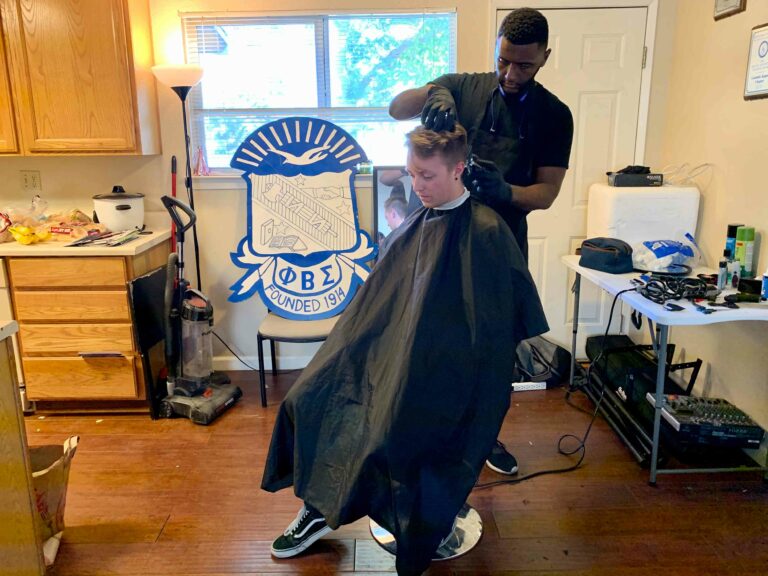
Phi Beta Sigma, one of the historically African American Greek-letter fraternities on campus, hosts Fresh Hair Friday every week, where students can make appointments with student barbers as well as enjoy each other’s company. 

Created in 2016, the Fresh Hair Program fills a gap felt by the Black community at UC Davis. Many new students are tasked with finding barber shops or salons to do their hair once they move away from home to campus — this can be more difficult for students with textured hair. 

“The program started because the issue was, at the beginning of the year, people ask, ‘Where’s the barbershop? Who’s a good barber?’” said Abdal Elmahdi, a fourth-year psychology major and a Phi Beta Sigma member. “And you wouldn’t be able to find anything besides Motown [Barbershop]. Plus, the reality of the situation is that not everyone knows how to cut Black curly hair.”

Phi Beta Sigma brothers initiated the program to recreate the barbershop experience they were used to before moving to Davis. 

Yusuph Lawal, a fourth-year political science major and Phi Beta Sigma member, was nervous at first about having someone the same age as him cut his hair. 

“When I came to Davis, I didn’t want to cut my hair,” Lawal said. “At first, I was like, ‘No, I don’t know,’” Lawal said. “I’m used to professionals cutting my hair. But then I was like, ‘Wow.’ [The student barber] really spent so much time cutting my hair and knew the contours of my hair.”

Barbers are either students or local residents, all of whom have different specialties. Each barber has their own customers who make their appointments with the barber themselves. Haircuts are not free — the goal of the program is to connect the barber to the student and provide the space for the haircut. 

“[We] give [student barbers] a taste of what is a business,” Elmahdi said. “Like, ‘How do I run this? How do I run my own business? How do I do this is a manner that’s professional and stay consistent?’”

Nouh Tekle, a transfer student and sociology major, is one of the student barbers. Tekle is originally from Alameda, Calif. 

“I’ve been cutting my own hair since I was 14 and I started cutting other people’s hair when I came to Davis,” Tekle said. 

Tekle appreciates the Fresh Hair Friday program because it allows him to balance his studies and his business as he’s able to manage how he schedules appointments. 

To some, Fresh Hair Friday represents more than just a place to get a haircut.

“I kind of took it for granted [back home], so I realized this is really impactful and and a community-oriented space,” Elmahdi said. “There was one time a song came on, [and some of the barbers] turned off their clippers and they ran to the other side of the house just to start dancing.”

In the future, the Fresh Hair Fridays coordinators hope to expand. In the past, they had women who would braid hair and they hope to recruit more barbers and stylists. Lawal and Elmahdi also spoke about their hopes to move the location closer to campus to improve accessibility. Lawal also offers bike repairs, an additional service that reflects the entrepreneurial aspect of the program beyond just hairstyling.

“I think [Fresh Hair Friday] gets people invested,” Elmahdi said. “This ties [students] to different people, different organizations and networks. [It makes it so] they have their own spot, their own place to come.”

Fresh Hair Friday occurs every Friday until 6 p.m. at 1201 Duke Drive. More information can be found on their Instagram (@officialfreshhairfriday). The program welcomes all students. 

Written By: Liz Jacobson — arts@theaggie.org

Humor: Daddy’s out: call your man ‘uncle’ for a helluva good time

A new nickname for your favorite man 

Brunch with the girls last Saturday proved to be riveting. As we drank our oat milk lattes, my friend Clara was gushing about her boyfriend Ben and let slip that she likes to call him “daddy” in and out of the bedroom…or should I say playtime? The admission raised some eyebrows, although the general consensus was that it was perfectly normal for her to give her boyfriend this paternal title. 

Stacy had a few concerns though. “Isn’t it a little weird? I mean, he was your TA and he’s, like, thirty.”

Eyes turned to me. I had been quiet during this discussion, and I’m usually the first to share my opinions. What did I think? Well, let me tell you.

This recent trend of calling one’s male sexual partner “daddy” is not disgusting in how it recalls familial relations in the bedroom. Rather, it is tragically sad in how far it misses the mark. What even constitutes a dad? Not the boring, biological answer — but what are the narratives surrounding the idea of a “dad?” Generous use of puns, “Favorite Dad” Hallmark mugs and an odd obsession with barbequing? Bo-ring. 

Well then, what are we to do if we want to be a bit hereditarily hedonistic? How can we rev our engines?
My answer: your uncle.

Our fathers constitute half of our DNA — they are, literally, a part of us. Where is the mystery in that? 

Our uncles only share 25% of our DNA, so there’s that hint of familiarity needed to get us going but just enough mystery to keep us wondering: just what is in that 75%?

Let’s face it: uncles are hot. They are nasty in khakis and vacation in the Florida Keys. Perhaps they own a Harley Davidson baseball cap if they are more of the “bad boy” type and wear socks and sandals in order to challenge fashion rules. We all want to be our “cool aunts” who drink too much wine at Happy Hour and let us watch HBO when we should be in bed. Well, when we roleplay with our men, we can be!
I am not shaming you, daddy devotees. I won’t call you sad or sick or sexually disturbed.

Whoops! I just did, though. Seriously, you guys, it’s time to get with the times — and they are a-changing. 

Try it. Let me know how it goes. 

Written by: Kelsey Stewart — kcstewart@ucdavis.edu

(This article is humor and/or satire, and its content is purely fictional. The story and the names of “sources” are fictionalized.)

Winning by losing: tanking has entered the NFL

In order to win in today’s NFL you must lose first.

The Miami Dolphins have not won a playoff game in almost 19 years. They’ve lost each of their first seven games by an average margin of 24.7 points. Their roster is $26.2 million less expensive than the next lowest spending team. They are in full-on tank mode and the league will not admit it. It’s a win-now league, but not all teams can win right now. Some teams have to go through years of losing first. This is moneyball in the NFL. 

Tanking is a phenomenon by which teams can supposedly gain a long-term competitive advantage by intentionally losing as much as possible for a limited amount of time. Losing so much and selling all viable players for picks means teams can accumulate as much draft capital as possible. Tanking is not so much intentionally throwing individual games as it is setting up the infrastructure to lose as many games as possible. 

Tanking is committing fully to a rebuild and then some. 

Tanking has proven effective in the MLB with both the Cubs and Astros committing to the tank for years, and now both have won championships as a result. In the NBA, the Sixers were the poster child for tanking, urging fans to “trust the process” as the team accumulated seven first-round picks in four years. They are now a top-five favorite to win the NBA title this year because of it. 

The closest the NFL has ever been to tanking is the decades-long abysmal performance by the Cleveland Browns. The Browns went 1-31 in two consecutive seasons from 2015 to 2017 before finally turning it around — their last stint of losing before drafting Myles Garrett and Baker Mayfield. Those two starting pieces on either side of the ball allowed the Browns to trade for players like Jarvis Landry, Odell Beckham Jr. and Olivier Vernon and move into position to win the AFC North.

The Dolphins check all the boxes for what it means to be a tanking team. They are currently winless on the season. They have traded away their two most valuable assets –– Laremy Tunsil and Minkah Fitzpatrick –– to collect draft capital. And they have stripped their roster down to cheap, short-team players full on rookie contracts and fun veterans.

 It’s textbook and it’s beautiful to see.

What is the point of aiming to win but being a mediocre team for decades when you can just actively lose for two to three seasons and accumulate young, cheap talent through the draft, setting your team up with a multi-year championship window? The Dolphins owner Stephen Ross seems to agree with this tactic. 

If you’re the Dolphins and you’ve had two decades of the New England Patriots consistently dominating your division, why would you not tank and play the long game to outlast Belichick and Brady?

The Dolphins tanking is good for the NFL. The same teams have been dominating the league for decades. Seeing the Patriots in the Super Bowl year after year is impressive, but excruciatingly repetitive and boring. 

The Dolphins and the Browns leading the league would do wonders for the Miami and Cleveland markets as well as diversify the NFL as a whole. Tanking gives fans more reasons to root for teams and be invested in the long run. It also gives young players time to gain experience that would otherwise be unavailable to them. 

The concept of winning is deeply ingrained in what we do. But winning is overrated. Winning is treated as though it is everything, but it really isn’t.

 Is anything in life really as black and white as winning or losing? On a day-to-day basis, life is all about grey areas and hopefully setting up long-term success. 

The league is becoming increasingly divided as the winners keep winning and the losers keep losing. Part of that is because those teams are not good at evaluating talent and managing their roster and the other part is that good teams have used high draft picks on valuable franchise corner pieces, like quarterbacks, to stay relevant for so long. The only way to change that with the rules that currently apply is to tank. 

Written by: Calvin Coffee — cscoffee@ucdavis.edu 

Disclaimer: The views and opinions expressed by individual columnists belong to the columnists alone and do not necessarily indicate the views and opinions held by The California Aggie.

Police Logs

Punishable laughing, music-playing, grass-burning

October 18

“Male threw a backpack on trash can and walked off.”

“Subject knocking on doors claiming to be PG&E.”

October 19

“Vehicle horn honking for past 20 minutes.”

October 20

“Reporting party was turning from Rite Aid — a subject jumped on the truck and fell off.”

October 21

“Three male subjects heard in the bushes and playing music.”

October 22

“Sounds like kids in background — no signs of distress.”

“Strong smell of smoke in the area — smells like grass burning.”

October 23

“Females laughing.”

“Footsteps in backyard and then subjects rang doorbell.”

Humor: Student asks professor to round grade from 67% to 90%, it doesn’t work

Close your eyes and imagine this: You receive the startling notification that your final has been graded and posted on Canvas. 

As expected, you hardly managed to scrape by with 71%, curved. Your A- that was hanging on by a thread has now dropped to a devastating B+. Your GPA is quaking. Life sucks. You audaciously email your professor and hit him with that, “Round it, pwease?” email that he knows all too well. He miraculously complies. You now have a 90% again. Life is good.

Now open your eyes. You’re actually failing and no curve or percentage bump is going to save you. And if that wasn’t bad enough, your study buddy wants to see other people. But that’s beside the point. In short, it’s nice to dream every once in a while, isn’t it?

Last week, fifth-year Rob Cabot decided he wasn’t going to throw away his shot. Unflinchingly, he asked his professor to bump his 67% to a 90% — a bold move indeed.

Earlier this month, Cabot had plans to graduate at the end of Fall Quarter. The only thing stopping him was his lower-division communications class, which unexpectedly presented a challenge. His advisor suggested that he enroll for Winter Quarter, perhaps even Spring Quarter as well, but Cabot was determined to graduate.

When questioned as to why a 90% instead of a more reasonable 70% round up, Cabot said that it just wasn’t enough.

“Go big or go home, right? Plus John will see that I’m a dreamer and knowing him, he just might respect that.” 

Shockingly, John Obie, Cabot’s communications professor, declined the request and even lowered his grade after factoring in a couple of missed assignments. 

“First of all, I’d like to clarify that I go by Professor Obie. John is reserved for close friends and family. Second of all, no.”

When asked to elaborate on his answer, Obie threw his hands in the air and furiously responded, “What do you think?”

Due to Professor Obie’s noncompliance, Cabot will, unfortunately, need to retake the class next quarter in order to graduate in the winter.

“I guess I just thought John was different, you know?” Obie said, shaking his head. He mumbled something to himself before standing up and leaving. As he walked off we couldn’t help but admire his valor. We wish him luck in his future endeavors.

Written by: Julietta Bisharyan — jsbisharyan@ucdavis.edu

(This article is humor and/or satire, and its content is purely fictional. The story and the names of “sources” are fictionalized.)

Aggie Style Watch: Lily Soto, unique and unintentional

An exploration of Soto’s approach to self-expression through style

Lilly Soto, an undeclared second-year student, shared her personal style with The California Aggie Arts Desk. The Aggie met Soto in her backyard, where she wore a translucent green button-down with baggy khakis and orange Converse. 

The California Aggie: How would you characterize your style? 

Soto: Grandma with ’90s Nickelodeon cartoon, but also like a 12-year-old, but also like a sexualized 12-year-old which is like… ew. It’s not intentional; it’s not what I’m trying to be. It’s just what happens. 

TCA: Do you try to communicate anything in particular with your style? Is it deliberate or more random?  

Soto: It’s not like a particular message, more just what’s going on in my mind with colors or what type of fit, like baggy or tight. It’s not deliberate; I wake up in the morning and maybe think of one thing to wear and the rest falls into place.

TCA: Do you have a style icon? Where do you get inspiration from?

Soto: I would say that it’s a big mixture of all the TV and music and artists [I follow] that influence what I like, but I’m not thinking about them when I pick out items. The music [inspires me] but also the artist cause a lot of the artists I listen to dress the f-cking dopest, like Dev Hynes.

TCA: Where do you shop and why? 

Soto: I almost exclusively thrift, I might buy a random plain t-shirt from Target or something, or I will get stuff at Urban if it’s in the sale section and cheap. It’s a way to find the most unique items and it’s just less generic, and [to] reuse your shit! And old stuff is just better I feel, and because it’s old it adheres to my grandma vibe. 

TCA: What’s your favorite accessory?

Soto: Mmm! I don’t know what my favorite is because I have to always have my rings on and my earrings in; I never take those or my necklace off. I would also consider nail polish an accessory I like wearing, and also my tattoo adds an element.

TCA: If you had to pick three closet essentials, what would they be?

Soto: At this exact moment, I would say my off-tone blue sleeveless sweater, my fleece brown jacket with a mountain scene running along the bottom and my corduroys. But also, I love my khaki men’s pants I got the other day. 

TCA: What article of clothing/accessory do wish you had?

Soto: I really want the ASAP Nast collab with Converse [shoes]. He’s coming out with flame [shoes] that are an off-tone red, and I’ve been waiting for them to come out for months.

TCA: What advice would you give to someone looking to build their closet and develop a sense of style?

Soto: Whenever you think something might be kind of weird, always try it on because then you might find items that you really love that you weren’t anticipating.

TCA: What’s a trend you love? 

Soto: I love layering, like a tight long sleeve with a baggy short sleeve, and obviously high-waisted things.

TCA: What do you think the importance of fashion is/ what is the value in self-expression through style?

Soto: Well, if you dress how you feel, it’s way easier to go through your day and the world more comfortably, and you’re telling people about yourself at the same time. So you’re just presenting the best version of yourself that you possibly could. 

Written By: Allie Bailey — arts@theaggie.org