57 F
Davis

Davis, California

Monday, December 22, 2025
Home Blog Page 441

ASUCD creates new committee to combat housing discrimination in Davis

Davis Housing Discrimination Committee created in response to student concerns over unfair treatment of student renters

The Davis Housing Discrimination Committee, a new ASUCD committee, was recently formed as the result of a bill authored by Nayzak Wali-Ali, a first-year political science major and chairperson of the ASUCD External Affairs Commission.

Students have expressed concerns about being discriminated against in their off-campus housing experiences. Wali-Ali will primarily serve marginalized student communities, which often experience the most housing discrimination.

The committee aims to educate students on housing discrimination so they are aware of their rights and to generate awareness on this type of discrimination and ensure that students feel safe — “making sure that students understand that a form of discrimination being enacted against them is not normal,” Wali-Ali said.

“Housing discrimination is an issue and, because we are a college town, we want to make sure that we protect our students and our student tenants,” Wali-Ali said. “Many of the students don’t really know what to do if they’re facing discrimination — they may just swallow it and continue.”

Landlords might tell student tenants to leave if they express any frustration or unhappiness with specific housing arrangements and, additionally, students of color find it particularly difficult to find housing, Wali-Ali said. Wali-Ali also mentioned hearing reports that landlords refused to change or fix items in students’ apartments or are particularly hostile for no reason.

“The main goal with this is that it is a safe space for students to come to these people who will be knowledgeable in what is going on, telling them that no, this is not normal,” Wali-Ali said.

Edgar Masias-Malagon, the ASUCD External Affairs vice president and a fourth-year global disease biology major, discussed the ramifications of the City of Davis’ extremely low vacancy rate and its impact on student renters.

“Given that we have a 0.2 percent vacancy rate, we decided that we wanted to address [housing discrimination] because there’s only so many units there, and people are not willing or wanting to lease these units to students based on how they identify, or their race,” Masias-Malagon said. “[This discrimination] really sets them up to live somewhere that’s not as nice, overly priced or poorly managed.”

Francois Kaeppelin, the public engagement director for the Office of the External Affairs Vice President and a second-year electrical engineering major, also spoke on the issue.

“A normal vacancy rate would be like three to five percent,” Kaeppelin said. “We don’t have any housing, the rents are going up and people are being forced to cram into these family-sized homes — people are sleeping living rooms and garages because they have nowhere else to go. A lot of landlords are really racist. The goal of the committee is to address those landlords who would say yes to a white person staying in their house but no to a black person, or to a queer person or to a gay person.”

Though Yolo County used to have a Tenant’s Right Conference, the last one was in 2016, Wali-Ali said.

“So we’re hoping to bring that here to Davis and revamp that,” Wali-Ali said. “It’s really about creating awareness for the issue, being a space for students to come to if they have issues and making sure the students don’t have to do it alone.”

The committee will work through levels of escalation with a specific focus on mediation. At the mediation stage, lawyers will intervene and have a conversation with the landlord about the seriousness of the crime of housing discrimination.

Masias-Malagon said the committee will serve as a “liaison” between landlords and renters as well as between landlords and the authorities, as students, especially certain marginalized groups, might not “feel comfortable dealing with that.”

“We kind of want to serve as that bridge between city officials and administration, and we also want to provide that anonymity where people can come in and request that we listen to their case anonymously, and we can pursue action for them if they don’t feel comfortable,” Masias-Malagon said.

In addition to the chair of the committee and the eight individuals currently in the process of being hired, the committee will also include ex-officio members — other individuals within ASUCD who do not have voting power but who will sit in on meetings and advise the Housing Discrimination Committee. Wali-Ali said these ex-officio members will be representatives from several different ASUCD commissions, committees and units since the issue of housing discrimination is highly intersectional.

Individuals on the committee will include students who have basic knowledge about the housing complaint process, have an understanding of the resources in the area and have experience working with marginalized communities — the communities the committee will be primarily serving.

“We want to make sure we’re getting people who are sensitive and compassionate,” Wali-Ali said.

Written by: Sabrina Habchi — campus@theaggie.org
Unitrans ensures student safety through Safe Space Initiative

Celebrating 51st anniversary, Unitrans continues to prioritize student safety

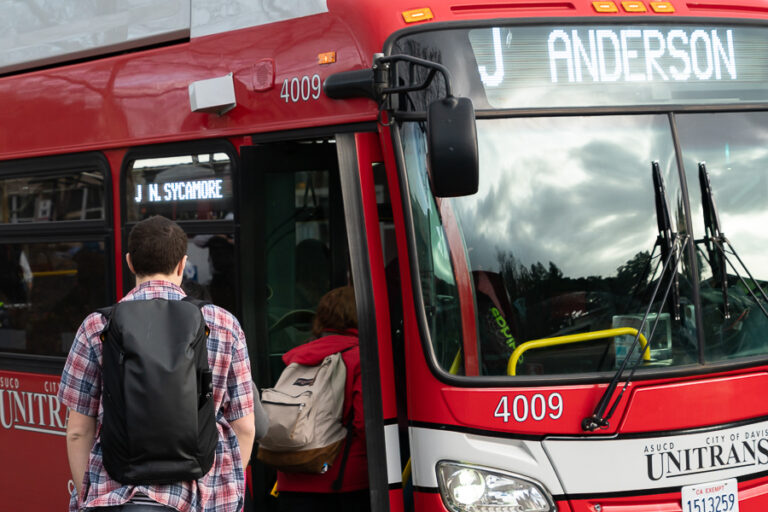
After celebrating its 51st anniversary and the success of a student fee initiative, Unitrans is also emphasizing its Safe Space Initiative, something the ASUCD transportation unit’s managers and employees are proudly implementing and promoting.

Unitrans, which provides transportation around the City of Davis to over 20,000 passengers daily, implemented the initiative after an incident a few years back in which a Unitrans passenger was harassed on the bus.

“In response to that, we wanted to make sure all of our riders should never have an expectation that something like that would ever occur to them moving forward,” said Jeff Flynn, the general manager at Unitrans. “We pushed the initiative to let everybody know that Unitrans is safe, and we have a no-tolerance policy with these types of issues. If you need help, we will get it to you.”

The initiative has one goal in mind: to keep all passengers safe.

“The Safe Space Initiative is being sure that as a community and as bus drivers we are ensuring the comfort and safety of our passengers,” said Leah Guerrero, the transit driver manager for Unitrans. “That’s really big to us, as bus drivers, as well as everyone in the company.”

All Unitrans drivers and employees are expected to uphold certain standards as part of the initiative. All drivers go through a lengthy, intensive driver-training program, which requires over 100 hours of training. During this process, employees learn “how to identify safety and security issues and how to respond to them,” Flynn said.

“If there is a problem on the vehicle, you call dispatch,” Flynn said. “If it’s imminent where you can’t call dispatch, you pull over the vehicle, you stop it, you open the doors to allow any threat to get out and call the police immediately.”

Weston Snyder, the operations manager for Unitrans, also spoke about how the training prepares the drivers to deal with safety issues.

“They emphasize the drivers are never alone in the situation — they always have someone to go to,” Snyder said, adding that there is a high level of communication between supervisors and drivers. Supervisors provide aid in any given situation.

Nevertheless, there are still limits to what drivers can do in certain situations. They are there to alleviate any issues that may come up on the bus, but the safety of both the passengers and the drivers is always the number one priority.

“By stopping the threat, we don’t want the drivers to interfere — they are not there to intervene; they are there to call for help immediately,” Flynn said. “The drivers are not trained to engage a threat. The driver’s priorities are the customers safety and their safety, they are not to put themselves in a situation that will endanger themselves.”

Flynn added that the response times by law enforcement can be anywhere from 90 seconds to two minutes, giving a nod to the police officials and their efficiency.

Snyder gave a similar response, saying “we really can’t be expected to intervene if something is getting dangerous or violent.”

“The drivers know there is always someone they can call, and they are always able to call the police if something is unsafe,” Snyder said.

Guerrero discussed the flexibility that the drivers have in terms of how they respond to a given situation, specifically mentioning the fires that affected Northern California last year and the shooting of the Davis police officer that occurred earlier this year as examples of where student drivers were still driving and ensuring the safety of all of their passengers during that time.

“A lot of our job is being sensitive and understanding of any passenger on the bus,” Guerrero said.

When asked if he had any expectations for passengers, Snyder mentioned that he would hope that passengers would treat others on the bus with respect. This includes the driver and what the driver asks of the passengers in any given situation.

“The driver is there to make sure that the environment is healthy and safe for everybody,” Snyder said.

Flynn acknowledged that this year has been a tough one for Unitrans. After a successful fee initiative and the recent celebration of the unit’s 51st anniversary, however, Flynn remained optimistic about the future.
“We are making sure that we invest your dollars wisely and we understand how sensitive finances are,” Flynn said. “We want to prove our value and continue to increase our values to the undergraduate community.”

Written by: Alexis Lopez-Perez — campus@theaggie.org

Humor: College-centered trading card game “Universe City” expands to UC Davis

“Your ‘Blue-Eyes White Dragon’ is no match for my ‘Blue-Haired White Neo-Liberal’!”

When you hear the name “Universe City,” you might think, “Wow, that just sounds like a lazy play on the word ‘university.’” If so, you would be completely right, but even that didn’t stop the creator of said card game, Dick Garfield, from gathering a popular and growing fanbase.

“I never expected this kind of attention,” said Garfield when asked if he ever expected this kind of attention. “I just wanted to make a trading card game that could appeal to all walks of college life while maintaining the integrity and balance of traditional TCGs like ‘Magic: The Gathering’ and ‘Yu-Gi-Oh! and living up to the success of their competitive scenes. That doesn’t seem like much of a challenge, does it?”

“Universe City,” although not the most clever of names, met that challenge. The game takes popular university tropes and turns them into cards for a player’s deck. Card types include creatures, effects and artifacts, all of which perform different functions and generate certain combinations for powerful attacks. Instead of life points, players start each game with zero debt and rack up debt with each damage dealt to them, losing the duel at $50,000.

Each expansion also releases a new mechanic into the game, such as UC Berkeley’s ever-popular “Unnecessarily Competitive Spirit” and Duke’s “Douchebaggery.” The Davis expansion introduces “Kind Soul,” which boosts the power of cards based on the number of “Kind Souls” on the battlefield.

UC Davis’ expansion, “Gunrock’s Revenge,” is set to release this Spring Quarter on Picnic Day. The cards in this expansion center on quirks and memes that make UC Davis, let’s say, unique. Some pre-release favorites are “Davis Squirrel,” which produces copies of itself each turn, and “Gary S. May — Cosplayer,” a powerful card that weakens all other non-cosplayer cards in play. A few others that require no explanation: “Bike Barn Blitz,” “Pepper Spray Cop,” “Packed J Line,” “Hydro Flask Dropper” and “Umbrella Biker.” Only one of those is a creature card.

“Is it pandering?” said Garfield after being asked whether the card game panders to collegiate fan service. “Probably, a little bit. But pandering to college students with relevant content is really the only way to get them invested in something these days. And what’s wrong with a little pandering anyways? If everyone is seeking an identity in college, a card game like ‘Universe City’ can help shape that identity in a meaningful and fun way, distracting from the actually crippling debt and unrealistic pressure students face.”

Written by: Conner Shaw — cjshaw@ucdavis.edu

(This article is humor and/or satire, and its content is purely fictional. The story and the names of “sources” are fictionalized.)

ASUCD Office of External Affairs helps introduce agricultural bill to State Assembly

UC Davis students doing their part in a global green movement

UC Davis students submitted a bill designed to reduce water usage on farms to the California State Assembly on Feb. 22. The bill, AB 1086, was authored and introduced by California Assemblymember Rebecca Bauer-Kahan in collaboration with students.

The bill would provide grants to farmers who convert to micro-irrigation systems, which are more efficient and sustainable than traditional irrigation methods. Unlike sprinklers, which apply water to the field’s surface, micro-irrigation reduces water waste by directing water to the roots of plants. Micro-irrigation can lower water usage by up to 60 percent and increase crop-yields by 90 percent, according to Bauer-Kahan’s website.

Adam Hatefi, a third-year political science and science and technology studies double major, wrote the language for the agricultural bill. As Chief of Staff for the Office of the External Affairs Vice President (OEAVP), Hatefi reached out to members of the California State Committee on Agriculture in hopes of finding someone willing to author the bill. Hatefi and other bill contributors eventually convinced Bauer-Kahan’s staff to bring AB 1086 to her attention. From there, Bauer-Kahan agreed to author the bill.

AB 1086 was one of 13 bills introduced to the state assembly on Feb. 22 by Bauer-Kahan, a Democrat who represents the 16th Assembly District. Other bills addressed issues of gun and public safety, education and human trafficking. Bauer-Kahan released a statement regarding her 2019 legislative bill package.

“These bills demonstrate my support for my constituents, our students, protecting the environment and our most vulnerable while at the same time promoting fiscal responsibility and transparency in our government,” Bauer-Kahan said.

Moving forward, the bill will enter into a process of hearings and discussions before being voted on. AB 1086 will be seen by a policy committee, go through the House of Origin and the Second House to a third reading stage. Most bills need a majority vote to pass and will eventually need the approval of the governor. If approved, the bill will end up before the Secretary of State to be codified into California law.

Working with a collaborative team of agricultural experts, legislative aids and other students, Hatefi commented on his initial motivation to turn the idea behind this bill into a reality.

“I think one big reason we decided to go with this bill was that we wanted to contribute our part to the green movement,” Hatefi said. “California has been experiencing a water crisis for years now. Our aim here was to address these issues in whatever small way we can and do our part to contribute to the environmental sustainability of our state.”

Students introduced this bill just two weeks after Democratic Representative Alexandria Ocasio-Cortez, D-N.Y. announced plans to create a Green New Deal that will tackle current carbon emissions and address climate change. AB 1086 is a small part of a national movement lead by young people that demands greater focus on the issue of climate change.

“Moving forward, we hope that small changes like this occur throughout the U.S. and that we can all continue to push green legislation across all cities, counties and states,” said Edgar Masias-Malagon, the ASUCD External Affairs Vice President.

Written by: Ally Russell — campus@theaggie.org

2019 MLB Season Preview

Amidst league uncertainty, some bold picks for the 2019 season

The 2019 MLB season begins on March 28 — the earliest opening day in league history — but it hasn’t been the smoothest ride to get there. This year’s offseason was plagued by a bone-dry free agency market, the result of many teams not wanting to fork out the cash for players despite them being worth every penny.

This year’s free agents aren’t fringe players or bench guys, but some of the league’s most promising young stars. Manny Machado didn’t sign his $300 million deal with the Padres until after the rest of the Padres position players reported for Spring Training. Bryce Harper? He just signed his 13-year contract with the Phillies last week — 10 days late for the team’s first workout. Former Cy Young winner, Dallas Keuchel, who won 12 games for the Astros in 2018, hasn’t signed with a team yet. Seven-time all-star Craig Kimbrel, who saved 42 games for the World Champion Red Sox in 2018 (third most in MLB), is also unsigned. Gio Gonzalez, Martin Maldonado and Carlos Gonzalez also make the list of household names without homes as opening day approaches.

Some players spoke out on the futility of the free agency market this offseason and expressed their frustration with the growing frugality of MLB owners. Others suggested that the league should be doing more to promote its youngest, most talented stars. All of this is to say that the relationship between the players and the MLB is becoming more fragile, and with the Collective Bargaining Agreement set to expire in 2021, Major League Baseball finds itself in a quasi-uncertain state heading into the 2019 season.

So, with uncertainty on the horizon and unknowns abound, The Aggie dives into prediction mode, taking a look at some of the MLB’s sleepier division-winner picks of 2019.

NL West – Colorado Rockies

Fresh off signing star third baseman Nolan Arenado and outfielder Charlie Blackmon to lucrative contract extensions and avoiding arbitration with key players like Trevor Story and Jon Gray, the Rockies are poised to make noise in the West. A lack of offseason signings shows their commitment to their core, and it may in fact be the defending NL champion Los Angeles Dodgers fighting to knock them from first place come September.

NL Central – Milwaukee Brewers

The top of the NL Central will likely be a dogfight between the Cubs and Brewers again. But the Brewers, who won 96 games and the division in 2018, bolstered their roster by signing third baseman Mike Moustakas and catcher Yasmani Grandal to a one-year contract in February. If Grandal can hit 20+ home runs like he has for the past three years, and the Brewers manage to sign Keuchel (reports indicate there has been recent dialogue between the two), it may be enough to separate them from the Cubs — who have won 90+ games in each of the last four seasons.

NL East – Philadelphia Phillies

Capturing the AL East title won’t be easy, but after winning the Bryce Harper sweepstakes, the Phillies may not be as much of a long shot. Philadelphia also signed Andrew McCutchen, Jean Segura and all-star catcher J.T. Realmuto and extended starting pitcher Aaron Nola. The battle will likely be between them and the Braves, a team that signed star third baseman Josh Donaldson early into the offseason and is hoping Ronald Acuña Jr. can build off his breakout rookie season. But the Phillies are really the team to beat, and they’re set up to make the jump in 2019.

AL West – Houston Astros

There are really no bold predictions for the AL West. The Astros should have this one in the bag. Houston, who won 100+ games last year for the second consecutive season, avoided arbitration with a slew of key players and also added left-fielder Michael Brantley, who hit .309 for the Indians in 2019 — fortifying an already great roster.

Al Central – Cleveland Indians

The AL Central is shaping up to be a bit of a cake walk for the Indians this season, yet again. The Indians finalized an extension with pitcher Carlos Carrasco, which cements their starting five as one of the best, if not the best, in baseball.

AL East – New York Yankees

The year of 2018 was a growing year for Giancarlo Stanton and the Yankees. 2019 will be the year the new Bronx Bombers put New York back on the map. They signed both Luis Severino and Aaron Hicks to multi-year extensions and seek to capitalize on what may turn out to be a championship hangover for the Red Sox.

Written by: Carson Parodi – sports@theaggie.org

A good spring break doesn’t have to be expensive

During the stressful finals week, students look forward to taking well-earned time off

As finals approach, quarter-system students everywhere may be feeling an enormous amount of stress and pressure. With spring break on the horizon, however, students can also look forward to a period of relaxation and time off to recollect themselves. Even if students can’t afford a lavish trip to Cabo or Las Vegas with friends, there are other cheap and healthy activities to reboot their systems after a quarter of tireless work.

Finding a balance between school and relaxation is key to the success of students. According to the ACHA Spring 2018 National College Health assessment, 64.3 percent of college students in 2018 reported feeling “overwhelmingly anxious,” while 42.9 percent said they felt “so depressed it was difficult to function.” Balance is vital to the mental and physical health of students.

Periods of relaxation and  stress-free environments can help counter these negative feelings.

Balance looks different to every student. Some people like to catch up on all the latest shows or movies on Netflix, while others may find solace in baking or crafting.

Yasmeen Qursha, a second-year environmental policy analysis and planning major, believes in taking time for herself among her rigorous schedule, especially when on breaks.

“For me personally, going out into nature and hiking, running or going to the beach when I’m home in Orange County is really effective for me, a college student on a tight budget,” Qursha said.

Qursha specifically finds value in spending time outdoors and in nature. An article in Harvard Health Publishing states that “calming nature sounds and even outdoor silence can lower blood pressure and levels of the stress hormone cortisol, which calms the body’s fight-or-flight response.”

While the gloomy weather of Winter Quarter may have kept students cooped up in dorms or apartments, spring break is a great opportunity to be re-exposed to nature (weather permitting). Even for those staying on campus, taking a stroll through the Arboretum or hiking around nearby Sacramento can lead to overall success and improvement in one’s mental health. All for free.

Maya Jones, a first-year undeclared fine arts major, deals with the stress of school by taking quiet moments to be with her thoughts.

“In general I go to the gym, take a shower or go outside and just breathe,” Jones said.

Forbes Magazine cited a study that shows the relationship between controlled breathing and the brain regions related to emotion. Breathing techniques are commonly used among mental health and medical professionals, and there are serious merits behind such a seemingly simple activity.  

As far as utilizing breaks for improving one’s mental state, Jones suggests finding enjoyment in little things.

“People can hike, go to museums or beaches, have a picnic, go on a run, or walk around a mall or plaza,” Jones said.

Written by: Alyssa Ilsley — arts@theaggie.org

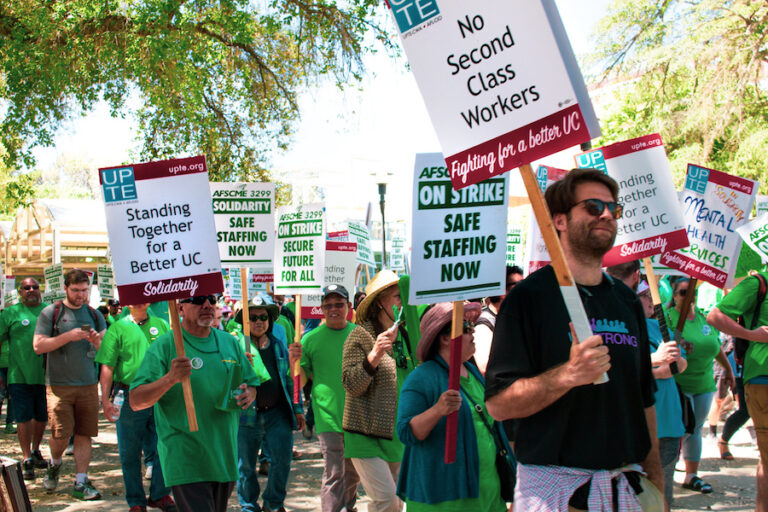
After 17 bargaining sessions with the UC since 2017, UPTE-CWA 9119 will strike

UPTE-CWA 9119 strike supported by AFSCME 3299, Bernie Sanders

University Professional and Technical Employees (UPTE) CWA 9119, which represents over 13,000 UC employees, will hold a one-day strike on March 20. The American Federation of State, County and Municipal Employees Local 3299 will strike in solidarity with UPTE-CWA 9119 employees on this day — just as UPTE-CWA 9119 workers joined AFSCME 3299’s strike last October and its strike last May.

UPTE-CWA 9119 employees will strike on all nine UC campuses and at the UC medical centers, including at the UC Davis Medical Center in Sacramento. A strike is planned to take place at UC Davis on March 20 at Orchard and La Rue Rd. At UCLA, 2020 presidential candidate and Senator Bernie Sanders will join UC employees at the picket line.

“I think Bernie’s campaign has inspired many of our members to stand up and fight for what they believe in,” said UPTE President Jamie McDole in a press release from AFSCME 3299. “When Bernie talks about ‘the top 1%,’ we’ve seen it right here at UC—more and more high-paid executives and administrators and suspect contracts with ties to the regents while workers get squeezed harder and harder and the students and patients suffer.”

Since bargaining began in May of 2017, UPTE-CWA 9119 has been unable to reach an agreement with the UC, although bargaining representatives from the union and the UC have met 17 times. At these meetings, UC employees voiced concerns about recruitment and retention challenges — UPTE-CWA 9119 has said that four out of five research/technical workers will leave the UC in less than five years due to “uncompetitive pay and lower overtime standards than in the private sector,” according to a press release from the union. Other concerns include a decrease in full-time career work and outside contracting — one of AFSCME 3299’s primary concerns as well.

“It’s unfortunate that AFSCME and UPTE leaders are choosing to strike for the third time in less than a year,” said Claire Doan, the director of media relations for the UC Office of the President via email. “The university feels the way to a deal is at the bargaining table – not on the picket lines – and should not come at the expense of patients, students, the university, and our communities.”
Doan said the UCOP is “disappointed” with UPTE leadership which, she said, is “demanding unreasonable double-digit raises” that are “16 to 22 percent over the proposed terms of the agreement” and “that are far beyond those given to other UC employees.”

Doan claimed the UC is “intent on making reasonable compromises to get a deal” while union leadership from UPTE-CWA 9119 and AFSCME 3299 “are not truly engaging in the bargaining process.”

The UC’s last, best and final offer “included wage increases that were less than half what UC agreed to in September of 2018 with nurses represented by the California Nurses Association,” according to the press release from UPTE-CWA 9119.

“It’s insulting for UC executives to continue to try to force us into accepting these
offers,” said David Carlos, an IT worker at UC San Diego, in the press release. “It shows a profound lack of commitment to the institution as a whole. Research and technology drive
UC’s greatness and the short-sighted attempt by UC executives to undermine and
outsource career work will be felt by students, patients, and the public at large.”

Written by: Hannah Holzer — campus@theaggie.org

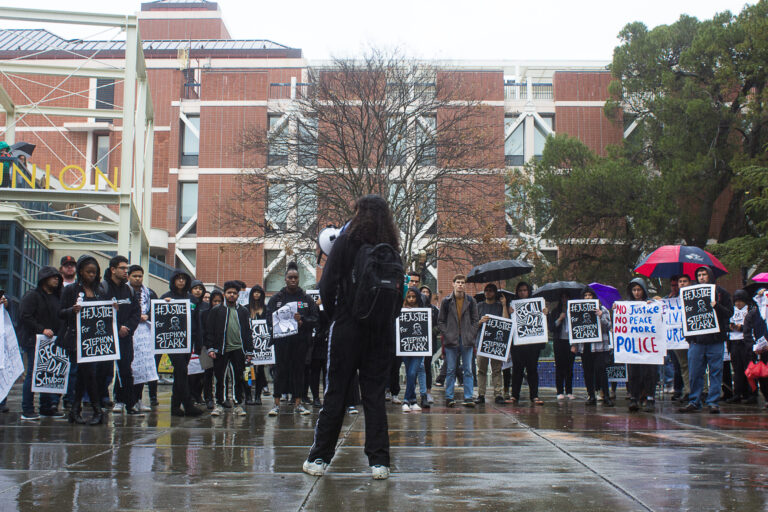
Stephon Clark Week of Action held at UC Davis

Students, community members protest DA’s decision not to charge officers who fatally shot Stephon Clark

From March 4 to 8, students and community members participated in the Stephon Clark Week of Action. This Week of Action was a collaborative effort by numerous groups in protest of the recent decision by Sacramento County District Attorney Anne Marie Schubert to not charge officers responsible for the death of Stephon Clark.

The Aggie reported in March 2018 that “Clark, a 22-year-old African American man, was shot and killed on March 18 in Sacramento by two Sacramento police officers. Clark was approached by the officers who were responding to a vandalism complaint in his South Sacramento neighborhood; within 10 minutes, the officers fired 20 shots at Clark, who was unarmed, killing him in his grandmother’s backyard. According to an autopsy performed by Dr. Bennet Omalu, Clark was struck, primarily in his back, eight times.”

Schubert announced her decision not to file criminal charges against Sacramento Police Department officers Terrance Mercadal and Jared Robinet for the fatal shooting of Stephon Clark.

UC Davis students and community members joined the throngs of angered, hurt, vocal individuals in their response to this decision. The Week of Action consisted of a chalking in front of the MU, a banner drop in front of Wellman Hall, an emergency meeting organized Students and Workers Ending Racial Violence, a sit-in at Shields Library, a town hall, a vigil in front of MU and the organization of a designated decompression space.

The chalking that occurred on March 4 included various statements including: “Say their names,” “Recall DA Schubert,” “No Justice, No Peace, No Racist Police,” “It’s our duty to win,” “#NoOneIsSafe” and “Unapologetically Black.”

On March 5, a silent sit-in was staged in UC Davis’ Shields Library. The protestors initially met at the Cross Cultural Center and walked to Shields Library where they remained from 11 a.m. until 3 p.m. Various signage held by protestors stated: “No justice, no peace, no more police,” “#Justice for Stephon Clark,” “Black Lives Matter” and “Recall DA Schubert.” Posters held in the library stating “Who is Stephon Clark?” described the facts of Clark’s case. According to FOX40, approximately 100 protestors participated throughout the duration of the sit-in, which was followed by a march through campus and a rally in front of the MU.

On March 6, student organizers hosted a town hall at the Student Recruitment and Retention Center in conjunction with the Stephon Clark Week of Action. The town hall’s purpose was to create a space for students to come together, process and discuss their response to the DA’s decision. Throughout the town hall, facilitators encouraged students in attendance to share what they were feeling, their frustrations and ideas for how to work as a community to effect change regarding police racism and brutality. Furniture had to be moved in order to accommodate an estimated 80 students.

In an email sent to The Aggie, ASUCD’s External Affairs Commission Chair Nayzak Wali-Ali, described the goals of the “passionate student activists who put this event on.” Goals included recalling DA Schubert “for her conflict of interest and incompetence,” dropping the charges for all of the 84 individuals arrested in Sacramento during a protest about the DA’s decision and firing the officers responsible for the death of Stephon Clark.

On March 7, a vigil for Stephon Clark began at 7 p.m. in front of the flagpole in the MU. Over 50 students formed the large circle, lit by electric candlelight; many prayed, cried, spoke of action and anger, and advocated for change. The vigil included various student and community speakers and ended with a guided meditation led by Assistant Professor of English Danielle Heard Mollel. Mollel currently teaches ENL 51, “Hip Hop as Poetry” and decided to reorient class discussions “around the injustice to Stephon Clark, his family, and the broader Black community.”

“At Tuesday’s class meeting, we improvised around the topic, which culminated in my ending class early and having students who were interested follow me onto the Quad for a guided meditation,” Mollel said.

Mollel also stated that many organizers of the Stephon Clark Week of Action were in the ENL 51 class and invited extended an invitation to “offer a guided meditation for healing at the vigil.”

“My goal was to provide a moment of healing, rest, and care to a suffering community through calming meditation, attending to our wounds with loving-kindness, awakening to our interconnectedness and to the positive energy of community, and opening our hearts to make room for compassion and peace,” Mollel said.

Organizers of the vigil declined to comment on the event. In an email to The California Aggie, third-year international relations major Kaleemah Kennon Muttaqi, one of the vigil’s organizers, said “After checking in with other organizers, we’ve decided not to go forward with providing a statement. This was a collaborative effort, and we would rather allow the work to speak for itself.”

UC Davis students and community were an example of many organized protests, rallies, and vigils for the publicly perceived injustice committed by DA Schubert and the Sacramento PD. The Week of Action preceded the ‘legacy weekend’ created by the Clark family and Rev. Al Sharpton’s National Action Network, including a remembrance commemoration on the Capitol steps.

Written by: Priyanka Shreedar— campus@theaggie.org

City news reporter Anne Fey also contributed to this report.

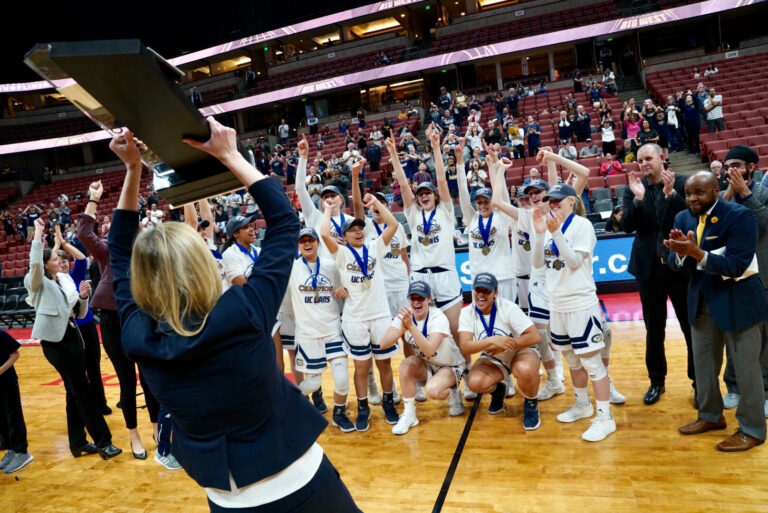
After three years of heartbreak, the Aggies are going dancing

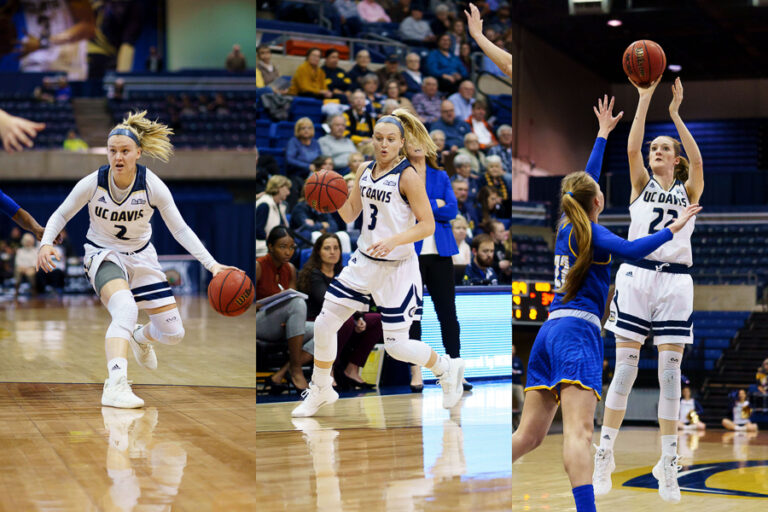
UC Davis women’s basketball comes from behind to beat Hawai’i in Big West Title game

After winning its third straight Big West Conference regular season title but losing in the Big West championship game in two of the last three seasons, at long last the UC Davis women’s basketball team has punched its ticket to the Big Dance. Trailing by as much as 17 points in the Big West tournament championship game on Saturday night, the Aggies were not going to be denied the victory as they battled back to defeat the University of Hawai’i, 58-50, and earn UC Davis’ first NCAA tournament bid since 2011.

“It has been an amazing journey for our squad,” said Head Coach Jennifer Gross during the post-game trophy presentation. “And to finish it off in this way, it’s the sweetest thing I can imagine.”

For Gross, the weight of past tournament losses seemed to give this win so much more meaning. The Aggies were stunned in Anaheim in each of the previous two seasons, and after the first 20 minutes of play on Saturday, UC Davis looked as if it was going to be stunned again.

From the opening tip, Hawai’i came out of the gates firing on all cylinders. After senior forward Morgan Bertsch scored three quick baskets to put UC Davis up 6-5 early in the first quarter, the Rainbow Wahine rattled off a 17-4 run to take a 22-10 lead into the second frame. Hawai’i’ senior point guard Tia Kanoa torched the Aggie defense, tallying ten points to lead all scorers in the first.

“Our goal was to defend and rebound and, to Hawai’i’s credit, they scored on us pretty much every time and we just weren’t playing with enough energy,” Gross said, reflecting on the Aggies’ slow start. “Offensively, I thought we were really stagnant. We talked about getting the ball moving but they were doing a really good job with their pressure and we were being passive.”

The Aggies were then able to settle in on the defensive end at the outset of the second period, holding Hawai’i to just three points in over seven minutes of game time. Unfortunately for the Aggies, the offensive woes continued as they were only able to score six points during that same span. In the first half, UC Davis shot just 26 percent from the floor, missed on each of its five three-point attempts and committed nine turnovers compared to Hawai’i’s four.

Fueled by some timely offensive rebounding and second-chance points, Hawai’i extended its lead to 14 and entered the break on top 32-18.

For the Aggies, a 15-game win streak and a 15-1 conference record suddenly looked all for naught, as they found themselves in a daunting halftime predicament — one they had not been in for the entirety of conference play.

“The coaching staff was talking at halftime about adjustments that we could make and we could hear the players — specifically Karley Eaton — kind of take over that locker room,” Gross said. “This team was not ready to give up. The tone was really good. It was positive, but it was urgent. It was like, ‘Hey, let’s do this together. We need everybody, all in together.’”

With just one half of basketball left between them and a trip to the NCAA tournament, the Aggies brushed off the Honda Center demons that had haunted them in years past and put together a composed, methodical comeback.

A Hawai’i triple early in the third period gave the Aggies their largest deficit of the afternoon, down 37-20 with just under 19 minutes remaining in the game. But minutes later, the Aggies answered with a 7-0 run, sparked by a NBA-range three from senior guard Karley Eaton, to cut the Hawai’i lead to 10.

After a few more baskets from sophomore forward Cierra Hall, senior guard Kourtney Eaton and Bertsch, UC Davis trailed by just six points heading into the final frame. Bertsch and Hall carried the Aggie scoring, combining for 27 of the team’s 36 points through three quarters.

Hall’s ability to complement Bertsch’s scoring on the offensive end was vital for the Aggies as they worked to take back the momentum in the second half.

“It was really cool in this tournament to see her [Hall] step into more of a scoring role when people were challenging her to do that,” Gross said. “She’s a great player and an amazing competitor and she was huge for us this weekend.”

Still trailing after three quarters, UC Davis had to sustain that third-period energy throughout the last 10 minutes of play if they hoped to come out victorious.

The Aggies did more than just sustain, they locked-in on the defensive side of the ball and held the Wahine to a single made field goal in the fourth quarter. Continuing to chip away on the offensive end, UC Davis cut the Hawai’i lead to one point after Bertsch knocked down a pair of free throws. A steal by Kourtney Eaton then led to a fast break and a kick out pass from Hall to junior forward Sophia Song, who knocked down her first and only field goal of the game — a triple that put the Aggies ahead for the first time since the first quarter.

“We were getting stops and we were coming back little by little, but that three gave us the lead and it was huge,” Bertsch said. “Especially knowing she [Song] hadn’t shot the entire game but to then come up and hit that down was big time, and it gave us so much momentum going into the last few minutes.”

Two minutes later, Hall finished a tough driving layup and Song eventually buried a free throw with less than a minute remaining to cap a 16-0 Aggie run. UC Davis played out the remainder of the game trading free throws to win 58-50.

“To watch the way that this team came together, and to see how much they improved throughout the season, I just wanted this for them,” Gross said when the team returned to Davis on Sunday. “I wanted them to experience that thrill of hearing the buzzer sounding and just looking up, knowing that you had done it.”

During the on-court championship ceremonies immediately following the game, Hall and Bertsch were both named to the Big West all-tournament team. Hall recorded 14 points, seven rebounds and four assists in Saturday’s game, while Bertsch led all scorers with 24 points and eight rebounds.

As a fitting final salute to the greatest basketball player in program history, Bertsch was also named tournament MVP. But of course, the personal accolades — of which there are so many — that Bertsch has accrued over her career as an Aggie meant little to her in comparison to her team’s championship moment.

“I am just so proud of this team,” Bertsch said. “To have lost it [Big West Title game] twice and feel like you should have won it all those years was heartbreaking. We were talking about it before the game, how confident we were and how we felt this was our year. And being able to take that punch down 17 and the togetherness we felt in the locker room at halftime was the closest I felt in the five years I have been here. That was honestly an incredible moment, to be able to come out, knock down that lead and cut those nets down was amazing. It is truly an honor.”

After the confetti has settled and celebration has wound down, the fact remains that this dominant season for the Aggies is not over quite yet. UC Davis will grace the national stage this Saturday when they travel to the Bay Area to take on Stanford in the first round of the NCAA tournament. The Pac-12 champion Cardinal are the number two seed in the Chicago region of the bracket, while the Aggies enter March Madness as a 15 seed.

“I’m definitely looking forward to being the underdog right now,” Bertch said when she returned to Davis on Sunday. “Because being in the conference, we’ve kind of had a target on our back for the last couple years. So if we can go into this tournament and shock some people, I think that would be awesome.”

Gross believes that her team’s wins against power-5 programs in this year’s non-conference schedule and last year’s NIT run gives the Aggies confidence going forward. Speaking of non-conference games, the Aggies were routed by Stanford, 71-43, at Maples Pavilion back on Nov. 7. Needless to say, UC Davis will be hoping to get the better of this impressive Cardinal squad the second time around when Saturday’s contest tips off at 2:30 p.m.

Written by: Dominic Faria — sports@theaggie.org

Optimizing Infant Protocol

UC Davis researchers use data and computer statistics to create more individualized bacterial infection screening protocol

Doctors must often subject infant children to invasive medical tests when they are brought into the emergency room with a fever. One such test is called a lumbar puncture or a spinal tap. It involves sticking a needle in a baby’s spine and collecting bone marrow to test for dangerous bacteria. A new study, that combines advanced medical tests and computer statistics, might drastically decrease the number of babies who have to undergo the procedure. Researchers from UC Davis and doctors from across the United States used an algorithm to establish a better non-invasive screening protocol for babies with fevers.

Febrile babies are taken seriously because around ten percent of all infants younger than 60 days who arrive at the emergency room with a fever have a bacterial infection which could cause meningitis, a deadly condition that causes the brain to swell. A spinal tap allows doctors to try to grow bacterial cultures from a baby’s bone marrow and definitively diagnosis a baby with a bacterial infection. However, there are other non-invasive blood and urine tests that allow doctors to get some idea about whether a baby has a bacterial infection or not. These tests are used to identify infants that are at risk and need a spinal tap, and send home babies who clearly have less dangerous viral infections. The new protocol, published in JAMA Pediatrics, suggests which screening tests doctors should use, and the cutoff numbers for each test to maximize the number of babies who can safely be sent home without a spinal tap.

The new protocol is not the first clinical suggestion for how doctors should treat babies with fever. Prior research has suggested bacterial infection screening measures. However, according to Nathan Kuppermann the principal investigator on the study and a professor of Emergency Medicine and Pediatrics at UC Davis, those models were based on older and less precise medical tests like general white blood cell counts. As a result, many babies that did not need spinal taps or antibiotics were given them as a precautionary measure.

“Traditional blood counts are pretty sensitive at picking up kids with infections, but they are not specific, which means that babies who don’t have bacterial infections could still have positive screening tests,” Kuppermann said. “In the new era not only [are the tests] very sensitive, but [they are] also specific which means that kids who don’t have bacterial infections typically have normal screening tests.”

To create the protocol, the researchers who call themselves the Pediatric Emergency Care Applied Research Network, used an algorithm to determine which of these new screening tests were most effective and the cutoff numbers that could safely maximize the number of babies sent home without a spinal tap.

The group enrolled febrile infants at 26 distinct emergency rooms across the United States. The babies were treated normally, but doctors sent in the data from the tests they conducted to diagnose the babies. Then the researchers determined whether each baby was screened correctly. They recorded the results of spinal taps for babies that underwent the procedure, and followed up with parents of infants who were sent home. After the data collection, the team had a full set of numbers for many different potential screening tests, and a result; whether the baby had a bacterial infection or not.

Half of the data was computer analyzed using a statistical method called recursive partitioning. The computer determined which non-invasive tests could best predict whether a baby had a bacterial infection or not, and generated numerical thresholds for each test. In the end, the algorithm determined that only three tests were needed; a urine analysis, a neutrophil white blood cell count, and a procalcitonin test. Both the neutrophil white blood cell count and the procalcitonin test are newer screening tests that identify the prevalence of specific biomarkers commonly found in the body when fighting a bacterial infection. The researchers then tested the model against the other half of the data. They found their model would have been able to properly screen all but one of the 1266 babies in the data pool, and prevent 523 spinal taps.

Today, the way emergency rooms treat febrile infants is disparate. According to Deborah Levine a professor of Emergency Medicine and Pediatrics at Bellevue Hospital in New York, each emergency room and doctor develops its own way of practicing based on medical judgement and literature. This new study might impact how emergency rooms do things.

“The standard of care evolves with studies like this,” Levine said. “This may change the standard of care for many people.”

The new protocol was a byproduct of a much larger study that the Pediatric Emergency Care Applied Research Network is conducting on RNA biosignatures. It turns out that a viral or bacterial infection uniquely affects RNA gene expression. According to Nathan Kuppermann, RNA biosignatures might be more accurate at definitively diagnosing a baby than a spinal tap. If the researchers can speed up the test, the RNA biosignature test could act as screening test and the definitive test, essentially making the newly developed protocol obsolete.

“RNA biosignatures, that is really the holy grail,” Kuppermann said.

However, reliable quick RNA biosignature tests are years away. The new screening protocol is here today, and has the potential to spare infants from unnecessary invasive tests and improve medical care. It has already been implemented at the UC Davis Medical Center in Sacramento.

Written by: Peter Smith – science@theaggie.org

Guest: Why are we striking?

The vice president of UC Davis’ UPTE-CWA urges UC to come back to the bargaining table

University Professional and Technical Employees (UPTE) are striking. 10,000 University of California Research and Technical professionals will be on strike across the state on Wednesday, March 20. They will be joined by 5,000 UPTE Healthcare professionals and 27,000 AFSCME Patient Care Technical and Service workers, who will strike in solidarity because we have all been bargaining for contracts with UC administration and are facing similar issues.

Since bargaining began in May 2017, UPTE met with UC 17 times, with meetings always open for affected employees to share their concerns with UC negotiators. UPTE members’ comments focused on how contracting out, erosion of full-time career work and challenges to recruitment and retention are undermining the research, healthcare and educational missions they carry out. These are the issues that are most important to me. I have spent most of my career at UC Davis and am very proud of helping to fulfill the mission of the University of California. That mission includes education, research and public service: all things that I have personally contributed to during the almost 40 years I have been here at UC Davis.

UC negotiators presented UPTE RX/TX employees with a last, best and final offer on Feb. 13, which included wage increases that were less than half of what UC agreed to in September of 2018 with nurses represented by the California Nurses Association. The union has pointed out that nearly 4 out of 5 RX/TX workers leave UC in less than five years, showing that this was due to uncompetitive pay and lower overtime standards than in the private sector. UC negotiators have acknowledged the high rate of turnover, arguing that pension cuts are in fact made with this in mind. UC has admitted that its rejection of UPTE’s proposals was not due to financial hardship. The union continues to point to UC’s executive pay, management growth and privatization plans as evidence that the university regents put the interests of senior executives above those of the university community and the public.

If the pay is below market rates, why do people still choose to work at UC? Many of us love working at UC and are willing to take less money because we believe in the importance of what we do. However, the cuts to pay and benefits in the contract UC has offered will make staying impossible for many of us. Already many of us work two jobs, some drive for Lyft and Uber on the side and others work half time at UC for the healthcare benefits while they have another “real” job. Personally, I supplement my income from UC with teaching for UC Extension, as do other of my research and teaching colleagues.

Other UPTE members have named the lack of raises rewarding longevity as a major reason they are striking. Cuts to benefits, stagnant wages and a lack of rewards for staying on the job are reasons why many of my colleagues see no future working at UC and will be looking for more lucrative employment elsewhere if we cannot win a better contract. This is what underlies the problem of recruitment and retention and why the current contract offer will only make matters worse. UC will no longer get the best and the brightest coming out of UC to stay and work here, like we did when I came here almost 40 years ago. UC no longer will offer the kinds of careers that attract the best employees from around the world to a top tier university. As with UCLA’s involvement in the recent admissions scandal, the brand that UC is selling will continue to erode.

We at UPTE feel that this emphasis on executive compensation and corporate outsourcing over the interests of frontline workers does not uphold the mission of the University of California. It does a disservice to our students and the public by placing private interests over the interests of the people of the state of California whom we have a mission to serve. The employees on the frontlines supporting faculty in research and teaching, providing patient care and serving our students in many capacities have been directly involved in building the reputation for excellence that the University of California enjoys. We all deserve to be treated with dignity. UC administrators have declared that we are at impasse and bargaining is no longer productive. We strike because we do not believe that bargaining in good faith is unproductive. We strike to bring UC back to the bargaining table where our voices can be heard and respected.

UPTE has a rally at noon on Wednesday, March 20 at Russell Boulevard and Howard Way.

Written by: Lucy Joseph

The writer is the vice president of UC Davis’ local UPTE-CWA 9119. She came to UC Davis in 1980 as a graduate student in the Microbiology Graduate Group and is currently a staff research associate in the Agronomy Department and a senior museum scientist in Viticulture and Enology.

Picking strawberries

Sequenced strawberry genome may pave way for the breeding of higher quality strawberries

As a result of the collaboration between scientists at UC Davis and Michigan State University, strawberry cultivators may be able to use its DNA as a guide to breed strawberries with certain qualities pertaining to color, taste, shape and aroma.

In a recent article titled “Origin and evolution of the octoploid strawberry genome,” a team of researchers including Steve Knapp, a professor in the Department of Plant Sciences and director of the Strawberry Breeding Program, and Patrick Edger, an assistant professor in the Department of Horticulture at Michigan State University, revealed their sequencing of the genome for the cultivated strawberry, after having analyzed its origins and evolutionary process.

“I think one of the primary drivers [for our research] is that [the] strawberry is an octoploid, which means that it has eight sets of chromosomes which makes it really unique compared to humans because humans, we have one set of chromosomes from each one of our parents,” Edger said.

The researchers looked into how the strawberry attained eight sets of chromosomes and if there were any genetic variations resulting from this difference compared to diploids. Edger explained that once they had sequenced the genome, the scientists identified where each gene was and sequenced the RNA from the genes for every species of strawberry from their global species collection. From there, they conducted a phylogenetic analysis to discover the evolutionary origins of each gene.

“What was very interesting is that as the genome was sequenced, a clear picture emerged of how the ancestral species have gone around the world from East Asia over to Land Bridge to North America, and just how the species formed and how everything evolved was really fascinating,” Knapp said.

The researchers found that the progenitor species were native to Japan, Asia and Eastern Europe and North America. Edger explained that they had predicted potential conflicts in the development of the octoploid due to the progenitor species evolving in different environments, which would likely result in conflicts in the timing of genes being expressed. However, they found that a subgenome, called the woodland strawberry, controls a majority of the traits being expressed by the octoploid.

With this sequenced genome, Edger stated that they can now begin implementing molecular breeding to select for “good genes,” such as those that indicate good fruit quality, which promotes faster breeding. He described this process as a “23andMe for strawberries” where the genetics of each strawberry in a breeding program can be identified. Knapp explained that the use of this information for the agricultural industry was a large reason in conducting this research.

“You’ve got a long string of DNA code and they’re all addresses and without the address I don’t know where to go to find a gene that I need for resistance to a disease or for a fruit quality attribute,” Knapp said. “So the genome is a foundation, it’s a roadmap type foundation to track genes and understand how they make a strawberry a strawberry and how a plant is fighting off pathogens or pests. So the practical implications of it are that we have a tool now to do this kind of genetics research so that we can build better varieties or cultivars.”

Knapp stated that a large driving force for their research was the work of young scientists from UC Davis and MSU who were involved in the study.

“There are a lot of authors, but a lot of really talented young people, early career people, who drove the innovation and the science here to make this happen,” Knapp said.

Written by: Michelle Wong — science@theaggie.org

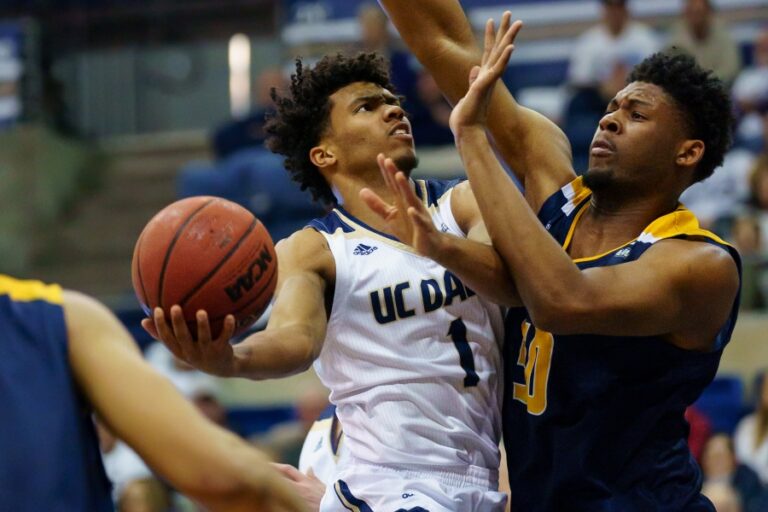
Aggies make major comeback, come up short in final home game

Scoring 15 points in the last two minutes, the Aggies couldn’t finish defensively

In their last game of the 2018-19 season, the UC Davis Aggies were defeated by the UC Riverside Highlanders 71-70 at home on Saturday night. Prior to the game, the Aggies sported an 11-18 overall and a 7-8 conference record, compared to the Highlanders’ 9-22 overall and 3-12 conference record.

Heading into the matchup, UC davis sat in the seventh seed in the Big West Conference, hoping to secure one last win before the upcoming Big West Tournament. Prior to tipoff, the Aggies honored the five graduating seniors stepping onto their home court for the last time: guards Siler Schneider and TJ Shorts II, and forwards Colin Russell, AJ John and Garrison Goode.

Looking to get their flow back on the offensive and defensive end from previous games, the Aggies seemed to click in the first half, connecting their passes together and moving the ball around the perimeter. In total, UC Davis shot 50 percent from the field and 33 percent from the three-point line. But even with their impressive ball movement and good shooting percentage, the Aggies found themselves down 38-28 at the half.

Displaying bursts of speed and agility driving to the rim, Shorts II led the team with eight points, two rebounds and one assist in 16 minutes of play.

In the second half, UC Davis began to show bursts of aggression on the court, starting with a 13-4 run in the first nine minutes. UC Riverside responded by stepping up its game as well, doing just enough to remain slightly ahead of the Aggies and, at times, even continued to add to their lead.

With two minutes left in the game, the Aggies found themselves down by 12, and it seemed as if UC Davis would not be able to surface with a win.

A 15-2 run led by Shorts II and junior guard Joe Mooney, however, gave the Aggies a one-point lead with eight seconds left on the clock — after Mooney nailed a quick three off a Riverside turnover that set the Pavilion into pandemonium..

But with just three seconds remaining in the game, the Highlanders had one more chance to retake the lead with an inbound on their own end. An inside pass to the Highlanders center allowed for an easy layup before time expired, putting the Aggies down for good with a 71-70 loss.

On the offensive side, Mooney and Shorts II were the stars for the Aggies with 19 and 18 points respectively, each putting up six assists and three rebounds.

“I told the guys it was just a little too late to show that fight,” said Head Coach Jim Les. “I thought for the majority of the game we were pretty soft defensively and gave up some big numbers. Our aggressiveness was intermittent at best and there were a lot of possessions that lost us that game. I love the fight and we have it in us but we can’t wait until we are desperate to show that fight.”

With the regular season in the rearview mirror, next for UC Davis is a trip to the Honda Center in Anaheim for the Big West Tournament. The sixth seeded Aggies will face off against third seeded Cal State Fullerton in the quarterfinals, tipping off this afternoon.

“It’s a mindset and an aggressive mentality,” Les said, discussing what the team will need going into the tournament. “It’s not that we can’t do it because we have proven we can we have to do it and sustain it and get it from multiple people. We are just not getting it as a group together. We have to get production from six or seven guys not just one or two, and we haven’t gotten to that yet and that hurts us. Our system is not going to change but we have to do it a lot better and have more consistency.”

Written by: Ryan Bugsch — sports@theaggie.org

Women’s Basketball rolls past UCSB on Senior Night

Aggies finish off regular season with 14th-straight win, look forward to Big West tournament

On senior night at the Pavilion, the UC Davis Women’s basketball team finished the regular season with a blowout win over UC Santa Barbara on Saturday afternoon.

Entering the final game, the Aggies were on a 13 game winning streak and sported a 14-1 conference record. With UC Davis already having clinched the Big West Conference last Saturday night, the game had no effect on the standings.

The Aggies wasted no time on Saturday and were off and running to start the game. A pair of three-pointers by senior guards Kourtney and Karly Eaton and a layup by senior forward Morgan Bertsch got the Aggies off to an 8-0 start and lead to a quick UCSB timeout.

UC Davis’ momentum continued as it jumped out to a 12-0 lead after the timeout, holding UCSB scoreless until the Gauchos converted a layup with 6:36 remaining in the first quarter. The score at the end of the first quarter was 22-7, with the Aggies shooting 4-8 from the three and 7-15 from the field. Their defense held the Gauchos to 2-18 shooting from the field as well as 0-8 from three. This was the seventh time in conference play this season that the Aggies have held an opponent to 10 points or less in the first quarter.

“Our game plan today was focused on our defense and our rebounding,” said Head Coach Jennifer Gross “Defensively we were trying to keep their quick guards in front of us and guard a little better one-on-one so it wouldn’t require much help.”

The second quarter was more of the same for the Aggies as they continued to play intense on the defensive end. Collectively, UCSB shot 1-12 from beyond the arc and 5-29 overall with five turnovers. Kourtney Eaton tied for leading scorer at halftime with eight points, and added in four assists and two rebounds. Bertsch also added in eight points and six rebounds, as the Aggies led 43-18 at the half.

“I thought our team was very dialed in and real urgent with our defense,” Gross said. “Even when we brought subs into the game, I thought everybody was really committed to playing great defense. That’s what happens when all five players on the court are really in tune and playing hard.”

In the third quarter, more of the same occurred as the Aggies controlled the tempo of the game and knocked down five three-pointers in the period — with three coming from senior Karley Eaton — to lead 67-34 after three quarters.

With 2:34 remaining in the game, Gross subbed out Bertsch and the Eaton twins, as they received an ovation from the crowd in what was their last game at the Pavilion. They will go down as some of the most decorated players in program history.

“I cannot imagine a better group of individuals,” Gross said about the departing seniors. “These three players are obviously tremendous basketball players but that’s just one part of it. They’re just the coolest people, great teammates, they’re selfless, they’re fun to be around, they work hard. They are amazing young women and I think they have a perfect balance of work ethic but also enjoying the process and being great teammates.”

The clock expired and the Aggies won by a score of 80-44, winning their 14th straight game and closing out what was a historic regular season. Bertsch finished the game leading all scorers with 16 points and 10 rebounds. While she only shot 3-11 from the field, she was a perfect 10-10 from the free throw line.

Karley Eaton finished the game with 15 points and four assists, with all her points coming from the three-point line, where she was a perfect 5-5. Kourtney Eaton finished the game with 14 points and five assists of her own. Sophomore forward Cierra Hall also added seven points and came down with seven rebounds. Overall, the Aggies shot 13-27 from three, held the Gauchos to 23 percent shooting from the field and were +18 in rebounding.

Now that the Aggies have finished off their regular season, they will prepare for their first Big West tournament game this week with hopes of getting an NCAA tournament bid. With a final conference record of 15-1, the Aggies won the regular season conference title and enter the tournament as the number one seed, meaning that the team has already secured a spot in the semifinal game.

Last season, the Aggies were also the number one seed, but were upset by Cal State Northridge in the championship game. UC Davis will need to sweep their next two games if it hopes to go the Big Dance for the first time since 2011 — the program’s only appearance.

“This week is just about fine tuning for us,” Gross said. “We spent the last couple of months building habits and focusing on the details and we always tell the team, your habits are going to show up whether they are good or bad. This week is also about going down to Anaheim feeling loose and feeling confident as we’ve had a lot of success against the teams in our conference, and we just need to take it one game at a time and go down there, have some fun, play hard, and we’ll be ready to do that.”

The Aggies’ will play in the Big West tournament semifinal game on Friday, March 15 at 12 p.m. against the lowest-seeded team remaining. The game will be at the Honda Center in Anaheim, Calif. and will be broadcasted on ESPN3.

Written by: Omar Navarro— sports@theaggie.org

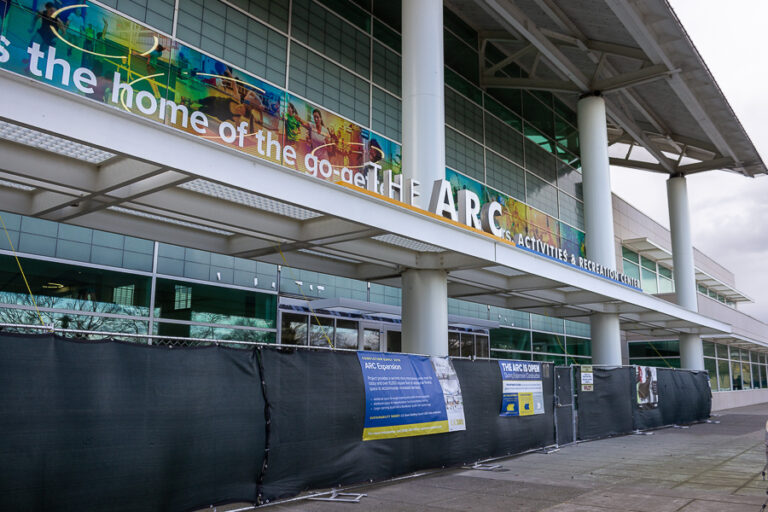
ARC expansion set to be complete after Spring Break

New 20,000 square foot space opens March 27

It’s almost done. Gym-goers have been teased for months by fresh squat racks and state of the art olympic weightlifting platforms that could be seen through the windows but couldn’t be accessed when walking between the pavilion and the ARC to get to the La Rue entrance.

The $15.8 million construction project, funded from reserves and bonds, was slated for completion back in January, but a confluence of factors delayed the project, according to UC Davis Campus Recreation and Unions Director of Recreation Deb Johnson.

Mother Nature halted construction for a period in November after smoke from the Camp Fire blanketed Davis. In December, many of the contractors and laborers working the project took some vacation time, which is typical of construction projects. Add to that required inspections with the added challenge of expanding from the core of the building to add the necessary electrical components for future equipment needs. The Boldt Company has finished renovating and adding around 20,000 square feet to the newly-designed ARC which will open for use on March 27.

This won’t be the very end of renovation, however, as the ARC will also close its four-court basketball gym starting March 25 for re-flooring. This additional project is set to be done some time in April.

Johnson gave The Aggie a tour of the new space near the end of its construction phase in early March. Some equipment was there, like the newly designed weightlifting platforms innovated by Matrix Fitness and Eleiko, which will be incorporated into 15 Matrix squat racks and six standalones.

Eleiko makes platforms designed to dampen the noise when dropping weights. Johnson says that in most college gym’s across the country, you aren’t allowed to drop your weights due to noise and damage.

“I asked Matrix to partner with Eleiko,” Johnson said, noting that this is the first time two companies in the equipment industry have collaborated for a project. “For the first time ever, we’ve got two companies working together.”

Users will now be allowed to drop their weights when using this equipment without worrying about damage or excessive noise. Still, this on it’s own does little to address one of the community’s most common complaints, which is that the wait for the squat racks during peak hours is too long.

“It’s really frustrating especially when you have to get somewhere,” said third-year neurobiology, physiology and behavior major Jessica Wong.

While waiting in line to use a squat rack, Wong explained that at times she has had to end her workout earlier than planned to get ready for class.

Johnson says one of the overarching goals of the expansion was to reduce work out waiting times.

ARC employees and fourth year students, Erica Rubio and Claudio Carillo, explained how staff currently deal with the overcrowded gym floor.

“When the line get super long and goes all the way out the door, it’s stressful to us because we have that pressure,” Carillo said, calling attention to the fact that staff try to encourage people to work in pairs to help the line move faster.

This strategy works for some people, but for others, they just want to work independently said Carillo.

“At the end of day, some people actually make friends,” Carillo said. “That’s nice to see.”

“It’s not healthy to stand in line, your body and muscles get cold,” Johnson said. “Our patrons are unique here, they’re waiting to wait in line for a long time for a rack and willing to stay in that rack for kind of as long as they want to.”

Johnson says that when gathering feedback from gym users, squat racks, benches, more cardio machines and natural lighting topped the wish list.

With a combination of LED daylight harvesting lights and ceiling fans, the workout spaces throughout the gym will add a refreshed feeling.

In addition, crossfit enthusiasts can expect a new station stocked with supplies like TRX bands and a jungle gym.

Anyone who felt left out because they train in the strongman style will find a new outdoor area that can accomodate this basic yet punishing and body-taxing activity of carrying atlas stones, pulling sleds and flipping tires. But until the outdoor temperature allows the surface to be laid properly, strongman enthusiasts will have to wait until later in Spring Quarter

The project has been nearly two years in the making, from gaining approval from former Chancellor Linda Katehi to then getting the green light and beginning construction under then-Interim Chancellor Ralph Hexler.

This expansion is just one part of UC Davis’ many growth initiatives. A West Village expansion that will add approximately 3,300 beds is expected to be fully completed in 2021. Nishi would add 2,200 beds, and Lincoln40 adds 130 units with two to five bedrooms per unit. The UC Davis Long Range Development Plan aims to house 18,600 students on campus by 2030, which represents a 9,050 increase in students currently housed on campus. While this ARC expansion may free up some traffic on the gym floor and adds new fitness features, the housing and following student body expansion will test its capacity.

The ARC will close from March 25 to 26 to move the equipment and will reopen the main entrance March 27.

Written by: Bobby John — sports@theaggie.org