57 F
Davis

Davis, California

Monday, December 22, 2025
Home Blog Page 440

UC Berkeley student, parent implicated in college admissions scandal

David Sidoo accused of paying $100,000 for someone to fraudulently take son’s SAT

David Sidoo, a UC Berkeley parent, has been accused of bribing Mark Riddell, a resident of Palmetto, Florida, to take his son Jordan Sidoo’s Canadian high school exams and his SAT for him. The news is part of the nationwide college admissions scandal that broke earlier this month. Sidoo has been charged with wire fraud and mail fraud.

David Sidoo is a businessman from Vancouver and formerly played for the Canadian Football League (CFL). Sidoo also stands accused of participating in a similar fraudulent scheme for his older son, Dylan, so that he would be accepted into Chapman University. Dylan later transferred to USC.

The large-scale scandal was orchestrated by Newport Beach, Calif. resident William “Rick” Singer, whose fraudulent organization, The Key, functioned as a cover for the payments parents were making to him, so that their children would be accepted into prestigious U.S. universities.

According to the LA Times, Sidoo plead not guilty last week in federal court in Boston. If Sidoo is convicted, he could face as many as 20 years in prison.

UC Berkeley is the second UC to be named in the scandal; last week, the UCLA men’s soccer Head Coach Jorge Salcedo was indicted on charges of racketeering and conspiracy in relation to the bribery scheme.

According to redacted court documents filed by the Department of Justice (DOJ), Sidoo allegedly paid The Key $100,000 to arrange for someone to take Jordan Sidoo’s SAT in the fall of 2012. On around Oct. 31, 2012, Sidoo emailed Mark Riddell, who participated in Singer’s scheme, with information containing Jordan’s address and personal details so that Riddell could pose as his son and take the SAT for him.

On Dec. 1, 2012, Riddell successfully posed as Jordan Sidoo and obtained a 2280 out of 2400 on the SAT at an Orange County high school. The trip was allegedly financed by David Sidoo, who had paid for Riddell to fly from Tampa to Los Angeles to complete his son’s SAT. Riddell received $5,000 each for the three tests that he had taken on behalf of Sidoo’s children.

Riddell, a Harvard graduate, has since agreed to plead guilty to taking college board exams for people at a going rate of $10,000 per test, according to prosecutors. He will be charged with conspiracy to commit mail fraud and money laundering.

In 2013 and 2014, Jordan Sidoo allegedly used that fraudulent score in applications sent to Georgetown, Yale and UC Berkeley. Jordan Sidoo was accepted into UC Berkeley in March 2014 and subsequently enrolled.

Jordan was apparently on the rowing team at UC Berkeley in the 2014-2015 season as a coxswain. A UC Berkeley spokesperson told the Los Angeles Times that Jordan had been “an active member” of the team.

According to his LinkedIn profile, Jordan Sidoo graduated from UC Berkeley in 2018 and is currently a candidate for an M.B.A. in Sports Management at Southern New Hampshire University. The profile also lists him as having been a member of the “varsity rowing team” at UC Berkeley from 2014-2016. Additionally, Jordan Sidoo is the founder of a Vancouver-based startup called Disappears.

“Integrity in our admissions process is critically important,” said Diana Harvey, the associate vice chancellor for Communications and Public Affairs at UC Berkeley, via email. “Students who do not adhere to that value may have their admissions offer revoked, enrolled students may be dismissed, and diplomas conferred may be revoked. […] Our knowledge regarding the recently released indictment and any ties to UC Berkeley is based on information included in that indictment, which also indicates that colleges and universities named were victims of the crimes committed.”

University of California President Janet Napolitano also responded to these events, saying in a statement that the allegations “are a disservice to the hardworking and accomplished students and alumni who have earned their place at the university.”

“I was deeply troubled and disappointed to learn of the charges filed by the U.S. Department of Justice against several dozen individuals accused of cheating and accepting bribes to gain students’ unlawful admission to top universities, including the University of California,” Napolitano said. “Illegal, inappropriate and unethical means to gain admission, at the expense of deserving applicants, is antithetical to every aspect of our mission and values. As a public institution — one of the most highly regarded in the world — we are dedicated to ensuring a level playing field for every applicant.”

The statement outlined steps that Napolitano, in her role as president, will be taking to investigate the allegations.

According to Napolitano, the UC will investigate those implicated in the scandal, review admissions policies and contact The College Board and the ACT to see what steps they are taking to “ensure the integrity of students’ scores.” Other actions will include “[requesting] the latest available information from the U.S. Attorney offices in California to guide our future proactive action” and “collaborating with local and federal authorities in this matter to unearth the full breadth and scope of this problem.”

“It is unfortunate that the unethical behavior of a few individuals colors UC’s unwavering commitment to fairness and equity. The university will seize this moment as a valuable opportunity to improve its policies and practices, while continuing to be transparent, accountable and expeditious, as this is our fundamental obligation to our students – prospective, current and alumni – as well as the public. We will uncover the full truth and make things right,” Napolitano said.

Written by: Rebecca Bihn-Wallace — campus@theaggie.org

‘Women of the Gulag’ screened at UC Davis

Filmmaker Marianna Yarovskaya touches on Russian history, universal sentiments

The UC Davis Department of German and Russian hosted a screening of Academy Award-shortlisted documentary “Women of the Gulag” on March 13. A question-and-answer segment  with the film’s director Marianna Yarovskaya followed the screening.

Jenny Kaminer, Associate Professor of Russian and one of the organizers for events, serendipitously discovered the movie through a friend’s social media post.

“It immediately resonated with me because I was teaching a unit in my Women in Russia class that focuses on exactly this time: the Stalinist terror and the Gulag,” Kaminer said. “I Googled the director and found her webpage, and I cold emailed her. She responded and quite quickly and enthusiastically. I thought I’m teaching Russian film in the winter, so it would go along well with that class as well. I think it’s a very important topic.”

The documentary portrays the experiences of five women who were arrested and sentenced to time in the Stalin-era forced-labor camps called the Gulag. Six years in the making and filmed in Russia, the documentary uses interviews and rare archival footage. To Yarovskaya, this female-centered narrative has often been missing from historical accounts concerning the Gulag.

“This has never been done before on an international scale,” Yarovskaya said. “The importance of doing a woman’s story is that they have a different perspective. You identify a little bit. I can better imagine myself in the story… You can analyze the female part of society through this men. There is not enough [documentation] of what they went through. And women gave birth, they were ‘slaves of slaves’ [in the Gulag] and it was a very different experience.”

Emilia Bekkerman, a third year sociology and Russian major and screening attendee, noted that discussions of the Gulag in general are often dismissed.

“I speak Russian, my family speaks Russian and I have a background in Soviet history, family and education wise,” Bekkerman said. “To see it first hand and so clearly with these almost 100-years-old women was shocking. [The Gulag] is talked about very theoretically. We know that there was the Gulag and work camps and concentration camps, but it’s all talked about in concepts and theories and not people’s stories. This was the first time I’ve ever heard about it from people and not a textbook.”

Presenting these stories first hand was part of Yarovskaya’s purpose in making the film. By focusing on the stories, the film is able to cross cultural and regional borders. Indeed, the first grant the film received was from the National Endowment for the Humanities called Bridging Cultures Through Film.

“It would be too American if there were experts [interviewed],” Yarovskaya said. “They are brilliant, but you get this didactic voice telling people how they need to feel about this. It diminishes the other people’s voices. You find a great character who is unforgettable and universally understandable.”

Yarovskaya was strategic in the scenes she decided to include in order to fit the “universal experience” angle. One interviewee in the film mentioned one of the survivors feeding a burned rat in her solitary confinement cell, which became her only source of interaction during that period.

“It is about women who survived unfathomable hardships and terror, how they managed to survive and maintain the integrity of their humanities,” Kaminer said. “It’s a very universal. How do we as human beings deal with unimaginable and unthinkable suffering? How do we go on with our lives as horrifically violent and unjust? The Stalin prison system jailed primarily people who did nothing. These questions of innocent people caught up in a corrupt system, forced to endure suffering are universal and go beyond historical context and social context.”

The film also becomes significant in its ability to grant the audience an honest view of 20th century Russian history.

“Russia get a lot of bad press these days,” Kaminer said. “Our Russia program here is two full-time faculty. Part of my missionary zeal is to expand the extracurricular offers to teach people and get them interested in the complex history of 20th century Russian history. I hope students come and learn more than just the soundbites we hear about Russia.”

The film then becomes an educational tool as the film has been screened on college campuses across the country, including Harvard University.

“[Colleges] were the first market that got interested in the film” Yarovskaya said. “It is a perfect tool, a historical document, to tell the story of people who will no longer be alive in a year or two. It is a disappearing history, so why not study it in history classes.”

For Bekkerman, the film directly supplemented what she has been studying in her Russian film class.

“In the other films, we look at how the technique drives the plot forward,” Bekkerman said. “But here, it’s how the people drive the plot and create the narrative. The film we watched from the 1930s was very censored, all propaganda, very happy-go-lucky and Hollywood. It is a movie called ‘The Circus’ about a woman with a black baby, and how open and welcoming Russia[n] society is. At the same time, Stalin was writing the constitution for his regime. Seeing this documentary literally bridges the gap. Everything [was] so censored because [the Gulag] was happening in the background.”

As the film will be screened in Moscow on April 21, Yarovskaya hopes the film will have a dual impact: to motivate viewers to expand their knowledge on Russia history, as well as to reflect on their own.

“For the rest of the world, since this is just a tip of the iceberg, I would want them to go learn more about this topic. Go read the memoirs. Learn more about this part of history. Genocide is a repeating history. For the Russians, I would want them to look in the mirror. If I was living in Russia, I probably wouldn’t be able to see from far away what the problem is. If you have not dealt with your past, you can not build a normal present and future.”

More information about the film and newsletter sign up can be found on its website.

Written By: Caroline Rutten — arts@theaggie.org

Review: Upper Crust Baking Company

Longtime local bread company opens first storefront

Upper Crust Baking Company opened its first bakery-boutique on Feb. 20. However, the family-run business is not new. Trudy and Mo Kalisky started their business in 1986, selling bread and baked goods primarily at farmers markets around Northern California.

The bakery is the company’s first permanent storefront. Located at 624 G St. next to the Davis Food Co-Op, the bakery is conveniently at the edge of downtown.

Upper Crust Baking Company sells a variety of unique breads, such as pumpernickel, Jewish Deli Rye, Sunberry, Birdseed, Salted Rosemary, Challah and Challapeño, among others. The bakery also offers artisan croutons, almond biscotti, apple tarts, New York cheesecake, babka and cookies. All its products are handmade in small batches.

The Jewish Deli Rye is particularly delicious alone or toasted with a little butter. The loaf is baked with caraway seeds, which when combined with the freshness of the other ingredients, gives the bread a savory burst of flavor. The apple tart, made with Granny Smith apples and a sugar-cookie crust, is not only the perfect mix of sweetness and tanginess, but is also absolutely gorgeous to look at.

The bakery also serves pour-over coffee. The bakery sells Davis Farmers Market merchandise as well as artisanal products from other local businesses. So far, products include honey, flour, jam, nuts, greeting cards and stickers.

With only two tables for indoor seating, the bakery is on the smaller side. Rustic decor creates a welcoming ambiance while the bakery’s owners are sure to make you smile and feel right at home.

Upper Crust Baking Company is proudly farm-to-oven. The farm-to-oven movement strives to connect local food producers and consumers in order to foster more self-reliant food networks and grow local economies.

The company has established connections with several growers and producers in the Northern California region, supporting local business as much as possible. The bakery uses local ingredients such as wheat from the Sacramento Valley, nuts from Winters, chocolate from Ghirardelli and a sourdough levain created in the UC Davis Food Science and Technology Department.

Upper Crust Baking Company certainly beats store-bought bread in flavor, quality and freshness. Loaves are $6 and desserts range in price from $4 to $25 depending on desired size. Products are also available at the Davis Farmers Market or can be ordered through Farm Fresh to You, an organic produce delivery service.

The bakery is still in its soft opening phase, so tentative hours are 8 a.m. to 7 p.m. daily. The company is working on expanding its menu and products during this time and plans to have a grand opening within the upcoming weeks.

Written By: Cheyenne Wiseman — arts@theaggie.org

Culture Corner

The Arts Desk’s weekly picks for television, movies, novels and music

Television: “Westworld”

Can humanity be reduced to a self-learning program housed in a manufactured body? This existential HBO series is an exciting science-fiction that glimpses into the future of artificial intelligence. The series takes place in a manmade western theme park that serves as a playground for the rich. A manufactured resident, Delores, becomes self-aware and sparks a revolution that leads the audience to question the nature of existence.

Movie: “Bohemian Rhapsody”

In addition to making me cry tears of joy several times, this movie brings people together. The upward battle for LGBTQ rights has been met with unimaginable obstacles. Artists like Freddie Mercury serve as a bridge between people of different sexual orientations and identities because music indeed is the universal language. This film also highlights one of the most historic concerts that raised millions of dollars for the Ethiopian Famine, 1985’s Live Aid.

Novel: “Sapiens” by Yuval Noah Harari

It’s the story of the “wise man,” or homo sapiens in proper terms. This groundbreaking novel by Yuval Noah Harari is scientific literature with an extraordinary ability to storytell. The history of humanity is broken down into three eras: the cognitive revolution, the agricultural revolution and the scientific revolution. Harari shows his readers that nothing is an accident and that we can shape the future of humanity for the better good.

Album: “Treehouse” by Sofi Tukker

Nominated for the Grammy Best Dance/Electronic Album and Best Dance Recording Awards (for “Drinkee”), duo Sofi Tukker has fostered in a new era of electronic dance music. They became well-known for their song “Best Friend” when it played in an Apple commercial for the iPhone X. Other popular tracks include “Batshit” and”Mi Rumba,” which debuted in early 2019. My personal favorite of theirs is the Frost Remix of “Moon Tattoo.”

Written by: Josh Madrid – arts@theaggie.org

Newly-released female R&B albums

Solange, Kehlani, India.Arie

Beginning in February, the world was graced with the the release of new albums from three beloved R&B artists. While Kehlani, Solange and India.Arie all have different sounds, fan bases and relationships to fame, most likely, the people that rejoiced over Solange’s “When I Get Home” were also excited to listen to Kehlani’s “While We Wait” and India.Arie’s “Worthy” and vice-versa.

It’s fitting that India.Arie’s “Worthy” led the pack when it was released Feb. 15. As a four-time Grammy winner, with twenty-one nominations, she is considered an icon within the music industry. Rated RnB reviewed Arie’s album and noted how it was “intended to be her ‘most textured and lively work to date.’” The article continued with an analysis of Arie’s chosen tracklist, introducing how “Worthy” officially begins with “What If” — “a powerful statement of emancipation that urges the average person to advocate love, as opposed to letting hate divide.” Arie’s entire album flows as a cohesive and layered gospel piece which introduces subjects of religion, love, femininity and harmony into each song. Individually, each song is a beautiful piece and look into Arie’s psyche and deepest feelings, while collectively the album is an emotional call to action. For those who have not listened to Arie, “Worthy” is a culmination and development of Arie’s past experiments with style and content.

A week later on Feb. 22, Oakland artist Kehlani released “While We Wait” with features from artists including DOM KENNEDY, Ty Dolla $ign and 6LACK. Unlike Arie, who has been releasing music for over twenty years, this is Kehlani’s third mixtape following her 2017 debut LP “SweetSexySavage.” Kehlani’s unique and catchy sound on this album is described by Pitchfork as an insight into how “the playlistification of mainstream music has not hindered this refreshingly concise collection of pop, rap, and ’90s R&B resilience.” Each of the nine songs on Kehlani’s album attest to Kehlani’s versatility within genres and her ability to introduce her voice into so many different realms of music. Kehlani’s mixtape is exciting as a titled “placeholder” for her album release later this year. Kehlani might be working on other longer projects right now, but this mixtape does so much in just nine songs. It functions as a well-thought and developed project released amid Kehlani’s pregnancy (as her full album is said to be released after her child is born). For the many who watched Kehlani rise from “America’s Got Talent,” each release is another proof of Kehlani’s growing style and creativity as an artist who has much more ahead.

Three years after her first No. 1 album, “A Seat at the Table,” Solange released “When I Get Home” on March 1. This release was arguably the most exciting of the three, as the anticipation surrounding Solange’s next album essentially began three years ago for fans of “A Seat at the Table.” While Solange Knowles has been in the industry and an artist since the days of backup dancing for Destiny’s Child, her music career has recently matured and become accepted beyond her relationship to Beyoncé.

Variety commented on Solange’s important choice of release date, writing  “‘When I Get Home’ did arrive fully-formed just after midnight on March 1 — as Black History Month became National Women’s History Month, in case anyone missed that thematic link — and in every sense, the music leads the listener: The album knows exactly where it’s going, and when and how it’s getting there, so the best approach is to settle in and trust that the driver has mapped out an interesting ride, even when it feels like you’re taking the scenic route.”

Even though Solange’s album has nineteen songs, it totals at just 39 minutes, with a relationship between each song comparable to Earl Sweatshirt’s “Some Rap Songs” that maintains individual sounds within each song, but makes sure that the short songs flow together within the album instead of functioning as their own hits.

All of these albums began the exciting wave of releases in new music that 2019 seemed to be lacking. If you haven’t listened to any of these works or artists yet, these three perfectly testify to the growth of each artist, and are worth a listen.

Written By: Rosie Schwarz — arts@theaggie.org

Aggie Racks ReCYCLE project offers opportunity for designers and adds character

Freshly decorated news racks echo traditions of Davis with eco-friendly art

When an employee of The California Aggie enthusiastically offers you a copy of the latest paper, take it. You might not realize it, but an incredible amount of effort went into getting that issue in print, and some of the soon-graduating members of the newspaper’s staff are just old enough to remember a time with no newspapers, no newsracks and no reason to hand out copies from a Memorial Union table every Thursday.

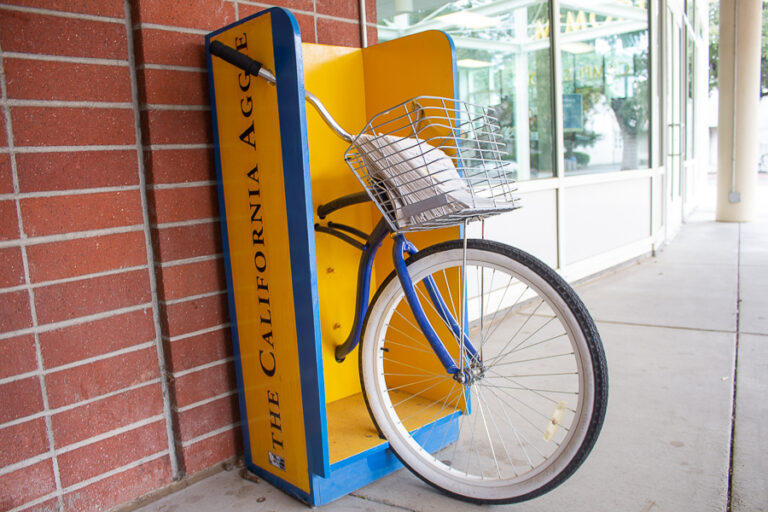
With bright blue newsracks sprinkled all over the central campus in even the most peculiar places, the history of The California Aggie’s battle to get physical copies of their paper to distribute seems distant. From 2014 to 2016, however, the campus was barren of physical papers, following in the unfortunate footsteps of many publications leaving print in the twenty-first century.

The newspaper was taken out of print for two years, returning two years ago with a mission to bring news to the community. Now, The California Aggie looks to bring eco-friendly art representative of Davis’ character to these many blue racks with the help of student designers and artists.

Hired by the university in Jan. 2017, new business manager Laurie Pederson was  challenged to rebuild the advertising department by marketing the newspaper, online media and products to a student community who never fully knew The Aggie or learned the importance of traditional newspapers. She started with The Aggie’s public presence: its distribution stands.

Due to the newspaper being out of print for two years, the 36 racks were in no condition to be used once the newspaper returned. Therefore, the Aggie Racks Restoration project was born through the efforts of not only Pederson but student managers and designers from three different teams: The California Aggie, Unitrans and The Bike Barn. Unitrans retrieved all the racks and primed, sanded and painted them to be ready for their rejuvenation.

The second phase of this project began in Jan. 2018, thanks to a $2,000 Green Initiative Fund granted from ASUCD TGIF fund. This went entirely to student designers who would use recycled parts of bicycles to decorate the racks in a way that reflected the campus. The Bike Barn provided materials for the creators: wheels, gears and even bike frames. The new racks, as much as they are for The California Aggie, are largely for the campus, and this is precisely why the mission for designers involved the town’s primary mode of transportation.  

The fund was to cover the creation of 15 units of distributions (newsracks). The primary goal was to mirror the spirit of the campus all while demonstrating the sustainable use of recycled bike parts in a creative new way. Parts were donated by The Bike Barn and TAPs, the call for artists was sent and the Aggie office became the dedicated storage space for spare parts. Student designers not only got to leave a permanent mark on the campus, but they got to work with design mentor, Jord Nelson, who offered his space, time and tools to students so that they could create freely.

Not only does this opportunity allow designers to leave their own legacy on campus, but it also saves bike parts from being added to a mountain at the local dump by giving them new life.

The UC Davis campus is defined a lot by its eccentric art, with the Eggheads by Robert Arneson being the subject of senior pictures and first-visit-celebration photoshoots alike. The Aggie Racks ReCYCLE project offers students a chance to contribute to this spirit of the campus through their own artistic vision. With four units completed and now residing on campus, The Aggie is still looking for designers to tackle the 11 remaining racks with their own artistic vision. Students interested in designing their very own rack can contact Laurie Pederson at lmpederson@ucdavis.edu or by calling (530) 752-9877.

Written by: Olivia Luchini — features@theaggie.org

Delegation organized by Japanese Prime Minister’s Office visits UC Davis

“Walk in U.S., Talk on Japan” program aims to foster better relationships between two countries

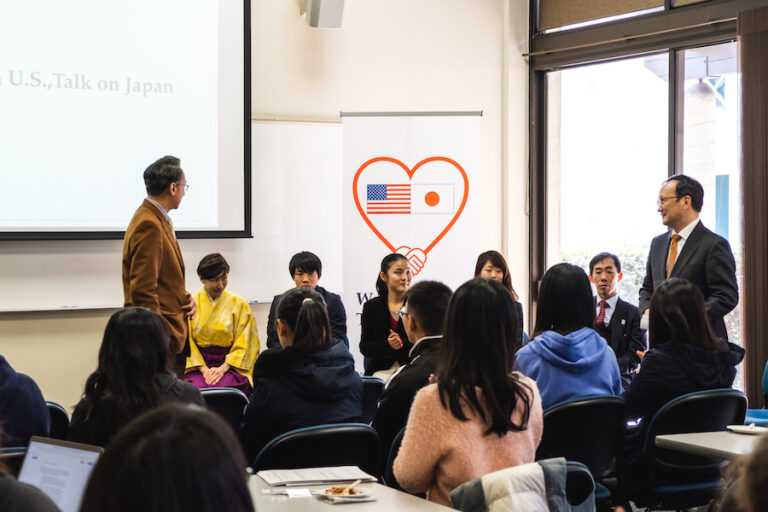
A four-member delegation from Japan visited UC Davis last week as part of the “Walk in U.S., Talk on Japan” program which discusses recent positive developments in Japan in the hopes of fostering a better relationship between the two countries.

The panel was moderated by Professor of Japanese Chia-ning Chang, who introduced Tomoaki Ishigaki, the deputy cabinet secretary for public affairs and director of global communications of the Japanese prime minister’s office.

After a weeklong trip traveling to six cities throughout the U.S. and Canada, Ishigaki said that the delegation “saved the best for last.”

Ishigaki explained that the Prime Minister’s Office is the equivalent of the White House, and so it might seem a bit strange that they had organized this program. “The main reason why we do this is to show the different aspects and diverse nature of the Japanese society,” he said.

Common images of Japan include “gray haired, middle-aged Japanese white collar workers” and there is a misconception that Japanese society is “monolithic.” The delegation’s presence and work aims to “defy and debunk” these myths, Ishigaki said.

Ishigaki hoped that after viewing the prepared presentation, students in the audience will visit Japan one day and not be disappointed that it is “not really like Pokemon.”

The first speaker, Yuko Chujo, talked about her banking experience in Tokyo at an American financial institution and provided important insight into Japan’s corporate culture. Chujo began by describing several differences between the U.S. and Japan — companies here typically allow young people to speak up, have more diverse employees and are more free-flowing in general while Japanese companies tend to have a more rigid structures, with senior employees teaching junior ones.

Additionally, when employees start a new job with a company, they are generally hired right out of graduation and might stay at the same job until retirement. Japanese businesses have operated under these structures for quite some time — in fact, the longest running company in the world is Kongo Gumi, a Japanese construction company that first began its operation in 578 A.D.

Chujo said a company that is described as “old” is any that has operated for over 200 years. She also surprised the audience when she revealed that 55 percent of the 5,500 “old” companies in operation are Japanese. Chujo believes these statistics are a perfect example of how Japan has developed its own business style.

Although there has been much success in the past, Chujo noted that Japanese companies “have yet to adapt to the changing world situations.” She showed a graph displaying the top 50 companies in market value in 1992 with 10 Japanese companies compared to just two in 2018. Efforts have been made to adapt — including “work style reforms and trying to improve labor productivity,” Chujo said.

There have also been movements to include more women in the workforce, as “the number of women newly entered into the workforce in the past five years is two million and the Japanese government is setting a clear goal to have 30 percent of the leadership positions by women in large companies as well as governmental officials by 2020,” Chujo said. There is a lot to look forward to in regards to business opportunities, including the Rugby World Cup and the Tokyo Olympics, Chujo said.

The next speaker was Aya Sakai, a student from the Department of Child Education at Japan Women’s University. Sakai got chuckles from the crowd when she revealed she would be presenting on school lunches and that she “enjoys every single day because I love eating.”

Sakai described Japanese school lunches as “quite well balanced,” comprised of a staple, main dish, side dish, dairy product and dessert. Nutrition is taken into great consideration, as “one third” of children’s nourishment comes from this single meal. Sakai emphasized the benefits of these types of meals, as it teaches them “what an ideal meal is.”

Nutritionists and chefs often visit classrooms to demonstrate how a student’s meal was prepared along with what ingredients were used. Some students serve others their school lunches and are tasked with cleaning their rooms after lunch. Sakai said school lunches are not simply just meals in Japan, but a way in which students are taught “how to collaborate with others” and “an important part of education.”

Sakai ended her presentation by recounting her hesitation to try a Japanese plum when she was a child. When she finally ate it, she loved it. This led her to be adventurous with eating.

“Something similar happened when I came to the United States with something I had never seen before — raisins” Sakai said, earning another laugh from the audience. She then asked for any recommendations for foods she should try before returning to Japan. The sole recommendation offered was In-N-Out.

Sakai was not the only university student part of the delegation. Yoshiki Hatta is a Ph.D. student specializing in asteroseismology at the National Astronomical Observatory of Japan.

“Of course, I like Japan — I like Pikachu, I love sushi and I like astronomy,” Hatta said, beginning his presentation with a brief history on space exploration. Over time, as space technology and exploration became more advanced, more funding was needed and “countries started to collaborate,” leading to the eventual development of the international space station of which both Japan and the U.S. are a part of. And the two countries recently collaborated on building the world’s largest telescope on Mauna Kea in Hawaii, which Hatta says “is one of the best telescopes in the world.”

Hatta then moved on to highlight both country’s recent achievements in the field of astronomy — the U.S. recently detected gravitational waves caused by black holes. He acknowledged that Japan’s astronomical community is not as large as it is here, but the country has made great strides with delicate technologies, such as probes and telescopes.

Hatta said he hopes there will be additional collaborations between the U.S. and Japan in the future.

The last presenter, Tokuro Miyake the 10th, was the most interactive with the audience. Miyake shared parts of her performances in Kyogen, a traditional comic theater with a 580 year history. Born into an acting family and inheriting her grandfather’s stage name, Miyake is only the second woman to perform Kyogen professionally in Japan.

“I would be very happy if Kyogen’s laughter, sense of humor and sense of beauty will contribute to a friendship between us, the people of Japan and the U.S.,” Miyake said, encouraging audience members to make traditional Kyogen style noises alongside her.

Once all members of the delegation delivered their presentations, audience members were allowed to ask a few questions. Question topics ranging from whether Kyogen had any influence on anime to the strategies Japan has implemented for ocean conservation. The panel ended with Chang and professor of Japanese Michael Dylan Foster receiving medals as a thank-you from the delegation for organizing the event.

Written by: Deana Medina — campus@theaggie.org

March 7 Senate Report: Student leaders criticize ASUCD’s inaction with Stephon Clark decision

During emotional Senate meeting Senators, Commission chairs call for resignations of Zapardiel, Gofman

The ASUCD Senate meeting was called to order at 6:10 p.m. on Thursday, March 7. President Michael Gofman, Senator Richardo “Ricky” Zapardiel and Internal Affairs Commission Chair Jacob Ganz were absent. Several senators and commission chairs were late due to having attended the on-campus vigil for Stephon Clark.

The meeting began with a quarterly report from The California Aggie Quarterly Report, presented by Editor-in-Chief Emily Stack. Topics of discussion included the recent addition of new staff members, The Aggie’s float on Picnic Day, the ongoing digitization project and The Aggie’s upcoming move from its location in Lower Freeborn Hall, which is being demolished soon. Stack also noted that marijuana advertisements were removed from The Aggie, which led to a decrease in revenue. Vagisil is among some of the the new advertisements to help recoup this loss.

Senator Jumoke Maraiyesa expressed her concern that The Aggie had not contacted any black students for a recent article about policing. She also alleged that when a black student had recently submitted a piece to the newspaper, it had not been published due to safety concerns. Stack stated that she believes the upcoming move from Lower Freeborn will increase The Aggie’s visibility on campus and thus help address similar issues of diversity and inclusion.

Elections Committee Chair Rodney Tompkins then briefly presented on the results of the recent ASUCD election, highlighting a higher student voter turnout which is likely due to the presence of the Unitrans fee referendum on the ballot. The referendum passed successfully.

Ana Maria Rizo, chair of the Sexual Assault Awareness and Advocacy Committee (SAAAC), presented the SAAAC’s Quarterly Report, describing the recent success of a campus event in which students and organizations formally submitted their comments on the U.S. Department of Education’s controversial proposed Title IX guidelines. She also noted that the UC Office of the President (UCOP), will soon be changing the adjudication process for student sexual assault victims, but that these changes have not yet been publicized.

Annie Adochi, director of the Food Pantry, presented The Pantry’s Quarterly Report, noting branding changes that were recently made to make it more “user-friendly and empowering” for students.  

Darin Schluep, food service director, presented the AS Dining Quarterly Report.

Milly Judd, of the Mental Health Initiative Committee (MHIC), presented the MHIC Quarterly Report. A highlight included the recent success of the Mental Health Initiative Conference, which is now officially the largest mental health-related conference to take place in the state of California.

Helen Van Beck then presented the Experimental Community Gardens Quarterly Report.

During consideration of old and new legislation, Senate Bill #58, which “allocated $2,983.00 for Specialized Transportation Services to purchase new surveillance and dash cameras for their four vehicles,” passed unanimously. No new legislation was introduced.

During the public discussion period, students of color expressed their dismay with the Senate’s lack of a response to the news that Sacramento DA Anne Marie Schubert had decided not to press charges against the police officers who killed Stephon Clark. Among the student leaders who expressed their concern — some of whom had attended the vigil for Stephon Clark on campus that occurred earlier that same evening — were External Affairs Commission Chair Nayzak Wali-Ali, Senator Jumoke Maraiyesa and Gender and Sexuality Commission Chair Joelle Judeh.

During the speaking period, Wali-Ali, upon returning from the vigil for Clark, publicly called for the resignations of ASUCD President Michael Gofman and Senator Ricky Zapardiel due to their alleged decision to leave “laugh” reactions to a Facebook post about a protest  which had occurred in Sacramento earlier that week over the DA’s decision, during which time 84 people were arrested.

“My community is disposable,” Wali-Ali said through tears. “I am tired. I am broken. I am tired of the brokenness of this decision. If you do not do better for the students of this community, you will be held accountable.”

Wali-Ali also recounted the “militarized police response” to the Sacramento protests and sharply criticized ASUCD for its lack of action regarding issues that pertain to students of color at the university.

“A peaceful protest was held on Monday and was met with militarized force,” Wali-Ali said. “That expression may seem insignificant to you, although I’m telling you it’s not. I urge you all to educate yourself — whether that’s listening to black students or taking an African American studies class. […] This conversation is needed for accountability.”

Wali-Ali pushed for Gofman to acknowledge and offer an apology for his action, saying, “[Stephon Clark] could have been my uncle, my cousin, me […] I never would have thought to leave a laughing [symbol] on Officer Corona’s memorial.”

Vice President Shaniah Branson confirmed in an email to The Aggie after the meeting that the alleged Facebook reactions did take place.

“Since then, [Zapardiel] has removed his ‘laugh reaction’. [Gofman’s] reaction, however, remains. This action was/is insensitive and hurtful,” Branson said.

In his own email to The Aggie, Gofman said he made a mistake when he chose to “laugh” react on the post.

“I meant to react to a comment on the post, but wasn’t paying close enough attention to my phone and clicked on the wrong thing,” Gofman said in the email. “The reason I didn’t correct it is at first I didn’t [notice that] I clicked the wrong button, and by the time it was brought to my attention it was already late. I [apologize] for any misunderstanding my perceived response caused, my response was not intentional.”

On his part, Zapardiel referred to the allegations in an email to The Aggie as “mere rumors and gossip,” adding that he “intended to leave a wow react, however, after one of my colleagues reached out to me notifying that me that I had left a different react, I immediately [changed it].” Zapardiel stated that “the response was a badly timed mistake.”

“It saddens me that another young man of color like myself has been taken away from us by the actions of those who are in place to protect us from the evils of this world,” Zapardiel wrote in the email. “I see all lives as equals and when anyone dies I take it to my heart. I send my condolences to the Clark family and all who are [a]ffected.”

Zapardiel noted that “this tragedy calls for action” with respect to police accountability.

“That is why I will be urging students to read and consider AB 392 […] this piece of legislation is a step in the right direction for keeping police officers accountable,” he wrote. “Until then, I will work to protect the students I represent and ensure I am doing things and taking action on their behalf.”

Zapardiel added that he felt “alienated” by some of his fellow senators, however, speculating that this was because he “stood by Gofman in times of difficulty.”

Joelle Judeh, Gender and Sexuality Commission Chair, called upon the Senate to take action in response to Clark’s murder. Judeh then urged Senators to cease giving Gofman and Zapardiel a “platform,” referring to their behavior as “rude.”

“None of you in positions of power have an excuse,” Judeh said. “Only three black women at [this] table took a stand regarding what happened with [the] response to Stephon Clark’s murder.”

Judeh added that the situation is not about ASUCD or Davis, but about “humanity and human empathy and doing the right thing.”

“I get that it can be scary to make these statements, but it’s just a statement at the end of the day,” a member of the public present at the meeting said. “I’m scared because of the color of my skin and I can’t change that… I understand that we’re [coming off] as mad but we’re fucking distraught.”

Ethnic and Cultural Affairs Commission (ECAC) Chair Rina Singh described her frustrations with ASUCD’s lack of a response to the DA’s decision. She also recalled a perceived indifference to the public backlash that she faced in January for the ECAC’s controversial condemnation of a Blue Lives Matter flag that was featured in a photograph of slain Davis police officer Natalie Corona. Singh said that she received death threats and that her personal information was released online.

“My commission just took it upon itself to voice that and make it public,” Singh said. “I didn’t expect that people at this table could turn around and target me so hard that my safety and private information was in the public. There’s nothing in me that makes me believe that things are going to change.”

A break was held at 9:45 p.m., and the meeting rejoined for public announcements at 9:58 p.m..  

During the announcement period, Senator Mohammad Qayum criticized the U.S. House of Representatives’ decision to pass a resolution condemning anti-Semitism and Islamophobia, saying “if the anti-Muslim stuff wasn’t part of it, everyone would vote for it.”

Additionally, Maraiyesa expressed her own feelings of frustration regarding the behavior of ASUCD following the Sacramento DA’s decision.

“The tears that I cry are not just for my community but for other communities struggling on this campus,” Maraiyesa said. “Since freshman year I can’t count how many hate crimes that have happened. I make the effort to go and learn more. As selfish as it may sound, I haven’t seen a lot of you all do that.  When things do happen to other communities, I know I’m there. My tears come from knowing that not a single person did come up besides the typical people I mention.”

The meeting adjourned at 10:16 p.m.

“I stand by students’ frustration with ASUCD Senate’s response to Clark’s death,” Maraiyesa said via email after the meeting. “I would like to thank current members on the table, extend my gratitude to future members of the table and to all who had the capacity to show their support in the ways that they were able to. Although I am broken and both my heart and mind are heavy, the love and support I received this week helped ease the pain and heaviness I have inside. I do not know how I would have been able to make it through the week without all the love and support and for this, I will always be grateful.”

Written by: Rebecca Bihn-Wallace — campus@theaggie.org
Hydroflasks, expensive water bottles become college necessity

Why students feel costly canteens are all the rage

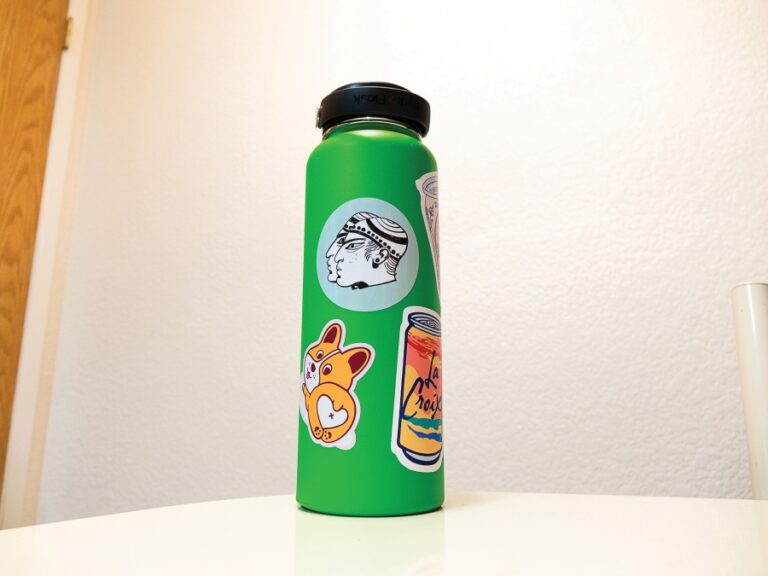
Spending $30 on a meal is seen as an extravagant purchase, spending $30 on a T-shirt is ridiculous for most, but spending $30 on a water bottle — well, that has become a standard price people are willing to pay.

Most people would agree, water is a basic necessity that everyone needs. Water transporting devices have been around since the beginning of time because humans knew that water was essential. However, with the rise of plastic water bottles in the 40s, what people transport their water in has become a relevant issue. Since learning about the implications of harmful plastic, people now opt to use reusable water bottles, and they are particularly popular on college campuses. Fourth-year human development major Vivian Lei touched on this thought.

“You are expected to have a reusable water bottle,” Lei said.

Recently, the topic of whether water bottles are being used as status symbols has emerged in mainstream conversations between Millennials and Generation Z due to the introduction of fancier water bottles in the market.

Lei explained that peer pressure among teens and young adults is probably what lead to this occurring.

“You see someone else have that brand, and you sorta want it too,” Lei said.

Two students believe that this is also due to the rise of fashion and how important it has become for people to look put together and stylish. First-year computer science and engineering major Zihao Huang explained why he believes that a water bottle can be used to accentuate a look.

“It looks cool, you could put a metallic water bottle in a backpack and it adds something,” Huang said.

Fifth-year clinical nutrition major, Yvonne Lin differed in this opinion, believing that the extravagant colors of many water bottles do not exactly coincide with the common fashion of her peers.

“I feel like some people it doesn’t have to do with using the water bottle per se but like it’s a fashion statement because there are very absurd colors that you don’t really see,” Lin said.

There are many implications to seeing water bottles being used as status symbols both positive and negative, but students seem to agree that in this day and age that, “It’s not what you think when you see someone with a reusable water bottle but what you think see someone who doesn’t have one,” Lei said.

Written by: Isabella Beristain — features@theaggie.org

Future of UC Davis set into motion as acceptances, waitlists, rejections sent out

Undergraduate Admissions released freshman decisions on March 8

Located across from the Mondavi Center, the Welcome Center, home to Undergraduate Admissions, is on the outskirts of the central campus. Unless they become tour guides or take a class there, many students don’t return to the Welcome after their initial campus tours. Within the building, however, professional staff and student public advisors have been in a whirlwind since March 8 — when decisions were released to all freshman applicants, the class of 2023.

Brenda Fudge Jensen, associate director of public advising and admissions advising, spoke to the amount of effort needed by the office in the weeks after decisions are released. Just on Monday alone, the back office of Undergraduate Admissions was ablaze with calls as five student public advisors manned phones with queues racking up left and right. They answered calls to give students their MyAdmissions ID number, but they also answered calls consoling students who were rejected from school they had dreamed of attending.

“Everybody pulls together to answer questions either on the phone or on the field,” Fudge Jensen said. “Everyone is available to answer questions. We all pitch in as one big team to help anyone who is confused or has questions about what the next step is.”

With rejections and students who are now confronted with questions about financial aid and their ability to invest in an education, the office’s stresses pile up easily.

“There aren’t enough hours in the day for the amount of work and for all of us,” Fudge Jensen said. “We are all working hard, reading applications, advising people out front, advising people on the phone…there just aren’t enough hours in the day.”

According the Fudge Jensen, the year looked like a lot of other years —similar application numbers and all. The admit rate, however, was lower.

“It was just super competitive [this year],” Fudge Jensen said.

Fudge Jensen and her coworkers started reading applications for freshmen in mid-December, then moving onto transfer applications in mid-to-late-January. Months of effort went into this moment on March 8, and it acts as a catalyst for the workload for the rest of the year. Along with Fudge Jensen, student public advisors work to keep the stresses of applicants at bay via phone lines or sitting at the front desk to offer drop-in advising.

“The most stressful part of being an advisor during admissions season is having conversations with students who weren’t admitted,” said Jessica Boensch, a fourth-year political science and communication major who serves as a public advisor. “Admission to UC Davis gets more competitive every year, and we receive so many applications that there are some very qualified students who aren’t admitted or are put on the waitlist.”

Boensch recalled how stressful admissions season was for her in high school, so she finds herself resonating with worried students on the phone.

“Hearing someone say they had their heart set on UC Davis and didn’t get in is always hard,” Boensch said.

There are reasons for joy for public advisors as well. Admitted students who are excited to come to campus give Boensch reasons to love her job.

“Students have questions about the campus culture and classes which I have fun answering because I love UC Davis so much,” Boensch said. “Their excitement is contagious.”

Boensch, like many public advisors, is in her last year at Davis. For these students, a lot of nostalgia is born out of answering questions for people who are just now beginning their collegiate journey. Kia Aliakbar is another public advisor nearing the end of his own career at UC Davis. He, similarly to Boensch, finds joy in his job during this time of year.

“Our bosses are so friendly and caring for us, they make it feel like a family,” Aliakbar said,” And speaking with incoming students gives you an opportunity to feed their excitement and curiosity. It’s really very energizing.”

A lot of the department finds this happiness in the people, Fudge Jensen being no exception.

“Joys come from working with the people,” Fudge Jensen said. “Especially the one that says ‘Davis is my dream school’ and they got in. When a parent calls you on the phone and they’re crying tears of joy, that’s really exciting.”

Written by: OLIVIA LUCHINI — features@theaggie.org

In Celebration of Women’s History Month

A list of women and movies to follow that embody feminism

“A Wrinkle in Time”

A Wrinkle in Time” follows Meg Murry, played by Storm Reid, whose father, played by Chris Pine, disappears in the midst of discovering a new planet. When Meg gets news that her father is alive and trapped in this planet, she goes on a journey with her little brother and a classmate to bring him back home.

Directed by Ava Duvernay and featuring Oprah Winfrey, Reese Witherspoon and Mindy Kaling, this 2018 adaptation is a must-see for young girls as Meg realizes she can do amazing things and overcomes her self-doubt.

Chimamanda Ngozi Adichie

Nigerian-born writer Adichie has written several novels, short stories and nonfiction pieces, including “We Should All Be Feminists.” The book-length essay seeks to define feminism for the 21st century. Her works of fiction emphasize complex women of color and are well-written examples of intersectional feminism from a multinational perspective.

“Spanglish”

“Spanglish” follows a hard-working immigrant mother Flor Moreno, played by Paz Vega. Flor works for an upper-class family as their live-in maid, and her and her daughter must navigate living in an English-speaking, upper class household.

This 2004 James L. Brooks-directed movie takes a comedic route to show the struggles of a Mexican maid as a single mother.

Laverne Cox

As a transgender woman, Cox is an advocate for LGBTQ rights. She rose to fame for her role in “Orange is the New Black” as Sophia Burset and critics praised her for her multifaceted, sympathetic portrayal of a trans woman of color. Cox is outspoken about redefining gender equality to include trans and non-binary individuals.

“Hidden Figures”

“Hidden Figures” tells the real-life story Katherine Johnson, played by Taraji P. Henson, Dorothy Vaughan, played by Octavia Spencer and Mary Jackson, played by Janelle Monáe, who were the real brains behind the launch of astronaut John Glenn into orbit. Their struggles  of being black women in a white and male-dominated field play out on screen. These women are an inspiration, supporting each other and accomplishing the impossible.

Chrystos

Chrystos is a Menominee poet and activist whose work focuses on themes of Native rights, feminism and social justice. Chrystos is two-spirit, a third-gender role unique to indigenous culture, as well as lesbian, both of which are central to their identity and influence their writing. Chrystos is known for their uncensored and often biting social and political commentary.

“Crazy Rich Asians”

Rachel Chu, played by Constance Wu, goes on a trip with her unbelievably wealthy boyfriend Nick, played by Henry Golding, to his home in Singapore. With the classic mean girls at every corner and the disapproval of Nick’s mother, her trip turned from a vacation to a never-ending, unpleasant surprise.

This 2018 film based on the novel of the same name is a rom-com for the books. With characters like Rachel, Astrid, played by Gemma Chan, and Penik, played by Awkwafina, the movie focuses on multiple female characters with contrasting personalities and is the first major motion film to feature an Asian-majority cast since 1993’s “The Joy Luck Club.” The movie isn’t just about one woman pursuing a man, but rather it introduces different women from a variety of locations, generations and values.

Lizzo

Lizzo is an American hip-hop and rap artist known for her commitment to feel-good music. Her work, both catchy and fun-loving, advocates body-positivity, self-love and acceptance. Lizzo is open about being sex-positive and confident in her own body, and she is just as addicting to watch as her music is to listen to.

“Real Women Have Curves”

The movie is the story of Ana Garcia, played by America Ferrera, a first-generation Mexican-American navigating her way through womanhood. She lives in a Latino community in East L.A. and fights her traditional family’s prejudices about higher education.

This 2002 movie gives insight on the struggles that Mexican-American students face when they are stuck between two worlds. “Real Women Have Curves” is the Mexican version of the film “Ladybird,” with a similar plot of a teenager wanting to grow up and be something bigger than what their parents have in mind for them.

Cherríe Moraga

Moraga is a renowned poet, playwright, essayist and activist and is famous for her work as a co-editor of the feminist anthology, “This Bridge Called My Back: Writings by Radical Women of Color.” Moraga’s writing and work centers arounds intersections of race, gender and sexuality. Moraga has also helped found La Red Xicana Indigena, an organization that connects and provides a voice for Xicanas across different fields as well as promotes indigenous women’s rights.

“The Hunting Ground”

This documentary focuses on exposing the rape statistics on college campuses across the country. It features survivors telling their stories as well as the various extents that U.S. college campuses go through in order to cover up sexual assault. The film follows women pursuing their education as they call for an end to harassment and sexual abuse on every level.

“The Hunting Ground” was directed by Kirby Dick and brings to light the unfortunate reality that many women face as they try to gain a higher education. The women in the movie don’t just share their story. They call for action, and that is what’s most impactful about this documentary.

Jacqueline Woodson

Writer Jacqueline Woodson has produced over two dozen books for children and adolescents. Her bestselling memoir, “Brown Girl Dreaming,” recounts her experiences growing up in the 1960s and 1970s amid the growing Civil Rights Movement, presenting issues of race and gender to younger readers.

Amandla Stenberg

20-year-old actress and activist Amandla Stenberg is very outspoken on issues of race, gender and sexuality. Stenberg uses her fame as a platform to empower queer women of color as well as to address problematic racial ideologies. Stenberg stresses the importance of representation of minority groups and strives to serve as a role model for young people of color.

Brie Larson

Actress and filmmaker Brie Larson stars in “Captain Marvel” and has said in an interview with Entertainment Weekly that a central theme in the movie is the power of female strength. Released on Mar. 8, the movie boasts a diverse cast and defies misogynist tendencies common in superhero franchises. Larson is an advocate of intersectional feminism and for survivors of sexual assault.  

Written By: Itzelth Gamboa and Cheyenne Wiseman arts@theaggie.org

Say Goodbye to Winter Quarter and Hello to Winters, Calif.

It’s closer than you think

When students consider taking a day trip away from Davis, they often head to Sacramento or San Francisco. While these destinations are perfect for a day trip with minimal time-constraints, for students who are itching to leave Davis for just a few hours, Winters is a great option.

Located 13 miles away and home to 10,000 people, Winters offers an even stronger small-town feel than Davis. This quaint size feels almost surreal, as if the town is stuck in the ’40s with its large water tower marking the entrance to the town, reminiscent of the one in “Dazed and Confused” or “Riverdale.”

The small size of downtown Winters makes it convenient for parking anywhere and walking around. For those looking for a good meal, Putah Creek Cafe is a large diner with classic booths and diner tables, indoor seating and a large outdoor patio. The cafe is ranked as the top restaurant in Winters on Tripadvisor. The menu is expansive and offers a variety of options for breakfast, lunch and dinner. In addition, the cafe is known for its bakery that features homemade pie. The cafe sources their ingredients from their own garden, which is located across the street from the Putah Creek Cafe. According to the restaurant’s website, it includes 20 raised beds of herbs, vegetables, fruit and flowers, young fruit trees and ornamental and insectary plants.

For those looking for a night out or a big-city dining experience, Preserve is described as a “hip restaurant and bar offering local, seasonal, farmer to fork cuisine including brunch, craft beer, and cocktails.” People are reminded to not leave town without a jar of “locally famous jalapeno jelly.” Preserve includes an all-day menu featuring items such as the “Preserve Charcuterie Platter,” a gourmet mac ‘n cheese and a butternut squash pizza. All of their foods are thoughtfully presented, culminating into an experience that focuses on taste and ambiance. In addition, Preserve offers a special Sunday brunch, serving distinctive dishes and cocktails such as “pulled pork waffles,” “Beer-Mosas” and “Italian Speedball,” which is made with cold brew coffee, Amaro Averna, orange bitters and cream.

Recently, Winters welcomed Hooby’s Brewing to town. This family-run brewery offers a great variety of beer and wine as well as a menu with options such as gluten-free nachos and a pesto grilled cheese waffle. The brewery is located in the heart of downtown, with a decal on the wall that reads “Beer is Good. But Beers are Better.” The brewery’s large tables make it an ideal location to study, relax or bring a group of people to explore. In addition, the brewery sells merchandise with slogans like “Wish You Were Beer.” This new brewery is cute, friendly and a great neighbor to Berryessa Brewing Company, located just outside of downtown Winters.

In addition, Winters is home to The Scoop, a quaint self-serve frozen yogurt store which changes flavors frequently, Ficelle, a tapas restaurant with stellar reviews, Lester Farms Bakery with award-winning, freshly made baked goods and Tomats, a restaurant categorized as classic California cuisine.

Beyond food and drinks, Winters is worth a visit as a historical agricultural town that has preserved its original buildings and atmosphere since its rebuilding in 1898. Of course, many things have been redone, and businesses have come and gone, but the family-friendly and welcoming environment remains a staple of Winters.

Written By: Rosie Schwarz — arts@theaggie.org

UCLA named in nationwide college admissions scandal, calls for Napolitano to open investigation

Parents, including celebrities, paid bribes in exchange for admission into prestigious universities

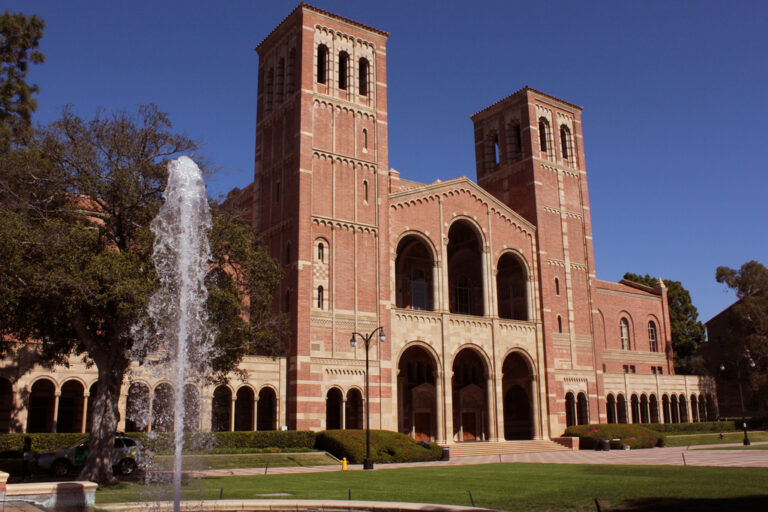
A far-reaching Department of Justice (DOJ) investigation into a nationwide college admissions cheating and athletic recruitment scandal, dubbed “Operation Varsity Blues,” has opened up a discussion about corruption in college admissions. UCLA is among the universities included in the scandal and recently, Assemblyman Kevin McCarty called upon UC officials to open up an investigation into the matter.

The far-reaching scandal, which has made national headlines, was allegedly orchestrated by William “Rick” Singer of Newport Beach, Calif. According to the DOJ document, Singer “was charged with racketeering conspiracy, money laundering conspiracy and obstruction of justice.”

Singer apparently owned a “for-profit college counseling and preparation business” and worked as the CEO of a “non-profit corporation that he established as a purported charity.” Singer allegedly used the organization as a slush fund to “conceal the nature and source of the bribes.”

“Parents paid Singer approximately $25 million to bribe coaches and university administrators to designate their children as purported athletic recruits, thereby facilitating the children’s admission to those universities,” according to a press release from the U.S. Attorney’s Office in Boston, which is handling the investigation.

Singer allegedly described the scheme to his customers as a “side door,” in which the parents paid Singer under the guise of charitable donations to [his organization].” Some of Singer’s actions allegedly involved photoshopping pictures of students’ heads onto stock images of athletes participating in different sports.  

“In turn, Singer funneled those payments to programs controlled by the athletic coaches, who then designated the children as recruited athletes – regardless of their athletic experience and abilities,” the statement said.

UCLA case

Singer ensured the daughter of Davina and Bruce Isackson was accepted into UCLA, in return for a hefty sum of money and over 2,000 shares of Facebook’s stock.

“Singer agreed with the parents of an applicant to UCLA to use bribes to facilitate their daughter’s admission to UCLA as a purported soccer recruit, even though she did not play competitive soccer,” according to court records. Bruce and Davina Isackson were charged with “conspiracy to commit mail fraud and honest services mail fraud,” according to the Daily Bruin.

On Tuesday, March 12, Jorge Salcedo, the head men’s soccer coach at UCLA, was charged with racketeering and conspiracy as part of the scandal. Salcedo was indicted and has been placed on leave from UCLA pending the investigation.

“UCLA is the potential victim of a fraudulent scheme,” noted a joint statement from UCLA and UCLA Athletics. “The conduct alleged in the filings revealed today is deeply disturbing and in contrast with the expectations we have of our coaches to lead their teams with honesty and integrity,” the UCLA press release said. “If the facts alleged are true, they represent a grave departure from the ethical standards we set for ourselves and the people who work here. The university is cooperating with the Department of Justice and will conduct its own review to determine the proper steps to take to address this matter.”

The UC Office of the President declined to comment on the matter, referring to UCLA’s aforementioned press release for further information about the scandal.

The Isacksons, Hillsborough, Calif. residents, allegedly paid a total of $600,000 “for their three children to control the testing environment and get into schools.”

Their daughter, Lauren Isackson, was listed as a member of the soccer team in 2017, but did not appear on the 2018 roster. “According to her LinkedIn profile, she served as the women’s soccer team manager from 2016-2018,” The Daily Bruin reported. It is unclear whether Isackson or one of her siblings is the UCLA applicant that Davina and Bruce Isackson paid to be accepted into the university.

The scheme involving Salcedo began in 2016. Around April 6, 2016, the UCLA applicant’s falsified soccer profile was forwarded to Salcedo by Ali Khosroshahin, who was previously employed as the head coach of women’s soccer at USC.

The applicant’s transcript and standardized test scores were then forwarded by Salcedo to a UCLA women’s soccer coach. On or around June 28, 2016, the applicant received a provisional student-athlete admission, meaning that she would be permitted to attend UCLA only if she finished her senior year of high school and participated on the university’s team for at least one year.

Around July 7, 2016, Singer forwarded $100,000 from his purported charity to a “sports marketing company Salcedo controlled,” in return for Salcedo’s help facilitating the applicant’s acceptance into UCLA.

A $250,000 bill was then forwarded by Steven Masera, an employee of Singer’s charity, to Davina Isackson, the mother of Lauren Isackson. Singer stated that the money would be returned to the Isackson family in the event that their child was not accepted into the university.

Bruce and Davina Isackson then donated 2,151 shares of Facebook stock to Singer’s fraudulent charitable organization. “Your generosity will allow us to move forward with our plans to provide educational and self-enrichment programs to disadvantaged youth,” Masera wrote in a letter to them around July 21, 2016.

On Oct. 24, 2018, Salcedo received another $100,000 in bribes from Singer with money from the fraudulent charity. Salcedo accordingly “designated the son of another one of Singer’s clients as a recruit for the UCLA men’s soccer team, thereby facilitating his admission to UCLA, despite the fact that the student did not play competitive soccer.”

Singer allegedly then paid Ali Khosroshahin $25,000 for helping facilitate this transaction.

Calls for an investigation

In a March 13 letter, Democratic State Assemblyman Kevin McCarty publicly called upon UC President Janet Napolitano to investigate the matter thoroughly.

“As a state funded [post-secondary] university funded by taxpayers, this is unconscionable,” McCarty wrote. “This kind of corruption — wealthy parents buying their children’s college admission to a public-funded university —does nothing to build trust among taxpayers whose hardworking dollars fund our public higher education institutions. Equally disturbing is the fact that California students were undoubtedly squeezed out and denied college admission. For every student admitted through bribery, there was an honest and talented student who was rejected, further perpetuating the income education gap that exists at our college education system.”

Coaches at Yale, Georgetown, Stanford, Wake Forest, USC and the University of Texas at Austin have also been charged in Singer’s scheme.

“The charges brought forth today are troubling and should be a concern for all of higher education,” said Megan Durham, the Assistant Director of Public Relations for the NCAA, via email. “We are looking into these allegations to determine the extent to which NCAA rules may have been violated.”

Celebrity involvement

The investigation has implicated not only college coaches but dozens of other people including actresses Felicity Huffman and Lori Loughlin. Huffman, of Desperate Housewives fame, allegedly paid $15,000 to Singer’s purported charity to “facilitate cheating for her daughter on the SATs.”

Loughlin — best known for her role on Full House — and her husband, fashion designer Mossimo Giannulli, paid $500,000 for their daughters to be recruited onto USC’s crew team, despite the fact that neither actually participated in crew.

US Attorney Andrew Lelling identified “two kinds of fraud” Singer sold: the first involved orchestrated cheating on the SAT or ACT and the other was using connections with Division 1 coached to gain admissions into top universities via “fake athletic credentials,” he said in a CNN article.

According to NBC, Singer stated that he wore a wire to become a “cooperating witness” with the FBI, and to bring down his “criminal enterprise.”

“I put everything in place,” Singer said while in court in Boston. “I put all the people in place and made the payments directly.”

Salcedo will appear in court in Boston on March 25 at 2:30 p.m.

Written by: Rebecca Bihn-Wallace — campus@theaggie.org

Humor: Marvel creates new UCD-themed comic book, “The Agents of Shields Library”

Ag-vengers, assemble!

Superheros are all the rage these days. It’s understandable why they’re so popular. Companies like DC and Marvel make great stories and awesome superpowers for their heroes in tights and capes. I mean, what kid DOESN’T want to be Batman? He has the coolest superpower: being rich and owning thangs!

To hop on the hero hype train, UC Davis partnered with Marvel to create a new UCD-themed comic book. Why not DC, you ask? DC has superior storytelling in its comics, you say? Too bad! Having ‘Marvel’ in the headline is probably gonna get this article more #views.

If you’ve had enough of my wall-breaking, then get ready to meet the characters of the new comic book series “Agents of Shields Library.”

Meet the brains of the group: Dr. Peter Aitchdee, Ph.D. Aitchdee got his doctorate through the UCD mechanical and aerospace engineering graduate program. He’s as smart as Iron Man but definitely not as rich (Ph.D salaries, amirite?). Aitchdee uses his knowledge to build his fellow agents cool gadgets. Fun fact: He was originally a design major.

Up next in our lineup is the brawn. Na na na na na na, it’s FRATMAN! Meet Fratman, current UCD third-year and president of Delta Iota Kappa Fraternity. His Christian name is Chad Bradley Fratterson III, but most people refer to him as “the guy who hogs the weights at the ARC.” Fratman has always been jacked, but he became super jacked after falling into a toxic vat of jungle juice at a party. He can crush boulders with his bare hands and lift cars using the strength of a hundred pledges. Fratman can also spit poisonous loogies to stun his enemies. Talk about toxic masculinity!

This group of agents sounds like a real sausage fest so far. But fear not! Just like the Avengers and the Justice League, we also have a token female member. This character was one of the hardest of the bunch to design. Squirrel Girl is already a Marvel superhero, and a female cow-themed hero sounds like a lawsuit waiting to happen. Instead, meet Miss Guider. She’s a tour guide who can move as fast as the Flash, but backwards. She’s ambitious, light on her feet and here to give Wonder Woman a run for her money as a feminist icon.

Every group needs a chaotic good, moral compass. Preacherman fills that role and is honestly the most powerful of the group. This dude’s got the power of God and anime on his side. And he even has a cute dog.

No super squad is complete without a great leader. (It’s Gary May. Duh.)

Watch this team battle the Sac State Hornets and bad PR in the latest issue — out on stands now!

Written by: Madeline Kumagai — mskumagai@ucdavis.edu

(This article is humor and/or satire, and its content is purely fictional. The story and the names of “sources” are fictionalized.)

Police Logs

Stranger danger

February 27

“Mediation with granddaughter who is currently moving out of resident and yelling/causing a scene reporting party has AirBnB tenant staying at location and doesn’t want to expose them to granddaughter’s behavior.”

“Open line with faint conversation then x faintly saying she called by mistake.”

“On the bike path behind above location — two car batteries in close proximity to a transient camp. Reporting party concerned the batteries could shock a child. Request they be picked up.”

February 28

“Transient sleeping in the elevator. Request subject be moved along.”

March 2

“Second floor near elevator, male transient playing loud music from boombox.”

“Request advice for legality of what constitutes stalking.”

March 3

“Female subject told employee to ‘keep an eye out for her because she doesn’t know the person’ keeping her company.”

March 4

“Open line with talking heard, no obvious distress.”