58.6 F
Davis

Davis, California

Monday, December 22, 2025
Home Blog Page 443

Assemblyman James Gallagher launches petition to encourage firing of UC Davis professor

Debate surrounding Professor Joshua Clover’s comments raise questions of academic freedom, constructive discussion

In an opinion article, columnist Nick Irvin of The Aggie called for administrative action against UC Davis English and comparative literature professor Joshua Clover for anti-police comments. California Assemblyman James Gallagher has since started a petition calling for Clover to be fired.

Clover’s comments in question include two tweets from 2014 and an interview with SF Weekly from 2015. In one of the tweets, Clover wrote that he was “thankful that every living cop will one day be dead,” and another that asked, “I mean, it’s easier to shoot cops when their backs are turned, no?” Clover’s Twitter account is now private, preventing certainty of the tweets’ background; however, for reference, the first tweet took place the same week that 12-year-old Tamir E. Rice was fatally shot by police. In the interview, Clover said, “People think that cops need to be reformed. They need to be killed.” Clover reportedly told Irvin to “direct any further questions to the family of Michael Brown” of the fatal Ferguson shooting.

Irvin framed Clover’s comments in the context of Officer Natalie Corona’s fatal shooting, a connection that moved Gallagher to act when he read the article.

“I was actually at Natalie Corona’s funeral, on the UC Davis campus, and it was a very powerful and heart-wrenching moment there, but all the community was together, right?” Gallagher said. “Then you read about [Clover] within that same campus community saying these incredibly horrendous things — so, as I was reading through [the article], the more righteously angry I was about the whole situation.”

Gallagher represents California’s Third Assembly District, which includes part of Corona’s home county, Colusa County, where her father is a county supervisor. Gallagher is also a UC Davis alumnus, having graduated from the UC Davis School of Law in 2007. He said that in creating the petition, he is acting as a legislator, representative, alumnus and concerned citizen against comments that he believes undermine the university and community.

“Through the petition, I wanted to give other alumni and the greater community a vehicle to express their voice and call for his ouster,” Gallagher said. “It sounds to me like the administration needs some encouragement, so we’re giving it to them.”

Gallagher is circulating the petition through Facebook, where it has so far been shared 688 times. The petition has also been publicized by Talk 650 KSTE radio.

Decisions regarding professor’s employment are ultimately up to UC Board of Regents, with recommendation by the University of California president and following consultation with Chancellor May and the Academic Senate. Before any discipline is imposed, all faculty members are entitled to an Academic Senate panel hearing.

After members of the public like Gallagher expressed their outrage with Clover’s comments and asked why the university has continued to employ Clover, the university released a statement to The Aggie addressing the petition and related questions.

“UC Davis has specific procedures for the review of complaints of faculty misconduct consistent with universitywide policies and bylaws,” the university said in the statement via email.

The university continued by addressing the academic freedom of faculty.

“The public expression of opinions, even those opinions considered controversial or abhorrent, enjoy a high level of protection under the First Amendment, and tenured faculty at the University of California enjoy significant employment protections, particularly around their speech,” the university wrote in the statement. “UC Davis is carefully reviewing this to ensure our response to the matter is consistent with universitywide policy and state and federal constitutional protections.”

Gallagher believes that these protections should not cover Clover’s comments.

“I am a fierce defender of free speech and diversity of thought, but this is very clear,” Gallagher said. “It’s basic First Amendment law that it does not protect against incitements to violence.”

Third-year English and psychology double major Isaac Flores, who took ENL 10C with Clover in the spring of 2018, believes that Clover’s comments are criticisms of policing as a system rather than incitements to violence toward individual police officers.

Flores said he came to this interpretation because during his class, Clover lectured on systems theory and made this distinction between individual participation and societal systems.

“I don’t believe his comments were directed at individual police officers, and I think that there is a lot of nuance that the article that was written on him doesn’t give him credit for,” Flores said. “I think that he has some very nuanced beliefs surrounding policing as an institution in society that were badly mischaracterized.”

The Aggie reached out to Clover for an interview request, to which Clover responded by putting his original comments in the same light.

“On the day that police have as much to fear from literature professors as Black kids do from police, I will definitely have a statement,” Clover said via email. “Until then I have nothing further to add.”

Gallagher, however, believes Clover’s comments should be understood directly.

“His [original] statement is very clear,” Gallagher said. “He said, ‘Police should not be reformed. They should be killed.’ I don’t know how you could read that any other way.”

Gallagher also denied that these comments should fall under the category of academic freedom at all.

“This isn’t about academic freedom, and I think the university even knows that because his statements were not made in his coursework or in anything related to his academic pursuits,” Gallagher said. “It’s about incitements to violence, [and] breaking the ideals of the campus community — and they should fire him.”

Flores thinks that for this very reason — that Clover’s statements were not made in his coursework — Clover should be protected, and he emphasized the fact that he had never heard Clover explicitly talk about his own political beliefs, much less recruit students to commit violence against police.

“I have just a general principle that people should be able to have their own political and personal beliefs separate from their professions,” Flores said. “If there was a conservative professor who had some beliefs that I didn’t agree with, or had some criticisms of ‘social justice warriors’ that I didn’t agree with, I would also call for a similar level of precaution before we just said, ‘Oh fire him because he doesn’t think the way that we do.’”

Both Flores and Gallagher shared concerns about how to have constructive conversations about policing. In Gallagher’s view, Clover is contributing to divisiveness through his violent comments instead of contributing to constructive dialogue.

“We need to get away from this really divisive and hateful rhetoric back and forth,” Gallagher said. “To me, that’s what real free speech is all about, and this professor’s statements just continue a downward spiral of our dialogue. What we really need to do is have constructive discussions about community policing, and protecting our law enforcement and having some reverence and respect for those who are protecting us on a daily basis.”

For Flores, Gallagher’s goal of removing Clover from the university represents unwillingness to engage in discussion about policing.

“I would challenge [Gallagher] to think about how his actions are contributing to a constructive conversation, because if you disagree with somebody or you find something that they say reprehensible, then you’ll want to create a dialogue with that person,” Flores said. “You won’t simply seek to have them sort of institutionally silenced and removed.”

The university was unable to further comment on the status of complaints against Clover or on current actions being taken regarding the issue, having cited confidentiality. In January, however, Provost Ralph J. Hexter released a statement to The Aggie regarding Clover’s statements.

“The UC Davis administration condemns the statement of Professor Clover to which you refer,” Hexter wrote. “It does not reflect our institutional values, and we find it unconscionable that anyone would condone much less appear to advocate murder. A young police officer was killed serving the city of Davis. We mourn her loss and express our gratitude to all who risk their lives protecting us. We support law enforcement, and the UC Davis Police Department and Chief Joe Farrow have been and remain critical partners to our community.”

Written by: Anne Fey — city@theaggie.org

Davis police encourage residents to sign up for YoloAlert warning network after downtown shooting

Issues with previous emergency notification channels during manhunt highlight need for better warning system in Davis

Police are urging Davis residents to enroll with YoloAlert, an emergency notification network, after issues with other notification systems came to light following the shooting of Officer Natalie Corona.

On the evening of Jan. 10, a manhunt was underway for the man who shot Corona. With a presumably armed cop-killer at large somewhere in the city, police wanted Davis residents to remain indoors as much as possible. Warnings were posted on Twitter and Facebook, along with an ABC10 video interview with the latest updates available at the time. In the video, Lt. Paul Doroshov of the Davis Police Department advised residents to stay where they were until the killer had been found.

“If you live here, please stay in your house,” Doroshov told residents via ABC10. “Shelter in place. Don’t come out if you don’t need to. If you don’t live here, and you’re thinking of coming to central Davis right now, please don’t. It’s very dynamic — we have a lot [of] law enforcement here, and we still have somebody that’s out there that’s dangerous.”

But only those who had social media accounts had any chance of coming across these posts. Separately, the UC Davis emergency system WarnMe had also sent out an emergency notification about the shooting but failed to notify the majority of students and staff in its network.

Warnings also went out across the YoloAlert network, the city’s emergency notification network on the Everbridge platform. Texts warning residents to stay indoors went out to Davis residents using phones within AT&T and Verizon’s networks, as well those who had already opted into the system.

Doroshov said that the challenge of notifying Davis residents during the manhunt prompted the Davis police to attempt to raise awareness of the YoloAlert network. The problem with Facebook and Twitter, according to Doroshov, is that important messages are unlikely to reach the majority of community members.

“The only problem with social media is that you have to be actively on it and looking for that [information], whereas with this system, we can notify people via text on [their] phone, even if they’re not prepared to hear something’s going on,” Doroshov said.

The Davis Police Department announced the launch of the program in 2014 in a bulletin on the City of Davis website, noting that both unlisted and listed numbers in the AT&T and Verizon networks would be automatically added to the database. It encouraged users with other service providers to register their information with the new network.  In addition to situations like the Corona shooting, YoloAlert also provides important information about road closures, weather warnings and missing person reports.

“Alerts and notifications that residents might receive through this system include time-sensitive messages about flooding, levee failures, severe weather, disaster events, unexpected road closures, missing persons and evacuations of buildings and neighborhoods in specific geographic locations,” the post read.

As the name suggests, the YoloAlert network includes residents from all of Yolo County, not just the city of Davis. Similar systems are set up nearby in Sacramento and Placer counties.   Doroshov said the police want as many Yolo County citizens as possible to register in order to create a more robust emergency alert network.

“We’re trying to significantly raise membership if we can,” Doroshov said. “It’s the system that’s uniformly used throughout our county and multiple other neighboring counties, so it’s one that’s good to have.”

To add contact information with YoloAlert network, visit yolo-alert.org and register for an account. Information about other social media notification systems used by the Davis PD can be found on the City of Davis website.

Written by: Tim Lalonde — city@theaggie.org

JUMP’s bikeshare service became more popular than Uber in Sacramento

53 to 47 percent margin indicates bikeshare preferred over rideshare

A study done by Uber indicated that its bikeshare service JUMP has become more popular than its ridesharing counterpart in the Sacramento area. JUMP bikes are more popular than the ride-service by a 53 to 47 percent margin. Sacramento and the surrounding area are the only location out of 16 studied in which this is the case.

While the study was conducted in October of 2018, the numbers were released this February. Uber acquired the JUMP bikeshare service in April of 2018. Last May, the bikeshare service launched in Davis, with 60 bikes currently sprinkled throughout both the city and the UC campus. By the end of last summer, there were around 900 bikes in the Sacramento area. Despite the high number of bikes, not even Uber predicted that the bikeshare service would soon reach this level of popularity.

“We were honestly surprised,” said Alex Hagelin, head of Uber’s JUMP bike program in Sacramento to the The Sacramento Bee. “Uber has been around for years, and in just five months, our bikes were generating more trips. This is the first time we have seen this in any of our cities to date.”

According to Ramon Zavala, the transportation demand manager for UC Davis Transportation Services, there aren’t enough JUMP bikes at UC Davis or the city of Davis to keep up with the demand in Davis.

“We currently don’t have enough JUMP bikes in Davis [and] at UC Davis to meet all the demand and demand will certainly increase as more people feel like they can rely on finding a JUMP bike nearby when one is needed,” Zavala said via email.

Zavala also acknowledged, however, that since he’s not a student, his needs for a JUMP bike might not reflect everyone else’s needs.

“Demand is relative and hard to measure,” Zavala said. “When I take Unitrans in to campus instead of riding my bike, I rely on JUMP to get around campus. 50 percent of the time, I can find a JUMP bike near me or along my errand route that doesn’t require me to go out of my way. But my daily travel needs don’t reflect a student’s needs or every other employee’s needs.”

According to Zavala, there are a few reasons why one would use a JUMP bike over ordering an Uber. For trips of smaller distances or errands, a JUMP bike would be more efficient than an Uber.

“If you’re traveling less than 3 miles […] a JUMP bike just makes sense,” Zavala said. “One can easily go 3 miles in 15 minutes on a JUMP bike, use only a quarter of one’s daily allotted JUMP time, and not break a sweat (a benefit of the electric pedal assist system). Those three miles will cost you $7-$15 (depending on congestion) via a ride-hailing system.”

A JUMP bike costs $2 for the first 30 minutes and $0.07 for every 15 minutes thereafter. This cheaper price might be another reason why students would choose a JUMP bike rather than a rideshare service.

“If I miss the bus, and if I need to get to a place quickly on time, I think the JUMP bike is the best way to go, just because it’s cheaper than Uber,” said Yash Dani, a second-year computer science major at UC Davis. “If you need to go somewhere farther — like from my apartment to maybe downtown or somewhere that has some distance with no easy bus access — then JUMP bikes would be what I would use.”

Additionally, Dani said that the bike culture of Davis adds to the convenience of using JUMP bikes.

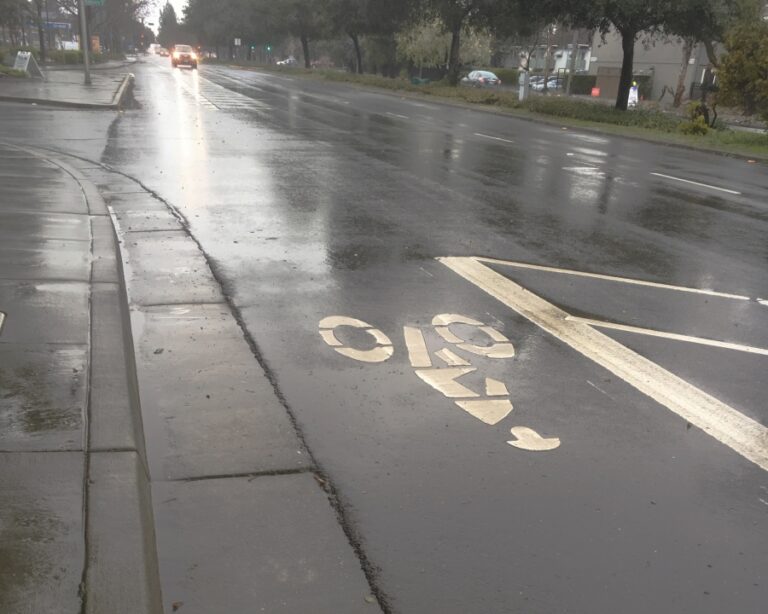
“Biking is definitely the fastest way around Davis, except the winter,” Dani said. “ [The bikes] work really well specifically for Davis since Davis is already known as a bike school. It’s well established for biking, there’s a lot of bike paths. You can get place to place through bike in a relatively safe manner.”

According to Zavala, the convenience of using a JUMP bike might make it easier for newcomers to the bike scene.

“Almost every bicyclist at UC Davis has purchased a new or used bike and most of those bicyclists had no clue what they were doing the first time.” Zavala said. “[…] You don’t have to worry about that with a JUMP bike. You sign up, pay your $30, adjust the seat height, wear a helmet, and ride. When you’re done, you lock it to a bike rack and walk away.”

Written by: Hannan Waliullah — city@theaggie.org

Kaiser Permanente launches new medical school

Kaiser Permanente School of Medicine offers free tuition for first five classes

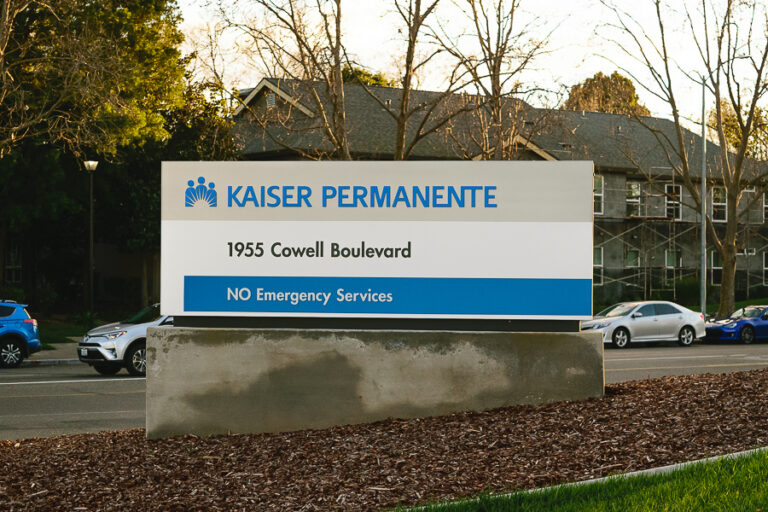
Kaiser Permanente School of Medicine, which will begin accepting applications in June 2019, will waive tuition for its first five classes of medical students.

Mark Schuster, the founding dean and CEO of the Kaiser Permanente School of Medicine, elaborated on how the idea came to be for Kaiser Permanente, a hospital chain, to start a medical school in Pasadena.

“This idea for Kaiser Permanente to start a medical school began well before I arrived,” Schuster said via email. “Kaiser Permanente commits itself to supporting the health of its members and communities and to advancing health and well-being in general. Establishing a medical school is a natural extension of those efforts. Many people visit Kaiser Permanente to learn about integrated care, team-based care, person-centered care, to name a few. The Kaiser Permanente School of Medicine will be able to teach medical students from the beginning about such approaches to medicine.”

Alex Ho, a fourth-year biological sciences major, plans to apply to medical school in 2021 and will be considering Kaiser Permanente School of Medicine.

“I think it’s a great opportunity because it’s an already established healthcare system and they have built up a lot of opportunities for residency and shadowing for medical education,” Ho said.

Fourth-year microbiology major Daphne Tran, also plans to apply to medical school. Tran hopes that Kaiser Permanente’s newly established school will reach out to students from different backgrounds who wish to become doctors.

“I hope that they [Kaiser Permanente] will establish more of a community from a lot of different backgrounds because I know that the pre-med community is not only diverse in age but with race, ethnicity and schools,” Tran said. “I feel like a lot of people who deserve to go to medical school are slotted out, and I feel that Kaiser Permanente is such a new school that they would recognize the needs of the pre-med community.”

Schuster noted that while medical schools share many similarities, Kaiser Permanente School of Medicine has its unique qualities.

“While every medical school is distinct, with its own particular emphases, we all share similar educational goals: to train students to serve patients and communities and advance medicine,” Schuster said. “That said, we are distinct in that we have the opportunity to build our school from the ground up. And we’ve been very lucky in that other medical schools have been incredibly supportive in providing valuable advice as we develop our school.”

Since Kaiser Permanente School of Medicine will be offering free tuition for the first five classes, Tran recognized the additional opportunity undergraduate students now have to pursue medicine.

“I think that Kaiser has recognized this problem of people wanting to go to medical school and not being able to afford it,” Tran said. “Undergraduates put themselves through all this hard work, and [with] its costs scaring them off and with this growing need in the pre-med community, Kaiser has recognized this, and I think that is pretty good that they would do something like that.”

Schuster emphasized that students will have less of a burden to choose medicine as a potential choice for their futures if they wish to pursue the career.

“It is our hope that by providing full tuition and insurance scholarships for the first five classes, our students will be free to pursue their passions in selecting their career path without the high levels of debt that so many medical school graduates have,” Schuster said. “We have seen many students change their career goals as they face the prospect of paying back hundreds of thousands of dollars of debt. If our students want to go into primary care or another field that does not pay as highly as some fields in medicine—or if they want to work in an underserved area where their incomes might be lower—we want them to be able to pursue their dreams and not be deterred by substantial student loan debt.”

Kaiser Permanente’s program will be centered on both clinical training and scholarship, allowing students to pursue their interests whether it be through laboratory experiments or clinical research.

“We will integrate basic science, clinical science, and health systems science into our small-group, case-based curriculum,” Schuster said. “The integration of the sciences into patient cases means that students will learn to apply their biomedical knowledge while considering the broader context of patients’ lives and the systems in which care is delivered.”

Through a specialized curriculum, Schuster hopes that students will be able to work with a specific focus on collaboration.

“And the small-group format means that instead of going to lectures, students will learn in a collaborative manner, mirroring the team-based clinical care settings where they will be training,” Schuster said. “Students will spend a half-day per week with a specific physician and care team in primary care during their first two years, with the addition of half days in each of pediatrics, obstetrics-gynecology, psychiatry, and surgery during their second year. We are paying particular attention to student wellness, and to equity and inclusion. We will help our students become lifelong learners so that they can continue to learn and adapt to new information and technologies years after they’ve completed medical school.”

Written by: Stella Tran — city@theaggie.org

IBM joins Aggie Square

Construction expected to take five to 10 years

On Feb. 21, UC Davis unveiled a partnership between IBM and its off-campus innovation center, Aggie Square. The highly-anticipated collaboration will include a group of specialists from IBM working with both Aggie Square staff and the UC Davis Office of Public Scholarship and Engagement.

IBM is notoriously innovation-driven, and creators of Aggie Square hope to embody this same sentiment. Todd Bacon, the IBM vice president and managing director of California, echoed this belief in a press release.

“Innovation and collaboration are part of our [IBM’s] rich history,” Bacon said. “That’s what Aggie Square represents.”

The Aggie Square satellite campus project is the creation of Chancellor Gary May and Sacramento Mayor Darrell Steinberg and is, in part, modeled after Technology Square — a similar project headed by May while he was at Georgia Tech. The project was initially unveiled in late 2017.

May and Steinberg created the framework for a new technology and innovation campus that would be an extension of UC Davis in hopes that it would enhance the economic well-being of the greater Sacramento region and the state as well as further the partnership between UC Davis and the City of Sacramento.

Last year, UC Davis secured approximately $2.8 million in funding from Gov. Jerry Brown and the state legislature for Aggie Square.

The new campus will focus mainly on healthcare and technology, as well as offer housing and provide locations for outside businesses.

Members from IBM will join Aggie Square in a newly-leased building in Sacramento on Stockton Blvd., just south of the UC Davis Medical Center.

“This is a great win for our city,” Steinberg said in a press release. “We are thrilled to be part of this unique collaboration that will bring jobs and opportunity to our community.”

Specific projects that the team anticipates working on include advancing human health, enriching lifelong learning and enhancing emergency technologies

Although Aggie Square will take five to 10 years to complete, UC Davis is hoping that this collaboration will not only spark growth, but also anchor investments for the up-and-coming research center.

Written By: CLAIRE DODD — campus@theaggie.org

Feb. 28 Senate: Meeting adjourns early for Aggie basketball game

Gender and Sexuality Commission expresses frustration over lack of support

The Feb. 28 ASUCD Senate meeting was called to order at 6:10 p.m. by Vice President Shaniah Branson. Senators Mohammad Qayum and Maya Barak were absent.

The meeting began with the Campus Center for the Environment’s (CCE) quarterly report by its unit director, Liv Gray. Gray said although last quarter had a few bumps that hindered growth for the organization, it is now heading in a better direction. Staff was fully hired along with a few interns, allowing for five events this quarter as of Feb. 28 with two more planned.

Highlights of the report included Project Compost, which aims to keep compost runs consistent and active at the CoHo, Scrubs Cafe, BioBrew and nursery. Additionally, Project Challenge, a big part of CCE’s revenue, aims to instill “monthly goals on how to rethink sustainable measures in individual life,” Gray said.

Gray finished her report by discussing the unit’s budget and asked Senate members to consider including a $1,500 dollar charge every five years to account for necessary battery changes for the CCE’s golf cart so as to avoid emergency legislation.

Gender and Sexuality Commission Chair Joelle Judeh then gave a quarterly report for GASC, which is close to having a full committee. The work completed so far this quarter included rebuilding connections and learning how to facilitate and hold events while also creating a social media presence. First-year political science major Khalil Malik was also confirmed as a member of GASC.

Judeh expressed frustration with Senators on the table, expressing the belief that not enough effort had been made to support and attend GASC meetings, stating this as “disrespect for the queer community and the trans community in particular.”

Kia Aliakbar gave the quarterly report for the Committee on Committees. One of the committee’s main goals has been trying to clean up the Administrative Advisory Committee’s process that doesn’t always follow their recommendations for student participation.

Lastly, a quarterly report was given for the External Affairs Commission by Chair Nayzak Wali-Ali. The EAC will continue to focus on housing shortages, police accountability, student advocacy and activism. Some of the commission’s biggest accomplishments include the creation of the Davis Housing Discrimination Committee and ASUCD Representative Police Accountability Commission. In an effort to be more transparent with students, EAC members live streamed their report.

The quarterly report for the Mental Health Initiative Committee was pushed to next week due to an absence of available speakers present.

Senate Bill #60, which amended Section 205(C)(b) of the ASUCD Bylaws, and Senate Bill #61, to amend Chapter 7 of the Bylaws, both passed as amended.

Six senate bills were introduced and sent to commissions and committees. Two of the newly-introduced bills were SB #65, which would “establish a newsletter for ASUCD Senators to know about campus events for outreach hours”, and SB #66, which would regulate slates during campaign season for ASUCD elections.

This meeting adjourned early at 8 p.m. as Senate members planned on attending a UC Davis men’s basketball game at the Pavilion.

Written by: Deana Medina — campus@theaggie.org

Pulitzer Prize-winning Washington Post reporter to talk Russian interference, Trump

UC Davis alumnus Greg Miller to speak at Mondavi Center March 19

Last April, memos written by former FBI Director James Comey, detailing his interactions with President Donald Trump, were released to Congressional committees and then obtained by the press. In one particular conversation mentioned in the memos, Trump expressed frustration over a story in The Washington Post about his fiery phone conversations with world leaders. He proposed putting reporters in jail.

“Reading this many months later, I cringed when I saw the references to Trump’s calls and realized that I was the reporter they were discussing,” wrote Greg Miller, a Pulitzer Prize-winning reporter for The Washington Post, in his new book “The Apprentice: Trump, Russia and the Subversion of American Democracy.”

Miller, who authored several of the stories published by The Post that “got Trump really, really angry,” will speak at the Mondavi Center on the evening of March 19. Tickets are free for students and the talk will focus on Miller’s time covering the Trump presidency as well as “the assault on truth” and “the assault on institutions that fight for truth.”

Miller will also speak about his time at UC Davis. A class of 1990 graduate, Miller majored in agricultural economics. Although he never wrote for The California Aggie, Miller started working at his hometown paper, the Amador Ledger Dispatch, when he was 15, returning to write during summer breaks.

“Coming from UC Davis has always helped me move into amazing places in my career,” Miller said in an interview with The California Aggie. “I want to tell students at Davis to think big. You’re in a small college town, but you still should be […] very ambitious and very confident that you’re getting a first-rate education. You can do anything and have careers of high impact.”

Speaking to the college-aged generation, Miller said the spread of disinformation isn’t something “that came and went in 2016.”

“This is a real scourge that your generation is going to be confronting for decades,” he said. “This is an issue that you and your peers who are in college now are going to be facing for your early adult lives. I don’t think it’s really a terrible exaggeration to say that the fate of our democracy and its ability to function depends on the outcome here.”

The Post has a century-long tradition of vigorous political coverage of both sides of the aisle, Miller said. While “every president bends the truth,” Miller writes in “The Apprentice,” “under Trump it has been shattered.”

White House officials under the Trump presidency have frequently bent the truth and refused to answer or dodged questions from members of the press. “The Apprentice” mentions one occasion in which Trump himself pretended to be a man named “John Barron” in a phone call with a Forbes reporter in an attempt to convince the journalist that Trump is a billionaire — a ruse and a falsehood the publication saw through. Another passage makes note of Trump’s impersonation of “imaginary characters in phone calls to journalists, describing ‘Donald Trump’ with a cascade of superlatives and fabrications.”

Miller described how he and his colleagues — seasoned journalists — have been forced to change how they approach a story.

“We’ve had conversations here about, ‘Is it okay to say the president is lying? Is it okay for that to be the core assertion in a story?’” Miller said. “These are the kind of questions we didn’t have to contend with in the same way before Trump became president. How do we continue to maintain our balance as objective journalists when we’re reporting on somebody who’s calling us the enemy of the people all the time? And how far can you go in calling out these falsehoods is a hard question.”

In addition to conversations about rethinking reporting style and process, there have been deeper and darker implications for journalists because of the Trump presidency. Miller mentioned recent bomb scares at publications throughout the country and said he and his colleagues aren’t allowed to go into the mailroom anymore. The Post also no longer lets tour groups come through the building.

“We had a person who wrote columns for us, Jamal Khashoggi, murdered in a consulate in Turkey and the president of the United States refused to believe that the Saudi crown prince was behind that,” Miller said. “These are super uncertain and unnerving time for journalists all over the world. I really worry [about] sending this signal, not just in the United States, but more broadly — that we’re not institutions to be respected, let alone believe.”

Currently, reporters in Washington, D.C. are waiting with bated breath for the release of the Mueller Report — the investigation by Robert S. Mueller III and his team into Russia’s interference in the U.S. election. Miller said he isn’t sure when the report will be finished or how much of it will be shared with the public once it is, but he had some inclinations about the subject matter.

“If all of the indictments we’ve seen from Mueller already are any guide, the final report that he’s working on is going to be a comprehensive account of all of the connections between the Trump campaign and Russia [and] all of the president’s efforts to obstruct the investigation once it was underway,” Miller said. “I don’t know whether Mueller has found smoking gun evidence that Trump colluded with Russia, but I have a feeling that this is going to be a devastating document for the president.”

If released in the next week, the Mueller Report and much more will be addressed by Miller at his upcoming talk, where he’ll tie Russian hacking in the election and the Trump presidency together with his time at UC Davis.

“The speech is really about how endangered the ideas of truth and fact have become in this era,” Miller said. “And how concerning that is for not just for journalists, but for anyone whose careers or institutions are dependent on our society’s belief that there is an objective reality out there, and I put UC Davis in that category.”

Written by: Hannah Holzer — campus@theaggie.org

Student loans make up majority of young Americans’ debt

Realistic solutions are needed to tackle trillion dollar crisis

Debt among 19 to 29-year-old Americans exceeded $1 trillion by the end of 2018, the highest debt level for this age group since the global financial crisis hit in late 2007. A financial figure of that size is unfathomable, but what’s more unfathomable is the fact that the majority of this debt comes from student loans. During a time when U.S. economy boasts low unemployment and positive economic growth, it is unacceptable for young people to continue to face steep financial hurdles in order to pursue higher education.

In the U.S., a majority of total debt for all age groups comes from mortgage loans. That being said, student loan debt has increased by 102 percent since 2009, while mortgage debt has only increased by 3.2 percent. Additionally, 11.42 percent of student loan debt is 90 or more days overdue, the highest delinquency rate of all debt types. These two facts paint a clear picture: the cost of an education is getting more and more expensive, and it isn’t becoming any easier to pay.

The burden of debt on young Americans takes a toll on their ability to make long-term investments in things like cars or homes. This lack of spending by Millennials and Generation Z could limit the pace of economic growth, according to a report from the University of Michigan. Policymakers, universities and even venture capitalists have introduced ideas to address concerns about debt and the slowed pace of consumer spending among young consumers, but many of them are disorganized, unfair or overly optimistic.

The U.S. Department of Education offers the Public Service Loan Forgiveness (PSLF) Program, which forgives student loan debt for Americans who work in government organizations or for nonprofits and have already made 120 monthly payments. While the program sounds great, there are so many rules for qualification that most applicants get turned away. Last year, only 2 percent of applications for loan forgiveness were approved under the program, according to Buzzfeed News.

In another effort to address student loan debt, Senator Kamala Harris reintroduced the Debt-Free College Act along with 42 other senators on March 6. The program would create a partnership where the federal government would match higher education state appropriations “dollar for dollar” to double overall funding. The idea is a creative one, but passing a bill that asks for millions of dollars from the federal government is unlikely at best.

Income sharing agreements have also become a popular concept to mitigate the effects of student loan debt. Under an income sharing agreement, college students attend school for free, and instead agree to pay back a percentage of their income after they graduate, depending on their salary. Both Purdue University and Lambda School, an online education startup, have begun to experiment with income sharing agreements. In January, Lambda School received $30 million in venture capital funding.

While all of these ideas were created with the intention of alleviating student loan debt, each of them is flawed. The PSLF favors students who pursue public service careers and passage of the Debt-Free College Act is unrealistic. Income sharing agreements are especially troubling because universities will likely favor students seeking high-paying STEM careers over those who pursue equally respectable but lower-paying professions. It’s time for universities, loan servicers, states and the federal government to work together to create realistic solutions for the financial burden of higher education — student debt is $1 trillion too high.

Written by: The Editorial Board

Big Wild gives unforgettable live performance

Impressive vocals, instrumentals move crowd

Back in Northern California where his Big Wild project was inspired for his sold-out fifth stop on his “Superdream” tour on March 10, Big Wild transformed Ace of Spades in Sacramento into a true glimpse of heaven.

Big Wild (aka Jackson Stell) took the stage after less-than-impressive Mild Minds, whose relaxed sound might warrant a spot on my study playlist, and Robotaki, whose versatile, energetic set got the crowd in the right mood.

Because of the small stage at Ace of Spades, I was first concerned that Big Wild wouldn’t be able to command the space like he did a few months ago at Bill Graham Civic Auditorium in San Francisco. The second the lights went down and the visuals began, I immediately knew that this would not be the case. A female guitarist stepped onto stage playing the immediately-recognizable first few bars of “City of Sound.” Stell, donning a floral shirt, welcomed the crowd to his show, transforming the small stage into his very own city of sound and giving the audience a first glimpse at his powerful vocals.

His next song was also a crowd-favorite, “For The Love (Big Wild Remix)” originally a GRiZ song. Its funky beat and unsuspecting drop segued into a drum solo, the groove completely flowing through him and his drumsticks.

“Alley-Oop” (one of his favorite songs off the album) brought iDA HAWK onto stage. In matching yellow, Big Wild took to the elevated part of the stage and let her do her thing, which was absolutely wowing me with her energy and vocal runs. It was empowering to see three women (a bass guitarist had also joined in at this point) up on stage, Stell letting them shine.

I can’t name an EDM producer that has remixed a classic rock ‘n’ roll song as perfectly as Stell did Steppenwolf’s “Born to Be Wild.” A solo on the cajón reminded me of the first reason I was attracted to Stell’s style. That and his hair.

Joined by iDA HAWK, the guitarist and the bassist, all wearing black sequin jumpsuits and executing perfect harmonies, “Maker” created a soundscape reminiscent of the 70s. The fan next to me looked me dead in the eye and gushed, “he’s unbelievable.”

“Aftergold,” one of Stell’s most popular songs and one that the audience was definitely excited for was a bit anticlimactic. Stell made everyone wait for the beat drop, but when it did, I instantly forgave him for making me wait. I guess the time old adage is true.

After “ending” the show and a very quick pause, Stell came back on stage for his encore. Against a blue background and singing into a lone mic and practically floating above the crowd, he sang “Heaven,” giving a powerful, ethereal last performance. Kneeling on the ground, he gave us the last piece of soul. My friend whispered to me, “why is he a literal angel?”

Stell gave us the ultimate Big Wild performance and created a cosmic soundscape that pushed the limits of the genre. Stell’s set seamlessly blended electronic, pop, rock ‘n’ roll and even jazz. His mesmerizing vocals and instrumentals brought the “Superdream” album to life.

Written By: Liz Jacobson — arts@theaggie.org

“Is Growing Food Wasting Water?”

Why we can’t afford to give water privileges to big agriculture

If you’ve taken the I-5 south from Sacramento and pulled over to get some Doritos or gas, odds are you’ve ended up in the backroads of one of the world’s most productive agricultural regions — the San Joaquin Valley — and stood in front of some infamous signs posted by agricultural stakeholders trying to justify their overuse of water.

“Is Growing Food Wasting Water?”

Less than two years ago former Governor Jerry Brown lifted the state of emergency prompted by the five-year drought. Most of us probably remember the dry riverbeds or the the residents painting their brown lawns green because of water restrictions while farmers flooded their fields.

The drought was so bad that many farmers had to extract water from California’s precious groundwater reserves to save their crops from completely drying out. According to a report by NPR, the farmers pumped out enough water to flood the entire state of Pennsylvania with a foot of water. Groundwater pumping over the past century has been so intense that it caused the San Joaquin Valley’s ground level to sink by 200 meters.

Some farmers, usually those within a corporate operation, have been able to sidestep sustainable water restrictions because they acquired a water right before 1914. Most of these large-scale farmers, unlike smaller ones, must comply with “use it or lose it” principles, under which they are incentivized to practice unsustainable water usage.

The agricultural sector already uses 40 percent of California’s water, while the rest of the state fights for scraps. And when farmers were met with resistance from the State Water Resources Control Board about their unsustainable use of water, the court sided with the agricultural powerhouses.  

At what point do we say enough is enough?

The Sierra Nevada snowpack is California’s main source of water. During the winter, snow builds up on top of the mountains, melting during spring and filling our rivers and valleys with precious water. Unfortunately, climate change decreases our snowpack, leading to a significant decline in the annual snowmass since the 1980s — and predictions say we can only expect these shortages to get worse.

It may be easy to forget how bad the drought years were, especially when they were directly followed by one of the wettest years. We might even be tempted to think that the drought was merely an anomaly, and that it’s no longer something we should be worrying about. Unfortunately, that is not the case.

Before leaving office, Brown passed two bills to address California water use: Senate Bill 606 and Assembly Bill 1668. These bills are a great step forward, but lack teeth. The bills are basically water budgets that are supposed to help use water more sustainably during drought years. They fine urban water suppliers $1,000 a day for water violations if they go over their budgets, and $10,000 in times of drought. Unfortunately, there is no mention of water rights or similar fines for agricultural uses.

With mega-rich agricultural names like the Resnick family — whose farms use more water than every home in Los Angeles combined — throwing money at politicians, it is no wonder that not much has been done about these laws. This forces state water agencies to uphold laws rewarding unsustainable water practices.

It’s time to start making policies to strip the already-powerful agricultural corporations of their privileged water rights and to hold large and small farms to the same sustainability standards.

Written by: Daniel Oropeza — daoropeza@ucdavis.edu

Disclaimer: The views and opinions expressed by individual columnists belong to the columnists alone and do not necessarily indicate the views and opinions held by The California Aggie.

It’s time to let go of this dam technology

The environmental impacts of dams

Once called the Ninth Wonder of the World, the Oroville Dam is the tallest dam in the United States. Standing at 770 feet — 40 feet taller than the Hoover Dam — the Oroville Dam was built in 1967 in response to major floodings of the Sacramento Valley in the 1950s. The Oroville Dam now stores water for agricultural use downstream from Lake Oroville, including the San Joaquin Valley, during the dry seasons. The Oroville Dam also generates hydroelectricity for municipal and industrial water supplies all the way in Southern California.

The only “wonder” I have is when we’re going to phase out this ancient technology.

Since their invention in ancient times, dams have been instrumental in suppressing floods and directing water for irrigation. They’ve also provided water for industries, aquaculture and hydropower.

Hydropower generates electricity in 48 states and is the biggest source of “clean” energy in the country. It accounts for 52 percent of the nation’s renewable electricity generation and 7 percent of the total electricity generated.

We’ve all benefited from dams in some way. But at what cost?

As environmentalist David Brower once said, “If you are against a dam, you are for a river.” To ignore the impacts of dams is to turn a blind eye on the importance of rivers for the environment.

Rivers function as a circulatory system in a landscape; they drain waste products off of the land and carry that sediment to structure the habitats in rivers. Once the sediments reach the coast, beaches and other offshore environments are born. Anything that disrupts the flow of a river is detrimental to the ecosystem.

According to the organization International Rivers, dams disrupt and slow the free-flowing river ecosystem to an artificial, slack-water reservoir habitat. This disruption affects the temperature, chemical composition, oxygen levels and physical properties of the upstream habitat. As a result, many aquatic plants and animals that evolved with the river are no longer optimally suited for their environment. Some dams have even led to the extinction of many fish and aquatic species, the disappearance of birds in floodplains, huge losses of forests and wetlands, and the erosion of coastal deltas.

The Oroville Dam is no stranger to these impacts: it reduces the streamflow of the Feather River from 5,834 cubic feet per second to an average of 1,086 cubic feet per second. This negatively affects the river habitat in many ways and limits fish migration up the Feather River.

Current environmental impacts might not be the worst or most costly yet. Climate change reports predict more severe weather extremes, but these predictions might already be coming true. In 2017, California experienced unusually high rainfall in a short amount of time. This lead to the Oroville Dam overflowing and the evacuation of 188,000 Sacramento Valley residents, costing $1.1 billion in reconstruction repairs. Unfortunately, dam problems don’t stop there.

Human-induced reservoirs have been linked to more earthquakes, and the Oroville Dam is no exception. A few years after the dam was built in 1967— creating California’s second largest reservoir — the area was struck by a 5.7 magnitude earthquake. A U.S. Geological Survey investigation into the recent Oroville Dam crisis proved that using spillways to prevent overflow can also trigger earthquakes.  

We don’t think of the environmental impacts we cause until the ground under our feet starts shaking. We have been using the environment to our benefit without regard for the cost since before the first dam was created. It’s time to rethink the idea of dams as a “clean” renewable energy source. It’s time to look back at history and learn from our mistakes. It is not sustainable to live by creating personal benefits at the expense of the environment.

Just as we’re rethinking our use of coal and nuclear power, we must also question our use of hydropower from dams. If we sit too comfortably with this historic technology, we rob ourselves of the opportunity for innovation.

If we can learn to shop for our food in-season because it’s a more sustainable way of living, why can’t we act similarly when we build our communities or acquire our energy? It might take years to get out of the hole we’ve dug; we’ve built our homes and businesses along the depleted rivers that these dams block.

We might have wed ourselves to dams, but divorce is imminent.

Written by: Daniel Oropeza — daoropeza@ucdavis.edu

Disclaimer: The views and opinions expressed by individual columnists belong to the columnists alone and do not necessarily indicate the views and opinions held by The California Aggie.

Eating your carbon footprint

What you eat can leave a long-lasting effect on the planet

Hey omnivores, what if I told you that you don’t have to go vegan to have a significant impact on climate change? The simple everyday choices we make regarding food have a greater influence on our carbon footprint than you probably thought.

Most friends, family members and peers I’ve had conversations with about their carbon footprint usually fall on one of two spectrums: they want to help reduce their carbon footprint, but going vegan or vegetarian is “too hard,” or there’s no point because they think their diet doesn’t make that much of a difference.

The common denominator here is lack of motivation, probably stemming from lack of awareness. Making the right decision everyday gets a little easier when you know you’re actually making a difference.

So here’s a striking fact: “The food system contributes about 30 percent of total U.S. greenhouse gas emissions, with the largest proportion coming from animal-based food,” according to a study by UC Santa Barbara researchers.

Feeling motivated to put that burger down yet?

I could throw a bunch of facts about burgers that will probably make you feel like the Antichrist of the environment, like how it takes 15 pounds of carbon dioxide-equivalent emissions to make half-a-pound of beef — which is equivalent to driving a car 16 miles — or that it takes 660 gallons of water to make a ⅓-pound burger. But I won’t. That’s not the point I’m trying to make. I’m not a burger-hater, I love (veggie) burgers!

Every detail of what goes on behind the curtain to bring your food to your plate isn’t common knowledge, so here’s a breakdown for you. If you were to eat a serving of chicken instead of a beef burger, you’d drop down from 5.6 grams per kilocalorie to 1.3 grams per kilocalorie of carbon emitted, according to the Proceedings of the National Academy of Sciences of the United States of America. That’s reducing your carbon footprint by over 4 times per serving, simply by choosing chicken over beef. Choosing veggies brings you down to 0.68 grams per kilocalorie of carbon emitted, and lentils a mere 0.05.

The reason livestock is such a driving force in global greenhouse gas emissions is because of cow gases (yes, cow burps and farts are killing the planet). Cows emit methane gas, which has 25 times more global warming potential than carbon dioxide. Along with their potent flatulence, cows require a lot of land, fertilizer, water and food — which could all be instead used to sustain the increasing population. And don’t kid yourself thinking that grass-fed beef is more “environmentally friendly” than grain-fed.

If you want to reduce your carbon footprint and do your part in mitigating the effects of climate change, the fastest way is eating less meat.

Less meat does not mean becoming vegan or vegetarian. It means less meat. The Mediterranean diet, which is much less meat-heavy than Western diets, produces 2.27 metric tons of carbon dioxide per person annually, which is very close to a vegan diet that produces 2.08 metric tons of carbon dioxide. The U.S. has the highest meat footprint per capita in the world, with over 200 pounds consumed per year — which also means we have the greatest potential to make the biggest impact on the carbon footprint from food if we’re aware of what goes on behind the scenes of our food choices.

If you’re not too keen on the Mediterranean diet, recent aquaculture advancements also provide great dietary alternatives. Aquaculture now accounts for half of the world’s seafood and could be 50 to 100 times less environmentally impactful than land farming. With the world population expected to increase to 9.8 billion by 2050 and 11.2 billion by 2100, more sustainable methods of farming, such as aquaculture, must be made.

At the end of the day, it’s all about knowing your impact. If you’re aware of your own carbon footprint as well as the ones from the goods you buy, you will make more conscious decisions. As more people demand more sustainably-made food, more environmentally-responsible options will arise to meet that demand and eventually become the norm.

It all stems from individual choices. Join the green side.

Written by: Daniel Oropeza — daoropeza@ucdavis.edu

Disclaimer: The views and opinions expressed by individual columnists belong to the columnists alone and do not necessarily indicate the views and opinions held by The California Aggie.

Biking to freedom

Why I traded my car for my bike and haven’t looked back

While I was growing up in the suburbs of south Florida, having access to a car meant that I could go to that house party, or meet up with my friends at the beach. The car was the gateway to my freedom. So you can imagine how excited I was when my dad passed his ‘98 Camry down to me during my junior year of high school. South Florida was mine for the taking.

As I drove around the suburbs blasting my music and singing at the top of my lungs, I could feel my world expanding. I was free from the prison of the suburbs.

Although I enjoyed riding my bike, I never saw it as more than a toy for riding around in my gated complex with my brothers.

After high school, I enlisted in the U.S. Navy. The idea of seeing the world and becoming independent was too tempting for a suburb kid.

My first time abroad was in Amsterdam, the most bike-friendly city in the world. I was in disbelief. Could people here really get around the whole city using just their bikes? As I walked around, I saw kids getting out of class and riding with the same facial expression I had when I drove my car around in the suburbs. Freedom.

Amsterdam opened up my eyes to how we should plan our cities — around people, not cars.

In the past, American urban planning gave priority to cars. We built highways across the heart of cities, which destroyed communities and restricted transportation choices.

It didn’t take long for American cities to shift gears and start building their cities around bicycles, which has improved our environment, helped businesses and fostered communities.

Unfortunately, there is still much work to do to compete against the top bicycle-friendly cities around the world. Biking infrastructure in U.S. cities favors the wealthy over lower-income residents, even though lower-income residents use bicycles to commute more than higher-income people do.

Bikeability in cities is increasingly seen as a standard for progressive thinking. It addresses the two biggest problems seen in many cities: environmental socioeconomic disparities, such as air pollution hot spots, and the never-ending headaches of traffic jams. Transportation plays a major factor in how desirable it is to live in cities.     

After my enlistment in the Navy, I drove across the United States with my bike on top of my car, trying to expand my horizons while searching for a college education. I was not expecting to end up in a little farm town in the middle of nowhere, especially having grown up in the Florida suburbs, but the little town of Davis had something I’d been looking for ever since that trip to Amsterdam: biking freedom.

Ever since I started my education at UC Davis, I’ve used my bike to go everywhere from the grocery store to the library to Aggie parties, while my car has collected dust in the parking lot. Leaving my car behind has never felt so liberating.

Written by: Daniel Oropeza — daoropeza@ucdavis.edu

Disclaimer: The views and opinions expressed by individual columnists belong to the columnists alone and do not necessarily indicate the views and opinions held by The California Aggie.

9 fun, engaging GE classes to take this spring

A concise list of potential general education courses to take next quarter

For many Aggies, Winter Quarter can be a rough one, both mentally and academically. With Pass two just around the corner for some, The Aggie has compiled a list of interesting (and introductory) classes that are being offered next quarter if you are looking for an extra cushion class or need to fill a general education (GE) requirement.

FTS 3 Introduction to Brewing and Beer

CRN: 74490

GE Credits: SE, SL

Units: 3

This class grants the opportunity to learn more about beer as a “major international beverage.” The class encompasses a detailed description of the inner workings of the brewing business and how brewing processes have been innovated industrially over the years. In addition to the history of brewing, students will gain a better understanding of how science plays a major role in converting barley to beer.

AMS 152 Children in America

CRN: 92321

GE Credits: AH, DD, SS, ACGH, WE

Units: 4

For those looking for an interesting ACGH course, Children in America is a class that deals with the experience of childhood and adolescence in American culture from artistic and social approaches. Through this class, students will be able to examine different instances of disruption of family structures and analyze the cultural and political functions of children and families throughout U.S. history.

FMS 045 Vampires

CRN: 92337

GE Credits: AH, DD, OL, VL, WC, ACGH, WE

Units: 4

For those who enjoy the thrill of horror movies or perhaps are even just die-hard Twilight fans, this might be just the class. Vampires is a class that delves deep into the history of the representations of vampires and horror from the 19th to the 21st century, with an emphasis on the psychology behind horror effects and issues of race and gender. The class includes a three hour film viewing allowing students to analyze these movies for themselves.  

GEL 12 Dinosaurs

CRN:

GE Credits: SE

Units: 2

Dinosaurs has been a favorite among Davis students for a number of years now. The class is an introductory evolutionary biology class where students learn the principles of paleobiology, ecology and paleoecology using data from excavated dinosaur remains as case studies.

HDE 12 Human Sexuality

CRN: 91983

GE Credits: DD, SS, ACGH

Units: 3

Human Sexuality is a class that uses a biopsychosocial approach to understanding the issues regarding sexuality. Students will be able to learn more about the complex interactions from    psychological and socio-cultural perspectives. This class is intended to give students the opportunity to gain a better understanding of their own individual sexuality and what it means to be a sexual being.

PSC 51 Relationship Science

CRN: 88167

GE Credits: SE, SS

Units: 4

What is love? If that’s a question that seems to spark an interest, PSC 51 is a class that deals with the evolutionary perspectives on attraction and close relationships. During this class, students will be able to integrate social, psychological and evolutionary theories with human mating.

VEN 3 Introduction to Wine Making

CRN: 91104

GE Credits: SE, SS

Units: 3

With Napa only an hour away, aspiring wine connoisseurs can gain a better understanding of the principles of viticulture before attending a wine tasting event. Intro to Winemaking is another popular option among undergraduates. Throughout the course, students will be given the opportunity to learn more about wine production as well as the health effects and social context of wine.

HIS 3 History of World Cities

CRN: 76107

GE Credits: AH, SS, WC

Units: 4

History of World Cities surveys 10 major cities in world history, ranging from the urban settlements of thousands of years ago to the megacities seen in years to come. Each week, students will be able to focus on one city and examine urban life, mapping, infographics and historical research. Instead of midterms and final exams, students are graded by applying the knowledge they gain from class in a research project about a city of their choice.

MUS 116 Music of the Beatles

CRN: 81450

GE Credits: AH, VL, WC

Units: 4

The Beatles recorded together for over seven years and released 13 albums in addition to a multitude of hit singles. During that short period, the band sold more records than any other group in history. This course surveys the music of The Beatles, focusing on the songs of John Lennon and Paul McCartney and emphasizing their evolution as musicians and their musical influence on international culture.

Written by: Sneha Ramachandran — features@theaggie.org

Guest: UC Davis must involve Jewish students in conversations about anti-Semitism on our campus

A Jewish student leader argues that Jewish Voice for Peace’s mission isn’t to combat anti-Semitism

I was scrolling through my newsfeed at the beginning of Winter Quarter when I came across the Jewish Voice for Peace event on Facebook. I texted fellow Jewish student leaders and once again — just as occurred with the ASUCD Ethnic and Cultural Affairs Commission event following the posting of the anti-Semitic fliers — no Jewish student leaders at UC Davis were contacted about the event. I would like to make it clear that this event was not sponsored by the Chancellor’s Office and JVP was invited to campus by a group of faculty. This event does not replace the ADL workshops that will be happening later in the year, planned by Jewish students and faculty.

Jewish Voice for Peace’s mission is to address the Israeli-Palestinian conflict, not to combat anti-Semitism and other forms of hatred in the United States. The opinions of JVP represent a small minority of the Jewish community. Whether it be hosting Rasmea Odeh at their national conference — a terrorist convicted of the murder of two Jewish students in a Jerusalem supermarket — or tokenizing Mizrahi and Sephardi (Jews of Spanish and Middle Eastern descent) voices to advance their anti-Zionist cause, this organization does little to protect the Jewish community and educate others about anti-Semitism from both the left and the right.

The event description itself failed to mention how anti-Semitism presents itself across the political spectrum and only focused on how white supremacy is responsible for anti-Semitism. Whether it be the controversy over the Women’s March, when Louis Farakhan called Jews “termites,” or how on an almost weekly basis, religious Jews in Crown Heights are assaulted for being Jewish, there is no single political affiliation that carries anti-Semitic sentiments. To present it otherwise is counterproductive and does little to protect the Jewish community.

Furthermore, the speaker’s (Tallie Ben Daniel) research focuses on the relationship between the U.S and Israel through the lens of sexuality, not anti-Semitism. Her expertise is not the history of anti-Semitism nor its modern manifestations.

I encourage students and staff who wish to learn more about anti-Semitism to consider the opinions of most Jews whose views do not align with JVP. It is up to the vast majority of the marginalized community to define what is and is not hateful towards their community. Just like Latinos for Trump does not represent the views of the overwhelming majority of the Latinx community, neither does JVP for Jews.

Representative Ilhan Omar, who was recently criticized for her anti-Semitic comments, held a conference call with representatives of mainstream Jewish organizations like ADL and Americans for Peace Now (JVP was not among them, which is in itself telling). During this phone call she affirmed that, although some of her supporters were saying that her words weren’t anti-Semitic or shouldn’t be seen that way, “I do not want to give space or energy to anyone who wants to minimize the hurt,” adding that it is up to the Jewish community to define anti-Semitism.

To speak over members of the Jewish community on the issue of Jewish oppression and tokenize a fringe group is itself anti-Semitic paternalism.

I myself have experienced anti-Semitism throughout high school and college. If you speak with me, you will know I am Jewish very early on in our conversation. Growing up, so many Yiddish and Hebrew words were included in family conversations that to this day, I still have trouble distinguishing these languages from English words. Unfortunately, like for so many other Jews, it is makes me an easier target, as it is clear I belong to a marginalized community. It is my hope that the UC Davis community will involve Jewish students like me in the conversation of how anti-Semitism is defined on our campus and how it should be addressed so we are not sidelined in the conversation once again.

Written by: Arielle Zoken

The writer is a third-year economics major and Jewish studies minor. She’s involved with Chabad at UC Davis and is the former Vice President of Sigma Alpha Epsilon Pi.

To submit a letter to the editor, please email opinion@theaggie.org.