55.5 F
Davis

Davis, California

Tuesday, December 23, 2025
Home Blog Page 703

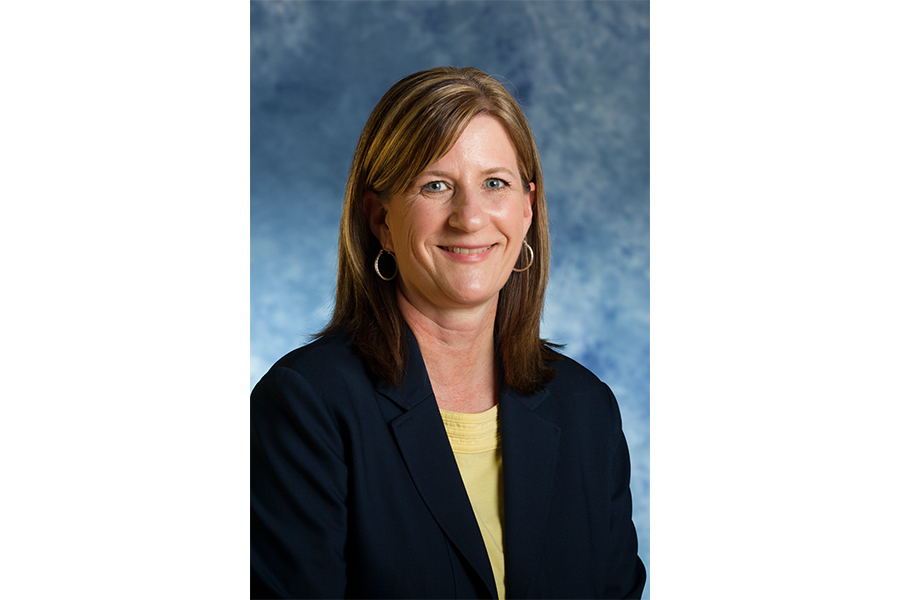
Teresa Gould awakens athletics department as interim

UC DAVIS ATHLETICS / COURTESY

Interim athletics director sets up department for success over past 14 months

The decision has been made about who the next athletics director will be at UC Davis, but while all flock to aid in welcoming Kevin Blue to the Aggie family, the media fails to mention the department saying goodbye to interim AD Teresa Gould.

Gould, the wife of head football coach Ron Gould, has been in the athletics director position for 14 months after the immediate resignation of previous three year AD Terry Tumey. Appointed as acting AD by former Chancellor Linda P. B. Katehi, the very experienced sports enthusiast had hopes of revamping the athletics department before the end of her time at Davis, and she feels that that is exactly what she accomplished.

“My story is actually quite interesting because prior to coming to UC Davis, I had only worked in intercollegiate athletics,” Gould said. “I got out of athletics, literally for maybe only seven months and worked over at the Cal Aggie Alumni Association and it was a breath of fresh air. It was different, it was something new, it was a different pace, it was a great introduction to the campus for me so to work at the Cal Aggie Alumni Association […] it helped acclimate me to UC Davis and the culture and the people, but then it was just ironic. I walked away from this thirty year career in athletics, it lasted seven months, and then I got right back into it as the interim athletics director and I’ve loved it.”

While the search for a permanent AD has gone on, Gould has remained gracious and patient in the position, knowing immediately that she would not be here for more than a full academic year and the department was due for consistency.

“It has absolutely been a tremendous experience for me,” Gould said. “It has been personally rewarding, professionally rewarding, and I’m really grateful and honored that I had an opportunity to come in and help for 14 months. […] I knew right from the beginning that I would be here for a full academic year, we planned on that. I think part of that was because we have had so much transition in this position, and we have in the past six to seven years, we knew that we had to get it right and we knew that we had to be thoughtful and very deliberate about getting it right. Chancellor Katehi was very comfortable, given my experience, having me in this role for a full academic year, so I wasn’t completely surprised by the timeline.”

But why wouldn’t Gould want to stay in intercollegiate sports?

“Because of my marriage to Coach Gould and some of the inherent conflicts that that creates,” Gould said. “That’s absolutely the reason that I made it one hundred percent crystal clear at the beginning that I wasn’t going to be a candidate.”

The conflicts however, are not enough to stop Gould from effectively performing her duties for all 23 teams, including football.

“I am ultimately the decision maker and leader for the whole department,” Gould said. “But I think we have such a strong leadership team here and we have a high level of teamwork and cohesion that whenever it came to decisions around football whether it was financial decisions or philosophical decisions or what have you, I would always weigh in on what my philosophy is or what my position is on that issue. We want to have consistency and equity across the department too, so you don’t want football decisions being made in a silo or a vacuum, so I would always lend my perspective and then ultimately Josh [Flushman, associate A.D./sports enhancement and development] would consult with the other appropriate people.”

But it is this conflict that ultimately is what makes the job an unreasonable goal for Gould.

“Football is one of the most visible in our departments,” Gould said. “It’s a program that this community and our alumni care a great deal about, so for the athletic director to have to seperate themselves, to create distance in administering and monitoring that program, it just isn’t good for the program. We have been able to make it work, and I think [this is] the reason we made it work on a short term basis.”

Knowing she would soon be replaced, this woman in athletics made the changes she felt were crucial to the success of the department and her successor.

“I think being an interim is tough because you never quite know how much to make it yours,” Gould said. “Like, how much do I change and how much do I hold back and let the permanent AD make all the transformational changes. I tried to balance that because I felt like it was my obligation that at the end of my tenure that I wanted it to be a better place than it was before and I think I accomplished that. […] I inherited a department that was just starving for energy, inspiration, leadership and engagement. This athletics department was ready to take that next step.”

Gould’s subtly aggressive changes to the culture of the athletics department enabled her to continue managing through Chancellor Katehi’s leave and the appointment of acting Chancellor Ralph Hexter without disruptions.

“We still have such strong support and her other cabinet members are hugely supportive and very helpful and the deans and her staff,” Gould said. “It really, other than me personally missing working with her, hasn’t affected my day to day work or what I am doing in terms of the role. Hexter has been more than supportive and engaged and very interested in athletics and what is going on.”

The ongoing support continued to alleviate Gould’s financial pressures.

“There is really what I consider to be three buckets,” Gould said. “There is student fees, then there is institutional support money that comes from the campus that is not student fee based, so money that comes from central funds and then the third one is what I call self generated income income that we generate on our own, so it’s fundraising, ticket sales, corporate sponsorships, concessions, selling merchandise, money that comes from the conference or the NCAA. So those are really the three buckets that go to make the athletic department budget. The biggest challenge we have, as far as our funding model is, like everybody else on campus, expense growth at times is more excessive than the income growth. The employee benefits costs increase, the minimum wage increase, staff get mandatory merit increases, there are costs that go up every year that are out of our control, but the income side doesn’t necessarily go up at the same rate as the cost side so that’s kind of the ongoing challenge and the ongoing balance that we need to play and we can’t necessarily expect that the campus is going to fund that. That is where that self generated income and us fundraising and having people coming out to the games and selling tickets comes in. That’s why that piece of our business is so crucial because that is where we want to have growth.”

Gould’s enhancements to the athletics department made it easy for her to step back and aid the committee on what characteristics belong to a permanent athletics director.

“Early on when the committee was appointed, Chancellor Katehi asked me to be like an advisor or an ex officio non voting member,” Gould said. “But that was surrounding advising the committee on what the commands of the job are, what do I think the most critical skillsets are that this job requires and what kind of experiences and background would set somebody up for success in transition. I helped with the job description, things like that. I certainly was a resource for candidates. I mean I know a lot of people in this industry and they would call and say tell me about the job, tell me about UC Davis, but I wasn’t a voting member of the committee. When the committee actually got to the point of reviewing resumes, interviewing candidates, discussing the merit of candidates, I wasn’t involved in any of that.”

Gould agrees that Blue will blend in quite well with the Aggies blue and gold spirit.

“I met with ASUCD and introduced Kevin Blue to the ASUCD senate, and they have been very complimentary and very engaged in improving the relationship between athletics and the student body,” Gould said. “We have been more proactive with our communication with the community. I think our coaches feel more empowered and that their voices are more heard in this department, so I think we have tremendous progress in a short period of time and I think Kevin will benefit from coming in and making it his with his own style and his own philosophy.”

Blue however, is inheriting a strong team and student support that Gould finds to be one of her capstone accomplishments in the role as athletics director.

“I think the two things I am most proud of are re-energizing the moral in the department,” Gould said. “I think people are enjoying coming to work here a lot more than they were a year ago. I think the second things is making progress in our relationship with the student body.”

There is nothing more now that Gould can do for the athletics department at UC Davis except reflect and observe.

“I know I was thrust into a very difficult circumstance and it has really been just a tremendous honor and privilege to be able to lead this department,” Gould said. “I think our 600 student athletes are some of the brightest and the best in the country, I believe they really embody the appropriate balance between student and athlete and they’re young people that give back to the community at a high level and it has been super rewarding for me to be able to lead this department and I look forward now to just leaving a fan.”

In wishing the athletics department the best of luck, she has agreed to stay within the Aggie family in other ways.

“I’ve agreed to stay on to help Kevin with the transition through Aug. 31 so I’ll be here in July and August just kind of helping him get up to speed, hire his own team, [and] we have some coaching positions to fill,” Gould said. “I’ll help him with the transition and then by Sept. 1, I’ll then transition to some campus role. We’re still discussing what exactly that might be, but it will definitely be outside of athletics.”

As the 2016 academic year comes to an end, Gould will complete her role as interim athletics director and the department, she hopes, will continue to generate the energy she put in.

Written by: Veronica Vargo — sports@theaggie.org
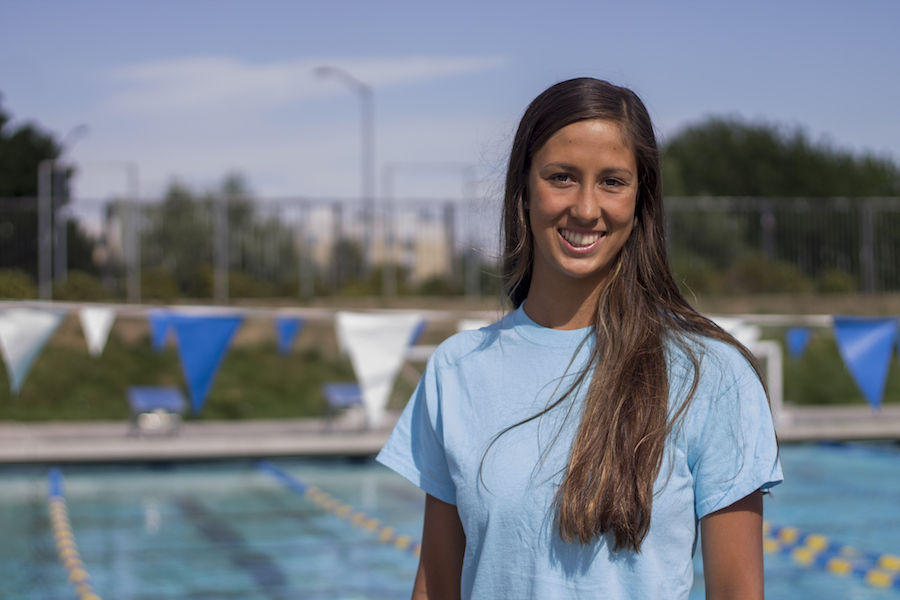
Freshman swimmer Solie Laughlin headed to 2016 Olympic Trials

Solie Laughlin (LUCY KNOWLES / AGGIE)

UC Davis athlete will compete in the 2016 Olympic Trials in Omaha, Neb. in the 100-meter Backstroke, the 200-meter Backstroke and the 400-meter IM.

With the 2016 Olympic Games coming up this summer in Rio de Janeiro, Brazil, the Olympic Trials are taking place in order to see who will represent the United States in a variety of sports. UC Davis freshman swimmer Solie Laughlin has earned her position to compete in these Olympic Trials at the CenturyLink Center in Omaha, Neb. on June 26 to July 3 in the 100-meter Backstroke, 200-meter Backstroke and the 400-meter IM. So who is this freshman swimmer from Ventura, Calif.?

Laughlin is a first-year undeclared-humanities major and a standout swimmer whose backstroke gave her the opportunity to compete in the Olympic Trials. She finished ninth overall and won the consolation final (2:14.87) in the 200-meter Backstroke at the Los Angeles Invitational on July 10, 2015. She later succeeded in the USA Swimming Junior Nationals Aug. 2, 2015 with a time of 1:02.98 in order to receive her chance to compete in the trials in the 100-meter Back. Laughlin recently qualified for the 400-meter IM trials (4:53.02), adding to her already impressive qualifications in the trials for the 100-meter and 200-meter Backstroke.

Last month, Laughlin was named the Mountain Pacific Sports Federation (MPSF) Freshman of the Year, after helping the UC Davis women’s swimming and diving team to its fourth conference title in six seasons. She became the third Aggie swimmer to earn top rookie honors from the MPSF, and became the second Aggie to win three individual events at the MPSF Championships. A school-record time of 1:56.64 was posted by Laughlin in the finals of the 100-meter Backstroke.

Throughout the season, Laughlin posted a total of six NCAA “B” standards in the three events she qualified for, and she holds the second fastest time at UC Davis in the 400-meter IM (4:14.80), the third fastest time in the 100-meter Backstroke and the eighth-fastest time in the 200-meter IM.

The California Aggie had the chance to sit down with Laughlin to discuss her upcoming Olympic trials, as well as her upbringing in swimming and why UC Davis was the school she chose to compete at.

What got you into swimming?

I was put in swimming for water safety when I was little with my mom and we did the Mommy and Me classes. I went up the ladder and ended up joining the YMCA swim team. After that, I moved to my swim club around age 13. I was kind of old for people who usually start club swimming but I surprisingly had a lot of success in that.

Why did you choose to come to UC Davis? Was it specifically the swim program?

I didn’t know I was on UC Davis’ radar. I hadn’t contacted UC Davis myself so when I got the call I was pretty surprised. I was very shy on my recruit trip, but I really enjoyed the team and the coaches. They could see success was in the future if I followed through with the program.  

What was it like first coming to UC Davis to compete and what was the feeling contributing to the fourth conference win in six seasons?

We do a lot of team bonding when we come the first two weeks before school starts to train. I didn’t know anyone up here but I got to know the team a lot more and became more comfortable.

Did finding out you qualified for these trials change your way of thinking or change the way you were treated by the team as a freshman swimmer?

When I first saw my trials I was really excited because I progressed relatively fast in the sport, so it was really exciting when I found out. It changes how I train in the water in the sense that I have a goal I am aiming for. I always think of that goal when I am having a hard practice or something like that.

What is the overall feeling being a first year and setting all these season records, along with six NCAA “B” standards, and narrowly beating some of UC Davis’ overall records?

It’s pretty cool seeing those articles. It’s fun because my parents are always really excited to see them.

How do you manage to focus on everything in your school and social life knowing the trials are such a big opportunity?

I treat it as, you are a student and you are an athlete, so you have to get your studying done. It’s a lot of time management. You get a taste of it in high school, which helps when you come to college.

Mentally how do you approach and prepare going to these trials and having such a big challenge to face? Is it nerve racking or are you feeling calm about it?

Now that they are next month, I am excited but also nervous. I want to do well. I am going to use this as an opportunity to race, get the experience, and try to aim to get best times. I am nervous because it is such a big venue, but I am excited because it is a new experience.

What happens if you place in the Olympic Trials?

For trials since there are so many people, there is a preliminary swim, where everyone competes, and then the semifinals and the finals. I would love to make it back to the semifinals. I don’t know if I can see myself making it to the finals this year, but maybe in the possible future. This year, I am focused on doing the best I can.

No matter what happens at the Olympic Trials in June, The California Aggie wishes Laughlin well in her performance at the trials, and hopes she can accomplish whatever she sets her mind too.

Written by: Ryan Bugsch – sports@theaggie.org

Community-based interventions, economic incentives may help curb obesity

STEVEN DEPOLO [CC BY 2.0] / FLICKR
UC Davis researchers study benefits of community education, focusing on nutrition and physical activity

 At times, the national obesity epidemic may seem intractable, as our cities become more sprawling and unwalkable, and low-income communities are disproportionately affected by obesity. An optimistic new paper published by UC Davis researchers in the journal Pediatric Obesity tells a different story.

This paper is one of many to come out of a five-year project, Niños Sanos, Familia Sana (NSFS), designed to combat childhood obesity among Mexican-origin children. Researchers studied two towns in the Central Valley with populations of over 80 percent Mexican origin and an agricultural employment base, with one receiving community-based health interventions and one serving as a control.

During the first year of the three-year interventional study of Mexican-origin children, the authors observed a significant decrease in body mass index (BMI) and a reduced increase in waist circumference in obese boys. These results were achieved using a community participatory approach, in which the researchers consulted community members on what health outcomes they were hoping to accomplish.

“We were…in the community talking with stakeholders about what they wanted to see,” said Dr. Sara Schaeffer, an author on the paper and the associate director of Children’s Health and Education Programs at the Foods for Health Institute.

The overarching goal of the project was “to see if it is possible to prevent childhood obesity,” said Dr. Banafsheh Sadeghi, an assistant professor at the the UC Davis School of Medicine and a co-principle investigator on the project.

To accomplish this goal, the authors of the study used behavioral interventions including updated physical education curricula in schools and market-based interventions such as produce vouchers.

Schaeffer indicated that in the study population, and in general, the current mindset of young people is to receive professional healthcare when they get sick, not for preventive care. It was the researcher’s’ goal to see if community-based interventions could shift younger people toward seeking healthcare before they get sick.

They found that community education and engagement may have meaningful impacts on health.

“[It was surprising] that we might actually be able to slow-down weight gains and improve diets through mainly a program that was educational and provided a small (but important) economic incentive,” said Dr. Lucia Kaiser, an author on the paper and an emeritus specialist in cooperative extension in an email interview.

Researchers found that although the timeline for their study was relatively short, the impact on boys was immediate.

”I wondered whether it would take a more intensive intervention or a longer time frame to make any difference. But, we did see an impact in the heaviest group of children.”

“In general it is shown that heavier children respond faster to interventions,” Sadeghi said, but these results showed a significant decrease in BMI growth, rather than just a trend.

Similar interventions to the ones used in this study have been shown to improve health outcomes, although typically these measure health outcomes over a longer period of time. This style of intervention and education has the potential to affect communities over a short amount of time.

In addition to the education participants received about nutrition and physical activity, some participants’ individual activity levels were tracked using wearable activity monitoring devices.

According to Schaeffer, the availability of these devices has drastically improved researchers’ ability to track children’s activity levels, because they typically cannot accurately answer questionnaires about their daily habits. The data collected from wearable monitoring devices helps researchers track study participants’ activity, but it can also be a useful educational tool.

“We are looking at all the things you can measure to help young kids learn about themselves,” Schaeffer said.

Wearable devices are able to track heart rate, hydration and calories burned. When children learn to interpret data from the device, they can better understand how their bodies are unique, empowering and educating them. Schaeffer indicated that this education in turn can be used to gauge interest in certain physical activities or specific nutritional requirements.

Schaeffer’s plans for future research include studying how how different feeding regimens affect an infant’s development, activity and sleep, using wearable technologies specifically made for infants.

For Kaiser, the NSFS project is a capstone of her career.

I had worked for many, many years studying the social and economic factors that determine health outcomes, especially in Latino populations. Having grown up in California, I have always been drawn to work that might in some way improve the lives of these people who work hard to put the food on our tables.”

Researchers involved with this project are planning further studies to investigate the potential of community based-interventions to limit obesity across age groups, not just in the target group (young children).

“We want to understand how we can help teenagers. We want to see how we can get the whole family involved,” Sadeghi said.

Written by: Sarah Silverman–science@theaggie.org

Sleepy Tom concert review

JAY GELVEZON / AGGIE

Despite the weather, the show must go on

This past Saturday was Alpha Chi Omega’s philanthropy event, a benefit concert featuring Sleepy Tom, held in the backyard of the Alpha Epsilon Pi house. Unfortunately, it was pouring rain so not that many people showed up for the concert, although all tickets were sold before the event. All of tickets sold the week prior to the event went towards their cause of supporting and assisting victims of domestic violence and abuse.

When I arrived, there was no line to get in and there was a group of around 40 people close to the stage. There was plenty of room in the backyard to enjoy the concert, exactly what I like at a concert, no one pushing or shoving to get to the front. For someone of my whopping 5-feet 2, it was a pleasant surprise to be able to see the stage with no hassle.

The rain was touch and go for a while. When I first arrived it was cold but not raining but after a few minutes it started to pour. I ran inside to take cover, but the rest of the crowd just danced in the rain and enjoyed the atmosphere. While I was inside I perused the booths set up to spread awareness about the philanthropy topic for this year. There were booths from the UC Davis sexual violence prevention and response (CCRT), Let’s Talk About Consent, Empower YOLO and Promoting Awareness Victim Empowerment.

The sobriety of this event was emphasized many times, particularly in the number of police officers surrounding the inside and outside of the concert. The crowd was eclectic to say the least. There were an overwhelming amount of sorority girls, mixed in with groups of people who just seemed to be there to see Sleepy Tom and who had no affiliation with either the sorority or fraternity.

The openers were Pi Beta Phi’s Bianna Nikdel, who played the guitar/sang and DJ Dylan “FINCH”!. People were dancing to both performers and looked to be having a great time, despite the cold weather. However, when Sleepy Tom finally performed at 5:30 pm there was no announcement that it was him, and none of us knew it was him performing until his second song when one of my friends realised. Besides not knowing what he looks like, he is an incredible DJ and put on an excellent concert. Congrats to AXO for raising all the money they needed, for spreading awareness and for having a unique philanthropy event.

Written by: CaraJoy Kleinrock – arts@theaggie.org

JAY GELVEZON / AGGIE

Aggie style watch: It’s-100-degrees-outside edition

BRIANA NGO / AGGIE
BRIANA NGO / AGGIE

How to survive the heat and still look good

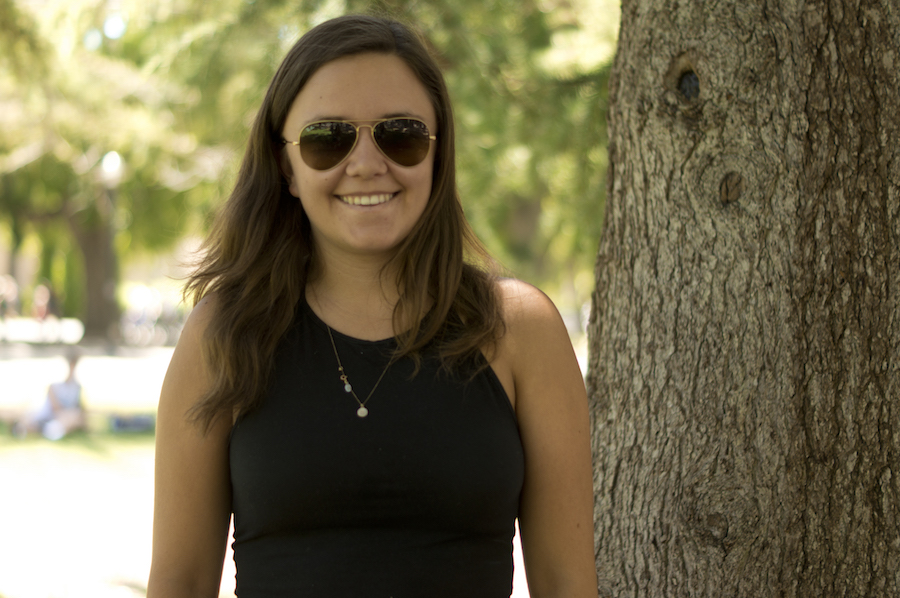
Sarah Jensen, a second-year economics and sociology double major, knows how to stay stylish amidst the heat. She opts for shorts and a tank when the weather gets too hot to function. Jensen believes that wearing what makes you comfortable will make you happy.

BRIANA NGO / AGGIE
BRIANA NGO / AGGIE

ASW: What is your style inspiration?

Jensen: Whatever I feel comfortable in and whatever stands out to me at the store.

ASW: What is your go-to outfit?

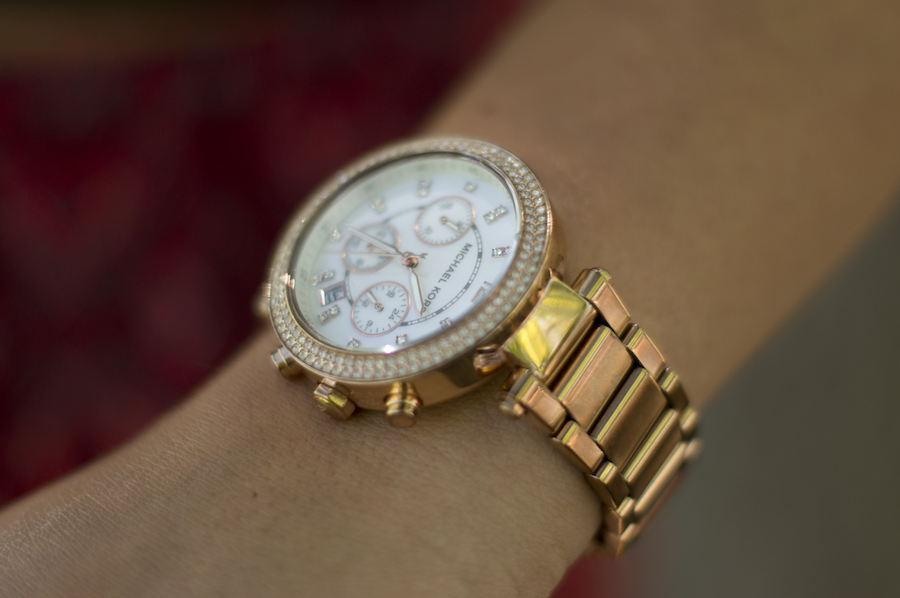
Jensen: My go-to outfit other than yoga pants would probably be these flowy patterned shorts and some kind of a tank top. If not that, I pretty much wear the same pair of high waisted jean shorts a lot of times during the week and just change up the shirt. I also always wear a watch because a simple watch dresses up any outfit and goes with everything.  

BRIANA NGO / AGGIE
BRIANA NGO / AGGIE

ASW: Do you have any advice for someone who want to be more stylish?

Jensen: I think trends are great but you don’t always have to follow them if it doesn’t make you feel comfortable. I know for me for example I wouldn’t look good in Birkenstocks so I would never buy a pair for myself just because they are in, so I think it’s important to keep what you buy comfortable for you.

ASW: Where did you buy your clothes from?

Jensen: I got my shorts actually from Abercrombie. I don’t think I’ve shopped there since seventh grade, but lately I’ve been going into stores that I didn’t think I would find anything in. My top is from Brandy Melville and I actually got my sandals from Target.

Written by: CaraJoy Kleinrock – arts@theaggie.org

BRIANA NGO / AGGIE
BRIANA NGO / AGGIE
BRIANA NGO / AGGIE
BRIANA NGO / AGGIE

Fresh food, local style, close to home

JAY GELVEZON / AGGIE

Preserve Public House captures family tradition, town charm, local flavor

Driving west of Davis, through open fields, along sprawling orchards and just past Interstate 505, the small town of Winters, Calif. emerges. Home to less than 7,000 residents, the rural agricultural town is initially unassuming, however, its spirit becomes evident in the Downtown Historic District where restaurants and boutiques clutter Main Street, paying tribute the history and culture of the town.

Set back just one block from Main Street and tucked into the old Winters train depot building sits Preserve Public House, a restaurant brimming with charm and local character.

JAY GELVEZON / AGGIE

Preserve is owned by Winters local Cole Ogando and his wife, Sara Ogando, who met while attending school at Saint Mary’s College. After working together in the construction industry for five years, the couple decided to try something new and opened Preserve in 2011.

Cole Ogando explains that the idea for Preserve came about naturally. As a child, his grandparents taught him how to preserve produce and meats, skills historically used by many families in the area. Opening a restaurant was a way for the couple to learn more about food preservation and pass down the practice to their own kids.

“Around here, when we grow all these wonderful crops, when it comes, it comes all at once,” said Cole Ogando. “You can only eat so many apricots until you don’t want to touch an apricot ever again […] So you get a bunch of apricots, you eat them fresh while they are good, you dry a bunch of them or make pies or jams or jellies or cordials or liqueurs, but you do that and then you have that little bit of apricot through the whole year.”

Sara Ogando was introduced to preserving after meeting Cole Ogando, however growing up, food and cooking were important to her family.  

“I grew up with a family that loved food so I’ve always loved food and loved cooking. When we met, that was something we enjoyed doing together, cooking together and everything. And then we started having kids […] So the name [‘Preserve’] is basically two fold because obviously we do a lot of preserves, but just kind of preserving that lifestyle and heritage,” said Sara Ogando.    

The concept of preservation is also evident in the restaurant’s industrial yet elegant decor. Cole Ogando explains that almost everything in the restaurant is made by friends and family, including the tables, couches and cabinetry. Prune drying trays from a local prune dehydrator line the ceiling, and wood panels made out of wine barrels from nearby wineries weave around the side of the bar.

“We wanted something that was cool and sophisticated and sleek, but then humble at the same time and approachable and that would fit in with kind of the Winters lifestyle,” said Sara Ogando. “We used a lot of local craftsmen and local materials to build out everything.”

Starting without a kitchen, Preserve began as a bar offering platters of dry meats, cheeses and fruit as well as sandwiches prepared on a panini press. But as demand grew, so did the restaurant, and a kitchen was added in the summer of 2014 to provide customers with a full menu. Additionally, a quarter-acre garden was incorporated into the restaurant about two years ago to supplement the ingredients used in the kitchen.

“We are slowly weaning ourselves off of deliveries but it’s still, you know when we’re having 2000 guests a week, it’s tough to grow everything and do everything so we’re slowly kind of knocking things off of our list,” said Cole Ogando.

Preserve chef Avery Struthers is tasked with incorporating seasonal and variable ingredients from the garden and local farms into his dishes.

JAY GELVEZON / AGGIE

“Seasonal stuff is great because you can bring ingredients in, take them out with the seasons and refine the dishes more as opposed to just putting one on that is going to stay on the menu for years,” Struthers said.

He adds that using these local ingredients is only challenging because there are so many options, but the seasonal changes help limit his selection. Having previously lived in Florida and Boston, Struthers explains that he has always been conscious about sustainability and eating locally, but the abundant agriculture in Northern California makes it more feasible.

The menu at Preserve exhibits dishes that incorporate various cultures, drawing from Mexican, Asian, Italian, Spanish and New Orleans influences. Struthers explains that this versatility is essential for cooking with changing ingredients.

“It’s good to have all those tools in your pocket because we try to do farm-to-fork and market-table,” Struthers said. “So what do we have, what does the local person have that they’re bringing in and how can we make it tasty?”

Struthers collaborates with both Sara and Cole Ogando to create the menu and find new ways to use local ingredients. Finding individuals that share their same passion for localism and culture remains an important factor for the owners when hiring new staff. Cole Ogando explains that it was necessary to find a chef who shared their same excitement.

“It wasn’t hard to find [Struthers],” said Cole Ogando. “He kind of fell in our lap. You know it’s like finding friends or a significant other, you just find people through the world, somehow, and you get lucky sometimes.”

The newest project at Preserve is starting a market next door that will offer selections from local farmers and artisans. In addition to selling preserves made in-house, the market will provide a storefront for local farmers to conveniently sell their products. Cole Ogando explains that the restaurant would also be able to pull from that supply and incorporate it into the menu.  He adds that having this supply next door would help Preserve overcome the economic and coordination barriers inherent in the restaurant’s sustainable and local framework.

“The hold ups are the supply chain,” said Cole Ogando. “That’s what we are hoping this next little project helps us with is having a place for them to bring their stuff and then we can just pull straight from there into our restaurant. That’s the reason why people don’t do it […] But we feel like we have an opportunity to try it. If it’s going to work, it will work here.”

According to Cole Ogando, the ultimate goal is to create a circular system where farmers supply goods that are incorporated into meals that are then served to some of those same suppliers.

Sara Ogando explains that the restaurant attracts more locals during the week, while on the weekends Preserve is filled with visitors who often come from the Bay Area and Sacramento. She adds that people are becoming more conscious about where their food comes from and are interested in hearing the story behind Preserve.

Struthers aims to create dishes that highlight the natural flavor of ingredients, allowing guests to appreciate what the area has to offer.

“I hope they love it, and I hope they come to love it because you’re tasting very fresh ingredients with the least done to them,” Struthers said. “I hope they come to appreciate simpler food done better.”

JAY GELVEZON / AGGIE

Written by: Kayla Zola — features@theaggie.org

Humor: Aggie Graduation (à la Californiacation)

EVAN LILLEY / AGGIE
EVAN LILLEY / AGGIE

With June only one day away, commencement ceremonies are just around the corner. It’s an important time for those who are close to facing life after college. To get students geared up for this special moment, here’s a graduation themed poem based on the song “Californication” by the Red Hot Chili Peppers.

Nine PM till morning
Trying to fight procrastination
Four years of sweaty dorm rooms
For your wisdom’s confirmation
And if you want to chase your dreams
Then get an education

It’s the part of your life
Where you will go through transformation
From bed to class, each test to pass
Doing homework at the nearest bus station
A daily strife, this is your life
Before your graduation

Voice your moans on shady loans
With money you’ve been saving
To learn the skills so you can kill
For that job you are craving

Essays undone
No time for fun
Dream of Aggie graduation

The day to walk is all the talk
A twenty something celebration
A wedding for your brain
It’s just another exaggeration
And even Gunrock sells the hype on
Aggie graduation

Rent your gown and drop the frown
It’s just like going to heaven
A life long plan your parents had
Since the day that you turned seven
It will not last forever
On your day of graduation

Light the night with cheers and beers
And karaoke singing
Cause morning is your first day
of a forty year migraining

Adulthood storm
Society’s form
Dream of Aggie graduation

Changing the world or earning green
Is a false dichotomization
Hope and pessimism must be put in moderation
Remember all these lessons on your day of
Graduation

Planning for the future
Is the one thing that will save you
A life of honorable service is
Of some vice but more virtue

Done with this song
Young Grads, march on
Dream of Aggie graduation

Job Finding
Change the world

You can reach EVAN LILLEY at etlilley@ucdavis.edu

Humor: Sanders crowd so large, forces senator to make speech from water tower

JAY GELVEZON / AGGIE

An estimated 20,000 people showed up to UC Davis’s Hutchinson Field on Wednesday to show their support for Democratic outsider Bernie Sanders. An excited campus embraced the news that Sanders would be showing up to their college town as part of his tour of California.

Hutchinson Field filled up rapidly, as college students and locals came out both to support and protest the presidential candidate. Hutchinson Field, however, got a little too full for the large crowd, but Sanders, ever-loyal to his supporters, vowed to make the speech to his fans regardless.

After the field filled up, a line still wrapped around Dairy Field all the way to Schaal Aquatic Center. Sanders acknowledged the large crowd. As he stood out on the podium looking at the estimated 6,000 people that could fit on Hutchinson, with another 14,000 waiting in line to listen to him speak about economic reform and affordable college, he silenced the “Bernie” chanting to announce that he wanted to speak to everyone, not just those that got onto Hutchinson Field.

“It isn’t fair that only a small percentage get to be here, while others wait out in the heat,” the senator from Vermont said. “I will make sure that all of you get to hear this, not just a select few.”

Sanders then walked away from the microphone and disappeared from the stage. Minutes later, a cracking sound came from the top of the water tower that overlooks the city. In anticipation of the large crowd and lack of space, Sanders’ crew hooked up microphones to the water tower.

Sanders continued his speech overlooking the city, as an attentive 20,000 people hung on to his every word, erupting when he emerged from the ladder that leads up to it, walking out to Edwin Starr’s War.

“I was scared when he left. I thought he was blowing us off,” said Claire O’Farrell, a second-year art history major. “When he came out to the water tower, I had goosebumps. I almost started to cry. I truly felt like I was part of the revolution.”

The majority of the crowd was equally as impressed, but some people felt that it was over-the-top.

“If you don’t get here on time, you shouldn’t get to hear him speak. It’s like he’s giving out charity to those that don’t deserve it,” said Lew Richard, a fourth-year economics major. Richard came out to hear Sanders speak on economic policies and came out impressed, but says he “wasn’t a fan of the way Sanders handled his entrance.”

Regardless of one’s beliefs on Sanders’ entrance, exercising one’s voice is what matters. Voter registration has ended for the campaign, but those that are in the system should be sure to cast their ballots before the June 7 primary, and again for the general election in November.

The Democratic hopeful is making his final California push before the June 7 primary.

You can reach ETHAN VICTOR blah blah blah email blah blah blah ejvictor@ucdavis.edu and blah blah blah Twitter @thejvictor.

Hitting my head against the wall

NATHAN CALLAHAN [CC BY 2.0] / FLICKR
What oranges and dead ends taught me about life

I never imagined vigorously staring at a blank white wall — as well as contemplating life by strenuously observing a ripe, delicious orange — were two things I can consider  “revelatory.” While extremely frustrating chores by themselves, they have been incredibly helpful in my path to self-discovery. (And as an unfortunately potent method for procrastination.)

I never imagined that staring at a blank white wall could be so enlightening. Equally thought-provoking is a mental exercise involving the contemplation of an ordinary orange, which I learned from Brad Warner’s book, Hardcore Zen. Essentially, it involves visiting a quiet location and focusing on every single aspect of the piece of fruit: it’s texture, color, smell and just about anything sensory-related. These motions don’t necessarily have a purpose. Rather, it’s to get people into what I’m calling — and Warner details throughout his work — the “Zen mindset.” Put plainly, it entails being “in the now” as much as possible.

Yesterday, as I emerged from an essay-induced fetal position, I realized I needed to take a break from all of my writing work. I felt more stressed than usual because I had just re-read Thomas More’s Utopia, which catalogs a severely oppressive, tyrannical and creepy world that I’d never want to live in. Having felt extremely stressed and depressed from these activities, I decided at that moment that sitting perfectly still for an hour in unbearably dull silence was my best option. In retrospect, I now realize this might have been the least sensical thing to do. Nevertheless, it caused me to recall the book that taught me the aforementioned exercises.

What’s strange about the book, though, is it’s written by someone who one would never would even know what Zen is. As Warner describes in the text, he is an active practitioner of Zen, which in addition to being a general mindset, is also a Mahayana Buddhist denomination is primarily centered around the the no-frills meditation called  “zazen,” that I described earlier.

Almost as uplifting as it is sardonic, Warner’s high octane ride flings the reader through all the zany twists and eccentric turns of his autobiographical spiritual journey. This includes things like a brief tour throughout the 1980’s American hardcore punk scene, an incursion into the art of producing campy Japanese monster movies and the story of how he became a certified Zen master through his “dharma transmission.”

Wakeboarding team breaks Guinness World Record in Woodland

NICK LEVI / COURTESY

Team breaks record for greatest wakeboarding distance in 24 hours

From May 20 to May 21, Woodland welcomed 10 pro-wakeboarders who set out to break the world record for wakeboarding the longest distance by a team in 24 hours. The previous record of 509.2 miles was set in 2010, but the team managed to break that record by over 5 miles reaching 514.2 miles by the end of the 24 hour period.

The event, which took place at Velocity Island Park in Woodland, was set up by one of the team members, Brian Wheeler, who was also part of the previous record breaking team in 2010. Wheeler says that, while the team has not submitted all the required documents to Guinness at the present time, he expects all the paperwork to be done soon and for Guinness to send the team a certificate verifying their achievement.

Wheeler, who used to write for a wakeboarding magazine, emphasizes that, while the achievement was extremely satisfying, the best part of the event was that it was fun for all those involved.

“It was a super fun event, there were a bunch of really high level pro-wakeboarders there… [We] got a team of people together, we just thought it would be a nice way to kick off the season this year,” Wheeler said.

Despite having just finished the 24 hour wakeboarding feat, Wheeler is also keen to participate in any future record breaking attempts.

Scott Hartman, CEO of Velocity Island Park, which hosted the event, seems to be open to the idea of hosting future events. Having never hosted anything like this before, Hartman says that he thoroughly enjoyed the watching the attempt. Despite some slightly worrying signs of lightening that halted proceedings for around 30 minutes, Hartman says that everything went smoothly.

“We started roughly at about 9:31 a.m. and we went for 24 hours. It was really cold, it got down to 52 degrees with some wind and some rain [and] we’ve never ridden that long before. We ran into some weather, we ran into some lightning and thunder, so we had to stop for a little bit, which means we had to go faster [after] to achieve the distance record,” Hartman said.

Having opened Velocity Island Park just under two years ago, Hartman and his wife sought to open up the thrills of watersports to the general public.  Hartman emphasizes that they both take great pride in using watersports, like wakeboarding, to increase people’s athletic confidence as well as ability.

Another member of the team is Hayden Berg, who has been wakeboarding for five years, had never attempted anything like this before. Berg admits that the event was challenging because of the lack of sleep that all the participants suffered from, but he loved the experience because it brought friends together in a supportive environment. Berg is also keen to take part in future opportunities like this because it is something that that he is passionate about.

“It was fun, it was challenging. We had all of our crew together. We’re all friends just having a fun time, we were all pushing each other,” Berg said. “I like doing that stuff, so hopefully there comes another chance or another thing that I’d like to break and I’ll try that.”

Written By: JUNO BHARDWAJ-SHAH – city@theaggie.org

Davis City Council recognizes social justice advocates

CITY OF DAVIS, MEDIA SERVICES / COURTESY

Annual Thong Hy Huynh Awards honor five recipients who demonstrate admirable traits

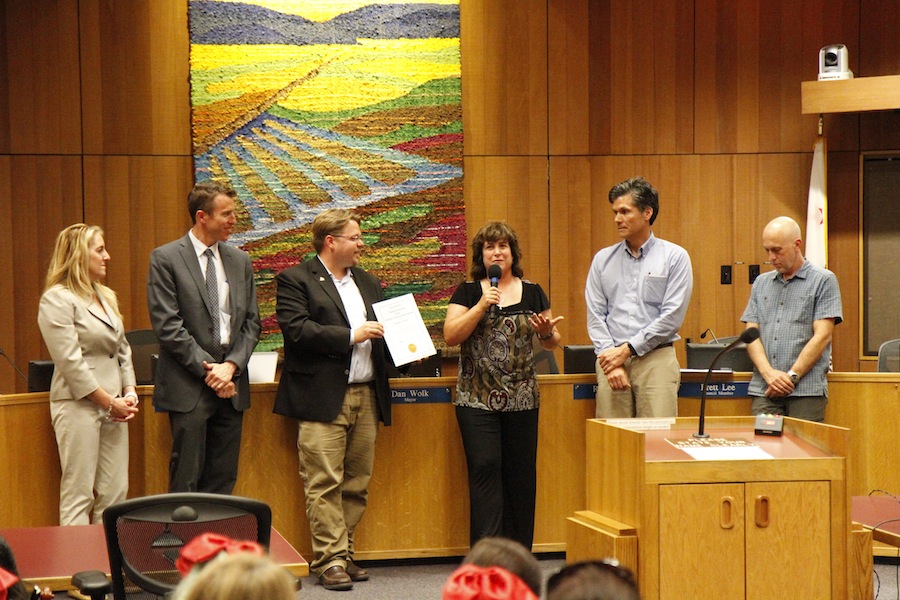
The Davis City Council and the Human Relations Commission recognized winners of the annual Thong Hy Huynh Awards at a city council meeting on May 3. Recipients were nominated by the public and awarded for their achievements in four categories: Lifetime Achievement, Civil Rights Advocacy, Excellence in Community Involvement and Young Humanitarian. The winners were added to the list of past recipients on the City’s Perpetual Plaque, which is hung in the Community Chambers building.

Thong Hy Huynh was a Davis High School student who was stabbed to death on May 4, 1983 as a result of racist motivations. The City of Davis decided to dedicate these awards to him in order to bring awareness to his death and to civil rights and social justice issues.

“I think all the recipients are quite humbled and touched because I think that they truly believe that they’re doing this great work not for an award but because it’s what they truly believe in, in terms of giving back to the community and fighting for social justice and equal rights. I do think that our community greatly benefits from bringing awareness to the folks in our community that are doing this great work,” said Carrie Dyer, who works with the City Manager’s Office in Community Engagement and Cultural Services.

This year, the recipients were Jennifer Terra, Sean Raycraft, Mariachi Puente, Bud and Judy Wolf and the Gay Straight Alliance of Davis High School. They range in age and advocate for different causes, but all aspire to improve the state of the community and the world.

Bud and Judy Wolf work with the Rotary Club of Davis and focus on child abuse prevention. They developed a program that spreads awareness and educates the public on child abuse in Davis.

“We have about 75 members and our purpose is service to communities, local, regional and international. We wanted to get in front of the child abuse rather than putting band aids on the wounds. And it was unanimously endorsed by our Rotary Club and we’ve been working this program ever since,” Bud Wolf said.

As well as working hard to prevent child abuse, Judy Wolf has been extremely involved in African countries, where she speaks mainly about opportunistic diseases. Her work has included teaching people how to wash their hands and the dangers of casual sex. She is also developing a cervical cancer screening, treatment and prevention program in Africa through the Rotary Club.

“I have an enormous passion to try to make a difference in the lives of children in our community, and the world for that matter. If you save the women, you save the children. In developing countries, women are often widowed or abandoned. They are left with children and preventing cervical cancer for these women in Africa saves kids,” said Judy Wolf.

The Wolfs’ generous contributions are seemingly endless. They also host an annual fundraiser, Big Night, which typically raises around $35,000 every year. All the profits go toward local nonprofit organizations in Davis that focus on child abuse prevention.

This event, as well as all their contributions to the Davis community, qualified the Wolfs for the Excellence in Community Involvement award. Judy expresses her gratitude and excitement for the award.

“We feel incredibly honored to be chosen for the [Thong Hy Huynh] award and we have a deep sympathy for the family and what happened to this young man,” said Judy Wolf. “We have great respect for the name and the young man associated with this memorial.”


Written By: HADYA AMIN- city@theaggie.org

7 p.m. on a Sunday night

Through photos, Aggie photographers showcase their Sunday night

On the evening of Sunday, May 29, Aggie photographers were tasked with shooting whatever they were doing, where ever they were.

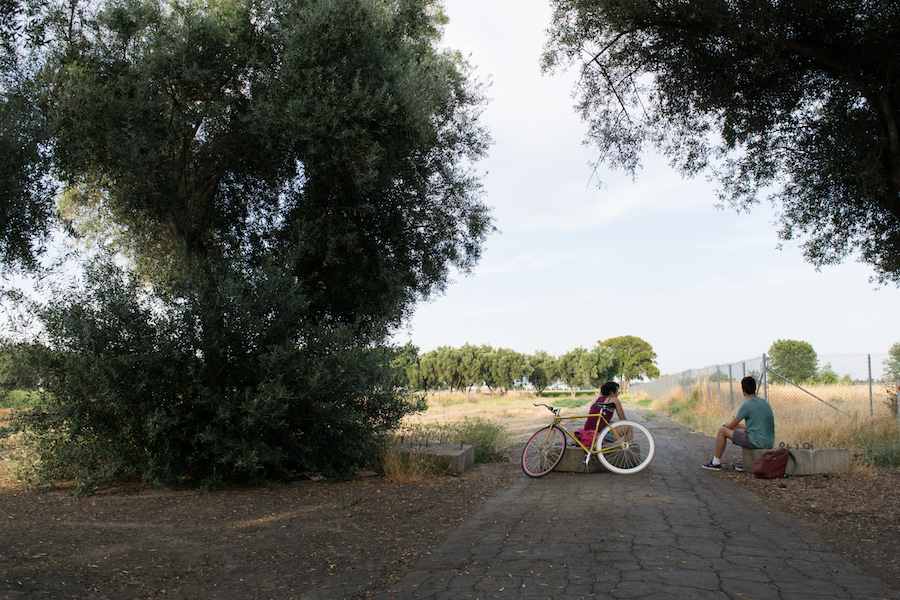
My best friend and I just decided to bike around and look for the University Airport. We found this spot near the runway. We were just sitting and watching some planes come in and out and reminiscing on our first year in college. (BRIAN LANDRY)
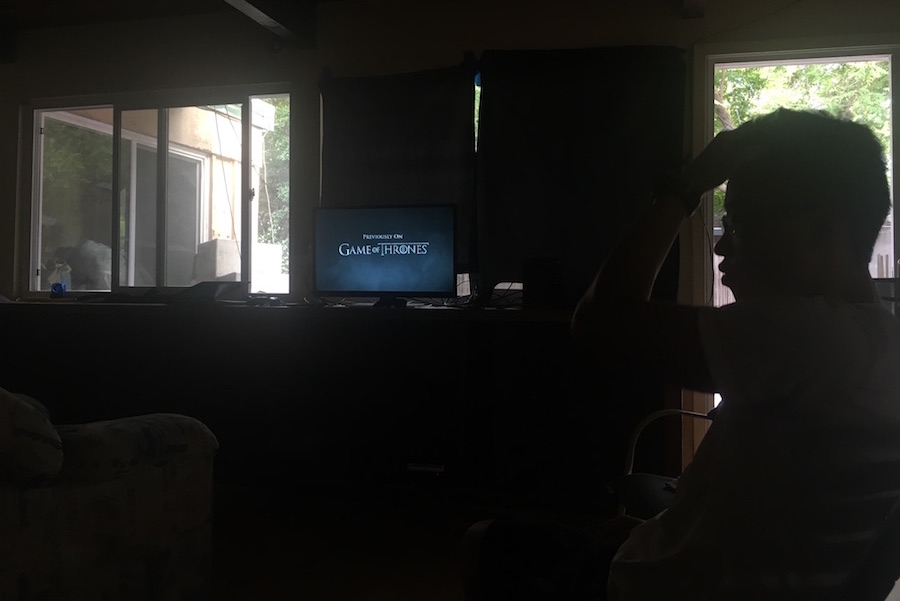
What better way to spend a Sunday evening than catching up on the latest drama in Westeros? (HANNAH WODRICH)
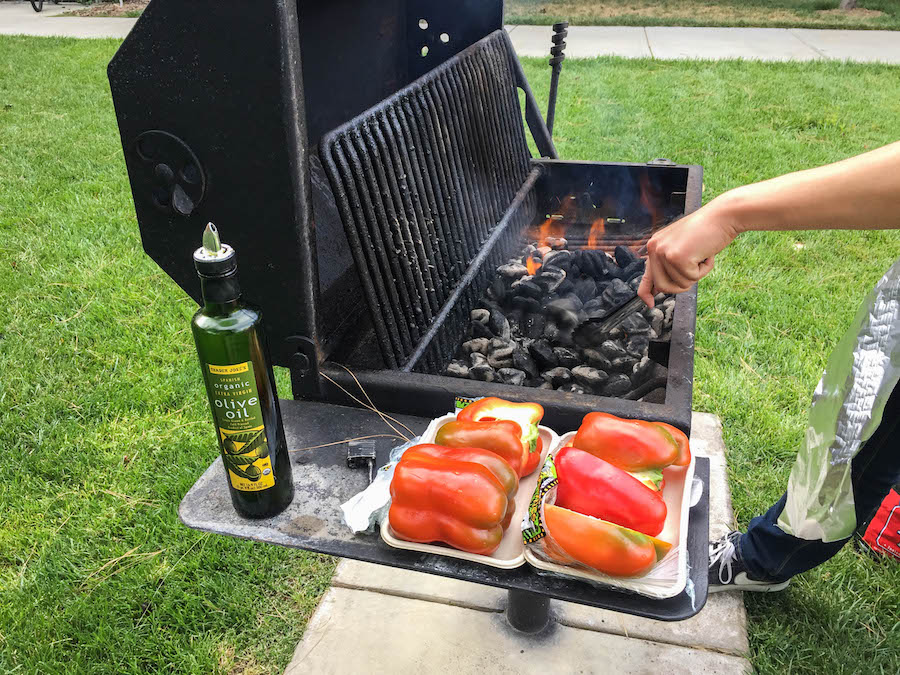
Under the shadowy loom of Week 10 and finals, we feasted one more time. (DANIEL TAK)
After going home for the weekend, and spending a lot of time in my bed, it was really hard to come back to school for Week 10. (ROSIE SCHWARZ)
Walking through Stanford campus and enjoying Palo Alto. (DEBPARNA PRATIHER)
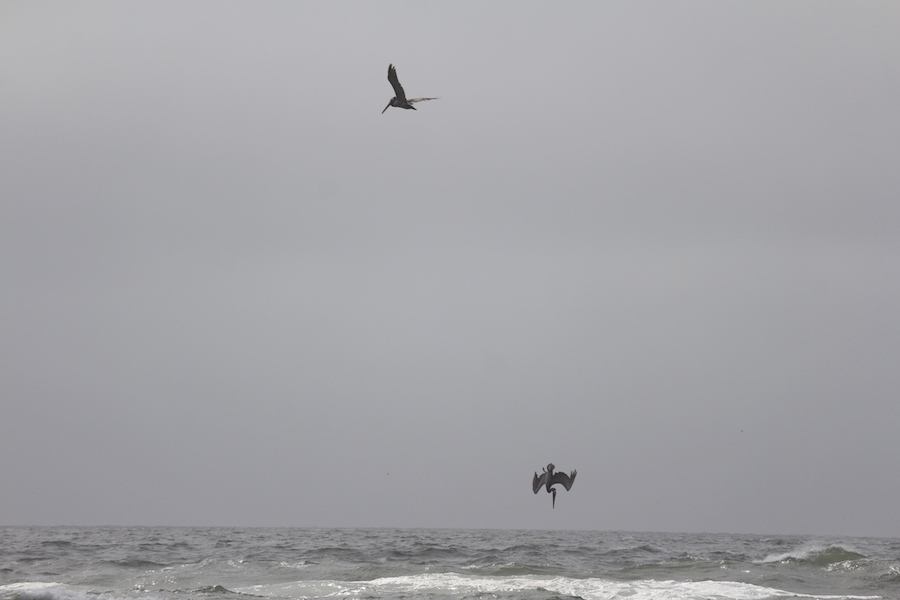
I went to a beach near Golden Gate Park in San Francisco and saw pelicans diving for fish. (NICKI PADAR)
Driving back from an adventurous day at Great America on the Interstate 880. (VENOOS MOSHAYEDI)
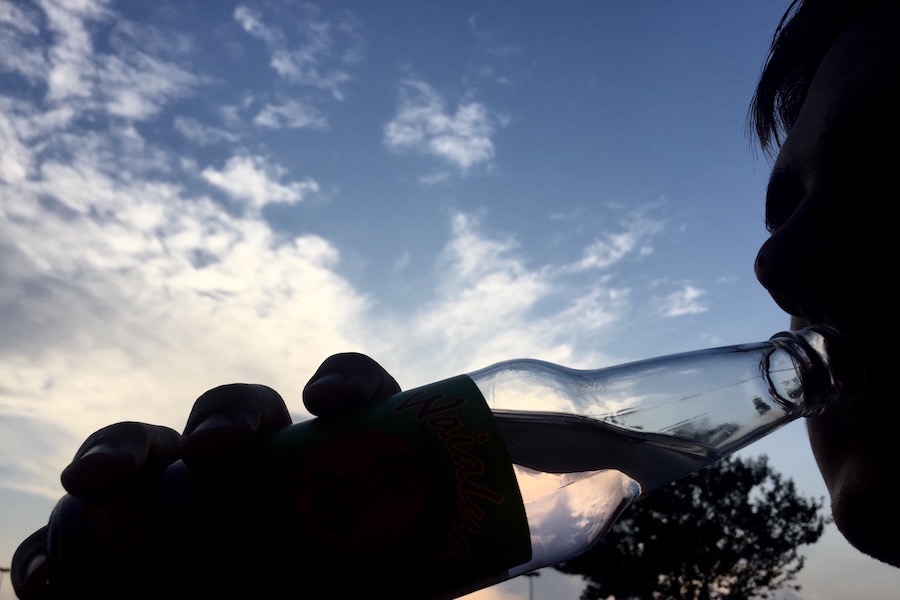
My Sunday night was spent staring at cute pets in PetSmart and drinking weirdly flavored sodas. (ASHLEY LUGO)
Not pictured: hungry photographer awaiting ramen and yakitori. (DIANA LI)
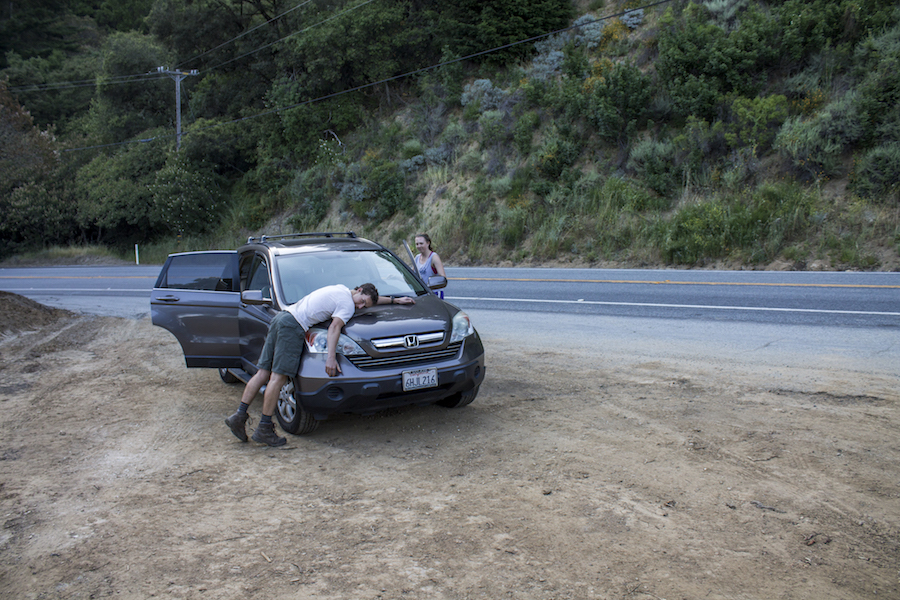
Tired, lost and confused in the Santa Cruz Mountains. (LUCY KNOWLES)
Wandering the streets of Santa Cruz with my big in the Japanese American Student Society (JASS) after a trip to the beach! (AMY HOANG)
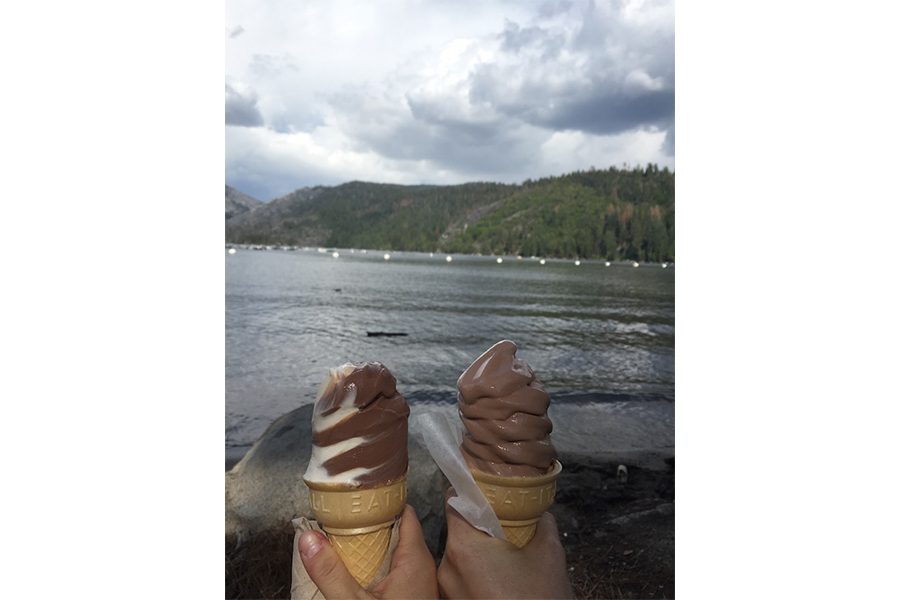
Returned to a place I used to hike and eat ice cream at every year when I was little. Not much has changed except for the fact that a few more years than usual went by, and I’m lactose intolerant now. Still ate the ice cream, though. (ARIEL ROBBINS)
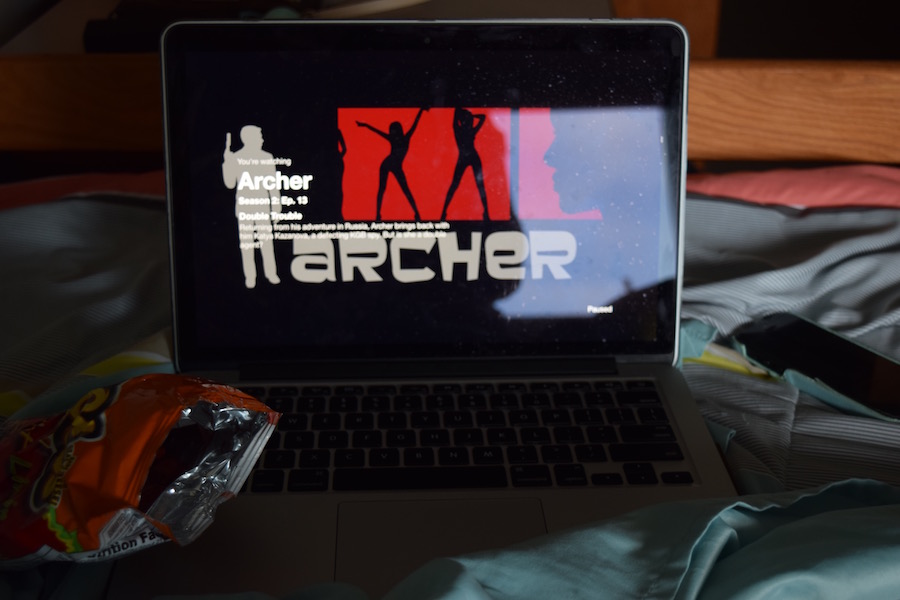
I spent my night on Netflix and eating junk food in order to destress and relax before finals. (ALEX FONTANILLA)
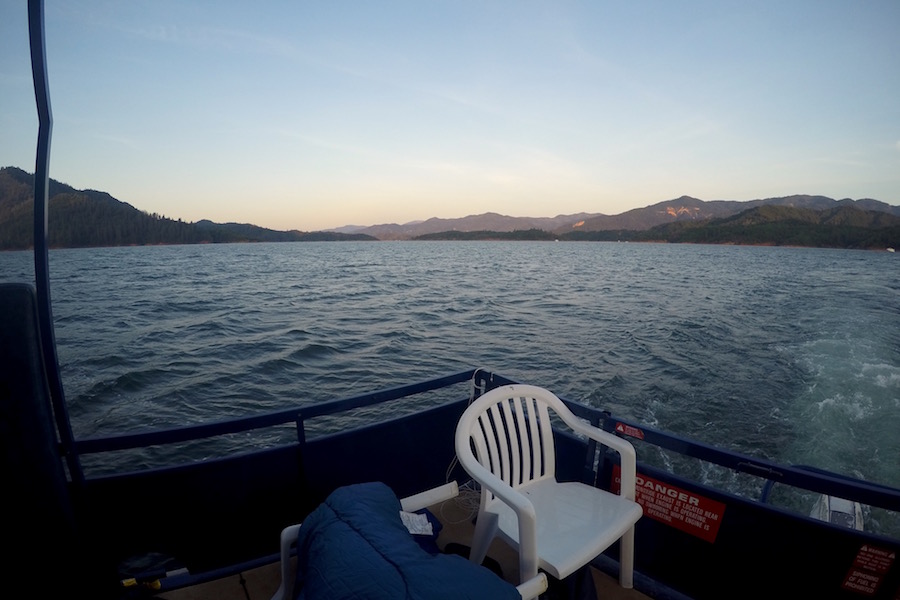
Had a relaxing weekend at Houseboats on Lake Shasta. (NADIA DORIS)
Looking up above Dinny the Dinosaur in the middle of the Cabazon desert. (ANGELICA DAYANDANTE)
Spent my weekend in Santa Monica, shopping and relaxing myself. (ZHEN LU)
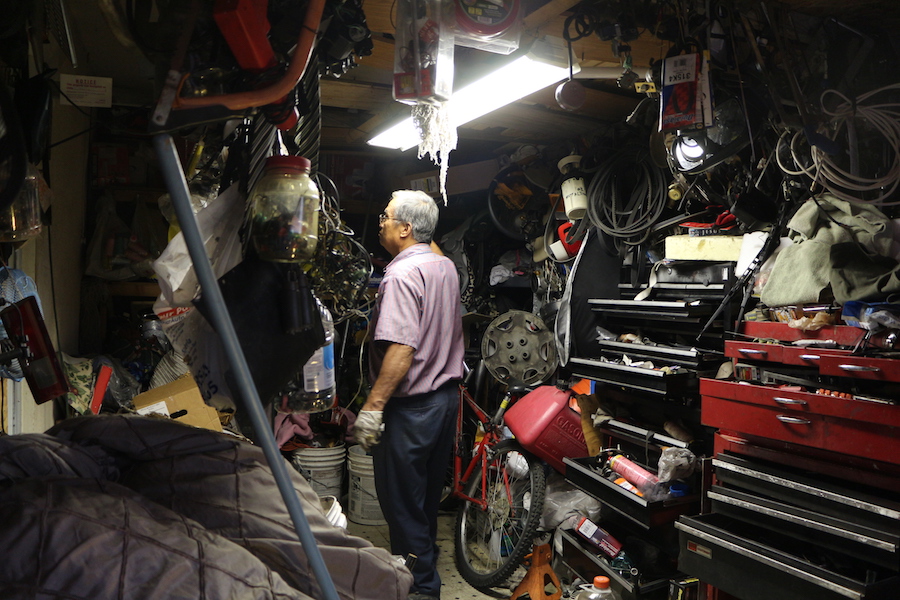
My dad searching through a jungle of tools to fix my car. Can you believe that it’s actually our garage? (MONICA CHAN)
Spending some quali-tea time with my housemate! (ANH-TRAM BUI)

Compiled by: The California Aggie Photo Desk – photo@theaggie.org

Women’s team of the quarter: water polo

ZHEN LU / AGGIE
ZHEN LU / AGGIE

Women’s water polo exceeds expectations, doesn’t let end result bring them down

The California Aggie sat down with members of the women’s water polo team to discuss what made this the season they won’t forget, and why they are The Aggie’s choice for women’s team of the quarter.

“Even though it didn’t necessarily end as we had envisioned it, we don’t want the end result to overshadow all the things we did this season,” said senior center Allyson Hansen. “Like beating Cal for the first time in program history, top three finish at UC San Diego tournament, top six finish at UC Irvine — which we haven’t done for a long time — and getting our program’s 400th win.”

Hansen, a fifth year who was nervous about coming into the season without the players she initially came into the program with, started the Aggies this season in Big West Conference weekly honors with a Player of the Week award — the first of five UC Davis athletes this season. Despite having a 2-3 conference record, the Aggies did manage an overall record of 17-13, with some heartbreaking losses that followed tremendous wins.

“With every struggle comes growth,” said head coach Jamey Wright. “We had some character developing moments this year […] this is all part of the process, we’ve got to go through this.”

Wright refers to the defeat over Cal Berkeley and the comeback against Irvine.

“You learn more from your losses than your wins,” Wright said. “For having had some early disappointing conference losses, we finished well.”

Hansen knows that the losses did not affect the team’s bond.

“The experience and wisdom of the older players helped cultivate a whole cohesive team… we have team chemistry,” Hansen said. “This year, instead of being on the losing side of one-goal games, we have been on the winning side, which I think in the past hasn’t really happened […] When it boils down to it, the chemistry is what got us those wins.”

“This year, we had a lot of strong players so we were able to use all of the weapons we had versus relying on one or two players,” said junior center Carla Tocchini. “[That] is what a lot of teams normally do, to give everybody a chance to kind of shine.”

But what really makes the Aggies a strong team?

“One of the biggest things that we possess is a solid defense,” Tocchini said. “Our goalies were fantastic at anchoring us in the cage, all of our offense and everything we created came out of our tough defense and our defenders really fronting well. Everyone was doing their job on defence essentially, so I think, if we can carry that into next season, we will do very well for ourselves.”

Next season, the Aggies will be facing a lot of turnover as they say goodbye to seven seniors and welcome nine freshmen to the program. This will make the 2016-17 team predominantly underclassmen.

“I’d like to think of it as a really positive opportunity,” Tocchini said.  “Yes, it is a big group of girls that are going to have to learn a ton of new stuff coming into the program, but it also gives our team a whole new look.”

Wright also notices the toll this change will take on the team, but like Tocchini, does not fear it.

“It’s not always easy, especially when you have a big turnover, losing that leadership,” Wright said. “It puts a lot of pressure on the returning juniors this year.”

While the shift in players does not affect Hansen directly, she definitely connects with the idea of stepping up.

“That’s going to be a huge shift,” Hansen said. “I think for next year, they are really going to have to bond the freshmen in. The upperclassmen are going to have to step up; people besides the captains are going to have to step up.”

In attempt to pass down some of her knowledge, Hansen said, “If I learned anything these years, it’s to trust the process. You’ve got to be patient, [and] it all will come together at some point.”

The team was ranked fifth nationally this spring season and managed to maintain a 3.15 overall GPA. Coaching staff as well as the players agree that next season they will be working to integrate the recruits to continue and enhance this season’s success.

“I could think of a bunch of words [to describe the season], but I think the first word that comes to mind is ‘epic,’” Hansen said. “That’s kind of how it was. I never in a million years would’ve thought we would have beat Cal or beaten ASU or been in the top five […]  it’s stuff that I thought was unreachable or unobtainable. It’s pretty epic that we were able to pull together and do it.”


Honorable Mention: Women’s Lacrosse

If one thing is certain, it is that UC Davis women’s lacrosse has made amazing progress this season. Under first-year coach Tee Ladouceur, the Aggies’ 5-4 conference record is the first winning record produced by women’s lacrosse since 2000, and their appearance in the MPSF Championship tournament this season was their first appearance in six years. While this was a season for improvement, women’s lacrosse has shown tremendous strides to become a conference winning team in the future under Ladouceur.


Written by: Veronica Vargo and Ryan Bugsch — sports@theaggie.org

Ongoing battle Arboretum algae to end soon

ARIEL ROBBINS / AGGIE

Three phase renovation project plans to rid the waterway of algae and duckweed.

The UC Davis’ mile and a half long Arboretum is scheduled for a renovation project to begin this summer, alleviating the algae blooms that have monopolized its surface for the first time in 20 years. The project will introduce flowing water through a series of elevation changes to promote a natural cleaning system.

Michael Fan, senior engineering supervisor of UC Davis’ Facilities Department of Resource Recovery, explained that in the 1800s, Putah Creek naturally forked into  northern and southern flowing sections. The north end neared a developing area, so a dam was built to prevent flooding. In the 1950s, Army Corps engineers isolated the two sections, and the north became the stagnant pond we now know as our university’s Arboretum.

The stagnant water trapped by the dam, abundance of solar exposure, nutrients (due to inflow of organic matter) and high water temperature creates an optimal habitat for algae and duckweed.

“We basically had this problem from day one once we [installed] the dam,” Fan said.

Today, the Arboretum mainly serves to retain stormwater. The Arboretum is the lowest point on campus, so anything bound within the core of the campus, 113-west and Russell Boulevard eventually gets drained into the waterway.

The stormwater accumulation has led to the buildup of nutrients, such as fertilization in the creek, further exacerbating the growth of algae.

“The water has algae growing, fish dying and all this negative stuff [happening…] By the time of the ambient temperature drop during the end of fall, the water starts becoming clean,” Fan said. “Then, come the winter time until the beginning of summer, the cycle will start again.”

Due to the shallow depth of the Arboretum, once the plant material and the leaves decay, they both become ‘sludge,’ according to Fan. The sludge buildup in the waterway then provides a plethora of nutrients for algae.

The explosion of algae and duckweed has taken up the majority of the Arboretum’s nutrients. However, regardless of its ecological effects, many people, such as Fan, think “it just looks bad.”

“Duckweed is a simpleton. It’s fluffy and light, you can just scoop and clump them together,” Fan said. “But, to see change, you have to holistically address the [situation] of nutrients from wastewater, vegetation, the sludge and all the nutrient sources identified.”

In order to prevent the growth of algae and duckweed, the 2016 summer clean-up project intends to stop this cycle.

To change the artificially favored algae and duckweed ecosystem, assistant director of UC Davis Arboretum and one of the project heads, Andrew Fulks, aims to mold the Arboretum so that it looks similar to a natural creek of the Central Valley.

Beginning sometime late July or early August, the project will proceed into phase one of three, beginning with the section from east end to Mrak Hall “dry” bridge.

Phase one focuses on adding small weirs (small dams to raise water levels),  planting wetland plants and improving paths. According to Fulks, the weirs will “back up the water behind them.”

“We have a pipe that goes underneath and the pump at the lower end that recirculates water up the upper end, [which] fills up the weir,” Fulks said. “Then, it spills over a notch in the weir into the next segment and it does the same thing, each one dropping about three inches as it heads to the west.”  

By introducing elevation, recirculation will cause the surface of the water to flow. This will ultimately increase the amount of oxygen and prevent the growth of algae and duckweed.

Next, wetland plants will be planted around the weirs and along the edges of the water itself.

“There’s biofilms that grow around the stems around the wetland plants and those take up the nutrients and chemicals. It helps filter the water as the water’s moving through the waterway,” Fulks said.

Besides its cleaning effect, wetland plants are used to create a more pleasing visual appeal for Arboretum visitors.

“The aquatic plants intake the nitrogen and phosphorous for their growth, [and] after six days, a study shows that algae growth dropped quite a bit,” Fan said.

In addition, there are plans to make the pathways more “universally accessible,” Fulks said. This includes path improvements adjacent to the waterway and near the banks.

As stated by Ellen Zagory, director of horticulture education at UC Davis, a pilot project was conducted at the east end of the Arboretum and it worked as planned.

The east end of the Arboretum takes priority since a circulation system is already intact in the area of the Water Waste Treatment Plant to the west end.

At the Water Waste Treatment Plant, UC Davis focuses on treating the water coming in from all over campus. According to Fan, at the plant, water is treated to the highest degree the state of California permits. Under the permit, the water becomes usable for “irrigation, body contact and swimming inside.”

By spending a fairly small amount of money in 2007 on a pipeline starting at the Treatment Plant, the water cleaned at the Treatment Plant was sent into the south Putah Creek, and then back to the Arboretum waterway.

“Gravity flowed into that location,” Fan said. “The water flows west, then there’s a strong pump station that we pump the water from the waterway into the Putah Creek. So, we go in a circle.”

Because of this, the west side has been kept relatively clean while the east side has remained green.

The project’s decrease of nutrient concentration will benefit the environment. When the nutrients are removed from the Arboretum, the receiving stream, Putah Creek, will take in less nutrients, ensuring higher water quality.

“Putah Creek is full of nutrients, so they don’t need that much [more] nutrients,” Fan said. “It’s bad for the water quality, because if you have too much nutrients anywhere, they tend to grow algae.”

After the cleanup, the new environment will not be optimal to sustain the algae. However, even with elevation and flowing, clean water, it is impossible to prevent vegetation and leaves from forming sludge.

“It’s kind of like having a big house — it’s great with all this room, but you have to go through the trouble to clean each room,” Fan said.

To ensure results, the Arboretum requires active dredging, nutrient maintenance and moving water. Fan attributes the duckweed to changes in the environment.

“We used to have a lot of ducks, and the ducks would eat the duckweed,” Zagory said. “But, we now have river otters, and the river otters have scared the ducks.”

Due to the lack of its primary consumer, duckweed now has an uncontrolled density. Although the project focuses on ‘clearing’ the lake, the water will never reach perfect clarity.

The wildlife — ranging from alumni’s pet goldfish to the western pond turtle — is likely to stir up the sediment in the shallow waters.

“The carp in particular stir up a lot of the sediment at the bottom of the channel because they’re going around looking for things to eat,” Fulks said.

Phase two and three of the project will continue from the east to the west side of the Arboretum and make for a cleaner, more welcoming environment.

“[The project] will create a more visual look for folks because we’ll have some emerging marsh plants along the edges of the water that we don’t have right now,” Fulks said. “And, the small areas of water flowing across a weir and dropping few inches and making some noise. It’s going to be really nice for folks to go out there and visit.”

Written by: Sabrina Choi — science@theaggie.org

Summer movies to watch out for

WALT DISNEY MEDIA
WALT DISNEY MEDIA

Stay out of the heat by moving in to your local movie theater

For anyone who is spending the summer in Davis, escaping to the local movie theater to sit in an air-conditioned room full of strangers sounds like the perfect way to avoid the blistering heat. And here are just some of the many movie choices for Summer 2016 to help you do just that.


Finding Dory

If you remember the year 2003, you remember Finding Nemo and how the world fell in love with all of its characters to a point where children were purchasing little “Nemos” and flushing them down the toilet to “free them.” Hopefully, that will be avoided this year around as Pixar introduces Finding Dory, which features the beloved main characters from the first film and also brings in the voices of Kaitlin Olsen, Ty Burrell and Ed O’Neill to play new ones. The story centers on Dory (Ellen DeGeneres) struggling to find the family that she has forgotten due to her constant short-term memory loss, and this time, the roles are reversed as Marlin (Albert Brooks) and Nemo (Hayden Rolence) help her along her journey. The film’s message is about the importance of family, friendships and never giving up, and I know I’ll be catching this to relive a little bit of my childhood!

Release Date: June 17, 2016


The BFG

Disney continues to pull on our heartstrings with its adaptation of the Roald Dahl children’s book, The BFG. For those who have not read the book, the story is about a bookish orphan named Sophie (Ruby Barnhill) who one night gets plucked up by the Big Friendly Giant (Mark Rylance). The Big Friendly Giant is in the business of collecting and passing out good dreams to children via a magical trumpet. When Sophie asks “Why me?” the BFG replies, “Because I hears your lonely heart,” and already we are rooting for this wonderful friendship. But there’s danger looming in the form of the other human-eating giants in Giant Land, and it becomes Sophie and the BFG’s mission to have them captured. This Steven Spielberg directed film is sure to have stunning visuals and a wonderful accompanying soundtrack, and I’m hoping that it will include the “snozzcumber” and “whizpopping” words that are so unique to Roald Dahl. 

Release Date: July 1, 2016


The Legend of Tarzan

Hollywood has become keen on producing live action reboots of popular Disney movies in the past few years, which always leads to box office success since audiences have nostalgic ties to the movies that they grew up watching as children. From Cinderella, Snow White and the Huntsmen, Maleficent, The Jungle Book and now The Legend of Tarzan, it seems that there’s no stopping this Disney-crazed train, and I hate to admit that I’m all for it. Because although it leaves less room for new and original screenplays, it’s hard to say no to a Tarzan reboot that stars Margo Robbie (Jane), Alexander Skarsgard (Tarzan) and Christoph Waltz (Captain Rom), who always plays the perfect, sociopathic villain.

Release Date: July 1, 2016


Jason Bourne

Matt Damon reprises his role as the former CIA assassin in the fifth installment of the Bourne series, and I can see this action packed spy thriller’s popularity heading both ways; it will either top the box office this summer, or achieve mediocre financial gains depending on whether audiences feel excited for yet another round of Bourne movies, or if they decide that it four movies is enough. Damon himself was quoted in 2007 (before the release of the fourth installment) that “we have ridden [the Bourne] horse as far as we can,” but has still signed up to star in this newest Bourne flick. The movie also stars Julia Stiles, Alicia Vikander and Tommy Lee Jones, and like its predecessors, is sure to be filled with plenty of exciting rooftop chases and explosions. I’ve yet to make up my mind about seeing this one since the franchise may be becoming a bit repetitive, but I’ll wait for more reviews to decide.

Released Date: July 29, 2016


Suicide Squad

And finally, we have the highly anticipated DC comics’ Suicide Squad. Fans have been eagerly waiting for the release since the first-look trailer was revealed at Comic-Con in July 2015, and I’m sure that it’ll be the one of the highest, if not the highest, grossing film of the summer. The story centers around imprisoned supervillains who are recruited by a government agency to take part in secret mission-and things are sure to go wrong, especially when the Joker (Jared Leto) is thrown in. The movie also stars Will Smith, Viola Davis and Margot Robbie as Harley Quinn, who seems to already be a fan favorite based on the screen time she has received in the trailer. Since Jared Leto was said to have stayed in character for the entire shoot, it will be interesting to see how his interpretation of the Joker compares to Heath Ledgers’, and I’m definitely excited to find out!

Release Date: August 5, 2016


Written by: Pari Sagafi – arts@theaggie.org