56.1 F
Davis

Davis, California

Thursday, December 25, 2025
Home Blog Page 788

A healthy partnership

UCOP, Global Food Initiative work to combat student hunger at UC Davis

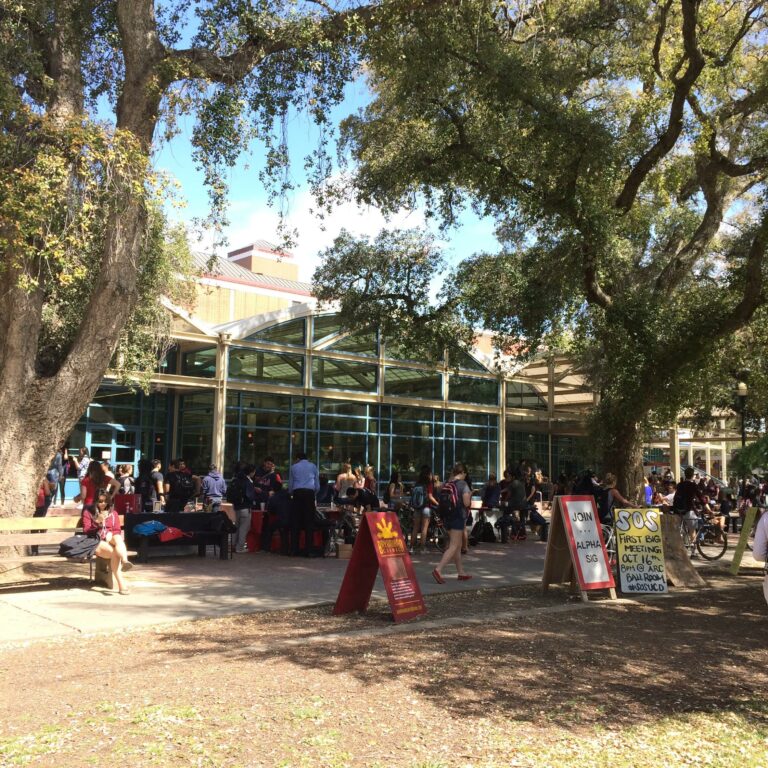
In Lower Freeborn, pamphlets line a wooden counter greeting students approaching the ASUCD Pantry. There are CalFresh leaflets on how to cook healthy meals, resources to find child care on campus and a list of ingredients available for the “Recipe of the Month.” For May, it’s gelatin with canned fruit.

The unit was created in 2011 as a food security program for undergraduate students, specifically for those who experience financial difficulties with obtaining food.

“It’s just to make sure that a person doesn’t have to skip a meal or ever go hungry while they’re getting an education,” said junior human development major Erika Hapa, the Pantry’s current director of external affairs and incoming unit director.

In addition to food, the student-run Pantry provides basic living necessities for all UC Davis students. Anyone can approach the counter during open hours and receive canned goods, toiletries, boxed cereal and pastas.

“[Students] just show their student ID card. We don’t record any information. It’s all anonymous,” Hapa said. “Each item we give out has a designated food point; we try to base it off how many servings you can get out of it. The only rule is that no one gets duplicates.”

Since the Pantry is an ASUCD program, many connections with on-campus resources are used for the benefit of the student community.

“We have partnerships with the Student Farm and CalFresh,” Hapa said. “Our main partnership would be with the Yolo County Food Bank. We’re trying to get resources, work with the financial aid office and make a website with all the resources we have on campus.”

The Pantry currently operates five days a week on an annual budget of $7,000 to $10,000. As of last July, with the introduction of the Global Food Initiative (GFI) by UC President Janet Napolitano, the unit’s budget is subject to expansion in the upcoming year.

Under this initiative, $75,000 will be allocated to UC Davis for campus food programs. The Pantry will receive a portion of this money in its effort to combat student hunger. The money will be shared with other on-campus programs, including CalFresh and the student farms.

This is a large change from the Pantry’s annual budget, and according to Hapa, steps that could never have been taken before now seem feasible. Hapa recalls difficulties in the unit’s past, but hopes the additional money will prevent such occurrences from repeating themselves.

“Right now we’re pretty good on food, but during fall quarter we had an emergency situation where we didn’t have much food on our shelves,” Hapa said.

Senior American studies major and current unit director Tara Storm said that this issue was met with a successful emergency food drive. With the money coming from the initiative, Storm said the unit plans to focus on marketing itself in order to best serve the student population in question.

“We’ve seen days where we have no food; we see days where we don’t see any students,” Storm said. “Really our main problem is making sure we’re stocked and making sure that students know about us.”

Both Hapa and Storm note how important the accessibility of nourishing foods is to all types of students on campus, including graduate students, and talked about the possibility of a graduate student-only Pantry on campus.

Storm has been involved in the initiative since its announcement and has collaborated with her fellow Pantry partners, both at Davis and across the University of California system. In regards to the plan for the grant, a proposal needs to be constructed for the entire UC Davis campus.

“Other schools receive a lot of funding but we don’t receive that much and we’re still operating five times a week. Other schools don’t necessarily do that,” Hapa said. “For other universities, they would need to figure out how to open up [a Pantry], and here we are: we already have a place.”

Storm was one of two UC Davis student representatives on the committee to lobby for funding from the initiative to the UC campuses, since the original program did not directly address student hunger. At the California Higher Education Food Summit, the GFI Subcommittee met to discuss local needs before extending to the global sphere.

“[The subcommittee] started when two students, one from [UC] Santa Cruz and one from [UC] Berkeley, felt uncomfortable that the GFI didn’t talk about student hunger, which is happening in our own backyard,” Storm said. “The [GFI] was for feeding the world — using sustainable agriculture to feed the world’s hungriest, which left out the issue of student hunger.”

Last Wednesday, the GFI’s Food Security Development Plan Working Group met for a second brainstorming session to discuss how the $75,000 stipend will be implemented into on-campus food security projects, including the Pantry. This committee has been meeting regularly to prepare a proposal for the UC Office of the President by June 19 in order to receive the funding.

“The money is [for] food security efforts,” Storm said. “So it can go partially to the Pantry, partially to the Student Health and Wellness Center…really it can go to any effort that [aims] to combat food insecurity for students.”

With her committee experience, Storm is confident in the Davis group’s knowledge of what the board would like to hear in the proposal.

When it comes to the logistics of how the initiative will impact ASUCD, Roman Rivilis, adopted ASUCD senator of the initiative, understands the needs of the Pantry and the students alike, and how the ASUCD might disperse the amount.

“[UCOP has] offered the funding [and] it is completely discretionary how we use it,” Rivilis said. “They have not offered direct consulting services regarding the [GFI], because mainly it’s for starting up other Pantries on other UC campuses.”

Rivilis keeps the Pantry’s current standing on campus in mind, as it holds a lot of potential.

“Because our Pantry is so advanced, it has opened up a lot of opportunity to explore other dimensions of food security beyond just the core component that is the Pantry, such as nutrition,” he said.

In regards to the partnerships across campus, Rivilis said he hopes the allocated $75,000 will be a funding distribution that allows for healthy relationships.

“Any UC systemwide campaign is always interesting to see what facets of an issue it may address, it allows us to see what collective solution can come across as the UC,” Rivilis said. “The fact that the [GFI] alone exists already represents a gravitational shift in the paradigm of the understanding of UCOP regarding the struggles of being a college student, [and] the financial hardship.”

Graphic by Jennifer Wu.
KDVS staff sits-in at ASUCD senate budget hearings today following cuts

Update (6:42): ASUCD senators voted to approve the president’s budget.

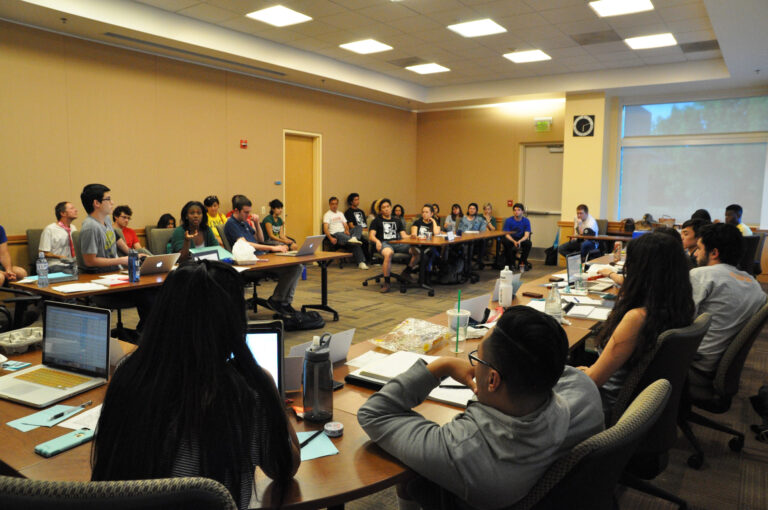
Close to 80 KDVS staff members showed up to the unit’s ASUCD senate budget hearing today in protest of proposed cuts.

“The association is in a lot of debt and needed to make cuts, and every time these cuts happen, the media takes a hit. I informed my network, the community that is KDVS and said we need to show that we’re still valid, important, valuable to this community and won’t take being bullied,” said KDVS General Manager Ashley Hanson. “Rather than giving my staff a retelling of what goes on in there, I invited them to come see for themselves. We are here to put on our best faces and show why we deserve to be supported.”

Hanson’s originally proposed budget planned for a $35,225 ASUCD subsidy, but the executive team cut the number to $25,180. Since KDVS is a media unit and falls under Campus Media Board budget guidelines, ASUCD senators only have control over the association’s subsidy to the unit and cannot change other line items.

“We’ve become very fixed with the things we identify with. These are the things that we are do and to think that we aren’t going to do them anymore is reconsidering who we are,” Hanson said. “We are starting to lose limbs rather than grow, which is sad.”

KDVS staff members rotated in groups in and out of ARC Meeting Room 1, where the budget hearing took place, because of a maximum capacity of 68 people.

As a unit, KDVS has cut its record label and seven paid positions this year, instead offering internship credit for the same roles.

According to ASUCD President Mariah Watson, the association as a whole plans to cut a total of $240,000 across all 26 units this year.

“I proposed a budget I think will work and the President has proposed a budget that I don’t understand,” Hanson said.

Photos by Jian Gelvezon.

Ritika Iyer can be reached at campus@theaggie.org. 


Rape? Yes, I do want to talk about it: Dealing with ignorant people

0

From an early age, we’re taught about the lasting physiological effects of alcohol and drug abuse. We’ve memorized the different kinds of contraception – they practically told us which colored condom is most enjoyable.  We’ve talked about puberty with uncomfortable middle-aged guest speakers and we’ve watched a live birth amongst a classroom full of trembling 6th graders.  But when we learned about sexual assault, it was never presented with the same honesty.

I know what you’re thinking: “What is she talking about? Of course we learned about sexual assault. My high school health teacher talked for days about the meaning of rape.” It’s true.  You definitely “learned” things about rape.  But you never learned things about rape.  They taught you that no means no – that your words are like scissors: strong, powerful… important. They shared stories of victims who had experienced the trauma.  But they never taught you that, as strong as your “no” is, there are rocks out there that can always beat scissors. They never gave you a mirror when they spoke of people at risk of being assaulted.

Surface level education fosters people who don’t fully understand what rape actually is or what it does to people.  Instead, it’s given college students the idea that since they’ve been “educated”, all of a sudden they are perfectly equipped to deal with any situation that comes their way.  It encourages a false sense of confidence, and validates people saying really stupid things to victims like, “Well he probably just thought you wanted it. Don’t give him such a hard time.”

When you’ve felt the sting of those ignorant statements, you develop this sort of hatred for people who just don’t get it.  It should be people’s responsibility to learn the appropriate things to say, just as it’s – I don’t know – a rapist’s responsibility not to rape. But that doesn’t mean people fully understand that responsibility. And it can make you crazy when you really come to experience just how ignorant people are.  Trust me, it’s made me crazy.  After overhearing and experiencing too many hurtful comments,  I learned a thing or two about dealing with ignorance:

1)   It’s a waste of time to hate people who are ignorant about this

I’ve tried out hating them.  It’s fun for about a week or two.  You get to mercilessly despise their entire being and not even feel that bad about it.  But then you realize something.   They’re not intentionally trying to hurt you.  They just never learned better.  If I needed a friend to tie my shoes for me, because I can’t bend over, but my friend will not do it because she never learned how, does that mean I should hate her for it?  I mean it’s pretty disappointing, but at the end of the day I would only be causing myself more stress by hating her. I have myself to worry about.   And it’s far more important that I get those shoes tied myself than that every single person out there be willing to help me in the process.

2)   Ignorant people don’t always want you to educate them.

When you learn that somebody is ignorant, it’s tempting to want to sit them down, pull out the chalk board, and lecture them on how to be more respectful as a human being. Unfortunately, however, some ignorant people are pretty stuck in their faulty mindset and it’s going to be nearly impossible to change their mind.  Even though you might know more than them, it’s not your duty to impart your wisdom if they’re not willing to learn it.  Everyone’s on their own path, both mentally and emotionally.  And I like to think that one day, all the people who have said hurtful things to victims, to me, will comprehend the error of their ways.  But maybe that’s just wishful thinking.

3)   Don’t compromise your own feelings to accommodate ignorant people

It’s common, when our opinions differ with others, to try to find some common ground or make some sort of a compromise.  For example, if I want to watch a romantic movie and you want to watch an offensive porno, we can watch 50 Shades of Grey. That’s a compromise.  But if I know I was raped, and you’re just not buying it, I don’t plan on finding any sort of middle ground there (nor should I have to). When your opinions differ on something that is very personal, the relationship might not be worth it.  And sometimes it is ok to just remove someone from your life.  It doesn’t mean you hate them, but merely that they are temporarily (or permanently) irrelevant to you.  And under the circumstances, that is okay.

And last but not least:

4)   Don’t let other people’s ignorance bring you down.

It hurts when people say ignorant things. It hurts a lot, especially at times when we need empathy and compassion the most.  But until we can rid the world of ignorance, or rape altogether, we can only do what we can do.  And that is to trust in your heart that you know what’s right for you and know that there are people out there who DO get it. And those people won’t stop until scissors can beat rock.

Like her bluntness? Contact Maddy Pettit at mepettit@ucdavis.edu

ASUCD officials face $240,000 in potential budget cuts

ASUCD leadership is preparing to make approximately $240,000 in cuts to next year’s fiscal budget.

On May 24, ASUCD president Mariah Watson wrote senators and unit directors in preparation for this weekend’s budget hearings. That letter, along with the recently posted budget proposal, details the executive office’s attempt to make a $217,000 dent in the projected cuts.

According to ASUCD controller Francisco Lara, $240,000 constitutes about one-fourth of ASUCD’s operating budget, excluding outsized units like the Coffee House and Unitrans. This year’s drafted cuts are more than double last year’s $110,000 in slashes that impacted units like the Experimental College and Refrigerator Services.

The executive office’s budget proposal cuts every unit’s funding by at least 15 percent, eliminates over 50 stipend jobs and dissolves the Post Office. Moreover, it decreases the Club Finance Council and Entrepreneurship Fund grants by 10 percent and the Cross Cultural Center’s Culture Days grant by 25 percent.

Given the severity of the Association’s financial predicament, the executive office has urged units to rethink their business models, even asking traditionally break-even units to now bring in profits. Project Compost is being willingly absorbed by the Campus Center for the Environment to help reduce costs.

“As an Executive Office, we have had to radically change how we think about ASUCD,” Watson said in her letter to senators and unit directors. “We have had to cut, merge and reshuffle services, all in the hope of continuing to operate as many services as possible.”

Watson said her team employed a zero-based approach in writing the budget proposal in an attempt to act fairly and protect student services. In this case, that means allocations were made on the basis of units’ actual spending for the past three to five years, not on precedents set by previous administrations.

“There’s just an immense amount of money that’s never spent, never used, and just sits there,” Watson said.

The impending cuts reflect several novel expenses, some of which were unexpected due to plain institutional failures:

Around $83,500 had to be set aside to correct deflated allocations for Student Services and Creative Media employee wages. Lara said that, in the case of Student Services’ wages, previous administrations had been copy-and-pasting an incorrect figure between budgets for at least five years, indicating they had failed to account that figure would increase with wages, pensions and benefits.

Watson said she partially attributes past rubber-stamping to student officials’ distrust and exclusion of administration, including the ASUCD business manager.

Another $56,000 went to cover half the salary of a position recently added to Student Services. Per an agreement made at ASUCD’s charter, Student Affairs will cover the other half.

As described in a previous article, about $77,000 in revenue will be diverted into reserves as a result of Senate Bill #46’s (SB46) passage. Conceived by former ASUCD vice president Maxwell Kappes, SB46 was intended to create a fiscal buffer in preparation for costly accidents and potential future deficits.

Kappes said he does not regret commissioning SB46.

“I’m only upset that I didn’t catch the budget problems they are facing now such that I couldn’t have solved them in my own way,” Kappes said.

Unexpected increases in an annual tax paid to the Division of Student Affairs to cover services such as policing, firefighting and landscaping will account for another $15,000 in new expenses, according to Watson. This figure is significantly less than the initial $77,000 in projected increases that blindsided her and ASUCD business manager Janice Corbett a month ago.

According to Corbett and Watson, they were not made aware that former ASUCD president Rebecca Sterling had made an agreement whereby Student Affairs subsidized at least 95 percent of increases in the internal tax for the 2012-13 and 2013-14 fiscal years. As such, when Student Affairs’ subsidy timed out, they suddenly had to find a way to make up the difference.

Former ASUCD president Carly Sandstrom, Sterling’s immediate successor, claimed she had no knowledge of the agreement. Brett Burns, who was the ASUCD business manager during Sterling’s presidency, claimed he could not remember any details about the agreement. Sterling could not be reached for comment.

Corbett and Watson continue to negotiate a payment plan with John Campbell, the chief financial officer and executive director of Recreational and Divisional Facilities. In a presentation to the ASUCD senate, Watson stated Campus Recreation and Unions would cover the 2014-15 year’s tax increases, and ASUCD would pay for 33% of the 2015-16 year’s increases.

Further expenditures will result from California’s minimum wage increasing to $10 per hour in January. UC Davis Human Resources has also urged ASUCD to increases its stipends.

Watson said that she is seeking a one-time subsidy from Vice Chancellor of Student Affairs Adela de la Torre to ease the Association’s transition into fiscal responsibility and protect grants. Such a subsidy would not be used to delay, Watson said.


State Board of Equalization dumps $2 million worth of contraband cigarette and tobacco-related products in Yolo County Central Landfill

0

Contraband cigarette and tobacco products confiscated over the past 15 years are destroyed in Woodland

On May 20,, the State Board of Equalization (BOE) dumped and destroyed 30 tons of contraband cigarette and tobacco-related products at the Yolo County Central Landfill (YCCL) in Woodland.

The cigarettes and tobacco products were confiscated through search warrants and administrative seizures over the past 15 years and released at the landfill after serving as evidence. This dumping was the largest one-time contraband cigarette and tobacco destruction for the BOE.

Venus Stromberg, a spokesperson for the BOE, explained in an email the reason why YCCL was the chosen location.

“The Yolo County Central Landfill accepts our products and is close to the warehouse where it is kept pending legal or administrative action,” Stromberg said.

According to the press release, the BOE is a part of “Operation Big Pinch,” a collaborative effort between groups such as the United States Attorney’s Office, that investigates crimes involving unpaid excise tax on tobacco products others than cigarettes.

In California, cigarette products have two taxes: an excise tax of 87 cents per pack and a 7.5 percent minimum sales tax.

Stromberg explained that close to $214 million is lost annually due to contraband cigarette and tobacco-related products. The press release stated that the contraband at the YCCL was worth approximately $2 million.

Stromberg also expressed that once tobacco tax case investigations are completed, the product must be destroyed and its destruction certified.

“This is what occurred last Wednesday. [The] news release explains the tonnage was actually 22.9 tons after final weigh-in after the release was issued,” Stromberg said.

When asked why it took 15 years to finally destroy the contraband, Stromberg described how the administrative or court process handling the products may take a long time.

“It often takes a good deal of time for cases to go through the administrative or court process. The products can’t be destroyed until there is a court order to do so, which we must comply with under the law,” Stromberg said.

According to Stromberg, tax avoidance generally happens at the wholesale or distribution level. Ranging from $1.6 million to $13.6 million dollars, the fines are relative to the crime.

“Making people aware of the consequences through publicizing these arrests and sentencings, as well as last week’s event, will hopefully put those who avoid taxes on notice that we and our partners will come after them,” Stromberg said.

To combat the financial losses occurring from contraband cigarette and tobacco-related product sales, Stromberg listed three factors.

“The state recovers the lost tax revenue through administrative fines, restitution and asset forfeiture,” Stromberg said.

Jerome E. Horton, the chairman of BOE, expressed his determination to put an end to the sale of contraband products in a released statement.

“The BOE is determined to keep cracking down on the criminals who don’t pay their fair share…they deprive California citizens of important public services, and put legitimate, hardworking California small business owners at a disadvantage,” Horton said.

Graphic by Jennifer Wu. 

Bill targeting sexual assault on community college campuses approved by California Assembly

0

AB 969 currently has bipartisan support

On May 19, the California Assembly approved Assembly Bill (AB) 969, a bill that would give California Community Colleges (CCCs) grounds to suspend or dismiss students who threaten or commit violence against fellow classmates, whether the violence occurs on or off campus. The bill also requires students to report any charges of sexual assault that resulted in dismissal from an academic institution if transferring between CCCs.

“We discovered that a student found responsible for campus sexual assault simply transferred to another community college district without any problems,” said Lourdes Jimenez, chief of staff for state representative Das Williams (D–Carpinteria), the author of the bill. “Additionally, we found that a community college district was not pursuing off-campus reports of campus sexual assault due to confusion in current law.”

Jimenez said that he feels the rape culture in our higher education system needs to be addressed. One in five women will be a victim of sexual assault in her college career, however, only five percent of these cases are reported and even fewer are investigated. The hope is that this bill will aggressively tackle these problems among community college campuses.

“The state has an obligation to provide a safe and secure learning environment at our campuses for our students. The students, their families and the general public need assurance that the [institutions] take campus sexual assault seriously,” Jimenez said.

This bill directly targets sexual assault on community college campuses, because unlike a California State University or a University of California,which has on-campus housing, CCCs do not. This allows for violence to occur more frequently between students off-campus than on-campus. This is why any off-campus violence will be punishable by any CCC in question according to this bill.

Punishment under this bill for reported cases of sexual assault would be brought to a governing board to determine the expulsion or admittance of a perpetrator of sexual assault.

“According to the US Department of Justice, about 70 percent of rape and sexual assault victimizations occurred either at the victim’s home or the home of another known person, meaning that most sexual assault cases do not occur on campus or during campus related events,” Jimenez said.

Mitchel Benson,spokesman for Los Rios Community College District, which includes Folsom Lake College, American River College, Cosumnes College and Sacramento City College, said that the district has not taken a stance on the bill.

“At this point we’re studying what kind of impact, if any, it would have on community colleges, and the Los Rios colleges in particular,” Benson said.

Benson said that the Los Rios Community College District is an open admissions college system.

“To have a survivor centered approach is really important,” said Heather Lou, the assistant director of outreach for the Women’s Resource Center at UC Davis.

She said she feels the most positive impact this bill could have would be to encourage conversations on college campuses.

“I really appreciate that it does talk specifically about the different kinds of violence that can happen and I think that that may be something that would feel good for survivors,” Lou said. “As long as survivors have the resources and the understanding of how this could impact them, then I think this is something that could be good.”

This bill currently does not have any opponents according to Jimenez. It is supported by the California Coalition Against Sexual Assault, a membership association of rape crisis centers and sexual assault prevention programs in the State of California.

“From my discussions with students and the public…it looks like there’s a lot of support for policies that will address the problem of campus sexual assault,” Jimenez said.

Graphic by Jennifer Wu.

Rainbow crosswalks approved for Sacramento Midtown Lavender Heights

0

Sacramento’s historic LGBT community to be decorated with rainbow crosswalks

On May 12, Sacramento City Council approved the addition of rainbow crosswalks to the block of 20th and K streets in Sacramento’s Midtown Lavender Heights neighborhood. Similar to the crosswalks in San Francisco’s Castro District, West Hollywood and Boystown Chicago, the crosswalks in Sacramento will represent the history of the LGBT community in the area.

Paul Weubbe, president of the board of directors for the Sacramento Rainbow Chamber of Commerce (SRCC), explains that adding the crosswalks will help the area be officially labeled as Lavender Heights. He states that although Lavender Heights has been a nickname of the area for years, there have been serious efforts to officially name it as a neighborhood within the Midtown area.

Bonnie Osborn, board president for the SRCC, adds that nearby neighborhoods, such as Mansion Flats and the Handle District of Sacramento have made similar efforts to officially label their neighborhoods. Osborn explains that although there have been similar efforts in the past, there is now enough community support to see the project through.

“It’s really symbolic of the history of the LGBT community in Sacramento and it’s a way [to reach]out to people to tell a little bit about our history,” Osborn said.

The project is estimated to cost about $30,000 and is being funded by private donations. So far, almost a third of the funds have been raised.

“You really can’t look at it as a cost; you have to look at it as an investment. This is something that is going to help give the neighborhood some cohesion and character and will hopefully serve, as it has in other areas, as a signal to bring new business down to the area,” said Donald Bentz, executive director of the Sacramento LGBT Community Center.

Locals in the area were polled to ensure that they supported the addition of rainbow crosswalks to Lavender Heights.

“We did a written survey, took a poll and actually had over 450 positive responses that were in favor,” Weubbe said.

Weubbe said that no residents responded negatively to the poll and the only concern was whether the crosswalks would increase vehicular traffic. Overall, Weubbe believes they received a lot of good feedback from the poll.

Weubbe adds that the project has received endorsement from businesses in Lavender Heights, one of which is LowBrau Bierhall, co-owned by Clay Nutting.

“I think [this] is a great way to recognize the heritage of the region. When we were presented with the project we were in favor [of it] and said go for it. It’s just a great way to recognize the significance of the area,” Nutting said.

Bentz states that this is a great step forward for the LGBT community in Sacramento. Although funds for the project are still being raised, the project for the new crosswalks is well on its way, having passed the first step of approval by the city council.

“It’s going to cement into place the LGBT influences for this area,” Bentz said. “It will also create a very visible signal that everyone is welcome in this district and that LGBT people do have a place where they can go where they can feel safe, needed and welcome.”

Graphic by Jennifer Wu.
California State Senate passes bill to remove personal belief exemption for vaccines

0

The California State Senate passed Senate Bill 277 (SB 277) on May 15 with a vote of 25-10. The bill will remove the personal belief exemption that allows parents to opt out of vaccinating their children of state mandated vaccines.

The bill was introduced by Senator Richard Pan D-Sacramento and Senator Ben Allen D-Santa Monica. Senator Richard Pan is a pediatrician at the UC Davis Medical Center who, in 2014, became a state senator.

“The vote in the California Assembly is still pending; the bill is not yet a state law,” Kathryn Deriemer, an associate professor at the UC Davis Department of  Public Health Sciences, said in an email interview.

According to Catherine Flores Martin, the director of California Immunization Coalition, the bill should not have a large impact on most of the population as the majority of children in California has been vaccinated. According to the Department of Public Health Immunization Branch, the implementation of current vaccine requirements has been effective in covering 92 percent of children in licensed childcare facilities and kindergartens.

According to Martin, vaccines became a public debate last year after the December measles outbreak in Disneyland. There were 23 outbreaks and 44 cases of measles in the United States last year.

“When you have outbreaks like that, it highlights how…a lot of folks didn’t realize how contagious measles are and how dangerous they can be,”  Martin said.

According to Martin, many parents live without witnessing the proliferation of diseases such as smallpox as they were previously eradicated due to existing immunization policies in the past. Martin says these parents may not understand the risk of not immunizing poses to the community.

“The goal of the bill is to protect students and communities from future outbreaks of childhood infectious diseases through increased vaccination coverage, and to protect the health and educational rights of kids who can’t be vaccinated,” Deriemer said.

This bill will eliminate the exemption based on personal beliefs on existing specified immunization. However, it will allow exemption from appropriate future immunization requirements as decided by the State Department of Public Health based on medical reasons or personal beliefs. The bill also allows exemption for children in a home-based private school and students enrolled in independent study programs.

The vaccinations covered under this bill include Diphtheria, Hepatitis B, Measles, Mumps, Whooping Cough, Polio, Rubella, Tetanus, Chickenpox and Haemophilus Influenzae Type B. The bill states that it would include additional diseases to be covered after taking into consideration the recommendations of the Advisory Committee on Immunization Practices under the US Department of Health and Human Services, the American Academy of Pediatrics and the American Academy of Family Physicians.

According to Byung-Kwang Yoo, an associate professor in the  UC Davis Department of Public Health Sciences, the provision of vaccines to low-income families will be supported by the federal program Vaccine for Children, which will partly reduce the financial burden of vaccination. The program covers the vaccine purchase only and does not cover the vaccine administration cost. Yoo asserts that the Medicaid program in California could increase the reimbursement rate for child vaccine administration cost.

“Vaccinations have been historically one of the most successful public health/medical interventions,” Yoo said. “At present, child vaccinations are the most economically efficient health interventions.”

Graphic by Jennifer Wu.
 

Multiple Aggies head to NCAA Regionals

0

Track and field competes in Austin, Tex. from May 28 to 30

Several members of the UC Davis men’s and women’s track and field teams are heading to Austin, Texas for the NCAA Regionals beginning  today through Saturday. This is coming after second and fifth place finishes in the Big West Championships for the women’s and men’s teams respectively.

UC Davis will be well represented by their pair of senior sprinters, Ashley Marshall and Cekkari Nixon. Marshall, who was named the Big West Track Athlete of the Year for the third consecutive year, will compete in the 100 and 200 meter races. Marshall owns the sixth fastest qualifying time in the 100 meter, which is also the best time in UC Davis history by a significant margin. Nixon is no stranger to the leaderboards, owning the best time in the Aggies record book in the 200 meter. She will be competing alongside Marshall for that race, while helming the Aggies’ charge in the 400 meter.

Sophomore Rianna Goins will race in the second heat of the 800 meter, while senior Racquel Lambdin comes in as one of the top competitors for the 1500 meter. Lambdin, who will be finishing her UC Davis career in the NCAA meets, owns the second best time in Aggie history for both the 800 and 1500 meter. Two more Aggies, junior Erika Barr and sophomore Clara MacLeod, will compete side-by-side in the 3000 meter steeplechase. Sophomore Emma Redick already owns the third best 400 meter hurdle time in UC Davis history and will be competing in the third heat for the Aggies.

The Aggies will also send one relay team to compete in the 4×100 meter race, while two field athletes will hope to make their mark. Senior Katy Barber will participate in the women’s high jump while senior Veronica Smart will be partaking in the second flight of the shot put.

Additionally, five men’s track and field athletes made the journey to Austin to compete after their fifth place finish. Senior Nathan Strum will compete in the 800 meter race after posting the second best time in the event in UC Davis history earlier this year. Junior Trevor Halstead, one of the best long distance runners currently competing for the Aggies, will attempt to make his name known in the 5000 meter while junior Jason Chandler will compete in the 400 meter hurdles.

Two Aggies will represent the men’s team in the field events. Senior Brandon Greenberg will compete in the first flight of the shot put after a stellar year. Meanwhile, senior Ben Parodi will participate in the hammer throw. Parodi currently holds the sixth and seventh place records for UC Davis in the shot put and hammer throw, respectively.

Graphic by Jennifer Wu.
 

UC Davis women’s golf finishes in 11th at NCAA Regionals

0

Aggies conclude season in Bradenton, Fla.

The UC Davis women’s golf team ended their four-day run at the Division 1 Women’s Golf Championships in Bradenton, Fla. finishing just six shots short of the Match Play Championship last Monday. Topping out at 11th place, the Aggies made program history with the highest-ever UC Davis finish at the Division I Finals.

Despite faltering on the fourth day, the No. 22 nationally ranked Aggies finished well above No. 11 and No. 3 ranked Wake Forest and UCLA, who placed No. 13 and No. 15 respectively. The University of Southern California, Duke University, Baylor University, Stanford University, Arizona State University, University of Washington, Texas Tech University and University of Tennessee all advanced to the Match Play Championship.

Round 1 of the finals at the 72-par Concession Golf Club saw a 1-over performance from Aggie sophomore Paige Lee. Lee fell to 7-over in the second round, but regrouped with a 3 and 5-over in the third and fourth respectively to lead UC Davis with a No. 34 individual placement in the tournament.

Senior Beverly Vatananugulkit topped at 43rd overall, finishing her collegiate golf career momentously with an even-par in the fourth after hitting an eagle in the 17th hole. Junior Betty Chen saw an even-par performance in the second round, with four birdies and an eagle, to finish at 47th overall. Finalizing the season with a 60th overall, Junior Andrea Wong encountered rough edges with 9-over scores in the third and fourth rounds after a consistent 4-over run in the first and second. Senior Blair Lewis rounded out the Aggies with a 62nd placement overall, hitting a 1-over in the third round .

“An 11th-place finish in the national championship is a really good accomplishment after a year of really hard work,” said head coach Anna Temple. “We were so close to advancing to match play, so we know it is out there for us. It will leave us hungry to work that much better next season. I know our returners would like to have another opportunity. All in all, competing in the final tournament of the year in the final stroke play round of the year is a pretty great thing.”

The conclusion of the NCAA finals marks the end of the season for UC Davis women’s golf. The Aggies will look to begin their conquest again in fall 2015, returning three of their five regular players.

Graphic by Jennifer Wu.

Senior Spotlight: Tyler Les

0

A new chapter outside basketball

After making a career for himself as a three-point shooting specialist for the UC Davis Men’s basketball team, Tyler Les is graduating and hanging up his blue and white uniform. What was previously daily attire is now a memory of a lifetime for Les, who describes his collegiate basketball experience as nothing short of rewarding.

Les gave an outstanding performance during the 2014-15 season, making a total of 65 three-point field goals after taking a redshirt in 2013-14. With a career grand total of 209 three-point field goals, the son of head basketball coach Jim Les leaves the Aggie team ranked second among all active Big West players for career three-pointers, and holds the record for most-threes in a single game.

Les, a sociology major, began his collegiate basketball journey with the Aggies in 2010.  Moving to California from Peoria, Illinois was an “easy adjustment” for this player, who quickly fell in love with the ambiance and “free-flowing” people of the West Coast. Following a humble introduction to the sport, playing 25 games for an average of seven minutes each during his first season, Les quickly rose to the occasion. During his sophomore year, he finished with 82 three-pointers, just one short of UC Davis’s single-season school record.

Les details his best memory in basketball taking place this season, when the Aggies took the conference title following a five-point deficit at the half against UC Riverside.

“I think that [this] was the highlight of any basketball moment I’ve had. It took a lot of work, and it was a long time,” said Les. “A lot of tough times went into having that. But it all seemed worth it in that moment when we won the conference.”

Les relays gratitude towards his father for sparking his interest in the sport as a child.

“My dad played professionally and I’ve always admired the way that he played, just watching film on him. He was the hardest worker out there, playing his butt off every night, making the hustle plays. I’ve always admired people who are unbelievably skilled,” said Les. “He put me in other sports, but I was always drawn to basketball. There’s a video of me shooting hoops and I can barely walk.”

While not looking to continue basketball professionally, Les describes a lifelong connection to the sport.

“[Basketball] is a big part of who I am,” said Les. “A lot of the life lessons I’ve learned and the qualities I’ve developed have come from basketball: being a hard worker, being a good teammate. I think this level of ‘respecting what you do and it respecting you back’ is a big part of how I live my life.”

After the final hurrah in the semifinals of the Big West against the University of Hawaii in March, Les looks forward to “starting a new chapter” outside of basketball.  Les will remain in California following graduation and looks forward to starting a career in sales. The destination, while uncertain, is one that Les humbly awaits.

Graphic by Camilla Dayrit.

Uniting students and citizens one song at a time

Music on the Green festival enhances Davis community involvement

green_ar

This Sunday, students and residents of Davis will gather in Central Park for Music on the Green, a festival full of live tunes and educational fun. Music on the Green, featured every spring, is a collaborative effort by the ASUCD External Affairs Commission (ASUCD EAC) and the City of Davis. Together, both organizations aim to bridge the gap between Davis residents and the student body.

Music on the Green does more than just bring together the Davis community; it showcases local talent and provides interactive activities from which townsfolk of all ages can bond and learn to build a better environment.

Danny Lau, a senior economics major and ASUCD EAC alternate, describes Music on the Green as a simple way to get people involved with the community.

“Music on the Green is a family-oriented and environmentally friendly event,” Lau said. “Historically, a lot of students and local families come out and spend the morning and early afternoon [with] danceable music [and] great vibes. Participants can also learn about green movements from eco-friendly student organizations.”

Another one of the festival’s objectives involves underscoring environmental friendliness. Part of Music on the Green’s traditions includes hosting multiple organizations that promote sustainability, provide crafting activities and teach the ways of a waste-free life.

“Being environmentally friendly has always been a part of our theme for Music on the Green,” Lau said. “We partnered with multiple student clubs and the Entertainment Council in order to create the [most fun and] most memorable zero-waste function.”

One of the campus clubs participating in Music on the Green is KDVS, the UC Davis student-run radio station. KDVS has been assisting with publicity for the festival; some KDVS DJs will also make an appearance at the event, spinning records in between the sets of the performing artists.

Eric Frankenstein, a senior anthropology major and KDVS events director, expressed excitement about the multipurpose way the festival showcases local music talent. Namely, Music on the Green not only accentuates the Davis music scene, but also unites the community in doing so.

“[Music on the Green] definitely contributes to Davis’ mellow vibe [by having] music in Central Park,” Frankenstein said. “I feel like it makes downtown more inviting; kind of like the Farmers Market, [Music on the Green] creates a space where people can gather to relax.”

Dank Ocean, a Davis-based jazz and funk band, will be one of the artists providing the soundtrack for the afternoon. Bassist Scott Dunbar described the experience of being a musician growing out of a town like Davis.

“More than anything, [Dank Ocean] is honored to be a part of such a warm, supportive community that not only supports live music in general, but also our particular style of music,” Dunbar said. “We get nothing but loving responses.”

Overall, Music on the Green aims to offer entertainment and activities that speak to everyone as a way to encourage all of Davis to connect with the community.

“We, [ASUCD EAC and the City of Davis], believe sharing a fun and contributive experience is the best way to put people on the same page,” Lau said.

To hear some of Music on the Green, head over to Central Park in downtown Davis on May 31. The event starts at 11:30 a.m. and runs until 3:30 p.m. For more information, please visit the Facebook event page.

Courtesy graphic by Danny Lau.


No instruments, no problem

Davis a cappella groups gather for annual showcase

This Saturday, the a cappella community of UC Davis will be holding their last showcase of the year: Local Tones. This is the only performance of the year that will exclusively feature a cappella groups from UC Davis.

Johnny Wylie, business director of the Liquid Hotplates and a fifth-year senior majoring in neurobiology, physiology and behavior,, believes that the a cappella community of Davis has grown tremendously in recent years.

“I’ve been doing a cappella since my freshman year and it used to be four main groups: The Liquid Hotplates, the Spokes, the Lounge Lizards and the Afterglow,” Wylie said. “Everybody used to be pretty separate. But now we’ve grown in size and unified a lot. This community didn’t exist four or five years ago.”

The expansive list of groups that will be performing at Local Tones is certainly proof of the a cappella community’s growth. Along with the four groups mentioned by Wylie, the performance will also feature Jhankaar, an Indian interest group, Davis Chamber Choir, which focuses on choral music, and Greek Beats, an all-female Greek group.

Katy Jarvis, a senior math major and music director for Greek Beats, was one of the original members of the greek group back when it was first established.

“We wanted an a cappella group that was a little bit less intense and we centered around sorority [members] because we all have a million things to do but we also love to sing,” Jarvis said. “It’s kind of the perfect balance of getting your music in and still being able to fit in [the rest of our busy schedules].”

Anya Stewart, a junior political science major and co-president of the Spokes, agrees that the a cappella community has grown a lot more cohesive.

“There was a time when the groups didn’t really know each other,” Stewart said. “Having Local Tones, a show that features all Davis a cappella groups, is a wonderful opportunity to bring us all together.”

Jarvis believes that the diversity of the a cappella community is one reason it remains so popular on campus.

“One of the things I love about a cappella is that there’s a little bit of everything and it works because we all love music,” Jarvis said. “It brings people from all over campus.”

Having all the groups perform in one night also creates a lot of opportunity for collaboration. Wylie mentioned that the Liquid Hotplates would be collaborating with the Davis Chamber Choir and that there would also be small group performances between people from other groups.

“We’re mingling a lot, which is great and what the a cappella community is all about,” Wylie said. “We’re also doing a number at the end of the show that includes all of the groups; we’ve never done that before, so that’s very much uncharted territory, but I think it’s going to be be really great.”

After a recent collaborative song rehearsal, Stewart says she is excited for audiences to hear what the groups have been working on.

“We had a chance to practice our song the other day and it was incredible to have all of us come together for one song and show what we love to do,” Stewart said.

All proceeds from the show will be donated to the Thelonious Monk Institute of Jazz, an organization dedicated to providing music education to youth in underserved communities. The choice of a charity is also a communal effort.

“[The institute] does amazing work,” Wylie said. “It focuses on inner city kids in DC, New York and Boston, and it tries to teach them to be passionate about jazz music. It also provides them with instruments and support to fuel that passion.”

The event will take place on Sat., May 30, at 8 p.m. in Science Lecture Hall 123. Tickets are $5 in advance and $7 at the door.

Courtesy photo by The Spokes.

Mount Rushmore’s best replacements

If you could replace two of the heads on Mount Rushmore with anyone else, who would you choose?

edward_siuEdward Siu

Senior biological sciences major

“I would put my face and my first child’s face.”


regina_marinoRegina Marino
Senior nutrition science major

“I’d probably put Susan B. Anthony and Elizabeth Blackwell.”


kara_ericksonKara Erickson

Junior exercise biology major

“Oprah and Hillary Clinton.”


nick_thompsonNick Thompson

Junior neurology, physiology and behavior major

“Two heads of myself looking at each other.”


ella_cruzElla Cruz

Sophomore biological sciences major

“Rosa Parks [for one], and for the other I’d put a really huge question mark [as if] to say ‘Are you next?’ which is a reminder that these are ordinary people.


graham_sarsasyGraham Sarsasy

Junior computer science major

“Richard Feynman and Nikola Tesla.”


leeland_howardLeeland Howard

Sophomore biochemical engineering major

“Patrick Henry, and we need a nerd up there so Bill Gates.”


billy_laBilly La

Senior exercise biology major

“Me and my BFF.”


elijah_kajarElijah Kajar

Senior community regional development major

“Gandhi and Malcolm X.”


christianna_russChristianna Russ

Senior psychology major

“I’d trade one with Obama and one with Oprah.”


alexander_torresAlexander Torres

Senior computer science major

“One of them [would be] Albert Einstein, and one of Batman.”


leanne_bolanoLeanne Bolano

Sophomore environmental science management major

“Condoleezza Rice because she’s cool, and Tina Fey.”


Photos by Jian Gelvezon.

Coming of Age in the Digital Revolution: Resisting Minimum Rage

0

At 21, I’ve had a lot of jobs. In-N-Out Burger, Trader Joe’s, selling chocolate milk at a Farmers Market and  a handful of other gigs with local Mom & Pops stores. Working while in college can be difficult due to demands on our time, but I feel lucky about the fact that I’ve had so many jobs at my age. I’ve watched the struggles my parents faced after being separately fired due to lack of skill, support and resources. I’ve experienced the emotional and psychological toll this has taken on our family and  seen firsthand the value of a quality education in securing future economic stability.

But what does that even mean, “future economic security?” The world is changing at a rate that is becoming increasingly difficult to track. As a result, the way we think about job security in a social and political context is rapidly changing. We’ve begun to seriously consider the application of intelligent machines that can perform tasks similarly to humans. Understandably, this both excites and concerns some people who don’t fully understand how these intelligent machines function or what their social and economical value is. In a recent article featured on NPR’s “All Tech Considered,” author and entrepreneur Martin Ford discusses the increasing presence of automation in today’s job market. Ford specifically cites the fact that robots are starting to occupy the social stations previously held by what John Lennon famously termed the “working class hero.” In other words, the people most at-risk of suffering from smarter technologies are the people whose limited educational backgrounds make them most susceptible to replacement. What’s more, Ford argues that it’s not just the world’s food service workers who should be concerned, but individuals with particularly expert knowledge are also susceptible to competition with intelligent machines.

The fact that computers are getting smarter is compelling. First and foremost, because it seems the predictions of popular science fiction are gradually becoming a reality. For example, a guiding theory in the study of nanotechnology is the idea that tiny, microscopic robots will eventually succeed in actively regenerating physical ailments, which will ultimately lead to massive changes within the medical community. At the same time however, the sheer complexity of the human brain proves a daunting goal for technology to supersede. If computers are to eventually replace blue and white collar workers alike, as noted by Ford, what will become of the jobless as a result? In a world fueled by wealth, status, money and power, what can we, as globally conscious 21st century citizens, do to help prevent massive layoffs and the threat they pose to economic health? If and when computers eventually outsmart us, what social, political and economic factors will be most affected? These are just a few questions I’m curiously exploring as I look for useful answers.

What do you predict the future of America’s job market to look like? Email wmdavis@ucdavis.edu to tell her what you think!

Graphic by Sandra Bae.