56.1 F
Davis

Davis, California

Thursday, December 25, 2025
Home Blog Page 803

UC Davis alumnus, dean appointed to the State Board of Food and Agriculture

0

Appointees seek to serve as liaisons between agricultural, academic communities


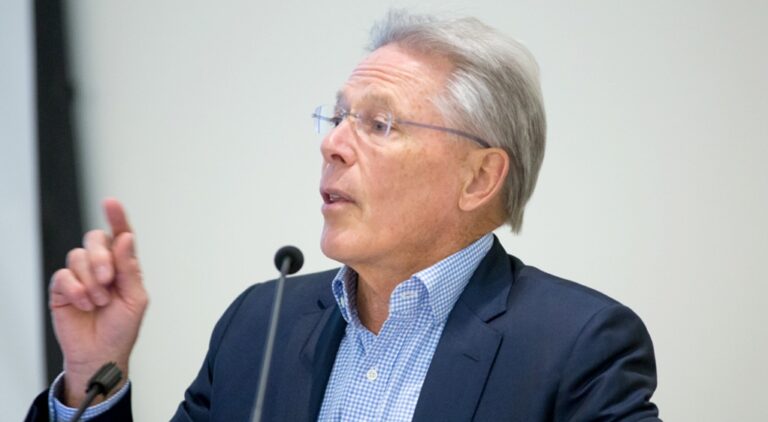
On Feb. 23, Calif. Governor Jerry Brown reappointed UC Davis alumnus Craig McNamara as president of the state Board of Food and Agriculture and also appointed UC Davis’ dean of the College of Agriculture and Environmental Sciences Helene Dillard to the board.

McNamara, who has been on the board since 2002, was appointed as president of the board four years ago. As the president of the board, he works closely with the secretary, executive director and other board members to advise the governor and secretary of agriculture on issues that pertain to agriculture in California, including water regulation and land use.

Each year, the board develops a plan of how to deal with California’s most critical food and agriculture issues. Lately, water usage has been a top priority, especially with California’s recent drought, according to McNamara. Although water is a top priority right now, McNamara said that he personally wants to focus more on food insecurity and food waste.

“I’m aware of the fact that many of our peers are food insecure,” McNamara said. “I know that college students often struggle with food and budgets. It’s a real issue that affects many of us.”

McNamara said that he is very excited that Helene Dillard will represent UC Davis on the board, as he and his wife are both UC Davis alumni.

The board is made up of fifteen positions, each of which is allocated to different areas in the agriculture industry, such as consumer interest, to ensure that the board has a wide representation across the state. There is always one seat for the University of California (UC) system of agriculture as well as one spot for the California State University (CSU) system of agriculture. Helene Dillard will be taking over the UC system of agriculture position.

Dillard, who was appointed UC Davis’ dean of the College of Agriculture and Environmental Sciences in November 2013, was originally nominated for the position on the board. After finding out that she was nominated, she turned in an application for the position to the governor’s office.

McNamara said that, although he works closely with the governor’s team when deciding on appointments, the governor ultimately decides whom to appoint to the position.

“Helene was an outstanding candidate,” McNamara said.

Dillard hopes to present to the board different educational opportunities to help decision makers, as well as discuss different agricultural issues such as the drought.

“I see myself as providing a bridge for the agricultural community to access and interact with the academic community,” Dillard said. “California is the nation’s number one agricultural state with farm revenues that are nearly $45 billion. Thus, agriculture is a huge economic engine for the state and for the U.S.”

In addition to her responsibilities as dean of the College of Agriculture and Environmental Sciences, Dillard will be very busy with her new position on the board.

“I will be participating in key discussions around agricultural issues where university research and outreach efforts may be helpful towards developing solutions,” Dillard said. “I see myself as providing a bridge for the agricultural community to access and interact with the academic community.”

 

Aggie Daily Calendar

0

Tues., March 31

Classical Bassoon & Wine Tasting

5 to 7 p.m.

Monticello Seasonal Cuisine, Davis

Free baroque bassoon performance by Ricardo Rosales with wine tasting host Susan Leonardi.

Salsa Night

9:30 p.m.

The Graduate, Davis

Dance lessons with Cori from ‘Barbara’s Dancing Tonight,’ hosted by DJ Miguel. Tickets are $6.

Cesar Chavez Celebration

6 to 8 p.m.

Marguerite Montgomery Elementary School, Davis

A free event for the community to come together and honor Cesar Chavez on his birthday.


Wed., April 1

Open Mic

8:00 p.m.

Sophia’s Thai Kitchen, Davis

Come enjoy a night of free entertainment including singing, poetry, dancing and more!

Unofficial Scrabble Club

5:30 to 11:30 p.m.

Crepeville, Downtown Davis

Play everyone’s favorite word game and compete with local Scrabblers! All levels welcome.

Trivia Night

8:00 p.m.

Ketmoree Thai Restaurant

Compete against other teams in answering the hardest trivia questions! Free and open to all ages.

Connections

10:00 to 11:30 a.m.

International House, Davis

Mingle with other students and members of the Davis community while enjoying refreshments and crafts!

Evan Daly

9:30 p.m.

Our House, Davis

Enjoy a night of live Blues music free of charge.


Thurs., April 2

Poetry Night Reading Series

8 to 10 p.m.

John Natsoulas Gallery, Davis

Poetry night hosted by Dr. Andy Jones with open mic starting at 9 p.m. People with any talents ranging from poetry, to music and dance are welcome to perform!

DJ Smilez

11 p.m.

Our House, Davis

Dance floor opens up for a free night of dancing!

Trivia Night

9 to 11 p.m.

Woodstock’s Pizza, Davis

Join teams of three to six people to answer unique and challenging trivia questions. Prizes, fun and pizza are in store.

Valente Lecture: Koji Nakano

4 to 6 p.m.

Everson Hall, Davis

If you’re a music lover, make sure not to miss award-winning Japanese composer Koji Nakano’s free lecture in room 226.


Fri., April 3

Rocky Horror Picture Show

7:00 p.m.

Wright Hall, Davis CA

Give yourself over to absolute pleasure with this screening of cult film Rocky Horror, tickets are $10 and $15.

Live Music with Bob Wren

5:30 to 8:30 p.m.

Monticello Seasonal Cuisine, Davis

Traditional and international live music featuring instruments including the violin, banjo and mandolin.

Hollow Point Stumblers

7 to 10 p.m.

Delta of Venus, Davis

All ages welcome to the first free show of the Delta of Venus concert series!

International Film Series

6:30 to 10:00 p.m.

International House, Davis

Enjoy a free screening of the eye-opening international film Batad.


Sat., April 4

Garden Work Day

10 a.m. to noon

Central Park Gardens, Davis

Spend a beautiful morning helping the gardens of Davis! All tools and training provided.

Slow Magic and GLSS on the Quad

7:00 p.m.

UC Davis Quad, Davis

Come join fellow Davis students on the Quad for a night of the best in up-and-coming electronic music!

Nature Discovery Drop-In Days

12:00 to 2:00 p.m.

UC Davis Arboretum

Learn about how to better the environment in ways you never thought possible before.

Local Live Music

9 p.m.

Woodstock’s Pizza, Davis

Enjoy a fun night of live music free of charge!


Sun., April 5

Food Not Bombs

1:00 p.m.

Central Park, Davis

Enjoy free vegetarian meals with the fellow food-lovers of Davis.

Live Irish Music

4 to 7 p.m.

De Vere’s Irish Pub, Davis

Enjoy drink and food specials while listening to traditional Irish music.

International Folk Dancing

7 to 9 p.m.

Davis Arts Center, Davis

Learn how to folk dance, first time free! All levels welcome!


Mon., April 6

Jonny Gold Trio

7 to 10 p.m.

Delta of Venus, Davis

Enjoy a night of free jazz music!

Pub Quiz

8:00 p.m.

DeVere’s Irish Pub, Davis

Free quiz night hosted by Dr. Andy, with teams of up to six players. Arrive an hour early to secure a table.


Coming of Age in the Techno-Revolution:

0

Questioning the Physical “Real”


You know that feeling when you get out of a really good lecture and you have a total brain boner? I can relate. I’m all about that tingly, post-class rush – especially when the topic concerns anything tech-related. Lately I’ve been spending more time thinking about humans’ relationship to technology – in particular, how our actions and behaviors are shaped by the networks, devices and systems we encounter. A shameless social scientist at heart, I regularly take note of the number of people glued to their screens around me: while waiting for the bus, in line at the CoHo, leaning against Wellman’s walls waiting for lecture – you get the idea. We’re obsessed with these things in our hands, and we touch them constantly. More than we touch each other. What does this mean?

What strikes me as especially interesting about our addiction to technology is that it’s as physical as it is emotional. It’s inescapable for one – we’re either required to ingest academic content delivered by our instructors via digital mediums like PowerPoint and Keynote, or so bored that we turn to  social network comfort zones for instant gratification. I find it beautiful in a dysfunctional kind of way that we find ourselves connecting more to our online lives than to our so-called “real” ones; just as interesting to me is the ways in which we respond to and express feelings, thoughts, emotions and impulses through different mediated landscapes. Flip to a random page in our generation’s dictionary and you’ll find this new language. Verbs that convey the technological transformation of our lives and our means of interpreting it, and nouns that have come to collectively define our shifting identities. Out of this language evolves a new kind of intimacy – one that speaks to our roles as both creators and consumers of the technological fix we crave, and the ways in which we seek reassurance from our predecessors. I think we thrive on exaggerated postulations of the future because deep down, we know we’re doomed. But then again, maybe that’s just my inner nihilist talking. In any case, I’ve discovered how intellectually gratifying it is to lose myself in thoughts relating to the overwhelming role of technology in our society. We’re all of us entrenched in a rhetoric that basically says to us, “if you’re not online, you’re not alive.”

And so, with this transformed language and new intimacy that our obsession with technology has produced, where do we go from here? Even if we’re not physically living out the scenes of our cyber-infatuated fantasies, what does our very personal and very physical relationship with these networks say about our kind? And more importantly, why should we care? Throughout the quarter, I’ll be exploring topics related to this theme, namely, the role technology plays in our lives and how it influences our relationships with each other. The column will function as a combo of observations, reflections, and most of all – an invitation to dialogue.


Drop Whitney Davis a line at wmdavis@ucdavis.edu.

Yolo county coroner’s office confirms murder-suicide in autopsy report


Screen Shot 2015-03-31 at 8.21.25 PM

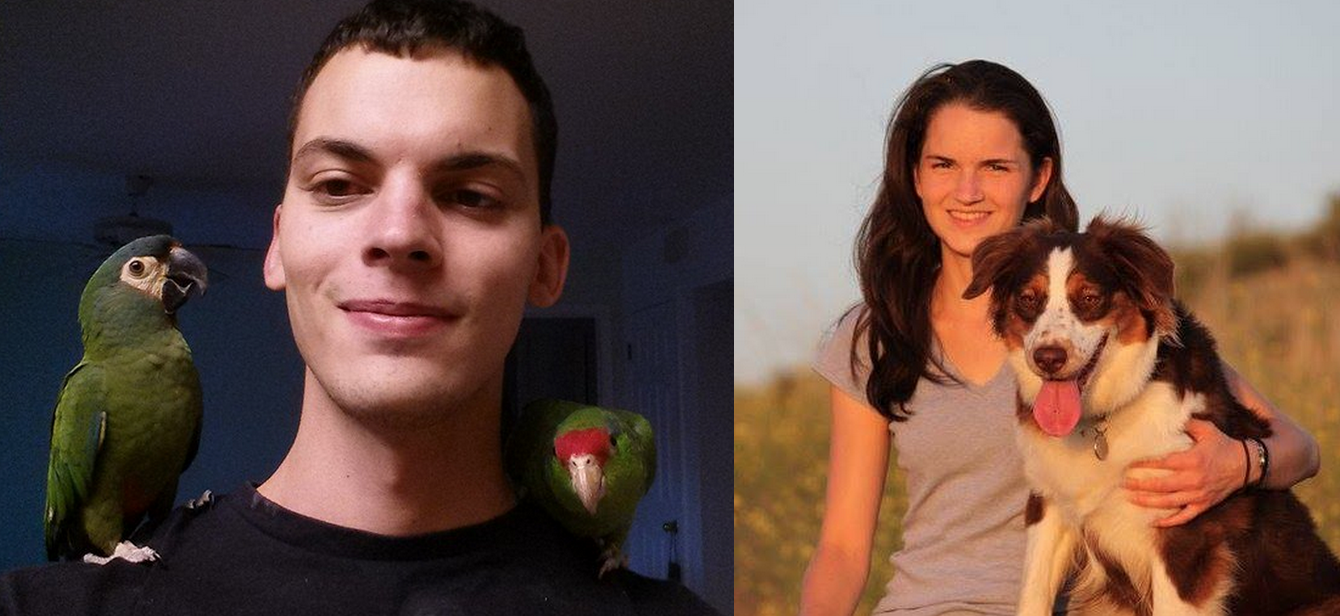
Yolo County Coroner’s Office performed an autopsy yesterday confirming what police had suspected was a murder-suicide on March 27. Whitney Engler, 27 — a fourth-year veterinary student at the UC Davis School of Veterinary Medicine who was expected to graduate this year — and her roommate Joseph Hein, 23, were found dead on the second floor of a duplex located on 2200 block of Glacier Drive.

Chief Deputy Coroner, Gina M. Moya, confirmed Engler’s cause of death as gunshot wounds of the head and chest with the manner being homicide. Hein’s cause of death is confirmed as a perforating contact gunshot wound of the head with manner being suicide.

The bodies were found after a seven-hour police standoff. The standoff began at 7 p.m. after an anonymous caller called the Davis Police Department (DPD) reporting two dead bodies at the Glacier Drive residence. The male caller requested a squad car then abruptly hung up, according to Lieutenant Thomas Waltz, reported by the Sacramento Bee. The DPD asked residents of the duplex to exit using mega phones. By 1:30 a.m. early Friday morning, SWAT officers sent tear gas into the building before entering at which time they found both Engler and Hein’s bodies. The DPD had two Mine Resistant Ambush Protected (MRAP) vehicles at the scene.

Today the UC Davis School of Veterinary Medicine released a statement regarding the loss of Engler.

“She is remembered for her passion for animal behavior and finding the good in every animal,” the statement read.

Engler worked with underserved populations at Mercer Veterinary Clinic. She also fostered many animals, all of which have been reported as being in stable condition. She leaves behind three cats, two parrots, a collection of finches and an Australian Shepherd service dog.

Dean of the Veterinary School, Michael Lairmore, sent an email to UC Davis’ veterinary students with information about counseling resources available to them. Additionally, there was a special counseling session held for students on Monday with vet med counselor, Zach Ward and director Janel Lang.

The veterinary school will hold a Celebration of Life in the near future. The date has yet to be determined. A memorial Facebook Page for Engler with information about services can be found at www.facebook.com/WhitneyJoyEngler.

The Veterinary School has set up a Memorial Scholarship Fund in Honor of Whitney J. Engler and donations are currently being collected. Checks can be made out to UC Davis Foundation, School of Veterinary Medicine, Office of the Dean Or on-line at: http://bit.ly/1NAjLWJ.

Photo Courtesy UC Davis Veterinary Center & Joe Hein’s Facebook page. 

Sacramento International Airport to power future operations with on-site solar farm

Solar farm to reduce energy consumption by 15 percent over the next five years

The Sacramento International Airport plans to install two 15-acre solar farms to provide power for its operations that will potentially save the airport $15 million on energy within the next 20 years. Additionally it will reduce its energy use by 15 percent by 2020. This April the Sacramento International Airport will request permission from the county board of supervisors to sign a contract with a solar company that will prospectively provide power to its facilities.

As of now, the airport spends $3.4 million every year on electricity. On top of these costs, the Sacramento International Airport produced billions of dollars in debt when it constructed Terminal B and a jet concourse building. As a result, the Sacramento International Airport became one of the most costly airports for airlines to do business with in the United States.

Laurie Slothower, communication and media officer for the Sacramento Department of Airports, explained why the airport decided to turn to solar panels.

“Sacramento International Airport is committed to wise use of environmental resources. Terminal B was designed with an eye towards green technology and in fact earned Leadership in Energy and Environmental Design (LEED) silver certification in 2012. The overall goal of the solar project is operate Sacramento International Airport in an environmentally sustainable manner that reduces operating costs. We anticipate energy savings of $15 million over [the next] 20 years,” Slothower said .

Slothower stated that the airport had been discussing solar energy for a while.

“We have been discussing solar energy at Sacramento International Airport for many years. The plan and subsequent Request for Proposal (RFP) was designed by a team of airport planners and the noise and sustainability program coordinator,” said Slothower.

Solar energy has been an increasingly used source of power because of its economical and environmental benefits according to Adam C. Schultz, program manager of the University of California, Davis Energy Institute.

“What’s happened is that the cost of solar has come down dramatically in the last 10 years…I would say it costs less than 50 percent of what it costed 10 years ago. And a lot of that is driven by [technological] advances but also, particularly in California, the state renewable portfolio standard which requires, by law, 33 percent of energy to be from renewable sources of energy by 2020,” Schultz said.

Schultz added a brief explanation of the negative environmental impacts that solar energy would offset. Aside from renewable sources of energy, Schultz said we mostly rely on some large hydroelectric plants, the big dam in the Sierras and natural gas facilities.

“Natural gas facilities have several air pollution impacts…[They] cause local air quality impact and result in ozone issues…You get this air quality impact whenever you’re relying on any kind of fossil fuel, whether it’s natural gas or in other states, coal. So when you’re putting in solar, you’re offsetting that,”  Schultz said.

According to Anthony Wexler, a professor of mechanical and aerospace engineering at UC Davis, solar panels produce electricity when photons from sunlight hit the panel and separate an electron from the atom it is sitting in. This electron then floats into the wire and makes electricity.

When asked to illustrate about how much power the seven megawatt solar panels would provide the airport with, Wexler explained in terms of how many houses one megawatt would power.

“A typical house is about a kilowatt, so a megawatt is 1,000 houses,”  Wexler said.

Since publishing the RFP to the airport’s website in September 2014, Slothower says 14 vendors have submit proposals.

“Operators are selected on the basis of how well they meet the criteria in the RFP. Fourteen vendors responded. We have selected a business whose name will be included in the staff report going to the Board of Supervisors on April 14,”  Slothower said.

Slothower stated that the potential solar company would be responsible for covering the costs of the solar project.

“The successful proposer will design, build, operate, maintain, own, transfer, and provide electricity to the airport,”  Slothower said.

When a solar vendor is approved, the Sacramento airport’s project will hopefully be up and running in 2016. Slothower explained that once the Board of Supervisors accepts the airport’s recommendation, further action can be taken.

“If the Board of Supervisors accepts the airport’s recommendation, we will immediately begin the process of environmental and regulatory review required for a project of this magnitude. We hope the solar farm  will be operational by the summer or fall of 2016,” said Slothower.

Schultz and Wexler expressed enthusiasm for projects like that of the Sacramento International Airport because of the general, positive impacts of solar energy.

“I’m very curious about how it’s going to be arranged and how they’re interacting with the utility. I think it’s great. Some of what we’re going to see a lot more of in the future is the distributed solar facilities that are subscribed or the energy purchased by large customers. UC Davis is doing it, Sacramento International Airport is doing it, Google is doing it, Apple is doing it and again a lot of the big companies that are institutions in California are starting to do it because the costs have come down so much because it really has become economical. I think it’s good for all of us,” Schultz said.

Wexler expressed similar sentiments.

“It’s great. We’re burning fossil fuels around the world and we are changing the climate as a result of that and the more renewable energy we use, the better it is and solar energy is a great renewable energy. So the more of this, the better,”  Wexler said.

Photos by Sarina Dayal. Photo of prospective Terminal B courtesy of Sacramento International Airport.


Treat Yo Self: Politicizing Self-Care

0

Is it possible to think of self-care as a method of taking care of both oneself and one’s community? Is it possible to think of self-love in a manner that allows one to undo the toxicity that is often understood as intrinsic to the practice?

Quite often, when we hear “self-love,” we hear selfishness. We hear narcissism. We think solely of the idea that we should look after ourselves, first and foremost. We understand that self-love and actions of self-care should only (and let me stress that only) involve taking care of the self. We think of drop-kicking toxic people from our lives and moving forward. We think of “positive thinking” and “perspective shifting.”  We think of Donna Meagle and Tom Haverford’s “treat yo self” episode from “Parks & Recreation.” We think of consumerism, fast and easy methods of reaching “happiness” that never seem to allow us growth. We think of an understanding of “self-care,”  which can act as a form of coping, as a form of dealing with the daily traumas and motions of everyday life. But we so often leave it only at that.

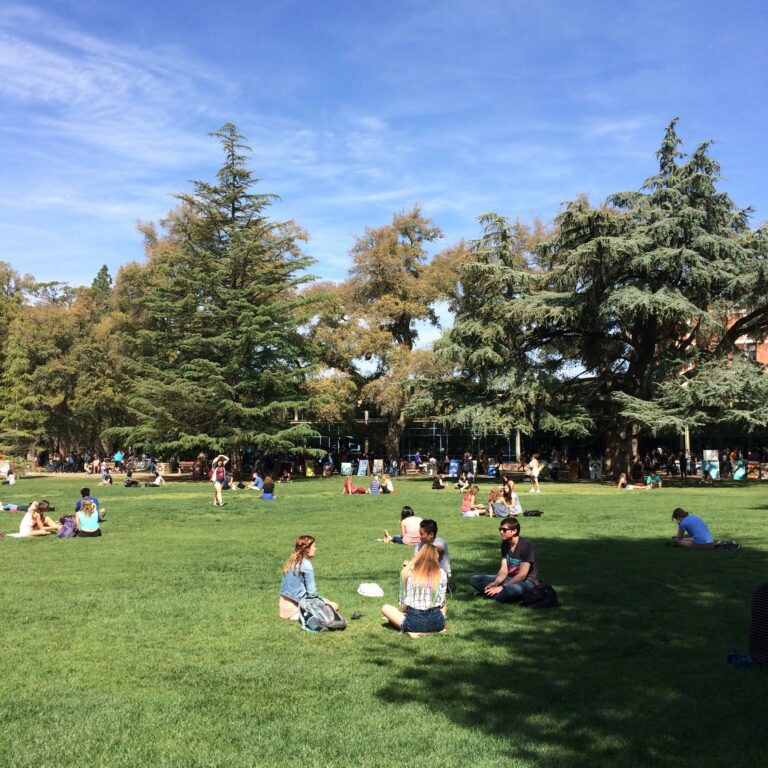
We fail to think of self-care as a loving practice, rather than simply as a practice. We fail to understand that self-care doesn’t only mean doing things that we like. Self-care isn’t only taking a moment of pause in your busy schedule to appreciate the warm spots of sun on the grass devoid of half-naked acro-yoga kids or that group of quad-tanners who don’t seem to ever go to class/have a midterm/have a paper to write. Self-care isn’t only filling yourself with Ben & Jerry’s and streaming Netflix instead of going to class. Self-care isn’t only journaling on your bed late at night after crying for hours about boys and girls and all genders in between and outside. It is all those things and so much more.

I’ve been sharing and re-reading this blog post on feministkilljoys.com lately about self-care as “political warfare” with my friends. It starts off with a quote by famed Caribbean-American lesbian feminist writer, Audre Lorde,

“Caring for myself is not self-indulgence, it is self-preservation, and that is an act of political warfare.”

Taken from her piece A Burst of Light, which parallels her battle with cancer to her activism against anti-blackness and sexism, the feministkilljoys post deconstructs this quote and discusses the ways self-care can act as a form of community building.

Self-care is taken, here, as a practice that allows us to love ourselves and also generate a loving-living community in a socio-economic-political environment that suggests that some of us are not worth living. This means undoing internalized oppressions and everyday practices inline with ableism, sexism, racism, classism, and all those other -isms you’ve probably heard about in your classes, your Tumblr dashboard, during protests, or from your “angry” political friends. This means taking care of yourself in a manner that is long-lasting and not simply a short and sweet cure. This means loving yourself in a way that isn’t narcissistic. This means validating your existence, your narrative, your experiences and that of others. This means enacting a loving practice of understanding and compassion that attempts not to transcend boundaries but recognizes the boundaries of our knowledge and the ways that our multiple identities will allow us to experience the world. This means recognizing our privileges. This means holding others accountable for their privilege and their actions. This means holding ourselves accountable as well.

I know what you’re thinking, “This is too political, too feminist,” “Why care about others if I need to care for myself.” But if we are to take care of ourselves, we need to take care of others as well. Whether it be through providing love and care or through activism, in order to truly indulge in a loving practice of self-care we must learn to love ourselves and others. Our lives are not separate from those around us. Our problems are both our own and the result of the systems of power that shape our experiences.

So yes, it is good to take a moment of pause on the quad and appreciate the grass and the happy faces of our peers as they play soccer or throw frisbee, while we stress about midterms and papers and everything in general.  Yes, it is okay for you to skip class to take a day for yourself and walk around downtown, take a nap in the arboretum, and spend those $11 to see that movie you’ve been meaning to see. But at the same time, we must recognize that there are reasons we might feel “off,” though often times it might seem that there are none (in many cases there often aren’t). We must allow ourselves to at once take care of our own mental well-being and also those around us. In order to enact self-care, we must also take care of others. And in order to take care of others we must also understand the systems of power relations that generate our lived experiences and work to undo the structures that cause such inequality and devastation to so many.

So in these next nine weeks, I’m going to write about different ways that we can take care of ourselves and our various communities through a process of unlearning oppressive ideologies. And if you take issue with any of this, please feel free to e-mail me.

Want to call me out on something? Want to dish about white supremacy and capitalism? Want to queer on the quad?  Contact Gilbert Gammad at gdgammad@ucdavis.edu

Graphic by Jennifer Wu.

Why Davis does spring best

0

Six ways Davis will spring joy to your life this quarter

If you’re a student reading this, then let me just start off with an apology:

I am so sorry.

Yes, it’s true, spring break is indeed over. Instead of soaking up the sun with your favorite iced Starbucks beverage faithfully by your side like you have been for the past week, you’re probably sitting in your room or an on-campus lounge somewhere right now, trying desperately to avoid the influx of school-related emails plaguing your inbox. However demoralizing it might be to think about another 10 whole weeks of school work ahead of you, springtime for us Aggies isn’t actually as bad as you might assume.

Here are a few quintessential Davis springtime things that will help you get over those post spring break blues.

1. Say goodbye to that North Face jacket

It’s time to say a ceremonious goodbye to your cherished North Face jacket – you won’t be needing it anytime soon. Get out those shorts, skirts, tanks and springtime clothes which have been waiting so patiently to be worn; this is their time to shine. Just try to make sure your outfit is bike-riding appropriate of course; although certain skirts can be very inviting on a nice sunny day, you don’t want to end up sunny-side up because of a little bit of spring wind. And by the way, that North Face jacket hanging at the back of your closet – you shouldn’t feel guilty about the several months of neglect that are coming its way because believe me, it’s happy for you.

2. Slacklining on the Quad

Slacklining is every college student’s favorite activity, but this college student activity is taken to a new level in Davis during the spring. Walk by the Quad at any time of the day on any day of the week and you’re guaranteed to see at least one or two slacklines in the vicinity. There are always a few barefoot students trying fiercely to take more than one step without falling, and then there are those students who like to sit on the Quad and bet on how many steps they’ll take before falling.

3. Picnic Day (obviously)

Groups of students stumbling clumsily around town in their bathing suits from party to party, music blasting from the backyard of almost every house down Anderson Road, hundreds of families walking happily on the Quad with little kids riding mini bikes and sporting “Go Aggies” t-shirts, outrageously long lines to try to milk a cow, the Doxie Derby craze, late afternoon nap-time…yes, Picnic Day is just about as Davis-y as it gets in the spring.

4. Houseboats

Even though it is mainly applicable to fraternities, sororities and various other university groups, Houseboats is still widely known as the epitome of a springtime college activity. A few days on a boat in the sun with friendly people, water slides, loud music, burgers, bathing suits, a lot of alcohol and not a lot of hygiene is exactly what every student wants out of their college springtime experience, right?

5. The Arboretum

This is about the time of year when the arboretum really likes to show off and remind us why Davis is basically one of the most beautiful schools ever. If you’re a couple weeks into spring and you haven’t caught the Davis spring-fever yet, then you probably haven’t visited the arb — which boasts everything you could ever want out of nature in the spring: blooming flowers, bounteous trees, green grass, a sparkling lake, little ducklings, you name it!

6. That light at the end of the tunnel

If somehow, none of the above have convinced you that Davis is a pretty fantastic place to be in the springtime, then hopefully this will at least comfort you. Just think of spring as nearing the light at the end of the tunnel – a countdown to summer. Yes, you’re back at school, but you only have a total of ten weeks left until you reach the end of the tunnel, and when you do, you’ll be springing with absolute joy.

Photos by Anisa Bashiri.

Aggie Style Watch

0

Hire me attire: how to dress for a job interview

Picture this: it’s the night before a career and internship fair or job interview and you are faced with the challenge of putting together an outfit for the big day to come. Your clothing might be a surprisingly influential factor during an interview.

That doesn’t mean you should go out and buy a fancy new suit right away. In fact, that’s one of the worst things you can do, and let me tell you why.

You need to feel comfortable enough in your own skin to where you can answer some uncomfortable interview questions like the dreaded  “What are your greatest strengths and weaknesses?”

So let’s tackle some of the anxiety and ambivalence surrounding the idea of interview attire. Much of that comes from a variety of factors such as weather, geographic location and varying degrees of professionalism expected within each field.

The spectrum ranges from business professional (where a suit and dress shoes are expected) to casual, with business casual resting enigmatically in the middle.

Business casual is perhaps one of the most difficult styles to grapple with because there is so much room for interpretation.

If you are truly baffled by all of this, Forbes magazine suggests calling the human resources department of the company you are applying to in order to get a feel for what might be deemed suitable.

Serena Wiese is a senior technical recruiter for a medical technology company based in the Silicon Valley. She has pragmatic advice for candidates applying in the fields of engineering, marketing, legal and finance.

“You should be connecting with your recruiter at every stage in the game. I take care of my candidates and let them know what appropriate interview dress is,” Wiese said.

Wiese also suggested avoiding the following at all costs: sneakers, jeans, perfume or cologne and over-the-top makeup like false eyelashes.

“Less is more,” Wiese said.

You will do better in your interview if you feel like yourself without much unnecessary embellishment.

An interview is a chance for an employer to get to know you and see if you would be a good fit for the company. So show them why you would be a good fit before you even speak.

You have very little time to manage others’ impressions of you. So  everything about you must say “I’m the one you should hire” from your handshake to your shoes.

However, a word of caution from the senior technical recruiter: “You’re not going there to be something you’re not,” Wiese said.

So don’t go out and purchase a brand new entire outfit. It may not seem like the real you that employers are trying to get to know.

Pull pieces from your own closet and supplement a modestly patterned blouse or dress shirt you already own with some new slacks or a formal skirt (with a hemline no more than two inches above the knee) and you’ll be in good shape.

If you are a good candidate you will have done your research, and part of that research is finding out exactly how to dress to make a good impression with a company.

So call human resources, talk to other members of the company on Linkedin and maybe even consult with a personal stylist in a department store.

You’ll find that having the right “hire me attire” can make a world of difference.


ALLISON REISS can be reached at arts@theaggie.org.

Graphic by CA Aggie Graphic Design Team.

Panel held to eliminate hate speech on campus

0

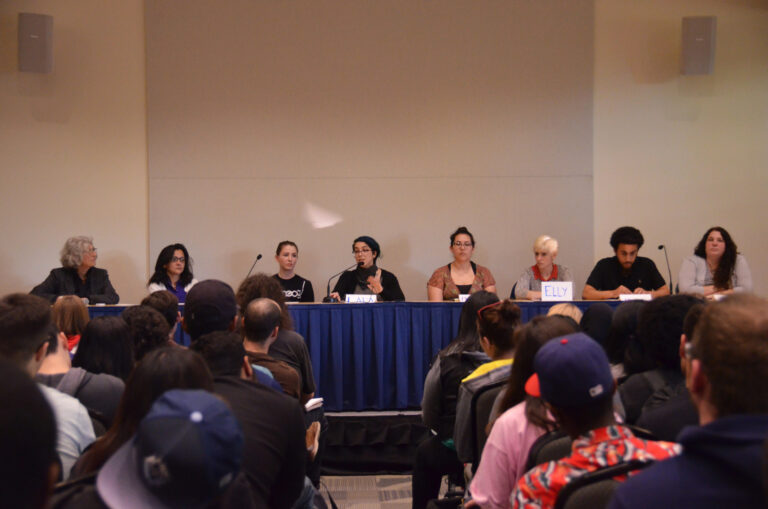
On March 4, the Jewish Studies Program, the Middle East/South Asia Studies Program and the Cross Cultural Center sponsored a panel entitled “Anti-semitism and Islamophobia: The Anatomy of Twin Hatreds.”

The panel, initiated as a means to begin a conversation about eliminating hate speech, was moderated by history professor Susan Miller and Noha Radwan, an associate professor of comparative literature, and a group of six of Miller’s history students sat in front of an over-capacity room in the Student Community Center’s multipurpose room, facilitating dialogue between the speakers and the audience.
“The greater underlying problem is a fear of differences,” said attendee Ambrosia Solis, a fourth-year political science and public service double major. “If you do not seek to understand, you seek to judge.”

Solis referenced the recent murders in Chapel Hill, North Carolina, the defacing of the Israeli flag in Sacramento and anti-semitic acts on the Davis campus as the reasons she felt the need to speak up. She said that she wants people who are not part of either the Jewish or Muslim communities to acknowledge the hate speech that occurs regularly and often goes unnoticed.

“I want people to start the hard dialogues and understand where people are coming from,” Solis said. “This is more than just a minor or isolated incidence.”

Emily Nicol, a fourth-year English major, feels that when anti-semitic or islamophobic incidents occur, the media often propagates the hateful ideologies. She referenced a fake document, “The Protocols of the Elders of Zion,” published in 1903, that exposed a supposed Jewish conspiracy for world domination. According to Nicol, publications such as this led and still lead to the intensification of hate, and she said that peer-to-peer media in today’s culture has only made misinformation easier to proliferate.

Nicol feels that, since the September 11, 2001 attacks on the World Trade Center, there has been an increased trend of the media generalizing all Muslims as Arabs and all Arabs as Muslims, which constitutes hate speech.

“When you have mainstream media that broadly refers to Muslims, then it promotes a culture of fear,” Nicol said.

Mahmoud Hassane, who is Muslim, told the story of his inclusion of a new Christian student when he was growing up in Egypt. There, he said, Christians were the minority and other students were making the student feel unwelcome with verbal abuse and intentional exclusion.

“There were people who did nothing to help who were just as complacent as the person doing the crime,” said Hassane, a first-year managerial economics major.

Elly Oltersdorf, a Jewish student and second-year history major, said that she desires to educate people to be not just tolerant, but also compassionate. She stressed the importance of avoiding assumptions and instead seeking out an education via interactions with other people.

“Instead of trying to understand someone else’s narrative, try to equate their narrative to yours,” Oltersdorf said. “No one experiences anti-semitism or islamophobia in the same way.”

Oltersdorf also felt that the perceived tension between the Jewish and Muslim communities was in fact an example of blurring the lines of identity. Oltersdorf said that she left the panel wishing that those who presented and spoke would have focused more on the marginalization of the two groups in today’s American society.

“When someone is being bigoted, they have given up part of their identity,” Oltersdorf said. “Their identity as someone who is being hateful in that moment is coming before anything else in that moment.”


Now Taking Submissions!

centennialad_type2_1-01


Want your work published in The Centennial Magazine? Email submissions to us at magazine@theaggie.org!

Graphic by Jennifer Wu. 

Aggies fall in first Division I postseason game

The Aggies first taste of postseason play came and went faster than sophomore guard Darius Graham can break a full-court press. After a strong first half performance, UC Davis’ lack of rebounding and porous defense finally caught up with them as they fell to Stanford in the first round of the National Invitation Tournament (NIT).

UC Davis men’s basketball headed down to Anaheim, Calif. for the Big West Tournament and were ousted in the semifinals by a feisty Hawai’i team that ultimately fell to UC Irvine in the Championship. As a consolation prize for finishing the regular season with the best record in the Big West, the Aggies were selected to play Stanford in the first round of the NIT in Palo Alto.

Vegas Insider listed UC Davis as an 8.5 point underdog against Stanford, a Pac-12 team that had quality wins over major conference opponents including then No. 9 Texas. The Cardinal is led by senior guard Chasson Randle who averages 18.9 points, 3.3 rebounds and 3.1 assists per game. As a team, Stanford shoots a poor 43.4 percent from the field, but makes almost 39 percent of its shots from beyond the arc. The team also draws a lot of free throws, led by Randle.

Senior guard Corey Hawkins has made the Aggies offense run smoothly throughout the season, scoring over 20 points per game on an efficient 50 percent from the field and 49 percent from beyond the arc. The only other UC Davis player to average double figure points is senior forward Josh Ritchart, partially because of the fact that no player besides Hawkins averages more than 28 minutes per game. The game also featured a showdown between Hawkins and his godfather, Stanford head coach Johnny Dawkins.

With a significant number of Aggies fans populating Stanford’s Maple Pavilion, UC Davis took the floor to face their Goliath. The team showed clear nerves to begin the game, shooting just 33 percent in the first 13 minutes while missing their first five shots from three point land, finding themselves down by 12 points.

The Aggies, however, stampeded back on a 15-3 run behind phenomenal play by Hawkins. The senior guard scored 10 straight points for UC Davis including their first two threes of the game. Hawkins, senior guard Tyler Les and sophomore guard Brynton Lemar each added one more from beyond the arc before the half ended with UC Davis down 36-37.

Randle finished the first half with eight points and sophomore guard Marcus Allen added eight on 4-4 shooting for the Cardinal. Hawkins finished the first half with 21 points to go along with four rebounds and a steal, while no other Aggie had more than three points.

The Aggies of the first 13 minutes came out from the locker room at halftime, allowing Stanford to go on a 6-18 run in the first eight minutes of the second half. Hawkins missed several makeable shots by his standards and the team was outrebounded 10-2. Allen hit five of his next seven shots and finished the game with 22 points, including several layups off of easy drives to the rim.

The Aggies were able to make a miniature run, bringing the game to within 10, but they could not close the gap and fell 64 to 77. Hawkins finished with 34 points and five rebounds, making 10 of 22 shots. The senior guard also took on a significant amount of the defensive duties on Randle, showcasing his versatility.

UC Davis was hurt mainly by its inability to rebound or get consistent offensive production from any playing beyond their star guard. The rebounding margin was relatively even at halftime, but the Aggies were outrebounded 11 to 23 in the second. No UC Davis player had more than one field goal made until senior guard Avery Johnson hit a three with just over eight minutes left in the game. Johnson ended the game as the second leading scorer with seven. The team shot 37.3 percent from the field in the game, while allowing their opponent to shoot 56.4 percent.

The matchup in Palo Alto marked the last game for four UC Davis seniors, but the program has been greatly impacted by the year that the team had. Coach Les was excited about what the future holds, saying “This team put UC Davis basketball on the map. A lot of people said it couldn’t be done and this group, especially our seniors, brought great hard work, great competitiveness and great character to this program. They did a lot of things that people thought were impossible.”

Hawkins added, “Hopefully just raise the bar for this program. When I come back, I hope to see nothing but years like this.” Coach Les and the Aggies will now head into the offseason with an outstanding season behind them and a goal of always improving ahead.

Tensions rise, Republic F.C. forfeits

0

Aggies win after Sac. Republic leaves match early


The highly anticipated match between the UC Davis men’s soccer team and Sacramento Republic F.C. ended abruptly after Republic’s defender James Kiffe received a red card for a hard sliding tackle against Aggie freshman midfielder Noah Wilson in the 65th minute of the match.

Republic defender Justin Braun received a yellow card for arguing with the referee after Kiffe was marked with a red card. It was then that Sacramento Republic head coach Predrag “Preki” Radosavljević ran across the sideline toward the clutter of referees, UC Davis and Republic players and event staff. The referee immediately ejected Radosavljević, and Radosavljević promptly signaled his team off the pitch, marching out of Aggie Soccer Field.

The game had already been a chippy contest, including a first half disagreement. When the first half ended, a scuffle broke out between both teams after an exchange of words between players and coaches. Republic assistant coach Adam Smith was escorted off the pitch after pushing a UC Davis player. Several players and coaches from both teams were involved.

The majority of fans were left in disbelief as Republic F.C. players followed their coaching staff out of the venue in the 65th minute. A number of Sacramento Republic fans applauded Radosavljević and the team as they left the stadium, but Republic was also met with jeers from Aggie fans.

Sacramento Republic F.C. dominated the first 20 minutes and took an early lead over the Aggies, who played conservatively. UC Davis was limited to 10 practices prior to this match and this was Republic’s last preseason match before opening the regular season on Mar. 21 against the Seattle Sounders F.C. 2.

Republic defender Gabe Gonzalez found the top-left corner of the net in the eight minute off an assist from midfielder Rodrigo Lopez.

Lopez connected with Gonzales from a free kick close to midfield. After a left-footed inside turn from Gonzales, he rocketed a shot 30 yards away from the goal, leaving UC Davis goalie Armando Quezada with no chance of saving the wondrous strike.

The Aggies were able to regain their composure after a shaky start and ended the first half with their only shot of the half. UC Davis came into the second half and were assertive with the ball. They were able to get key defensive stops and pressured Republic offensively.

“In the second half we changed our system of play to matchup with them and I thought it was very, very effective and we were getting some very good chances,” said UC Davis head coach Dwayne Shaffer of the changes tactic changes made at halftime. “We came back in the second half, we hit the crossbar. Our kid kicked a bicycle and hit the cross bar, it almost went in. We were doing some good stuff.”

Shaffer was referring to a shot attempt by freshman forward Matt Baringer who took a bicycle shot in the box that was deflected off the crossbar.

The matched ended after Wilson was clipped on a hard tackle in front of the Aggie bench and tensions rose. A total six cards were issued, including the red and yellow cards that ended the game. UC Davis was marked for four yellow cards.

The match was largely overlooked by Radosavljević’s decision to forfeit with 24 minutes remaining. Radosavljević said that it became too dangerous for his players to continue playing. Republic played without four starters who are currently out due to injuries.

“I just thought the game got out of control, and it was time for us to walk off,” said Radosavljević. “We can’t afford any injuries at the moment, and it was on the verge of bigger incidents. I made the decision that it was not safe for us.”

Radosavljević was adamant that Kiffe’s tackle was fair.

“100 percent clean tackle, I had the perfect view. I think there were a lot of bad tackles. We came here to play the game in the right way,” Radosavljević said. “We are [professionals], and this is our livelihood.”

UC Davis head coach Dwayne Shaffer also thought that a red card was unwarranted and found it strange that Radosavljević decided to forfeit the match.

“I just saw a good, hard tackle,” said Shaffer. “I saw a fun game for everyone to be a part of. What a great community event for us and the Republic. I was enjoying the game.”

But it was too late. The referees had lost control of the game after failing to call a tight game early on when both teams began to play aggressively.

Despite the theatrics, Shaffer saw many positives out of his young team. “Those guys are really good [professionals],  we are a young college team and every game we play is a learning experience. Some of those guys are really good players, they’re [professionals] for a reason. Because they are and good with the ball,” Shaffer said. “It’s a great experience, we had 12 freshman playing in the game and for them to get that sort of experience at that level I thought it was good for our team. “

It is unclear whether future matches between UC Davis and Republic F.C. will be scheduled after the debacle at the Aggie Soccer Field.

Drunken Thoughts from Inside El Burrito on the Eve of My 20th Birthday

mag_siegler

I remember play-fights with playdough, sugar highs off mango, Mama singing Aesop’s Fables and footsie under the table.

I remember when I couldn’t read medication labels, before Xanthem and Lipphomite, I remember Dragon Tales and Zaboomafoo, I remember Marzapone and Kryptonite.

I remember having wet dreams about Scooby Snacks, saving three months of allowance to buy a walkman, Arthur taught me to spell and, Elmo taught me to talk, man.

I remember when religion was written out of Spaghetti-O’s, the schoolyard was the only caste system I knew and the closest thing to discrimination was not letting Davin Rigly onto the top of the swirly slide because he smelled like broccoli soup and cough medicine.

If I could I’d keep these feelings in a plastic jar.

I remember tamagotchis and Pokemon, trying to get a second on the jumbotron, and saying “shit” for the first time.

I remember when I licked my first lime, and then spit it out. I remember when conquering Oregon Trail was the only part of my life I hadn’t figured out.

I remember eating ants for protein, when plots of grass became playgrounds, I remember my first armpit hair, the first pimple I squeezed, Gameboy Colors, kindergarten lovers, being a little brother and the days when cutting the milk line was the only action that earned you the title of “cutter.”

I remember snackpacks more than snapbacks, Cheerios were my pick-me-up, Sunny D was my Vitamin C, and otter pops weren’t cool because they were cost-efficient – they were cool because Sami Peterson’s house always had the 200 pack and he was the best at Arts and Crafts.

I remember  when we used to do art in class, I remember when we used to “pass gas.” I remember flatulence as a form of opulence where affluence was accessed from initiating the ordinance of “whoever smelt it dealt it.”

I remember when The Twin Towers fell. I remember when Papa died. I remember when I learned the word cancer, when they broke Hanley because he was a dancer. I remember when I got too high for the first time, I remember my first cigarette, I remember sitting on the edge of Sunset Cliffs with Eminem’s “Stan” playing in my headphones and one foot hanging off the bluff, my whole body telling me to jump. I remember loneliness, and sad music, I remember my cousin swearing that he’d stop using. I remember looking at my 6-year-old self walk away from my life and thinking, “ If I could I would keep this feeling in a plastic jar.”

I remember play-fights with playdough, sugar beets and mango, Mama singing Aesop’s Fables; man where’d the good days go?

Listen, you can still hear yourself if you’re quiet. You can still see yourself if you try.  Turn your Sunny D-colored tamagotchi onto that pimpled faced,  Scooby Doo-looking image of Arthur  eating Spaghetti O’s while peeing his pants during naptime, and you’ll realize, that plastic jar hasn’t gone anywhere. In fact, it’s right where you left it.


Jacob Siegler is a contributing poet for The Centennial Magazine. He  can be reached at magazine@theaggie.org.

Illustration by Sam Reisman. 

Ebb & Flow

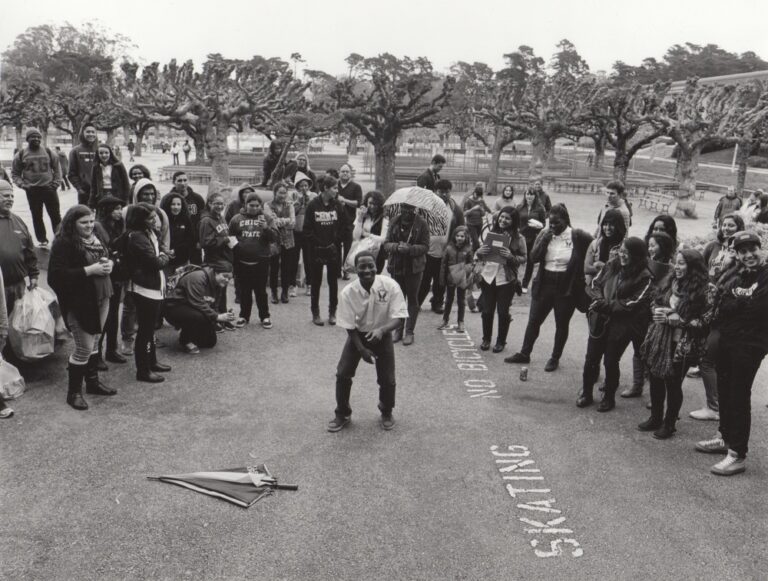
While strolling through Golden Gate Park, a Pentax K1000 hangs around my neck and film canisters fill my pockets. I come across roller-skaters gliding in circles to French hip-hop. I ask to take their picture, and the two smile and nod. I shuffle and shoot, keeping up with their dance.

The ephemeral snapshots of Garry Winogrand and Henri Cartier-Bresson, which I discovered during my black and white photography courses in college, have inspired me to document today’s street life in San Francisco. As I venture from Market Street to Lands End, photography allows me to meet eclectic people that are the ebb and flow of urban life. The medium empowers me to break through socioeconomic and racial barriers that can often keep people from interacting. Photography is my invitation to participate in the experience, to connect with new people.

Mankind is a rich subject to photograph. Looking through the viewfinder, I am fascinated by how I can engage with a stranger within the frame. What in reality is a covert encounter, when preserved as a photograph, the moment is magnified in its meaning. I have the luxury of being able to consider the image and revisit that scene as often as I wish. Capturing an instance in time is important to me because it satisfies my desire to tell a story visually.

I go out to the city with little intention or expectation. With camera in hand, I focus on my surroundings and am present in the moment. To watch the skaters practice their choreography, to hear the sound of their wheels rolling on the pavement–these are personal instances that I would not have been able to experience if it weren’t for photography.

Photography demands patience and faith in the uncertain. I don’t know what I’ve captured exactly, and I won’t know until I develop the film. And that’s when I realize why I am a photographer. I am spontaneous, leaving the outcome to chance. Just like my photographs, I live in the moment. The experiences that I’ve had as a street photographer have expanded my worldview and satisfied my innate curiosity about human nature.

Anisa Bashiri is the Photo Desk Editor for the California Aggie Newspaper. She can be reached at photo@theaggie.org.

Talking to Strangers: New Familiarity

mag_familiarityWe’ve all at one time or another had the experience of recognizing someone in public who we know personal things about, though they have no idea who we are. Sometimes this person is a friend’s ex-partner we have seen in Facebook photos, sometimes they are a professor who will never remember your individual face from a lecture hall of 500 students and sometimes this person is just someone you happen to pass by on your daily walk to work but have never said hi to, yet you know they like their coffee black and toast slightly burnt because, well, you never see them without it when your paths cross.

I consider these people strangers, because as long as they are unaware of my existence, I cannot fully understand theirs. It’s never easy to approach this type of stranger because I’m always afraid that person will think I’m creeping on them (I swear stalking is not part of my social repertoire — I just don’t have enough time). Lately, though, I’ve taken it upon myself to interact with these particular kinds of strangers, especially if my recollection of them is positive.

In fact, the other day I was in a waiting room and upon walking in, noticed a guy that I had seen perform in a student-run show a few nights before. I knew who he was, knew his name, but being a mere audience member, he certainly did not know mine. I decided I wanted to tell him how well he did, because well, he had acted really well and I have always liked making sure people know when they are appreciated. I figure, if you can do something to let another person know that they are interesting, important, or noticed in a positive way, why not let them know?

The encounter was awkward at first. I sat down next to the unsuspecting man and, unable to get his attention at first, waved “hello” in his face. He seemed confused and a little annoyed that someone would try to start a conversation in a waiting room (and it didn’t help that everyone else around us was dead silent).

“You’re in Birdstrike,” I said to him. “I recognized from the show the other night.”

I ended up telling him that they were really funny and that I’d like to go again. He still seemed somewhat concerned that an absolute stranger was addressing him, and for a moment I thought I should drop trying to converse with him altogether. Unfortunately for him, though, once I start something, I always commit and follow through, even if that commitment is an uncomfortable conversation (also, I can’t handle awkward silence and tend to compensate by talking…).
Like the derpy human I am, I started to ask questions about his experience with acting while cracking painfully unfunny jokes. Realizing that he was still probably traumatized by the fact I wouldn’t stop talking, we sat in awkward (the amount of times I’ve used this word is accurate to this situation) silence until I, for no reason, thought of a podcast I had recently listened to on the topic of the existence of the universe and the asymmetry of everything.

At that moment, I was reaching to keep our dialogue going, at least until I was called back for my appointment, so I whipped out a healthy dose of “I can’t believe we exist – our whole existence is a lucky accident”. Something about this sentiment struck him. His face kind of lightened up and he immediately engaged with my notion.

“Right? My train of thought is pretty existential, too,” he said to me.

Immediately we began to have a silly (but kind of serious) and interesting beyond my expectations conversation about the ever-expanding universe and the abstractness of consciousness (even typing that made my brain hurt). At one point we even pondered the strange fact that literally anything at all was possible. We discussed how in the grand scheme of things, statistical improbability of an event occurring merely meant that though that event was not probable or likely to happen, theoretically anything was possible. For example, sure pigs can’t fly, and it’s likely a mutation in their genes won’t occur anytime soon to allow them to do, but by the slightest, tiniest bit of genetic mishap (or pigs somehow learn how to navigate airplanes), pigs could technically start flying.

“This beneath us could literally become twelve thousand ducks,” I actually said at a point in the conversation when nothing was awkward anymore and everything was theoretical (abstraction is always more comforting than the reality of things).

He agreed, and we both decided that there were endless scenarios as to how twelve thousand ducks could possibly replace the bench we were sitting on. We geeked out about the philosophies of everything ever until I had to leave for my appointment. By then, everyone in the waiting room had been silently eavesdropping on our odd anecdotes, and though normally I’d have felt self-conscious about my nerdiness, I didn’t that time. I felt as if I’d made a friend and our conversation had assured me that making the effort to really speak to someone was totally worth it.

I don’t think it’s likely I’ll ever cross paths with him again, but that conversation is a conversation I’ll never forget. How often do we find a stranger willing to talk about the weird crap we like? Chances are one in a million, and I will always be grateful that someone out there also understands that statistically, by some far stretch of the imagination, anything is possible.

Akira Olivia Kumamoto (A.O.K.) is the Arts Editor at The California Aggie. She writes the “Talking to Strangers” column in The Centennial. She is passionate about string theory, Mark Ruffalo [the human], jazz and cultural journalism. On any given day you can find her writing poetry, practicing a cappella, running long distances, fighting for social equity and not sleeping. If you would like to remind A.O.K. that talking to strangers is creepy as heck, you can reach her at arts@theaggie.org or send her a tweet at @akiraolivia.

Illustration by Shaina Forsman. 

Photo by Jennifer Wu.