57.5 F
Davis

Davis, California

Wednesday, December 24, 2025
Home Blog Page 806

All about that sass

0

The UC Davis Lounge Lizards to perform a cappella like it’s 1995

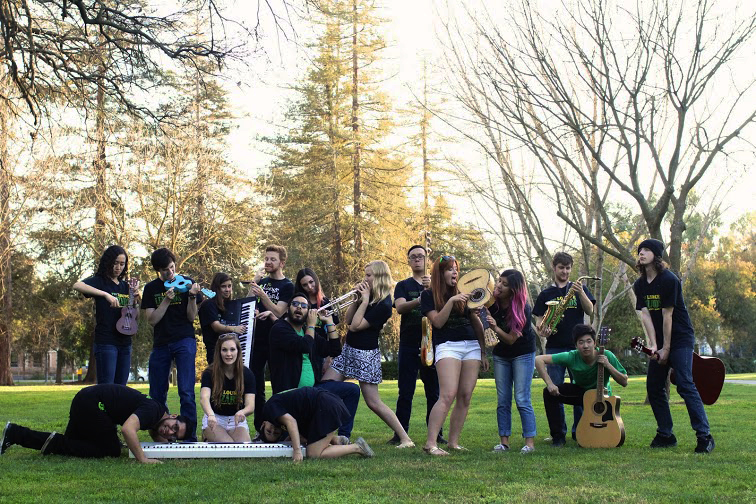
It’s week 10 of winter quarter. You’ve sweated over midterms, spent countless hours cramming, made way too many Dutch Brothers runs and you’ve still got finals to get through. But have no fear — the UC Davis Lounge Lizards are here to brighten your week with their energetic brand of a cappella. This Friday, the Lounge Lizards will be celebrating their 20th anniversary since their founding in 1995 with their No Instruments Attached: 20th Anniversary Edition concert. The Lounge Lizards are known for their lively performances and fun atmosphere, making this concert the perfect break from all that finals studying.

“We’re known as the silly group in the a cappella community,” Meghan Murphy, a second-year psychology major and the Lizards’ public relations chair, said. “We’re chill, just love to hang out with everyone [and] dorky.”

Jordon Wade, a graduate student in soil sciences and music director of the Lounge Lizards, agrees that the Lizards always have a blast performing in front of audiences.

“We’re generally laid back and have a lot of fun, but we also know when it’s time to get down to business,” Wade said.

And getting down to business for the Lounge Lizards means doing a little bit of everything. Murphy says to expect a variety of different kinds of music from the show this year, especially since the Lounge Lizards will also be hosting two a cappella groups from other campuses: UC Berkeley’s Cal Jazz Choir and UC Santa Cruz’s Acquire. The show will also feature two other on-campus a cappella groups: UC Davis’ all-male a cappella group, The Afterglow, and UC Davis’ all-female Greek a cappella group, The Greek Beats.

President of the Lounge Lizards, fourth-year animal science major Jessie Herrera, enjoys the chance to get to meet and listen to other a cappella groups.

“Meeting new people who do the same thing as you is really fun,” Herrera said. “You get to find things in common and see the [artistic] parallels [between] each other’s groups.”

Wade also enjoys watching other groups perform because each campus has a distinct a cappella culture and community.

“At Davis, the vibe is friendly and really supportive. We’re fairly refined and uniform in what we look like, but for Acquire [they like to play around with their look]: one time they came out all wearing pajamas [for their performance],” Wade said. “They just have a completely different way of going about their shows and we love bringing that in.”

The Lounge Lizards have goofy events planned themselves. They will be having a social media contest in which fans create their own lizard and dinosaur meme and post their answers on Facebook or Twitter with the hashtag #NIA2k15. Winners will be revealed during the concert and will receive a Lounge Lizards t-shirt as well as their very own personal serenade.

Along with their meme contest, the Lounge Lizards will also be having a competition during their concert between their two co-hosting teams: Team Riguel, composed of members Ryan Chen and Miguel Guerrero, and Team Serena, made of members Sarah Poplack and Kellina Doerr. Wade says they will encourage live tweeting during the show so audiences can vote on their favorite team.

“It’s OK to be on your phone and tweeting. We want to see the tweets and what [the audience] thought of the song,” Wade said. “There’s 500 [in the audience] and 17 of us and we want to bring them down to the stage with us because this show is for them,” he said.

Be it Team Riguel or Team Serena that comes out victorious, No Instruments Attached: 20th Anniversary Edition promises to be a fun night of jazz, pop, rock and everything in between.

The show will start at 8 p.m. this Fri., March 13, in Science Lecture Hall Doors open at 7:30 p.m. Tickets are $5 presale online or in front of the Memorial Union at the Lounge Lizards table this Monday thru Friday, and will be $7 at the door on the night of the event. Visit the Facebook event page to learn more.

Courtesy photo by Lounge Lizards.

Sustainability in the Built Environment: What is the ultimate goal of sustainability?

0

lundheadshot_opThank you to everyone who read my columns and followed me throughout this process. I have learned quite a bit throughout this and I hope you have too! Today, the scope of my column will focus on the overall definition of sustainability and how we, as humans, can strive toward creating a zero net energy planet .

Sustainability is generally defined as the bountiful diversity and productivity of biological systems. These systems should produce waste below a non-harmful level. The core notions of sustainability can be viewed as a spectrum that ranges from extremely vast changes to minor changes in our current system.

While analyzing this spectrum, it is evident that moderate changes are useful, but not optimistic enough, and subsequently don’t conceptualize a greener future well. Contrastingly, the extreme definitions propose highly optimistic changes in our current framework but somewhat neglect the necessity for immediate action. My personal definition balances both the extreme and moderate definitions of green engineering, thus finding a middle ground between immediate action and optimistic conceptual design.

There are 4 major points I would like to stress in my definition, which are as follows:

  1.      Designing with a top-down approach, but considering the importance and necessity   of bottom-up design.
  2.      Designing with nature as an initial blueprint.
  3.      Optimizing the life cycles of all products, systems and processes.
  4.      Becoming one with planet Earth once again.

So, which theory is better, top-down or bottom-up?  A top-down approach is defined as making revisions to our current engineered system to increase their sustainable measures. Bottom-up is the notion of creating/engineering an entire new system, with the ultimate goal of being a self-sufficient system. They both have their advantages, and the best position regarding the two is to take advantages of both. My definition leads more toward a top-down approach, due to the fact that we are designing for the future, and challenging our current framework is the best way to do so. However, I still recognize the potential benefits of the bottom-up theory. Bottom-up strives toward the concept of wasting less, which is a great step in the direction towards full sustainability. Nevertheless, we still need to understand that top-down is a stronger theory because it takes into consideration long term effects, which will eventually lead toward a richer and more environmentally friendly future.

Supporting this environmentally non-threatening future requires we follow a very delicate philosophy. This philosophy can be loosely stated as “design as nature would.” This is an important concept as it reduces waste and optimizes all viable energy systems. Natural systems (such as trees and ants) are literally 100 percent optimal; all of their system’s byproducts are used elsewhere. This shows that it is very possible and extremely feasible to transform our current systems, products and designs to produce no waste. Also, just like natural systems, byproducts will feed other systems, thus supporting the concept of a cyclical energy system. Developing and supporting this cyclical energy system will once again land humans in their natural role within the ecosystem.

It wasn’t until recently – the past 150 years – that humans have grown and destroyed the environment at exponential rates, thus becoming an enemy to most ecosystems. Pre-industrial humans did not produce such environmentally detrimental effects as we do today. The ultimate goal would be to return to such a state where we would have the same lack of impact on the environment without altering our current society. Via years (maybe decades or centuries) of applying green engineering, humans will be able to claim that they are causing no destructive effects to the planet. They will be able to make the claim that they are native to planet Earth once more.

Brent Lund can be reached at brlund@ucdavis.edu.

Graphic by CA Aggie Graphic Design Team

Photo by CA Aggie Photo Team

Flick Chick: Please take a break, watch a movie

0

defazioheadshot_opWeek 10 is here and we are all stuck in a panicked relief, as the dreaded winter quarter comes to an end with more papers, finals, and yes, “midterms.” It’s incredible what one can get done in a day at the end of the quarter. For example, in preparation for the five essays I have due before finals week, I have watched two comedy specials on Netflix and reread a Judy Blume book from my childhood. Hold your applause, please, I know I’m a star student.

Speaking of distractions from my responsibilities, I have completed a lot during this quarter in regards to this column. I do it all for the fans. I have demonstrated the delicate processes that involve watching a movie. The act of sitting down for a few hours of thrills, chills and minor plot spills must be approached with delicacy. As we have covered in the last 10 weeks, where you are, who you are with and on what device you may watch a movie determines how a viewer will receive it.

All I hope is that you, the reader, have learned how to spend the small amount of free time you have on this distinguished campus wisely. That has been my goal since the very beginning. I would hate to know that someone out there is watching a sequel to an already horrible movie, on a blind date, in a friend-of-a-friend’s dorm room sitting on the floor against the bedpost, so that the pain in that particular part of their back will be a reminder in the morning of the heartbreak and boredom that they had to endure just to have a “night out.” That seems like actual hell to me, and my heart goes out to those fallen heroes. With all said and done, I hope I have aided in your assessment of worthwhile movie-watching opportunities, and that you have learned to take care of yourself in this process.

The best way to learn about yourself is to prioritize your comfort in the most casual of settings. Spend your movie time wisely, it’s not often enough that we are able to enjoy two to three hours without breaking into crying hysterics over a midterm grade. Go out for a fun night to see the latest rom-com at the Holiday Theater, see the critically acclaimed film (that none of your friends want to see with you) in between classes at the Varsity, and after your last final, spend the night binge watching all the Austin Powers movies. Take care of the one thing that will hopefully stay with you for long after your college years are over: your well-being and imagination of a world outside the classroom.

My experiences watching films have been learning experiences, humbling journeys or really good stories to tell on “Flick Chick.” Out of all the stories I’ve shared in this column, I have to say that my favorite was going to the movies by myself. I now do it as often as possible, and hope to do so as soon as I’m done writing this final article. I have had my share of experiences, and nothing is better than taking time out for yourself to indulge in the things that matter to you.

The end of the quarter is a daunting and anxious time, so thanks to all of you who have kept up with my columns. What’s most amazing is that I’ve actually been able to complete a well-rounded opinion column about how we can spend our time wisely, when we aren’t studying in our time here at the University of California, Davis, in regards to the films we watch. My time at the Aggie has legitimately helped me, and hopefully you as well, procrastinate even harder.

Have any last minute questions, comments, or desperations for movie recommendations? contact me on twitter (@emdefaz10) or via email (endefazio@ucdavis.edu)

Graphic by CA Aggie Graphic Design Team

Photo by CA Aggie Photo Team

Camp Kesem brings magic to the lives of children with parents dealing with cancer

0

Student-run summer camp offers support, friendship to children who need it most

Over 100 kids between the ages six to 16 participate in a week-long camp every summer provided by Camp Kesem UC Davis.

Camp “Kesem” – the Hebrew word for “magic” – was founded in 2000 at Stanford University as a project of the university’s Hillel at Stanford, a non-profit organization serving Jewish group of students at the university. The camp’s mission has two parts: to provide support for children affected by a parent’s cancer, and to empower college students by focusing their passions towards making a difference.

Camp Kasem had its start at UC Davis in 2005.

“This is the one place where they feel like they have a community of people who are all going through the same thing,” said fourth-year art history major and Camp Kesem UC Davis director Anya Simmons. “With the counselors, not only do they get be part of this camp for one week out of the year, but they also develop these leadership skills all year, and they’re fundraising, planning and putting so much time into this every day. That’s something I think a lot of people don’t know about. It’s not just the camp – there’s also a whole community behind that.”

As directors, Simmons and fourth-year neurobiology, physiology and behavior major Alyssa Kramer work with other leaders of the coordinating team, including volunteer recruitment and community outreach. In addition, there is an advisory board consisting of ten members whose jobs are to guide student leaders in various areas such as camp programming and fundraising.

“What we try to do is support them with what they’re doing,” said advisory board member Peggy Watterson. “We’re kind of the hands out in the community beyond UC Davis and try to make their actions positive. That’s how I see my role – it’s to make sure that when they need help, we’re there to be the community link on it.”

Camp activities include arts and crafts, swimming, hiking and horseback riding. Each night, campers participate in an activity called “cabin chat” in which they share stories and express their feelings with those who are in similar situations. At the end of the week, there is an empowerment ceremony that the entire camp attends in which all attendees share their own personal stories and experiences.

“It’s that night at the empowerment ceremony that we really reflect on how cancer has affected us or how Camp Kesem has helped us,” said fourth-year design major and Make the Magic Coordinator Brittney McPherson. “It is my favorite thing by far. The kids really show their maturity but they also show that they’re just kids. It’s a really unifying experience and you can totally tell how everyone is there just to support each other.”

After losing her father during her sophomore year after a 15-year battle with cancer, McPherson was looking for something to both offer support and keep her productive – that’s when she came across an online post about Camp Kesem.

“When I joined, I wanted to not only give myself some support but also be surrounded by kids who completely understand. I never had that support when I was a kid, so to be around kids who completely understand what I went through, that’s why I initially joined,” McPherson said. “But it’s changed over the past now. I do it because these kids see cancer as a completely horrible thing, and it is, but there’s a silver lining in cancer and that is Camp Kesem. I do it now to show kids that there’s a light in cancer, and although cancer sucks and is the most horrible thing on the planet, there’s something good that comes from it.”

McPherson is now going into her third year at Camp Kesem, and after overcoming her initial anxious feelings, she now can say that the camp is a “great” experience which opened up her eyes to how often these kids are overlooked.

“When you think of cancer patients, you usually think of the person who’s going through the treatment, the person’s who’s being affected,” McPherson said. “I never really thought about how overlooked these kids are. There’s three million kids in the United States that have a parent who’s been affected by cancer and we’re only helping four thousand of them.”

The camp also provides a program called In-A-Pinch, which allows counselors to provide support for Camp Kesem families throughout the year. Activities include babysitting, camper performances or events, tutoring/mentoring, casual hangouts and video calls.

“A parent will just submit a form telling us what they need,” Simmons said. “We could be cheerleaders at a soccer game or whatever they need. It’s really just extra support if they feel like they’re having kind of a hard time and they need us there. We’ll do anything pretty much.”

In-A-Pinch is not viewed as a babysitting program since the counselors are regarded as the childrens’ friends, rather than superiors.

“It’s kind of like we’re a child’s friend through and beyond a parent’s cancer,” McPherson said.  “So that’s what we’re doing in In-A-Pinch – we’re a child’s friend, not just for that one week, but all year round.”

Since it is completely free of charge, Camp Kesem UC Davis must raise funds in order to keep the camp running. The camp holds many fundraising events throughout the year in order to cover the approximated $500 to send a camper to camp.

The biggest fundraising event is “Make the Magic,” a live and silent auction in Sacramento that usually hosts approximately 200 guests. Last year, fundraisers were able to raise $30,000 at the auction, and this year they hope to raise $50,000.

“Last year was an event that we almost set record in the nation,” McPherson said.  “It’s the second closest thing to camp that I can say. Make the Magic is kind of just like a little taste of what Camp Kesem is.”

This year’s camp will be held for two weeks, which is one week longer than usual. With this additional week of camp comes additional funds needed – a grand total of $90,000 is being raised, which is $15,000 more than they have needed for the past, one-week long camps.

Simmons said that gaining recognition is something they will aim for as well this year since she believes the organization is still relatively unknown among community members.

McPherson encourages people to get involved if they are interested in the rewarding experience that Camp Kesem offers.

“You gain not only connections with people but you gain this satisfaction of helping these kids,” McPherson said.

From an advisory board member’s perspective, Watterson said it’s important for the community to be aware of what Camp Kesem is doing.

“I’m kind of amazed there’s not more staff, faculty interest or involvement,” Watterson said. “That’s why I think it’s really important their work gets seen. It’s an amazing undertaking for them. I want the community to understand that we have this incredible thing happening.”

Graphic by Jennifer Wu.

Photos Courtesy Camp Kesem.

City council approves design, budget estimate, specifications of Surface Water Pipeline project

0

Davis, Woodland, UC Davis to cooperate on the surface water pipeline project

Designed by Jennifer Wu

On March 3, Davis City Council unanimously voted to follow the Public Works Director/City Engineer, Robert Clarke, and Project Manager, Diane Phillips’ recommendation of approving the Plans, Specifications and Estimate of the Water Quality Improvement Pipeline Project.

The approval would entail authorization of a bid advertisement, or the offering of bids to construction firms, with a bid opening to be conducted on April 9.

“The City of Davis, [the city of] Woodland and UC Davis are working on this. Initially, the plan was only Woodland and City of Davis get the water, and the university has the right to join the project in a future day,” said City Council member Brett Lee.

According to Lee, the project’s goal is to take the water from the Sacramento River and deliver it to Davis and Woodland. Currently, Woodland and Davis use well water. According to Stacey Winton, media and communications officer of the City of Davis, in addition to searching for more sustainable water source, there are problems found in regards to the water quality of well water.

“The water we get from the ground needs a lot of treatment… there are issues associated with the quality of water discharged. We would have to put a lot of money to upgrade our [current] treatment facilities to maintain the requirement the state has,” Winton said.

According to Lee, the well water used in Davis comes from two sources, deep wells and intermediate wells. The river water from the Sacramento River would be superior in quality than water extracted from intermediate wells.

“We were given the opportunity to take river water from the Sacramento River essentially for free. We have to build the water treatment plant to process and treat the water so that it would be up to drinking water quality,” Lee said.

In addition to that, according to Lee, Davis would not have access to the river water for free during the summer when the water flow is low, but instead the city would have to purchase summertime water rights. According to the Woodland-Davis Clean Water Agency website, the project will divert up to 45,000 acre-feet of water per year from the Sacramento River. The project will supply up to 30 million gallons of water per day, with an option for further expansion to up to 34 million gallons per day. Davis will receive 12 million gallons per day.

According to Stan Gryczko, Wastewater Treatment Plant Superintendent, the project will include building a transition main in the city that distributes the surface water received from the joint project “amongst the residence of the city as equally as possible.” According to the Woodland Davis Clean Water Agency website, the project’s primary goals include the provision of new water supply to meet existing and future needs, improvement of drinking water quality, and improvement to the quality of treated water.

The Water Distribution System Optimization Plan was completed in 2011 and updated in 2013. The approval of agreement with UC Davis for the construction and delivery of surface water in this joint project, agreed on Jan. 20, is one of the significant additions to the project.

Due to their participation, UC Davis will contribute approximately $1.179 million for the shared portion of pipeline. The university will also pay the full cost for the UC Davis pipeline, including the city administrative costs. According to Lee, the City Council is expecting UC Davis to officially join the project in the next month.

Camille Kirk, the assistant director of sustainability for the UC Davis Office of Environmental Stewardship and Sustainability could not comment at this time.

According to a recent council publication, the pipeline will be constructed in two phases. The first phase will be completed in the spring of 2016 from the north city limits to the existing city distribution system at 5th St.-Pole line rd. and Covell Blvd.-Anderson Rd. intersections. The completion of the UC Davis pipeline will also be included in the first phase. The second phase will be completed in the fall of 2016, and will comprise of tunneling the pipeline under Highway 113 and under Interstate 80.  According to Lee, the City Council expects that the river water will be available for use by fall of 2016.

“Throughout the city, there are a number of different routes [of the pipeline]. [The main ones are] along Covell Boulevard, down the O-Line, [and] the UC Davis pipeline goes down M street and comes across A street,” Gryczko said.

According to Winton, residents have been notified of the upcoming road construction for the pipelines that transfer the water from the Water Treatment Plant south of Woodland to the City of Davis — an approximately eight-miles-long distance between the cities. According to Lee, the city has asked for property owners affected by the construction for the rights to build the pipeline, ensuring that the public is fully aware of this project.

In addition to that, according to the City Council’s staff report, there will be further public outreach involving the creation of an informative website that address solutions to the potential impacts of the pipeline construction. The website will include information on where construction is occurring and suggestions for detour routes among other things.

Graphic by Jennifer Wu.

Memorial Union Renewal Project begins construction

0

Shop24 partnership canceled 

The Memorial Union (MU) Renewal Project will begin construction on March 23. This 23.5 million dollar project, which will expand and improve the MU, will also affect several areas on campus during the renovation process.

Although the north courtyard, bookstore, basement and east wing of the MU will be closed during this time, the Coffee House, several second-floor meeting rooms, the TechHub and the third and fourth floors will remain open.

Other changes due to the renovation will affect this quarter’s textbook buybacks and rental returns, which normally take place at the MU. Instead, these events will take place at the ARC, Life Sciences Building lobby and residence halls.

Since the bookstore will be closed, course materials can be bought at the Pavilion. Kato Meley, course material sales supervisor, said that despite the change in location, the full range of services will still be offered.

“We don’t believe there will be any drop-off in service or availability of titles,” Meley said.

The bookstore’s general merchandise will be sold at the MU’s east wing. The post office, which moved out of the east wing in January, will reopen in a trailer across from the MU.

The MU Renewal Project will also renovate the MU Games Area. Matt Fucile, director of Building Services for Campus Recreation and Unions, stated in an article for UC Davis’s Dateline that the arcade games and pool tables were being sold due to underutilization.

Jennifer Eting, associate director of Communications and Marketing, said that the new MU Games Area will focus more on student needs.

“The renovations, once completed, will provide a greater variety of resources to improve the overall student experience, including upgrades to the bowling alley and billiards area, a transformation from arcade games to console-based gaming and a brand new TV lounge,” Eting said.

The renewal project will also include the installation of an Amazon customer service and order-pickup counter in the MU.

Shop24, UC Davis’ recently announced partnership, will no longer be coming to campus due to Payment Card Industry (PCI) standards not meeting university requirements. This vending machine would have provided students with a place to buy food and school supplies 24/7 during the restoration. Eting says that Campus Recreation and Unions is looking into a trailer solution that will provide convenience items instead.

Current employees who work at the bookstore and other areas of the MU being reconstructed will be affected by the renewal as well. Eting says that while some UC Davis Stores student employees will be reassigned to other stores, others will be working reduced hours.

“We are working with individuals on a case by case basis,” Eting said.

The campus store will reopen in January 2016, and the rest of the Memorial Union Renewal will be finished by Fall 2016. Students can stay up to date on the renewal project’s progress through its Facebook page (“UC Davis Memorial Union Renewal”).

Graphic by Jennifer Wu.

Yolo County Neighborhood Court Program receives $1.9 million grant

Grant to expand program to Woodlands, West Sacramento over the next three years

On Feb. 12 The Yolo County District Attorney (DA) Office received a $1.95 million grant to expand the Neighborhood Court Program to neighboring cities Woodland and West Sacramento. The grant, called the Edward Byrne Memorial Justice Assistance Grants, will be awarded throughout a three-year period.

“The grant will be used to expand the program into the cities of West Sacramento and Woodland, basically taking the model that has been worked at UC Davis and the city of Davis…the money will be used in the cities to build the infrastructure [of the program],” said Jeff Reisig, Yolo County DA.

According to Yolo County DA Chris Bulkeley, the majority of offenders that would go through the program in West Sacramento are related to theft. He says the resources provided to students at UC Davis are very helpful in addressing issues.

“In [West Sacramento] you have [people] that have fewer menu of options and facilities, and other people that are on disability insurances, food stamps, and maybe have mental health issues, and they are stealing food for basic necessities. There are a number of individuals we encountered of that category,” Bulkeley said.

According to Bulkeley, the Neighborhood Court Program is a “victim-centric” handling of crimes. The DA office decides on reports that come from the police department if it is appropriate for the Neighborhood Court Program. Cases handled through the program will not have public records such as court cases, emphasizing on the restorative justice nature, of the program. The victim’s approval is also essential in the decision to handle the case through the Neighborhood Court Program, emphasizing on the victim-centric focus of the program.

“Neighborhood court is an alternative for the criminal court and it is based on the concept of restorative justice. Our model in Yolo County entails a collaborative restorative justice process involving the community,” Reisig said.

One of the main differences between the criminal court and the Neighborhood Court Program is that with neighborhood court, the defendant and the victim(s) can collaborate to find a solution.

“We bring those parties together, work through in a conversation what the harm was, how it affects the community and victim, how the offender can restore the victim and community and how we make sure it doesn’t happen again,” Reisig said.

The program also entails that solutions are tailored to the individual, even if two individuals committed a crime together. According to Bulkeley, in
one case, a retail theft offender who went through the neighborhood court program had to write an essay on the impact of theft to the retail business
and complete the CFI Goal Directed Behavior workbook in order to remedy their negative impact on the community. While another offender, involved in the same crime, agreed to research and present a list of services accessible by foster children as this particular offender was a former foster child.

“The system is designed so that whatever the agreement is [at] the end of the panel is designed to bring them back into the community,” said Johnathan Baldauf, a third-year law student at UC Davis.

The neighborhood court program for adult criminal offenders was first founded in San Francisco. According to Reisig, the program had several modifications to be adaptive to the Davis community, as well as to fully utilize the availability of skilled and experienced volunteers in the restorative justice process.

“[We ensure] that there [is] an actual conversation between the victim, the offender and the community in every case possible. [Neighborhood Court isn’t] just [telling] an offender … ‘don’t do that again’. [They are told] ‘here’s what you need to do to make it right’,” Reisig said.

According to Bulkeley, the program in Davis has had over 400 participants since its inception in 2013. The program handled 338 cases in 2014, largely handling cases related to alcohol-related offenses, including open container alcohol, public urination, public Identification Card crimes and furnishing alcohol for minors according to a press release.

“Davis is unique in this region where the restaurants are concentrated in an area and they turn into nightclubs. They attract people from all over the place who are looking to party,” said Bulkeley.

The Neighborhood Court Program is in collaboration with the Davis Police Department, UC Davis and the City of Davis. However, it also requires community volunteers to be directly involved in the cases. Community volunteers are all trained on restorative justice. In UC Davis and the city of Davis, faculties and students are among the 100 volunteers of this program. Volunteers are trained to be either panelists or facilitators. According to the DA website, panelists represents the “community’s needs, interests, and perspectives with respect to the crime committed”. According to Bulkeley, the facilitators are volunteers with additional training who act as “mediator” and guide the restorative dialogue/agreement process in the conferences.

“This is an interesting way to not only work in the DA’s office but also to give back to the community in a restorative take on justice,” said Baldauf.

Photo courtesy of the Yolo County District Attorney Office. 

Les is more for the Aggies

Men’s basketball wins against UC Riverside, captures Big West Conference Championship

The magic number was one for the UC Davis men’s basketball team coming into their March 5 game against UC Riverside. Needing just one victory over their last two games to win the Big West Conference regular season title, UC Davis men’s basketball was able tie up their championship early.

The Aggies entered the game ranked first in Big West and faced off against a middle of the pack UC Riverside, who was 7-7 in conference play. The game pitted Big West leading scorer, senior guard Corey Hawkins, up against Highlanders junior forward Taylor Johns who averages over 16 points and seven rebounds per game.

The game started off slowly for the Aggies, as the team quickly fell behind 5-12 due to six points from Johns. UC Davis turned the ball over six times in the first nine minutes while registering zero assists, leading to a 16 point deficit. Still, the Aggies were able to systematically cut the deficit down while also forcing Johns into foul trouble. At halftime, UC Davis found itself behind by just five points while the Highlanders’ star sat on the bench with three fouls.

Despite a strong finish to the first half, the Aggies came out flat to begin the second. The team managed to quell its turnover issues, turning it over just twice in the first eight minutes, but missed a number of threes and allowed their opponent to climb back up to a 13 point lead. During that stretch, the Highlanders dominated UC Davis on the offensive boards and hit several shots from beyond the arc.

The game began to turn in the Aggies direction with under nine minutes left in the game, as UC Davis scored eight straight to bring them within three. The comeback seemed to be on, but quickly fell apart as the Highlanders resumed a comfortable seven point lead. The Aggies, however, had one last run in them that was kick-started by an and-one from junior forward Josh Fox to bring them to down four.

After two free throws by Hawkins brought the Aggies to a two point deficit, sophomore guard Darius Graham made the play of the night by hitting an NBA-range three with the time expiring to grab the first Aggie lead of the game. The lead switched hands twice more, but the Aggies were able to secure the victory on free throws by Fox, Graham, and Hawkins.

Graham was ecstatic after the game, excited to have been able to make a big play for his team. “It feels really good. I just want to be able to make the winning play, whether it be a defensive stop, a good pass or a rebound. I just want to be able to do that for my team. These guys deserve it the most and I just want to win for them.”

With his big three, Graham did more than win the game for the Aggies. This victory propels UC Davis to a Big West Conference Championship just a year after finishing last in the conference. The Aggies ceremonially cut down the nets after the game, a few players shedding quiet tears, as the team was swarmed by fans asking for autographs.

Head coach Jim Les was excited about the win, but disappointed with how the team played. “I feel like practicing at midnight [after the game], but I don’t think that’s legal. This may have been our worst game of the year, but they were so amped up and so excited to cross the finish line, sometimes the last few steps are the toughest. Good teams find a way, this team has shown character all year and they couldn’t have shown more character than the last four or five minutes of this game.”

The team, and hundreds of their adoring fans, celebrated for quite some time after the game, but every player seemed to understand that this was simply a step towards a bigger goal.

“It [the Big West Tournament] is the next step that we want to succeed in,” said junior forward J.T. Adenrele. “Win the tournament, get an NCAA bid, and then go to March Madness. That is what we want to be a part of. The road doesn’t stop here for us, we just want to keep going and win as much as possible, set as many records as possible and impress as many people as we can.”

The UC Davis men’s basketball team has already impressed a lot of people this year, but now they must look forward to one more regular season game against UC Irvine before taking on the Big West Conference Tournament from March 12 to 14. With a No. 1 seed wrapped up, the Aggies are ready to succeed in their next big challenge.

Photos by Jian Gelvezon. 

UC Davis textbook store to temporarily relocate to ARC

0

Memorial Union begins renovation project

The on-campus textbook marketplace, located downstairs in the UC Davis Stores bookstore in the Memorial Union, is temporarily moving to the ARC Pavilion. The textbook floor, along with other locations within the Memorial Union, will be renovated beginning next quarter as part of the UC Davis Memorial Union Renewal Project.

The textbook floor has been around since 1966, and although minor renovations have been made since then, both students and UC Davis Stores employees believe it is time for the store to upgrade.

“One of the primary purposes of us doing this renovation is to better serve our students,” said Kato Meley, assistant director of course materials at the textbook store.

Meley said that the student body should expect to see this increased service and enhanced shopping experience by Spring 2016, once the renovations are complete and the textbook store is back at its original location.

The textbook floor will expand to part of the billiards room, and with this new space, project designers hope to establish a more convenient layout for the students to purchase textbooks.

“The layout will be more spacious, it will include modern fixtures, it will be ADA compliant, [and] there will be much more room for needed supplies and school and office [items],” Meley said.

In addition, there will be two new entrances to the textbook floor, making it more accessible for students, as well as a new layout of the textbook shelves, simplifying the ways which students find and purchase textbooks.

“The role of the bookstore has been changing over the past 30 years, so the renovations are more to fit what our service is now,” said Andrew Musca, a fourth-year environmental science major and student lead of course materials at the store.

“[The store will be] more customer friendly in general…. [and it’s] not going to [have] as much workers behind counters; it’s going to be workers out helping students within shelving,” Musca said.

Now that spring quarter is approaching and renovations are underway, the textbook floor has begun moving its shelves, textbooks, registers and some school supplies to the Pavilion. The store will be located at the north second tier of the basketball arena on the second floor where it will have its own area surrounded by fences, where the textbooks, supplies and registers will be.

The buyback location that is currently in the Memorial Union will also be moving and will be located in the ARC lobby.

The relocated textbook store and buyback location will be fully operational by March 23, the beginning of spring break, but students can order their textbooks online prior to this date.

The textbook store has begun to notify students, faculty and staff about the move in a variety of ways.

“We and a couple brand ambassadors around the MU, once the quarter starts, will hand out fliers steering students [towards] the pavilion,” said Cody Thao, a fourth-year political science major and a student lead at the textbook store.

There is a webpage on the renovation project, where people can find more information on the move and information regarding other renovations happening within the Memorial Union. The employees of the textbook floor have displayed signage throughout the store about the move, utilized social media, notified academic departments via email and have stated that there will be additional signs scattered along every other block starting at the textbook floor to the Pavilion with information on the relocation.

Graphic by Jennifer Wu.

UC Davis debate group holds “rational and ethical” debate

0

Collegiate debaters discuss quality of “American Life Standard”

International businesswoman and writer Margaret Heffernan once said that “for good ideas and true innovation, you need human interaction, conflict, argument, debate.” UC Davis students are stepping up to the challenge.

The Davis Rational Ethical Debates and Discussions club (DREDD), an offshoot of the Undergraduate Philosophy Club, held its first two-part debate this year on the theme of the “American Life Standard.”

The debate, which took place in the library of the Philosophy Department building Monday at noon, featured five political student organizations that debated and answered questions on the structuring, limitations and importance of the current education system and citizen safety.

The featured organizations included Davis College Republicans, Davis Democratic Socialists, Berkeley Students for Liberty, The International Young and Students for Social Equality at UC Davis (IYSSE) and the Diablo Valley Anarchists.

According to Arjang Baroumand, fourth-year philosophy major and president of DREDD, the club was formed in 2013 as a branch of the Undergraduate Philosophy Club but now focuses primarily on ethical debates.

“The main focus of our club is the ethical boundaries which surround different issues impacting society,” Baroumand said. “Most traditional debate clubs focus more on policy-making and risk-assessment, which isn’t our focus. Our focus is more on ‘right vs. wrong,’ ‘what is right,’ ‘will people be hurt by this and why?’”

Baroumand wants to give a voice to perspectives which are either ignored or not noticed. He believes that debates tend to bring out variables of thought that people often miss because they look at blanket statements.

In the first segment of the debate, a spokesperson from each organization had 12 minutes to tackle questions on various aspects of safety, war and privacy in the U.S., such as the militarization of police forces, the proposed policy for police officers to carry cameras while on duty and the extent the government can intercede in citizen privacy.

Sara Merson of the Davis College Republicans began the debate denouncing the proposition for police officers wearing cameras as a violation of privacy and instead suggested amending the hiring process of law enforcement.

“We are endowed with rights in terms of due process, the right to have to abide by only warrant searches and the right to a lawyer, and something like this contradicts those fundamental rights,” Merson said.

James Kreidler of the Davis Democratic Socialists agreed and rejected the notion of militarizing police forces in order to better enforce security.

“I do not believe in a militarized police force as an avenue towards total security,” Kreidler said. “I also do not believe surveillance with cameras is a solution as transparency with cameras has proven not to thwart police actions.”

In the second segment, the debaters were allotted another 12 minutes to present their respective group’s opinion on “Common Core” standards in education, government spending on higher performing schools and alterations to the current education system.

“The top-down education system mainly exists to serve the function of instilling hierarchic values in little children,” Nicholas Larsen, spokesman of The Diablo Valley Anarchists, said. “That is something that is unnecessary and is designed to kill creativity.”

Larsen advocated for a bottom-up system approach and a community-built education institution as a pose to government-mandated public school.

Evan Blake, debater for the IYSSE, agreed that necessary changes were needed to amend and reevaluate our current education system.

“Common core is being used like Bush’s No Child Left Behind and Obama’s Race to the Top to scapegoat educators for classroom problems which have their roots in decades of cutbacks and the staggering levels of poverty among public school students,” Blake said.

After segment two, the debaters and audience members joined in a 15-minute group discussion and question-and-answer session to conclude the debate.

Next quarter, the UC Davis Debate Team, which focuses mostly on policy making, and DREDD are hosting a debate tournament with half of the teams being academic organizations and the other half being political organizations. The debate on Monday was a prequel to this upcoming debate.

“My hope is that the audience and especially students present at these debates will be able to deduce their own answers based on the responses and perspectives given at the debate,” Baroumand said. “The debate would serve as a buffet of ideas for the audience members present to pick out from, with the ideas being the meal-pieces.”

Graphic by Jennifer Wu.

Road to Rolex

0

A Day in the Life of a Working Student

While horseback riding may sometimes be called the sport of kings, I can promise you from first-hand experience that the equestrian world’s working students certainly aren’t living like royalty. Five a.m. wake-up calls, 12-hour work days and intense physical labor are all parts of the daily routine for students like Catharina  Ardakani, who is working for established two-star event rider Liz Lund this winter in Ocala, Florida.

“If you’re not a morning person, this isn’t the job for you. You have to get used to being tired all the time, and having very little personal space. We have five girls living in a college-sized apartment!” Ardakani shared, laughing. “And the food, I haven’t seen a vegetable in probably two weeks!”

On an average day, Cat described waking up before the sunrise to feed, turn the horses out and muck stalls. The rest of the day is typically spent working the 13 horses that are part of Liz’s barn. Some days, Cat and Liz take a few horses over to the racetrack at Horse Shows in the Sun (known as “HITS”) to do conditioning work. This is generally about 45 minutes of trotting, cantering and galloping, mainly targeting the horses’ (and riders’!) cardiovascular fitness. Much like any professional athlete, close attention is paid to the horses’ heart rate, both at work and at rest, to gauge their degree of fitness. This is especially important since after the cross-country phase in competition, the riders have just 10 minutes to steady their horses’ heart rates back to an acceptable level, otherwise the vets will not approve the horse and rider to continue on to show jumping the next day.

In addition to fitness work, Liz and Cat take advantage of the multitude of accomplished equestrians in Ocala by taking lessons with a variety of riders. Schooling dressage, cross-country or show-jumping is also part of the weekly regime. Still, intensive training aside, Cat remarked that one of her favorite activities down here is the evening hacks down the road.

“Nothing beats just walking the horses along the lane , chatting and soaking up the sun and the beautiful views. It’s still so surreal to be down here, surrounded by palm trees and riding in a T-shirt, in the middle of February…very different from back home in Minnesota!”

Despite the challenges of being a working student, it’s considered by most eventers to be a necessary stepping stone in an aspiring rider’s journey to competing at the upper levels. Plus, at the end of the day, it’s fun and incredibly rewarding.

“You learn so much about the horse industry, you get to ride tons of different horses and you meets lots of great people. It’s awesome, a bit like summer camp!” Cat said, reflecting on the benefits of being a working student. “After the day’s work is done, I usually go out to dinner with the other students and on weekends we will go out line dancing at the bar.”

Like many working students, Cat dreams of competing at the upper levels herself, and maybe even qualifying for Rolex one day. By finding herself down here in Ocala for the winter, she is certainly on the right track.

Kenzie Wilkinson is writing this series when she isn’t working from sunup to sundown in Florida. If you have any questions for her, contact sports@theaggie.org.

Photos by Catherine Wilkinson.

aggieANGELOUS

In loving memory of the inclusivity and resilience of Maya Angelou


ThePoetry~ThePoetsAndThePoetesses

#BlackLivesMatter


ThePoetry

“LETTER TO WHOEVER KEEPS CHANGING BLACK LIVES MATTER TO ALL LIVES MATTER

ON THE BATHROOM STALL ON THE FIRST FLOOR OF WELLMAN HALL”

by Tanya Azari


when sitting down to take a piss, the last thing i expect to see is this:

the phrase Black Lives Matter written on the bathroom stall

with “Black” crossed out and replaced with the word “All.”


and if that wasn’t appalling enough, what really gets to me

is that this hasn’t happened just once

or twice,

it has happened so many times

that this door is covered in scratch marks,

almost looking like lash marks,

someone

trying to beat the message into an audience

like their ancestors tried to

beat black bodies once,


see here’s the thing about

All

Lives

Matter —

we have always known that

your

lives

matter,

that white lives matter,

because the fact of the matter

is that you, faceless defacer,

are probably white.

because these are the people that seem to think it’s their right

to co-opt other groups’ movements to

try and make themselves more included but

between you and me,

i seem to be the only one that’s concluded

that the color of my skin makes me less likely to be wounded —


being full or half or even looking white

means you and i are safer in this country, see in

2000-2011

the NYPD reported that

6.67 black people were killed annually by police

whereas only 1.58 of fallen bodies

were people that looked like you and me


and since then we have seen

far too many unarmed black men and women

shot down by heat —

body left for four hours on a Ferguson street,

body left for two hours outside a gas station before

being dragged into an SUV,

bodies bleeding the same red that’s

present under white skin,

only they are bleeding out

while we still get to bleed in.


so to the mystery vandalist:

what will it take for you to understand this?


to realize

that the evidence is right

between their eyes —

black people are being murdered by white police

and all you can say in this bathroom stall is

“hey, but what what about me?”


OK, let’s talk about you.


you ought to be ashamed,

trying to claim this movement as your own

and i want to make sure you know

that when you scratch out this

slogan of resistance

you systematically undermine the existence

of black people

and their struggle

and your rebuttal smuggles a

white supremacist agenda

into this gendered bathroom stall.


you are trying to

stop conversations on race like how

policemen’s bullets have stopped

beating black hearts,

you are reaffirming that you are a part

of the unchecked prejudice and racism of our nation,

what i am saying

is that if Black Lives don’t matter

then nobody else’s do.

and yes,

that includes you.


so choose:

you can sit in this stall, scratching out writings on the wall,

creating falsified statements to

try and take up more space, or

you can face reality,

not be complacent with these fatalities

erase your placated mentality

and rewrite your moralities


then when confronted with what you thought

and what you’ve learned,

choose the latter.


raise your pen in solidarity, and write

Black Lives Matter.


~~~

“An Ode to the Sistahs”

by Theodore Mitchell

My mama told me from birth you be the proud heir to the throne so always keep this in your dome wherever you roam know that you my prince.

So with extreme confidence know that your greatness is based IN providence cause the power of God be in you.

And for me that always rang true. See at my granny house the home work was to learn the way love work to heal any woe.  And I always wondered but never questioned how she know what she no’s.

Our elder sistah Dr. Welsing teaches that. When in a system based on an ideal of white supremacy; Based on a fear of genetic annihilation; The Black man and his seed be the greatest weapon. And if it was anything for me to learn the greatest lesson would be to love. To love ourselves enough to do whatever it takes for liberation and protection of the seed the sun.

Our elder sistah Dr. Mariamba Ani teaches that the asili the cultural seed of the oppressor seeks to grow in our garden and suffocate our potential. We must root out the foreign concepts so that our genetic memory may be able to flourish in this physicality because when we be the garden thrives.

Our elder sister now in the realm of the ancestors sistah Dr. Maya Angelou told us why a caged bird sings and of the power that a phenomenal woman brings, be enough to know that regardless of the heartless yet and still like a phoenix we rise.


And so the sistahs be my muses

Cause through all the confusion

The business they sticks to it

Like raising generations

While we be licking our bruises

Preparing a way for us to always take lead in the movement

See these sistahs be our muses

Inspiring us to go higher

Even though the situation be dire

She be right there beside us

See her smile keep the struggle from being worthless

Her happiness gives the long days and night purpose

To lay down my life for her would be worth it

To live for her, would be to enhance her perfection

In her I see the Creators reflection

A mirror to the divinity in me

See in we, lies the keys to the liberation of we

See these sistah be my muses

Cause through all the confusion

The business they stick to it

Like Isis and Nephtys breathing life into Osiris with a kiss

See she be the real high scientist

In her lies the purpose of him

She give birth to the universe

One word to describe her

Love

It be in every beat of her hip

She put a pound in every dish

So for her on the brightest star I wish

I could ever be so Sirius

See theses sistahs be muses

Cause through all the confusion the business she stick to it

Like Harriet she be carrying us to freedom land

Like Sojourner hollering ‘Aint I a Woman

Like Biddy Mason securing places

Laying the foundation so that we could be

Like Phyllis Wheatley speaking verses to the creative spirit in me

Like Assata & Afeni

Best believe she be the reason that we be

Madea making sure that we knew the family history

Weaving quilts so we would remember even in the cold of the winter

The protection and the splendor

But we like Bed Bath & Beyond so much so much

We done developed amnesia

See the sistahs be the muses cause the all the confusion the business she stick to it

Teaching we that in this world we must be wise as the serpent and as harmless as the dove

Translation speak to me be as crafty as you need

But do all things in love


ThePoets&ThePoetesses

ta

“LETTER TO WHOEVER KEEPS CHANGING BLACK LIVES MATTER TO ALL LIVES MATTER

ON THE BATHROOM STALL ON THE FIRST FLOOR OF WELLMAN HALL”

by Tanya Azari

Tanya Azari is two fists and a bloody nose. It is her third year here. In the University, she studies Spanish and English. Outside of the University, she studies what people are really saying when they don’t speak, the way they walk through rooms, how sometimes they slowly disappear without anyone noticing. She runs the SickSpits Spoken Word Collective on campus and wants YOU to come to their Open Mics and Writers’ Workshops (find more info at facebook.com/SickSpits). You can see more of Tanya’s work at facebook.com/TanyaAzariPoetry.


“An Ode to the Sistahs”

by Theodore Mitchell

Theodore Mitchell is a second-year transfer student from Los Angeles. He is currently majoring in clinical nutrition with a minor in Neuroscience. He is also currently serving as one of the Black Family Day/Black Family Week co-coordinators, with active roles in many campus groups. Theodore’s life goal is help in the complete liberation of peoples of African Descent (i.e. all of humanity but Black people first and foremost) through the combination of scientific knowledge with ancient thought for use in the healing arts and community building.

Be Featured in aggieANGELOUS!

Send your poetry to aggieangelous@gmail.com. Include your name, level of study (undergraduate, alum, graduate,Screen-Shot-2015-02-03-at-2.25.52-PM faculty or staff) and field (interest, research, major, discipline), a short, one-to-two paragraph description about yourself and a head shot or personal photo.

Feel free to include your interests and/or hobbies, or maybe even your favorite quote! You can submit as often as you like with as many pieces of creative writing as you would like. Please feel free to email aggieANGELOUS with any questions, concerns or inquiries.

Graphics by CA Aggie Graphic Design Team.

Photo Courtesy Tanya Azari.

The UCD Files: Housing rates and old roommates

0

marxheadshot_op“If you’re going to the kitchen can you get me water?”

“Yea, OK, ya. Wait, nightmare. The Brita is bone dry.”

“Damn, can you fill it.”

“The sink is filled with dishes, I can’t even put the filter in there.”

“Can you just do a couple so it fits.”

“I did them last time.”

“Well I cleaned the living room.”

“Well I vacuumed.”

“Well I’m sorry I had three midterms last week.”

Sound familiar? That’s because you’re a human being living without adult supervision. Mom isn’t there to clean for you, or in my case, make me clean for myself. If you’re reading this, Mom, I appreciate all of those times you did clean after me and especially all of those times you didn’t, because I think if you didn’t make me clean up, my Davis house would be a different place. I’ve seen some houses that look like that was the childhood dynamic, and those places are not the best.

That’s not to say my house doesn’t get a little dirty from time to time. The above conversation happens much more often than it probably should. We don’t have a dishwasher in my house, or a machine to wash them either. (Get it? It’s a little joke about how we don’t wash the dishes.)

No matter your current roommate situation, it’s important to know your options. If you haven’t already done so, you are likely currently in the full swing of looking for a place to live and people to live with for next year. March and April are huge lease signing months, so I’ve decided to share some of my insight since I’ve basically experienced the full range.

The first place I lived had probably the most interesting roommate dynamics. As I mentioned in a previous article, I lost a roommate after the first quarter for video game-caused grades issues. The other roommate would wake me up early in the morning with his entire crew in the room playing and singing along to Mario Kart games. His girlfriend was always over, and the door was never shut, so I was always walking in on you know what.

Whether this was your experience or not, it is nice to make your own decisions on where and with whom you’ll live after Freshman Year.

Sophomore year I lived in apartment complex with three friends from the dorms. It definitely had its pros and cons. The first major pro is having my own room for the first time. This was incredible; I never had a queen size bed before that year, and it changed my life as a previous constant victim of rolling off of the bed. It had a pool and a hot tub, people we knew and friends we could meet. It had its disadvantages however –  it was a mile and a half off of campus, like many of the apartments. If you are looking to live this far, I’d highly recommend you don’t. It will make going to class even harder than it already is.

The next two years, I lived and currently live in houses downtown through property managers. For these property managers I recommend Lyon for their good service. I recommend Ally for the good locations, but certainly not for the reason I recommend Lyon. Ally managed my house junior year, and would basically only respond if the house was actually on fire, but definitely not in a timely manner. Both of these houses were within a block of campus. I can’t stress enough how awesome it is to have this privilege. Do your best to live close, because sacrificing nice amenities for this will still mean a much more enjoyable experience overall.

In my experience living in four different locations and living situations, I have learned a thing or two about how to do it right. Here are some Dos and Don’ts for those people in similar situations as me or any living arrangement at all. It will help you on the rest of this lease and those to come.

  1. Try not to live with too many people. I have lived with three people in one bedroom, four in a house, and two total in a house. I lived in my fraternity house with 30 roommates (sadly or thankfully for a week only). I can honestly say even with the obvious reasons why two is better than thirty, in general less is better. The two person house has a much different dynamic than any other situation I have had. There are less dishes not getting done or chores not getting done. With four people (or thirty) you can all assume the messes are anyone elses. With two people, if you didn’t make the mess, it had to be the other person. If you vacuumed and the other person didn’t, they know its their turn next time. If you farted, the other person knows it was you.
  2. Switch off doing some of the bad stuff like mopping and vacuuming. Try and do your dishes as you go, obviously, but if you don’t, do them together, that way you won’t be bitter with each other. If your roommate is busy or lazy, and you do the dishes or the cleaning, they might return the favor someday. I do this time and again for Shawn, just waiting for the return part to happen! It’s only been six months!
  3. Try to avoid the apartment complex life but if you do it, do it right. If you’re going to live in one, make sure you are close to campus. If you are going to live in one that isn’t close to campus, live in Arlington Farms your sophomore year. It’s not close, but everyone else is doing it. It makes the situation of being too far better, and it is a regret of mine living that far from campus but in a completely different complex away from “Sophomore Central.”
  4. Consider some of the things that are coming with the price cuts. Weigh location and price differently, based on who you are and how early your classes are. My apartment sophomore year was by far the least expensive, but it was also the worst experience. I would rather have paid more that year to be in the house I am in now. Value some of the aspects of the house, the common areas, the nearby food, etc. These can often outweigh the positives of low rent as well.
  5. Get your own room. This is imperative. I have only lived with roommates for one year, but I can honestly say the money I could have saved is far inferior to having a quiet place to study, getting to go to bed and wake up on my own time, and being able to have a girlfriend/boyfriend in the hypothetical world where I could get one (to clarify, I never had one).

I have no leases left to sign in Davis, and some of you may not either (because I think my mom and dad are the only ones who read this). If you do, take into account the negatives and the positives of my wide range of living situations. If you also don’t have any more years here, you can use this again later when you move out from your old roommates’ house (mom and/or dad). The location of the house, who lives in the house with you and what the house is like can make all the difference on your year, so don’t take the decision lightly.

The UCD Files is your weekly in-depth look at our campus and the lifestyle that comes with it, featuring an occasional dropping of knowledge from a senior who has experienced it all.

Feel Free to send questions, comments, hate mail, or anything you would like to see in future articles to Adam Marx at almarx@ucdavis.edu.

Graphic by CA Aggie Graphic Design Team

Photo by CA Aggie Photo Team


Psyches & Serpents: Shopping for a new lifestyle

0

berezovskyheadshot_opCurrently, I am spending money like I’ve got two jobs. But for the moment I have a grand total of zero jobs. At least something in my life is simplified.

The handling of money, whether to spend or to save, is an issue that we all face every day. I posit that money is a mental health issue for several reasons. One is that money, or a lack of it, can cause us to do drastic things. Another is that our relationship to just about everything and everyone (school, work, family, friends) is mediated to some extent by money. Lastly, for those with mental health issues like myself, there’s a tendency to be really REALLY bad with money. I’m going to examine these three intersections of money and our mental health with one working hypothesis in mind: it’s not your money that matters, but (simply put) your lifestyle.

Lifestylez ov da Poor & Dangerous

It’s an unfortunate fact of human life that when our basic needs (food, safety, shelter and minimum psychological/physical connection) are not met, we become aggressive. We might not be able to change that, but we can change the tendency for these basics to have a high price tag.

The poor of our country (which is the only one I’m familiar with) think about money much more than the average person, as money is their only way out of poverty. Yet (from my vantage point) there seems to be plenty of places in our world where people are perfectly happy while earning an amount that here in the UC would land us on the street. If we could simply make minimum living wage in this country a realistic and achievable figure, then we’d be improving the lifestyle of millions.

Money Makes the World Go Round

The exchange of money may seem like a choice we make, but really it’s an inescapable fact of our lives. We have to make decisions all the time. Should we eat at the MU, Crepeville, back at the apartment/dorm or at the DC where our plethora of unused swipes are threatening to depreciate into Aggie Cash (or perhaps you only have the 90-meal plan, and you’re trying to conserve those swipes for “eating out” on campus). These everyday decisions determine our future lifestyle. The people you see going to Crepeville or Burgers & Brew several times a week are likely to need a whole lot more savings for retirement. So, unless they make big bucks, they’ll be working longer than those of us who are willing to cook with Costco ingredients in our kitchens.

Lose your Money, Lose your Mind

I just spent $110 within two hours. And that was at the Goodwill, SPCA and a garage sale. Was any of it really necessary? Honestly, not really. Of course, I’ve heard the anecdotes of overspending. Stephen Fry, the actor, bought his fifth Apple computer in his documentary (The Secret Life of the Manic Depressive (2006)) about mental illness and spending. Kay Jamison, in her book, An Unquiet Mind, described picking up lithium (for her mania) along with expensive amounts of snakebite kits. Her plan is to save the lives of Californians by distributing the antivenom to hikers. My shopping ambitions don’t seem to be that delusional, but I still have to gauge my level of mania when I’m shopping. How much is this purchase a practical one, or one that is just inflating a hyperactive ego. It’s often a tough call, and to be honest I don’t back as many things as I should. I’m trying to change that.

Like trying to decide how much you want to use drugs in high school or college, deciding how much you are comfortable spending on a daily to yearly basis (your lifestyle) determines a lot of how your life will play out. Be wary that of the fact that just because you aren’t bipolar or suffer from any clear addictions doesn’t mean you don’t have any money issues.

I’d like to end on a more philosophical note. What’s funny about money is that it’s actually unnecessary. It’s perhaps the only thing that the VAST majority of humans use on a daily basis that is meaningless on a physical level. What I mean is: Clothes protect us to a degree. Food nourishes us. Shelter, air, water, sunlight, etc., all play a clear role. But money is truly just paper, and hardly even that the way digital currency is taking off. Yet, if all that paper and digital information disappeared tomorrow, we’d be hard pressed to see our society operate with only the bargaining of our forefathers. In short: Don’t try to change the game, change the player. Unless, you know, you’re into that whole Holy Mountain (1973) thing. Then go for it.

PAUL BEREZOVSKY would like to spend time reading the comments/concerns you send to pbberezovsky@ucdavis.edu.

Graphic by CA Aggie Graphic Design Team

Photo by CA Aggie Photo Team

Putah Creek Council (PCC) continues to protect, enhance creek

0

Non-profit organization dedicated to protecting Putah Creek and educating public

Before the Putah Creek Council (PCC) started its work, Putah Creek’s banks were littered with mattresses, shopping carts and abandoned cars along with beer bottles, spray-paint cans and cigarette butts. In the summer of 1989, California experienced a lengthy drought and as a result, water dried up and fish died.

Founded in 1988 by UC Davis graduates, the PCC is dedicated to bringing people together to protect and restore the creek’s riparian habitat and water level.

“The restoration events that we have on Putah Creek itself are to plant native vegetation along the areas of the creek where we’ve been partnering with the Lower Putah Creek Coordinating Committee and the creek’s stream keeper to do realignment projects,” said the PCC’s Executive Director Carrie Shaw.

Shaw added that the lower 23 miles of the creek will be receiving a number of restorations made over the year, including the replacing of exotic vegetation and  with native trees and shrubs.

In order to bring water back to the creek, the PCC had to go up against the Solano County Water Agency, Solano Irrigation District and other entities in a lawsuit for environmental flows. The success of the lawsuit resulted in an accord and allowed the PCC to continue its restoration efforts.

Third-year environmental policy analysis and planning major Naftali Moed is a student board member for the PCC and has been involved with the organization since his first year. He says that the purpose of planting is not only to help with the ecological restoration of Putah Creek but also a way of engaging the community.

“Healthy creeks build healthy communities. It’s sort of a two-way thing,” Moed said. “The only reason there’s water in the creek today and there’s always water year-round is because the community came together and said this is something we care about.”

In high school, Moed had the opportunity to do many habitat restoration projects and wanted to continue this work at UC Davis. Over the last two years, Moed has helped out with some of the re-vegetation in the Putah Creek Park in Winters and has also volunteered in erosion control projects at Pleasants Creek, a tributary to Putah Creek.

“It’s important in continuing [restoration],” Moed said. “There’s still lots of work that can be done and it’s really important from the council’s perspective, from the campus’ perspective, and I think just in general for people to be engaged in what’s going on out there.”

UC Davis alumnus and the PCC Community Stewardship Program Manager, Bobby Gonzalez, is in charge of co-planning restoration projects with the PCC’s partners like the Solano and YOLO conservation districts and doing a lot of community outreach to recruit volunteers. Volunteers are comprised of a mix of community members from YOLO and Solano County and UC Davis students. The PCC participates in the Weekend of Service every quarter; many service groups such as sororities and fraternities, boy scouts, 4-H groups and church groups volunteer.

“Putah Creek Council has always had a close relationship with the university,” Shaw said. “Our founders were graduate students of the university and the university was a partner in our lawsuit. Many UC Davis faculty have been advisors to our organization so we have a really close tie.”

Most of the PCC’s advertising is done through word-of-mouth.

“If I bump into people on the street and they see that I’m wearing a Putah Creek Council t-shirt they start asking questions,” Gonzalez said. “We exchange information and I email them about our upcoming events and they come out. And sometimes they absolutely love [it] and keep coming back.”

In 2013, there were over 100 community volunteer events that included a native plant nursery, restoration planning and the annual Putah Creek fall cleanup. In total, almost 1000 Stewardship Team and community volunteers were involved, contributing to over 2,350 hours of volunteerism valued at nearly $60,000.

In addition to community stewardship, the PCC also provides community and classroom education. CreekSpeak! is an annual six-month series of public talks that cover the history, culture and nature of the area. There are also classroom projects such as Adopt a Flat, Salmon in the Classroom, Putah Creek Club and creek cleanups for students. In 2013, there were approximately 850 elementary and secondary students and 140 community members reached.

One long-term project includes the realignment of Putah Creek. According to Shaw, the bottom of the creek was dug out by bulldozers for gravel and other uses which killed fish and damaged the habitat of many animals when UC Davis was being constructed.

“The big holes in the creek are being realigned and being filled in,” Shaw said. “The stream channel is being morphologically realigned in the floodplain so the creek gets shallower, runs faster and is cooler and has a lot more aeration for the salmon and trout. It’s providing a much more natural habitat and better habitat for the group of fish that we’d like to attract to that part of the creek.”

Gonzalez used to volunteer every week before he started working for the PCC in late 2014, and has been involved in several projects since. One in particular is the native plant restoration and erosion control in Pleasants Creek. Though the Monticello Dam reduced flood risk along Putah Creek and also solved chronic water shortages in Solano County, it has also brought some unintended consequences.

“That creek has experienced significant erosion since the construction of the upstream Monticello Dam,” Gonzalez said. “The river has basically carved into the landscape quite a bit and there are some really steep eroding banks that need to be stabilized.”

Moed adds that joining the PCC is even a good option for people who may not be specifically interested in restoration efforts.

“For me, it’s just really nice to get outside and do something different,” he said. “I spend my whole week in a classroom or in meetings on campus and it’s so nice to be able to go out on a Saturday or Sunday to somewhere completely different and just be outside in nature.”

Photos by Angela Willis.