55.9 F
Davis

Davis, California

Tuesday, December 23, 2025
Home Blog Page 821

Sustainability in the Built Environment: Bosco Verticale – The Skyscraper with 600 Trees

0

blund headshotIn Italian, the phrase “Bosco Verticale” literally translates to “vertical forest.” The two Bosco Verticale Towers, designed by the  Stefano Boeri Architectural Firm, are currently being built in the extremely polluted city of Milan, Italy. These towers are stunning structures that incorporate both structural engineering and landscape architecture disciplines. Littered with various trees, shrubs and plants – over 21,000 total – the towers aim to serve the high-end housing community while simultaneously reducing the city’s alarmingly high carbon dioxide (CO2) levels. On paper this design seems extremely plausible and potentially groundbreaking; but one must ask the question of whether or not we are forcing a notion of “green design” onto our structures. Are we merely trying to disguise the dreadfulness of our man-made structures with a natural façade? Or is this truly a beautiful and necessary fusion of the built environment with natural systems?

A good place to start while discussing the Bosco Verticale Towers is the positive impacts of the entire system. Obviously, the decrease in CO2 levels is amazing. Just one tree can store up to 48 pounds of CO2 a year and produce about 260 pounds of oxygen (O2) a year. This is a great solution to the poor air quality in Milan. The amount of plants on this building also increases shading, which implies the reduction of internal heating and cooling energy usage due to thermal absorption in the plants. This building also gives the city a more aesthetically pleasing look and feel.

Following the introduction of plants and trees is the creation of a certain microclimate.  This microclimate is simply a filter which removes certain dust particles present in the air (a natural property of plants). A cool analogy here is that the two towers will act as “green lungs” for the city.

The introduction of such a huge engineering project pumps massive amounts of capital back into the city of Milan — both in terms of engineering contracts and increased global awareness of the city. So the building itself, in addition to being a sustainability poster child, will also aid in the socioeconomic situation in the city of Milan, and Italy itself.

So now the burning question must be asked — what’s wrong with the Bosco Verticale Towers? For starters, some would argue that the towers aren’t truly a green system. The building still requires massive amounts of cooling and heating electricity and still uses millions of gallons of water each day (without an efficient recyclable water system and a poor rain collection system). Are the trees merely a cover-up for the lack of solving these problems?

The towers are also potentially dangerous. Milan is a city subjected to medium to sometimes high winds (especially at elevated locations). This is troubling as the trees will be subjected to high forces and some will break, causing massive damage.

Also, the very notion of planting trees within the building is troubling, because it goes against the natural growth process of trees. Limiting a tree’s roots will yield either a malnourished or undergrown tree. The limitation of the trees’ root system could be the initial downfall of all the trees on the Bosco Verticale Towers.

With both the pros and cons in mind, the introduction of the vertical forest seems to be logical and innovative, but there are potential issues. Green engineering is rooted (no pun intended) in pushing the boundaries of assimilating natural systems with built systems, and Bosco Verticale does that perfectly. Yes, there are cons to the current design, but the benefits and environmental potential of the towers outweigh these cons. The possibility of a beautiful, oxygen-producing, energy-reducing, vertical housing complex is an amazing engineering feat, and certain risks must be taken to see the ideas come to fruition. The architects and engineers at Stefano Boeri, in addition to the engineering board of directors for the city of Milan, have made a calculated risk to go forth with the tower. This risk is pushing the boundaries of the green engineering community. This risk is generally supported by the engineering, architecture and “big-building enthusiasts” around the world. The Bosco Verticale Tower is paving the way toward sustainable design on a very large-scale.

BRENT LUND can be reached at brlund@ucdavis.edu

Graphic by CA Aggie Graphic Design Team

Photo by CA Aggie Photo Team
Sacramento Celebrates 4th Annual Bacon Fest

0

bacon

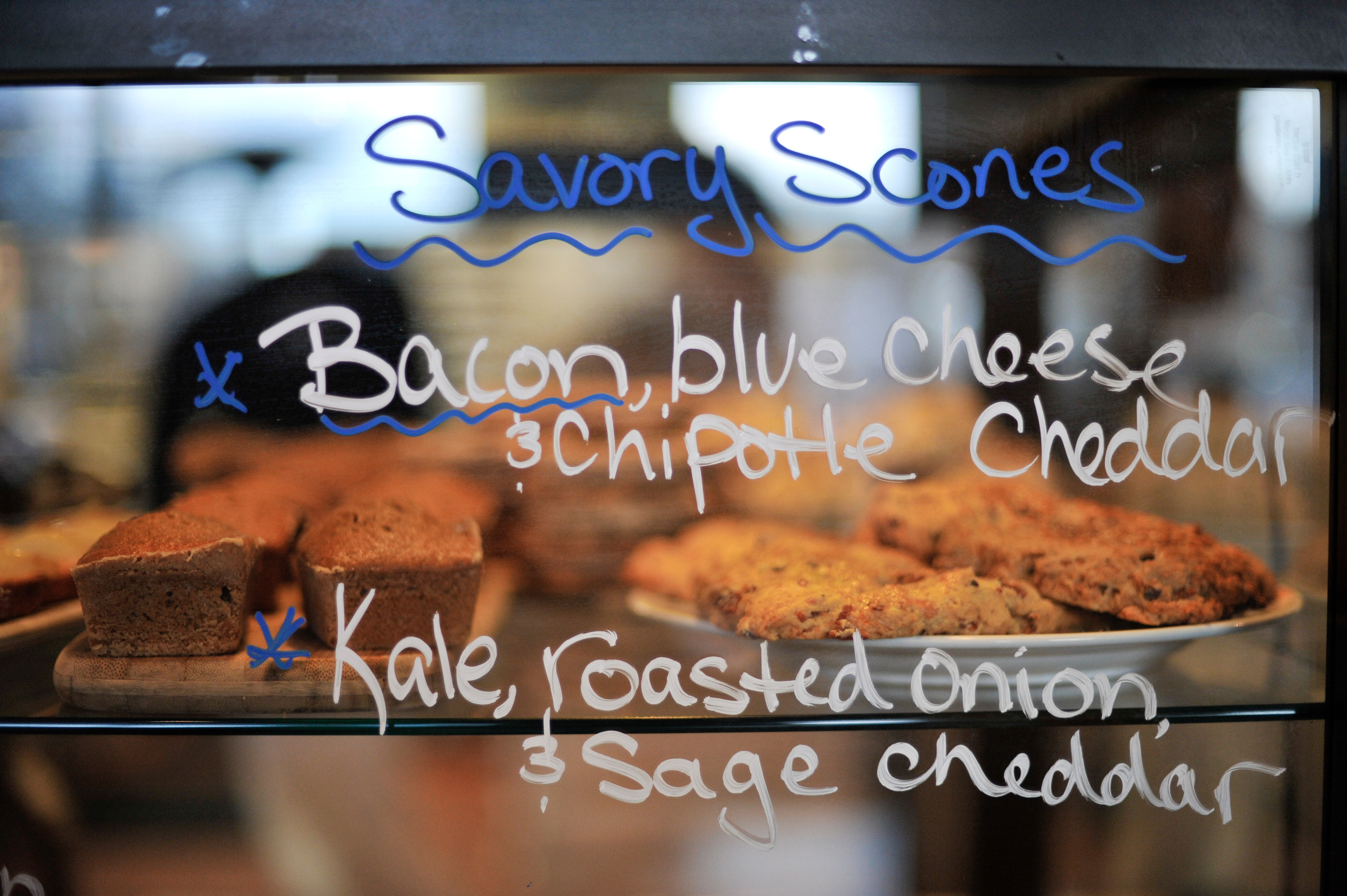
This week marks the 4th annual Sacramento Bacon Fest. There will be bacon themed events from Jan. 19 to Jan. 25. The festival was started in 2012 and allows only all-natural, house made bacon to be served, excluding pork from factory farms. The event supports local chefs and restaurants and encourages high quality, natural products. Chefs have experimented with dishes such as bacon bon bons, bacon tater-tots and bacon gelato.

Events include a Bacon Education Session with Chef Dionisio Esperas Jan. 20 at Sacramento Natural Foods Co-op from 6-8:30 p.m. with a registration fee of $49. On Jan. 22 Capital Dime in Sacramento is hosting their “Bacon Week Party” from 5-11 p.m. with, according to their website, “bacon-inspired menu surprises, local beers and cocktails”. The week of bacon themed events will end Jan. 25 with a Bacon Week Chefs Competition at Mulvaney’s from 2-5 p.m.

For more information and events visit www.baconfestsac.com.

Photo Courtesy www.baconfestsac.com. 

Free Community College

0

On Jan. 8, President Obama announced a plan to make the first two years of community college (CC) free for students in America who maintain a 2.5 GPA at their CC. This is based off a similar program already in place in Tennessee, called Tennessee Promise, which will begin with the graduating class of 2015. Participating states will offer 25 percent of the total funding to all students attending a community college and the federal government will providing the rest.

The Editorial Board looks forward to the prospect of free CC, and believes that if it is implemented correctly, this will be a great opportunity for millions of students in the country to have access to higher education. Amidst the UC tuition increases that were approved last year, it is refreshing to see that the federal government is considering taking action in helping students pay for college.

We recognize the potential benefits of this plan. With the first two years of CC free, students could save up to $3,800 in fees every year, lifting a significant burden of debt. This will also help more students across the country pursue a degree that they otherwise may not have been able to.

However, while this idea appears great in theory, we are worried about whether or not it will succeed in practice. It is still unclear how this plan will be implemented and where exactly the money from the state and federal government will come from. If there was a surplus of funds available for education, why was UC tuition raised so recently?

Along with that, the effect that this plan will have on overcrowding within colleges should be taken into account. As Obama said in his speech, if students who are willing to work hard to meet the GPA requirement have the option to get two years of college for free, they will most likely take advantage of that. Because of this, it seems like a high possibility that many community colleges across the country will become over-enrolled and not be able to provide enough resources to their students. Tennessee community colleges are already preparing for the much higher levels of enrollment. UCs and CSUs are already impacted, and it seems possible that this plan will create a similar issue in community colleges and then lead to an overabundance of transfers in four-year universities.

With that being said, we are excited and hopeful that this plan will be implemented well, and will be advantageous for the millions of students in America who cannot afford to go straight to a four-year university out of high school. To see that the federal government is considering college students and is trying to take action to reduce the hardships of student debt is a step in the right direction. Placing value in our education helps validate our experiences and create a smarter America.

Graphic by Jennifer Wu

New year, new mindset for gymnastics squad

0

It’s the day before a big meet, and the UC Davis women’s gymnastics team gathers in the team room. Anticipation inherent in their faces, the Aggies close their eyes, slow their breathing and relax. Using a tactic that many athletes and performers swear by, the Aggies run through each of their events, step by step, in their minds.

“We turn off the lights, and we visualize ourselves doing the whole meet, each event, and how we want to do,” explains senior co-captain Tiana Montell.

Whether the event is vault, bars, beam or floor, things seem to be working out just as imagined for the Aggies, who started the new year off with 1st and 2nd-place finishes in their first two meets earlier this month. Running off of high energy and momentum from their performances in Seattle Pacific and at home in the NorCal Classic, senior captains of the team optimistically look forward to even greater results this season.

“[This year] we’re shooting for 9.8 routines,” said senior co-captain Lisa Wiktorski. “It’s a big goal for UC Davis gymnastics. I don’t think that’s ever been one of our main goals, but now we can see ourselves doing that.”

UC Davis gymnastics is currently ranked an impressive 30th in the nation for collegiate gymnastics. The Aggies rank 29th overall on vault, 23rd in the nation on bars, 26th on beam and 40th on floor.

Led by head coach John Lavallee, the Aggies find motivation and enthusiasm easy to come by.

“I told the team what I’ve told a lot of my teams: throughout the course of your life, you will be presented with some opportunities. What you do with those opportunities is on you,” said Lavallee.

The gymnastics team has already been presented with opportunities to show the UC Davis campus how good they are, seeing higher crowds than normal.

“In our first meet, we had a huge crowd! Almost the biggest crowd UC Davis gymnastics has ever had. We did really well especially for the first meet,” said Wiktorski.

The Aggies look forward to an even bigger crowd turnout of about 15,000 at the Huntsman Center, where they face Boise State and Southern Utah on Friday, Jan. 16.

“This is what we work hard for, to compete at the highest level and show what we’re capable of doing,” said Lavallee.

The next gymnastics meet at UC Davis will be on Feb. 8 against George Washington University.


Ramon Martin del Campo heads to the Major League Soccer

0

When watching the UC Davis men’s soccer team play, center back Ramon Martin del Campo immediately grabs your attention. Standing tall, at six feet and two inches, del Campo makes sure that his presence on the field is acknowledged. From the stands, one can hear del Campo communicating with the rest of the defense and directing his teammates. Del Campo’s hard work and dedication to his craft have landed him a rookie contract with Major League Soccer, and is expected to be a top pick in the upcoming MLS SuperDraft today.

Ramon Martin del Del Campo was born in Hermosillo, Mexico, but his family would later relocate to Chula Vista, Calif., located nine miles from the Mexico-United States border. Del Campo attended Bonita Vista High School where he led the soccer team to a California Interscholastic Federation (CIF) San Diego Section Division II Championship.

Despite his talent and height, del Campo was overlooked by many college scouts. He received offers from Division II schools, but refused to accept any scholarships from lower division schools, adamant that a Division I school would be right around the corner. That opportunity, UC Davis, eventually came knocking at his door.

UC Davis men’s soccer head coach, Dwayne Shaffer, incidentally discovered del Campo while recruiting another player in a Las Vegas tournament. Del Campo’s boisterous demeanor grabbed Shaffer’s attention, and he observed his future star defender for the rest of the game. Shaffer would later recruit del Campo and coach him for the next four years.

Del Campo began his career with the UC Davis men’s soccer team during the 2011 season under Shaffer. During his freshman season, del Campo started 12 out of 13 games as an interior defender. In his second season as an Aggie, del Campo  started in 20 games and scored his first career goal to tie a match at 2-2 against the San Francisco Dons in the 86th minute. Later that season, he registered his first assists against a ranked UC Santa Barbara team. Del Campo recorded nine shots with four on goal during the 2012 season.

It can be said that he had a slow start his first two years at UC Davis. But as del Campo entered his junior year, Shaffer and Aggies saw a matured player with a refined skillset and a vocal leader in del Campo. That year, he he earned Honorable Mention All-Big West Conference. After appearing in 19 matches del Campo registered 12 shots, with five of them on target. In his final season with UC Davis, del Campo led Aggies to a 7-4-9 record, and earned All-Big West Conference honors.

During the summer of 2013, del Campo competed for the San Jose Earthquakes’ U23 Premier Development League (PDL) squad, in which he led the squad to a 7-4-3 record and a third-place finish in the Western Conference. Del Campo gained recognition and was named to the All-PDL and All-Western Conference first teams. In addition, the defender was also a finalist for the PDL Player of the Year Award.

“That was a big breaking point. For me, I saw it as a test for where my level of soccer was. When I was there I got to test myself [with] the best players in California and throughout the nation,” reflected del Campo on his experience in an interview with American Soccer Now.

Later that summer, del Campo, along with 18 other soccer players around the nation, was invited to join the U23 United State Men’s National Team for a training camp in the Bahamas. While training with the U23 National Team, del Campo played with the likes of Team USA members Chris Wondolowski, Julian Green and Kyle Beckerman. During a friendly match against the Bahamas Men’s National Team, del Campo was a second half substitution in 5-1 winning effort.

From the first time he saw del Campo play, Dana Taylor, head coach for the CSU Stanislaus men’s soccer team and the San Jose Earthquakes’ U23 manager, was captivated by del Campo. He knew that del Campo had the potential to play at a higher level.

“As soon as I saw him, I called [the Earthquakes coaching staff] and said ‘he’s a pro,’” said Taylor in an interview with soccerwire.com. “I know sometimes that you need to see players quite a while, but he already has the qualities you need to have as a pro.”

Del Campo has a large vocal presence on the field, and he has a certain tenacity that most players do not have. And Coach Shaffer truly believes that del Campo has what it takes to play at the professional level.

“Ramon’s chances of playing professionally are very good,” Shaffer said. “We’ve had several MLS scouts at all of our games, and some have been here three or four times. Ramon is getting a lot of attention.”

As the top collegiate soccer players sign with European clubs, the MLS has firmly secured del Campo’s services as an incoming rookie. Del Campo had his last chance to impress MLS team managers during the MLS Combine on the weekend of January 9th and is expected to be a top selection in the MLS Superdraft. Mock drafts prior to the draft has suggested that he will be taken as high as No. 3.

Stay tuned for part two of this story, as we continue to track del Campo’s path to the MLS.

AggieAngelous

ThePoetry-ThePoets&ThePoetesses


The Poetry

“Someone New”

by Rouzbeh Rahai

In the winter,

In the winter him and I would drive to the water,

where the ocean’s echo kept us from exchanging the strongest whispers.

He screams.

“when are you going to start your own family”

Midst the December gloom on our skin,

our breaths spiraled our futures in the air.

He reaches for the cold sand

and watches the wind whistle it away,

as I looked past the water.

Family meant always staying together

And all the family we had

were a family of seashells

the ocean

our best friends,

and I guess our moms and dads

But ever since we moved away

the promise for togetherness

seems like a promise

only ever made.

Because these days

I find parts of myself turning invisible.

Slowly becoming see-through

as I join in groups

and share drinks

then spike my drink with my dreams

thinking, “Here’s to new beginnings.”

Warm memories with strangers that slide down my throat

I Go home.

Find a quote that I like

feel it spearfish me out of the ocean I’m drowning in,

thinking I’ve been lifted,

I’ve been lifted,

while I’m just searching for warm chests to hide in.

See everyone talks about being homesick like it’s something that’ll go away

but being homesick is also

feeling like a stranger in your own home.

Being brave enough to reach for things that

Just end up going through you.

Family has never felt so far away

And as we sit together in our Toyota 1998,

where stories were made,

I’m smoke and he’s my buddy that never got away.

My vision blurs to tomorrow.

When he might turn to god

as a friend.

But when he reaches to touch a strangers skin

God would say no,

not seeing that

it’s scary being alone,

and so we do things like hold someone’s hand we hardly know.

While the stranger reaches for your arm

under the stars

little known all the scars

running up your red back.

See some

in loneliness

sleep with a beautiful curvy glass bottle in-between their arms.

Some sleep with their old stories

Woven.

And once ago we drove to where the water starts.

But now these empty bottles,

empty of promises I Clench so hard

shatter in the morning.

Here,

here we are broken into pieces.

We are separated,

lost as we stumble and fall

into the arms

of someone new


ThePoets&ThePoetesses

Rouzbeh Rahai is a third-year English major at UC Davis. He occasionally performs slam poetry at SickSpits, and is very interested in learning more about the art of performing. He loves good writing, his friends, passion in everyday life, road trips and most of all, his sister.


Be Featured in AggieAngelous

Send your poetry to aggieangelous@gmail.com with your name, major, year a short, one-to-two paragraph description about yourself, and a photo of the poet. Feel free to include your interests and/or hobbies, or maybe even your favorite quote! Anyone from the UC Davis campus community (undergrad, grad, or alum) from any academic discipline can submit. You can submit as often as you like with as many pieces of creative writing as you would like. Please feel free to email AggieAngelous with any questions, concerns or inquiries.

Graphic by The California Aggie Graphics

UC Davis Department of Music presents Music and Words Festival 2015

0

From Jan. 27 to 31, the UC Davis Music Department, in collaboration with the Mondavi Center for the Performing Arts, will present Music and Words Festival 2015. The five-day festival will include more than seven concerts and presentations from university artists, distinguished professors as well as local and national performers.

The festival, which is titled differently every year, began in 2010 and occurs every two years. According to Sam Nichols, co-director of Music and Words Festival, this year’s theme came about from a piece the UC Davis Symphony Orchestra is playing, titled “Sinfonia,” which he said uses text in a strange and revolutionary way. The piece, which is composed by Italian composer Luciano Berio, features eight singers during the orchestra’s performance. The songs are about unique texts, for example, words from graffiti art found in Paris in 1968.

“This work sums up knowledge, philosophy, social criticism, popular and high-brow intellectual thoughts,” said Christian Baldini, the UC Davis Symphony Orchestra music director. “It engages the audience, it is provoking and it is extremely original and satisfying.”

In addition to performances from the UC Davis Symphony Orchestra, Music and Words Festival also invited acclaimed percussion group Sō Percussion to perform three concerts featuring original works, as well as join UC Davis percussionists in a performance of Steve Reich’s “Drumming.”

“We love the spirit of invention and experimentation that brings us to new sounds and ideas,” said Adam Sliwinski, a member of Sō Percussion. “We really like to invite people in to our weird and fun world of these instruments.”

In collaboration with the Mondavi Center, the festival will also include performances from UC Davis’ ensemble-in-residence, Empyrean Ensemble. The ensemble, which is known for its avant garde music style, will perform pieces focusing on living composers that emphasize the relationship between music and words. The pieces will include “Knowledgeable Viuda”, composed by Tomas Gueglio, and “Noggin,” composed by festival composer-in-residence Melinda Wagner. During her time in Davis, Wagner, who also composed the ensemble’s performance of “Four Settings for Soprano and Ensemble,” will also be teaching a group of eight composers who traveled from all over the country to work with her. These composers will also have their works featured during the festival.

In addition to concerts the festival will also include presentations of works from local artists, which include a performance of sound artist David Coll’s sound work “Construction” as well as UC Davis technocultural and cinema studies professor Bob Ostertag’s performance of his solo electronic work “Sooner or Later”.

The festival will also feature a music and words colloquium featuring professors from across various departments including Music, English and Theatre and Dance. Henry Spiller, the Department of Music chair, will also be participating in the colloquium, and highlighted that although music and words are separate genres, they work together to broaden the audience’s understanding of human connection and the way people create meanings.

“Everybody is aware that music and words are among humans’ most versatile forms of expression, and that the combination of words and music is often more powerful than either alone,” Spiller said.

In addition to allowing for the opportunity to bring national talent to perform at the university, Nichols says the festival is an important way for professional artists to work with students as well as offer students a university-wide event to perform on a larger and more professional scale.

“It gives us a chance to do something ambitious — to have our students involved, to have them actually be not just audience members, but performers on stage as part of this is really important and is a major part of why we do this festival,” Nichols said.

Music and Words Festival 2015 will begin on Jan. 27 and run until Jan. 31. Ticket prices range from free to $32 and performances will be held at venues across campus. More information regarding ticket prices, specific dates and locations, and select performances can be found at arts.ucdavis.edu/music-and-words.

The UCD Files: The Coffee House Paradox

0

marxheadshot_op
You’re a UC Davis student, tired and hungry, so spoiled by the ridiculously close proximity of your dorm or apartment to campus that it’s actually become far. So you’re not going to go on a five-minute bike ride to your room. You don’t want your cup of noodles or some microwavable mac and cheese you bought five months ago on your first and probably last trip to Target (because that is also just way too far now). You’re not going to eat downtown because you don’t make money. You’re not going to cook because you don’t cook.

So you’re going to go to the Coffee House, of course. Your true purpose of being there is to get something to eat between Psych 1 and that other class you take, and maybe say hello to that person you might have met one time at a party or class or anywhere or nowhere. You thought this hour break was a good idea during registration, not sure if you wanted to sit through two hours of class. For the first 12 years of your education you had seven hours of class five days a week, but that’s long in the past.

Now here comes the classic first part of the Coffee House paradox: You don’t know anyone at the CoHo right now. You are holding your Tex Mex burrito, walking from one end to the other, looking for someone who will not be too awkward to approach, but you can’t find anyone. Now you’ve reached the Wellman side, and you know what that means: You’re completely and utterly alone.

So you have some options here, many of which are based on how you want to appear to the people at the CoHo. However, this is vain and stupid, because you’ve already established that they’re all complete strangers to you. You can either double back and make the walk of shame, though it’s definitely not as shameful because you’re pretending to text or checking Instagram with the hand not holding your still uneaten burrito. Or you can act like you just remembered something, and take a quick step backwards and speedwalk to the other side like you meant to do it. This is my personal favorite — just make sure you are convincing.

Here are some more solutions to problem 1:

  1. Bring your food outside to the tables, there are plenty of people who want to talk to you (and get you to join CALPIRG)
  2. Sit on the Quad pretending to be earthy and not upset that you’re alone. Definitely not.
  3. Go up to one of those people who take a whole six-seater bench to themselves
  4. Sit with a table of older, professor-looking people. They might be professors and your parents will be proud.
  5. Sit by yourself, because you are I-N-D-E-P-E-N-D-E-N-T (do you know what that means)?

Now, the second part of this Coffee House paradox: You’re still the same UC Davis student, but on top of that, you have a midterm in two hours. You may be the type of person who’s already studied for a week, or the type of person who is about to open your notes for the first time. Either way, you’re pretty sure you are not ready. So you make the same lap around the Coffee House, this time just searching for an open seat with an outlet (yeah, right), but don’t worry now, no one is judging you because you have to study. If they were judging you, then it would already be too late, because you likely haven’t showered in a while and are what society would call gross. If you aren’t, and are really dressed up and looking good, then I am judging you.

So finally, you find this seat, you throw on your movie soundtrack Pandora and get to work. You are in the zone, starting to get more confident, and you feel a tap on your shoulder. Who is it? None other than that friend you were looking for last week when you wanted to hangout. Not just one of them, though, all of those friends you were sure you didn’t even have are here now! They just did that CoHo lap you were doing last week, but they had much more luck and found you! So this happens 10 times in the next hour and a half and your productivity is low. It’s funny how those noise-cancelling headphones you got at the same Target trip aren’t very effective when you have to keep taking them off.

So now you have 30 minutes left, and you put this real stressed out look on your face, either because you want people to see your struggle and leave you alone, or because that’s just how people’s faces look 30 minutes before a test. At this point, however, it’s too late, because it’s some kind of lunch rush at the CoHo and you really just can’t help but people-watch. You wish people-watching was your major because you look up literally every time anyone anywhere near you makes any movement. At this point, it is far too late, and you have to go to class with minimal knowledge and pray for a low curve. Good news for you, the curve will definitely be low, because you are not the only tired and hungry UC Davis student.

Places to avoid problem 2:

  1. The library, duh
  2. The fireplace room in the MU: there’s a fireplace
  3. The SCC: they have whiteboards and coffee and outlets and hope
  4. The Quad: relaxing, and you may get a good Snapchat out of it
  5. Your own room: I know your desk currently makes you a candidate for “Hoarders” but throw that stuff away

The UCD Files is your weekly in depth look at our campus and the lifestyle that comes with it, featuring an occasional dropping of knowledge from a senior who has experienced it all.

Feel Free to send questions, comments, or anything you would like to see in future articles to ADAM MARX at almarx@ucdavis.edu.

Graphic by CA Aggie Graphic Design Team

Photo by CA Aggie Photo Team

Psyches & Serpents: Initiatives on Brains

0

berezovskyheadshot_op
The American government has several significant achievements in science under its belt. These include the development of the atomic bomb and landing men on the moon. Having seemingly conquered the world outside us, newer efforts have turned to the world inside us. One such project was the mapping the human genome. The trend has continued with the Obama Administration’s BRAIN (Brain Research through Advancing Innovative Neurotechnologies) Initiative, in which a large group of medical doctors and PhDs will utilize $4.6 billion over 12 years toward brain research.

Since becoming effective in early 2014, the program has been marching toward its simple goal of mapping every neuron in the human brain. Well, maybe not so simple. Unlike with the Human Genome Project before it, neurons aren’t being mapped with As, Ts, Cs, Gs and Us. What’s being recorded is their activity, which is a hard and in many ways subjective thing to define. Every brain on earth can’t be mapped, so scientists will have to take samples to create the typical human brain. Since every brain is different, and brains change as we age, things aren’t set to be perfect with these results.

Perfection aside, the goal is to make vast improvements in the understanding of the human brain and its conditions. The real payoff would be better mental health practices in American society, on both a personal and medical level.

Of all the goals Obama has set for us, I feel that understanding the brain is his most lofty and also the most unlikely to succeed. Defining what activity a neuron is performing sounds impossible enough, but there’s also the aspect of selecting brains representative of the wide swath of personalities and mental conditions. Whose brain could represent the average human?

Obama himself has an interesting mind. It’s sharp, witty, warm and compassionate. Or at least Obama himself comes across with these traits. When he addresses the nation, is he sharing a piece of his mind? Or is he just using a piece of his brain? Is there a difference? Here’s a quote about Obama written years ago by his then-girlfriend Genevieve Cook: “But I feel that you carefully filter everything in your mind and heart —

legitimate, admirable, really … But there’s something also there of smoothed veneer, of guardedness … I’m left with this feeling of … a bit of a wall — the veil.” Even a lover couldn’t get past the image of Obama that the public sees. What does a warm, compassionate “veneer” hide? What could results from Obama’s initiative tell him about himself?

I wouldn’t pick on a president without a reason. The presidency of the United States is perhaps the most cognitively demanding job in the world. Yet, if we look to Obama for an example of how to think, we’re left with veils, mysteries. The leader of the free world, however, is not different from his followers. We are all mysterious and use the veils that society has given us to maintain some kind of integrity or order in our lives. In order to change ourselves, change our brains, or both, we need to be able to see what part of us is superficial and which is our true self. While that may seem easy, scientists have had less of a go at it than most Eastern religions. It seems unlikely that the 21st century will be remembered for creating a new path to Nirvana.

I’d like to see the BRAIN Initiative be successful. There are vast areas of mental health care that could greatly benefit from even modest improvement. The money will be well spent if it can provide us with a collective net gain of mental well-being.

PAUL BEREZOVSKY can be contacted at pbberezovsky@ucdavis.edu.

Graphic by CA Aggie Graphic Design Team

Photo by CA Aggie Photo Team

Using accessible technology in the classroom, workplace at UC Davis

http://cat.ucdavis.edu/Improvement in accessibility in workplaces and classrooms is the product of both necessity and foresight as much as it is a product of technological innovation. While technology continues to improve, it is the role of the Center for Accessible Technology (CAT) at UC Davis to utilize what already exists as well as integrate new innovations to connect accessibility to necessity.

“What sci-fi movie do you see where people are still using a mouse and keyboard?” asks Josh Hori, an assistive technology analyst at UC Davis.

Hori works in the Student Disability Center (SDC) where he outfits students with learning and physical disabilities with technology that makes the classroom more accessible and easier to engage with.

“Students go see a specialist, get documentation, then they get recommendations for accommodations that they have entitled to them,” Hori said.

These accommodations vary from assistance in note taking and converting text to speech for the visually impaired, to converting textbooks to electronic format so [there is] more accessibility. In his office at the SDC, Hori also helps with test accommodations.

“We usually limit it to those who need technology because we have very limited space,” Hori said. “We’ll help out those who maybe need audio feedback on tests where we can use text-to-speech software to read it out loud to them.”

One piece of technology that Hori has found useful for administering tests and helpful to students in the classroom is the combination of the Livescribe Echo SmartPen and Livescribe Paper. In conjunction with the paper, the pen records what the user writes so that it can be transferred to a computer. It is also able to record audio which can be synced to the writing so the user can essentially revisit their class lectures.

Hori said that he has used the technology for tests – he can print out questions and answers on the paper, then record audio for both. Then, with a tap of the pen on the paper, the questions and answer choices can be read out loud to the student as many times as they need.

When the pen is connected to the user’s computer, it is charged and the notes can be backed up. Hori’s office even offers to help with archiving notes at the end of each quarter so the pen is able to be used for the next.

“We do demos here, we also do installation and configuration so that…our students don’t have to worry about the technology – they’re just using it,” Hori said.

Hori’s office is home to numerous technologies to improve accessibility, including scanners for converting textbooks to a digital format, an embosser for converting text to braille and a BrailleNote computer for the visually impaired. Other technologies include Pictures in a Flash, a device which can create raised line drawings which are printed on thermal paper, and the Leap Motion device, an alternative input device which enables people to use hand gestures to control their computer.

Assistive software is also available, including Dragon, a speech recognition software that allows people to write by dictating, and ClaroRead, a multi-sensory software which can read text on a computer out loud to the user as well as alter the screen to make reading easier.

The CAT lab opened in 2010 as a location intended to consolidate accessible technology that was previously spread out among different departments.

“There were all these bits and pieces, but it wasn’t coordinated,” said Tim Leamy, Manager of Computer Lab Management at Academic Technology Services. “We figured if we could bring everybody that had bits together, we could put it all together and end up with something much grander.”

The SDC works in conjunction with the CAT lab to make UC Davis more accessible for everyone, students, staff and faculty alike.

“Some of us got together and said ‘we want to make this spot where everybody could go, student, faculty or staff,’” said David Ritz, a vocational rehabilitation counselor at UC Davis. “It was one of the first places where it didn’t matter if you were student or…staff, you would all sit in the same chair, you would all use the same keyboard.”

The CAT lab continues to operate today in Shields 163 at the southeast corner of the library.

“The reason that I think it was successful, is that you had a bunch of people who were not administrators or all that high up putting this together under the radar,” Ritz said. “We just kind of went forward until we figured someone would tell us to stop, and they didn’t tell us to stop.”

Ritz works primarily with employees at UC Davis. In the CAT lab he can conduct ergonomic evaluations, where various parts of the work station are adjusted to find what works best for each individual. This could include adjusting desk or monitor height and the use of alternative mice and keyboard combinations (vertical mice, alternative keyboards, etc). Ritz can also demonstrate the use of hardware and software easily, as most of the options are readily available in the lab.

Although the central location of the lab was a step in the right direction of improving accessibility, Leamy pointed out that it was in fact only a step.
“Every once in a while, somebody would request a different keyboard or a station that was more wheelchair accessible, but we were doing it after the fact rather than being more proactive and trying to make stuff more accessible from the get-go, mostly because we just didn’t know what to do to some degree,” Leamy said.

Leamy mentioned that although the CAT lab has been useful in demonstrating the accessibility options available, the ultimate goal is to make the campus as accessible as possible, and therefore eliminate the necessity of a lab setting at all.

“The services beforehand were sort of scattered and not very accessible,” Leamy said. “We brought them here and that made them more accessible, but it would be most accessible if they were just available everywhere.”

Photo courtesy of www.cat.ucdavis.edu.

A day in the life of a confused, undeclared student

0

ATTENTION ALL UNDECLARED STUDENTS!

This is a reminder: You are not alone.

I entered college absolutely certain of one thing: I had positively no idea what to major in. It’s pretty common: coming in with an undeclared major and thinking that one day you’ll have that “A-ha!” moment where you realize what you want to do. Those were my thoughts exactly, and now you can find me, a year and a half later, still waiting for that moment to come. Although it might seem easy, being undeclared is a lot more stressful than it sounds.

Here are a few points that every undeclared student can relate to.

  1. The dreaded “what’s your major?” question.

It’s the first day of classes. Sitting down in a room full of strangers, your friendly neighbor decides to make an introduction to you. You strike up a conversation, and get to know each other on a first-name basis. Things are going well, and you think for a second that you’re going to get away with it. Until it, the inevitable question, escapes their lips: “What’s your major?” You reply meekly, “I’m undeclared.” It might not seem like a big deal, but admitting that to somebody you just met is harder than it sounds, especially since saying “I’m undeclared” is basically college terms for “I have literally no idea what to do with my future.”

  1. The “don’t worry, you have plenty of time to decide” response.

This is everyone’s favorite, oh-so-comforting remark to undeclared students. I got this one half a dozen times when I was a first-year. It’s nice in the beginning, but it gets a little old after a while. Want to really make us feel better? Instead of reminding us of the diminishing amount of time we have left to make the decision, pick a major for us. Now that would really be comforting.

  1. The endless appointments with advisors.

One undoubtedly difficult part about being undeclared is the endless meetings with advisors. OK, maybe endless is an exaggeration, but they definitely seem endless. It’s basically like playing a long game of Deal or No Deal, but the answer’s always no deal. And the advisor looks nothing like Howie Mandel. The unfortunate fact is, an advisor simply cannot pick a major for you, no matter how much you want them to.

  1. Talking to enthusiastic adults.

These are the adults that think they can completely figure out your future for you in less than five minutes. Letting these adults know that you’re undeclared will open up a world of questions, the first one always being “Well, what are you interested in?” You will of course politely tell them a few of your interests, and after a few seconds of some serious problem solving, bingo! Lucky for you, they’ve got it all figured out. Serving as your own personal career.com, they excitedly spew out dozens of unappealing major and career choices based upon your interests. The best way to overcome this is to appear interested until they forget exactly whose future they were planning out in the first place.

  1. The harmlessly innocent yet vaguely aggressive major suggestions from your parents.

We all know our parents want the best for us, and that they’d support us in whatever we chose to do. However, those two things don’t always work together so nicely — especially when you’re an undeclared student. They always manage to slip a harmless suggestion or two into a conversation about possible majors. It’s not their fault, it’s instinctual — they just want to make sure you won’t be 30 and still living at home. And although they don’t want to force us, sometimes their suggestions can end up taking a form somewhat more similar to a plead than a simple suggestion. Just the other day I got a text from my dad: “You sure you’re not interested in animal science?” My reply: “You have no idea how much I wish I could say I am.”

  1. The world is your oyster.

An undeclared student’s least favorite saying, basically. The absolutely great thing about going to university is there are just so many choices. So many. You could pick any major from any field you want — you can even double-major. This is a comforting yet terrifying notion. The fact that we have this many choices stresses us out more than anything. Can we maybe narrow it down at least a little bit? I mean c’mon, throw us a bone!

  1. Stuck on General Education classes.

Not having a major also means not really being able to take any classes that aren’t GEs. This leads to schedules full of easy introduction classes and monotonous busywork. After a while we start to forget that we’re not attending university for a general education, even though we generally tend to overlook that if it means avoiding picking a major.

Now, before you have a major meltdown, just know that your fellow undeclared peers are here for you. Our indecisiveness is what links us together, in heart, in soul and in having absolutely no idea what we’re going to do with our lives. And although coming from someone who is decidedly undeclared, this might not seem too comforting: I’m certain we’ll figure it all out eventually!

North Tahoe to see snowpack increase compared to 2014 season

0

Screen Shot 2015-02-13 at 11.35.01 PM

Tahoe’s 2015 ski season so far has had more than twice as much snow as the 2013-14 season did by Jan. 8, according to a j2ski.com report. According to the National Water and Climate Center, 2013 recorded twice as much snow as 2014.

In 2013, Squaw Valley had the lowest snowfall in over eight years with only 128 inches of snow, and although 2014 had more snow, it was still far below the average of 460 inches of annual snowfall.  Although there was snow early this season, it does not promise anything for the rest of the year.

“Initially we were actually off to a pretty good start, at least with this winter season with those early December rain and snow events … but since we haven’t really gotten any precipitation since then, that snowpack has obviously been melting a little bit overtime,” said meteorologist for the National Weather Service Tom Dang.

In order to cope with the annual snowpack fluctuations, Squaw has invested in new snowmaking technology, allowing the resort to keep runs open without natural snowfall.

“We’ve been upgrading the snowmaking system to make it run better in general and because of those upgrades we’re able to do more with the same amount of resources that we had in the past, we just have more efficient equipment,” said Squaw snowmaking supervisor Greg Gleeson.

Squaw Valley reports December, January and March as the months with the most snowfall with an average of 123 inches, 74 inches and 91 inches, respectively.

“It’s nice because we got more snow on the upper mountains, so there’s stuff open up there that’s all natural snow [and] which is nice for the busy season… Last year it just snowed a little here and a little there, but [this year] we got lucky with some good snow up top early to open up other things on the upper mountain,”  Gleeson said.

Many seasoned skiers are impacted by the change in snowpack including the Ski or Snowboard Club at UC Davis (SOS), which takes trips up to Squaw and Alpine.

“Last year it was kind of a struggle, we had a really dry year and it impacted [us] for the later trips. [For] the beginning year trips people were so excited — there’s something up there, there’s something to go down, and everybody loves it,” said Jeff Venturino, a fourth-year political science major and SOS staff member.

Although SOS takes many trips to Squaw and Alpine during the season, the club participates in other activities throughout the year, such as hiking, allowing the club to continue organizing events in dry years. Amanda Robinson, a third-year biochemistry and molecular biology major and SOS staff member explained that club members appreciate seasons with larger snowpack, but are still able to enjoy their time on the mountain in dryer years.

“When there is more snowfall it’s more crowded, but it doesn’t detrimentally affect how many people we take up to cabins … There’s definitely a lot more really excited people really early in the morning when there’s great snow because everyone can’t wait to get to the mountain, but it doesn’t change the attitude of our overall trip. It doesn’t keep our spirit down if there’s low snow or anything like that,” Robinson said.

According to Truckee local Madison Richey, a first-year chemical engineering major, changes in snowfall over the years impact daily life. She recalled that 2002 was the last year with a significant amount of snow.

“We had a week straight of snow days where all the schools were canceled in the whole district and that hasn’t happened since then. In the past three years we had maybe one to two snow days where the snow was bad enough to close the schools,” Richey said.

Although it is hard to predict this upcoming year’s snowpack, the National Weather Service believes that 2015 will have a greater amount of precipitation compared to last season.

“At least for this winter, our outlook is still actually for above normal precipitation to fall through March or so,” Dang said. “That doesn’t necessarily mean that the snowpack will be above normal but we are still expecting above normal precipitation in the winter months.”

Photo courtesy Creative Commons.

CA state parks introduces new Tahoe Regional Pass in 2015 Annual Pass Program

0

header_organizationCalifornia State parks released the Annual Pass program Dec. 23 which for the first time introduced the Tahoe Regional Annual Pass. The Pass Program, which consists of four different passes, allows visitors access to corresponding parks statewide. The Tahoe Regional Annual Pass, marks the start to a new promotional strategy of including regional passes.

“There have been conversations on introducing regional passes, and this is something new that we want to try. Tahoe is a region that is recognized worldwide as a tourist attraction and we know that there’s a lot of interest for that park in that area,” said Vicky Waters, deputy director of public affairs for California State Parks.

The Tahoe Regional Annual Pass, priced at $75, gives visitors access to many sites in the Tahoe area including the Emerald Bay State Park, Kings Beach State Recreation Area and Donner Memorial State Park.

“With the diversity of the park in the area, and the [number of visitors], not just the locals but also folks that do visit Tahoe on a regular basis, this would something that adds a lot of value to their visits… we would like to highlight the jewels, the State Parks, in that particular region, ” Waters said.

The Annual Pass Program has four passes that targets different interest groups. First, the “California Explorer” Annual Pass, priced at $195, offers vehicle access to 134 state parks including Southern California beaches along Orange, Los Angeles and San Diego coasts.

In addition to adding the Tahoe Regional Annual Pass, the Golden Poppy Annual Pass Program returns after the 150th Anniversary Commemorative Pass replaced it last year. The Golden Poppy Annual Pass, priced at $125, allows vehicle entrance to 112 state parks. The pass focuses on premiere destinations that include the redwood region and most state reservoirs. This includes the Julia Pfeiffer Burns and Pfeiffer Big Sur State Park on the Monterey Coast, as well as San Luis Obispo and the Channel Coast area.

The Historian Passport Day Pass, which was introduced last year, permits entrance for up to four people to State Historic Parks.  The Pass, priced at $50, includes entrance to Historic Parks in Sacramento, such as the Government’s Mansion, and also sites related to the California Gold Rush.

The parks received over 265,000 visitors last year, not including the Kings Beach Recreation Area, which was privately owned, with peaks on Memorial Day and Labor Day. Waters believes that the parks are well staffed and due to the new variety of passes available, will be better able to accommodate any increase in visitors.

“We try to offer the best service available, and try to continue to make sure that we are offering experiences for the visitors and they would continue to repeat those experiences again. We are seeing that this pass [Tahoe] may become popular, and we are looking at extending to other regions,” Waters said.

Many UC Davis students frequently visit Lake Tahoe. In addition to the programs offered by the Outdoor Adventures club and the International House, some students spend their time in Tahoe privately. Monica Dwight, a first-year classical civilization major, went to Lake Tahoe Jan. 1.

“When I go to Tahoe, it feels like I’m really one with nature. It actually smells like trees, and the waters are very clear. There are hiking, biking and so many other activities you can do there. I feel like everyone would benefit from visiting there because there are so many activities to do in Tahoe,” Dwight said.

UC Davis is also directly related to the Tahoe Environmental Research Center, which conducts state annual water reports in Lake Tahoe. There are researchers, a research lab, field stations and two small science education centers in the research center.

“[We focus on] the water, the food web, the physics, the air quality, the biology storm water, the climate change,” said Heather Segale, the education and outreach director of the Tahoe Environmental Research Center.

The UC Davis Tahoe Environmental Research Center accommodates people who want to learn more regarding the environmental changes happening to Lake Tahoe and how humans can reduce their negative impact. The center has several graduate students researching on the lake every year, as well as full-time researchers.

Segale believes that visitors’ activity and mode of transportation would determine the effect of an increase in number of visitors to the Lake Tahoe area. Segale said that regulations such as fire restrictions and fines for littering could alleviate humans negative environmental impacts.

“Educated visitors, who are good stewards, will be perfectly fine and would not have an impact [on the environment],” Segale said. “There is always the potential of more visitors to have more impact, but it completely depends [on the behavior of the visitors].”

Photo courtesy of www.parks.ca.gov.

This week in Senate: Jan 8

0

ASUCD President Armando Figueroa presided over the Senate meeting held on Jan. 8 in the Mee Room of the Memorial Union.

After quorum roll call, Senate moved into the Appointments and Confirmations section, and the Sexual Assault Awareness and Advocacy Committee (SAAAC) discussed ways for improvement. Proposed ideas included working with Empower Yolo and enforcing a strong connection with administration and working with the sexual assault committee to give victims control over the investigation process.

Senator Roman Rivilis invited ideas for how the Campus Violence Prevention Program (CVPP) could engage with transfer and non-first-year students. Senators agreed on increasing accessibility, providing support groups and potentially enforcing a mandatory safety education course on topics such as consent and the importance of sensitive language.

Senator Amelia Helland and Sarah Meredith debated on CVPP’s relationship with the SAAAC. CVPP provides confidential advocacy, collects measurements and significant data and now has plans to collaborate with staff members of SAAAC.

The Aggie Public Arts Committee announced it is working on finishing the Memorial Union project and has plans to paint the sidewalks around the gallery.

The meeting shifted to Unit Director Reports and Refrigerator Services, which is a group of volunteers who work to deliver and replace broken refrigerators in the freshmen dorms, discussed options on how to dispose of old, broken fridges.

During the Consideration of Old Legislation section, Senate Resolution #8 was discussed and senators voiced their unanimous agreement on passing a vote of no confidence in the Regents of the University of California and the President of the University of California.

In Public Discussion, Senate announced that ASUCD will be attending University of California Student Association (UCSA) Board of Director’s meeting on Saturday at UC Santa Cruz, as UCSA is considering ASUCD for membership.

The meeting adjourned after discussion on ASUCD’s relationship with UCSA and potential student job openings within the organization.


This week in men’s and women’s sports

0

Men’s Basketball (12-3):

UC Davis vs. CSUN (W, 71-61)

UC Davis vs. Long Beach State (W, 73-67 ot)


In overtime in a game televised on ESPNU, the Aggies defeated the Long Beach State 49ers, setting their Big West Conference record to 2-0.  The win marked their 8th straight victory at home.

Senior guard Corey Hawkins scored 28 points and had a season high of 10 rebounds.   He has been averaging over 20 points a game for this season. Helped along by other powerhouses like senior guard/forward Josh Ritchart and sophomore guard Darius Graham, the Aggies came back strong in overtime, commanding the lead and ultimately clinching a win.

 The next Big West Conference game will take place at UC Riverside on Thursday. For a full recap of the Long Beach State game, read here.


Women’s basketball (6-8):

UC Davis at CSU Northridge (W, 60-49)

UC Davis at Long Beach State (L, 63-60)


UC Davis finished the week with a record of 1-1 in the Big West Conference, playing both games on television.  Late in the second half of their showdown against CSUN, the Aggies took the lead, screaming past the Matadors for a final score of 60-49.  Junior center Alyson Doherty had 16 points and 11 rebounds, her fourth double-double this season. Senior forward Sydnee Fipps scored 15 points, while junior forward Celia Marfone had 10 rebounds.

 With the clock ticking down to zero in a tied game, Long Beach State scored a three-pointer, ensuring an Aggie loss of 63-60. UC Davis shot 44 percent from the field, with Fipps scoring 17 points and leading the Aggie women for the game.

Big West Conference play continues at home as the Aggies play UC Riverside on Thursday.


Women’s Gymnastics (4-1):

UC Davis at Seattle Pacific (1st place, 193.025)


With a team score of 193.025, the Aggies beat the Seattle Pacific Falcons (scoring 191.200) at an away meet. Senior Kala DeFrancesco received a 9.725 on the floor exercise, sharing titles with two Falcon gymnasts, and a 9.775 on the vault, sharing the title with freshman Aggie Alexis Brown. Junior Dani Judal led on the uneven bars with a 9.825.

UC Davis will compete on Friday in Utah against Boise State and Southern Utah.


Women’s Swimming and Diving:


The Aggie Open saw athletes swimming for UC Davis, the Davis AquaMonsters and the Feather River Aquatic Club. Though there was no team scoring, UC Davis swimmers won a significant number of the races that they participated in.

The Aggies will dive at the Bruin Diving Invitational from Saturday to Monday, and on January 24 UC Santa Barbara will hold a dual meet against UC Davis.