52.4 F
Davis

Davis, California

Tuesday, December 23, 2025
Home Blog Page 822

UC Davis defeats Long Beach State on ESPNU

0

With the brightest of lights shining, UC Davis men’s basketball defeated Long Beach State for a victory five seasons in the making.

The Aggies entered the game with an 11-3 record, including 7-0 at home, against a 49ers squad who had won just seven out of their 10 games. Still, Long Beach State posed a serious threat after facing four opponents currently ranked in the top-20 nationally.

The 49ers have one of the top guards in the Big West Conference, senior Mike Caffey who has led the team in points this season. Caffey has been named to the all-Big West first team for the past two seasons.

Senior Aggie guard Corey Hawkins spoke about his opponent after the game.

“I have the utmost respect for Mike, he’s a great guy, he’s humble and he doesn’t talk smack and neither do I. We let our games speak for themselves,” said Hawkins.

Caffey ended the night with a game-high 29 points, six rebounds, five assists and five steals, including several big shots to keep the game close. The rest of the 49ers, however, were not able to get going offensively which UC Davis head coach Jim Les said was by design.

“We knew he [Caffey] was going to get his, but we talked about nobody else getting away from us. He goes for 29, but they don’t have another guy in double figures. So, they executed what we wanted,” said Les.

The game was played tight through the entire first half, with the Aggies leading by just two at halftime despite holding their opponent to 35.3 percent shooting. As a team, UC Davis turned the ball over 11 times compared with four by the 49ers.

Hawkins, however, was hurt in the beginning of the second half and was forced to sit for just over five minutes. The Aggies did not score in that time, allowing Long Beach State to go on a 12-0 run while turning the ball over on four straight possessions. When Hawkins came back in, with 12:18 left in the game, UC Davis was down by ten points.

The next two minutes of the game proved vital for the Aggies as they fought back to a three point deficit. On one possession, UC Davis grabbed two offensive rebounds before senior forward Josh Ritchart hit a three. That was followed by three forced turnovers and five points by the Aggies.

Despite the counter-run, the Aggies found themselves down by three points with 47 seconds left in the game. Sophomore guard Brynton Lemar got the ball at the top of the key with a forward guarding him. He drove left, got into the paint and hit a layup while being fouled. Lemar calmly stepped to the line, hit the free throw and sent the game into overtime.

“Hopefully that, mentally, gives him a lot of confidence [in the future],” said Hawkins about Lemar’s big shot. “That was a game-changing play, one of the biggest plays of the whole game. Without that we wouldn’t have been able to win the game.”

In overtime, the Aggies were able to capitalize on the energy of the crowd to eke out a win. Hawkins and sophomore guard Darius Graham played a big role in the overtime period, scoring seven and six points respectively, including a huge walk-up three by Hawkins in the face of Caffey. Hawkins finished the game with a team high 28 points, 10 rebounds, and three assists.

With the win, their first against Long Beach State since the 2008-09 season, the Aggies have announced to the nation that they are going to be a force to recon with in the Big West this season.

“We have had a couple of nationally televised games and years before we haven’t been able to pull it off,” said Graham. “This time we were able to pull it off, and in front of our fans.”

Coach Les felt that the win was very significant for the year to come.

“This is the start of turning the corner. We’re at that point where we feel we can compete with the Long Beach’s of the world and not just be in the game, but we expect to win now. That’s a huge step for this program and for these young men,” said Les.

UC Davis men’s basketball will embark on a three-game road trip before returning to the Pavilion on Jan. 29 to take on UC Santa Barbara. The Aggies currently sit atop the Big West standings after finishing in last place in the conference a year ago.

Photos courtesy of ESPN

Comedian Tim Lee finds the humor in science

0

It is the ultimate college nightmare to realize your major of pursuit is not for you. Scientist-turned-comedian Tim Lee clearly made the best of that dilemma.

Lee was a UC Davis graduate student finishing up a Ph.D. in ecology and evolution when he realized how much the entailed duties bored him. On a whim he experimented with comedy, using science as the premise of his jokes. Upon initial success, Lee ultimately turned his fusion of both fields into a career.

Lee has since sold out shows along the East Coast and is now making his return to Davis. Lee’s Davis show will take place at the Richard M. Brunelle Performance Hall on Feb. 2. In anticipation of the homecoming performance, MUSE teamed up with Lee to dissect his comedy endeavors.

MUSE: You’re known as a scientist-turned-comedian. What specifically motivated you to make the switch?

Lee: I was in a point of my life where I didn’t want to read and write any more papers; I was frustrated with what I was doing and I decided that I would just try something new in my life. I did not know I would become a comedian; I had never been on stage before. I thought, “Hey, this would be completely different,” so I gave it a try. I wrote some jokes and read books by comedians and went to an open mic and tried it out. I found out that it worked pretty well.

Has comedy always been a passion of yours?

I’ve always enjoyed joking around with my friends, but I was never comfortable talking in front of people. If I didn’t know someone, I wouldn’t joke with [them]. I honestly never thought joking would become my profession.

How did you go about developing your comedic style?

It came by accident. The first time I performed was at an open mic in a San Francisco laundromat. The host introduced me on stage with, “Show this guy some love; it’s his first time on stage.” So, I went on stage and said, “He’s correct. This is my first time on stage, but don’t worry: I’ve read a lot of books.” I didn’t mean it as a joke, but the audience thought it was funny! I found that my academic background could bring out my comedy.

So, you integrate your science background into your comedy?

Yes, the scientific approach is the backbone of my comedy. “PowerPoint comedy” is a part of my show; I explain the science topic and then make a joke about it. Actually, I did my first PowerPoint bit in Davis while I was giving a talk as a graduate student. I just wanted to make my talk more interesting. I tried “PowerPoint comedy” again in Palo Alto, and the drunken bar crowd liked it, so I thought to try it around at other places. Really, I have UC Davis to thank for launching my comedy career.

Where do you find inspiration for new material?

Inspiration comes from lots of weird sources; sometimes I’m just thinking about something in the shower. Sometimes, something I’m reading or something in conversation will strike me as funny. I’ll just start writing and work [the idea] into a bit. Most times, if I think of something funny, I will record it [onto] my phone and forget about it. Then two weeks later, I will listen to the recordings and if I think they’re still funny, I’ll try to turn them into a stage bit.

What do you look forward to most about performing in Davis?

Getting back to Davis! I don’t get to go up there enough anymore. I had a great time in Davis; it’s a fun place and I would love to perform in a college town atmosphere.

Ticket prices are $9 for students and $22 for general admission. For more information about the event, visit Brown Paper Tickets.

Aggie Style Watch: Roaming Reporter

0

While clothing is an integral part of life, it is also deeply personal.  The style choices we make each day reflect who we are and convey who we want to be to the outside world.

Although American pop culture places a lot of importance on fashion as a form of self-expression, many other cultures stress modesty or conformity to social norms. To see how people around campus felt about fashion, I decided I would ask UC Davis students what the word “style” personally means to them.

The ASW team roamed the Memorial Union area asking students to share their views.

“It depends on what kind of person I want to be that day,” said Nora Kovaleski, a fourth-year English major.

“Fashion should be interesting to look at, but also comfortable,” said Rachel Chase, a fourth-year English major.

“To me it’s about personal expression, being creative and not living in your comfort zone,” said Eavan Huth, a second-year English and psychology double major.

“Dressing up is a way that you can feel confident about who you are — wake up in the morning and say I’m ready to be who I am,” said Kamron Sarhadi, a third-year Spanish and neurobiology, physiology and behavior double major.

“It’s your first representation of yourself,” said Joe Kaylor, a first-year biotechnology and political science double major.

“It’s a way to show what your interests are and what you’re like,” said Connor Osato, a first-year neurobiology, physiology and behavior major.

“Fashion gives you the power to show others your lifestyle and attitudes. I believe that you can tell 80 percent about someone’s personality by looking at their shoes,” said Jeremy Tran, a third-year biological sciences major.

“It’s about self-expression. It’s good for people to express themselves and for others to get a sense of who you are. It’s important,” said Noreen Mansuri, a first-year biological sciences major.

“It expresses who you are without having to say anything — a silent statement,” said Jessica Delacruz, a second-year pharmaceutical chemistry major.

“I’m not sure what style means to me,” said Ricky Dhaliwal, a third-year natural sciences major.

Aggie Style Watch would like to thank everyone who participated in these short on-the-spot interviews for their candid responses. Their answers help us to understand each other better. Stay stylish, UC Davis.

Photo by Julia Kinkela.  

Sustainability in the Built Environment: The Downfalls of Our Current Wastewater Treatment System

0

lundheadshot_opThe current wastewater disposal system within the United States is flawed, costly and outdated. The core notions of a wastewater treatment plant — the fact that we, for lack of a more specific word, “dispose” of our waste in perfectly treated, drinkable water, is absurd. Additionally, the fact that we use water, an extremely limited resource, to transport our waste is flawed. There is an extreme necessity to challenge the current system of wastewater treatment processes and additionally propose alternatives to said flawed system.

One huge problem introduced via modern wastewater treatment plants is the unnecessary loss of fertilizer feedstock — which is what manufacturers to use to convert solid human waste to specific plant fertilizer. The fact that the waste is mixed with water, sent to the wastewater treatment plant and then stripped of the very waste that was put into it is crazy. From here, the treated water is again sent back to the toilets. This is unnecessary and wastes large amounts of energy used to clean the water.

Also, the ability to use the waste as potential fertilizer feedstock is lost. Newer, no-flow toilets don’t use any water and therefore allow for the isolation of waste. This isolation of waste allows the implementation of certain fertilizer manufacture. So, the introduction of a waterless system allows for a cheap isolation of waste and paves a path for cheap fertilizer manufacture.

Yet another downfall of the wastewater treatment process is that it treats all water for the best possible case, which in our case is drinking. This means that water sent out of any wastewater treatment plant – whether it be for drinking, lawn sprinklers, or even waste disposal – is cleaned to a standard necessary for human consumption. This raises a gigantic red flag. We are wasting extreme amounts of energy by cleaning our toilet water to drinking water standards.

The problem here is that the wastewater treatment system doesn’t differentiate the final location of the treated water. The current system in place cleans all the water to one acceptable standard because the piping system from the treatment plant to recreational use is imperfect. The piping system transfers all the treated, drinkable water to specific locations.

A recommended solution to this problem would be to introduce a treatment plant that treats certain percentages of water for certain uses. Obviously, drinking water and water for waste-disposal have different standards, and it’s extremely wasteful to treat water not for its intended use.

Treating certain percentages of water for specific uses is admittedly complicated and expensive. However, the initial cost of implementation would eventually save more money and more energy. An implementation of an idea this grand would also take time. What should be done is small-scale tweaks to the current piping and wastewater treatment frameworks.

A good place to start would be to introduce a subset to traditional wastewater treatment plants — a treatment option that cleanses water to both drinking and waste-disposal standards. This will save the wastewater treatment plant energy (and ultimately money) as they aren’t over-treating a certain percentage of their water. From here, the differently treated water would be separately transported to the necessary locations and then distributed to the necessary locations. The water treated for waste disposal would be sent to each house and then subsequently distributed to the toilets. The drinking water, once at the house, would be sent to the sinks, faucets, etc. This implementation is a feasible engineering task, and would introduce a system with substantially reduced energy consumption.

The post-industrial revolution population boom necessitated a smarter and more efficient way of transporting and disposing waste. The solution to this problem was the wastewater treatment plant. One may find it strange, however, that we are still making tweaks to a system that was created almost 200 years ago. Maybe we are looking at the concept of waste negatively, when it should be viewed as a potential feedstock. Maybe we are crazy for using such a very limited resource – water – to help dispose of our waste. Maybe the entire framework of a wastewater treatment plant is wrong and outdated. Although this may not be true, it is still obvious that there are apparent problems with our current system.

BRENT LUND can be reached at brlund@ucdavis.edu

Photo by CA Aggie Photo Team
Graphic by CA Aggie Graphic Design Team


Flick Chick: Dive into the Drive-in, You’ll Sink or Swim

0

defazioheadshot_op
I’ve honestly only been to the drive-in twice in my life. I went for the first time when my college friends decided it was the new cool, exciting, and freezing thing to do on a Saturday night. Enticed by the romantic aspects of going to the movies in the back of a truck, we decided that Seth McFarlane’s A Million Ways to Die in the West (2014) was one of the better movies to spend watching in a dirt field until one in the morning. And I have to tell you, it was pretty awful. However, I could have been biased.

For those who have never been, the drive-in is a way of watching films in the middle of the night, in the middle of a parking lot. Playing single and double features until the wee hours of the morning, our local drive-in, the West Wind Sacramento 6, provides an exciting way to watch movies you would usually wait to get on Netflix. Since you bring your own car, park how you want, and can bring as many people as can fit, it’s a pretty versatile movie experience. How fun the outing can be really depends on you, and I learned that the hard way.

I never realized how uncomfortable it could be packing six people into the bed of a pickup. With two of us lying on the feet of the lucky few who called dibs on sitting up against the cab, we couldn’t get comfortable in any position. The radio, tuned to the station that Seth McFarlane was whining out of, was too far away for us to hear, the Sour Patch Kids a friend brought were stale, and the rule of no shoes on the blanket left my toes shriveled up in the cold. I don’t even remember what happened in the movie; I can hardly give an accurate review. I was too focused on my aching neck craning to see over my own legs, since sitting up and blocking the view of anyone else was out of the question. After that, I didn’t think I could do it again, nor recommend it to anyone else.

But, once I got over myself, I was able to go again, and this time with a lot less people and with my own truck cab to lean against. My partner in discomfort from the last trip came with me to see Guardians of the Galaxy (2014) over the summer with pillows, blankets, sleeping bags and leftovers from his parent’s barbeque to share. A perfect summer evening, we arrived at the drive-in so early that we got prime parking. Though I may have stressed out over how I parked a Honda Ridgeline over the rolling hills, (“But does this have the best reclining angle? Maybe we can try a little farther away from the family of five…”) we were able to comfortably enjoy a movie that was an ideal match to our spam musubi, fresh strawberries and Capri-Suns. Chris Pratt, paired with Bradley Cooper as a raccoon and his talking tree, was the cheerful host to our wonderful night out, and beat our previous experience in a dance battle of the ages. We knew what was happening because we were actually able to hear the radio.

It’s amazing how my attitude affected how I see my drive-in movies. The first time I went, I was tired, sore and frustrated that I was contorted into horrible positions just to watch a live-action “Family Guy.” But when I went again, I was able to spread out, stuff myself with good food, and watch Andy from “Parks and Recreation” save the universe with a green Zoe Saldana. The real question is, did my mood influence my movie experience, or did my movie experience influence my mood? Speak up, psychology majors.

Driving into a movie can be magical in many ways, though sometimes that magic is in the form of figuring out the movie’s radio station half an hour late because you’re late and waiting in the line of cars. It’s up to you if you’ll enjoy the experience or not, so make sure you take control of your own night. And by that, I mean be the first to claim the warmest blanket.

Have your own drive-in horror story? Feel like I didn’t deserve an upright view of the screen? Contact me at endefazio@ucdavis.edu or on Twitter (@emdefaz10).


Photo by CA Aggie Photo Team
Graphic by CA Aggie Graphic Design Team

Intercollegiate Athletes collaborates with UC Davis nutrition department

0

Over a course of more than 20 years, a collaboration between UC Davis’ athletic teams and what has become the Sports Nutrition program has evolved in order to enhance student athletes performance.

Director of Sports Nutrition and nutrition senior lecturer Liz Applegate works with every Intercollegiate Athletics team at UC Davis, giving presentations and doing one-on-one counseling. Her program looks for ways to try to improve the athletes’ nutrition knowledge and help them realize what is best for their body and performance.

Some of the things Applegate and her student interns do include giving athletes tours of the Dining Commons, telling them what food they should eat more of and giving them handouts about pre-workout meals. This past summer, Applegate’s team created cooking videos that are available to the athletes via SmartSite.

“To me, one of the best recovery meals is an egg/veggie combination, and a lot of people don’t like to cook so we created a simple, fun video,” Applegate said.

The video led to the idea of the latest installment in the collaboration between the Sports Nutrition Program and the student athletes: a contest where each athletic team was invited to create a recipe for an ‘Aggie Performance Scramble.’

Eleven of the twenty ICA teams on campus participated in the contest. Men’s golf and women’s soccer teams tied for first place, while women’s basketball and men’s tennis came second and third, respectively.

The Sports Nutrition interns judged the contestants on creativity, simplicity and nutritional value. The four winners will have their scrambles featured at the Dining Commons on Feb. 4.

“I hope the scramble is used by the athletes because it is a great way to get in your veggies and protein,” said fifth-year nutrition science major Ashley Mulcahy, one of the interns who judged the entries, in an e-mail interview. “It’s quick, easy, and affordable. Reading over the entries was the best part of the Scramble contest. UC Davis has really creative athletes. All of the entries were amazing and unique and looked super tasty.”

As an intern, Mulcahy’s job has included creating handouts for the athletes on immunity and injury and on how nutrition plays a key role in prevention and recovery. Mulcahy has also made menus for the athletes that help them see what foods they should eat so they can balance their meals throughout the day in order to reach the right caloric intake for their goals.

“I think it’s a really great experience for both the interns and the athletes,” Mulcahy said. “Nutrition plays a key role in an athlete’s performance so being able to get hands-on experience as a student intern helps us practice skills we learn in classes as well as helping the athletes figure out ways to maximize their nutrition and overall performance.”

The interns know that the athletes have demanding schedules, as the athletes have to juggle both school and their sport, and Mulcahy enjoys being able to answer their questions that give the athletes an idea of what foods they can take to go, which menus and recipes, both vegetarian and vegan, are healthy and how to build lean muscle.

According to Applegate, the advice athletes receive depend a lot on which sport the athlete practices. Golfing, for example, is a slower-paced sport but golfers have to maintain extreme focus for a very long period of time and there is always travel involved. Swimmers, on the other hand, burn a lot of calories while competing. They work out early in the morning and often again in the afternoon, so they burn more calories than the golfers, but their competition is focused to a couple of events and often they have one in the morning, then time to recover, and finals in the afternoon.

“Golfers should have a light breakfast before they head out and should pack trail mix, water and dried fruit that they can eat every hour or so,” Applegate said. “The swimmers need a bigger pre-workout meal, and they have to pay attention to their recovery meal because they might be swimming later on that day.”

It is Applegate’s clear impression that the athletes listen to the advice they receive from the Sports Nutrition program. Many athletes have been competing at a high level for most of their lives and are in a framework where they know that what they eat makes a difference to their performance.

Applegate said she has spoken to some athletes who have received advice in high school that she completely disagreed with. One cross country runner had been told by a high school coach to skip breakfast, and he was not doing well because he was going by what his old coach had told him.

“I think we are very fortunate to have such an elite Sports Nutrition program here,” said men’s golf coach Cy Williams, in an e-mail interview. “They meet with us as a team and individually as well, and their knowledge and guidance are invaluable to our program. Nutrition is a critical element to an athlete’s training. [Applegate] and her staff have done a great job explaining exactly what to eat, how much to eat and how often to eat and drink during the day for optimal performance.”

For students who are not part of a UC Davis athletic team, there are still ways to gain knowledge from the sports nutrition program. Applegate recommends taking NUT 10, which is open to all students and provides basic knowledge about good nutrition. The Sports Nutrition program also runs a Twitter profile, @fuelingaggies, whose followers each week receive new nutritional advice.


Memorial Union showcases student artwork

0

With the help of ASUCD’s Aggie Public Arts Committee (APAC), the Memorial Union (MU) is showcasing several UC Davis students’ original art pieces this winter quarter with the hope of promoting art within the campus community.

APAC choses various students’ artwork quarterly to be displayed on the walls of the Memorial Union, specifically above the booth tables following the flagpole entrance adjacent to the Coffee House. A total of six pieces, including two from graduated students, were chosen this winter quarter.

“I think it’s important, especially for art and design students, to be able to show everyone what they can do,” said APAC Chairwoman and fourth-year design and dramatic arts double major Crystal Sojeong Han. “They don’t get enough acknowledgement in my opinion.”

“The only artwork I could really find in the time I had was in the design department,” Han said. “I felt that they were good quality and they were what people needed to see in Davis, because a lot of the artwork is placed either in the art department or the design department, and not a lot of people on campus get to see those artworks.”

The artworks are hung with a label displaying the artist’s name and a summary of the piece, as well as the price it is being offered for.

“Some of the new artists, the freshman weren’t sure about the prices,” Han said. “Their teachers thought the prices should be pretty high, around $300 – but not a lot of students would buy artwork that expensive so I would usually recommend around $50 or if they wanted to do it at a bidding price.”

First-year design major Taylor Zhou’s landscape piece for her design class was chosen for the exhibition.

“It was a landscape drawing but I focused it more on the cars in the foreground,” Zhou said. “I was inspired by a Japanese manga artist, Shigeno Shuichi. The storyline of the manga he created was a really “give it your all” kind of thing, and I was really inspired by that.”

Although Zhou has been involved with art for many years, this is her first time showcasing her art in a public venue.

“[Displaying students’ art] is a good idea to get to know more about art,” Zhou said. “Art is in everyday life all around us and people kind of take it for granted. And for the artist, [showing their art] serves as a sort of confidence boost.”

Second-year design major Kari Kiyono is another selected artist this quarter whose landscape is hanging in the MU.

“When I chose Davis I was pretty sure I wanted to be a design major,” Kiyono said. “Before I came here I did mostly just fine arts like painting and drawing. I’ve always liked [art] but I really started focusing on it in high school when I joined the art program there.”

The artworks will be displayed in the MU for one full quarter at the price listed, which is also negotiable depending upon the artist. In addition to the two landscape pieces by Zhou and Kiyono, the artwork presented included two architectural pieces.

“I feel that [displaying art] is important in general for any artist or designer,” Han said. “Sometimes it is about the visual aspect and how pleasing it is to the public’s eye, but in our age, art is starting to move on to where it’s interpretive – even a blank slate could be an artwork.”

Although this quarter’s artwork choices have just recently been finalized, APAC will be advertising for the spring quarter submissions soon in the coming weeks.

“I really like how Davis in general displays a lot of different artworks,” Kiyono said. “I think it’s a good step back for students running around campus, to be able to stop and appreciate different art pieces.”


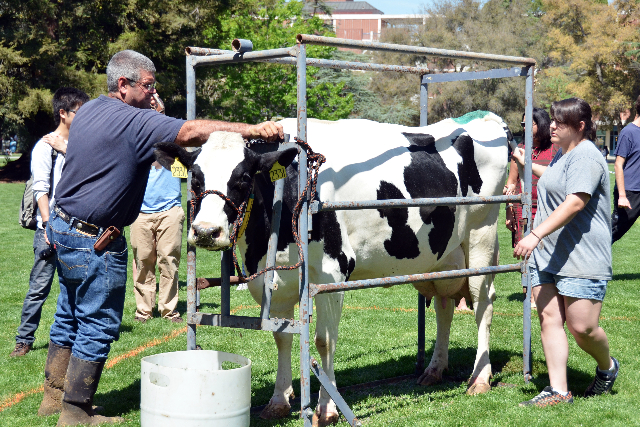
UC Davis researchers receive $6.9 million to study cow milk

UC Davis researchers have recently received a combined total of $6.9 million to study the health benefits of cow milk.

To fund the study, The National Center for Complementary and Alternative Medicine gave $4.2 million to a team led by David Mills, a UC Davis professor in the Department of Food Science and Technology, and the National Cancer Institute gave $2.7 million to a team led by Yu-Jui Yvonne Wan, a UC Davis professor as well as vice chair for research in the Department of Pathology and Laboratory Medicine of the UC Davis Health System.

Mills said, in the past, UC Davis researchers have focused on the health benefits of human milk, which enriches a specific type of protective bacteria in the guts of babies. This type of bacteria lowers the pH levels and prevents pathogen growth. Now, researchers hope that similar benefits can be found in bovine milk as well.

“First and foremost, we want to understand what’s going on with human milk,” Mills said. “That really becomes the model [for bovine milk].”

Mills says that UC Davis research regarding both human and bovine milk has been going on for over a decade.

Additionally, Mills said that the new grant his team has received from the National Center for Complementary and Alternative Medicine is part of on-going research, as he has had two other grants with them on this subject in the past.

“This is, in a sense, continuing a long line of funding,” Mills said.

Mills says that he hopes future research regarding bovine milk will create ways to help individuals suffering from health issues.

“We want to define all of the aspects of milk and how they interact with the bacteria and how that helps the milk,” Mills said. “Can bovine milk provide similar structures and do similar things [as human milk]?”

If bovine milk does provide a similar structure to human milk, Mills said that it could potentially help babies who are unable to nurse, as well as help fix a variety of health-related issues.

According to Michael McCarthy, chair of the UC Davis Department of Food Science and Technology, researchers still have a lot to learn about the food components and how they impact human health.

McCarthy said that the large amount of funding this UC Davis research program has received is significant in many ways.

“We are a major research university and it is important that we do receive grant funds in terms of research and training future generations of scientists in terms of research techniques,” McCarthy said. “It is also important in that it enables us to take some of our discoveries and further develop them. Particularly at Davis, these types of grants are extremely useful in terms of incorporating them in our undergraduate classes and graduate classes.”

Lydia Howell, chair of the Department of Pathology and Laboratory Medicine of the UC Davis Health System, stressed the importance of continuing milk research at UC Davis.

“This is the type of work that can only be done at UC Davis,” Howell said. “This project capitalizes on our campus’ unique strengths in agriculture, nutrition, and biomedical science, as well as our culture of innovation and collaboration.”

Photo by Anna de Benedictis


Upholding Freedom of the Press

0

IMG_3941

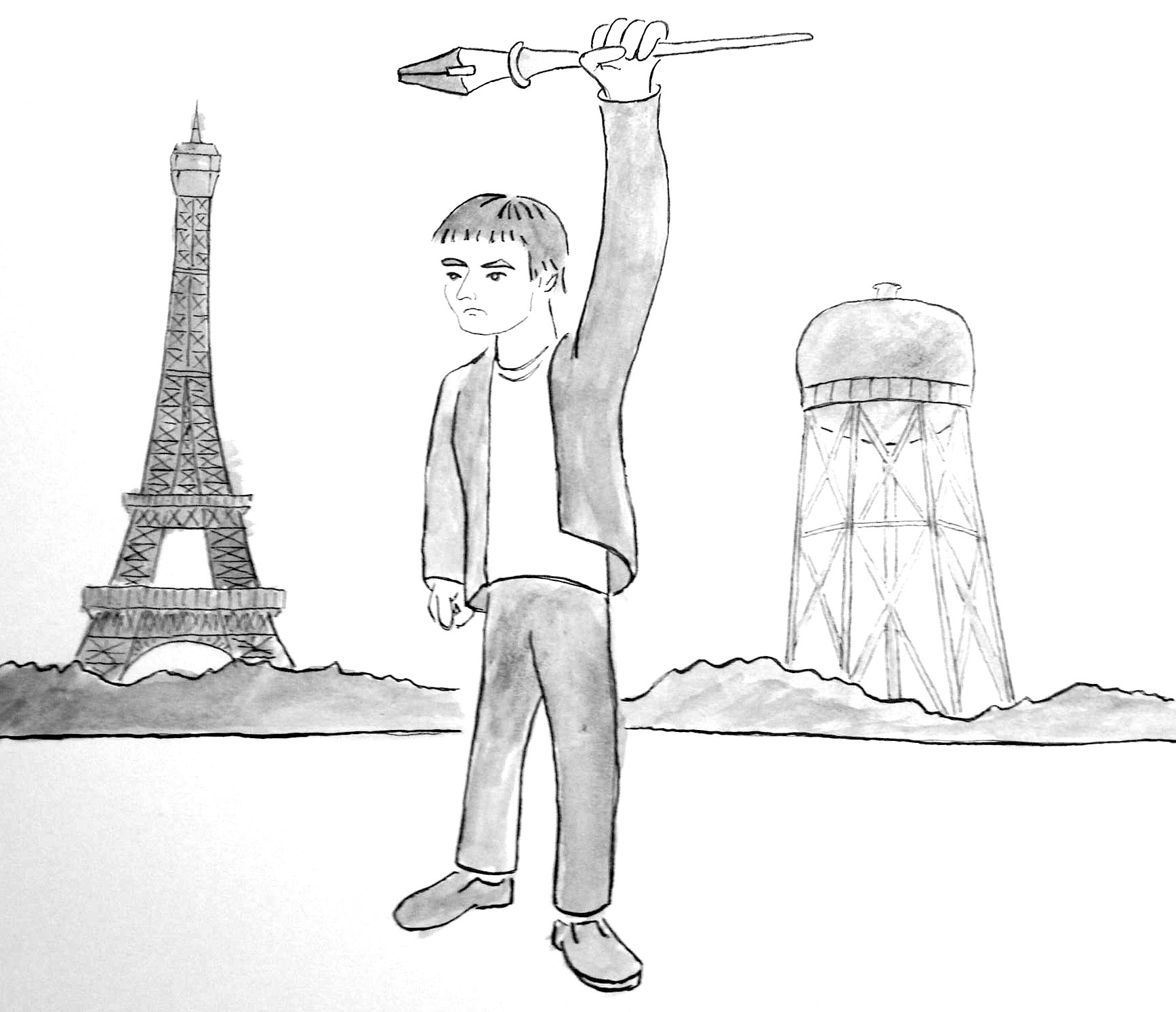
In the wake of the Charlie Hebdo tragedy, The California Aggie reaffirms the right to Freedom of the Press. This attack was an intolerable exercise of violence.

While publications offer differing, and sometimes crude, opinions, we understand the importance of the essential right that is freedom of speech and refuse to accept violence against those who are exercising it.

Illustration by Evan Lilley

UC Davis bulldozes the Matadors at Big West home opener

0

UC Davis faced off against the CSU Northridge Matadors on Wednesday and emerged victorious with a final score of 71-61 after a close and enthralling game.

Coming into the game Wednesday night, senior guard Corey Hawkins had been averaging over 20 points a game. But Hawkins only scored 11 points against CSUN, and the team had to find offense elsewhere to bring home a victory. Junior forward Josh Fox, as well as senior guards Tyler Les and Avery Johnson, indeed stepped up; they scored 11, 15 and 14 points respectively. This was a season high for Johnson, as well as a career high of four three-point field goals.

“Hopefully some of [Les’] shooting touch is rubbing off on me,” Johnson said when asked about his offensive presence on the court.  All five of Les’ baskets were from behind the three-point line.

Sophomore center Neal Monson also had a career high with 10 rebounds.

CSU Northridge entered the game with only seven athletes in rotation due to several suspensions.

“We just wanted to play hard and use our depth and wear them down,” said Johnson. “They ran out of gas at the end.”

The game started off fast-paced, with the Matadors winning the tip off and scoring the first basket. In the first 15 minutes the lead switched hands often, and it was only when there were about five minutes left until half did UC Davis let loose and begin to pull ahead.

Thanks in part to shooting 58.1 percent as opposed to Northridge’s 46.4 percent in the first half, the Aggies widened the gap between the two teams. With three seconds on the clock, Les hit a shot outside the line, giving the Aggies an end to the first half with a score of 44-31.

In the second half, the Aggies extended their lead further. At around the 9-minute mark, the Matadors started to close the distance, trying to bridge the 19-point gap. CSUN got within seven points, but their rally was too little, too late. The Matadors experienced the second lowest free-throw shooting percentage of their year, and ended the second half shooting 40 percent on all field goal attempts.


The final score was 71-61 as the Aggies successfully won their first Big West Conference game of the season, carrying their positive momentum of 10-3 from pre-conference play and translating it into a win. The Aggies now have a 3-0 record for Big West home openers.

This marks the fifth victory for UC Davis out of the last six head-to-head games against CSUN. It also marks the first time since the 2003-04 season that the Aggies have held a 7-0 record at home.

UC Davis currently leads the nation in 3-point field goal attempts at 43.6 percent, and is sixth in the nation for regular field goal attempts with 50.4 percent.

The Aggies will play Long Beach State at 8 p.m. on Saturday. With ESPNU providing televised coverage of the game, which has been advertised throughout campus, head coach Jim Les was worried that it would overshadow their game on Wednesday.

“I was a little worried coming in tonight,” Les said. “We couldn’t overlook this team, so I think that was really good that we had a business-like approach to tonight.”

Monson said that they need to continue to be physically tough in order to do well against Long Beach State.

“It’s taken us four years, but we feel we’re at a level now where we can really compete,” Les said. “[There’s] no better way … to find out if we’re making strides than to go against who has been traditionally one of the best teams in this league … and play them on national TV in our building with our great fans.”

UC Davis takes on Long Beach State in ESPN matchup

0

For the third year in a row, the UC Davis men’s basketball team will take its talents to ESPN as it faces off against Long Beach State on Saturday. After a 13-point loss against UC Santa Barbara on ESPN2 a season ago, the Aggies are looking to show off their newfound, winning ways to the rest of the country.

Head coach Jim Les spoke about his desire to show the rest of the country UC Davis basketball, stating, “You know, I’ve said it all along, there’s excellence all over this campus, all over this community — and what [better] to showcase than to have ESPNU not only come in and talk about our basketball program and these guys who are working their tail off, but to talk about our university, talk about our community and put it out there on a national stage.”

UC Davis men’s basketball is in a far better place than it was when it graced national television a year ago. The Aggies have started the year off with an 11-3 record, including a win in their first Big West game of the year against CSU Northridge. The team has been led by senior guard Corey Hawkins who is 24th in the country in points per game. Hawkins also leads the team in rebounds, assists and steals.

Much of the success for the Aggies has been driven by a trio of big-men who were unavailable a season ago. Senior forward Josh Ritchart, who missed the season with injury, has added 12.7 points and 4.4 rebounds per game while shooting 42.5 percent from beyond the arc. Junior forwards Josh Fox and J.T. Adenrele have also added consistent rebounding and energy, although the 6-foot-6 Fox has struggled somewhat against bigger opponents.

The Aggies are shooting 50.4 percent from the field as a team, sixth best in the country, while leading the country in three-point shooting percentage at 43.6 percent. The team has shown to be dominant offensively through its first 14 games. The team is also performing admirably in regards to defense throughout the season, forcing Division I opponents to shoot 42 percent from the field and 35 percent from beyond the arc.

In their three losses this season, however, the Aggies have struggled tremendously. They allowed over 75 points in each game, while allowing their opponents to shoot over 48 percent from the field and 45.7 percent from beyond the arc. UC Davis has also struggled on the boards, pulling in a meager 31.6 rebounds per game. Despite more frontcourt depth than a season ago, the Aggies continue to be undersized as they rely on Fox and the 6-foot-7 Adenrele. Sophomore center Neil Monson has helped, pulling down 3.4 rebounds in 13.5 minutes, but he has barely cracked the rotation.

The good news for Aggie fans is that Long Beach State does not offer a significant mismatch on the boards, with its leading rebounder standing at a stout 6-foot-7. Likewise, the 49ers’ 33.1 rebounds per game ranks only 257th in the nation and they sport a 6-10 record, including 0-9 on the road.

Still, the 49ers are a much tougher team than their record and 43.3 percent shooting average offer. Four of the team’s losses have come against ranked opponents and they have beaten teams like Xavier who are 11-4 with games against the likes of No. 19 Seton Hall. The Aggies will be facing a battle-tested team who are ready to get to work after a difficult early schedule.

Senior guard Avery Johnson noted that the upcoming game on ESPN will be prepared for just like any other, saying, “It’s going to be more of the same and just making sure we continue to improve as a team and play hard.”

Still, the guard’s excitement about the big game showed.

“It’s going to bring a lot of people [and] a lot of school spirit — the place is gonna be rocking, so hopefully we’ll bring a win to Davis,” he said.

Aggie Squirrel Watch

0

op_ed

If you are on-campus often, then you have probably noticed the abundant number of squirrels that roam freely through the university grounds. These squirrels are a non-native species known as the eastern fox squirrel, and have multiplied exponentially in Davis since 2001. In 2008, UC Davis’s Department of Wildlife, Fish and Conservation Biology began administering birth control to the little buggers in order to prevent the population from exploding out of proportion. Whether you love the bushy-tailed creatures or they make you nutty (bad pun intended), it is hard to imagine UC Davis without them. Here is our take on the pros and cons of these local fuzzies!

Pro: Aesthetics

Even if you absolutely despise them, you have to admit that the UC Davis squirrels are cute as heck. There’s just something endearing about their fluffy tails and itty-bitty ears that we cannot help but squeal at with joy. Even as a squirrel prances away with your cookie, it’s safe to say they’re still somehow charming and adorable.

Con: Safety Hazard

Campus squirrels are notorious for their tendency to run out into the middle of bike paths, scaring bikers and sometimes causing collisions and crashes to those students who try to avoid them. It is believed that the squirrels are actually partaking in an ongoing game, in which squirrels dare one another to see how close they can get to bikers without getting hit. Though this is a cruel joke to us humans, it is probably an important part of squirrel culture that we cannot fully comprehend.

Pro: Social Media

Aggie squirrels have their own Facebook page! It seems as if the little guys have adapted to the age of technology and are now using it to brighten our newsfeeds with funny photos and shoutouts. They have also provided Snapchat users with hilarious photo-ops.

Con: Thievery

If you ever take your eyes off of your lunch when sitting outside of the Memorial Union, you are risking the possibility of a squirrel swiping your pizza. Over the years, the little devils have grown weary of dumpster diving for partially eaten burritos and are now infamous for stealing whole untouched sandwiches and bags of chips. The wafting scent of TexMex taco salads awaken a hunger in the squirrels that cannot be tamed, even with the prospect of savory ripened acorns to store in their cheeks for the winter.

Con: Destruction

The squirrels have been known to chew through wire, weaken the bark on the Arboretum redwoods and kill multiple species of plants. They are also known to dig holes in lawns that destroy mowers and other garden tools. Though this is America, “the land of the free,” it has become clear that the squirrels have asserted their agency too far, to a point where they refuse to respect and preserve the natural world around them.

Pro: Aggie Pride  At the end of the day, the campus squirrels are just a normal part of the Aggie community. Despite some of their flaws (nobody’s perfect!), UC Davis would not be the same without them!

(Sidenote, squirrels can kill a rattlesnake with their bare paws and that’s pretty badass.)

Cartoon by Evan Lilley

NFL Playoffs in full swing

Source www.flickr.com/photos/pdaphoto/

Carolina Panthers 27 – Arizona Cardinals 16

The Carolina Panthers returned to the post-season for the second consecutive year despite a losing record at 7-8-1 and a negative point differential. Quarterback Cam Newton threw for 198, two touchdowns and an interception, but it was the tenacious Panthers defense that won the game for Carolina, sacking the Cardinals’ third string quarterback, Ryan Ridley, four times for a loss of 31 yards and intercepting him twice.

Arizona was held to 78 total yards, the lowest in NFL playoff history. Panthers’ running back Jonathan Stewart rushed for 123 yards and a touchdown. Carolina will face the best defense in the NFL, the Seattle Seahawks, in the second round.

Baltimore Ravens 30 – Pittsburgh Steelers 17

Despite the dismissal of running back Ray Rice in the wake of a scandal earlier this season, the Baltimore Ravens returned to postseason to face long-time rival PIttsburgh Steelers.

Ravens’ quarterback, Joe Flacco, passed for 259 yards and two touchdown in the win. The Baltimore defense managed to sack Steelers’ quarterback Ben Roethlisberger five times, for a loss of 37 yards, and intercepted two of his passes. Baltimore’s wideout, Steve Smith Sr., provided the Ravens with a throwback performance with five receptions for 101 yards.

The Ravens will try to upset the New England Patriots in upcoming Divisional round.

Indianapolis Colts 26 – Cincinnati Bengals 10

Colts’ quarterback, Andrew Luck, silenced his critics by passing for 376 yards and one touchdown while completing 31 out of 44 passing attempts. The Indianapolis defense limited the Bengals to 254 total yard and sacked quarterback Andy Dalton three times for a loss of 11 yards.

With this loss, Cincinnati is the first team to lose four straight playoff games. The Bengals have not won a playoff game since 1991.  Cincinnati was without all-star wideout A.J. Green, linebacker Rey Maualuga and lost Jeremy Hill to an ankle injury during the game.

Indianapolis will face Peyton Manning and the Denver Broncos, a familiar foe, on Sunday.

Dallas Cowboys 24 – Detroit Lions 20

This matchup featured the best rushing offense against the best rushing defense. However, this game will forever be marred by a penalty that was overturned to set up Dallas for the go-ahead touchdown drive. The referee threw the penalty flag on a defensive pass interference call against the Cowboys, but the flag was picked up and no penalty was called after he conferred with the rest of the officials.

Quarterback Tony Romo threw for 293 yards and two touchdowns while completing 19 passes out of 31 attempts. Cowboy running back Demarco Murray, who is this season rushing champion with a total of 1,845 yards, led all rushers with 75 rushing yards and a touchdown.

Despite a 11-5 record, the Detroit Lions have only one playoff win since 1957. Sam Bradford threw for 323 yards, one touchdown and one interception in the losing effort. Dallas will travel to Green Bay to face the ferocious Packers in the Divisional round.

Second Round Action:

Baltimore Ravens @ New England Patriots; Saturday, Jan. 10 at 1:35 p.m.

Carolina Panthers @ Seattle Seahawks; Saturday, Jan. 10 at 5:15 p.m.

Dallas Cowboys @ Green Bay Packers; Sunday, Jan. 11 at 10:05 a.m.

Indianapolis Colts @ Denver Broncos; Sunday, Jan. 11 at 1:40 p.m.


Photo courtesy by Creative Commons

AggieAngelous

0

The Poetry

The Mistress On His Mind

By Camille Iman Woods

Warning: Sexually explicit


He stopped me one day

and talked to me, really talked to me

he stimulated my mind and caressed my thoughts as

he talked to me

and we walked towards the library

as he caressed my thoughts

my thoughts get so lonely that they thought,

he was the one as soon as he touched


it had been a while since I had the pleasure

of shared intellect

and I was eager

eager to ask him to make love

to my intellect

more often

so

much

more

often

In my mind


His ideas were strong like black coffee

hard like baseball bats

and long like run on sentences

and I liked it, yes, our conversations

were my

orgasm

I climaxed


and wondered if he was single, you know

really single

he was married


and he told me that we couldn’t talk anymore because he loved my mind

more than his wife’s

because he had touched my mind and couldn’t stand to cheat

even in conversation


He said He didn’t know

this sort of pleasure existed

when he married her and if he did, well. . .

that doesn’t matter


But,


I wouldn’t have minded being his mind’s mistress

second to his wife but first to his thoughts


Oh, how I am eager to have the pleasure

of shared intellect

the kind of dopamine surge that only comes from studying a dopamine surge

the kind of liberation that comes from learning liberalism


Yes,

I was his kind

I miss the straddling of his gray matter

and his thoughts strong like black coffee

hard like baseball bats

long like run on sentences


Intellectuals get lonely too you know,

Sitting with all these pages isn’t good for a virgin mind


Note from the Editor

Welcome Back! AggieAngelous is back for another poetic quarter. AggieAngelous would like to thank all of you who read the column and those who submitted poetry as well. The goal of AggieAngelous is too embody the UC Davis student body and showcase the diversity of poetic thought at this wonderful university. I want to thank you all for helping me display the beauty of UC Davis through poetry! I hope you enjoy my poem above!

Be Feautred in aggieANGELOUS

Send your poetry to aggieangelous@gmail.com with your name, major, year a short, one-to-two paragraph description about yourself, and a photo of the poet. Feel free to include your interests and/or hobbies, or maybe even your favorite quote! Anyone from the UC Davis campus community (undergrad, grad, or alum) from any academic discipline can submit. You can submit as often as you like with as many pieces of creative writing as you would like. Please feel free to email AggieAngelous with any questions, concerns or inquiries.


Acme Theatre Company presents ‘Stop Kiss’

lgu9v2rqncnghw4l

From now until Jan. 11, Acme Theatre Company will be presenting its winter production of Stop Kiss at Veteran’s Memorial Center. The play, which is directed by company member Betsy Raymond, shares similarities with a homophobic hate crime against a Davis resident nearly two years ago.

Written by American playwright Diana Son, Stop Kiss tells the love story of two women, Callie Pax and Sara, and how their relationship develops after being victim to a homophobic attack. The play, which debuted Off-Broadway in 1998, is told out of chronological order and alternates between moments before and after the attack.

Along with addressing themes of homophobia and love, Raymond says the play is also adamant in depicting themes of young adulthood.

“I was drawn to this play because I think it really personalizes an issue that has been made really impersonal in our national dialogue,” Raymond said. “The play doesn’t really make any effort to send a broad message, but I think just by connecting into this personal story people can extrapolate a broader message for themselves.”

Although the play is primarily set in the women’s New York apartment, Raymond said she’s putting her own artistic twist on it by including elements of other New York areas and spaces. The production will also hold post-show discussions in order for audience members to discuss the deep themes the play touches on.

The play shares similarities with the alleged homophobic hate crime in Davis against Lawrence “Mikey” Partida in March 2013. Partida, a Davis resident, was brutally assaulted physically and verbally near his home in Old East Davis. Although Raymond acknowledges that there are parallels between the attack and the play, she was clear that the incident was not the reason she chose this production. She notes that she is aware of the play’s context in the Davis community and chose to include post-show discussions for this reason.

“I don’t know if [the attack] changes our interpretation of [Stop Kiss], but I think it does enrich our experience of producing this play and our sense of what kind of dialogue we want to bring to the community,” Raymond said.

Danielle Schlenker, who plays Callie, finds that this story is dear to her heart because she has aunts who have been married since Schlenker was a child. She also praises the story for simply focusing on the love between Callie and Sara as opposed to depicting Callie’s sexuality as a crisis of which gender she is attracted to more.

“For me the idea of people being discriminated against in the LGBT community is ridiculous because I grew up with [non-heteronormative relationships] as completely normal,” Schlenker said. “It’s also a story about love and not a story about how love is different for people who are lesbian or gay or anything in [the LGBTQIA] community.”

Although the story touches on serious topics, Eden Tomich, who plays Sara, says that the play is also funny and includes several humorous moments that are enjoyable for the audience. Tomich also thinks this story is important because it shines light that hate crimes even occur in safer communities such as Davis.

“There are sad parts and it’s very serious and it’s colorful, but it’s also, at its heart, a very funny, touching love story between women who against all odds manage to find each other,” Tomich said.

Tina Simpson plays the role of Mrs. Winsley, who serves as a witness to the attack. Simpson encourages people to attend the play for humanization of victims of hate.

“I think it talks about the effects on an individual of a crime like this instead of just talking about it as just a statistic,” Simpson said. “It talks about the human impact.”

Acme Theatre Company’s production of Stop Kiss will continue at Veteran’s Memorial Center on select dates until Jan. 11. Tickets are $10 general, $8 student/senior, and can be purchased at the door or online at brownpapertickets.com/event/923065.