61.7 F
Davis

Davis, California

Sunday, December 21, 2025
Home Blog Page 834

Bridging the gap between dance and theater

0

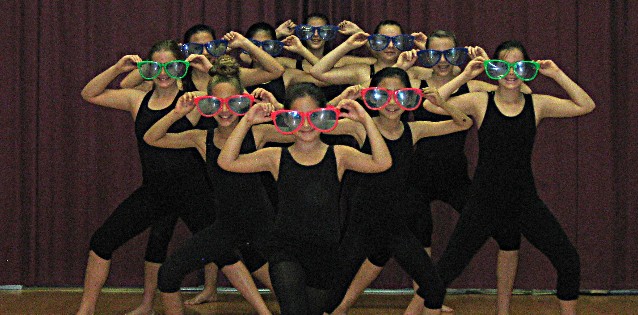
The Pamela Trokanski Dance Theater (PTDT) mixes dancers of every age, skill and experience level with a unique theatrical narrative to explore a theme. This year’s season opener, “Learning to See”, marks the company’s 30th active year.

Trokanski founded the local studio and the three companies (PTDT, Apprentice Company and Third Stage Company) that come together for performances. A storyteller herself, Trokanski finds that narration through dance has a unique impact on the viewers as well as the performers.

“[This season’s opener] is all about learning to see the world around us, what we think we see and how we fool our eyes,” Trokanski said. “It’s an honest experience with what seeing is and what that understanding means in the mind and the world… The concert will have a different impact on audience members based off of where they are in life.”

Trokanski’s narratives follow a non-linear scheme, mixing her own stories with stories written by the dancers about their personal life experiences. She gives her dancers prompts that pertain to specific landmark moments and instances in their lives to write about.

From there, Trokanski weaves the body of stories together into a cohesive piece. The show’s audio alternates between music and the recorded voices of dancers telling their stories, with dancing taking place during both kinds of audio.

Michele Tobias, a post-doctorate in the department of environmental science and policy, PTDT board of directors member and dancer, finds the collaboration between dancer and choreographer emotionally connecting.

“The spoken text from the dancers gives a depth to the text that otherwise wouldn’t be there. You’ll hear from people at a range of life stages and I think that the audience will find more connections with the text that way,” Tobias wrote in an email interview.

Allegra Silberstein, Davis’ first Poet Laureate and Third Stage dancer, finds that the personal storytelling adds another layer to an already complex choreographic undertaking.

“I love hearing the spoken narratives of the other dancers and I think this adds so much to Pamela’s shows,” Allegra wrote in an email interview. “She has always been known as an innovative choreographer, and this is one more thing to admire.”

Silberstein is one of the oldest dancers performing.

“At age 83, I am delighted to be a part of this show … I am grateful that Pamela has dancers from eight to 83,” Silberstein said.

The age variety among dancers is embraced by Trokanski, who sees the differences in ability and in life perspective as valuable assets to the show.

“One of my youngest dancers is eight, and her voice tells a completely different story than Allegra,” Trokanski said. “Back in the day, if I was going to tell a story, the adult figures were tall dancers, and shorter dancers were the kids. Once we began having dancers in their 60s and 70s, they could represent that aspect of life in a much [more visceral and] honest way.”

Sara Delorena, a Sacramento State University sociology graduate and third-year dance major at UC Davis, believes that all audience members will find something to connect with.

“Everyone can enjoy and connect to the stories. This company is unique in that we are all different ages, so there is something to learn from everyone,” Delorena said. “The full scope of emotions are drawn upon. There’s always humor, something sentimental. Musically, based on the stories and characters — everyone will find something to connect with.”

In addition to unique storytelling, the dance choreography itself sets PTDT apart. With a stage that is deeper than it is wide, dancers are able to participate in complex choreography.

“Our space allows for more layering of dancers. We can have pieces with five or six rows of dancers,” Tobias wrote. “You can’t do that in a traditional stage and have people doing big movements.”

Much of the unique and varied dance styles seen in the concerts comes from Trokanski’s personal background.

“When I started training in my 20s, I studied modern, I studied ballet, I studied bellydancing, I studied breakdancing; I was curious about [how I went from being very shy to] feeling very different when I was dancing,” Trokanski said.

This exploration of style has changed and expanded over the years, resulting in Trokanski challenging dancers to think outside the confines of one genre to express themselves.

“I love the concerts, the dancing, the people, the messages,” Delorena said. “This company is the reason I’m majoring in dance.”

“Learning to See” will premiere at the Pamela Trokanski Dance Workshop and Performing Arts Center on Sunday at 3 p.m. and Nov. 14 and 15 at 8 p.m. Tickets are available online at brownpapertickets.com/event/887684.

Photo courtesy Pamela Trokansk

News in Brief: World famous photographer comes to Davis

0

kennedy_ar1

On Nov. 9, world famous photographer Gene Kennedy will be exhibiting some of his work at the 1855 Gallery, which is located in the Davis Cemetery.

Kennedy is most recognized for his photography of the contemporary American landscape, particularly his black-and-white documentary images of suburban land development in Northern California. This upcoming presentation will consist of photographs focusing on the scenery of Yosemite National Park.

As a documentary photographer, Kennedy said he expects viewers to be able to decide what his photos thematically represent with their own sensibilities and interpret his art using their own understanding of the world. He said that his photographs tend to carry hidden metaphors, but at other times, his objectives for the non-natural pictures are more strident and humorous.

He describes that when camping in Yosemite, he was enamored with watching the spectacle of the firefall every night pouring down from Glacier Point. At 14, Kennedy received his first camera and began to take pictures of iconic rocks and waterfalls. According to Kennedy, Yosemite represents a space for his spirituality to be let loose.

“Amongst the trees, rocks and flowing waters, in the heart of the Sierra Nevada, I could commune with the spirit. It gives me peace and great happiness to be in Yosemite Valley,” Kennedy said.

Kennedy said he appreciates photographing trees the most out of all aspects of nature since they represent the changing face of the valley. He observes that the leaves change colors from season to season and they share countenances in front of rarely-changing rocks and cliffs.

“The trees keep me ever-attentive to variety, character and metaphor, to age and youth and to death and rebirth,” Kennedy said.

There will be tree portraits ranging from 1969 to 2014 at his exhibit, with each picture enlightening a different part of scenery due to organic alterations of nature.

The exhibit will run until Dec. 1 and is open Mondays to Fridays from 9 a.m. to 4 p.m. For further information on the exhibit and pricing, you can visit daviscemetery.org.

Photo by Courtesy


AggieAngelous

0

ThePoetry-ThePoets&ThePoetesses

The Poetry

“All Things Cacao”

By Kylina Matteoli

This is not a sexualized poem about chocolate. This is a poem of all things pure nacional; where tree pods shiver away from branches; donde asar, pagar, y moler los granos create a Latin blend of perfection; where craftsmanship, pride and integrity demand favorable weather and conditioned soil; where running water is reserved for the harvest and hydration revolves around spirits and bebidos; where the holistic blessing of pale bones and incense feeds the pods; where electricity is static and online refers to laundry flapping in the wind; where spare change doesn’t refer to el dinero but means a second chance – una educación para los niños – to get them out of the village, out of la dueda; donde chicos en catorce años follow their father’s footsteps to take on another generation – la herencia de la familia – the original cowboy, un gaúcho; donde las chicas couldn’t be call girls even if they wanted to – saving themselves from phone lines and erections – saving themselves para la iglesia; where a whole other world needs to exist in order for chocolate bars to be guilty pleasures in grocery aisles. This is not a sexualized poem about chocolate. This is a poem of all things pure nacional.

ThePoets&ThePoetesses

Kylina is a fourth-year English major at UC Davis. She has had her poetry published in poetry anthologies such as Voyage: This Time Around (Eber & Wein Press) and Omni Diuersitas (Eccentric Press Poetry Anthology, Volume I). She has also been published in online magazines like TipsyLit Magazine. When Kylina’s not studying or writing essays, she works for Book Buddy Digital Media as an author of a teen series titled Once Famous that will be published by Pearson Educational Press next year.

Be featured in AggieAngelous

Send your poetry to aggieangelous@gmail.com with your name, major, year and a short, one-to-two paragraph description about yourself. Feel free to include your interests and/or hobbies, or maybe even your favorite quote!

Classical Westerns to lasso in Davis cinephiles

0

filmfestival_ar

On Nov. 9, 16 and 23 The Davis Order of Odd Fellows, a historical social organization, is set to screen classic American Western movies as a part of The Odd Fellows Classic Film Festival. The festival will take place at The Davis Odd Fellows Lodge on 415 2nd St., with doors opening at 6:30 p.m. and the showtime at 7 p.m.

This is the second film festival for The Odd Fellows, following their inaugural screening of classic cinema in early February, which Dody Black, Odd Fellows member and Good Fellowship Committee chairwoman, described as a success.

“[The first event] was well-attended and enjoyed,” Black said. “[The Lodge] is just a great venue for these types of events here in Davis.”

The festival serves as an opportunity for The Davis Odd Fellows to give back to the community, as admission is free — though donations are suggested. It also provides an avenue to showcase overlooked and underrated relics of cinema in an atmosphere unique to the traditional theater.

Dave Rosenberg, the chairman of the committee for the festival, expressed the contrast between this film event and going to a regular movie theater.

“We serve wine, beer and mixed drinks,” Rosenberg said. “You don’t typically get to do that at your typical movie theater.”

Considering all the different categories of film available, The Odd Fellow’s Film Festival Committee is tasked with choosing a specific genre for each cinematic event. For the second edition of the festival, the committee chose a staple of American cinema, the Western.

“There’s so many different genres and themes you can choose from,” Rosenberg said. “[Classic] horror movies, musicals, comedies [and] courtroom dramas, the list goes on and on. We thought that Westerns might be a nice [choice] because there’s so many [Westerns that achieved classic status].”

The Odd Fellows’ appreciation for classic American Western cinema is shared by Derrick Bang, film critic for The Davis Enterprise. He will be introducing each film and heading a discussion following the screenings.

“Westerns are like opera,” Bang said. “It’s a real love-hate relationship … A lot of people have a knee-jerk response [and will say] ‘I don’t like Westerns.’”

Bang went on to explain that casual cinephiles can be deterred by some of the more antiquated and politically-incorrect elements of the genre. He countered this sentiment by explaining that there are Westerns, like the three featured in the festival – “Stagecoach”, “The Treasure of the Sierra Madre” and “Cat Ballou” – that feature finely detailed and developed characters and stories that transcend the confines of the genre.

“If the story is strong enough and timeless enough,” Bang said, “I would argue it doesn’t matter where you set the action. To use a very recent example, many people observe that Star Wars – when it came out in 1977 – [is] just a Western set in space. It’s got all of the Western idioms and clichés.”

While The Davis Odd Fellows are hoping to raise awareness and increase the appreciation of classic cinema, the festival also serves as another avenue for the club to achieve their ultimate goal: serving the city of Davis.

“This is another thing that we do to benefit the community,” Rosenberg said, “because we are about service.”

For more information, visit davislodge.org/davis-odd-fellows-classic-film-festival-returns-november/.

Photos by Mconnors/Morgue File

(Re)Fashioning Gender: Work It

0

A few years ago, I worked at a restaurant as a hostess where we were required to abide by a dress code. The dress code in and of itself was pretty standard: According to our training manual, as long as we wore all black and we weren’t dressed sloppily or showing too much skin, we were fine. But there were a few instances that made it clear that this code was a little more complex – and, in some ways, sexist – than that.

For example, when a coworker of mine came in dressed in her usual semi-professional attire, but wasn’t wearing any make-up, my boss came up to me and said, “Tell her to put a little eyeliner on, will you? She’s scaring away all the customers.” It threw me off, to say the least. She must be joking, I thought, but when my boss added that she couldn’t tell my co-worker herself because it might end up being an issue, I realized how serious she was.

It wasn’t just the one instance (nor was it just the one job) where I was witness to companies telling their female staff that looking pretty was an inherent part of their job. At the same restaurant, a bartender was sent home for not spending enough time on her hair, which, apart from this one occasion where she left it naturally curly, was always flat-ironed straight. At another job, my boss told me flat out that I got hired because he and my other managers thought I was hot. And at yet another job, female employees were advised that the prettier we looked, the more products we were likely to sell. “But don’t quote me on that,” joked my boss. Oops.

Now, it could be that I am somehow magnetically attracted to slimy, sexist jobs. But I’m willing to bet that this kind of treatment of female employees is a lot more common than we might be inclined to believe. I know countless other women who have had similar experiences at all kinds of jobs which seems to me to be indicative of a common thread — that is, that the attractiveness of female employees outweighs their professionalism or abilities to do their job.

What’s even more alarming about this is that, in my experience, employers freely acknowledge their sexist behavior. It’s more of a joke than anything, even to female employers. They know that legally they aren’t supposed to be advising employees on how to make themselves look more attractive — but we all know that sex sells, so what’s the harm?

Well, the harm is that maintaining this kind of appearance costs time and money. Furthermore, not all employees are held to the same standards. Never once have I seen, or heard, about male employees being told to put on more makeup or spend a little bit more time doing their hair. This double standard implies that the worth of a female employee depends far more on their appearance than a male employee’s does.

It’s understandable, on some level, for employers to require their staff to maintain a certain type of appearance. But when these standards place more emphasis on looking attractive than they do on looking professional, then there’s a problem. I’d like to believe that when I go to work, I’m judged on my performance rather than on my looks, but according to some of the dress codes that are put in place, this might not be the case.

To spill your own dress code horror stories, email ctspiller@ucdavis.edu.

Tunespoon: What really matters

0

Taylor Swift’s 1989 is 2014’s first platinum certified selling album, and likely to be the only one.

For an album to be platinum certified by the Recording Industry Association of America (RIAA), a label must sell at least one million digital and/or physical units of an album. Know-it-all economic pundits often use RIAA certifications as symptoms to diagnose the future of the music industry. Chances of survival are low. Music’s ever-increasing accessibility is contributing to the death of the album, and as a result, the music industry as we know it.

Streaming services like Spotify and Pandora are often accused of being culprits for the death of the music industry. According to a highly sensationalist article by Forbes aptly titled “Why Taylor Swift’s 1989 Could Be the Last Platinum-Selling Album Ever,” young people are the core consumer of the music industry. Hardly any teenager buys CDs anymore, as modern technology abandons them. The convenience of digital records is a hindrance for preteens; purchasing digital albums with a credit card requires parent permission, which stifles the freedom preteens have in selecting the music they want to buy. There’s nowhere left to turn to, except for streaming services, which are both legal and free. They don’t pay quite the same as record sales, however. According to a 2013 report, Spotify reportedly pays an artist $.006 per stream of a song. 166 plays earns one dollar. I love music, but I have listened to very few songs over 160 times; pangs of guilt crush me knowing I would make Portishead a grand $1.13 with my 189 plays of “Machine Gun.”

But then I realize that there’s no reason to feel guilty. Music culture is the same as it has ever been. It’s just taking on a new context in the digital age. The spirit of letting your best friend borrow a piece of vinyl to play on your parents’ turntable is still alive. It’s why people often feel compelled to share playlists or songs on Facebook statuses, burn mixtapes/mix CDs for friends to play in the car or just pass their earbuds over. I find a lot of joy in buying used CDs, which is basically music sharing at a corporate level. I am fully aware that the artist receives no money from that transaction. I support the record store, because I want it to remain a conduit to music purveyors for as long as it possibly can.

The music industry is dying; so what? The RIAA and what pundits/rock’n’roll has-beens say are wholly irrelevant to the spirit of music. They say it’s difficult to make a living. Difficult, at least, by the obsolete music industry standards doomsayers use to condemn the music industry to its inevitable grave.

One of the most rebelliously wise women in music, Amanda Palmer, launched a wildly successful Kickstarter campaign to fund recording, packaging, releasing, promoting and touring of a new album, without the help of an oppressive major record label. Palmer exclaims, “We’re being shown proof-positive that it just isn’t necessary anymore.” In a later TED talk, she urges the music industry to think about how to let people pay for music, as opposed to making them. Another artist, Vienna Teng, raised over 400% of her $20,000 goal for a new music video.

The future of music may be shaky. But with artists like Amanda Palmer, Vienna Teng, other courageous musicians (Frankie Cosmos, Moses Sumney) and anti-industry organizations (CDBaby, BandCamp) braving the waters of DIY artistry – trusting the people to directly help preserve the integrity of their art – it’s hard not to be excited.

Is it idealistic to think that one day, money will be second to art? Probably. But look and see that it’s possible that the number-crunching materialism of industry is slowly giving way to what really matters in music: music.

Edumacation with Calvin and Hobbes: Calvin has Character

0

flesch_op

In my 11 years of reading Calvin and Hobbes, I would like to think that I have developed an understanding of Calvin’s character. Not only does the strip provide a poignant commentary on education, but it provides a personality that is remarkably befitting of many stages of life, from childhood to adolescence, and beyond. As such, Calvin displays many of the qualities of a college student. We can analyze his personality to determine why students may struggle or succeed in their educational careers.

The strip above displays a common phenomenon. A student demanding a lot from their institution, but perhaps is unwilling to work hard. Like Calvin, many students today harbor cynical attitudes toward the way they are educated. Part of the reason may be that schooling prior to college is seen largely as a burden, with boring lessons and distasteful structure.

A lot of students may feel marginalized, especially in a large university like UC Davis. And when this marginalization occurs, people tend to look inward. One of Calvin’s most prolific traits is his superiority complex. I would not be surprised to find larger universities harboring a bunch of Calvins to this respect. When connecting with others (faculty, friends, advisors) becomes harder, people naturally act like their own beliefs and opinions are final. Presented with such a mass of people, it can be destabilizing not to think that you are separate in some way from everybody else.

A superiority complex, which is inherently narcissistic, never helps anybody learn. Part of the challenge of higher education is finding a group of peers who will properly criticize your work. One trait of narcissism is wanting success for yourself at the hazard of others. The hazard in education may be improper feedback. It’s a vicious cycle. The narcissist wants approval from others, so he gives shoddy feedback to his peer, and in return, the peer has an inflated sense of how good his own work is.

Calvin’s desire to be handed opportunity and skills for a “tough, global economy” suggests he is aware of the challenges that await him. Today’s college students have a similar awareness, and demand the tools to compete as well. What these tools specifically are is frustratingly ambiguous. In past columns, we’ve discussed how a college degree, in general, can be seen as a necessary tool in the job market, and how high critical thinking skills reflect positive economic signals. These are both tools we expect the institution to foster. But what about Ms. Wormwood’s opinion? What if the greatest tool is the student’s work ethic and attitude?

Many workers in the job market say that the degree they earned in college has hardly affected their occupation. I sometimes joke that my father is a real estate agent because he majored in sociology. These changes can dishearten many people, who envisioned themselves at the top of their field of study. It takes a certain mindset to be able to pivot from your first choice to something you don’t immediately find appeal in.

Students must apply this mindset to their studies. We cannot simultaneously demand skills and not work hard. Most students understand this in theory, but act on it in counterproductive ways. In a society replete with technology, many students are entirely aware of distraction, but fail to do anything about it. Our education is starting to be presented in the same formats as our entertainment, blurring the lines between study and pleasure. A student will read an academic paper on the same device they use to listen to music. The addictive, instantly gratifying qualities of social media are at odds with the slow process of learning. Like Calvin, students begin to feel disillusioned; they feel that they may not in fact be getting their money’s worth (whether they do or not is irrelevant here).

What is important is a sense of self-awareness that accounts for potential traits like narcissism. This type of awareness is one of Calvin’s defining characteristics. It helps to know how we may be contradicting ourselves, so we can make positive changes. Ms. Wormwood expects Calvin to try harder in school, but what she would probably really love is for him to first have his own reason to change. I suspect this reason may be why self-aware people are stereotypically depressed. They know they need to change, but they don’t, and it hurts.

What this discussion amounts to is the need for personality overhauls. Students need to find out what they value, and pursue it in a way that does not compromise their visions and desires. It seems obvious to say, but the most important player in education is the student. If they’re not diligent in the way they pull their end, very little learning will occur.

To diagnose ELI FLESCH’s personality type, you can reach him at ekflesch@ucdavis.edu or tweet him @eliflesch.

Photo by Courtesy

Interview with specialist Maurice Pitesky

0

research_feMaurice Pitesky is an assistant specialist in cooperative extension at UC Davis who also teaches about the poultry industry in California. As a veterinarian and epidemiologist, he is interested in how diseases spread through flocks of chickens from the perspectives of poultry health and food safety. Prior to working at the university, Pitesky worked with the California Department of Food and Agriculture, the California State Senate and the Lawrence Livermore National Lab.

What is your current research on?

The first thing is I do a lot of mapping of disease. So I use a technique called GIS, Global Information Systems, and what we try to do in our group is understand how avian diseases move in space and time. If we understand how they’ve moved in California over the last 10 or 20 years, we can hopefully come to some kind of understanding of how these diseases are moving in and out of avian populations and come up with mitigations to reduce their spread in the next 10 or 20 years.

Avian influenza can be spread [in] different types of ways, and one of the ways that we’re interested in is natural spread from waterfowl, because waterfowl are natural carriers of avian influenza, and we’re worried about where those waterfowl spatially interact with domestic poultry or commercial poultry. So we can make maps of diseases, we can map where the waterfowl are, where domestic/commercial poultry are, and we can look for where those overlay each other and come up with a risk map of where in the state we might have higher risk of a natural introduction of avian influenza and focus our surveillance efforts toward those areas.

Another thing that we do, we’re interested in that elusive term of sustainability. There’s a lot of push for local food and for growing our poultry and eggs in much more open environments. We’re really interested in those systems because there’s a lot of challenges with respect to food safety, welfare, behavior and the sustainability of those systems.

Why do you think this research is important?

On the mapping side it’s important because we want to reduce disease in poultry. We want to improve the health of our poultry in California, and the mapping allows us to understand how animals are getting sick in space and time and if there’s clustering of disease. I think in agriculture we’re just starting to scratch the surface of what we can do with mapping and understanding how disease[s] move and identifying what are the factors that are contributing to diseases spreading from flock to flock.

On the food safety side, salmonella is a huge issue with respect to poultry and understanding the factors that are contributing to people getting sick and birds carrying salmonella is essential. If you don’t understand what those factors are you can’t come up with mitigations in order to reduce the risk of salmonella.

On the sustainability side, understanding these small scale pasture poultry operations, understanding what the challenges are in working with those farmers is essential for making those systems sustainable and viable from a commercial perspective and from a food safety and welfare perspective. We need to engage with those farmers, we need to have a facility at UC Davis where we’re really having all kinds of research and outreach that’s dedicated to those type of small scale pasture poultry farmers, and to backyard enthusiast and master gardeners, and all the people throughout the state now that are really embracing poultry.

What is the most interesting aspect of your research?

I think the part that I like the most is how often I’m wrong. It’s always neat when you come up with some general hypothesis about how you think an experiment will work or how you think some results will look like and I’m constantly amazed how often I’m wrong when I look at the results. That’s the great thing about science, you can look at data, and if you look at it objectively it can give you an answer that maybe you weren’t expecting, and it’s always interesting to follow those answers and try to identify what the meaning of that is and how that can be helpful from a food safety perspective or to the poultry industry. On the applied part of it, it’s really nice to have a real impact, hopefully, on how successful some of these farms are. It’s fun to get that feeling of gratification if you’re able to work with some of the farmers and producers.

Photo courtesy Maurice Pitesky

Breakthrough study to ensure fish safety under water dams

0

fishdams_ci1

On Oct. 15, BioScience Advance Access published a study conducted by UC Davis associate research scientist Joshua H. Viers, UC Davis fish biology professor Peter Moyle and U.S. geological survey research scientist Theodore Grantham. This study resulted in a method to ensure the safety of endangered fish by ensuring sufficient water flow under California water dams.

Due to the drought in California, water dam owners are reluctant to ensure sufficient water flow underneath their dams.

The motivation for the study began with the researchers’ concern for the rapid decline in fish populations.

“Eighty percent of fish endemic to California are facing extinction within the next 100 years if something does not change,” Grantham said.

Grantham also explained that the problem of declining fish population has existed for quite a while, but finding a conceivable solution was still complicated.

In an article written by Grantham and Moyle on the California WaterBlog, they found their clear start to fix the problem.

The WaterBlog article states, “[the screening process] provides a scientific basis for dam operators, natural resource managers, and policymakers to perform water ‘triage’ — setting management priorities for dams requiring the most urgent attention.”

The screening process they developed has already shown success. Out of the 753 dams the researchers had screened so far, about 25 percent have been categorized as dams with insufficient water flow. With over 3,000 dams in California, the percentage of unsafe dam operations is only more likely to grow.

Though the framework to check fish safety was just recently invented, according to Moyle, dam owners have been neglecting fish safety for decades. In May 2000, the Putah Creek Council, City of Davis and UC Davis filed a lawsuit against the Solano County Water Agency and the Solano Irrigation District for mismanagement of the creek. The court ruled in the plaintiffs’ favor.

Moyle pointed out that native fish are doing much better since then.

According to Moyle, once these kinds of cases are brought to court, it is almost impossible to lose.

“If a dam is disrupting flow under the dam, they are breaking the law,” Moyle said.

Section 5937 in the California Fish and Game Code explicitly states, “The owner of any dam shall allow sufficient water at all times to pass through a fishway, or in the absence of a fishway, allow sufficient water to pass over, around or through the dam, to keep in good condition any fish that may be planted or exist below the dam.”

The problem, Grantham said, is that no one is enforcing this law due to lack of funding and resources. It is not until someone or some organization brings awareness to the problem and takes it to court that sufficient water flow is restored beneath dams.

Because of this, Grantham pointed out, cases where dams that are not as well-known and most likely in worse shape are not being brought to court. The next line of action is for environmentalist organizations to take this framework and screen every dam — and if those responsible are not providing sufficient water flow under the dam, the environmentalists must take action to protect fish populations.

The researchers have already begun to rank the different dams based upon how endangered the fish population residing and migrating under the dam is, the size of the dam – that is, height and reservoir capacity – and the degree of flow alteration.

Not only would the future screenings reveal whether a particular dam is harming fish, but they could also provide the answer to a bigger issue Grantham is concerned with.

“We hope the information gathered can prioritize future studies and [allow us to] see how the dams can be modified to be less harmful to downstream fish communities,” Grantham said.

Already, UC Davis is taking more of a stand in support of providing greater flow of water to the fish — not only from the perspective of the researchers and professors, but also a significant portion of the students as well. One of the student clubs invested in improving the conservation and sustainability of fishery resources and advancing fisheries is the American Fisheries Society.

Jesus Vargas, a member of the AFS and a fourth-year wildlife, fish and conservation biology major, commented on the importance of this study and others like it in an email.

“These studies are essential to discover the minimum habitat and resources necessary for them to sustain healthy population sizes. With these studies, we can create and regulate dam flows based on the type of flows necessary for the fish to thrive,” Vargas said.

Vargas also explained that certain fish require different water flow rates, which complicate how much water flow to release from the dam.

“The more information we have on what the fishes need, the better we can adjust the flows; any other habitat and resource adjustments that must be made can also be taken into account,” Vargas said.

Researchers hope a compromise can be made to better conserve native fish populations.

“[This study] is a place to start; It is not an end,” Moyle said.

Photo by Stephen Volpi


News in Brief: Davis Bicycles to discuss city bicycle infrastructure at open forum

0

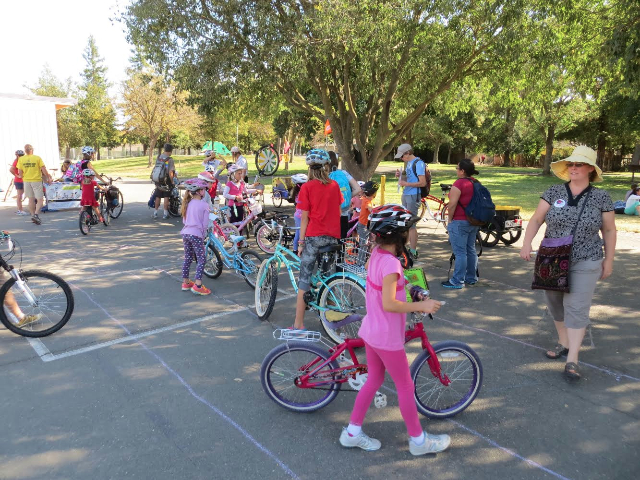
Davis Bicycles!, a non-profit advocacy group concerned with bicycle infrastructure in Davis, is holding a discussion tonight, Nov. 6, on how to improve bicycle infrastructure in Davis. Rock Miller, a UC Davis Graduate who is now working in an engineering firm focusing on street design, will be a speaker at the event.

“[Miller]…[has] knowledge of our community and our bicycling program here,” said Steve Tracy, vice president of Davis Bicycles!.

Miller’s focus has been on street designs that accommodate pedestrian and bicycles, or as Tracy said, “complete streets.” He has conducted research on the infrastructure of roads in European cities where bike ridership is up to 40 or 50 percent of the population.

The event will introduce contemporary road designs and include an open forum.

“We want to learn from somebody who’s an expert in the field, who can show us more contemporary designs that feel safer and are safer, [in order] to increase our ridership,” Tracy said.

Davis Bicycles! expects an equal number of guests from both Davis Bicycles! members and the general public. According to Tracy, some people are interested in knowing how to get involved and help improve infrastructure in Davis streets.

Davis Bicycles! has previously organized events to promote bicycling, including events related to beer and film festivals. Their focus is on street improvements and bicycle-related programs in the city of Davis. According to Davis Bicycles!, 20 to 25 percent of the Davis population ride bikes regularly but improvements in infrastructure are needed to increase that number and reach climate change goals.

“Davis basically invented bike lanes in America… We haven’t fundamentally changed a lot in our designs — we’re still painting bike lanes in busy streets. We want to get beyond there. [Miller] is one of the few people in the country who can show some examples of better designs,” Tracy said.

The event will be held tonight at Cafe 110 on F St. from 6 to 8 p.m. For more information visit www.davisbicycles.org.

Photo by Steve Tracy/Davis Bicycles

California drought urges Yosemite National park to take preventive action to avoid negative human interactions with bears

0
Graphic by Jennifer Wu

Since September this year Yosemite National Park rangers have begun to install GPS trackers on some of their bear population in efforts to ameliorate the potential negative effects of California’s drought on the bears.

Over the last few months, there have been significantly more bear sightings in human areas than typical for Yosemite Valley. Experts say bears may be seeking alternative food supplies due to limited natural food supply available as a result of the drought.

“During drought conditions, if [bears’] natural food supply becomes relatively limited, they [will] seek for alternative food supplies. It brings them into conflict with humans by them coming into campsites,” said Professor Roger Baldwin of the UC Davis Department of Wildlife, Fish and Conservation Biology.

As a precautionary measure, the park services have put GPS tracker collars on small population of the bears to provide information on bear activities and habits, as well as their movements. The collars are used to monitor specific bears that have shown unnatural behaviors due to their frequent interactions with humans. These interactions have, in fact, increased over the last few months.

“The collars provide us [with] information and [help us to] keep track of these specific bears that we know are coming into camp grounds, or trying to break into houses or trying to get food from humans,” said Kari Cobb, Yosemite National Park’s public affairs representative.

The GPS trackers were funded by Yosemite Conservancy, who donated $70,000 to help the park in their efforts.

“We [want to fulfill] our mission of preserving and protecting Yosemite National Park and [enhance] the visitor experience,” said Jennifer Miller, Yosemite Conservancy’s media representative.

In addition, the organization has funded projects and programs to support the national park which includes bear management programs such as renting bear-proof food canisters used by visitors of the park.

However, before the GPS trackers came into play, rangers have long relied on limiting negative human-bear interaction through the installment of bear lockers, which keep bears out from visitors’ or campers’ perishable goods and other belongings.

The park, which is home to around 300-500 bears, has installed approximately 2,000 bear lockers over the years. Visitors are required to use these bear lockers which are found in campsites and frequently used parking areas.

“[The bears] may come here and [be] more visible, but they do not have any more chances to get food,” Cobb said.

Additionally, visitors are usually informed on how to handle interactions with bears through educational information sessions and signs that are placed around the park. Since these regulations were put in place, bear raids have decreased considerably. In the late 1990s, there were several hundreds of bear raids a year, but in 2013 there were only 10.

“Sometimes we still experience [the bears] raiding vehicles…[when] people don’t put their food in the lockers and keep them in their vehicles,” Cobb said.

“They have a very keen sense of smell…I’ve heard from 10 times to a 100 times more sensitive than a bloodhound,” said Baldwin.

However, Baldwin believes the bear population will adapt, despite the drought potentially affecting food availability. He says bears are used to finding new sources of food, and can instinctually determine locations with the most berries, acorns and oats. More specifically, when the production of bear food is limited due to the drought on higher elevation, bears are used to moving to lower elevation where food sources are more available.

“Bear foods are usually patchy, so they are constantly moving around trying to find those different patches,” said Baldwin.

It is important to note, still, that there can be negative effects on the bear population if the drought persists for a prolonged time period.

“If the drought was of a really long duration and the bears were not able to get all the necessary food items…then it could, theoretically, have a negative impact to the recruitment and population,” said Baldwin.

With efforts from rangers and cooperative visitors, sources hope that the drought will not affect the population of the bears in Yosemite. Bears are one of the main attractions for visitors of the Yosemite park and visitors frequently see them during their stay.

Park rangers, nature conservationists and park visitors alike stress the importance of maintaining bear population and diversity. Carson Graves, a first-year political science major at UC Davis, went on a trip to the national park last September. He describes how important it is to see wildlife in its natural habitat.

“When I saw the bear, I was in awe. I only saw [from] a distance, but I felt that it was the perfect representation of the natural ecosystem around us and it’s a perfect reminder that we have a symbiotic relationship [with animals],” said Graves.

UC Davis Medical Center identified as Ebola-ready

0

On Oct. 24, the University of California (UC) Office of the President confirmed in a press release that the UC Davis Medical Center (UCDMC) in Sacramento will be one of five UC medical centers prepared to take in and treat officially-diagnosed Ebola patients. The California Department of Public Health (CDPH) now recognizes all five UC medical centers (Davis, Irvine, San Diego, Los Angeles and San Francisco) as priority care facilities.

The potentially fatal virus can be transmitted through contact with bodily fluids. According to the release, any patient confirmed by the Centers for Disease Control and Prevention (CDC) may be treated at any of the UC facilities while other hospitals in the state continue to await CDC clearance.

“The [UC Davis] Medical Center was chosen because of the infection prevention expertise of our physicians and nurses and because [UC Davis has] been preparing since September,” said Carol Robinson, chief nursing officer at UC Davis Medical Center. “It takes extraordinary energy to keep up with the daily and sometimes hourly updates from the CDC and other organizations, and the UC Davis Medical Center has the resources and capacity to implement changes quickly.”

According to the press release, CDC updated personal protective equipment (PPE) guidance to meet California’s higher standards, and state officials are to partner with these facilities for assurance of proper medical waste handling and disposal. CDPH will assist the five centers with obtaining equipment, if needed.

Nurses, physicians, respiratory therapists and environmental service workers have been receiving ongoing training as personnel continue to practice with PPE. Proper dressing and removal of equipment is crucial for protecting a worker’s skin from coming into contact with an exposed patient’s bodily fluids.

In addition to prepared front-line staff, training has also been applied to volunteers who received preparation instructions as intense as other personnel training.

Although one patient was admitted to the Kaiser Permanente South Sacramento Medical Center for possible Ebola exposure in early August, tests returned negative, and Robinson states that the likelihood for the center to come across a case is low.

“It has been determined that it is highly unlikely that an Ebola patient would arrive in Sacramento, but UCDMC is preparing for the unexpected, and communication lines between the Sacramento County Public Health Director and the medical center are open.” Robinson said.

Graphic by Courtesy


Carry That Weight Day of Action takes place at UC Davis

0

carrythatweight_fe_Pasturel3

According to The Washington Post’s ranking system, UC Davis has the fifth-highest number reported of sexual assaults of all college campuses nationwide. UC Davis students did not take this news sitting down, as students gathered outside Women’s Resources And Research Center the morning of Oct. 29 to participate in the Carry That Weight Day of Action.

Carry That Weight is a campaign movement started by Columbia University student Emma Sulkowicz. Sulkowicz was sexually assaulted in her own dorm room during her sophomore year at Columbia and decided to report the rape after two more girls came forward claiming they were assaulted by the same student. All three cases, however, were dismissed. Now in her senior year, Sulkowicz decided to showcase her protest of sexual assault in a moving performance piece: Carry That Weight. For the piece, Sulkowicz pledged that she would carry a mattress with her, whenever on campus, until her alleged rapist is expelled.

The performance piece became a national movement when, on Oct. 29, student activists at Columbia called for a day of nationwide solidarity with sexual assault victims on college campuses. The movement called for students to bring their mattresses to their school campus in solidarity with Sulkowicz. UC Davis was one of the many campuses to lend its voice to the cause, when ASUCD Office of Student Advocacy and Representation as well as the Women’s Resources Center (WRC) organized the UC Davis Carry That Weight event.

Miriam Dombrowski, a 2nd year double majoring in History and Comparative Literature is involved in many spaces on campus related to the issue of sexual assault, including a Work Group of the UC Presidents Task Force on Preventing and Responding to Sexual Assault as well as the Chancellor’s Advisory Committee For Sexual Assault. She was one of the students who helped organize Carry That Weight Day of Action at UC Davis.


“Facets of this issue are on the public consciousness right now,” Dombrowski said, “but ultimately this is an attempt to demonstrate that many students take this issue, its foundational causes, and its intersections seriously, and to urge administration of the UC to do the same.”

At 11:50a.m, the group of around fifty students divided up the mattresses, about five to a mattress, and began their march. Chanting phrases like “Rape culture has got to go,” the crowd marched from the Memorial Union to Mrak Hall, blocking the bike path and eliciting cheers from nearby students. At Mrak Hall, several students stood up to voice support for the event and to give personal accounts of experiences with sexual assault at UC Davis.

Anabiah Syed, a third year political science major who also attended the event was appalled at the sexual assault statistics regarding UC Davis.

“We’re the number one school in California and number five school in the nation in terms of sexual assault cases” Syed said. “I don’t want UC Davis students to be complacent. Today we will be marching around the quad and I want people to join us; I want people to speak out about what’s going on.”

Thus far the Columbia administration has yet to acknowledge Sulkowicz’s protest let alone reopen her case, however, Dombrowski remains optimistic that the Carry That Weight movement can create a dialogue for change.

“I hope administration of the University of California are listening to our voices, because ultimately this is about holding institutions accountable,” Dombrowski said. “We, students, are telling them that this needs to be a sincere financial priority—technically our Violence and Prevention Program doesn’t even have its own budget.”

Ashley Hanson, a fourth-year clinical nutrition major, felt an especially strong personal connection to the cause and attended the event.

“This is particularly important to me. I was raped visiting another university as a freshman and I was asked ‘if I liked it’,” Hanson said, “For the longest time, I did not think that I was allowed to call what happened ‘rape’ because I was drunk. I was made to believe I deserved it, and that’s ugly; it shouldn’t be the case and it’s taken years to come to terms with how wrong that is.”


Like Sulkowicz, Hanson felt that the burden of responsibility falls on institutions to respond appropriately to sexual assault cases, and all too often, that the response is noticeably absent.

“So many people are silenced by their own shame, and then once they find their voice they’re silenced by an oppressive system that is not built to help them,” Hanson said. “We go through so much inner turmoil deciding to speak out; we don’t need the system trying to shut us up too.”

Photos by Ciera Pasturel


Sacramento State Police Investigating Troubling Graffiti

grafittThis afternoon Sacramento State Police Department found graffiti at a Sacramento State women’s restroom that read “3:00 11/4 school shooting” according to their Facebook page. It is currently under investigation though it is not considered to be a serious message, people are asked to be aware. Any suspicious activity should be reported to the Sacramento State Police Department at (916) 278-6851.

— Gabriella Hamlett

Aggies should (Gun)Rock the Vote!

On Nov. 4, polls will be open for voting from 7 a.m. to 8 p.m.  According to the Center for Information and Research on Civic Learning and Engagement (CIRCLE), of all young voters between the ages of 18 and 29, only 24 percent voted in the 2010 midterm elections. We highly encourage everyone to vote in this year’s midterm elections. The propositions will directly affect many people living in California, as well as the UC Davis community, so it is important to inform yourself of the pros and cons of each proposition before you vote.

According to the Yolo County Elections Office website, there are 37 polling places throughout Davis; including one polling place on the second floor of the Memorial Union in the events room. There are also several in Sacramento, West Sacramento and Woodland.

We hope to provide you some information on the propositions on this year’s ballot, including some of the benefits and drawbacks in each of the propositions.

Proposition 1, known as the Water Bond proposition, was put on the ballot by the legislature. It would allocate $7.545 billion to fund state water supply infrastructure projects. The projects would address surface and groundwater storage. The drawback is having to build dams throughout California, which experts say can have detrimental effects on the ecosystem. Critics have said that the proposition would also cause an increase in the privatization of water.

Proposition 2, known as the State Budget Stabilization account, would transfer state general fund revenues to a budget stabilization account annually. Half the revenues would be used to repay state debts. Revenue would be collected over the next 15 years. California is currently in debt of approximately $423 billion, with an 18.7 percent debt-to-GDP ratio. Supporters of the bill say it would benefit California because it will address the large debt without implementing new taxes. However, critics of the proposition say it will actually limit school districts’ ability to save and that it will be detrimental to school district funding.

Proposition 45, concerning healthcare insurance rate changes, would require an insurance commissioner to approve any change in rates proposed by a health insurer. The proposition would exempt large group health plans. Additionally, they would have to provide notice of change in premium rates.

Proposition 46 addresses medical negligence lawsuits as well as drug and alcohol testing of doctors. It also requires a review of statewide prescription database before prescribing controlled substances to patients. The proposition would increase the pain/suffering cap in medical negligence from the current $250,000 to $1.1 million, while adjusting annually for inflation. Some drawbacks are that it could significantly increase doctors’ medical-liability insurance, which might push doctors to leave California.

Proposition 47 was put on the ballot by petition signatures. It requires a misdemeanor sentence instead of a felony sentence for certain drug and property offenses. This would not be applicable to those with prior convictions for serious or violent crime and registered sex offenders. The proposition could save the state and county criminal justice systems hundreds of millions of dollars annually. The state’s savings could be spent on school truancy and dropout prevention, mental health and substance abuse treatment, and victim services. However, it would potentially release 10,000 felons from state prison, reduces penalties for stealing guns and reduces penalties for possession of “date rape” drugs.

Proposition 48, which was put on the ballot by petition signatures, would implement a tribal gaming compact between the state and the North Fork Rancheria of Mono Indians and the Wiyot Tribe. The proposition would allow them to start a new casino in Madera county and would require the tribes to pay a one-time payment of $16 million to $35 million in addition to annual payments of $10 million for 20 years. They will also be allowed to game in the area. Supporters of the proposition say that the casino would generate thousands of jobs and promote self-sufficiency in the tribe. Critics say the proposition would instead cause an increase in crime and pollution in the Central Valley as well as breaking a promise that casinos would only be on reservation land.

Please vote in the midterm elections and have your voice heard on these issues.


Graphic by Jennifer Wu