58.7 F
Davis

Davis, California

Sunday, December 21, 2025
Home Blog Page 835

This week in men’s sports

0

This Week in Men's SportsCross Country:

Big West Championships (6th place)

Competing against the rest of the conference in the Big West Championships, the UC Davis men’s cross country team finished sixth out of eight teams. UC Santa Barbara and Cal Poly finished first and second, respectively in the race.

The Aggies were once again led by junior Brandon Pugh, who finished in 13th place individually. The next UC Davis runner to come in was junior Jordan Rushing in 31st place. The Aggies now look forward to the Doc Adams Open that will take place at UC Davis this Saturday.

Football (1-7):

UC Davis vs. Northern Colorado (L, 27-21)

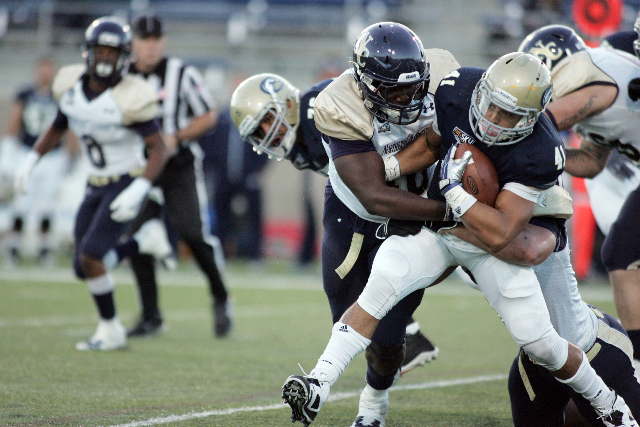
The Aggies football team faced off against Northern Colorado at home last Saturday, losing 27-21 in game that came down to the last second.  The Northern Colorado Bears came into the game, having won just one of their past five Big West games, and jumped to an early lead before doing just enough to hold on for a win.

Freshman quarterback Ben Scott and junior wide receiver Ramon Vargas were once again spectacular for the Aggies. Scott threw for 301 yards and two touchdowns but was intercepted with seconds left in the game in scoring position. In the five games that Scott was not behind center, Vargas caught just four balls. Since then, the receiver has averaged over eight catches for 130 yards per game.

The Aggies will now play two straight games away before returning to UC Davis to face Sacramento State on Nov. 22, the last game of the season.

Soccer (6-9-3):

UC Davis @ UC Santa Barbara (L, 1-0)

UC Davis @ Sac. State (L, 3-2)

After losing 1-0 in Davis, the UCSB Gauchos were able to score their revenge as they defeated the Aggies 1-0 in overtime. The lone goal of the game was scored near the end of the first overtime period. Sophomore goalie Armando Quezada was able to keep the goal clean for the rest of the game, finishing with four saves.

The second game of the week proved to be more high-scoring as UC Davis and Sac State combined to score 5 goals. The Aggies were able to keep the game close, but could not overcome two red cards given to UC Davis players. Seniors Matt Sheldon and Ramon Martin Del Campo each scored a goal as they were recognized on the Aggies senior night. The last game of the season will take place on Wednesday against Cal Poly before the team moves onto Big West Championships.

Tennis:

Saint Mary’s Invitational

Several Aggies were able to score upsets at the Saint Mary’s Invitational. Sophomore Alec Adamson finished the tournament with a share of the Flight A singles title after defeating teammate sophomore James Wade in the semifinals. Wade left his own mark on the tournament, defeating the top-seeded player in the draw before falling to Adamson.

The Aggies will now take a hiatus until January when match-play will begin.

Water Polo (13-15):

UC Davis vs. No. 6 UC San Diego (L, 10-6)

UC Davis vs. No. 18 Loyola Marymount (W, 12-7)

The Aggies were able to split the first two games of a three-game homestand, defeating one ranked opponent and falling to another. The Aggies finished the first quarter against UC San Diego and tied before allowing the Tritons to outscore them 7-2 over the next two periods. Only one Aggie was able to score more than one goal while freshman goalie Spencer Creed finished with six saves.

Against Loyola Marymount, UC Davis was propelled to victory by outstanding performances by Creed and junior Sean Grab. Creed finished with 11 saves and Grab had four goals. The Aggies entered the last period of the game up by just two points but blanketed their opponents and scored three goals to finish with a five-goal advantage.

Graphic by Courtesy

This week in women’s sports

0

Cross Country:

Big West Championships (1st place)

As she has done multiple times this season, junior Christine Hoffman paced the Aggies as they finished first in Big West Conference Championships. Hoffman ran the six-kilometer course in 20:22.7, a full 27 seconds faster than the second-place Aggie. Three more UC Davis runners finished within the top 10 as sophomore Hannah Kirkegaard, senior Raquel Lambdin and sophomore Clara McLeod finished in sixth, seventh and ninth respectively.

The Aggies are now preparing for the Doc Adams Open to be held in Davis on Saturday.

Field Hockey (4-13):

UC Davis @ No. 3 Stanford

The Aggies finished a disappointing regular season by failing to convert on a comeback bid against third-ranked Stanford. Sophomore forward Kayla Wigney added to her team-leading goal total, scoring in the 64th minute of the game. Meanwhile, freshman goalie Briana Sooy collected a career-high of six saves.

These efforts, however, weren’t enough as Stanford scored the game-winning goal with just 2:17 left in the game. The Aggies were unable to find an equalizer and fell to 4-13 in the regular season.

Soccer (5-11-3):

UC Davis vs. UC Irvine (L, 3-0)

In the last home game of the season, the Aggies fell by a score of 3-0 against visiting UC Irvine. At halftime, the game was tied but the Anteaters quickly got on the board in the second half, scoring four minutes into play. Another goal was scored in the 65th minute before an insurance policy ball splashed through the net with just two minutes left in regulation.

Senior goalie Taylor Jern finished the game and her UC Davis career, with four saves giving her 242 in her time as an Aggie. That leaves the senior ranked No. 2 all time in UC Davis history for saves.

Swim & Dive:

UC Davis @ Loyola Marymount (W, 142-111)

UC Davis @ Fresno State (W, 172-128)

The UC Davis swim team competed on back-to-back days, winning both meets handily. Against Loyola Marymount, senior Samantha Shellem and junior Marissa Brown each won two races for the Aggies who finished with eight individual race wins as a team.

Shellem continued her dominance against Fresno State, winning the 200-meter freestyle and the 400-meter individual medley. She also finished in second place in the 500-meter freestyle behind Brown. Sophomore Hilvy Cheung also added two wins in butterfly events. Junior diver Lucy Lafranchise finished in first place in the one-meter dive.

Volleyball (12-11):

UC Davis vs. UC Santa Barbara (W, 3-2)

UC Davis vs. Cal Poly (W, 3-1)

The Aggies faced a two-game homestand and came away victorious in each. The first game against UC Santa Barbara went five sets before the Aggies were able to claim a victory. Junior outside hitter Kaylin Squyres was phenomenal, finishing with a match-high 24 kills. With the win, UC Davis was able to move to .500 on the season and score victories over UCSB in both meetings.

The second match of the week against rival Cal Poly concluded in four sets as the Aggies dominated throughout. Squyres stole the show once again, again finishing with 24 kills, including 11 in the first set. She helped the Aggies move to a 12-11 record as they faced four out their next five games at home. UC Davis has won all but one game at home this year.

Graphic by Courtesy


UC Davis falls to visiting Northern Colorado

0

The Aggies failed to close out the game against Northern Colorado despite an opportunity to score late in the fourth quarter. After trailing by 17 points, the Aggies scored two touchdowns in the fourth quarter to cut the Bears’ lead to a field goal. The Aggies made a momentous comeback that almost ended in a game-winning touchdown with eight seconds left in regulation, stirring a crowd of Aggies fans that lay dormant for much of the first half.

Sophomore quarterback Ben Scott started for the third consecutive time and threw for 301 yards and two touchdowns with 25 complete passes out of 38 attempted.

Junior wide receiver Ramon Vargas scored both passing touchdowns. Scott found Vargas in the third quarter for a 23-yard touchdown pass, while his second touchdown came on an 18-yard pass from Scott halfway through the fourth quarters. Vargas led the receiving corps with 122 yards on nine receptions while adding the two touchdowns. Senior running back Gabe Manzanares led all runners with 50 yards rushing and contributed 53 receiving yards and a one-yard rushing touchdown with five minutes left in the fourth quarter.

After scoring two consecutive touchdowns in the fourth quarter, resulting in only a three-point deficit with 3:25 left, the Aggie defense made a key stop against the North Colorado offense. UC Davis started a drive on their own 22-yard line, but Northern Colorado’s Isaiah Williams caused a fumble that led to a 30-yard field goal by the Bears with one minute left in the game.

The Aggies responded with an eight play, 49-yard drive that ended with Scott’s only interception of the season at the Bears’ 14-yard line. After throwing for two incompletions, Scott attempted a pass in the Bears end zone, but Trevor Douglass was there for the interception with four seconds remaining.

“It was just miscommunication,” Scott said, regarding the interception. “We weren’t on the same page like we had been all night.”

Northern Colorado earned 455 total yards. Quarterback Sean Rubalcaba led the Bears’ attack with 278 yards in 21 complete passes and two touchdowns. Rubalcaba found wide receiver Dimitri Stimphil seven times for 90 yards.

“We weren’t ready to go in the first half, and I am in charge of that, and I take the responsibility,” said Aggie head coach Ron Gould. “But the guys fought to the bitter, bitter end and gave us a chance to win.”

UC Davis drops to 1-7 overall and 0-5 in the Big West conference. The Aggies will now embark on a two-game road trip that includes stops at Northern Arizona and Cal Poly.

Photo by Shazib Haq

Davis Musical Theatre Company presents ‘My Fair Lady’

0

myfairlady_ar1

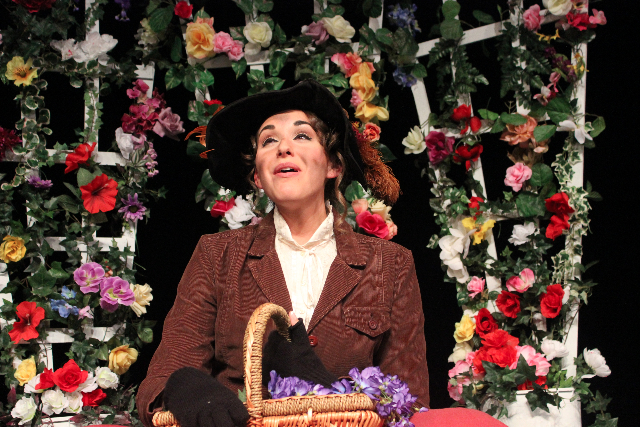
The Davis Musical Theatre Company (DMTC) will be putting on a production of My Fair Lady, which will premiere this Friday and will run until Nov. 30.

Set in London during the era of King Edward VII’s rule, My Fair Lady follows the story of Eliza Doolittle, a flower vendor from the Cockney district. After a linguist comments on her accent, proclaiming it an indicator of low social class, Doolittle embarks on her quest to learn proper speech and become more cultured.

The cast and crew have been preparing for the musical’s run for about two months. Steve Isaacson, founder of DMTC and director of the musical, said that he and the company are devoted to making a top-notch production.

“As the director, I’ll switch things up along the way until we’ve fulfilled every goal we have for the musical,” Isaacson said. “Even if it is on one of the last dress rehearsals, I’ll still change small details to make sure the production is the best it can be.”

Isaacson described the musical as a timeless classic. When asked about his directing style with the production, Isaacson said that My Fair Lady deserves to stay true to its origins.

“You can’t really change My Fair Lady [even if you wanted to put your own spin on it],” Isaacson said. “When it comes to traditional shows like My Fair Lady, Anything Goes and even Sweeney Todd, it’s really a must to stick to the original traditions.”

My Fair Lady will be performed on DMTC’s Main Stage. Every year, the company presents six Main Stage musicals, which feature the talents of local students and adults. Jan Isaacson, co-founder of DMTC and co-director of the musical, said that My Fair Lady fits DMTC’s environment perfectly.

My Fair Lady is a very beloved, classic musical,” Isaacson said. “It has great music, wonderful dance numbers and it is G-rated. It really has something for everybody.”

The musical features classic tunes, such as “On the Street Where You Live” and “I’ve Grown Accustomed to Her Face,” which have been covered by artists like Nat King Cole and Quincy Jones. The show also showcases traditional, yet diverse forms of dance — from waltz numbers to old-fashioned hoedowns.

Choreographer Ron Cisneros said that My Fair Lady is quintessential to dance’s significance in musical productions. DMTC’s production of My Fair Lady will showcase Cisneros’ original choreography.

“Most of the choreography comes from my own feelings about the show,” Cisneros said. “I’ve staged the show many times for the Sacramento Music Circus; I’ve also performed in it. My mind kind of goes back to those memories for inspiration.”

According to Cisneros, everyone involved is as talented as they are devoted to the musical. He expressed that with all the passion combined, My Fair Lady will be a fun experience for everyone on stage and off.

“It’s been really great working with DMTC for the show,” Cisneros said. “Everyone really enjoys what they do. The cast is wonderful and Jan and Steve have done a great job. I look forward to seeing everything come together.”

Tickets range from $16 and $18. For more information, visit dmtc.org.

Photos by Steve Isaacson


Studio 301 presents: Can You Hear the People Sing?

0

studio301_ar_Lin

UC Davis student-run club Studio 301 will be presenting its Contemporary Musical Theater Review this weekend. They will be performing a cabaret of songs from popular modern and classic musicals.

This year’s Contemporary Musical Review, titled “Can You Hear the People Sing?” will feature songs from musicals of the 2010’s such as Bonnie & Clyde: The Musical, as well as classic productions like Les Miserables.

The show is made possible by a collaboration of five different student directors. When asked about the pros and cons of having so many people in charge, Roberto Aguilar, a fourth-year dramatic arts major and one of the student directors, expressed that he has overall positive feelings about the 301 team.

“We have a lot of ideas and energy floating around [on the team]. It’s also great to know that we have such a fantastic group that supports each other and is there to push each other forward [in rehearsals],” Aguilar said.

The Studio is set to showcase a variety of musical theater genres from quirky Little Shop of Horrors tunes to operatic Les Miserables ballads.

“[Our show is] an amalgamation of different musicals, and it’s amazing to learn new music from up-and-coming shows [while also performing] classics, such as Les Miserables,” Aguilar said.
Jill Price, a fourth-year English major and Studio 301 member, expressed her feelings on the upcoming show.

“[The review is] not quite like a musical, but not quite like a concert either,” Price said.

She said she believes the performance will be a great opportunity for people who don’t want to sit through a full-length Broadway show but would still like to listen to their favorite show tunes. Price came up with the original idea for the Studio 301 review show.

“I wanted to do something low budget, fun and [that] would allow a lot of members to be involved,” Price said.

Jason Moscato, a third-year dramatic arts and linguistics double major and Studio 301 club president, said he hopes to see a lot of UC Davis students at the show.

“Basically, you are paying [a low, affordable] price to experience [songs from] a lot of different musicals, so it’s a discounted way to gain exposure to a variety of [musical theater] pieces. Any contributions really help [us to] put on more productions and we really do hope that a lot of people can come,” Moscato said.

The show will take place Saturday, Nov. 8 at 8 p.m. and Sunday, Nov. 9 at 2 p.m. and 8 p.m. in Lab A of Wright Hall.

There is a suggested donation of $10 that will go toward helping the club fund future productions. All attendees are welcome to donate both nights as well as during the matinee. For more information about the show and/or becoming a part of Studio 301, you can visit their Facebook page.

 Photo by Katie Lin.

Guest Column: An Open Letter to the UC Student Community

0

My name is Avi Oved. I am a student at the University of California, Los Angeles. I am an economics major. I am a fourth year. I am the Student Regent-designate of the University of California Board of Regents. And I am Jewish.

Prior to my appointment as your Student Regent-designate, some members of the UC community raised concerns about my ability to be an effective leader. I was called upon by many of these students to answer for my conduct, for my past work as the Internal Vice President of the UCLA Undergraduate Student Association Council, and for my personal beliefs. With the tumult of this summer and my confirmation by the UC Board of Regents behind us, I am taking this opportunity to answer.

In the months and weeks preceding my appointment, there were many conversations that took place about my history of work and service in student government. Some of these conversations were heated, and some of these conversations took place on social media.

The technology that we have at our disposal, and at our fingertips, is both a gift and a responsibility; comments made in the heat of the moment may not be withdrawn. They may not be redacted. They are burned into the consciousness of all who see and read them.

Some of the comments that emerged in those conversations carried with them an undercurrent of intolerance and ignorance. It is statements like these, filled with ugly sentiment and ill feelings, that I wish to acknowledge and to condemn.

I am Jewish, and I am pro-Israel. I have never felt the need to hide my heritage or my beliefs. However, I cannot sit idly by and allow my culture to be conflated with ideas and viewpoints that I do not ascribe to. I find all forms of hate-speech repugnant. Any implication that I feel otherwise because of statements made by others, or because I embrace my cultural heritage, is an irresponsible one.

With that said, I want to stress that while I do identify with certain groups and a certain culture, those aspects are part of my persona, but not a part of my platform. As your Student Regent-designate, I am committed to listening to and advocating on behalf of all students, regardless of background or belief.

I consider myself fortunate to be in a position from which I am able to advocate for my peers, and I mean to make the most out of my time as your Student Regent-designate. During my tenure, I want to focus on a number of key issues, including sexual violence prevention, mental health awareness and increased student representation on the Board of Regents. In addition, I want to centralize this office’s advocacy efforts with other tiers of higher education.

In the meantime, I want to reiterate something Student Regent Saifuddin and I spoke about following my appointment: hateful invective and bigotry will never give way to productive discourse and dialogue. Personal views and beliefs aside, I am confident that the common ground I share with you, the students of this great university, will yield an immensely productive term as your Student Regent, and I look forward to serving you.

Respectfully,

Avi Oved, UC Student Regent-designate

Avi Oved can be reached at ucregentoved@gmail.com.  

Crafting Gemeinschaft: Big wheel keep on turnin’

0

Check the corresponding box if you have ever done any of the following as a biker:

Impatiently running a red light because the light has not changed for you and you have been waiting for close to ten minutes [   ]

Taking a collective turn at the stop sign with all the other bikers instead of going one by one because that is ridiculous [   ]

Locking your bike to a tree/bench/post/etc. due to lack of parking and you’re about to be late to a midterm [   ]

If you checked off any or all of the above symptoms, you have been diagnosed with biker road rage. If left untreated it can lead to future complications, such as seeking car loan approvals. I find it odd that we go to one of the most “bike-friendly” college campuses in the nation (we are the only city to have received the Platinum-level Bicycle Friendly Community Award, given out by the League of American Cyclists), yet as a city we are behind in terms of establishing better bike infrastructure, such as timed signals and leniency when it comes to stop signs. Davis does have some fairly advanced bike infrastructure, such as numerous bike tunnels throughout town (also the perfect place to recreate the iconic scene of droogs from Kubrick’s A Clockwork Orange). However, it is time some greater innovations are made.

Bike infrastructure does not have to be just physical; it can also be embedded in social policies. One policy is the rule that bikes must stop at stop signs or else they are subject to ticketing. This reminds me of when I hear warnings of the cops being on patrol downtown, giving out tickets to unsuspecting students who do not respect stop signs. I think that is absurd, especially since sometimes there is nobody at the intersection, or you are going with the traffic anyway.

An example of why adaptation to bike infrastructure is necessary can be seen from an incident in the Netherlands. The police once gave out 144 traffic tickets to cyclists who ran a red light because of the long waiting time. As a result of the ticketing, cyclists began obeying the stop light and traffic jams started to form. The dangers created in stopping were greater than if the cyclists had just used their sound judgement to assess when the intersection was safe to cross. Things would be much better if places like the Netherlands and other states in the U.S. adopted Idaho’s law, in which “Idaho stops” are allowed. This is when cyclists are allowed to treat stop signs like yield signs. There are multiple benefits of using the Idaho stop, one being that it allows traffic officials to divert their attention away from the harmless traffic violator to the people that actually present some danger.

Another device that would be useful are traffic sensors that can detect a cyclist’s presence, thereby reducing the amount of time cyclists have to wait at traffic stops. The city of Portland, Ore. uses inductive loops (wires in the road) to sense when a bike is there. We should be making cycling more attractive to people as a transportation option, but when the button to cross the street is far out there and you have to do this awkward dance that involves trying to not fall off your bike, the grass looks greener behind the windshield.

Also, does Davis even have a bike share program? Bike sharing is when users pick up a bike from a self-service station, pay a small fee, and then return the bike to the station when they are done. There are numerous private companies with bike sharing services, and it has become a competitive market on its own. It seems as if urban city after urban city is implementing a bike share program, and it makes me wonder why Davis does not have anything like that. The only option available is to rent out bikes from the UC Davis Bike Barn (for a hefty fee of $20 a day). The last discussion I have heard about a bike share program was in 2012, and a major challenge at the time (as it always is) was getting funding for the program. It would take an estimated $200,000 to get the program rolling, which, in the grand scheme of university funding, is not that much money — but it still has not become a reality.

On a final and serious note, I would like to say two words: bike parking. Recently, the university has admitted more students. Yeah, we get it; freshmen are cute. We have more housing to put them in, and everyone is happy. Wrong! The new bike parking near the gym does not help me when I’m trying to find parking before class. Sorry, school planners — not everyone is spending all their time at the gym; some of us are getting an education (or trying to, if there was parking). We should look into alternative parking structures, like bike parking that goes deep into the ground or is confined to a raised cylinder.

The city of Davis started this whole “biking is cool” thing in the 1960s when they invested in the development of bike lanes; however, as time progresses it would be nice to see improvements made to perpetuate this biking culture. The easier and more attractive that biking is, the greater the chances are of abandoning the norm of car dependency.

If you want to draw futuristic bike parking structures for fun you can email NICOLE NELSON at nsnelson@ucdavis.edu, and she will wholeheartedly support you in your space-saving desires.

Science is Serendipitous: Green Chemistry

0

If you’ve attended any institute of higher education, you’ve probably taken a chemistry class once in your life. So you know that when you start a chemistry lab class, the first thing you go over is the safety rules, and how to handle the harsh chemicals used. Before you start each lab, you also go over what kind of reactants you’re going to use, and how dangerous they could be. But we shouldn’t waste dangerous chemicals. What if I told you there was a whole field of science trying to reduce the interaction with harmful chemicals and do the same experiments with friendly and safe chemicals?

The field is called “green chemistry,” and I’m hoping it can clean up the way we conduct chemical research and engineering. When I get into my research work, I want to make sure I’m using chemicals that are safe, sustainable, and get my product with minimal cost and time.

Green chemistry is a sustainability and safety concept for the world of physical and natural science. You take a given experimental method and try to reduce the use of hazardous and unsustainable material. Experiments that we do in the classroom labs have already taken great strides to reduce our interaction with hazardous chemicals (it’s one reason why you don’t use mercury in thermometers anymore), but the industry of chemical production and research needs to implement these ideals as well.

A perfect example is the use of oil to create some of our most needed products. Let us take a journey through the curious case of phthalic anhydride. It is a compound that commercial industry uses to make dyes, pharmaceuticals and a plasticizer (makes plastic more plasticy). According to Ullmann’s Encyclopedia of Industrial Chemistry, the demand for this compound is 3 million tonnes per year; so it’s a massive need. Industry makes this substance with two reactants — naphthalene or o-xylene, both of which are extracted from oil. The problem you might have guessed is the tendency of a finite resource such as oil to run out (and it will run out). You can see the obvious problem here — no oil, no phthalic anhydride.

There is a solution to the case above, and it has to do with two chemicals that come from nature — furan and maleic anhydride. Through undergraduate research, I saw that you could make products like phthalic anhydride with these two renewable chemicals. That is an obvious solution to the wasteful process that industry is using today, and I feel that using this “greener” method should be considered. Using things that come from renewable sources is more sustainable than oil, especially if they can make the same product with less cost and time. I’d say its a no-brainer, but it’s hard to change the way chemistry has been done for hundreds of years.

With literally millions of chemical processes that make the products we use and food we consume, it is important to discover how we can make them less hazardous and more sustainable. The concept of green chemistry is not a new one, but it is a tool that industry still needs to implement throughout. When I look at what kind of benefits it has (safer chemicals, less waste, less cost) I don’t see how it could be a problem for industry to make changes in their operations. I believe more awareness and publicity are needed for this idea of “green” science to permeate throughout academia and industry.

As students, what can you do to help? Well, whenever you have an experiement to do in a science class, ask the professor why the protocol calls for use of certain chemicals, and if there are less harsh chemicals that can be used instead. When you’re conducting research, implement the ideals of green chemistry and mention how it helped in your publication! The main idea behind science is advancing the human condition. Green chemistry is a step forward to good science.

Do you have ideas for creating green concepts in science? Shoot UMAYR SUFI (uwsufi@ucdavis.edu) an email or tweet him! (@umayrsufi)


Graphic by Jennifer Wu

Davis Filmmaking Society drives students’ cinematography passions

0

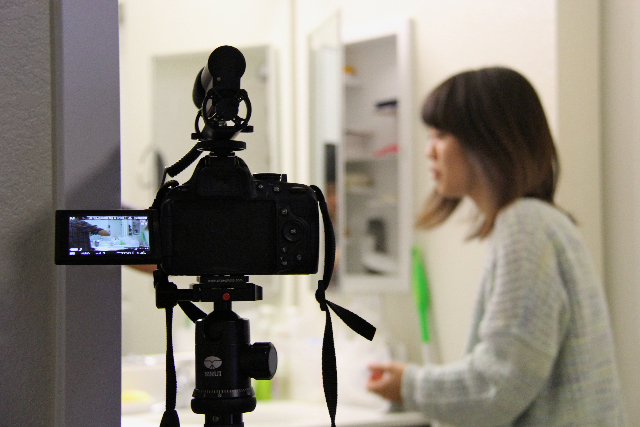
Operating as a small-scale movie-making studio while emulating the film industry, the Davis Filmmaking Society (DFS) works to train its members in the field of cinematography.

Despite only having been created last Winter Quarter by a group of first-year students, the organization has grown rapidly since its start and now consists of over 50 members.

“What we really want to do is to unite the filmmakers of Davis, put them into one community and really foster filmmaking as an art,” said Alex Lee, a second-year political science major and DFS president and co-founder. “There are a lot of career options, but one thing we obviously want to do is make art and have fun doing it. Right now since we’re such a new club, I’m still expanding us into several different directions and I want to gradually incorporate it into being more business-like too.”

With members of all experience levels, from zero film background to years of working in various roles for the industry, DFS welcomes all types of students. Lee said anyone with the eagerness and the willingness to make movies can join the group of directors, actors, crew-members and script-writers.

First-year film studies major Emily Loredo has had experience with stage and camera acting, directing and making her own films and joined DFS after only her first day at UC Davis.

“I started making films probably about my junior year in high school, and I’ve made one complete short film. I’ve worked on film sets for other productions and acted in them,” Loredo said. “I really like being able to be around people who have a passion for filmmaking. It’s really exciting to work with people of different experience ranges and also [to teach] since I’m the director [this season] and a lot people are newer than [I am].”

DFS operates off of a system of “seasons.” After filling out an online form specifying preferred roles in the filmmaking process, the members are split up into separate groups who then have a few weeks to write and shoot an original film.

The organization has about three “seasons” each quarter, each with a different theme. In the past, themes have included one-minute films, action movies and parodies. This season, the theme is horror.

“We’re doing horror [this season], which I’m really excited about,” Loredo said. “I’m a director for the horror season, so my job is to think about the [timing] and think about the actors and the editors. I had to cut a lot [from the script] and make a few directorial changes, but the whole point of the director is to make sure the writer’s vision comes together and that the actors can understand that vision.”

First-year undeclared student Beijo Lee said she had taken and thoroughly enjoyed filmmaking classes in high school and wanted to continue this passion at UC Davis.

“In high school, I was in an academy for digital arts, and I really enjoyed making videos and making films,” Lee said. “The purpose is to bring out creativity. Members in the club want to write a script and bring it to life in a movie and just have fun with it. It’s about bringing to life what you can visualize.”

Although many members are hesitant to make filmmaking their main career path, DFS serves as a great outlet for giving them a chance to manifest their artistic talent in film.

“I’ve always had this lifelong interest in film. I haven’t necessarily had hands-on filming experience like a lot of other people, but it’s an interest I want to pursue, and it’s definitely something I have thought about making a career [out of], but it’s just so difficult,” said Martin Yao, a second-year anthropology major and DFS co-founder and executive producer. “[Our goal is] to operate like an actual big, major-movie studio, but on campus and geared toward students — so we would like to have our name out there as the filming club and organization on campus.”

DFS has won awards in various filmmaking festivals, including the audience choice award at the 2014 UC Davis Varsity Filmfest, and both the best film and popular choice awards at the 2014 UC Davis Asian American Association Film Festival.

“A lot of people, like me back in high school, made movies on [their] own – you wrote it all, you directed it, you shot it all, you edited everything,” founder Lee said. “It’s interesting now, when you collaborate with someone else who can take your vision and change it.”

At the end of each season, the club holds a premiere event to showcase all the hard work each group put into their original short film. The next DFS premiere will be in 1002 Giedt on Nov. 17, and is open to the general public at no charge.

“I love seeing everyone’s work finally be premiered. It’s amazing seeing how everyone collaborates and it’s really rewarding [when] everyone’s achievements are acknowledged,” founder Lee said. “What we’re really strong in right now is filmmaking, but I want to strengthen all elements of film, including film appreciation — which is a big challenge for a club that’s only two quarters old.”

DFS meets weekly on Mondays at 7 p.m. in 1002 Giedt.

Photo courtesy Jolina Soliman

Interview with human rights professor Keith Watenpaugh

0

In the religious studies department in Sproul Hall, one will find professor Keith Watenpaugh in his office overlooking the university campus from the ninth floor. An associate professor of modern Islam, human rights and peace since 2006, Watenpaugh recently developed the human rights minor at UC Davis. His most recent research involves displaced Syrian university students in Jordan, Turkey and Lebanon.

What are you currently researching?

I just finished a book called Bread from Stones: The Middle East and the Making of Modern Humanitarianism under contract with the University of California Press. I’ve researched the history, theory and practice of human rights and humanitarianism, especially in the wake of war and genocide.

The research I’m currently working on involves understanding the current conditions facing refugee university students from the war in Syria, both as a problem of security and the human right to education.

When did this research begin?

We began the research work in March 2013. This last month concluded the third part of the study in Turkey. It’s been a three-part study. I’ve written essays on each one of the projects.

What did these studies involve?

The first part of the study took place in Jordan in the Vazt Zaatari refugee camp. The project was talking with displaced refugee students. What was interesting about that project is that before we visited that camp, which had about a 120,000 people in it, we were talking with United Nations officials about the project and about going to the Zatari camp, and they said there are no university students there.

[My colleagues and I] found this shocking that a UN official would say this, because we knew that Syria had a fairly large university population. Those of us who had worked in Syria and studied in Syria knew this was not the case. This illustrates, in many ways, why learning about a specific part of the world can be important for developing appropriate relief strategies. One size doesn’t fit all, so what may be true in South Africa or Central East Asia is probably not true in Syria or the Balkans.

What was your first impression?

We went to the camp on a dry, cold March morning and talked to 30-plus university students in the camp, including a lot of women students, most of whom were in engineering and biological science fields.

Many of them had smuggled laptops and kept them in their refugee tents. What we found is [that] young Syrian refugees who had been in university were eager to try to go back to school. They understood that going to university was absolutely critical for their own survival or that of their family.

What were some of the obstacles students faced?

They were facing a lot of problems. It was expensive. Many of them didn’t have their paperwork or their high school graduation certificates. Think about if a UC Davis undergrad had to flee overnight — how much documentation would they be able to gather and take with them? You have no idea where your transcripts or high school diplomas are.


What we also began to learn about in that camp was a very difficult problem: Many of the young women students in particular were under a great deal of pressure from the families to marry. There is evidence of the sale of women into marriage at the camp, and they didn’t want to.

Higher education for women in Syria and elsewhere in the developing world is about empowerment and the ability to have more of a choice and a say in important life choices like marriage and career and children. Higher education is one of the most effective tools in expanding the range of choice for young women.

Where was the next study?

We continued the work in Lebanon in spring of 2014. The research visits are during my breaks from teaching. Over spring break of 2014 I took a group of researchers to Lebanon where we did research work in Beirut and north of Lebanon and in the Beqaa Valley. Right now there are over a million Syrian refugees in Lebanon, which means that about one in four human beings in that territory in Lebanon is Syrian. No other country has that ratio of refugees to population.

How does that affect relations?

We witnessed terrible cruelty in [the] treatment of Syrians, especially Syrian young people. That attitude [toward Syrians] was even among higher education administrators — places where you think they’d be very interested in promoting human right to education. We saw hatred and prejudice. We knew we were going to see some, but it was much worse than we had imagined. It was taking a toll on these young people. Many of them were working 12-hour days to provide for their families and to scrape together enough money to pay tuition — if they were in school; many weren’t. Other students were afraid that they could be arrested and deported back to Syria at any moment. Some places we found were just generally dangerous.

Can you give some specific examples of the danger?

When we were working in the northern Lebanese city of Tripoli, we were talking with a group of students at a nice coffee house, and a bomb went off in the building next to us. When I think about it today, it still shakes me up. That was really hard. Other places where we were working we could hear the exchange of gunfire. Students reported having to travel across militarized checkpoints to get to school.

How did the students react to you?

We spoke Arabic with the students. I like students. I like my UC Davis students, and I like university students in general. I think they were happy to be able to talk about what’s going on in their lives and share their problems with someone.

Do you think anyone else was listening?

Well, this is the whole issue with the Syrian conflict. This is the humanitarian conflict of our generation. There has been nothing like this since the ’90s. It seems to almost have been forgotten. We’re meeting with these young people, and they’re asking, “Why isn’t the world trying to help us more?”

You saw this frustration firsthand?

They really feel they have been abandoned and isolated. This was really the case also in Turkey, much more so than in Lebanon. The final study was in Turkey this last spring for about a month. We met a young man, a graduate student, from Raqqa in Syria. We met him in Southern Turkey. He was a student in agriculture – worked on rice farming and fertilizer – and he yelled at us, “Why aren’t you helping us?” He was very frustrated, and we were the only people from America at hand.

Was that hard?

It comes with the territory. It doesn’t make you happy to be yelled at, but you can understand why that happens. His best friend had just been executed by ISIS [Islamic State of Iraq and Syria] the day before. I think we just wanted to try and understand his feelings. We told him that we shared his frustration with the failure of the international community to actively help the Syrians. It seems doubly unfair to these smart, young people, because they’re so critically important to the future of Syria.

What is the importance of this younger generation?

One of the other things we encountered in Syria is that young Syrian men – we’re talking about people our undergraduates [resemble] in age – face a huge problem. If they are not afforded the opportunity to study, to work, to help provide for their families, then one very attractive option to them is to fight in the war on the side of [ISIS], because [ISIS] with pay them, will give them a purpose — even though that purpose is utterly abominable. If we don’t reach out to them in a substantial way, someone else will. That process of radicalization is bad for us and the region, but it is totally preventable.

What led you to pursue this research?

Well, the war in Syria is terrible. It’s about the worst thing you could imagine, and I have a unique set of skills and knowledge. I know Arabic. I lived in Syria. I understand and like undergraduates. I think they’re an incredibly important part of my future and the society where I live, but also the future of the Middle East. I felt the need to try and help the best I could. This is a war that is so terrible that those of us who can help and don’t are neglecting our own humanity.

What aspect of the research did you find the most difficult?

Spending hours listening to people talk about losing their families, losing their homes, their universities and falling further behind in their education, and then knowing how powerless we are to help them without a great deal of outside assistance from wealthy states and governments.

I imagine that’s something you dealt with throughout the research?

Every place we went. Everyday we were in the field for hours at a time. And as bad as it made us feel, we knew that the Syrian people we were speaking to were suffering much worse. We could always go home — and we did. They are stuck.

How do you tie your research into your teaching/classes here at Davis?

The first part of my research, the work on the history of humanitarianism, informs all my classes: genocide, human rights, human rights in the Middle East, as well as the work I do with graduate students. I don’t necessarily tie the work with the refugee students directly into my teaching, but it’s how I try to be a good role model [of] social engagement for my colleagues and our students.

What advice would you have for UC Davis students interested in going into this field?

Certainly the human rights minor is a good place to learn about these opportunities.

The most important thing is to develop good foreign language skills — to spend actual time in these areas on internships and other projects to get a familiarity with the region. Also, getting advanced degrees in fields like public policy, public help, social work — even academic counseling, can be very useful. There’s plenty for people to do. The war in Syria and these other conflicts in the Middle East, they will last for at least a generation.

Does that idea ever slow you down?

It’s very easy sometimes to lose hope, but as human beings, we can’t.

What else can people do to help?

Another way to help [is this]: The United States and Sacramento, in fact, is about to receive probably about 2,000 to 3,000 refugees for permanent resettlement, and local agencies that serve refugees are going to need help.


Davis experiences water issues during California’s drought

0

At around 10 p.m. last Wednesday, Carmelo Lane experienced a water main leak due to erosion in old pipes. The leak caused street damage and required immediate attention from the Davis Police Department and the Public Works Department. The Public works department worked on fixing the leaks from 10:30 p.m. to 2:30 a.m.

The City of Davis is no exception when it comes to California’s drought, making water problems a constant issue on the minds of both citizens and the city workers.

“The Carmelo Lane break last week was the only one that is considered larger than normal, [it even] lifted the street up a little. Probably because of the time that it happened, people noticed it more. They’re not used to having construction in the middle of the night,” said Gary Wells, the public works water division manager.

Carmelo Lane was one of the three reported breaks last week, causing some disturbances for the residents. The noise in the middle of the night was accompanied by low water pressure for the residents as the problem was being fixed. However, there was no damage to the water quality or the neighborhood’s water bills.

The water main leaks are a result of the pipes developing external corrosion over time.  Once the outside of a pipe erodes, it begins to thin out the materials of the pipe, causing holes and eventually breakage.

“Our systems vary in age, with some of the oldest being 80 years old,” Wells said.

After a pipe leaks, the amount of water lost can depend on the severity of the leak, according to Wells.

“Typically, [the amount is] a gallon per minute for small leaks to 100 gallons per minute for larger leaks, which can be measured by the amount of water that bubbles up to the surface,” Wells said.

Pipe damage is not a problem specific to Davis and it is not uncommon to see multiple leaks occur once in a while. Yet, larger leaks lead to concerning water loss, street damage and the need for long-term repairs. In order to reduce water loss, professionals use a hydro excavator within 30 minutes of the leak. A hydro excavator sucks the leaking water from the ground while simultaneously lifting the soil.

The city sets up valves every 400 feet from the damage, allowing easy access to problematic pipes. This in turn mitigates the amount of people affected by the construction. After the water is taken care of and the pipes are fixed, the remaining problem lies in street damage repair and more permanent pavement. The city has yet to plan the date of repaving the street area.

In other parts of Davis, the developments of The Cannery Row have taken water conservation into consideration as they are now cutting trenches across East Covell Boulevard to build water mains. The Cannery – a mix of a neighborhood, farm, parks and office spaces – was proposed in 2012 by ConAgra Foods Inc.

The Cannery website has been sending out updates for the project and recently informed citizens on what construction must be done. Workers will be putting in the water utilities for the new development, which are said to be connected to the water main already in place. The new water utilities will include non-potable irrigation lines, which will be used for the site’s parks, greenbelt, and farms.

“Development of the Cannery will include connections to the utilities that run under Covell Boulevard. The developer, the New Home Company, is doing the construction under review and inspection of the City Public Works Department,” said community development administrator Katherine Hess.

Close inspection of the construction is important when working with the older pipes already in place. With the grand opening planned for next summer, Hess does not foresee any issues with the water mains as development starts to pick up.

“The entire development was extensively analyzed in the Environmental Impact Report certified last year,” Hess said.

Along with water main leaks and pipe problems, the City of Davis has been working to fix the city pool. This August, they discovered it was leaking water constantly. According to sources, the pool has been leaking approximately 7,000 gallons per day.

There was a gap in between when the leaks were discovered and when action was taken. Community service superintendent Samantha Wallace said that this was because the last inspection did not occur until Oct. 16.

In response to the concerns that development was moving too slow for the amount of water being wasted every day, Davis City Council met last Friday to revise the date for fixing the pool, which was moved from November to Oct. 29. The city pool has been around for nearly 70 years. With the pool’s refurbishment in action, citizens are wondering about a new pool in the future.

“The city staff has been meeting and we plan to go to the city council in the next two months or so with a plan,” Wallace said.

A new pool, although estimated to cost around $1 million and require months of construction, seems to be an investment supported by the citizens of Davis as well as the city workers and developers who understand the urgency of California’s drought. Citizens and councilmembers believe a new, updated pool would mean fewer problems with water loss in the future — a security that would save money and prevent further concern.

These recent water problems have a common theme — there are outdated infrastructures that have not been updated in many years. The projected cost of the repairs are high but necessary, according to sources.

“To fix the Carmelo Lane pipes, with labor costs included, it is an estimated $3,000,” Wells said.

This amount, which covers labor costs, digging costs and necessary machinery, is paid for through citizens’ water bills, called enterprise funds. The payment is not considered a general fund, which are taxes. With this, the cost to repair the pool is estimated to be $50,000. However, the estimate would only cover the leaks found for the time being. Both costs are related to relatively temporary fixes for long-term problems. Citizens believe the city will need to address these issues, keeping in mind long-term goals that are more cost-effective and eco-friendly.

Farmers Market at Sutter Davis Hospital now open year-round

0

sutter farm 1Every Thursday from 10 a.m. to 1 p.m., the Sutter Davis Hospital hosts an offshoot of the Davis Farmers Market at its main entrance. The partnership promotes health and supports the local community of growers and producers.

The Davis Farmers Market has been a community establishment for 38 years. The market’s purpose is to connect people to their food and the farmers who grow it. The market makes fresh, local food available to nearby residents, hospital employees, patients and visitors. It is now open year-round.

I feel like the market does so much; it’s everything right. It’s good health, it’s people talking to each other, it’s being outside,” said Randii MacNear, manager of the Davis Farmers Market for the past 34 years.

The market at Sutter, with only about eight vendors in the large, covered entry of the hospital, is considerably smaller than the downtown Davis markets. This is the first year in a five-year partnership that the market will be open year-round.

“We’re really excited because it gives us an opportunity to just keep building, [instead of having to close and reopen the market every year],” MacNear said.

Incorporating new businesses is one way the market grows. Sharan Virdi is the founder of the vegan and gluten free bakery Delishior, which has booths at the Sutter market, Davis’ Wednesday market and a Woodland market. Virdi said the market is a great way to introduce new products and to get to know his customers better.

Next to Delishior’s table is one with more baked goods, belonging to the well-established Upper Crust Bakery of Davis. Gillian Kalisky’s parents started the bakery in 1986 and have a long history with the Davis Farmers Market.

“It’s our best market, still. It’s always been our best market,” Kalisky said.

Kalisky feels that having the market at the hospital is a great way of promoting their locally sourced, healthy, natural ingredients.

Kalisky expressed how important farmers markets are to the sellers. In general, customers are “buying directly from the producers, whether it’s farmers or bakers or artisans, [and are] really supporting small businesses as directly as [they] possibly can.”

Joe Giottonini is the founder of another new business, Squashed Olives, which also has a booth at the Sutter market that he says serves as “research” to help him learn what his customers want. Giottonini’s artisan lotions and soaps are made with his family’s own olive oil, which is also for sale on his table.

About half of the tables at the Sutter market belong to farmers. Under California Certified Farmers’ Markets regulations, all of the farms get inspected by the California Department of Food and Agriculture to ensure that they are selling only what they grow. Some of the farms choose to adhere to organic principles, and must submit to additional inspections in order to become certified as organic.

“I have such great admiration for farmers. It’s not easy to be a farmer,” MacNear said.

The market is a community of its own. For Bernice Hatfield, who owns an organic farm with her husband, the other farmers at the market are her friends. Hatfield said that they are a “sales team” that supports each other, such as when a fellow farmer ran over to Hatfield’s table to borrow $1 bills. Many of the farmers are selling the same fruits and vegetables in season, but each have their own specialties. Hatfield’s table includes loofah and bitter melon, ingredients used in her traditional Taiwanese cooking. “I only grow things I like to eat,” Hatfield said.

Currently, many of the outside visitors to the Sutter market are senior citizens who live in a retirement community across the street. The market is easily accessible for them, with abundant parking, fewer crowds than downtown and a lot of space to move around at the market. The market at Sutter and the farmers market on the UC Davis campus are the products of a U.S. Department of Agriculture (USDA) grant to reach out to students and people in health care.

“Good health begins with farm-fresh food. The Sutter Davis Hospital Farmers Market is a great place for UC Davis students to come get fresh produce, fruit, baked goods and seasonal items that are locally grown,” said Sutter Davis Hospital CEO Jennifer Maher. “The five-year partnership between Sutter Davis Hospital and the Davis Farmers Market continues to grow and we are proud to offer the market to our community, staff and patients year-round, right at the hospital doorstep.”

Community members living near Sutter Davis Hospital have an opportunity to take advantage of this market as a supplement to the downtown or campus markets. Macnear encouraged students to visit the market if they want to bring something home to their families during the holiday season — whether it’s the honey, the local lotions, olive oil, or even a bag of beans.

News in brief: BloodSource hosts seventh annual blood drive Nov. 4 and 5

0

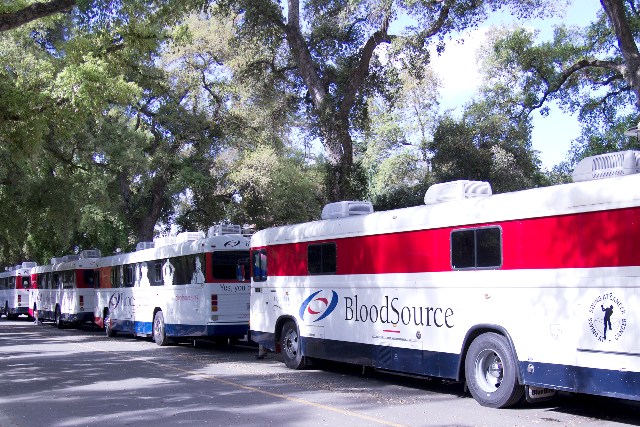
BloodSource’s seventh annual “Causeway Classic Blood Drive” will take place on Nov. 4 and 5. The blood drive will also serve as a competition between UC Davis and Sacramento State in terms of turnout for students, faculty and administrators.

In the past six years of the blood drive’s existence, UC Davis won the first three years and Sacramento State won the next three, so this year will serve as a tiebreaker.

Since 2008, the Causeway Classic has become BloodSource’s most successful blood drive for high school and college campuses in the Sacramento area. Since its start in 2008, 18,800 people have become registered blood donors through the blood drive.

Felicia Roper is an account manager for BloodSource and works with the UC Davis campus for the blood drive.

“We are hoping to see over 1,600 participants over the two days to have a chance at beating Sac State,” Roper said.

Roper also stressed the importance of donating blood in general to both raise awareness and save lives in local hospitals.

“We support over 40 hospitals in our area, so we’re really making an impact here in our community,” she said. “I think that really hits home.”

Alexander Sigua, public relations manager for BloodSource, also emphasized the importance of raising awareness for blood donations on college campuses.

“Every two seconds, someone in the U.S. requires a blood transfusion,” Sigua said. “So it’s important to always have a regular blood supply on hand in order to meet the need of patients and hospitals across the country.”

BloodSource works with both universities to publicize the blood drive. Both competitive school pride and the recognition of the importance of donating blood have built up the significance of the event since its start.

UC Davis students, staff and administrators can participate tomorrow and on Wednesday at the East and West Quad. Participants will receive a free T-shirt. Participants from both UC Davis and Sacramento State are able to participate on campus.

Photo by Courtesy


Howard Spero awarded UC Davis’ Faculty Research Lecture Award

0

Howard Spero, a professor in the Department of Earth and Planetary Sciences at UC Davis, was awarded this year’s Faculty Research Lecture Award, an annual honor given to a UC Davis faculty member who has contributed significant research in his or her field.

“I am truly humbled,” Spero said. “There’s a lot of great researchers on campus. [It was] truly unexpected.”

Dawn Sumner, the chair of the Department of Earth and Planetary Sciences, is thrilled that Spero has received recognition for his hard work.

“It is very exciting,” Sumner said. “We have very high regard for Professor Spero’s research and it is fantastic to have it recognized by [the] campus. He has transformed how scientists reconstruct recent changes in ocean chemistry, providing important insights into climate change over the last several hundred thousand years.”

Spero researches paleoceanography, the study of past oceans and climates, which he described as a mix of several scientific fields.

“My background is a jack-of-all-trades,” Spero said. “I work at the interface between biology, oceanography [and] chemistry. Pick your favorite physical science, and I work at the interface where they intersect.”

Much of Spero’s recent research has focused on gaining an understanding of climate change.

“Professor Spero, and many other paleoclimatologists, use microscopic organisms called forams as a record of ancient seawater chemistry,” Sumner said. “They measure trace elements and isotopes in foram shells. Professor Spero started growing forams in experimental cells and systematically varied the water chemistry to study how the foram shells vary precisely with changes in seawater chemistry. This allowed scientists all over the world to extract more and more precise information from old foram shells, dramatically increasing our understanding of recent climate change.”

Spero said that his research methods have changed over the years as new challenges arise.

“Over the years I’ve gone from working in the field to trying to answer some of the more challenging questions that have popped up through our research, which requires me and my students to use new types of instrumentation to look up where the chemical variations occur,” Spero said.

As part of receiving this award, Spero also received $1,000 and gave a free public lecture on Oct. 30. Spero said that he hoped to educate the audience regarding climate change in his lecture, titled “The Paleoceanography Frontier: Geochemistry, Marine Plankton, and 21st-Century Technologies.”

“[I’m hoping to] take the audience on a journey,” Spero said. “A journey that starts at the present, goes to the future, goes back to the past and then goes up to the present again. We are going to be talking about the carbon problem, CO2 and climate change.”

Spero hopes that by the end of the lecture people have a better understanding of the issues our climate faces.

“Hopefully people have a sense of how well we can reconstruct the temperature or salinity of the ocean as climate varies,” he said.

Tessa Hill, an associate professor at UC Davis in the Department of Earth and Sciences who has worked with Spero for over a decade, believes that he is truly deserving of receiving the Faculty Research Lecture Award.

“[Spero] is an inspiring and extremely productive scientist who has really made his mark on the field of paleoceanography,” Hill said. “He has shared this expertise with countless graduate students and undergraduates, ensuring that the next generation of scientists will have the knowledge to carry on experiments like this in the future. He has won several national and international awards in his field. And, to top it off — he is a well-loved instructor on our campus, teaching popular courses in oceanography, climate change and geochemistry.”

Aggie Style Watch: Halloween costume edition

0

Fashion_feature_ar

For this week’s edition of Aggie Style Watch, we took a look at Halloween costumes and asked Davis students how they prepare for the festivities. We received a variety of responses, ranging from “I buy a costume the day before” to “I start thinking about it in the beginning of October, but get my act together the week of” and even “I’ve been planning for ages.”

I believe that the perfect costume should be interesting enough to spark a conversation at a party or event. It should also be inexpensive to put together, because let’s be honest — costumes are worn for maybe five or six hours on one night of the year. So if you can work with pieces you already own and accessorize with costume props, life will be much easier come the 31st.

It is also worth noting that in college, Halloween festivities often start the weekend before and continue throughout the week and into the following weekend. Therefore many students feel obligated (or maybe even excited) to have multiple costumes for all the celebrations.

Third-year computer science major Olivia Chock, (featured in the photo above as the White Rabbit from Alice in Wonderland) shared her tips and tricks for putting together costumes, as well as her observations on what she thinks makes for a successful Halloween experience.

“I love thinking of more creative costumes that not many people would usually be, because I think [that] while we’re in college we should be whatever we want because we can,” Chock said.

She expressed that costumes are the most fun and enjoyable to wear when, people “embrace and flaunt [them].”

If you are unsure of what to be and you are struggling to find the right look for Halloween, ask yourself what would make you the happiest to dress up as. Pull inspiration from your favorite childhood television shows movies and video games — because really, who wouldn’t want to dress up as Ash Ketchum or Princess Peach? Even thinking of funny expressions or puns that can be made visual can evolve into a great costume. Another great way to find the right costume for you is to channel your favorite person from history or your present-day idol.

John Davis, a third-year genetics major, shared with us his goal for a costume.

“I want my costume to stand out and make people either laugh or be impressed,” Davis said.

Chris Montrose, a third-year economics major, said that he believes Halloween is a day to go all out with your creativity and really express yourself.

“A good costume is something that you have a lot of fun in and can have fun talking about. It is a work of pride and it’s something that represents a little part of who we really want to be. It may be a disguise, but it’s also a little revealing,” Montrose said.

Halloween can be an incredibly fun, festive occasion and the right costume can make your experience even better.

Photo courtesy Olivia Chock