55.7 F
Davis

Davis, California

Monday, December 22, 2025
Home Blog Page 840

No. 11 Men’s Water Polo Team Survives Tough Schedule

0


The UC Davis men’s water polo team experienced extreme highs and lows this season. The Aggies started their season against an aggressive row of competition, facing the No. 2, 3, 6, 7 and 8 teams. They lost all of these games, including a 19-3 beatdown by No. 2 USC in the season opener.

After starting the season off with a 1-6 record, the Aggies rebounded by winning six out of seven of their next matches. They were able to defeat No. 18 Navy and No. 19 Whittier, but mostly feasted on lower-ranked opponents. By the start of the school year, the Aggies were ranked No. 11 in the country.

The past six games have been another lull for the Aggies as they have faced four teams placed in the nation’s top 13. The Aggies were routed by Stanford at home by a score of 17-5 before falling to unranked Cal Baptist and losing three out of four matches at the SoCal Invitational.

The men’s water polo team will play five of its next nine games at home, with four away games coming in The Rodeo tournament at Santa Clara University. The Aggies have lost only one game to an unranked opponent this year and will not play against ranked opponents during the regular season.

Individually, the Aggies have seen outstanding play from a number of players. Senior attacker Sean Grab has been spectacular, leading UC Davis in minutes, goals and assists. Grab has a combined 68 points and drawing 37 kickouts. Senior utility player Chris Richardson has also played well, scoring 35 goals and adding 17 assists. UC Davis has also benefited from consistent play by freshman goalie Spencer Creed who has started all 20 games and has played all but six minutes in the goal this season.

The UC Davis men’s water polo team has fared extremely well this season in two situations. Playing at home, the Aggies have won all but one game against No. 2 Stanford. The fact that the Aggies have five of their next nine games at home should bode well for them.

With scheduling on their side, the Aggies are poised to close out their up-and-down season with a number of good games.
Inside the Game with Taylor Jern

0


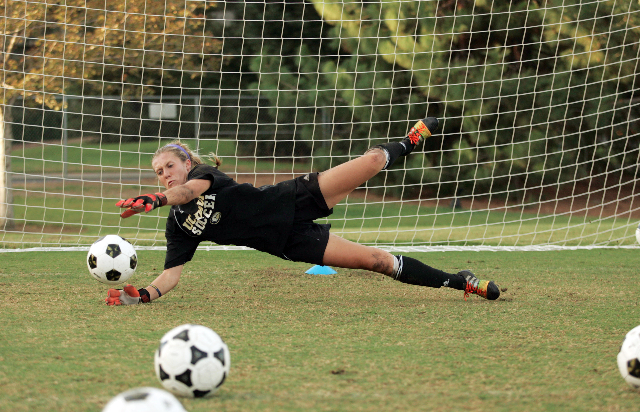
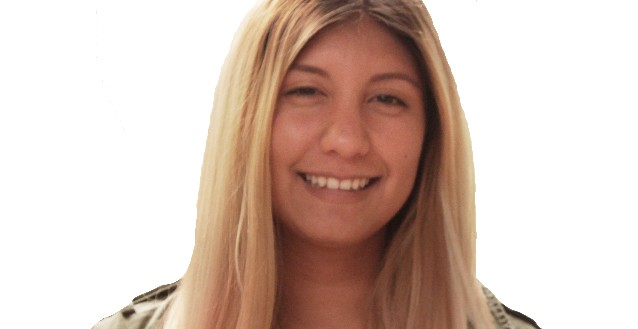
Taylor Jern is a third-year soccer player for the UC Davis women’s soccer team. She is a goalkeeper and recently achieved third place for most total saves in the history of Davis. This week, Jern sat down with The California Aggie to discuss how she got into soccer, what her third-place ranking means to her, as well as what her thoughts and goals are for the UC Davis women’s soccer team this season.

How did you get into soccer and how long have you been playing?


My parents threw me into sports because I was a super active kid. As a four-year-old, I played AYSO bumblebee soccer and things just grew from there.


Did you play in club teams when you were younger? If so, where?


My first club team was the Corona Eagles. However, the bigger clubs are located in Orange County. Since the competition is tougher, I switched and competed for the Irvine Slammers FC [Irvine]. The Slammers are known for their extensive connections and are great with college recruiting since they are a successful, well-known and highlight visible team. The exposure was well worth the switch.


Since the drive from Corona to Orange County was at least 50 minutes, I always carpooled with one or two other people since that made things easier. I was also involved with ASB, volleyball and school council, so time management was key in balancing classes, club soccer and other extracurricular activities. Sacrifice is worth it when it involves something you love.


What are some of the changes you’ve seen in the team since you’ve joined?


The most apparent change was the coaching staff. Student-athletes only work with a handful of coaches throughout college. With the change in personnel, the standards for this team have raised.


How does it feel to be third in the history of Davis soccer for saves?


The rankings have not sunk in, because we are still in season. Plus, soccer is a team sport. If someone receives an individual award, the team is the reason why. Maybe one day [the rankings] will sink in, but for now, it’s all about the team.


Who are some of your inspirational players or mentors?


Ramon Reed [Slammers FC coach] helped inspire me to work toward making my dream a reality. I worked with him for the last two years before attending UC Davis. He not only cares for you as a player, but as a person. He is truly an inspirational coach. I could, and still can, turn to him anytime I have a question. Once I realized that I needed to make the transition from a smaller club to a more well-known one, Ramon helped me realize that I had a chance to make my dream come true playing college soccer.


Being third in saves in UC Davis history, does it inspire you to work more diligently to attain another goal?


Right now, I just want to do whatever it takes to help the team win and advance further than it ever has.


In your opinion, what are your strengths and weaknesses as a team? And how do you plan to advance?


Strong leadership, … work ethic and willingness to sacrifice and dedicate the time and energy needed to improve as an individual are some of our strengths. Our chemistry is positive; combined with our individual development, the team will become stronger and more cohesive as the season continues.


What are some of your goals for the season ahead?


We all want to help this team achieve a level of success that it has not experienced before. We want to record our best regular season, advance through the Big West Tournament and advance to the NCAA Tournament. Individually, I want to be better than I ever have before. I want to record more shutouts, more saves, more wins and record my best season ever at UC Davis.

Photo by Katie Lin

The art of getting by

0

My summer was kind of rough. I worked two jobs, took classes and had to deal with some discouraging obstacles in my personal life. It was disheartening to see my friends together at home without me via photos on Facebook. I also hadn’t spent time with my sister in months and her missing presence in my life was painful, to say the least. A friend recently asked me how I motivated myself to keep up my work ethic in such difficult times, and after much reflection, I thought about my friend Jack-Jack.

Jack-Jack was a spunky brown-spotted Dalmatian who sat with his owner outside of Shields Library where I worked during the summer. My grumpy morning treks to my job were always immediately brightened when I saw the fuzzy pup’s wagging tail and sweet eyes, ready to greet me. His owner was a friendly older man who never seemed to remember me (even though I pet Jack-Jack often) and would always say, without fail, “This here is Jack-Jack. (To Jack-Jack): Be nice, say hi!” Petting Jack-Jack, even if just for a moment, always reminded me to cheer up. Knowing that someone was happy to see me in my early morning unpleasantness (yeah, man, I’m talking about the dog) made getting through that summer sadness just a tad bit easier.

So what’s my point? Well, Jack-Jack was one of the reasons I was able to get through my day. He reminded me that dogs exist, that dogs are awesome and that if I got out of bed to go to work, I might get to pet a super cool Dalmatian. Did Jack-Jack solve my personal issues or cut back my workload? Of course not, but his adorable smile reminded me that there were lots of good things in life I had to look forward to and that this rough patch I was experiencing was only temporary.

In other words, I learned to get through the difficult times by focusing on the positive little things — the joys and pleasures of my surroundings that helped me stay afloat when I felt like hibernating.

Since the start of fall, my workload has increased, and this practice continues to benefit me. When I start to feel overwhelmed or discouraged I try to remind myself that you don’t need a reason to bake cookies at 1 a.m., Arboretum runs are cathartic, Cher’s Twitter is a national treasure, I get to sing in an a cappella group with people as dorky as I am, hair is fun to dye, there is always a lady in the lower level of the library that hums Ella Fitzgerald, Pokémon is on Netflix, I get to work with talented editors and writers at The California Aggie, string theory is so cool, I have two names which is weird and fun, “there’s always money in the banana stand,” I have the most amazing friends anyone could hope for, Beyoncé exists and there’s always something new to learn no matter what, among many other things to remember that make me happy to be alive.

I’m not saying focusing on random positives in life is a solution to all stresses, nor am I claiming that this works all the time, because it doesn’t. I’m human and some days are harder than others, but in the end the more I reflect on small bits of happiness, no matter how seemingly insignificant they may appear, the more I find I’m able to conjure up far more positive days than negative ones and am able to truck through the temporary rough patches toward the light at the end of the tunnel. As long as I know there is a lot of beautiful stuff – like my friend Jack-Jack – in the world, I know everything will be A-OK. It’s all about the little things, guys.


If you too would like to “invest” money in the banana stand, you can shoot AKIRA OLIVIA KUMAMOTO an email at aokumamoto@ucdavis.edu or tweet her @akiraolivia.


Featured Musician: Kaz Mirblouk

0

Kasra “Kaz” Mirblouk, a third-year majoring in computer science and engineering, spent his summer touring across California with his self-named band, Kaz Mirblouk.

KM is a three-piece garage rock-inspired band from Los Angeles consisting of a bassist, drummer and Mirblouk himself providing the vocals and acoustic guitar. The band expects to release their debut extended play (EP) Through the Glass in November.

Mirblouk’s interest in music began in fifth grade when he started listening to artists such as Jack White, who motivated Mirblouk to learn guitar.

Inspired by the wave of garage rock bands, KM started out in blues rock. However, over the past two years, Mirblouk states that the band has begun adopting influences from shoegaze and psychedelic rock into its sound.

Despite many musical influences, Mirblouk attempts to maintain eclecticism in his band’s sound and finds it difficult to label KM as one particular genre.

“I’d say we don’t just have one sound, but I’d like to convey all the influences I have in a way that [is] not completely a copy of everyone else. Because I feel if you restrict yourself to one genre, at one point, you’re going to run out of material that’s unique,” Mirblouk said.

Joey Kaufman, drummer for KM, said that the band’s diverse sound is very indicative of Mirblouk as a musician.

“[Kaz] is a great guitarist with a very niche style,” Kaufman said. “Listeners have categorized the genre as garage rock, surf rock, grunge, punk and psychedelic, but no matter what, Kaz sounds like Kaz.”

After playing at his first show in Davis in January 2014, Mirblouk set his sights on playing in Sacramento and the Bay Area, which eventually led to his summer tour across California.

Accustomed to playing mostly house shows and do-it-yourself venues, Mirblouk highlights one of his favorite moments on tour was being able to play at The Crepe Place in Santa Cruz, where his band was added to the actual lineup.

“[Touring] was fun. Once it ended, you didn’t want to go back,” Mirblouk said. “We were … only on the road technically for only a few days, but it feels like when you go on vacation to some new place, and you’re like, ‘Oh, this is awesome.’ But I’m sure if I did it for longer I would’ve just been tired and wanted to go home.”

After making his decision to attend UC Davis, Mirblouk said that he struggles with balancing his time between school and music. Due to a heavy course load, Mirblouk says it’s difficult to find time to be creative and write new music without the burden of deadlines.

“If it’s possible to work part-time and do [music] or work full-time and do music, that’d be ideal,” Mirblouk said. “Sometimes, just because of school, [I wont] play for a few days and slack off [on practicing music] for an entire week.”

While still attempting to maintain a balance between music and school, Mirblouk said that the best advice he has ever received was from The Cosmonauts, the first big band that KM opened for in Davis. He passes this advice onto anyone else interested in pursuing music.

“They were pretty much like, ‘Despite [the fact that] you’re in school and you’re not going to be able to do much, it’s good that you’re at least trying. You should at least try to play out more,’” Mirblouk said.

Upcoming plans for KM include a house show on Halloween at The Morgue, located across from the Davis Cemetery. The band is also expecting to debut its first studio release, which was recorded during their tour at Thee Men’s Warehouse in Anaheim, Calif.

Max Besterman, Mirblouk’s good friend who joined him on the road during his summer tour, spoke highly of Mirblouk as both a musician and a friend.

“One thing I have always admired [about Kaz] is [his] unwavering dedication to his music,” Besterman said. “He holds himself to a high standard and has both the drive and the talent to match his goals. He’s as loyal to his craft as he is to his friends, and that’s saying something.”

KM’s debut EP Through the Glass is expected to be released in November. Fans of KM can also catch them at The Morgue on Oct. 31.

Photo [Courtesy — Connor Frey]

AggieAngelous

0


ThePoetry — ThePoets&ThePoetesses

TRIGGER WARNING: This article contains references to abuse.  


The Poetry

“You are not a beater”

By Samantha Chiang


You are not a beater

I refuse to believe that one incident does a person make

You are not some mentally unstable guy in need of anger management

You are not someone who needs to assert his masculinity

You are gentle, you are kind, you are self assured

You are not a beater

You are not a beater

You never even laid that hand on me

At least not that time

Instead you just told me

That if that little white stick showed two lines, one line more than we wanted

You would throw me into a river

Love river

You told me that it couldn’t be true because you had your whole life ahead of you

So I took my fists and I beat my stomach every night

Bum bum bum

Pounding rhythmically to rid any chances of that rhythmic unborn heartbeat

And the raw red skin blistered and begged me to stop

But I would not stop

Because you were not a beater

I would beat for you

I wince with every step I take

When my friends ask I blow it off as an injury

Nobody asks further questions

Because they know you are not a beater

Never once do they stop to think that it may just be the perfect genius boy who doled out the injuries scattered across my legs

It had to have been the clumsy little girl

It couldn’t have been you

It wouldn’t have crossed a single mind

They all knew that

You

You were not

You were never

You would never be

A beater

But the black and blue on my back says otherwise

And when my mother sees it she asks me how I got it

My mother knows where I got it

I tell her I’ve been playing a little too much soccer

I tell her I’ve tripped and fallen

I tell her I got it battling the dragons and unicorns up in the sky

But my mother knows

I do not tell her though

So the bruise grows between my mother and I like the thorny bramble of some villainous fairytale

But it is alright

Because you are not a beater

You are not a beater

But that one day on the roof of our school

I may have had second thoughts

When I begged you to stay

And you told me to leave

When I clung to you like an adolescent clings onto the last fallen days of summer

Trying to inhale all there is to inhale, trying to do all that can be done, trying to see all that can be seen

Only to realize that summer has gone and the leaves have fallen

Leaving the trees barren

I never would have guessed that you would have pushed me

I never would have been able to imagine the soaring pain

I never could imagine it before you

You may not be a beater

But you beat the will out of me


ThePoets&ThePoetesses

“You are not a beater” by Samantha Chiang

I’m Samantha, a first-year English major with aspirations of pursuing the emphases of creative writing and literary theory. My ultimate goal in a professional capacity is to become a judge. In my spare time, I can be found reading, crafting and playing soccer. I have an enormous appreciation for poetry, both spoken and written, even if my own poetry pales in comparison to the greats. My favorite poem is “My November Guest” by Robert Frost. This poem is intended to be spoken, but I believe that its message still comes through in written form.

Be featured in AggieAngelous

Send your poetry to aggieangelous@gmail.com with your name, major, year and a short, one-to-two paragraph description about yourself. Feel free to include your interests and/or hobbies, or maybe even your favorite quote!


Arts Week

0

MUSIC


Holy Ghost!

Oct. 22, 7:30 p.m., $12 General

Arc Ballroom

This concert presented by ASUCD’s Entertainment Council will feature Brooklyn-based synthpop band Holy Ghost! along with DJs, GLSS and Shaun Slaughter aka D.A.M.B.


Experience Hendrix

Oct. 16, 8 p.m., $77 to $97

Mondavi Center for the Performing Arts

An all-star cast of musicians will pay tribute to rock musician Jimi Hendrix through a performance featuring Hendrix’s most notable songs. The concert, which is organized by Hendrix’s own family, will feature musicians such as Hendrix’s musical inspiration, Buddy Guy, and longtime friend and bassist, Billy Cox.

ART


Screever Fest

Oct. 17 to 19, 10:30 a.m. to 5 p.m., Free

F Street, between Second and Third streets

This three-day event allows members of the public to participate or watch a sidewalk chalk art contest. There will be prize winners each day.


Dinner with Artist

Oct. 17, 6:30 p.m. to 9:15 p.m., $100 general

Pence Gallery, 212 D St.

The Pence Gallery will be holding a three-course dinner for guests to enjoy alongside artist Mark Emerson and his solo exhibit. Guests will also hear a talk from Emerson and receive a free painting.

THEATRE AND DANCE


Mummenshanz

Oct. 18, 8 p.m., $27 to $56

Mondavi Center

Mummenschanz, a Swiss-based visual theater company, will present a show featuring the use of shadow and lights and manipulation of sculptural and expressive masks in order to create a visually-entertaining show for audience members to enjoy.

LITERATURE AND POETRY


Poetry Night Reading Series

Oct. 16, 8 to 10 p.m., Free

John Natsoulas Gallery, 521 First St.

The event, hosted by UC Davis lecturer Dr. Andy Jones, will present a featured reader followed by an open mic segment at 9 p.m.


Conscience of the Constitution

Oct. 16, 7:30 to 8:30 p.m., Free

The Avid Reader, 617 Second St.

Timothy Sandefur, adjunct scholar at the Cato Institute and principal attorney at the Pacific Legal Foundation, will speak on his most recent book, The Conscience of the Constitution, which discusses how current legal doctrines are endangering citizens’ individual rights and corrupting American civic institutions.

Guest Column: UC Student Regent Welcome

0

As classes resume and we return to campus, reminders of the diversity of our student body are all around us. Some students have arrived freshly inspired by the beauty and culture of foreign countries, and some emerge from the depths of backbreaking jobs and seemingly endless hours of internships; still others sit in the very same classrooms they frequented during long days of summer school, while some just soaked in the sun and enjoyed the peaceful bliss of doing absolutely nothing.


But while many of its students wandered far from their campuses during the summer months, the wheels of activity continue to turn at the University of California. The governing body of the University, the Board of Regents, continued to hold its bi-monthly meetings at the University of California San Francisco. And in July, we were privileged to take our seats at the table as Student Regent Saifuddin and Student Regent-designate Oved.

Allow us to introduce ourselves.

The UC Board of Regents can be a distant, removed body of authority; few students on our campuses across the state have any direct interaction with the Board of Regents. Meanwhile, the influence and impact of the Regents, while tangible and omnipresent, is often misunderstood. It is our goal to change that.

As the Student Regent and Student Regent-designate, we are privileged to represent students across the University of California. As representatives to the Board, we advocate for the student agenda on the Board of Regents. Regardless of your major, age, race, gender, sex, nationality, religion, disability, identity or expression, we are here to listen, and we are here to amplify your voice.

The Student Regent derives his or her power from the people that he or she represents. We are not here to advocate for our personal beliefs; our agenda is shaped by the general opinion of the UC student community.

We are here for you.


Each of us has a responsibility to ourselves, and to one another, to ensure that the UC is the best institution that it can possibly be. Together, we want to encourage all students to embrace our diversity, set aside our differences and come together to bring positive change to our university. As the Student Regents, we have one purpose in mind: to serve the students of the University of California.


Reach out to us. Email us. Come see us during campus visits. Contact us with your concerns, your questions, your vision for a better University of California.

We are the UC Student Regents. How can we represent you?


Sincerely yours,


Sadia Saifuddin                                                             Avi Oved

UC Student Regent                                                       UC Student Regent-designate

saif.sadia10@gmail.com                                             ucregentoved@gmail.com


Tunespoon: The good old days

0

If you subscribe to the notion that “music was so much better back then,” then I really don’t blame you. I too have seen a hilariously fallacious comparison between legendary ’60s pop masterpiece “God Only Knows” to Nicki Minaj’s throwaway promo “Stupid Hoe.” So, perhaps the only solution to the dearth of substantial music is a steady diet of Bob Dylan, Beach Boys and The Beatles.


But, I have to confess, I’m not a Beatles fan. They’ve made an indelible mark on the industry, and on many peoples’ lives. I am not one of them. So just because someone grew up with a rotary phone doesn’t mean that they should happily hand over their smartphone for “the good old days.” The times, they are a-changin’.


A discontent Esquire Magazine list aptly titled Eight Reasons Why Old Music Is Better Than New Musicexemplifies the aggressive stubbornness of its faulty logic. Some items on the list simply are not true, such as the claim that there are “more artists to choose from” (OK, technically, if you want to start from Gregorian chant, then yes, there are more artists, but there is no mention of classical music on the list). Some items reflect a severe case of nostalgia-goggles, such as the notion that “music used to be much classier” (complete with a black-and-white image of a Frank Sinatra-looking crooner). The author probably skimmed over that very minor point on pop culture when Elvis’s breakout hits and hips made picket-fence family-dinner moms and dads go into moral cataclysm all the way back in the ’50s. Or when the Beatles inspired undergarment-throwing riots in the ‘60s. Or when sex began choke-holding the ‘80s mainstream through Madonna, Olivia Newton John and Tiffany.


Another awful generalization from the list is that “technology makes music watered down.” The author of the list, Beware (which is either a pretentious alias or a sincere warning for the quality of the work), naively suggests that “back in the day, if you wanted to make music, you had to know how to sing or play an instrument,” implying that no one in the musical modern age is capable of either. Not only do people still play instruments (like, basically everywhere), but technology is a beastly instrument that deserves respect; the fact that a sound can be manipulated down to a microscopic fragment of a sound wave opens endless possibility upon sonic possibility. Successful music producers are technology’s virtuosos, but it can be easily concluded that the most famous producers prioritize profit at innovation’s expense.


But innovation is far from over, thanks to postmodernism. It’s what happens when there seems to be nothing left to invent except for the things that already exist. So yes, even though many musical ideas are repeated and burnt out, new and exciting ones are always being born from their ashes. ’80s dance pop is seeing a resurgence in the form of musical acts like The Knife and Chvrches. The pulsing, laid-back spirit of classic rock lives on through Mac DeMarco, Band of Skulls and Jack White (and his many side projects). Endless new ground is being charted by experimental groups, like Little Women, Swans and Shabazz Palaces. And there are so many more sounds left to discover.


Mr. Beware deems any music that has “not debuted on the internet” as “old music.” This is a foolish definition, considering that he encourages his readers to use Spotify and Pandora to “discover” “old” music. I first heard Stravinsky on YouTube many years ago. “Infernal Dance” debuted in 1910, but for me, it debuted one night in 2008. I am no less a fan of the music because of this. All music, old and new, coexists on the internet. Once, I listened to The Tallest Man on Earth, unaware that Pandora took me 50 years earlier to an obscure Bob Dylan song. Music is music, and it’s just as exciting as it’s ever been.


Search, sample, look everywhere you possibly can; listen until you fall asleep making lists of artists that you want to explore more of, until you are content at this treasure trove you’ve amassed, embracing the overwhelming feeling of the sheer amount of music that you will never listen to, never know and never experience, because the beauty of this golden age of access is that everyone can be their own explorer. “Old” is relative, but anything can be new as long as you take the time to find it.

Pondering the future of music is the funnest, most exciting type of existential crisis! STEVEN ILAGAN (smilagan@ucdavis.edu) promises!

Edumacation with Calvin and Hobbes: Calvin isn’t curious

0

flesch3_op


When talking about ways to improve the value of education, most debates center on what teachers and institutions can do to improve a student’s experience. Less is said about how students can help themselves. As illustrated above, Calvin seems to be suffering from a lack of intellectual curiosity in the classroom. He vocalizes a certain inevitability in education — that students are ultimately in charge of whether or not they take an interest on a subject.


Engaging students is an uphill battle, but it’s not impossible. Professors can, and often do, interest students in their fields. The best professors are visibly enthusiastic about their fields; they make their teaching inclusive and accessible. This enthusiasm acts as a prerequisite for making a student curious. Without this type of engagement, the entire onus is put on the student.


While students are largely responsible for their own academic interests, some policies and technological trends are making it harder for true engagement. This difficulty starts in lower education. The No Child Left Behind Act of 2001 established a system in which primary and secondary institutions receive federal funding that is contingent on states administering their own standardized tests and developing their own curriculum.


NCLB can be held partly responsible for stifling curiosity in the classroom. In order to make sure each school performs well, teachers may “teach to the test” or develop their own curriculum to match what will be tested, and only what will be tested. Consequently, students are not exposed to the more imaginative, non-tested facets of their teacher’s knowledge, which leads students to become complacent. This is especially damaging when compounded with the increasing pace of technology and its potential to decrease attention span.


For Calvin, the classroom is his vice. He values a self-taught experience. In one comic, he takes pleasure in reading a book about dinosaurs until an authority figure praises him for it. It’s clear that a large component of intellectual curiosity comes from an individual’s desire to invest their own time.


When students don’t take their own time to appreciate a given topic, the teacher is tasked to fill this responsibility — to make students appreciate. Calvin demonstrates that this is less than ideal for both parties (two packs of cigarettes? — sounds taxing).


Despite all the problems associated with intellectual curiosity, I am more optimistic about potential solutions than pessimistic about the issues. One practical response starts in the classroom. UC Davis offers personalized majors, and many professors will let you create your own essay topics. And while these options are not mandatory, perhaps they should be. They would force students to ask themselves what they find interesting.


This free-range attitude might be most effective in our NCLB school system. I would imagine that an English professor would find more pleasure in reading a diverse set of essays written with more care than dozens written on one stale topic. Each topic would likely have to be approved in advance, and a single rubric would become obsolete, thus making the whole process less efficient. But what should we value more: efficiency or engaged students?


In the long run, education must become a priority for policymakers. Children and young adults follow models. I recently read an article titled “The Cult of Elon Musk,” describing the zealotry of those who follow the Tesla Motors CEO. Education needs its own Musk. The Nobel committee awarding Malala Yousafzai and Kailash Satyarthi the Nobel Peace Prize shows an increasingly global awareness of the importance of education and curiosity.


Take a look, Calvin: Malala’s only eleven years older than you. You’ve got a standard cut out for yourself.


To share your own interests, you can reach ELI FLESCH at ekflesch@ucdavis.edu or tweet him @eliflesch.

Photo by Courtesy

(Re)Fashioning Gender: The history of fashion

0

I’ve noticed that there is a lot of stigma around people who choose to wear clothes that aren’t made particularly for their assigned genders. Male bodies wearing dresses, or female bodies rocking suits and ties, for example. Despite this stigma, there are individuals who attempt to express themselves in a way that defies the limiting gender binaries that have been set in place.


There is an argument I’ve heard more than once that attempts to justify who gets to wear what, and it’s a big part of why I wanted to write this column in the first place. The argument, which is that “it’s only natural” that boys don’t want to wear dresses and girls do, is ridiculous and, according to history, absolutely not true. Furthermore, if you take a look at the types of clothing that people wear around the world even today, it’s clear that this divide is a learned behavior, not some kind of inherited trait. Nevertheless, this argument gets used often and creates a huge stigma around individuals who don’t conform to the gender binary that our fashion industry has helped set in place.


There is a pretty clear divide between the types of clothes that men and women typically wear here in the United States. Nowadays, a majority of the clothes you’ll find made for female bodies generally consist of tighter, smaller garments, with dresses and skirts being a staple. Clothes made for men’s bodies, on the other hand, pretty much always include looser fitting garments. Skirts, dresses and anything deemed overly-feminine are nowhere to be found for men.


Go back in time, however, and you’ll find that this was not always the case. There are tons of instances in history where men in dresses and skirts were the norm. The ancient Greeks, for example, wore chitons, which were basically large pieces of fabric draped across their bodies. Viking men used to wear long tunics over tight-fitted pants (so tight that it was a huge struggle to get them on and off everyday — I feel you, Viking dudes). And don’t forget kilts, the traditional garments that are similar to knee-length skirts, which are actually still somewhat prevalent in Scotland.


Many of these clothing choices had to do with a person’s social or economic status. For example, Chinese peasants could be punished for wearing silk kimonos, so they dressed in pants instead. But now, the clothes we choose to wear have much less to do with our social status and more to do with asserting our masculinity or femininity. We may wear skirts to assert our femininity or a pair of baggy pants to assert our masculinity. Rather than choosing our clothing based on our class, we choose it based on our gender, which is fine for those folks who identify with their assigned genders, but not so much for those who do not.


Fashion has changed in recent years, and it’s definitely not because we’ve become more open-minded about gender identities. In fact, it seems as though it’s kind of the opposite. In a previous column, I talked about how men and women’s clothes are separated in clothing stores, and how not everyone necessarily identifies with the gender that they are placed in. Furthermore, if you don’t identify as a man or a woman, it’s like you don’t even exist to the fashion industry. It’s also nearly impossible to cross boundaries if you attempt to shop in the section of the opposite gender. I say this because there are virtually no dresses and skirts designed to fit male bodies and only a handful of suits and the like designed to fit female bodies (although more and more have been popping up in the last few years).


I use the history of fashion as a relevant example of how, despite a much more complex gender spectrum, the gender binary gets perpetuated through everyday things we may not usually take note of. But this binary reduces masculinity to men in male bodies and femininity to women in female bodies, which is not the case for all individuals. So limiting certain kinds of clothes to only one type of body by claiming that it’s in our nature is not only impractical, but also historically inaccurate.


Defy the limitations of time and gender with CHELSEA SPILLER by contacting her at ctspiller@ucdavis.edu.

Council for International Development maintains active role on campus

0

intldev_fe_Pasturel

The Council for International Development, a student-run organization aimed to unite the broad variety of student initiatives regarding international development, has taken an active role on campus since its inception in Winter Quarter 2013.

“[In summer 2012,] I had recently become friends with a lot of people who were high-ups in various… international development clubs,” said active member and fourth-year civil engineering major Imaan Taghavi. “I wanted to do a formal for my own club, Engineers Without Borders, and I realized, why not do it with some of these other clubs and have this joint venture where all these clubs can come together?”

Early on, Taghavi realized there was a strong need at UC Davis for a forum in which international development clubs could interact with each other. After interacting with these other organizations on campus, Taghavi noticed a lack of interest among students in collaborating with organizations similar to their own.

Since its inception, the Council for International Development has put on two fundraising events, each called a Formal Without Borders, and is currently planning for their third formal on Oct. 25. All proceeds from the formals go toward charities in developing countries and international work initiatives led by UC Davis students.

The first formal, held at the International House, hosted over 250 guests to take part in fundraising and raising awareness, while enjoying international dance music. Although this was originally planned to be a one-time event, its success encouraged clubs to continue making it happen.

Third-year environmental toxicology major and MEDLIFE representative Krisha Yadav-Ranjan also helped Taghavi with creating the council. Specifically, Yadav-Ranjan pitched the idea of an international development journal to give undergraduate students research experience.

When the small council was formed, various leaders from international development clubs met to discuss issues in developing economies. To spur conversation and engage with the students, Liliane Larson, executive director of the UC Davis Blum Center for Developing Economies, attended some of these meetings.

“We’ve met a lot with the Blum Center and they’ve been very supportive of Council for International Development,” Yadav-Ranjan said.

Though the council has been steadily growing since its start last year, Taghavi sees much bigger goals for its future.

“One of Chancellor Katehi’s goals was the 2020 plan. In the next five [years] she wants 50 percent of UC Davis students to have an international experience — that’s huge, but the council and what the council does could be directly involved in making that happen,” Taghavi said. “First we want the formal to gain legitimacy. I want to see Formal Without Borders [reach] the level of Picnic Day, the Buzz [and] all these campus events.”

Fourth-year environmental science major Amit Aggarwal, who worked on the first two formals and was active in helping to create the group, feels strongly about the continuation and growth of the council.

“I probably won’t see the vision realized [to its] full extent while I’m here, because I’ll be gone in a year, but my sister might go here next year,” Aggarwal said. “I hope that by the time she’s here she will get to be a part of this community that has already been built for her.”

Ultimately, the goal of the council transcends the creation of fundraising events or online forums, focusing on service and community building in developing countries.

“…We try to provide the technology or supplies based on what the community thinks they need,” Taghavi said. “This is a very fast-shifting field. The goal is that we create a space for that dialogue at the university level in hope that students will take what they learned into their own initiatives as professionals.”


Global manufacturing facility in Davis continues to grow

0

Two years ago, the Japanese machine tool company DMG Mori Seiki collaborated with UC Davis’ College of Engineering to build a $50 million factory with state-of-the-art equipment only five miles away from campus.

The manufacturing facility specializes in large-scale manufacturing units and the pre-assembly of major machine systems before they move through the assembly line process.   Since its opening in July 2012, the factory has employed about 150 workers in the local area and has provided valuable career and internship opportunities for UC Davis students.

“Students have participated in a number of training programs at DMG Mori Seiki. Moreover, students are often hired to work there during the summertime so that they can be exposed to advanced manufacturing techniques,” said UC Davis College of Engineering Dean Enrique Lavernia in an email interview. “I believe Davis is an excellent place to build [the factory]. It is located strategically close to Sacramento, as well as to San Francisco, and it draws on the expertise of the faculty, staff and students at UC Davis.”

In 2000, four UC Davis graduate students, who had studied under UC Davis mechanical and aerospace engineering professor Kazuo Yamazaki, founded Digital Technology Labs (DTL), which Mori Seiki eventually acquired and used to create the future research subsidiary to the Japanese-based Mori Seiki.

“Dr. Mori, an original family member of the firm, is a member of the College of Engineering Dean’s Executive Committee and somebody who I value and respect very much,” Lavernia said. “His advice has been very helpful to the progress and growth of excellence in our college.”
The manufacturing facility is located off of Second Street in east Davis between FMC Shilling Robotics and Target, and is approximately 200,000 square feet on 14.5 acres.

“DMG Mori Seiki taps into the excellent resources of UC Davis faculty, students and the Davis and Sacramento community,” said UC Davis College of Engineering Director of Corporate Relations Greg Gibbs, in an email interview. “Access to Interstate 80 and Interstate 5 also provide easy transportation options for supplying their North American customers.”

Gibbs has worked in his current position since January of 2006, and managed the relationship between the company and the university as the venture was taking place.

“It has been a pleasure as dean of engineering to work closely with Dr. Mori in the growth of our academic programs in the area of manufacturing,” Lavernia said. “His advice as well as his financial support [has] allowed the college to grow in terms of the depth and breadth of its academic programs in manufacturing.”
Mori Seiki’s relationship between the UC Davis College of Engineering has been an important supporting factor for the university’s engineering students and their studies.

“Mori Seiki’s been a great benefactor for the College of Engineering,” said Director of Marketing & Communications for the UC Davis College of Engineering Paul Dorn. “They donated millions of dollars worth of equipment so that our students have the opportunity to learn on state-of-the-art machinery.”
According to Lavernia, DMG Mori Seiki and the College of Engineering are currently looking at plans of future advancement for the facility that will help put Davis in the limelight for technological advancement.

“DMG Mori Seiki, together with the College of Engineering at UC Davis, are currently exploring additive manufacturing techniques,” Lavernia said. “In my opinion, [these] will revolutionize the industry and will put Davis at the center of an important area [of technology].”

Student Drowns in Rafting Accident

UC Davis student Lisa Sayaka Nakamaru, a 20-year-old third-year political science major from Torrance, CA tragically passed away on Sunday. She had been rafting with a friend on Putah Creek.

According to Yolo County Chief Deputy Coroner Gina Moya, the cause of death was drowning with the manner of death being accidental. The two rafters were discovered the same day at around 2:50 p.m. after their raft had hit a rough spot at a popular campsite near Lake Solano County Park and Monticello Dam that holds Lake Berryessa.

Nakamaru’s friend whose name and medical condition are not currently disclosed, was transported to Sutter Davis Hospital and released the same evening.

At 2 p.m., the Winters Fire Department was dispatched to investigate the scene. Aaron McAlister, Winter’s fire chief called for backup including a helicopter and other specialists among which were the Yolo County Boat Patrol and Vacaville Fire Rescue Water Team.

Almost immediately upon arrival, the dispatch team heard a commotion from four men who had seen the the deceased victim.

“We attempted to rescue the victim…We were able to remove her with paramedics standing by. It was determined that she was deceased at that point,” McAlister said.

He adds that in these cases, it is atypical to find and recover the victim as fast as they were able to.

According to McAlister, there are a series of obstacles in the area with the water flowing at a rate of 300 cubic-feet-per-second.

“That’s a fair amount of volume…Canyon Creek Resort and the creek at the resort near Lake Solano…can be misleading. It looks like a lake [in photos]. People go expecting to find a leisurely cruise and they encounter rapids and it’s dangerous,” McAlister said.

The team is still investigating whether or not lifejackets were used.

The Winters Fire District was responsible for coordinating the rescue efforts. The Yolo County Sheriff is handling the ongoing investigation, however the location of the incident is not closed off to visitors.

“It’s most unfortunate when a student dies….I think we all agree the loss of a student is tragedy,” said Julia Ann Easley, senior public information representative for UC Davis.

Friends and family of Nakamaru created a memorial facebook page in her honor to celebrate her life; It has garnered over 1,000 likes.

—  Gabriella Hamlett

UC Davis to partner with SunPower Corp. to construct large solar farm

0

On Sept. 24, UC Davis announced its purchase power-agreement with SunPower Corp., in which SunPower will oversee the design and construction of a 16-megawatt, ground-mounted solar power plant. The 70-acre site will be located in Davis, south of Interstate 80, and is expected to meet 14 percent of the campus’ energy needs. This project, when finished, will be the largest solar power installation in the UC system, as well as the largest solar power plant to meet the electricity demands of a U.S. university or college campus.

SunPower Corp. is a global solar company with a diversified portfolio of customers, leading residential, commercial and utility solar energy markets. UC Davis had previously collaborated with SunPower back in 2011 to create the UC Davis West Village neighborhood, the largest planned zero net energy community in the country.

“We’re really lucky with SunPower because they are… a very reputable [and well-established] firm and they’ve done large solar farms like this in the past,” said UC Davis Design and Construction Management (DCM) Assistant Director Jason Magness. “They seem to take pride in their work … We’ve had no issues or conflicts with them on meeting codes and standards and doing it as per our campus standards … We have a set of standards that our designers adhere to above and beyond the code.”

West Village Community Partners had contracted SunPower to install a 4-megawatt solar photovoltaic system to power its student housing, mixed-use buildings and recreation center. The SunPower system has helped West Village prevent more than 2,000 tons of carbon dioxide emissions per year.

For this new project, SunPower is introducing its Oasis Power Plant technology, which uses a tracking mechanism to position high-efficiency solar panels to track the sun’s location throughout the day, potentially increasing energy capture by up to 25 percent.

Currently, UC Davis already has several solar installations integrated around the main campus. These sites came online in January 2012, some of which include the solar carport installations in the parking lot servicing the Mondavi Center for the Performing Arts and the Robert Mondavi Institute of Food and Wine Science, as well as panels implemented on the roofs of the Tercero and Segundo residence areas. These sites alone generate an estimated 1,100 megawatt-hours annually. In addition to cutting costs, these systems also offset 800 metric tons of carbon emissions.

“In this case, at least we know what we’re getting and we know the source,”David Phillips, the utilities director with the university’s Administrative and Resource Management Department said. “The business-as-usual case is that we’re just buying some random electrons off the grid.”

The campus might not always have to purchase the electricity from this new solar farm, as the contract gives UC Davis the option to purchase the equipment at various periods.

“The power purchase agreement is for 20 years, and we have options to purchase the system as early as year seven,” Phillips said. “But the panels themselves these days last well in excess of 30 years — so it’s likely that if we don’t buy it before the end of year 20 that we would buy it at that point and continue to run it for another 10 or 15 years after that.”

Phillips went on to say that after 20 years the campus would be able to purchase the equipment at a relatively low price because the contract makes SunPower responsible for removing the equipment if the university chooses not to purchase it. If the equipment is purchased, Phillips and UC Davis Utilities will be responsible for maintenance of the plant.

Bringing in a third-party company for the project was a way for the university to take advantage of tax incentives that made solar power cheaper.

“We always look at the idea of just buying the system ourselves – just spending the money and buying panels and constructing it – but as a campus we don’t pay taxes and so we’re not eligible for the tax breaks that a private company would get,” Phillips said. “So every time we’ve looked at the analysis it always makes sense to bring a third party into the picture.”

Phillips estimated that approximately a third of the project’s cost will be refunded to SunPower as a result of these tax incentives, and part of those savings will be passed on to the university. Since the price of the equipment has decreased over the years, current forecasts predict that the cost of the power produced with the panels will be cheaper than the other channels.

“We set up the power purchase agreement such that the price we pay for the solar essentially matches what we expect the price for grid electricity to be,” Phillips said. “So for the first seven years it should track pretty much the same as business as usual, and then after that the price we pay each year actually drops by about 1.1 percent.”

According to Phillips, if grid electricity were to rise more than 2.6 percent over the project’s 20-year period, not impossible based on historic patterns, the project will be considered economical for the campus.

In addition to these campus sites, UC Davis had also recently purchased 26 megawatts of off-site solar panel sites that are expected to come online in 2017, according to Sid England, Assistant Vice Chancellor for the Office of Environmental Stewardship and Sustainability.

“When you take the on-site renewables and the off-site solar and you combine it with the fact that part of the electricity that we buy is large-scale hydraulics … in a typical year [after 2017] 60 percent of our electricity will be carbon-neutral,” England said.

According to England, one of the most impressive aspects about this project is the size. What started as a proposal for 7 megawatts grew over twice as large, as everyone realized more could be done without an increase in the cost of electricity … We’re trying to maximize what we can do to reduce our carbon footprint.”

Despite rapid campus growth, UC Davis greenhouse gas emissions are lower than they were five years ago due to the combined efforts of various clean energy projects. This new project will further support UC President Janet Napolitano’s goal of being carbon-neutral by 2025.

“Between 2009 and 2013, our annual energy use through one of our energy-efficiency projects has gone down by 30 million kilowatts an hour,” England said. “In the next three years, we’re looking at going down by another 25 million, [and] in between 2017 and 2025 another 36 million, for a total of about 91 million [fewer] kilowatt-hours of [electricity]. It’s a really aggressive approach; it’s not just about using renewable energy, it’s about using less.”

Samuel Moffitt, the outdoor activities coordinator of the UC Davis Environmental Club, believes that the plant not only reduces the university’s carbon footprint but also has potential to do much more than its intended purpose.

“These new campus installations should be used as hands-on teaching tools for both graduate and undergraduate students,” Moffitt said. “I studied abroad in Europe last summer, and we visited large wind and solar plants, as well as a giant biodigester, to learn how the technologies work and how they can be applied and implemented in the [United States]. The fact that these are now being installed on the UC Davis campus is exciting, but I have heard little to nothing in my classes about this. This new infrastructure can go above and beyond its direct impacts by educating students how to lobby for, install and maintain such systems.”

Unless halted by unforeseen weather conditions, construction will begin in the early months of 2015 in a field on the far southeast corner of campus which was previously used for agricultural purposes.  DCM handles the proper construction of the plant to ensure its safety and efficiency, especially due to future possibilities regarding the facility.

Upon its completion in 2015, the university anticipates that one-third of the electricity demands on campus will be met by carbon-neutral energy sources, according to Phillips. He states that the solar farm has the potential to save the university about $10 million over the lifetime of the project. The power from the solar farm will be fed directly into the campus grid, ensuring that all the power produced will be used by the university.

UC Davis Takes on Montana State Bobcats

0

footballrecap_sp_Pasturel01

UC Davis (1-5, 0-3) fell to the Montana State Bobcats (5-2, 3-0) 77-37 during the UC

Davis Homecoming Weekend on Oct. 11 as they continue Big West Conference play.

Instead of the senior quarterback London Lacy, sophomore quarterback Ben Scott

made his debut. Scott completed 27 of 46 passes for 379 yards and four touchdowns, including

eight passes to junior wide receiver Ramon Vargas, a team high. Vargas led all receivers with

141 yards and a touchdown.

Senior running back Gabe Manzanares, who has been limited due to injury, rushed for

142 yards.

UC Davis earned a total of 610 yards on offense, but it was not enough to subdue a

Montana State team that is currently ranked No. 14 in the Football Championship Subdivision.

The Bobcats started the game aggressively, scoring 35 points in the first half. The

Aggies tried to keep up with Montana State, but failed to convert at the same high rate as their

opponent.

Montana State’s quarterback, Dakota Prukop, led the Bobcats with 361 yards and four

touchdowns, while also leading all rushers with 148 yards.

“It’s tough when you’re playing a team like Montana State. Their team is pretty

phenomenal. Overall we’re just disappointed we didn’t play well,” said Aggie head coach Ron

Despite the loss, UC Davis demonstrated a lot of potential. Halfway through the third

quarter, the Aggies ran a flea flicker. Scott handed the ball to senior running back Colton

Silvera, who flicked back to Scott. Scott then sent the ball to freshman wide receiver Jermale

Jefferson for a 44-yard touchdown.

Scott also ran the ball for a 31-yard dash in the first quarter that led to a 12-yard

touchdown pass to senior wide receiver Corey Galindo on the following play.

“I just wanted to go out there and command the troops, and put points on the board. I felt

really comfortable out there,” Scott said. “The offensive line did a good job. I didn’t get sacked

all the day; there were a lot of great plays by receivers going up and making plays.”

The Aggies have now lost four consecutive games, including losses to two ranked

teams. UC Davis travels to face the Montana Grizzlies on Oct. 18 (4-2, 2-0) as they try to turn

their season around.

Photos by Ciera Pasturel