55.5 F
Davis

Davis, California

Tuesday, December 23, 2025
Home Blog Page 841

This week in sports

0

Men’s Football (1-5):

UC Davis vs. No. 2 Montana State

On Oct. 11, UC Davis football took on No. 2 Montana State in a homecoming showdown

that saw a very mixed performance by the Aggies. On the positive side, the Aggie offense

looked outstanding for the first time this season against a Division I opponent. Sophomore

quarterback Ben Scott, making his debut as a starter, threw for 379 yards and four touchdowns

including a spectacular one-handed touchdown catch by junior Ramon Vargas. Senior running

back Gabe Manzanares returned to his last-season form, rushing for 142 yards.

On the other side of the ball, the UC Davis defense struggled throughout the day,

allowing opposing quarterback Dakota Prukop to gain 361 yards in the air and 148 yards on the

ground in just three quarters. Three Cougar drives ended in touchdowns in three plays or less,

and they managed to score on all but two possessions in the game.

Don’t miss The California Aggie’s in-depth coverage of the game.

Women’s Golf (3rd, 2nd, 3rd place finishes):

Edean Ihlanfeldt Invitational

After a tough first day in which the Aggies finished in sixth place, sophomore Paige Lee

and senior Blair Lewis ended the Edean Ihlanfeldt Invitational with a strong play, pulling UC

Davis to third place overall. Lewis and Lee, who tied for fourth place individually, finished 2-over

par. Meanwhile, junior Betty Chen finished 16th individually to help the Aggies beat every team

except University of Washington and Stanford.

The UC Davis women’s golf team will play at their last tournament of the fall season, the

Stanford Intercollegiate Tournament, from Oct. 17 to 19. For more coverage on the women’s

golf team, check out The Aggie’s highlight of the team.

Women’s Field Hockey (4-9):

UC Davis vs. California

UC Davis vs. University of Pacific

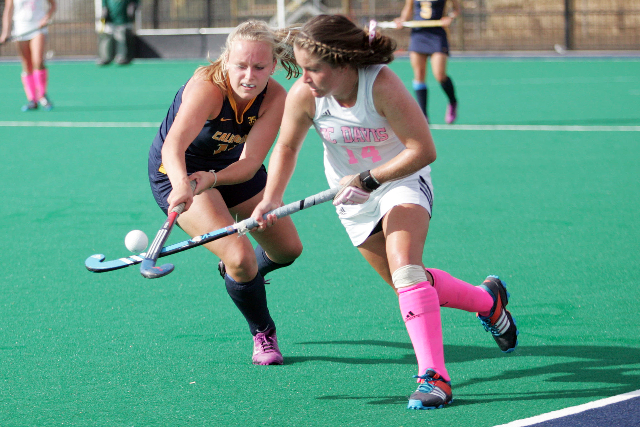
Between Oct. 6 and 12, UC Davis took on their final two home opponents of the season.

Against Cal, the Aggies were handily defeated as they were only able to score one goal in the

game. Cal jumped out to a 3-0 lead at the end of the first half thanks in part to nine shot

attempts. While UC Davis was able to outshoot their opponents in the second half, only one of

the attempts found the back of the net.

In their final home match of the year, the Aggies defeated the University of Pacific.

Seniors Emily Costa and Stephie Sabraw were each able to score a goal in their last game on

the UC Davis campus, and freshman goalie Briana Sooy was able to keep University of Pacific

off of the scoreboard in the second half to pull out a victory.

Men’s Soccer (4-1-8):

UC Davis @ No. 11 UC Irvine

UC Davis @ CSU Northridge

The UC Davis men’s soccer team saw action twice between Oct. 6 and 12 and watched

as their undefeated streak was ended by UC Irvine. Against the No. 11 Anteaters, the Aggies

attempted three more shots than their opponent but were unable to make up for the 35th minute

goal that snuck past sophomore goalie Armando Quezada.

With their goal of finishing the season undefeated squashed, UC Davis completed its

two game road-trip by tying CSU Northridge. The Aggies were outshot 15-9 and saw senior

captain Ramon Martin Del Campo leave in the 35th minute due to a red card, but they managed

to hold their opponent scoreless for the entire game.

Women’s Soccer (4-8-3):

UC Davis @ Cal Poly

UC Davis @ UC Santa Barbara

Against rival Cal Poly, the UC Davis women’s soccer team came ready to play on

offense, scoring two goals for the first time this season. Junior forward Haley Hughes

contributed both goals for the Aggies, scoring in the 25th and 60th minutes of the match.

After the game, coach Twila Kaufman said, “Haley did a great job validating the hard

work of her teammates; that’s what a goal scorer does.” The win broke a streak of nine games

without a victory.

The Aggies were able to repeat their offensive success against the UCSB Gauchos,

scoring two goals including one by junior forward Sienna Drizin, to force overtime. Still, they fell

in double overtime as the Gauchos scored a game-winner with just 19 seconds left in overtime.

Men’s Tennis:

UCSB Classic

Battle in the Bay

Over the weekend of Oct. 10 to 12, the UC Davis men’s tennis team split up to take on

two tournaments. At the UCSB Classic, several Aggies found success. Freshman Everett

Maltby won the Flight C singles title as well as the doubles Flight A consolation round with junior

Brett Bacharach. Sophomore Jessie Ross and freshman Tommy Lam were able to win the

Flight C doubles championship while sophomore Bryce McKelvie and sophomore James Wade

won the Flight B consolation side.

The Aggies also saw some success in the Bay Area as the pair of sophomores Alec

Adamson and junior Adam Levie fell in the final of the main draw after defeating several higher-
ranked opponents.

Women’s Tennis:

ITA Northwest Regional Championships

Several Aggies competed in the ITA Northwest Regional Championships. Sophomore

Kamila Kecki and sophomore Frederique Sleiffer made it to the round of 32 in the doubles main

draw before being defeated while several other Aggie doubles teams saw success in the

consolation rounds.

UC Davis women’s tennis will play in one more tournament during the fall season before

halting play until January.

Women’s Volleyball (8-9):

UC Davis vs. UC Riverside

After two games away from home, UC Davis women’s volleyball returned to the Pavilion

to take on UC Riverside. In that match, the Aggies swept the Highlanders behind strong play

from sophomores Kendall Walbrecht and Allie Wegener. The Aggies fell behind early in each of

the sets before finishing strong. The team also had 12 total blocks, which added to their Big

West-leading 3.35 blocks per set.

The Aggies have now won three straight games and are just one win away from a .500

record.

Men’s Water Polo (8-12):

UC Davis @ Cal Baptist

So Cal Tournament: @ No. 5 Long Beach State, @ No. 18 Whittier, @ No. 10 Princeton, vs.

No. 12 Pepperdine

Men’s water polo played five games in three days between Oct. 10 and 12, including

four against ranked opponents, and managed to win just one. The first game against Cal Baptist

saw the Aggies tied at nine goals each at the end of regulation, only to lose in overtime. The

next four games, all against ranked opponents, were a part of the SoCal Invitational

Tournament.

The first two games of the tournament, against No. 5 Long Beach State and No. 18

Whittier, were not very close. UC Davis lost to Long Beach State by a margin of three goals

before beating Whittier, who they have already defeated this season, 14-10.

The second day of the tournament saw two much closer games, each one-point losses

by the Aggies. UC Davis trailed for the entirety of the game against No. 10 Princeton and saw a

comeback bid toppled after a 3-0 run. Against No. 12 Pepperdine, the Aggies held a mild

advantage before seeing a game-winning goal by Pepperdine splash into the net with just nine

seconds remaining.

Photo by Ciera Pasturel
Reinstated Native American Studies course incorporates music and dance

0

Native American Studies 032: Native American Music and Dance,

a lower-division class, will be entirely revamped next quarter. The

class, which focuses on music and dance, aims to introduce students

to indigenous Native American artistic expressions, as well as to help

students develop new perspectives on cultural art forms different from their

own.

Created in 1969 by the late UC Davis Native American Studies

Department founder David Risling, the course consistently reached full

enrollment. It was so popular that it remained one of the few courses

Risling continued to teach after earning emeritus status in 1993. However,

the course has not been offered in over a decade largely due to Risling’s

passing in 2005.

UC Davis assistant professor Jessica Bissett Perea will now be

in charge of the course and intends to offer it once a year. Perea has

a postdoctoral degree in ethnomusicology with an emphasis on Alaska

Native and circumpolar Inuit cultures, urban indigeneities, African/Native

alliances and cultural production in the Americas.

Perea recently received an Undergraduate Instructional Improvement

Program Large Grant for 2014-2015 to revitalize the course. MUSE spoke

with Perea to get to know what the new Native American Music and Dance

course has in store.

MUSE: What exactly does Native American Music and Dance entail?

Perea: [Native American Music and Dance] focuses on music and dance in

ways that offer students a comparative, interdisciplinary and hemispheric

approach to studying the diversity of indigenous peoples and cultures of

the Americas. Students will learn about historic and contemporary issues

central to Native American music and dance research by engaging in a

variety of participatory, hands-on activities, ranging from interactions with

Native American musicians, dancers and community members to analyses

of print and audiovisual media, including new social media.

By critically examining structures of difference, exploitation and

colonization in relation to processes of cultural revitalization, self-
determination and intergenerational healing, students will gain an

understanding of what it means to be a Native American person in the

present day. [They will learn] how Indigenous histories and cultures are

significant to understanding who we are as human beings and global

citizens.

MUSE: What motivated or inspired you to revamp the class?

Perea: I am a musician and a scholar, and have always been interested in

researching the roles creative and performing arts play in cultural studies

[curricula]. This course has not been offered in over a decade and thus

requires a substantial redevelopment phase, or what I prefer to think of

as a revitalization. This project will improve instruction for a substantial

number of students by revitalizing one of our department’s most popular

core courses.

MUSE: What sorts of additions/changes do you plan to make to the

course? Will the course offer more hands-on experiences than it did

before?

Perea: Indigenous ways of knowing and learning heavily emphasize an

experience-based approach. If you want to know or learn about Native

American music and dance, you need to learn by singing and dancing. I am

currently investigating the possibility of offering an intensive drum-making

workshop, as well as inviting several local Native American musicians to

offer guest lecture-demonstrations. UC Davis is an R1 (high-research)

institution, so I am also very excited to introduce students to the diverse

research projects that have been undertaken in native communities over

time and to highlight current trends and directions for future projects.

MUSE: How do you hope the course will impact students, especially

those new to learning about Native American culture?

Perea: A primary goal of my [course] revitalization project is to equip

students with skills, materials, and applied experiences that allow them to

better understand issues central to Native American Studies and to identify

similarities and differences in other socio-cultural contexts.

As a first-generation college graduate and woman from an

underrepresented minority, I am keenly aware of the need to incorporate

new approaches to teaching and learning that foster a vibrant and equitable

classroom environment in which students can thrive academically,

personally and professionally.

I am particularly dedicated to developing and implementing relevant,

current and sustainable course learning outcomes and assessments of

student learning, especially those that support diverse lived experiences,

perspectives and learning styles.

Perea expressed enthusiasm about the course’s expansion and its

mission to give students a more engaging experience with indigenous

cultures. She said that she hopes many students will join her in exploring

indigenous music and dance.

If you are interested in Native American culture, you can add Native

American Music and Dance this Winter Quarter. You may also learn

about Native American events within the Davis campus and community at

admissions.ucdavis.edu/nativeresources.

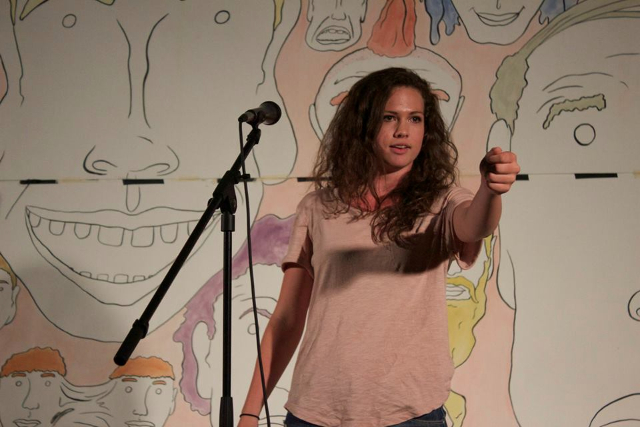
Spoken word poetry revamped in Davis

0

SickSpits has long been the go-to event for spoken word open mics

on campus. This year the staff has implemented bimonthly open mics and

is offering workshops for those interested in practicing and refining their

craft.

Yousef Buzayan, a fourth year majoring in international agriculture

development and managerial economics, has been a part of the collective

since the end of his second year at UC Davis.

“SickSpits has always put on a general open mic, so anyone who

wants to perform comedy, play the guitar, drums – whatever – is welcome,”

Buzayan said. “[SickSpits] is also a poetry collective, and we perform both

at the open mics, as well as in the community at high school, events on

campus, conferences [or] anywhere people need performers.”

The collective used to host open mics once a month. The move to a

twice-a-month schedule is intended to improve both the sense of

community and each individual’s poetic and performing skill, according to

SickSpits member and second-year English major Iris Bloomfield.

“The monthly open mic seemed too sparse. There weren’t enough

opportunities for people to come together and perform or be in that

space. The idea with the [twice-a-month] schedule is to give people more

impetus to write and perform, and it creates a more frequent space for the

community to grow,” Bloomfield said.

Jacob Siegler, a second year international agricultural development

major, said that the community at SickSpits sets itself apart from other

poetry collectives he has encountered in the past.

“[SickSpits] is different in the sense of community. It’s nice to have an

intimate group that you’re writing [and] administering with, and to then have

a larger Davis family that comes to the Sickspits events and supports you,”

Siegler said.

Last year the team began offering a general poetry workshop. This

year the group continues to expand its critiquing and collaborative space by

offering a second workshop.

“We have our general spoken word workshop and our new freestyling

workshop,” Buzayan said. “[Instructor] Tanya Azari has a background in

formal and structured poetry, and I come from a more hip hop, rapping

background.”

The balance of structured and freestyle workshops gives prospective

poets an idea of the different kinds of poetic styles they can perform in.

“In the freestyle workshops we will be cyphering and offering

exercises that [cater] to all talent levels,” Buzayan said.

Cyphering is rapping without any official structure or pre-planning,

and focuses on linking verses together spontaneously while in a group

setting.

“One person will freestyle, pass it to the left and so on. We didn’t

want it to be [just cyphering], because freestyling is a difficult thing to

get into if you are a newcomer,” Buzayan said. “I know back when I was

starting out, you would have these people who were really, really good at it,

and as a newcomer it’s intimidating. There’s a learning curve that’s hard to

get over.”

In response to the learning curve, the team plans to offer exercises

that level the playing field.

“We want to expand on [cyphering], offer some games: rhyming in a

circle, storytelling on similar topics in 30-second bouts per person, seeing

where a person’s mind is going. It’s something everyone can do, and it’s a

good way of getting your brain active. After that, whoever wants to freestyle

will go. Freestyling in a cypher setting requires open-mindedness and being

comfortable with all talent levels,” Buzayan said.

For the spoken word workshops, the structure is much more formal.

Instead of speaking immediately and without a filter, poets are given a bit of

time to develop and practice their technique.

“The way that it goes is that Tanya will announce what we’re going to

write for the day. The topic at the last one I went to was about your favorite

superhero and [some of the poems that were produced after just a few

minutes of writing] blew my mind,” Buzayan said.

In addition to fostering the practice of writing and presenting, the

workshops and open mics also provide a safe critiquing setting in which

poets can share pieces they are working on and receive feedback.

“After the [last] open mic, my friends came out and seven or eight

people that I didn’t know came up to me and said ‘Oh, I loved your poem’

[and] ‘You did a great job,’” Siegler said. “It’s so great to become part of a

smaller community at Davis.”

Open mics are every first and third Wednesday of the month in

the Technocultural Culture Studies Building (Art Annex) at 7 p.m. The

spoken word workshop will be held on Fridays from 1 to 2 p.m. Freestyling

workshops will take place on Mondays in the Shields Library courtyard at 7

pm. For more information, visit the SickSpits Facebook group.

Photo courtesy Tanya Azari

Aggie Style Watch

0

fashion_ar_Haq


fashion_ar_Haq2fashion_ar_Haq1


We often think that fashion interferes with being comfortable and that

a choice has to be made between relaxation and style. This is not the case

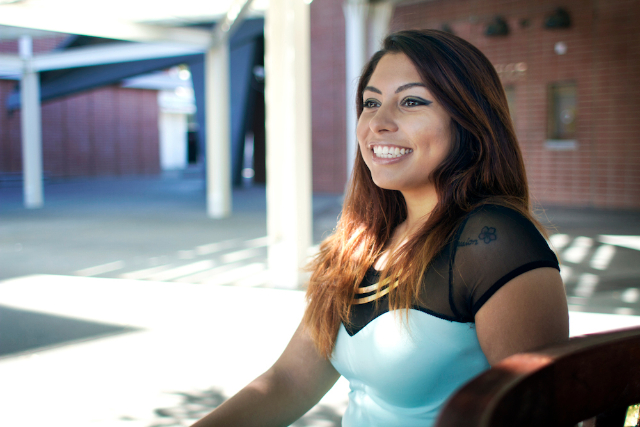
for religious studies and history double major senior Diana Self. In her

years at UC Davis, Self developed a style identity that juxtaposes edgy

tattoos and piercings with au courant, romantic clothing.

She manages to juggle fashion trends by shopping at inexpensive

retailers. By choosing vogue pieces she knows will be comfortable and

work well on her body, she can maintain a balance between personal

identity, trends and comfort. Aggie Style Watch (ASW) spoke with Self to

find out how she incorporates fashion into her everyday life.

ASW: What did you choose to wear today, knowing you would be

photographed for The California Aggie?

Self: I love these boots, and I chose the peplum top. I just got into peplum

tops. I thought they wouldn’t look good on me because of my hips, but I

think they look good on everyone; they really flow with the curve of the

ASW: How would you describe your personal style?

Self: I try to dress for the seasons. I like a lot of things, but they have to

look good on me.

ASW: How has your personal style changed over the years?

Self: In high school I had to wear a uniform, so all my other clothes were

lazying-around-the-house clothes. It wasn’t until college that I picked up a

sense of style.

ASW: What do you feel your tattoos and piercings say about you and

your personal style identity?

Self: [I feel like they make me] more unique [than some other people with

tattoos because] there are some girly elements [to them]. The tattoos add

edge and sassiness [to my overall style].

ASW: What is your favorite item in your wardrobe?

Self: An off-white wool cardigan with a layered front.

ASW: Do you have a favorite trend in the last year?

Self: Oxblood color. I bought boots, sweaters and sunglasses [in the color].

I love [it].

ASW: How do you compare your personal style to the fashion choices

of other UC Davis students?

Self: [I would say I am] a lot more dressy than many other people that

come to class. Students tell me, “Oh, you’re so dressed up!” and I

say, “You haven’t seen anything yet.” I’m just not one to walk around

unless I feel comfortable in my clothes. Being comfortable is [not only]

about not being restricted, but also about feeling that you look good and not

having to constantly worrying about how you look.

ASW: How has the heatwave in Davis been affecting your style

choices?

Self: [Sadly] I can’t dress for fall yet, so I’ve been wearing [a lot of] dresses

for this summer weather.

ASW: How big of a role does fashion and clothing play in your life?

Self: Fashion plays a huge role in my life. It’s just something I really enjoy.

Photos by Shazib Haq

Science is serendipitous

0

“Coming together is a beginning; keeping together is progress; working together is

success.” – Henry Ford

This may sound weird, but you know when you’re lying in bed too excited or too stressed

to sleep, and you just stare at the ceiling and think? I do that almost every night, except I’m not

thinking about a project, test or even that pizza I’m going to get tomorrow — I’ve got science

on my mind. I get excited thinking about projects that aim to cure diseases or help a poor

community gain access to clean water. I once spent an entire night thinking about a research

paper that addressed researchers’ hopes to grow back limbs we have lost (search HOX genes

and regenerative medicine).

During one of these late night sessions, I wondered what kinds of methods were being

used to help people who have lost their sight. One scenario that came to mind was the X-
Men character Cyclops and the pair of shades he wears on his head to see and shoot lasers.

I wondered, can there be a device like his shades that allows blind people to see? It turns

out there already is. The U.S. Department of Energy started working on the Artificial Retina

Project in 2002 to help restore sight to those with debilitating eye diseases. The concept they

used resembles what powers Cyclops’ glasses, and they created a device that allows users to

effectively “see.”

The Department of Energy reported that federal funding for this project ended in 2011.

In the nine years the project was funded, the Department produced three iterations of the

device which was life-altering to those who received them. The device, a pair of sunglasses,

has cameras that captures what’s in front of the user and sends that information wirelessly to

a processor. The processor then sends electric signals to a small thin pad on the retina of the

user’s eye and allows the user to see what the glasses are seeing.

Perhaps most importantly, the project required the interest and teamwork of many

different disciplines. The department had labs, universities, individuals, private industries and

more working on it. Scientists from a wide breadth of fields, including engineering, chemistry,

szphysics, biology (bio and physics together?!), and psychology, combined their expertise and

created this revolutionary device.

Because funding ended in 2011, the future of expanding the artificial retina project is

with my generation — us students. As we pursue our education, we must be reminded of the

many reasons we are here. We have a chance to enact real change for millions of lives, and this

retina project is one of the many examples we can leap into. Who better to enhance this than

students like ourselves?

I applaud our university and the many achievements it has made in the areas of science,

technology and health. I believe we can do better. One thing that has always driven me up

the wall about large universities is the disconnect people might feel from areas outside of their

discipline. Since research universities like UC Davis are so large, many undergraduates tend to

stick to their own area of study. The retina project brought scientists from many fields together

— working under one “roof” so to speak, and sharing ideas as well as teaching others. As the

task of expanding on the retina project and spearheading like-minded ideas has been given to

our generation, why don’t we create a unified effort within our university to make these projects

Cue the “One World, One UC Davis” mantra.

I’m talking about an ongoing research opportunity — run by our university students

— that brings folks from different disciplines together to contribute to solving problems. By

combining the power of our faculty with the unique and inquisitive minds of our students, we can

approach a problem and work as one family. I don’t mind if we don’t solve it — just creating a

hands-on, team approach would tell our student body that great ideas can be collaborative and

use each others’ skills to solve problems.

The artificial retina project brought a team from different backgrounds to produce a life-
changing result. While the product is amazing and its benefits are important to learn about, the

collaborative effort in which this project was conducted had me thinking,

One World, One UC Davis — let’s work on making that a reality.

Want to discuss what projects you think about in bed (I swear I’m not creepy)? Shoot

UMAYR SUFI an email at uwsufi@ucdavis.edu or tweet him @umsufi.

Crafting Gemeinschaft

0

This is my first year living in a house in Davis and I was really excited

— not because of the amount of leaves I get to rake, but because of the

invitation I found on my door to my neighborhood’s block party. The Ninth

Davis Neighbors’ Night Out (DNNO) took place on Sunday, and organizers

set the aim of breaking the Guinness World Record for “Most

Neighborhood Potlucks On the Same Day.”

DNNO is part of the City of Davis’s Good Neighbor Initiative, which

was created to promote understanding and effective communication

between neighbors. The way DNNO works is that multiple people sign

up as “party sponsors” who are in charge of sending out invitations to the

event or have the option of getting invitations directly from the city. When

I went out to my neighborhood’s block party and met our party sponsor,

Susan, she said that it was her second year as a sponsor. The neighbors

each pitched in by bringing a dish and their lawn chairs, thereby making the

workload more manageable for her. The only thing that troubled Susan was

wondering how she was going to finish all the leftover food.

The City of Davis highlights that DNNO is important because there

are 64,000 residents living in nine square miles; however, I think that every

city could benefit from a mass neighborhood block party, regardless of its

Another way to build relationships with those living near you is

through social media. A social network that has the potential to change the

way people gather is Nextdoor.com, which is essentially a social network

for neighborhoods. The City of Davis promotes this site on the infographics

they provide about the Good Neighbor Initiative. Curious to see if my

neighborhood had a “profile,” I created an account on Nextdoor.com and

found one for Central Davis. Although I am still waiting to be verified via

mail (see, it’s secure) I already found listings about the need for a

babysitter and a potential car break-in. It’s like the neighborhood crime

watch group you never had. Also, the fact that I could potentially find a job

(and a job on the very street I live on, no less) is amazing. Normally, when I

use babysitting sites, they require me to bike long distances in the wee

hours of the morning; therefore the locality of these postings is appreciated.

I could personally find Nextdoor.com useful because it might lead

to me meeting more people on my block than the actual block party

established by DNNO. The turnout for my personal neighborhood was

15 people and I know there were a few faces missing (like my neighbors

that play music loud at night – hey, it’s OK, no hard feelings – I wanted to

get to know you too). Some possible ways to encourage greater turnout

is using rewards as an incentive and establishing more of a face-to-face

connection when passing out invitations. It’s a big step in itself to have a

night like this, and one of the many reasons I feel blessed to go to school

in Davis; however I am looking forward to seeing DNNO’s awareness

and attendance grow, and possibly be promoted through websites like

Nextdoor.com.

To get her spinach dip recipe or to find out how to win the hearts of your

own neighbors you can email NICOLE NELSON at nsnelson@ucdavis.edu.

Religious Studies Department hosts weekly tea event

0

religioustea_Fe_LinEvery Tuesday afternoon in the Walen Lai Library on the seventh floor of Sproul, the tallest

building on campus, the Department of Religious Studies holds a small gathering complete with

tea, biscuits and conversation.

Originally started ten years ago by religious studies Professor and Department Chair Naomi

Reshotko, the Tea Meeting has since grown to accommodate regular and new drop-in students

and professors on a weekly basis in Sproul Hall.

“It’s a common tradition to have time set aside in the afternoon for tea,” Janowitz said. “There

is no limit to the time you spend working while being a student or a faculty member, so this is a

way to break away from that dilemma.”

Though the tea events are open to all, most of the attendees are affiliated with the Religious

Studies Department. The goal is to create a dialogue between professors, faculty members and

undergraduates within the major’s department.

“You don’t meet people in classes normally, you probably meet people in the dorms, or as

roommates, or if you are a member of a club,” said Director of Middle East/South Asia Studies

(ME/SA) program Baki Tezcan. “There is really no opportunity to meet fellow students in an

environment that is related to the university in an educational setting.”

According to Janowitz, many students have a hard time carving out time to meeting faculty,

and when they do, they feel intimidated by attending office hours just to chat. The tea meetings

provide a low pressure environment for students to engage with professors without feeling like

they have to talk about something school-related. Janowitz said that students who engage more

with professors are generally more connected to campus life.


In a laid back and relaxed environment conducive to discussion, the Tea Meeting hosts

anywhere from five to 30 people each week over tea and baked goods. Tezcan said topics

discussed during teatime vary from California politics to daily issues and general questions

pertaining to religious studies courses.

“I think it could be thought of an opportunity to network, but that was not necessarily what

we had thought of [initially],” Tezcan said. “We thought it would be good to meet faculty and

students. If people who aren’t in the major decide to join Religious Studies, we would be very

happy.”

UC Davis Religious Studies alum, and last year’s Tea Server for the event, Francisco Ortega,

said the tea event was one of the best parts of the Religious Studies Department.

“The meetings allow students to really get to know their instructors and meet other instructors in

their major,” Ortega said.

Although the Tea Server position is funded by the Religious Department, other aspects, such as

the tea being served and the handing out of books, are provided by departmnetal faculty.

Ortega was inspired to attend the meetings after taking a Religious Studies course taught by

Janowitz, who encouraged her students to attend. Since joining, Ortega spent three of his years

in UC Davis as an attendee and his last year as a server, rarely missing a meeting.

“I participated more when I was not the host back in my freshman through junior years,” Ortega

said. “Keeping the tea brewing, cutting and serving pastries and serving all the attendees keep

me busy so in these last few years of serving that I have not been able to discuss topics as

much.”

Tezcan said that faculty members also benefit from the tea meetings, as it is an opportunity to

meet with people part of the Religious Studies Department.

“I’m fifty percent in history and fifty percent in Religious Studies. The university doesn’t give

more than one office, so I’m stuck in one office,” Tezcan said. “The only time I see my faculty

colleagues is during department meetings. Tea gives me a chance to see people.”


The Religious Studies Department is one of the few that holds meetings for everyone in the

department, but Tezcan hopes that more departments will participate to bolster students-to-
faculty and faculty-to-faculty communication. While some other universities receive grants for

holding similar events, UC Davis does not, and it is up to the department to come up with the

money, meeting space and faculty to run the event.


Tezcan cites Janowitz as the driving force behind the meetings. He said that since UC Davis

is a research-oriented university, professors have a hard time balancing student needs and

research, but Janowitz often puts much thought into engaging students.

“In that sense, it’s not unusual thing that such a thing is in the Religious Studies Department.”

Tezcan said. “It is to her credit.”

Photo by Katie Lin.

California statewide Plastic Bag Ban passes Sept. 30

On Sept. 30, Governor Jerry Brown signed Senate Bill 270, a statewide ban in line with Davis City ordinance 2422, which went into effect July and banned all single-use plastic bags in the city.

Many cities and towns throughout the state had been switching over to this “waste-free” model before SB 270 was signed. Now California will be the first in the country with a statewide ban on single-use plastic bags — “[the] first step, in a series of many” to clean up our environment, said Emily Kowalski, the CalPIRG campus organizer at UC Davis.

“We were pretty excited. When we first started this [CalPIRG] campaign we tried to pass a statewide bill and were unsuccessful, really because there hadn’t been that discussion on bag bans yet, locally,” she said.

Kowalski believes thorough circulation of knowledge on the benefits of a bag ban was missing from California towns. Additionally, she believes that the bag ban is not the end of the state’s environmental concerns.

Along with almost completely removing these “non-reusable” plastic take-out bags, stores have been required to charge a minimum 10-cent fee for recycled paper bags. The 10 cents fee serves as an incentive for customers to stop using any resources, paper or plastic, according to Davis City mayor Dan Wolk.

Critics are concerned with where the money will be going. Due to the bag fee critics say that grocers are making extra income and neglecting to lower prices in accordance to increased revenue. In a Capital Public Radio report featuring Cathy Brown, manager of Crown Poly, the ban was criticized, citing  the sudden change in large grocers’ support for the bill was manipulated by the extra revenue that the bag ban would bring in. The charge goes directly into the grocer’s pockets and in doing so creates an incentive for these companies to jump on board with the bill.

Mark Murray, an advocate for Californians Against Waste, believes having to pay 10 cents per bag is not enough of an issue to prevent residents from supporting the statewide ban.

“You’ve always been paying that 10 cents for bags, it’s just been hidden in the price of your groceries,” Murray said.

However, asking consumers if they require a bag for 10 cents, creates a sort of dialogue that requires the consumer to think about the necessity of using a bag, or lack thereof. In reality, the mandatory charge for paper bags could be an important step in educating California residents on reducing or completely eliminating unnecessary waste.

Critics also say that if the 10-cent cost is not a cause for alarm, maybe the massive loss of jobs is. Five of the major single-use plastic bag producing companies, including Crown Poly, are local to California. According to Brown, that’s hundreds of jobs on the line that are not only being removed from California, but are being taken overseas. Brown points out that the replacement bags would be “polypropylene bags that are [primarily] manufactured in China.”

“We are using public policy,” Brown said, “to hurt California and U.S. manufacturing in favor of jobs and product being made and imported to the U.S. from overseas.”

Wolk believes those fears are rational. Though the bag ban comes with many pros, unfortunately one of its largest cons is the potential loss of jobs it will cause. There are several large supermarket packaging system corporations in California that may suffer from the reduction in single-use plastic bag sales.

“Sometimes with these kinds of steps, there is friction [and] you have to make a tradeoff,” Wolk said.

He agrees that while this isn’t ideal, conserving the environment is critical. In addition to this, he believes that even though the loss of jobs is unfortunate, the values that the Bag Ban is working for trumps the jobs aspect.

The environment seems to hold priority over the loss of several businesses who, as Murray pointed out, are actually hiring. Rather than losing business, most of these plastic manufacturers have begun working on recycled materials and reusable bags, making new jobs rather than removing them.

Kowalski sees SB 270 as a small first step, perhaps the first of many that will open up a dialogue and educate California’s residents on cleaning up our state.


Gov. Brown signs bill to prevent sexual assault, rape on college campuses

0

Governor Jerry Brown signed Senate Bill 967, nationally known as the Yes Means Yes bill, into action Sept. 28. The Yes Means Yes bill aims to provide support for victims of sexual abuse on college campuses by requiring institutions of higher education in California to define affirmative consent as a verbal “yes” rather than the absence of a verbal “no.” Additionally, the bill mandates that universities educate their student bodies on consent and sexual assault in order to prevent perpetrator ignorance.

“Our sisters, our daughters, our nieces — every woman deserves the right to pursue the dream of higher education without being threatened by the nightmare of violence and sexual abuse,” Senator Kevin de Leon (D-Los Angeles), author of SB 967, said in a press release.

Additionally, the bill provides multiple resources funded by the state which victims can utilize to aid in the legal processing of reporting, investigating and closing cases.

“It takes a lot of strength to report in the first place, and having to deal with an administrator that doesn’t understand the whole situation is very difficult. [SB 967] puts pressure on the universities to have administrators and programs available so that [victims] have other resources to go to if one isn’t giving them what they want,” said Sarah Yang, former president and co-founder of the Women’s Health Initiative at UC Davis.

This bill does not implement a transfer of power between the victim and the perpetrator according to Yang; it aims to give victims a fighting chance.

“It gives the universities more incentive and pressure to find more evidence where there is none,” Yang said.

Ivon Garcia, ASUCD Commission Chair for the Gender and Sexuality Commission, said that women who felt unsafe saying no are now given validation with this new definition.

“The bill goes forward from the notion that consent is based on the absence of a ‘no’; for this reason I think the bill encourages students to maintain communication with their sexual partner(s) throughout all stages of sexual activity,” Garcia said.

Additionally, Garcia said that this bill now erases miscommunication as an excuse for sexual assault and fosters an environment for victims that felt unsafe reporting their cases.

Harry Crouch, the president of the National Coalition for Men, feels that this bill will contribute to wrongful convictions of males due to false accusations and lead to trials based on “he said, she said” discourses.

He also believes that this law interferes with due process and that the legal process, before SB 967, already favored the victims.

Crouch feels that the previous definition of consent, as “no means no,” was sufficient and did not need to be changed.

Yang said that victims are often too afraid to verbally say no, and SB 967 protects those victims that fall into this category. The law’s new definition of consent also clarifies the obscurity created by drugs and alcohol.

As far as changes specific to the UC Davis, Yang hopes that the bill will encourage officers on campus to work more actively toward victim advocacy. She expressed her disappointment with the Title IX officer on campus for being unhelpful in this capacity and said that they are neither working nor taking recommendations from the California Coalition Against Sexual Assault.

“The Title IX officer doesn’t really have their mind set on making changes or connecting with other networks,” Yang said.

The point of this bill, as Yang sees it, is to create resources and avenues for victims to pursue their cases.

Garcia said that they hope that this bill will increase discussion among the student body.

“There will be new ideas shared across campus about consent that may translate to a stronger community effort against sexual assault and rape,” Garcia said.

School health officials push for UC Davis students to take vaccines more seriously

Many students do not realize that a bad case of measles can cause pneumonia, brain damage and death, or that complications from mumps can lead to pancreatitis, meningitis and hearing loss. Before vaccines became available, whooping cough caused thousands of deaths in the United States every year. By the year 2000, the Center for Disease Control had deemed that each of these illnesses had been eliminated, controlled or vaccine-preventable, yet in the last five years they have all infiltrated University of California (UC) campuses.

Most Americans living in the 21st century have never experienced the devastation that can result from measles, whooping cough and mumps. According to some experts, this lack of experience might be one reason why Americans are not prioritizing vaccinations and why vaccination rates in some parts of the country are declining. Dr. Thomas Ferguson, medical director of the UC Davis Student Health Center, wants to make sure vaccination rates at UC Davis remain high.

New vaccine requirements coming to UC Davis

Ferguson is one of several leaders of the UC Systemwide Immunization Policy Work Group, a committee dedicated to creating consistent vaccination and screening requirements across the UCs that would comply with those recommended by the California Department of Health (CDH) and the American College Health Association (ACHA). The committee hopes to implement these new requirements by Fall 2016.

UC Berkeley, UCLA and UC Davis will pilot the regulations determined appropriate by the committee as a soft mandate, meaning that students will be able to petition to waive the requirements in the cases of religious restrictions or medical cause.

While the only vaccination requirement for students entering UC Davis is compliance with the California state law which mandates hepatitis B inoculation for students under 18, the California Department of Public Health recommends that university students should be vaccinated for the measles, mumps, rubella, chickenpox, tetanus, diphtheria, pertussis (whooping cough), meningococcal meningitis and hepatitis B before coming to school.

Do students need vaccinations?

According to Ferguson, ensuring a high rate of immunizations on UC campuses is critical to the health and well-being of UC students. He said that there have been several incidences of the measles on various UC campuses in recent years, including one at UC Davis this past spring.

“At UC Davis we have had mumps,” Ferguson said. “We see chickenpox every year. We have had pertussis. Those are all preventable by vaccinations.”

In 2011, a mumps outbreak at UC Berkeley infected an estimated 29 students, and a deadly strain of meningitis infected at least four students at UC Santa Barbara (UCSB) during the 2013 school year. In response to both the Berkeley and UCSB outbreaks, campus health services implemented massive rapid vaccination plans to stop the spread of disease.

And although the flu may seem less threatening than some of these other infectious diseases, Ferguson would also like to encourage students to receive a vaccination for it as well.

“Flu can devastate a student’s quarter,” Ferguson said. “They just feel horrible for two to three days. If that’s right before finals, it can really hurt their academic performance. So this is the time of year to come on in for flu [vaccination], before the quarter gets going.”

Has UC Davis lost its “community immunity?”

Ingrid Chu is one of many students at UC Davis who will elect not to get a flu shot this year. Chu says that she has received the flu vaccine in the past and still caught the flu.

“I don’t see a huge benefit,” she said. “Whether you get it or not is just up to chance.”

However, Dr. Dean Blumberg, an associate professor of Pediatric Infectious Diseases at UC Davis and chief of the Division of Infectious Diseases at the UC Davis Children’s Hospital, has seen both healthy children and young adults die from complications of the flu and explained that students like Chu may be discrediting vaccines without fully understanding how vaccines work to confer protection. Blumberg said that vaccines should be thought of like seat belts in a car. According to Blumberg, they can never be 100 percent effective, but still do a very good job in protecting users from harm — and the true effectiveness of vaccines at protecting individuals comes from halting the spread of disease within a community.

“Ideally you’d have a high enough level of immunity in a population that if a disease got introduced there would be very limited transmission because more people are vaccinated and would be protected,” Blumberg said. “And for different diseases, that level of immunity varies. If the level drops below a certain point then you can have sustained transmission of the pathogen.”

When a community is above that level, according to Blumberg, it is said to have “herd immunity,” and even members who cannot be vaccinated because they are too young or sick are thought to be protected from the diseases by the immunity of the group.

“So for example, with measles, it’s believed that if you can vaccinate 95 percent of the population with a vaccine that’s about 95 percent effective, then you have over 90 percent of the people who are protected and immune,” Blumberg said. “And that level of immunity, considering the dynamics of transmission of measles, likely means that if measles is introduced you get very limited transmission. If you get decreased levels of vaccination – decreased levels of immunity – then you introduce measles into the community, you have sustained transmission.”

The flu vaccine might not be the only recommended immunization that students are opting out of. According to a health survey administered to UC Davis students by Student Health and Counseling Services, the student population at UC Davis might be well under the levels thought to confer “herd immunity.” Of the students surveyed, 78.6 percent reported receiving a vaccination against hepatitis B; 65.2 percent reported receiving the measles, mumps and rubella vaccine; and only 53.8 percent reported being vaccinated for meningococcal meningitis, an illness for which freshmen living in dorms are at highest risk and which caused Amy Purdy, a world champion paralympic snowboarder, to lose both her legs at 19, along with her kidney and spleen.

Although these rates may seem low, lower vaccination rates have been reported in some areas of the U.S. Blumberg said that while some U.S. schools report 100 percent vaccination rates among their students, other schools have rates lower than 50 percent.

Blumberg cites anti-establishment ideals, inconvenience and concerns about vaccine safety as reasons that individuals decline vaccines for their children and for themselves. One particular health concern promulgated by a study published by British researcher Andrew Wakefield in 1998 was that vaccines in young children might cause autism. However, Blumberg explained that it is no longer considered a valid concern by the scientific community.

“The original study that made the suggestion that vaccines cause autism — that’s since been discredited,” Blumberg said. “The person who made the study – the lead author – was found to have lied and lost [his] medical license. But it did create a lot of concern. Since then, there have been 10 very well-done studies with different methods involving millions of children and there is no scientific evidence that vaccines are associated with autism.”

UC Davis health officials take steps to make vaccine information available

One way that Blumberg has worked to combat lower vaccination rates among grade-school children was by helping to add a new clinic to the UC Davis Children’s Hospital this past January. The clinic provides information and counseling to parents considering declining vaccinations for their children.

The clinic was established in response to a new California law that requires parents who do not wish to vaccinate their children to have a documented conversation with a physician on the topic. Although the ultimate decision remains up to the parents, this dialogue ensures that parents have the most recent and accurate medical information to help them make their choice.

Additionally, to help students stay up-to-date on their vaccinations, the UC Davis Student Health Center is encouraging students to utilize a new tool on the UC Davis Health-e-Messaging website. The site now has a tracker that allows students and doctors to record their vaccinations online. This tracker currently allows doctors to advise students on their vaccination needs and can streamline screening for students working in health-related internships. In the future, Ferguson plans to use this system to document required vaccinations for incoming students. Students can ask their current and previous doctors to help them access their vaccination records and complete the tracker.

Ferguson said that it’s never too late to be vaccinated and encourages any students who may not be up-to-date on their immunizations to take advantage of resources at the Student Health Center in order to make informed decisions.

“Any student can come to discuss [the topic] if they want more information,” Ferguson said. “We’re experienced at that.  We’re not going to judge you. We’re happy to talk with you about this. This is open.”


Bacteria talk — you’ll like what they say

0

As humans, when we need to get things done, we talk. We see our way of communication as special and only available to us. Well, it may be true in some instances, but communication is available to all living things around us, and even living things that are inside of us.

Bacteria are present in you and on you in a huge way. According to an Anaerobe science journal study done on our “gut” flora, we have approximately 10 times as many bacterial cells in us or on us compared to human cells at any given time. When someone mentions bacteria, we like to think about the evil (pathogenic) bacteria that harm us. Before you start engulfing yourself with antibacterial spray, these bacteria on us are harmless or even beneficial to our body.

Am I telling you that these colonies of bacteria can actually be good for you? In a sense, yes! Bacteria help you digest your food, keep your stomach feeling just right and cover your skin with an extra protective layer. They have to have some way of doing all of this — and the way they do it is through talking. Bacteria talk to each other and are able to amplify their effect on the environment. Even though these good bacteria communicate to help you, bad bacteria can also communicate to harm you. The trick is finding a way to manipulate this communication to get rid of the bad bacteria and even help the good bacteria work better.

The drug industry’s current solution of antibiotics that kill bacteria (good and bad) is not helpful. Understanding how bacteria communicate is essential to creating a better way to combating bacteria. Professor Bonnie Bassler of Princeton University wrote a paper published in the Annual Review of Cell and Developmental Biology, and I looked into her research for a solution.

The mechanism of how bacteria communicate is termed quorum sensing. Quorum-sensing bacteria have the ability to produce and release chemicals to recognize similar and different bacteria in their vicinity. Instead of one bacterium acting alone, the community of bacteria use this quorum-sensing ability to produce a large response or action. Imagine 100 Billy Mays selling you OxiClean — that’s some powerful quorum sensing. Professor Bassler also found that bacteria can use this sensing not just to talk, but to talk to other species of bacteria around it, and even disrupt the negative communication between bacteria.

This look at the quorum-sensing ability can produce big benefits. Consider the benefits of therapies and drugs if they were manufactured around suppressing or enhancing quorum sensing. Many of us have a notion that antibiotics could simply do the trick; however, antibiotics target bacteria by a simple “kill all” system. This system does not work most of the time, as bacteria evolve quickly (probably in the same amount of time it took you to finish this sentence), causing antibiotics to become ineffective. The quorum-sensing effect holds more value because of its ability to disrupt the communication of the bacteria, rendering their actions useless. It also gives us the ability to zero in on what type of bacteria we want to target, so there are no friendly casualties to bacteria that help us!

Professor Bassler explored game-changing properties of bacteria that I think research universities should further fund and explore. Funding further quorum sensing research would change the medical industry for the better. Simplifying antibiotics to target bacterial communication could eliminate the need for antibiotics that you would have to take several times to get better. What I hope we see in the near future is an antibiotic that walks the walk and talks the talk — I guess I should say “ends the talk,” but you know what I mean.

If you want to discuss how bacteria changed your life with UMAYR SUFI email him at uwsufi@ucdavis.edu or send a tweet his way @umsufi.


Campus makes room for growing student population

1

2020initiative

As outlined in the 2020 Initiative spearheaded by Chancellor Linda P.B. Katehi last year, there will be a 5,000-student increase in the undergraduate student body on-campus by the year 2020.

Many campus organizations, including the Student Housing Administration, must now find ways to accommodate a larger population and ensure that this growth does not put a strain on the campus’ resources and facilities.

The 5,000-student figure includes new in-state, out-of-state and exchange students. According to the UC Davis News Service, the population increase will garner a total revenue of $38 million to $50 million a year.

“I believe the 2020 initiative and the increased number of California, national and international students living in the residence halls will continue to provide a rich and vibrant community of first-year students living on campus,” Ramona Hernandez, Director of Business Services in the Student Housing Administration, said in an email interview.

According to Hernandez, in order to house incoming students, an additional 150 triple rooms were added to the Tercero North area, allowing for a total of 371 more students to live in the residence halls. The additional space in Tercero has allowed for Primero Grove apartments, which previously housed first-year students, to open up for new, incoming transfers who were also accepted as a part of the 2020 Initiative.

“Student Housing will continue to provide a high-quality residential living experience … while continuing to meet our first-year housing guarantee,” Hernandez said.

Additional changes to the Tercero area include an 800-seat expansion in the dining commons and new mealtime choices, including barbecue and food truck options alternating Monday through Thursday.

First-year biomedical engineering student and Tercero resident Christian Guevara said that, so far, the additional students haven’t been too much of an issue.

“The dorms aren’t extremely crowded,” Guevara said. “It feels really homey.”

For another Tercero resident, first-year animal biology major Christine Cavarlez, it is sometimes harder to find seats during some mealtimes, although she sees a benefit to the inconvenience.

“Sometimes you have to sit with other people you don’t really know, but then you get to socialize more,” Cavarlez said.

In addition to the residence halls, the Activities and Recreation Center will also be undergoing expansion to accommodate the influx of people.

Laura Hall, Director of Recreation at Campus Recreation and Unions, said that the expansion was already planned, but the 2020 Initiative added more pressure for it to happen.

“We have existing pressures on the facility, especially within the Fitness Room,” Hall said. “We are also preparing ourselves for the influx of new students as outlined in the 2020 Initiative.”

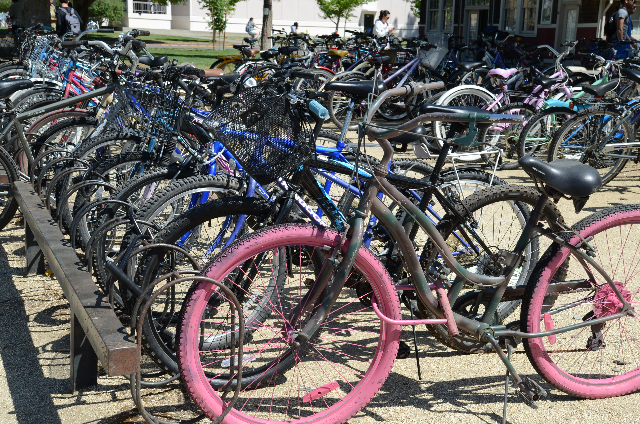
Additionally, 734 new bike parking spots have also opened up near the ARC this year as well. David Takemoto-Weerts, the Bicycle Program Coordinator at Transportation & Parking Services (TAPS), said additional spaces were added to accommodate students who are taking courses in the ARC’s Multi-Activity Center, which now houses all classes that were previously taught in Freeborn Hall. Takemoto-Weerts said that a new lecture hall, similar to Rock Hall, is also in the works. He said that the biggest issue for TAPS involves finding space for the additional bike racks. New space that is created for racks usually has to be created by thinning out the campus lawns.

Whether TAPS will be installing additional bike parking is undecided.

As 2020 approaches and more campus departments begin to prepare for changes, Hernandez said that the priority is that new students should feel comfortable on campus.

“Students who live on campus have been shown to be more successful academically and we are happy that additional students will enjoy this success,” he said.

Photos by The Aggie

Celebration of Life Festival to be held in Davis cemetery

0

lifeconcert_ar

The Celebration of Life Concert and Art Festival is the perfect opportunity to immerse one’s self in something larger than the pursuits of academia. This upcoming event is meant to be a reminder that life is special, and it needs to be lived to the fullest.

The sixth annual Celebration of Life Concert and Art Festival will take place on Sunday at Gallery 1855 in the Davis Cemetery District. This is a free event that people of all ages and backgrounds can enjoy. There will be special music performances by Bob Bralove accompanied by his music ensemble, poetry readings by Davis poet laureate Dr. Andy Jones, and a non-juried art show.

Bralove is a keyboardist, lyricist, composer and member of a quartet called the Psychedelic Cabaret. Bralove expressed his positive feelings towards the event taking place in the Davis Cemetery District.

“It couldn’t be more appropriate to hold an event like this in a cemetery,” Bralove said. “We will be playing about half original music and half classic covers […] [and we] really [want to be] present in [our music] and convey the immediacy of the moment through improvisation.”

The event will also offer the opportunity to listen to Dr. Andy Jones read some of his most recent poetic work. Jones shared that he will read poetry that finds inspiration in things that are “unsure, complex and nuanced in life.” He will also read from his latest book, Where’s Jukie?, which he co-wrote with his wife Kate Duren.

“[My work can be] heart-wrenching and very moving at times,” Jones said. “[I aim to incorporate] points of view from different characters and play with dynamic language, hyperbole and humor [in my work].”

The event will also have a non-juried art show, featuring a variety of mixed media artwork by local artists.

Kristi Dvorak, community outreach coordinator of the Celebration of Life Concert and Art Festival, commented that there will be “watercolors, photography and collages that depict life in Yolo county.” This is an opportunity to see artistic narratives of how locals live, thrive and handle life’s challenges.

The non-juried art show will be open and free to the public throughout the month of October.

“This enriching cultural event is a chance to be with our neighbors, and it is something we can all enjoy and experience,” Dvorak said.

The free Celebration of Life Concert and Art Festival will be from 1 to 4 p.m. at Gallery 1855 (820 Pole Line Road, Davis, California).

Photo by Dr. Andy Jones

lifeconcert_ar_1


AggieAngelous

0

THEPOETRY-THEPOETS&THEPOETESSES


THEPOETRY

#TheRevolutionWillNotBeHashtagged

By Camille Woods

the revolution will not have a mixtape

the revolution will not be tweeted

the revolution will not be on Beyonce’s world tour

the revolution will not be on your Facebook newsfeed

the revolution will not be hosted by Oprah

the revolution will not be on BET

the revolution will not be the next black president

the revolution will not “Turn down for what”

the revolution will not be on Drake’s next album

the revolution will not sold at Forever 21

the revolution will not be 50 percent off

the revolution will not “Eat Fresh”

the revolution will not just do it

the revolution will not come with a side of fries

the revolution will not create Metaworld Peace

the revolution will not be on Lebron’s jersey

the revolution will not be on Kim Kardashian’s Sex Tape

the revolution will not be “Brought to you by Sprite”

the revolution will not roll back prices

the revolution will not give free samples

the revolution will not be on #TeamEdward or #TeamJacob

the revolution will not be purchased at your local grocery store

the revolution will not save you 15% or more on car insurance

the revolution will not “have an app for that”

the revolution will not live in a pineapple under the sea

the revolution will not “get the London look”

the revolution will not say “maybe she’s born with it”

the revolution will not be in a theater near you

the revolution will not get a Grammy, Emmy, or a Golden Globe

the revolution will not be the happiest place on earth

the revolution will not find nemo

#TheRevolutionWillNotBeHashtagged

#WillNotBeHashtagged

#WillNotBeHashtagged


THEPOETS&THEPOETESSES

Picture 5
#TheRevolutionWillNotBeHashtagged By Camille Woods
Camille Woods is a third-year student here at UC Davis. She is currently in the process of changing her major to English and is the creator of AggieAngelous. She is a Resident Advisor, an Imani Clinic volunteer and a former performer in UC Davis’ VAGINA:OurStories. Camille loves to laugh and feels that her spirituality is at the core of everything she tries to do. If you see her on campus, say hello; she loves to meet new people.


Be featured in AggieAngelous

Send your poetry to aggieangelous@gmail.com with your name, major, year and a short, one-to-two paragraph description about yourself. Feel free to include your interests and/or hobbies, or maybe even your favorite quote!

If you would like to advertise a poetry event, please send an email to aggieangelous@gmail.com with a short description of what the event will entail. Please include the title, date, time and location of the event.

Three UC Davis Alumni lend aid and a voice to South Sudan

0

In Dec. 2013, only two and a half years after South Sudan celebrated its first independence day, tensions between the country’s two main ethnic groups erupted into violence. Only 19 months into independence, the world’s youngest country was plunged into civil war.

In addition to giving monetary aid, the international community has stepped up in other ways, providing medical and media attention to the area. Contributing what they can through knowledge and expertise in their respective fields, three UC Davis alumni have been performing such work in South Sudan since the nation’s inception.

Dr. Matthew Fentress, who graduated from the UC Davis School of Medicine in 2008, currently works in South Sudan with Doctors Without Borders, a medical non-profit organization. Prior to this, Fentress worked with the Global Health Fellowship in developing countries.

“The first part of that [Global Health Fellowship] I spent a total of six or seven months in South Sudan,” Fentress said. “I always knew I wanted to work either outside of the country in the places that didn’t have a lot of resources and doctors, or, I wanted to work in areas in our own country where that’s the case.”

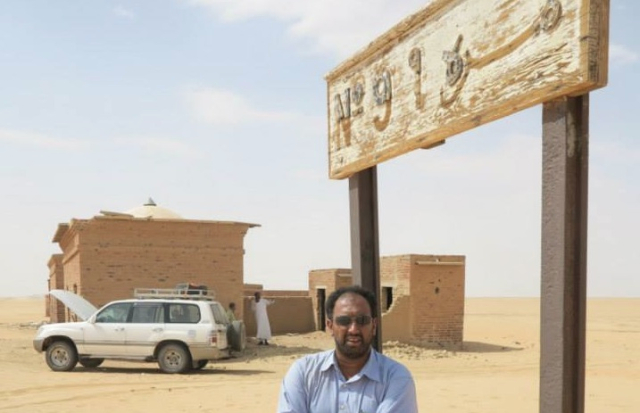
Although Fentress had strong and early convictions about working in a conflict-ridden area, UC Davis history and international relations alum Isma’il Kushkush had no plans on working in South Sudan post-graduation. Kushkush now works for The New York Times, reporting in East Africa.

“I did take a course in journalism at UC Davis, I just thought of it as a side interest, not something I’d be doing for this long,” Kushkush said. “I thought I’d be a history professor!”

As an agricultural economics undergraduate student at UC Davis, Dr. Sue Lautze was similarly unaware of her future career in humanitarian aid. Lautze, a representative for the Food and Agriculture Organization of the United Nations (FAO) and Deputy Humanitarian Coordinator for the United Nations, recently returned to South Sudan after giving talks internationally.

“I wanted to go into the international grain trade, and so I had studied Mandarin as well as the economic aspects [of grain trade] when I was at Davis. I went off to China right after UC Davis on a program that put me in the ministry of culture,” Lautze said. “There, I met some people working for the United Nations (UN) and got to talking to them. I thought I’d be working on that for just a little while but it’s now 26 years later and I’ve gotten more and more deeply involved with humanitarian efforts.”

Despite the broad range of their studies, all three alumni are working tirelessly in South Sudan, doing whatever they can to help.

The history of conflict in the three-year-old country predates its independence. Serious violent clashes between North and South Sudan began in the early 60s, and tensions ranging from small-scale violence to full-blown civil war continued up until 2011.

“I was in Bentiu a few days before I went to Malakal. There was a massacre in Bentiu in April. Particularly at a mosque — inside, probably 400 people died,” Kushkush said. “We went two weeks after the massacre and the stench was still there of death and dead bodies. I think Bentiu is one of the very worst I’ve seen.”

Over the past two years, 1.5 million South Sudanese have been displaced due to the violence. Over a million have been displaced within South Sudanese borders and are in desperate need of medical care and food supply.

Unfortunately, South Sudan needs many more resources than it currently has access to. Fentress often worked in conditions where the lack of medical supplies would hinder the amount of aid he was able to give.

“[In a] lot of places that I worked in East Africa, India and Haiti, I often came up against that kind of challenge,” Fentress said. “I think the key is just to help as much as you can given the limitation that you have.”

But violence isn’t the only threat to the populations of South Sudan. For those displaced by war, the biggest hazard is famine, as a third of the population has no food security. Lautze’s work with the FAO helps provide food as well as long-term agricultural strategies in the area, although the planning process can be incredibly difficult.

“Next year, we’re in the process now of having done the consensus-based food security outlook for the rest of 2014 and early 2015 and the point of contention is always [the same],” Lautze said. “Do we assume that the peace talks that are ongoing in Ethiopia right now are going to be successful and that’s going to stabilize the situation? Or do you assume that they won’t be, and we’ll be facing even more crisis than we are now?”

The prospect of working tirelessly in a situation might seem daunting, but Lautze never doubts that the fight is a worthy one.

“I was really lucky in that I was able to teach humanitarian assistance in complex emergencies,” Lautze said. “I believe very firmly that we need the best and the brightest minds, because if you’re interested in the sharpest edge of the hunger challenge, if you’re interested in rights to food, rights to life, rights to a decent chance for one’s kids, there is no more challenging, and often rewarding environment, than working in humanitarian assistance.”

Though he is in a completely different field, Kushkush shares a similar disposition about the importance of his work.

“There are a lot of crises in the world and I know a lot of readers or viewers get desensitized because there are so many, but it’s important to bring those images and stories to the world, particularly to places that enjoy better lives,” Kushkush said. “I wasn’t really surprised to see other UC Davis alumni in South Sudan.”

All three alumni living in South Sudan agree that UC Davis has had a profound effect on where they are today.

“The experience I had at UC Davis changed my outlook,” said Lautze. “I’ve gone on. I got my masters from Princeton and my Ph.D from Oxford, but fundamentally it was the foundation that UC Davis gave me that really changed my life. I remain very, very grateful to that institution.”