55.5 F
Davis

Davis, California

Tuesday, December 23, 2025
Home Blog Page 842

Dress to impress (or, you know, not)

0

If you’ve ever worn a skirt (or shorts, or a dress, or heels, etc.), chances are you’ve been catcalled by some random dude you never have, and probably never will, meet. It’s also highly probable that after said catcall, you felt exceedingly self-conscious about what you were wearing. Are my shorts too short? Is my top too low? Would creepy strangers leave me alone if I were wearing sweatpants?

The answers to these questions are clearly, emphatically, no. But sometimes, when you’re all alone on the street somewhere, it’s easy to question, or even blame yourself, for the offensive choices of others. Or maybe you’re the kind of person who has the guts to call these assholes out on their behavior — in which case, you’re awesome. Keep up the good work.

However, this type of self-blame happens far too often and it’s not necessarily just a case of being too intimidated to respond to the aggression of others. In fact, I would argue that this self-blame is the result of some much larger issues that revolve around the way we perceive and police women’s bodies — namely, the clothing they choose to wear.

Take, for example, the Steubenville rape case that happened in 2012, in which a girl was brutally raped by a group of boys from the local high school football team. Rather than condemning these boys for the heinous crime they committed, there was an overwhelming amount of support to protect their reputations as star football players. Furthermore, the victim was ostracized by her community and made out to be just as guilty as her rapists because of things like what she’d had to drink, and what kinds of clothes she’d been wearing, which are ridiculous attempts to justify the brutal crimes of actual criminals.

This is just one example of many. There are tons of similar cases out there that prove that the urge to justify criminal behavior is exceedingly common, and it comes at the expense of women’s bodies. It’s no wonder then, that there’s an urge to pull down our skirts at the sight of an ogling creep a few feet away. We want to protect ourselves, not just from physical violence, but fromthe common knowledge that if something were to happen to us, one of the first questions asked would be in regards to our wardrobe.

Sound crazy? Well, that’s because it is. But the lengths that we go to in order to police women’s bodies no doubt instills in us a kind of fear that makes these types of things legitimate concerns — things like school dress codes that train girls to cover up and keep from being punished, or the shaming of women who “show too much skin,” or who have the audacity to embrace their own sexuality.

Issues like these make it clear that perceptions about gendered clothing perpetuate rape culture with claims like “she was wearing a tight dress and therefore she was asking for it.” This type of rhetoric hurts survivors of sexual abuse and victimizes sexual abusers, the criminals. This is why, in 2014, the knee-jerk reaction to rape is to question the validity of the victim’s claims. It’s why we have women like Emma Sulkowicz, a Columbia University student, who has taken to carrying her mattress around campus as a statement against the school’s decision to not remove her rapist from the university. It’s why the clothing we choose to wear is indicative of our worth when it comes to the amount of support we get when crimes are committed against us.

This needs to change. Here are a few simple steps we can take to ensure that it does: Stop shaming people for wearing what they want. It’s not your body. Therefore, your opinion, like other people’s wardrobes, is totally irrelevant. Don’t blame the victim, because wearing a skirt is nowhere near as offensive as raping someone. Furthermore, don’t blame yourself if you ever are, or ever have been, a victim. I don’t care if you’re wearing a miniskirt or a parka because it is truly, without a doubt, not your fault.

And dudes, stop catcalling. That is seriously the worst.


If you want to join the fight to stop catcalls 2k14, contact ctspiller@ucdavis.edu.


Actors and authors work together to bring stories to life

0

storiesonstage_ar

When a story is dramatically read straight from the page, the piece is brought to life without losing any of the writer’s original intention, at least that’s what Stories on Stage Davis founder Jeri Howitt believes.

Stories on Stage is a monthly story reading (running from September to June) in which local Yolo County actors and writers collaborate to create dramatic prose readings to present and perform for the Davis community.

Since branching off from its Sacramento origin a little over a year ago, Stories on Stage Sac, Howitt’s team has found a niche in Davis’ creative community.

“Usually [when presenting a work of literature to an audience], the author reads their own work. Some of them can read [prose well aloud], but some of them haven’t got a clue,” Howitt said. “The actor brings a totally different set of skills with hesitations, timing and tone. I’ve spoken with every featured author, and they are all stunned by what the actors have done with their work.”

At Stories on Stage Davis readings, guests gather in the Pence Gallery in downtown Davis. The event features works by both an established, often widely-published author and an emerging author (two authors altogether) whose future in prose-writing looks promising. Having both an emerging and established authors’ stories read provides a twist on an already acclaimed work as well as a stage for up-and-coming writers.

Naomi Williams is one of the editors, curators and organizers of Stories on Stage. She received her MA from the UC Davis Creative Writing Program in 2007.

“When selecting pieces of short fiction [for Stories on Stage], ideally it’s a complete short story, but it can [also] be a standalone piece or excerpt of a longer novel,” Williams said.

In addition to selecting and sometimes excerpting stories, choosing a capable and dynamic actor is paramount.

“We have to be careful [of] what kinds of stories we choose, so that the actor can [physically imply complex scenes], but they are constantly stunning me. Our actress Kat Miller, who read from Kinder Than Solitude [last month], did these subtle things with how she turned her body so you could always tell who was being talked to,” Howitt said. “They cannot be dramatic in the sense of using their body, so it’s a unique experience to quietly learn how to act.”

After the actors are selected, the emerging and established writers’ stories themselves are considered, and every effort is made to ensure that the moods are similar and that the two pieces balance each other thematically.

storiesonstage_ar1

The upcoming Oct. 25 event features emerging writer K. E. Montieth and New York Times Bestselling Author and UC Davis Creative Writing Program Maurice Prize endower John Lescroart, whose selected works thematically compliment one another through their shared focuses of mystery and intrigue.

Lescroart’s featured short story The Last Confession is from the Mystery Writers of America’s Cold War Ice Cold anthology, a collection of fiction work about the Cold War.

“John Lescroart brought us a very different kind of story than he’s written before […] it’s overlayed with the paranoias and the fears of the Cold War period,” Williams said. “It’s a fantastic story; I actually cried at the end.”

Lescroart expressed that he does not want to have any hand in choosing which excerpts from his novel will be read.

“I’m staying out of the planning process entirely and am looking forward to seeing it the day of,” Lescroart said. “The story is in the first person, so [I feel like] the main event is really [going to be] the actor.”

At the Oct. 25th reading, doors will open at 7 p.m., and attendees should provide a five-dollar donation that goes towards paying the actors and authors. The donation will also help to continue the program for another season.

Please note that Stories on Stage normally takes place on the second Saturday of the month. For more information, visit storiesonstagedavis.com.

Photos by Jim Lane, Jeri Howitt

Whoa, man

0

I heard a song on the radio. I think it goes something like:

Whoa-oh-oh-oh-oh-oh-ohhhh!”

It’s a really great, sticky melody and the production really makes the track shine. No, it isn’t “Good Time” by Owl City. No, I’m not talking about Sam Smith’s epic melisma showcase in “Stay With Me’s” bridge. No, the riff to “Seven Nation Army” isn’t even actually sung in The White Stripes’ original recording. People do that because, I don’t know, sports make them do it!

To be honest, what song it was is a riddle with no answer. Songwriters, from behind-the-scenes, filthy-rich hitmakers to the SoundCloud free music sharer, all have access to the holy grail of catchiness: the much sought-after long “O” sound. I think of it as the monosodium glutamate, or MSG, of the music world; sprinklings of it here and there might make food tasty, but overload will surely kill you. “Ohs,” just like MSG crystals, are shortcuts to adding real substance.

Let’s sample American Authors’ hit “The Best Day of My Life.” Besides the song’s basic two-chord formula, and the forced use of varied, but not necessarily creative, instrumentation, the song thrives on forcing two songwriting schemes together. About two-thirds of the song’s lyrics are hallucinogenic verses and a repetitive affirmation that, for frontman Zac Barnett, it will, indeed, be the best day of his life. The last third consists of “Whoa” and “Oh.” One-third. About every eight seconds you’re hearing “Whoa” and/or “Oh.” Out of 338 words, 114 of them are “Whoa,” “Oh,” or “Woo.” Despite these heinous songwriting crimes, “The Best Day of My Life” pierced the top 10 of Billboard’s many subcharts, and made 11th place on Billboard’s coveted Hot 100. A successful song ridden with all sorts of unoriginal aural cliches? Song authoring doesn’t get any more American than that.

New Zealander Lorde’s “Bravado” was the song that convinced me that her middle-finger-to-pop-culture way of thinking was completely genuine, and not a facade contrived by her co-writer and producer, Joel Little. In it, she sings about the fact that she sometimes resents being in the spotlight because of her introverted personality, and her voice springs to a tortured falsetto during its confessional verses. The chorus is a heartbreaking revelation that she would rather have a pleased, screaming audience than an empty room, singing to herself. Then she slugged me with this lyrical letdown:

“I want the applause, the approval, the things that make me go, ‘Oh, whoa-oh, whoa-oh-oh-oh…’”

What?! What things make someone go “Whoa-oh?” When someone makes a mindblowing connection in literature class, it makes me go, “Whoa!” Is Lorde singing about English majors wetting their pants in insightfulness? Who knows, with how vague she is being. All sorts of things make me, you, and Lorde go, “Whoa.”

And then I realized that Lorde singing those non-words and attaching them to a catchy melody is the key to gaining the applause and approval that she needs to survive in pop music.

What exactly is it about “Oh” that makes fans scream for more? Singing it makes belting easier, and in that syllable lies a communal energy that seems to transcend lyricism. In a large group, singing “Oh” at the top of your voice can provide a visceral thrill that singing words can’t match. The most magical concert moment I’ve had was singing the “Oh”-heavy refrain to Arcade Fire’s “Wake Up” with hundreds of other fans. Even my friend who hardly knew Arcade Fire sang along; it was his first time hearing the song. The fearlessness involved with joining others in singing “Oh” can make you a part of something larger than yourself.

So naturally, transcendent experiences like those are bastardized in the name of pop music profit. “Oh,” something so potentially powerful and larger-than-life, is rendered cheap, catchiness bait. Don’t bite down so easily when there isn’t much to chew on. Demand something more substantial.


For oh oh oh oh whoa oh oh whoa-oh oh oh, contact STEVEN ILAGAN at smilagan@ucdavis.edu.


Uncritical Calvin

0

Picture 4

Watterson, Bill. There’s Treasure Everywhere: A Calvin and Hobbes Collection. Kansas City: Andrews and McMeel, 1996. Print.

One reason Calvin and Hobbes has stayed relevant in our culture is the insight it is able to provide with humor. I started reading the comic when I was in second grade. Almost 11 years later, I still find it as fresh as ever. Similarly, it satirizes themes that have stayed significant for decades. In the comic strip above, we see Calvin arguing for learning by “factoid.” Since the strip’s publication over 20 years ago, the issue of how we learn has become even more relevant.

There seems to be a consensus across all disciplines that critical thinking is the best way to understand a given topic. But critical thinking is threatened in modern society by trends in technology. To understand why, we have to first examine exactly what critical thinking is and the process by which we derive knowledge from it. We will see that the rise of factoids creates a cog in the process, thus hindering knowledge.

At its core, critical thinking is an active process by which we use basic tools and mental faculties to make sense of more complex ideas. Also required are construction and internalization — internalization being an individual’s ability to retain information and construction being an ability to extrapolate insights from this information.

The question becomes: how do we apply our tools? It varies between disciplines. Foreign language classes are heavily based on classroom participation; math classes assign problem sets; English classes provide readings to analyze. In a way, these techniques all fall short of the critical thinking definition. They ignore construction in favor of internalization by sticking to a rigid curriculum.

Evidence of this comes after class is over, whereupon students often forget most of what they learned. Some forgetfulness is natural, but more often than not, the little amount that they remember indicates a failure to learn. I wonder, how many students would pass a class they took last spring if I handed out the same final tomorrow?

The issue seems to be in construction; they are not taught to retain the information. Students still remember the basics of a course and hopefully some of the more advanced material. Critical thinking says that this base would really be all one needs to build knowledge and learn. So, why the failure?

The reason construction falters is due to modern conditions. As information (once a form of currency in itself) becomes free, ubiquitous and essentially devalued, a new journalism is taking hold — one that values form over substance. And in this technology-driven society, that means America values information presented sensationally, simply and superficially. The phenomenon blocks construction: Learning by application, a slow and arduous process, is at odds with the modern promise of quick information presented in lists and marketed to personal devices.

If you have a Twitter, you’ve probably experienced the empty, hollow feeling after scrolling through your feed and finding nothing of interest. It’s the epicenter of playing fast and loose with material (like news) that should be a student’s greatest asset in constructing real world opinions based on their knowledge. In this way, construction is not only becoming culturally irrelevant, but functionally damaged as well.

It’s a dismal situation. The onus to fix the problem is on educational institutions, and especially college campuses. In addition to traditional approaches, professors can and should provide material on current trends that are written with substance, from insightful publications (not everything is BuzzFeed). Students should try to learn without the aid of phones and other devices. I’ve often had to physically remove my phone from the room to get work done. Sometimes, the old fashioned ways of doing things make a lot of sense.

Given that the problem of how to learn boils down to cultural phenomenon, there is no one easy solution. Culture vastly changes the psychology of people, and how they react. Ultimately, a cult of proper learning will need to come as a culture unto itself. College has always been “outside of the real world.” But with the growing problems students face at college, such as debt from student loans, the four years are starting to look more and more like post-graduate life. Solving exterior problems will help make college a place of pure academia and a better learning environment.

Don’t take it from Calvin. Factoid learning is bad. Although I will admit that television understands me.

       To make a critical assessment of ELI FLESCH, you can reach him at ekflesch@ucdavis.edu or tweet him @eliflesch

Women’s Golf Dominates Early in the Year

0

UC Davis women’s golf started the 2014-15 season with high expectations after finishing last season ranked No. 17 in the country by Golfstat. The team lost only one player from last year’s dominant squad and has won the Big West Championships for the past five years.

The UC Davis women’s golf team consists of five players from last year’s team, four of whom were awarded spots on All-Big West teams. Senior Beverly Vatananagulkit, sophomore Paige Lee and junior Betty Chen were all on the All-Big West First Team while junior Andrea Wong landed on the Third Team. Coach Anna Temple was also awarded her second straight Big West Coach of the Year award after last season.

The Aggies are off to a hot start this season, finishing in third place or better in each of their first three tournaments. In the first tournament of the season, the Branch Law Firm/Dick McGuire Invitational, UC Davis struggled through the first half before finishing strong and winning all but two matches.

Their first invitational gave the Aggies an opportunity to go up against, and win over, several teams that also co-populate the Top 50 rankings. UC Davis was able to defeat No. 15 Oklahoma State, No. 26 Iowa State and No. 12 Pepperdine among others. The strong finish was largely due to three top-15 finishes by senior Blair Lewis, Wong and Lee who ended the day in seventh, ninth and 12th place, respectively.

The second match of the season saw a different style of play than usual as the Aggies faced off in match-play. The first day, which determined the top-4 and bottom-4 teams for a bracket, concluding with UC Davis finishing in second place. Wong was able to soundly defeat the entire field, finishing three strokes ahead of the second-place finisher.

The second day saw the Aggies face off in pairs against members of the Wisconsin golf team. Lewis, Wong and Vatananagulkit were able to score victories over their opponents which allowed the team to advance to a Sunday showdown against fourth-seeded Southern Methodist University.

On the last day of the tournament, UC Davis nearly scored a victory when Vatananagulkit raced out to an early four-hole lead in her match. Her opponent, Lindsay McCurdy, however, managed to respond and dispatch her Aggie counterpart. Only Lewis and Chen were victorious that day, forcing UC Davis to settle for a second-place finish.

In their most recent tournament, the Edean Inlanfeldt Invitational, UC Davis was once again able to finish in third place. The Aggies finished the first day in sixth place and fluctuated heavily on the second day of play before settling into their third-place spot.

UC Davis was led by Lewis and Lee who each finished two over par, tying them for fourth place individually. Chen also chipped in, finishing in 16th place overall. Freshman Ally Zeng struggled to a tie for 59th place in the tournament.

The Aggies, who were ranked 26th nationally by Golfweek before their performance in the Edean Inlanfeldt Invitational, will play in one more tournament during the fall season before retiring until February. Once they return, they will try to continue their dominant run at a sixth straight Big West Championship.


Photo by courtesy

CoHo serves a wealth of information

If you have been to the ASUCD Coffee House recently you may have noticed not only the increase in prices, but also the information put out by the CoHo staff in order to educate CoHo customers. Various flyers, notices and other content have been posted to answer the many questions customers may have about the change. In addition, CoHo employees have been especially helpful when we asked them questions on the matter.

It is refreshing to see such transparency in the midst of big — and maybe frustrating — change. The amount of information available to customers has made the slightly more expensive food easier to swallow.

Some reasons for the changes are rises in food cost and the minimum wage increase. The flyers, however, might be a bit misleading since prices at the CoHo have always included tax, and when asked about the “job skills and leadership training for students” stated on the flyer, no specific changes were mentioned by Associated Students Dining Services Foodservice Director, Darin Schluep.

As cited on the coffee house’s website, the CoHo operates on a break-even basis. It is important to understand that the CoHo is not making a profit off it’s customers. Like the flyers state, the price changes are there to absorb the increased pay to employees and the increased cost of food. If the CoHo makes any surplus, it is “placed in the ASUCD general fund, to be allocated by the ASUCD leadership for a variety of student services,” Schluep said. At a place like a university, it is comforting to know where your money is going when you have to shell out a little extra for your daily coffee.

We understand why the price changes have been implemented, given that many eateries have been increasing their prices recently as well. Nonetheless, customers’ concerns are also justifiable, especially when the CoHo is supposed to offer relatively inexpensive eating options. Maybe the new additions to the menu will give people a little more variety for their cash.

We appreciate that the CoHo providing information about the change, and we welcome their transparency. Additionally, we are excited about the boba!


Aggies Continue Undefeated Streak

0

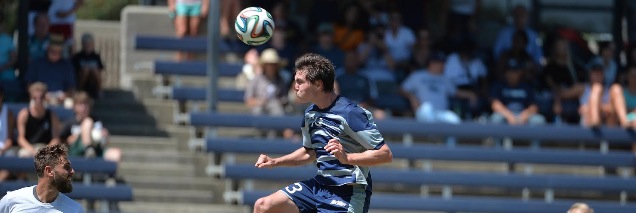
UC Davis Men’s soccer opened up Big West Conference play on Oct. 2 as they defeated the Cal State Fullerton Titans with a score of 3-1 to maintain their undefeated record.

After playing seven consecutive games that went into double overtime, the Aggies were able to win this game during regulation time. UC Davis scored a total of three goals, a season high, including a last second goal to finish off its opponent.

Senior defender Lucas Mohageg flicked the ball into the left post of the goal on the 16th minute of the first half on a throw-in by junior midfielder Ryan Gross. This was Mohageg’s third goal of the season.

True freshman forward Kyle Higgins scored his first career goal at the 60th minute. He shot from 30 yards out to the top right corner of the goal after beating two Titan defenders.

With a two-goal lead, the Aggies were called with a handball penalty in box at the 65th minute. Fullerton’s Ian Ramos scored and cut the Aggie lead to one goal.

However, UC Davis was able to score for a third time in the last minute of the match. True freshman midfielder Justin Kitts scored with just seconds left in regulation time off a long ball from Gross.

Still, the Aggies continued to rely heavily on their defense to lead them to victory.

“It’s got to be our defense, [senior defender Ramon Martin Del Campo] has got to be the best defender in the country, he’s been outstanding. And [Mohageg] has solidified our center defense,” head coach Dwayne Shaffer said after the game. “Our defense has kept us in the games…with an undefeated record.”

On Oct. 4, the Aggies beat a struggling UC Riverside Highlanders team and improved their undefeated record to 4-0-7 overall and 2-0 in Big West Conference play in a 1-0 win.

Sophomore defender Connor Willis-Hong scored his first goal of the season and the only goal of the match. Senior forward Matt Sheldon assisted the goal by crossing a corner kick from the right side of the goal all the way to the left side and Willis-Hong headed it to the back of the net.

“I wasn’t going to go in on the corner, but [sophomore forward Dashiell MacNamara] told me to just get in and he’d drop for me,” Willis-Hong said. “I was jostling in the box a bit and lost my man, the ball went over [Martin Del Campo] head and I just tried to put it on goal and it went in.”

UC Davis played aggressively throughout the games: they outshot the Highlanders and managed to hold them scoreless, led to victory by the defense. Junior goalkeeper Armando Quezada earned his first win this season and saved three shots from the Titans and four from the Highlanders. Quezada has been a major factor for the undefeated record. He credits Martin Del Campo and the defense for the team’s success.

Del Campo, who coach Shaffer referred to as “the best defender in the country,” leads the defense and is a huge instrument to the team’s success.

“Defensive shape, if they can’t score on us, we can’t lose, we’ve been doing well on that,” said Martin Del Campo after the game. “We’ve had difficulties scoring, but the thing about this team is that we really believe in each other….At moments where we miss it gets frustrating but we always find a way to believe that we are going to get the job done.”

Martin Del Campo has been scouted by various teams, including the San Jose Earthquakes and the U.S. National Team, throughout his career at UC Davis.

The Aggies travel to Southern California to face the UC Irvine Anteaters on Thursday and Cal State Northridge Matadors on Saturday.

The next home game for the Aggies is on Oct. 18 as they welcome the UC Santa Barbara Gauchos.


UC Davis signs 10-year deal with PepsiCo

0

On Sept. 8, UC Davis signed a letter of intent for a 10-year deal with Pepsi Beverages Co. that will bring approximately $10 million in support of student scholarships, programs and services to the school. In exchange, UC Davis will give exclusive rights to Pepsi to sell, advertise and promote its products on campus.

Although the entire allocation of the funds has not been finalized, Emily Galindo, vice chancellor of student affairs, said that the money will be used to provide both athletic and non-athletic scholarships and also to support sustainability projects, marketing, summer camps and youth programs. According to Galindo, a committee consisting of staff members, two students, and representatives from the health system will determine how the funds will be distributed.

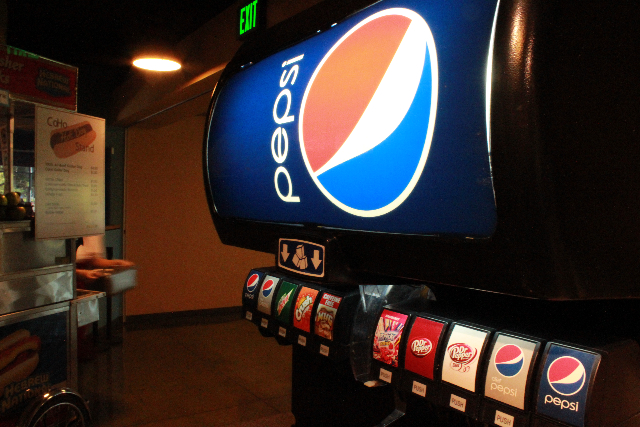
According to Galindo, Pepsi’s signage and advertising rights are not yet fully determined. She said that UC Davis has already taken steps to convert the fountain drinks in the dining commons and to replace the scoreboard in Aggie Stadium. She predicts the conversion should be fully complete by October.

Additionally, the UC Davis Health System signed a similar contract five-year contract with Pepsi that will expire in Oct. 2015.

UC Davis signed a similar agreement with Coca-Cola in January 2004. The 10-year contract brought the university $1.5 million before expiring this January. Both parties agreed to extend the deal until the end of June.

Although several locations on campus, such as campus retail stores, dining commons and athletic concession stands, will participate in the agreement, the ASUCD Coffee House opted not to participate.

Darin Schleup, Coffee House food service director, said he was worried that participating in an agreement of this volume would not result in the same level of service that he is accustomed to from his vendors.

“The concern was when Pepsi gets a big deal like this, they interact with the campus as a whole, so the Coffee House portion of that is not somewhere they’re going to devote a lot of customer service,” Schleup said.

Additionally, Schleup felt the agreement, which would limit the university to selling up to 10 percent of non-Pepsi products on campus, would restrict his customers’ choices.

“If we have someone who is a diehard Diet Coke fan and we no longer offer Diet Coke, we can potentially lose that customer,” Schleup said. “We wanted to be a place where people had choices.”

However, due to the wide variety of products under the PepsiCo brand, Galindo predicts the deal will not affect student choices too much. Other products under the Pepsi brand include Gatorade, Lipton tea, Aquafina, SoBe and Naked Juice.

“I think what we were trying to do with this agreement is look for opportunities to generate revenue and still allow for some choice,” Galindo said. “I also feel strongly that we have a wide variety of products.”

Likewise, due to the close proximity of outside convenience stores, Navid Farhadi, a third-year computer science major, does not see the agreement with Pepsi largely affecting student choices either.

“People are making it out to be a bigger deal than it is,” Farhadi said. “From central campus to AM/PM it is a three-minute bike ride, and it’s way cheaper than any of the stores on campus. They sell Coke products there.”

Galindo remains excited about the opportunities the deal with Pepsi will bring to the campus.

“I’m excited that we were able to coordinate the agreement and that we were able to get our partners to work together,” Galindo said. “We’re excited that this is going to bring … support for our student services and programs on campus.”

Photo by Kenny Cunningham

Reality Bites, But It Doesn’t Have To

0

Crafting Gemeinschaft

Most of the time, when we hear the word sustainability, we think about our resources and the environment, but the word can provide some insight when you think about it in terms of yourself and your daily schedule. It is common for people our age to overschedule themselves, to pile a minimum-wage job on top of a minimum-wage job because it is better than feeling unproductive. But there has to be something wrong with overscheduling ourselves to the point where we are uncomfortable with doing nothing. There’s often this false notion that taking the time to do things that make us happy is unproductive. And if we give into this false notion, it is going to lead to pent-up aggression that is going to manifest itself down the road.

It does not help that companies are placing unrealistic demands on their employees, expecting them to carry their work home with them. The sad part is that the employees have to put up with a never-ending workload because they can easily be replaced. In this highly globalized, fast-paced economy, the notion that we need companies more than they need us is a fear in the back of all our minds. Research done by The Energy Project, a group that partners with existing companies to offer consulting work with the purpose of creating healthier workplaces, has revealed that 70 percent of employees feel disengaged. This disengagement can result from inadequate sleep, difficulty focusing or discontent between what they find meaningful and the work they do. What if The Energy Project conducted the same study on college students? I’m sure a similar, if not greater, percentage of college students would show symptoms of disengagement as well.

We work like robots. We enter studying with the mentality that we will not stop until we accomplish A, B and C. We are not meant to work like that; research reveals that studying intensively for four hours a day in periods of 90 minutes is more productive than just mindlessly studying for hours on end. Sometimes we go so far as to lock ourselves in cages in the library. Why do we attach this barbaric image to education, something we value and honor? I have always looked at education as a gift, but when we start treating it like a burden it becomes clear how we lose the motivation that brought us to college in the first place.

The way we work is not the only change that needs to be made; the duration of our work should also be called into question. A recent article in The Atlantictitled “Where the Five-Day Workweek Came From” questioned the possibility of “unmaking” the notion of the seven-day week since it is an entirely man-made concept in the first place. Research suggests that switching to a shorter workweek would lead to greater productivity, better health and greater employee retention.

Some companies, such as TreeHouse, a company that teaches coding, are adopting a four-day work week. Other companies are using other tactics to reduce worker stress, such as dividing the employees into two groups: One group works 7 a.m. to 6 p.m. on Monday to Thursday and the other group works the same hours, but from Tuesday to Friday. After every week, the two groups switch schedules so that they get a four-day weekend every other weekend. Think about that: That means those camping trips that you treasure so dearly as a once, maybe thrice-a-year occurrence, can become commonplace. A four-day workweek is something that many college students are accustomed to. If you ask anyone who is not a freshman if they have class on Friday, they’ll give you a sweet smile. It would be nice if this trend of clocking out on Thursday night for the weekend could carry on out into the workplace.

Now is the time to get it down: Don’t scarf down TV dinners with the promise of cooking for yourself “when you have time”; don’t postpone that Couch to 5K workout plan staring at you from behind your desk. When you go out into the “real world” I advise you not to sign your name on some contract and forsake your happiness because it means security. I leave you with these inspiring words from one of the best ’90s films:

“And they wonder why those of us in our 20s … refuse to work an 80-hour week, just so we can afford to buy their BMWs, why we aren’t interested in the counterculture that they invented, as if we did not see them disembowel their revolution for a pair of running shoes.” — Reality Bites

If you want NICOLE NELSON to personally justify why you should start working less and start doing more yoga you can email her at nsnelson@ucdavis.edu.


Online Thoughts

0

When was the last time you read an opinion online?

It was probably a few minutes ago, when you saw your friend’s Facebook status, or my own Facebook status, recommending that you read this article from The Aggie because it provides such great wisdom and insight. (It’s true!)

You probably did read something that someone online thought of very recently, and whether you know it or not, it affected your thoughts in some way. Online opinions are here; they’ve been here; and they are just as valuable and important as those in print.

Journalism is changing. Newspapers are moving to the internet, sometimes because they want to and sometimes because they have to. But either way, they’re here. We have websites like Facebook, Buzzfeed and Tumblr. Basically, if someone has an idea, they can post it and get it seen. You can choose to agree or disagree with what they have to say, and then you can tell them what you think by posting it in the comments. Online posts give people more power. They give them the ability to reply with what they have to think, when they think it. In all honesty, that is a disadvantage of print media. With print media, we don’t really have the power to retort right when we want to.

That is not to say that print is, by any means, dead or obsolete. Holding something in your hand allows you to feel it, write on it and, in some ways, become more involved in it than when you stare at a computer screen. It can sometimes be even more satisfying to see your name in print than on a website. But the truth is, media is moving to the internet. It’s quicker, more up to date and it gives you (the reader) more power. Even though not printing is a loss in some ways, we can still embrace the gains and move forward.

The columns that you will see here in the coming days and weeks of Fall Quarter 2014, have all been read over. They will have been edited and discussed by a variety of different, qualified students at The Aggie. They will be worth reading, and they will be worth replying to. Speak out your opinion, just like these writers are! The power of the online comment or email allows you to.

Take advantage of the fact that thoughts worldwide are moving online! Move your thoughts there as well. Become more acquainted with telling people what you think, when you think it. As a warning: be polite and thoughtful, just like these published stories are. Do not say something purely to be mean, because where will that get you in the long run? Say something thought-provoking and help this digital world that we’re all living in progress.

So, take a study break, get excited about the start of the quarter, read a few columns and open your mind. Remember that change, like downloading free e-books instead of buying print textbooks, can be a good thing. You can learn just as much, if not more, from this digital copy than you could learn from what is in print. So, see what we have to offer, and then let us know what you think. Realize that online-only can mean more, not less.


Tell the new Opinion Editor MELISSA DITTRICH, what you think by using the internet and emailing her at medittrich@ucdavis.edu.


Outside Lands: It’s Up to You

0

Guest review of San Francisco music festivaloutsidelands_ar_Cognein

I’m intrigued by any festival where patrons are willing to bury alcohol at its location weeks in advance. That being said, Outside Lands is far more enthralling than a venue for imbibing burrowed spirits.

You could say this wasn’t my first rodeo, despite the lack of bovine. I have been to the hallowed fields of Golden Gate Park before and experienced the gravitas of the festival. But on this expedition, I found myself pondering a specific question: I wanted to know why, with the plurality of music festivals that exist today, would you choose Outside Lands? Here’s my take:

The festival has a proven track record for attracting A-list performers. Between his pulsating sound and his heated, generally one-sided deliberations on the nature of man, Kanye West did shake the earth. That alone should attract a throng. But I was committed to the notion that Outside Lands is not just a colder Coachella. No — while sipping on a generally overpriced refreshment and engrossed in a performance from HAIM, I stumbled upon a revelation.

True, this was no message from Gabriel, but the specific moment occurred while HAIM, surrounded by musicians, discussed their upbringing. It seemed to me that instead of submitting to archaic traditionalism a la Rockwell, they’d rather jam their faces off.  HAIM then proceeded to demonstrate with gusto. There was a clear shared enthusiasm for the festival amongst attendees that I speculate runs beneath the fabric of all music festivals and is exemplified in that trampled field. I know that I’m taking a while to make my point, but I wish to give you my perspective on Outside Lands and shake the veil from your eyes so you can catch what I’m trying to say.

Although the performers are the hook, Outside Lands is not about the music. Arctic Monkeys played with unrivaled Yorkish flair. Macklemore brought a cavalcade of associates, all delivering the artistic grit that distinguishes his expression. The performers delivered. Flaming Lips quite literally lost their mind on stage — their singer, Wayne Coyne, twerked with a giant inflatable bee — but they were simply a means to an end.

Fans of Outside Lands will focus on the success of the lineup and its implications for the succeeding years. I understand that this notion is controversial, but bear with me only for a few more moments. Outside Lands is about more than the music. Once you’ve arrived there, captured in those ramshackle pitched booths, drinking a variety of vintage drinks, consuming the finest accoutrements and experiencing your desired musical articulation, you will find yourself daunted.

With mud caked to your shoes and the cumulative dust and tumult smeared across your brow, you will realize that Outside Lands, unlike any other concert, is a canvas. It holds all the fundamentals of artistic expression and allows you to frolic in the woods. It performs this miracle not in an obscure desert or a secluded mountain retreat, but instead in a place that is only a stone’s throw away from a bustling urban sprawl. With a kaleidoscope of lights illuminating gnarled pines and the stars glinting above, one can capture a fleeting breath of concrete asphyxiation. The power is in the juxtaposition, as some hipster might remark. With such an opportunity, it is up to you to seize the day and combine these elements into an enlightening experience.

Photo by Bo Cognein


‘Sheltered’ inhabits Davis Art Center

sheltered_ar_1

New art exhibit to raise animal awareness

Among the many charming traits Davis is known for, being an animal-friendly environment often stands out. Soon, the animal compassion the city of Davis is known for will be taken to a whole new level. From Oct. 10 to Nov. 14, the Davis Art Center will be hosting Sheltered, an art exhibit devoted to raising awareness of animal homelessness and organizations in support of bettering animal lives. The nationally-curated project features works by artists throughout Davis as well as the country.

There will also be opening and closing celebrations for the exhibit’s run. On opening night, Sheltered will welcome guests to its free reception from 6 to 8 p.m. Scheduled for the opening reception are live tunes, art activities, wine samplings and vegan-friendly treats for both pets and owners alike. The closing reception will feature a talk given by curator Ryann Casey, a Philadelphia-based photograper and art history professor.

MUSE connected with Ryann Casey as well as Sheltered organizer and UC Davis alumna Charlene Burnett to talk about the fusion of animal awareness and art. Together, they shared with MUSE the purpose and passion behind Sheltered.


MUSE: What inspired you to organize Sheltered? Was there a specific event or was the idea always a growing passion?

Burnett: I’ve always worked with animals. In my early 20s, I worked at a veterinary hospital. I operated the crematorium. Disposing of animals, along with the trash, continues to haunt me. Since I work with an animal rescue organization and animal advocacy groups, I’m constantly barraged by visual images of animals who are red-listed for euthanasia. Abandoned, surrendered, unclaimed, lost and forgotten, these animals will never make it out of the shelter alive. Yet, so many people seem to be completely unaware of how we as a society dispose of unwanted, healthy pets.


MUSE: How did you start expressing your passion for animals through art?

Burnett: After joining HeARTs Speak, an organization of professional artists, I was exposed to art created for the purpose of advocating for the lives of animals. I researched and discovered other visual artists who left me stunned by their visceral narratives. I am particularly pleased by the artists that our curator, Ryann Casey, included in Sheltered. In “Pack,” photographer Stephanie Paine used a handmade pinhole camera to capture images of street dogs in Istanbul. In “Hit Me,” artist Kristen Tabone Woodward addresses children’s games that emulate antagonistic relationships with domestic animals.


MUSE: In what ways can art convey messages from other methods of expression?

Casey: Art has the capacity to not only express what the artist intended but to reach the viewer in often complex and personal ways. Art is not just a single image or object, but an expression of a range of emotions and connections the viewer places on the work as well. Therefore, art has the unique ability to become deeply personal and imaginative for the viewer. With messages involving animal welfare and cruelty, there is no better lesson than the one we’ve already experienced — and art provides a framework for those connections again, a way for the viewer to reflect through the visual image to memory and emotion.


MUSE: What types of pieces can we anticipate? Are there certain mediums you feel more connected or drawn to?

Casey: The show was open to all mediums with hope that the greater the variety (of both mediums and perspectives), the more probable it was for the viewer to feel engaged. From the imagined, dreamy imagery of Susan J. Silvester to the detailed realism of Jeri Allison’s portraits to the abstracted pinhole views of fur by Stephanie Paine, the work will be diverse and extensive. Although I don’t have a favorite piece or medium that I look for, photography will always be one of the mediums I am drawn to the most. The work of Isabella La Rocca (which challenges the viewer with images of individual animals who are imprisoned and exploited) and Stephanie Paine (tangible moments of bonding and connection) are some of the ones I’ve connected to the most, but I can honestly say all of the work is deeply compelling to me.


MUSE: Do the pieces all center on a common theme?

Casey: Sheltered surveys the connection we have with the natural world and how our behavior impacts the individual relationships we form with non-human animals. The show is framed under the general guideline of shelter or “home,” but expands further by discussing the treatment of species outside of our own. [It also] critically questions our ability to form compassionate bonds with non-human animals.


Burnett and Casey said they hope Sheltered strengthens Davis’ love for animals through the power of art. They expressed that in a bigger picture, the project intends to open eyes to the importance of giving animals proper homes and, consequently, the lives they deserve. For more information on the exhibit and ways to support animal organizations, visit Sheltered’s site at shelteredartshow.org.

Photo by Ann Wright. Image courtesy Davis Arts Center.

Photo by Rebecca Finley. Image courtesy Davis Arts Center.

Back to school recap of the women’s teams

0


As students trickle back into school, UC Davis women’s sports teams are reaching the middle of their seasons. If you haven’t been able to keep up with the six women’s teams that have already seen action, here is your chance to catch up on each team has fared thus far. The UC Davis men’s teams are covered in a separate article.


Women’s Cross Country (1st, 6th, and 2nd place finishes):

The women’s cross country team has seen mixed results thus far this season. They handily defeated Sacramento State in their first meet, led by a strong performance by junior Christine Hoffman. Against tougher competition in the WCC Preview, the Aggies fell to sixth-place finish where sophomore Clara MacCleod led the team with a 10th-place individual finish.

In Stanford, UC Davis finished in second place as the top Big West competitor, once again helmed by Hoffman who raced to a seventh-place finish. The Aggies are hoping to see more dominant races like Stanford.


Women’s Field Hockey (3-7):

The women’s field hockey team has limped out to an early 3-7 record, due in part to an inability to put points up on the board. UC Davis has failed to score more than one point in five of their 10 games, averaging 2.2 goals while allowing 3.5.

The good news is that the Aggies will be at home for their next three games, giving them ample opportunity to rest and right the sinking ship.


Women’s Golf (3rd, 2nd place finishes):

Through two tournaments, the women’s golf team is looking every bit as dominant as it was last season. The Aggies, ranked No. 41 nationally, have benefited from strong play from a number of players including senior Blair Lewis and junior Andrea Wong.

In their first tournament of the season, the Branch Law Firm/Dick McGuire Invitational, UC Davis roared to a third place finish despite facing eight other teams in the top 50 nationally.

In the East & West Match Play Championship, the Aggies were poised for a victory before being defeated by Southern Methodist University. The women’s golf team will play in two more tournaments before the fall season ends.


Women’s Soccer (3-7-1):

After a strong start that saw the Aggies win three of their first four games, UC Davis lost six straight and are currently sitting at last in the Big West Conference. UC Davis has been unable to get the ball in the net, failing to register a point in seven of their 11 games thus far.

With their first two games of Big West play at home, the Aggies can hope that home field advantage will help them turn the season around.


Women’s Volleyball (5-9):

Despite their record, the Aggies have gone a respectable 5-5 after losing their first four matches. With Big West play just beginning, UC Davis has a good opportunity to redeem their season and remain competitive within their conference. The team should be aided by a schedule that sees half of their final 14 matches take place at home.

Thus far, women’s volleyball has won two out of their three home matches. Hopefully, six games out of the last seven at home will allow the Aggies to build momentum.


Women’s Tennis:

The women’s tennis squad has only played in one tournament which saw senior Layla Sanders lose in the semifinals of the main draw. The Aggies will play in two more tournaments during the fall season before resuming during winter quarter.

*All team records up to date as of 10/1

AB 540 and Undocumented Student Center opens on campus

0

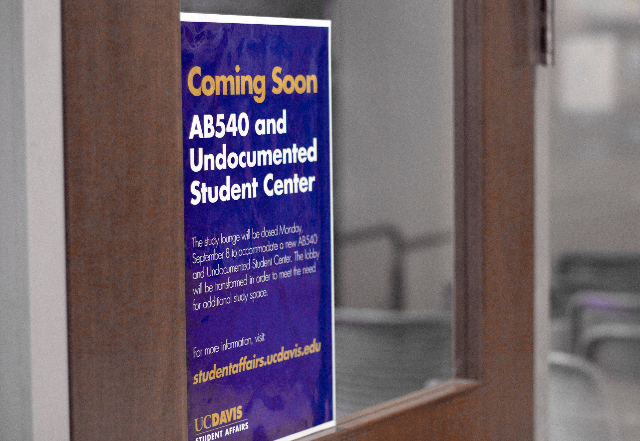
The AB 540 and Undocumented Student Center will be a new addition to the Student Community Center to provide centralized resources for the growing undocumented student population on campus.

The state’s education code was changed to include the Assembly Bill 540 (AB 540) in 2001, allowing certain non-resident students to pay in-state tuition at California public universities if they had received a diploma from a California high school or the equivalent. Specifically, this bill aids students who are considered undocumented. According to the official AB 540 website, a person who does not have the appropriate documents to live legally in the United States, is considered undocumented.

UC Davis has seen nearly a tripling of enrolled undocumented students –  from an estimated 70 in winter 2012 to just over 200 students in fall 2013.

Jennifer Wu and Samantha Manning
Graphic by Jennifer Wu and Samantha Manning / The Aggie

The center’s establishment is the result of years of student advocacy as well as a changing national and campus climate concerning immigration and social inclusivity.

Late last year, University of California President Janet Napolitano allocated $5 million to fund undocumented student resources across the UC system. These funds came as a sign of commitment to AB 540 issues after the initial protest on behalf of the UC undocumented community upon her appointment as UC president.

According to Ana Maciel, third-year Chicano/Chicana studies major, Academic Coordinator of the Undocumented Student Center and Co-Chair of the undocumented student group Scholars Promoting Education Awareness and Knowledge (SPEAK), the institutionalization of the center is a major step toward bringing awareness to a previously underrepresented population on campus.

“Having a centralized space and physical location is a validation that [undocumented students] matter; it shouts ‘It’s OK if you’re undocumented, we’re here to help you,’” Maciel said. “Everyone in the center is an ally, advocate, and general community member who is accepting of undocumented students. It’s a welcoming space where you can seek services without feeling judged for it regardless of immigration status.”

Andrea Gaytan, director of AB 540 and Undocumented Student Center and former assistant director of the Cross Cultural Center, said the new center will aim to be a “one-stop-shop” resource center with a direct referral system for undocumented students’ academic, social and financial concerns as well as an open space to create awareness of the community in general.

“The center is here to support all students and help with educating anyone who is interested in learning more about the undocumented experience,” Gaytan said. “We’re hoping to respect students who intend to remain discreet about their status but at the same time be a space for those students who would like to engage in the larger conversation, not just about individual status but about the issue of immigration in the state and in the country.”

As of now, the center will be made up of transfer and high school outreach and retention interns, graduate student researchers and an academic advising intern to head educational projects.

According to Gaytan, the center will also have formal partnerships with Student Health and Counseling Services (SHCS) and the King Hall Immigration Law Clinic to have fellows in the center to provide emotional and mental health services as well as free legal counsel for undocumented students.

Furthermore this year, through the approval of the UC Office of the President, qualified AB 540 undocumented students are receiving small grants through financial aid to help account for unmet needs. Gaytan said the center also intends to create an emergency fund for undocumented students.

“We’ve found in the past students sometimes face food insecurity, housing issues and often times transportation-related [difficulties] that are unanticipated,” Gaytan said. “We’re developing a mechanism to have these short-term grants available. Other campus entities [like] We Are Aggie Pride also [do this], so we are hoping to model our program after some of those systems.”

Although the building of the center was the goal of many students for the past four to five years, institutional momentum built last winter when six students made up an AB 540 and undocumented student taskforce to oversee how the allocated funds from UC President Napolitano were to be allocated. Maciel said this taskforce voiced concerns of the undocumented student community and proposed solutions which prioritized the establishment of a resource center, later submitted to Vice Chancellor Ralph J. Hexter.

“We said [in the proposal] that there was a problem on campus pertaining to the AB 540 undocumented population, specifically with the lack of resources that weren’t provided to ensure their success while being at Davis,” Maciel said. “We might be [admitting] them but we need to retain them, we need to make sure they graduate because they are students of the institution.”

The signing of the California Dream Act in 2011, made up of AB 130 and 131, is known to be one of the most enabling moments in state legislation for undocumented students, allowing them to receive financial aid and private scholarships through the institution.

“These are students who have always been capable of attending UC Davis, had earned the grades, had the academic kind of background to attend UC Davis,” Gaytan said.

Maciel, along with many others, went through stigmatization struggles as being part of the first cohort of undocumented students to benefit from the California Dream Act.

“We had [difficulty] finding the right people to talk to and the knowledgeable people to talk to because [we had] different needs than the typical resident, citizen student here on campus,” Maciel said. “We were always being bounced around between the financial aid office, the registrar’s office, the community center [but] they couldn’t really help. But then every single time we were bounced to a different office we had to disclose our status and why we were seeking the services that we needed and that was problematic for a lot of undocumented students.”

UC Davis mechanical engineering alum and former SPEAK Co-Chair Nilsen Gomez attended the university before any institutional or state funds were allocated to undocumented students, and has witnessed the shifting financial and social elements of the undocumented student experience.

“In 2009 and 2010 the California Dream Act hadn’t passed yet so for students who were looking for scholarships or any money for school it was really difficult,” said Gomez, who graduated in 2014. “It was embarrassing to say ‘I’m undocumented’ [when departments] didn’t know what it was. Just coming out as an undocumented student was a lot harder because the community didn’t know about the issue as much but I think that SPEAK along with other organizations have really worked hard for the UC Davis community to know that these students actually do come to school here.”

Having been one of the original students to go on a hunger strike in 1990 for the establishment of what has now become the Cross Cultural Center, Gaytan can also empathize with the efforts of underrepresented students and the importance of a center.

“We’ve been very fortunate to have an administration that has been very understanding and supportive of the [process] and has taken a student proposal and helped that materialize,” Gaytan said. “As a former student activist on this very campus I had the experience of administration who wasn’t even willing to meet with students. So to see how things have evolved 20 years later and be part of it from the staff perspective has been really exciting. It is fulfilling to do something that has been shaped by student opinion, voices and experiences.”

Maciel believes that the center is just the first step to a changing campus climate concerning undocumented students.

“It doesn’t matter if you don’t identify as undocumented or AB 540; Allyship is crucial to a movement and crucial to advocacy,” she said. “But if you are specifically AB 540 and/or undocumented there’s going to be accessible resources here for you and hopefully [the center] becomes your second home.”

Photo by Katie Lin, Jennifer Wu, and Samantha Manning

UC Davis opens new World Food Center

0

Members weigh on center goals, plans and why Davis is the perfect

place to host it

As one of the highest-ranking universities in the world for agriculture, UC Davis has launched its very own World Food Center with the hopes of finding sustainable ways to feed an ever-growing planet.

Composed of an experienced group of individuals from various backgrounds in the agricultural and medicinal fields, the World Food Center aims to generate economic development locally by expanding the university’s economic connections with environmental businesses.

“UC Davis is one of the best places in the world with respect to those seeking an education in agriculture, food sciences and nutrition,” said Josette Lewis, a UC Davis alumna and associate director of the World Food Center. “The goal of the World Food Center is to really leverage and build on that incredible intellectual base that already exists, and position the university to be more influential in shaping how the non-academic community understands and makes decisions on policy and strategy surrounding agriculture and food.”

Dr. Bruce German, who is also on the advisory committee for the new center, has been a professor in the Department of Food Science at UC Davis since 1988.

“The challenges of innovation in agriculture and food go way beyond the simple science of genetics or microbiology,” German said. “People are wildly enthusiastic in innovations in communication and entertainment, but with agriculture and food that’s a very different proposition. People get very nervous, and even though guiding the genetic changes in agriculture and important crop plants is a very simple technology to execute, it is a global issue.”

The World Food Center was formed to find solutions to major global problems, including population growth, malnutrition, food security and supply.

“If you’re going to have a place that’s going to get engaged in global food issues then it should certainly incorporate Davis,” said plant sciences professor Dr. Kent Bradford. “I’m really glad to see that this campus is stepping up and taking a leadership role, saying we have the resources and the talent, we want to work with diverse groups to put that to work and solve these problems.”

Bradford, a member of the advisory committee for the World Food Center and former director of the UC Davis Seed Biotechnology Center, has been engaged in agricultural discussions on-campus for many years.

“On one end [the World Food Center] is interested in maintaining the system that we have, but also looking at the challenges that we have in feeding another 2 billion people in another 30 to 40 years,” Bradford said. “I think the World Food Center wants to be a focus for all this diverse talent and expertise that we have and then bring it into focus on specific problems, and I think it’ll be a focal point to put those groups in contact with our faculty and scientists and students and try to work out solutions.”

Lewis, who completed her masters degree in genetics at UC Davis in 1988 and then worked for the U.S. government, said that her international agriculture career has helped her understand how important of a role the Davis community plays in combating issues involving food and agriculture.

“[UC] has an enormous contribution in our food system,” Lewis said. “I think there’s such an incredible richness in our food system right now and people are really interested. We’ve got to put the pieces together and realize that a lot of that traces back to the outstanding work of our campus and the students that come out of our campus.”

According to Lewis, the World Food Center should serve to help students understand agricultural and health-related issues from other angles, while also improving their knowledge of the complexities surrounding the food system.

“The UC Davis community really is an amazing intellectual powerhouse on these issues,” Lewis said. “There’s also a renewed interest in agriculture and food from people interested in understanding more about where their food comes from, to more concerns about the health implications about what we’re eating and diets, and the impacts of choices we’re making about food and environmental and social issues like poverty and hunger.”

Over the past few years, the advisory committee has been meeting with executive director Roger Beachy and associate director Lewis in order to collaborate with various corporations and government agencies to discuss moving forward with future plans.

“For one thing, it’s nice to know you’re at what’s considered the world’s best,” German said. “Everyone is involved in food, and so however distant you may think you are from the practice of it, we’re all involved in it everyday.”