53.5 F
Davis

Davis, California

Tuesday, December 23, 2025
Home Blog Page 844

AggieAngelous

0

In loving memory of the Resilience & Inclusivity of Maya Angelou


Welcome to the introductory installment of The California Aggie’s first poetry column: AggieAngelous. AggieAngelous is here to display the diversity of Aggie creativity and interest through the beauty of poetry. This column will display poems written by UC Davis students of all majors, years, talents and backgrounds in a variety of styles including free verse, sonnets, haikus, epics, ballads, odes, etc.

Every column will feature one to three poems written by Aggie students and a short bio about them. Be sure to check in with AggieAngelous online weekly to read the work of up-and-coming UC Davis writers and get to know your peers in sections of the column entitled “ThePoetry” and “ThePoets&Poetesses.”

AggieAngelous welcomes all writers and will offer a glimpse of the poetry scene in Davis. One of the sections of the column, “ThePoetrySlams,” will feature event information about anything poetry related in the city of Davis. This section will be a resource for people interested in seeing poetry performances or performing themselves, and will additionally serve to familiarize readers with poetry as a performing art as well a written art.

Here are some of the events that AggieAngelous will provide information about throughout the year:

  • Clubs: English club meetings, SickSpits performances
  • UC Davis: VAGINA:OurStories (WRRC), Soul Speaks (SRRC, ACE), etc.
  • The English Department: Graduate Students doing readings
  • Davis Community: Fig and Axles poetry readings and open mics, etc.


Are you a writer? Do you have a poetry sitting and waiting for all of Davis to read? Do you want to experiment with poetry and be featured in The Aggie?

If so, then send your poetry to aggieangelous@gmail.com with a short, one-to-two paragraph bio about yourself, including your name, major and year. Feel free to include your interests and / or hobbies, or maybe even your favorite quote!

If you are involved in a poetry event or would like to advertise a poetry event you have heard about, please send an email to aggieangelous@gmail.com with a short description of what the event will entail. Please remember to include the title, date, time and location of the event.

AggieAngelous is dedicated to Maya Angelou as a tribute to her life story, poetic skill, inclusive nature and loving poetry. She has inspired many and I hope this poetry column may inspire some as well.

“Success is liking yourself, liking what you do, and liking how you do it.”

— Maya Angelou


Camille Iman Woods is the creator and facilitator of AggieAngelous. She is a third-year English major at UC Davis and would love to answer any inquiries regarding this column. If you would like to know more about Camille, you can check out her blog at MsCamilleIman.blogspot.com.
 

UC Davis Fire Department offering new Emergency Medical Technician program

0

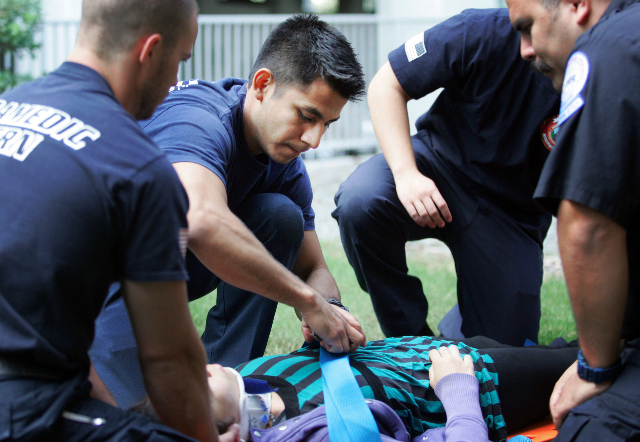
The UC Davis Fire Department (UCDFD) is now offering an Emergency Medical Technician (EMT) program that covers a basic overview of the emergency medical care system (EMS). The course trains students on how to become EMTs, including patient assessment during an emergency, ethical and legal aspects and patient symptom recognition.

“They learn about dozens of different medical problems, the basic pathophysiology behind them, the signs and symptoms associated with each, and what the proper treatment is,” said Michael McCartney, UCDFD firefighter, EMT instructor and a UC Davis alumnus. “They also learn about traumatic injuries that can occur, from car accidents, gun shot wounds, falls and others.”

This accelerated program runs over seven weeks, totaling 160 hours of lectures and labs. Lectures are taught by UCDFD firefighters themselves, including McCartney, Braden Burrhus and program coordinator Scott Hatcher. All three instructors are also licensed paramedics. Lab instructors come from several different backgrounds, such as American Medical Response, UCDFD and EMT event and club supervision.

“We all have a diverse background of knowledge and experience and I think that’s one reason that makes our program interesting,” McCartney said.

The material taught is based on national EMS education standards and follows Title 22, Division 9, Chapter 2 of the California Code of Regulations and Emergency Medical Technician-Basic. Course credit cannot be earned at this point.

The first round of the EMT program was a success, according to McCartney, running over the summer from Aug. 11 to Sept. 26. Students met three days a week, spending the first half of each day learning lecture material and applying new concepts hands-on in the lab for the second half. The 23 students who completed the course all passed the final exam with at least the required score of 75 percent, making them eligible to take the County of Sacramento Division of Public Health Emergency Medical Services certification examination.

According to McCartney, students take daily quizzes nicknamed “celebrations of knowledge,” in which they demonstrate familiarity with the reading material. The students take cumulative exams every two weeks leading up to the final exam. Final grades also take into account each student’s qualities of selflessness and honesty, which McCartney said are both imperative attributes in EMS.

“The curriculum was already established based on national standards, and our lead instructors tailor each lecture to suit the needs of the students, and to make sure all pertinent information is covered,” said Hatcher said.

Field trips are also an important aspect of the class. Students are required to complete 24 hours of clinical time, split between hospital time and field experience. The program simulates real emergency situations where students practice cardiopulmonary resuscitation (CPR) and ride along in the ambulance or with the UCDFD.

“We even got the experience of loading and unloading a gurney [from] an AMR ambulance,” said Raul Carrillo, a third-year computer engineering major and student resident firefighter. “We really got hands-on experience in everything that is expected for an EMT to know.”

Outdoor Adventures has offered an EMT program in the past, but the partnership with the UCDFD further distinguishes the program.

“I thought it would be a good fit for the department and approached [UCDFD] Chief [Nathan]Trauernicht to discuss it,” Hatcher said. “He was supportive of the idea and thought it would be a great opportunity to serve the campus and community.”

The EMT course may be offered again in Spring 2015, and instructors hope to provide it at least once a year. Future offerings will keep UC Davis students’ schedules in mind.

The program’s tuition fee of $1,195 covers the textbook, clinical hours, class time, instruction and student insurance. Although participants are required to have CPR for Professional Health Care Providers certification, the course is open to anyone in the community. Students receive direct experience in the emergency medical field and earn a certificate upon completion.

“I would recommend this course for other students,” said Griffin Barnes, a third-year international relations major and student resident firefighter. “The instructors were very helpful inside and out of class and made themselves and the equipment available during the weekends.”


University Dining Services regulates meal plan sharing

This year, UC Davis Dining Services and Student Housing will implement new dining commons policies regarding guest meals and take-out food, amongst other changes to the three dining areas on campus, for all students with meal plans.

In response to these changes, a discussion was launched on the Facebook group titled “Sell/Buy DC Swipes” at the end of the 2013-2014 school year.

The biggest change to dining commons policies this year, fueling the online forum, is a new limit on “guest” swipes available to students who purchase a meal plan.

“We will be limiting the number of guest swipes, a swipe that allows a student to bring in an outside guest, to 10,” said Office of Student Development Director Branden Pettit in an email interview.

Many students with meal plans that have been known to swipe others in are involved with larger on-campus organizations. Pettit explained that the limit was placed to protect these students from being pressured by their peers from clubs, sports teams and other extracurricular activities to swipe in groups.

However, the limit is a blow to online exchange groups like “Sell/Buy DC Swipes” which relied on previous policies allowing students to swipe in guests as often as they wanted.

“A year ago, freshmen could sell their swipes to other students, particularly upperclassmen and graduate students, if they had any leftover swipes at the end of their last quarter as freshmen,” said second-year design major Rachel Kreager. “Those students were then able to get the swipes at a much lower price than what [they normally cost]. This not only helps the freshmen get a few bucks back, but also lets [other] students eat and save money.”

The “Sell/Buy DC Swipes” page was made to facilitate the exchange of swipes into the DC, encouraging freshmen to use swipes that would otherwise go to waste under the policies at the time. The group was still active over the summer, with students offering to sell swipes for $5 each.

Kreager began the discussion on the online group by posting an image that detailed the changes to meal plans for the 2014-2015 school year. The post is currently pinned at the top of the page.

“Bottom line, it is our money; we should be able to use it how we want,” Kreager said.

Last year, students did not have the option to cash out their swipes at the end of the year in exchange for Aggie Cash. Instead, students were expected to choose the meal plan that best fit their needs.

“Our hope was to encourage students to adjust to the best meal plan each quarter with the goal of ‘zeroing out’ at the end of the year,” said UC Davis Food Service Contract Manager Kraig Brady in an email interview. “This would be the absolute best value for the students. While this was successful for many students, it was challenging for those who did not have the time to make the adjustments.”

Those who did not make the swipe adjustment found that selling their swipes was a better option than losing them completely at the end of the year.

“Over this last year, since end-of-year rollover meals were not allowed, students were selling their swipes for $1 to $3 when they actually paid over $9 per swipe at the beginning of the quarter,” Pettit said. “This was a significant loss to students and very unfortunate.”

To avoid this loss, students can choose to donate their leftover swipes to the Swipe Out Hunger Fund, which includes various programs that help feed other students and Yolo County residents, including the UC Davis Food Pantry, Yolo County Food Bank, and the Aggie Meal Share program.

Additionally, Pettit said that the new policies allow students to cash out their swipes at the end of the year, specifically for $3 in Aggie Cash per swipe. The cost of keeping the DC up and running is the $6 which is not returned to the students as Aggie Cash.

“The $9 covers all the business costs to provide meal service, such as overhead, labor, food and facilities expenses,” Brady said. “$3 is the food cost portion of the expenses that will be converted at the end of the Spring Quarter. The remaining $6 covers the current fixed expense to run the Dining Commons.”

Although swipes can be converted to Aggie Cash at the end of the year, Kreager said it is not as useful as it was before the change.

“Aggie Cash is no longer available to use in off-campus restaurants,” Kreager said. “If freshmen are allowed to switch their leftover meals at the end of the quarter for a minimal amount of Aggie Cash, there should be more options on how they can spend it.”

However, even with fewer options, Aggie Cash offers students a discount at various locations.

“Aggie Cash still offers a 10 percent discount when dining at a Dining Service’s retail locations and is accepted at numerous retail locations throughout campus,” Brady said. “There is also no sales tax when using Aggie Cash for a residence hall student on a Student Housing meal plan. This is almost a 17.5 percent savings for students using Aggie Cash rather than using cash out of pocket.”

Two years ago, meal plans were changed to include a minimum of $100 of Aggie Cash per quarter. Brady said this minimum did not increase the cost of the meal plan and that students have until they graduate to spend all of their Aggie Cash.

In addition to these changes, Pettit said there will also be more options to use up swipes and avoid converting them to Aggie Cash through the new “DC to Go” option, allowing students a limited time to fill up and take out a food container for one swipe.

“The ‘DC to Go’ option is to provide our guests with a balanced meal, just like they would receive if they were to dine in the DC, with a ‘to go’ convenience,” Brady said. “The container is compartmentalized to hold an ample amount of food choices to compose a balanced meal. The ‘DC to Go’ option is not intended for our guests to load up on one specific item, say all of the chocolate chip cookies. Our service cashiers will help communicate these limitations.”

Beyond the addition of “DC to Go,” there are a few more changes coming specifically to the Tercero dining area.

“Running Monday through Thursday outside the grassy area of the Tercero DC, we will be offering an alternative service that will include either a BBQ menu or a food truck option,” Brady said. “Additionally, at the Tercero DC, we will not be closing the DC between dinner and late night service. Students will have more flexibility when they eat their evening meal.”

There is also an option which allows students to purchase up to $5 worth of food from vendors on campus with a swipe.

Brady said the changes to meal plans are meant to offer greater flexibility and convenience to students.

“We are always looking at our meal options to create the greatest value for our students,” Brady said. “Meal plans could and will adjust annually as conditions change.”

TBD Fest Expands to 3-Day Lineup

Modern-day music festivals tend to focus on their headliners and not much else — certainly not the location that they are taking place in. Luckily for Northern California residents, a festival set in West Sacramento from Oct. 3 to 5 is turning the paradigm on its head, showcasing Sacramento as a creative community, and has been doing so for the last seven years.

TBD Fest, formerly known as Launch, began in 2007 as an art party in Sacramento’s Greens Hotel, and has dramatically expanded every year since. Michael Hargis is the founder and organizer of TBD.

“In 2012 we decided to go all out with a full-scale music festival; in 2013 we expanded to a two-day platform, and this year we are going even bigger with a three-day event,” Hargis said.

To organizer and co-founder Clay Nutting, the name change from Launch to TBD represents the evolution of the event.

“It’s to be determined; the partners we have, the people we lock arms with. Farm to fork is big now, so this year we put a significant emphasis on it — we’re integrating [festival highlights] based off of what is happening in the community,” Nutting said. “That, and there’s [already] 10,000 Launch festivals.”

The name change and first attempt at a three-day event were welcomed as a challenge by the TBD team who were already familiar with biting off more than can easily be chewed.

“It’s been a barn-raising every year, drawing on friends and family, and when it’s that small of a team, people take ownership — they helped build it. [That feeling of personal input] draws the city and community closer,” Hargis said.

TBD features international, local and musical talent spread across multiple stages which act as the backdrop of the event. In addition to music, this year’s iteration boasts rides, a cook-off, world-class yoga instruction, art, fashion, design and architectural installments.

“People come for the music and discover not only new artists; they discover what makes this region so special. Music is the backdrop for so much more,” Nutting said.

In keeping true to the festival’s ties to local phenomena this year, TBD organizers wanted to accentuate Sacramento’s farm-to-fork movement. In addition to food trucks and restaurant installations, local chefs will compete over the three days using open flame in the aptly named “Pit.” Michael Tuohy is this year’s Chef Pit organizer.

“We’re showcasing chefs on stage as if they were rockstars as well,” Tuohy said. “Open-fire cooking is a blast. We have a lineup of chefs who take turns in the Pit, two at a time. It’s loose, it’s fun, the competition is [intended to be friendly]. They have three hours in the Pit to execute 350 bites.”

The chefs create their menu, prep, cook and distribute these carefully crafted bites to the audience, connecting the stage show to those attending.

“[Open-fire cooking] is sexy and challenging,” Nutting said. “Chefs love to think about how to present something unique.”

The focus on local talent and flavors celebrates Sacramento’s unique blend of metropolitan and agricultural features.

“It’s a celebration of the NorCal lifestyle and we try to reflect what is important in this city. By expanding our platform [and the types of events that attendees can participate in], we’re engaging another part of the community,” Hargis said. “It’s a love song and a love letter to Sacramento.”

With such a fast growth, TBD looks forward to continued expansion in years to come.

“We want the Fest to become an iconic event in Sacramento to draw both people inside and outside of our region to celebrate this city,” Hargis said.

The TBD Fest kicks off this weekend in West Sacramento. Single-day and three-day tickets are available at their website, TBDfest.com.


Photos by Tori Kobayashi — The Aggie

OK Go’s Tim Nordwind talks optical illusions, new album, upcoming tour

If you’ve been on YouTube anytime in the last decade, you’ve probably experienced the artistic endeavors of alternative rock

Ok Go kicks off their first tour in three years July 15 in Sacramento.

band OK Go. This Grammy-award winning group is known for their quirky-creative music videos, like the treadmill-choreographed “Here It Goes Again” and the puppy-dominated “White Knuckles”, as well as their innovative dance-inducing alt-rock sound.

OK Go recently released their first single “The Writings on the Wall” from their highly-anticipated album, Hungry Ghosts, which is set to drop October 2014. The music video which was released with the song garnered more than one million views within the first day.

The band is set to kick off their first tour in three years at Assembly Music Hall in Sacramento on July 15. MUSE spoke with OK Go co-founder and bassist Tim Nordwind about the upcoming tour, Hungry Ghosts and the band’s creative pursuits.

MUSE: What kind of sound were you going for with “The Writings on the Wall” and can we expect the same feeling with the rest of the album?

Tim: “The Writings on the Wall” has a somewhat romantic feel to it and I think that kind of energy definitely runs through our record. The song also has a melancholic feel to it that some (but not all) of the other songs have. But the record as a whole is sort of an electronic dance/rock album with a lot of surreal moments. I think “The Writings on the Wall” is a good lead-off song because it gives you a little bit of everything we do on the record. We sometimes go heavier [thematically] than “The Writings on the Wall” and sometimes we go lighter, but I feel like it’s a good combination of everything on the album.

MUSE: Why the melancholic feel?

Tim: If I was going to very generally explain Hungry Ghosts, I would say it’s a record about relationships and the ups and downs of those relationships. “The Writings on the Wall” is a song about breaking up with somebody but wanting to have one final night together. It’s an experience that’s very relatable. If you date and fall in love then you’ve probably had this feeling before. We just wanted to write a song about it. The song is documenting that weird and crazy feeling you get when you have a last moment with someone that you know you have to let go. It’s just celebrating the fact that we all go through these difficult times.

MUSE: How is Hungry Ghosts unique from any of OK Go’s past records? What are you most excited about with this upcoming album?

Tim: This is definitely our most modern-sounding record we’ve put out. Saying it “sounds modern” may be obvious to people because it’s our newest album, but I think we delve a lot more into electronic production – a lot more so than we have on any other of our past records. It’s modern and surreal but also emotionally nostalgic feeling in a way; it plays with that mix of energies. I’m excited for people to hear it, it’s the most immediate sounding record we’ve ever made and possibly some of the most easily digestible songs we’ve ever written. I’m really excited to see people’s reactions to it.

MUSE: The music video for “The Writings on the Wall” is awesome – love the optical illusions and multiple perspectives. Who comes up with this stuff and how?

Tim: Each of our videos comes together differently. In the case of “Writings on the Wall” our singer Damian saw an advertisement for BBC4. The ad [was a film of a] bunch of objects, but you couldn’t tell what the the objects were supposed to be. When the camera changed to a certain perspective [the objects] came together and turned into a shape – like a circle or a square – and he was really excited about that. As we got to talking about it, we thought if we did this on a massive level it would make a really good, fun video. That’s how “The Writings on the Wall” came together. But sometimes our videos are more of a collaborative process; one of us will have an idea and the rest of us will kind of follow them, you know? Our videos have gotten more and more complicated and we’ve collaborated with a lot of different people. For the case of “The Writings on the Wall” we collaborated with a production company in New York called 1stAveMachine and specifically with [creative heads from 1stAveMachine and Special Guest] Aaron Duffy and Bob Partington. They really understood perspective tricks and optical illusions and they helped get our vision across.

MUSE: You guys pay close attention to the artistry and aesthetics of your music videos. Do the video concepts connect directly to the songs they’re paired with or is the video and the song two separate entities?

Tim: When we write a song we don’t generally have a video in mind and when we come up with ideas for videos we aren’t necessarily sure what song’s going to go with it. I think in a lot of cases videos, music, playing live and anything else that you can think of that could be centered around the four of us doing something creatively – we enjoy all those things. We met through music fifteen years ago and I think music is always going to be our common bond, but we’ve always been into art, technology, film, theatre, literature – you name it, we’re interested in all of it. So I think in general the creative project of OK Go is under a pretty large umbrella.

MUSE: You guys will be kicking off your live tour this month in Sacramento. What can fans expect from your concert? Are your live performances anything like your video performances?

Tim: Our live performances carry over the wonderment and joy that you get from our videos, but the live show is its own project unto itself. The kind of spirit people enjoy in our videos is the same type of energy they can expect live, but playing live is really unique from watching a video because we’re all in the same room together and we can all experience the music with one another. We’re really trying to put on a show that plays to the fact that we were all there together. I mean, it’s awesome so many people watch the videos and we’re super excited about that. The one thing about it, though, is that we can’t see people watching our work and listening to our music, so this is a nice opportunity to be in the same place and connect with everyone. For us, we haven’t really been out touring in three or four years so it’s going to be nice to be in front of people again.

MUSE: Can we expect anymore video projects in the near future?

Tim: At the end of the month we’re going to be in Japan trying to work out the plans for another music video. We’re not really sure what song it’s for, but we have an idea that we’re going to play with a little bit and see if it’s worth doing. There should be something new in the fall or early 2015.

Hungry Ghosts is set to drop October 2014. Tickets for OK Go’s upcoming show in Sacramento can be purchased online at aosconcerts.queueapp.com. Tickets for all tour locations and concert dates including the Sacramento show can be purchased on the band’s website at okgo.net.

 Akira Olivia Kumamoto can be reached at arts@theaggie.org.

Plea of insanity denied for Aquelin Talamantes murder case

On June 3, a Yolo County Superior Court Judge rejected the plea of insanity in the case of Davis resident, Aquelin Talamantes, 29, for murdering her 5-year-old daughter Tatianna Garcia, last year.

Talamantes was found guilty on May 30, of first degree murder that took place Sept. 25, 2012 when Talamantes drowned her daughter in her bathtub. She later drove her unresponsive daughter in her trunk to the home of a relative in Sacramento. Her daughter was proclaimed deceased at the hospital.

According to reports, the defendant had been to several mental health professionals. However, prosecutors further alleged that Talamantes was a manipulative and cold-hearted killer who used the mental health practitioners to her advantage.

The sentencing will be July 7. Talamantes will be faced with 25 years to life with parole.

— Gabriella Hamlett


News in Brief: Hate crime occurs at UC Davis research facility

At approximately 10:30 a.m. on May 12, a hate crime occurred at a UC Davis research facility on Newton Court. According to the Campus Crime Alert Bulletin, the facility’s workers reported that an unknown subject had written racially-charged remarks in black felt tip pen on the windows of two of the building’s rooms.

According to Matt Carmichael, UC Davis Police Chief, there are no current leads.

“Somebody gets a backpack stolen. It’s property, but anytime there’s an event related to hate, that’s personal,” Carmichael said. “That’s emotional. You can hurt us by taking our stuff. But when you hurt someone emotionally like that it really hurts all of our campus.”

This incident is the fourth hate crime to occur this academic year. It follows three other hate incidents that occurred in November 2013, in which individuals reported that racial slurs were yelled at them from vehicles passing by.

“These are cowardly acts that occurred when no one is around,” Carmichael said.

Carmichael urges anyone that has any information on the most recent hate crime to contact the UC Davis Police Department at (530) 754-2677.

— Jason Pham


UC Davis Police implements Police Accountability Board

A new Police Accountability Board (PAB) was implemented by the UC Davis Police Department (UCDPD). The panel was established as a pilot program toward the beginning of 2014. The panel consists of members of the UC Davis community, including students, faculty and community members.

The PAB was created in the hopes of strengthening the relationship between the UCDPD and the Davis community. By promoting accountability, trust and communication between Davis civilians and the police department, the PAB will ensure a lesser gap between the police department and the community. The PAB will be serving the community independently from the police department represent the concerns the community may have regarding law enforcement in the Davis area.

Due to the incident in November 2011 when multiple students were pepper sprayed by UC Davis Police during the international Occupy movement, many questioned the trusting relationship between the UCDPD and the rest of the Davis community. The PAB has the potential to mend this gap in trust by allowing the public to have an opportunity to be represented in local law enforcement.

The role of the PAB is to make recommendations to campus investigators regarding filed complaints of misconduct filed against UCDPD officers. This will ensure that the Davis community has some representation and input in the practices of the UCDPD.

“It allows the community to get involved in this process and I think that what really gives it its power,” said Ben Marchman, the PAB member representing ASUCD. Marchman stressed the importance of being able to view the recommendations made by the PAB, but also viewing how the UC Davis police responded given the PAB recommendation.

The campus groups that are represented are Academic Senate, Academic Federation, UCD Health System, Staff Assembly, Graduate Student Association, ASUCD and Student Life. The current members are Jack Chin, representing Academic Senate; Leon Jones, representing Academic Federation; Tamara Cole, representing UCD Health System; Amy Young, representing Staff Assembly; Kevin Peterson, representing the Graduate Student Association; Ben Marchman representing ASUCD and Hazel Quintanilla, representing student life.

At an introductory meeting on May 28, members of the public were able to meet the board members and ask questions regarding the roles of the PAB, the board members shared why they wanted to serve the community as a member of the PAB.

“It’s very clear to me that the quality of police-community relations has a huge impact on the quality of life in that community and I want to do what I can to see if it can be improved,” said Jack Chin, the member representing the Academic Senate.

Amy Young, representing the staff assembly, spoke about how she felt that UC Davis faculty often feel on the outskirts of the community in Davis. As both a faculty member and a Davis resident, Young wanted to use her PAB membership as an opportunity to include the campus faculty in an important process that affects everyone in Davis.

“I want to make sure that the communication to the staff is such that they feel they can be involved in these public meetings and in voicing their concerns and their interactions with the campus,” Young said.

Hazel Quintanilla, the PAB member representing student life on campus, spoke about wanting to bridge the gap of trust between students and the police on campus. She said that many of her friends fear or do not trust law enforcement on campus and therefore do not call the police even if they are in a dangerous situation. She stressed the lack of trust that the current student population has in the UCDPD.

“It [PAB] opens up an avenue where people can place their complaints and actually be heard,” Quintanilla said.

Ben Marchman also offered his ideas on the value of having the PAB for the law enforcement on the UC Davis campus.

“Having these other avenues of interaction between the community and the police, especially among students who make up a very large portion of this campus is very important to be and I hope to be able to express the student opinion,” Marchman said.

Matthew Carmichael, Chief of Police for the UCDPD, said the PAB would allow the trusting relationship to grow with more public involvement in the process of law enforcement on campus.

“For a police department to be successful, there has to be a level of trust with the community and that trust has to go both ways,” Carmichael said.

LAURA FITZGERALD can be reached at campus@theaggie.org.


This week in Senate: May 29, 2014

Vice President Maxwell Kappes presided over the weekly senate meeting on May 29 in the Mee Room. The meeting was called to order at 6:24 p.m.

In the appointments and confirmation section of the meeting, senate approved candidates for Academic Affairs Commission, Picnic Day and Aggie Reuse.

During public announcements, Senator Gareth Smythe announced that the Champagne Committee met to recognize hourly employees and that Budget Hearings would be taking place the next weekend in the Mee Room. Senator Mariah Watson mentioned her petition to start mid-quarter evaluations. Senator Azka Fayyaz announced the Canned Food Castle Competition taking place at the Quad on May 30 to support The Pantry.

Meeting attendees then went to the Candlelight Vigil on the Quad to honor the victims of the UC Santa Barbara shooting.

According to Smythe, it is important that UC Davis gives its response to the tragedy that happened.

“I think it’s wonderful that people have given up their Thursday night to stand in solidarity with our sister UC school,” Smythe said. “I want everyone in Santa Barbara to know know that they’re in our thoughts now and always as we help them heal from this terrible event.”

Campus Copies/Classical Notes Unit Director Sara Okholm addressed her issue of the proposed merger with the Memorial Office Post Office. Okholm expressed her opposition to the change, as she said that it would be too hard on employees. She provided information, such as hours, wages, costs and profits.

Environmental Policy and Planning Commission Chair Naftali Moed felt that it was unfair not to have the Post Office Unit Director present. Watson said that she was glad to be informed about the situation before Budget Hearings. Internal Affairs Commission Chair Spencer McManus said that there was not enough information to make a make a decision at the meeting.

Senate then passed Senate Bill #80.

Senate Bill #80, supported by ASUCD Senate Bill #53, is intended to reorganize Office of Advocacy and Student Representation (OASR). The bill calls for the joining City and Community Relations, University Affairs and Lobby Corps into a single entity.

The meeting adjourned at 11:27 p.m.

— Jasmine Mangabay

This Week In Science

Pot has new potential
A recent study has found a new potential use for marijuana in patients with autoimmune disorders. Researchers at the University of South Carolina discovered that THC, the main active ingredient in marijuana, can suppress the body’s immune system through epigenetic pathways. THC can change molecules called histones, which surround the DNA, and may alter the function of certain genes. These findings suggest that marijuana could therefore be used to treat autoimmune diseases that cause chronic inflammation, such as arthritis and lupus.

Fetal cells: a new treatment for Parkinson’s disease
Researchers at McLean Hospital discovered that fetal dopamine cells transplanted into the brains of Parkinson’s patients remained healthy and functional for 14 years. The scientists analyzed the brains of five patients who received fetal cell transplants over 14 years, and they found that the patients’ dopamine transporters and mitochondria were still healthy up until the patients’ deaths. While some other similar studies have experienced corruption within the transplanted cells, this particular study was successful in proving that transplanted cells could stay healthy. Published in Cell Reports, these results show promise for the transplant field to move forward and may reduce the need for dopamine replacement drugs in the future.

Blond jokes: no longer valid
A team of Stanford University scientists has found that a single nucleotide shift from adenine (A) to guanine (G) in a region of chromosome 12 is responsible for the lighter color variant that leads to blond hair. This genetic change only influences hair follicles, so no other cells (like brain cells) or body regions are affected. According to study author David Kingsley, the change that causes blond hair is certainly not linked to levels of intelligence and “is, literally, only skin deep.”

The importance of sleep
New York University medical researchers have found important physical evidence of how sleep enhances learning by strengthening new memories. By examining genetically-engineered mice that expressed a fluorescent protein in neurons, the scientists tracked the growth of dendritic connections in the motor cortex. After performing a task, the well-rested mice showed much more growth in their dendritic spines, re-activating the brain cells that were first activated when they learned the task. According to the study authors, this suggests that sleep is so critical for learning because this neuronal activation is “quite important for growing specific connections within the motor cortex” and for facilitating long-term memory. Just remember to sleep after class, not in it.


Study finds novel relationship between blood brain barrier, stroke

Stroke is the fourth leading cause of death in the United States. Fortunately, a recent study from UC Irvine provides new insights on the relationship of the blood brain barrier and stroke. Assistant professors Dr. Dritan Agalliu and Dr. Axel Nimmerjahn from Salk Institute collaborated on this study to observe the changes that occur in the brain during and after a stroke in living animals.

The blood brain barrier (BBB) functions as a cushion which separates circulating blood from entering the brain. It does however allow for water, particular gases and other soluble molecules to pass through. It is also one of the first areas to become severely damaged during a stroke. Damage to the BBB can often cause permanent deficits in cognition, as well as motor functions.

This study developed a novel mouse strain and used fluorescent tags to tag them in order to see the BBB junctions. The researchers discovered that the BBB becomes severely impaired after six hours after the onset of a stroke.

Interestingly, they also discovered that BBB failure was not due to the breakdown of the tight junctions as previously hypothesized. This breakdown actually didn’t occur until two days after the incident.

“Serum albumin is a large protein present in the blood. During BBB breakdown after stroke, albumin enters the brain to trigger an inflammatory response that exacerbates the disease,” Agalliu said in an email.

The study found that these proteins lead to the initial failure of the BBB, which then leads to the leaking of circulating blood in the brain immediately after a stroke.

“The goal of the research is to identify drugs that would block such pathways,” Agalliu said.

The research team is continuing to use genetic techniques to block degradation of the junctions in order to examine the effect on stroke progression.

“This is an early study that brings people from various backgrounds to visualize the potential effects of regulating the carrier proteins,” Nimmerjahn said in an email.

Although research is ongoing to find more effective treatments for stroke patients, current therapies do exist. According to Elisabeth D’Angelo, a doctoral candidate in the human development program at UC Davis, lecturer and speech-language pathologist, early administration of tissue plasminogen activator (tPA), a protein which aides in the breaking down of clots, can be helpful.

This is a viable treatment for only ischemic strokes, which are caused by an obstruction within a blood vessel that supplies blood to the brain. Another caveat is that the injection must be made within no more than 3 to 4.5 hours of the stroke to effectively break up the clots.

Since 80 percent of strokes are preventable, it is important to be mindful of healthy life strategies.

“Prevention involves healthy lifestyle choices, including not smoking, physical activity and healthy weight. Taking anti-hypertensive and anti-coagulants if needed is also good prevention,” D’Angelo said.

Anti-hypertensive drugs are often used to control blood pressure. Anti-coagulants drugs help to thin blood. Medical research and treatments along with therapies continue to be hopeful avenues for stroke patients and their families.

JASBIR KAUR can be reached at science@theaggie.org.

UC Board of Regents meets in Sacramento for annual meeting

The University of California Board of Regents met in Sacramento on May 14 and 15 at the Sacramento Convention Center. The Regents discussed a variety of issues and topics concerning University of California (UC) campuses and students.

The meeting began at 8:40 a.m. on May 14. The public comment session initiated the meeting. Various UC students, professors, faculty and community members expressed concerns at their respective UC campus.

There were over 70 attendees from the public who wished to address the Regents during the public comment session.

Of the groups of public attendees, Fossil Free UC was prominent. The group protested the UC investment in companies that utilize fossil fuels, arguing that they perpetuate environmental pollution. Students argued that the tuition money UC students pay should not go towards companies that engage in practices that are not environmentally friendly. The students cited that Stanford University recently divested from companies engaged in practices involving fossil fuels and want to see the same shift in investment for all UC schools. Students rallied and protested for the duration of the public comment session and again outside the convention center once public comment session was over.

The public brought up other issues as well. Some wanted the regents to visit UC campuses more often to ensure their connection with students and faculty at each campus.

Some demanded that regents ensure student safety at campuses. A female student from UC Berkeley demanded an apology from the regents as she explained how she had been raped on campus on April 12. Due to the traumatic experience, she had to receive incomplete grades on all of her courses for the spring semester.

Some students asked the regents to divest from companies that provide weaponry and machinery to the Israeli military.

Students also expressed concerns with issues such as student loans not covering tuition costs, the gap in preparedness for graduate students and the demolition of student housing that caters to low income students and families in the Davis area.

Following the public comment session, individual committees discussed various topics.

The Committee on Finance discussed the 2014-15 fiscal budget and proposed it for approval. The expenditure rate and the cost recovery rate was proposed to be adjusted for the General Endowment Pool. CapEquip financing was also discussed for the fiscal year of 2014-15.

The Committee on Grounds and Buildings moved to amend the budget for Capital Improvements to repair student apartments at UC Santa Cruz. The committee also suggested that the president of the university be authorized to approve an amendment to the UC Monterey Bay Education, Science and Technology (MBEST) Center Master Plan to change the boundaries of the Fort Ord Natural Reserve (FONR) and remove five acres from FONR and include five acres of the West Campus of the MBEST Center Master Plan. The Long Range Development Plan for the Richmond Bay campus was also moved towards approval. The committee moved to adapt the Long Range Development Plan for the Santa Barbara campus and Los Angeles campus due to some negative environmental impacts discovered through the California Environmental Quality Act.

Under the Committee on Oversight of the Doe National Laboratories, Robert L. Powell was appointed as a governor of the Executive Committees of Boards of Governors of the limited liability companies known as Los Alamos National Security and Lawrence Livermore National Security.

The committees on Educational Policy and Finance both met during private sessions that were not open to the public.

LAURA FITZGERALD can be reached at campus@theaggie.org.

Davis Roots offers hands-on introductory programming classes

Introductory programming courses at UC Davis tend to be big, filling up the largest lecture halls with students who are oftentimes fulfilling a requirement for their major. The general manager of Davis Roots, Alex Rossbach, pointed out that there is a lack of options for people simply looking to learn introductory programming.

Davis Roots has begun offering such an option: classes meant to service anyone who is interested in learning the material, for any reason.

“The classes are open to anyone that just wants to learn how to program,” Rossbach said.

He did, however, state that the class size is limited to around 15 students, to allow for a more practical, hands-on experience.

“It isn’t like a lecture hall class where we’re just gonna make you take notes and sit there for a couple hours,” Rossbach said. “It’s maybe 15 to 20 minutes of lecturing at each class and two hours of hands-on building. The instructors will walk you through everything you need to know. They’ll answer any questions you might have.”

Davis Roots has already held a programming class, “Intro to Programming,” and this summer a different course will be offered: “Intro to Web Development.”

Davis Roots is a startup business accelerator located in downtown Davis near Mishka’s Café.

“We bring in three to five startups every nine months and we incubate them, help them raise money, pair them with mentors who can help them take their products that they’ve made, either in their undergrad career or as a Ph.D. student, and scale them and build a company around them,” Rossbach said.

The idea to add introductory programming classes to the services they offer came as a result of multiple factors. First of all, Rossbach pointed out that people asked for it. Secondly, Davis Roots needed people with programming skills.

“There’s obviously a huge demand for this skillset, and there’s a huge population that want to work for these startups, but they don’t have the skills that we need, so we’re trying to help them bridge that gap,” Rossbach said.

He mentioned that many startups require a team of people with experience in programming and noted a lack of such people available close by.

“What we found was that there aren’t enough engineers in Davis or in Sacramento who can work and help build these products, so we decided to start offering really affordable programming classes,” Rossbach said.

The classes take place over six weeks and cost between $150 and $175, which Rossbach says is competitive with similar classes offered elsewhere.

“We just want to be able to offer another service for UC Davis students, for high school students, anybody who wants to learn,” Rossbach said. “We don’t feel like money should be an issue if you want to learn how to program, or how to better yourself and get a better job.”

He explained that the classes are not necessarily taught for the sake of building teams for their startups, but have been utilized by people simply trying to increase their skillset, possibly for future jobs.

“We actually had several students from UC Davis that signed up for the programming classes that aren’t really interested in startups,” Rossbach said. “But they do want that programming experience so they can get those jobs in San Francisco, in Berkeley, in Oakland, working for Pandora and Facebook, and stuff like that.”

Davis Roots has seen a diverse group of UC Davis students in their classes so far.

“For that class we saw a mix of students from UC Davis who were science students, like biology or chemistry students who needed to learn Python in order to do all their data analysis that they need to do for homework and research that they’re interested in,” Rossbach said.

As intended, however, the scope of people that have signed up for their classes is not limited to science students, or even UC Davis students. Mikel Mcdaniel is a UC Davis graduate who is currently working at Google and commuted to Davis to teach the intro to programming class at Davis Roots, which introduced students to Python.

“The class was for anyone interested in learning the fundamentals of programming and/or Python,” Mcdaniel said. The range of ages, 14 to beyond 40, and interests — business, game design, English, etc. — of the students is a testament to that.“

Rossbach said Davis Roots was fortunate to find graduates and graduate students from UC Davis who were interested in teaching, and Mcdaniel said he hopes to teach more in the future and that he enjoyed his experience in the programming class.

“Some students had already written programs and some struggled a lot, requiring a lot of one-on-one attention,” Mcdaniel said. “In each case though, it was very rewarding to see a student understand a new concept and say ‘Ooooooh.’”

Judy Fong is another UC Davis graduate who is teaching the “Intro to Web Development” at Davis Roots this summer.

“It’ll cover the basics of JavaScript and hopefully students will leave feeling confident in their JavaScript code,” Fong said.

Continuing the goal of keeping things practical, Fong is setting up her class to be a similarly hands-on experience.

“The plan is to have a curriculum which will build upon itself each week until the students have a final product on the very last class,” Fong said.

Students can sign up now for “Intro to Web Development,” which begins June 30, by visiting the Davis Roots website. UC Davis students can get a 10 percent discount by using the promo code “ucdstudent.”

NICK FREDERICI can be reached at features@theaggie.org.


Male Athlete of the Quarter: Matt Hansen

0

Playing in his final season as an Aggie, senior Matt Hansen knew that he wanted to finish his already impressive collegiate career strong.

Coming into the season, the senior had already received a number of awards, being named Big West Freshman of the Year while making the All-Big West second team three straight seasons. This year, Hansen did not disappoint once again.

Hansen played well throughout the entire season, posting a team-best and UC Davis record 70.6 scoring average while finishing in the top-10 in five tournaments this year. He also finished Big West play in style, winning the last regular season tournament of the year along with the individual Big West Tournament.

The Aggies’ season ended in the NCAA Regionals in Auburn, Ala. where they fell short of a qualifying score. Still, Hansen put up an incredible season. He was named to the Division I PING All-West Region team along with being honored on the All-Big West first team. Finally, Hansen was named the winner of the Colby E. “Babe” Slater Award for the most outstanding male student-athlete.

After the season, Hansen plans on attending Q-school before moving onto the pro-circuit. The Aggies will certainly miss the presence and leadership of the four time All-Big West team representative as they move onwards into next season. For his excellent play this season, as well as all he has contributed to the UC Davis men’s golf team, Hansen is The Aggie’s Male Athlete of the Quarter.

RYAN REED can be reached at sports@theaggie.org.

Photo courtesy of Todd Ham.

Male Athlete of the Year: Gabe Manzanares

0

UC Davis football head coach Ron Gould has made a habit out of creating star running backs. He has coached the likes of future NFL players Marshawn Lynch and Justin Forsett before his time here in Davis. Luckily for Gould, he had a dominating running back at the head of his team during his first year coaching UC Davis.

Gabe Manzanares struggled to break through in his first two collegiate stops. He gained a grand total of 11 yards in one year at Wesleyan before sitting on the bench behind star running back Kris Olugbode at City College of San Francisco.

Manzanares came to UC Davis as a walk-on with little expectations and made an immediate impact, leading the Aggies in carries during his first game against USD. Still, he struggled in the first few games, averaging 3.5 yards per carry.

Against Idaho State University, however, Manzanares first proved his worth. The walk-on rushed for 208 yards on 34 carries while adding three catches that day, leading UC Davis to a 17 point victory.

From that point on, Manzanares had found his stride. Over the rest of the season, the new Aggie ran for 1,122 yards while becoming the first Aggie since 2002 to break the 1,000-yard barrier. Over that stretch of games, he eclipsed 100 yards in seven out of eight games.

Throughout the season, Manzanares proved himself to be both an outstanding rusher and receiver. In addition to his 1,285 yards and 10 touchdowns on the ground, the walk-on caught 23 balls for 290 yards and a touchdown.

For his great season, Manzanares was named to the All-Big Sky third team, an honor that he will surely continue to improve upon.

Coach Gould had an up-and-down first season at UC Davis. The Aggies lost seven of 12 games, including back to back beatdowns by conference opponents Cal Poly and Montana State. Still, Gould seems to have found his workhorse running back in his first season as a head coach. With the pair leading the way, the Aggies should be able to find far more success in the win column next season.

Manzanares’ excellent work, despite the subpar success of the team, and his ability to make an instant impact for the Aggies is why he is The Aggie’s Male Athlete of the Year.

RYAN REED can be reached at sports@theaggie.org.