55.9 F
Davis

Davis, California

Tuesday, December 23, 2025
Home Blog Page 877

Students face leasing extremes

1

One night in January, when the temperature dipped below freezing, the glow of phone screens drew attention to an apartment complex’s leasing office.

There, bundled in puffy fleece jackets and scarves, were three figures, two hunched down in lawn chairs clutching steaming travel mugs and the third lying in a sleeping bag at their feet.

“We were told that in the past, 200 people had lined up waiting to get an apartment [at this complex]. And that scared us a little bit,” said Jordan Stritzel, a first-year animal science major. “We got it into our heads that we should get here early to have the pick of the litter.”

Stritzel and her two friends arrived at Piñon Apartments at 10:30 p.m. with the intention of staying outside all night in order to acquire a lease when the office opened the following morning.

In Davis’ competitive student housing market, their efforts are not uncommon. With leases for the following school year opening in January and entire complexes filling in a matter of hours, some may go to great lengths to secure their living situation — sleeping on sidewalks or accepting apartments passed down by friends that haven’t been refurbished in years.

With the particularly competitive apartments closer to campus, sometimes the extremes still aren’t enough.

“We got discouraged by the cold and left at two in the morning — when we went back at 7 a.m. there were two other groups there. Unfortunately we didn’t get the kind of apartment we wanted — the group right in front of us did,” Stritzel said.

In situations where arriving hours before the office opens doesn’t guarantee the desired apartment, students rely on friends to pass down their lease.

“You literally have to start three weeks into the quarter to get at least one room at The Colleges [at La Rue]. It’s insane,” said Louise Chen, a third-year biological sciences major. “It’s hard because not a lot of people are willing to turn in their lease; the majority of the time, as the people who live there graduate, they hand down the lease to someone they know.”

Passing down leases to friends is useful in that it circumvents stress — but as a result, management isn’t able to refurbish apartments.

“If you pass down, you don’t have to sleep outside, but you get apartments that really need to be turned [over]. We do repairs, but turning over allows for the painting, the flooring, the deep cleaning. On one hand, pass downs are great, the faces have changed but the lease continues, but we want to make the place nice; we have a standard to uphold,” said Ray Ortiz, Sycamore Lane Apartments leasing agent.

When passed continually year after year, apartments can slowly fall into disrepair, to the point where major repairs are in order.

“Our apartment is trashed — okay, maybe not trashed, it’s just that we kept resigning and resigning the lease year after year, and they never got time to hire anyone to clean up all the mess or repair all the damages. Some of our bathroom doors aren’t working, and our plumbing is kind of bad,” Chen said.

If done correctly, a passed down apartment can maintain the same lease agreement for years, leaving management with a diminishing product.

“We closed for one year to renovate. I have a four bedroom that’s been going since we reopened. Which was around eight leases ago. Now, we’ve offered to come in and paint, spruce up the place, and they’ve been great, but it’s like please, let us fix this place up for you! We offered to switch them to another apartment, but with that comes the increased rent. They renew at a lower rate than our market rate.”

Despite less than pristine living conditions, proximity to campus and downright competition keep students vying for passed down apartments.

“The passing down is a problem. It’s changing the rules completely. I had people sleeping outside to get on the waitlist, and I couldn’t accommodate them. I got down there at 7 a.m. and opened the office, just to start getting them out of the cold. I was full at 9 a.m., I just didn’t have contracts. That’s really the fact,” Ortiz said.

While the students were able to get out of the cold, many were not able to get into a lease for the following year.

“I had 24 four bedroom [units this year], 18 of them renewed; some of them were passed down and the six I had left were taken by in-house residents (residents already in the complex). Passing down is great, but we also want to get new people in as well.”

Ultimately, when trying to move close to campus, the options come down to networking or braving the elements. Though Ortiz said that he’d be happy to sign leases in April, with friendlier weather, the market itself prevents this.

“Part of it is that students push it, they start working on passing down early, otherwise it’s just market — you have a product to sell,” Ortiz said. “Where it began? I don’t know, it’s been that way for a long time. We jump off early, there’s no doubt about it, and we tried to push to start later. All it did was increase the line.”
Watts Legal: Feb 02, 2014

0

Question: I’m quite crafty, so I’ve been making and selling ornaments and clothing accessories on a website called Etsy. One of the things I make is a clip-on bow with rabbit ears sticking out of the top. It’s really cute. I discovered that another Etsy user is mimicking my bow, copying it almost exactly and selling it on her own page. I emailed her and asked whether she came up with the idea on her own, or if she got it from me. She said she just did a Google search for “bow ideas,” found mine (which she thought was unique) and recreated it with her own supplies and started selling it. Can she do this? Can I stop her from selling a bow that looks a lot like mine, almost to the point of ripping off my idea? Doesn’t it violate my copyright?

— Melissa R.,

Davis, CA

Answer:

You probably cannot copyright your rabbit ears because the idea is not sufficiently original. I’ll get back to this in a second, but first I need to explain the difference between an idea and the expression of that idea.

Although you automatically own a copyright in any statement or creative piece of art you commit to a fixed medium, you are unlikely to own a copyright in your rabbit ears, because “rabbit ears attached to a bow” is only an idea. When you create a work of art, you cannot own a copyright in the idea, but only in a particular expression of that idea.

For example, the Twilight books are about vampire love. Vampire love is the “idea.” But vampire love is also one of the primary ideas behind the Blade movies, True Blood TV series and Interview with a Vampire novels. If we elevate vampire love to an additional level of abstraction, we could even argue that “undead love” is the real idea, which encompasses AMC’s The Walking Dead and the weirder chapters in House of the Spirits, that old masterpiece of high school required reading. You see the problem with copyrighting an idea? None of these could ever get made if we allowed authors to copyright ideas. We would miss out on a lot of expressions of vampire love.

And that’s what is copyrightable: expressions. If vampire love is the idea, then a specific Twilight book is the expression of that idea. Werewolves in Oregon feuding with superfast pale guys with twinkling skin who refuse to sleep with high school kids — it’s all this combined, not vampire love alone, that makes Twilight the cultural abomination it is. Twilight author Stephanie Meyer owns a copyright in her characters, her particular expression of the vampire love idea, but she cannot stop another author from making his/her own art based on vampire love.

In your situation, you want to copyright your rabbit ears attached to a bow. “Rabbit ears on a bow” would be the idea, not the expression. Your particular execution of that idea would be the expression, the unique part that’s copyrightable. So if you scribbled a doodle on the ears, you would have a copyright in the doodle. If this other Etsy person used your doodle on her own rabbit ears, you could register your copyright with the U.S. Copyright Office and then sue her. Unless she is copying your original doodle, you do not have a case.

This brings me to the problem of originality, which I mentioned at the outset. You can only copyright original expressions of an idea.

If you were the first person ever to join rabbit ears with a bow, it’s possible that you could try to file for a design patent in the rabbit ears, but it is also unlikely to succeed.

Inventors can register a design patent to protect the non-functional, ornamental aspects of an otherwise functional object. The most recent example of a design patent lawsuit involved Apple suing Samsung for creating phones that infringed design patents on the iPhone. The functional innards of the iPhone —  the microprocessor, memory, or software — were not really at issue. The lawsuit came down to Samsung’s use of a phone casing that resembled the “rounded rectangle” of the iPhone. The phone was functional, the rectangle was not, but the design patent still prevented Samsung from copying the rectangles.

For your rabbit ears, you would have to argue that the rabbit ears are original and not related to the function of the object. Since the “function” of a bow/rabbit ears combination seems to be “look cute on someone’s head,” distinguishing form from function would prove difficult. A patent is probably not the way to go.

Writing this other person a letter might be the easiest way to resolve the problem. Ask them to change their product, or at least give you credit for it. If they won’t, and you still think you own a copyright in your rabbit ears, you can e-mail Etsy’s legal department. Their contact information is at etsy.com/help/article/482.

Daniel is a Sacramento attorney, former Davis City Council candidate and graduate of UC Davis School of Law. He’ll answer questions sent to him at governorwatts@gmail.com or tweeted to @governorwatts.

Obama signs controversial Farm Bill into law

0

The Farm Bill, affecting many aspects of nutritional consumerism, was signed into law by President Barack Obama on Feb. 7. This bill was previously passed by the House of Representatives by a vote of 251 to 166, and by the Senate with a vote of 68 to 32.

To reference its wide range of impacts, President Obama called the bill “a Swiss Army knife.” This law had waited two years for enactment and hopes to affect economic reform as well as promote research, growth, opportunity and safety.

The first farm bill legislation was initiated during the Great Depression as part of President Franklin D. Roosevelt’s New Deal. In 1933, it was passed as the Agricultural Adjustment Act, and gave financial assistance to farmers, with additional clauses regarding a nutritional program. This legislation was eventually set to be amended and updated every five years.

Presently, the 2014 version of this legislation, widely known as the “Farm Bill,” may be more specifically referred to as the Agricultural Act of 2014 and will be enacted over the next five years as a product of the House-Senate Farm Bill Conference. The monetary settlement to support this plan is about $100 billion.

The organization of the text is divided into three broad parts — farm policy reform, food stamp reform and additional regulations. Roughly 15 percent of the total settlement would support the farms, while most of the remainder would go towards the food stamp programs.

“I am pretty satisfied with the new Farm Bill,” said Dr. Shermain Hardesty, extension economist and director of the Small Farm Program at UC Davis, in an email. “It renews support for innovative programs that invest in the next generation of farmers, the growth of local and organic agriculture, and economic opportunity in rural communities. In particular, it provides $444 million of funding directly into beginning, veteran and socially disadvantaged farmer initiatives over the next [10] years, representing a 154 percent increase over the previous farm bill.”

According to the bill itself, the Farm Bill would provide support, training and capital access to farmers and ranchers, strengthen livestock disaster assistance and crop insurance, repeal ineffective dairy programs and fully support specialty crop industry priorities.

“Our Small Farm Program may have increased access to grants to fund our efforts to support our clientele, as well as providing increased funding for programs that our clientele can apply for themselves,” Hardesty said.

Staple crops, including corn, wheat and potatoes, have historically been awarded more subsidies than specialty crops, which include fruits, vegetables and nuts. The Farm Bill promotes specialty crop farming through the U.S. Department of Agriculture (USDA) as well as locally-grown and organic food production, among other programs.

“The USDA Specialty Crop Block Grant Program strengthens the market for specialty crops like fruits, vegetables, tree nuts, dried fruits, horticulture and nursery crops, including floriculture,” said a USDA spokesperson. “Working with state departments of agriculture, the program helps sustain our nation’s farmers and strengthens our communities.”

A minor portion of the budget will be attributed to environmental cases, including the establishment of a committee within the Environmental Protection Agency to review hazards. Additionally, it includes clarification to the forest industries that the Clean Water Act prohibits forest road pollution.

The majority of the bill funding will go into food stamp reform, which has been highly debated, and subject to criticism.

The Farm Bill hopes to increase assistance to food banks, prevent abuses such as water dumping to exchange empty bottles for cash, pursue retailer fraud and boost employment by engaging able-bodied adults in mandatory work programs.

“We don’t really know how the Farm Bill will affect the Yolo Food Bank, but when I hear other food banks express concern over how they will be impacted and will not be able to serve all who call upon them, I don’t share that same sense of helplessness,” said Kevin Sanchez, the executive director of the Yolo County Food Bank. “If a reduction in CalFresh benefits means that more people will need the services of the Food Bank, then the Food Bank will respond to this need to the fullest of its abilities.”

Other highly controversial segments of the Farm Bill include the prohibition of Supplemental Nutrition Assistance Program (SNAP) recipients from receiving benefits in multiple states, and in utilizing benefits for medical marijuana. In addition, undocumented immigrants, traditional college students and the deceased will not be allowed to receive benefits.

UC Davis is located in the third congressional district of California, and is primarily known to be an agriculturally-focused university. According to the QS World University Rankings, UC Davis is the number one school in research and teaching for agriculture forestry. Because of these merits and related credentials, UC Davis receives more funding from the USDA than any other university.

“The UC Davis faculty, students and staff have a remarkable passion and dedication to academic excellence, and their agriculture program is the best in the world,” said Congressman John Garamendi in a press release. “Farmers in the Third District and across America will finally have a Farm Bill that meets the needs of agriculture.”

The City of Davis and the surrounding community is greatly influenced by an agricultural industry and environment as well as involved in service and alleviating unfortunate conditions, both of which are impacted by the Farm Bill.

“We are blessed to be located in an agrarian community, one that is deeply supportive of the Food Bank and of its programs. The community of Yolo County is tremendously empathetic and responsive to these types of situations,” Sanchez said.

The community and economy of UC Davis will be affected by the Farm Bill. Specifically, individuals partaking in financial assistance and day-to-day grocery purchases will be subject to changing food administration and supply.

Isao Fujimoto fosters student tradition of agricultural action

0

 UC Davis has a history in rural agriculture, and with the large presence of “sustainability” on campus, it seems a community-centered food system was second nature.

However, according to the past students of Isao Fujimoto who founded such iconic institutions as the Davis Food Co-Op and Farmers Market, the 1960s and ’70s were a time of change, and it took the organizing actions of students and faculty to establish such principles in the community.

The Vietnam War, the Green Revolution and the assassinations of Martin Luther King Jr. and Robert F. Kennedy had all occurred around the time when professor emeritus in Asian American Studies and Community Development, Isao Fujimoto, arrived to UC Davis in 1967. With a background in rural sociology, he said he aimed to help students integrate values of community and social justice.

“It was an incredible time of energy for change,” said Ann Evans, 1975 UC Davis alum and co-founder of the Davis Food Co-Op and Farmers Market. “People who grew up in the ’50s were just finding their voice and they had a lot to say … There was a whole movement around food for people, not for profit. It was a time where farm workers were just beginning to organize and unionize, consumers were just starting to find their voice … Isao was very much a product of that time.”

According to Fujimoto, during this time former Chancellor Emil Mrak declared a four day moratorium during which discussion and proposals between students and faculty led to such institutional changes as the the establishment of ethnic, women’s and environmental studies on campus among others.

Janet Mercerio, 1972 alumna and one of the first Native American Studies graduates of UC Davis, said Fujimoto fostered this energy of change at his home, at one time housing 11 student projects and organizations there.

“His house was the headquarters of everything and he was the spearhead of the alternative movement here in Davis,” Mercerio said. “Networking was one of his main qualities; just getting to know people and connecting them with other people, trying to create a movement by everybody working together. ”

“Alternative” was the contemporary word, much like “sustainability” is used today. One project Fujimoto worked on with his students was the Alternative Agricultural Resources Project.

Fujimoto wrote in a 1976 abstract that the project was born out of a 1973 conference at UC Davis concerning the redirection of “research priorities in the college of agriculture … to better serve publics the Land Grant system had been ignoring,” which included farm workers, consumers and family farmers.

During his first years at UC Davis he visited a United Farm Workers strike in Delano, Calif. where he said he was considered a Davis ally to farm workers. It was then that he noticed how juxtaposed the University was perceived to be against the agricultural workforce.

“UC Davis was seen as  a place for supporting ag. research that would benefit the growers … it had an emphasis on increasing production … but the human dimension got side tracked,” Fujimoto said. “Agriculture is not just about land and production, it’s also about community and … respecting the people and environmental resources that make production possible. That was our whole approach from the beginning. [However] I had a rough time on campus because I didn’t get much support so I started doing things at home.”

Evans, along with the other co-founders of the Farmers Market and Co-op, worked with Fujimoto in the  Alternative Agricultural Resources Project and saw his home as a refuge through which he inspired many students with his integrated views of community and food systems.

“He really provided us with a sense that the ideas that we had were okay, they were normal, they just weren’t the ‘normal’ of the University but worthy of pursuit,” Evans said. “It was helpful to hear from an adult that your natural thoughts are meaningful even though they don’t conform to the status quo.”

According to Evans, Fujimoto’s social and environmental ideals trickled into the foundational principles of the Farmers Market and Co-op, which started out as a buying club made up of student housing cooperatives before spreading to 300 homes in the community. In 1976, co-founders Henry Esbenshade, Martin Barnes of Capay Organic Farms, and Annie Main of Good Humus Farms established their own farming operations, and, together with Evans, secured a storefront and marketplace for the Davis Food Co-Op and Davis Farmers Market which continue to support each other today.

“We were dedicated to creating a new vision of a local food system,” Evans said. “It wasn’t just a food co-op … In our minds we were working on changing the world … and Isao really had an environmental influence on this region because a lot of people who studied with him became pioneering California organic farmers.”

Though Fujimoto advocated the importance of place and mobilizing efforts from the community-up structure he saw the importance of top-down institutional change as well. Mercerio remembered one such moment in which Fujimoto actively questioned the the contemporary academic thought concerning marginalized communities in agriculture.

“[Isao] once took me to a conference on food scarcity but it was held at this ritzy conference center; it seemed so incongruous,” Mercerio said. “Isao was the only one who got up and talked about how [scarcity] wasn’t a matter of producing more food but a matter of distribution. I really appreciated Isao’s continuous pushing from the inside since he was a professor and … expert on these issues. But he was sometimes a lone voice speaking up for rectifying the inequalities in our food system.”

According to Fujimoto, his understanding of rural and agricultural issues stems from his experience in Japanese Internment camps as a child in the 1940s and his family’s subsequent sharecropping of strawberries in the Santa Clara Valley, which has influenced some of his current work with organizations like the Central Valley Partnership for Citizenship.

“When you’re share farming … you may do all the work but you have no say in how you market the [produce] … and  if you’re not in control or have the power of decision making you’re always going to be poor,” Fujimoto said. “There’s a real imbalance in rural California because in the one hand the Central Valley … is the richest agricultural region in the history of the world and yet the poorest cities in California are in the Central Valley. So you have on the one hand wealth and you have poverty in the same place. Yet Davis is the main university in the Central Valley … we have a real contribution to make.”

Though social inequalities still exist in the food system Evans observes that the paradigm concerning “sustainability” has shifted and become the norm after decades of effort.

“Now the campus has incorporated many of the values that Isao was talking about with his students at that time in the seventies and UC Davis … has many [programs around sustainability,” Evans said. “But really Isao, and a few other lecturers and professors like him, [are the ones] who shed the light years ago on that path … That’s what people like Isao do. They are prophets, they are ahead of their time, they are never popular during their time because they’re not saying things that people want to hear … They’re calling for change because they see a better world and they think it’s possible.”

In 1986, California Legislature established the UC Sustainable Agriculture Research and Education Program (SAREP) as a push to increase research in agricultural practices concerning the environment, health of  rural communities and economics of family farms.

Previously, the UC Davis Student Farm was established in the 1977 due to another student effort for organic agriculture with the appropriation of 20 acres of land and approval from former dean of the College of Agricultural and Environmental Sciences, Charlie Hess.  And in 2007 these two institutions combined with the experimental 300 acre Russell Ranch Sustainable Agriculture Facility to form the Agricultural Sustainability Institute (ASI).

According to Tom Tomich, 1979 UC Davis alumnus and founding director of ASI, the UC as a land-grant university must have credibility in science, usefulness to society and legitimacy in research agendas. These three issues apply to work on sustainability at all public universities and ASI’s national Inter-Institutional Network for Food, Agriculture and Sustainability (INFAS) is a collaboration with 25 other academic partners across the U.S. to build this capacity.

“[ASI] has decided that the biggest single purpose of that [INFAS] is to figure out how to bring in the voices of people who have been marginalized due to race, gender or socioeconomic status,” Tomich said. “We’re in the middle of a yearlong design process of how to build relationships so the whole spectrum of society feels they have a voice in setting [research] agendas because a lot of the communities we are talking about are victims of structural racism and discrimination.”

Furthermore, according to Tomich, the present state of “sustainability” still has room for improvement and agrees that changes in the status quo will always be a constant.

“There’s a tendency to think of sustainability as a checklist … and you hear this when people say [something] is ‘sustainable’ or this is ‘unsustainable,’” Tomich said. “To tell you the truth I don’t think anything we’re doing right now is sustainable and to get to a better place … we have to have a conversation as a society about what our priorities and values are … it’s as much about citizenship as it is about individual choices about production and consumption.”

UC Student Workers Union presents demands at bargaining session

0

Since the previously scheduled bargaining session was cancelled by UC Management, the UC Student Workers Union (UAW Local 2865) at Davis has anticipated having another opportunity to be heard.

UAW 2865 represents over 12,000 academic student employees at the nine UC campuses and serves to defend public education and protect workers’ rights.

Feb. 10 and 11 marked the official bargaining session at the University. Both days’ events included testimonies from graduate students, teaching assistants and supporters who directly shared their experiences to the UC Management Team. They expressed the difficulties of working and learning under current conditions in hopes of informing management the reality of student workers’ lives.

“Our main goal is to provide a space where our members and students can engage in the process and have a democratic voice in the process,” said Caroline McKusick, executive board member of UC Student Workers Union and a PhD student in anthropology.

Undergraduates, ASUCD Senators, graduate students, teaching assistants and research assistants were present at the session to address contract demands, fighting for gender-neutral restrooms, affordable housing, higher wages, reduced class sizes, childcare, Graduate Student Health Insurance Plan, improved leaves, job security and equal opportunity for immigrant student workers.

Amongst those who testified, Hannah Kagan-Moore, a first-year art history graduate student, expressed her concerns of having to compromise quality of education to avoid violating union rules.

While working two jobs in addition to her teacher’s assistant role and being a full time student herself, rising class sizes make it more difficult to schedule hours with her students.

“When I’m grading a class of 50 students, I cannot give them sufficient feedback without automatically going over my hours,” Kagan-Moore said. “Not only is this a problem for TAs; this really negatively impacts the quality of education for undergraduates here.”

Annie Marino, a second-year Ph.D. student in history, pushed for October pay to allow TA compensation before the current Nov. 1 pay date. Living month-to-month has prevented her as well as many other TAs from being able to put away savings, often forcing them to borrow loans until the first pay.

“We’re in a position to go into debt for our own research for the very thing that the University offered full funding to do, to go into debt and also to work a job that the University relies upon itself,” Marino said.

A Children’s March into the bargaining room also took place on Feb. 10 for student-families demanding support for parents and affordable housing. Many are soon to be displaced after the demolition of Solano and Orchard Park, two campus apartments available to student-parents.

Zeke Baker, a third-year PhD student in sociology and a married father of a seven-and-a-half month old son, testified particularly for childcare funding.

“I should be allowed to be a good parent, good partner, good researcher, worker and good TA for my students and this year it’s not possible to do all those things,” Baker said.

Baker claims that the full funding he already receives of $900 per quarter ($300 of which provided for childcare) is insufficient coverage.

Duane Wright, a third-year sociology graduate student and UC Student Workers Union board member, spoke at the bargaining session after noticing a common theme of underpayment and debt from other testimonies.

He expressed his frustration of not being able to meet the cost of living as well as the conflict of interest of the UC Management administrators who also serve on boards of banks.

“It’s not that the money is not there,” Wright said. “There’s new construction projects, they can put money into things they care about and it’s just about priorities.”

A Student-Worker Solidarity Rally was held on Feb. 11 outside the Memorial Union in addition to these events.

McKusick anticipates another bargaining session after not being able to come to an agreement within the week’s events. Some common ground was established with UC Management, but a negotiation has not yet been made from either side’s proposals, according to McKusick.

The union recently filed an Unfair Labor Practice charge against University of California in late January for refusal to bargain class size and grad student instructor term limit. The California Public Employment Relations Board is still in the process of evaluating the charge.

“The University has been negotiating with UAW in good faith for months and continued to do so this week,” said Shelly Meron, media relations specialist at the University of California, Office of the President. “We are listening to what the union has to say, have offered wage increases for these workers and share their desire to maintain academic quality at UC.”

Another bargaining session has been discussed to take place in the last week of February, but a location has not been confirmed.

Guest Opinion Vote No

4

Aggies taking the initiative to vote in ASUCD’s winter elections face a serious dilemma: to save The Aggie or to not save The Aggie.

Yes, UC Davis’ paper of record is perilously close to reaching the final destination of a seven-year financial slog that burned through a $500,000 reserve fund.

That’s the bad news. Here’s the worse news:

Now, the paper is looking to students to approve a $9.30 fee hike to keep the paper going. If it fails, The Aggie is history, proponents say. We’ve seen this before: Gov. Jerry Brown pulled the same stunt with Prop. 30 — pass a tax hike, or else.

I have both respect and dislike for UC Davis’ newspaper — as it is the only effective forum for students to express their views and an ineffective watchdog of UC Davis organizations.

Part of the problem is that The Aggie is reliant on institutional support from the student government (ASUCD) and the University through the Campus Media Board — an organization more flawed than The Aggie itself. Having served on it in the 2012-13 school year, I can say that it caused more problems for the newspaper (including not being able to approve The Aggie’s budget or provide any financial advice) than aided it.

I have three primary concerns with the fee hike that I believe my peers may share:

1. $9.30 is a big fee.

If the fee hike is approved, The California Aggie would garner the second-highest fee for a student-run organization. The only organization that earns more through student fees is Unitrans (garnering just shy of $32 per year per student) which is earned via the ASUCD fee and a separate Unitrans fee.

At the other end, The Aggie will pocket slightly more than $300,000 every year. If other student publications such as The Davis Beat or Davis Political Review had 10 percent of that budget their leaders would probably faint.

2. This is a blank check in perpetuity

This fee hike has no expiration date and a vote for this fee commits incoming students for an unknown number of years to paying a fee that they may not approve of. To them, The Aggie may well represent a nice stack of dead trees next to campus buildings and nothing more.

UC Berkeley’s The Daily Californian recently received a liferaft when Cal students approved a $4 annual fee that expired after five years. Yet, the difference between The Daily Cal’s fee plan and The California Aggie’s plan is that The Daily Cal committed to a plan that would ensure the paper reorganized and stabilized after the well ran dry. The Aggie hasn’t committed to a similar plan — something you would expect when preparing to receive an annual $300,000 windfall.

3. There is no apparent game plan for The Aggie’s future

In the event that the fee hike is passed by voters, there’s very little information being provided to the voters as to what The Aggie plans to do to avoid another financial meltdown and continue operations efficiently.

Printing the newspaper is not a viable option nor should it be pursued in the short-term future. Our generation of readers are looking for better news not found on paper.

If The Aggie’s doomsday scenario is realized, I believe that the University ought to provide grant funding to The Aggie in addition to its free rent. The grants should act as a fuel to maintain The Aggie as a laboratory of journalism that trains reporters to report for an audience demanding multimedia news — not a press release rewriting machine.

For those considering voting for The Aggie’s fee hike, ask yourselves this one question: are you willing to pay $9.30 a year for a lightly-read newspaper or do you want something more from The California Aggie?


Alex E. Tavlian

Fourth-year political science major

ASUCD Winter Elections: Voice your vote

0

On Feb. 18, voting will begin for the 2014 Winter Quarter ASUCD elections, which will determine six new senators as well as a new ASUCD President and Vice President. The Aggie Editorial Board interviewed and evaluated each of the 15 senate candidates and three executive tickets.

Normally, we would select six senate candidates to endorse. Unfortunately, we were underwhelmed with the majority of prospective senators, most of whom are running on unfeasible and unoriginal platforms.

We hereby endorse the following candidates:

Executive:

Armando Figueroa (President — SMART) & Maxwell Kappes (Vice President — Independent)

Figueroa and Kappes are on the only executive ticket that boasts two former senators. Kappes is the only vice presidential candidate with senate experience, a crucial component for a position that presides over senate.

Because Figueroa and Kappes are on different slates, we believe that they will bring more ideas and a more diverse opinion to ASUCD as a fusion ticket.

Their platforms goals are all well-researched, specific and feasible. Additionally, Figueroa and Kappes stressed the importance of promoting transparency within the UC Davis administration and of standing up to and questioning the administration. We appreciate and value their intent to promote transparency within ASUCD and to question the administration.

Senate:

No. 1 — Robyn Huey (SMART)
Huey possesses relevant ASUCD experience and represents a wide variety of UC Davis students. We believe that Huey will be effective in advocating for her causes, communities and platforms, as she appears knowledgeable of UC Davis operations and steadfast to her opinions.

No. 2 — Amelia Helland (NOW)
Helland’s charisma was evident during the interview — she came off as personable and relatable. We were impressed with her first platform, which involves collaborating with the Davis Honors Challenge program to create a study of student needs, habits and expectations of ASUCD and its units. We appreciate her dedication to Senator Amrit Sahota’s platform to raise awareness of sexual assault.

No. 3 — Azka Fayyaz (SMART)
Fayyaz has shown her desire to be involved as a representative for students, having served on ASUCD’s External Affairs Commission and as the head of logistics for this year’s Muslim Student Association’s West Coast Conference. Her platforms reflect her desire to fulfill her role as a senator in representing and informing students.

No. 4 — Arya Shirani (NOW)
Shirani impressed us with his willingness to get involved with ASUCD immediately after transferring to UC Davis. Although his platforms reflect his unfamiliarity with campus, we believe that he is capable of tackling the learning curve that is associated with ASUCD.

Voting is completed online at the ASUCD elections website, elections.ucdavis.edu, from Feb. 18 at 8 a.m. to Feb. 21 at 8 a.m.

Brain injuries ignite discussion of head trauma protocol

Best’s story

Imagine running into a wall at full speed. Now imagine doing that 30 more times. Welcome to a week in the life of a typical running back like former Cal player Jahvid Best.

While that doesn’t sound like fun, Best’s story gets worse. In a Sept. 5, 2009 game against the Maryland Terrapins, Best took a pass and tried to do what he did best: blaze past defenders with his incredible speed. However, Terrapin player Kevin Barnes had a different idea. The 190 lb. defensive back launched himself at Best, hitting him so hard that Best was sent flying. When Best landed, he rolled over and vomited on the field.

Best, being the competitor that he is, still had the desire to play football after his injury. However, luck was clearly not on his side. Only a few weeks later, in a game against Arizona State, Best, in an attempt to get into the endzone, flung his body toward the goal line. Unfortunately for him, he collided with an opposing defender. The contact sent Best sprawling into the air, high above the other players, until he finally landed on the back of his head. Right on impact, Best’s helmet flew off of his head and he looked to be in agony.

Thirteen minutes later, Best was strapped onto a cart en route to the Highland General Hospital in Oakland, where he was diagnosed with a concussion. This concussion happened to be his third concussion of the season.

Best found the courage to continue playing after the traumatic incident and eventually made it big time: the Detroit Lions drafted him in the 2010 NFL Draft. However, his story does not end happily ever after — Best’s career was eventually derailed because of successive concussions, leading to the Lions cutting Best from their team and his eventual early retirement.

Best’s story is only one of the many which have been discussed recently, as the spotlight has shone more brightly on the realm of concussions and their eventual consequences. Luckily, Best has shown no severe repercussions from his injuries as of now. However, many people are not as lucky as him and have suffered from Chronic Traumatic Encephalopathy (CTE), which has been linked to repeated concussions.

CTE’s societal progression    

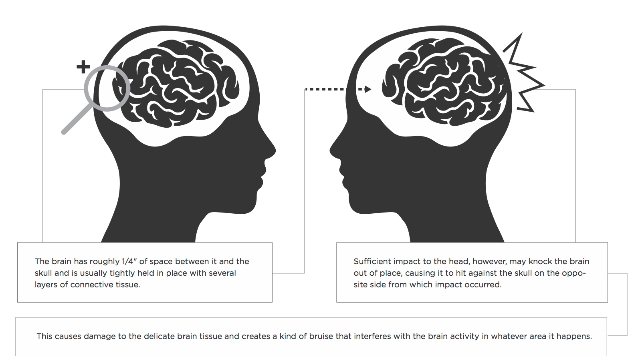
CTE is a progressive, degenerative brain disease made famous by the athletes who have fallen victim to it. CTE is found in people who have histories of repetitive brain trauma. The most common triggers are concussive blows to the head and repeated subconcussive head hits. Subconcussive hits occur when the brain is rocked against the inside of the skull, but not hard enough to cause a diagnosable concussion. These hits are the most dangerous, as they can go undetected while leaving the brain hurt and even more vulnerable to damage later on.

A breakthrough 2013 study from UCLA regarding CTE treatment revealed a way to find indications of CTE in the brain while the patient is still living. This breakthrough would not only benefit athletes, but also improve public health, as many military personnel and victims of automobile accidents are also at high risk of these traumatic brain injuries. The knowledge of what to look for may lead to a cure or at least a treatment for CTE down the line. If nothing else, this knowledge will provide an opportunity to intervene and protect the people showing early symptoms.

CTE has affected athletes in mainstream sports for a long time, occurring in boxers since at least the 1920s under the name pugilistic dementia. It was thought to be almost exclusively a boxing issue, but recent research and studies have shown conclusive neuropathological evidence that the disease has been affecting football players for years in much the same way as boxers. Among the most prominent NFL players affected is Junior Seau, who fatally shot himself in May 2012.

The disease is likely affecting untold numbers of athletes across a wide array of sports. Most recently, it was discovered that Ryan Freel, a former major league baseball player who committed suicide in December 2012, was suffering from an advanced stage of CTE at the time of his death. This discovery was significant as it is the first known case of CTE from baseball. Freel sustained massive head trauma in 2007 when he collided with another outfielder and then bashed his head on the hard outfield warning track, and again in 2009 when he was hit in the head by a pickoff throw. Freel reported feeling random headaches and pains in his head after the 2007 collision.

The frightening aspect of CTE is that, currently, it can only be diagnosed post-mortem. This is because the brain tissues necessary to make an adequate diagnosis can only be acquired after death. Therefore, it is only possible to make diagnoses based on symptoms rather than scientific evidence. CTE manifests in a person’s lifetime by triggering memory loss, impulse control problems, intense depression, aggression and finally, progressive dementia. These changes in the brain can begin anywhere from immediately after the most recent brain trauma to up to decades afterwards. For this reason, mainly older and retired athletes have come forward to report their symptoms and issues with CTE. However, younger athletes are at risk as well.

While CTE currently cannot be conclusively diagnosed before death, concussions are an emerging field in sports medicine. Despite overall ignorance to the dangers of concussions, an increasing number of voices in the sports community are speaking out about the severity of brain trauma. These voices, catalyzed by the media coverage over the tragic stories of many athletes with CTE, as well as the Frontline documentary regarding brain trauma and the NFL, continue to grow, and as a result, changes are being made and questions are being asked about the safety protocols in sports.

UC Davis’ procedures

Many universities have started questioning previous medical protocol for handling concussions and brain trauma. Some have even suggested that players wear padded headgear on their heads in sports such as basketball, lacrosse and soccer, all of which have relatively high rates of concussions.

“Any way you can prevent early onset concussions and brain injury, do it,” said UC Davis’ Senior Athletics Director Nona Richardson. “My suggestion a couple of years ago was ‘Let’s evaluate and see if we can have some sort of soft headgear for our basketball players and for our lacrosse players,’ because we had a number of lacrosse players getting concussions. So if this is one way that we can help offset that, let’s do it.”
However, not all are sure that the preventative measures are effective. Some believe that proposed solutions such as headgear are simply a bandage on a much larger wound.

“After careful review, the Sports Medicine Committee finds no evidence that wearing this sort of [padded] headgear is beneficial to players, and is concerned that it might actually lead to more injuries,” said an official statement made by the U.S. Soccer Federation. “The Sports Medicine Committee is also concerned that the use of headgear in soccer may alter the game in ways that would be detrimental. For example, players may develop a false sense of security, play more aggressively, and not learn proper technique — thus potentially increasing the frequency of concussions. As an example, head and neck injuries have increased in ice hockey and football since the introduction of helmets in those sports.”

If this is the case, then there seem to be few options which administrators and trainers can implement to prevent concussions. One idea that has picked up traction is to change the rules of the game.

“The football rules this year [are] different for the NCAA to help prevent concussions. You’re not allowed to go [for] head-to-head [collisions] anymore,” said UC Davis’ Assistant Athletics Director Mike Robles. “The penalties are severe. You can get kicked out of the game.”

Despite the rule changes, the rates of concussions still remain fairly high. This is because rule changes can only protect players every so often. The rules cannot shield the players from the  possibility that one of them takes a fall or gets tackled in a way which shakes up his or her brain.

Many in the sports community feel that concussions are not completely preventable. There are ways to lower the risks, but much like a torn ACL, concussions are simply a risk of playing sports.

“We don’t have a way of preventing concussions, but we do have a way of monitoring concussions,” said UC Davis’ Director of Sports Medicine Tina Tubbs.

For example, UC Davis has multiple layers of observation in regards to a possibly concussed athlete. This includes baseline testing (AXON testing) which occurs before players even take the field and allows the trainers to have numbers regarding the players’ cognitive function before any major incidents. Beyond this, the University has trainers on the field as well as a team doctor who constantly evaluates players who may have been concussed. After this testing, the doctor and team staff will determine whether it is a concussion.

“If we’re going to call it a concussion, there is no mild, medium or large concussion,” Tubbs said. “It just is a concussion or it is not.”

The treatment policy regarding a concussed player at UC Davis is that the athlete cannot resume physical activity for a week and a day. After this time, the staff requires the player to retake the AXON testing as well as undergo a CT scan if necessary. If the athlete passes the AXON test and shows no further concussive symptoms, the University waits another day to see if any symptoms reoccur. If not, the player is free to resume light physical activity, such as riding an exercise bike. After that, if no symptoms appear, the athlete is allowed to jog. It may take at least seven to 10 days for the athlete to get from the point of first restarting physical activity to full athletic participation. Thus, a concussed athlete is generally out for at least two weeks.

Beyond the concussion protocol, UC Davis athletics policy states that if a player has three concussions while at UC Davis, they will be retired, meaning that the player can no longer compete for the University.

Where do we go from here?

While the rules of the game have changed and most athletic associations have adjusted their organizations to deal with the dangers of concussions and brain trauma, some wonder whether these procedures are enough, or whether the owners, managers and administrators care enough to enforce them.

On Jan. 5, during one of the NFC Wild Card Playoff games, Green Bay Packers’ David Bakhtiari ran out onto the field for an extra-point attempt. However, he was in the middle of a concussion test, clearly violating the NFL concussion policy. According to NBC’s profootball.com, even though the NFL found the Packers to be in violation of league policy, there will be no fine assessed to the team or player.

Moving into the future, discussion about CTE and concussions can and should be continued. However, beyond the science of concussions and the protocols put in place by many organizations to prevent them, people must realized that athletes are humans — humans that are ultra-competitive and often times so driven to succeed that they lose sight of potential risks to their physical safety.

It is up to the coaches, trainers and league officials to understand the gravity of the situation and protect the athletes from themselves. They should emphasize the severity of concussions and discourage athletes from shrugging off head trauma for the sake of the game. One minute of play does not justify a lifetime filled with health and mental problems. At the end of the day, all the rules in the world can be implemented to help protect athletes from concussions, but there needs to be strict enforcement. Without it, the alarming trend of concussions and CTE-related problems will continue.

Aggies head south to spar with Matadors, Anteaters

0

Teams: UC Davis vs. Cal State Northridge; UC Davis vs. UC Irvine

Records: Aggies, 9-11 (4-3); Matadors, 10-12 (6-2); Anteaters, 10-11 (3-4)

Where: The Matadome — Northridge, Calif.; The Bren Center — Irvine, Calif.

When: Thursday, Feb. 6 at 7 p.m.; Saturday, Feb. 8 at 2 p.m.

Who to watch:

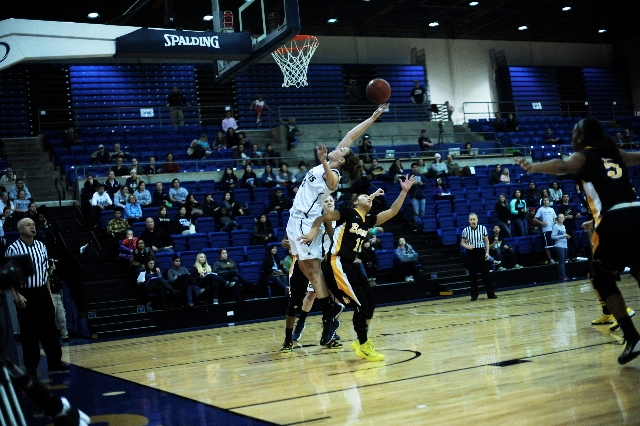
Watch out, Big West, Alyson Doherty has arrived. The sophomore forward has been unstoppable in conference play this far, scoring in double figures in eight straight games. Doherty has put up 20 points in each of her last two games, leading the Aggies in scoring in both, and is dominating the paint, scoring efficiently and giving the Aggies a formidable low-post scoring threat. Watch for the 6’3” Doherty to continue her success against Cal State Northridge and UC Irvine as the Aggies look to control the post and feed their talented forward, who can take defenders to the basket and finish with both hands.

Preview:

Following a narrow loss to first-place Cal Poly on Jan. 30 and a comeback win against UC Santa Barbara on Feb. 1, which included a major career milestone for star forward Sydnee Fipps, the UC Davis women’s basketball team looks to break a three-way tie for third place in the Big West this week.

Against Cal Poly, both teams had their way in the paint. The Aggies (9-11, 4-3) were unable to contain Cal Poly’s 6’5” center Molly Schlemer, who put up 26 points on 12 of 16 shooting and added nine rebounds. However, sophomore Alyson Doherty was undaunted on the offensive end, taking the taller Schlemer to the basket repeatedly and finishing over her with both hands. Doherty finished with 20 points and went 8-13 from the field.

Other than a 20-3 Cal Poly run that put the Mustangs (12-8, 6-1) ahead 30-19 in the first half, the Aggies went toe-to-toe with last year’s Big West conference tournament champs and this year’s conference leaders in the standings before falling 81-72.

“This is a team, [Cal Poly], that is 6-1 in conference, so it’s promising to know that we’re right there,” head coach Jennifer Gross said. “It was a 10-point game, but I felt like it was closer. We can continue to improve, and that’s the most exciting thing. We have so much room to get better and our players are committed to that.”

The Aggies did improve two days later against UC Santa Barbara (6-14, 1-6), knocking off the Gauchos, 82-70. Doherty again was a dominant force for UC Davis, recording a team-high 23 points and eight rebounds.

“Aly is becoming someone we’re relying upon and she’s showing us that she can get it done for us inside,” Gross said, following the Cal Poly game.

Against Santa Barbara, junior forward and team leader Sydnee Fipps became the 16th player in UC Davis women’s basketball history to score 1,000 career points. She reached the milestone midway through the first half en route to her 21 points, her ninth 20-point game of the season.

The Aggies travel to Cal State Northridge (10-12, 6-2) on Feb. 6, and they will try to stop a Matador team that has won three straight on its way to grabbing second place in the Big West.

Cal State Northridge is led by junior guard Ashlee Guay, who also recently passed the 1000 point mark in a game against UC Riverside on Jan. 31 and comes into the game averaging 15.5 points per game.

In the two teams’ most recent meeting on Jan. 9, Cal State Northridge just barely held off the Aggies 56-52.

Following Cal State Northridge, the Aggies will travel to the Bren Center to take on UC Irvine (10-11, 3-4), a team the coming off an 84-79 home loss to Cal Poly on Feb. 1.

The Anteaters are led by 6’1” senior forward Camille Buckley, who averages a stellar 16.3 points per game and 10.4 rebounds per game.

— Scott Dresser


Circus Oz tumbles into town

0

Circus Oz, the animal-free, national circus of Australia, will be performing at the Mondavi Center on Feb. 8 and 9. Founded in 1977 — six years before Cirque du Soleil — the comedic and contemporary theater has toured worldwide time and time again, to critical acclaim. This will be their second performance at UC Davis.

Mike Finch, Circus Oz’s artistic director and co-CEO, was trained in theater before pursuing circus performing. The upcoming performance titled From the Ground Up, inspired by Charles Ebbot photographs of American skyscraper workers, is his under his sole direction.

“Circus is theater that is deeply visceral,” Finch said. “[In theater] performers aren’t six meters up in the air when they’re performing King Lear! There’s a whole element that steps between suspension of disbelief — rather than pretending our characters are in physical danger, they literally are vulnerable. This makes it tantalizing; it’s never completely make-believe.”

The circus’ charm, Finch said, comes from its imperfection.

“[Circus] isn’t like movies: you never get to sign up on the definitive version, it’s never finished or perfect… it’s like gardening, or cooking or storytelling in a pub. It’s very human, and the moment you think you’ve got it right, it can all change,” Finch said.

One of the trapeze and aerial ring performers, Spenser Inwood, ran away to the circus, so to speak. Although she still attended school, as was required through the youth circus company she performed for, she had already toured around the world for 10 years by the time she joined Circus Oz.

Although she’s traveled worldwide, seeing the different cultures in her native country is Inwood’s favorite part of touring.

“We embrace Australia’s multiculturalism,” Inwood said in a Skype interview. “It’s important to have this conversation with the audience about the kind of society we want to be living in.”

The company has been committed to social justice as well as being a state-of-the-art circus company. Historically, they’ve backed various causes in Australia, particularly supporting gender equality, land rights for indigenous Australians and asylum seekers.

Finch described Circus Oz to be “at the progressive end of the spectrum.” The cast consistently features an equal number of men and women, as well as different sexualities and a number of indigenous Australians.

“At a fundamental level, we try to achieve a connection with the audience,” Finch said. “They are at the center of the whole endeavor.  The audience should feel empowered to make noise, to interact, to feel uplifted and positive. Hopefully, it’s a diverse group of people, too — adults, children, rich people, poor people — as much diversity, as much humanity in that room as possible.”

Circus Oz’s newest forthcoming show will premiere in Melbourne, Australia in June. According to Clare McKenzie, International Programming representative for Circus Oz, they have built a facility in Melbourne in which the circus company will be able to develop more cutting-edge shows for the world to experience.

“This year we move into our brand new custom-made Secret Circus Laboratory Home Base deep in the heart of Melbourne,” McKenzie said. “From this purpose-built facility, Circus Oz aims to produce bigger, more spectacular and dangerously funnier shows.”

Circus Oz will be performing at Mondavi Center’s Jackson Hall on Feb. 8 at 8 p.m. and Feb. 9 at 3 p.m. Tickets start at $12.50 for UC Davis students and can be purchased at mondaviarts.org, by phone at (866) 754-2787 or at the door.

UC Davis undergraduate applications continue to rise

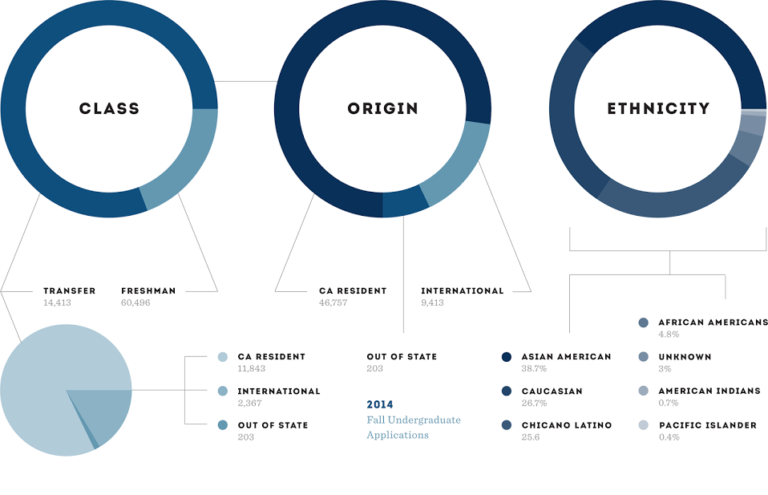
According to the University of California Office of the President (UCOP), UC Davis received a total of 74,909 undergraduate applications for Fall Quarter 2014. Of the 74,909, freshman applications accounted for 60,496, while transfer applications accounted for 14,413. UC Davis experienced a 7.6 percent increase in total applications from 2013.

According to Walter Robinson, executive director of UC Davis Undergraduate Admissions, the increase is because of a strategic recruitment plan created when Robinson started at UC Davis in September 2011.

“We’ve been very intentional with our recruitment efforts,” Robinson said. “We have identified places where we should go and activities we should engage in in our outreach and recruitment. And it’s starting to pay off.”

Of the total UC Davis freshman applicants, 46,757 are California residents, 4,326 are out-of-state students and 9,413 are international students. While there is only a 2.2 percent increase in California resident applications, out-of-state and international applications increased by 27.8 percent and 39.5 percent, respectively, from 2013.

For transfers, there were 11,843 California resident applicants, 203 out-of-state applicants and 2,367 international applicants.

“I think it is great that UC Davis is becoming more well-known among international students,” said Moira Delgada, UC Davis outreach coordinator. “I would have loved to have international friends as both an undergraduate and graduate. International students can play the role of global educators, especially to students, staff and faculty who have not had the chance to live or study abroad.”

However, Delgado worries that students will misinterpret the increase in international and out-of-state applications as favoritism towards students from these regions. According to Delgado, UC Davis is committed to maintaining the current allotment of California residents.

“My fear is that the general public reading these statistics will wrongly assume, as some did last year, that international students are taking spots away from domestic students,” Delgado said. “The general public sometimes doesn’t realize … that the tuition from out-of-state and international students is helping UC schools to overcome the loss in funding at the state level.”

According to Robinson, the large increase in out-of-state and international students has been a result of recent efforts by UC Davis to reach out to students globally and across the country. He said that the UC has been “very California-centric” since its creation in 1868.

“The perception that the world had about the University of California was that we didn’t have an interest in people outside of the state of California. For the last several years, we’ve been trying to change that perception as we’ve become more globally diverse,” Robinson said . “It’s hard to keep something as good as the University of California a secret from the rest of the world and the rest of the country.”

From the pool of California residents, 4.8 percent of freshman applicants identify as African American, 0.7 percent identify as American Indian, 38.7 percent identify as Asian American, 25.6 percent identify as Chicano/Latino, 0.4 percent identify as Pacific Islander and 26.7 percent identify as white, leaving three percent of applicants who did not provide a racial report. Out of all ethnic groups, Chicano/Latino applicants saw the largest rise, with 2,125 more applicants than 2012.

According to Robinson, UC Davis has spent a large amount of effort and time recruiting students from schools in Chicano/Latino communities.

“Chicano/Latino is the most rapidly growing population in the state,” Robinson said. “I’d say that the majority of all students that are in a K-12 sector of California public schools are of Chicano/Latino descent. I’m proud of the fact that the University of California is starting to reflect more so the diversity of the state.”

For Fall Quarter 2014, of the freshman applicants from California, 41.1 percent will be first-generation college students, 36.7 percent came from low-income families and 20.7 percent came from high schools with a low Academic Performance Index (API) determined by an API score of one to four.

With its recent opening in September 2013, Robinson does not believe the UC Davis Welcome Center has had enough time to have a large impact on this year’s applications. However, Robinson predicts that, in time, UC Davis will be able to correlate applicant outcomes to the Welcome Center’s efforts.

Due to an increase in applications, Robinson anticipates UC Davis’ admit rate will continue to fall.

“As our applications continue to grow, our pool gets bigger,” Robinson said. “If our enrollment target stays pretty flat then the admit rate will continue to drop. I anticipate that this year’s admit rate will drop a bit.”

Supna Nair, a first-year biological sciences major, believes UC Davis’ competitiveness helps attract students to the university.

“I went here because it was higher ranking than the other schools I got into, so competitiveness helps,” Nair said.

Across the UC system, there was a total of 183,272 students who applied to a UC for Fall Quarter 2014, an overall increase of 4.9 percent since Fall 2013. This would make 2014 the 10th consecutive year in which the UC saw an increase in applications.

According to the UCOP, Chicanos/Latinos, the largest racial group among California high school graduates, remained the largest ethnic group among California freshman applicants for the second consecutive year, with a total of 32,580 applicants.

“As a Chicana undergraduate student at UC Davis, it really fills me with joy to know that the Chicano/Latino students are the largest ethnic group among California freshman applicants, and even more that it’s the second consecutive year,” said Angela Munoz, co-chair of Hermanas Unidas de UC Davis. “I know that there still is a long way to go, but it’s a step towards having more students of color in the UC system.”

The overall number of transfer applicants to UC saw a slight dip from the previous year with a decrease of 0.5 percent.

Robinson expects the increase in applications to help with the movement of the 2020 Initiative. The 2020 Initiative is a proposal introduced by Chancellor Linda P.B. Katehi in November 2011 that seeks to sustain and expand excellence at UC Davis by expanding the overall enrollment to UC Davis with the addition of 5,000 students by the year 2020.

“In notion of diversity in the broadest context, access in the broadest context, excellence in the broadest context, 20/20 has given us an opportunity to achieve all three of those objectives,” Robinson said .

According to Robinson, UC Davis looks for the type of student who is well-rounded and has a passion towards making a contribution.

“I will proudly say as a Californian, I think it’s part of the California DNA that we are activists,”  Robinson said. “I was raised as an activist. There’s a value that should be placed on students who are activists.”

According to Robinson, UC Davis Undergraduate Admissions is still working on a final enrollment target, but he predicts the number to be comparable to the previous year. Due to the expected completion of the Tercero residence halls by Fall 2014, Robinson predicts a slightly larger enrollment target.

“I think that the University of California Davis continues to be one of the top universities in the University of California system, therefore one of the top universities in the country, and more and more people are starting to realize that,” Robinson said.

Aggies happy to be home

0

Teams: UC Davis, Sonoma State, UC Riverside, Nevada, San Francisco

Where: Marya Welch Tennis Center — Davis, Calif.

When: Friday, Feb. 7; Saturday, Feb. 8

Preview:

Both the men and women’s tennis teams are back in action this weekend, and both play in Davis. The lady Aggies host Nevada on Feb. 7 and then San Francisco on Feb. 8. The men play both Sonoma State and UC Riverside on Feb. 8 as well, with Sonoma in the morning and UC Riverside in the afternoon. The women play San Francisco in-between the two men’s dual matches.

The women’s team is coming off of a four-match road trip that ended with a 2-2 record. After losing to Stanford and beating Pacific on the weekend of Jan. 24, they came back this past weekend and fell 5-2 to San Diego State. Stanford is the No. 1 ranked team in the nation, while San Diego State is ranked No. 48, so the two losses were against quality opponents. These losses will prove to be valuable learning experiences as the team heads to the conference tournament in April.

Against San Diego State, sophomore Tiffany Pham and freshman Kamila Kecki both scored solid three-set victories in singles play. For Kecki, it was her first dual singles victory as an Aggie.

The men’s team is also coming off a double header this past weekend, playing host to San Francisco and Loyola Marymount. Both matches turned out to be tough losses for the Aggies unfortunately, as mother nature impacted the action.

On Feb. 1, the Aggies lost a heartbreaker to San Francisco 4-3, with the match coming down to the final singles contest of the afternoon. Senior Parker Kelley fell in a hard fought third-set tiebreaker, and so too fell the Aggies’ hopes. This loss stung particularly as the Aggies won three of their singles matches, but failed to come away with the critical doubles point that ultimately was the final difference in the match.

The next day the Aggies came back to play Loyola Marymount, but were forced to change the venue from the Marya Welch Tennis center to an indoor facility in Sacramento due to rain. The change in scenery also shifted the Aggies’ fortunes as they lost their early lead and fell 4-2. Senior Kyle Miller and freshman James Wade both scored singles victories in the loss, which dropped the Aggies to an 0-4 record for the year.

Both the men and women’s team will look to make a strong home showing this weekend and get back on the winning foot. The men have an interesting matchup against UC Riverside that is the first conference matchup for the Aggies this season.

— Vic Anderson


This week in science:1/30/14 – 2/4/14

Rock, gas preserve fossil beds

The Yixian and Jiufotang fossil beds in northeast China are known for having produced some of the most well-preserved plant and animal fossils ever found. The cause of such pristine preservation is now expected to be because of pyroclastic flows, which are high-speed rivers of rock and gas. It was the presence of sediment and cracks in the fossil bones that prompted a team led by Baoyu Jiang of Nanjing University to publish their findings in the Nature Communications Journal.

http://www.nature.com/ncomms/2014/140204/ncomms4151/full/ncomms4151.html

Percentage of global smokers decrease, but news not all good

A study from the University of Washington published in Journal of the American Medical Association broke down smoking percentage by country and gender from 1980 to 2012. On a global scale, male smoking dropped from 41 percent to 31 percent, and 11 percent to 6 percent for females. However, due to worldwide population growth, the total number of smokers rose from 721 million in 1980 to 967 million in 2012. The study also found that men smoked more than women in almost every country.

http://jama.jamanetwork.com/article.aspx?articleid=1812960#Abstract

Acid creates stem cells

A new type of stem cell has been created through the method of subjecting cells to acid baths, or other methods of stress. These new stem cells have been named STAP cells, for stimulus-triggered acquisition of pluripotency, and have been tested on mice white blood cells. These STAP cells are ultra-flexible and can grow into any type of tissue. The research team, including Haruko Obokata of the RIKEN Center for Developmental Biology and Harvard Medical School, also used these cells to grow an entire mouse fetus.

http://www.nature.com/nature/journal/v505/n7485/full/nature12969.htmlC

Cold clouds mean no new stars

When gas clouds collapse, molecularly the cloud’s hydrogen atoms are fused into helium; the heat of this fusion reaction is what allows for scientists to easily locate them. A team at the University of Waterloo led by astrophysicists Michel Fich and Gopika Sreenilayam were searching for colder gas clouds. They did so by looking for dust particles within the clouds, which are much larger than gas particles, and it was in this way that they located 20 gas clouds that are far colder than normal. The clouds’ center temperatures ranged from eight to 20 degrees Kelvin (or around -450 degrees fahrenheit), and at these temperatures fusion cannot occur. Thus, the clouds cannot collapse. The team’s findings, published in The Astronomical Journal, may help to further explain what prevents gas clouds from collapsing.

http://iopscience.iop.org/1538-3881/147/3/53/article

Print it with Flag

Living the college lifestyle often means having to learn to carefully budget your expenses. College students in particular are always looking for creative ways to still find what they want/need for the lowest possible prices. Now with the Flag app, college students and other budget-savvy shoppers can print photos saved on a smartphone for absolutely free.

Entrepreneur Samuel Agboola recognizes the fact that printing out precious memories can become very costly very quickly. For instance, a printout of 20 photos at a local pharmacy such as CVS can cost over $75. Using only 220 gram photo paper from sustainable sources, this kickstarter company promises its users a printout of 20 free high-quality photos a month, with no additional shipping costs.

In order to make a profit, ads get printed on the backs of photos. By charging for these ads, the company is able to maintain profits. If one is not particularly fond with the idea of ads printed on the back of the photos, one can order blank prints for a small fee. However, the company notes that ads will always be tasteful.

For those who like to think outside of the rectangle, the company says it will also offer users the option to print the images in different shapes and sizes. Users could also add text captions and make the photos into postcards if they wish. However, Flag plans on offering these extra features at an additional cost.

Although the company is still in development, it offers a promising solution to a common problem: converting our process from merely looking at our photos to actually having them in our hands. Flag can not only be of a great service to college students, but also to smart shoppers alike.

City of Davis bike plan aims for diamond certification

0

The City of Davis, one of the most bike-friendly cities in California according to the League of American Bicyclists (LAB), is looking to improve upon that status even further by taking the Diamond Challenge along with other cities across America.

“The City of Davis was working with the League of American Bicyclists to redesign the bike-friendly community program. We did that along with Boulder and Portland and we said ‘How can we encourage these platinum level cities to take it to the next level?’” said Dave “DK” Kemp, the City of Davis’ active transportation coordinator.

The LAB rates cities across America on a basis of ridership, safety and education on a scale which includes the ratings of bronze, silver, gold, platinum and now diamond.

“The diamond status is new since the end of 2012, which is the new frontier of the bicycle-friendly America program in trying to create that bicycle friendly America for everyone,” said Liz Murphy, the communications manager for the League of American Bicyclists.

According to the LAB the criteria to obtain the Diamond Certification is specific to each city. Each city receives an audit detailing what can be improved and laying out more specific goals with five, 10 and 15-year benchmarks.

“The primary measure to Diamond designation: The number of people riding and citizen satisfaction,” said the LAB website.

Kemp said that the community is ready for new projects and programs like the ones proposed in the Beyond Platinum Plan. This plan outlines the new goals for the community as well as gives analyses of the city in its current state and details how it can be improved to meet its new goals. The plan will be up for adoption in February.

The plan can be divided into two subdivisions. The first is programs which include education, enforcement and encouragement. The second piece is infrastructure, which focuses on signing, striping and marking. Additionally, the plan illustrates the implementation of a bike park which would be a city-maintained facility in which riders could build skill and confidence on bikes.

One of the projects detailed in the bike plan has already begun to take shape. This is a bike share that would promote the use of bicycles as part of daily commuters’ routine in addition to the use of public transit.

Another project which has recently received grant funding is a way finding project that would increase signage around the city.

According to Kemp, there will be a variety of mechanisms for funding the plan which includes grants and funding from the city.

“Primarily because of our recent success, we’ll be able to utilize some external sources. Simultaneously [we] will be looking at [an] ongoing pavement maintenance program and looking at additional local funds for specific programs that wouldn’t be accomplished by the pavement maintenance program,” Kemp said.

The pavement maintenance program includes upkeep of the paved surfaces around the city. Kemp said that when different roads undergo maintenance, striping and marking can be implemented at the same time. The remainder of the needed funds would be supplemented by the City of Davis.

The Ride Walk Davis Campaign, which seeks to increase ridership, is estimated to cost $40,000 per year and signing and striping is estimated to cost $80,000 per year; however, to apply for the diamond status is free. According to Murphy, it is funded by Trek Bicycles.

Ultimately the goal of the plan is to increase ridership to aid in reaching the city’s climate action goals.

Currently, 20 percent of Davis’ population bikes to work and 27 percent bikes to school; there has yet to be an evaluation on what percentage bikes for shopping, dining and running errands. The Beyond Platinum Plan aims to increase ridership overall by 30 percent by 2017.

As for the University, Transportation and Parking Services (TAPS) and the Bike Committee are collaborating with the city to provide bicycle ambassadors to help students find their way, change a flat tire or assist with safety, according to TAPS Bicycle Program Coordinator David Takemoto-Weerts.

“This is the first bike plan to marry the city’s objectives with the league’s [LAB] objectives,” Kemp said.

The city plans to reapply for the diamond certification by 2017 and become the first city in the nation to gain the highest status.