52.4 F
Davis

Davis, California

Tuesday, December 23, 2025
Home Blog Page 896

Davis is Burning raises money for Trevor Project

0

Davis is Burning is the largest drag show in town, featuring performers from UC Davis and the community.

The event is put on each year by the brothers of Delta Lambda Phi, a fraternity for gay, bisexual and progressive men. From humble beginnings, Davis is Burning has evolved into a highly successful event to help those in the LGBTQ community.

Davis is Burning is a collection of extravagant song and dance numbers. This year’s theme was Divas of Cinema, and was the largest Davis is Burning production to date.

Daniel Lathrop, a third-year women and gender studies major and the president of Delta Lambda Phi, Xi Chapter, said the event has evolved greatly over the years.

“It started 24 years ago in one of the brother’s apartments.  They used a hallway as a runway!  Now we’re in Freeborn and putting on the biggest show yet,” Lathrop said.

Davis is Burning is not only meant to showcase freedom of expression, but also to raise money for the Trevor Project. The Trevor Project was founded in 1998 and has served as a crisis and suicide prevention resource for troubled youth of the LGBTQ community.

Chris Peeters, a fourth-year political science major, stressed the importance of raising awareness for the services the Trevor Project provides.

“Sometimes it’s hard to realize how much help you needed, until you look back and wish you had known about something like it,” Peeters said.

Some performers even said that drag itself can be an important tool.

One of the community performers, using the stage name Mia, said that drag shows make her feel empowered.

“Drag really helped me get out of the bad times. I was always interested in it, but I was scared to try.  Now that I do it, I feel like I really understand myself,” Mia said.

This year’s performance marked a new milestone, with the majority of the audience having never been to Davis is Burning before.

“When we asked how many people’s first Davis is Burning it was, the majority of the crowd responded that it was their first show,” Lathrop said. “We are getting a larger new student turnout than ever before.”

According to Lathrop, the event raised over $300 from ticket sales and from a donation box one of the brothers was holding while people waited outside in line. All of the money will be going toward the Trevor Project.

“[This] makes us very proud, since there are so few of us, but we are still able to make a positive impact within our community,” Lathrop said.

Lathrop said that Delta Lambda Phi’s goals for next year are to increase attendance by involving more groups around campus in the show.

“[We hope] we can include a broader representation of the student body at our shows,” Lathrop said.


The Left Nut: G-O-D and the GOP

0

Growing up, my family drilled two unquestionable truths into my head: that Jesus died for our sins, and that Democrats wanted to destroy America.

As you may have guessed, the second one didn’t stick too well.

Whether you’re the staunchest, most Bible-thumping Republican out there or the most radical atheist Democrat, you’ve probably jumped to some sort of conclusions about me already. You might, like many people, think that Christianity doesn’t support my political beliefs or vice-versa. But I’m not here to discuss my religion.

I’m not here to discuss my religion because this is a political column, and theology has no place in it. Contrary to what Billy Graham, Rick Santorum and the Tea Party may argue, religious principles should in no way influence social policy.

You’ve probably heard the phrase “separation of church and state” thrown around quite a bit when discussing these matters. Though that specific wording actually appears nowhere in any official government document, our Constitution hints at it, guaranteeing free practice of religion.

In fact, some people have begun to take the “free” practice of religion too literally. Though many churches respect the wall between the political and religious arenas, some have shamelessly intertwined the two. While freedom of speech is wonderful and people should have the right to endorse whichever candidate they choose, organizations advocating political candidates or otherwise supporting campaigns are required to pay taxes.

Churches are tax-exempt organizations, which means that, by law, they cannot urge their members to vote for certain candidates. But this does not always stop them.

In 1993, the IRS found that Reverend Jerry Falwell had illegally donated money to political action committees which, in turn, funded numerous Republican campaigns. The law aside, one should quickly recognize this as immoral. Falwell, one of the most beloved Christian icons of our time, took donations from people who thought they were doing a charitable deed and threw them at conservative politicians who were by no means sick or needy. No wonder so many legislators believe in “traditional” values — it makes you wonder if these stances come from their hearts or their lobbyists’ wallets.

This is not to mention the absurdity of their proposals. Zealots argue that, by allowing gay couples to marry and women to have abortions, the government somehow infringes upon their religion. Anyone with common sense knows that this argument holds no weight at all; no one is forcing you to have an abortion and no one is making you or your kids gay.

Let’s say, hypothetically, that my religion not only allows for gays to get married but mandates it. The government, by not allowing them to marry, now infringes upon my religion.

Of course, you’re allowed to protest my religion. The same First Amendment that allows me to practice my religion allows you to protest it. But it doesn’t allow Congress to draft policies that prevent me from practicing it.

If we did base our legislation on the Holy Bible (which, of course, we should not), we should at least base it on the good verses, like James 2:15 to 16 (“Suppose a brother or a sister is without clothes and daily food. If one of you says to them, ‘Go in peace; keep warm and well-fed,’ but does nothing about their physical needs, what good is it?”) or Ezekiel 16:49 (“Now this was the sin of your sister Sodom: She and her daughters were arrogant, overfed and unconcerned; they did not help the poor and needy”)

Hell, look at Jesus himself. I’m far from the first to point this out, but the way the Western world portrays him, Jesus was a radical, long-haired, anti-war hippie who went around challenging established religious doctrine and handing out free health care. The Jesus I grew up with was more John Lennon than Joel Osteen.

Still, I don’t go around saying that you should vote Democrat because it’s the Christian thing to do. I don’t care what you believe, and you shouldn’t care what I believe. Whether you believe in God, Brahman, the Flying Spaghetti Monster or nothing at all, I won’t look at you any differently, and I expect my government to do the same. If people could accept that religion has no place in politics, we could stop focusing on trivial issues and move on to things that have a real effect our country.


If you were disappointed that ZACH MOORE didn’t take a jab at Reagan this week, email him at zcmoore@ucdavis.edu.

News in Brief: Typhoon Haiyan relief efforts

0

On Nov. 14 at 7 p.m., the UC Davis Fil Am community will host a dialogue to discuss relief efforts for those in the Philippines affected by Typhoon Haiyan and the Bohol earthquake. The event will take place at the Student Community Center (SCC) in Meeting Room D.

Monetary donations are accepted at the Student Recruitment and Retention Center in the SCC and will be given to the National Alliance for Filipino Concerns, an organization that works closely with grassroots relief organizations to ensure funds go straight to the community. Material donations, including but not limited to non-perishable food that doesn’t require water, electricity or can openers, basic medicine and first-aid kit supplies, candles and blankets, are also encouraged, although BRIDGE Community Mentorship and Advocacy Coordinator Robyn Huey encourages monetary contributions.

“The best way to help the situation is through monetary donations, because currently material donations are hard to deliver due to shut-down roads,” Huey said. “We ask that people spread awareness of the situation and continue to stay updated.”

Contact Huey at rfhuey@ucdavis.edu if you or anyone you know is hosting events to raise money for typhoon relief.


—Elizabeth Orpina


Women Volleyball Preview

0

Teams: UC Davis vs. UC Santa Babara;  vs. Cal Poly

Record: Aggies 14-11 (6-6); Gauchos 13-9 (8-2); Mustangs 10-13 (4-6)

Where: The Pavilion — Davis, Calif.

When: Thursday, Nov. 14; Saturday, Nov. 16

Despite an initial 2-0 match lead, UC Davis fell to UC Irvine in a five-set game. The Aggies ended their road trip with two losses, against Long Beach State and UC Irvine respectively. UC Davis now returns home for a pair of conference games against UC Santa Barbara and Cal Poly.

The Aggies started their road trip on a three game winning streak and took their good form of play to Long Beach State. Junior opposite Mary Schroeder posted her career-high 20 kills and middle blocker Victoria Lee had a .464 hitting average against the 49ers.

The Aggies held leads in the first and second sets, but they lost their leads and eventually the sets, by two-point margins in each. Although the Aggies fought back and took the third set, the 49ers were solid in the fourth set and came out with a victory.

The Aggies attempted to bounce back from the loss against Long Beach State in their matchup against UC Irvine. Led by senior opposite Devon Damelio, who tallied 14 kills against the Anteaters, the Aggies took the first two sets.

However, the Aggies did not take advantage of their lead and fell in three consecutive sets. This game marked the seventh time the Aggies have lost in five sets this season.

UC Davis now hosts UC Santa Barbara on Thursday, Nov. 14 followed by Cal Poly on Saturday, Nov. 16.

It is the second time the Aggies have matched up with these two teams this season. UC Santa Barbara continues their good form and are ranked No. 2 in the conference with a 13-9 overall record and 8-2 conference record.

The Cal Poly Mustangs look forward to bouncing back after consecutive losses to UC Santa Barbara and Hawai’i. UC Davis defeated Cal Poly in the last game with a 3-1 victory. The past victory against the Mustangs can give the Aggies the momentum they need to win on Nov. 16.

UC Davis is currently 14-11 overall this sesaon and their conference record is 6-6.


— Janet Zeng


This Week in Senate

0

ASUCD Vice President Bradley Bottoms presided over the meeting.

Project Compost Director Noelle Patterson gave a brief update, discussing the new compost location at one of the fraternities near campus. Patterson expressed an interest in partnering with other fraternities and sororities to have more compost locations around campus.

ASUCD Business Manager Janice Corbett gave a presentation on the budget for this year. Sixteen out of 24 units currently have some type of reserve. There is currently $495,453 in reserves. Nineteen units under ASUCD use the account.

The most notable budgets were the Experimental College, which became self-sufficient in 1994, currently with $15,375 in reserves. The Bike Barn has $4,556 in reserves, while the CoHo has $507,424 in reserves.

“We are not super proud that our reserves have been eroded over time,” Corbett said, who also discussed making financial information more available to members of ASUCD.

Senator Miles Thomas expressed a desire to have senators more involved in discussions surrounding finances in ASUCD.

“I want a member of the legislative branch in on every single conversation about the budget,” Thomas said.

ASUCD President Carly Sandstrom discussed reaching out to UC Davis alumni for donations.

There was no new legislation.

Shields Library to host Wikipedia Edit-a-thon

 With a dulled piece of chalk, a professor scratches a harrowing message across the blackboard for the hundredth time: “Wikipedia is not a credible source.”

Almost by default, students know to separate academia from Wikipedia. Yet, Wikipedia is the first place you go to when you need a comprehensive list of “Hey Arnold!” episodes, the discography for a new musical artist you’ve discovered or just to read the plot summary for a movie you never made the effort to watch.

On Nov. 15 between 10 a.m. and 3 p.m., the Shields Library Instruction Lab will hold a Wikipedia Edit-a-thon workshop. The edit-a-thon aims to teach students how to edit Wikipedia and use library resources to create credible pages.

“You don’t have to be an expert in a subject to be a Wikipedia editor,” said Phoebe Ayers, a librarian at the Physical Sciences & Engineering Library on campus. “You just need interest and a willingness to research.”

Ayers will lead the workshop. She’s been editing Wikipedia for 10 years, and currently is a member of Wikimedia Foundation’s Board of Trustees.

According to alexa.com’s list of top sites on the web, Wikipedia ranks as the sixth-most-visited website.

“I use it for science homework and looking up television shows,” said Marielle Palatino, a third-year biological chemistry major.

Palatino said she visits Wikipedia every day. She uses it for both research and personal interests. However, Palatino admitted she just doesn’t care enough to contribute or edit a page.

This is not unusual, as it seems a certain level of enthusiasm or skill is required to get involved. On the discussion page for an article about pencils, Wikipedia editor Fritz Jorn attached a photograph of two pencils resting on the edge of a protractor. The caption reads:

“I noticed that Americans tend to sharpen pencils a lot sharper than Europeans. Looking into this I found typical sharpeners here in Europe with a 23° point, or even 30° in case of softer color pencils.”

Fortunately, Ayers said this level of pedantic discussion isn’t necessary to edit Wikipedia. An editor can do anything from fixing a sentence and adding facts to creating new pages.

“Everyone is welcome. New editors, experienced editors, everyone in between,” Ayers said.

Ayers said Wikipedia doesn’t have any hard rules — just guidelines and policies. Editors do their best to ensure pages are factual, properly cited and written from a neutral perspective.

Likewise, the workshop will be relatively informal. It will begin with a short lecture, familiarizing new editors with the website’s features and guidelines. Afterward, editors are set loose to edit and create articles as they please. Ayers will be available to answer any questions and provide guidance to those who need it.

Ayers said students have a unique opportunity to improve the encyclopedia’s content.

“This is the first time there’s been a project like this based out of the university library,” Ayers said.

She is well aware that students should never directly cite a Wikipedia page. However, the sources at the bottom of a page are often credible enough for an essay.

“[Students] can take what’s in the library — high quality resources — and make sure those are used in the articles,” Ayers said.

She believes people should do what they can to better a website they use daily. According to Ayers, her goal is for students to realize that editing Wikipedia can be fun and a great opportunity to learn something new.

“I have a couple articles I’d like to write,” said Jarrod Rowe, a second-year English major.

Rowe said the information for some musicians’ and poets’ pages seem to be insufficient.

“I would like to take part in making that information … available to people who are interested in it,” Rowe said.

Rowe is a musician and songwriter, and his previous experience led him to consider editing a page. Ayers also said that working on pages you don’t know anything about is also a great way to start learning new things.

“There’s lots to be done that doesn’t require knowing about a subject,” Ayers said. “You just have to be committed to doing enough research.”

If the idea of research isn’t appealing, Ayers said there are still plenty of things an editor can do to improve a page.

Wikipedia is a nonprofit organization, relying entirely on the contributions of its users. For those who want to start giving back, Ayers’ workshop will show that it’s easy to get started. She said students are welcome to the workshop at any time and only have to stay as long as they want.


Tune In: Addressing all types of music

0

You Can’t Teach an Old Mouse New Tricks

A sad truth about music is that artists get old. Although it is often hard to remember, they are humans just like us. This means that they, no matter how badly we want them to, never stay the same for very long.

It is tough to imagine young superstars like Wiz Khalifa, Lady Gaga or Lil B getting old and wearing out, but we are reminded of their mortality when we compare songs like Eminem’s “Mockingbird” (2005) and “The Real Slim Shady” (1999).

“Mockingbird” has an entirely different, darker style, and is an example of how Eminem’s life experiences shaped him as an artist. This change is entirely reflected in the way his musical style and themes developed and matured.

The song is an emotional, serious message to his daughter about his lack of involvement in her life. The emotion in this song relates to the conflict between his fame and family life — an issue that young Eminem, while writing “The Real Slim Shady,” had not encountered yet. It’s pretty cool to see the way artists can change, but at the same time we become nostalgic of the way they used to be.

I tend to prefer music from artists in their earlier stages. They are full of life at this point, but in a naïve and more relatable way. They have not yet become altered by the “famous musician” lifestyle, and they perform in their most natural style. For the most part it seems that artists do one of two things as they get older: sell out and adopt a more mainstream sound, or become boring and unable to deliver the “punch” they once had.

There are certainly exceptions, like Eminem, The Beatles, Ween and The Cure. As these artists developed, their style matured independently of what the music industry expected of them. They stayed true to their style and innovated their aesthetics.

Modest Mouse, despite their indie style, seems to have fallen down the mainstream route.

They recorded the album Sad Sappy Sucker in 1994, before they even got signed to a label, and its lo-fi and untampered with quality sounds amazing. Songs like “Four Fingered Fisherman” and “Worms vs. Birds” feature such simple lyrics, but can be infinitely interpreted in a metaphorical sense. When listening, one can tell that the band made these songs for the love and beauty of music, not to subscribe to anyone’s expectations. The songs are incredibly original and unlike anything else.

The mood of the album seems to express the band’s struggle with finding oneself, a theme that is especially relatable to young adults. The band members themselves were in their late teens at the time they recorded the album, and the authenticity of this mood is hard not to notice. Not to mention, their drug use was in full swing in this young adult phase.

The next four albums that Modest Mouse produced developed this sound even further. They dropped the lo-fi quality of their sound but continued to make highly original music. Their first studio recorded album, This is a Long Drive for Someone with Nothing to Think About, is brimming with very authentic and beautiful songs. They trademarked a self-conscious, slow, spacey sound that I love. However, these albums placed Modest Mouse under US Billboard Chart’s watchful eye.

However, as Modest Mouse matured, their music started sounding more and more produced, and it began feeling less authentic. Songs like “Float On” and “Dashboard,” while popular, are vastly different from anything on This is a Long Drive… They feature catchy, fast-paced and poppy guitar riffs and drum beats — the total opposite of the slow, sad Modest Mouse I loved on the early albums.

When I saw them in concert last summer, I was expecting them to at least play a few of their earlier slow songs. Sadly, however, they only played their fast-paced popular songs. I was left wondering, “What happened to the original Modest Mouse?”

The truth is that young Modest Mouse will never exist again. And that is a large part of what makes their early music so beautiful and unique — nothing like it will be created again.

It is impossible to please every fan — there will be those in favor of and against every single change an artist makes. But if you find music you love, that music will always exist. It has already been created. Regardless of what the artist goes on to create, that slice of his/her life will be preserved perfectly, and will always be there when you need it.

I will always love Modest Mouse no matter what they do, because their original music is on my computer to stay — no one is taking them from me.

TYLER WEBB will be appreciating the classics all week long and can be reached at arts@theaggie.org.

Tigers pounce on early Aggie turnovers, pull ahead in second half

0

Sydnee Fipps was relentless in attacking the basket and getting to the free-throw line, but her stellar second half wasn’t enough for the Aggies to hold off Pacific on the road at the Spanos Center on Nov. 11.

The junior forward made a career-best 17 free throws on 20 attempts and scored 25 points —15 after halftime — as the Aggies (0-2) fell 86-78 to a sharpshooting Pacific team.

Pacific (2-0), who clinched last year’s Big West title against UC Davis on March 9, came out of the gates on fire in this one. The Tigers made 10 of their first 11 shots, and their intense full-court zone pressure forced the Aggies into early turnovers.

Following a 64-55 loss to USC on Nov. 8, the Aggies opened the game sluggish. In the first 10 minutes alone, UC Davis committed seven turnovers, which Pacific converted into numerous uncontested layups. These transition baskets, coupled with the Tigers hitting on all of their first four three-point attempts, gave Pacific an early 25-9 lead.

However, UC Davis came storming back with flawless execution of its plays, leading to backdoor layups and open threes. The Aggies scored nine consecutive points in the span of a minute with three-point plays by Fipps and junior Brianna Salvatore and a three-pointer by senior Idit Oryon to make the score 33-31.

UC Davis closed out the first half on another 9-0 run, this one highlighted by Salvatore’s three-pointer with 10 seconds left, giving the Aggies their first lead of the game and propelling the team into halftime with a 42-39 lead.

“Tonight I thought our team showed a lot of resolve,” said head coach Jennifer Gross postgame. “We got ourselves in a hole early, but different people stepped up and made plays to get us back in the game.”

Pacific opened the second half much like the first: on fire from the field and with stellar defense. The Tigers came out on a 13-3 run, and the Aggies were 0-5 on field goals. However, a Salvatore three, coupled with a three-point play by sophomore Heidi Johnson, cut the Aggies’ deficit to one, 56-55, with 12:14 to play.

This was as close as the Aggies would come. Foul trouble and costly turnovers doomed UC Davis in the end, and Pacific recovered a key offensive rebound in the final two minutes to secure the win.

Both teams shot 47 percent from the floor, but Pacific was lights out from behind the three-point line, hitting 12-23 threes (52 percent).

For the Aggies, Salvatore finished with 18 points, hitting three three-pointers and all three of her free throws. She also added four assists and four rebounds. Johnson scored 17 points, and Oryon added six.

“Heidi and Brianna gave us great offensive production, and Sydnee was very effective at the free throw line,” coach Gross said.

Pacific was paced by four double-digit scorers: Sam Pettinger (14 points), Madison Parrish (15 points), Kiki Moore (15 points) and Erin Butler (17 points).

The Aggies have been persistent in making strides to enhance different facets of their game.

“There are areas where we need to continue to improve, but what I love about this team is that we hold ourselves accountable and are committed to improving every day,” said coach Gross.

Gross, Fipps and the rest of the team travel to Palo Alto, Calif. on Nov. 17 to take on Stanford, ranked third nationally, at 2 p.m.

UC Davis Jazz Ensembles to take Mondavi Center stage

0

Prepare for an evening of swing and soul, brought to you by fellow Aggies. On Nov. 20, the UC Davis Jazz Ensembles will be performing at the Mondavi Center.

Both the University’s Jazz Combo and Jazz Big Band will be performing that night. The Jazz Combo comprises of eight musicians, collectively focusing on small-group jazz and improvisation. The Jazz Big Band, on the other hand, comprises of more musicians and focuses on large-scale, elaborate pieces.

Sam Griffith is the director of both ensembles. He describes how each group ultimately manifests different and unique sounds.

“For the combo, the personalities of the musicians are really going to shine,” Griffith said. “You’re really going to get to hear and find out more about a few of the individual performers. The big band is much more focus[ed] on the effort it takes for the entire group to come together and play this music. It’s going to be very challenging. Some of the tunes they’re playing are especially difficult and [there are] a lot of musicians in the big band. So it’s really going to be about all these musicians coming together and playing exciting music.”

The performance will showcase a variety of music that dates from the 1930s to the 1960s. The Jazz Combo will specifically focus on the music of hard bop drummer Art Blakey, while the Big Band has a more diverse program in store.

Second-year philosophy and political science double major and tenor saxophonist Nick Jensen expressed his excitement for one of the pieces.

“I’m looking forward to playing ‘Groove Merchant’ with the Jazz band, because it has a really cool sax soli and that’s fun to play,” Jensen said. “[A soli] is where all saxophones play at the same time. It’s from a big band that happened in the ’60s, but it feels pretty current.”

While many of the performance pieces are nostalgic for another age, the ensembles expressed that they have been working hard to present them in a refreshing manner. Griffith explains how musical interpretation is a critical focus for both groups.

“Interpretation is a tricky thing we’re dealing with right now,” Griffith said. “With the Big Band, everybody has to interpret things the same or relatively close, otherwise we’re going to have like 23 different interpretations. So far, the journey in that band has been about everybody coming together and playing things in similar styles. The combo offers much more room for interpretation, adaptation and looking at things a little differently.”

Music graduate student and bassist player Alex Carlin shared his take on the ensembles’ progress thus far.

“I like the groups; I think everybody’s a great player and there’s a lot of good energy. I think we’re all beginning to play together pretty nicely,” Carlin said.

With a variety of music and style, the UC Davis Jazz Ensembles have seemingly prepared an exciting evening for Mondavi Center patrons. The performance is set to be full of personality and catchy tunes.

Tickets are $8 to $12 and can be purchased online at mondaviarts.org or at the Mondavi Center ticket office.


New dining options available in downtown Davis

0

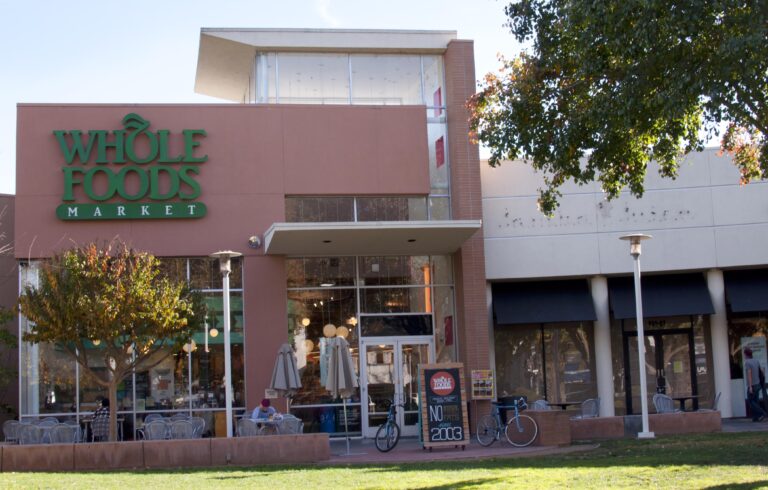
In recent weeks, several restaurants in Davis have opened, closed and even expanded. The Jamba Juice located in Davis Commons is closing and, Whole Foods will be expanding into that space.

“We are very excited to be expanding our store; we will finally be able to satisfy consumer needs for more indoor seating,” said Kristen Tantarelli, the marketing team leader of Whole Foods in Davis.

Tantarelli was excited about these expansions and stated that it will be attractive to prospective customers. Considering the fact that the Whole Foods in Davis is relatively smaller than the average Whole Foods store, it is very beneficial for the shopping center to be gaining more seats.

Contrary to what was reported in a recent Davis Enterprise article, Tantarelli said Whole Foods did not outbid Jamba Juice for the lease.

“A landlord from Fulcrum Property said the lease was available. Whole Foods was not ever sharing the lease; it was based on property,” Tantarelli said.

The general manager of Jamba Juice had a private discussion with the general manager of Whole Foods.

This December, Krush Burger, a burger joint that also operates several food trucks, will be coming to The Marketplace in North Davis near West Covell Boulevard. It will be located at the space once held by Rostini’s Italian Kitchen. The location of the original Krush Burger, is on 10th Street in Sacramento.

“We have tested the market and Davis has a good community with more families and will provide steady business,” said chief burger flipper Davin Vculek.

Vculek is optimistic about business in Davis. He said that even though Davis is a college town, the business will be able to thrive without college students. The current locations in Sacramento are in an urban, industrial location that only gets thriving business during lunch hours from workers; therefore, the restaurant hits a number of slow periods. Furthermore, because of this, they are unable to stay open for standard business hours.

The restaurant will offer 12 microbrews, which will be “satisfying to people looking to have a good time and wanting to relax.” According to Vculek, Krush Burger’s success is due to the options they offer customers — different concepts and mix-and-match options instead of one burger.

Huong Lan’s Sandwiches on 213 E St. closed down a month ago, and Judy’s Fine Grinders and Burgers will be taking its place. The restaurant’s grand opening was on Nov. 5.

There is another location of Judy’s north of Davis in Woodland, which has been open since 1997.

“We are looking to expand and open more restaurants because of our past success,” said representative of Judy’s Damon Silva.

Judy’s has won the Best of Yolo County award several times, and for four consecutive years.

In the past week since the grand opening, the restaurant has been bustling with customers during lunch and dinner hours.

“There are a lot of burgers places in Davis, but people keep on coming back to us because of our extensive menu, different sized burgers, and good service; we also have reasonably priced food, considering our quality,” Silva said.

So far, the most popular items on the menu have been the Texas Gold Cheeseburger and the Philly Cheesesteak.

Furthermore, The Melt, a casual eatery featuring grilled cheese sandwiches, soups and a variety of other items opened in the Davis Commons on the corner of First and E streets on Nov. 12.

There are several other Melt locations at Stanford, Berkeley and San Francisco.

“We are trying to inch ourselves into the Sacramento market; however, moving to Davis will be nothing new because we are already open in other college towns,” said Chief marketing officer and member of the Board of Executives of the Robert Mondavi Institute at UC Davis Paul Coletta.

Coletta said that while The Melt does not need to do business differently in separate locations, the business nonetheless tries to connect with the local community.

“We appeal to a younger audience because they appreciate the technology that we use, like our order and pay system, status boards and free Wi-Fi at every location which doesn’t require signing in,” Coletta said.

With any purchase, The Melt also gives out free fountain drinks to anyone with a valid UC Davis ID, Coletta said. The Melt served over 2,000 people on its opening day last year at Berkeley, so they are optimistic about future business.

“We are looking forward to bring grilled cheese happiness to Davis,” Coletta said.

Aggies finish season strong with a win

0

The women’s soccer team closed out their season on Nov. 3 with a hard fought 1-0 victory over UC Santa Barbara. The win provided a quality finish to the tough, but rewarding year for the Aggies.

UC Davis posted a final record of 6-9-3 overall, including a 3-4-1 mark in conference play. The record is misleading, however, as the Aggies were competitive in every single game. They lost five games by just one point. It is a very positive sign in what was an extremely taxing year for the Aggies.

“It’s bittersweet,” said head coach Maryclare Robinson. “The amount of opportunities we had, we walked away hungry, particularly against Iowa.”

UC Davis lost to Iowa, a Big 12 school, 1-0, in a hotly-contested match that saw the Aggies just unable to net a goal. This was unfortunately a foreshadowing of things to come as the Aggies would wind up close in so many games, but ultimately fall just short.

There are far more positives than negatives to draw from this season though. The Aggies played an extremely difficult schedule this year and responded well, highlighted by a 1-1-1 record against Pac-12 teams.

“The schedule was definitely a highlight. It definitely sets this year apart,” coach Robinson said. “Texas Tech is a top-25 team, and we managed the pressure well. We were dangerous against everyone.”

The Aggies were physically drained after being on the road for nearly all of September, playing in San Francisco, Utah, as well as in New Mexico.

“It was hard, not a cakewalk,” coach Robinson said. “But that’s why we’re in Division 1, to get an awesome opportunity to play such good teams so consistently. We competed and played good soccer.”

The team’s schedule was certainly something to be proud of. So, too, was the team’s reaction to a hard first few weeks of the season.

“How we responded was definitely a highlight,” coach Robinson said. “We had the opportunity to get into the conference tournament all the way to the end. We did much better, particularly in conference [games].”

The Aggies made some significant changes midway through the year, which is not easy to effectively do, including a formation switch from 4-3-3 to a 3-5-2. This put more emphasis on controlling the middle of the field. A change in work rate and mentality within the team also helped to galvanize an exciting end to the season.

“We created much better opportunities,” coach Robinson said. “We’re there. We’re knocking on the door.”

The last game of the year was perhaps the most memorable moment of the season. The Aggies earned their 1-0 victory over UCSB to ensure that the senior class remained unbeaten against the Gauchos.

This pressure-filled win kept the team in the conference tournament hunt. They were unfortunately eliminated from playoff contention later on in the day after other results did not fall the Aggies’ way.

The win also offered a brilliant way to send out the departing players on senior day and secured coach Robinson’s 200th win as UC Davis head coach.

“The win felt deserved,” coach Robinson said. “Our mentality was hard and the soccer was good. Number 200 is nice, but winning that pressure game was more. Everyone was on board.”

Five players were also awarded conference honors including seniors Ashley Edwards and Mary Beth Mazurek, who won first team honors. Junior Lexi Popoff, who came on strong in the second half and was awarded second-team honors. Sophomore Sienna Drizin won an honorable mention and Nicole Bouvia made the all-freshman team. These awards were a fitting end to the year, with a promise of future success to come.

UC Davis begins breeding poultry for impoverished Africans

Africa could be receiving some new hot, healthy chicks if Davis scientists have anything to say about it. Researchers from the College of Agricultural and Environmental Sciences at UC Davis and the School of Veterinary Medicine are working on creating disease-resistant, heat-resistant chickens for hunger-prone areas of Africa. In particular, the work focuses on fighting Newcastle disease, which kills 750 million chickens every year.

“Newcastle disease is the number one disease that kills chickens throughout most of the developing world, so across Africa, South [and] Central America and across much of Asia. Newcastle disease kind of sweeps through rural villages once or twice a year and kills most of the chickens,” said David Bunn, director of the effort called Feed the Future Innovation Lab for Genomics to Improve Poultry.

With new technology and innovative genomics, the team hopes to breed fowl suitable for the most affected areas. This isn’t genetic modification, but it’s a step up from traditional breeding. They examined local birds that can withstand heat and incorporated what they know of the genotype of American chickens that can resist disease.

“What we’re doing is … we’re going to be looking at three local breeds in East Africa … and then we’re looking at three breeds in Ghana, which is in West Africa … because we’re really hunting for genes and so we want to look at a diverse set of birds,” Bunn said.

In the United States, the collaboration with Iowa State aims to identify genes in American poultry that cause resistance to Newcastle disease.

While it may seem more logical to solve global hunger with energy-rich plants rather than needy animals, chicks bring in a lot of money for a community.

“The exciting thing about this project is that poultry is a very good income generation opportunity for small-scale agricultural producers … The poultry sector … is likely to grow in demand over time,” said Josette Lewis, associate director of the World Food Center at UC Davis.

Further, chickens don’t require much land or other resources, allowing them to be raised easily in rural and suburban areas.

When you crack the case, it’s not just about the food. Chickens create income for impoverished areas. In Africa, women and children often raise poultry for sustenance and salary. If chickens could be resistant to Newcastle disease and the heat of the desert, these women and children could have reliable means of nutrition and financial security.

Naftali Moed, a second-year environmental policy analysis and planning major, understands the importance of agriculture over industry in the developing world.

“The key thing that makes agriculture different from other means of revenue generation is that it enables communities to become more internally sufficient and independent by providing people with control of their food source. It is this empowering aspect of agriculture to enable individuals to gain more control over their food and ultimately their society that is critical with regards to agriculture in impoverished areas,” Moed said.

As our population increases beyond all limits, strains on our food system will become more noticeable. There is a way, however, to minimize the pressure. When the famished can feed themselves while making a profit, global hunger will begin to disappear. A few chickens can make a huge difference, and that should have a lot of people feeling sunny side up.

Tech Tip: A new take on an electrical bike

It could be possible in the near future to arrive to class looking just as good as when you left, not like you just biked two miles. FlyKly has recently unveiled their prototype for Smart Wheel, a pedal assist unit that can transform almost any bike into an electric bike. For a community like Davis, where biking is not just a form of transportation but a lifestyle, Smart Wheel and its mobile phone app are an exciting development.

The 9-pound Smart Wheel contains the motor, battery and electronics inside a unit that is affixed to a 29-inch rear wheel. It can replace almost any bike’s rear wheel and is simple to swap in and out. Smart Wheel’s motor turns on when you start pedaling to assist you in your journey. It can help you reach speeds of up to 20 miles per hour and can travel up to 30 miles on a single charge. It will come in a variety of colors to suit bike frames and customer preferences.

Though hills are few and far between in Davis, Smart Wheel could assist you in climbing them; also, as you coast down the hill, Smart Wheel charges itself. You can also charge Smart Wheel in two to three hours by plugging it in; perfect for in-between classes.

The FlyKly app is compatible with iOS, Android and even Pebble smartwatch. The app is used to control the wheel through Bluetooth from its dock, called the Smart Light, that is attached to your handlebars for easy access. You can either attach your phone to the Smart Light through a sticky pad or with built-in straps. Through the FlyKly app you can set the maximum speed that Smart Wheel will gradually accelerate to as you start to pedal; this can be adjusted on your phone as you ride. You can also keep track of your current speed, distance of your trip, trip time and Smart Wheel’s battery level.

The Smart Light holster also functions as a light, phone charger and dock. Smart Light houses a dynamo generator that allows you to charge your phone and light your path. Both the charging and the light can be set to start as you pedal, ideal for those late classes or late-night food runs.

Furthermore, Smart Wheel includes anti-theft tools. You can lock your bike, get notified if it is being stolen and track where it is using the FlyKly app.

Smart Wheel collects data about your riding habits and routes which can be used as you please to enhance your biking journeys. There is also a feature where you can share your routes and habits with your friends. The FlyKly app is also able to suggest safer, faster and more fun route alternatives.

Smart Wheel will make biking to important events or gatherings more fashionable because you can dress for the destination and not the ride. Though it can’t control the weather, it can ease the strain on your body to help keep sweat at bay. It could also help those that have to battle the strong winds to arrive to school not out of breath.

No price has been released, but the Kickstarter was opened to fund production. For more information, visit http://www.kickstarter.com/projects/flykly/flykly-smart-wheel.

U.S. Green Building Council presents UC system with green building award

0

On Oct. 29, the U.S. Green Building Council’s (USGBC) Northern California Chapter held its annual Green Building Super Heroes Awards Gala recognizing the entire University of California system amongst others for their commitment to sustainable innovation in California.

UC Davis was singled out among the campuses for its new West Village complex, as well as the winery and brewery portions of the Robert and Margrit Mondavi Institute for Wine and Food Science.

“Northern California leads the country in green building, and these award winners exemplify the region’s spirit of innovation,” said Dan Geiger, executive director of the USGBC’s Northern California Chapter in a press release.

The USGBC additionally recognized UC Berkeley for its sustainable campus design as well as Lawrence Berkeley National Laboratory for the renovation of one of its laboratory buildings.

John Meyer, Vice Chancellor of Administrative and Resource Management for UC Davis accepted the award.

“I think it just recognizes the leadership role the Davis campus takes on sustainability matters,” Meyer said. “It’s very helpful in telling that audience the significant role UC Davis plays in stewarding resources.”

The Leadership in Energy and Environmental Design (LEED) system was created in 1998 by the USGBC. Aimed at curbing greenhouse gas emissions and reducing waste, the system evaluates buildings and communities based on criteria such as water efficiency, indoor air quality and energy consumption.

The UC system’s adherence to green building standards, also known as LEED, has allowed it to stand as a vanguard of sustainable building practices in California.

The rating system appraises a building using these metrics and awards it a rank ranging from LEED Certified to Silver, Gold and Platinum.

The Teaching and Research Winery and August A. Busch III Brewing and Food Science Laboratory is a 34,000 square foot complex housed inside of the Robert and Margrit Mondavi Institute. The building contains processing facilities for milk and other foods, as well as a winery and brewery.

Not only is the facility home to the world’s first LEED Platinum certified winery, according to a UC press release it additionally boasts the highest LEED score of a building at any university.

This facility is only one of the 140 LEED certified buildings spread across UC, which hosts more LEED buildings than any other university in the country.

Located west of Highway 113 and encompassing the Ramble and Viridian apartment complexes, the West Village project has been heralded as the largest planned net-zero energy community in the country.

Designed as a partnership between UC Davis and a private contractor, the project aims to reduce its net energy consumption to zero while supporting apartments, a community college campus and UC Davis’ planned “uHub” research center.

According to a press release from West Village, the complex will achieve this through a combination of “aggressive energy efficiency measures” such as high efficiency light fixtures and air conditioning as well as the extensive use of solar power.

This focus on sustainability is made possible mainly by the UC Sustainable Practices Policy established by the UC Office of the President in 2004. This policy stipulates that all new UC construction and renovation must at least be certified LEED Silver.

Additionally the policy sets out other campus wide sustainability goals, such as reducing water consumption by 20 percent, achieving zero waste and lowering greenhouse gas emissions to 1990 levels, or 50 percent of the current output.

According to Mary Hayakawa, executive director of Real Estate Services for UC Davis, Davis is constantly trying to surpass expectations.

“We look for how we can push the envelope on every project,” Hayakawa said. “The standard is [LEED] Silver, we strive for Gold.”

This commitment to sustainable infrastructure can be seen in the numerous LEED buildings throughout campus, such as the Gold-Certified Student Health and Wellness Center and newly-built Student Community Center, which received a Platinum rating.

According to a UC press release, the combined effect of these energy efficient measures have helped save the UC system over $128 million in energy expenditures since 2004.

Julianne Nola is assistant director of Design and Construction Management at UC Davis. She said the progress made by UC Davis and the entire UC system is due in part to California’s conducive environment for green energy.

“California is already known for being a leader in sustainability,” Nola said. “We already had the roots, now we’re just feeding off of that. So we’re able to do more and more.”

For Nola, however, designing efficient and sustainable architecture is not all about the awards or recognition. Making a facility that achieves a balance between usefulness and sustainability is the ultimate goal.

“For the university, the question when constructing efficient buildings is not “what will get us an award?” but rather “what do we feel is going to make a good building?’” Nola said.

Roger Beachy named founding director of World Food Center

0

On Oct. 31, Roger Beachy was named founding director of the new World Food Center (WFC) on campus.  Beachy will assume his position as director on Jan. 1, 2014. Beachy is known for his internationally-renowned work as a plant biologist.

“Under Roger Beachy’s leadership, the center truly has the potential to help keep California in the forefront of providing products and technology that help feed and nourish the world, offering tremendous economic value to our state,” said UC Regent Fred Ruiz at Beachy’s appointment.

Associate Director Josette Lewis said that Chancellor Katehi and her advisory committee considered candidates both on and off campus before deciding on Beachy.

“Dr. Beachy’s experience with the national food and agriculture industry will bring international visibility to the World Food Center,” Lewis said.

The WFC will gather faculty and experts from all fields at the UC Davis campus. Research will be used to discover new and efficient ways to meet the rising demand of food production as the world’s population grows.

“The World Food Center will elevate the impact of research at UC Davis,” Lewis said. “We would like to help expand the agriculture and food systems on an international level.”

Founding Director Roger Beachy said the WFC will combine the expertise and knowledge across various disciplines at UC Davis in order to address global food security. UC Davis is internationally known for its agriculture programs, which will help bring awareness to the programs that the WFC will promote.

“UC Davis’ extensive experience in this area shows what’s possible through discoveries and innovations applied in a real world setting,” Secretary of the California Department of Food and Agriculture Karen Ross said at the appointment.

The exact goals of the WFC will be established over the next year, according to Beachy. One main goal that the WFC is currently working on and will be working on during the duration of the center is to collaborate with faculty.

“The World Food Center will assist faculty to achieve goals through collaboration to impact the food and sustainability of agriculture,” Beachy said.

Different groups of faculty from all of the UC Davis Colleges will be brought together to create new and efficient ways to enhance food production. One group that will be helping is the Seed Biotechnology Center (SBC), which works to enhance communication between UC Davis and seed industries in order to discover new ways for seeds to be used for agricultural and consumer benefit.

Director Kent Bradford said that one way the SBC will be helping is through hosting a networking program with other seed improvement programs, such as Seed Central. Seed Central is an initiative started by the SBC to energize the seed industry around UC Davis and ensure a collaboration between the university and the seed industry.

“We have programs around the world,” Bradford said. “One of the big things we can do is commercialize through those, because it will tie in with the goals of WFC.”

Bradford also said that Beachy’s previous experience with plant science will be a great help to getting the WFC started.

“Roger Beachy is well-known in the plant community,” Bradford said. “He will be able to make connections with different plant scientists from all over.”

Beachy has previously worked as a professor of plant science and biotechnology. He held the position of founding president of Donald Danforth Plant Science Center in St. Louis, Missouri. Beachy also conducted research in collaboration with Monsanto, Inc. that led to the world’s first genetically modified crop.

“Roger Beachy brings the perfect blend of scientific acumen, experience and vision that are critical for launching the new World Food Center on its proper trajectory,” said Chancellor Katehi at Beachy’s appointment.

Beachy said his background will help with directing because of his knowledge of plant science and also because of his experience with government policies.

“Knowing about the pressures brought to bear to change policy will help in doing this job,” Beachy said. “My hope is that we will be able to influence policy and have an impact globally.”

According to Beachy, Chancellor Katehi provided the WFC with a loan to get started on their work. Funding beyond that depends on the mission and goals that the WFC creates. Beachy also said that some of the funding will come from the private sector and that they also hope individuals will help sponsor the WFC once the goals have been established.

Lewis said that short-term goals for the first year of the center’s existence include engaging the campus more broadly, advancing fundraising and to put operational systems in place.

“We’re going to work on relating to other organizations on campus and getting them involved,” Lewis said.

Beachy said he looks forward to getting started and working with the Chancellor and faculty.

“We want consumers to look at how they think about agriculture and their food,” Beachy said. “This will help us all understand more about food systems.”