58.4 F
Davis

Davis, California

Tuesday, December 23, 2025
Home Blog Page 899

Robb Davis announces city council bid

0

In June 2014, the City of Davis will vote to elect new city council members. Some current members plan to run for reelection, others hope to be elected to district assembly seats and new candidates will run for the first time.

Davis City Council is made up of five seats, two of which will become available in 2014. Elections for the city council occur every two years, and the mayor is chosen out of the group of elected council members. The mayor pro-tempore is intended to take the mayor’s place when his/her term ends.

One of the available seats is currently held by City of Davis mayor Joe Krovoza, who will run for a California State Assembly seat. Current mayor pro-tempore, Dan Wolk, will also be running for a seat in the California State Assembly.  The other is held by city council member Rochelle Swanson, who said that she plans to run for reelection.

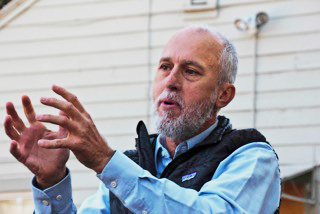
A couple of weeks ago, Robb Davis announced officially that he will be running for a city council seat.

The other two current members of city council are Lucas Frerichs and Brett Lee, both of whose terms will end in 2016.

Robb Davis has lived and worked in the City of Davis since 1999, and has worked on various projects in the City of Davis, such as the Bicycling Advisory Commission and the Downtown Parking Force.

“[I’m focusing] on transportation issues, such as safe cycling, as well as homelessness and addiction,” Davis said.

Moving forward, Davis believes that it is especially important to focus on long term structural problems in the City of Davis and to balance its revenue and expenditures.

“I want to work for long term economic health,” Davis said.

Davis is aware of the importance that the City of Davis has as an agricultural system as well.

According to Davis, the city needs to be conscientious of how we develop our farmland and make sure to take care of the resources.

Recently, Davis worked to get the Neighborhood Court system underway in Yolo County. The Neighborhood Court allows people who have committed their first misdemeanor offense to walk away from the crime after making amends, which are determined by the judges of the Neighborhood Court.

Rochelle Swanson, a current city council member, plans to run for another term on city council because she feels that there is still more work to be done.

“I believe there is still a lot of hard work to do to to preserve and strengthen our quality of life,” Swanson said in an email.

Swanson also recognizes the agricultural assets of the City of Davis and wants to use them to their furthest abilities.

“We have a responsibility to be a leader in trendsetting how communities feed themselves,” Swanson said. “We must focus on utilizing these assets.”

Current City of Davis mayor, Joe Krovoza, will not be running for reelection when his term expires in June 2014. Instead, Krovoza will be running for a seat in the California State Assembly.

If elected, Krovoza hopes to bring the high quality science that has come out of UC Davis into policy making, as well as to bring increased availability of financial aid to students.

According to Krovoza, a great “Renaissance” between the City of Davis and the University has occurred during his tenure, something he hopes will be maintained in the future.

“Students are a huge part of the community, and the city and University needs to work together,” Krovoza said.

Krovoza cites especially the relationships that have been built through Davis Roots, a non-profit organization in the City of Davis that is geared to get university-born entrepreneurial ideas off of the ground.

Running for the same assembly seat as Krovoza is Dan Wolk, the current mayor pro-tempore.

Wolk also believes in the importance of assimilating UC Davis students and graduates into the City of Davis to help it grow.

“[We need] ways of creating jobs in Davis to keep graduates in town once they graduate,” Wolk said. “Students are a critical component of our community.”

Wolk is aware of some of the problems with the city that current UC Davis students face as well.

“[We need to work on] providing affordable rental housing (to students), and creating a potential rental housing ordinance,” Wolk said.

Wolk would like to see more student involvement in politics in the City of Davis, which he believes is crucial for maintaining the positive relationship that students have with the residents of the City of Davis.

“I plan to work hard to reach out to students and encourage them to engage more in the city’s politics,” Wolk said.
The change in the game

0

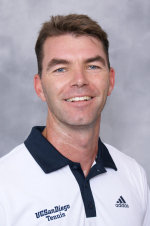
Eric Steidlmayer carries an amiable smile and a wry sense of humor wherever he goes. He is focused and intense as well, clearly intent on bringing his savvy experience and intelligence to work with him every day as the UC Davis men’s head tennis coach.

Steidlmayer has stayed close to his roots throughout his life and career. He started out at  UC San Diego, graduating with a bachelor’s degree in 1996, and then earned a master’s degree in economics from UC Davis in 1998. He then became the head coach of the men’s tennis program at UC San Diego that same year. He became the winningest coach in UCSD history, compiling 12 consecutive NCAA Division II postseason appearances highlighted by an incredible 20-0 season in 2011.

And after all that Steidlmayer elected to come back to UC Davis in 2012 to coach the men’s team. Why would he give all that up?

“Family. A lot of family in Norcal,” Steidlmayer said. “Also the challenge of coaching at a Division I level.”

Coach Steidlmayer was quick to mention that both of those factors carry the same weight in his mind; both bear equal importance.

Steidlmayer carries the loyalty that he has shown his alma maters to the tennis courts as well. He feels the same commitment to his team and it shows through in the values that he not only hopes to instill in his players, but holds himself to as well.

“As a coach, I value a good, constant and consistent effort from myself everyday,” Steidlmayer reflected. “This is a constant opportunity to help young men develop positive character.”

Steidlmayer’s journey to being a coach began from a young age.

“I always loved sports. As a kid I could see myself as a coach, and it ended up that way,” Coach Steidlmayer said. “There were a lot of things that I was able to take from my youth coaches.”

Steidlmayer played collegiately for three years when he attended UCSD, and then became an assistant on the UC Davis team when he came here for his graduate studies. The segue from player to coach figured to be difficult, but Steidlmayer handled it with deft touch.

“It was a smooth transition to coach,” Steidlmayer said. “As a senior in college, I was looking to help the younger guys get better.”

“There was a massive amount to learn though,” Steidlmayer said. “Learning the different personalities, understanding the pulse of your team. I’ve had a lot of good assistant coaches.”

The people with whom you surround yourself with are very often a reflection of yourself, and the man that coach Steidlmayer has had with him to help adjust to being the UC Davis head coach is just that.

Assistant coach Michael Meyer played under coach Steidlmayer at UCSD and then played on the men’s professional tour afterwards. He came with coach Steidlmayer to UC Davis at the start of the 2012 season.

“Michael’s a first-rate guy and has gone through the ups and downs of being a tennis player,” coach Steidlmayer said. “He still has a good tennis level, and is a great buffer between myself and the players.”

Coach Steidlmayer gives his easy grin with that last sentence as he admits that sometimes when things get intense on court, he needs someone there to help smooth things out with the players.

“He explains to the guys when they ask ‘Why’s Coach getting on me like that?'” laughs Steidlmayer. “He’s a really valuable guy.”

Coach Steidlmayer always thinks as a coach first and foremost, deferring credit for the UC Davis men’s tennis turnaround these past two years to his players.

“All the players are trying very hard to improve,” he says. “We’ve recruited well and the outlook is very good for the short term. I think we’re headed in the right direction.”

That is certainly true, but it is very much a credit to Steidlmayer’s skill and intelligence. A major factor in determining a coach’s worth is often not to maintain a successful program, but rather to build one. Steidlmayer did both of those at UCSD and is now continuing that brilliance here at UC Davis.

“I am happy I’m here,” Steidlmayer said. “Our players are trying their butts off to represent UCD and it’s appreciated.”

UC Davis is happy that you’re here too, Coach.

This Week in Science and Technology: 10/28 – 11/4

At Least You Get to Keep the Glasses

A study to be published in Media Psychology found that watching a movie in 3D vs 2D doesn’t actually make a significant difference in the experience. Aside from costing slightly more than 2D, 3D usually helps the viewer from being distracted by the usual theater norms like the talking kid, the obnoxious laughter or the texter. However, the 3D aspect of the movie cannot do wonders for a less than average movie. According to the researchers, the slight satisfaction boost 3D movies have from the immersion is usually canceled out by the extra cost or uncomfortable glasses.

Look Who’s Learning Already

A recent study published in the journal PLoS One found that when fetuses were regularly played a specific tune in the womb they had more brain activity when hearing that exact tune after birth. This study shows that even fetuses can be impressionable, so maybe switch that Nicki Minaj to some Bach when pregnant.

Dog’s Best Friend

A small study was conducted to see if the feelings one has towards their dog are reciprocated. Published in Applied Animal Behaviour Science, the study used a procedure that is usually used to measure a human toddler’s attachment to their parents. The performed experiments showed that owners that spend a lot of time interacting with their dog had better relationships with them than those who didn’t. However, some of the experiments indicated that there was a more owner-dependent relationship than a friendship. The scientists said that in order to have a better relationship with your dog, you have to do more than show him or her attention; you should train or stimulate him or her mentally.

Turning on the Spirit of Adventure

NASA’s deep space craft, Orion, was turned on for the first time. They turned on the avionics system inside the capsule to see the progress before its upcoming test launch. It is scheduled for an unmanned flight in fall 2014 that should last about four hours and will take Orion 3,600 miles above Earth. The craft is being built in the Kennedy Space Center in Florida. Everything checked out for Orion’s first awakening and is on schedule for its test launch.

My Eyes Are Up Here

A study was conducted by Dr. Sarah Gervais of the University of Nebraska-Lincoln where men and women were outfitted with a device that tracks how long they look at a certain spot. Both groups were shown pictures of women with varying body types. As expected, men focused on the pictured women’s breasts and waists. However, women were also shown to take long looks at the pictured women’s breasts and waists. One of the authors claims it is possible that women are checking out their competition when they stare at each other. These findings are published in the journal Sex Roles.


UCDPD donates cameras to Tipsy Taxi

Tipsy Taxi, a subsidized unit of ASUCD, plans to install cameras into its vehicles by Winter Quarter 2014.

According to Jay Chou, director of Tipsy Taxi, the primary motive for pursuing camera installation is to ensure student safety and to reduce Tipsy Taxi liability.

“When our drivers are out there driving Tipsy Taxi vehicles, there’s nothing recording them if they get into an accident or if there’s an incident inside our vehicles,” Chou said.

But with the addition of two cameras — one facing inside the vehicle and another facing outside — Chou believes Tipy Taxi’s responsibility for third-party damages will be reduced. Tapes from the recordings will allow for analysis of accidents or dangerous situations in order to determine what went wrong, or who was at fault.

In the past, Tipsy Taxi vehicles have experienced hit-and-runs. It is in these cases specifically that cameras are particularly advantageous; they can potentially capture vehicle license plates. That way, Tipsy Taxi will not be held accountable for any vehicle damage that was caused by an outside party.

Another advantage to the cameras is that they can resolve lost-and-found issues.

“Sometimes, our drivers will find lost items in our vehicles and the cameras will essentially be what we refer to if someone says they’ve lost something,” Chou said.

Because Tipsy Taxi is subsidized by ASUCD and operates on a break-even basis, they are not a profit-making business. This has made it difficult for them to afford five $1,200 cameras.

Though the total cost is beyond what ASUCD can offer, the UC Davis Police Department (UCDPD) has offered to pitch in. Chou said that when UC Davis Police Chief Matt Carmichael heard Tipsy Taxi was looking to purchase cameras but lacked the funds to do so, he offered to buy them.

“UCDPD liked the idea a lot, just because it’s a measure of safety and all of their patrol cars also have video systems on board,” Chou said.

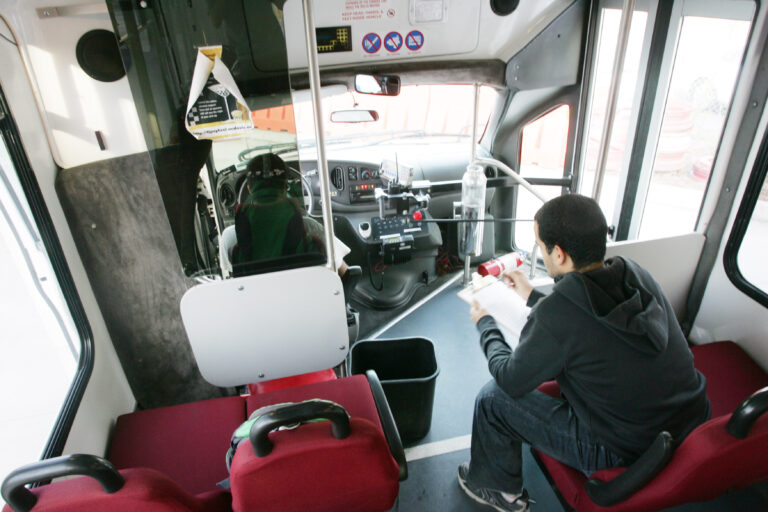
Similar to the patrol cars, Unitrans buses have long been using camera systems. That means Tipsy Taxi drivers, who all come from the pool of Unitrans drivers, are already accustomed to driving vehicles with cameras installed in them. Sean Shelton, a third-year biochemical engineering major and Unitrans driver, even predicts that “cameras will likely make both passengers and drivers feel much safer when using or driving Tipsy Taxi.”

Still, some students have their doubts. Their chief concern is the potential lack of privacy, especially when it comes to being recorded while intoxicated.

“It almost seems like a violation,” said third-year wildlife, fish and conservation biology major Rachel Plasterer. “Tipsy Taxi was made to give people a safe ride home and if they don’t feel anonymous anymore, I feel they might be less likely to take it.”

Third-year evolution, ecology and biodiversity major Than-Than Vo agreed.

“I’m a bit shocked, to say the least. It’s an important service for students who don’t have designated drivers, but now they might feel uncomfortable using it,” Vo said.

Chou, however, realizes this concern and reassures students that Tipsy Taxi is not about to use the cameras to monitor student behavior. The tapes will only be viewed if there is an incident, and only screened for information regarding the incident.

“Tipsy Taxi understands the condition of its clients and the cameras are not there to film the behavior of our passengers,” Chou said.

He reiterated that the cameras will only be installed for liability reasons. Since Tipsy Taxi is not a profit-making business, it becomes difficult to pay for damages that are caused by a third party.

“So the idea behind adding cameras to Tipsy Taxi vehicles is only to use it as a means for gathering evidence,” Chou said.

International House to showcase international art

0

The International House will be holding a special gallery opening starting Nov. 8. The gallery is called The Traveling Eye and features the work of local artist Chris Kidd and east coast photographer Danni Downing.

The International House has hosted many artists in the past from around Davis and the Bay Area. This specific gallery is meant to mix together different types of media that complement one another and offer similar ideas.

The theme of The Traveling Eye is meant to instill a sense of wanderlust in those who observe the photos and paintings side by side, as well as promote international enthusiasm.

Chris Kidd, a Davis watercolor artist and teacher, has spent much time capturing her vision of the west coast from Seattle to Los Angeles. The gallery will include landscapes, cityscapes and town stills from her travels to multiple destinations including Germany, Mexico and Hawaii.

Danni Downing, an editor and photographer from Washington D.C., will be displaying her work from her travels as well. Downing is known for capturing the bold, vivid colors of foreign landscapes as well as everyday human life. The work she is providing for the gallery mostly focuses on natural landscapes and city scenes from places like Alaska, Turkey and the Bahamas.

“I grew up in New Hampshire, and there the autumn colors are so rich and vibrant and the spring season is full of beautiful, deeply colored flowers,” Downing said. “I grew up surrounded by color and that’s part of why I’m drawn to it; we love what we’re familiar with and that comes through in my art.”

Because the gallery is meant to display both types of media side by side, it will be up to the artists to decide how they’d like to showcase their work. Frank Roe, a member of the International House art committee, said that choosing artists that would go well together is a long, careful process.

“We had long conversations with both Downing and Kidd on how they thought their art would fit together,” Roe said. “Their work seems to fit nicely to one another, but the artists themselves are in charge of putting the artwork up and they decide how they want their pieces to connect.”

One of the main goals of this gallery is to inspire conversation about the pieces among art enthusiasts. Since the gallery is free to the public, many people may stroll through the International House to view the art, but the art committee hopes that The Traveling Eye will spark more than just a quick walk-through.

Jeffrey Granett, the current head chair of the International House art committee, felt that Downing and Kidd’s work offered more than just a skin deep image; it offered intuition about the state of the natural world and faraway destinations.

“I’m always looking to see if a piece of art says anything to me,” Granett said. “It should communicate feelings, ideas and opinions when I look at it. Is it a conversation piece or is it just decoration? Will people want to discuss it with one another? These are the important questions.”

Through this gallery, the art committee hopes to attract interested observers and artists, including UC Davis students. Ray Borton, founder of the art committee, expressed his interest in all types of media being displayed, and his hopes that UC Davis undergraduates and graduates alike could take advantage of the free International House gallery.

“We take all media of art, including fabrics, weavings, paintings, photography and print,” Burton said. “We try to display a variety of things for everyone to enjoy.”

Students are encouraged to send in their artwork for future galleries to the International House. Roe believes that once students visit this gallery, they can decide if they’d like to participate as an artist.

“It’s a lot of time and effort to create a gallery, but it’s good experience and it will be presented in a fine manner,” Roe said.

The Traveling Eye will run from Nov. 8 to Dec. 7 in the main gallery at the International House. Admission is free. For information on how you can submit your artwork, visit internationalhousedavis.org/programs/art-exhibits/.

Watts Legal

0

Question: Recently there has been a lot of construction on the street adjacent to my apartment. It was ok for a while but in the past couple of weeks, they having been working throughout the night. What’s worse is that about every hour (even at 3 or 4 a.m.) this giant construction vehicle drives down the street. It literally sounds like a tank rolling through our street and shakes the whole apartment.

Now obviously there are noise ordinances for wild parties going on next door or things of that nature. But is there anything I can do about this since they are government workers?

 – Jonathan B.

Davis, CA

Answer: Short answer: No, work performed by the city or by people under contract with the city to repair infrastructure, as well as street sweeping, garbage removal and similar activities, are exempt from the noise ordinance.

But you do have some options when it comes to annoying noise. Like most college towns, Davis’ noise ordinance is used primarily to protect its citizens from those “parties” that noisy college students tend to bring into formerly nice, quiet neighborhoods. Though the noise ordinance is most often used against loud music or noise from parties, the ordinance applies with equal force to any loud sounds.

Regarding construction work, the ordinance specifies that construction equipment can operate only between 7 a.m. and 7 p.m. on weekdays and 8 a.m. and 8 p.m. on weekends (if they get a special permit, they can start as early as 6 a.m., but the permit will be revoked if someone makes a noise complaint to the police). And even then, the equipment cannot make noise louder than 83 to 86 decibels. You said the construction is happening at 3 in the morning. That’s obviously outside these timeframes. But since it’s a city project, it’s exempt, as I said earlier.

For other types of noise, the ordinance includes a table describing the maximum allowable sound levels in different situations. It states that “no person shall produce, suffer or allow to be produced on any public or private property, sounds at a level in excess of those enumerated in” the table.

The table caps the volume at levels ranging from 50 to 65 decibels, depending on whether we’re talking about a housing area, commercial zone or a high traffic corridor (i.e. Highway 113 and Interstate 80). Before investigating, police typically wait for someone to complain. When someone complains, they visit the complaining person’s house first. There, a police officer is supposed to measure the sound using a decibel meter while standing at the edge of the complaining person’s property line, though in practice the police do not often do this. As UC Davis’ Greek community is undoubtedly aware, police are far more likely to respond to noise complaints by knocking on the offender’s front door and telling the partygoers to keep it down rather than taking the time to walk the property line with a decibel meter. (Hint: People might be able to beat their noise citations if they challenge whether the police bothered to use a decibel meter. It’s worth a shot.)

Further, the sound restrictions in the table do not usually restrict sounds generated in the common area of any “multiple-family dwelling,” like an apartment complex. But the restrictions do kick in if the loud noise occurs between 12:30 a.m. and 9 a.m. on Friday and Saturday or between 10 p.m. and 9 a.m. on other days. The table’s restrictions also kick in when people living in other houses or different apartment complexes can hear the sounds from inside their homes. If a party is loud enough that people across the street — sitting inside their homes — can hear the music, it’s too loud.

If this whole thing seems a little complicated, that’s because it is. Most laws are written with restrictions, qualifications and more if-then statements than a computer program. City ordinances are no exception.

My favorite part of the noise ordinance deals with the monstrous evil that is leaf blowers. Leaf blowers are one of the most annoying devices created by human hands, and the noise ordinance singles them out for special scrutiny. In areas other than a single-family home, a powered leaf blower cannot produce a noise level exceeding 70 decibels measured at a distance of 50 feet from the leaf blower. Each leaf blower has to stay at least 100 feet away from each other leaf blower — they can’t team up. If the noise ordinance were strictly enforced, no longer would we be subject to roving gangs of gas-powered leaf blowers clustered together, vanquishing leaves in unison like some kind of unholy team of Ghostbusters.

Daniel is a Sacramento attorney, former Davis City Council candidate and graduate of UC Davis School of Law. He’ll answer questions sent to him at governorwatts@gmail.com or tweeted to @governorwatts.

Davis City Council discusses affordable housing work plan

0

The Davis City Council discussed an affordable housing work plan on Oct. 22 that addressed issues or plans for the low-income housing units in the City of Davis. The affordable housing program includes rental housing and offers options that range from shared equity and equity recapture through secondary loans and ongoing resale restrictions on ownership units.

Affordable housing is utilized by many groups in the Davis community as students, families and individuals find relief through the program.

“We’re a relatively small town with above-average home prices. That means it’s even harder here for folks to find affordable places to live,” said Michael Drane, community organizer of New Harmony Mutual Housing. “If we as a community don’t work to ensure that we have homes affordable for all, the economic health of the whole city will be negatively impacted.”

According to a press release from the Davis City Council, some housing units including rental houses also provide special needs housing for seniors, persons with physical disabilities, persons with mental disabilities and shelter beds for victims of domestic violence.

The Davis City Council agreed at the Oct. 22 meeting to address long-term issues related to the affordable housing units and projects.

“Once those projects are settled, we would focus our efforts on maintaining and rehabbing existing but older units, and work on two vacant land parcels that are meant for affordable housing,” said Kelly Stachowicz, City of Davis deputy city manager.

The Davis City Council will also come up with goals for green improvements and an increased accessibility of affordable housing, rental housing and ownership housing assistance programs, as well as ownership rehabilitation programs, including solar installation.

The press release states that these general directions will assist the city in managing limited resources within the affordable housing program, with the goals of preserving and developing affordable housing, efficiently using available resources and strategically utilizing staff time.

History of affordable housing in Davis

The city has had local affordable housing requirements since 1987. Since that time, approximately 1,000 rental units and 800 ownership units have been built under those requirements.

“Davis has always tried to provide a range of housing types to meet needs in the community,” Stachowicz said. “[As well as] an Affordable Housing Ordinance that spells out requirements for affordable housing.”

In the past few years, the City of Davis became owner of several affordable housing properties through refinances and foreclosures of 20 former Davis Area Cooperative Housing Association units. Their role as owner of these units in addition to the changes in resources requires strategic planning in order to address any issues and provide long-term success for these housing assets.

The Davis City Council is discussing these projects because they will be complex to fund and develop. Stachowicz mentioned that the state of California got rid of “Redevelopment Agencies,” which provided funding to build affordable housing in local communities. When Davis’ Redevelopment Agency went away, so did most of the city’s funding stream for affordable housing.

“Such a shift required for us to look strategically at what resources we have, what our needs are and what we can do realistically,” Stachowicz said. “Thus the work plan. Staff needed to know from the City Council what their priorities are.”

Because the redevelopment agencies left Davis in February 2012, the city has seen a dramatic decrease in affordable housing resources — reducing revenues for projects and staff by approximately $2 million per year. Many of the current projects are costly to maintain and underutilized, which is why they require timely action.

Pacifico affordable housing

Housing sites for students include the Pacifico Affordable Housing Project. The project was built in a dorm-style format and is financed in a way to accommodate low-income students. The project had vacancy challenges and went into foreclosure, which is why the City of Davis became the owner of the project.

“Pacifico has had some challenges due to its original configuration and deferred maintenance, but  it is getting more occupied now that it has been beautified and updated by new ownership and management,” said Danielle Foster, Housing and Human Services superintendent for the City of Davis. “There is still work to be done on two of the four buildings that are not currently open [due to] upcoming construction, [but] I think it’s a very affordable option for students.”

There are currently 37 residents living at Pacifico Cooperative at the moment, with the total capacity being 48. The residents are a mix of students, non-students, adult former foster youth and local people. 65 percent of the residents are students attending UC Davis.

“There is a local need in Davis for affordable housing for students and for those who work in Davis,” said Johnathen Duran, from Pacifico Student Cooperative Housing. “Affordable housing not only fulfills a basic human need, but also contributes to the overall health and vitality of the community.”

According to Duran, the rent prices at Pacifico begin at $455 for a small one bedroom compared to a fair market rate of $741 for a single studio. Along with offering lower rent prices, Pacifico also provides all utilities, free parking, Wi-Fi internet access for its residents.

“Pacifico is a great housing bargain — definitely low cost time and money-saving family-style living for those interested in having the privacy of their own room and the benefit of shared communal areas,” Duran said.

Pacifico is now affiliated with Yolo County Housing (YCH), an independent California Public Housing Authority. YCH is dedicated to providing individualized, community-oriented services to the residents of Yolo County and to those communities and organizations who serve them.

New Harmony Mutual Housing

Another affordable housing project is the New Harmony Mutual Housing developments, consisting of 69 apartment homes with rent set at affordable levels with an income cap under which new residents must qualify.

“The recent vote by the Davis City Council could be especially harmful,” Drane said. “The Council approved a proposal to allow tiny apartments above garages or next to homes to count towards that requirement, but not to monitor whether or not these units were actually rented to folks with modest budgets. There is no guarantee that these units would even be rented, let alone rented at affordable rates. As a result, this proposal essentially strips Davis’ once model-affordable housing policy of any substance.”

Davis cold weather shelters reopen for winter months

0

Cold weather shelters for the homeless are opening in Davis for the upcoming winter months. Among these are the Cold Weather Shelter, a program within Davis Community Meals, and the Interfaith Rotating Winter Shelter (IRWS).

These shelters are open on a nightly basis and provide food and housing for those in need in our Davis community. All programs are mostly run by volunteer community members and students.

“Each volunteer has a good heart, giving their food and time to stay and monitor the guests,” said Mary Anne Kirsch, co-chair for the IRWS. “These are volunteers from all walks of life and have a variety of different responsibilities.”

According to Bill Pride, the executive director for Davis Community Meals, volunteers make up 95 percent of the shelter workforce, and students make up 85 to 90 percent of those volunteers.

“It just helps me to know that I’m doing something worthwhile,” said Roshy Agahi, Los Angeles Food Bank volunteer and a fourth-year food science major. “I’ve worked with the homeless on many occasions, and I hope that every little bit counts.”

The IRWS is open every night for fifteen weeks of the year, between Dec. 1 and Mar. 15. The shelter’s location will change weekly according to a set schedule, and so will the capacity of patrons it can accommodate, which is usually between 25 and 40.

“Our mission is to give emergency shelter to people in the cold months who don’t have a roof over their heads,” Kirsch said. “There is no criteria for our guests, except that they can conduct themselves respectfully so that they can make it a nice, quiet place for everyone.”

According to Kirsch, the term “interfaith” represents the idea of the shelter that they will accept anybody of any or no religious beliefs, and that the shelter rotates between congregations of varied Christian denominations, synagogues and Quaker establishments, among others.

The Davis Cold Weather Shelter collaborates with the IRWS in their goals to keep the homeless off of the streets. Both programs are non-profit and food is donated by the community or religious organizations on different nights of every week.

The IRWS and the Cold Weather Shelter are nearly entirely volunteer-run and have volunteers who either prepare meals in the morning and evening, or stay overnight with the guests to make sure that everything is in order and operates smoothly.

The IRWS has had approximately 1,100 volunteers throughout the last year, and the Cold Weather Shelter, whose volunteers are trained more thoroughly and repeat assistance consistently, range between 25 and 30 per year.

The Davis Cold Weather Shelter is a branch program off of Davis Community Meals, which started as a soup kitchen in February 1991.

According to Pride, the establishment is an old home of 1,100 square feet owned by the City of Davis with two bedrooms, two bathrooms and a kitchen. The shelter, located at 512 Fifth Street, will be open between mid-November and Mar. 31, for the eighth year.

“It gets people out of the cold, wet and rain,” said Inessa Snyder, resource center coordinator of Davis Community Meals. “Which is great, especially for those who don’t otherwise come in for help.”

The shelter can house eight males and two females, with separate gender-based quarters for individual comfort. This ratio mirrors the homeless population.

“What makes us different from the other shelters is that we consciously take in patrons that suffer from alcohol and drug use,” Pride said.

Cold Weather Shelter volunteers receive training to deal with problems, aggressive behavior, recognizing symptoms and noting how behavior changes in mental health clients.

“I’m excited to start volunteering there and I think every town needs something like this program to help these people get back on their feet,” said Robyn Lindsay, a volunteer at the Davis Cold Weather Shelter and a fourth-year genetics major.

According to Pride, many of the homeless are mentally disabled with families that are unable to support the difficult dynamics that their situations bring into their lives. For this reason, they have found themselves struggling without permanent living situations, or cycling between governmental confinement facilities and the streets.

“Volunteers are prepared well for careers in medicine, health, nutrition, social work, sociology and psychology, to name a few,” Pride said. “These are just some folks that have been left behind by the world because of the social functions and social changes. Everything has become more diffuse, but you can do a lot to help.”

For more information on these programs, please visit: interfaith-shelter.org and daviscommunitymeals.org.

News in Brief: Art Studio Department presents Visiting Artist Lecture Series

0

The Visiting Artist Lecture Series, in which distinguished figures from the art world speak on campus, begins on Thursday with photographer Alec Soth.

“Soth takes photographs of workers in the South,” said Hearne Pardee, the chair for the Department of Art and Art History. “He really explores the American society in ways that are interesting to everyone.”

Soth’s work has been exhibited in the Whitney Museum in New York City, the 2004 São Paulo Art Biennial and the Jeu de Paume in Paris.

According to Pardee, the lecture series had existed in some form since the 1970s, although it became more ambitious around 2001, when the program began to feature seven to eight speakers a year.

The coordinator position for the lecture series is offered to a second-year graduate student in the Art Studio Department who volunteers for it. This year, the position is shared by Brett Davis and Alyssa Lempesis.

The speakers are chosen by the various faculty members and graduate students in the art department.

“We cast a fairly wide net to the other grads in the department,” Davis said. “We ask for suggestions for potential lecturers from various fields, and then meet with our mentors. We narrow the list down based on availabilities and who would be more likely to respond to our solicitations.”

Davis and Lempesis then contact the potential lecturers to discover their schedules and use that to select the most preferred speakers.

“Personally, I wanted to have the Los Angeles-based painter Laura Owens speak,” Davis said. “She was interested from the get-go and it happened to fit in her schedule, so she will be arriving later in the winter.”

Not all of the lecturers in the series are artists. For instance, Bill Arning, who will visit Davis in April, is the curator of Contemporary Arts Museum Houston.

“We have a writer and curator, a couple of painters, a sculptor and a new media artist,” Davis said. “It’s always good to mix it up, and I feel proud of the group.”

To see the full list of speakers, visit arts.ucdavis.edu.

Students question fraternity party shutdowns

0

In recent weeks, students have noticed that their weekend nights are being cut short because police are shutting down fraternity parties. Students are left questioning if these parties are getting shut down because they are not under control or because they are associated with Greek Life.

Bree Sinclair, a fourth-year political science and English double major said she thinks that perhaps most fraternity parties are destined to be “rolled.”

“Usually what happens for bigger house parties is that they [the hosts] talk to the neighbors so that they will call them before the police. So maybe if the fraternities had better communication with their neighbors they wouldn’t call the police,” Sinclair said. “But in general UC Davis seems to be antagonistic towards Greek life. So if a fraternity is having a party the cops are going to know immediately and it’s going to be on their agenda to shut it down.”

An anonymous member of a fraternity at UC Davis said that his fraternity takes the proper precautions to ensure their parties are safe and managed.

“We usually give out our numbers to neighbors so they can call us if the noise levels start getting too high to maintain good relations within the community. Our parties are usually well controlled since we always have at least five sober brothers walking around the property to ensure safety to our guests.”

When asked if he thought having a guest list was a good idea, he agreed and added a few other safety precautions his fraternity takes.

“Exits are always visible so in case an emergency were to occur, people can leave the area efficiently. If we see that the party is getting too rowdy we start asking people to kindly leave,” he said.

When asked if he felt the police had a predisposition to shut down fraternity parties he strongly said that he believes they do not.

“Their job is to ensure safety and reply to noise complaints given from people around the area so we respect that. If cops show up, we kindly approach them and treat them with the respect they deserve,” he said.

Kimberly Weglin, a fourth-year managerial economics major, said she believes that even if the people are not overly intoxicated at a party, dangerous situations can still arise.

“In the majority of fraternity parties you can barely move around, everyone’s bumping into each other and spilling drinks which really makes some people mad. It’s really easy to get separated from the people you came with as well,” Weglin said.

Even if there are some sober people at a party, if the mass quantity of people is too high, owners of the house can still lose control of the party. While the fraternity brother believes the Davis Police Department (DPD) has no predisposition to monitor fraternities during the weekends, the question as to whether this is true remains. DPD Lt. Glenn Glasgow, agreed with the fraternity member.

“Anyone can have a large gathering which proves a threat to the general safety of the community. It is not always fraternity parties that we get calls about,” Glasgow said.

Glasgow had many ideas as to how fraternities can remain the party throwers. Many of the practices noted by Glasgow are observed by some fraternities.

“Have a guest list of those that you want to invite. If people are not on that guest list the suggestion would be to turn them away. Make sure the people there are known to the host or hostess. If there is going to be alcohol, plan ahead with designated drivers and have phone numbers readily available,” Glasgow said.

When Glasgow was asked if minors would be cited if a fraternity called the police in an attempt to regain control of their party, he could not give a definite yes or no response, but focused on the issue of safety.

“Our first concern is the safety of the people at the party and the surrounding neighbors. If it looks like it’s going to be a difficult party to manage the focus will be on safety,” Glasgow said. “Not so much if they come across a minor drinking. In the end, if they are able to successfully clean up a party I’m not going to say everyone will get a free pass. We would rather have someone call us rather than let it get out of control for fear of some type of consequence.”

Trying to understand: Parental influences

0

Although a solid four hundred miles separate me from my parents, I still notice that I conduct myself like they do. Some of their habits have rubbed off on me, and distance doesn’t make that go away.

Children are prone to grow up and realize that the way they make certain decisions in life is because they constantly watched their parents (or guardians) do it the same way, and probably unconsciously started doing it too.

Every parent teaches their kids how to do things in a distinctive manner, and if we hadn’t watched them do it their way, we’d have learned it differently. It’s odd to think that, but you’re who you are because specific people have influenced you.

Your parents teach you as you grow and mature, and it sticks with you. Your beliefs and the way you conduct yourself may stem from how they raised you.

However, sometimes children don’t want to follow in their parents footsteps. Not only do useful habits and tendencies rub off, but annoying ones can too. I’m not going to focus on the major lessons that are commonly passed from one generation to the other, but instead concentrate on the trivial aspects of life.

Everyone is somehow influenced by their surroundings, but what’s interesting is when people make decisions based off of the knowledge that someone in their family does it the same way. Does that mean it’s the only way? It seems like that’s the case sometimes.

For instance, my mom has complex laundry techniques that I think are unnecessary, so when I came to college, I tried to break away from that and undertake my laundry with a more simple approach.

This is just one example of how some kids will watch the way their parent does something, learn from it, and maybe attempt to try it their own way.

The way I pack my bags for trips is a skill I learned from my parents. It often takes me much longer than it should to pack, but it’s just one of the mannerisms that they’ve instilled in me.

Parents can enlighten their kids with life hacks and helpful hints because they are older and wiser, which therefore guides children down a path similar to the one in which their parents traveled.

When it comes to the bigger questions, most people make their own decisions and create a unique path for themselves. They may borrow or take what their parents or guardians have taught them, and will then proceed to form independent decisions based off of that.

However, it’s often the insignificant and random aspects of daily life that masquerade themselves and all of a sudden, you’re thinking “Mom, you sneaky little woman… I do this because of you. I use this soap because this is what we used at home. I always bring a drink with me when I leave the house because you always did. I function by making lists because you always made lists, too. I put a napkin around the ketchup bottles in restaurants because you always did, and told us about the massive amounts of germs that accumulate on them.”

It’s these types of habits that you realize you do just because your parent(s) did it the same way.

Watching the way our parents go about their daily lives determines how we are most likely going to go about our daily lives. From the way they shop to the products they use at home, our parents’ actions lead us to conduct ourselves similarly.

Habits can transfer unconsciously and may seem uncontrollable. Every household has a unique way in which it operates, and many habits are passed down from one generation to the next. Unless if a particular habit irritates you and you stray away from it, you’re more than likely going to continue the trend.

It’ll probably surprise you if you think hard about all the things you do because of parental influences. Your guardians basically shape who you are and at least a few things, both big and small, have rubbed off on you, and will continue to spread to future generations.

SAVANNAH HOLMES can be reached at skholmes@ucdavis.edu or can be found on a bench in the park, evaluating her life decisions.

The Philosophy of Education: Be yourself

0

We all begin our lives as unmolded clay, open to all experiences and beliefs. As we grow, we are molded by those around us, most often by our parents. We take on their beliefs, biases and ambitions. These may take the form of desires we believe are ours but are really someone else’s, such as the desire to go to medical school. We are domesticated from free, happy children to adults set in our ways and careers. In order to return to a free, happy state, we must do what we love, not follow others’ ambitions.

Many of us students came to the university with a desired career or major to follow. But how many of us have examined that desire carefully? The only way to do so is to look within and ask ourselves honestly, without fear or guilt, why we feel our drives and desires for a career.

Is it because that path is our passion? If so, that is the path we should follow. Or is it because we have been told to follow that path so many times that we internalize it as our own desire? Or do we follow that path because we are afraid to disappoint others, such as our parents?

Once we realize, through introspection, that the path we are following is not our real calling, we can first find our real passion and then follow it. To find our passion, we must seek out new experiences with an open, humble mind, whether through internships or classes.

Our true passion is in the field where we wake up and think, “I get to go to class/work today,” instead of “I have to go to class/work today.” We are lucky to be university students, as we are not yet bound to a career path; it is not too late to change.

Many of us fail to change and continue to follow others’ ambitions — such as becoming doctors because our parents want us to — even though that is not our passion. If we do so, we will be the ones going to work as doctors every day, not our parents.

By doing so, we would merely be acting as extensions, mere puppets, of our parents; we would be powerless, helpless full-grown babies, and would likely be deeply unhappy with our lives.

We fail to realize that this unhappiness due to not doing what we love will make others around us unhappy, which is the greatest disappointment to those that support and love us. Our parents desire the best for us, but often do not know how to help us.

We must take a stand for ourselves, defy the dogma around us, and do what we love. The longer we wait and put off following our true passions instead of following the desires of others, the harder it becomes to switch roads as we commit ourselves more and more.

Unfortunately, we often continue to follow others’ ambitions due to fears such as that leaping into the unknown is impossible, that we will fail, or that our parents and/or friends will abandon us. While people may leave us when we change, new people will come into our lives.

Truer friends will come when we follow our passions, as those friendships will be based on who we really are, not who we pretend to be. In addition, nothing we have learned will go to waste; instead, it will set us apart in our new field as useful knowledge others do not have.

However, nothing can replace or substitute for the happiness and peace of mind that comes from following our true callings.

If you wish to share your experiences with parental pressure with WILLIAM CONNER email him at wrconner@ucdavis.edu.


Third Space presents Mick Flannery

0

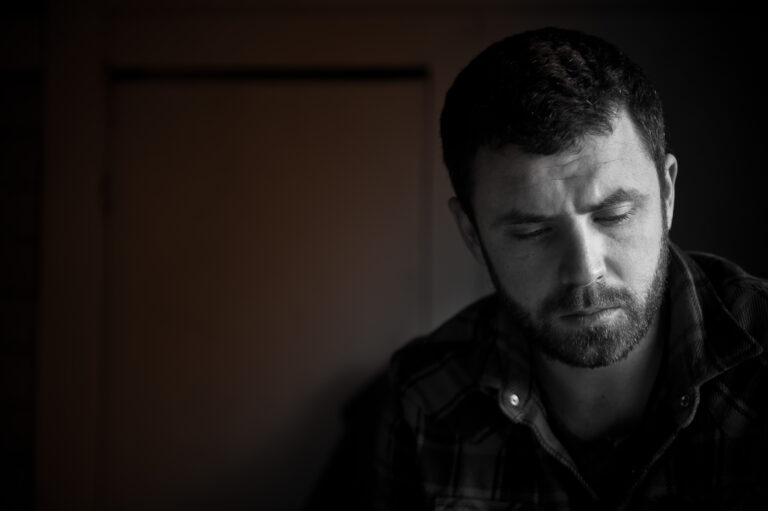
Mick Flannery, a contemporary folk musician from Ireland, will be stopping by local Davis venue Third Space on Nov. 15.

Before becoming an internationally-renowned artist, Flannery was a budding folk and blues fan that grew up in a music-oriented family. His later studies in music and management prompted him to write the album Evening Train, which ultimately became his first mark in the music world. Since then, Flannery has released three albums and has received much critical acclaim.

Third Space’s director, Lauren Norton, describes Flannery’s music as reminiscent of the styling of artists such as Nick Cave and Tom Waits.

“When he was starting out, he won a songwriting competition that was judged by Tom Waits, and you can hear the influence in his songs,” Norton said. “There’s real pain and longing and anger, although in person and onstage, he is mild-mannered and shy and self-deprecating.”

Flannery’s most recent album release, Red to Blue, took a total of two years to finish. The songwriting process for the album was apparently a challenge for Flannery. On his website, he quotes that he’d developed writer’s block from touring extensively in promotion of his sophomore album, White Lies. To find inspiration, Flannery ventured to the States, spending time in Boston and Nashville.

In an email interview, Flannery explained how his travels assisted with his songwriting.

“I suppose being away from home and meeting new people in new places opens your mind up,” Flannery said. “Not knowing anyone also allows you to feel a little freer. When you come from a small town where everybody knows each other a feeling of anonymity can be good for you.”

Thus came twelve songs that now comprise the 2012 album. Red to Blue’s tracks explore themes of romance, melancholy and politics. Flannery stated how Red to Blue might differ from his previous works.

“It’s a little more layered instrumentally than the other stuff,” Flannery said. “Strings and brass feature a bit. I’ve also tried to tone down the American accent I had in previous albums.”

Norton described the album as having melodious songs with lyrics that accurately describe human emotions.

“The emotion draws you in at first, and then the melodies carry you off. The lyrics are smart and piercingly accurate,” Norton said. “In ‘Keeping Score,’ a song on the new album he says, ‘I see you talking with those men it wouldn’t faze me / Now you’ve been laughing with my friends, it drives me crazy’ and I think it’s such a devastatingly good couplet about the harder times in a relationship.”

Flannery’s current tour is in celebration of Red to Blue’s release. While Flannery has frequently performed along the East Coast, there have only been a few stops along the West Coast. His Davis performance will be his Central Valley debut.

Flannery’s show at Third Space will have a living room set-up to create a warm and inviting ambience to complement the evening’s soundtrack. Third Space’s events coordinator, Sally Hensel, anticipates an overall charming outcome.

“I like songwriters that can tell a good story, and I think that’s definitely what we’ll find,” Hensel said. “It’s really amazing that someone of such a big name is traveling so far to come and perform for us. It should be a really good treat.”

For more information on Mick Flannery’s performance at Third Space, please visit thirdspacedavis.com.

Campus Chic: The Classics

0

For all the penny-pinchers out there, how do we, as struggling college students, stay current with the season’s latest trends when we have little to no money to spend on new clothes? In this week’s edition of Campus Chic, fifth-year economics and neurobiology, physiology and behavior double major Jenna Chandler tells MUSE how she finds fashion on a dime.

My response is very black and white: invest in the classics.

“When a design is simple and perfect, it endures the decades and becomes a classic; and when you have that, you got it made,” says Nina Garcia, creative director of Marie Claire magazine.

Have a solid selection of clothes consisting of timeless pieces and incorporate one or two trends of the season that you identify with most into your wardrobe. That way, you avoid purchasing an entire wardrobe that will go out of style in less than a year and have only a few statement pieces that you can recycle later on when they come back in style.

A question I get all the time is, “What’s in this season?” Just to name a few trends for fall/winter 2013, we’re seeing a lot of structured whites and blacks, oversized tailored trousers, bohemian harem pants, bell-bottoms, transparents, metallics, leather, plaid, punk, military and camo.

Now, out of all these trends, I recommend to choose one or two that resonate with your personal style the most and to thrift clothes from flea markets or Goodwill that best resemble the look you are going for. Hand-me-downs and raiding your parents’ closets for vintage pieces are also great ways to access certain trends without having to deal with the expense of purchasing entirely new clothes.

James’ Notes: Accessories are a great way to tailor any look to any style you want. For example, adding a studded cuff or bracelet to a very simple outfit can give you that extra punk edge you’re looking for to complete your look. Remember, it’s all in the wrist.

Q&A with Jenna Chandler

1. If you could describe your personal style in three words, what would they be?

Comfortable, feminine and queer.

2. Who or what is your style icon?

I don’t really follow celebrities or designers too closely; I prefer to make my own style. But in terms of red carpet events, I love Selena Gomez’s outfits.

3. What are your three must-have items in your wardrobe?

A colorful bikini top to make a white lace crop-top more dynamic. High-waisted skirts for those mornings when I only have 10 minutes to get ready. Yoga pants for lazy days.

4. What is your favorite accessory and why?

I don’t like to wear too many accessories, but I do love earrings. I prefer studs that catch the light and reflect well. Simple, but cute.

5. Where do you love to shop and why?

I try not to go shopping too often because I think it’s important to recycle clothing by making old pieces fit the current season. I am also disheartened by the clothing industry and it makes me uncomfortable purchasing clothing made with “cheap labor.” But I try to make old clothes work with new trends by using new outfit combinations, taking my sisters’ old clothes that they no longer wear, and bringing old clothes from years ago back to life when old styles come back in season.

6. What is your most treasured item in your wardrobe?

My black peacoat is my favorite item in my wardrobe in late fall, winter and early spring — especially in Davis, where the weather can get much colder than it does back in Southern California. I love that it can go nicely with a variety of outfits.

7. How has your style changed since high school?

My style has changed so much since high school. Back then, I always wore a black T-shirt, jeans and Vans or Converse. Now, I prefer dresses and skirts in any weather. My fashion style changed as my music taste changed. When I was a teenager, I listened to really dark, intense music. Now, I prefer fun, dance-y music.

8. What does fashion mean to you?

Fashion is incredibly important to my identity as a feminine queer woman. I feel that masculinity or androgyny is often more valued than femininity in queer spaces. So not only does my style challenge stereotypes in mainstream society, but it also challenges expectations within the queer community. My clothing is more than just decoration; it is a statement.

9. What items do you recommend our readers to incorporate in their wardrobes for the fall season?

If you’d like, don’t forget to incorporate cheerful colors into your fall wardrobes. The weather makes our town look gloomy with darkened skies and leafless trees. Maybe a splash of color will brighten your day — or somebody else’s day.

10. What final tips can you give to our fashion-forward readers?

At the end of the day, the only person who needs to be happy with your outfit is you. Wear clothes that make you feel happy and confident.

football-2240

football-2291

football-2306

football-2312

Memorial Union Unitrans terminal to be renovated in spring

Regular Unitrans commuters can expect to see a new, modernized Memorial Union (MU) terminal come fall of 2014, following construction and renovation due to start in the spring.

Senior project manager Kurt Wengler invited attendees of an informational meeting to voice their opinions and concerns about the project on Oct. 30.

Plans to renovate stem from a concern for safety and sustainability. Unitrans General Manager Anthony Palmere explained that the current terminal’s layout often leads commuters to step off the bus directly onto the street — which is a hazard due to cars, bikes and other buses.

The new plan maximizes safety and utility by reversing the flow of traffic to allow riders to exit safely onto a sidewalk, creating three additional spots for buses and adding a new visitor drop-off.

Private vehicles will no longer be allowed on the terminal itself, and instead will be forced to turn onto the drop-off zone on Tennis Court Lane.

Wengler explained that the terminal will be paved with concrete to accommodate the large weight and heavy traffic from the Unitrans buses.

A pedestrian corridor through the terminal will also be added from the MU to the North Entry parking structure, a component of an upcoming project called the MU Gateway Plan which will create a walkway from Russell Boulevard through Howard Way to the MU.

Wengler expects construction to begin in April 2014, adding that the terminal will be closed off during the summer sessions. Additionally, Ramirez said that construction in Spring Quarter will likely consist of preliminary work, and will not necessitate closing off the terminal.

Vivian Jiang and Sylvia Dinh, first-year students who live in the Cuarto residence halls, both expressed concerns about the terminal’s current layout. Unlike most UC Davis students, neither Dinh nor Jiang own bikes; they take Unitrans every day to get to and from their classes.

“There’s a lot of people walking around where the buses are supposed to park,” Jiang said. “I have felt like I was close to being run over several times.”

Dinh expressed similar concerns about the terminal.

“It’s good that they’re adding more spots for the buses,” Dinh said, explaining that congestion at the terminal sometimes prolongs the wait at the drop-off. “What if I need to get to my class early?”

To accommodate commuters, lines that run through the same stops but end at the Silo instead of the MU terminal will likely see more service.

For example, those who take the heavily used G Line will likely have to take the J Line to the Silo, which runs through the same stops as the G route. However, Palmere explained that they are still figuring out the details to reduce inconvenience during construction.

The project may include a reconstruction of Howard Way. If so, traffic will be controlled and one-way traffic running through Howard Way will likely occur.

Those who need access to the parking garage need not worry, as the project will ensure that there will always be a way to enter and exit the parking structure.

Wengler expects the new terminal to be open and operational prior to Fall Quarter for next year.

In the long run, Unitrans hopes to save money on future maintenance on the terminal and on Howard Way.

The current plans are also in the preliminary stages.

“These are subject to change, because the project is currently in the planning phase,” said Eddie Ramirez, Unitrans operations manager.