


56 F
Davis

Davis, California

Friday, December 26, 2025
Home Blog Page 933

Designing for the future

UC Davis has been considered environmentally conscious for a long time, a reputation that seems to be deserved.

The school and city’s shared enthusiasm for the environment can be seen in many aspects of local life, from the numerous bike paths found throughout the city to the well-cultivated patches of greenery present almost everywhere. The message of sustainability is even seen in the design of many buildings found around campus. UC Davis enjoys ownership in three buildings that are certified as LEED Platinum by the U.S. Green Building Council (USGBC).

LEED stands for Leadership in Energy and Environmental Design, and represents a scoring system used by the USGBC to evaluate the environmental impact of a building. Points are awarded for features that promote sustainable energy usage like solar panels and utilization of hydrogen fuel cells as sources of power. Builders are also encouraged to utilize recycled materials such as metals, ceramics and lumber in construction. Furthermore, the program rewards construction projects that promote non-motorized transportation with the inclusion of ample bike parking and pedestrian walkways.

The LEED Platinum properties managed by UC Davis include a joint ownership with Sierra Nevada College in the Tahoe Environmental Research Center, the Robert Mondavi Institute for Wine and Food Science (RMI), and Gallagher Hall, home of the UC Davis Graduate School of Management.

However, Davis’ pledge to sustainability extends far beyond designing for an external point system. The design philosophy taken when approaching the construction of the RMI wasn’t to simply produce a LEED Platinum building. The objective was to make a model for sustainability. Roger Boulton, a professor of viticulture and enology, explained that the RMI and the forthcoming Jackson building are intended to be buildings that are not only carbon-neutral, but water- and electricity-neutral as well.

They accomplish this with innovative solutions like reducing thermal intake during the warmer seasons by orienting buildings to lie east-west to reduce power consumption from air conditioning systems. The buildings utilize rainwater capture tanks to decrease dependence on local reservoirs. The buildings also have roofs angled to optimize exposure of solar panels, which subsequently charge hydrogen fuel cells to power nighttime operations.

Though the RMI has achieved an exemplary LEED Platinum certification, Boulton acknowledged that the building was envisioned a little differently.

“If the university is going to stay ahead of the pack on sustainability, it will have to strive to achieve and outperform the others,” Boulton said. “The RMI was designed to be a template for a sustainable winery that could be self-sufficient and reconstructed anywhere on earth.”

The UC campus has not only met the minimum requirements for points in certain categories, but has far surpassed some. According to LEED criteria, a perfect rating of three points for a building’s usage of renewable energy is awarded when 30 percent of a building’s energy depends on renewable sources. With the RMI, close to 50 percent of the energy comes from renewable sources.

One key factor in the building’s energy conservation lies literally in the walls of the buildings. The facilities at the RMI and Jackson building are incredibly well-insulated. While standard homes have a thermal resistance rating, or R-value, of 15 in the walls, the RMI has walls with an R-value of 65, and a roof with an R-value of 85. The increased resistance to heat transfer allows for inside temperatures to remain stable and less affected by the unforgiving winters or sweltering summers found in the Davis area.

Moreover, the RMI saves on lighting costs (both fiscal and environmental) by forgoing electric lighting completely in some cases. Light tubes on the roofs take natural sunlight and distribute it throughout some rooms. The benefits of these tubes are two-fold. Obviously, the absence of artificial lighting helps cut energy usage, but additionally, the broader spectrum of light waves found in natural sunlight has been found to bolster the human mood and alleviate the infamous seasonal affective disorder (SAD).

The sustainability doesn’t stop at simply saving on a power bill. The importance of the innovations at a university campus goes far beyond the desire to have a building that doesn’t leave a big footprint on the earth. A great deal of the importance comes from the very people who enter and interact with the buildings regularly — the students. In Professor Boulton’s classes on winery design, he doesn’t formally include sustainability in his lectures. Instead, he lets the campus facilities speak for themselves. Day in and day out, students are immersed in these environmentally conscious surroundings and they unconsciously become familiar with techniques used to build a better winery. The idea is that when they get out and start actually participating in industry, they will already see the value in systems such as rainwater capture systems and structural orientation.

Julie Nola is a director with the campus department of Design and Construction Management, and understands the importance of introducing students to sustainability through innovative building design.

“We show [students] how these buildings are helping them save water, avoid automobile [overuse] and use energy efficiently,” Nola said.

Dongha Luong, a UC Davis alumnus and practicing enologist, appreciates UC Davis’ environmentally-friendly mindset.

“I think I’ve always been eco-conscious, but it was nice being at a school that shares those values,” Luong said.

Ultimately, the university has achieved an exemplary milestone with the LEED Platinum buildings, but like any true leader of thought, UC Davis isn’t content to simply rest on laurels and accolades. With these buildings, UC Davis hopes to better the world through education and lead by example in sustainability.

ALAN LIN can be reached at science@theaggie.org.
Campus Judicial Report

Wandering eyes
A student was referred to Student Judicial Affairs (SJA) for cheating during an exam. The student’s eyes were wandering during his psychology exam when the professor first noticed the suspicious behavior. The professor then made an announcement to the class to keep their eyes on their own tests. Shortly after the announcement was made, the student started to look at the exam of the student in front of him. After conferring with one of his TAs, the professor decided to move the student to the front of the room to prevent any further cheating. After the exam, the student was referred to SJA for cheating off other students’ exams. The student took responsibility for his actions and agreed to be placed on disciplinary probation until graduation. Disciplinary probation means that if the student receives any further violations, he will most likely be suspended for a minimum of one quarter. The student also agreed to complete 15 hours of community service.

Online help
A professor referred a student to SJA for submitting a plagiarized paper in a social sciences class. The student’s paper was submitted two days after the deadline, and was extremely high quality work. However, the professor noticed organizational mistakes throughout the paper that did not meet the prompt’s requirements. The professor then searched online for suspicious phrases from the student’s paper and found an online article that was clearly the uncited source of the student’s paper. When the student met with a Judicial Officer, he admitted to plagiarizing his paper and agreed to be placed on deferred separation status. Deferred separation means that the student waives his right to a formal hearing if he is referred in the future for any kind of academic misconduct. He also agreed to complete an assignment about plagiarism and 10 hours of community service.

Blog buddies
In an Asian American studies course, a student was referred for plagiarizing a blog assignment for the course. Two students were identified for having virtually the same blog entry for the week. However, after the professor and the TA met with the students, one of them admitted to using the other student’s work as a template to help him write the blog entry. He stated that although he did not intend to plagiarize the material, he took full responsibility for the fact that his blog entry was plagiarized. The SJA officer offered him disciplinary probation until graduation as well as a plagiarism assignment and 10 hours of community service, which the student accepted.

Letter to the Editor: In a pig’s eye

0

Despite overwhelming public opposition, the California State Fair (July 12 to 28) again plans to display the cruel “farrowing crates” in the fair’s animal nursery. Pregnant sows will be imprisoned for three straight weeks, unable to turn around, barely able to move and forced to give birth on a bare metal grid: a true “crime against nature.”

CalEXPO’s new boss, Rick Pickering, was CEO at the 2012 Alameda County Fair, which allowed no farrowing crates. Instead, a mother sow and her piglets (born offsite) enjoyed a large pen, in deep sawdust: Happy pigs, happy public.

Our State Fair could (and should) do likewise. All veterinary studies recommend against transporting expectant animals about to give birth. UC Davis Vet School (which oversees the nursery) should practice what it preaches. This is a true “no-brainer.”

Nor should the fair’s vendors be allowed to give away goldfish as prizes, or sell hermit crabs as “pets.” Most will die within weeks, or be flushed down the toilet.

Please contact Rick Pickering, CEO, and the Fair Board, at CalEXPO & State Fair, 1600 Exposition Blvd., Sacramento, CA 95815; email — calexpoboard@calexpo.com. Pigs and public alike deserve better.

Thanks for caring.

Sincerely,

Eric Mills
Coordinator for Action for Animals
(510) 652–5603

Gradebot speeds up grading experience

The notion of a future where learning environments are dictated by machines is an uneasy one at best. However, the Gradebot, a new automated grading program developed by UC Davis Computer Science Associate Professor Hao Chen, is being used to reduce an ever-increasing workload for professors and faculty and provide more time for one-on-one interaction with students.

“The Gradebot is a tool and a service which allows the system to grade a massive number of homework assignments quickly,” Chen said. “Whenever the student submits a homework assignment, the Gradebot will grade it immediately and will provide feedback to the student, so the student can receive immediate feedback.”

When a student registered in either Engineering Computer Science (ECS) 30, 40 or 60 needs to complete programming homework, they can log on to the Gradebot website, gradebot.org, and work on it an unlimited amount of times before the deadline. Each time a student submits a program, Gradebot runs testing scripts on the work and immediately gives the student feedback on which test cases their programs passed and failed.

“You can get a lot of the tests right, but if one of the tests is wrong and you keep on changing your program and it doesn’t work, it’s frustrating,” said third-year managerial economics major and ECS 30 student Vinzent Davies. “I feel like Gradebot is a small child that is really picky about what they eat. Gradebot won’t eat your program unless it’s exactly what it wants.”

In winter of 2011, Chen spent two weeks creating the core functions of the Gradebot, mainly for the purpose of combating increased enrollment in computer science and engineering classes. This, paired with budget cuts, has decreased the department’s teaching assistant count as well, creating an even larger problem.

“I taught programming classes and these are the problems that I observed myself, and so those became the motivation for developing the Gradebot,” Chen said. “When these problems happen, students are not happy and I’m not happy. I wanted to make the classes more efficient and more effective.”

An example of a large class in need of teaching assistants can be seen in computer science professor Premkumar Devanbu’s ECS 30 class, in which the 225 students are given two to five programming assignments each week. Before Devanbu became one of the first professors to use the automated grading program in his classroom last quarter, his teaching assistants were spending 20 to 25 hours grading 1,000 programs every week.

“I think it’s a perfect tool to solve a pressing problem. On one hand, we have the budget cuts, so we have fewer and fewer instructional resources. On the other hand, we have more and more students,” Chen said. “The Gradebot is the perfect tool to solve both of these problems at once.”

When students have a problem with a programming assignment on Gradebot, they are encouraged to seek help from undergraduate tutors, teaching assistants and their professors, who now all have more time for these interactions. Davies said that with Gradebot in his ECS 30 class, he has collaborated with his fellow students and outside help more than ever.

“Face-time is really important, especially in these big classes and for freshmen that are new to this whole university experience,” Devanbu said. “I’m grateful for Gradebot because it promotes this opportunity for one-on-one interaction with the students.”

For some staff at UC Davis, the Gradebot demonstrates a huge step forward in the development of a detailed and structured grading system, in which students benefit from innovative teaching strategies for large class sizes.

“If you use an online teaching tool well, it can really improve teaching and learning,” said Rosemary Capps, assistant director at the Center for Excellence in Teaching and Learning. “Auto-graders are really good at working on assignments where details matter and details need to be exactly right.”

In fact, the program is still evolving to fit the needs of both students and faculty. Since its inception, Chen has been adding features to the Gradebot, specifically in securing the system from outside threats, including blocking cheating between students.

Other features of the current Gradebot include the teacher’s ability to track their students’ homework progress, a scoreboard for students to see how their peers are performing in the class, designed to encourage competition, as well as program plagiarism recognition.

The newest teaching method added to the program, to be implemented in Devanbu’s ECS 30 class in the coming weeks, is the in-class quick quiz, where students submit a short assignment at the beginning of a class period. With the immediate results reported to the instructor, lectures can be modified to fit the students’ needs.

Although Gradebot is quick to give students feedback on their work, it is not yet fully designed to say which parts of their programs specifically have errors. Rather, the results will tell the student what test cases they failed, and it is up to the student to figure out another way to solve the problem.

Devanbu said he thinks developing a part of the Gradebot to diagnose student failures by differential analysis will take one to two years to happen.

Integrating the Gradebot’s techniques into other teaching methods, such as the flipped model of learning, has been of particular interest for the future.

According to Capps, students traditionally come into class to learn new information, and then are responsible for processing that information after the class session. However, in the flipped model, students get new information before they come to class via online resources. They then come into class to process the new information with their professor and peers.

“Faculty can use the in-class time to model the ways that colleagues in their field approach projects and then to coach students in practicing those approaches,” Capps said. “The students can use their in-class time to work on complex problems and ask questions to their teacher and peers.”

Even though the flipped model has proven to be successful at many universities across the country, Devanbu said he is skeptical of replacing all lectures with online videos and homework assignments, and would rather have online resources complement students in the classroom.

Thinking about the evolution of teaching and how Gradebot can have a direct role in any coming transitions is important to Chen, but for now, he is focused on honing Gradebot into something that can assist the UC Davis community in the coming years, on a more short-term scale of time.

Both Chen and Devanbu are hopeful for the future of Gradebot in their department, as well as its spillover effect into other colleges and departments on campus.

“As long as the answers can be graded objectively, such as programs or clicks or multiple choices, then they can use the Gradebot,” Chen said. “I would love other people to use it. The more people who use it, the more kinks can be found and so that it can be improved.”

RITIKA IYER can be reached at features@theaggie.org.

Save Mart to pay $2.55 million settlement

0

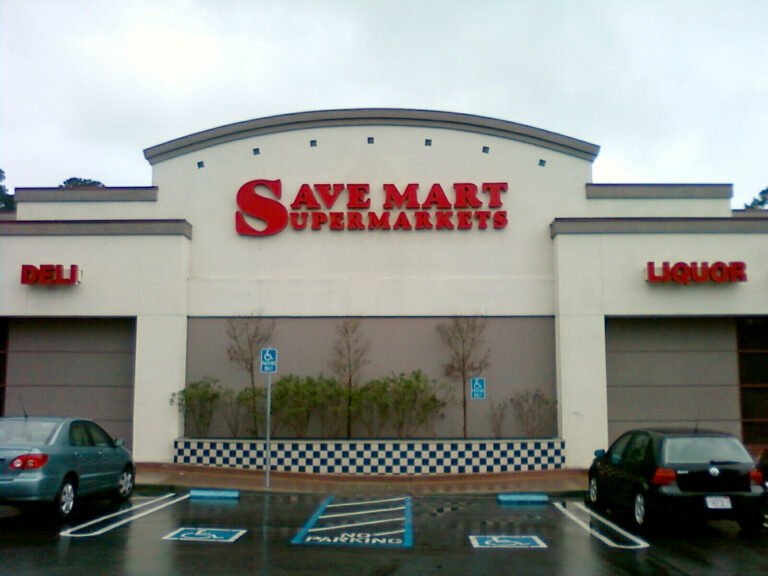
Save Mart Supermarkets faced a lawsuit last month for allegedly violating California hazardous waste control laws, prompting a discussion about proper disposal methods.

On April 4, a settlement was reached among 35 California counties — including Yolo County — in a civil law enforcement action against Save Mart Supermarkets.

The complaint, filed in San Joaquin County Superior Court, alleged that Save Mart, which operates one store in Davis, “violated California laws for the safe storage, handling and disposal of hazardous waste generated from spills and customer returns of hazardous products,” according to a press release issued by the Yolo County District Attorney’s (DA) office.

DAs from multiple counties filed the complaint, including Supervising Deputy DA David Irey, under the environmental and consumer protection division of the San Joaquin County DA’s office.

Court documents regarding the case can be accessed at the San Joaquin County Superior Court, located in Stockton.

“San Joaquin County has always had a very aggressive environmental protection program, and their DA’s office has always sought the upholding of environmental protection laws,” said Heidi D’Agostino, senior enforcement officer of the Yolo County DA’s Environmental Protection Unit. “Once a resource is spoiled, you don’t get it back.”

Allegations
According to a press release issued by Save Mart, the case did not concern any fresh grocery items or other items sold to customers, nor did any customers sustain injuries resulting from hazardous waste.

According to the EPA, in regulatory terms hazardous waste is defined as any waste product appearing on one of four lists outlined in the Resource Conservation and Recovery Act (RCRA): the F-List, the K-List, the P-List and the U-List. Any waste product that is not included among these lists is still considered hazardous waste if it is ignitable, corrosive, reactive and/or toxic.

“We reached out to the folks at Save Mart, and they were very forthcoming with us that there were issues and they worked very quickly to resolve them,” D’Agostino said.

Save Mart Supermarkets, based out of Modesto, operates throughout California and includes the Lucky, Maxx Value Foods and Food Maxx brands. The alleged violations occurred over a period of several years at both Save Mart stores and distribution centers, including Albertson’s stores bought by Save Mart in 2007 and rebranded as Save Mart or Lucky.

The violations were addressed collaboratively between Save Mart, the prosecuting district attorneys and investigative agencies. Yolo County DA Jeff Reisig stated in the press release that the case “was a team effort where we worked with other district attorneys and law enforcement agencies statewide. We also appreciate Save Mart’s efforts to work cooperatively with us to rectify this problem.”

Environmentally unfriendly
Under the settlement, Save Mart must pay $2.55 million in civil penalties and costs along with “expenses for supplemental environmental projects furthering consumer protection and environmental enforcement in the state,” according to the Yolo County DA’s press release. Save Mart will also be bound under an injunction to prohibit such environmental violations in the future.

The settlement additionally awards $14,000 to the Yolo County DA’s office for aquatic toxicity studies, as stated in the press release, and $225,000 to fund trainings specifically regarding hazardous waste laws and the handling of hazardous waste. Trainings will be held in Yolo County along with six other counties in California.

According to D’Agostino, these three-day trainings, titled “RCRA Unraveled,” address current federal and state policies regarding hazardous waste.

The aquatic toxicity studies test the safety of consumer products, according to D’Agostino.

“The money has been provided as part of the Save Mart settlement specifically for the testing of consumer products,” D’Agostino said. “It cannot be spent on salaries or employee benefits and is set aside entirely for scientific research and lab analysis.”

D’Agostino emphasized the importance of environmental protection in all counties, including Yolo County. According to D’Agostino, landfills have closed in Yolo County in the past.

“Environmental crimes are unusual in that they impact every Yolo County citizen,” Reisig said in the press release. “Illegal disposal of hazardous wastes affects citizens by compromising a finite amount of resources. There is only one landfill in Yolo County and we all share it.”

Collecting waste
Issues regarding the legal disposal of hazardous waste are not restricted to businesses. Individuals may not realize that items they dispose of such as lightbulbs, batteries or pharmaceutical drugs are considered hazardous waste and must be disposed of accordingly.

Davis Waste Removal, in operation since 1972, provides waste management and recycling services for the City of Davis but does not collect hazardous waste.

“The landfill is three miles away from Davis,” said John Geisler, operations manager at Davis Waste Removal. “It’s not an option here due to the expense involved in it. Every time you take something to the landfill, they charge a fee, and it’s [hazardous waste collection] funded by the fees we pay.”

Yolo County residents can dispose of their hazardous waste on Fridays and Saturdays from 7:30 a.m. to 3:30 p.m. at the Yolo County Central Landfill, located in Woodland. There is no cost to drop off hazardous waste, according to Geisler.

“I think I have a pretty good understanding of what materials are hazardous, but in my two years here, I don’t think I’ve ever actually had to dispose of any,” said Aaron Shuler, a second-year computer science and music double major. “There should be a collection center in every city in Yolo County.”

MEREDITH STURMER can be reached at city@theaggie.org.

Editorial: Support divestment

2

Editor’s note: A proposed ASUCD Senate Resolution supporting divestment was moving through commission meetings last week and was rejected by the Business & Finance Commission on May 7. The Editorial Board had split views on divestment. This editorial represents one of those views.

Over the past two weeks, hundreds of students were engaged in discussions about whether or not ASUCD should urge the University of California to divest from companies that profit from the Israeli occupation of Palestine.

If it had been passed, the non-binding resolution would likely have been of little consequence to Israel, Palestine or the UC Regents, but the suggestion has brought up an important concern about the University irresponsibly investing student and state money in contentious and potentially unethical companies whose goals are incongruous with the University’s values.

The University of California should, we believe, divest from companies profiting from the Israeli occupation of the Gaza strip. As a public entity, the UC should divest from all companies whose political allegiances take a side in divisive issues on campus, or whose values or actions do not support free education for Californians. This includes investments in the coal industry, and until recently, included the tobacco industry, as well as investments in the war-torn Sudan. Divestment movements aren’t new to the UC system, as the UC continues to do business with entities that many students are opposed to.

One concern brought up at the commission meetings is that such a resolution is intimidating or unsupportive of Israeli, Jewish and Zionist students. ASUCD should take to ensure that such students feel welcome on this campus, and welcome to support Israel by their own means.

However, not supporting Israel financially is different from being unsupportive of Israel. Whether or not one supports doing business in the Gaza strip, the University of California has effectively chosen a side by investing student and state money in these companies. Divestment is not anti-Israel; it is neutral. But continued investment is as good as taking a pro-Israel stance in the name of students and their tuition dollars.

If the Regents are listening, which we doubt they are, a resolution from ASUCD in favor of divestment would be a symbolic nudge toward depoliticizing the UC’s financial agenda.

Whether or not it is ASUCD’s place to rule on divestment is a separate question. We do not believe that ASUCD officials have some insight or clarity that has been lacking in any academic or politician regarding the Israeli-Palestinian conflict.

The ASUCD commission discussions were largely rotund and superficial, leaving students on both sides distracted and marginalized. Rather than fighting one another about international politics, students should band together and ask the UC Regents why a UC education comes with such a great sacrifice and compromise of politics and identity from our diverse student body.

Cleaning up

0

If you think you have a drug test coming up, you should stop smoking now.

The cheapest and most common type of screening is the classic piss test. It is also the easiest one to pass.

If you’re a heavy smoker, you should take about a three week break before a urine test. During this time, drink as much water as you can. And of course, you should not ingest marijuana in any shape or form, including edibles, concentrates, or shakes.

Instead, drink tea. And go on runs and get sweaty.

Avoid other smokers. Second hand smoke is not only mischievously alluring, it can also get into your system and make you fail your drug test.

Sometimes, it is the act of smoking that people get used to, not particularly the weed itself. These people find it pretty easy to give up getting high so long as they have cigarettes or hookahs or Spice to turn to. It is true that these alternatives are legal and won’t fuck up your drug test, but they will take a toll on your health.

There are many other safer, smokeable alternatives. The Happy Herb Shop, online and in Berkeley, has a line of “non-addictive herbs for relaxation, pleasure, happiness and breaking habits!” Smoking these mixes provides an effect comparable to that of getting high, and you can even choose between herbs meant for sleeping, stimulation, and general “happiness.”

The idea is that you should start off by mixing these herbs in with the weed in your bowls or blunts. As you get used to smoking this new stuff, slowly and casually begin to use less weed and more mix in your sessions. After a while you should cut out weed completely, and only smoke the herbal mix. It is much easier to quit smoking weed if you ease out of it instead of dramatically cutting it out of your diet.

If you find yourself missing the psychedelic effects of marijuana, then you might benefit from trying a little bit of salvia.

Salvia is legal, safe and relatively cheap. It comes in different potencies, with 10x being the gentlest, and 80x the strongest. It is definitely not an everyday herb like tea or marijuana, but a little toke might satisfy your urge to feel high.

Avoid detox kits. These are expensive and usually don’t work. Urine tests can even detect the chemicals in these detoxifiers; though testing probably won’t even be necessary, since your piss usually turns blue or green after trying them out.

While you might find testing a little unfair and unnecessary, you have to remember that it is within an employer’s every right to do so, especially after some sort of workplace accident.

You should also remember that having a doctor’s recommendation does not protect you from drug tests, and you can still be fired (or not hired) regardless.

LEO OCAMPO can be reached at gocampo@ucdavis.edu.

Davis Dozen settlement reaches plea deal before trial

Twelve protesters who were charged last March for obstructing movement in a public place and conspiracy to commit a misdemeanor, following demonstrations outside a UC Davis branch of U.S. Bank, agreed to a plea deal Monday.

The deal comes nearly one month before the scheduled June 17 trial date in Yolo Superior Court.

The group of one UC Davis English faculty member and 11 students, otherwise known as the Davis Dozen or Bankers Dozen, previously faced up to one year in jail. The group believed U.S. Bank had a hand in increasing student costs and student debt, and the privatization of the university.

They agreed to 80 hours of community service and an infraction notice ticket, which the group described in an email interview as similar to “when the neighbors complain about your stereo” and bears virtually no implication on the recipient.

According to Alexis Briggs, one of the attorneys for the group, many factors were taken into consideration before a final agreement was reached. This included the District Attorney’s office making an offer for 80 hours of community service in exchange for misdemeanor pleas for everyone, and the University and U.S. Bank stating that both organizations were not planning to seek restitution. Briggs also said she received a large amount of internal documents from UC Davis and U.S. Bank.

“That gave us a much better understanding of how those decisions were made, and throughout that process, we were engaged in discussion with the District Attorney’s office about resolving the matter though an infraction,” Briggs said. “For the last month, the discussion has been revolving almost exclusively around the amount of community service that the district attorney found acceptable to resolve it for an infraction.”

Briggs said that the court initially intended to split the case into two separate trials, which were estimated to run a span of six weeks per trial, which would have utilized a substantial number of taxpayer dollars.

The case was taken on pro bono, with the exception of public defender representation for one of the defendants, she said.

“We were fortunate that a number of highly respected and renowned attorneys volunteered to take our case pro bono; there was also an outpouring of support, communal and financial, from places around the world. It would have been nice if the UC Davis administrators driving this case had had such support rather than spending [students’] funds on a petty and ill-fated prosecution. For obvious reasons, they did not,” the group stated in an email interview.

Claudia Morain, Director of Public Affairs at UC Davis released a statement on behalf of the University.

“We appreciate the hard work of the Yolo County DA’s office on this case,” the statement read.

According to Briggs, U.S. Bank documents stated that a number of U.S. Bank employees and other people working with the UC Davis Police Department were posed as bank customers to create a blockage situation. She also said that after the Nov. 18 pepper spray incident, the University decided not to employ law enforcement practice.

“If there were certain individuals that were blocking access it would’ve been appropriate for law enforcement to ask for identification and issue a citation for them to later appear in court, no arrest needed to be made, certainly the creation of ongoing charges… escalated all of this to the point where there [were] 21 misdemeanor charges,” she said.

The group said they will not be entirely content until “education has been entirely disentangled from student debt, banks cannot profit from desires for freedom and class society is in flames.”

MUNA SADEK can be reached at campus@theaggie.org.

New interpretive center to be built at west end of Arboretum

As California architecture continues to become greener, UC Davis is leading the charge, making sustainability a key point in its renovations and plans to expand more campus facilities into the Arboretum.

“All of UC and our campus in particular has ambitious goals for reducing greenhouse gas emissions, reducing water use and reducing waste,” said Bob Segar, assistant vice chancellor of Campus Planning and Community Resources, in an email interview.

These goals are going to be kept in mind when expanding the campus.

According to Segar, they are planning a new interpretive center at the west end of the Arboretum.
“The building will maximize use of the passive architecture and on-site systems,” Segar said.

This approach to expanding the campus will allow buildings to be shaped by their surrounding environment, utilizing natural lighting and cooling techniques.

Natural resources will be incorporated when constructing buildings in the future, as well.

“We try to take advantage of what Mother Nature gives us,” said Sid England, assistant vice chancellor of Environmental Stewardship and Sustainability.

California has design standards in place for energy conservation, but UC Davis is committed to going above and beyond these standards.

“We try to beat the California design standards by 30 percent,” England said. “We also planned to reduce our carbon footprint to what it was in the year 2000 by 2014. We have already accomplished that goal, and we are planning to go even lower.”

As of 2008 UC Davis’ carbon footprint is 250,000 metric tons CO2e (mtCO2e). Officials plan to decrease the figure to 210,000 mtCO2e by the year 2020.

According to the University Office of the President, UC is obligated to comply with the California Air Resources Board’s (CARB) cap-and-trade program. UC San Diego, UCLA, UC Irvine, UCSF and UC Davis (including the UC Davis Medical Center in Sacramento) have carbon emissions above the 25,000 mtCO2e limit set by CARB.

The University has focused on energy-efficient projects, including renovating current buildings.

“We’ve completed over 100 energy efficiency projects since 2009 and saved $4.6 million in energy costs,” England said.

Plans for the new building in the Arboretum are still in the early stages. But not all students are thrilled with the idea of having a building in the middle of the Arboretum, which many view as a natural sanctuary.

“I’d prefer the Arboretum to be just nature,” said Bobby Moir, an undeclared first-year.

LAUREN MASCARENHAS can be reached at campus@theaggie.org.

Edge diving

0

“Fuck, fuck, fuck. My stockings are falling,” declared the woman wearing seven-inch platform heels and enough fake hair to comfortably nest dozens of baby birds. Her false eyelashes threatened to abandon her face and the same birds would have loved her impressively arched blue eyeliner and shadow, as it was reminiscent of the blue daytime sky.

She couldn’t adjust her hose, because the ropes holding her to the iron St. Andrew’s cross barred free movement, but she could wiggle around and look helpless — to the satisfaction of her dominant. He was behind her, a lopsided smirk above a body clad in black pleather, flicking a small rubber whip at her ass. “Nasty slut,” he would occasionally whisper up the curves of her hips and past the channels of her back.

Curled into the fetal position, on a couch opposite their scene, I looked down at my own outfit. My stockings didn’t have any runs and were holding up fairly well, but I was far from classy: my filthy black boots were held together by safety pins, my nipple tape was peeling off and I had chewed off my bright red lipstick hours before.

Stopping for a moment, he traced her contours with the handle of the whip. Instead of pulling away, she arched back towards towards him and the blunted torment.

Nerves. Spinal cord. Brain. The path that pain takes seems simple. Yet, even on this fairly straightforward journey, endorphins, natural opioids, are triggered in order to help our bodies handle trauma. Just like the synthetic drugs prized by so many narcotic abusers, natural chemicals induce a hangover once the high has ended.

While my own high, brought on by a wooden paddle and some well-placed electrodes, was starting its downward journey, the other play party invitees were just beginning to feel the euphoria that often accompanies such extreme passions as pain, fear, lust, anger and jealousy.

Around the room, people engaged in kink scenes that, intentionally or not, harmonized with the beat of the dark industrial music that was playing over wall-mounted speakers. One older man was using a cane, a tiny piece of bamboo resembling a wand, to rhythmically slap the two college-age girls whom he had balanced on his lap. They screamed and cried, but when he stopped they kissed his lined cheeks, begging for more.

Slaves and servants, clad in chains and collars but little else, wove around undulating bodies and handed out drinks. They would periodically stop to pour water into dog bowls on the floor for pets, the few adorable fur and ear wearing players who meowed or barked with gratitude.

A gorgeous dominatrix, in the corner of the dungeon, stood over two younger men who looked as though they were bowing, but upon closer examination turned out to be licking and sucking each of her bare toes. Every minute or so, she would gently kick one of them in the face and remind them to clean her “nasty feet” more to her exacting standards.

Swaying bodies, anchored to the ceiling by a huge amount of intricately knotted rope, would every so often stretch, yawn or look over at me and smile — half-awake.

Even amidst all these lures, my gaze kept falling back on the couple in front of me. Crying had turned her mascara into two black rivers, and the underarms of his black shirt were soaked with sweat. Their clothes had fled: he had taken off his huge trench coat, and she was stripped down to a pair of blue panties. But they still kept scening, surges of dopamine released in response to their every sensation.

When I first arrived at the front door of the non-descript San Franciscan building, I was all giggles and fresh make-up, full of adrenaline and energy drinks. Finally burned out, sitting on a couch that had probably been soaked with all sorts of bodily fluids during its lifetime as a piece of dungeon furniture, I sat and watched. A voyeur lost in a sea of exhibisionism.

KATELYN RINGROSE at knringrose@ucdavis.edu would like to invite you to a party — one celebrating the Earth. Whole Earth festivities will be occurring on May 10, 11, and 12.

Police briefs

0

2 / THURSDAY

Green living
A large tent and items indicating habitation were found in the bushes at the greenbelt at Albany Avenue and Benbow Court.

Hitchhoming
A man carrying luggage and a blanket went to a person’s backyard door and said he was looking for a place to sleep at Southfield Court.

3 / FRIDAY
Mother of the Year
A woman parked at Emerson Junior High School smelling of alcohol and slurring her words said she was there to pick up her son.

Whose house? Our house!
Two people pushed a bouncer at Our House Restaurant at Second Street and refused to leave.

4 / SATURDAY
Extreme Makeover: Condo Edition
A week ago, someone witnessed a man vandalizing a condo at Bermuda Avenue by ripping the landscape out, removing the dishwasher and taking several items, but was too scared to call at the time.

6 / MONDAY
Sourpuss
Someone saw a man walking through her neighbor’s backyard at Anderson Road and asked what he was doing, and he said he was picking lemons.

8 / WEDNESDAY
Driven crazy
A passenger on a Unitrans bus was yelling insulting slurs at the driver on Fifth Street and told him that he was going to wait until he got off work; it was unknown what he was going to do then.

Police briefs are compiled from the City of Davis daily crime bulletins. Contact EINAT GILBOA at city@theaggie.org.

Recycling exes

0

As a single girl in college, living in a small college town, recycling is important to me. I put my bottles and papers in the designated bins and also scroll through my contact list late at night when I need to scratch my proverbial itch. I recycle exes, hookups, friends with benefits and really any sex partner that I’ve deemed worthy enough to have an afterlife.

To recycle your favorite sex partner is doing your part to save energy so that you can focus on the more important factors in your life. It is difficult enough without the constant worry of how you are going to handle your human desire. And to have a contact list full of potential bed buddies is a luxury that must be explored. It is a massive waste of a perfect, untapped resource.

I like to reuse the hookups I enjoyed the most — the carefree and spontaneous hookups that ended without any malice or spite, the ones that rank on my top 10 adult sleepovers. Those are the most reuse worthy. That’s the name you want to press on at 3 a.m. when all else has failed.

My other favorite recyclable is the overtly attractive hook up, the one that you are the most proud of snagging and banging — we all have those. The chemistry is obviously eminent and is ready to recycle, no need to butter up with tedious foreplay. The best thing about this recyclable is that there are no ties and no emotions to get in the way of the matter at hand. The connection probably never was established and never will be and that’s fine, since they’re just your recyclable, your good time.

My favorite reusable pleasure is a friend from high school, with green eyes, dark hair and the ability to carry me around — he is perfect. When in town, he is my go to recyclable. With him, there is always a good conversation pertaining to nothing serious and then the actual act. After, it’s a good “see you later,” and that’s it. It is, in essence, the perfect demonstration of recycle, reduce, reuse. The better the terms, the shorter the conversations, the better the sex.

Through my couple of years of being single and implicating the recycle, reduce, reuse routine, I have also accidentally recycled exes that should have been either composted or thrown promptly into the trash.

These non–recyclables can be designated into the discard bin as soon as you realize that you are emotionally scarred or exhausted by them. I find that my exes from two or more years induce this in me, since I once tried to recycle a very prominent ex and it got messy fast. The sex was great and everything was going accordingly. But emotions were very much present — that is not the ideal circumstance for a reusable ex.

To deem an ex worthy of the recycle bin and the late-night booty call attempt is risky. I have never executed this perfectly, but have faith that most people can. All in all, the ex just cannot be recent. You do not want residual feelings to spill into your reusing ventures.

Consider using exes from a separate sphere of your life, someone who has his or her own life and won’t intrude on yours. With no bitter feelings and a mutual desire for one another, recycling should be made obscenely simple.

To recycle and reuse does not mean to permanently keep in your life. Recycling relationships is something that can be saved for an entirely different column. In this world of ex and ex sex, to recycle means to keep around for intercourse. They know what you want and how you want it. It is how most college kids can contribute to the recycle, reduce, reuse movement.

MARISSA HERRERA can be reached for sexual inquiries at mdherrera@ucdavis.edu.

This week in new releases

MUSIC

1. Phoenix Bankrupt! (April 30)

French indie-rock juggernaut Phoenix returns to album-crafting after their mainstream breakthrough Wolfgang Amadeus Phoenix in 2009. Though there are no insanely catchy singles such as the earworms “1901” and “Lisztomania” of 4 years prior, Bankrupt! stands strong as an expertly produced and consistently satisfying pop record, dazzling the listener with the sounds of high-living in the entertainment world.

2. !!! Thr!!!er (April 30)

Sacramento’s own dance-punk/disco heroes, !!! (commonly pronounced chk-chk-chk), deliver their most crisp and danceable record to date. Stylistic echoes of LCD Soundsystem, the Happy Mondays and late 70s/early 80s Ze Records can be heard, but some of the material is good enough to beat out all three in terms of groove and showmanship.

3. Snoop Lion Reincarnated (April 23)

Whether one is a devoted Snoop fan or not, his new album will satisfy the curiosity of hearing an iconic figure completely switch up his aesthetic along with his persona as he continues a long and illustrious career journey from South Central to Hollywood and finally Jamaica. Featuring production from electro-dancehall group Major Lazer.

4. Primal Scream More Light (May 6)

The UK’s most eclectic stadium fillers take yet another turn after nearly three decades of genre-shifting; after traversing everything from 80’s jangle-pop to 90s acid house and 00’s electroclash, their 10th album adheres to a brighter, more orchestral template as they make an anthemic statement about culture today.

5. Young Galaxy Ultramarine (April 23)

Clear, straightforward indie pop paired with heavy synth tracks seemingly retrofitted from some of the best ‘80s singles. Catherine McCandless’ echoing, earnest voice sound somewhat removed from the new-wave dance numbers, as if transmitted from a mountaintop or cathedral; nevertheless, this mixture of icy beats and romantic vocals are worth repeated listens.

FILM

1. Iron Man 3 (May 3)

The amount of non-stop Marvel Comics films may have reached a critical danger level, but one of it’s more rewarding franchises may have a thrill or two left in it. Ben Kingsley enters the series as a new villain to contend with, the Mandarin, and directorial duties are handed from Jon Favreau to Shane Black, who also directed Robert Downey, Jr. in the well received thriller Kiss Kiss Bang Bang (2005).

2. Kiss of the Damned (May 3)

The first dramatic feature by Xan Cassavetes, the daughter of acclaimed director John Cassavetes. Initial trailers suggest a tale of vampire/human romance with sharp indie flair. Vampire Djuna becomes involved with the human Paolo; after initiating him into her community, her younger sister arrives to cause trouble and draw blood.

3. Greetings From Tim Buckley (May 3)

An independent music biopic of the late Jeff Buckley, who struggles to find his own musical voice in the early 90s while outgrowing the shadows cast on him by the legacy of his father, singer/songwriter Tim Buckley, who died when Jeff was still very young. A touching story of two singular talents, including musical performances of their material.

4. From Up on Poppy Hill (May 3 at The Varsity)

The Varsity will screen Studio Ghibli’s latest animated feature, directed by Goro Miyazaki, the son of the acclaimed and well known Hayao Miyazaki ( Spirited Away, My Neighbor Totoro). The plot follows two young students in 1963 Yokohama, Umi and Shun, who intend to renovate their high school’s clubhouse. Their efforts are challenged by the school chairman, who plans to have the building demolished.

5. The Iceman (May 3)

Big names such as Michal Shannon, Winona Ryder, James Franco and Ray Liotta abound in this independent thriller concerning the true story of Richard Kuklinski, a prolific American serial killer turned mafia hitman who may have murdered upwards of 200 people over a span of nearly 40 years.

ANDREW RUSSELL can be reached at arts@theaggie.org.

City introduces Water Assistance Program

With new water rates implemented on May 1, the City of Davis introduced a Water Assistance Program that will help low-income homeowners offset water costs.

The first 250 eligible homeowners will receive a $5 discount to their water bill every month. Eligible homeowners must meet the income qualification requirements and present proof that they are enrolled in the PG&E CARE (California Alternate Rates for Energy) Program, which provides discounts to energy bills for income-qualified households. According to a city press release, currently, the income levels are $30,000 for a household of two and $46,000 for a household of four.

To apply for the Water Assistance Program, households must submit an application to the city. Eligibility will be re-certified every year.

According to the press release, the city estimates that the monthly bill for a typical single family home will be about $30.86. Beginning May 1, 40 percent of a water bill will be determined by a monthly base rate determined by water meter size and the rest will vary based on consumption rates.

However, by 2015, water bills will be changed to a consumption-based fixed rate, with a typical single family home to be charged about $52.31 a month.

More information and applications for the program can be found at water.cityofdavis.org.

— Claire Tan


Outside Lands food and beverage lineup announced

While the musical lineup for the sixth installment of Outside Lands — the August, three-day music festival in San Francisco’s Golden Gate Park — was released weeks ago, some of us have been waiting impatiently for the festival’s menu before even considering buying tickets.

Outside Lands is unique in that it’s arguably just as much about the grub as it is about the tunes. And this year’s 200+ item menu might be more exciting than Paul McCartney or any of the other 70+ performers.

Amongst the 61 vendors are especially enticing newcomers Rich Table, Nopalito and Wise Sons Deli. Rich Table opened last year in San Francisco’s Hayes Valley to rave reviews, garnering nation-wide recognition and a James Beard award nomination for Best New Restaurant. Reservations have been nearly impossible to get ever since, and at Outside Lands, they’ll be serving up sardine chips and porcini doughnuts. Nopalito is mainstay on The San Francisco Chronicle’s Top 100 Restaurants list for its local, organic Mexican cuisine, and will be offering Totopos Con Chile. Wise Sons, the pop-up-turned-brick-and-mortar success story, will dish out pastrami sandwiches and pastrami cheese fries.

Per usual, food trucks will have a mighty presence. Favorites like Bacon Bacon and Seoul on Wheels will return, and the ever-popular The Chairman Truck, with those insanely delicious pork belly baos, is rolling up for the first time.

We could easily gush over most the food vendors (read: Blue Bottle Coffee, Tacolicious, Straw, Nombe, Homeroom, 4505 Meats) but we also can’t forget the return of Beer Lands and Wine Lands. Beer Lands will feature 16 breweries — seven of which are local to San Francisco — offering 32 brews, while Wine Lands will see 36 winemakers and 120 wines. Most exciting will be Master Brewer Terence Sullivan of Sierra Nevada pouring a special festival brew, the Outside Lands Saison.

More vendors are expected to be added to the food and beverage lineup. For what’s been announced so far, click here.