56 F
Davis

Davis, California

Friday, December 26, 2025
Home Blog Page 934

Student Health & Counseling Services hosts Work It Week

In honor of Physical Activity Month, The Student Health & Counseling Services’ Health Education and Promotion (HEP) is hosting Work It Week on campus, until Wednesday, May 8.

The event aims to encourage UC Davis students to engage in at least 30 minutes of physical activity a day, according to a HEP news release.

The events throughout the week are free and include prizes and fitness classes, taught by Campus Recreation and Unions instructors. Classes include introductory Yoga and Zumba classes at the ARC, Gardening Day and Bike to Campus Day.

A physical activity tracker is also available at the HEP office at the Student Health and Wellness Center.

More information can be found at shcs.ucdavis.edu/hep/workit.

— Muna Sadek

Food Co-op launches Thursday BBQs tonight

Screen shot 2013-05-02 at 3.22.09 PMThe Davis Food Co-op wants you to start your weekend early — every Thursday evening at the Co-op.
Tonight marks the first Thursday barbecue in what Jules Loke, of the Co-op’s marketing and education team, hopes will be a fruitful and growing series. There will be sliders at two for $5, board games to rent, additional activities for the kids and, for the big kids, beer and wine on the patio.

Big news: the Co-op now has taps behind that deli. Currently you can buy pints of Crispin Cider, Racer 5 IPA and Berryessa Common Sense, but they plan on rotating often.

The Co-op installed the taps last week, and folks can enjoy beer on the patio any time from 11 a.m. to 8 p.m. — not just during these weekly Thursday night events.

Tonight is the soft opening, and Loke said that while there’s no budget for these events yet, she sees lots of room to grow if they prove popular. Look out for food samples and maybe even live music next time you making a Thursday, 6 p.m. grocery shopping trip.

$57 million deficit detected in UC student health insurance

Many University of California campuses plan to withdraw from the UC Student Health Insurance Plan, after a $57 million deficit was detected in the UC Health Insurance Plan (UC SHIP) .

This decision was made after the Council of Chancellors, including UC Davis chancellor Linda P.B. Katehi, met yesterday and endorsed the move. Other UC representatives were present, as well.

The deficit has been accumulating since 2010. According to Todd Atwood, Insurance Services supervisor at UC Davis, the deficit occurred because of several factors, including not implementing proposed increases to premiums, utilization of the plan increasing and monthly monitoring of the plan was not done to the level that it had previously.

The UC SHIP director at UC Office of the President (UCOP), Heather Pineda, was responsible for day-to-day managing of the plan in association with the consultant firm, AonHewitt, according to Atwood. In January 2013, it was decided that AonHewitt was no longer providing services to UC SHIP and a new firm was hired.

“It was a decision not to increase the UC SHIP premium by more than 10 percent due to other cost increases to students. UC Davis experience showed that our increase should have been at least 18-20 percent for the 2012-13 year, but was capped at less than 10 percent by UCOP,” said Atwood.

ASUCD is currently defining a repayment plan for the current deficit and is attempting to establish a defined plan for management of future deficits and surpluses, as well, according to Bradley Bottoms, ASUCD Vice President.

“It is frustrating that UCOP is making such huge mistakes that are directly affecting students at each campus. Because this is obviously a mistake made by UC leadership, the losses should not be passed down to students. We now have to look at two issues, how we are going to pay off the deficit with low student impact and figure out how we can provide a better, more stable insurance policy to the students at our campus,” said Bottoms.


— Natasha Qabazard

Whole Earth Festival seeks volunteers

The 44th annual Whole Earth Festival, which takes place May 10-12, is made possible by the Karma Patrol, or the hundreds of volunteers dedicated to putting on the free eco-friendly music, dance, arts, crafts and education festival.

The Karma Patrol needs about 400 skilled, imaginative and excited volunteers to help out with a variety of roles and tasks including: set up, Zero Waste Crew, Space Keeping (maintain the harmony of the festival) and Night Ninjas (guarding quad at night), among many other opportunities to get involved.

In return, free meals during the festival, free festival shirts and the entire experience of Whole Earth are offered.

If interested in getting involved, sign up at http://wef.ucdavis.edu/volunteers or attend the final volunteer meeting May 8 at 7 p.m. on the Quad.

— Elizabeth Orpina

Man wanted for residential burglaries

Screen Shot 2013-05-02 at 9.15.46 AM

The Davis Police are searching for Luis Miramontes, a 24-year-old, 5’11” tall and 170-pound Hispanic male with black hair and brown eyes. Miramontes is wanted for several residential burglaries that occurred earlier this year.

According to the Davis Police, he may be associated with an unknown vehicle with a Washington state license plate.

Individuals are encouraged to call the Davis Police at 747-5400 if they observe Miramontes or know information about his whereabouts. If seen, the police urge to not detain him because he is potentially dangerous.

— Claire Tan

ASUCD Senate passes resolution condemning Islamophobia

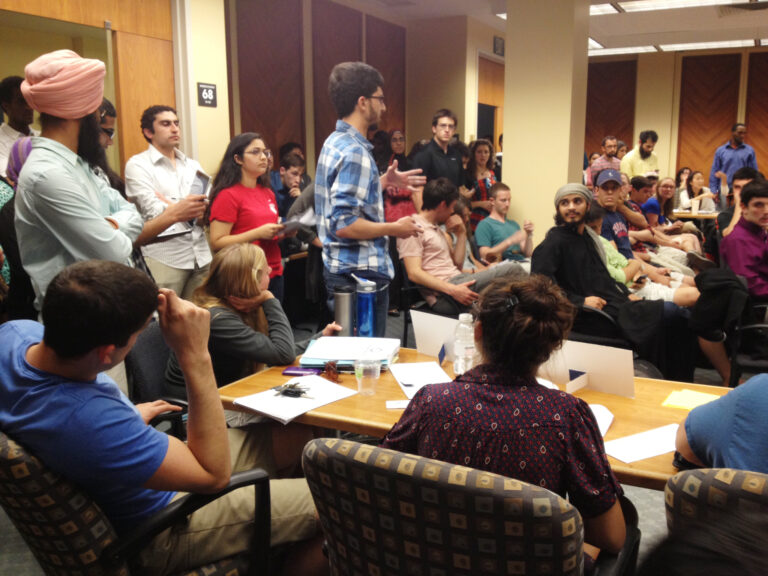
After approximately five hours of discussion, the ASUCD Senate passed Senate Resolution 21 on April 25 with a 7-4-1 vote. The resolution condemns Islamophobic speech at the University of California. The resolution defined Islamaphobia as “the irrational fear of Islam, Muslims or anything related to the Islamic or Arab cultures and traditions.” Authors stated that it was written due to the concerns for students’ well-being, safety on campus and the administration’s failure to address issues.

During public discussion, some members of the Muslim Student Association (MSA) and other students spoke in support of the resolution. Members of the Ayn Rand Society (ARS), the group that held the April 11 “Islamists Rising” event on campus, spoke in opposition of the resolution. The event held by the ARS, which featured panelists such as author Daniel Pipes, sparked a conversation about freedom of speech on campus and with the administration.

Kriti Garg, an author of the bill and a second-year international relations and community and regional development double major, said the April 11 event was an example of why the resolution was necessary.

“It just so happened that at this time we had very prominent issues focusing on Islamophobia on our campus and … [it] really goes to illustrate that [Islamophobia] happens all the time,” Garg said.

‘Let it be resolved that…’
Senate Resolution 21 was authored by the Ethnic and Cultural Affairs Commission (ECAC) along with several co-authors, including ASUCD Senator Alyson Sagala and ECAC Chair Emmanuel Diaz-Ordaz. According to Garg, it was inspired by a piece of legislation addressing Islamophobia in the UC system that was passed at UC Berkeley on March 20.

The resolution states that the UC system identifies itself as prioritizing campus climate, however, the issue of Islamophobia on campus has created an unwelcoming environment for certain communities. The resolution also addresses the “Islamophobic rhetoric” of UC Santa Cruz lecturer Tammi Rossman-Benjamin and condemns her rhetoric while also urging UC President Mark Yudof to condemn Rossman-Benjamin’s language.

Additionally, the resolution encourages UC Davis administrators to track reports of discrimination and hate crimes against “Muslim, Sikh, Hindu, Middle Eastern, Southwest Asian, North African, Arab and South Asian Americans.”

Under the resolution, ASUCD President Carly Sandstrom is to write a letter condemning Rossman-Benjamin’s rhetoric and Yudof’s failure to address the issue. The resolution also urges other campuses to pass similar bills.

“I am a Pakistani American Muslim. I have personally experienced hate speech because of the fact that I am or ‘look’ Muslim. My friends have experienced this,” said Sonum Saeed, a fourth-year psychology major and publicity coordinator for MSA, in an email interview.

Saeed said that last week, one female Muslim student who was wearing a headscarf was spit on.

“Hate speech affects people on a psychological level, and if you’ve ever been told that your existence, your faith or that your ‘brownness’ is the reason for all evil in the world, then you know exactly what I’m talking about,” Saeed said.

Senators, public debate
Senator Miles Thomas, who voted “yes” on the bill, admitted that he originally planned to vote “no.”

Thomas said the fundamental issue with the bill was that much of the language was from the UC Berkeley bill and it would have been more powerful if it was more “Davis specific.”

“Even though all of my concerns with the bill were not addressed, I couldn’t help but vote ‘yes’ just because I do appreciate the severity of the issue,” he said.

Many amendments were made to the resolution and some senators felt that the language of the bill could have been improved.

“I voted against Senate Resolution 21 because I believe it was a poorly-written bill. It was not the proper way to address the conflict that occurred on campus,” said ASUCD Senator Tal Topf in an email interview. “Additionally, the claims that the Ayn Rand society made at the senate meeting were very valid and I did not feel comfortable voting on a bill that would pin students against students.”

Topf was one of four senators who voted against the bill, along with Maxwell Kappes, Felicia Ong and Ryan Wonders. Liam Burke abstained.

“I did not personally support the bill [but that] does not [mean] that I don’t recognize its merits. I had my reasons for voting ‘no’, but if this benefits the Muslim community on campus then I am content that it passed and their voices were heard,” she said.

Third-year political science major Christopher Telfer, who attended the ARS event and was present during discussion of the resolution, also opposed the bill.

“I felt like the Ayn Rand Society, their members and the participants of the forum were being misrepresented. They were not spreading Islamophobia or spewing hateful rhetoric as claimed, and I felt the need to aid in their defense,” Telfer said. “Free speech and open dialogue should be promoted and protected in our society, even if a certain viewpoint is disagreeable or unpopular to a certain group of people.”

Jonathan Bomberg, a fourth-year viticulture and enology double major and president of the ARS, gave the only official ARS statement during the meeting.

“Instead of promoting slander and attacking free speech, you should be promoting discussion of ideas, not its condemnation,” Bomberg said.

Bomberg also stated that the event was not an Islamophobic event against Muslims in general, but against individuals and groups such as Al-Qaeda, who commit terrorist acts in the name of Islam. Moreover, his statement questioned what evidence gave individuals the right to condemn the ARS event if they were not present.

Looking ahead
Garg said she also wants to see concrete action taken by administration to increase awareness and address the issues of Islamophobia.

Usamah Simjee, MSA president and third-year genetics major, is hopeful that this discussion will lead to changes on campus.

“Climate is defined by the community, not by legislation. However, it is very encouraging to see that this problem is at least being acknowledged by our student body,” Simjee said in an email interview. “Seeing this bill bring together so many students of diverse identities is a sign that we are moving in the right direction.”

LILIANA NAVA OCHOA can be reached at campus@theaggie.org.

EDITOR’S NOTE: 05/03/13 This article was updated for accuracy.

Medical marijuana dispensaries not found in Davis

Medical marijuana has been legal in California since 1996, however, the industry continues to remain underground due to marijuana being illegal under federal law. There are no medical marijuana dispensaries in the City of Davis, forcing those who wish to purchase medical marijuana to look to delivery services, Sacramento dispensaries and dealers.

In 2005, there was a proposal for a dispensary in Davis but no official application was filed. At the time, there were no regulations regarding medical marijuana dispensaries, taking the issue to the Davis City Council. Councilmembers passed an ordinance stating dispensaries are not allowed.

“This is so our community stays safe and family-friendly. This was also decided because marijuana use is illegal under federal law,” said Katherine Hess, Davis community development administrator.

In 2011, however, Steve Maki established a medical marijuana clinic in Davis called 420 Relief. Because the clinic only provided recommendations, with no marijuana on the premises, it was legal in Davis. Hess said she assumes it closed down for business reasons.

Alex, an anonymous third-year biological sciences major, and a former 420 Relief customer, believes public outcry may have caused Maki and 420 Relief to leave the city.

“Besides the college, Davis is a very wealthy suburban family atmosphere that would not stand for such an establishment,” Alex said.

Dispensaries in hiding
Five out of the six listed dispensaries in Sacramento — Doctors Orders Rx, Valley Health Options, River City Phoenix, Canna Care and Abatin Wellness Center — refused to comment on how their systems operate and regulate, while the sixth dispensary, R&R Wellness Collective, is no longer in business. The Sacramento 4/20 Evaluations Center, where one files for a medical marijuana card, also refused to comment.

Dr. Amanda Reiman, California Policy Manager for Drug Policy Alliance and lecturer at UC Berkeley for social welfare, has done research on how dispensaries operate as health service providers as well as how marijuana is used as a treatment for addictions.

“I’ve studied marijuana on the preclinical level on animals. I’ve seen that marijuana blocks brain signals for craving, which is the reason why people relapse. Cannabis has a particular impact on reducing cravings for methamphetamine users,” Reiman said. “Many believe marijuana to be a gateway drug, but I’ve found that people are using it as an exit drug to ease withdrawal successfully. I would like to see substance abuse treatment programs consider using marijuana in the future.”

Reiman provided a possible explanation as to why several Sacramento dispensaries have refused to comment.

“Around California, there is a different level of comfort that dispensaries feel towards local jurisdictions. There is a lot of hostility with local governments and residents, so dispensaries feel they need to remain hidden, because if [the] city council knows what they are or where they are, they might be shut down,” Reiman said. “The federal government has shut down high-profile dispensaries before and this makes others nervous.”

State regulation
Much of why the dispensaries remain hidden and underground is due to the federal government’s view of medical marijuana as an illegal drug and the lack of state regulation of medical marijuana dispensaries in California.

“The federal government does not recognize marijuana’s medical benefits or state legality. The government does not go after states with programs and regulations — like Washington and Colorado — because it provides legitimacy. California doesn’t have any regulation,” Reiman said. “The federal government needs to admit marijuana has medical value and establish a system. Personally, I think the best idea is to move marijuana out of Schedule I, showing it has medical value, and have the states set up their own programs of regulation.”

Schedule I drugs under the Controlled Substance Act are considered to have a high potential for abuse, have no current accepted medical use and have a lack of accepted safety under medical supervision.

‘Ridiculously easy’
Another problem people have with dispensaries is that those without use for medical marijuana can still easily obtain a medical marijuana card by faking medical conditions.

“It is ridiculously easy to get a card even if you do not have any medical documentation,” Alex said. “When I went to the 420 Relief clinic, they did not even require documentation at my evaluation. Instead they issued me a temporary 60-day license on the good faith that I would bring in the paperwork. The same day I went to get my card, one of my friends went with me with a made-up excuse and got his with no questions asked.”

However, Reiman believes that there is legitimacy to the loose requirements behind obtaining a card.

“The problem is we don’t know all conditions that marijuana can relieve or help. California Proposition 215 doesn’t list specific conditions for this reason, so there is no finite list. I don’t think there should be a finite list of conditions,” Reiman said. “Marijuana for medical purposes varies and it is a personal relationship between a doctor and patient. Marijuana can also be less toxic and harmful to the body than over-the-counter medications. Herbal remedies can replace pharmaceutical drugs.”

Students weigh in
Alex has a medical marijuana card for obsessive compulsive disorder (OCD) but doesn’t always use dispensaries.

“I struggled with OCD in high school and tried six months of switching between Prozac, Zoloft and other SSRIs (selective serotonin reuptake inhibitors), which all left me with some sort of annoying side effect. I finally decided to try medical marijuana,” Alex said. “I now have a card and I either obtain marijuana illegally through dealers — the most common method for the students of Davis — or I travel to the Sacramento dispensaries.”

David, an anonymous first-year psychology major, does not have a card but is able to regularly get marijuana through a friend who utilizes a delivery service called the Sacramento Pier Collective. David has legitimate reasons for smoking weed — depression and possible Crohn’s disease — but he admitted that he doesn’t smoke for those conditions.

“It’s fun to smoke weed,” he said. “I think it should be legalized for recreational purposes. It’s less destructive than alcohol and alcohol is more readily available and causes much more long-term problems.”

Not all students feel the same way. Adrienne Jones, a first-year linguistics major, disagreed with marijuana use for both medical and recreational purposes.

“I don’t think marijuana should be prescribed for medical purposes because a lot of people that have cards use them to distribute marijuana to others. We have such advanced medicine that you do not need weed for painkillers,” Jones said.

Jones said she does not approve of substances being used recreationally. She said she considers it addictive, used too often as a gateway drug.

“People are less wary of marijuana’s effects compared to alcohol’s effects. Many are more cautious about alcohol because alcohol safety is so promoted,” she said.

DISCLAIMER: Names were changed to protect the identities of interviewed students who asked to remain anonymous.

MELISSA GAHERTY can be reached at city@theaggie.org.

Editorial: P(ARC)ing

0

With a facility intended to accommodate the thousands of students that pay for its services in fees, and only about 500 bike parking spots, it’s safe to say that the ARC needs more bike parking.

If you’ve been to the ARC in the last few weeks, odds are you’ve seen the signs that warn you against locking your bike to anything other than the designated parking spots.

Under this new policy, bikes are locked with boots if they are locked to themselves or a surrounding object, and students are required to pay for removal. Students pay for the ARC. How are they supposed to take advantage of it if Davis’ preferred mode of transportation is being discouraged?

It’s nearly impossible to find an empty spot to lock a bike during any hour of the day. Campus construction officials should account for the number of ARC guests that use the building and add parking spots accordingly.

Suspiciously enough, ARC officials refused to disclose the facility’s capacity. We can only assume they acknowledge that it’s more than 500 people.

As of now, there are no plans to add more bike racks to the ARC, according to UC Davis Design and Construction Management, but with the student population increasing significantly every year and the 2020 Initiative’s plan to condense 5,000 more students on to the campus by the year 2020, there should be. Maybe they should consider a bike parking garage.

Financial aid option for middle-income students announced

UC Davis announced the Aggie Grant financial aid plan April 18, effective this upcoming 2013-14 school year. The plan aims to aid the university’s California-resident, middle-class students with baseline tuition.

Qualifying students with family incomes ranging from $80,000 to $120,000 could offset at least 25 percent of their base tuition and fees through this grant that, for the 2013-14 school year, will be at least $3,048.

“Many students with family incomes over $80,000 have been eligible for financial aid. However, students and prospective students do not necessarily realize that. The Aggie Grant Program provides students just out of reach of the Blue and Gold Program with the assurance that they will receive grant assistance to help cover their cost of attending UC Davis,” said Kelly Ratliff, associate vice chancellor of Budget and Institutional Analysis.

Though students will still be eligible for other financial aid plans, no student will receive more grant or scholarship support than their calculated financial need.

Director of the UC Davis Financial Aid Office Katy Maloney said the options available to middle-class students are more limited.

“At that income level, there’s a lot less opportunity with federal and state grant programs … As a campus, we have listened to the growing concerns from students and their families about the financial struggles of paying for an education,” she said. “However, we recognized that middle-income families need financial support that wasn’t available elsewhere.”

Students who qualify after filing the Free Application for Federal Student Aid (FAFSA) will receive grants on a need basis within the middle-class income range.

“Students are awarded financial aid based on the principles of the UC Education Financing Model,” Maloney said. “University Grant funds are awarded to eligible students based on their need. Because funding is limited, award availability is also based on their FAFSA or Dream Act application filing date, whose priority deadline is March 2.”

She adds that as of now, Aggie Grants have only been packaged and offered to approximately 600 incoming class of 2017 admits. The grants to other enrolled students are still being processed.

The university has been looking into other options to provide monetary support in response to the conversation surrounding the increasing urgency to lessen the financial strain of college tuition on middle-class families.

Campaign for UC Davis, a university-wide initiative, has been in place since 2006 with the goal of raising $1 billion philanthropically from 100,000 donors by December 2014. Much of this money has been supported through campus-based scholarship funding.

As of March 3, the campaign has accumulated $931 million — roughly two-thirds of its goal.

“The dollars are put to use as soon as they’re received,” said Jason Wohlman, associate vice chancellor for University Development. “They’ve provided scholarship awards since 2006, unless it’s for a facilities campaign where we have to hold dollars until we’ve reached the needed amount.”

Major contributors such as the The Boyd Family Foundation, UC Davis alumna Ann Pitzer, The Davis School of Education, and most recently, The UC Davis Foundation Board of Trustees, among many others, have fundraised and donated millions to funding various scholarships.

“In December, [the] UC Davis Foundation Board of Trustees announced the creation of a new $1 million-plus matching fund initiative, The UC Davis Foundation Matching Fund for Student Support. This fundraising initiative was created by personal donations from current and emeriti members of the UC Davis Foundation Board of Trustees and university leadership to help UC Davis students,” said Sarah Colwell, senior manager of development and marketing communications, in an email interview. “The matching fund has already inspired more than $3.5 million in gifts to date.”

One qualifying student felt they would benefit from the Aggie Grant plan.

“Even though lower-income students need more [financial aid], I still can’t afford college without it,” said first-year linguistics major Adrienne Jones. “Coming from a primarily economically single-headed household, we can definitely feel the financial strain. The Aggie Grant seems like a positive way for my family to accumulate less debt for that year.”

For more information, visit financialaid.ucdavis.edu.

GABRIELLA HAMLETT can be reached at campus@theaggie.org.

Davis holds inaugural travel training workshop

On April 27 from 9 a.m. to noon, the City of Davis hosted an inaugural Travel Training event at the Davis Senior Center, the first in an ongoing series of biannual workshops intended to improve access to local transportation services for the elderly or those with other mobility challenges.

In addition to the biannual workshops, the just-launched Travel Training program will also feature monthly group excursions to various locations to help reinforce the modes of transportation learned at the event and build confidence in a social setting, according to City of Davis transportation planner Brian Abbanat.

Abbanat said that the planning process for the program began in June 2012 while updating the city’s General Plan.

“We had done an online survey inquiring what types of improvements we needed to make to our transportation systems, and one of our senior citizen commissioners said we really needed to have a travel training program for seniors and the disabled,” Abbanat said.

According to Abbanat, the Senior Citizen Commission had previously obtained a $30,000 grant for the entirety of Yolo County to fund individual transit training for seniors, with the greatest demand for such training coming from Davis.

“They put together a small event to raise awareness that people could get one-on-one transit training with the grant, but when the grant funding expired, so did any transportation information specifically for seniors and the disabled,” Abbanat said. “People were really interested but the grant money had run out.”

Abbanat, who was interested in the program from a transportation planning perspective, began looking into conducting a similar program within the staffing of the City of Davis.

“We had to figure out what we could take on without a budget and without exclusive staff, without one person having to take on too much responsibility,” Abbanat said. “I went around and asked Davis Community Transit, Yolobus and Unitrans if they were interested [in being involved], and everybody said yes.”

In transit
The program featured in-class training sessions with a choice of three modules, each providing the 55 participants with the opportunity to gain experience and knowledge regarding different transportation options such as Unitrans, paratransit and biking.

“The bike group had a presentation explaining the difference between different types of bikes and which would be appropriate depending on varying levels of mobility,” Abbanat said. “There were 10 different bikes and [participants] got to test ride them in the parking lot.”

Electric bikes were available to be test ridden — often a promising option for those with mobility issues. Diane Swann, co-owner of Swann Electric Bicycles, presented three electric bikes at the workshop.

“They’re good for general transport because they help in the wind, the hills or the heat. You can get as much of a workout as you want to, but if you don’t want to, you don’t have to,” Swann said. “They’re great for all ages, and if people have a physical infirmity, they’re good for that as well.”

Swann, who commutes to Sacramento from Davis by bike three or more days per week, owns Swann Electric Bikes with her husband John Swann. The business works in a partnership with Ken’s Bike and Ski in Davis, and owns the electric bike inventory sold at Ken’s.

The Davis Community Transit paratransit bus — the paratransit service complementary to Unitrans and Yolobus since 1971 — was also available.

“We’re an Origin-to-Destination paratransit service operated by the City of Davis,” said Linda Alemania, paratransit supervisor for the city. “If a customer is not able to walk to a bus stop, we go to their home, pick them up and take them to the stop.”

Paratransit fare is $2 each way. Passengers must be ADA-certified (Americans with Disabilities Act) and must go through an eligibility process.

“We want to let people know that Davis Community Transit exists, because there are some people that have no idea we even exist,” Alemania said. “A lot of people move here because their families live here, and just to help the families help them — that’s where we come in with transporting them.”

Alemania emphasized that accessible public transportation is key not only for the elderly, but for their families as well. Faced with the reality of parents who are aging or might suffer an unexpected accident, services such as paratransit and transportation workshops can help all generations adapt to a “new normal.”

“Our goal is to maintain independence and our customer’s quality of life,” Alemania said. “We want people to get out, do what they need to do, visit their family, go to church and be as active as possible.”

Fear factor
Unitrans was also present at the workshop to help facilitate practice with such activities.

“Unitrans brought one of their buses to the senior center and they practiced getting on and off, then they all went down to the Farmers Market, stopped at a real bus stop, waited for the bus at a bus stop and got back on the bus,” Abbanat said. “The purpose of this activity is to help them get beyond the fear barrier of taking the bus.”

According to Abbanat, many individuals in this demographic may feel a certain amount of fear about taking public transit due to a variety of reasons.

“The fear element — it’s the fear of the unknown. Maybe they haven’t used a bike in 30 or 40 years. Maybe they don’t know what paratransit is, who runs it or how much it costs. The program is just helping to orient them to these forms of transport in a no-pressure environment,” Abbanat said.

Abbanat emphasized the importance of accessible public transport for seniors and those with mobility challenges, particularly for those who no longer drive. Many individuals, unable to drive yet unsure about what transportation options are available to them, may face challenges running errands or attending medical appointments. Others may feel isolated from friends, family and the wider community if they’re lacking the confidence and knowledge needed to navigate public transport.

“A lot of seniors and those with disabilities don’t know if they can physically even get on a bus — they don’t know the bus can lower down or that paratransit buses have a lift. Many bikes, including electric assist bikes, make it easier to get around town without a car. Even if they can step into a bus, this [program] gives them a chance to make sure they can do it and feel comfortable,” Abbanat said. “The step they have to take is very small.”

Potential for expansion
While the next event is planned for October, the program also featured the opportunity to sign up for monthly excursions, along with a survey.

“We surveyed the participants to get some baseline information, and in four to six months we’ll follow up to see if they’re using any transport options more often. Then we can quantify the program and see if it meets the needs of that demographic,” Abbanat said. “At the end of March we applied for a $20,000 grant from the U.S. Administration for Community Living that will allow us to judge the effectiveness of the program and expand it as well.”

Abbanat mentioned that a frequent request is a bus or shuttle route going directly to the Mondavi Center, perhaps circulating by the senior housing complexes. Other ideas on the horizon include a possible “medi-ride” program, in which volunteers would take seniors to and from medical appointments.

“We know there are still some gaps to fill to help seniors, and to the extent applicable, those with disabilities, to transition to public transit. We’re hoping to expand into individual, one-on-one programs. A volunteer will basically do the trip with them for the first time or two so they feel comfortable and confident doing it on their own. That really opens up a lot of destinations for them and allows them to stay connected,” Abbanat said. “There’s a lot of work to be done, but we’re off to a great start.”

MEREDITH STURMER can be reached at city@theaggie.org.

Ocean spray more than just a cooling mist

Most of us have probably been exposed to the term ocean-spray at some point in our lives. Maybe we associate this title with a common brand of cranberry (fantastic alongside any Thanksgiving dinner), or a delightfully cool marine-mist experienced only by the most avid of tide-pool junkies. However, the cool mist we all love is more than just seawater.

Biological and physical oceanic researchers from the UCSD Scripps Institute of Oceanography (SIO) have concluded that ocean-spray, or marine aerosol, is in fact a thin vapor of inorganic compounds, bacteria and microscopic marine organisms that are heavily involved in cloud formation. The study also looked at marine aerosols and the impact they have on their surroundings.

An aerosol is literally defined as “a gaseous suspension of fine solid or liquid particles.” Therefore, with a dash of critical thinking, marine aerosol can be defined as a gaseous suspension of oceanic particles; simple. It’s key to note that marine aerosols are actually a dynamic cocktail of inorganic salts and microbial organisms that are small and light enough to be incorporated into an evaporated, suspended mass of ocean water upon the crashing of waves — a slightly more complex definition.

For decades, the question for oceanic researchers remained how to measure the raw constituents and behaviors of marine aerosols while accounting for external factors that would unavoidably contaminate samples. Without a way to isolate unadulterated specimens, there would be no way to truly quantify the impact that these natural marine aerosols have on climate and oceanic ecosystems.

“The facility generated nascent (new) marine spray from breaking waves in seawater [at the] air-sea interaction facility, [using] the 30m long glass-walled wave channel at the S.I.O. Hydraulics Laboratory,” said Grant Deane, Facility Director of the SIO and marine aerosol physics expert in an email interview. “[We] designed and built a portable tank based on a modulated, plunging waterfall to replicate the chemistry and physical properties of the particles produced by the breaking wave. This much smaller system is portable, and suitable to use in laboratories and on ships.”

With the expertise of Deane and colleagues, researchers were able to construct a living, breathing replica of a pacific tidal environment within a 30 meter long indoor chamber called a flume. This functioning, indoor reef biosphere, which accounted for wind, reef presence and inorganic/organic oceanic content, is a state-of-the-art approach to observing and measuring the behaviors of marine aerosols and the factors that influence them.

“The wave flume used for studying emitted sea spray particles under realistic wave breaking conditions is a one-of-a-kind facility,” mentioned UC Davis engineer Christopher Cappa in a written interview.

Upon analysis of the sea spray, researchers found that the ability of aerosols to form clouds was almost entirely dependent upon the bacterial concentration of the sea water. Researchers tested this observation further by artificially introducing bacterial cultures to the test flume and recording the likelihood of cloud formation. Observations showed that when bacterial concentration increased fivefold, the ability of marine aerosols to form clouds fell by about two thirds.

“The ocean has a huge impact on climate change — [a] better term than global warming because some regions of the world are getting cooler while most others are getting warmer. The oceans cover 71 percent of the earth, [and] the clouds formed by sea spray keep our planet cooler,” said Kimberly Prather, director of the National Science Foundation’s funded Center for Aerosol Impacts on Climate and the Environment (CAICE), the organization that provided the backing for this research project. “Understanding why we get more clouds (or less) due to changes in the ocean is critical to understanding factors influencing our climate.”

Marine aerosol research is an extremely important branch of research, as it is directly related to global climate change, and has not been extensively studied.

“We cannot know for sure how much humans are impacting climate until we understand the natural processes that occur on natural aerosols which are much more abundant,” Prather continued. “The interesting fact presented in this story is how much bacteria influence the composition of seawater and in turn how much this influences sea spray composition and cloud formation. It appears the bacteria can reduce the ability of sea spray to seed clouds. This study represents a first step; we can learn a great amount.”

UCSD proves yet again that the advances in scientific practices are as unstoppable and potent as evolution itself. Additionally, this study helps to address the mainstream scientific dilemma of global climate change. With worldwide obstacles such as these, even the tiniest droplet of knowledge counts.

While some of us may continue to associate the term ocean-spray solely with a brand of bitter fruit that goes well with mashed potatoes and gravy, perhaps others have gleaned insight from this brief, albeit fascinating, exploration of marine aerosols.

EMILY SEFEROVICH can be reached at science@theaggie.org.

Softball preview

Teams: UC Davis at Long Beach State
Records: Aggies, 21-24 (8-10); 49ers, 32-20 (14-7)
Where: 49ers Softball Complex — Long Beach, Calif.
When: Saturday at 1 p.m. and 3 p.m.; Sunday at 1 p.m.
Who to Watch: With the second-to-last series and the last away games of the season just around the corner for the UC Davis softball team, several players can come into these final six games feeling very comfortable both at the plate and on the mound.

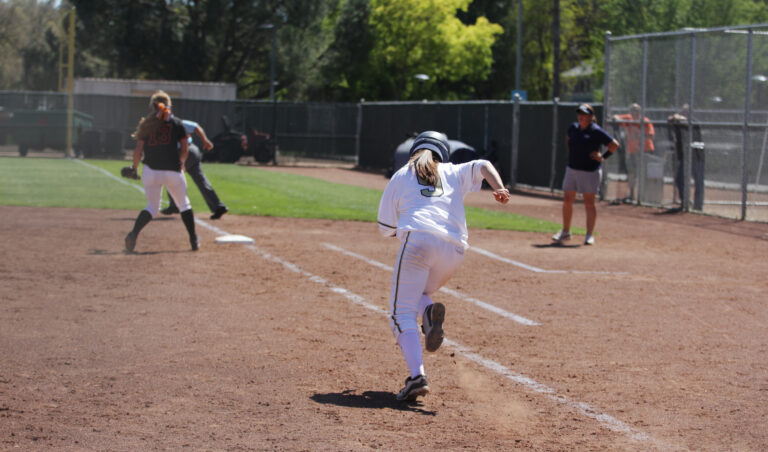
Standout freshman shortstop Christa Castello enters this last road trip against the 49ers leading the Aggies with 38 hits and a solid overall average of .306. Not only has Castello established herself as a key hitter in the meat of the Aggie’s lineup, but she also has utilized her speed to add to the team’s success. A menace on the base paths, opposing catchers just cannot stop her as she continues to use her speed to lead UC Davis with 13 stolen bases.

Another player that has helped to manufacture runs is junior second baseman Chandler Wagner. Wagner currently leads the team with 20 runs batted in. Although the Aggies dropped a 4-3 game against Cal State Fullerton, one of the positives that came out of the matchup was Wagner’s hitting performance. She recorded her eighth two-hit game of the season, matching freshman Jasmine Lee, another steadfast lefty that continues to swing the bat well in the Aggies’ lineup.

Not only are the players looking strong at the plate, but 2012 Big West Conference Pitcher of the Year Justine Vela can be proud of a season-low earned-run average of 2.18 in addition to 13 wins. To add to those 13 wins, the right-handed hurler is seeing lucky sevens all over the board with seven shutouts ranking her tied for 15th in the country.

Vela is not the only successful Aggies pitcher, as the entire pitching staff has maintained ERAs below 3.00. Freshmen Leah Munden and Marissa Chapa, with a 2.67 ERA and a 2.17 ERA, respectively, and senior Jessica Thweatt’s 2.73 ERA show the dominance of the UC Davis pitchers. The Aggie pitching staff’s collective ERA of 2.36 puts them only 0.03 points behind Big West pitching leaders, Hawai’i.

Did you know? Prior to their final game against Cal State Fullerton this past weekend, in which their comeback bid ended up coming up short, the team was on a four-game winning streak. This weekend the team travels down to Long Beach for their last road trip of the season.

Preview: The Long Beach State softball team will not be an easy final road trip for the Aggies. With an overall record of 32-20, LBSU is currently in second place behind Hawai’i in the Big West standings. The 49ers also lead the Big West with a team batting average of .293.

Also, LBSU’s shortstop Shayna Kimbrough leads the conference in both hits, with 69, and batting average, with .379. The Aggies will need to be firing on all cylinders this weekend, making sure to execute both offensively and defensively.

Minus the close loss to Fullerton, the team has been proving their worth on the diamond. Snapping back from an initial loss against UC Riverside several weeks back, the ladies won the next two and rolled that momentum into their first two games against Fullerton to maintain that winning streak.

“These were two solid team wins,” said freshman Christina Guidry.

Although the team’s recent loss could be discouraging, with Vela and the rest of the staff continuing to put up zeros on the board and the UC Davis hitters putting up numbers of their own, the Aggies should feel confident that they will take three from Long Beach this weekend.

— Sloan Boettcher

UC Davis tennis teams close play at Indian Wells

Just as the conditions, weather and the UC Davis tennis teams were reaching their peak, their seasons ended abruptly.

The UC Davis men’s and women’s tennis teams competed in the Big West Conference Championships down at the Indian Wells Tennis Garden from April 25 to 26 after brutal winds riddled their past week of practice.

The men’s team exited after their first-round loss to Pacific, the eventual finalists in the Big West tournament. The Aggies fought hard but were only able to muster up a 4-2 defeat at the hands of the Tigers.

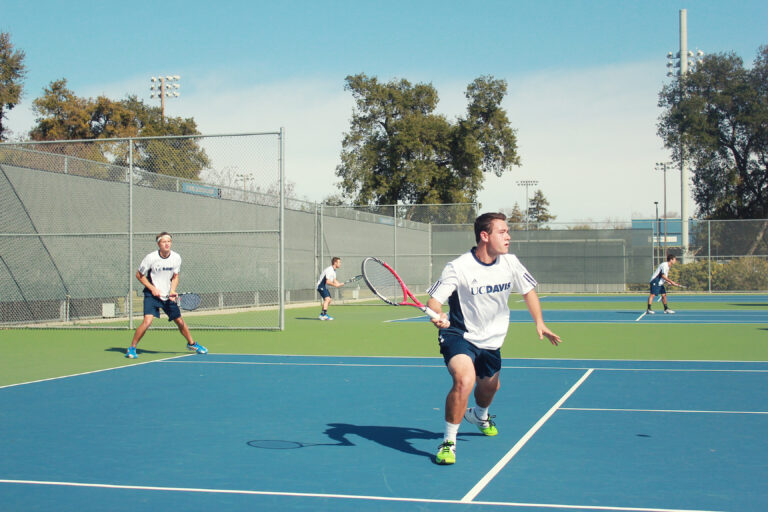
UC Davis continued its strong play in doubles with wins at the first and third spots, both of which went to tiebreakers. Freshman Brett Bacharach and junior Parker Kelley took down their opponents 9-8 at the No. 3 doubles before senior Toki Sherbakov and freshman Adam Levie pulled out their 9-8 win in the top slot to give the Aggies the doubles point.

Up 1-0 going into singles competition, UC Davis couldn’t carry over the victories to singles play. Pacific reeled off two singles wins over junior Kyle Miller and senior Hugo Verdi-Fortin at the second and fifth singles positions, respectively, to give the Tigers the 2-1 advantage.

Senior George Horowitz leveled the score with a 6-3, 6-4 win from six singles, but that was all the Aggies could muster.

After winning the first set 6-2, Kelley fell at the third singles spot by 6-4, 6-1 scores in the ensuing sets. Bacharach was the last to fall at the fourth singles spot by a three set 6-3, 2-6, 6-2 defeat.

Sherbakov, in his final college match with UC Davis, did not finish his match, as Pacific had already grabbed the victory over the Aggies with their four singles wins.

Sherbakov, Verdi-Fortin and Horowitz all close their careers with the Aggies. Sherbakov was a mainstay at the top of the Aggies’ lineup, playing No. 2 for his first two years at UC Davis, then held down the top spot for his final two years.

The women met a similar fate at the Big West Championships, falling in the quarterfinals to eventual tournament champion, 45th-ranked Long Beach State.

UC Davis fell to the 49ers 6-1 the last time they matched up at Marya Welch Tennis Center earlier in April, and it would have taken a lot of things to fall into place for the Aggies to upset the conference’s second seed.

UC Davis lost the doubles point and then dropped the first three singles matches in the quarterfinal matchup that ended its season.

Junior Megan Heneghan, sophomore Layla Sanders and senior Ellie Edles all lost their matches in the top three spots, respectively.

The Aggies won their previous match in convincing fashion over UC Riverside 4-0. UC Davis had finishes from their bottom-three singles slots this time, with sweeps from juniors Melissa Kobayakawa, Nicole Koehly and freshman Tiffany Pham.

UC Davis was held up by strong performances from the bottom of their lineup this year. Looking at Kobayakawa’s 16-6 dual match record, ranging from the third to the sixth spots and Koehly’s 13-5 ledgers down at the fifth and sixth singles positions, the Aggies had considerable contributions from this pair of juniors.

The Aggies will lose the services of Edles, Curry and Zoe Davidson. Edles and Curry have had substantial impacts on the program ever since they came as freshmen.

Edles, whose career has been riddled with injuries, played up and down throughout the lineup and could put together wins at any position during her years, while Curry made a slow progression up in the singles positions as time went on.

The duo played doubles together for much of their careers despite some shuffling of the lineup.

As the season comes to a close, UC Davis tennis will welcome a renovated tennis center next year and will hope to build on the success it has begun to foster, with a strong senior class to come.

MATTHEW YUEN can be reached at sports@theaggie.org.

More than just teammates

It is said that a team is like a family. Players travel together, practice together and often eat together. Such consistent interaction between the players allow them to forge a bond which is similar to familial ties.

However, with freshmen Cat Guidry and Christina Guidry, the bonds they share are more than the standard teammate camaraderie. The Guidrys, as their last name suggests, are sisters. Twins, to be exact. They also happen to both play softball for the UC Davis softball team.

The Guidry sisters have been a package deal for quite awhile. They started playing softball and other sports together at a young age. Even when they decided to focus on softball, the twins stuck together.

“We started tee ball when we were five or six,” Christina said. “From there we played rec-ball for a few years, then we started travel ball when we were 10 and then played ‘till we were 17.”

Christina’s counterpart agreed that playing different sports was not an option, and that softball came naturally to them.

“We played multiple sports, but at one point we had to figure out what sport we wanted to focus on,” Cat said. “Having played all the sports together, it just kind of worked out that we both wanted to play softball.”

Upon finishing high school, the twins seemed to be on a path to separate schools and separate careers. Cat, who hit a blistering .507 her senior year, and Christina, who hit an impressive .414 her senior year, were recruited by different schools.

However, one school was able to provide them the opportunity to play Division 1 softball together: UC Davis.

“Initially we were recruited by different schools. UC Davis saw us at a showcase,” Christina said. “I think that initially they were recruiting me, but they found out that I had a sister and they started getting in contact with the both of us. We both loved the school, and going to school together would be a bonus.”

As the girls have tried to find their place on the team and grow accustomed to the college life, they have had to overcome some obstacles. However, through the struggles, Cat and Christina have come out stronger than ever. Cat is hitting .346 this season and is getting more and more experience. Christina has started quite a few games this year and has become a sure-handed third baseman.

To those who may be surprised at the impact two freshmen might have on a team, it helps to know that the Guidry’s are related to some pretty serious athletes.

The Guidry twins are cousins with New York Yankees ace pitcher, CC Sabathia. Sabathia gave Cat and Christina the unique experience of being able to gather advice from a fantastic athlete, who also happens to be a relative.

“Baseball runs in the family,” said Cat. “When we were little we would kind of get tips from [Sabathia] and all the others in our family that played baseball. We also have a cousin that pitches at USC who would teach us things.”

Twins who compete at a high level together are a rarity in sports. Yet, both of the Guidry sisters are not only on the UC Davis softball team, but also integral members of the team. As freshmen, they have been given the unique opportunity of getting quite a bit of starting experience.

With Cat having started eight of the 18 games played and Christina having played in 31 games and starting 24, both of the sisters have had quite a bit of game time. What is more impressive is that the two have started to get more playing time as the season has gone on. This should only help two extremely talented freshmen improve and become dominant starters next year and the years to come.

“Starting this year, I did not know what my role would be. I would want to be more consistent and have a more constant role at third base,” Christina said. “Also we want to win a Big West Title. We definitely want that before we leave.”

The sisters’ futures are definitely looking bright. With the valuable playing time they have received this year, they will be experienced and ready for handling a larger workload next year and beyond. If the experience and work pays off with a starting role, a conference title or two will be sure to follow.

KENNETH LING can be reached at sports@theaggie.org.

‘The Dogs of War’ shifts Shakespeare’s focus

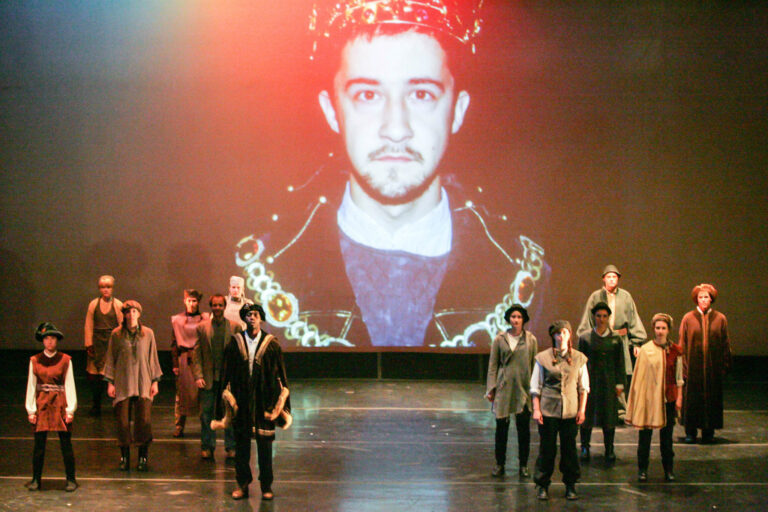
Shakespeare’s plays often focus on nobility, but a new play from a UC Davis grad student focuses on the common people. The Dogs of War, directed by Joselle Miller, a Ph.D. candidate in performance studies, takes scenes from some of Shakespeare’s plays and uses an ensemble cast of 16 people playing four dozen roles to present a different version of Shakespeare that focuses on the people who fight in battles.

MUSE: Can you describe your work?
Miller: Dogs of War is an adaptation of Shakespeare’s eight history plays that deal with the War of the Roses, Richard II, Henry IV Parts 1 and 2, Henry V, Henry VI Parts 1, 2, and 3, and Richard III.

These plays were often adapted together since they were a cycle and cut down to make them fit into one sitting. Usually when that happens, the scenes that get cut out are the scenes of common people, citizens, soldiers and nameless servants because they’re not the A-Plot.

I went through the plays, took all the scenes that deal with the common people and put them together to tell the story of the War of the Roses from the common people’s perspective. All the text is Shakespeare’s — I haven’t written anything myself — but the scenes tell a different kind of narrative about the nature of war.

MUSE: How did you get the idea?
Miller: I was doing a reading course with one of my professors, Peter Lichtenfels, and we were looking at various plays by Shakespeare with the question, “What is not being said? What is happening in this play or in this particular scene that is not being articulated?” We quickly found that in the Histories, there was a significant thread of the commoner experience that was either not being articulated at all or articulated and then quickly brushed aside, so seeing that thread was a major inspiration.

One scene in particular featured Henry V threatening these villagers and they were totally silent. That huge body of listening people just stuck out at me. Another scene in Henry VI Part 3 has Henry VI giving a monologue and during this a man comes in with a body he just killed and he is looting it for money — back then, this was often the only way soldiers were paid — and he takes off the soldier’s helmet and realizes he killed his father. A second person comes on dragging the body he killed and it turns out to be his son.

You get this juxtaposition that is similar to the cultural memories we have of the American Civil War of brother against brother, father against son, and everything breaking down in individual family units.

MUSE: Can you describe the set design?
MILLER: Travis Kerr is the scenic designer. He’s an MFA in design at the Department of Theatre and Dance. What we’ve done — and this is for the production design overall — is that we’re using what I call an Elizabethan aesthetic but done in a contemporary way, like we’re self consciously doing it in 2013.

For instance, we’re using modern materials in the costumes, materials that didn’t exist back then but point towards that aesthetic. We’re trying to keep the audience aware of where they are — Wyatt Theatre, 2013 — as they encounter these plays written 400 years ago. Another aspect is the explicit theatricality of it. Think about it as if we’re doing magic but we’re showing the strings. The props are all basic shapes that the actors configure into props like tables. They’re not literal and realist at all.

Similarly, all the actors are in a base costume and they put on different components to be different characters, but the audience often sees those costume changes happen on stage, so this reminds them that these actors are performing for them.

MUSE: By reminding the audience that they’re watching a historical play, what do you hope to accomplish?
Miller: To be frank, the only reason I’m in any way interested in doing Shakespeare at all is in terms of what it can tell us about how we’re living right now and who we are to each other. I’m not interested in doing it as a museum piece. For me, I wanted to explore how the people who make decisions to go to war are different from the people who actually go to battle in those wars. They’re different now and they were different than in this story. I’m trying to make people recognize themselves in these narratives.

MUSE: How is it working with the Design Department?
Miller: It’s fabulous. The nature of theatre is that you can’t do anything by yourself, so you by necessity have to be a good collaborator if you’re going to get things done, and luckily the people here are experts at that. The design team, our production staff in the costume shop, the professors here supporting the development of this work … there are a whole lot of people who are spending a lot of time and energy working and thinking and talking about this project.

The Dogs of War, written by William Shakespeare and adapted and directed by Joselle Miller, will play at the Wyatt Pavilion Theatre on May 16 to 18 and May 23 to 25 at 8 p.m. and May 19 and 26 at 2 p.m. The play is free of charge to the general public.

JOHN KESLER can be reached at arts@theaggie.org.