52.7 F
Davis

Davis, California

Friday, December 26, 2025
Home Blog Page 935

Column: Science, space and a dash of philosophy

One way of thinking about the universe is as a story of how things continue to persist.

Picture it like a cosmic, chronologically arranged pyramid; the pyramid starts at the bottom with simple binary systems that in all likelihood have been around for as long as there has been a place to be. It then builds to things at the peak that are more recent and esoteric in nature — that may not even qualify as things at all.

At the base, we have three categories: matter, energy and space. Things that exist, or that don’t. From the beginning to now, pretty much everything in the universe can fall into one of those three categories.

Moving upward, the matter and energy start to interact in different ways — a terribly large, nearly infinite number of ways — forming many different orientations. These many forms keep interacting with one another in accordance to theoretically unbreakable laws that govern their behavior.

Without going into too much detail, suffice it to say that energy is never created or destroyed, it simply changes form (e.g. light, heat, motion, etc.). It does this by moving in and out of different systems. The systems it moves between are naturally driven to reach the lowest possible energy state.

In accordance with the next tier of our pyramid, we observe all kinds of interesting arrangements in which matter and energy can exist. If we look to the cosmos, we observe spectacularly large arrangements of matter, like black holes, with their collections of orbiting of solar systems. Moving to the very small scale, we can see things like nuclei and their orbiting clouds of electrons.

Within those solar systems, we see enormous clouds of dust and massive rocks made of many kinds of metals. We see planets, which, according to the International Astronomical Union, are rocks in our solar system so large that their own gravity has made them round.

We’ve looked to both the very large and the very small, but now I’d like to draw your attention to the human scale and talk about the Earth and its improbable populace. On Earth, we witness a spectacularly intricate arrangement of chemistry called life. It poses a remarkable medium for information to degrade, replicate and persist. Groups of atoms, when given energy from an external source, like the sun, group together and form more ordered structures that — given enough time — go on to make more of themselves. Taking some liberties, this constitutes life at a very basal level.

From life, we get individual systems that are spectacularly complicated. These systems are sometimes referred to as organisms. Organisms spend their entire lives interacting with one another, struggling to exist and produce the next generation.

These organisms look and behave the way they do because they have billions of bits of information stored in a unique combination, DNA. The information contained in an organism’s DNA plays a major role in determining that organism’s odds of successfully producing the next generation. Subsequent generations contain their ancestors’ DNA with some variants, or mutations, that will affect their probability of success. This process is the mechanism by which evolution operates, and is called natural selection.

Through evolution and natural selection, there comes an endless variety of strategies and relationships. Some plants start making seeds, some strains of bacteria start literally pooping gold, and some animals start asking things like “Why?”

The next step on this metaphorical pyramid is the formation of ideas. Ideas particularly interest me because an idea is very much a noun that can persist, be acted on, or change, while never taking physical form.

For instance, the knowledge that hearing a big noise can be dangerous has probably saved countless lives, but you or I couldn’t pick up that idea and show it to someone. We can’t hold that idea in our hands and examine it. The transmission of ideas and their persistence beyond a set of neural connections in an individual is a byproduct of language, which is used to move ideas from one unit to another … a commonly understood signal that transcends spatial or temporal limitations.

Many technologies have arisen as ways of allowing ideas to persist and change. Printed word would be a good example. Eventually, we have the electronic storage of information through tools like computers. The internet is another medium through which ideas are literally able to exist as their own entities, persisting, mutating and evolving. These ideas are stored as lines of code saved as bits, being translated into light for us to see and translate into thought, word or action.

Starting with the most fundamental pieces, and moving up to the grandest configurations, the universe we live in represents an extraordinarily complicated system. Figuring out how these pieces of the universe interact with one another is a key to determining our place within it.

ALAN LIN can be reached at science@theaggie.org.

Campus Judicial Affairs

Copy and Paste
A student was referred to Student Judicial Affairs (SJA) for suspected plagiarism on a term paper for an upper division course. The suspicions of plagiarism arose when the instructor noticed a significant difference in the quality of writing throughout the paper. The writing was very poor except for certain sections, which upon investigation turned out to have been directly copied and pasted from various online sources. In addition, the student neither cited nor put quotation marks around any of the information in order to indicate that the work was not her own. When meeting with a Judicial Officer, the student explained that she plagiarized because she felt pressure to get a good grade on the paper because she wanted to raise her grade in the class. However, the Judicial Officer pointed out that if she had truly wanted to raise her grade, she should have put in the effort to write the paper herself, as now she is receiving a zero for it. In the end, the student agreed to accept deferred separation status, which means that she gives up her right to a formal hearing if again referred to SJA. She also agreed to do 12 hours of community service and to complete an assignment on when and how to cite properly, followed by a meeting with a learning specialist in the Student Academic Success Center.

Cheating AND dishonesty
A case of suspected cheating during an exam was brought to SJA when it was observed that a group of students had unusual markings on their exam booklets. Next to a series of questions there were written large letters and what appeared to be numbers corresponding to the question on the alternate form of the exam. When the tests were turned in and reviewed, all three exams had almost all of the exact same answers and shared a large number of the same wrong answers as well. When meeting with a Judicial Officer, one of the students claimed to not know the other students and said that she had emailed them to find out what happened. However, in the second meeting she admitted that she had lied about sending the email and did in fact know one of the students. Although there wasn’t enough evidence to establish that this particular student had cheated, she was found in violation for lying during the disciplinary process. As a result of her dishonesty, she agreed to accept a censure, warning her that any further violations would likely result in more serious disciplinary action.

Not my kind of bake sale
A group of upper division students was reported to be smoking marijuana on University property, so UC Davis police officers were dispatched to the area. The police officers found that they also possessed what appeared to be various types of baked goods containing marijuana, in addition to the initial marijuana. All of the students were honest and cooperated with the police, agreeing to dispose of all their marijuana, cupcakes and cookies at the location. The students were later referred to SJA, where they met individually with a Judicial Officer. The Judicial Officer explained in a meeting with one student that UC Davis is a “dry” campus, and that possession or use of marijuana is not allowed, even with a prescription. The student took full responsibility and agreed to disciplinary probation, meaning that if any misconduct takes place during his probationary period, suspension or dismissal would likely occur.

News in Brief: Anime convention comes to Freeborn

The second ever Davis Anime Convention (DAiCon), put on by the Davis Anime Club (DAC), is on May 4 from 10 a.m. to 9 p.m. in Freeborn Hall and the Memorial Union.

DAiCon offers a whole host of activities, including a cosplay contest, an animated music video contest, panels, vendors, artists, game rooms and a maid cafe.

The event features special guests from all facets of anime: Wendee Lee, an american voice actor; J.S. Gilbert, a video game voice actor; Angel Hearts and Yunni, famous cosplayers and more.

Tickets are $12 for pre-registration and $15 at the door. For more information and to buy tickets, visit davisanimecon.org.

— Tanya Azari

Tinfoil hats

0

Anyone who has ever read my column knows that I am no fan of the mainstream media. The most powerful groups in the country have the ability to shape the way that our institutions operate. Naturally this includes institutions that spread information. So, we get a media shaped by elite interests. Of course, no one is telling journalists what to write. Simply, people more sympathetic to elite ideologies are able to succeed in media more often, creating a self-perpetuating drive toward pro-power ideology in the population.

The level of complexity required to force journalists to all knowingly collaborate on a single false narrative is extremely high. If we were to suppose such a complicated theory to be right, we would need massive, compelling evidence. To put it briefly, we do not have anything close.

Alex Jones’ Infowars has, as of right now, 2 million subscribers. Infowars is an internet broadcast that spins everything that ever happens into a massive conspiracy. As a foundational presupposition of every one of Jones’ explanations, the mainstream media is controlled by groups who are privy to the secret plots, and the journalists who relay us the information know that they are puppet mouthpieces, spreading lies.

It is difficult to know where to start when analyzing Jones, given the staggering mountain of absurdities to which he clings. Simply spelling out the theory suffices for showing its unscientific and insane nature.

Take the Boston Bombing case. Jones tweeted that it was a false flag attack immediately upon hearing that it happened. That is, he picked his conclusion immediately. But that’s OK, he has a nice little Mad Lib already made for any scenario. It looks like this:

False flag attack in CITY. Government using attacks on U.S. citizens as pretense to (circle one): IMPLEMENT MARTIAL LAW / TAKE OUR GUNS AWAY / EXPAND NEW WORLD ORDER SECRET POLICE. This event further proves OTHER CONSPIRACY THEORY. Media schill, government mouthpieces can’t get their stories straight, demonstrated by INSTANCE OF MISTAKEN REPORTING, LATER RETRACTED. American sheeple are buying the official story, that REASONABLE EXPLANATION OF EVENTS, BASED ON EVIDENCE.

Jones’ theory is basically that the government planned the attack in order to justify increasing the police state. There is also the supposition built in that the media all know about it and are covering it up. The only way to buy such a theory is if we already supposed that everything that happens is also a carefully devised plot. If we don’t, then there would be a massive lack of evidence.

This is where Jones’ best trick comes into play. String together many facts, mostly of dubious origin, and then simply say “there’s something fishy about this. The official story cannot account for these facts.” In the Boston Bombing case, Jones’ alleged facts are as dubious as they could be, and his argument is a textbook non-sequitur. It looks something like this:

The police announced a drill in order to confuse everyone and help the bomb to go off without a hitch. This attack happened not long after the Sandy Hook shooting, therefore they are related. If we look at some grainy photos that we have no reason to trust the legitimacy of, we can see a picture of a backpack somewhere, sometime, therefore these secret backpacks were the real bombs, even though there is zero evidence to support this claim, and we should not trust the mainstream story. Oh, and 9/11, therefore fluoride is in the federal reserve because the trilateral commission. Illuminati.

Furthermore, I have a strong intuition that the nuts who believe this anti-scientific baloney spend most of their lives online. So, don’t take their epically overblown web presence as proof that these views should be treated as popular or legitimate.

These conspiracy quacks are failing to follow their own motto: don’t take anything as evidence unless you can verify it. Those conspiracy pictures that circulate on Facebook don’t have trustworthy sources. Don’t take them seriously.

Although it is important to consider dissenting ideas, we should treat with hostility messages that have the token elements of Infowars — those qualities of zealotry described above. Otherwise they will actually become as pervasive as their internet presence deceitfully indicates.

BRIAN MOEN doesn’t believe the official story, but he is a reptilian from space. He can be reached at bkmoen@ucdavis.edu.

‘Iron Man 3’

If you were to step back five years and ask any chance passerby if they recognized the name “Iron Man,” you’d be met with one cocked eyebrow and a resounding “no.” Prior to Marvel Studio’s ambitious first independent studio effort in May of 2008, the many adventures of Tony Stark and his metal-clad alter ego were the province of die-hard followers and convention connoisseurs.

In July of 2008, staring awestruck at the first preview footage from the film in Conference Room B of the San Diego Comic-Con, I was one of those people. I even dragged my father to wait two hours in line to meet Robert Downey, Jr.

Today, Iron Man is one of the most recognized characters in the entire world. The franchise has gone on to break box office records, catapulting Marvel Studios into a winning season of successful blockbuster films and elevating the artform of superhero storytelling from ages hence.

I had the utmost privilege of attending a pre-screening of the newest installment on May 1. Once again, I found myself shaking with anticipation to see one of my favorite childhood characters fight against the forces of evil in eye-popping high definition. This time around, however, my father was just as excited as I was.

I am happy to report that Iron Man 3 lives up to the grandiose legacy of its predecessor. The film succeeds in the same fashion that made the franchise so fresh five years ago — focusing on the “Man” first and the “Iron” second. That’s not to say director Shane Black skimps out on high-octane, nerdgasmic action sequences — there are plenty to be had. One particular scene involving a mid-air plane rescue is simply too star-spangled awesome to be comprehended by mortal eyes.

But the heart of the movie doesn’t stem from firing lasers at bad guys in 3D. It comes from watching our favorite smart-aleck superhero helplessly hunched over from an anxiety disorder, reaching out to loved ones for support, hurting from the very ordinary problems of everyday people. Iron Man can fly. But Tony Stark is just a quicker-witted version of you and me.

Black’s screenplay is dripping with humor, even dabbling occasionally into self-deprecation. Characters poke fun at themselves, at each other, and sometimes at the ridiculousness of the superhero in general. Even in the most gripping of action shots, Downey Jr. will deliver some brilliant one-liners that leave you giggling uncontrollably.

The plot rejects all former cliché, and nothing feels rehashed or familiar. Sometimes this isn’t the best thing, often feeling like the plot is figuring out where to go right along with you.

Black borrows heavily from the beloved “Extremis” comic arc in 2006, a major success of its time that recharged the series for a new generation of comic fans. But without familiarity from the source content, some elements from the movie will probably leave viewers slightly confused.

The film is not without its flaws. The direction the producers decided to go with the movie’s main antagonist, the Mandarin, will surprise most and leave many fans outraged. There are plot holes abound, and several action sequences are simply too “cool” to be believable, even with suspension of all disbelief. Too many times for one action flick you’ll be screaming, “No way!” instead of, “Yay!” and there are more than a few shots thrown in just to please your 12-year-old nephew and my old dorm neighbor who watches The Avengers on his laptop every night to fall asleep.

Like Christopher Nolan’s Batman arc, Iron Man works on a more meta-level than your average action film. Like nuclear missiles and military drones, Marvel’s technology has evolved too fast for its own good. Stark crunches out more and more versions of his suit, making them capable of working on their own or operating from a distance. It’s hard not to silently compare the fleet of different colored Iron Men soaring through the sky to the display of iPods at BestBuy. While my old dorm neighbor will probably just watch with overzealous glee, you can’t help but cringe at the excessiveness of Iron Man’s gadget-techno-missile-orgy. Fortunately, the movie cringes right along with you, answering its own concerns in a nicely-wrapped up finale.

Villains act as a portal to some thought-provoking commentary, touching on political manipulation and the image of modern America. “It’s a free country,” one character blurts at Downey Jr.

“Sure it is,” he responds.

Overall, Iron Man 3 provides a thoroughly entertaining experience for people of all ages and is well-worth throwing your money at. It might carry the same magical effect as first seeing that metalloid figure blaze through the skies five years ago. But the 15-year-old comic nerd in me has never felt more at home.

And, as always, make sure to stay after the credits for a wonderful surprise.

Iron Man 3 stars Robert Downey Jr., Gwyneth Paltrow, Don Cheadle, Guy Pierce and Ben Kingsley. The movie is rated PG-13 and opens May 3.

ADAM KHAN will continue to poke fun anonymously at his old dorm neighbor. Chastise him if you know he’s talking about you at features@theaggie.org.

A few good men

0

Are you looking for honesty in your friends? Do you value integrity? Do you enjoy eating spaghetti? If you answered “yes” to any of the previous questions and are currently single or looking for a new friend, I believe I can set you up with the perfect man. His name is Richard B. Cheney, and he was the 42nd vice president of these United States.

Several weeks ago during finals, I watched R.J. Cutler’s documentary The World According to Dick Cheney, because studying for final exams is overrated. In my defense, I was still productive: I watched it while ironing, or as Cheney calls it, “hot water-boarding.”

The film illustrates the life and times of our favorite Dick, a public figure who inspires love and hate. And these are the only two emotions people feel, as my extensive and extensively illegal wiretapping–for–research showed.

Cheney grew up in Casper, Wyo., and starred on his high school football team. After dropping out of college, he spiraled downward, often consuming large quantities of “Coors beer,” as he calls it. He’s not so different from you, me or a generic college frat boy after all.

And just like frat bros today, Cheney places significant weight on the loyalty of his friends. To repay him for his help and friendship during the Nixon and Ford administrations, Cheney secured Donald Rumsfeld a spot as Secretary of Defense under President George W. Bush. His strained relationship with Condoleezza Rice during Bush’s second term further illustrates his adherence to the code of “bros before ladies.”

Cheney’s intelligence and behind-the-scenes political savvy helped him rise to the top in Washington faster than a drunk freshman’s blood alcohol content. So although he never possessed the charisma necessary to win the presidency, Cheney employed his wiles to successfully maneuver Capitol Hill for decades, ultimately concluding in his election to the vice presidential office.

Like Michael Corleone in The Godfather and The Godfather: Part II (Part III is never brought up in polite company), he held strong beliefs and wanted above all to protect la famiglia. And like Marlon Brando, he suffered from heart disease brought on by Doritos and Cheese-Wiz.

Cheney made offers to prisoners and enemies of the U.S. in Guantanamo Bay that they could not refuse, seeing as they can’t stand trial. He kept his enemies close, but his friends closer, putting people like Scooter Libby in prime positions and then protecting them from political harm. These Godfather parallels are actually beginning to freak me out, almost as much as the Gitmo detainee diet documented in Harold and Kumar: Escape from Guantanamo Bay.

Yet for all their conviction, desire to do good and protect their own, and vehement moral convictions, Michael Corleone and Dick Cheney hardly remain as shining model citizens at the end of their respective lives.

Instead, they both find themselves caught in the aftermath of terrible loss caused by their confidence and stalwart moral positions, two traits which we so often praise and idealize as vital components of good leaders, despite the resulting stubbornness which when left unattended can lead to unnecessary wars, legal quandaries and worst of all, The Godfather: Part III.

What has been seen cannot be unseen. I am stuck with visions of Sofia Coppola acting until I drop dead in a Sicilian villa like Don Corleone; the United States is stuck with visions of Abu Ghraib and enhanced interrogation techniques. Who is to say which is worse?

After watching the documentary, I could only see Dick Cheney for what he really is: human. His strong personality and admirable convictions turned his life around, but also cost the lives of several thousand U.S. troops and injured American integrity in the global theater. And at the end of their rise to power, Cheney and Michael Corleone are left alone, and countless others are left to sleep with the fishes that Cheney fly-fishes for on the South Fork of the Snake River.

Make BEN BIGELOW an offer he can’t refuse and contact him at babigelow@ucdavis.edu.

Get naked for charity

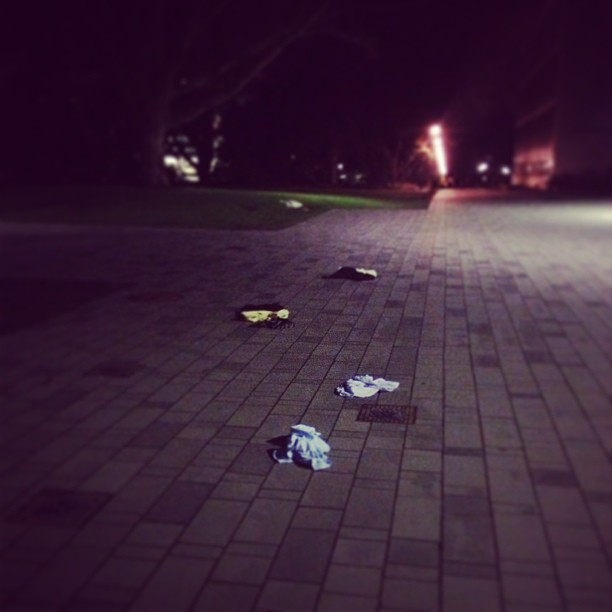
Andrew Nelson, a third-year psychology major, looks up from his study materials at 11:50 p.m., pulls on gray dress pants and an old T-shirt and dashes to the MU. He mills about the flagpole with a few others until a giant crowd appears, then strips down to his navy blue and green skivvies. He throws his clothes onto the ever-growing pile, which will all later go to charity. As the clock tower chimes for midnight, Nelson and a few hundred other college students race by in a blur of skin and spandex for yet another triumphant year.

Nelson is just one of the hundreds of participants in the UCD Undie Run. Leader Leslie Sherrett, a fourth-year environmental science and psychology double major, described the event as part charitable effort, part rebellious college experience.

“I love everything about it. It’s a healthy way to relieve stress during finals,” Sherret said. “It’s for a good cause — I’ve collected and donated about 100 bags of clothes so far. It’s just amazing.”

Once the clock strikes midnight, anyone in any stage of undress begins the mad dash across campus.

The event is independently organized by Sherrett, who not only facilitates the online community and distributes flyers in the weeks preceding the run, but cuts her own run short and returns to bag the donations.

“People are pretty generous. They’ll layer jackets or sundresses — nice clothes,” Sherrett said, “I load up my car [with the clothes] and drive them over to either the Yolo County SPCA or the Sacramento Food Bank.”

Sherrett has been responsible for organizing the event since her freshman year.

“Someone in the dorms made a Facebook group for an Undie Run, but there was no real organization behind it. I took the extra clothes that people didn’t retrieve and donated them, and I thought, this is such a great idea, I’ll start this on my own next quarter,” Sherrett said.

Sherrett soon found that the interest behind future Undie Runs was more than originally expected.

“I had never done any event planning before, so when 2,000 people ended up attending on [the] Facebook group that first year, I went, ‘Oh my gosh, do I need to tell the police, do I need to inform the Chancellor?’”

Ultimately, the event was not a problem with administration. Undie runs have been met with similar enthusiasm among students throughout California schools: UC Davis is one of many, with undie runs occurring at UC Berkeley, San Diego State University and UC Santa Cruz.

Nelson suspects that there is a psychological, if not primal fascination with running half-naked in the dark.

“For one, it’s sexy,” Nelson said. “You don’t get to usually do that kind of thing. It’s radical and different. People donate clothes and see the bigger picture, but the draw is the breaking of a societal norm.”

The organic qualities don’t end there. Although Sherrett has made paths and signs to direct runners in the past, she finds that mob mentality reigns.

“When there’s that many people, it’s impossible to direct. It just naturally flows,” Sherret said. “If I made a route, nobody would follow it. It becomes its own little organism. People run down Russell or storm the dorms; sometimes if there are really gung-ho people, they’ll go downtown.”

The distance of the run is based off of personal fitness level, desire to stay out in the cold or need to get back to studying for finals. Second-year animal science majors Melissa Tye and Kimberly Ruble found that even when leaving earlier than the rest of the pack, the experience is still worthwhile.

“We only ran for about half an hour, but it was so fun,” Tye said. “We went all over the place: through the Quad, the library, [the] Silo [and] Tercero. I think the group we were originally with with ended up going eight miles in total that night.”

Although Tye and Ruble did not stay for the entire run, they were able to participate in its most anticipated tradition. After passing Centennial Walk at the beginning of the run, the pack makes its way to Shields Library, where the group runs through all floors and rooms, momentarily bringing some excitement to those studying for finals.

“In the light, in the brightness of the library, it didn’t phase me that I was in my underwear. Once things took off, I had no concern for embarrassment. I felt free,” Nelson said.

The library run wasn’t always well received by campus officials, but in past years, responsible undie runners have allowed for the tradition to continue.

“The people at the library are becoming more understanding. It’s just students running around and blowing off steam. At first they would call the cops, bar the doors, or kick us out, but now [police officers] wait outside. They are just making sure we’re being safe,” Sherrett said.

Although the event is recognized as harmless, campus police now post out front of the library and follow the pack of students via patrol cars for part of the run. They make sure, however, not to rain on the parade, providing lighting and safety.

Participants were quick to point out that anyone is welcome at the Undie Run, regardless of fitness level or body type.

“It helps you become more comfortable with your body. It’s about bringing the community together. You can be big or small; it’s not about looks or fitness, it’s about celebrating the end of the quarter,” said second-year Spanish and chemistry double major Dezy Jordan.

With Sherrett graduating in the spring, leadership of the event has been passed down to Jordan, who has high hopes for the future of the Undie Run.

“I’d like to get DJs out more often and organize after-run events,” Jordan said. “I’m also going to poll using the Facebook group to see what day of finals has the least amount of conflicts for people.”

The UCD Undie Run takes place during finals week. For more information, visit their Facebook group, or search for the event entitled “UCD Undie Run Spring 2013.”

HANNAH KRAMER can be reached at features@theaggie.org

Watts legal?

Before spring break, this column answered a reader’s question about whether it’s legal for a bus driver to cram passengers on a bus beyond the vehicle’s capacity. I explained that many buses will have a Vehicle Inspection Certificate stating the maximum capacity; if you encounter a bus with such a sign, the posted number is the upper limit. Such signs don’t appear on Unitrans buses, however, so this column prompted a couple emails, as well as dozens of Facebook posts, from several Unitrans drivers:

Because Unitrans does not own school buses, it’s not required to provide Vehicle Inspection Approval Certificates or maximum capacity signs. There is a sign at the front that states that all standing passengers must be behind the white or yellow line; this is the only restriction on numbers of passengers to fit on one bus.

… I think it should be seen as impressive when a driver is able to pack a bus in a short amount of time. This means that every passenger gets to class on time. There may be the “awkward discomfort” of having your personal space encroached on, but it generally lasts less than ten minutes.

It is in everyone’s best interest to pack the bus at peak service hours. When passengers are left behind (which does happen sometimes, unfortunately), not only are passengers unsatisfied, the driver and the supervisor have to fill out paperwork documenting the incident — which can result in the driver being late to class or their next shift.

… California’s regulations allow standing-room-only buses: “Standing passengers are permitted only on a bus … operated in regularly scheduled passenger stage service or urban and suburban service by a common carrier or publicly-owned transit system, and equipped with grab handles or other means of support for standing passengers, and constructed so that standing room in the aisle is at least 74 in. high.”

— Various bus drivers, Davis, CA

Answer: A driver obviously doesn’t have to adhere to a max capacity sign that’s not actually there, and you can stand in buses without those signs. But if there is a max capacity sign, it’s mandatory. And every bus does have a maximum capacity — even those without a sign. A bus is not a black hole; one cannot cram an infinite number of passengers on a bus, no matter how large.

The method of determining that maximum capacity will vary with the type of bus, but there are indeed limits to every bus’s capacity. The short answer? A bus should not carry more passengers than what’s safe.

While packing a bus to the gills might be “impressive,” the risk of a driver having to fill out paperwork or miss class is preferable to the alternative: Passengers getting injured.

A crushed passenger would disagree that it’s in “everyone’s best interest to pack the bus.” Courts — and juries — tend to side with the crushed passenger as well, if the injury was caused primarily by the bus operator’s negligence.

And because Unitrans, like any other public transportation, is considered a “common carrier,” it is more likely to lose a passenger’s lawsuit than a private citizen giving her friends a ride in her car. Common carriers have a high duty of care to their passengers.

Under the common law, most transport for hire are considered common carriers. The requirement is codified in section 2100 of the California Civil Code, which provides that “[a] carrier of persons for reward must use the utmost care and diligence for their safe carriage, must provide everything necessary for that purpose, and must exercise to that end a reasonable degree of skill.”

Section 2101 is similar: “A carrier of persons for reward is bound to provide vehicles safe and fit for the purposes to which they are put, and is not excused for default in this respect by any degree of care.”

In other words, a common carrier is held to a high degree of care and diligence; courts hold a common carrier liable for most any error that causes harm to a passenger, even if the error was accidental. Trains, stagecoaches, buses and even elevators have been held to be common carriers. Based on the emails received from bus drivers, one can assume Unitrans is also holding itself out as a common carrier.

California case law is replete with examples of common carriers, including bus companies, held liable for injuring their customers — including dozens of cases of crushed passengers in overcrowded, standing-room-only transport.

The common carrier’s primary duty is to exercise diligence in ensuring the safety of their passengers. Getting to class is secondary. Avoiding paperwork is secondary. Safety is primary.

Overcrowded buses also pose other legal problems, depending on the circumstances. Overcrowded buses in Los Angeles prompted a civil rights lawsuit in the mid-1990s which resulted in a settlement. In the case, known as Labor/Community Strategy Center v. Los Angeles County MTA, the defendant agreed to stop overcrowding rather than risk a trial. When buses got overcrowded again, they got sued again in 2009 for violating the settlement terms.

Yes, “standing-room-only” is allowed on certain buses. Totally fine, if there’s no maximum seating capacity. But when a bus has too many people on it to safely drive without slamming passengers into windows or suffocating the elderly, it’s a legal problem.

If your safety is at risk, you might want to speak up. You’ll probably incur the wrath of the bus drivers (as this columnist did for making the suggestion last month). But dealing with an upset bus driver is better than getting smashed or suffocated, if that’s the choice you’re facing.

And in the long run, it’s better for Unitrans to be late occasionally than to have injured passengers suing them.

Daniel is a Sacramento attorney, former Davis City Council candidate and graduate of UC Davis School of Law. He’ll answer questions sent to him at governorwatts@gmail.com or tweeted to @governorwatts.

Column: Take your shoes off

If living on a farm next to cows in the middle of nowhere isn’t enough to truly make your Davis experience exactly like its stereotype, get ready to fill that void next weekend. Our campus is already quite unique with an amalgamation of cultures, languages, interest groups, sexual orientations, lifestyles, etc… But if walking/biking among hipsters and residents of the Co-ops isn’t Davis enough for you, take off your shoes and get ready for Davis’ annual modern version of Woodstock.

Whole Earth Festival begins May 10 and continues throughout the weekend. It’s a ginormous, free, eco-friendly three-day music, dance, arts, crafts and education festival. Perhaps you thought Picnic Day was big. Sure, but it only lasted half a day on campus. Get ready for a more laid-back, jam-packed version of Davis students’ favorite day for three days. Oh, and you don’t have to trek through what seems like miles of campus in hot weather only to find out an event ended an hour earlier than advertised. Ahem, Doxie Derby.

There’s something for everyone, with multiple musical acts performing at all times, arts and crafts tents for constant entertainment, endless booths of unique items for purchase and fantastic food. So, naturally, I run through each aisle of booths and roll around on the grass with food in my hand just like I would at Disneyland, if I had actually gone to the Happiest Place on Earth as a child.

I might as well mention it, because people who have only experienced Picnic Day will wonder, but this is a sober event. Trust me, everyone is sober. And it’s freaking awesome. Not that drunk people aren’t fun, but the Quad turns into a different world that weekend filled with relaxed, fun-loving people. But to answer the next question, yes. Yes, other substances are embraced all throughout the day. It’s not obvious, though. Except for those who twirl around for hours by themselves, off beat from the performers’ music.

That’s actually one of my favorite things to do: sitting and just watching everyone. I mean, I do that on a daily basis, but it’s not everyday that you see 60-year-olds in fairy wings spinning in circles and having the time of their lives. It adds to the quirkiness of the event.

Our entire Quad is taken over by families and groups of people who are committed to sustainable living and environmental harmony. It’s sort of a pilgrimage for these folks, and I’m convinced that some of them make the trip only to spend the entire weekend hula-hooping. This is by far the most organized festival on our campus, and I would argue that those organizing it are quite go-with-the-flow, happy people.

The Karma Patrol, made up of hundreds of volunteers, serves to set up, take down, maintain the “vibe,” promote compost and recycling, sleep on the stages at night (to ensure safety and prevent burglary, I’ve heard) among tons of other jobs behind-the-scenes. Basically, if you want to immerse yourself completely into WEF culture, volunteer.

I also can’t write an entire column without being a snarky, cynical young adult, duh. So now come my blunt thoughts. Girls, this is NOT Coachella 3.0 (2.0 was apparently Picnic Day, as every single girl was wearing a flower crown for no real reason with high-waisted shorts and crop tops). This is the appropriate time to bust out the tie-dye and wear actual cut-off jeans (not that Forever 21 crap with studs and glitter).

I heard that every year, there’s a woman with a box of kittens, giving the little angels away to anyone who asks. And although every atom in my body begs me to take the box and run, I’m going to advise people to take the box and turn the kittens into the YSPCA. I’ve heard stories where these WEF-obtained kittens act a little … strange due to constantly inhaling certain fumes. Put aside your need for free, beautiful, fluffy and wonderful kittens and put their health at the top of the priority list. Enough of my cat comments. And concerns. For now.

Last reason to definitely be at Whole Earth this year? Canned Heat is headlining this year. Yes, the band that headlined the original Woodstock Festival in 1969. And since this event takes place during Mother’s Day weekend, why not invite the family up for a day? Assuming your parents were older than children in 1969, I’m guessing they would think it’s pretty cool that a legendary group is performing on our campus. Plus, you won’t have any obligations or need to day drink, as those exist typically on Picnic Day.

Grab some cash, break out the sunscreen, bring a blanket and take off your shoes. Prepare to shop, dance, eat by day and thrive in the naturally harmonious environment of Whole Earth at night.

You can find ELIZABETH ORPINA chasing after the lit-up unicorn box every night next weekend. Contact her at arts@theaggie.org to find out how many plates of garlic fries she plans to scarf down.

The Aggie Arcade

Panic in Nintendo Land?

Every year when E3 comes along, Microsoft, Nintendo and Sony all prepare huge press conferences that allow them to detail upcoming games, hardware and services. Online viewers tune in, yell at their screens angrily and dissect every moment with an equal emphasis on serious discussion and ridiculous .gifs. That will only apply to two companies this year.

Last week Nintendo announced its decision to skip the big press conference — instead it will focus on smaller events for American distributors and the Western gaming press, respectively. Those smaller events will address the company’s upcoming software lineup, while Microsoft and Sony show off their brand new consoles.

Thus Nintendo faces a dilemma that many saw coming from a mile away. It debuted its new system — the Wii U — well before Sony and Microsoft. But the hardware itself minimally improves on the current PlayStation 3 and Xbox 360 from a technological perspective. The game library isn’t much better, with only a few standout titles since its launch in November of last year.

Getting a jump-start on the competition provides more time for sales, but Nintendo has squandered that opportunity in the past few months. Only 3.45 million Wii U systems have been sold up until March, which falls short of Nintendo’s own 4-million-unit estimate. In that same amount of time, the company’s old system, the Wii, has sold approximately 4 million units. Obviously, casual consumers are still enamored with the Wii, while the core gaming crowd appears to be content with the PS3 and 360 for now.

For the past seven years we’ve had to give Nintendo the benefit of the doubt since it tapped into a brand new gaming market with its crowd-pleasing Wii. But now that the Wii U has sold so poorly, it’s time for Nintendo to hit the panic button.

So how exactly does Nintendo solve this problem? With games, because the Wii U is a video game console first and foremost. The company seems to recognize this to some extent since the focus will be software at this year’s E3, but volume is not enough. Quality is what really counts.

Over the past few years, Nintendo has relied heavily on nostalgia to sell its games. I understand that many of us, myself included, have fond memories of past classics, but it’s time for Nintendo to focus more on originality and creativity. I can only take so many Zelda and Mario games before I move on to something else.

It may seem like I’m being too cynical, but my criticism of Nintendo comes from a place of love. Most of my childhood was spent in front of a SNES, and some of my all-time favorite games are courtesy of Nintendo (Super Metroid, Super Mario 64, Chrono Trigger).

Who knows, perhaps Nintendo will thrive with its back against the wall. I sure hope so, because the video game industry, in general, benefits from Nintendo’s success.

ANTHONY LABELLA can be reached at arts@theaggie.org.

Baseball Preview

Teams: UC Davis vs. Cal State Northridge
Records: Aggies, 16-26 (3-12) ; Matadors, 26-18 (11-4)
Where: Dobbins Stadium — Davis, Calif.
When: Friday at 2:30 p.m.; Saturday at 1 p.m.; Sunday at 1 p.m.
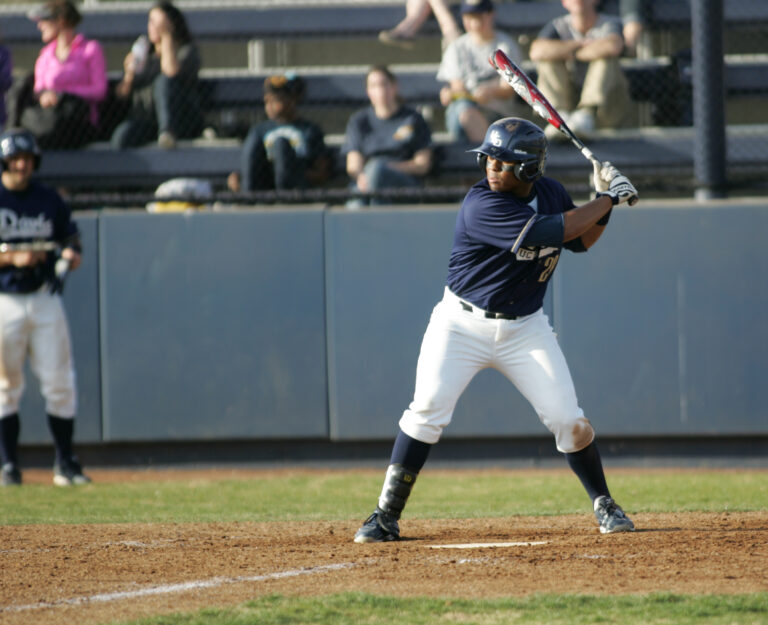
Who to Watch: Consistency is key, especially in a sport like baseball. This has been true for junior Nick Lynch. Lynch has been a regular player highlighting the Aggies’ performance this year.

The reason is simple. Despite the inconsistent hitting by the majority of the UC Davis batting order, Lynch is a solid constant. Hitting an outstanding .359 as of the weekend series in Irvine, Lynch has been the most consistent hitter for the Aggies. He is currently third in the conference with his .359 batting average.

Seemingly always on base, with a .455 on-base percentage, he is what the Aggies desperately need. Lynch also has some pop in his bat, having hit two home runs this year and driving in 23 RBI.

With UC Davis on another losing streak, the Aggies will need to find some hitting and pitching to back up the consistent work of Lynch. After all, baseball is a team sport.

Did you know? The last time UC Davis lost the season series to Cal State Northridge was in 2006. Since 2006, the Aggies hold an impressive 14-4 record against the Matadors. While this may not be incredibly relevant for the series this year, as rosters change every year, it is interesting to see the dominance which the Aggies seemingly have in this series every year.

The key to the Aggies’ past success is hitting, along with solid pitching. If UC Davis hopes to win the series this year, they will need the same recipe.

Preview: As the Aggies once again find themselves in the middle of a losing streak, they hope to earn a few wins against a very good Cal State Northridge team and snap the streak. After winning four games in a row, UC Davis has now lost four straight games. Both the pitching and hitting have been inconsistent during this four-game skid.

The Aggies’ batting order has been hit-or-miss this entire season. During the UC Riverside series, they were hitting the ball well and scoring runs. Junior Steven Patterson has had an amazing stretch of games as he had a 10-game hitting streak recently snapped during the series finale in Irvine. He is still hitting .336 with two homers and 27 RBI.

Senior Paul Politi is what many would consider the only true power bat in the lineup. With five home runs this season, two of which came in the 19-8 stomping of UC Riverside, Politi has shown the ability to hit the long ball. Also, his 10 doubles this year are the most on the team.

Politi has been hitting pretty well as of late, with a solid .333 batting average during the UC Irvine series. However, he only drove in one RBI in the three games at Irvine. This may be a reflection on the lack of hits by the rest of the Aggies’ lineup more than Politi’s inability to drive in runs.

UC Davis will not only need consistent hitting, but it will also need to be able to string few solid pitching performances together as well. With a team ERA of 4.78 and a propensity to allow late inning runs, as seen in the weekend series against UC Irvine, the Aggies definitely need to get more productive pitching.

Junior Evan Wolf is probably the best man for the job. With a 2-2 record and a 4.64 ERA, Wolf has been the best starting pitcher this season for UC Davis. In his last start against the Anteaters, Wolf threw six solid innings allowing one run on only two hits. The Aggies hope he can repeat that performance against Cal State Northridge.

Northridge has a solid pitching staff which has a team ERA of 3.87. This staff includes sophomore pitcher Jerry Keel, who is 6-1 this season with a 2.13 ERA. UC Davis will need to be able to find a way to hit against him during the series.

The batting order of the Matadors is a dangerous one. While they only have a team batting average of .265 and no one in the lineup hitting over .300, the Matadors do have some pop in their lineup — especially junior outfielder Miles Williams, who, while batting .221, has seven home runs and 23 RBI. The Aggies’ pitchers will definitely need to be mindful of the dangerous bat of Williams during the series.

— Kenneth Ling

This Week in Science

Physics:
Antimatter, the strange substance made infamous in Dan Brown’s Angels and Demons, has recently been used in an experiment to test the possibility of anti-gravity. Researchers at CERN in Switzerland theorize that due to antimatter’s opposite charge compared to normal matter, it may “fall up” instead of down. The project is specifically looking at anti-hydrogen, since hydrogen is the most abundant substance in the universe.

Psychology:
A study out of the University of South Wales has found that men with beards are ranked as more attractive and having superior parenting ability by both women and other men. The study also found that heavily-bearded men were ranked as those with the highest perceived parenting ability, but men with an intermediate level of beardedness were ranked as the most attractive. The most attractive level of beardedness for men was reached after an average of 10 days of growth.

Robotics:
A group of baseball enthusiasts and scientists at the University of Electro-Communications in Tokyo have just built a robot with a 100,000-neuron “brain” that can play baseball. The robot holds a fan-shaped bat and swings at balls that are launched at it. It usually misses the first few pitches, but the brain has the ability to learn, and eventually reaches a very high batting average. The fake brain is similar to the graphics processors in our computers, and emulates a brain with about 100,000 neurons — the average human brain has about 14 billion.

Astronomy:
On April 29, the Herschel Space Observatory, the largest infrared telescope ever built, was forever shut down. The telescope, which is in orbit around Earth, ran out of the liquid helium that it used to make highly detailed infrared images. The mirror on Herschel is about 1.5 times as large as the mirror on the Hubble telescope, and was able to form images from the darkest, coldest parts of the universe that were invisible to all other telescopes.

Environment:
As of this week, global CO2 concentrations have nearly reached a worrisome milestone of 400 parts per million (ppm). The location, or sentinel spot, on top of the Mauna Loa volcano in Hawaii, uses an infrared analyzer and measured levels of CO2 not seen for a few million years. Instead of a successful milestone, this marks a very troubling discovery that will make it nearly impossible to avoid the 2-degree-Celsius increase limit that many governments have vowed not to exceed. After the 400 ppm mark is reached, it will be very difficult to halt, let alone reverse, the negative effects of global climate change.

Internet:
April 30 marks an important date for humanity: the creation of the World Wide Web and the first website. The internet as we know it was first invented at CERN (the location of the Large Hadron Collider) by Tim Berners-Lee to transfer files and information between networks at the research institute. As a commemoration, CERN is restoring the first website ever created, along with its original URL and even the original servers it was hosted on.

Health:
Researchers from the UCSD Scripps Institute have recently found an antibody than can turn our bone marrow stem cells into healthy, functioning brain cells. This is an important discovery, as it shows the ability to create new brain cells out of a patients’ own cellular material. Antibodies were originally thought to be part of the immune function to fight bacteria and viruses, but they are now known to have many other functions, including the production of neural progenitor cells.

Aggies’ heartbreak in Big West Conference Tournament

Defense wins championships. The Aggies’ high-powered offense simply could not overcome the team’s defensive woes, losing the first-round contest to the nationally ranked UC Irvine Anteaters, 8-5. UC Davis then suffered a heartbreaking 10-9 loss at the hands of the UC Santa Barbara Gauchos. The Aggies then wrapped up tournament play against Pacific on Sunday, thrashing the Tigers by the score of 10-4.

Entering the first-round matchup with the second-seeded Anteaters, the Aggies knew that they were going to face a tough team. In the second regular season meeting between the two teams, UC Davis gave up a last-second score to give UC Irvine the 7-6 win. Thus, this game seemed to be one of the most exciting matchups of the Big West tournament.

However, the matchup was never really that close. The Anteaters took an early lead and never looked back. With goals from freshman Kelsey Thornton and junior Hilary Estrada, UC Irvine jumped out to a 2-0 lead. The lead blossomed even more in the second quarter, as the Anteaters scored four goals in the quarter. They went into halftime leading 6-2, with the two Aggies’ goals scored by senior Kathryn Bailey and junior Hannah Curran.

The Aggies did make a late comeback attempt in the fourth quarter, as they scored two goals and shutout the Anteaters. The goals by senior Riane Woods and sophomore Paige Oreglia helped UC Davis claw back to the 8-5 score. However, it was too little and too late.

On Saturday’s game, in the loser’s bracket of the conference tournament, the Aggies faced off with the UC Santa Barbara Gauchos. The Aggies’ leading scorers, seniors Carmen Eggert and Jessica Dunn, both had hat-tricks. UC Davis seemed to be in good position to close out the win with a 6-4 lead heading into halftime.

The Aggies started the third quarter of scoring and increasing their lead. With an Eggert goal, UC Davis gained a commanding 7-4 lead. The teams then traded goals, with a goal by UC Santa Barbara’s freshman Samantha Murphy and a goal by UC Davis’ senior Kathryn Bailey. UC Davis, however, still maintained a three-goal lead.

However, from there, it went downhill, as the Aggies allowed the Gauchos to score five of the last six goals. UC Santa Barbara clawed their way in front of UC Davis midway through the fourth quarter. However, a clutch goal by Dunn tied the game up with only 4:11 remaining in the game and finished Dunn’s hat-trick.

In the end, UC Santa Barbara had too much momentum. Their incredible rally was capped off the game-winning goal by senior Shelby Haroldson with only three minutes left in the game. The Aggies’ once again suffered heartbreak in the tournament, losing by the final score of 10-9.

“We wanted to finish the season strong. Here’s a team that is ranked seventh nationally and we have an opportunity to play them,” said head coach Jamey Wright. “We played a great three and a half quarters but we just couldn’t close it out.”

In the last game of the season for the Aggies, they faced off against Pacific. UC Davis closed out their season strong, with the help of a five-goal performance by Eggert.

“Today we just came out and just got up on them 2-0, then 4-2. The second quarter was just the killer for them. We went on a 7-0 run to seal the game,” Wright said.

The impressive 7-0 run occurred during the second and third quarters, and definitely put the game out of reach for the Tigers. This solid win marked the end of six seniors’ water polo careers at UC Davis: Eggert, Woods, Dunn, Hannah Breen and Danelle Kenny.

However, there is something to look forward to in the future, as the underclassmen did play pretty well against Pacific.

“I was impressed with the freshmen play. I put in three freshmen during the run and they played well. Since we played a lot of tight games this year, the freshmen did not have the opportunity to play a lot of minutes. But in today’s game I was proud of how they played.”

The Aggies end their season with an overall record of 15-17. They also finished 18th in the national rankings.

KENNETH LING can be reached at sports@theaggie.org.

Arts Week

FILM
Focus on Film: Days of Heaven
Monday, May 6, 7 p.m., $5 students
Vanderhoef Studio Theatre, Mondavi Center

Acclaimed director Terrence Malick’s second feature film, 1978’s Days of Heaven is renowned for its iconic, painting-like cinematography of the American Midwest. The film stars Richard Gere and Sally Field in early roles as lovers Bill and Abby, who attempt to pursue the American Dream in the Texas Panhandle circa 1916 when their idyllic romance is disrupted by a plan to inherit an ailing farmer’s fortune by having Abby marry him.

MUSIC
Christopher Taylor on Piano: Goldberg Variations
Friday, May 3, 8 p.m. $17.50 – $29 students
Jackson Hall, Mondavi Center

The Mondavi welcomes another virtuoso artist who brings along with him a rare instrument: a Steinway-Moor piano with a unique double-tier that is an attraction unto itself. Taylor, whose other pursuits range from mathematics, linguistics and philosophy, brings his singular talent to one of Bach’s later works, The Goldberg Variations (1741).

Rose Windows, Sea Dramas
Saturday, May 4, 9 p.m., $5, 21 and over
Sophia’s Thai Kitchen

The patio at Sophia’s welcomes Seattle-based psych outfit Rose Windows (signed to the illustrious emerald city label Sub Pop) who play a heavy blend of late ’60s progressive and 21st century post-rock, with flute and organ instrumentation lending a retro-tinge to their sound. They are followed by Sea Dramas, an SF group whose sound is a mix of ’60s beach pop, folk-rock and psychedelic.

Elena Urioste, Violin and Gabriela Martinez, piano
Sunday, May 5, 2 p.m., $19 students
Vanderhoef Studio Theatre

This is the third event in the Mondavi’s debut series, showcasing two brilliant young artists. Talented graduate of Juilliard and the Curtis Institute of Music, violinist Elena Urioste performs three sonatas from Beethoven, Debussy and Janacek. She is accompanied by Venezuelan pianist Gabriela Martinez, who has been performing orchestral music since the age of seven.

KDVS Presents: Week of Wonders, Arts & Leisure, Sneeze Attack
Sunday, May 5, 8 p.m., $5, all ages
Davis Bike Collective, 1221 1/2 Fourth St.

The show features three great artists, including Seattle-based tropical guitar pop group Week of Wonders, along with jangly indie-pop band Arts & Leisure and melodic basement-punk group Sneeze Attack, both from Sacramento.

ART/GALLERY
Home Is: Artists Reflect on the Meaning of Place
Thursday, May 2 and Friday, May 3, 11:30 a.m. to 5 p.m., free, all ages
Pence Gallery, 212 D St.

This inspired display at the Pence Gallery downtown features the painting and sculpture work of various local artists, who explore notions of “home” and “place” through their assorted pieces. This exhibition will run until June 2.

Imagine: Design Deliberation
Thursday, May 2, 11 a.m. to 5 p.m., free, all ages
Nelson Gallery, Art Building

The public is invited to take a close look at the three final architectural designs for the Jan Shrem and Maria Marnetti Shrem Museum of Art, with detailed drawings and models on display from April 3 to May 19. Visitor feedback is encouraged on the event’s Facebook page.

THEATRE
Batboy: The Musical
Thursday, May 2 to Saturday, May 4, 8 p.m., $10 Students
Wyatt Theatre

This weekend is the last opportunity to catch a showing of the bizarre and fun musical parody, Batboy, put on by Studio 301. Witness the “true” story of a cave-dwelling half-boy, half-bat who struggles to fit in with his adopted human family and the suspicious townspeople. Catchy musical numbers and tasteful gore highlight the entertaining story of this blood-sucking outcast.

OTHER
SickSpits Presents: May Open Mic
Tuesday, May 7, 7 p.m., free, all ages
Griffin Lounge, Memorial Union

The popular open mic event, put on by the SickSpits spoken word collective, returns to its original location at the Griffin Lounge. Musicians, rappers, poets, comedians and other talented individuals are encouraged to bring their unique contributions to this showcase of community voices.

Hands On: All About Samosas
Saturday, May 4, 2 p.m., $30, all ages
Davis Food Co-op Teaching Kitchen, 537 G St.

Learn the art of a delicious Indian snack, the samosa. Attendants will learn how to make this popular curried potato and flour pastry by several alternate methods, along with an accompanying sauce.

— Andrew Russell

Editorial: 2020 Initiative

0

By 2020, UC Davis will have 5,000 more students, if everything goes according to plan. The 2020 Initiative, introduced by Chancellor Linda P.B. Katehi, also includes the addition of 300 faculty, along with housing facilities and buildings to accommodate the increased population.

We have many concerns about the 2020 Initiative. With the addition of 5,000 students, the impact will not go unnoticed. How will this change the quality of our education? How will the campus handle an extra 5,300 people? And most importantly, where will everyone park their bikes?

The Initiative is a way for the university to gain revenue and decrease reliance on the state for funding, while supporting the growth of UC Davis. While we understand that continuing cuts of funding from the state has left the UC system high and dry, we also don’t believe that the only solution should be found in the wallets of students.

Adding more students could lead to a decreased level of education. Though the student to faculty ratio will stay the same, there is already an issue with class size on our campus and professors and graduate assistants often complain of being overworked. Students are already sitting in 400-person lectures, and we imagine it will only get worse with the addition of more students. With more students in classes and on campus, the education we receive will be less personal and less effective.

Hopefully the 400 to 600 extra non-faculty that the administration hopes to hire will be enough to support the expanded student population. We will need more academic advisors, counselors, doctors, custodians, groundskeepers and so much more.

The administration has stated that many of the 5,000 new students will be non-California residents. While we are open and accepting to anyone who wants to come to UC Davis, this is further evidence that we have moved away from the original UC Master Plan, which stated that the UC system should be free, guaranteed education for California students. Furthermore, international students on campus have already expressed frustration with the school’s support and their ability to integrate into the community. We hope that the university will create more resources for these students and listen to their concerns.

It is disturbing that an Initiative like this is necessary as state funding for higher education decreases, and we are unsure if the new changes to UC Davis will have the positive impact the administration is hoping for.