48.5 F
Davis

Davis, California

Friday, December 26, 2025
Home Blog Page 936

MUSE speaks with The McCoy Tyler Band

Playing a hybrid mix of folk-rock, bluegrass and country, The McCoy Tyler Band is a Santa Cruz-based trio who will perform at Whole Earth Festival and live on air on KDVS 90.3 FM.

The band is rooted in folk tradition, but McCoy Tyler, Clinton Brown and Chad Bowen add their unique musical perspectives to arrange progressive-yet-rootsy tunes. After having released their first full-length album in 2012, Cabin Fever Blues, the trio has been performing around the Bay Area, Sacramento, Tahoe and Oregon.

MUSE was able to speak with Tyler, vocals and guitar and Brown, vocals and drums, in a phone interview, discussing their beginnings as a band, their musical influences and the unique style they bring to the traditional genre.

MUSE: How did your band first take shape?
Tyler: About two years ago, I wrote a bunch of songs, and I was looking for a band. I went on Craigslist seeking musicians, and Clinton and Chad were the first to respond. When we met, I explained the music, and we got a feel for one another and it turned out to be a great match. Since then, we’ve been making music and performing around California, and we recently went on our first out-of-state tour up in Oregon with the release of our first full-length album.

How would you describe your music?
Tyler: There are a lot of styles that we bring into our music — bluegrass and folk traditions that haven’t changed a whole lot while they’ve been around, and we bring a modern twist to that. Because of the genre of music we’re in, our music has a bit of an old-school traditional feel, but we modernize it with our lyrics and our somewhat more complex chords.

Brown: Playing with these guys for the past few years has taken me into a new perspective on music itself, and I’m able to incorporate styles of music I’ve played in the past into traditional bluegrass. We each take turns bringing our individual perspectives while we’re working on a new song, and flesh things out with different accents, so you’ll be able to hear what each individual brings to the table.

Who are your biggest musical influences?
Tyler: If I had to name a few, I’d say John Prine, Gram Parsons, Neil Young and John Hiatt. They all utilize basic, stripped-down chord structures, but the stuff we write tends to be more complex. Part of that has to do with the background we come from. Three of us come from very different musical backgrounds. When we come together it creates a unique mix of styles, which sets us apart from the traditional folk-country vein.

What kind of music experience did you have before creating the McCoy Tyler Band?
Brown: I played drums for a band in Sacramento, a jam-rock funk band, playing gigs at bars on weekends, and I learned to love to play live shows. I listened to all types of music, but I think in terms of playing I was looking for something a little easier on the ears, something to play for people in smaller settings, not blaring people’s ears out. I wanted to play something simpler on the drums in order to be able to sing at the same time, and this band is a great outlet for that.

Tyler: I played a lot of “loud” music when I was 18. I was lead guitarist in a glam rock/metal band, a similar style to Iron Maiden and Judas Priest. I was playing really fast-treading metal songs, and now my style has changed and gone in a different direction. I think part of what influenced that shift was going through my parents’ records and listening to a lot of folk music. There’s something about the stripped-down quality about it that I appreciate. The difference between playing electric and acoustic is that you can’t really hide anything — it exists in a really immediate world where you can hear everything you’re playing in a solo.

What gigs do you have lined up for the near future?
Tyler: This year is going to be a breakthrough year for us. I wanted to get as many festivals as I could, so we’ve really made a point to book a lot of good regional festivals in California, and we’re touring through several western states starting in mid-June.

Brown: For the more distant future, we just hope to book bigger festivals and tours and record more albums. We want to keep it fun, keep it loose and have a good time playing music.

For more information about The McCoy Tyler Band, visit mccoytylerband.com. Listen to the band on KDVS 90.3 FM on May 9 at 11 p.m., and watch the show on the Solar Dance Stage at Whole Earth Festival on May 10 at 8 p.m.

CRISTINA FRIES can be reached at arts@theaggie.org.
Police briefs

0

APRIL 25, THURSDAY
Seedy and needy
An intoxicated man was knocking at someone’s door on Sapphire Court, and since they didn’t answer, he kept saying, “I’m right here.”

APRIL 28, SUNDAY
Extra! Extra!
Someone was walking through a complex trying to sell a stack of day-old copies of The Davis Enterprise on Pole Line Road.

APRIL 29, MONDAY
About to croak
An injured crow was flopping around on a bench on E Street.

Mugshot
A man was covertly taking pictures of women from a low angle inside Mishka’s Café on Second Street.

APRIL 30, TUESDAY
Edward Scissorhands
A guy with a bruised and bloody face tried to approach someone while carrying pruning shears on Cantrill Drive.

Get the 411….
Someone called the police department wanting help finding a zip code on Donner Avenue.

Police briefs are compiled from the City of Davis daily crime bulletins. Contact EINAT GILBOA at city@theaggie.org.

Letter to the Editor

1

Dear Madame:

I have no doubt your publication will be shortly inundated with commentary on the upcoming divestment resolution, as such proposals have histories of rending UC campuses in twain (see Berkeley, San Diego, Santa Barbara). It should say something that news has reached me of the advent from my quarter abroad in London.

A number of questions could be brought against the ASUCD Senate’s consideration of a divestment resolution. What does a student government have to do with the conflict? Could they be better focusing their efforts elsewhere? Is this debate (or shouting match as it’s likely to become) of any true educational value? However, I will refrain from launching those inquiries.

Instead I want to focus on the arrogance of a group of students, that they find themselves qualified and informed enough to submit a formal opinion on a conflict which has spanned decades (using the narrow view) and centuries (using the longer one).

The historical length and complexity of this conflict is what troubles me. Some of the smartest and best political minds during and beyond our lifetimes have attempted to resolve the schism and have been unsuccessful. Why? Because it is hard. Really, really hard.

A resolution is a rhetorical statement saying we believe X for this and this reason. The problem comes in the finality of the statement. If the ASUCD Senate actually believes they can reach a final and decisive decision on a subject greyer than a British Foxhound, then they can and should be accused of hubris so deep it puts them out of touch with a large portion of the students they supposedly represent.

I find myself far more favourable to the idea of ASUCD sponsoring a campus discussion of the issue so students can actually learn something about the conflict, and its history — that would educational; that would be in the role and interests of the student body.

Any more drastic action would be the senators presuming they know far better than their own electorate (not the spirit of democracy) and know better than the majority of world leaders in the last 40 years, claims I believe total a check too large for our student government to properly cash.

Cheerio from across the pond,
Justin Goss
Fifth-year political science major

Target etiquette

1

Sometimes when I feel like getting a little wild on weekends, I buckle myself into my minivan and drive my crazy self right on over to Target. I love walking through the Dollar Days section while being tempted by a million little trinkets that I don’t really need. But come on, those bird-shaped chip clips were a pretty awesome find. It seems that whenever I venture into Target, I can’t help but instigate quite awkward situations. A few of my favorites are recounted here.

The best one I can think of is the great fart putty incident of ’13. I had perused the Dollar Days aisle and found some “noise putty.” I thought this would be a helpful stress management tool. I could play with putty while working on papers to calm down. I purchased it, justifying the expense by saying it was just $1.

The next day, as I was playing with it, I realized why it was called “noise putty.” No sooner had I put my hand in the thing than it let out a loud, realistic farting noise. I squashed it again and realized that no matter what I did, this baby was going to make loud farting noises every time. I have roommates, who clearly were thinking that I had some serious Taco Bell for lunch that day. Much love to the Silo Taco Bell Express.

The putty couldn’t stay. After a few days I went back to Target and walked up to the return counter. The gentleman there made the mistake of asking me if there was anything wrong with the product.

I replied, “No, it’s just that I didn’t realize it was noise putty. I brought it home and it started making really loud farting noises and well, my roommates thought things. So I’d like to return it for some non-farting putty.” He looked at me, rather bewildered, and said, “OK.” I asked if he heard stories like that often. He replied with a simple “No.”

The next incident occurred a few months later. It was evening, and I stood in the Target parking next to my seafoam green minivan. I had smelled burning during my drive, which is actually quite typical, so I opened up the hood and was examining the oil level.

Just then a small car came driving at lightning speed through the Target parking lot. The driver chose to place his vehicle in the spot directly next to mine even though there was a shopping cart in that space. I was instantly cautious.

What did this man think he was doing, parking next to me? And in a spot with a cart in it, no less! As a safety measure, I got my pink pepper spray out and clicked off safety mode. This was getting serious fast. As the man stepped out of his car, I carefully monitored his movements. I held my pepper spray ready as I stood next to my open hood. The man looked at me and said, “Can I help you?”

Well, that wasn’t going down. I stared at him and said, “No, thank you.” He looked at me rather strangely. It was only then that I realized that some innocent man, who was likely just trying to go grab a few groceries, was being stared down by a chick who clearly was holding up a pink pepper spray can pointed directly at him.

The awkward saga continued when I had the entire Target team attempting to find temporary tattoos for me. I had two different associates helping me in person before they finally just radioed the entire Target team to ask where the temporary tattoos could be found. I told one of the guys who was helping me that I would prefer some with ponies or princesses or something.

The associate clearly thought it was a little strange for someone in their 20s without a child to ask for something juvenile. I felt the need to explain myself, so I said, “I need these because I want to put them on my roommate while she is sleeping.” He gave me a puzzled look, which of course must have been sheer bewilderment at my ingenuity.

MARCI MONTANARI is looking for companions who are interested in hitting up Target awkward style, until the associates finally stop letting her into the store. If interested, email mcmontanari@ucdavis.edu.

Male birth control

0

“I volunteer! I volunteer as tribute!”

As I watched this Hunger Games scene on Netflix last weekend, tears streamed down my cheeks as my drama queen of a brain mourned Katniss’ plight.

But when I saw it in theaters a few months ago, I didn’t get emotional once. The only difference?

Birth control.

I’ve been experimenting with different forms of hormonal contraceptives lately, trying to find the magic method that doesn’t come with 12-day periods, excessive bloating or the tendency to choke up every time Sarah McLachlan decides to sing over an animal adoption PSA.

Despite my frustration, I suppose I should be thankful for hormonal birth control. It means I don’t need to drink the froth from a camel’s mouth like the women in ancient Africa, or wear weasel testicles around my thigh like the ladies of medieval Europe.

I shouldn’t take the availability of birth control in the U.S. for granted, either — the Comstock Act, a federal ban on contraceptives, was not lifted until 1938, and the Supreme Court did not grant unmarried couples the right to use birth control until fairly recently, in 1972.

By the 90s, women had plenty of options when it came to preventing pregnancy: IUDs, hormonal implants and injectables, low-dose pills, patches, vaginal rings and more.

Among all these new developments in contraception, it seems odd that no great strides have been made on the male side of birth control since the discovery of latex (and the invention of the modern condom) in the 1920s. Where’s the male “pill”?

There are two reasons for the delay: reproductive anatomy and money. While women only produce one egg a month, men turn out about 1,500 sperm per second. Women’s bodies also have periods of infertility, like pregnancy, which hormonal birth control can simulate. Men, on the other hand, are fertile 24/7.

Some attempts at a male “pill” have focused on hormones, like most female contraceptives. However, targeting testosterone in such a way has the unfortunate aesthetic side effect of testicular shrinkage.

Though some research focusing on non-hormonal solutions is underway, the lack of federal funding for male birth control trials has hindered any real progress. This is at least partially due to the availability of female hormonal contraceptives, paired with the archaic notion that pregnancy prevention is the woman’s responsibility.

However, according to Science Daily, about 70 percent of men would be willing to take a birth control pill if it were available.

One of the possible male birth control options on the horizon was recently discovered during cancer research. Qinglei Li, an assistant professor at Texas A&M, found a compound called JQ1. The compound inhibits both sperm production and sperm mobility in mice. What’s more, JQ1 does not seem to have any effect on long-term reproductive ability or health.

However, JQ1 is still in the early stages of research, and just because it works on mice does not mean it will be effective in humans. JQ1 could suffer the same fate as Zavesca, a potential male contraceptive that worked perfectly at inhibiting sperm production in mice a few years ago — until it was tested on humans. Turns out, the drug only worked on a particular strain of laboratory mice.

Gamedazole has come a bit farther. The drug is also sperm-inhibiting, and has been successfully tested on not only mice, but also rats, rabbits and nonhuman primates.

Even more exciting is Vasalgel, a polymer gel that’s injected into the vas deferens. When introduced to an activating agent, the gel solidifies into a sponge-like substance that allows the man to ejaculate, but filters the sperm from his semen. The procedure is also easily reversible, as the gel can be dissolved with a second injection.

Better yet, Vasalgel has been tested on humans with close to a 100 percent success rate in India. In the U.S., however, trials are still limited to nonhuman animals, and the system is not yet FDA-approved.

The prospect of more male birth control options is exciting, and a long time coming. Hopefully, the introduction of more reliable male contraceptives will level the cultural playing field in preventing unwanted pregnancy — and give girls like me a break from the mood swings.

MARISA MASSARA’s volatile hormones can be reached at mvmassara@ucdavis.edu.

Water Advisory Committee discusses water fluoridation

0

On April 25, the Water Advisory Committee (WAC) of Davis met to debate the matter of fluoridating the water in the City of Davis.

Since Measure I was passed in mid-March, the WAC has been recreating the Yolo County water system. This led to a decision to construct a new surface water plant — an upgrade that will run in addition to the city’s existing groundwater plants.

The proposed construction of this plant, which is slated to be in operation by August 2016, has prompted the WAC to reconsider fluoridating the water in Davis while cost has been prohibitive in the past.

According to California Assembly Bill 733, which was passed in 1995, as long as there is funding available, a city must fluoridate its water if it has more than 10,000 residents.

However, in the past, according to Dianne Jensen, principal civil engineer with the Davis Public Works Department, “water fluoridation has been ranked at [something like] 136 out of 166” of the city’s spending priorities.

The way that the new surface water plant is being built would allow the possibility to add water fluoridation in the future, if the Water Advisory Committee decides not to fluoridate the new plant as of now.

The addition of fluoridation capabilities to the surface water plant would cost an estimated $600,000, but according to Jensen, a firm estimate will not be available until June.

Yolo County Health Director and member of the fluoridation subcommittee Jill Cook estimates that water fluoridation will cost between 30 cents and $4 per person every year.

In West Sacramento, water fluoridation costs approximately 38 cents per person annually. The Centers for Disease Control and Prevention (CDC) stated that every dollar spent on community water fluoridation saves $38 in dental treatment.

The City of Sacramento has been fluoridating its water for over a decade now, while Sacramento County adopted the practice only a few years ago.

Local dentist and member of the fluoridation subcommittee Kim Wallace said that the City of Sacramento has considered dropping their water fluoridation program to reduce costs.

“[The Sacramento] City Council decided it was worth continuing, despite their budgetary problems,” Wallace said.

Wallace believes that the estimated $600,000 it will take to initiate water fluoridation in Davis is a small fraction of the cost of the approximately $245 million project and that it is well worth it.

According to Wallace, an argument has been made that because the citizens of Davis are typically of an above-average socioeconomic status, they are more likely to be able to afford dental services and have dental insurance, so citywide fluoridation may be less necessary than in other places.

“We can’t drill our way out of this problem. Just one filling between the back teeth costs $230 at my practice,” Wallace said.

Constance Caldwell, a Yolo County health officer, agreed with Wallace.

“Fluoridation of the public water supply is a matter of health equity. Not everyone has dental insurance, but everyone can drink tap water,” Caldwell said. “The CDC, the United States Surgeon General and state and local health departments throughout the country have long supported fluoridation of public water supplies.”

In the past, there have been rumblings about water fluoridation being detrimental to health, but Wallace strongly believes that there is “overwhelming evidence” that supports the benefits.

“[Water fluoridation] has been adopted at all levels of organized dentistry, as well as the school board, the UC Davis Medical Center, Sutter Health and the state of California,” Wallace said.

The CDC has included water fluoridation as one of the top 10 great public health achievements of the 20th century.

Cook recognizes the additional cost, but said that the fluoridation of drinking water offers a “high-achieving return on investment that has long been proven to prevent chronic dental decay.”

While the current debate is about fluoridating water in Davis, as Woodland is part of Yolo County, Cook believes that Woodland may be looking toward the decision that is made in Davis as a point of reference for their own water fluoridation program, although it is not on the agenda yet.

According to Wallace, water fluoridation is a common practice in countries outside of the United States, such as Ireland, Australia and Britain. Other countries even fluoridate milk or salt. In the United States, it has been done regularly for 68 years.

The WAC will hold another panel on May 23 in which the disadvantages of water fluoridation will be presented, and a final decision will be made at a meeting in June.

WAC meetings are held on the second and fourth Thursday of each month at 6:30 p.m. in the Community Chambers at 23 Russell Blvd.

TAYLOR CUNNINGHAM can be reached at city@theaggie.org.

New online student portal to debut this fall

Next fall, when students go to MyUCDavis on their browser, they will be redirected to a new student portal.

This past November, development began on a new online student services portal, which has yet to be named.

The site will have a student-centered approach, where students will be able to access multiple services on one website, instead needing to navigate multiple websites like MyUCDavis, SISWeb and SmartSite, as they currently do now.

“We want a portal that not only brings the administrative [units] — financial aid, student accounting and the registrar — together, but also the academic units. That includes the four undergraduate colleges, graduate studies and the professional schools, so that we create a platform that’s for everybody,” said Elias Lopez, executive director of Technology and the University Registrar.

Currently, students have to log on to multiple websites to check their grades, financial aid or student accounting. One goal of this project is to have students log on just once to the portal and be able to visit the other websites with ease.

“We had heard a lot of comments from students about multiple sign-ons, having to go to more than one place, not knowing if [they] were still on a website or not. So, we wanted a way to make administrative functions more simple and streamlined,” said Lora Jo Bossio, associate vice chancellor of Student Affairs.

Students will also be invited to help decide on the official name of the portal and critique the content of the website.

“We did a survey asking students … which features [they would] most like to access easily from the home page,” said Nefretiri Cooley-Broughton, director of Student Affairs Marketing and Communication. “We have engaged with the Davis Honors Challenge for this project, because one of the most important pieces for us is making sure we get student input. For their project for this quarter, we’ve asked them to look at the best ways to engage with students and get their feedback.”

Aside from being able to utilize this portal in the fall of 2013, students will also be using this for their Winter Quarter 2014 registration.

“We’ve also gotten a lot of feedback that student’s don’t like SISWeb, so this will eventually replace SISWeb also. All the registration will occur on this website,” Lopez said.

Those involved with the development encourage student participation and feedback to help make sure the portal truly caters to students needs, even after it’s launched.

“While we love to have student feedback from the student leaders and those who are very involved on campus, we actually want everyone — all the students who are a part of this community — to give us feedback,” Cooley-Broughton said.

Bossio said that improvements to the portal will be made consistently.

“As is typical with any wonderful project, before you even get it rolled out the first time, you got phase two, three and four already lined up,” Bossio said. “We’re starting with a fairly large scope for phase one, but there will be enhancements made. So it will become an ongoing and ever-changing, and hopefully ever-improving portal.”

SASHA COTTERELL can be reached at campus@theaggie.org.

Tech Tips — Urbanspoon

The Problem:
You and your friends are hanging out, when suddenly somebody realizes that they are hungry. After it gets brought up to the group, everyone else realizes that they are hungry, too. Cooking takes too much effort and requires forward planning … a daunting task for any college student. So the only option left is to go out. But where?

No one really cares, or if they do, they are keeping their opinion to themselves out of some misguided attempt at courtesy. The question “What do we want?” keeps getting repeated over and over again. Tempers are flaring. No one wants to decide for the entire group. Eventually it seems much more likely that you will end up brawling than actually picking a place to eat. Time to alpha-up, homeboy.

The Solution:
Urbanspoon, an app available for free on any iOS device (iPhone or iPads for you noobs out there). This app has three main features that will make finding a place to eat much easier.

The “Shake” feature seems to have been specifically designed with the above situation in mind. It has three roulette wheels that spin like a slot machine to randomly select a nearby location (i.e. Davis, Dixon, Sacramento), type of food (Mexican, Chinese, Italian, etc.) and relative price range denoted by number of dollar signs from one to four ($ – $$$$), with one being fairly inexpensive and four being very expensive.

Pushing the “Shake” button (or shaking your phone) sets the wheels spinning, and once they land, the app chooses a random restaurant that fits the randomly chosen criteria and then gives you the name, address and phone number for that restaurant. It’s that simple. You even have the option of locking down one of the roulette wheels. So, for example, if you know that you want something inexpensive, you can lock the app on the one dollar sign and let it randomize the rest.

However, maybe the limiting factor for you isn’t deciding what to eat, but laziness. You just really don’t want to have to travel very far to eat. This is where the “Nearby” feature comes into play. As long as you have location services enabled on your phone, the app will give you a list of all the closest restaurants to you, along with a rating for that restaurant shown as a percentage of people who have “Liked it” through the app.

Finally, the app also includes a “Search” feature that will let you look up the closest location of a specific restaurant, if you have one in mind.

Pro Tip:
When using the “Shake” feature, in the upper right-hand corner of the screen there is a button that says “Filter” that will allow you to further customize the results shown to you. You can choose to only see popular places, or only places that serve breakfast food or even set a maximum distance for the displayed results. Don’t let your friends break out into World War III. Just download, shake and eat.

KYLE SCROGGINS can be reached at science@theaggie.org.

A peek at TEDx 2013

UC Davis Limited Student Discount: $15
UC Davis students, faculty, alumni and staff: $20
General Admission: $25
Buy online at tedxucdavis.com
Additional ticketing fees apply

On May 18, a TEDx event, TEDxUCDavis, will be held on campus in Wright Hall with speakers from a variety of fields.

TED, the nonprofit organization known for their popular “TED Talks,” is dedicated to inspiring, informing and connecting those in different fields. TEDx programs are independently ran.

“It is run TED-style with the intent of communicating great ideas from experts in various fields,” said Sonam Mahawar, a member of the Speaker Selection Committee at TEDxUCDavis.

The theme of this year’s event is “What do you work towards?” Speakers will share their experiences, thoughts and tips with attendees to get individuals thinking about the things they are passionate about and wish to pursue.

According to the TEDxUCDavis website, the organization’s goal is to compose an amalgamation of thoughts and perspectives to help people express “what makes them tick.”

Among the speakers are those in the UC Davis community who teach and do research, including chemistry instructor Bryan Enderle, social psychology professor Alison Ledgerwood and professor of political performance Larry Bogad. Also featured are geographer Stewart Long, pastor Bill Habicht, geobiology researcher Amy Williams and more.

The conference will begin at 1 p.m., when the first round of speakers will present. An intermission will follow, which includes a dance performance and a chance for guests to network and discuss. A second round of speakers will then share their thoughts and experiences. A reception for speakers and guests to connect is being tentatively planned.

Tickets range from $15 to $25 and can be purchased online at tedxucdavis.com. They will be on sale until May 18.

— Lauren Mascarenhas

Guest Opinion: Getting tested

0

April was “Get Yourself Tested Month” so I decided to go to the Student Health Center. I asked the front desk receptionist and was politely directed to the second floor clinic. After standing there for over a minute in silence, the receptionist finally acknowledged me by bluntly saying, “Do you have a question?” She seemed surprised and caught off guard by my apparent interruption. I asked if I could make an appointment to be tested. She asked, quite audibly, “Tested for what?” Once I explained to her that I would like to get an STI screening, she continued to work on her computer, printed something out, stapled it, and typed some more, all without saying one word to me. I felt like I was being judged and more importantly, shamed and dismissed. We eventually made my appointment for the next day.

The doctor asked just a few questions about my previous sex life and any concerns I may have had. He then ordered a urine test for an STI screening. I am fortunate enough to have the financial resources for these tests, but not everyone does. Ten dollars for HIV, another $20 for chlamydia and gonorrhea, $10 more for syphilis, and another $30 for herpes. This is not an affordable process. I had to weave through a series of barriers to even access STI testing.

This was not easy. As a senior, I’ve become comfortable with my sex life. Even with these financial, logistic and social limitations, I still felt comfortable accessing these services. Freshmen may see this as a barrier to accessing sexual health services. I should not have been asked to publicly explain my STI status or need for testing in the Health Center lobby. This is not only a violation of privacy but also a violation of The Health Insurance Portability and Accountability Act (HIPPA) regulation.

This story is not unique to this student. We, as the Students for Reproductive Justice, feel that this experience — the lack of access to STI testing and an intimidating environment — actively deny students of their chance for sexual health.

When students feel ignored or embarrassed when accessing reproductive health care, they are less likely to do so. Health providers need to publicize that walk-in appointments for STI screenings are available in the first floor lab, no appointment or “orders called in” necessary.

When we called in to find out more information, we received a variety of responses. They did not offer any information about local clinics like Planned Parenthood or Women’s Health Specialists that serve the uninsured or underinsured. By not sharing this information, they are restricting access to a crucial component of health care. We are not arguing that these health providers are mal-intended, but rather should be better educated about the ways to promote sex positivity and knowledgeability about other local services.

This is not solely a social issue about sex positivity but also a serious health issue. What messages about sexual health is the Health Center trying to send by shaming our attempts to maintain a healthy sexual life and body?

We call for a change. We demand that health providers make STI testing more accessible. We demand that when asking about these tests we are not shamed or asked to speak about them in public spaces such as the lobby. We ask that the Health Center respect students’ rights to confidentiality.

We want the UC Davis Student Health Center to change the culture of their medical clinic and create a more inclusive, sex positive space. It is fundamental that STI testing be free. The Health Center and Love Lab should publicize where there is free, accessible STI and HIV testing and celebrate that they are making a healthier, happier student body. Ultimately, health professionals should recognize their power in creating a culture around sex — a culture that currently has the power to prevent people from being tested and therefore being safe.

City council votes to cut fire department staffing

At Tuesday’s Davis City Council meeting, the council voted 3-2 to reduce the number of firefighters from 12 to 11 per shift and the number of firefighters per truck from  four to three.

According to The Davis Enterprise, Mayor Joe Krovoza and Council members Brett Lee and Rochelle Swanson approved of the change, whereas Mayor Pro Tem Dan Wolk and Council member Lucas Frerichs did not vote in favor of the reduction.

The change will save the city about $437,000 a year by removing vacant positions and limiting overtime, but no firefighters will be laid off, according to The Davis Enterprise.

Currently, the firefighter staff is looking into moving the fire station in downtown Davis north, or adding another fire station.

— Claire Tan


External Affairs Commission to discuss disinvestment resolution Wednesday

The ASUCD External Affairs Commission will see Senate Resolution 30 at a special meeting tomorrow night, May 1, at 8:10pm in Giedt 1003.

The resolution supports UC Davis’ disinvestment from corporations profiting from the occupation of Palestine. EAC was originally slated to discuss the resolution on Tuesday night, but decided to move the meeting in order to comply with the ASUCD Bylaws.

– HANNAH STRUMWASSER


Campus Cuisine

We’ve all been there: stuck on campus and in dire need of sustenance, but not really intrigued by any of the options available. By the same token, many might not know exactly what options there are beyond the Dining Commons and bagels at the ASUCD Coffee House (CoHo). So I’ve picked out what I think are some of the best food and drink choices on campus.

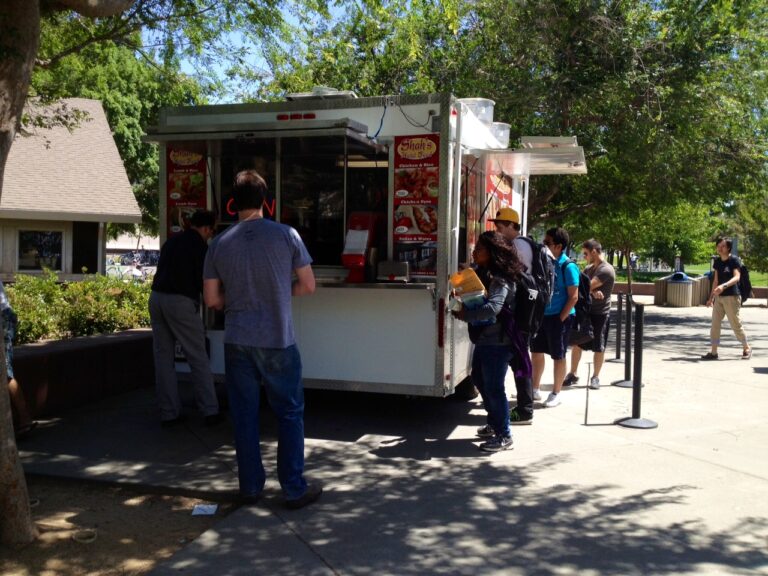
Shah’s Halal Food cart, for those who don’t know, offers some of the most satisfying meals available on campus — the sheer scent of someone stealthily eating it in class is enough to elicit hunger and jealousy in the rest of the students. For $7 or less, you can get chicken, lamb, falafel or a combination, in either a rice plate or gyro. A drink — either soda or bottled water — is included in the price. A popular order is chicken over rice with spicy sauce. You can find Shah’s between the Silo and Outdoor Adventures.

Over at the CoHo, the eight different venues offer plenty of opportunities for students to grab a decent meal for a good price in between classes. While most of the food is adequate for serving that purpose, few items are really anything to rave about — the nachos being one of the few. The Especial Fiesta Nachos ($5.75) at TxMx Grill are tortilla chips piled high with beans, a selection of meats or tofu roja, guacamole, sour cream, lettuce, cilantro and a homemade spicy nacho cheese. This isn’t the nacho cheese that comes out of a pump (and could actually be plastic); it’s real melted cheese and is what makes the nachos the standout item.

nachos

A lot of people stop at the CoHo South Café in the Student Community Center for a coffee when they don’t want to wait in line at Starbucks. However, the café’s Roasted Veggie Wrap is another one of the best food items on campus that could easily be overlooked. The chili tomato tortilla envelops a combination of grains, roasted veggies, Havarti cheese, lettuce and roasted red pepper sauce. Heated up, this wrap is a flavorful morsel that you can eat while walking to class.

I’ve provided some of the best food options on campus, but drinks deserve recognition as well. Bio Brew, the small café located on the bottom floor of the Science Lab Building, makes one hell of an iced mocha ($3.10). For some reason, even though the café brews Starbucks coffee, the mocha is stronger and richer than the Starbucks counterpart. It’s one of those things to buy to reward yourself for finishing a midterm or turning in a paper — especially if you get it topped with whipped cream.

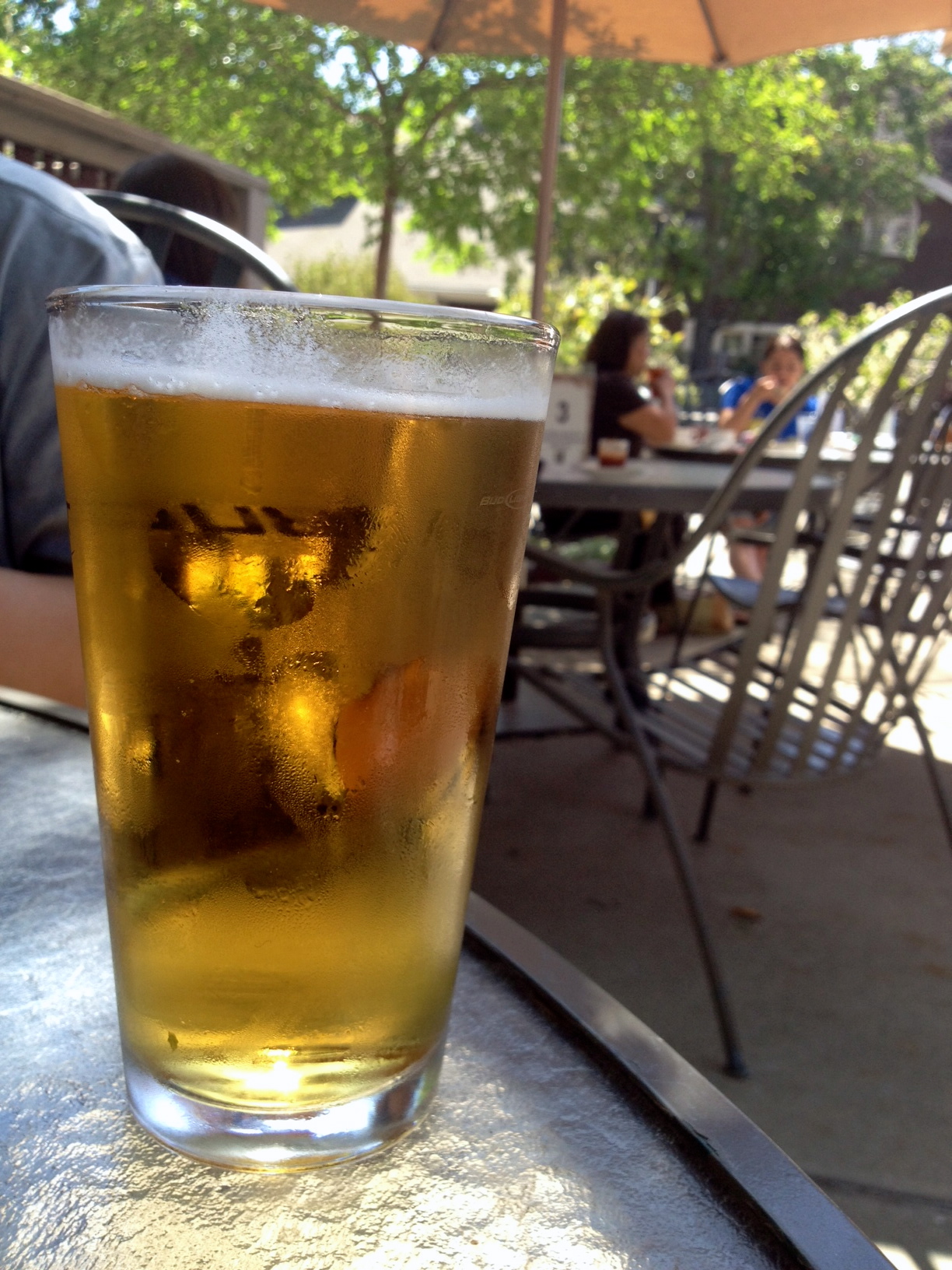
gunrockAnd lastly, to the 21-and-overs: make sure you grab a beer at Gunrock Pub, located adjacent to the Silo, at least once before you graduate. It’s only open weekdays from 11:30 a.m. to 2 p.m., which makes a great excuse for getting a drink in between classes. Gunrock offers an impressive selection of draft beer on tap ($4.75 for a pint, $15 for a pitcher), including Blue Moon, Stella Artois, IPA Racer 5 and Sudwerk’s signature Aggie Lager, among others. I am not condoning getting wasted on campus, but stopping by for a beer with your friends in the middle of the day can make the rest of your afternoon a bit more bearable.

Bike Loopalooza on Sunday

This year’s Bike Loopalooza will take place on Sunday from 10 a.m. to 2 p.m. at the Davis Bike Loop. The loop is a 12-mile perimeter of the City of Davis.

The first Loopalooza was held in 2010 to help “acquaint families with the Davis Bike Loop as an option for commuting to school.” About 173 cyclists and their families were in attendance.

According to a press release, about 200 children and their families are expected to participate this year. Snack, drinks and merchandise will be for sale to cover costs. Donations are also welcome.

Eleven stations will be set up around the loop, featuring activities such as safety checks, helmet fitting, birdwatching, super-soaker battles and prize collecting. Each child will receive a passport in which they can obtain a stamp at each station.

— Claire Tan


Open forums organized for Associate Vice Chancellor search

A series of open forums will be held, starting Tuesday, May 7, to review five candidates for the position of Associate Vice Chancellor of Student Life, Campus Community and Retention Services, according to a Student Affairs online announcement.

Forums will be held May 9, 10 (1:15 p.m.) and 16 (3:30 p.m.) in Meeting Room D of the Student Community Center. Two other forums are scheduled to take place in the Mee Room of the Memorial Union May 7 and 17 at 1:15 p.m., as well.


— Muna Sadek