48.5 F
Davis

Davis, California

Friday, December 26, 2025
Home Blog Page 937

KDVS raised $40,938 during its annual weeklong fundraiser

KDVS Fundraiser Week 2013 ended at midnight of Sunday, April 28. The station ended up raising $40,938 by the end of the annual weeklong fundraiser.

The campus radio station depends on community support to fund two-thirds of its operating budget for the following school year. KDVS thanked donors this past week with a variety of premiums depending on the amount of each contribution.

The fundraiser continues to welcome support, despite the end of the official fundraising event. Visit www.fundraiser.kdvs.org to make a tax deductible donation today.

— Elizabeth Orpina
ASUCD Senate passes resolution against Islamophobia

ASUCD Senate passed Senate Resolution 21 (SR 21) during the April 25 senate meeting. After approximately five hours of discussion, the resolution condemning “Islamophobic Hate Speech” at UC Davis, passed with a 7-4-1 vote.

SR 21, authored by Kriti Garg, was first presented to Senate April 11. It condemns the rhetoric that was expressed during an April 11 Ayn Rand Society at UC Davis event, titled “Islamists Rising in the Middle East: Where Next for America,” featuring guest speakers Daniel Pipes, Elan Journo and Larry Greenfield.

The resolution urges UC President Mark Yudof to condemn the language of UC Santa Cruz lecturer Tammi Rossman-Benjamin for “inciting racist and Islamophobic rhetoric.”

During discussion of the resolution, members of the public were given time to speak, during which time Jonathan Bomberg, president of the Ayn Rand Society at UC Davis gave, what he declared to be their only official statement, stating that the event was not targeted toward Muslims.

The president of the Muslim Student Association at UC Davis, Usamah Simjee, also spoke during the meeting, urging for the passage of SR 21.


— Liliana Nava Ochoa

Aggies troubles continue in Irvine

By Kenneth Ling

Aggie Sports Writer


The Aggies’ momentum from the four-game win streak is now over. UC Davis once again struggles to find its form, as the Aggies have now lost four games in a row, three of which come from this weekend’s sweep in Irvine.

The Aggies’ first game against the Anteaters was a close battle which came down to a squeeze bunt in the bottom of the ninth, giving the Anteaters the win. UC Davis and UC Irvine were tied 4-4 heading to the bottom of the ninth. Starting pitcher junior Harry Stanwyck pitched a solid game, pitching 7.2 innings and only allowing four earned runs.

However, the Aggies could not find the run support to gain control of the game. While junior Nick Lynch did go 3-3 on the day with one RBI, no one in the lineup could consistently drive in runs. Junior second baseman Steven Patterson, who has been on fire lately, went 1-4 on the day with no RBI.

On Saturday’s game, the Anteaters torched the Aggie pitchers for eight runs. Sophomore Taylor Sparks led the way for UC Irvine, going 2-3 on the day with three RBI. UC Davis could not stop the hitting as they gave up six runs in the first three innings.

Furthermore, the bats were cold, as the Aggies only managed to drive in two runs on 10 hits. Lynch went 2-4 with one of the team’s two RBI. Senior Paul Politi, UC Davis’ power threat, went 1-4 with no RBI.

In the series finale on Sunday, the Aggies put up a good performance through the bottom of the ninth with two outs. From there, UC Davis collapsed and allowed two runs to cross the plate, giving the Anteaters the 4-3 win.

The Aggies received a phenomenal starting pitching performance by junior Evan Wolf, who pitched six innings and only allowed one run. UC Irvine found success hitting against the relief pitchers of UC Davis however, scoring two runs in the seventh inning, closing the gap to 3-2.

With the Aggies maintaining a slim 3-2 lead heading into the bottom of the ninth, UC Davis seemed to be in proper position to prevent a sweep. Aggie sophomore pitcher Craig Lanza quickly got two outs in the ninth. The stage was set for UC Davis to end the game with a win.

However, this is when the Anteaters started to get into a rhythm. UCI got on base with a single which turned into a two-base hit due to an error by the Aggies.

Next, a walk allowed by Lanza, put runners on first and second. A misplayed fielder’s choice loaded the bases with two outs. This is where sophomore infielder Connor Spencer hit a clutch double to bring in the game-tying and game-winning runs to sweep of the Aggies.

UC Davis is now 15-26 overall and 3-12 in the Big West Conference. The Aggies will play a one-game series against Santa Clara on Tuesday at 2:30 p.m. The game will be played at Dobbins Field in Davis.


KENNETH LING can be reached at sports@theaggie.org.

UC patient care workers announce strike vote

AFSCME 3299, the local University of California employees union, has announced that the Patient Care Technical Workers in the UC medical system will be holding a strike vote April 30 until May 2.

An estimated 13,000 workers will be voting. The latest agreement between UC and the workers expired September 3, 2012. Efforts to reach an agreement through negotiations and post-impasse mediation since then have been unsuccessful.

If the vote passes, it would authorize a strike if the workers feel it is necessary at the time.

“If the UC continues to hold this process up, our members will be prepared to go on strike if that’s what’s necessary,” said AFSCME 3299 President Kathryn Lybarger.

— Lauren Mascarenhas


Non-resident death at University Court

Today, University Court Apartments at 515 Sycamore Lane sent a notification email to its residents regarding a non-resident death that occurred on April 24.

The email stated that “there was police reported activity on the property in the evening” of April 24 and “it was brought to our attention that a non-resident death had occurred.”

According to the email, the Davis Police have taken control of the situation.

— Claire Tan

ASUCD Senate Briefs

0

ASUCD Senate meetings are scheduled to begin Thursdays at 6:10 p.m. Times listed are according to the clock at the April 24 meeting location, the Memorial Union’s Mee Room. The ASUCD president is not required to attend senate meetings.


Meeting called to order at 6:10 p.m.


Carly Sandstrom, ASUCD president, present

Bradley Bottoms, ASUCD vice president, present

Liam Burke, ASUCD senator, present

Armando Figueroa, ASUCD senator, present

Maxwell Kappes, ASUCD senator, present

Pamela Nonga, ASUCD senator, present

Felicia Ong, ASUCD senator, present

Alyson Sagala, ASUCD senator, present

Amrit Sahota, ASUCD senator, present

Miles Thomas, ASUCD senator, present

Tal Topf, ASUCD senator, present

Reuben Torres, ASUCD senator, present

Ryan Wonders, ASUCD senator, present

Yee Xiong, ASUCD senator, present


Presentations

Unitrans spoke about changes they are attempting to make for the approaching academic year, such as increased summer hours, more bus times for certain bus lines that only run once per hour.


Aggie TV director Anna Oh provided an update on Aggie TV.  She stated that she wants to create a new Production Coordinator position. Oh also spoke about live stream of sporting events and ways in which it can be improved for the future.


Appointments and confirmations:

Jay Chou was confirmed as the new director for Specialized Transportation Services (STS).


Jessica Reiter and Amelia Helland were confirmed as members External Affairs Commission (EAC) commissioners.


Consideration of old legislation

Senate Bill 85, authored by Sergio Cano to allocate $321.73 from Senate Reserves to purchase 2,500 ASUCD brochures. Unused funds are to be returned to Senate Reserves. The ASUCD Senate will collaborate with the Executive Office to attempt to institutionalize this purchase by the upcoming budget hearings.


Senate Resolutions


Senate Resolution 21 (SR 21), authored by Kriti Garg and Ethnic and Cultural Affairs Commission (ECAC), to condemn Islamophobia. SR 21 resolves that the ASUCD condemn University of California, Santa Cruz lecturer Tammi Rossman-Benjamin “Islamophobic” speech. SR21 condemns the controversial rhetoric that was used during the April 11 “Islamists Rising” event, hosted by the Ayn Rand Society at UC Davis. It urges UC President Mark Yudof and ASUCD President Carly Sandstom to take action regarding this hate speech.

Lastly, SR 21 resolves that the ASUCD urge other campuses to pass similar bills.

During discussion, members of the public in favor and against the resolution spoke. The president of the Muslim Student Association (MSA) Usamah Simjee said that students should not have to worry about their safety on campus. President of the Ayn Rand Society (ARS), Jonathan Bomberg gave what he stated was “the only” official ARS statement, stating that the event was not targeting Muslims in general, but those who commit crimes in the name of Islam.

Members of the public whom were in favor of this bill discussed the importance of feeling safe and welcome on campus. Individuals who identify as Muslim shared experiences in which they were discriminated based on their appearance. Members of the public who were against this resolution discussed the importance of free speech.

After approximately six hours of discussion, SR 21 passed with a 7-4-1 vote.


Senate Bill 28, authored by Hackney and introduced by Ong resolves that ASUCD support and urge passage of California Assembly Bill 832 which would allow students to use Electronic Benefits Transfer (EBT) cards on California college campuses. It resolves that a copy of this resolution shall be sent to Governor Jerry Brown, California State Senate President Pro Tempore, California State Senate Majority Leader, Speaker of the Assembly, UC Davis Chancellor Linda P.B Katehi, along with chancellors of other specified California universities. The bill passed unanimously.


Public discussion

Members of the table expressed their dissatisfaction in other members of the table that did not vote in favor of SR 21. Nonga thanked everyone who attended the meeting and said that voting against a bill after being pressured to vote ‘yes’ demonstrates bravery and standing behind ones principles.


Meeting adjourned at 3:25 a.m.


Open positions within ASUCD can be found at vacancy.ucdavis.edu. LILIANA NAVA OCHOA compiles the senate briefs. She can be reached at campus@theaggie.org XXX

test

0

asfasfasfasdfsafsafasfasf

University officials address 2020 Initiative’s capacity concerns

Plans for enrollment management and physical expansion of UC Davis are in the making to achieve the goals of the 2020 Initiative.

The 2020 Initiative, introduced by Chancellor Linda P.B. Katehi in November 2011, provides a set of goals for the university, which includes adding 5,000 undergraduate students and at least 300 new faculty members by the year 2020.

With these changes come big plans on achieving and accommodating the goals laid out in the initiative.

UC Davis will attempt to admit 5,000 new undergraduate students without sacrificing the standards of quality it expects from its applicants.

“The undergraduate admissions goals and enrollment targets for each year are based upon a number of campus considerations, such as college capacity, facilities, academic and student support services/resources, and current enrollment,” said Lora Jo Bossio, associate vice chancellor of Student Affairs, in an email interview. “As we move forward with the 2020 Initiative, these same factors will be examined closely each year as we strategically increase our undergraduate admissions goals and enrollment targets.”

The majority of these new students will be out-of-state and international students. According to Ken Burtis, the campus lead on the 2020 Initiative and enrollment management chair, the recruitment of these students is part of an effort to create a more diverse experience on campus. Supplemental tuition — Californians currently pay $13,877 in tuition while non-residents pay $36,755 — will be used to support the goals of expansion set forth in the initiative.

“For decades UC has not been very open to out-of-state and international students; it’s had a major California focus. People would have liked to come to UC but it hasn’t really been an option in the past,” Burtis said.

Burtis said that though the majority of growth will be from national and international students, the university still wants to maintain its accessibility to California students.

“We will not go backwards in the number of California students from the base in 2011-12,” he said.

A Holistic Review Methodology was implemented last year as part of the admissions process, and will continue to be used as more undergraduates are admitted in years to come.

“We seek to recruit, admit and enroll students who demonstrate academic excellence, who show strong social involvement, who have taken full advantage of the opportunities made available to them, and who are skilled in problem-solving, as well as talented, qualified and motivated students who have overcome the obstacles of limited educational and family resources,” Bossio said.

A large part of achieving the admissions goals of the initiative will be recruiting students.

“We are competing with universities around the world for the very best students. They’re out there so you have to hustle to get them,” Burtis said.

Along with these changes, the university is making plans to expand in terms of physical capacity to accommodate new Aggies who will be heading to UC Davis.

New housing and teaching facilities will be added to the campus.

“We have already started planning new classrooms and the first phase of an international center. Student Housing is completing a residence hall expansion at Tercero and planning additional capacity at Orchard Park and a future project at Tercero to add even more,” said Bob Segar, the assistant vice chancellor of Campus Planning and Community Resources, in an email interview.

At this point, there has been one new lecture hall confirmed to be built on campus.

“We’re starting to begin preliminary planning for a 600-seat lecture hall on California Avenue, east of Hutchison Hall,” said Gary Dahl, director of project management in Design and Construction Management.

Location and use of the buildings is a big part of planning the construction of new facilities.

“The classrooms will go in the center of the campus. We always try to create good outdoor gathering spaces and a lot of bike parking with our classrooms,” Segar said.

These plans for building and renovation are unlike those that have taken place on campus in the past because the funding is not coming from the state.

“Supplemental tuition from the additional students will pay for the cost of growth and then some,” Burtis said.

At the time of publication, the exact number of new facilities that will be added to campus has not been decided.

LAUREN MASCARENHAS can be reached at campus@theaggie.org.

Compassion Corner Earthbench construction underway

0

David Breaux cuts a familiar figure at the corner of Third and C streets, a location he has frequented for almost four years compiling Davis residents’ conceptions of the word “compassion.”

On April 28, a collaboration of environmental activists, artists and musicians will join Breaux at “Compassion Corner” to celebrate the construction of an Earthbench commemorating his dedication to raising awareness for compassion.

The project — spearheaded by Breaux — will incorporate input from UC Davis alumnus Brennan Blazer Bird and locally renowned ceramic artist Mark Rivera. Together with Breaux under the banner of compassion, they will work to produce a functional public artwork that will serve as a lasting reminder of Breaux’s work in the Davis community.

“The bench will provide a permanent monument to David’s work, which is to raise awareness about compassion. It’s going to invite people in to share and reflect on their notion of compassion, even when David’s not there,” Bird said. “It’s that sort of deeper meaning and purpose that makes the project so special.”

Breaux — commonly referred to as the “Compassion Guy” by the public — felt that the reception to the concept of both those involved and the general public has been overwhelming.

“I am so grateful for the response I’ve received so far and the willingness of people to support this project,” Breaux said. “I’m amazed that so many others are interested in supporting and bringing awareness to compassion.”

‘Compassion to the earth’
The Compassion Corner Earthbench follows on from the work of the Peace on Earthbench Movement (POEM), a nonprofit organization founded by Bird in the spring of 2011. POEM’s mission is to build 1,000 Earthbenches — which are constructed entirely from bottle bricks and cob — in a myriad of locations across the globe.

Bird became close friends with Breaux during his time as a UC Davis undergraduate and was particularly enthusiastic about the synthesis of his organization’s work with Breaux’s ongoing campaign for compassion.

“Compassion comes in so many different forms, and the direction we’re taking with this particular fusion of the projects is that you can show compassion to the earth by transforming your waste into something for the community,” Bird said.

Bird also felt that the collaborative element of the project was one of the driving forces.

“The collaboration involved is a big part of the project. So many different elements are being tied together under the theme of compassion,” he said.

This was a sentiment shared by Rivera, who will embellish the bench with compassion-themed ceramic tiles designed by Davis locals after construction has taken place on April 28.

“This project is so layered. It’s a great way to strengthen the community as everyone has a way of being involved. The ownership is not just with one person, and it’ll be energized by everyone that has put their concentration of compassion into this community build,” he said.

Funded by compassion
Construction is set to take place between 9 a.m. and 4 p.m., during which time parts of Third and C Streets will be closed off to facilitate the process. Anyone is invited to participate in the project in a multitude of different ways.

“We’re accepting donations through funds, through bottle bricks and trash, and through people’s donation of their time and energy,” Breaux said. “We’re so grateful for any contribution people feel they can make.”

The event will feature live music provided by local Davis band Tha Dirt Feelin. Guitarist Colin Borges, who has also been involved in the organization of the construction day, was particularly optimistic about the event’s turnout.

“It’s going to be such a fantastic event, there’s real viral video potential for compassion. Everyone’s supporting each other, which is what the world really needs right now,” he said.

The project, which was unanimously approved by both the Civic Arts Commission and Davis City Council on March 9 and March 26, respectively, will be funded entirely through donations. The bench will therefore be considered as a gift to the city’s public arts collection.

“The city is so incredibly appreciative and thankful to be receiving this gift,” said Carrie Dyer, community services supervisor of the Civic Arts Commission. “The bench will provide Davis and its residents with a special place to be able to reflect on compassion.”

Dyer added that while the city has no immediate financial obligation to the project, part of the agreement was that it would take responsibility for the upkeep.

“We agreed that once we take it into our budget, we will cover any maintenance costs that are incurred,” she said.

As the site of construction is legally the property of AT&T, the project had to be approved by the company.

“As one of the largest telecommunication companies in the world, connecting people with compassion is something that AT&T is fully behind,” said Tim Ray, regional vice president of external affairs at AT&T. “As soon as we heard about the project, we were happy to do whatever we could to put the wheels in motion.”

The process
The project has experienced little to no resistance from a logistical perspective throughout the entire process. The consensus among everyone involved is that the relative ease of the project can be attributed to Breaux’s standing in the Davis community.

“He’s such a calming, amazing person. He draws people in and helps them to reflect on what compassion means to them. People want to give back and be a part of something that’s so special to our community,” Dyer said.

This was a sentiment that was echoed by Bird.

“There’s so much support for what David does here as he’s such a recognizable presence in Davis. People really believe in his mission and want to help see this project realized as a result,” he said.

JOE STEPTOE can be reached at city@theaggie.org.

Critical Mass returns to Davis

0

Critical Mass
Central Park
Every last Friday of the month
5:30 p.m.

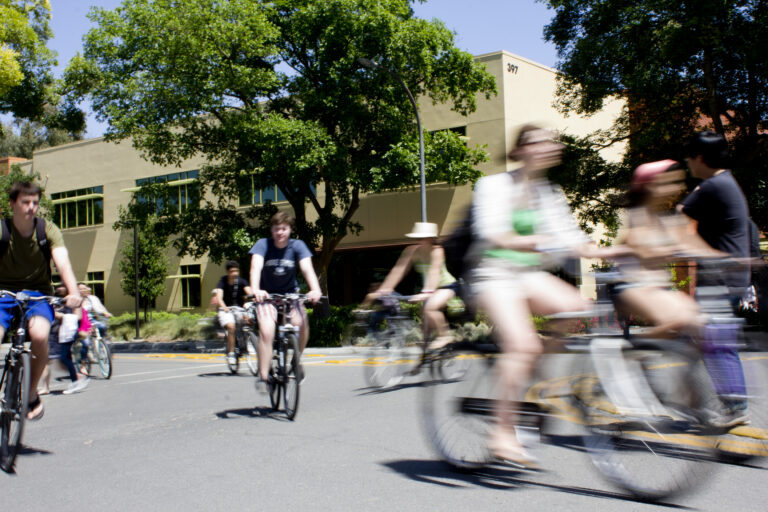
On April 26 at 5:30 p.m., you may see more bikes than usual riding down your street. Don’t be surprised — Critical Mass is back in the city of Davis.

Critical Mass is a worldwide bicycling event that takes place on the last Friday of every month and has been dormant in Davis for the past year due to a lack of participation.

The event is a way for cycling enthusiasts to advocate for bicycle transportation in major cities around the world. Often, Critical Mass is used to protest for better rights for bicyclists.

Lucas Hill, a second-year sustainable agriculture major, is hoping to bring it back. Hill said he thinks that the event should be popular in an area with so many bikes.

“People in Davis don’t think that Critical Mass is necessary, but because Davis is so bike-friendly, we should be out celebrating it,” Hill said.

Hill said he heard about Critical Mass events in other areas and thought that it was something that should have a following in Davis.

“We just need to get enough bodies there,” he said. “A good reason to be here is to hang out together and have fun.”

Boogabaah Weesnaah, the last advocate of Critical Mass in Davis, isn’t so sure that Hill will be able to revive it.

“Critical Mass is dead in Davis. I’m assuming it’s because there is no need to advocate for bicycle transportation in this town,” Weesnaah said. “Everyone already rides their bikes everywhere.”

Weesnaah said she joined Critical Mass just as it was dying out in Davis, and despite her best efforts, she couldn’t bring it back.

“For a year I’d go sit at the meeting place and wait for a good hour. Usually no one showed up, or if anyone did, there were so few of us it was pointless,” she said.

In other cities where it has more of a presence, Critical Mass has proven unpopular among pedestrians, drivers and law enforcement. In San Diego, the event attracts between 200 and 500 riders monthly, enough to cause a traffic jam on major streets.

“The riders also don’t always respect the rules of the road,” said Chris Zaleski, a second-year hydrology major, of Critical Mass events he has attended in San Diego. “They often run red lights and ignore traffic signals. Hopefully riders in Davis will be more aware.”

Hill, however, thinks that the event will “do more good than it can ever do harm.”

Rheanna Chen, a third-year international agricultural development major, plans to ride in the event on Friday. She said she’s excited to be a part of a global movement that advocates for bicycling as part of sustainable development — something the city of Davis is known for.

“I look forward to a time when the car usage in large cities decreases and there’s a conscientious investment in better public transport,” Chen said.

She also thinks that possible traffic complaints could result in positive effects.

“Complaints put pressure on political leaders to do something, to change the current way we do things and do it better,” Chen said.

Critical Mass will meet in Central Park every last Friday of the month at 5:30 p.m.

TAYLOR CUNNINGHAM can be reached at city@theaggie.org.

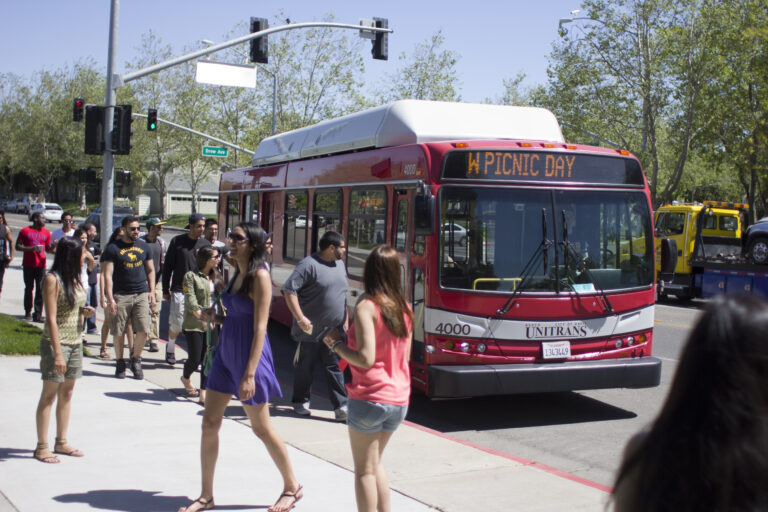
Picnic Day revenue pays police service, student employees

Picnic Day is one of the busiest days of the year for campus dining and Unitrans transportation services.

According to Darin Schluep, food service director for Associated Students Dining Services, the ASUCD Coffee House (CoHo) garnered about $28,000 in revenue on Picnic Day — an increase in overall sales of about three percent.

During the day, on April 20, the CoHo was open from 11 a.m. to 5 p.m. (Swirlz Bakery opened at 7 a.m.) and employees were paid time-and-a-half.

“The thing that makes Picnic Day so crazy for us … is our services are focused in a four- or five-hour timespan,” he said.

The Coffee House earns an average of about $27,000 in sales Mondays through Thursdays.

According to Schluep, though about 5,400 transactions were made on Picnic Day — as opposed to the daily average of 7,500 to 8,000 transactions — close to the same amount of revenue was made on Picnic Day because the average price paid per transaction was higher; indicating that most customers purchased meals with multiple items, not a single. The average amount paid per transaction on a regular business day is $3.38, whereas during Picnic Day, the average amount paid per transaction was $5.19.

Schluep added that there are many costs associated with the event, including materials and heightened labor costs, so like usual school days, not all revenue is returned to the business.

On-campus retail dining also garnered near the same amount of revenue that they would on a usual day, according to Gina Rios, general manager of Retail Operations at University Dining Services by Sodexo.

Rios said that staff at retail dining locations, like the Silo, were busy the whole time they were in open — as opposed to receiving groups of customers hourly or between class times.

“Picnic Day income is part of the annual income budgeted for these units to provide services and cover all of their expenses throughout the year, including funding for almost 500 student jobs,” said ASUCD interim business manager Anne Myler in an email interview.

Myler said because AS Dining Services and Unitrans are breakeven operations, they do not have surplus funds at the end of the year.

Unitrans, which charges $1 to all passengers (excluding senior and disabled passengers) on Picnic Day, made $10,241 during Picnic Day in 2012, with 12,415 passengers — 1,433 passengers fewer than the previous year, according to Teri Sheets, assistant general manager at Unitrans.

Unitrans ran special Picnic Day lines from 8:30 a.m. to 5:30 p.m. Drivers earned an extra $1 per hour during shifts.

“This is work over and above their normal work schedules, and they provide a higher level of service than Unitrans normally provides on a standard Saturday,” Sheets said.

A significant amount of the revenue made goes toward driver, supervisors and cleanup crew pay, according to Sheets.

The amount made for this year’s Picnic Day is still being calculated. However, Sheets said Unitrans is estimating that approximately $9,400 was made.

A large amount of the profit is also directed toward UC Davis and City of Davis Police service.

“The remainder of the fare revenue that we make on Picnic Day is allocated to pay for the additional security presence on the buses and at the MU and Silo terminals. Our customers and drivers have expressed appreciation for this security presence to discourage unruly behavior and to respond quickly to medical emergencies that may come up,” Sheets said in an email interview. “In the end, Unitrans does not make a profit from the fare revenues collected on Picnic Day.”

MUNA SADEK can be reached at campus@theaggie.org.

Never fear, NOD1 is here

Our cells have to distinguish between foreign cells and the cells from our own body, but they also have to distinguish between friendly microbes and pathogens that will harm us. A recent study from UC Davis has found that a previously studied protein has much more to offer than we thought.

“We have to ignore those beneficial microbes yet be ready for an actual infection at the same time,” said professor Andreas Bäumler, vice chair of research at the UC Davis Genome and Biomedical Sciences Facility and lead author of the study.

Our body contains more bacterial cells than human cells. These microbes, mostly found in the digestive tract, are beneficial and very important to our bodies’ routine functions. However, these helpful bacteria have relatives that can seriously damage us.

These pathogens (harmful bacteria) are detected when they infect our cells. Like an alarm, this intrusion causes the body to send off proteins that mobilize our immune response. Better understanding of our immune response can lead to better ways of combating pathogens and treating inflammatory disorders.

Digestive bacteria in our body are satisfied with just colonizing the intestines. They help to break down our food and benefit by having a good source of nutrients available to them. But their more aggressive relatives will break into our cells to survive.

“The microbes are supposed to stay in the lumen (inside intestines), but salmonella is a pathogen and will force its way into the tissue,” Bäumler said.

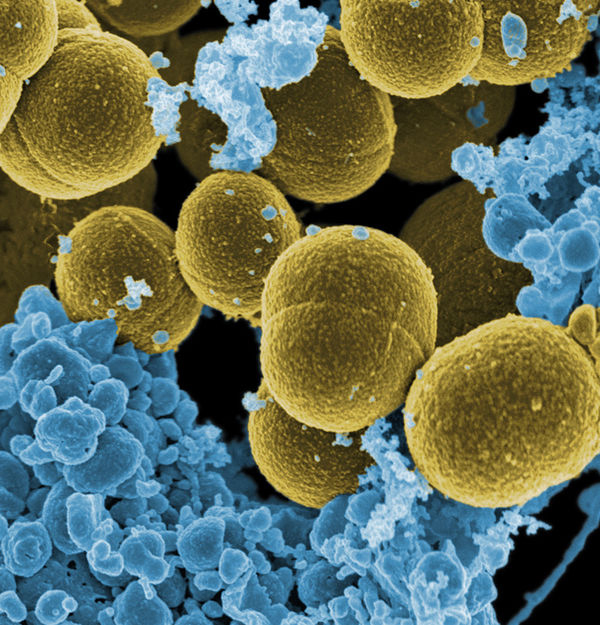
Salmonella, the pathogen featured in this study, infects our cells by activating enzymes on the cell membrane that rearrange the actin in the cell’s cytoskeleton. It does this by using a secretion system to inject pathogenic proteins into the cell, like a syringe. The process that allows salmonella to infect our cells also alerts our body to the intrusion.

Salmonella was used to see how the immune system differentiates between the infecting salmonella and other harmless bacteria. Salmonella uses a protein called SopE (Salmonella outer protein E) to rearrange our cell membranes and gain access.

When Salmonella injects SopE into our cells, SopE activates human GTPase enzymes RAC1 and CDC42 (signalling proteins involved in cell division) which then break down the surrounding actin, allowing the bacterium inside. However, by activating the GTPase enzymes, salmonella also activates a protein called NOD1 that sounds the alarm once it has detected the pathogenic nature of the attack. NOD1 then signals other proteins, such as RIP2, signifying that the cell is in danger. In the end, NF-κB is signaled, attaches to our DNA and initiates the immune response by attracting white blood cells to the area.

What is surprising about NOD1 is that, before this study, it had been so thoroughly studied that no one had expected it to play a significant role in alerting the hibernating immune system that our cells were under attack.

These proteins were identified with help from the UC Davis Genome Center.

“Samples were brought to me in the UC Davis Genome Center for sequence analysis. I made a slight assist in the sample preparation methodology, in order to get better results for the interacting proteins,” said Richard Eigenheer, a researcher in the study from the Proteomics Core Facility and the UC Davis Genome Center.

The genes activated by these proteins are an integral part of the human immune response and are related to inflammation and other immune functions like producing neutrophils, a type of white blood cell.

“Some of the genes that are transcribed are cytokines or chemokines that attract macrophages or neutrophils to the site of infection. This helps the host to clear the infection,” said Marijke Keestra, the assistant project scientist for the study.

Besides allowing us to further understand how our immune system is activated, NOD1 allows us to find new targets to combat inflammatory diseases including arthritis, sepsis and inflammatory bowel disease.

For these medical conditions, the NOD1 signal cascade is known to be a major part of the immune response, but by better understanding the pathways required to activate it, we can learn how to control these responses and make them more effective at keeping our system healthy.

KELLY MITCHELL can be reached at science@theaggie.org.

Annual KDVS Fundraiser runs through April 28

KDVS needs your help and support more than ever before.

The student-run, free-form campus radio station depends on community donations to account for about $60,000, or two-thirds, of its operating budget. The remaining money, which is about $30,000 needed to run the station, comes from the student government. However, ASUCD reduced its support last year, and it’s uncertain whether there will be future decreases for this ASUCD unit.

Although this annual fundraiser has the same goal every year, additional money is required with this year’s additional expenses due to the addition of a radio tower, which increases the station’s broadcasting range to Sacramento, Woodland, Dixon, Winters and other nearby areas.

Core staff members and volunteers work 24/7 this week to promote the station, ask for help and do anything they can to raise money.

“My freshman year, I did not sleep for an entire week. I was really gung-ho about the station, so I would work on papers, be sick and actually lose my voice halfway through my second show of the week, because I was talking so much,” said Maxwell Sowell, a third-year linguistics and philosophy double major and director of productions at KDVS.

Walk into the station located in Lower Freeborn at any time besides 3 to 6 a.m. and you’ll find any number of students making buttons, answering phone calls, tending to emails or broadcasting live on air this week. The shift leader refreshes the donation page online to check donations and pass along messages to the DJs for shout-outs to donors and friends.

With more than a dozen random instruments, an expired box of Milk-Bones and the creative minds of students around the station, each DJ or talk-show host has the ability to utilize any and all things to get listeners to donate.

“On my show, I ate habaneros. I wanted to eat one for every dollar donated so that I would end up crying from them,” said Edward Chu, a third-year geology major. “But since my show is at 2 a.m., no one was listening. I still ended up eating the peppers and cried on-air anyway.”

At the time of the interview, Nicole Lesnett, a fourth-year international relations major and office coordinator at the radio station, was found prancing around the station in a bumblebee costume, the KDVS shift-leader uniform. In between answering questions, she would squeal with delight as the online donations page would update with new logs of donors.

“We’ll do anything for anyone who tunes in. On my show ‘Right Meow’ we’re writing raps and songs for anyone who donates during [our time on air],” Lesnett said.

After jotting down the donor’s name and contribution, she ran into the studio to pass the note to the DJ just in case he or she happened to know the patron. The last step was to update the whiteboard visible to the show’s host with the growing totals for both the entire week and the current show.

“Each show has its own goal, and although you can donate at any time during this week, you can wait and donate during your friend’s show,” Lesnett said.

Each donation is tax-deductible, and depending on the amount of each contribution, the station gives thanks with a variety of premiums. Button/sticker packs, shirts, DJ compilation CDs, vinyls, gift certificates, the opportunity to host your own show and mobile DJ units for event entertainment are among many other items displayed on the fundraiser website.

“Volunteers at the station need to complete 50 hours in order to host their own show, so this week is the perfect week to get a lot of those hours done,” Lesnett said. “It’s the most fun and exciting right now, button-making is great and there’s a ton of free food.”

In addition to the on-air fundraising drive, a series of events that began on Picnic Day continue throughout the week. These include house shows, Quad performances and giveaways, with more events to be added throughout the week. The live week-long event page can be found on KDVS’ Facebook page.

The majority of the KDVS operating budget goes toward maintenance of equipment. The station broadcasts 24 hours a day, seven days a week, and regular maintenance is required to keep it on the air. To keep this radio station, which has been serving the community since 1967, alive and serving as a working laboratory for anyone interested, listen in at 90.3 FM, call the station at (530) 754-5387 or go online at fundraiser.kdvs.org. Cash, card and check donations are welcome.

ELIZABETH ORPINA can be reached at arts@theaggie.org.

Baseball Preview

0

Teams: UC Davis at UC Irvine
Records: Aggies, 15-22 (3-9) ; Anteaters, 25-11 (7-5)
Where: Cicerone Field — Irvine, Calif.
When: Friday at 6:30 p.m.; Saturday at 1 p.m.; Sunday at 1 p.m.
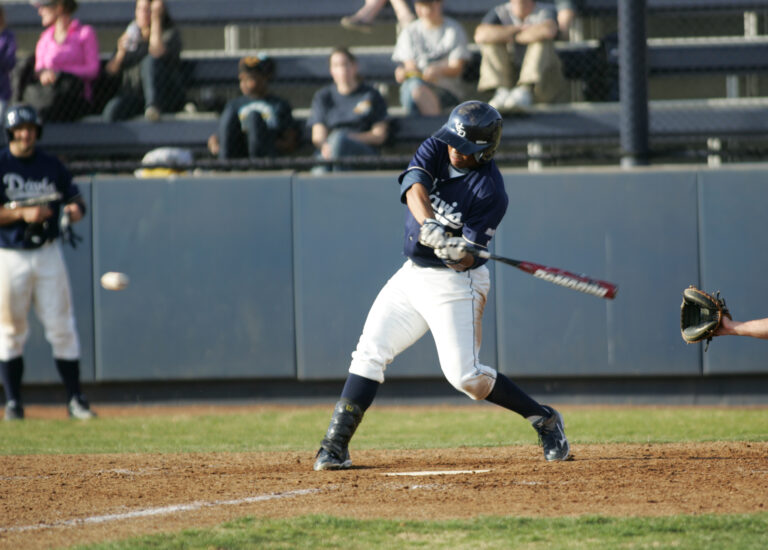
Who to Watch: Junior second baseman Steven Patterson has been killing the baseball as of late. In fact, in the game against UC Riverside on Picnic Day, Patterson drilled a three-run homer to seal the game for the Aggies. He is hitting .338 with two home runs and 26 RBI, after the series against the Highlanders. Patterson’s solid hitting is something which the UC Davis batting order has needed.

Patterson has a seven-game hitting streak that has boosted his average from .286 to a blistering .338. He has also shown some patience at the plate, drawing nine walks this season. The result of his hot hitting and ability to draw walks is a .396 on-base percentage. His ability to get on base and drive in runs has been a huge catalyst for the recent resurgence in the Aggies’ offense.

Patterson’s hot bat is not the only thing which he provides to the team, as he also turned a nice double play in the top of the ninth of the Picnic Day game against the Highlanders. However, Patterson has been prone to making the occasional error. After the series against UC Riverside, he has 10 errors on the season, which is second highest on the team. Despite the occasional lapse in judgment, Patterson’s bat and ability to make game-changing plays have been key to the Aggies’ winning baseball performances.

Did you know? Senior Paul Politi’s solid season has etched his name into the UC Davis record books. He now is ranked in the top-10 all-time in hits and doubles. Politi is seventh in hits with 209 hits over his career and he is ninth all-time with 40 doubles as an Aggie, only 13 doubles away from breaking the record. Furthermore, he is also fourth all-time in total at-bats over his baseball career at UC Davis.

Records aside, Politi is once again one of the most potent bats in the Aggies’ batting order. After leading last year’s team in hits, batting average, RBI and total bases, Politi is once again putting up solid numbers.

He is batting .276 with five home runs and 27 RBI. Politi is first on the team with home runs and RBI. He has been the constant-power threat for the lineup and as such continues to be one of the main batters who drive in runs.

Preview: What a difference a week can make. The Aggies were struggling mightily heading into the weekday game against Nevada. Having lost seven in a row and eight out of the last ten games, UC Davis was struggling.

However, with a 9-2 win against the Wolfpack and a series sweep against the Highlanders, the Aggies seem to be rejuvenated and ready to play good baseball. The Aggies capped off a fantastic week with a 19-8 annihilation of UC Riverside.

As UC Davis travels to Irvine to face the Anteaters, the Aggies hope to continue the hot hitting. This could be tough, as UC Irvine has a solid pitching staff with a team ERA of 2.74 and a team record of 25-11. The Anteaters are led by junior Andrew Morales, who is 9-0 with a 1.34 ERA.

UC Davis will hope that Patterson and Politi, both critical in the recent Aggie resurgence, will continue to hit. In the weekend sweep against Riverside, Patterson hit 6-14 with seven runs scored, two homers and nine RBI. Politi hit 4-5 with four RBI, four runs scored and two home runs in the last game against the Highlanders. With this dynamic duo swinging their bats well, the Aggies seem to have regained some confidence in their ability to win games.

The one weakness the Aggies have shown during this win streak has been their pitching. They have been unable to pitch well consistently. This might be a huge problem against Irvine, as the Anteaters have a tough batting order.

The Anteaters are led by two of the best hitters in the conference, sophomores Connor Spencer and Taylor Sparks. Spencer, the on-base extraordinaire, is hitting .385 and has an on-base percentage of .469. Sparks is the power-hitting slugger of their lineup with a .342 average, six home runs and 31 RBI.

Hopefully, with their newfound sense of confidence, the Aggies can pitch well enough to allow their potent offense to shine.

— Kenneth Ling

Department of Theatre and Dance hosts Edge Festival

0

Consisting of various 5-minute acts, Undergraduate One-Act plays, Main Stage Dance performances and midnight sing-along showings of The Rocky Horror Picture Show, the Edge Performance Festival showcases the performative talents of undergraduate and graduate students alike. The festival runs from April 25 to 28 and May 2 to 5 at Wright Hall and Wyatt Deck.

David Grenke, artistic director of the Edge Festival, described the types of events to be featured during the festival.

“Hour of 5s is an hour of five-minute cabaret pieces that showcase students’ talents, which can be singing, acting, dance, monologues or however they develop and express their creative process,” Grenke said. “The One-Acts are written and directed by undergraduates. They are each under 10 minutes in length, and the idea for that is to really focus on the craft of writing and directing plays.”

The Main Stage Dance performances, occurring in Wright Hall’s Main Stage, feature four undergraduate and two graduate choreographies.

“The dance performance is a capstone for Dance majors in the choreography track. The three undergraduates each produce their own piece and then collaborate on one piece, with a total of four pieces. Stylistically, most of the pieces will be modern dance or contemporary dance influenced by contact improv,” Grenke said.

Maribel Lopez, a fourth-year dramatic arts and psychology double major, choreographed a piece for a Main Stage Dance performance after planning its themes since last year.

This year, the dance pieces showcase individual and group performative visions, each with vastly differing thematic concepts, styles and themes.

“My piece is a trio of two females and one male. I explore the idea that we are chained to the discourse in which we are raised due to the societies and institutions that surround us, which makes it difficult to break away from that and become tolerant to new things,” Lopez said. “For me, this piece is a translation of my thoughts into movement. However, when you see the piece, you might not necessarily see the exact theme I had in mind, which is good because the audience should be able to come in and create their own story and interpretation.”

The collaborative dance piece, choreographed by three undergraduates, is a duet of two males.

“We’re trying to explore the different aspects of relationships, more specifically abusive relationships. It’s not necessarily about romantic relationships, but friendships in general, and the abusive elements that occur that might not be obvious,” Lopez said.

The festival allows for students to showcase their work with resources provided by the Department of Theater and Dance, including access to costume designers, stage lighting and sound technology.

Although the Edge Festival involves several performance pieces that are a part of the theater and dance curriculum for its majors, it is also an opportunity for non-majors to participate and showcase their talents.

Kazia Hart, a second-year psychology major and director of one of the One-Act plays, discussed how she became involved in the festival.

“I am in Dead Arts Society because I love theater, and we were doing auditions for our winter showcase when I was asked to direct one of the One-Acts for the Edge Festival,” Hart said. “I think Edge Festival is an important event to have on campus since it provides the opportunity for students to submit their work and for non-theater majors to get involved with the arts.”

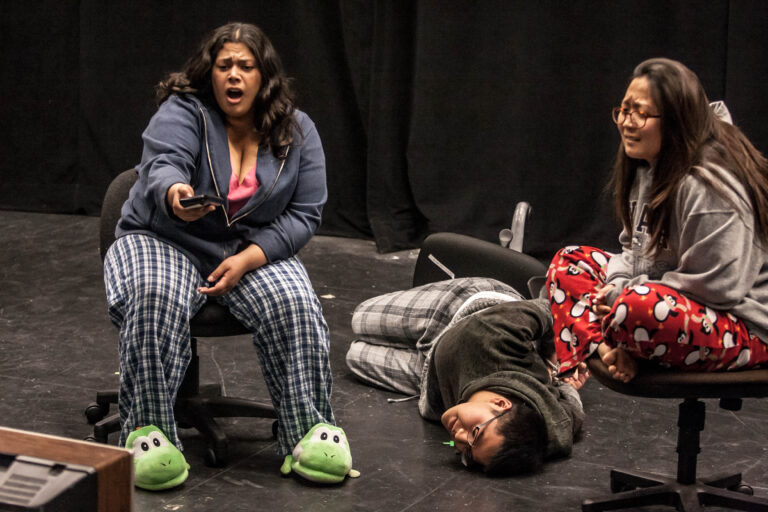
The three Undergraduate One-Acts feature original staged works written by undergraduates: “The Turquoise Room,” “Chair Games” and “Lutefisk.” Hart describes “Lutefisk,” the original 10-minute staged work she directs.

“It’s a performance art piece that really embraces the ridiculous. There’s no real narrative or character development, but a theme I’ve been working with is power reversals. There’s a lot of interesting interaction between audience members and actors, prisoners and officers, narrator and people in the play,” Hart said. “It makes you question what’s funny and what’s not, and it challenges the idea of understanding when it’s appropriate to laugh at certain things during the performance.”

To end each Saturday evening performances is the sing-along midnight showing of the cult classic film, The Rocky Horror Picture Show, on Wyatt Deck. Audience members are encouraged to rent costumes in advance in the Enchanted Cellar, located in Wright Hall.

Grenke discusses why Rocky Horror is relevant to the Edge Festival’s artistic mission in the field of performance studies.

“The history of Rocky Horror as a cult film really brought out the idea of the performativity of identity. At a Rocky Horror screening, you get the opportunity for role play, and that is something that has given it its strength as a cult film and why it has lasted so long,” Grenke said. “It includes some level of considering performance and makes us think about how that exists in our everyday lives.”

The Main Stage Dance, Hour of 5’s and Undergraduate One-Acts will be performed in different locations in Wright Hall. For more information about the Edge Performance Festival, visit theatredance.ucdavis.edu.

CRISTINA FRIES can be reached at arts@theaggie.org.