38.1 F
Davis

Davis, California

Monday, January 12, 2026
Home Blog Page 941

Picnic Day revenue pays police service, student employees

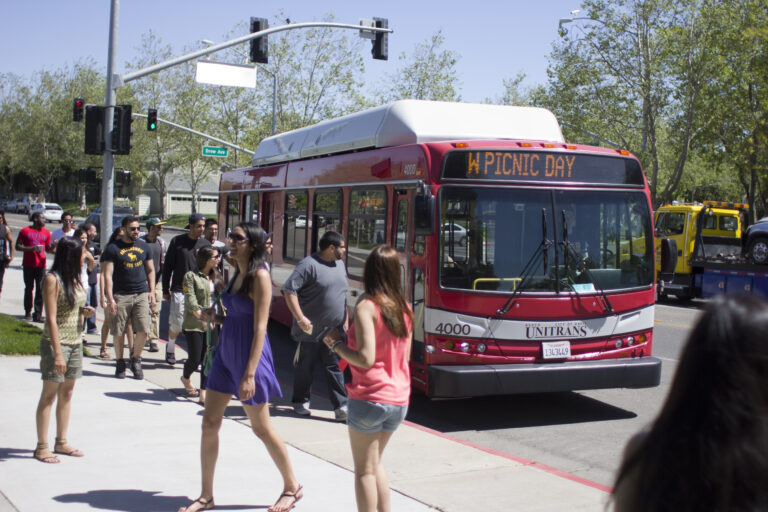
Picnic Day is one of the busiest days of the year for campus dining and Unitrans transportation services.

According to Darin Schluep, food service director for Associated Students Dining Services, the ASUCD Coffee House (CoHo) garnered about $28,000 in revenue on Picnic Day — an increase in overall sales of about three percent.

During the day, on April 20, the CoHo was open from 11 a.m. to 5 p.m. (Swirlz Bakery opened at 7 a.m.) and employees were paid time-and-a-half.

“The thing that makes Picnic Day so crazy for us … is our services are focused in a four- or five-hour timespan,” he said.

The Coffee House earns an average of about $27,000 in sales Mondays through Thursdays.

According to Schluep, though about 5,400 transactions were made on Picnic Day — as opposed to the daily average of 7,500 to 8,000 transactions — close to the same amount of revenue was made on Picnic Day because the average price paid per transaction was higher; indicating that most customers purchased meals with multiple items, not a single. The average amount paid per transaction on a regular business day is $3.38, whereas during Picnic Day, the average amount paid per transaction was $5.19.

Schluep added that there are many costs associated with the event, including materials and heightened labor costs, so like usual school days, not all revenue is returned to the business.

On-campus retail dining also garnered near the same amount of revenue that they would on a usual day, according to Gina Rios, general manager of Retail Operations at University Dining Services by Sodexo.

Rios said that staff at retail dining locations, like the Silo, were busy the whole time they were in open — as opposed to receiving groups of customers hourly or between class times.

“Picnic Day income is part of the annual income budgeted for these units to provide services and cover all of their expenses throughout the year, including funding for almost 500 student jobs,” said ASUCD interim business manager Anne Myler in an email interview.

Myler said because AS Dining Services and Unitrans are breakeven operations, they do not have surplus funds at the end of the year.

Unitrans, which charges $1 to all passengers (excluding senior and disabled passengers) on Picnic Day, made $10,241 during Picnic Day in 2012, with 12,415 passengers — 1,433 passengers fewer than the previous year, according to Teri Sheets, assistant general manager at Unitrans.

Unitrans ran special Picnic Day lines from 8:30 a.m. to 5:30 p.m. Drivers earned an extra $1 per hour during shifts.

“This is work over and above their normal work schedules, and they provide a higher level of service than Unitrans normally provides on a standard Saturday,” Sheets said.

A significant amount of the revenue made goes toward driver, supervisors and cleanup crew pay, according to Sheets.

The amount made for this year’s Picnic Day is still being calculated. However, Sheets said Unitrans is estimating that approximately $9,400 was made.

A large amount of the profit is also directed toward UC Davis and City of Davis Police service.

“The remainder of the fare revenue that we make on Picnic Day is allocated to pay for the additional security presence on the buses and at the MU and Silo terminals. Our customers and drivers have expressed appreciation for this security presence to discourage unruly behavior and to respond quickly to medical emergencies that may come up,” Sheets said in an email interview. “In the end, Unitrans does not make a profit from the fare revenues collected on Picnic Day.”

MUNA SADEK can be reached at campus@theaggie.org.
Never fear, NOD1 is here

Our cells have to distinguish between foreign cells and the cells from our own body, but they also have to distinguish between friendly microbes and pathogens that will harm us. A recent study from UC Davis has found that a previously studied protein has much more to offer than we thought.

“We have to ignore those beneficial microbes yet be ready for an actual infection at the same time,” said professor Andreas Bäumler, vice chair of research at the UC Davis Genome and Biomedical Sciences Facility and lead author of the study.

Our body contains more bacterial cells than human cells. These microbes, mostly found in the digestive tract, are beneficial and very important to our bodies’ routine functions. However, these helpful bacteria have relatives that can seriously damage us.

These pathogens (harmful bacteria) are detected when they infect our cells. Like an alarm, this intrusion causes the body to send off proteins that mobilize our immune response. Better understanding of our immune response can lead to better ways of combating pathogens and treating inflammatory disorders.

Digestive bacteria in our body are satisfied with just colonizing the intestines. They help to break down our food and benefit by having a good source of nutrients available to them. But their more aggressive relatives will break into our cells to survive.

“The microbes are supposed to stay in the lumen (inside intestines), but salmonella is a pathogen and will force its way into the tissue,” Bäumler said.

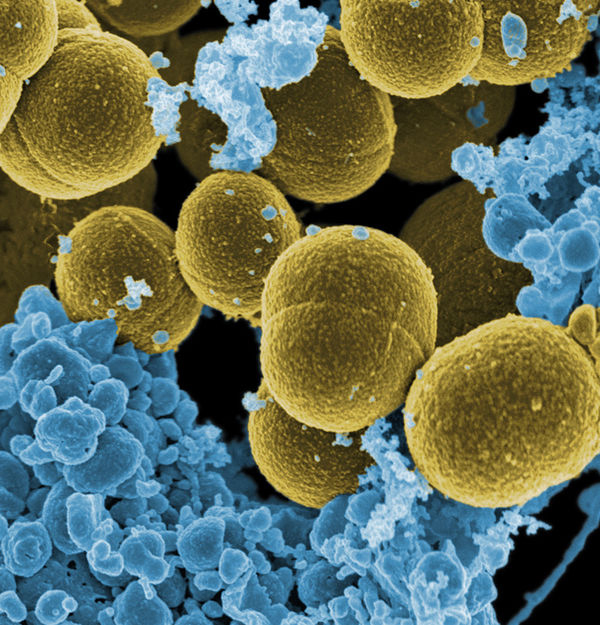
Salmonella, the pathogen featured in this study, infects our cells by activating enzymes on the cell membrane that rearrange the actin in the cell’s cytoskeleton. It does this by using a secretion system to inject pathogenic proteins into the cell, like a syringe. The process that allows salmonella to infect our cells also alerts our body to the intrusion.

Salmonella was used to see how the immune system differentiates between the infecting salmonella and other harmless bacteria. Salmonella uses a protein called SopE (Salmonella outer protein E) to rearrange our cell membranes and gain access.

When Salmonella injects SopE into our cells, SopE activates human GTPase enzymes RAC1 and CDC42 (signalling proteins involved in cell division) which then break down the surrounding actin, allowing the bacterium inside. However, by activating the GTPase enzymes, salmonella also activates a protein called NOD1 that sounds the alarm once it has detected the pathogenic nature of the attack. NOD1 then signals other proteins, such as RIP2, signifying that the cell is in danger. In the end, NF-κB is signaled, attaches to our DNA and initiates the immune response by attracting white blood cells to the area.

What is surprising about NOD1 is that, before this study, it had been so thoroughly studied that no one had expected it to play a significant role in alerting the hibernating immune system that our cells were under attack.

These proteins were identified with help from the UC Davis Genome Center.

“Samples were brought to me in the UC Davis Genome Center for sequence analysis. I made a slight assist in the sample preparation methodology, in order to get better results for the interacting proteins,” said Richard Eigenheer, a researcher in the study from the Proteomics Core Facility and the UC Davis Genome Center.

The genes activated by these proteins are an integral part of the human immune response and are related to inflammation and other immune functions like producing neutrophils, a type of white blood cell.

“Some of the genes that are transcribed are cytokines or chemokines that attract macrophages or neutrophils to the site of infection. This helps the host to clear the infection,” said Marijke Keestra, the assistant project scientist for the study.

Besides allowing us to further understand how our immune system is activated, NOD1 allows us to find new targets to combat inflammatory diseases including arthritis, sepsis and inflammatory bowel disease.

For these medical conditions, the NOD1 signal cascade is known to be a major part of the immune response, but by better understanding the pathways required to activate it, we can learn how to control these responses and make them more effective at keeping our system healthy.

KELLY MITCHELL can be reached at science@theaggie.org.

Annual KDVS Fundraiser runs through April 28

KDVS needs your help and support more than ever before.

The student-run, free-form campus radio station depends on community donations to account for about $60,000, or two-thirds, of its operating budget. The remaining money, which is about $30,000 needed to run the station, comes from the student government. However, ASUCD reduced its support last year, and it’s uncertain whether there will be future decreases for this ASUCD unit.

Although this annual fundraiser has the same goal every year, additional money is required with this year’s additional expenses due to the addition of a radio tower, which increases the station’s broadcasting range to Sacramento, Woodland, Dixon, Winters and other nearby areas.

Core staff members and volunteers work 24/7 this week to promote the station, ask for help and do anything they can to raise money.

“My freshman year, I did not sleep for an entire week. I was really gung-ho about the station, so I would work on papers, be sick and actually lose my voice halfway through my second show of the week, because I was talking so much,” said Maxwell Sowell, a third-year linguistics and philosophy double major and director of productions at KDVS.

Walk into the station located in Lower Freeborn at any time besides 3 to 6 a.m. and you’ll find any number of students making buttons, answering phone calls, tending to emails or broadcasting live on air this week. The shift leader refreshes the donation page online to check donations and pass along messages to the DJs for shout-outs to donors and friends.

With more than a dozen random instruments, an expired box of Milk-Bones and the creative minds of students around the station, each DJ or talk-show host has the ability to utilize any and all things to get listeners to donate.

“On my show, I ate habaneros. I wanted to eat one for every dollar donated so that I would end up crying from them,” said Edward Chu, a third-year geology major. “But since my show is at 2 a.m., no one was listening. I still ended up eating the peppers and cried on-air anyway.”

At the time of the interview, Nicole Lesnett, a fourth-year international relations major and office coordinator at the radio station, was found prancing around the station in a bumblebee costume, the KDVS shift-leader uniform. In between answering questions, she would squeal with delight as the online donations page would update with new logs of donors.

“We’ll do anything for anyone who tunes in. On my show ‘Right Meow’ we’re writing raps and songs for anyone who donates during [our time on air],” Lesnett said.

After jotting down the donor’s name and contribution, she ran into the studio to pass the note to the DJ just in case he or she happened to know the patron. The last step was to update the whiteboard visible to the show’s host with the growing totals for both the entire week and the current show.

“Each show has its own goal, and although you can donate at any time during this week, you can wait and donate during your friend’s show,” Lesnett said.

Each donation is tax-deductible, and depending on the amount of each contribution, the station gives thanks with a variety of premiums. Button/sticker packs, shirts, DJ compilation CDs, vinyls, gift certificates, the opportunity to host your own show and mobile DJ units for event entertainment are among many other items displayed on the fundraiser website.

“Volunteers at the station need to complete 50 hours in order to host their own show, so this week is the perfect week to get a lot of those hours done,” Lesnett said. “It’s the most fun and exciting right now, button-making is great and there’s a ton of free food.”

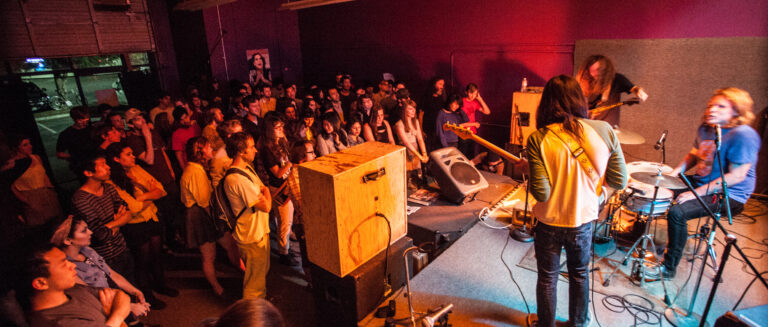
In addition to the on-air fundraising drive, a series of events that began on Picnic Day continue throughout the week. These include house shows, Quad performances and giveaways, with more events to be added throughout the week. The live week-long event page can be found on KDVS’ Facebook page.

The majority of the KDVS operating budget goes toward maintenance of equipment. The station broadcasts 24 hours a day, seven days a week, and regular maintenance is required to keep it on the air. To keep this radio station, which has been serving the community since 1967, alive and serving as a working laboratory for anyone interested, listen in at 90.3 FM, call the station at (530) 754-5387 or go online at fundraiser.kdvs.org. Cash, card and check donations are welcome.

ELIZABETH ORPINA can be reached at arts@theaggie.org.

Baseball Preview

0

Teams: UC Davis at UC Irvine
Records: Aggies, 15-22 (3-9) ; Anteaters, 25-11 (7-5)
Where: Cicerone Field — Irvine, Calif.
When: Friday at 6:30 p.m.; Saturday at 1 p.m.; Sunday at 1 p.m.
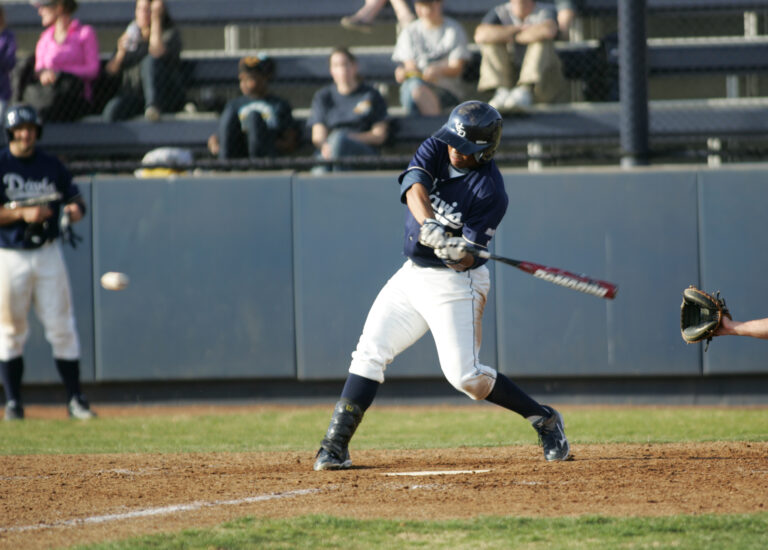
Who to Watch: Junior second baseman Steven Patterson has been killing the baseball as of late. In fact, in the game against UC Riverside on Picnic Day, Patterson drilled a three-run homer to seal the game for the Aggies. He is hitting .338 with two home runs and 26 RBI, after the series against the Highlanders. Patterson’s solid hitting is something which the UC Davis batting order has needed.

Patterson has a seven-game hitting streak that has boosted his average from .286 to a blistering .338. He has also shown some patience at the plate, drawing nine walks this season. The result of his hot hitting and ability to draw walks is a .396 on-base percentage. His ability to get on base and drive in runs has been a huge catalyst for the recent resurgence in the Aggies’ offense.

Patterson’s hot bat is not the only thing which he provides to the team, as he also turned a nice double play in the top of the ninth of the Picnic Day game against the Highlanders. However, Patterson has been prone to making the occasional error. After the series against UC Riverside, he has 10 errors on the season, which is second highest on the team. Despite the occasional lapse in judgment, Patterson’s bat and ability to make game-changing plays have been key to the Aggies’ winning baseball performances.

Did you know? Senior Paul Politi’s solid season has etched his name into the UC Davis record books. He now is ranked in the top-10 all-time in hits and doubles. Politi is seventh in hits with 209 hits over his career and he is ninth all-time with 40 doubles as an Aggie, only 13 doubles away from breaking the record. Furthermore, he is also fourth all-time in total at-bats over his baseball career at UC Davis.

Records aside, Politi is once again one of the most potent bats in the Aggies’ batting order. After leading last year’s team in hits, batting average, RBI and total bases, Politi is once again putting up solid numbers.

He is batting .276 with five home runs and 27 RBI. Politi is first on the team with home runs and RBI. He has been the constant-power threat for the lineup and as such continues to be one of the main batters who drive in runs.

Preview: What a difference a week can make. The Aggies were struggling mightily heading into the weekday game against Nevada. Having lost seven in a row and eight out of the last ten games, UC Davis was struggling.

However, with a 9-2 win against the Wolfpack and a series sweep against the Highlanders, the Aggies seem to be rejuvenated and ready to play good baseball. The Aggies capped off a fantastic week with a 19-8 annihilation of UC Riverside.

As UC Davis travels to Irvine to face the Anteaters, the Aggies hope to continue the hot hitting. This could be tough, as UC Irvine has a solid pitching staff with a team ERA of 2.74 and a team record of 25-11. The Anteaters are led by junior Andrew Morales, who is 9-0 with a 1.34 ERA.

UC Davis will hope that Patterson and Politi, both critical in the recent Aggie resurgence, will continue to hit. In the weekend sweep against Riverside, Patterson hit 6-14 with seven runs scored, two homers and nine RBI. Politi hit 4-5 with four RBI, four runs scored and two home runs in the last game against the Highlanders. With this dynamic duo swinging their bats well, the Aggies seem to have regained some confidence in their ability to win games.

The one weakness the Aggies have shown during this win streak has been their pitching. They have been unable to pitch well consistently. This might be a huge problem against Irvine, as the Anteaters have a tough batting order.

The Anteaters are led by two of the best hitters in the conference, sophomores Connor Spencer and Taylor Sparks. Spencer, the on-base extraordinaire, is hitting .385 and has an on-base percentage of .469. Sparks is the power-hitting slugger of their lineup with a .342 average, six home runs and 31 RBI.

Hopefully, with their newfound sense of confidence, the Aggies can pitch well enough to allow their potent offense to shine.

— Kenneth Ling

Department of Theatre and Dance hosts Edge Festival

0

Consisting of various 5-minute acts, Undergraduate One-Act plays, Main Stage Dance performances and midnight sing-along showings of The Rocky Horror Picture Show, the Edge Performance Festival showcases the performative talents of undergraduate and graduate students alike. The festival runs from April 25 to 28 and May 2 to 5 at Wright Hall and Wyatt Deck.

David Grenke, artistic director of the Edge Festival, described the types of events to be featured during the festival.

“Hour of 5s is an hour of five-minute cabaret pieces that showcase students’ talents, which can be singing, acting, dance, monologues or however they develop and express their creative process,” Grenke said. “The One-Acts are written and directed by undergraduates. They are each under 10 minutes in length, and the idea for that is to really focus on the craft of writing and directing plays.”

The Main Stage Dance performances, occurring in Wright Hall’s Main Stage, feature four undergraduate and two graduate choreographies.

“The dance performance is a capstone for Dance majors in the choreography track. The three undergraduates each produce their own piece and then collaborate on one piece, with a total of four pieces. Stylistically, most of the pieces will be modern dance or contemporary dance influenced by contact improv,” Grenke said.

Maribel Lopez, a fourth-year dramatic arts and psychology double major, choreographed a piece for a Main Stage Dance performance after planning its themes since last year.

This year, the dance pieces showcase individual and group performative visions, each with vastly differing thematic concepts, styles and themes.

“My piece is a trio of two females and one male. I explore the idea that we are chained to the discourse in which we are raised due to the societies and institutions that surround us, which makes it difficult to break away from that and become tolerant to new things,” Lopez said. “For me, this piece is a translation of my thoughts into movement. However, when you see the piece, you might not necessarily see the exact theme I had in mind, which is good because the audience should be able to come in and create their own story and interpretation.”

The collaborative dance piece, choreographed by three undergraduates, is a duet of two males.

“We’re trying to explore the different aspects of relationships, more specifically abusive relationships. It’s not necessarily about romantic relationships, but friendships in general, and the abusive elements that occur that might not be obvious,” Lopez said.

The festival allows for students to showcase their work with resources provided by the Department of Theater and Dance, including access to costume designers, stage lighting and sound technology.

Although the Edge Festival involves several performance pieces that are a part of the theater and dance curriculum for its majors, it is also an opportunity for non-majors to participate and showcase their talents.

Kazia Hart, a second-year psychology major and director of one of the One-Act plays, discussed how she became involved in the festival.

“I am in Dead Arts Society because I love theater, and we were doing auditions for our winter showcase when I was asked to direct one of the One-Acts for the Edge Festival,” Hart said. “I think Edge Festival is an important event to have on campus since it provides the opportunity for students to submit their work and for non-theater majors to get involved with the arts.”

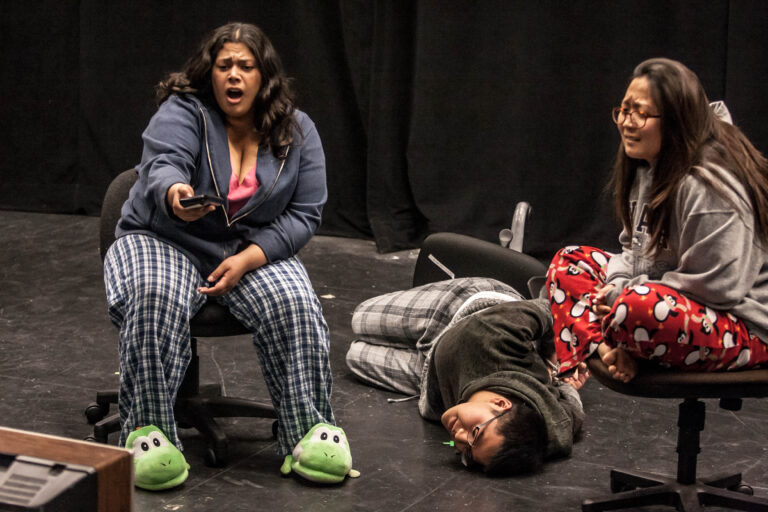
The three Undergraduate One-Acts feature original staged works written by undergraduates: “The Turquoise Room,” “Chair Games” and “Lutefisk.” Hart describes “Lutefisk,” the original 10-minute staged work she directs.

“It’s a performance art piece that really embraces the ridiculous. There’s no real narrative or character development, but a theme I’ve been working with is power reversals. There’s a lot of interesting interaction between audience members and actors, prisoners and officers, narrator and people in the play,” Hart said. “It makes you question what’s funny and what’s not, and it challenges the idea of understanding when it’s appropriate to laugh at certain things during the performance.”

To end each Saturday evening performances is the sing-along midnight showing of the cult classic film, The Rocky Horror Picture Show, on Wyatt Deck. Audience members are encouraged to rent costumes in advance in the Enchanted Cellar, located in Wright Hall.

Grenke discusses why Rocky Horror is relevant to the Edge Festival’s artistic mission in the field of performance studies.

“The history of Rocky Horror as a cult film really brought out the idea of the performativity of identity. At a Rocky Horror screening, you get the opportunity for role play, and that is something that has given it its strength as a cult film and why it has lasted so long,” Grenke said. “It includes some level of considering performance and makes us think about how that exists in our everyday lives.”

The Main Stage Dance, Hour of 5’s and Undergraduate One-Acts will be performed in different locations in Wright Hall. For more information about the Edge Performance Festival, visit theatredance.ucdavis.edu.

CRISTINA FRIES can be reached at arts@theaggie.org.

Softball Preview

Teams: UC Davis vs. Cal State Fullerton
Records: Aggies, 19-23 (6-9) ; Titans, 21-25 (6-8)
Where: La Rue Field — Davis, Calif.
When: Saturday at noon and 2 p.m.; Sunday at noon
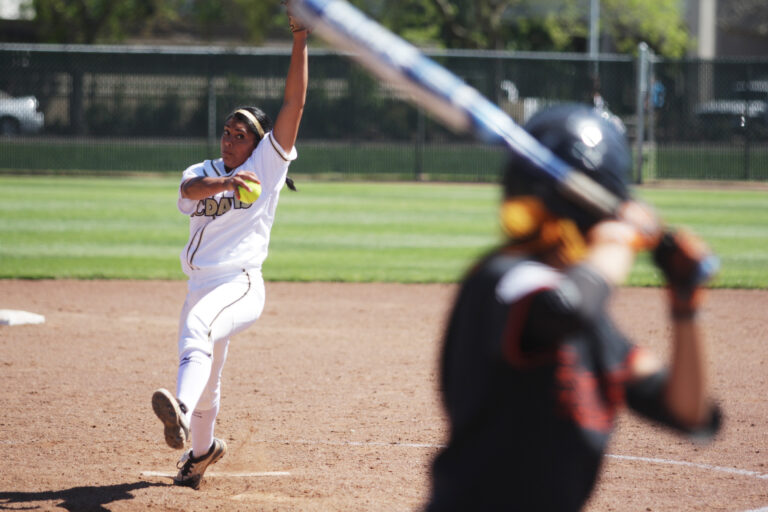
Who to Watch: The Aggies recently won the weekend series against UC Riverside, with a recent 1-0 shutout victory in the weekend finale that showcased some fantastic pitching. The shutout was pitched by sophomore standout Justine Vela, who held the Highlanders to only two hits in seven innings. She got the win, improving her record to an outstanding 12-7. Her stellar pitching has resulted in a 2.18 ERA.

Vela has not only allowed very few runs this season, she has also completely dominated the batters. Vela has struck out 155 batters this season and only allowed 52 walks. This is gives her a respectable 2.98 strikeouts per walk.

UC Davis relies on solid pitching to win games, and Vela is definitely the ace of the pitching staff. Her ERA is currently fifth lowest in the Big West and she is third in the conference in strikeouts. With such noteworthy stats, the Aggies are always in a position to win the game with her on the mound.

Cal State Fullerton has a solid batting order. However, with Vela pitching in one of the three games, the Aggies feel confident that they can come out with a win in the series.

Did you know? UC Davis has three pitchers who have some of the lowest ERAs in conference. Sophomore Justine Vela, and freshmen Marissa Chapa and Leah Munden hold the fifth-, sixth-, and seventh-lowest ERAs respectively.

With such young but solid pitchers, the Aggies should have a great pitching staff headed into the future. The Aggies should try to capitalize on such stellar pitching, especially with the levels that these three are performing at now.

The Aggies’ lack of run support has prevented victories this season. However, if they can manage to turn their hitting slump around and get a few runs, the pitching staff seems more than capable of shutting down opponents’ offenses.

Preview: The Aggies have struggled a bit as of late, losing four in a row before winning the last two games of their weekend series in Riverside against the Highlanders. UC Davis seems to have fixed its problems though, and the last two wins against UC Riverside have shown that the Aggies have the ability to beat almost anyone.

Pitching has been key, with UC Davis pitchers allowing only one run in the final two games against the Highlanders. A one-run, complete game by senior Jessica Thweatt and a shutout complete game by Vela has shown the dominance of the UC Davis pitching staff.

With a stunning team ERA of 2.39, the record of 19-23 simply does not match. The reason lies with the struggling offense, which has only hit .233 as a team this season. They also have nine total home runs and 123 total runs scored. The Aggies only average about three runs a game. That gives the pitching staff very little room for error.

The offense is led by freshman Christa Castello and redshirt sophomore Amy Nunez. Castello is currently hitting .296, which is the highest on the team, along with 13 RBI. Nunez is tied for the team high in home runs, with three, and is hitting .279 with eight RBI. The Aggies must get some consistent offense from the rest of the players, including senior Kelly Schulze, who has three home runs and 13 RBI. However, she is only hitting .191.

The Aggie pitchers will definitely need to watch out for the two run-producing Titan batters, sophomore Eliza Crawford and freshman Melissa Sechrest. Crawford is batting an outstanding .318 with seven homers and 24 RBI. Sechrest is hitting .162, but has six home runs and 20 RBI. These are the two key batters in the Titans’ batting order. If the Aggies get these batters out, they should be in good position for getting a few wins.

— Kenneth Ling

Class expansion possible effect of 2020 Initiative

1

When chemistry professor Dr. Carlito Lebrilla took a survey of where his 425 Chemistry students went to high school, he was shocked that 93 percent of the people in his lecture hall answered ‘in California.’

“That is not very international,” Lebrilla said. “If we want our students to know the world better, I think we need to be a lot more international than we are now, and I think this will really open up that opportunity for us.”

Lebrilla is referring to Chancellor Linda Katehi’s proposed 2020 Initiative, which has been widely discussed by the UC Davis community for the past year.

Major points of the initiative include an increase in the current undergraduate population by 5,000 domestic and international students, along with an increase in faculty by 300 and corresponding adjustments in facility sizes on campus by the year 2020. Specific allocations of said resources are to be determined in May.

“I see this as a real opportunity, getting more resources, setting up new programs, strengthening existing programs,” Lebrilla said. “It can make a big change in the university. I think to us, being international has always been there, but this is actually a little bit more than that.”

There are many questions about the current plan, including how an increase in students will affect four-year academic plans, specifically regarding the ability to graduate on time and register for classes. The 2020 Initiative has increased concern that the corresponding increase in faculty may not be able to offset the current difficulties with class sizes.

“We’re doing our best, but we’re going to need more help. I don’t know how far we can push this,” said computer science professor Dr. Premkumar Devanbu, who has recently seen a 40 to 50 percent increase in his class enrollment. “There are compromises that are being made already. We need more staff and resources if we are going to reach these goals.”

Students in impacted majors claim that they are frequently unable to get into required classes, and therefore end up needing to stay enrolled in classes for more than the expected four years. Other majors, mostly housed in the College of Engineering, often take longer to complete because of high unit requirements.

Third-year biomedical engineering major Murtiza Taymuree recently found out that he would have to stay at UC Davis for an extra quarter to finish his major.

“I think it’s just the coursework for engineers; you have to take a lot of classes and if you miss a class, you would be pretty far behind because they don’t always offer them every quarter,” Taymuree said. “For me to stay longer, it was always kind of expected.”

Although Taymuree considers himself “pretty lucky,” having gotten into most of his classes off of the waitlists, he does think that an increase in students by the year 2020 may raise pressure on the student body.

“If you were to add all those students, you would have to have bigger lecture halls and more [teaching assistants] to help out the professors,” he said. “That way, you’re still keeping that aspect of socialization, but you’re growing.”

Leaving UC Davis later than initially planned can affect graduate school plans, too.

“If you have to stay in college for an extra quarter, that kind of puts you back a whole year for applying to graduate schools or any other specialization,” Taymuree said.

For many first-years, the main concern with the proposal is its effects on class registration.

Pass 1 for first-year computer science and engineering major Shivani Singh has been scheduled for the last hour of each registration period all year — a time at which most classes are filled and have long waiting lists.

“It’s just the basic classes that are difficult because there are so many people that need to take them,” Singh said. “I have to talk to my advisor all the time; it’s a hassle for me.”

After being unable to register for several required classes during Fall and Winter Quarters, Singh went off the normal engineering track and took classes that weren’t required for her major, including a workload math class to compensate for not getting into Math 21A.

“I can take GE classes, but I need to get started [on my series] so that I can start taking my upper division classes by the time junior year comes around,” Singh said.

As a solution, many students would prefer to have an increased number of small class sections over fewer larger classes, and hope that the 2020 Initiative will be an opportunity for class size reduction.

“I do think that class size affects how well someone does in a class. Especially for something like engineering — you need to be able to ask questions and make sure you can understand concepts,” said third-year aerospace engineering major Otelo Contreras. “When it’s 300 people, a lot of people are too shy to ask questions. It’s definitely like a confidence issue, and I assume the class size has a lot to do with it.”

From the staff perspective, some faculty members want to be sure that UC Davis’ high standard of teaching is not lowered with the changes.

“This campus has always emphasized teaching,” Devanbu said. “Hopefully [the initiative] will be done in a way that doesn’t impact teaching quality. You have to balance the current demands for teaching with where the university is going to be in the future.”

Devanbu said personal contact is the most important part of teaching in large classes, and has recruited undergraduate volunteer tutors to hold office hours every week in addition to his own.

“I think the challenge of these big classrooms is basically to improve contact hours and provide opportunities for personal interaction,” Devanbu said. “I think we will have to work at it and make sure it happens. We don’t want to take [personal contact] away, because then what’s the difference between us and massive online courses?”

Lebrilla doesn’t think his teaching style will change even if the lecture halls were to get bigger.

“Davis has been much more undergraduate-focused and I think that culture is still here, and I don’t think that is going to change with the size of the student body,” Lebrilla said. “The contact will definitely be decreased when there’s a lot of students, but once you reach the threshold of 100 or 200 [students], then the feeling is the same. If they’re afraid to ask [a question] in a class of 400, they’re going to be afraid to ask in a class of 700.”

Lebrilla said the current problem with UC Davis is the lack of resources, not size, as demonstrated by successful universities across the country with over 40,000 undergraduate students.

“This can be an opportunity both for the domestic and international students,” he said. “We don’t have enough money to deal with the students we have now, but if that cost is helped by having these new students pay full fare, then that helps everyone.”

In the event that the 2020 Initiative has negative effects on class sizes, the faculty is already finding ways to avoid them. Professors across many disciplines are adapting to interactions with many students at once through new teaching methods.

This quarter, 350 students in Devanbu’s ECS 30 class will transition to the flipped model of learning, which incorporates online resources and in-class group activities to foster discussion and participation.

Lebrilla has tried to become more connected to his students through Twitter accounts and frequent clicker questions in lecture.

“There are things that you can do and that we try to do to still have that contact. Here in Davis, we really do try to have a certain faculty-student ratio,” Lebrilla said. “Certainly I wouldn’t be in favor of having a class size of 700 students.”

RITIKA IYER can be reached at features@theaggie.org.

Column: Instrumentalist Equality Now!

1

As I sift through the myriad of magazines lining the back wall of CVS, my hand catches the corner of an askew publication and knocks it to the ground. I pick it up nonchalantly and catch a glimpse of the contents within. To my genuine astonishment, the $6.99 collective of glossy pages is completely filled with One Direction glamour shots, complete with perforated edges for quick access to the numerous headshots of Harry Styles. I turn to my friend from down the aisle and reveal my finding. The unexpected response:

“I love that band! They’re so hot!”

Two weeks later, I’m wandering through the many drunken masses of the West Quad on Picnic Day, enjoying a young rock band flood the landscape with pleasurable tunes. As I muse on the expensive sonic equipment the up-and-coming act is packing, I overhear a sentence that catches my attention.

“I like this band, that guy is cute!”

A hypothesis forms in my mind. Casually, I turn to the girl and ask one final question — “Do you like Maroon 5?”

“Oh my God yes, Adam Levine is so damn sexy.”

It goes without saying our system of popular music production is inherently flawed. Instead of supporting artists of genuine talent, we promote easily digestible and gratuitously lame content that young adults can throw their money at. The music is bad, yes, but extremely marketable. What isn’t so apparent, however, is a hidden technique used to keep young customers salivating for boy bands and Biebers well into young adulthood: disenfranchising women as listeners and instrumentalists from an early age.

When magazines such as the one I found at CVS and beyond prime young women into idolizing the aesthetic appeal of a contemporary artist instead of their musical talent, the effect ripples out and hurts the popularity of credible bands struggling to find the same mainstream success. If Morrissey was just starting off today, it’s more than likely the Smiths would have the door slammed in their faces for not being sexy enough.

The attack on female listenership comes from two fronts. Not only are they spoon-fed male heartthrobs as idols, women artists are given few options when it comes to pop-world success. For the mind of a young girl, she is now made to believe what is good music, and that this good music is the province of men. They are encouraged to follow another route.

When females show interest in music at an early age, they are overwhelmingly expected to pursue “softer” instruments such as the piano, violin or cello. Unfortunately, these instruments aren’t featured as heavily as their “unladylike” counterparts in contemporary American music. As a result, you rarely see a guitar-wielding female superstar selling out the ARCO Arena.

Women have come to dominate in less lucrative genres such as jazz and classical, with Yuja Wang outplaying any respectable male pianist by a mile and Esperanza Spalding making Flea look like a beginner on the bass.

However, these genres are overwhelmingly underappreciated and their musicians are hardly ever lauded as role models for young, impressionable girls.

Females are, however, encouraged to sing. Unfairly, female singers are judged disproportionately to men, with listeners looking hyper-critically at their ability to belt and croon like superstars such as Whitney Houston. An “amazing” male singer would be considered mediocre by female standards, yet the iTunes marketplace is currently being flooded with perfectly mediocre “amazing” male singers playing in perfectly mediocre bands. Why?

Because they’re hunky. Thus, they’re accepted. Many young female audiences don’t know how else to judge pop artists because society hasn’t taught them to. I don’t blame teen girls for turning to Bieber. How could they appreciate Arcade Fire or Janelle Monáe if the education isn’t there in schools, on the radio or in the home?

Of the top 10 highest-paid female artists in 2012, only Lady Gaga made the list for singers who are also virtuoso instrumentalists. This naturally does not negate the artistic genius of powerhouses like Beyoncé and Adele, but merely supports the trend that females are expected to follow specific, approved paths if they want to pursue contemporary music as a career.

Conversely, nine of the top 10 grossing artists (in general) from 2013 are male or comprised of multiple males, with six known for displaying virtuosity with an instrument (U2, Bon Jovi, Elton John, Paul McCartney, the Eagles and Dave Matthews). Lady Gaga was both the only female artist to break this list and show she can play the living shit out of a piano. I never thought I’d say this in my lifetime, but go Lady Gaga.

Of course, there are notable exceptions to the trend. Norah Jones, Alicia Keys and Diana Krall have found fame with the piano as well as their vocals. Unbeknownst to most, Aretha Franklin was a wonderful pianist. Bonnie Raitt still holds the title of queen of the slide guitar.

But when it comes to chart-topping, pop performers of the age, the selection is sadly sparse. When Janis Joplin, Joan Jett and Meg White (who is not the greatest drummer but notable for successfully breaking into the punk/indie rock scene) are some of the only role models young female pop instrumentalists can turn to, the future looks grim. Instead, they are pushed to sing, to focus on the right “look” and are force-fed images of beautiful men posing with polished guitars.

This trend is toxic, effectively spraying newer and younger generations of listeners with poison and slowly cutting off interest in genuine talent at the roots. As time passes, a good majority of female listenership will be completely controlled by greedy music producers. Plastic boy bands will become the standard, and newer artists will struggle to find a foothold in annals of contemporary music history.

ADAM KHAN is an advocate of instrumentalist equality. Let him know if he’s actually just a sexist at features@theaggie.org.

Editorial: (Social) media blunder

0

Two bombs brought the Boston Marathon to a tragic conclusion on April 15. One day later a Reddit user created the subreddit, or forum, called “r/findbostonbombers” in an effort to crowdsource the investigation and identify those responsible for the attack.

The subreddit was created to sort through the images from the attack and pass relevant information to the FBI. This did not happen. What happened was a witch hunt.

Reddit, Twitter and other social media platforms incorrectly identified suspects, singled them out and released their personal information in the course of their amateur investigation. The media, new and old, posted this speculation, hoaxes, rumors and misinformation as fact. As both news writers and consumers we are appalled.

The Boston Bombing unleashed a raging scene of chaos that was only stoked by unceasing speculation by social media platforms and the traditional media. We saw the abandonment of journalistic ideals as new outlets fought to be the first to break the news.

According to the Washington Post, the FBI released photographs of the suspects in part as a response to Reddit and the media’s unprofessional investigation.

Reddit identified a man in a “blue robe,” a man in a white hat, a man in a blue jacket, a man with a large backpack, two men who looked a bit too military and many more. Some of these people had their personal information posted online. None of them were the bombers.

The New York Post incorrectly identified the bombers twice and declared the death toll as 12, not three. CBS, AP, CNN, Fox News and many others incorrectly tweeted news of identifications, arrests, additional bombs and bombings. Buzzfeed, among others, identified missing Brown student Sunil Tripathi as a suspect based on allegations put forward on social media.

There is a time for breaking news, scoops and exclusives. There are ways to cover tragedies and emergencies while maintaining integrity. It should never come at the expense of the truth.

The Boston Bombing is unique not because it was an attack on American soil but because it happened in a time when social media has taken a step into the domain of traditional media. Platforms like Reddit are just as capable as the traditional media at disseminating information when things go viral.

This new model of information distribution places sites like Reddit and Twitter in the realm once reserved for journalism. These sites are unbound by the old media’s commitment to verification and reporting, and it seems as though the old media is becoming unbound as well.

We do not need a social media witch hunt every time a national tragedy occurs, nor do we need media outlets that cannot tell the difference between fiction and fact.

Column: One idiot’s guide to how a guitar works

First I want to talk about the air — and not in some mystical and ancient way like finding your qi. I literally want to talk about the gaseous fluid medium that we, human beings (about 7 billion) like to live in and breathe.

It’s nothing unusual or special, but it’s an important thing to consider that the air consists of a bunch of different molecules bouncing around. Like any other collection of matter, these individual particles interact with one another.

One very important interaction related to what we’re talking about is the propagation of waves. In the air, waves are simple enough. Something disturbs some air, knocking some particles around. Those particles then crash into the neighboring ones. In this brief moment, there’s a pocket of heavily packed air particles directly adjacent to a spot where there’s not so many. One could call this a high pressure zone next to a low pressure zone.

Since nobody is hanging on to all of these air molecules and keeping them this way, the pressure diffuses, and the high pressure zone becomes lower while the surrounding low pressure zones get a little more crowded until the two zones even out. This pattern repeats outward from the source of the disturbance, and the whole phenomenon is called a wave. As such, it can be described with wave-related jargon; high pressure zones, or where the wave has peaked, are crests, and low pressure zones, where the wave is at its lowest, are troughs.

I just threw a lot of words at you that might have gotten pretty boring pretty quickly, so we’ll talk about something fun: slinkies. The simplest way to visualize waves away from the beach is through a technique used by introductory physics instructors everywhere. Grab a friend, hand them one end of a slinky, hold on to the other end and move your end side to side. Ta-dah, you’ve just made a wave. Granted, it’s a longitudinal wave and mildly different from the transverse pressure waves I just described, but if you take a finger and flick a coil of the spring you’re holding, the little disturbance that you see bounce back and forth is a transverse wave.

On the note of making springs vibrate, a guitar string is essentially like a slinky! They’re all held under very high tension. Plucking one of these strings disturbs the air and sends a pressure wave through the surrounding air.

Now, the reason guitars have six strings and all those frets is that the different strings have different tensions. Plucking them disturbs the air a different amount and changes the resulting wave that travels through the air. The reason all of the frets are there is that holding down the string to a different length also alters the tension and enables many different wave frequencies to be produced.

The resulting wave either gets bounced around the body of an acoustic guitar or gets picked up by the appropriately named “pickup” on an electric guitar. With an electric guitar, the pickups translate the waves into electrical signals that cause the speaker to make bigger, stronger waves of the same frequency. In an acoustic guitar, waves rattle around the body of the guitar, and positive superposition (fancy word for waves of the same sorts hitting one another just right and becoming bigger) sends waves through the air, which rattles our eardrums.

Once the eardrum starts moving, it causes a set of very small bones to shake and translate the outside sound into pressure changes on the the cochlea, a fluid-filled organ that’s lined with sensory cells. When the stapes (U-shaped bone included in that set mentioned earlier) vibrates, those vibrations are transferred to the cochlea and disturb the sensory cells, which send impulses to the brain and let it know to express the particular sensations of warm fuzzies associated with hearing a guitar.

It’s worth mentioning that these same principles apply to all musical instruments: vocal cords vibrate when air passes over them and make waves, wind and brass instruments taper in current airflow to pass vibrations along a bell and disturb the surrounding air, pianos use percussed strings and drums use percussed membranes.

ALAN LIN can be reached at science@theaggie.org.

Sexy Feminism dubbed as ‘gateway drug to feminism’

1

I must admit, in the beginning, I thought I would hate Sexy Feminism. With the subhead “A Girl’s Guide to Love, Success, and Style,” the cover words are superimposed over a close-up photo of glossy, sultry, slightly-parted lips.

It became very clear in the introduction that the book was for a very specific demographic when the authors self-identified as “shockingly mainstream” young women growing up.

So in other words, I was ready to get outraged. I had primed paragraphs in my feminist bandolier about the exclusion of the lower-class, mixed-race, disabled, genderqueer, androgynous lesbian: You can’t just ignore them! They’re here, they’re queer, write books about them!

But Heather Wood Rudúlph and Jennifer Keishin Armstrong hooked me with the second page of the first chapter, where they declared the first two steps of feminism: “Step 1: Call yourself a proud feminist. Step 2: Live up to the word.”

They put the beat-down on the “I’m not a feminist, but …” stance: “To distance yourself from the word is to imply there’s something wrong with feminism and/or feminists, an implication that leads to the continued denigration of the cause itself,” wrote Rudúlph and Armstrong.

Bless their hearts.

They sucked me in, with strong language, first-person plural and historical excerpts defining the waves of feminism or touting strong women in history. Sexy Feminism hits on the concepts of slut shaming, wearing makeup as a feminist act, supporting female co-workers in the workplace and more.

The two collaborated via Google Docs to write this 200-page book, and are now touring the country on a publicity tour for its release. They came to the Avid Reader in Davis Friday, April 19 to talk about and read excerpts from the book.

Sexy Feminism isn’t Rudúlph and Armstrong’s first creation. A lot of the information came from their blog, sexyfeminist.com, which was formally a web-based magazine, Sirens Mag.

“The site evolved as we evolved and grew into our writing voices and discovered ourselves as feminists,” Rudúlph said. “Our initial version of the website needed this book, and the 20-something versions of ourselves really needed this book.”

It’s true, this book is not for queers. It is not for trans* people, it is not for Women’s Studies majors writing their theses on Simone de Beauvoir and it is not for Pussy Riot, Femen, Amina Tyler or Malala Yousafzai.

“It’s for all the women who are like, ‘Am I allowed to call myself a feminist if I get a bikini wax?’ or ‘Am I a feminist if I go to Sephora all the time?’” said Armstrong. “So there is a very specific audience for this. One of the things we’ve continued to say throughout this book is just because we write about these topics doesn’t mean they are the most important topics facing feminism. Lip gloss and bikini waxes are absolutely not the most important issues facing women throughout the world, and we know that.”

A combination of “lifestyle guides and topics covered by women’s magazines” (Rudúlph and Armstrong both have journalistic backgrounds in pop-culture writing), Sexy Feminism is meant more as an introductory feminist manifesto. As Rudúlph put it, “Sexy Feminism is a gateway drug to feminism.”

“We had this guilty pleasure with lifestyle guides; we just really take great pleasure in them,” Armstrong said. “We love the idea of combining the idea of lifestyle guides topics normally covered by women’s magazines, but instead of making women feel bad about their lives, instead saying, ‘Here’s ways that you can make your life better through you, through feminism,’ and making it a positive force instead of a negative one.”

The hope is that young women will pick up or be given the book and, slowly but surely, things will start to fall into place. They will reach that “a-ha” moment, and the “I’m not a feminist, but …” phrase will become but a phase from their past.

“I see a lot more potential and hope in young women today,” said Rudúlph, “and whatever this next movement is, call it fourth-wave, call it whatever — women who are being feminist activists but are not identifying with the label because they’re still not sure what it means, but they’re still doing the real work. There’s a huge movement out there that is so encouraging, and we want to help encourage that.”

So give this book to your younger sister, your “feminist curious” friend or your mother-daughter book club. Sexy Feminism: It’s what’s for fat-free (and guilt-free) dinner.

TANYA AZARI can be reached at arts@theaggie.org.

Campus Judicial Report

0

The smell of defeat
A student was referred to Student Judicial Affairs (SJA) by a Resident Advisor (RA) for possession of an illegal substance in the dorms. The RA was doing a routine check of his floor when he smelled marijuana at the end of the hallway. The RA conferred with another RA in the building and they decided to call a police officer. The officer arrived in the building and the RA directed the officer to the room. The officer knocked on the door but the resident would not open the door. After a few minutes, the resident decided to open her door and two students were identified. One student took full responsibility for possession and use of the substance and was referred to SJA. When the student met with the SJA officer, she accepted a formal warning and Disciplinary Probation until Winter Quarter 2014. If the student is referred to SJA again, she will most likely be suspended.

Double trouble
Two professors referred the same student to SJA for suspected plagiarism in separate anthropology courses. The student submitted three papers containing plagiarism between the two courses. When the student met with an SJA officer, the officer compared the student’s work with online sources that were very similar. The student admitted that she had copied most of the material from online sources, and stated that she was careless in tracking the sources she used for the papers. The student took responsibility for her actions and accepted Deferred Separation status and 20 hours of community service. Deferred Separation means that the student has waived her right to a formal hearing if she is referred in the future for any kind of academic misconduct. The student was also directed to resources that will help her avoid plagiarism in the future.

Trust no one
Two students were referred to SJA for taking an exam in the wrong sections for their Biology 2B class. The students were referred to SJA by a Teacher’s Assistant (TA), who confronted the students at the end of the exam. The TA told the students that they are only allowed to take the exam in their appropriate sections. In his meeting with a Judicial Officer, one of the students stated that he did not realize that this was a rule because he had not attended the first day of class when this announcement was made, so he just went along with his friend’s suggestion that they both take the exam in a particular section. Both students accepted Disciplinary Probation until graduation and 10 hours of community service. The students also received zeroes for the exam.

Editorial: Outcasting tomorrow’s leaders

0

On Friday, April 19, the Boy Scouts of America proposed to lift the organization-wide ban on children who identify as gay while keeping the ban on gay adults as scoutmasters and other leaders.

With growing pressure from outraged activist groups and increasingly negative attention from the media, some would consider the century-old organization’s proposal to be a compromise between traditional values and progressive inclusivity. Gay children are taught the importance of proper knot-tying without the Boy Scout’s conservative blessing when the time comes for them to actually tie the knot later in life. Everybody wins, right?

The editorial board thinks otherwise. If passed, this decision would be one small step for LGBT equality and one giant leap backward for the mental well-being of queer children within the organization. In addition to making children who identify as gay feel inadequate, scouts will now have the luxury of being indoctrinated to believe that homosexuality is merely a childish phase one must inevitably grow out of. The organization is suggesting that like magic crystals and fairy princess castles, gayness is the stuff of youthful fantasy that must be rejected upon reaching adulthood in order to live a serious and functional existence.

Even more unfortunate is the fact that the news was dropped amid the national crisis of the Boston bombing, ultimately limiting potential public reaction.

We hope that the Boy Scouts of America take a moment to seriously reconsider the impact their proposal could have if passed. The fact that the organization believes this proposal is an adequate step forward demonstrates just how intolerant it really is. If they are serious in their commitment to inclusivity, age should be the first and most obvious extension of its reach.

The brain eating itself

It is unlikely that you hear the word “microglia” very often during your classes, and it’s even less likely that you know what it is. The UC Davis Medical Investigation of Neurodevelopmental Disorders, or MIND Institute, studies microglia and has recently discovered a new role they play in our brains’ development.

Microglia are a part of the immune system for the body’s central nervous system. They are similar to macrophages (white blood cells) and are the nervous system’s primary defense against infection. Microglia also clear away dead cells and repair damage.

“Typically, microglia were thought to be stationary sentinels in the brain and were a part of the immune system,” said Stephen Noctor, an assistant professor in the Department of Psychiatry and Behavioral Sciences at UC Davis and the study’s lead author.

In other words, they were believed to be activated only when a problem occurred, but nobody discovered their role in our brains’ development until now.

At the MIND Institute, Noctor and his team found that microglia remove healthy neural progenitor cells (NPCs) by phagocytosis (eating). While this sounds counterintuitive, it means that the microglia will control the number of neurons in the brain to prevent brain overgrowth.

“We used antibody stains to label microglial cells in the brain and saw that the majority of [them] were in the germinal zones,” Noctor said.

This means that the microglial cells were found primarily in areas of the brain active in developing new brain tissue.

“We looked for evidence of interactions between the cells and found many instances in the developing monkey brain in which microglia appeared to be engulfing NPCs,” said Christopher Cunningham, a neuroscience Ph.D. candidate at UC Davis. “We also found instances where there were small bits of NPCs inside of microglial cells, suggesting that the microglia had engulfed the NPCs and then degraded them as they would degrade a pathogen.”

In the brain’s productive zone, NPCs produce neurons during development, but too many or too few neurons can lead to serious consequences. Too many and your neurons start to compete with each other for resources in your brain, creating connectional problems. Too few neurons and your brain will not function normally.

“Since many neurodevelopmental disorders, including autism and schizophrenia, involve alterations in microglial function and the number of neurons, we were intrigued by the possible link between this developmental phenomenon and the etiologies of these disorders,” Cunningham said.

After establishing that the microglia will eat healthy NPCs, the researchers’ next goal was to determine if changing the activity level of microglial cells could lead to a different amount of neurons in the brain.

Autistic children have been found to have larger brains on average, and schizophrenia patients have less-than-average grey matter. This is a significant investigative path to take, since manipulating microglial activity could, with extensive study, be a useful treatment or cure for these conditions.

The researchers also studied how microglial cells functioned in pregnant mothers and their unborn offspring by exposing the mother to different bacterial diseases, since these can affect microglial activity in the developing offspring.

“Schizophrenia has been linked to mothers having the flu during their pregnancy,” said Verónica Martínez-Cerdeño of UC Davis and Shriner’s Hospitals for Children-Northern California.

Using a rat model, the researchers exposed one group of rat mothers to bacterial lipopolysaccharide (LPS), and exposed another mother group to the antibiotic, doxycycline (Dox).

Researchers found that infant rats exposed to LPS had heightened microglial activity, and therefore 20 to 40 percent fewer NPCs. The group exposed to Dox had reduced microglial activity and about 20 percent more NPCs. The different numbers of NPCs continued well after birth for the offspring. The prevailing theory is that the mother’s living conditions affect the offspring’s microglial activity.

“We also made slice cultures in which we labeled the NPCs with one fluorescent label and microglial cells with another fluorescent label and then watched their interaction in real time on a microscope. Watching the cells provided many instances in which microglial cells would contact an NPC, and then would quickly engulf and degrade the NPC,” Cunningham said. “In most instances, contact between a microglial cell and an NPC would represent a ‘kiss of death’ for the NPC.”

Yet there is still more to study about these microglia and the reasons behind their behavior.

“We still want to find the signal that the NPCs give off to the microglia, the ‘eat me’ signal,” Martínez-Cerdeño said.

This can lead to a better understanding of why the microglia actually consume and destroy healthy NPCs, which can eventually lead to understanding neurodevelopmental disorders and how to prevent, and treat them, in the future.

KELLY MITCHELL can be reached at science@theaggie.org.

News in Brief: Cross Cultural Center seeks art submissions for display

0

The Cross Cultural Center is searching for artwork to display in its front Art Lounge and hallway. Any current undergraduate, graduate, staff, faculty or community member can apply to submit art to be displayed in the center.

Submitted artwork should reflect the Center’s mission: “… to foster a multi-cultural community through education and advocacy regarding systematic group oppressions, ethnic and cultural diversity, and establishing an environment of cross-cultural learning and exchange for the entire campus.”

For expectations, responsibilities and specifics of submission, visit ccc.ucdavis.edu/about/artlounge.

— Elizabeth Orpina