


39 F
Davis

Davis, California

Monday, December 29, 2025
Home Blog Page 962

Softball preview

0

Teams: UC Davis vs. St. Mary’s
Records: Aggies (7-9); Gaels (3-8)
Where: Cottrell Field — Moraga, Calif.
When: Saturday at 12 p.m. and 2 p.m.
Who to watch: Just this last weekend at the NFCA Leadoff Classic, sophomore pitcher Justine Vela came up big for the Aggies, proving herself worthy of the numerous honors awarded to her during her freshman year.

To truly understand Vela’s importance for the Aggies’ success on the weekend, you need only to see the numbers. Through 18.2 innings pitched, Vela boasted a 1.88 earned-run average, recording 20 strikeouts to go 2-0 for the weekend. To add the cherry on top — both of Vela’s recorded wins were complete game shutouts, in one of which she gave up only one hit.

Due to the fact that Vela’s efforts in the circle proved to be essential for the Aggies’ two recorded wins on the weekend, she earned a coveted spot among 11 others on the All-Tournament Team.

But wait, there’s more. Vela again added to her litany of awards with the honor of Big West Pitcher of the Week, an award which she earned three times last season.

Did you know? When it rolls around to the eighth inning, you might find yourself becoming easily confused by how the runner parked at second base to begin the inning got there in the first place.

Rest assured that you are not the only one feeling somewhat befuddled; however, the answer to your question is quite simple.

A unique rule to the game of softball, the International Softball Federations’ “tiebreaker rule” takes effect once a game is pushed over into extra innings. In the event of a tie through seven innings, each subsequent inning after allows teams to place the player scheduled to bat ninth in the lineup on second to assist in an accelerated finish to an already fast-paced game.

Unlike sudden-death-type rules, the “tiebreaker rule” instead allows each team the opportunity to score during the inning. The winner is crowned once both teams have batted, and one team finds itself ahead at the culmination of the entire inning.

Due to the fact that the rule does not prohibit substitutions for the runner on second, it is a strategic move to make the switch to a quicker set of wheels for the ninth batter. Other crafty moves include bunting the runner on second over to third in the hopes of increasing the chances of driving her in on the next at-bat.

Though the rule speeds up the game as intended, it can also lead to tragic and sudden losses. To demonstrate, just last weekend, the Aggies found themselves subject to the negatives of this rule as they experienced two extra-innings games which did not fall in their favor.

Preview: Going into the Aggies’ first weekend of the season that does not involve the grueling schedule and competition of a tournament, the team will compete in a less intense setting in a double-header against the St. Mary’s Gaels on Saturday.

With one challenging opponent after another throughout the Aggies’ entire season, the team will go into the weekend having amassed valuable experience in pressure situations.

One of the keys for success which the Aggies will need to focus on in order to be successful is to capitalize with runners in scoring position. In the NFCA Leadoff Classic, the Aggies did not struggle to put runners on base; however, they stranded 19 runners on the first day of play.

Despite the Gaels’ less than stellar record, St. Mary’s schedule has proved to be jam-packed with worthy opponents much like that of UC Davis. With this in mind, the team will not overlook the Gaels’ potential to win against exceptional opponents.

While both UC Davis and St. Mary’s have defeated Santa Clara and lost to Fresno State, both teams have also experienced intense matchups against top-25 teams. The Gaels’ recorded a close 1-0 loss to 23rd-ranked Hawai’i, while the Aggies scraped out an intense win against the 14th-ranked USF Bulls in a close 1-0 finish.

There is no doubt that the matchup between the Aggies and the Gaels will prove to be entertaining as both teams square off to prove themselves as prime contenders not only in their respective conferences, but also nationally.

—Alli Kopas
MUSE speaks with Whiskey Business

0

Last Sunday, local bluegrass band Whiskey Business’ banjo picking and folk rhythms caused a surge of unabashed dancing at the Davis Flea Market. Made up of four UC Davis students, the band began its ascent from Tercero dorm room jam sessions last year to performing live from the KDVS studio just last week.

Galen Shearn-Nance, a second-year undeclared major, plays the banjo and fiddle as well as provides vocals. Gabe Saron, who plays the Mandolin and provides vocals, is a first-year evolution, ecology and biodiversity major. Stefan Turkowski, who plays guitar and sings, is a second-year electrical engineering major. Corey Reider plays the bass and is a third-year history and psychology double major.

After trudging through a flock of dosey-doe dancers at their live Flea Market performance, MUSE was able to talk to the musicians in an interview about their music, creative process and experience playing bluegrass.

MUSE: How did your band first take shape?

Shearn-Nance: Stefan Turkowski and I jammed in the dorms last year, and we would sometimes play at our chemistry review session during the breaks the professor would give us. Gabe arrived as a freshman this year, and we all started jamming a lot together last quarter. We started looking for a bassist, and we found Cory Reider, our newest member, who just joined us three weeks ago, and he’s the ideal bassist for the position.

Saron: We all enjoy bluegrass and have fun playing all these songs that we’ve heard and performed with our friends.

How would you describe your creative process?

Turkowski: We haven’t written that many songs of our own, but in the few that we have, one of us writes most of it and we bring it to the table and assemble it and provide constructive criticism. The most interesting songs are always inspired, where you play something and you know where it’s going. But we don’t do that much collective songwriting. Half the time we spend as a band is unstructured creative jamming. We sometimes put a bluegrass interpretation into rock songs.

Saron: For example, our song “The Great Horizon” came about through a musical inspiration I had during a bike ride through the wilderness. I was riding with some friends, but on the last part of the journey I got separated and ended up riding all day in the countryside by myself. I began singing to myself and somehow the lyrics were good enough that I had a fully formed song by the end of my journey. I think biking and spending time in the wilderness helps people write the good songs.

What is exciting to you about bluegrass music?

Saron: Bluegrass is an art form unto itself. The genre has a traditional structure — it’s like a scaffold that we fill in with what we have to give musically. The songs are simple, they have like three chords, but the sort of unspoken rules about when to do fills, when to hold back, when to listen — this is something that we’ve acquired by going to bluegrass festivals, learning from seasoned musicians, and we’ve gotten to a point musically where we feel like we can give life to these songs through our own creativity.

Shearn-Nance: Bluegrass is a very enigmatic genre, because a lot of the songs sound very similar to the untrained ear, and even to the trained ear. I’ve been listening to bluegrass for many years and it’s still hard not to get a lot of the songs confused.

Reider: For a newcomer, the basics of all the songs are easy to get down on paper and learn, but it takes a while to develop the bluegrass instinct. It’s interesting to play bluegrass because the songs are about the best and the worst in us, and when you play it, it makes you feel good — it’s like a cleansing. It’s a good release of energy.

What other gigs have you played?

Shearn-Nance: Over winter break we played a gig over at Brainwash Café in San Francisco. We’ve also played at the Davis Dance Marathon and live on KDVS, which was a lot of fun.

Saron: The Davis Dance Marathon was so much fun because everyone was so in the mood to dance. We love when people dance, it creates a really good energy.

Where would you ideally like to perform?

Reider: My family is originally from the South, and my grandfather still owns a farm in North Carolina. I think it would be amazing to play there, or anywhere in the South because bluegrass is their music. But locally, we’d love to play at house shows, Houseboats and rooftops.

Do you have any future gigs lined up for the future?

Turkowski: On April 13, we will be playing at the cancer fundraising event Relay for Life here in Davis. We are hoping to get more dates lined up before that. We love playing for people and we’ll play for free. We’ll enliven any party you bring us to.

To contact Whiskey Business or find out more about them, visit their Facebook page at facebook.com/WhiskeyBuisness.

CRISTINA FRIES can be reached at arts@theaggie.org.

Column: Watts legal?

0

Question: There’s a bar in Sacramento that turns into a nightclub on weekends. They charge cover — which is annoying in itself — but on “ladies’ night,” women get in free before 10 p.m. Guys still have to pay $15. Is this legal? Can I sue them? If so, would I only get $15?
— Brian B., Sacramento

Answer: Ladies’ nights are absolutely illegal in California. And yes, you can sue them — for $4,000 in automatic damages.

Like the federal Civil Rights Act of 1964, most states, including California, have their own civil rights acts. Named after former state legislator Jesse Unruh, the Unruh Civil Rights Act prohibits California’s businesses from discriminating against people on a variety of bases, among them race, sex, disability and national origin. A person who suffers discrimination in violation of the Unruh Act is entitled to $4,000 in statutory minimum damages. These damages are the minimum that a court can award; theoretically, a victim of discrimination could get even more.

While $4,000 might seem excessive for something like a ladies’ night, there’s a good reason for statutory damages. Acts of discrimination often fail to cause any harm that’s easy to calculate in terms of money.

For example, how much actual money does someone lose if they’re banned from a Denny’s because of their race? In most cases, nothing. Getting banned from a Denny’s doesn’t set you back a whole lot of cash.

Another example: How much does a disabled person lose when he’s charged $6 more than an able-bodied person to see a movie? Just $6.

But Californians decided that these acts are so wrong, and such discrimination is so hurtful, that we want to punish those who engage in it and help those affected by it — regardless of whether they suffered any actual monetary damages. The legislature decided that $4,000 is the bare minimum that would compensate someone for an act of discrimination.

Why does this apply to ladies’ nights?

Ladies’ nights are discriminatory if they give discounts to women but not men. A nightclub can advertise a “ladies’ night” all it wants, but if it actually bestows a benefit upon women that is not equally available to men, the nightclub is unlawfully discriminating.

Interestingly enough, while the Unruh Act is many decades old, ladies’ nights have been considered violations of the Unruh Act only since 1985.

In a 1985 decision called Koire v. Metro Car Wash, the California Supreme Court held that the Unruh Act prohibits sex-based price discounts. A guy had sued a bunch of car washes and nightclubs that gave discounts to women. The lower courts all told him to take a hike. The Supreme Court, though, reversed the lower court decisions. The court held that the Unruh Act’s language was pretty clear: “All persons within the jurisdiction of this state are free and equal, and no matter what their sex … are entitled to the full and equal accommodations, advantages, facilities, privileges or services in all business establishments of every kind whatsoever…”

It’s hard to argue with language like that.

The court held that the car washes and nightclubs each had to pay the guy $250 in automatic damages (the amount has since been raised to $4,000). The Unruh Act also allows the court to reimburse a successful plaintiff for his attorney fees.

Why do businesses still offer ladies’ nights if they’re illegal? Because they’re profitable, and they think no one will sue. But profit is not a defense. And for $4,000 plus attorney fees, some people do sue.

In fact, there’s an entire group of professionals who base their livelihood on helping people sue businesses that violate laws.

They’re called lawyers.

Sidenote: I’d be remiss if I neglected to mention that one of the justices on the court in Koire v. Metro Car Wash was Professor Cruz Reynoso, who currently teaches at UC Davis School of Law. He’s a living legend, and we’re lucky to have him.

Daniel is a Sacramento attorney, former Davis City Council candidate and graduate of UC Davis School of Law. He’ll answer questions sent to him at governorwatts@gmail.com or tweeted to @governorwatts.

Men’s Basketball Preview

0

Teams: UC Davis at UC Riverside; at Cal State Fullerton
Records: Aggies 12-14, (7-7); Highlanders 6-21, (3-11); Titans 14-13, (6-8)
Where: Student Recreation Center — Riverside, Calif.; Titan Gym — Fullerton, Calif.
When: Thursday at 8 p.m.; Saturday at 6:05 p.m.
Who to watch: Senior Paolo Mancasola is definitely the team’s “glue” guy. As point guard, he is responsible for running the Aggies’ high-flying offense and he has done an excellent job this season. Mancasola is ranked third in assists in the Big West conference, averaging 4.2 per game.

On Saturday, the Redding, Calif. native gave fans another reason to scream. He sank a buzzer-beating 18-footer with 1.8 seconds left on the clock to give UC Davis the victory over Northern Colorado.

Did you know? Senior Ryan Howley is UC Davis’ rebound king. He’s averaging 7.8 rebounds per game, earning him the fifth-place ranking in conference play this season. He has also snagged 465 rebounds in his career, moving him to third-place all-time in Big West history.

Preview: The Aggies are traveling down to Riverside this Thursday to face off against the Highlanders at home. Head coach Jim Les knows this will not be an easy game, whatever the records may say.

“Riverside plays tough at home. They’ve got a lot of talent and a lot of energy and it’s not going to be an easy challenge for our guys,” Les said.

UC Davis earned a 79-72 victory against the Highlanders in January. During that game, UCR relied on its three top players to score a majority of its points. Meanwhile, UC Davis was able to spread the ball quite effectively, with five players scoring in the double digits. Sophomore J.T. Adenrele led the Aggies with 20 points, followed closely by junior Ryan Sypkens who earned 17 during the game.

This will also be the first time that UC Riverside sees sophomore Corey Hawkins. He was out with an injury during the last game, and he will pose a new challenge for the Highlander defense.

UC Davis will remain in SoCal for Saturday’s matchup against Cal State Fullerton. The Titans managed to top the Aggies at home in January, earning a 95-88 victory. Despite Hawkins and Adenrele each banking 22 points, the Aggies were unable to find the win. Cal State Fullerton’s offense was led by senior D.J. Seeley who scored 32 points. UC Davis also recorded 13 turnovers in that game, which did not help its case.

This game will be decided by the defensive effort. The Aggies need to out-rebound the Titans, and they need to find a way to manage a few more steals of their own.

There will be some offense involved as well. Seeley and Hawkins are in a close duel for the leading scorer in the Big West. Hawkins currently tops the list, but Seeley is just four points behind.

This week gives the Aggies a chance to earn two more conference victories. It also gives them the chance to test their offensive and defensive strengths before they head home to play Long Beach State on ESPN2.

“We’re going to stay focused and use this week to keep progressing as individuals and as a team. When we head home for the big game, we’re going to be ready but we’re not focusing on that until next week,” Les said.

— Kim Carr

Mail delivery to cease on Saturdays

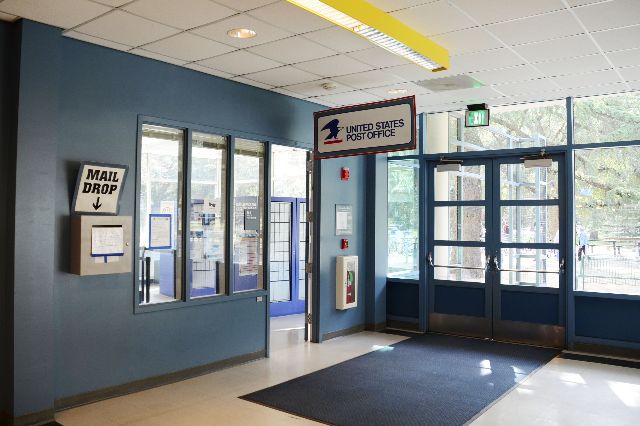
Beginning August, the United States Postal Service (USPS) will stop the delivery of mail and magazines to street addresses on Saturdays, a cut that will save an estimated $2 billion annually. Both private residences and businesses will be affected.

Packages, prescription medications and priority mail will continue to be delivered. Post offices will remain open and PO boxes will still be accessible, according to the USPS website.

The change has sparked a variety of reactions among Davis residents involved with USPS.

“It won’t affect me personally,” said an anonymous Davis mail carrier. “We’ll still be delivering packages.”

The mail carrier would not disclose their name due to the personal nature of the comment.

Package delivery has increasingly been a strong source of revenue for USPS. According to the USPS website, revenue from the delivery of packages has increased 14 percent since 2010.

Post office hours will remain the same, although some post offices, such as the ASUCD Post Office located on campus at the Memorial Union (MU), are not open on Saturdays and therefore would not be affected anyway.

“Most of the things that come through here [the ASUCD Post Office] are applications and returns, such as from selling books,” said Paige Steiding, a first-year undeclared major and student employee at the ASUCD Post Office. “Those wouldn’t be processed here on Saturday anyway because we’re only open Monday through Friday.”

UC Davis Central Receiving, which receives all inbound freight deliveries for UC Davis addressed to One Shields Avenue, is also only open Monday through Friday and will not be largely affected.

“We do get a Saturday delivery that will be cut,” said Jen Carmichael, general manager of distribution services for central receiving. “But since we are not open on Saturdays, the mail is not sorted until Monday anyway. The campus shouldn’t see any delays.”

Some students have expressed nostalgic concerns in regard to mail delivery cuts.

“I really like getting mail. You take a lot more time to write a letter than a text message or an email,” said Oliver Tunigold, a second-year aerospace science and engineering major. “It is more personal.”

Despite this, the sheer volume of mail has declined in recent years. As stated on the USPS website, five-day mail delivery is part of the Postmaster General’s plan to keep the postal service functioning effectively through “cost cutting, increased productivity and legislative and regulatory changes that form the foundation for a leaner, more flexible Postal Service.”

The USPS is projected to face a $238 billion shortfall over the course of the decade.

“If Saturday mail delivery is cut, that could lead to cutting mail delivery on Fridays, then Thursdays,” Tunigold said. “Where is the line drawn?”

MEREDITH STURMER can be reached at city@theaggie.org.

Talk of gun control

0

Don’t worry. I’m not going to argue for gun regulation or against it. Like many of my compatriots, I’m sick of having that discussion. Analyzing that tired and bothersome discourse, though, can tell us quite a bit. The mere fact that the thought of engaging the topic of gun regulation fills many of us with dread is itself illuminating.

Why is it so dreadful? If many other topics that seem more closely tied to our emotions — like euthanasia or marriage rights — can be discussed more easily (and usually less emotionally) than gun regulation, then this shows that the discourse has broken down.

The discourse on gun regulation has been destroyed. Furthermore, unlike many of the cases of institutional coercion of thought normally discussed in this column, this is no accident. This is an explicit attack on our speech; it is a wrench thrown into the gears of our democratic machinery.

When society engages in a free, non-coerced discourse, they tend to reach the consensus that fits their desires most often. This is the highly influential argument that John Stuart Mill gives in On Liberty. Once a debate is co-opted, interrupted or silenced, then people do not reach the consensus that fits their desires and they do not take the actions that would implement them.

To put it briefly: If you do not want society do something, you can interrupt their dialogue, get them stuck in a gridlock of confused speech and prevent them from agreeing on any action.

In analyzing the gun regulation debate, we can untangle the web of falsities imposed by interest groups. We can also apply this case more broadly though; we can use it to illuminate the general pattern of powerful groups using money to interrupt the national dialogue, coerce thought and control action.

Disregard all facts.

That is the creed of well-crafted propaganda. It does not matter that a large number of the arguments provided ad nauseum are completely false. It does not matter that Hitler and Stalin didn’t actually take everyone’s guns away. It does not matter that Australia’s implementation of gun control laws did not actually increase violent crime or crime of any sort. It does NOT matter.

What matters is that people repeat it. This also creates the highly useful phenomenon of memetics. People repeat what they hear. Then other people hear them repeat that. Soon, many people are repeating propaganda, and they mutually reaffirm each other in it.

I read it online, then I heard my friend say it — that’s so much confirmation that I must be right, dang it! Or it is confirmation bias.

This also has an effect that propagandists thrive on. People start to identify with their ideology. They take any objection toward the view that they have adopted as an attack on themselves. “Hunting hat culture” is a term that I came up with to pick out a cultural group, the one who wears those duck-hunting hats and listens to pop country. This group takes the gun debate to heart. Any talk of gun regulation is an attack on them, an attack on their way of life, an attack on America.

There is no convincing such groups. They have blended together their personal identity and the propaganda that they have bought into. They simply cannot be convinced. They cannot abandon themselves, and they equate their belief with themselves. This is actually a very scary thought. Our own identities, I think, are filled with ideas that we came to have due to the elites’ propaganda. We become the propaganda.

Now, as I said, I’m not arguing for or against gun control. But where is the propaganda coming from? During the 2010 election cycle, $7.2 million went into pro-gun messages or candidates from the NRA alone. Are millions of dollars coming from interest groups against guns every year? No. Plus, there is a $12 billion firearms industry. This industry clearly has an interest in using their vast resources to halt the debate.

Do not take me as anti-gun. I’m not. I just want to show why the discourse is as it is. It is co-opted. The whole cultural/political sphere is presented in a manner quite different than it really is.

Furthermore the “hunting hat culture” is not unique in their conflation between their personal identity and their view of what the facts are. Every cultural group has this problem. Every political issue also has the problem of the co-opted discourse.

If we want to be liberated at all, rather than simply play into the ideology of elite groups, we have to realize that our own personal identity and our view on every issue have been influenced by this kind of ideological coercion.

Sifting through a sea of information, provided largely by the mechanisms controlled by elite groups, is a difficult and unending task. Clearly, we must be supremely skeptical of any information that we find is disseminated by elite groups.

BRIAN MOEN likes pop country just as much as he likes hunting hats. He can be reached at bkmoen@ucdavis.edu.

F#%+ing Funny Comedy Show

3

Last weekend, Davis alumnus, Michael Taiber assembled a comedy spectacular at his secluded house in North Davis. Though this was most definitely smart comedy, none of the performers held back.

Raucous laughter was exchanged and the backroom aesthetic blended nicely with the show’s unbridled humor. The venue’s personal nature created for a great proving ground for comedic material. Unlike the hierarchy of larger venues, the house show allowed virtual novices to brush shoulders with industry veterans.

Taiber informed the audience that there wasn’t much work to putting together a comedy show. It really took getting an audience and just calling up some friends. He wanted to cover the full variety of the area.

Sure, a few of the acts were Davis locals, but the hubs of San Francisco and Sacramento were also represented.

“[The creative process is] a lot of banging your head against the wall. Think of the saddest truth you’ve thought about yourself this week,” Taiber said.

Taiber emphasized the importance of being real. He noted that comedy that’s real to him turns out to be more relatable when he performs in front of an audience.

Keith Lowell Jensen is an industry veteran who has been performing comedy for over ten years. He became involved with the house show through a mutual venue he shares with many of the acts: a Sacramento comedy club known as Luna’s.

“My process actually uses Twitter and Facebook a lot,” Lowell Jensen said. He explained that the social platforms allow him to create a new joke and quickly receive a variety of feedback.

Lowell Jensen carries a careful dedication to his own personal voice.

“I actually don’t say much on stage that isn’t true,” he said.

Beyond the accuracy of the jokes, he mentioned frequently taking a running joke from his personal life, boiling it down and getting something unique. He noted that so many comedians are looking for the next joke that it’s important to retain your style.

Members of skit comedy troupe Comedy Space, Alec Roberts and Tyler Kinne, took a few hilarious moments to sit down and discuss.

Besides a healthy amount of banter and attempts to assert who the Jimi Hendrix of this comedy show was, the duo commented about what goes into their process. They mentioned that, especially with a skit group, many comedians get together and brainstorm new material.

“When you’re hanging out, you can talk about something that isn’t funny. Like an art movement, clearly not that funny, and just ask questions and see where the conversation progresses,” Roberts said.

They both agreed that once you’re a veteran you have a defined voice, but while you’re starting out your routine could change week to week.

“You have to be open to criticism while retaining who you are,” Kinne said. He mentioned that some of his jokes could be considered lazy comedy but with a certain audience they’re a hit. Alec reinforced his notion, sharing a personal tangent of his experience performing at bars.

“I was telling a lot of fart and poop jokes. The kind of thing that gets a reaction in a bar won’t work somewhere else,” Kinne said, as he ended the interview discussing his charmed beautiful life.

Despite its frustrations, the comedians all loved what they did. These individuals had humor, but they constantly worked to retain their edge. Overall it was an amusing evening full of laughs and new friends. Plus, free beer.

Don’t miss your chance to see another evening of “F$&@ing Funny Comedy Show” at 1604 Pole Line. Lowell Jensen’s new album Elf Orgy is available on iTunes. Roberts and Kinn perform at the Comedy Spot in Sacramento on the corner of 20th and J every third Friday of the month at 10:30 pm.

BEAUGART GERBER can be reached at arts@theaggie.org.

HellaCappella moves to Mondavi

1

The Spokes’ annual a cappella showcase HellaCappella will take place Friday at Jackson Hall in the Mondavi Center for the first time since its creation in 2004. HellaCappella has been a staple of the Davis music scene every Winter Quarter and has traditionally been held in Freeborn Hall. This year, The Spokes aim to fill a larger venue despite the consequential significant rise in ticket prices and relocation of the event to the outskirts of campus.

“The Spokes strive to make each annual HellaCappella bigger and better than the last,” said Camille Martinez, a fourth-year communication and human development double major and publicity director for The Spokes. “We sell out more and more tickets every year, and that was ultimately why we needed to change venues.”

To meet this growing demand, HellaCappella was moved last year from Freeborn Hall to the much larger ARC Pavilion. Ultimately, the switch proved to be more problematic than productive.

“The transition between Freeborn and the ARC Pavilion was honestly a rough one. There were a lot of things come day of the show with acoustics, lighting and general production quality that we didn’t consider,” Martinez said.

Despite the issues, the show managed to fill 2,000 seats, prompting the decision to transfer yet again to an even bigger and more professional venue.

“We wanted to really step up our game this year, so we made the decision to move HellaCappella to the beautiful, state-of-the-art Mondavi Center for the Performing Arts,” said Emily Korwin, a fourth-year human development major and Spokes president. “Not only are the acoustics in the center perfect for a cappella music, but the thrill of performing on the same stage as greats such as Yo-Yo Ma, Florence + The Machine and The Shins pushed us to work extra hard to book the center.”

Plans to move the show out of The Pavilion began early last March and continued throughout the summer. This year’s lineup includes UC Davis’ The Liquid Hotplates, UC Berkeley Men’s Octet, the Golden Overtones, DeCadence and Dil Se, UCSC’s Cloud 9 and University of Oregon’s On the Rocks. The Davis improvisational troupe, Birdstrike Comedy Theater, will emcee the evening. The Hotplates are the only other Davis group invited to perform at HellaCappella.

“Usually, HellaCappella is such a big show in terms of guest performers that UC Davis groups are not invited because of time constraints for the show,” said Jaimie Wu, a third-year exercise biology major and member of the Hotplates. “The last time The Hotplates performed at HellaCappella was 2011, when the show was at Freeborn Hall.”

The Hotplates were selected due to their previous relationship with The Spokes.

“We were invited to perform in the past because our group had a relationship with Spokes — one of our alumni was in both The Spokes and The Liquid Hotplates,” Wu said. “This year, The Spokes were looking for a little more UC Davis representation, and we were beyond excited to accept their invitation.”

The Hotplates share the same optimism as The Spokes when it comes to the change in venue.

“I’m ecstatic to perform at Jackson Hall; it’s a phenomenal venue. I think whatever increase in ticket price is justified in order to support such a large and nice venue,” Wu said.

The Spokes are confident that they will maintain a high level of audience turnout despite the increase in ticket prices at the door to $15 general admission and $12 for students. In 2012, general admission at the door was $10 with student tickets at the door priced at $9.

“We increased ticket prices to cover the additional costs of hosting the show in the Mondavi Center, but still tried to keep them at a low price for students and the general public alike,” Korwin said. “We hope that our fans and the Sacramento community will continue to show their support. We are working hard to provide our audience with a fantastic show at a reasonable price.”

Wu recognizes the work involved in the production of such an event, having played a key role in the planning of The Liquid Hotplates’ annual show AllottaCapella, which sold out Sciences Lecture Hall 123 last December.

“I know hosting a show can be very difficult, and I applaud The Spokes for being able to go to the Mondavi,” Wu said. “After having turned away people from a sold-out AlottaCappella, we are contemplating expanding the show, though renting a larger venue is definitely a risk.”

As with every show, a portion of the proceeds from HellaCappella will go to a nonprofit organization. Last year, the event generated over $3,000 for the American Cancer Society; this year The Spokes aim to see similar success for Teach For America.

According to Korwin, the profit generated from the previous HellaCappella was enough to book the prestigious and expensive Jackson Hall. Corwin hopes the turnout from this year will garner enough revenue to maintain the new venue choice in the future.

“We hope to hold HellaCappella in the Mondavi Center again in the future, but it really depends on the profit we make from this year’s show,” Korwin said.

HellaCappella will take place Friday at 7:30 p.m, with doors opening at 6:30 p.m. Tickets will be available at the door or on the Mondavi website at mondaviarts.org/events.

ADAM KHAN and ELIZABETH ORPINA can be reached at arts@theaggie.org.

Vagina: OurStories 2013

0

“Stagnant. Bitter. Angry.”

Eleven figures standing in three rows, facing the audience, reciting these words.

This is how VAGINA: OurStories 2013 opened. A play created to raise awareness of gendered violence, OurStories took place this past weekend at the Wyatt Pavillion. The cast and crew, from actors to writers to directors, was made up completely of UC Davis students and alumni.

The show included trigger warnings, an in-house counselor, PGPs (preferred gender pronouns, for the uninitiated), gender-neutral bathrooms and a fragrance-free atmosphere, all key components of their introduction to the play.

Over the span of two hours, the cast members acted out their 11 stories, some self-written, others created by the four cast writers. They were funny, they were intense, they were a minute-and-a-half long rendition of an orgasm and they were all peppered by snaps from the audience.

Funds from OurStories went toward the organizations INCITE! Women of Color Against Violence in the Bay Area and Garment Worker Center in Los Angeles.

For any questions or comments, contact the Women’s Resources & Research Center at wrrc@ucdavis.edu.

— Tanya Azari

Editorial: Support fabric of university

0

With budget slashes across the board at the University of California, several majors have halted accepting undergraduates over the past few years.

Recently, the Undergraduate Council at UC Davis rejected a motion to suspend admission into the textiles and clothing major, a branch under the College of Agricultural and Environmental Sciences. This program is one-of-a-kind within the UC system, and we support their decision and would like to see the retention of other unique programs at our school.

UC Davis offers more than 100 majors, a stat that not many colleges and universities can boast. Yet, what is special about our school is not just the sheer number of programs offered, but the diversity of said programs.

Majors like these are the ones that add breadth and opportunities to the education system at UC Davis and set it apart from any old college. If UC Davis is going to push diversity and claim that it provides a variety of educational opportunities, it should keep majors like textiles and clothing.

Included under the textiles and clothing program is also fiber and polymer science, which teaches about fiber chemistry, textile engineering and includes consumer psychology and other interdisciplinary and cultural issues.

This unique program, that is quartered in Everson Hall, offers opportunities for both undergraduate and graduate students to finish a bachelors, masters or Ph.D.

The UC Davis administration should continue to foster the programs that make Davis unique.

News in Brief: Spay Day Sacramento on Sunday

0

The 14th annual Spay Day Sacramento event is on Sunday. The Sacramento Area Animal Coalition still has more than 150 appointments left for male cats to be neutered.

The limit is two cats per household and the price is $15 per cat. Each cat will receive the neuter surgery, vaccinations, flea preventive medicine and microchip identification. These services typically can cost up to $250.

Residents of Sacramento and Yolo County who receive public assistance or have a household income of $35,000 a year or less are qualified to make an appointment at sacanimal.org.

— Claire Tan

News in Brief: KDVS Measure I panel discussion tomorrow

0

KDVS will be hosting a panel discussion with proponents and opponents of the surface water project tomorrow from 3:30 to 5 p.m.

Any last-minute questions for the panel should be submitted to news@kdvs.org.

— Claire Tan

The Art of Painting conference

0

“The Art of Painting in the 21st Century,” an annual conference, will be returning to Davis on March 8, bringing with it a slew of discussions, panels and lectures by some of the greatest visionaries of the field. Lecturers will include Glen Brill, Kelly Detweiler, F. Scott Hess and — perhaps most excitingly — John Seed, art writer for The Huffington Post.

When asked about Seed’s work, John Natsoulas, curator of the exhibition and director of the conference, shared his opinion.

“More people are reading him [Seed] than The New York Times. He has the pulse of American art,” he said.

According to the official press release, the conference is “geared [toward] nurturing dialog on contemporary painting and the shared ideas define current trends in the field.”

The conference also seeks to encourage outreach in the art world, as many painters work alone in a solitary process.

“[The conference] is an opportunity for the university to become involved in the art world. We’re not seeing this much anymore, as this is the only painting conference in California,” Natsoulas said.

The conference will take place on March 8 from 10 a.m. to 5 p.m. with several receptions at the John Natsoulas Gallery. More educational events will take place on March 9 during the same hours. To learn more about the conference and purchase passes, please visit natsoulas.com. And if you need more incentive to go, Natsoulas has you covered.

“The first twenty UC Davis students that email us will receive free passes to the conference,” Natsoulas said.

– Brett Bunge

Arts week

0

ART

Space Jam
Tonight, 7:30 p.m., free
Science Lecture Hall 123
The Entertainment Council presents this classic film in which hall of fame basketball player Michael Jordan attempts to escape the world of basketball only to be drawn into an epic game between cartoon animals. Come for the nostalgia; stay for the Bill Murray cameo.

MUSIC

HellaCappella 2013
Friday, 7:30 p.m., $12 to $15 regular, $9 to $12 student
Mondavi Center
The Spokes present a showcase of a cappella groups from Northern California. Featured groups include The Spokes and The Liquid Hotplates, UC Berkeley’s Men’s Octet, The Golden Overtones, DeCadence and Dil Se, UC Santa Cruz’s Cloud 9 and University of Oregon’s On the Rocks.

Morrissey
Monday, 8 p.m.
Mondavi Center
Indie icon Morrissey’s long delayed tour finally arrives in Davis. Expect the set to consist of solo hits such as “Everyday is like Sunday” as well as his some of his work with The Smiths. The opening act is Kristeen Young, who has previously opened for Morrissey on his 2006 tour.

The Alabama Shakes
Wednesday, 7 p.m.
Mondavi Center
The rock group performs in Davis. Their album, Boys and Girls, was ranked as the 34th best album of 2012 by Rolling Stone and their song “Hold On” was nominated for the Grammy Award for Best Rock Performance. The opening act is Michael Kiwanuka, who won the BBC Sound of 2012 poll.

POETRY

Thomas A. Cahill at The Avid Reader
Saturday, 7:30 p.m., free
The Avid Reader, 617 Second St.
Author Thomas Cahill visits The Avid Reader to discuss his book, Ark: Asteroid Impact. The first in a trilogy, Ark tells the story of a band of Californians who work to survive a cataclysmic asteroid impact.

THEATER

Urinetown: The Musical
Friday and Saturday, 8:15 p.m., Sunday, 2:15 p.m. $18 regular, $16 student
DMTC Performing Arts Center, 607 Pena Drive
The Davis Musical Theatre Company presents their rendition of the 2001 Broadway smash that won the Tony Award for Best Score and Best Book. According to last week’s article by Cristina Fries, Urinetown “pokes fun at government bureaucracy, corporate industries and Broadway musicals themselves through parodying them in almost every scene.” Director Steve Isaacson describes this show as, “Terrible title, terrific show.”

News in Brief: ASUCD election winners to be sworn in today

0

ASUCD senate election preliminary winners Ryan Wonders, Amrit Sahota, Pamela Nonga, Yee Xiong, Miles Thomas and Reuben Torres will be sworn in tonight at the ASUCD Senate meeting.

The election garnered 6,252 voters.

According to Elections Committee chair Aaron Hsu, complaints are still being considered. If the committee does not complete this process before the meeting, candidates will not receive Certificates of Election, per ASUCD Bylaw 415B.

Hsu said that because of this, the final winners cannot yet be confirmed.

Today’s meeting will also include Senate Farewells, as six outgoing senators — Beatriz Anguiano, Bradley Bottoms, Don Gilbert, Joyce Han, Kabir Kapur and Paul Min — will end their terms.

Outgoing senator Bradley Bottoms will be returning to the Senate table as ASUCD Vice President, alongside President-elect Carly Sandstrom.

Sandstrom and Bottoms will take office at the beginning of the final Senate meeting of Winter Quarter, per ASUCD Bylaw 415E.

— Muna Sadek