38.7 F
Davis

Davis, California

Tuesday, December 30, 2025
Home Blog Page 975

Yolo Basin Foundation to host Duck Days

0

The annual California Duck Days will be held on Feb. 23 at Yolo Basin Wildlife Area Headquarters from 8 a.m. to 5 p.m.

There will be an opening art show for the event on Feb. 22 from 5:30 to 7:30 p.m. at the Davis Art Center. This event is free to the public and the art is provided by five high schools in Yolo County, including Davis High School and Woodland High School.

“Duck Days is a great family base. It’s an inexpensive way to have fun with the family and get kids outdoors. Duck Days raises awareness of wetlands and wildlife,” said Ann Brice, co-executive director of the Yolo Basin Foundation and head coordinator for Duck Days.

The event is open to people of all ages and is free for children under 16 who come with their parents, with an exception for the cost of field trips. The event includes many activities like fowling, mystery bird trips, fishing as well as field trips and workshops led by many bird experts and about 25 environmental organizations.

The mystery bird trip has been led by Terry Colborn, Yolo Basin Foundation board member, for about five years.

“I use a spotting scope to focus on the bird with fine detail and watch their behavior. Everyone gets really excited, including the kids,” Colborn said. “Those who have never been birding before have no idea that there are all these beautiful birds within a few miles of their home. It’s really a public service to spread this awareness.”

Robin Kulakow, executive director of Yolo Basin Foundation, not only believes in this sense of public service brought on by Duck Days, but also believes in environmental awareness.

“It’s a great introduction to the Yolo Bypass Wildlife Area along with environmental issues. Our goal is to educate and inspire people about the wetlands of Central Valley,” Kulakow said.

New events this year are the field trips to Grizzly Island Wildlife Area in Bay Area to see elks, and the Nimbus Fish Hatchery trip in Sacramento.

“One of the most popular events is the raptors of Central Valley,” Brice said. “They go out and look for winter raptors with top birder John Sterling. This and the field trips always sell out quickly.”

Yolo Basin Foundation provides many of the volunteers for the event, along with two UC Davis service groups, the Rotary Club and Alpha Phi Omega, both of whom will help set up the events.

Kulakow has been involved in this event since it began 20 years ago. It has gone from a community-run event to a nonprofit and was eventually taken over by the Yolo Basin Foundation 10 years ago.

“People come from all over the region — from Sacramento, Napa and the Bay Area. Some people even plan their visits to their parents around this event,” Kulakow said.

The Yolo Basin Foundation puts up a billboard between Davis and Sacramento around this time of month in order to attract new people in the area and increase awareness of the event. The event has been getting more attendees and positive feedback.

“Duck Days is a beloved community event. My children grew up volunteering and participating in Duck Days, and still volunteer. Even some friends I know have this event on their calendar and think of it as a holiday just like Valentine’s Day,” Kulakow said. “So, it is a privilege for me to serve the community like this.”

MELISSA GAHERTY can be reached at city@theaggie.org.

Campus Judicial Report

0

Ringer
When a teacher’s assistant noticed an unfamiliar name on the sign-in sheet during a math exam, he called the student to the front of the room and confirmed that she was not enrolled in the course. However, her Scantron bore the name of a student who was in the class. The TA referred both students to Student Judicial Affairs (SJA) for academic misconduct. In his meeting with a Judicial Officer, the enrolled student admitted that he had asked his friend to take the exam for him because she had previously taken the course. He agreed to accept deferred separation status and to do 15 hours of community service for his dishonest behavior.

Altered tests and re-grades
A student in a science class was referred to SJA for submitting several altered quizzes for re-grading. Because the professor photocopied the graded quizzes before returning them to the students, she was able to pinpoint noticeable differences between the original quizzes and the resubmitted quizzes. It was clear that the student had changed several answers on each of the resubmitted quizzes in order to receive more points. When meeting with a Judicial Officer, the student admitted that he altered the quizzes in order to get a higher grade. He received a zero on each of the quizzes he had altered, which led to a significantly lower grade in the course. In terms of disciplinary sanctions, he accepted disciplinary probation and 20 hours of community service.

De-stressing with Beer Pong
A student was referred to Student Judicial Affairs by a resident advisor (RA) for the violation of housing policies. After hearing sounds, the RA knocked on the door of the loud room and consequently found a resident playing beer pong with several other students. Upon meeting with the Judicial Officer, the underage resident admitted that she had violated housing and University policy regarding the possession, use and distribution of alcohol. She received a censure for the violation.

Cool Davis holds workshop for homeowners

0

Cool Davis held a Cool Home Workshop on Saturday at the Mary L. Stephen’s Davis Branch Library at 315 E 14th St. from 10:30 a.m. to 1 p.m. Attendees learned how to measure their energy usage and improve their home energy use.

Lynne Nittler, one of the founders of the Cool Davis Initiative, said that people had the chance to learn how to use a wattmeter at the workshop, which measures how much energy an appliance consumes. People also could learn how to use the PG&E website to track their usage by month or day for electric and gas bills.

“Our main goal for the Cool Home Workshop was to promote improv[ement of] energy efficiency at home, teaching households how to track energy usage,” said Clara Perez, a Cool Davis volunteer.

There were many home energy experts present to answer any questions people had. Additionally, there were resources available to sign people up for the Cool California Challenge. The Cool California Challenge is an effort aimed at reducing household carbon footprints. Cool Davis is helping the community participate in this challenge.

Nittler said three factors are considered for the Cool California Challenge: electric and gas usage determined from a household’s PG&E bill and the odometer from the household’s car.

The workshop was a follow-up to the Cool Davis Festival last October. Volunteer Christine Beckman said participants stated many difficulties to committing to the challenge, such as cost, habits and not being able to make changes to their living space. However, she is determined to help households work past these difficulties and the workshop was one way of achieving this.

“The Cool Davis Challenge is a two-year-old mission aimed to reduce greenhouse gas emissions, adapt to climate change and improve people’s quality of life,” Nittler said.

Cool Davis lines up with one part of the city’s Climate Action and Adaptation Plan which aims to help households lower greenhouse gas emissions. Nittler said that since Davis is not an industry-heavy city, most of the pollution is from households.

Cool Davis’ goal is for 75 percent of households to lower their carbon footprint by 15 percent by 2015. This includes renters and students as well as homeowners. They are working with the city to help achieve this goal.

According to the Cool Davis website, the City of Davis is ranked first in the race to become the coolest city in California, slightly ahead of Tracy, San Jose and Chula Vista.
“Cool Davis looks at three aspects of energy use: transportation, home energy and consumption of resources,” Nittler said.

A number of people spoke at the event, including Beckman on how to use wattmeters and Chris Jones from the Cool California Challenge. Attendees at the workshop took surveys to make a Cool Solutions checklist for their home and win prizes such as light bulbs and clothes-drying racks.

Cool Davis is holding an event on March 3 at the UU Church of Davis called Climate Crisis: Putting Faith Into Action. The event will include four interactive workshops: “Developing an Environmentally Sustainable Church,” “Engaging Hearts and Minds to Build Sustainable Lifestyles,” “Integrating the Care for Creation into Liturgy,” and “Acting Ethically for a Planet in Peril.”

PAAYAL ZAVERI can be reached at city@theaggie.org.

Diabetes treatment

In a recently published study, researchers from the UCSD School of Medicine and scientists from the San Diego-based biotech company Viacyte, Inc. investigated methods to create endocrine cells, specifically pancreatic T-cells, which are important in treating diabetes through their production of insulin. The study compared two methods of generating endocrine cells from stem cells, in vitro (in cultures), and through transplantation of immature endocrine cells grown from mice. The malleable nature of the stem cell makes it possible to pursue both of these methods.

“The stem cell has the capacity to become any cell in the body. They will make certain decisions to become tissue or organ cells,” said Maike Sander, the principal scientist and a professor of pediatrics and cellular and molecular medicine, and director of UC San Diego’s Pediatric Diabetes Research Center.

In the research laboratory, Sander and other cellular biologists learned how to make various viable organs or tissues by recreating the same environment that the body provides. According to Sander, cells differentiate through a very specific sequence of events in the body, and scientists are taking steps to recreate these events as accurately as possible in a laboratory setting. In the lab, researchers can figure out what to do to the stem cell to make it develop like it would in the body.

In order to grow these cells, the UCSD researchers and Viacyte, Inc. scientists created their own medium to grow the stem cells and followed strict rules regarding the development process.

“One of the issues with human embryonic stem cells is that they turn into any cell in the body so there needs to be rules and protocols to make sure the cells do not differentiate until it is required,” said Allan Robins, who leads the development of techniques for cell manufacturing at Viacyte’s Georgia location.

Currently, in vitro cultivation of endocrine cells from stem cells has been an interesting obstacle to overcome.

“We don’t quite know how to execute this,” Sander said.

According to Sander, the main challenge to cultivating in vitro endocrine cells comes from correct duplication of the biological environment that triggers their differentiation. The cells they have produced in the past did not develop the primary genes essential to healthy endocrine function, such as insulin production.

However, the method of transplanting immature endocrine cells has shown promising results.

“We can [create endocrine cells] by taking a precursor, a stem cell, and putting it in the mice to grow. It takes 150 days to a year until they are matured and fully functional. [The endocrine cells cultivated from the mice] are pretty much like normal human [pancreatic] cells,” Sander said.

According to Sander, no one has attempted to transplant the immature endocrine cells from mice into humans. However, she does have an idea for how it could be done. This transplantation method is only one of many that are being tried.

“[The] best method right now is to put them into an encapsulation device, a thin membrane where the cells cannot get out but the insulin can. The cells are contained in a little membrane and the insulin [can move through it]. If anything goes wrong, you could just remove the device from the person,” Sander said.

The technique keeps in mind the experimental nature of the endocrine cells. Viacyte, Inc. aims to start human clinical trials with this method by 2014.

“We have developed our own device,” Robins said. “It’s transplanted subcutaneously. After a short amount of time the device is able to maintain the cells in the device, which then become pancreatic hormone-producing cells.”

In other developments with stem cell research and diabetes, Fernando Fierro, an assistant adjunct professor of cell biology and human anatomy at the UC Davis Institute for Regenerative Cures in Sacramento, intends to run clinical trials for mesenchymal stem cells to treat two major complications of diabetes: chronic wounds and critical limb ischemia.

“Mesenchymal stem cells are easy to grow in a culture plate. We typically obtain them from bone marrow from healthy donors, which contain a few thousands of them. After a few weeks in the laboratory, we have expanded them to several millions,” Fierro said.

At the very least, stem cell treatments for the complications of diabetes are currently in development as well.

While Viacyte, Inc. and Fierro move ambitiously to human clinical trials, Sander notes that it is important to realize that there is still much research to be done on the use of stem cells in general, and that it is important to thoroughly test every part of the process.

VICTORIA TRANG can be reached at science@theaggie.org.

Column: Debunking ‘Bro-Science’

So it’s been over a month since you promised yourself you would get those six-pack abs and a pair of python-sized biceps. You’ve probably tried everything from dieting to going hard five times a week at the gym. Six weeks later, getting that perfect body for Houseboats or spring break seems hopeless.

Every once in a while, I have friends asking me about my routines and dieting. Some people say that diets and exercise routines sound ridiculous. But we should remember that quote by Thomas Jefferson, which is “If you want something you’ve never had, you must be willing to do something you’ve never done.” Well, it’s time to break the bad habits and step out of your comfort zone. It’s time to get some results.

Diet is probably the easiest path to losing weight. Let’s forget about working out to attain that perfectly sculpted serratus or those Adonis abs. Take the time to figure out your basal metabolic rate (BMR), which is the amount of calories required for the body to function normally at rest.

BMR can be calculated simply in two ways: using some sort of BMR calculator online (Google it), or just actively counting the calories you eat throughout the day while maintaining a stable baseline weight. This process takes longer and is done over a few days or even weeks. Don’t worry about how accurate the figure is; just think of this as a reference point. From there, you figure out the calorie deficit or excess that’s right for you.

The next step is to find a realistic diet you can stick to. Don’t look at a dieting template and think “wow this sucks”; that sort of mentality will only hinder your progress over the long haul. Find a diet that is easy to maintain depending on your daily schedule and how much effort you’re willing to expend. Make sure your diet is reasonable. Don’t try something like limiting yourself to 500 calories a day while also working out.

The other key aspect of a successful diet is to stick to it even if it sounds counterintuitive. If the diet calls for cheat days (days with excess carbs or calories), allow for cheat days. A successful diet is essentially a change in lifestyle. View it as a long-term change to your habits, and not simply a quick fix.

Once dieting is properly executed and maintained, you may consider incorporating a workout routine.

A workout routine is a huge investment of time and calories. While getting fit and strong isn’t exactly a survival necessity in today’s society, good physical health and a strong physique has beneficial effects on other aspects of your life. Point is, don’t waste your time on useless routines; do something that can provide benefits in your everyday life.

If you’ve been to the weight room lately, you’ll see there are more people than usual (I call them the “Resolutionaries”). After a few months, the gym clears out again and the only ones left are the “regulars.” This phenomenon happens every year and is usually due to people giving up after not seeing the desired results fast enough.

That is the first problem. People are quick to give up when patience and persistence is key. The bodybuilder greats like Arnold Schwarzenegger and Frank Zane didn’t get their mind-boggling aesthetics over night.

The next bit of advice is simple, yet effective (it’s also the only advice I feel comfortable actually giving): lift heavy, lift heavy and lift heavy. Unless you know what you’re doing, you should forget about burnout sets, supersets, crossfit etc … Develop a strong base to work from. By lifting heavy with few reps per set (3-5), you’re building myofibrillar hypertrophy, which is essentially building denser / true muscle mass.

This works both ways, for weight loss and gains, when combined with the appropriate diet. Don’t skimp out on squats, deadlifts and bench press only to become a cardio bunny. Running helps maintain weight, but lifting helps with building definition.

The benefits of lifting heavy are insurmountable. By lifting heavy, you’re automatically increasing your base strength, which is usable throughout daily life. The mechanisms behind myofibrillar hypertrophy also correlate to better muscle coordination through increased motor neuron stimulation (think of pro-athletes and how coordinated they are).

Lastly, lifting heavy helps keep fat off better. This works in two ways. Your body’s hormone concentrations will change. Testosterone, a naturally produced steroid, will increase, resulting in lower body fat percentage and quicker recovery times. In one study, scientists compared the serum testosterone levels of a male before lifting and after lifting an extensive period of time. The end result was a 27 percent increase in serum testosterone levels. Your body’s basal metabolic rate will also increase just to maintain the newly developed muscle mass. This combination of increased testosterone and muscle mass will help keep body fat relatively low with little effort.

So what should you take from this article? Basically keep things simple, be knowledgeable about the diets and routines, be patient, and most of all stay safe.

ALLEN GUAN can be reached at science@theaggie.org.

Viva la VITA

1

When working at low wages, paychecks are carefully forecasted to the penny. And yet, when looking at the breakdown of hours worked and money earned, the figure always comes up short a few dollars.
Taxes.

All year, money drains from paychecks to feed the American financial system. To quiet the rumblings of discontent at a slightly less-filled wallet; there is hope to be found, and lost dollars to be reclaimed, if taxes are filed. In the midst of the February-to-mid-April tax filing season, loud commercials blare from every station about all kinds of money-back guarantees, reaped benefits and the quickest service. What isn’t so blatantly mentioned is that these companies charge taxpayers to retrieve their own money. And when the thick IRS forms are navigated alone, there exists the possibility of missing benefits and erroneously marking signatures and initials.

When confronted by confusion and the advent of paying a company to do taxes, suddenly, going through the motions of claiming lost tax dollars doesn’t seem so urgent.

Thankfully, for anyone making less than $50,000 a year (next to all students who have part-time jobs), there’s the Students in VITA. VITA, or the Volunteer Income Tax Assistance program, is a national IRS-funded program that connects certified volunteers with individuals or families who make less than $50,000 a year to file tax returns for free.

“It’s completely free. Part of being in VITA is that we don’t accept any compensation,” said VITA coordinator Nery Leon, a fourth-year economics and communication double major. “Our goal is to get all that money back to you — the taxpayer. VITA is available to anyone in Yolo County making less than $50,000 and worked in 2012. It’s not just for students.”

For anyone who qualifies, this translates to getting back some of that money lost with each paycheck — without having to pay for a service. VITA can be free of cost because all of the workers for Students in VITA are trained UC Davis students.

“Everyone in VITA is certified by the IRS through an online certification program,” Leon said.

After going through training and getting experience under their belts, volunteers can then turn around and teach new members.

“As a lead intern, I teach classes to VITA volunteers who are also trying to get certified,” said lead intern and 2012 UC Davis graduate Gloria Lee.

To ensure accuracy for each file, after meeting with a volunteer, the tax forms are reviewed after the appointment.

“For each filing, a quality reviewer checks information like social security numbers,” Lee said.

To file taxes with VITA, one must make an appointment, bring in a photo ID, a Social Security Card (or copy of the card), all W-2 and 1099 forms, and any other earnings or tax forms to one of the VITA sites. From there, the process is streamlined.

“It typically takes about an hour, but it can be as fast as 20 minutes,” said Leon.

In addition to receiving some of the money taken from each paycheck, additional funds can be awarded based on a number of factors. VITA is helpful in that instead of searching through page after page for credit qualifications, volunteers can help quickly pinpoint how to get the most money back, according to Leon.

“To help the taxpayer get as much back as possible, we have an interview sheet to fill out when you come to a [VITA] site. It has questions like, ‘Do you have children,’ ‘Did you pay medical expenses,’ [exceeding $5,000]; things that qualify for benefits,” said Leon. “There’s also a California renters credit; you can actually get money back on your taxes if you bring your landlord’s name and phone number.”

Although most students who have a job are still filed as dependents to their parents, they are eligible to collect money from their personal taxes.

“As a dependent, your parents claim your education expenses, but if you have a part time-job and get a W-2, there is credit out there for you. If you get money taken out of your paycheck, that’s money that you are losing unless you do your taxes,” said Leon.

Not only does the taxpaying community benefit from VITA, the volunteers also find themselves gaining through the program.

“Students get accounting experience by going out and doing taxes for people, [which is why] we have many econ students volunteering with us,” Leon said. “If volunteers complete 40 hours of work each quarter, they qualify for the VITA as an internship through the Internship and Career Center.”

Due to the opportunities to get hands-on experience and internship credit, Students in VITA has grown from 9 volunteers to 85 in a matter of three years.

“In the past years, [the Davis chapter] has changed its whole profile; engineering it more for student involvement. It’s grown tremendously,” said Lupe Hernandez, relationship manager at the IRS.

Hernandez supervises and serves as the IRS’ point of contact for Leon and other Students in VITA members.

“VITA is an excellent stepping stone to a great career and it provides points on résumés, especially with government positions,” Hernandez said.

In addition to earning credit for interning and adding to a résumé, volunteers are able to discover what could potentially become a lifelong career path.

“I had no idea what I wanted to do my senior year with my degree. I joined VITA only because I really enjoy volunteer work. It was my first time getting involved in taxes,” said Lee. “I ended up discovering that it’s actually pretty interesting and fun, and the people I help are so grateful. Thanks to VITA, I’m now working in tax accounting as a bookkeeper.”

Lee is not the only one whose career path was influenced by her participation in the program.

“It made me realize that this is what I have a passion for,” said Leon. “I love sitting down and working with people. I never thought I would, but I like tax policy now. I can actually see myself working in policy and accounting. Everyone I help is so happy, and I enjoy that [part of the job].”

On top of all of the personal growth and development that comes with volunteering with VITA, students are able to make a tangible difference in their community.

“It’s a very exciting part of my job [being involved in VITA]. Students are excited to share and to do work in the community. They are able to see the results of their efforts, and they are able to really help,” Hernandez said. “It’s such an eye opener to see college students on a Friday night helping their community.”

VITA filing for 2012 taxes takes place at two locations in Davis, three times a week until April 15.

The Mary Stephens Library site is open Sundays from 10 a.m. to 1 p.m. and Mondays 6 to 8 p.m., while the Owendale Community Center site is open Fridays from 5 to 8 p.m.

To make an appointment to file taxes with VITA, or for more information, call (530) 309-8879, or visit their website at sivdavis.com.

HANNAH KRAMER can be reached at features@theaggie.org.

Medicine in a whole new light

There are many conventional and unconventional ways to treat ailments. Some people prefer the organic method, downing apple cider vinegar or sipping herbal tea at the first sign of a cold, while others rely solely on antibiotics. However, those who depend on approved medicinal practices and scoff at non-traditional medicine may be surprised to find that oftentimes the field of medicine goes much deeper than a bottle of pills.

Many conditions require medication because there simply is no other option to turn to. One of these conditions is epilepsy. Epilepsy affects one in 26 people, and is a condition characterized by spontaneous seizures in the brain.

“People with epilepsy have recurring, unprovoked seizures,” said Michael Rogawski, a professor in the Department of Neurology, and an epilepsy researcher at UC Davis. “The seizures can be very dramatic, such as a generalized convulsion — stiffening and jerking of the whole body — or very subtle, such as a brief loss of awareness. However, in all cases, epileptic seizures relate to abnormal electrical discharges in the brain.”

The dramatic seizure described is called a “grand mal,” while the other, less obvious seizure is called a “petit mal.” Petit mals are sometimes more dangerous because in the brief moments of unconsciousness, the individual can swerve off the road when driving, or lose body control and fall. The aftermath of a grand mal is similar to the symptoms of a petit mal.

The 2007 news story of Wesley Autrey and Cameron Hollopeter involved the aftermath of a grand mal seizure. Causes vary from brain injury to genetics but there is no known cure for epilepsy. Most people take anticonvulsants to manage their seizures.

“Some current treatment options include drugs that target brain cells, and surgery to remove the part of the brain believed to be where the seizures are starting,” said Caren Armstrong and Esther Krook-Magnuson of the UC Irvine Department of Anatomy and Neurology in a joint interview. “A major drawback of drugs is that they are basically always on rather than just at the time of the seizure, and that they lack specificity, [and] thus can have serious side effects.”

Armstrong and Krook-Magnuson added that for about 40 percent of patients, current treatment options do not provide adequate seizure control.

Recently, UC Irvine neuroscientists have come up with a way to combat epilepsy using fiber optic light signals. Ivan Soltesz, the Chancellor’s Professor and chair of the Anatomy and Neurobiology Department at UC Irvine, and his team created an electroencephalogram (EEG)-based computer system that activates optical fibers placed in the brain when a seizure is detected. Light-sensitive proteins called opsins are then activated which either stimulate or inhibit neurons during a seizure. The research team found this process was able to stop electrical seizure activity and reduce convulsions successfully in a mouse model.

“This approach is useful for understanding how seizures occur and how they can be stopped experimentally,” Soltesz said in the initial press release. “In addition, clinical efforts that affect a minimum number of cells and only at the time of a seizure may someday overcome many of the side effects and limitations of currently available treatment options.”

The research has opened up an avenue to new possibilities, but more development is necessary before pursuing this fiber optic strategy in humans. Rogawski, who discussed the novel treatment, said that light sensitive channels in the brain are needed for the fiber optic treatment to work, but it is not naturally present. Mice used for the model were genetically engineered to express the light-sensitive gene but in humans it is not that simple.

“Obviously, people can’t be bred to express engineered channels,” said Rogawski. “Another approach will need to be used.”

Rogawski went on to describe how the engineered channels could be induced using a gene therapy vector, such as a genetically engineered virus.

“A light pipe would then need to be surgically implanted [into the patient’s’ brain]. This is a very elegant strategy because it allows specific types of neurons to be activated selectively.”

The issue with the surgery is that it is very complicated, and simpler approaches to treat epilepsy are being researched. One alternative is using electrical stimulation on the brain with metal electrodes.

While the tools to attain the ultimate goal of replicating the fiber optic treatment in humans may be distant, the research still could lead to better alternatives for people with epilepsy. With any luck, fiber optics will someday be used in more than just high-definition television and night lights.

NICOLE NOGA can be reached at science@theaggie.org.

Aggie Digest

0

The UC Davis women’s gymnastics team put together a strong team performance to place third at the Power of Pink meet this past weekend.

The Aggies’ overall score of 194.675 was the second highest in the program’s history, missing the school record of 194.7 by a microscopic .025 points.

Trailing just fourth-ranked UCLA and 25th-ranked Washington, UC Davis placed ahead of Sacramento State in the stacked quad meet.

The Aggies got strong contributions from senior Katie Yamamura, who scored a 38.8 in the all-around, her second highest this season. Yamamura’s 9.825 on the uneven parallel bars was the highest UC Davis score.

The UC Davis gymnast who also helped the Aggies’ cause was junior Anna Shumaker, whose vault and balance beam scores of 9.8 and 9.85, respectively, got her fifth and third place in each event.

Shumaker placed right behind Yamamura in the all-around, putting together a neat 38.625 for sixth place overall.

Senior Michelle Ho recorded a 9.775 on her bars event and posted an identical score on the floor before closing her competition with a 9.725 on the beam.

Sophomore Tiana Montell also added to UC Davis’ point total by adding two 9.725 marks on the vault and bars, then scored a 9.675 on beam.

The Bruins scored a 196.95 to place first while the Huskies placed one point behind at 195.95 in second place. Sacramento State took fourth at Pauley Pavilion with a 193.925 score that rounded out the meet in front of 4,234 fans.

The Aggies’ total score of 194.675 was a product of a 48.75 on floor, 48.775 on uneven bars and 48.575 on beam and vault.

UC Davis will have its next competition at Seattle Pacific on Friday at 7 p.m. before coming back to California to compete with Sacramento State once again the following week.

— Matthew Yuen

Column: Forgetful Valentines

0

Memory

Valentine’s Day is almost here, something many of us may wish to forget. If you’re in a relationship, then bully for you. That’s just great.

You’re celebrating, while we’re commiserating. You can stop reading now. Go away.

Maybe love is elusive, but it’s not hard to find. It’s perpetually redefined in our songs, TV shows, movies, books — whatever you like. We are reminded every day of love (or lack thereof).

Such a brazenly gaudy, vulgar, fake, evil, discriminatory holiday must be unnecessary … writes the lovelorn single.

Valentine’s Day says who we love is no more important than when we love them. Bless the fool who neglects buying flowers until the 15th. He’ll end up like the rest of us.

To be single on Valentine’s Day compels us, however unfairly, to find someone. A date on the calendar puts love on a timetable. It’s a task to be completed by next year.

Whether you like it or not, the day has significance, that much is clear.

According to a recent consumer report done by American Express, 6 million proposals out of 14 million this year will happen on Valentine’s Day. How original.

We validate the holiday with our wallets, if not with our hearts. Total spending for Valentine’s Day 2013 is expected to reach $18.6 billion. We will spend $1.6 billion on candy and $1.9 billion on flowers.

Condoms reach their sales peak in February. Despite best efforts, home pregnancy tests reach their sales peak in March. This holiday is full of surprises.

Where did all this knee-bending, gift-giving and rumpy-pumpy come from? I present some (incomplete) history:

There are at least three martyred Christian saints named Valentine or Valentinus. One legend describes Saint Valentine performing illegal marriages. In another tale, he falls in love with a girl who visits him in jail. Allegedly, he sent her a note before his death, signed “From your Valentine.”

These stories of romance were popularized by authors like Geoffrey Chaucer, who once wrote “For this was Saint Valentine’s Day, when every bird cometh there to choose his mate.” However, whether this was Feb. 14 or some other date is still unclear, as Chaucer wrote before the modern calendar.

Unfortunately, we’ve forgotten exactly who’s to blame for all this, but we can still decide why Valentine’s Day resonates today. Forgetting our own romantic past is part of that resonance.

We know that the most vivid memories are associated with strong emotion. And romantic love surely counts. It was a novel emotion once, perhaps not too long ago for some. To those who haven’t loved yet, the spotless minds, forgive my ranting.

We might be content in our youth to remember more. Better memory allows us to recall everyone’s name, every answer on a test, where we left our damn keys. Then we fall in love.

At the cost of sounding cliché, the first love is the best and the worst. It’s something worth remembering and forgetting at the same time. Inevitably, it’s hurtful, and it’s a frame of reference for the future.

Each year, when Valentine’s Day rolls around, our personal lives are so perversely called to the fore. It’s hard to fight painfully debilitating memories of past loves — whether it was the first, or the second, or the third, or you’re a fool who falls in love with everyone you meet.

But Valentine’s Day is for fools, and I mean that in the best possible way. Science is now backing Freud’s theories on willful repression of bad memories. Substituting those memories with equally intense emotional experiences can mask what happened before.

Sharing your life with a new significant other, creating new memories of love, are one of the most effective methods for getting over the past. Foolishly forgetting the past is an important part of living in the present. You don’t need a scientist to tell you that.

The chalky candies, flowers, diamond rings and overpriced dinners (and sex!) are as much an act of forgetting as they are a celebration of love.

Maybe only fools take part, but only fools fall in love. They’re the ones who open themselves up, with full knowledge of their vulnerability.

I humbly prescribe, without any pretense of originality, lots of foolishness this Valentine’s Day. Hopefully it won’t be too unforgettable.

SEAN LENEHAN was only fooling with the bitter single act, but you can still totally email him at splenehan@ucdavis.edu.

Column: Water pipes

0

Some shake

Bubblers are definitely one of my favorite engineering feats. Their clever design allows you to suck out the funny smoke while a little bit of splashing water filters it and makes it more pleasant on your throat and lungs. If you’re a first-time smoker, or if you’re an engineer, I definitely recommend you get yourself a bubbler.

Bubblers, unlike regular, dry pipes, require a little bit of water to function properly, but everything else is essentially the same.

Like most other kinds of utensils, bubblers usually have a little hole on the side of the bowl called a carb. For some reason, learning to use the carb is usually the hardest part of smoking for beginners. But it’s not much different from pulling a trigger.

If you are right-handed, it is a lot easier to smoke if you hold the piece with your left hand. While this seems counterintuitive and awkward, it leaves your dominant hand free to do more important things like sparking up the lighter and maneuvering its flame.

Always start with your index finger across the carb, otherwise there won’t be enough suction and you won’t attract the flame into your bowl. Then torch the bowl as you suck slowly but deeply on the mouthpiece. As long as you keep the carb clogged, most of the smoke you draw out will collect into a cloudy mass and remain inside the bubbler.

But as soon as you let go of the carb, all that smoke is going to rush up out of the mouthpiece and down into your lungs.

Again, the reason I recommend bubblers is because they usually give you a cooler, smoother stream of smoke than any of the other utensils. This is all thanks to the water.

When you cover up the carb and suck in through the mouthpiece, the water starts bubbling vigorously. The smoke that is drawn out of the bowl gets trapped inside these bubbles and is then circulated in and out of the water.

All the movement through the water literally cleans the smoke and filters out some of the larger, hotter particles floating within it. The whole process leaves you with a cool, manageable puff of smoke that is a lot tastier and easier to breathe in than the painful rush of heat that you get with dry pipes.

While seasoned smokers actually enjoy the heavier, harsher hits, first-timers understandably find them extremely unpleasant and painful.

Bongs function in pretty much the same manner as bubblers: smoke is drawn, filtered, collected and then breathed in.

But the biggest difference between bongs and bubblers, besides their size, is the lack of a carb.

In bongs, there is no pesky carb to worry about. Just like with bubblers, when you take a hit off a bong, most of the smoke will build up and remain inside it. However, once you’re ready to release all that smoke, instead of letting go of the carb, you’re supposed to remove the bowl.

This is another particularly tricky part about smoking that most people have a difficult time with.

Physically, the act of removing the bowl feels a little awkward, not only because it requires finesse and coordination, but also because it feels like you’re somehow breaking the bong. But I can reassure you this is not the case.

The removable bowl actually acts exactly like a carb. While the bowl is in place, the entire bong is completely sealed and insulated. But when you remove the bowl, it exposes an open hole through which outside air can enter the bong.

This allows the bong to be “cleared.” Since the bong is no longer sealed, it is now a lot easier to breathe in all its contents.

Bongs are usually pretty big, and their large size allows for more water, which means more smoke is filtered, which means a cleaner hit.

Bongs also usually have a pretty hefty mouthpiece. Take advantage of this and fill it with ice. This cools down the smoke even more and makes the hit extra smooth.

While I recommend that everyone go out and buy a groovy water pipe, there is one last thing to keep in mind about utensils in general.

There is this terrible unwritten rule of the universe that says all glass pieces must eventually break.

I don’t mean to scare you out of investing in a fancy pipe. Just try not to yell at your roommate too much when he one day sneezes too hard and accidentally drops your baby.

LEO OCAMPO and his bong can be reached at gocampo@ucdavis.edu.

Students plan to rally against privatization

1

Students will rally today at noon at the Memorial Union (MU) to speak about “blowing the whistle” on privatization and to address the alleged ongoing privatization of the University of California.

Students for a Democratic UC encourage students to call the whistleblowing hotline for all UC campuses today to report on what they call the various abuses and violations of the UC Regents and administrators.

“As with all actions of this kind, awareness is always the first goal, and then, hopefully, inspiration to act — we want the students and people of California to realize that public education is in the process of being destroyed, and unless we resist this transformation, we will soon be living in a society without even decent institutions of public higher learning to enrich our lives and educate our citizens,” said Robin Marie Averbeck, U.S. history graduate student and member of Students for a Democratic UC.

“If we do not seriously reverse track, we are going to end up with a system of higher education public only in name — because fees will be so high that more and more students will be unable to afford to attend, lest they want to go into even more outrageous debt than many currently are in. By taking this action, we are refusing to be commodified.”

According to the UC whistleblowing page, the hotline service allows students to report various incidents, including economic waste or misuse of university resources, conflicts of interest, public health and safety, retaliation, discrimination or harassment and more.

Brooke Converse, University of California Office of the President media specialist, said the University has no comment at this time.

The UC whistleblowing hotline is (800) 403-4744. Students report confidentially and can choose to report anonymously.

STEPHANIE B. NGUYEN can be reached at campus@theaggie.org.

Tech Tips

Is your lover the fairest you’ve ever met? Were they born to finish your duet? If the answer is yes, you are in luck: There is an app for that.

What is Duet?
Duet is an app made for iOS devices specifically targeting couples. The app begins with a date proposal sent to your sweetheart and they either accept or deny it.

How much does it cost?
The app is currently free in the Apple Store, and works on both the iPhone and the iPod Touch. While not yet available on other operating systems, development of an Android version is currently underway.

How does it work?
First you must download the app and launch it on your mobile device. Next you propose a duet with that special someone. Your proposal is a private invitation leading to spending time together.

Your message starts with the phrase “Let’s…” and you fill in the blank with a suggestion. The person you send it to then accepts or denies your duet.

When your duet proposal is accepted, it is “paired,” becoming a private conversation between you and your love. You can add videos, notes and pictures to your conversation as well. Duet saves your conversation so that you can cherish the moments with each other forever.

You must have that person’s number stored in your device and you may only send a proposal to one person at a time. If the person you propose the duet to does not have the app installed, that is fine; it will automatically send the message via SMS.

For the LDR crowd:
For those of you in long distance relationships who are unable to see your significant other on Valentine’s Day, the app is great for sharing moments in a more interactive way than a simple Skype call or Snapchat moment.

NICOLE NOGA can be reached at science@theaggie.org.

Paleo with a Purpose: Chocolate-Nut Shake

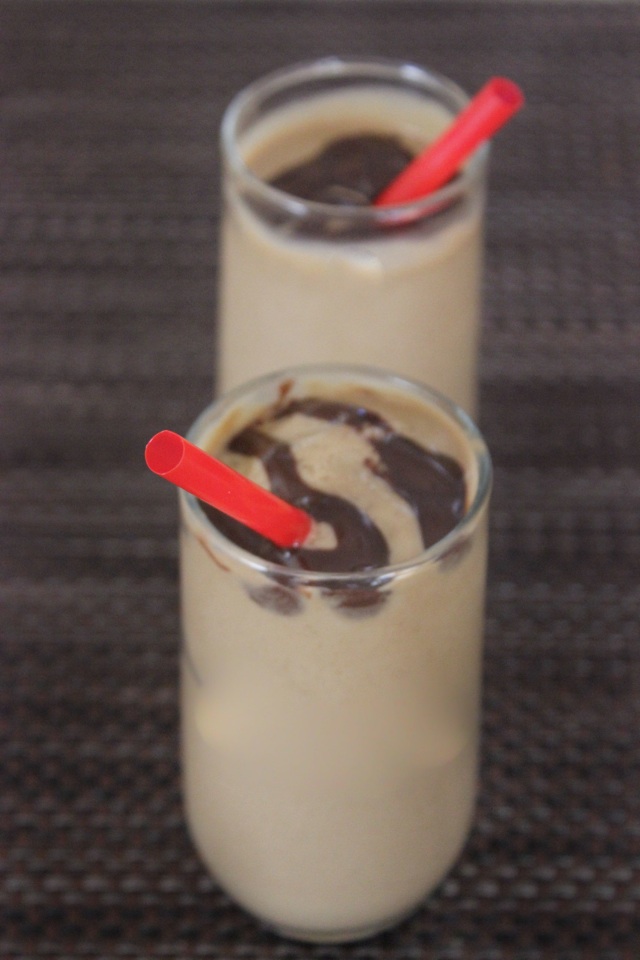
Sometimes the hardest part about going completely Paleo is going out to eat with friends. However, for me, an outing stimulates the creative juices for a new recipe. This Paleo chocolate-nut shake was an aftermath of a Sugar Daddies jaunt this weekend.

Sugar Daddies, located at 113 E. Street, in Downtown Davis is a locally-owned creamery that specializes in handcrafted ice creams and ever-so-delicious and adorable cupcakes. On weeknights Sugar Daddies offers different specials featuring some of their delectable treats. Specifically, on Fridays 4 – 7 p.m. their milkshakes are $1 off!

They have so many mouth-watering flavors to choose from — Chandru Special, Cinnamon Toast Crunch and Snickers, just to name a few. While my friends were indulging in their decadent milkshakes, my food blogger instincts kicked in and I was thinking of all the ingredients I had at home to make a similar milkshake.

The Chandru Special at Sugar Daddies is made using Nutella, chocolate and coffee ice cream — sounds amazing, doesn’t it? I couldn’t wait to get home and give the ol’ blender a whirl. But since I skipped out on a Sugar Daddies drink, I enlisted a friend who had just ordered a Chandru Special to help taste test… she approves.

Milkshake:
1 whole avocado, cold
1 very ripe banana
2 tbs. hazelnut butter
1 tbs. unsweetened cocoa powder
1½ c. unsweetened almond milk
2 tbs. strong coffee (or 1 shot of espresso)
2 handfuls of ice

Chocolate Syrup Topping (optional):
2 tsp. unsweetened cocoa powder
4 tsp. liquid honey
1 tsp. unsweetened almond milk
½ tsp. pure vanilla extract

Directions:

Place all shake ingredients in a blender and blend well.

For the syrup, place all ingredients in a bowl and mix.

Pour milkshake into two glasses and drizzle about 1 tsp. of chocolate syrup on top, if using.

This recipe yields two servings, so be that awesome housemate and share with your roomies. But if you decide to store the other half in the fridge, try to use an airtight bottle and store for no more than one day. The avocado will start to get brown and the whole shake will taste old.

DEMSINA BABAZADEH invites you to send your favorite recipes to undergo the Paleo treatment to dbabazadeh@ucdavis.edu

Water vapor to heat new Tercero dorms

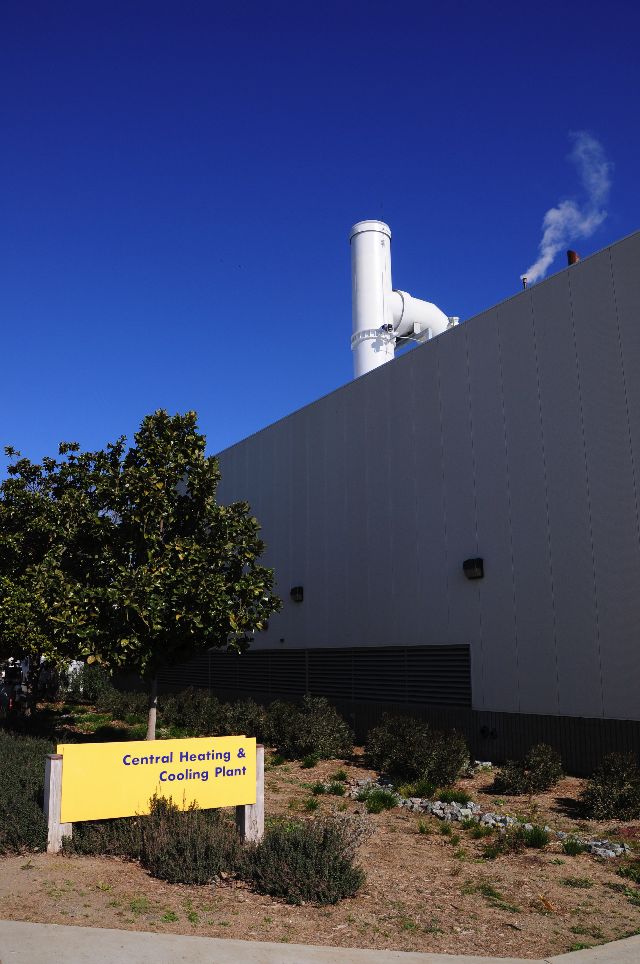
Water vapor from the campus steam plant will be used to provide heat and hot water to the Tercero Phase 3 campus dorms. Tercero 3 is currently under construction and is expected to be finished by June 2014.

This process of heat transfer is made possible through the use of a condensing economizer, a piece of equipment that captures the steam and heat that usually escapes from the plant, and instead utilizes the steam to heat the dorms.

The condensing economizer utilizes heat energy that would otherwise be wasted and would escape into the atmosphere, according to Joshua Morejohn, energy manager for Facilities Management at UC Davis.

“Without the condensing economizer, the heat goes out into the atmosphere at 300 degrees,” he said.

According to Pablo Orozco, senior project manager and assistant director of engineering for Design and Construction Management, this new system will have positive effects both economically and environmentally.

“By collecting energy that was being wasted, we save about $400,000 a year … We’ve reduced the overall natural gas consumption of the campus by 5 percent. We got a rebate from PG&E and we expect another rebate for $20,000. It increases the efficiency of the dorms … and because we are using and putting that heat to good use, we are increasing the efficiency of the boiler by that amount,” Orozco said.

This project is being funded through a one-time rebate of $511,000 from PG&E to the university for the 511,000 therms of natural gas that the university will be saving every year.

Michael Sheehan, director of Student Housing Facilities Services, said that the heat transfer project began because the campus was looking for ways to increase energy efficiency.

“The campus engaged a consultant to make recommendations to increase energy efficiency at the central plan. One of the recommendations was the heat recovery system, but at the time of the recommendation there were no appropriate buildings to be served,” Sheehan said. “However, the Tercero Phase 3 project was in planning and we were approached by campus [personnel] on the potential for linking the project to the new system. Once we learned more about the heat recovery project and the details were worked out, it became a great synergy and both projects moved forward.”

Construction on this project began Mar. 12, 2012 and the condensing economizer was activated the following November and is currently being used in the campus steam plant.

According to David Phillips, director of utilities, the economizer is expected to be used to heat more dorms in the future.

“As part of the Tercero Phase 3 project we also laid the pipe to eventually connect Tercero Phase 4, the Tercero Dining Commons and potentially Tercero South I and Tercero South II. We are currently working with [Orozco] and a consultant to define the details for connecting the Tercero Dining Commons next. We are also beginning formal planning for the Tercero Phase 4 project which is scheduled to begin construction in 2014,” Phillips said.

The revolutionary aspect of the economizer, according to Phillips, is that it allows the use of hot water instead of steam to heat the buildings.

“That’s like a really new idea for campus. Steam takes a great amount of energy. When you start using hot water, it opens up a whole new world of technology, for sustainability reasons …That’s the trend that’s really exciting. This is our first little expansion,” Phillips said.

JESSICA GRILLI can be reached at campus@theaggie.org.

News in Brief: Metric to perform at Mondavi Center

0

ASUCD Entertainment Council announced that Metric will perform at the Mondavi Center on April 17.

Pre-sale tickets are available Thursday at 10 a.m. at www.APEConcerts.com with the code “water.” General tickets go on sale Friday at 10 a.m. via APE and Ticketmaster.

— Elizabeth Orpina