47.7 F
Davis

Davis, California

Wednesday, December 31, 2025
Home Blog Page 984

Column: Show etiquette

5

The scene was set: I had press tickets to the L.A. Dance Project in Jackson Hall at the Mondavi Center. I was dressed up. I was with my gay best friend. I was prepared to be blown away by a dance group created by the man who choreographed Black Swan. I was already live-tweeting my experience, excited to gawk at 90-pound ballerinas prance across the stage.

Yeah, I was more wrong than I was right. The entire show was experimental, modern and not what anyone was expecting. Three separate performances with two 15-minute intermissions baffled everyone in the audience; even the rare young attendees were shocked at the weirdness of it all.

But this column isn’t going to be me whining about how I didn’t attend an actual ballet this weekend. It will be me whining about the ridiculous people in the audience.

First of all, during the second dance — mind you, each performance was about 25 minutes long — audience members actually left their seats to exit the theater. Sure, the “music” was unbearable (it was screeching noises for 30 minutes) and the dancing was smothered by the darkness that took over the stage, but to get up out of a $40 seat mid-performance? This wasn’t a community-theater holiday performance, people.

Second, every single intermission, some students would rush over to the girls sitting next to me, eager to dissect every movement, noise and element of the show thus far. It wasn’t until about two minutes into the first intermission that I realized that these were drama students. They were probably forced to attend the show for a theatre class, but because they were in fact drama majors, they thought they had some sort of legitimate opinion on the show.

Little did they know, they were sitting next to the biggest deal on campus: me. My guest and I remained silent, taking mental notes of all the ridiculous comments we were hearing.

“Oh my god, do you think that the lighting was influenced by the same lighting designer our professor mentioned that time in class? I should email her and impress her. What are you writing for the assignment?”

“Yeah, I did a show like this back in high school. Did you know that I was in 30 musicals? I was a big deal. I’ve always been the lead in every show I’ve been in. This stuff that we’re watching? Not even a big deal.”

I was seconds away from turning toward them and laughing my ass off. I went into the show ready to write a review of the actual performance and ended up changing my mind due to the people I sat next to.

The second dance was purely silent for the first 10 minutes, it seemed. And of course everyone in the effing theater had to cough during it. The girl next to me, completely healthy during each intermission, had no problem hacking up a lung during the silent parts of the show. Oh, and the snacks she HAD to unwrap DURING the show? Everyone could hear you, sweetie.

And one last thing, in a pitch-black theater, let alone the Mondavi Center, a cell phone has no reason to be out during a performance. But no. The girl next to me suddenly decided that she was the lighting director and had to light up the audience with her Nokia brick of a phone with a pop-out keyboard.

Do people not understand respect? How to pay attention for freaking 90 minutes? The people on stage have more talent than you probably have or will ever have. If you’re so cultured in the world of drama, shouldn’t you understand how an audience should be acting? Who do you think you are?

You know what? At least share the snacks.

ELIZABETH ORPINA can be reached at arts@theaggie.org.
News in Brief: UC Davis Student Recognition Awards open nominations

0

Upperclassmen can nominate themselves or other upperclassmen for the 2013 Student Recognition Awards.

The awards aim to publicly recognize students who serve to improve the University and campus community.

More information on the selection criteria and the application/nomination form can be found online at the Student Affiars website at sa.ucdavis.edu/studentawards.cfm.

Nominations will be open until 5 p.m. on Feb. 19.

— Muna Sadek

UC Education Abroad Program to give $1 million in scholarships this year

0

The University of California Education Abroad Program (UCEAP) announced that it will be doubling scholarship funding to $1 million for 2013-14.

UCEAP will be giving scholarships to students of all majors and programs, according to a press release from UCEAP. It will also award scholarships for returning students who are selected to be Student Ambassadors.

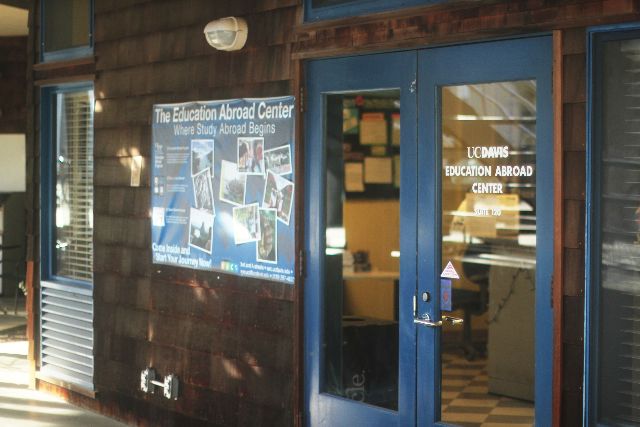
The Education Abroad Center provides opportunities through four types of programs — the UC Education Abroad Program (about 26 percent of UC Davis study abroad participants); UC Davis Summer Abroad (51 percent), UC Davis Quarter Abroad (18 percent) and independent, third-party programs (5 percent), according to the UC Davis EAC office.

“We know from surveys and advising that finances [or] lack of financial aid is the number one reason given by UC Davis students for not participating in a study abroad program. These are students who want to study abroad but do not have the resources to make it happen. For those who do study abroad, over 60 percent are self-reported financial aid recipients. At the same time, we consider study abroad to be a core part of a UC Davis undergraduate education. Any student who has the resources to attend UC should also have the opportunity to study abroad, period,” said Zachary Frieders, associate director of the UC Davis EAC office. “To make this a reality, we are committed to increasing accessibility of study abroad for all students, and scholarships are a major component of this effort.”

According to the UCEAP website, costs for an average quarter stay are around $17,000. An average summer program costs about $10,000 and an average year long stay would cost about $20,000.

“As a former UCEAP participant, I can’t stress enough how crucial an international education is in today’s globalized world. The recently announced $1 million study abroad scholarship initiative and the recent increases in UC Davis Travel Awards ($80,000 for Summer Abroad and $40,000 for the Quarter Abroad program) won’t just help students begin their study abroad experience, but will also help build the global-minded leaders that our world needs,” said Bryan Steele, a fourth-year international relations major and study abroad peer advisor at the EAC who studied in Barcelona, Spain for a year, in an email interview.

Many agree that UCEAP’s $1 Million Scholarship Initiative will broaden study abroad opportunities for UC students from all backgrounds and academic disciplines.

“Studying abroad is truly a one-of-a-kind, life-changing experience that I would recommend to anyone and everyone. Many students cannot go because of the financial burden, so it’s amazing to know that this grant will help make the opportunity of studying in a different country a reality,” said Crystal Arnold, a third-year animal science and management double major who studied in Australia for Fall Quarter.

Summer Abroad enrollments have just opened and programs are available on a first-submitted, first-enrolled basis. The center boasts over 40 programs in countries all over the world for four weeks and a total of eight units earned.

For more information about studying abroad visit studyabroad.ucdavis.edu.

NATASHA QABAZARD can be reached at campus@theaggie.org.

Women’s Basketball Preview

Teams: UC Davis vs. Long Beach State; vs. UC Irvine
Records: Aggies, 8-10 (3-4); 49ers, 11-8 (4-3); Anteaters 4-15 (0-7)
Where: The Pavilion — Davis, Calif.
When: Thursday at 7 p.m.; Saturday at 2 p.m.
Who to watch: As the Aggies continue their quest to back up sophomore Sydnee Fipps’ shooting, freshman Aniya Baker has emerged as a consistent scorer for the UC Davis women’s basketball team.

Baker dropped 16 points in the Aggies’ destruction of Cal State Fullerton, then followed that up with five points in UC Davis’ victory over UC Riverside.

The Perris, Calif. native has scored in every game she has appeared in except the match-ups against Stanford and UC Santa Barbara, and has been credited as one of the quickest players on the team by head coach Jennifer Gross.
Did you know? UC Davis has three veteran players eating up minutes for the Aggies. Fipps, along with seniors Cortney French and Blair Shinoda have been leading the young team.

Yet, aside from these three players that make up the tripod for the team to stand on, the Aggies have also been leaning on the young talent of the freshmen. Celia Marfone and Molly Greubel have appearances in every game, and have started most of them. Baker has missed just one game.

Greubel, Marfone and Baker have the next most minutes, in order, behind Shinoda, Fipps and French.

Preview: With two recent victories under their belt, the Aggies have momentum on their side entering the weekend games.

UC Davis catapulted themselves up two spots from ninth in conference to seventh after victories over the Titans and the Highlanders. This weekend will not be easy, but being at home can’t hurt. Despite the Aggies’ 2-5 record at home this year, they were 9-4 at the Pavilion and can be depended upon to play well.

First against Long Beach State, UC Davis will have quite a challenge. The 49ers are currently in fourth place in conference with an 11-8 overall record. Last season when the Aggies hosted LBSU, they took them down by a 16 point margin.

Still, when UC Davis traveled over to Long Beach, they dropped a 67-55 decision. There are no guarantees going into this game, as the Aggies only have six players returning this season who saw action against the 49ers in last year’s game at the Pavilion.

Most recently, the 49ers took down UC Irvine by a 71-61 mark. The Aggies will enter their contest with the last place Anteater team with caution, as they dropped both games against UCI last season.

When they hosted the Anteaters, UCI shocked them with a 68-59 flouncing at the Pavilion.

The Anteaters are 0-7 in conference but should not be overlooked, as they have played several close games in their Big West match ups.

The Aggies will look for two wins this weekend, which could propel them even higher in their climb in the conference standings.

—Matthew Yuen

Column: Victory against power

1

The Anarchist

Somehow, it’s hard to remember that UC Davis students successfully kicked U.S. Bank off of our campus last March. Somehow, it’s just so hard to remember so many things — things like victories against power. It’s hard to recall what tactics succeeded in undermining unjust authority.

Obviously there is a reason. Ideological manipulation is not subtle. I want to try to illustrate this lack of subtlety.

UC Davis students won. They sent a clear message: They don’t want privatization (they sent a few messages, and I will not pretend to speak for them, but “anti-privatization” seemed to be the central theme). Furthermore, the administration had to use completely different tactics against the Davis Dozen than in previous protests –– a much more subtle, yet dissent-stopping approach. Why did they do that? They did it because the protesters have power.

Protesters have power.

The administration did not want to stir up more dissent by removing those students. More dissent means more protests. More protests mean more challenges to these systems, these systems that operate in their own self-interests.

They operate, insofar as they can, solely in their self-interests, and the only reason that any hierarchy ever functions to serve the interests of anyone beside those at the top of the institution is that they are forced to do so.

Basically, the administration was afraid. And they should have been. Their ability to run the institution in their own interests was threatened. The people who are at the top of the administration are there because they uphold that system. If they did not act in that way, then they would have never been selected for by that system.

Of course, they think of themselves, most likely, as noble upholders of public education, and they may be, to some degree. It is not plausible to think that these people are consciously undermining the goals of the California Master Plan for Higher Education. The evidence that their actions are not in the interests of students, though, is overwhelming enough that there is no need to list it.

Clearly, administration members are selected by the system to uphold the power of the system and the power of the interest groups that have control over things that the administration need (such as the corporate investors in the university, who have power because they can cancel or move their contracts).

The administration was forced to yield to the students so that the students would not take further action that would threaten the power of those at the top of the hierarchy. That is the only reason that they did not forcibly remove the Davis Dozen, which would have been a more attractive option if it were available. But they instead sneakily tried to nullify them with a lawsuit.

So, in this case, a hierarchical institution was forced to act in ways contrary to its power interests in order to keep further threats to its power at bay.

This should tell us something, something that institutions of power try to suppress. We won, and this is how we win.

The fact that we are constantly bombarded with information that is filtered through these self-interested systems ensures that we will see our victories, and how they happened, far less frequently.

That is why it is so easy to forget. When there is an ocean of corporate media, it is easy to get lost, adrift in it. When something gets reported extremely infrequently, we are likely to think of it as less significant. This is a myth that power groups use to their advantage to an extreme degree.

The administration did not send out an email telling us how effective protest was and how we really put them in a tough spot. They want to play that down. They do not want more of that. They want to keep operating in their own interests.

This is what all power groups do. As Gil Scott-Heron put it, the revolution will not be televised. The elites own and run the systems of information dissemination, and they are certainly not going to jubilantly announce the weapon of their own destruction.

We have won this way before so many times, and we can only win this way. So many people have fallen for the false notion of progress that is presented in the corporate media: Progress happened because some small group of wise men at the top had some good ideas. It was never that. It was protest and direct action every time.

This is not going to change soon. We have to protest and take direct action against these self-interested hierarchies in order to force them to operate in our interests. As much as we take action against the system, it will play down our effectiveness.

UC Davis students kicked out U.S. Bank. UC Davis students limited fee hikes. This is how we can win. Don’t forget.

BRIAN MOEN wants to see hella protests all the time, like, a lot … seriously. He can be reached at bkmoen@ucdavis.edu.

News in Brief

0

UC Davis Intercollegiate Athletics (ICA) presents: The Art of Athletes, the fourth annual ICA student-athlete art show held at the Basement Gallery in the Art Building. The show runs Friday to Monday and will feature over 40 pieces of student-athlete art pieces. There will be a “meet the artists” reception tomorrow from 5:30 p.m. to 7 p.m. This show is free and open to the public. The Gallery will be open from 5 to 7 p.m. on Friday, noon to 6 p.m. on Saturday, 1 to 5 p.m. on Sunday and 9 a.m. to 4 p.m. on Monday.

— Elizabeth Orpina

Track and field prepare for all-comers meet

After setting multiple school records over the weekend at the University of Washington Invitational, the UC Davis track and field team will have a week’s rest under its belt before the all-comers meet on Saturday. Head coach Drew Wartenburg and the rest of the coaches came out of the Evergreen State satisfied.

“We approached the meet hoping to set a positive tone both for the indoor and the outdoor season,” Wartenburg said. “Starting Friday afternoon, with the early events continuing all through Saturday competition, the coaching staff was pleased across the board with the results that we got from the athletes, so it was a great weekend.”        

Wartenburg also said this past week has been a good gauge of how the team is doing so far this year.

“In a general sense, we’re probably a little bit ahead of where we were last year at this time, which is always a good measure,” he said.

With a set roster, only a few athletes from the track and field team will be in action Saturday at Woody Wilson Track. A variety of events will take place, including the 4×200 meter relay, the mile race, 55m hurdles, 400m and 550m runs, 4x800m relay and 4x400m relay for the track portion. The field events include pole vault, high jump, long jump, triple jump, shot put and discus.

“The all-comers meet is a good opportunity to get some competition in. It doesn’t count as a team event, so the athletes will be competing unattached,” Wartenburg said. “They’re not in uniform, but it’s a great way to get a competition setting and a comfortable environment at our home track. And it’s a good chance to see the results of the training we’ve done up until now, especially for people who aren’t able to travel and compete indoors.”

Tickets will be $5 for spectators and coaches and $3 for children who are 12 years of age and younger.

After the practice meet, the track and field team will head up again to Washington for a three-day event. Despite the success of last weekend, the team is not worried about getting into the record books, but staying focused on what is ahead.

“Part of the way we really encourage to approach competition is to compete first, strive for best efforts, and in the process, records will come,” Wartenburg said. “ We don’t like to chase records, but I think as training continues to progress, we’re going to have people go up and have some performances that will be record-type performances. More importantly, we’ll be competitive with teams and the athletes we’ll get to see at the Husky invite in a couple of weeks.”

Luke Bae

News in Brief: Surface water project forum on Saturday

0

The People’s Vanguard of Davis and Davis Media Access will sponsor a roundtable forum on the Woodland-Davis surface water project, or Measure I, on Saturday from 1 to 3 p.m. at Davis Community Chambers.

Proponents and opponents will participate, with three of each side on the panel. Three technical experts on hydrology, financing and water policy, respectively, will be present. Proponents of the project include Mayor Joe Krovoza and Alf Brandt. Opponents include former city councilmember Sue Greenwald.

The public is encouraged to attend the forum. The purpose of the event is to allow the community to hear both sides’ opinions of the water project, as well as allow the community to ask any questions. Measure I will be on the March 5 Special Election ballot.

— Claire Tan

Album review: Heartthrob

0

Album: Heartthrob
Artist: Tegan and Sara

Heartthrob, the newest album from twin-sister indie rockers Tegan and Sara, presents an artistic evolution for the two.

It’s not a crazy move like Lil Wayne picking up the guitar; it’s more like Madonna picking up the guitar. It’s also pretty much par for the band.

I should note here that I consider myself to be a Tegan and Sara fan. In high school I discovered their 2004 album, So Jealous, and fell in love with it. I’d recommend it as the combination of vocal harmonies, songwriting and new-wave-revival sounds cannot be beat, as Heartthrob proves.

Heartthrob defies immediate comparison with their earlier work, however, as it is more based around synthesizers than guitars. It’s very easy to imagine songs like the bouncy “Drove Me Wild” or sex anthem “Closer” on mainstream top-40 radio. At first, I thought that this was Tegan and Sara selling out, but the music has their signature feel about it.

The songs are all good, with nice hooks and pleasurable melodies. However, none stuck out in particular. This struck me as strange because when I first listened to So Jealous, many songs hit me as memorable. Hell, even their 2009 album, Sainthood, had one or two songs that wowed me on my first listen.

If you love pop music, you’ll like Heartthrob. It isn’t Tegan and Sara’s best work, but it is satisfying nonetheless.

FOR FANS OF: Passion Pit, Lady Gaga, ’80s Madonna, Robyn
STAR RATING: 3 ½ out of 5

— John Kesler

ArtsWeek

0

Film

Salome Opera High-Definition Screening
Monday, 7 p.m.; tickets: regular $20 / student $10
Mondavi Center

The Mondavi Center is to screen Richard Strauss’ sexually-charged one-act opera set in Biblical times, an adaptation of Oscar Wilde’s play, by the San Francisco Grand Opera Cinema Series. The opera screening, sung in Italian, includes English subtitles along with a behind-the-scenes interview during intermission.

Music

Shinkoskey Noon Concert: Worlds of Discovery and Loss: The Art of Migration
Today, 12:05 p.m.; free
Mondavi Center

Calder Quartet, Rootstock Percussion Trio and Mayumi Hama (marimba) perform during the lunch hour.

Empyrean Ensemble: Art of Migration
Friday, 8 p.m.; tickets: $20, available online or at Mondavi Ticket Office
Mondavi Center

The Empyrean Ensemble of the UC Davis Department of Music, which consists of seven extraordinary musicians, is to present an engaging, eclectic program at the Mondavi Center.

UC Davis Symphony Orchestra
Sunday, 7 p.m.; tickets: $17 / $15 / $12, available online or at Mondavi Ticket Office
Mondavi Center

The UC Davis Symphony Orchestra is to perform a variety of compelling pieces for the program, featuring a concerto for two marimbas.

Dance/Theater

Migration and Other Projects: A presentation by MFA candidates in the Department of Theatre & Dance
Today, 8 p.m.; free
Mondavi Center

MFA Candidates in the Department of Theater & Dance are to present their projects at the Mondavi Center. Come enjoy dance performances, The Migration Project / Le Projet Migration and Crawl, and two Extracts from Today I Live — a full-length play.

Davis Dance Project 2013
Friday, 7 p.m.; general admission $12, children 12 and younger are free
In-House Theater Pamela Trokanski Dance Workshop, 2720 Del Rio Place

This year’s Davis Dance Project focuses on the concept of form follows function in the world of the choreographer, with an interest in how dance is created. A multitude of local and regional dance companies are to perform, and Davis Dance Project will allow opportunity for audience participation.
Continuing performances on Saturday at 2:00 p.m. and 7:00 p.m.

Stranger, Beware … A Night of European Cabaret
Saturday, 10:30 p.m.; free
Mondavi Center

Bella Merlin, actress, singer-songwriter, author of five books on acting, and professor of acting in the UCD Department of Theatre & Dance, is to put on a European Cabaret performance at the Mondavi Center.

Art/Gallery

Love Lingers: Pence Gallery Group Valentine’s Day Show
Friday, exhibit opening (reception Feb. 8, 6-9 p.m.)
Pence Gallery
Celebrate the season of love at the Pence Gallery for its Valentine’s Day show. Come enjoy playful sculptures, mixed media pieces, handmade Valentine cards and other works by over 25 artists — and not to mention plenty of candy.

— Cristina Fries

News in Brief: Davis Stampede on Sunday

0

The annual Davis Stampede will take place on Sunday starting at 8 a.m. at Central Park. The event will temporarily close off Third and B streets around the park for the runners.

The Davis Stampede is a race that occurs on the first Sunday of February. Individuals can participate in 5K, 10K or half-marathon routes. The routes go through downtown, the East and South Davis greenbelts and neighborhood streets.

Online registration will be open until 8 a.m. tomorrow. In-person registration will be available until 7 p.m. today at Fleet Feet Sports located at 615 Second St. Individuals can also register at packet pickup on Saturday from 9 to 5 p.m. at Fleet Feet Sports. Individuals may also choose to register the morning of the event.

Entry fees are $33 for the 5K and 10K races, $53 for the half marathon and $13 for kids through tomorrow. At packet pickup and on race morning, entry fees are $35 for the 5K and 10K races, $55 for the half-marathon and $15 for kids.

— Claire Tan

Dining in Davis: Preethi Indian Cuisine

If there’s one thing that Davis has no shortage of, it’s Indian restaurants. However, Preethi Indian Cuisine, one of the newest additions, is a little different.

While the restaurant serves the typical variety of Indian food that most people are accustomed to, it also has a selection of South Indian specialties, like dosas.

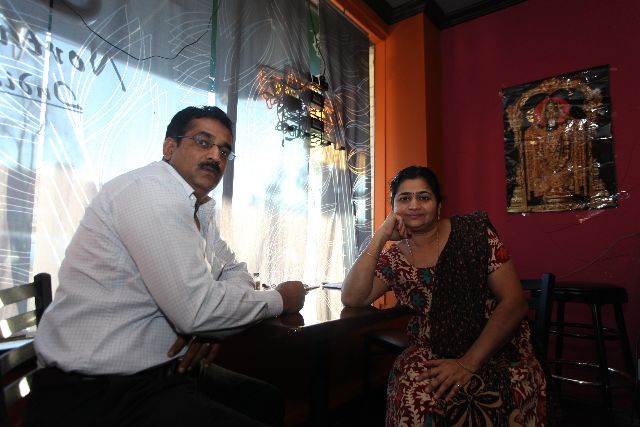
Nanda K Immareddy and his wife Krishna opened Preethi in May of 2012. It is an entirely family-owned restaurant, with Immareddy’s relatives working in the kitchen, and the family has been in the restaurant business for over 25 years.

If the “FREE WI-FI ACCESS” sign outside the front door isn’t enough to draw you in on a cold, rainy night, a peek through the window at the décor will definitely do the trick. As soon as I opened the door, I was surrounded by bright orange and magenta walls, one of which was filled with a floor-to-ceiling mural of a Buddha. Other decorative items include an adorable elephant statue, colorful metal sculptures on the walls, another Buddha on a room divider and a flat-screen television that plays a loop of movies to enjoy while dining. The warm tones and ornamental pieces make the two-roomed restaurant friendly and inviting. One complaint: the tables along the wall are a little close together.

After my two friends and I were seated, we spent a good fifteen minutes perusing through the rather extensive menu trying to pick out a variety of items that still fit within our seniors-in-college budget. It was admittedly difficult to decide, because the menu is filled with so many appealing dishes that range from the standard chicken tikka masala ($11.95) to the more adventurous goat korma ($12.95). Luckily, the server, donned in a traditional sari, brought us complimentary papadums — a typical Indian cracker snack served with two types of chutney — to hold us over while we made our decisions.

Eventually, we decided on splitting a masala dosa ($5.95), chicken tikka masala, lamb biryani ($12.95), and chicken vendalu ($10.95). The menu lends itself to a lot of consumer choice — all entrees come either a la carte or as a full dish, include a choice of naan or rice, and can be prepared mild, medium or spicy. We went for a la carte all around because it saved us roughly $3 on each dish — bringing the average entree price down from $15 to $12 — and decided to order both naan and rice to go with our mediumly-spiced entrees.

If you go to Preethi for just one thing, go for the masala dosa, one of the restaurant’s South Indian specialties. If I were on the Food Network show “The Best Thing I Ever Ate,” which I often wish I were, this appetizer would be on my list of things to talk about. “Appetizer” isn’t the best word to describe it though; the thing is literally the size of an arm. It’s a long, rolled up semi-crispy crepe made of lentils that tastes like sourdough bread, filled with a vegetable curry containing roasted potatoes, carrots and peas. It also comes with an onion gravy soup — sambar — for dipping, giving it an even fuller flavor. I’m not sure what the proper etiquette is for consuming dosa, but my friends and I ripped it apart with our hands and destroyed the thing within about five minutes.

The vendalu and tikka masala, which are the two Indian dishes that I always seem to order, were also incredibly satisfying. The vendalu, which is an onion curry seasoned with a variety of Indian spices, was delicious but tasted about the same as others I’ve had before. The tikka masala, however, was richer, creamier and more buttery than most, and isn’t very spicy either.

Preethi also specializes in biryani, or basmati rice pilaf, and offers six different varieties. We ordered the lamb version. But meat aside, the dish has so many flavors, like saffron, basil, lemon and other Indian herbs and spices.

For Indian food beyond the typical scope of Davis dining, pay a visit to Preethi. While it’s certainly more expensive than a Raja’s lunch buffet, it’s about in line with other Davis Indian restaurants in terms of prices (three of us shared all of the food and paid about $18 each with tip and tax). When I return, I will probably focus mostly on the South Indian specialties and will try out the bar, which features Indian beers and wines as well as $3 beer on tap — always a plus.

Preethi Indian Cuisine
712 2nd St.
Hours: Monday through Friday 11 a.m. – 3 p.m. and 5 – 10 p.m. Saturday and Sunday 11:30 a.m. – 3 p.m. and 5 – 10 p.m.
Food: ****
Ambiance: ***
Cost: $$$
Key
Food and ambiance quality
**** I’m dining here every day
*** Almost like eating at home
** Better than my roommate’s cooking
* Only if I’m starving
Budget
$$$$ chancellor $20+
$$$ professor $15-20
$$ graduate student/alum $10-15
$ undergraduate $5-10

KATIE MORRIS can be reached at kemorris@ucdavis.edu.

The big picture is sound

The processes in the brain of a schizophrenia patient are still somewhat of a mystery, but researchers from the University of California, San Diego School of Medicine and the VA San Diego Healthcare System are on track to understanding how environmental stimuli are processed in the mind of a schizophrenia patient.

Through the use of electroencephalography (EEG), researchers are able to follow the pathways that are activated in the brain from the time of the stimulus up until the higher brain processes.

Schizophrenia is a mental disorder characterized by symptoms that fall into two categories: positive and negative. Positive symptoms are those that are associated with psychosis, and include delusions, disordered speech and thoughts and hallucinations. The negative symptoms are generally a bit more complex and can affect one’s quality of life. They include, but are not limited to, apathetic behavior, alogia (impoverished speech), lack of motivation, and even lack of desire to form relationships. Although there are medications that can help suppress these symptoms, they generally only mitigate the positive symptoms.

“The medications treat psychotic [positive] symptoms pretty well, but don’t really treat the negative symptoms. What’s unfortunate is negative symptoms are a stronger predictor of one’s ability to function in the environment than positive symptoms,” said Michael Minzenberg, an associate professor of Clinical Psychiatry at UC Davis. “Negative symptoms on the other hand are more disabling because if people are socially disconnected or unable to think clearly … they can’t get a job and adequately take care of themselves.”

Currently, the only treatments are pharmaceuticals.

“There have been significant advances in the last 15 years with the introduction of atypical antipsychotic drugs, heralded first by clozapine and followed now by other drugs,” says Ralph Hoffman, a professor in the Department of Psychiatry at Yale University School of Medicine.

The causes of these symptoms are still not completely clear, but recent research by Gregory Light, associate professor of psychiatry at UC San Diego and senior author of the study, may help predict the severity of the symptoms. In a series of simple auditory tests (which include playing tones within roughly a half second of each other) and the use of an EEG, Light’s team was able to map the neural circuitry of where a schizophrenic patient’s brain suffers deficits and abnormalities in the presence of auditory stimuli.

“The research studied two major parts of an auditory response complex. The first is called mismatched negativity, or MMN. It starts to occur about 1/20th of a second after a sound is presented … called an infrequent unexpected stimulus. The second part of the response complex is called P3a,” Light said. “The first figure shows patients have MMN deficits in isolated areas at the medial frontal cortex. At the second part of the wave, P3a shows there are deficits across large sections of the brain. So taking those two pieces together suggests that impairments at the earliest stages of sensory discrimination start off in relatively isolated areas and propagate forward to produce large-scale dysfunction in attention.”

These processes all occur within fractions of a second, and can help explain some of the causes for the positive symptoms such as auditory or visual hallucinations. This explains why schizophrenia patients are unable to detect certain social cues and subtleties such as sarcasm or a raise in vocal tone. The pathway in which these stimuli travel also explains why there are so many symptoms; the widespread propagation of the signals affect different portions of the brain, making it difficult for the mind to piece together simple external inputs. The experiment isn’t just limited to sound inputs either; these same patterns are shown in other sensory cortices such as those dealing with visual and tactile inputs.

With this new research, Light hopes to create possible treatment plans that involve conditioning schizophrenia patients to recognize and respond to certain stimuli.

ALLEN GUAN can be reached at science@theaggie.org.

Increase in UC Davis international transfer applications

UC Davis experienced a 23 percent increase in applications from international transfer students for Fall 2013, the largest percentage increase of all University of California schools.

According to the UC Office of the President, UC Davis received a total of 69,642 applications, an 11.4 percent increase from 2012. Of these applications, 8,789 were from international students. Additionally, 6,747 were international students applying as first-years, a 65 percent increase from 2012.

The University received 2,042 applications from international students applying as transfers, a 23 percent increase and the largest increase of any UC. UC Riverside saw the second-largest increase in international transfer student applications at 21.9 percent.

“For the last three years, UC Davis has put forth a significant effort in the area of outreach and recruitment to create a more global campus community,” said Walter Robinson, director of UC Davis Undergraduate Admissions. “The benefits of outreach and recruitment efforts are starting to show. We’re starting to receive applications of highly qualified students who come from globally diverse communities.”

According to Robinson, this all ties into Chancellor Linda Katehi’s 2020 Initiative.

“The general direction is one of growth,” Robinson said. “Of students from across the nation, the globe and from all regions of California.”

According to the “2020 Initiative: Work Plan” from Nov. 30, 2011, one of the three main goals is to create a more diverse scholarly community.

UC Davis seeks to accomplish this by increasing the proportion of national and international students while increasing the enrollment of California residents, encouraging international experiences for non-international students and increasing the amount of international graduate students and faculty members.

“We’ve been very intentional in developing a strategic recruitment plan,” Robinson said.

Systemwide, there was a 30.9 percent increase in applications from international students, both first-years and transfers.

“We are still seeing increases,” Robinson said. “People still consider the University of California to be one of the best values in undergraduate education and graduate education in the world.”

MEREDITH STURMER can be reached at city@theaggie.org.

Column: Butterflies and tornadoes

The term butterfly effect may refer to more than a 2004 film starring Ashton Kutcher. What’s the saying again? A butterfly flaps its wings and a tornado touches down in Texas? How could that even happen? Let’s think for a moment about butterflies. While I’m reasonably sure that even the mightiest of earthly butterflies outside of fiction couldn’t generate disastrous wind storms with a single motion, further investigation into the processing of natural laws could make the idea a little less far-fetched.

The average monarch butterfly has a wingspan of about 10 centimeters and weighs close to half a gram. If butterflies had perfectly square wings, then the approximate total surface area would be 10,000 square millimeters or 0.01 square meters, roughly two iPhone screens put side by side … I’m not trying to insult anyone’s intelligence.

Butterflies exist on earth, and they fly. In order to achieve this, they need to overcome this pesky thing called gravity. Sir Isaac Newton observed gravity’s action on falling bodies, and through some fancy math, discovered that our planet’s gravity causes falling bodies to accelerate at a constant rate. In order to cause acceleration, gravity exerts force. It just so happens that the force acting on the butterfly is about half a millinewton. In simple terms, the earth pulls on this hypothetical butterfly just about as much as it pulls on a paper clip.

In order to achieve flight, the butterfly would need to exert a force greater than the 0.0005 newtons of downward gravitational force acting on it. Insects in general are pretty spry and zippy; for simplicity’s sake, I’ll say that the flap of a butterfly’s wings exerts .001 newtons (1 millinewton) of upward force, twice the force keeping it down. Conservation of energy would lead us to believe that any of the subsequent molecules of air in the hypothetical volume of the butterfly’s wingbeat are being hit with about 1 millinewton of force.

The International Union of Pure and Applied Chemistry’s standard measure of temperature and pressure gives dry air — the air our butterfly is flying through — a density of about 1.3 kilograms per cubic meter. Meaning that for every flap of the wings, if our butterfly’s 0.001 square meter wings travel 4 centimeters (0.04 meters), we’d have a total volume of 0.0004 cubic meters of air being displaced, or .5101 grams of air being hit.

Recap number one: every time the butterfly flaps its wings, it is moving half a gram of air, about the same as the butterfly weighs. The information is irrelevant, but it’s a cool coincidence.

Assuming the atmospheric air being hit is largely oxygen and nitrogen gas, we can use Avogadro’s number (6.02*1023) to calculate that our little butterfly is hitting 240,885,660,000,000,000,000 (240 quintillion, 885 quadrillion 660 trillion) molecules of air with about 1 millinewton of force. There is a lot of other complex math involved that I am probably forgetting to include, but the things I don’t understand are literally Greek to me.

Recap number two: we have this monstrous insect transferring enough force to cause a plurality of molecules to accelerate by a value of some other unwieldy number. But to put things in perspective, every time a butterfly flaps its wings, it moves a small jar’s worth of air — still a big stretch from throwing any houses out of Kansas.

So now let’s move to the tornado. How do tornadoes work? In simple terms, when warm air passes underneath cold air, the warmer air tries to rise, but can’t pass through the dense, cold air. The air swirls horizontally until enough force builds up that the different bodies of air have to move past one another, and the entire rapid wind current comes spiraling to the ground.

Conceptually, we are now left thinking about two things that at first glance are wildly different. One is a weather-pattern-sized mass of destructive air, and the other is small enough to fit into a jam jar. It’s easy to imagine one small butterfly causing this small jar’s worth of air to move. From there it wouldn’t be hard to imagine that jar of air going out and pushing other “jars” worth of air. Before too long, this butterfly has made a very large number of air molecules move just a little bit faster.

This miniscule speed increase doesn’t happen all on its own either. The additive forces from billions or trillions of other literal and metaphorical butterflies all come together in a very specific, yet random, interconnected way. The funny thing about time, is that on earth at least, it happens for everything simultaneously; on a long enough timeline, everything affects everything else.

Recap number three: butterfly flaps its wings, moves a little bit of air, which in turn moves a lot of air very slowly. The small butterfly has contributed to the monumental force of a tornado.

And while no single butterfly may ever be the sole progenitor of an entire tornado, the miniscule shift in initial conditions caused by that one flap of a butterfly’s wings could have an untold cascading effect on future events.

Ultimately, be it with regard to particle physics, or something complex like interpersonal interactions, no moving matter exists as an isolated system. Our universe is made out of a vast web of connections both visible and invisible, known and unknown. In a long enough timeline, even the smallest change in initial conditions can yield a quantifiable different outcome.

ALAN LIN likes to think about butterflies’ effects on weather and can be reached at science@theaggie.org.