Like father, like daughter
By NEVAEH KARRAKER— nakarraker@ucdavis.edu
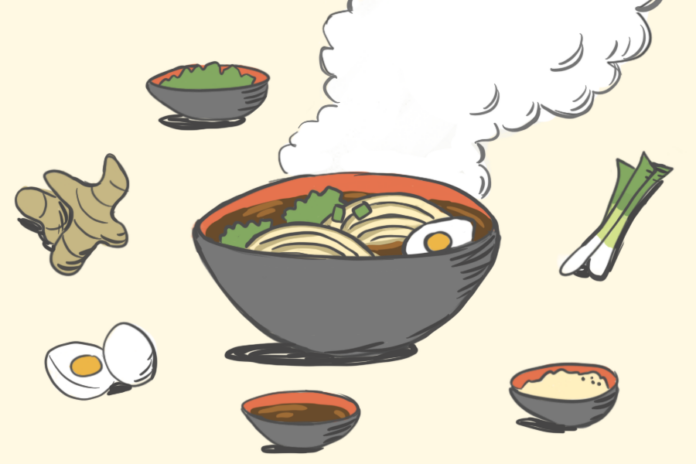
My father’s favorite word is “facetious.” He bellows it while cooking spicy ramen at 10 p.m., he whispers it during our debates and chuckles it out while telling cheesy dad jokes. It’s become a consistent inside joke between us, especially in the kitchen.
Cooking is a creative endeavor with endless possibilities, and the kitchen is somewhere we can discuss any subject: where flavors are like opinions. As we stir in the ingredients, he presents his claims with evidence and I counter with my own. And, as he tosses in data, he educates me on new recipes.
Eventually, the term “kitchen conversations” became established. At the time, it was a fun way to bond and refer to our nightly ritual. Gradually, it evolved into a nostalgic tradition that heavily influenced how I approached many things in my life, including philosophy, my research process and the importance of being properly informed before making assumptions on controversial topics.
It’s common knowledge in the culinary field that temperature, humidity and other external factors affect the concoction of delicious dishes. Correspondingly, our environment shapes who we are in ways we often don’t notice. We adopt a select few mannerisms of those we spend our time with, like speech patterns or hand gestures.
As my father fell into the role of a public figure in my hometown and at his work, I began to hear the term “kitchen convos” thrown around by the people I knew. He nourished an open-mindedness so unconventional that it enabled him to educate anyone within his vicinity about recent events and theology in a factual, unbiased manner.
This environment my father cultivated attracted everyone to the kitchen, even if he wasn’t there. It made me excited to begin making my own meals and having discussions with friends.
Attempting to cook in community kitchens, though, is vastly different — I’m sure Davis students can attest to this. It’s eerily quiet, you have to awkwardly shuffle past people and you probably want to avoid storing food there.
I presumed I would frequently utilize that space; Instead, I rarely entered it. When I did, the noodles lacked the flavor they once had — as good as they tasted, they would never compare to his company. There now exists the incapability to make these noodles alone. Tradition is practically insignificant if it’s not shared and experienced with others.
The more I observed this phenomenon, the more I began to understand. It’s like music. We find an artist or song and it’s all we consume. When someone asks us about it, we can’t help but grin as they listen to it because we were the one that recommended it. They save it in their song library, and occasionally we’ll notice them post on social media attending the same artist’s concert months later. With food, they might bake us the same sweet treat we made them when we visited. Reenactment is a reminder of how deeply that interaction meant to us.
Something as simple as ramen taught me how influential and valuable our relationships can be, and, in exchange, how we gain transferable skills.
When adding egg to noodles, it’s important to incorporate them properly, rather than scramble them. Similarly, when placed under pressure, either we can flourish or we can wither. We need to accept constructive criticism, rather than reject it. And, we need to learn from others’ opinions — flavors — instead of assuming indifference. The application of this knowledge allows us to not only be a teacher, but be teachable.
In a way, the world is a kitchen: a place where perspectives are mixed and critical thinking skills are strengthened. Instead of turning on a stove, we ask questions. Instead of reading instructions, we analyze reasoning. And, instead of plating, we present evidence. All of this boils down to two foundational ingredients — objective truth and affection.
Written by: Nevaeh Karraker—nakarraker@ucdavis.edu
Disclaimer: The views and opinions expressed by individual columnists belong to the columnists alone and do not necessarily indicate the views and opinions held by The California Aggie.