





Commentary: There’s more to the cannibalism metaphor than all-consuming romance
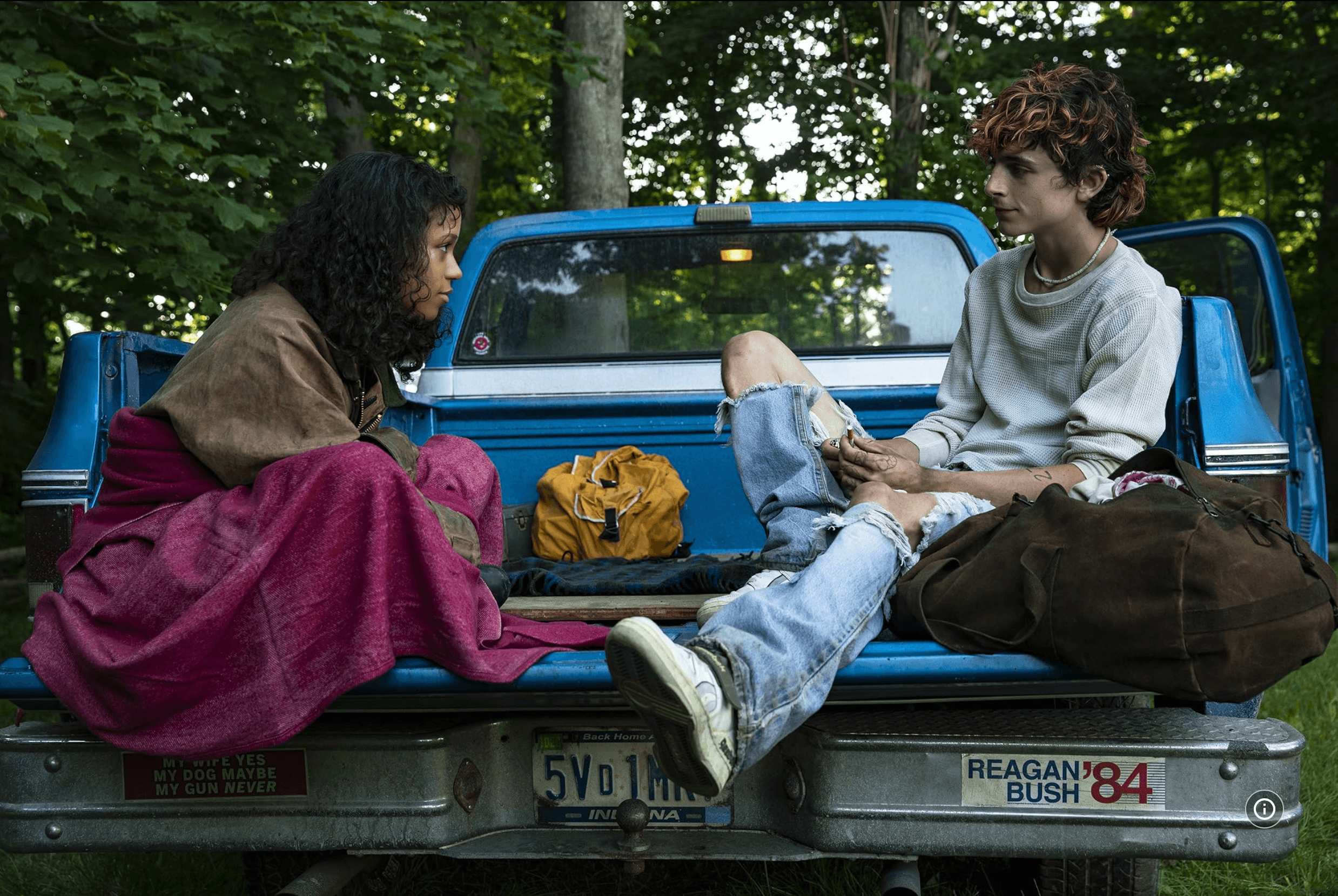
Media and literature seem increasingly obsessed with the idea of people eating other people…but what is it really all about?
By SAVANNAH ANNO — arts@theaggie.org
With the week of Valentine’s Day upon us, it is only natural to gravitate toward the usual roses and romantic comedies. And, if you’re anything like the average all-media-consuming 20-year-old girl, chances are your tastes also tend to lean toward the creepier side of love. Recent films like “Nosferatu” (2024), “Bones and All” (2022) and “Saltburn” (2023) tie desire, complex relationships and horror elements neatly together with a bloody red bow.
What is it about that sort of package that makes it so much more appealing than a regular box of chocolates? More and more, cannibalism in pop culture is gaining a cult-like following as fans move back and forth between hit shows like “Hannibal” (2013) and “Yellowjackets” (2022). Most often, these extreme acts are interpreted by fans as the ultimate metaphor for love.
But is that all there is to it? As Chelsea G. Summers — author of “A Certain Hunger” (2019), which follows a female food writer and cannibal — writes for British Vogue, “cannibalism speaks our language.” While the thought of it may revolt or shock you, there’s something about a never-ending hunger that’s universal no matter your romantic status. Themes of class conflict, bodily autonomy, revenge and even queerness can all be represented through the singular, seemingly damning act.
Insatiable grief:
Beyond pop culture, cannibalism’s inclusion within literature can be traced all the way back to works like Shakespeare’s “Titus Andronicus” (1588), which follows the title character, a Roman general, as he comes to blows with Tamora, Queen of the Goths. At the end of the play — spoiler alert — Andronicus kills Tamora’s sons, bakes them into a pie, feeds it to her, reveals what’s in the pie and then kills Tamora as well just moments later.
In an insightful deep dive into “Titus Andronicus,” and various other dramatic works that utilize cannibalism, Ph.D. scholar and YouTuber, who uses the name GlutenbergBible, explains an interesting interpretation of the horrifying plot line. In many performances of the play, directors push the act of cannibalism further by having Tamora actually continue to eat the pie after learning it is her children.
“In order to try to protect them, she eats them to return them to the safety of her body,” GlutenbergBible said via a video essay.
It’s not only “Titus Andronicus.” For centuries, cannibalism has been used in stories, and in real life, as a funerary ritual to honor life and represent its never-ending cycle. Of course, it’s not an act to be defended, but it makes sense that one of the most inexplicable crimes is often paired with grief, one of the most ineffable emotions.
Girls have to eat, too:
Moving away from Early Modern literature and into the exciting works of today, it is easy to see that mentions and acts of cannibalism in media are becoming increasingly female. In her own novel and in cult classics like “Jennifer’s Body” (2009) or “Yellowjackets,” Summers explained that the act of consumption isn’t simply about sexual desire or desperation.
“So much about femininity centers on consumption,” Summers’ British Vogue piece reads. “What we can eat, how much we can eat, how to present yourself as appealing, and how those questions are inextricably intertwined.”
In these newer iterations, cannibalism is used to show women reclaiming the body and leaning into the monstrous as a way to challenge what we see in our everyday world — bodily autonomy constantly at stake and women’s appearances being picked apart daily. Moving even further away from the male gaze and straight into the grotesque, female writers and filmmakers are proudly subverting any and all expectations.
“Horror belongs to women because we understand, on a gut-punch level, how it feels to be viewed as a monster,” Summers said. “As well as how it feels to be reduced to body parts.”
Control, violation and the other:
While it is maybe more interesting and entertaining to think of cannibalism in these metaphors of reclaiming power or coping with grief, it is also important to remember that cannibalism can also be just that — cannibalism, a method of murder. As much as media can attempt (and oftentimes succeed) at poeticizing the act or romanticizing its intensity, works like Ethel Cain’s “Preacher’s Daughter” (2016) remind us of cannibalism as a complete violation of boundaries. A universally understood subversive act, it can also be used to signify “the other” in today’s stories.
In her two-hour video essay, “Hunger Hurts: Cannibals and Why We’re Obsessed with Them,” YouTuber Lola Sebastian examined the many layers of interpretation of the act, one of them focusing on how new media can be used to highlight the political and colonial roots of cannibalism in the real world.
Beginning with Christopher Columbus’ false accusations of the Indigenous people of Latin America eating one another, cannibalism has been used for centuries as a justification for colonialism and a way to dehumanize Indigenous people of color. In reality, it was Europeans and white Americans who were doing the eating, as explained in Vincent Woodward’s “The Delectable Negro: Human Consumption and Homoeroticism within U.S. Slave Culture” (2014).
“‘Bones and All’ is specifically the story of a Black girl navigating a landscape intrinsically hostile to her,” Sebastian said. “It was extremely deliberate who the author [Camille DeAngelis] chose to otherize. All of the monsters in the novel are white.”
As the cannibalism plot device climbs the ranks to join vampires and zombies, it’s important to not just brush each iteration of it off as a symbol for love. Exploring the metaphor through various lenses honors the intricate thinking of each writer and artist trying to push the boundaries of their audience’s comfortability.
Written by: Savannah Anno — arts@theaggie.org