






The modern fool
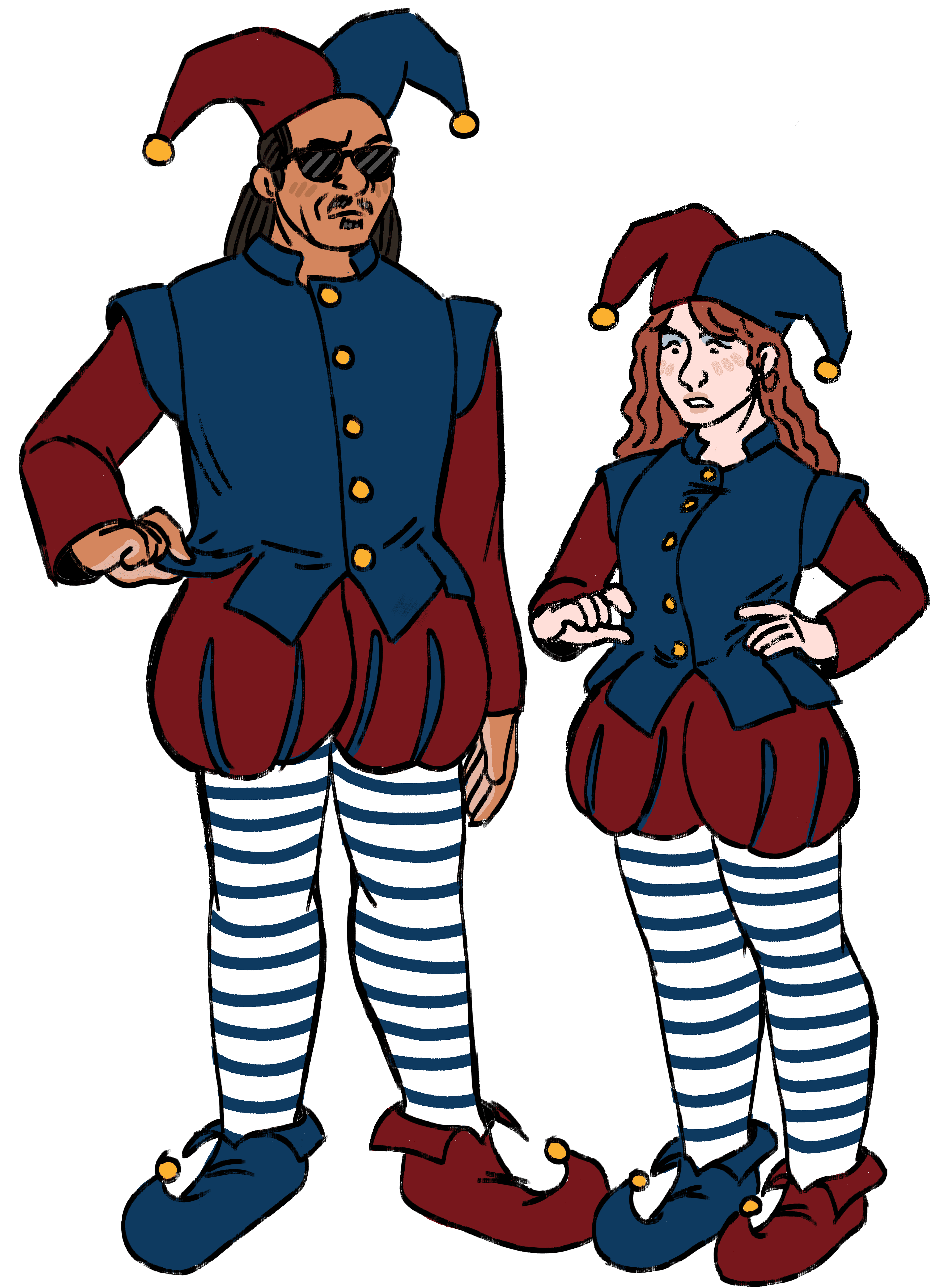
Musicians now play the role that jesters once played in Shakespearean plays
By VIOLET ZANZOT— vmzanzot@ucdavis.edu
I am proud to announce that I was the kid in high school who didn’t mind, and honestly kind of loved, reading plays. I’ve decided that owning this truth is half the battle of rebranding the enjoyment of English class. The other half lies within the literature’s significance.
There are some plays out there that loom large in their historical, social and political significance. If you’re one of those people who really hated “Romeo and Juliet” and just wanted to throw things at the 14-year-old girl who seemed far too eager to read the part of Lady Capulet, then I deeply implore you to try a different play, or perhaps, a different character.
When it comes to Shakespearean plays, my personal favorite role is that of the jester, the fool or the madman. “The fool,” as he is named in “King Lear,” is one of the most significant figures in life. “The fool” was probably far more important than we could have understood while waiting for the lunch bell to ring — who else in history has ever dared to tell the king “thou shouldst not have been old till thou hast been wise?”
The role of the fool is to challenge the characters around him. He is the truth-teller in a world of untruths and misperceptions. It is the way the character speaks that allows him to deliver this truth to figures in power.
This is true both on and off the stage — much of Shakespeare’s work was meant to depict the nature of everyday life. He built the character of the funny, forgotten, slightly deranged, almost useless “fool” to come in and say the perfect thing in the perfect way so it could be heard. No one else could have said what the madman, the jester or the fool would say, even if it desperately needed to be said.
I’m sure you’re on the edge of your seat, wondering who could fill that position today. After all, we still live in a world of untruths and misperceptions. Look around, there are more than a few power struggles that need to be questioned and life truths that we could all stand to hear — whether or not we are comfortable with that confrontation or not.
When there is no “king” to speak to and no play that has center seats, who is the voice of humanity, the arbiter of truth? Well, as Black people were lynched in the South, Billie Holiday told the people and the powerheads (please note the distinction), “Southern trees bear a strange fruit.” As violence ran rampant through the United States, manifesting as war, terrorism and racism, the Black Eyed Peas asked our country and its leadership: “People killin’ people dyin’ children hurtin,’ I hear them cryin’ can you practice what you preach?” And, when that violence still did not dissipate, Kendrick Lamar called out once again: “You hate me, don’t you? You hate my people, your plan is to terminate my culture.”
I asked the Internet for a better word for “truth-teller”; I wanted something with a punch, so you can really get the point I’m trying to make. Musicians are able to be honest. “Honest” is the word that Google came up with. “Honest” are the lyrics musicians provide. Much like the fools, they wrap the truth in intricate webs of poetry. They are able to speak the truth to the powerful, because they sing it so sweetly.
Written by: Violet Zanzot— vmzanzot@ucdavis.edu
Disclaimer: The views and opinions expressed by individual columnists belong to the columnists alone and do not necessarily indicate the views and opinions held by The California Aggie.