





Fiscal Commission discusses Village Farms project analysis
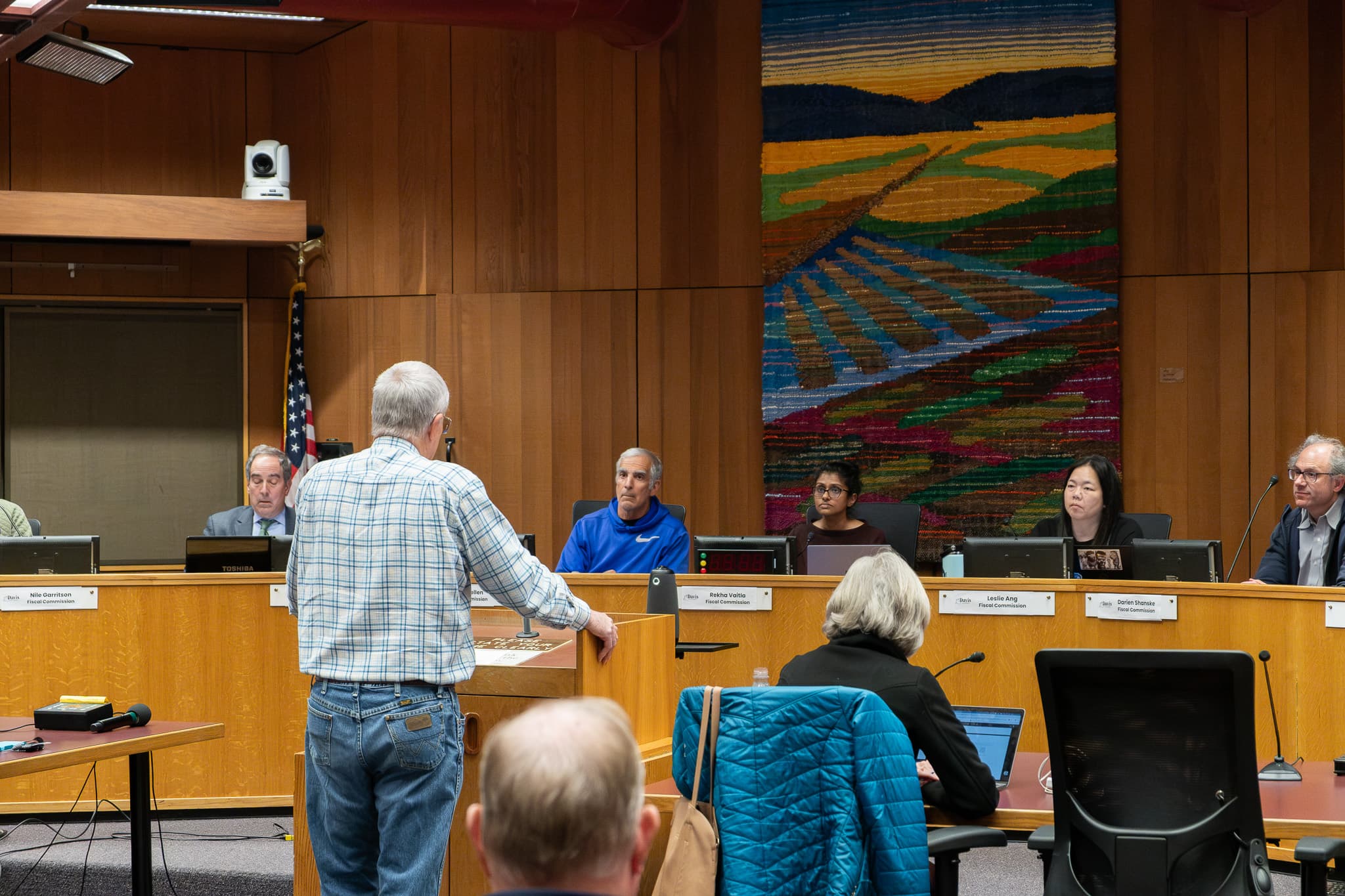
Concerns from both residents and commissioners dominated the nearly three-hour long meeting
By PIPER AWEEKA — city@theaggie.org
On April 2 at 6 p.m., the city of Davis Fiscal Commission met to discuss the Village Farms Development Project analysis. After a call to order from Commissioner Rekha Vaitla, the agenda was unanimously approved by all members present. Before commencing the primary items of concern, public comment was held.
Matt Williams, a Davis resident, shared concerns over the ongoing absence of audited financial statements to the Davis public.
“Each of you have received two emails from me which I have directed to Council Member [Donna] Neville and to our Public Information Officer Jenny Tan,” Williams said. “We are now three years behind in terms of our audited financial statements. […] The whole purpose is to transparently and honestly tell the people who are paying for and living in the jurisdiction how the city is handling its finances.”
The commission then moved to address one of the meeting’s primary agenda items, the Village Farms fiscal analysis.
Dara Dungworth, the principal planner at the city of Davis Community Development Department, began by giving an overview of the ambitious project. With the proposed construction of a 498-acre neighborhood with 1,800 units of affordable housing, Dungworth described the vital role of the commission in hearing the fiscal analysis of the project.
“This would be the first and only time that the project comes before the commission,” Dungworth said. “[The commission] will help guide the applicant in finalizing specific project details ahead of going to the planning commission and onto city council. This commission is being asked to review the fiscal impact analysis and its assumptions.”
Matt Kowta, the principal manager at BAE Urban Economics consulting firm, followed Dungworth’s project overview by presenting the aforementioned fiscal report.
“The fiscal model is intended to illustrate how the project’s costs and revenue impacts would ramp up over time,” Kowta said. “We’re assuming an average long-term 2.5% annual increase for personnel costs, we’ve plugged in a 4% annual average based on discussion with the finance department.”
Kowta went on to discuss the projected property valuation assumptions, including property tax and other property-related revenues.
“We’re expecting [single-family home lots] to come in at $1.3 million on average per unit, for the medium density residential […] we’re plugging in an average of $740,000 per unit, […] but market-rate apartments we’re assuming $400,000 a unit valuation,” Kowta said. “The [proposed] pre-[kindergarten], early learning center, the educational farm and the affordable apartments are all assumed to be tax exempt.”
After the conclusion of Kowta’s presentation, the commission opened to public comment. The Village Farms proposed an additional fire station within Davis, but multiple citizens expressed their opinion of it being unnecessary.
Dan Carson, a former city council member, touched on this sentiment.
“In 2018 we received a consultant report the council did from one of the foremost consultants that looks at fire protection issues in the country,” Carson said. “His response to us was that, ‘You don’t need to build a fourth [fire station].’”
Matt Best, the superintendent of Davis Joint Unified School District, articulated the importance of the Village Farms project approval, regardless of fiscal concerns.
“We are projected to lose about 100 students per year for the next decade should there not be new housing in Davis,” Best said. “While I always want public servants to do their due diligence, I want you to do that within the context that we need more housing in Davis to sustain the excellent academic program that many of you have experienced, your children, my children, all value.”
With concerns from the commission over financial absorption, rising property values, property taxes and the financial demands of an additional fire station, the commission moved that the Village Farm fiscal assumptions made in the report should be adjusted.
Vaitla began concluding the discussion by summarizing the commission’s call for further examination of the project.
“First would be an analysis of the option to relocate fire stations, […] looking at assumptions related to construction delays, […] additional sensitivity analysis around home prices, […] greater clarity around some numbers and potentially the city council to consider having a conversation with the school districts to see if there’s some sort of negotiation there,” Vaitla said. “I think just a recommendation to city council to really think about only approving funding when there’s some assurance that this development would be developed to its fullest extent.”
Written by Piper Aweeka — city@theaggie.org