






The ‘performative male’ stereotype might mean more than we think
At what point does it stop calling out odd behavior and start reinforcing gender stereotypes?
By SABRINA FIGUEROA — sfigueroaavila@ucdavis.edu
“I’m not going to tell you guys to vote for me because I don’t think men should tell women what to do,” a man in his 20s, holding a Bell Hooks novel and bright-green matcha latte, announced to an audience of women gathered at a “performative male” contest in San Francisco. When I attended this contest back in August, I wasn’t expecting such a strong sense of whimsy and community from men with glued-on mustaches, already loosening from their faces due to sweat.
Obviously, I dabble in meme culture. Otherwise I would not have entertained the idea of going to a “performative male” contest in the first place. But, after attending, it struck me how easily this new trend can be misinterpreted or misconstrued in ways that have a larger effect than we may realize. After all, our perceptions of reality are framed by the media we consume: no matter how ridiculous or inconsequential it may seem.
In focusing on men’s behavior — specifically their strategic, often deceptive adoption of symbols stereotypically associated with femininity — this archetype inherently involves gender.
In the early days of the meme’s popularity, it focused more on the power disparity between men and women. Women have been exploited by men for years as a consequence of our patriarchal societies, institutions and histories. Though there have been efforts to undo the damage done by this system, (note feminist movements all throughout history) the work is not yet done: Trauma from past generations leaves a scar. In the current political climate, where reproductive and transgender rights are being attacked and the rise of conservatism is returning to the rhetoric that women should value marriage and having kids more than anything else, it’s difficult for women to know who to trust.
The “performative male” trend is an opportunity to analyze and correct harmful and dishonest behavior from straight men that continues the streak of power disparities, both in society at large and in individual heterosexual relationships. Instead of men preaching to the choir that they love women, they should show it with their actions — it’s as simple as that: or it should be.
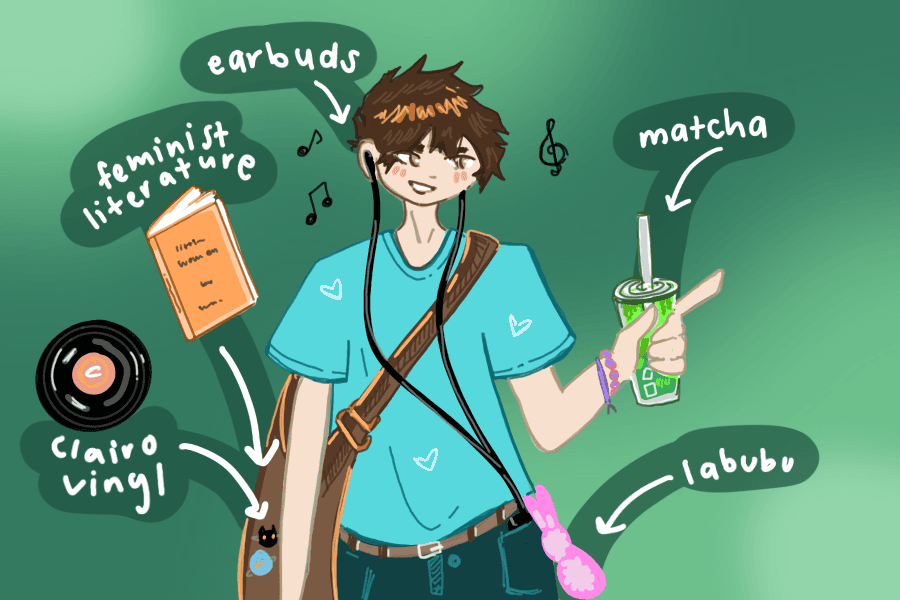
As a means of communication, memes and trends have unique interpretations. The “performative male” meme has transitioned from holding men accountable to focusing on the aesthetic. That is, when we think of what it means to be a “performative man,” we conjure a specific image in our heads: a man drinking matcha, reading feminist literature, wearing a tote bag and listening to Clairo.
It’s become less about the inappropriate, deceptive behavior and more about the symbols we use to make up our identities. Combining that with the gender aspect of the trend, we get a new murky archetype in which we could eventually find ourselves reinforcing the gender stereotypes and roles we have been fighting to dismantle.
For example, the catchphrase, “boy turn that Clairo off and grab you a beer,” has gone viral. And although it’s mainly been used as a joke, I can’t help but wonder if people notice the deeper implications of it. It implies that Clairo’s music (may she be released from the shackles of this meme) is odd for men to be listening to because it’s feminine, and, since beer is typically a symbol associated with masculinity, they should prioritize it instead.
Of course, the messaging behind it is subtle; as most of the media messages we learn our societal norms and behaviors from are. Although Gen Z wants to see big changes and indeed do the work for it, we sometimes don’t see how our trends, memes, jokes and use of language have power in spreading harmful rhetoric and norms. In other words, we discredit the power of words, language and media — we should be more careful about our tendency to play subtle things off as “not that deep.”
The messages don’t have to be obvious or overt to create an impact; In fact, the more subtle, the more open we will be to accepting everything as is. This has created problems for us before, and if we allow it to keep happening, we are bound to keep creating them.
We passively put ourselves in boxes while trying to liberate ourselves. The memes, trends, videos and jokes we consume about this “performative male” archetype can simply be one ripple in continually perpetuating regressive gender norms. We like to think we have progressed far in society, but we should really be asking ourselves what our own perceptions of men and women are. Only then will we realize just how far we actually have progressed and how far we are actually willing to go.
The enjoyment of things from food to music to books should be allowed to transcend the boundaries of the social constructs we have made up. With that in mind, however, inappropriate and deceptive behavior from anyone should still be called out and corrected. So long as you are not doing it just to get attention, buy that Labubu, enjoy that matcha latte and listen to Clairo…“whatever that means.”
Written by: Sabrina Figueroa — sfigueroaavila@ucdavis.edu
Disclaimer: The views and opinions expressed by individual columnists belong to the columnists alone and do not necessarily indicate the views and opinions held by The California Aggie.