






Bigger and bolder — and more untouchable — than ever
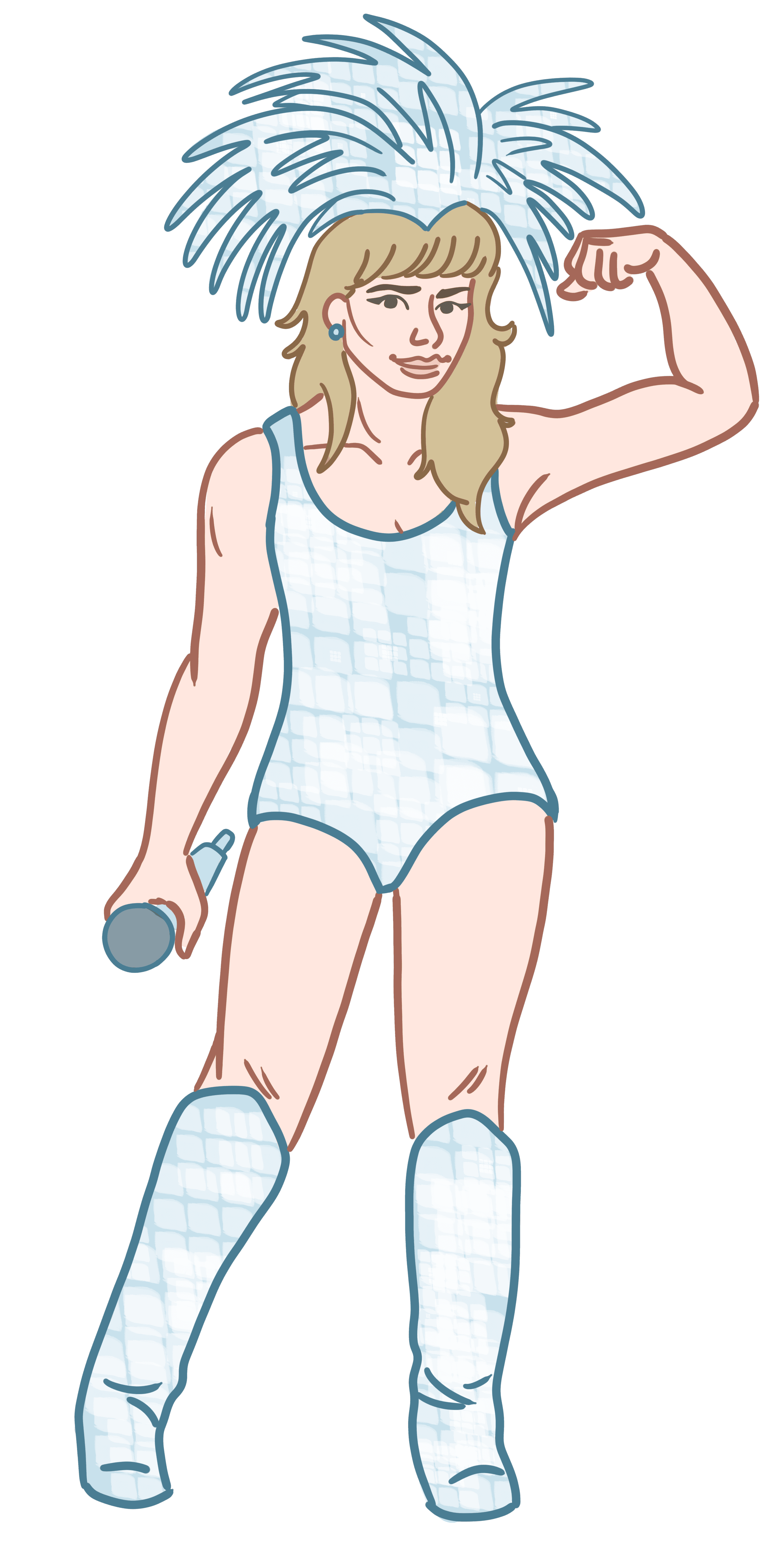
You don’t know the life of a showgirl, babe
By MOLLY THOMPSON – mmtthompson@ucdavis.edu
Taylor Swift’s 12th studio album, “The Life of a Showgirl,” released just 3 hours, 43 minutes prior to my writing this, and I’ve already listened to the whole thing twice. From just the promotion and aesthetics, it was evidently going to be a significant departure from her recent albums, but hearing it makes the distinction all the more stark.
Right from the get-go, the album received mixed reviews. Sonically, it’s more reminiscent of Swift’s earlier projects like “1989,” “Reputation” and some of the punchier songs on “Red” — songs also made by “The Life of a Showgirl” producers Max Martin and Shellback, along with Swift herself. The songs that come from that particular team are top radio hits (“Style,” “Blank Space,” “I Knew You Were Trouble,” “Gorgeous” and more), which is also the vibe of many of the songs on her new album. I think this is one of the reasons why it’s been so polarizing — it’s very pop and a little campy.
But I think the real reason has been culminating for a while now: Taylor Swift isn’t relatable, and she hasn’t been for a long time. One of the biggest appeals of Swift’s early discography was its inherent familiarity — it felt like she was voicing the feelings inside of your head. When she was 20 years old writing about laying in her bedroom daydreaming about her crushes, we all listened and anguished along with her. But now that she’s writing about how “this empire belongs to me” and “you’re only as hot as your last hit, baby,” most of us simply can’t relate.
Swift writes autobiographical songs: her niche is personal storytelling. So, naturally, as she continues to gain global renown, we as fans are going to feel increasingly distanced from the stories she tells. That doesn’t mean we can’t appreciate them, listen to what she’s saying, enjoy them or understand them, it just means that our relationship with her music is inherently different than it’s been at earlier points in her career.
Taylor Swift is untouchable. Not because she’s so confident that nothing can knock her down, but because she’s one of the few true celebrities we have left in our growing culture of oversharing. With social media and the prevalence of “vlogging,” along with behind-the-scenes content, it’s never been easier to glimpse quotidian elements of the lives of superstars and feel as if they really are “just like us.” But Swift doesn’t participate in that, so she tends to appear more sacrosanct and elusive than others. Of course, other factors contribute to this and she’s not the only one perceived this way, yet it makes her all the more alluring.
The thing about her recent work is that you don’t have to like it. This is especially true of “The Tortured Poet’s Department” and “The Life of a Showgirl” — I like to think that she made them because she had something to say, not because she felt the need to impress us. Both albums are vulnerable and blatant (as is characteristic of her portfolio), but they’re especially raw, something that is not characteristic of a project created solely as a performance. Somewhat ironically, this album — in all of its over-the-top sparkly glory — is perhaps more intimate than its sisters. It’s the juxtaposition of glamour and toil; of celebrity and domesticality; of diamonds and sequins and Louboutin; of sweat, hustle and selling out — “pain hidden by lipstick and lace.” She’s been jaded and has come out stronger than ever. She knows what she created and doesn’t need it to be your favorite.
For me, as someone who’s been emotionally invested in what Swift creates for more than a decade, this album feels like a victory parade. It feels like standing at the top of a mountain while adversaries are stuck at the bottom. It feels like growing up and becoming friends with your parents and siblings again after you hated them during your teenage years. It feels like learning from your mistakes and reading your old journal entries. It feels like being at peace and realizing that your life looks nothing like you thought it would, but you wouldn’t have it any other way. It feels like standing up for yourself, like burning bridges and shaking new hands, like putting people in their place and talking to yourself in the mirror. It feels like applause and hairspray; in what I can only try not to read too much into — it feels like taking a bow at the end of the show.
Written by: Molly Thompson — mmtthompson@ucdavis.edu
Disclaimer: The views and opinions expressed by individual columnists belong to the columnists alone and do not necessarily indicate the views and opinions held by The California Aggie