






What’s with all the Republican DEI hires?
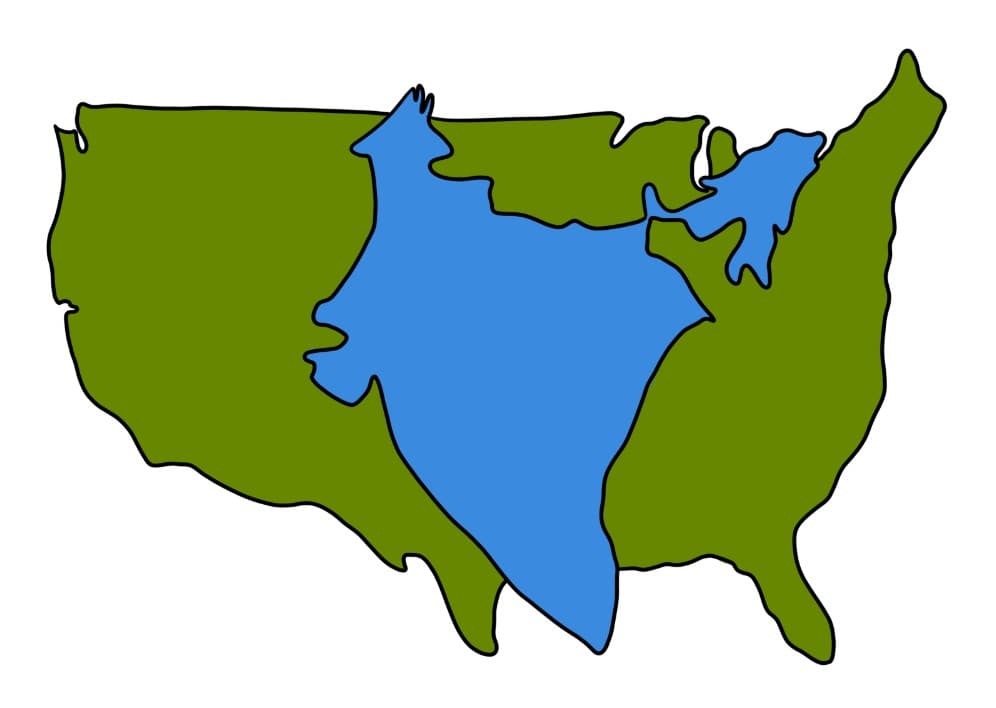
Is diversity within the Trump administration indicative of progress or a deeper sociocultural movement?
By GEETIKA MAHAJAN — giamahajan@ucdavis.edu
This past month, FBI Director Kash Pramod Patel bewildered the majority of the United States at the funeral of right-wing zealot Charlie Kirk.
“Rest in peace brother,” Patel said into the microphone. “I’ll see you in Valhalla.”
The comment drew widespread attention, first and foremost because of Patel’s insinuation that Valhalla (a Nordic myth) was still a relevant cultural belief, that Kirk had done something to deserve the afterlife of a warrior and that Patel himself was planning to die in battle soon (which, according to Norse mythology, is the only way to reach Valhalla).
The bizarre statement could be explained as just another example of the Trump administration’s attempts to sound tougher than they really are, which it is, in a way. But Patel’s reference to a cultural belief that died with the Viking empire at the funeral of a man who vehemently disagreed with policies that made it possible to succeed as an immigrant in the U.S. is symptomatic of something else.
What looks like a Diversity, Equity, and Inclusion (DEI) initiative from the outside is actually symptomatic of the worst colonial hangover of all time. An NBC article found that “Indians are perhaps the most well-represented minority group within the Trump administration” — despite making up a mere 2% of the national population. The current FBI director, Kash Patel, and the Second Lady of the U.S., Usha Vance (among others), are second-generation Indian Americans. They’re entrenched in an administration that’s imposing a $100,000 fee for the employment visas that made it possible for them to grow up in the U.S. in the first place.
Watching Vivek Ramaswamy, American entrepreneur and politician, proudly advocate for the end of birthright citizenship or Governor of South Carolina Nikki Haley implement some of the most stringent “show-me-your-papers” immigration laws is disorienting. From an American perspective, it’s odd to see children of Indian immigrants turn their back on other immigrants. From an Indian-American perspective, it’s kind of pathetic.
The Trump administration hasn’t been randomly populated by Indian sycophants. Through a confluence of socioeconomic factors within India and America, the incoming immigrants are uniquely poised to occupy this specific niche and be particularly successful under Trump’s regime. The issue originates long before immigration itself — it starts as a byproduct of the deeply entrenched caste system in India. The subsequent structural inequality affects the opportunities, education and access Indian citizens have today. Ramaswamy discussed where his family fell within this hierarchy in his 2021 book “Woke, Inc. Inside Corporate America’s Social Justice Scam,” stating that “Kings were below us.”
While such a blatant appeal to false authority is a little nauseating to anyone who understands how horrible the caste system in India really is, it’s also indicative of the overall demographic pattern of Indian immigrants. Many people who come to the U.S. are fleeing war or famine, or looking to escape conditions of abject poverty. On the flipside, immigrants from India are largely the product of employment visas; consequently, they are college-educated (77% of Indian-Americans have a college degree, as opposed to 35% of all immigrant adults) and may even have jobs lined up the moment they land in America. Essentially, Indian immigrants arrive in the U.S. relatively well-positioned with stable roots back home.
What this primarily implies is that such a demographic might be unsympathetic to the desperation and hope that fuels many immigrant stories. It explains the eagerness with which Haley and Ramaswamy so strongly emphasized their intolerance of other immigrant groups.
There’s also the assimilation aspect. Being a visible minority is difficult, and there’s been a significant rise in anti-South Asian sentiment in the United States within the past few decades. With racist caricatures like Ravi from “Jessie” or Apu Nahasapeemapetilon from “The Simpsons,” it’s understandable to want to prove you’re not like the stereotype. Ostensibly, the easiest way to do this is by demonstrating that you have the same cultural and political beliefs as the most “American” people in the country.
However, this is not to assign blame. Trump’s DEI hires aren’t victims of some unjust system that forced them to act evil, and nobody should sympathize with them. Currently, immigrants across America are being subjected to Deferred Action for Childhood Arrivals (DACA) rollbacks, family separations, visa attacks and the Trump administration making existence in the U.S. more precarious at every turn — these are people who have been directly victimized by a system that runs on racism and ignorant, anti-immigration sentiment. It’s much more difficult to feel sympathetic towards Usha Vance or Ramaswamy, even despite the racism they’ve demonstrably experienced within the Republican party. Maybe they’re locked in a room full of bullies, but it’s their own fault for closing the door.
Written by: Geetika Mahajan — giamahajan@ucdavis.edu
Disclaimer: The views and opinions expressed by individual columnists belong to the columnists alone and do not necessarily indicate the views and opinions held by The California Aggie.