






Live and let rich
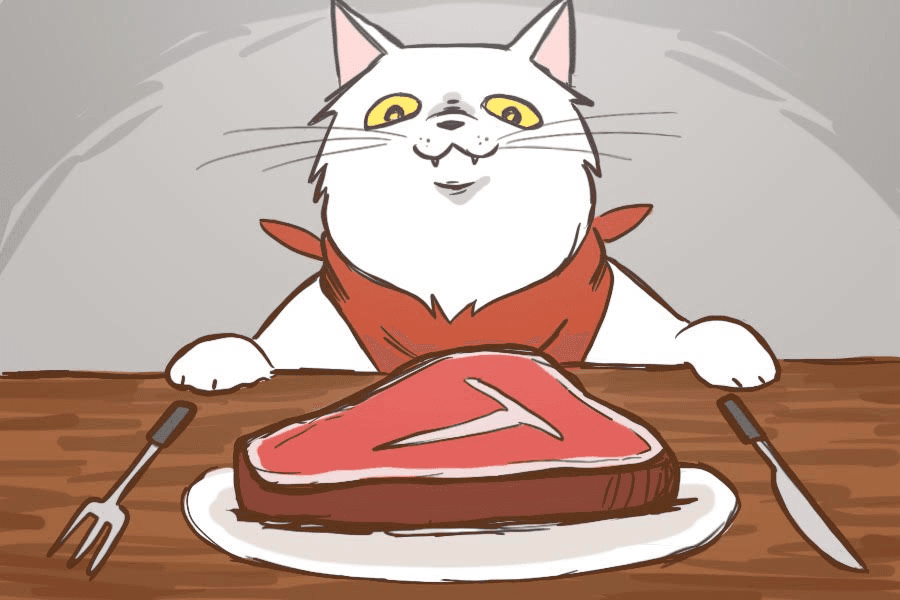
How did a generation raised on fantasies of revolution grow to idolize the leisure class?
By GEETIKA MAHAJAN — giamahajan@ucdavis.edu
The start of the 2020s felt like the end of the world as we knew it. Between a global pandemic and constant political upheaval, it seemed like the very pillars of society were collapsing — but nobody was more prepared for this change than Gen Z.
“We grew up reading ‘The Hunger Games’ / ‘Percy Jackson’ / ‘Divergent,’ what did y’all expect?” read the description of a Spotify playlist from 2021 called “Gen Z’s Political Revolution.”
When you’re sitting at home and watching the world blow up online, it’s easy to draw comparisons to Katniss Everdeen and other fictional revolutionaries, but when the pandemic ended and it was time to put all this sentiment into action, it dissolved into something much more ironically detached.
The United States is dragging itself closer to the dystopian worlds we grew up reading about; the staggering wealth inequality in the nation is nothing new, but it’s harder to ignore now than ever before. Social media, and TikTok specifically, have made it so that witnessing the capitalization of America isn’t just easy, it’s entertaining. While rich people flaunt dining sets and cutlery that costs thousands of dollars, those on the other end of the wealth spectrum rely on vitriolic comments for a check. When both extreme poverty and extreme wealth become a spectacle, it’s easy to forget their broader social implications. They’re not two separate realities; they exist as cause and consequence of each other.
If President Snow had a TikTok account, the entire plot of “The Hunger Games” would never have happened. At least, if social media functioned in their reality the way it does in ours. If you’re a rich person who “riches right,” you are above critique. If you, like heiress and influencer Becca Bloom, can look demure while unboxing hundreds of thousands of dollars worth of Hermès, nobody will think about the fact that you spent their entire year’s salary on a bag before liking your video — they’ll be too busy doomscrolling to think about the political and economic state of the world.
The reverse is also true: You can rich right and “poor wrong.” If you are visibly in poverty, you’re not doing enough to help yourself, you just need to work harder. While the wealthier influencers of TikTok can weaponize aesthetics to shield themselves from critique, low-income creators can’t afford similar defenses. Nobody sees Nara Smith’s tripod, ring light or glam team; everybody sees and loudly comments on a messy living room or dirty stove. Two very different streams of content emerge: one for escapism and one for an artificial sense of moral superiority.
There is a deeper reason why Nara Smith can make her kids cereal from scratch while a working mother-of-three gives them toaster waffles, but that reason exists in real life, and these influencers exist on TikTok. I don’t know why a generation that was so committed to societal change five years ago is now obsessed with platforming these out-of-touch influencers, but the consequences run far deeper than the rich getting richer. The amount of wealth that Becca Bloom or Nara Smith have isn’t just excessive; it’s obscene. Every video emphasizes that they aren’t constrained by the two most limiting resources in our society — time and money.
I despise an overused social media buzzword as much as the next person, but the normalization of this kind of luxury is truly problematic. It makes abhorrent wealth seem less foreign, warping our perception of what kind of lifestyles are realistic for the average person. Seeing people feed their cats expensive fish prepared by their private chef while other people struggle to provide a healthy dinner for their family should make people angry, but somehow we’ve lost sight of the broader picture. The existence of both extreme wealth and extreme poverty suggests that the persistence of wealth inequality is a choice: There are clearly enough resources for everyone to live a safe life. For some reason, the public believes that this is something people themselves are responsible for, rather than a structural mechanism for preserving wealth concentration.
America today isn’t divided so much as it is stratified. There are people at the very top and the very bottom of the wealth pyramid, but there are also millions of people in between who do the work of preserving the system. This is where the “richfluencers” of the Internet come in — the more we watch and support and validate their existence, the more acclimated we become to this dystopian level of consumption. Desensitizing ourselves to the deliberate inequality that exists in America does nothing to protect the middle class or their relative financial stability, it only further insulates those at the top: the ones standing on everybody’s shoulders.
Written by: Geetika Mahajan — giamahajan@ucdavis.edu
Disclaimer: The views and opinions expressed by individual columnists belong to the columnists alone and do not necessarily indicate the views and opinions held by The California Aggie.