






Is mass consumption killing creativity?
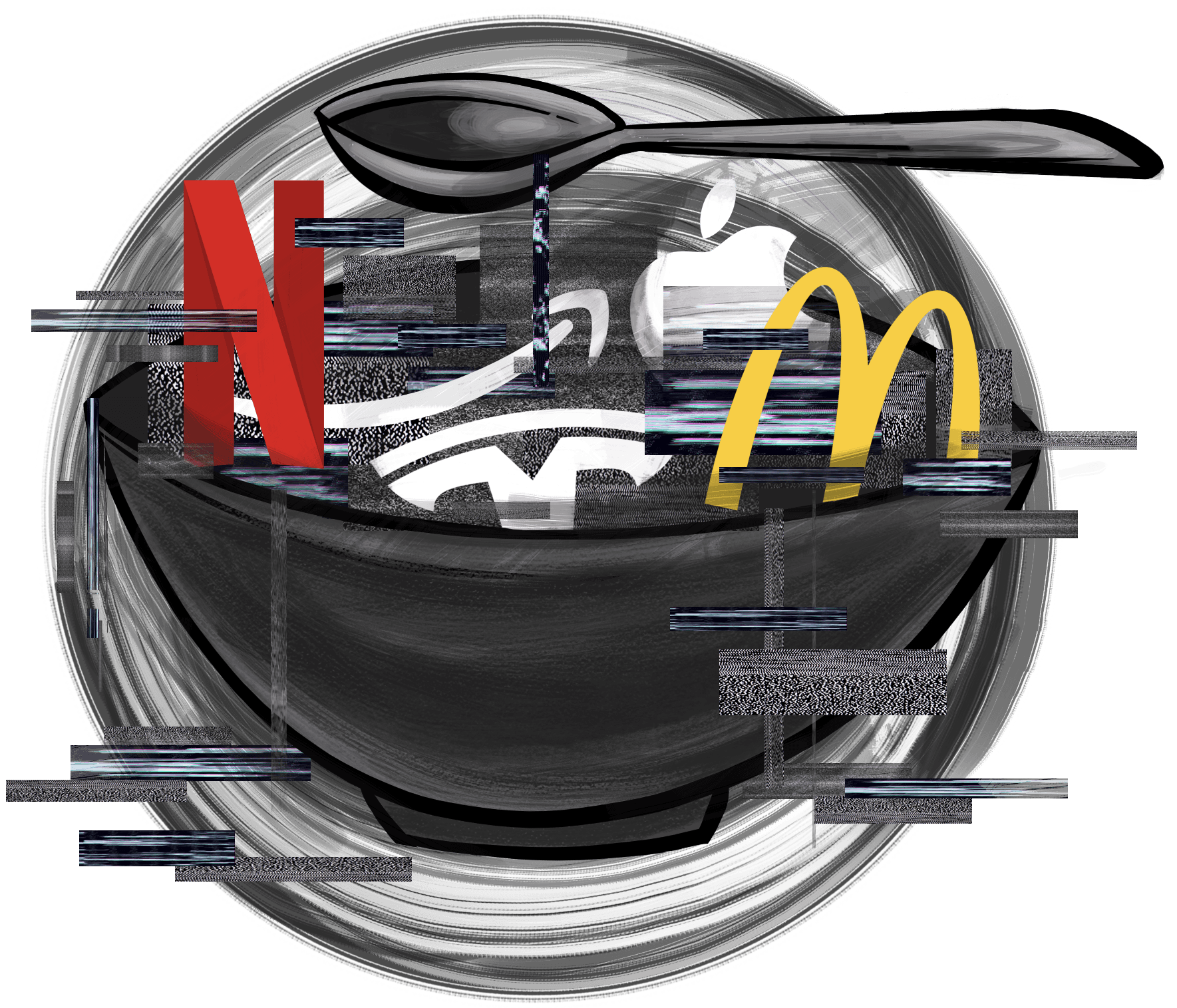
Capitalism breeds monotony
By GEETIKA MAHAJAN — giamahajan@ucdavis.edu
The apocalypse is really having a moment right now. Between “The Last of Us,” “Fallout” and “Yellowjackets,” it seems like people are captivated by watching the world collapse in on itself, or seeing their favorite characters navigate the psychological trauma of surviving in an environment that clearly wants you dead. “I like this game,” I said to my friend while fighting a zombie on my television screen, “but if an apocalypse happened tomorrow, I wouldn’t want to be alive for it.”
What I thought was an unpopular opinion was echoed by most of my friends; life would be too scary, too unpredictable, too lonely, too unfulfilling if we had to spend the rest of our lives just surviving. Living in a real-life survival-horror game would be simultaneously terrifying and monotonous.
Our lives today are far from apocalyptic, but they still have terrifying and monotonous aspects. We’re seeing an obvious collapse within the media, entertainment and even food industries; there’s a constant demand for more — more empty consumables like “Love Island” or more Trader Joe’s snacks — but rarely is there a demand for something truly different. The diversity of choice is an illusion, because everything is made up of the same basic components. We want more spice in our food, books and movies, but we want the ending to stay the same.
Why do six different brands of chips all taste the same? Why does every young adult romance novel have the same cover art and story elements? The obvious answer is because this is what people are buying, ergo, that’s what companies are making. But there’s a much more sinister cause-and-consequence chain here as well: Capitalism does not breed innovation among companies, making our outlook on life, as consumers, a lot smaller.
This constant cycle of audience preference informing production has reverberated through the entertainment industry. What emerges is an array of books, movies, shows and songs that contain less substance and more content. Shows like “The Summer I Turned Pretty” and “Love Island” are so heavy-handed that they practically make the edits for you. Musicians intentionally create trendy soundbites of their songs for TikTok, hoping to be responsible for the next viral dance. In an attention economy, studios are forced to chase exposure while creativity is left by the wayside; people get more of what they already like.
This hurts consumers too. Being flooded with perfectly accessible, easy content that mirrors what we’re already familiar with shrinks the pool of what we’re exposed to, putting us in media echo chambers. If every song on the radio consists of two verses and a bridge, our definition of music becomes limited and it becomes difficult to recognize and create art outside of this formula.
The advent of artificial intelligence (AI) augments every concern about the disappearance of innovation and creativity. Currently, AI cannot construct its own ideas — it’s only capable of reflecting the data it’s been fed. Yet, it’s already filtering into our lives through Instagram reels, soundbites on TikTok and a vehicle for “art.” Too many people, despite how vehemently anti-AI they may present themselves, are tuning in. The loss of creativity in entertainment is one thing, but the loss of humanity entirely requires a whole genre shift. We have to acknowledge that the symptoms of this media apocalypse — the monotony of content, the brainrot — happen slowly, and, before we realize, they are already upon us. We might be zombies before we even know it.
Written by: Geetika Mahajan — giamahajan@ucdavis.edu
Disclaimer: The views and opinions expressed by individual columnists belong to the columnists alone and do not necessarily indicate the views and opinions held by The California Aggie.