






Commentary: May the ‘final girl’ trope never die
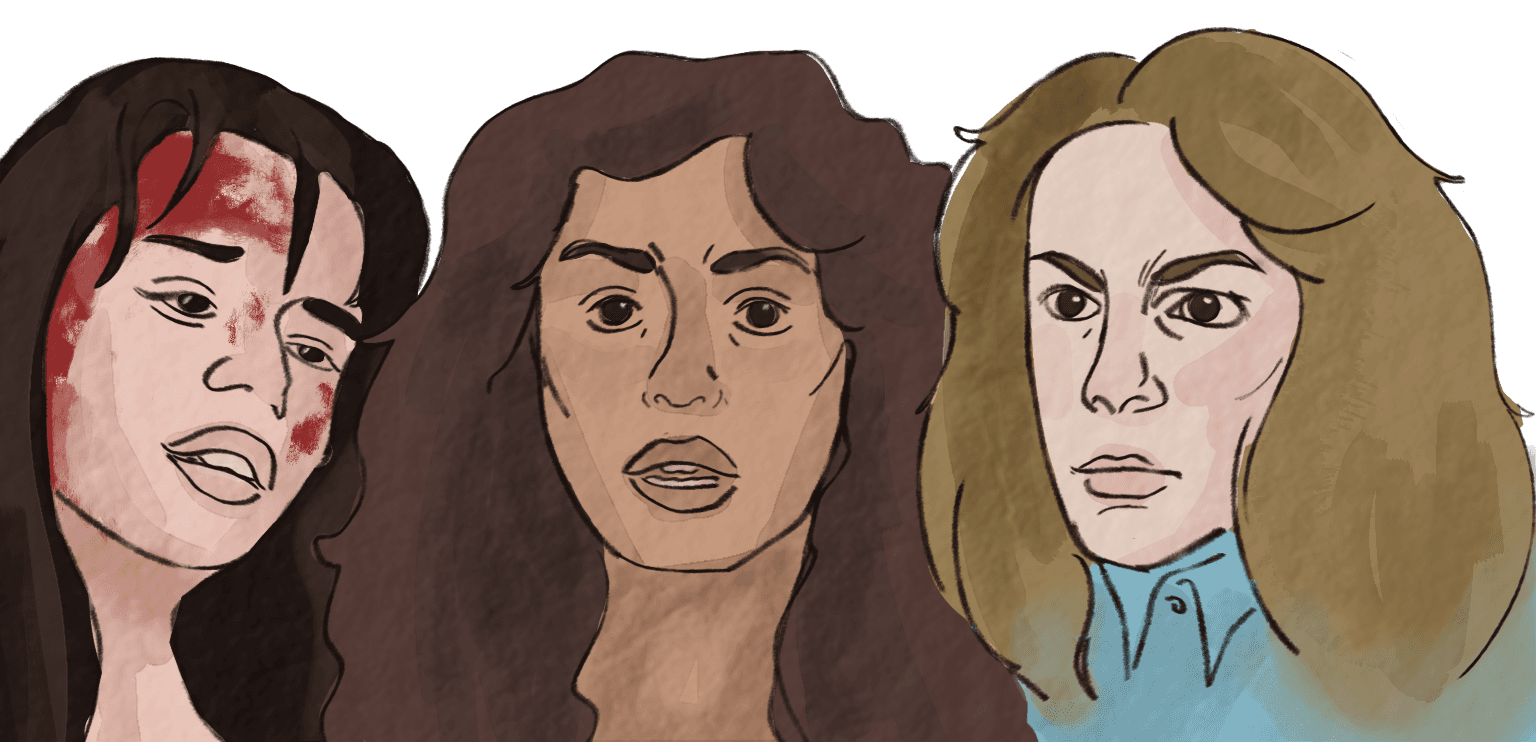
Three “final girls” that pushed the horror genre to subvert audience expectations of gender roles
By BELLA PETERSON — arts@theaggie.org
Content Warning: This article contains mentions of sexual assault and violence against women.
“This is Ripley, last survivor of the Nostromo, signing off,” Ellen Ripley, “Alien” (1979) heroine, recited as she reached the end of her harrowing journey. As the credits roll and Ripley has succeeded in winning her last fight against an alien aboard her commercial starship, you feel a sense of satisfaction settle in your soul at seeing the story end with a woman winning.
When you think of many iconic horror titles, you probably think of one woman in particular. “Halloween” (1979)? Laurie Strode. “Scream” (1996)? Sidney Prescott. “Barbarian” (2022)? Tess Marshall.
Horror movies have existed for a long time, with or without a “final girl;” a horror classic, “Nosferatu” (1922), featured the opposite of a “final girl” when its leading female character, Ellen, sacrificed herself for the greater good. So, where did this phenomenon come from? How did women find a way to singularly conquer a genre with the simple feat of survival?
There can be many different answers when it comes to the beginnings of the final girl trope, but there’s no denying the influence of Sally Hardesty, a survivor of the 1974 “Texas Chainsaw Massacre” film. Played by Marilyn Burns, the shot of Hardesty laughing manically, covered in blood from head to toe, while clinging to the back of a truck as she’s finally free from the terrifying Leatherface and his chainsaw, has engrained itself into the minds of many.
Knowing that somehow, despite the horrors and trauma she faced, the main female character made it out alive, gave audiences a feeling they never wanted to let go of. Since its 1970s release, the film franchise has created nine movies total and a video game.
Just a few years after the release of “The Texas Chainsaw Massacre,” audiences found that Sally Hardesty wouldn’t be the only girl to face death and walk away to tell the tale. In 1978, “Halloween” created Laurie Strode. The then-budding actress Jamie Lee Curtis stunned audiences with her role in the film as she went up against the “babysitter killer” himself, Michael Myers.
What makes the final girl trope so exciting are the odds, most times being stacked against “final girls”; it isn’t the muscular jock that lives to see the light of day or even the tough cop with his firearm — it’s the girl who fought like hell to live to see another day. What’s so refreshing about this trope and the role it plays in the horror genre is witnessing a woman use her intelligence and character to prevail against forces — in most cases men — that confined her.
Prior to the rise of the final girl trope, horror films included their fair share of depicting abuse toward women. While horror films are made to be gory, movies like “The Evil Dead,” (1981) feature brutal scenes of women being attacked with no moments of empowerment or reflection to counteract the violence.
When the film’s character Cheryl Williams, played by Ellen Sandweiss, was sexually assaulted by a forest at the beginning of the movie, many viewers drew attention to the lack of tact in the scene. After its release, Director Sam Raimi came forward to express his regret over the scene.
“I think it was unnecessarily gratuitous and a little too brutal,” Raimi said in a 2012 interview. “I think my judgment was a little wrong at the time.”
In contrast, the final girl trope juxtaposes this horror history — subverting these stereotypes within the genre and proving that they’re more than just a plot device to be torn to shreds.
“Scream,” the slasher meant to pose as a parody of the genre as a whole, introduced one of the most important women in “final girl” history: Sidney Prescott. In the film, Prescott herself speaks out against the way horror films depicted women before the emergence of the trope.
“What’s the point?” Prescott said in the film. “They’re all the same. Some stupid killer stalking some big-breasted girl who can’t act, who is always running up the stairs when she should be running out the front door. It’s insulting.”
Prescott directly states in the film that horror movies use women as “eye-candy,” with little-to-no survival instinct that leads to their untimely demise. Prescott debunks the stereotype herself when she faces off against Ghostface.
A modern day “final girl” takes shape in Zach Cregger’s directorial debut, “Barbarian.” The movie follows Tess Marshall, a woman looking to stay at an Airbnb for a job interview, after she discovers the place she booked already has a man staying there. What begins as an innocent inconvenience devolves into a petrifying nightmare as the pair discover the horrors existing below the property.
Cregger was inspired to write “Barbarian” after reading the novel “The Gift of Fear” by Gavin de Becker, which in one chapter, informs women how best to avoid “red flags” in men. As a man, Cregger realized just how much women have to be aware of — a horror story in itself. In “Barbarian,” Cregger also reflects on Becker’s descriptions of three different types of men to look out for, each of which Marshall is confronted with.
As Marshall faces the brutality of her situation, trapped underground as she uncovers a long history of women being kidnapped and harmed in the tunnels underneath the Airbnb, she reminds audiences of real-life social conflict and the circumstances that made the final girl trope necessary.
Marshall is the perfect representation of the importance of the “final girl”; she reflects the mortality of women and the strength they need to possess every day. Despite the odds constantly stacked against her, she survives.
Today, we see the trope of “final girls” continuously evolve within the horror genre, as directors continue to experiment with power dynamics and gender roles. From the bold Maxine Minx of “X” to the unflinchingly loyal Emerald Haywood of “Nope” to the sentient robot Iris of “Companion,” one thing that will never change is the “final girl’s” ability to find the strength to keep living. There aren’t many film genres dominated by women, but one can easily say that horror wouldn’t be in the place it is today without the characters who lived on to earn the title “final girl.”
Written by: Bella Peterson — arts@theaggie.org