






Teaching assistants: the unsung heroes of the undergraduate classroom
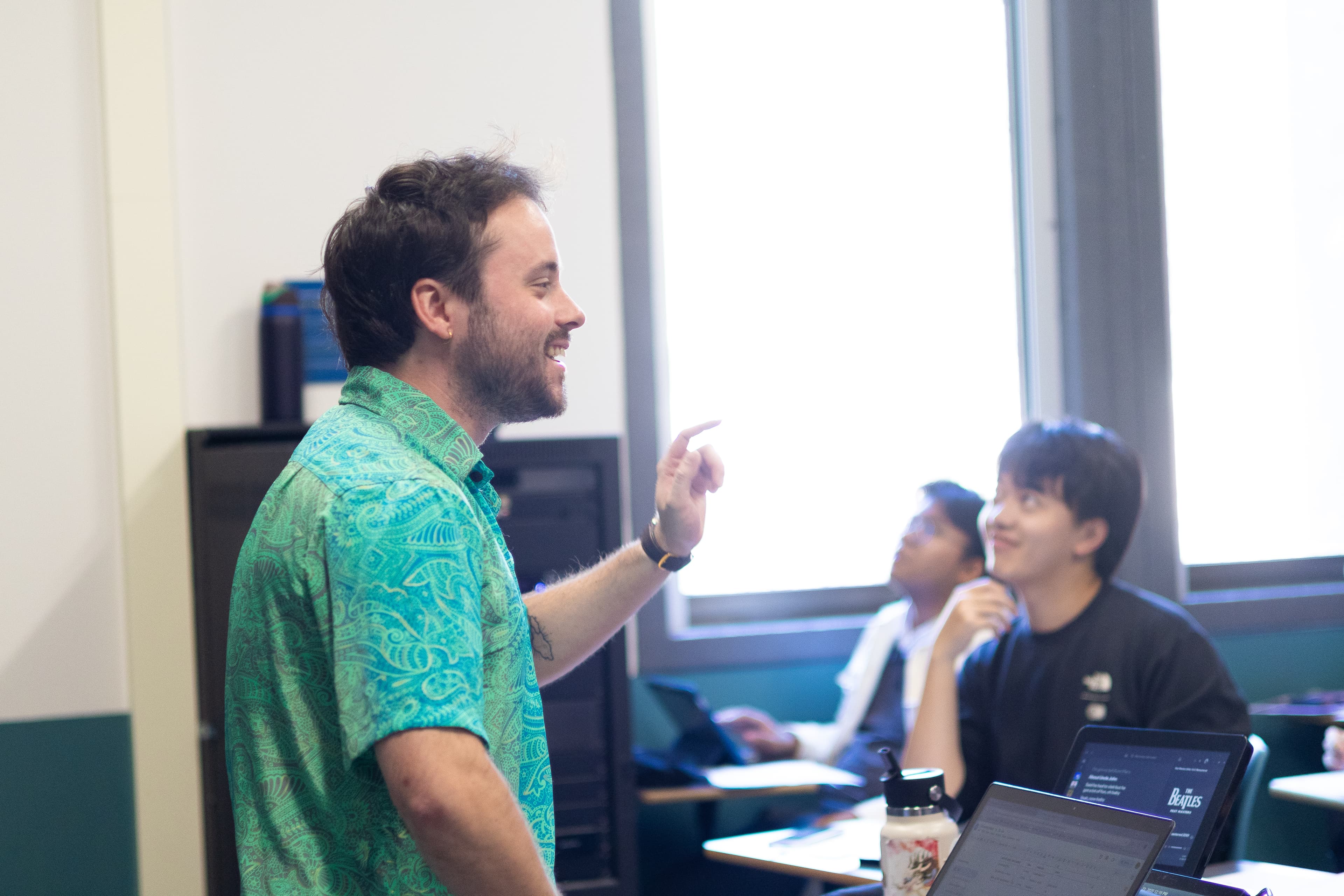
How much of your undergraduate experience at UC Davis is determined by TAs?
By AMBER DUHS — features@theaggie.org
Each fall quarter, new Aggies file into lecture halls and discussion rooms alike. They find a chair, settle in and look up to find someone who isn’t the professor — a structure unique to many modern classrooms, and one most students don’t recognize.
More and more commonly in undergraduate classrooms, specifically in general education (GE) and lower-division courses, sections are being led by teaching assistants (TAs). While in the process of completing their graduate degree or attaining their Ph.D., these amateur-professors are the glue that holds the University of California (UC) undergraduate classroom together: leading discussions, teaching entire sections asynchronously and acting as the primary liaison between students and course knowledge.
At UC Davis, there are two main ways the classroom is set up. The first is the more traditional way — a professor who lectures on the material for a designated amount of time per week and a TA who leads discussions, hosts office hours and works directly with students. The second, however, features the TA as the star of the classroom: teaching, holding office hours, grading all student work and operating as the professor for all intents and purposes.
Aaron Saint John, a third-year Ph.D. student in German literature and an elementary German TA, described the benefits to this classroom setup in a language course.
“I do best when we have this kind of level of freedom, and there isn’t necessarily a professor or a lecturer there every day saying ‘this is all you have to do,’” Saint John said.
With professors taking the backseat, TAs are given the opportunity to not only learn to manage their classrooms independently, but organize and change their curriculum accordingly.
“Being hands-on you can specifically tailor how you teach a class to your certain section, based on general trends or behaviors; […] one section may be more active in answering questions, or pick up lab skills easier,” Kevin Gu, a fifth-year chemical engineering Ph.D. student who is teaching the Coffee Lab course this fall, said.
This level of freedom does come with its qualms, however. As the undergraduate experience changes, so does the classroom — and for Siva Shinde, a seventh-year Ph.D. student who worked as a TA through all stages of the COVID-19 pandemic, a lot has shifted.
“Now that we have artificial intelligence, we have to change our strategies around language, because […] the answers are available everywhere,” Shinde said. “We want to strategize exercises or assignments where students are forced to […] engage with the material, rather than using AI to easily cheat their way through their homework.”
Beyond the challenges AI has brought upon every well-meaning TA, however, are the additional difficulties described by Gu that come with teaching a course designed for a wider audience, rather than a specialized major or seminar course.
“If you’re […] teaching a class and it’s just [for] major [students], everyone’s there for a reason: they like the subject, they are taking a certain set of knowledge away from the class,” Gu said. “[In general education courses] everyone comes from a different level of lab skills, understanding [of] the subject and what they want to take away from the class itself.”
Gu continued to explain how student determination can shape the goals of the classroom.
“You really have to understand what your students want to get out of it […] especially at the university level, you can’t force anyone to do anything,” Gu said.
In addition to the struggles and victories within the classroom are the external difficulties that come with teaching through a publicly-funded position at a public research university.
“We’re in an especially tough time for academia right now in terms of funding,” Gu said. “We’ve had a lot of cutbacks [on] the amount of TAs that [can] be hired. So that means more responsibilities for TAs that do get hired.”
This results not only in competition for a graduation requirement, but an increased workload for already busy TAs.
The changing landscape of academia is unrelenting, from budget cuts to the constant development and improvement of AI platforms like ChatGPT, but that’s exactly why, according to Shinde, TAs are in a seemingly optimized position to foster educational growth.
“There are no young professors,” Shinde said. “Students are more open to [TAs].”
In intimate discussion sections, or a language class where you embarrassingly mispronounce the same word for the 14th time, the goal is for students to share their ideas, feel comfortable and engage in academic conversation.
“That doesn’t [always] happen with a professor,” Shinde said.
This often necessitates a more approachable figure, allowing for students to take advantage of their more interactive courses.
The role of a TA doesn’t solely benefit undergraduate students though, as the position provides many graduate and Ph.D. students with an opportunity to grow as instructors.
“[Being a TA] is a learning experience for your TAs as well,” Gu said.
As a matter of fact, many graduate and Ph.D. students are required to teach multiple quarters as TAs to receive their degrees. Beyond this requirement, however, is the fact that many TAs find genuine satisfaction and love in teaching.
“Even just after one or two weeks, watching people actually be able to communicate with each other — to write, to speak, in a language that they couldn’t even begin with just two weeks before — is actually really, really rewarding,” Saint John said.
Despite the natural stress of a graduate degree or Ph.D. — along with the changing tides of academia as a whole, especially at a UC, and the struggles and triumphs that come with your average classroom — TAs keep their heads up. As Gu, Shinde and Saint John noted, juggling multiple responsibilities and sections can be difficult; however, understanding that they’re making a difference in students’ lives and education can make it all worthwhile.
Written by: Amber Duhs — features@theaggie.org