






UC system sets record with 2025 Nobel Prize awards
UC faculty, alumnus won five Nobel Prizes amidst a time of uncertainty and federal budget cuts
By CARLO FALLA — campus@theaggie.org
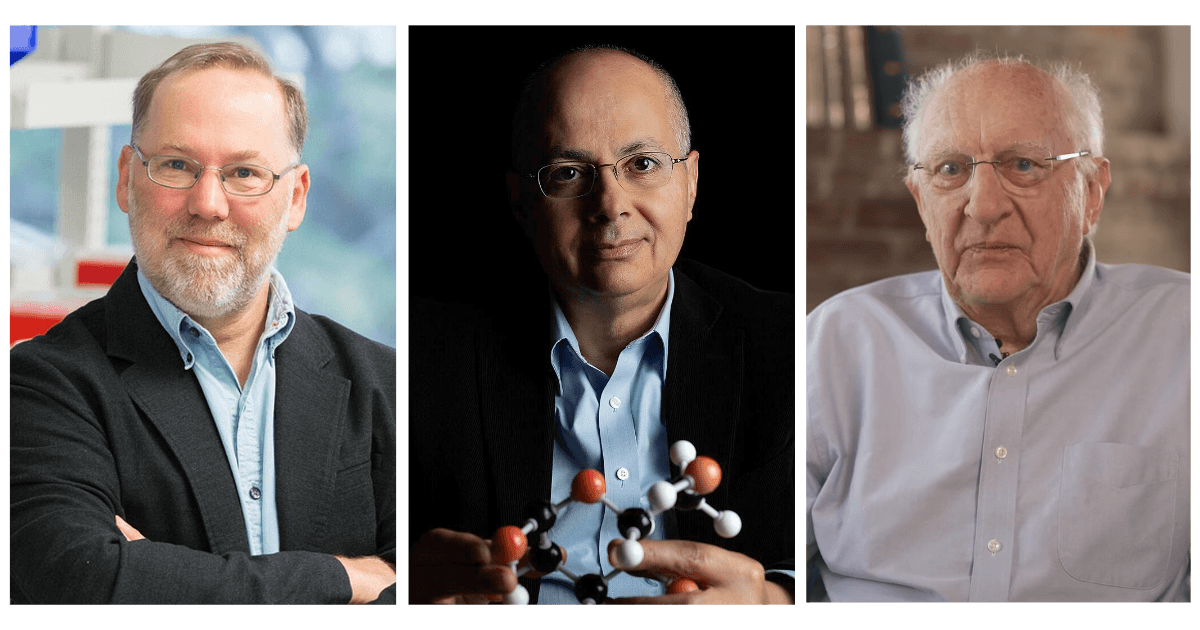
The month of October brought recognition to the University of California (UC) system, with four UC faculty and one UC alumnus earning Nobel Prizes across three disciplines. This marks a record for the most Nobel awards received by a single university system in a single year.
Immunologist Frederick Ramsdell, a UC San Diego and UC Los Angeles alumnus, was awarded the Nobel Prize in Physiology or Medicine. He was awarded alongside Mary Brunkow of the Institute for Systems Biology in Seattle and Shimon Sakaguchi of Osaka University for “their discoveries concerning peripheral immune tolerance,” according to the Nobel Foundation.
Emeritus Professors John Clarke and John Marinis, of UC Berkeley and UC Santa Barbara, respectively, and Professor Michel Devoret, also of UC Santa Barbara, were awarded the Nobel Prize in Physics “for the discovery of macroscopic quantum mechanical tunneling in energy quantisation in an electrical circuit.”
Lastly, chemist Omar Yaghi of UC Berkeley was awarded the Nobel Prize in Chemistry “for the development of metal-organic frameworks.” He shares the award with Richard Robson of the University of Melbourne and Susumu Kitagawa of Kyoto University.
In a press release, UC President James B. Millikin celebrated the awardees and highlighted the significance of research in the scientific community.
“These remarkable achievements by five UC-affiliated Nobel Prize winners reflect the very best of the world-changing teaching, research, and public service happening across our University,” Milliken said in the press release. “Our nation and world will be better off because of these discoveries. More communities will have clean drinking water, more people will be protected from cyberattacks, and more patients will have access to better treatments for diseases like arthritis and multiple sclerosis.”
The prizes are administered annually by the Nobel Foundation and are generally considered the highest and most prestigious recognition of an individual’s work in the fields they are given in: physics, chemistry, physiology or medicine, literature, peace and economic sciences. While the Nobel Peace Prize is given in Norway, the awards will be presented to recipients in Sweden on Dec. 10 — on Alfred Nobel’s death anniversary.
These awards come at a turbulent time for the UC system and American academia as a whole, as proposed federal budget cuts and freezes to research funding threaten to postpone or end the work done by faculty and students at academic institutions across the nation.
“Each of these breakthroughs was made possible through decades of federal investment in university research — the same funding that has long fueled American innovation, economic growth, and scientific leadership,” Milliken said. “Today, that support is at risk as federal research funds are frozen or cut, and as the[Trump] administration’s proposed budget reductions threaten to slow the very discoveries that keep the United States at the forefront of global leadership.”
The sentiment was echoed by Nobel Prize Winner John Clarke in a video produced by the UC on the recent recognition.
“This is going to cripple science, and it’s going to be disastrous,” Clarke said.
Federal funding is directly tied to all of the UC work recognized by this year’s Nobel Prizes: Ramsdell’s work was backed by the National Institutes of Health (NIH); the National Science Foundation (NSF), the Department of Energy and the National Security Administration supported Clarke, Martinis and Devoret; and the NSF, the Department of Energy and the Department of Defense funded Yaghi.
The UC is continuing to advocate for the future of science, having launched the Speak Up for Science campaign earlier this fall. This campaign aims to renew interest in federal investment in research and development and urge Congress to restore funding to federal science agencies and programs.
Written by: Carlo Falla — campus@theaggie.org