






The Dodgers aren’t ruining baseball
Calls for a salary cap are misguided at best and greedy at worst
By THEO KAYSER — tfkayser@ucdavis.edu
Many are arriving at the presumption that “the Dodgers are ruining baseball” after the recently concluded 2025 Major League Baseball (MLB) season. Such a conclusion has its merits on the surface, especially if one were to view the past two seasons in isolation from all of the seasons which preceded it. After all, the Los Angeles Dodgers’ much maligned payroll has enabled them to create a roster overflowing with superstar talent which far exceeds, and in some cases multiplies, the budget set by their competition.
The argument would then follow that MLB needs to implement a salary cap in congruence with other leagues, such as the National Football League (NFL) and the National Basketball Association (NBA), in order to create a more competitive and fair playing field. This discourse is by no means new — the 2011 blockbuster film “Moneyball” tackled this same issue — however, it has recently gained traction in sports media and has even been labeled an “issue” by MLB Commissioner Rob Manfred.
While it is fair to point out the obvious fact that the Dodgers, along with the New York Mets, New York Yankees, San Diego Padres and other “big market” teams have a competitive advantage due to their enormous financial resources, the argument in favor of the salary cap made by many fans is far flimsier than it appears.
Firstly, to suggest that MLB faces a competitive balance issue compared to other popular sports leagues would be to entirely ignore the past two decades of their results. Since 2000, MLB has seen the championship won by 16 different franchises, as compared with 13 franchises in the NFL and 12 in the NBA. The Dodgers being back-to-back Champions in the years 2024 and 2025 has revived ire for the lack of a salary cap, but they were the first team in MLB to repeat since the Yankees concluded a three-peat in 2000.
Comparatively, the NFL has seen two repeat champions since 2000 and the NBA has seen four. This very basic step of viewing MLB compared with its peers, beyond a miniscule sample of just two seasons, paints an entirely different narrative; one which sees baseball as a beacon of parity compared to the NBA and NFL, who have been long-dominated by the dynasties of the New England Patriots, Kansas City Chiefs, Los Angeles Lakers, San Antonio Spurs, Miami Heat and Golden State Warriors.
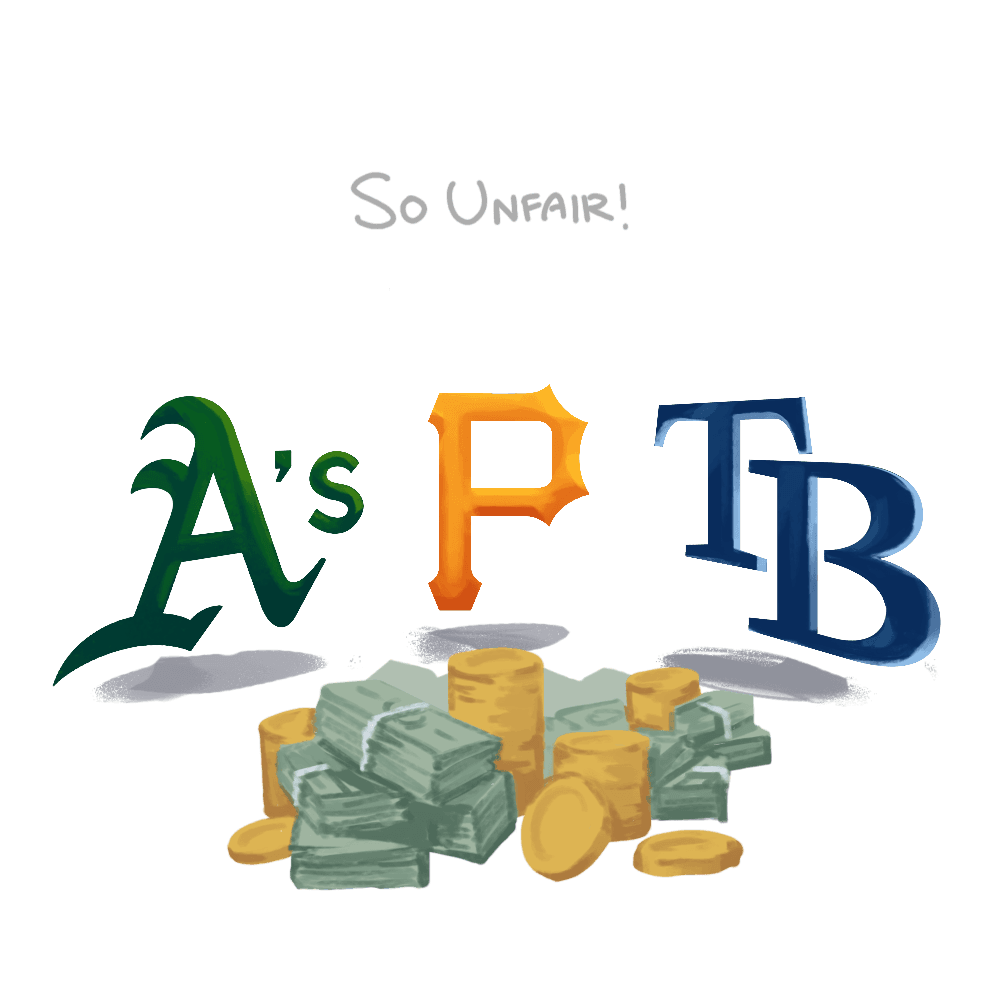
By arguing in favor of a salary cap, what fans are mistakenly doing is ideologically attaching themselves to the political and monetary ambitions of the greedy, uber-wealthy owners of floundering franchises like the Pittsburgh Pirates, Miami Marlins and Oakland Athletics.
The argument being made by most fans regarding the Dodgers “ruining the sport” is laughably simplistic, and can be debunked by a cursory inspection of the sport’s recent history compared with its rival leagues. However, that is not to say that no competitive balance issue exists — I would simply argue that the blame for this issue falls far more on the most frugal of franchises than it does on teams like the Dodgers.
It’s important that anyone asking for a salary cap in MLB is aware of the guard against massive payrolls that is currently in place: the competitive balance tax (CBT). This gradient tax has a few thresholds which are readjusted each season to keep up with inflation. In other terms, the CBT serves as a “soft-cap,” preventing teams from exceeding the cap to moderate effectiveness.
To apply this to MLB, it’s important to recognize the forces at play in creating the disparity in team spending that exists today. In 2025, the Dodgers had a player payroll of $350 million, while the Marlins had a payroll of $67 million; less than one-fifth of that of the Dodgers.
The outstanding budget of the Dodgers is an obvious driver of this issue — the amount they’re spending in 2025 is simply unattainable for small market teams like the Marlins. Yet, to act as though they couldn’t come any closer to matching it is a facade pedaled by many owners across the league. In spite of every team earning a revenue of at least $240 million in 2024, coupled with the steady increase of MLB franchise values, many owners cry poor when faced with backlash over their frugal approach to player acquisition, according to Forbes.
Even with a hard salary cap, it’s very likely that many of the current failing MLB franchises who refuse to spend money will still refuse to do so. The only difference being that , instead of having one-fifth of the payroll of the Dodgers, they’ll have one-third.
The truth of MLB at the moment is that it is apparent that many of the franchise owners view owning a team as merely an advantageous investment in their broader financial portfolio, rather than a community pillar adored by millions of fans. The current collective bargaining agreement is, from a financial perspective, very acceptable to the “poor” teams like the Pirates, Athletics and Marlins.
For instance, half of the tax money collected by MLB from the CBT is given to the “supplemental commissioner’s discretionary fund,” a long title which is code for “evenly redistributed among the teams.” For reference, the Dodgers will pay pitcher Tanner Scott an average of $18 million over the next four seasons. Correspondingly, the Dodgers will contribute approximately $19.8 million to the league fund as a result of that transaction. For example, at the end of the 2025 season, the athletics owner will collect $330,000 as a result of this one transaction.
If you think that the low-spending owners are the victims in this equation, you are mistaken. There unquestionably exists an issue of spending inequality in Major League Baseball. A salary cap, however, is not the quick fix that many fans believe it to be; such action would only lead to players losing out on their hard-earned money, making the owners of these clubs even wealthier.
A more accurate assessment of the issue makes one thing very clear: The problem is not that the Dodgers, Yankees and Mets are trying too hard to win, it’s that other teams aren’t trying hard enough. Bryce Harper of the Philadelphia Phillies put it best when saying, “I feel like only losers complain about what [the Dodgers] are doing.”
Written by: Theo Kayser — tfkayser@ucdavis.edu
Disclaimer: The views and opinions expressed by individual columnists belong to the columnists alone and do not necessarily indicate the views and opinions held by The California Aggie.