






The resurgence of the 2000s
How nostalgia has become our quiet rebellion
By NEVAEH KARRAKER — nakarraker@ucdavis.edu
Second-hand clothing, once frowned upon, has now become aspirational — the targeted style exudes nostalgic mid-90s to early 2000s vibes. Presumed iPad-raised generations have now openly adopted flip phones, along with other forms of older technology. Everything appears to have inverted.
This sudden desire to go back in time is a counterintuitive act of rebellion. In our unprecedented, advanced civilization, the consumerism and profit-driven culture we reside in cultivates a stingy attitude, rather than authentic experiences.
There is indeed truth behind the cliche phrase “things aren’t how they used to be.” The nationwide aesthetic changes experienced in the last decade have ripped the brightness out of life. Houses, once architectural masterpieces, are stripped of their beauty and transformed into bleached boxes, saturated with plain IKEA furniture. Logos have lost their enticing charm, as walls are repainted gray and McDonald’s colorful playgrounds are uprooted. Where once children’s laughter mixed with the scent of fresh air, stretching into late afternoons of scraped knees and explored trees used to define our days, we now spend our time glued to our phones or alone in our rooms.
Social media algorithms prey on the addiction of users, who watch their lives being played out by influencers. Clothing that provides toddlers overly-mature styles is mass produced, becoming tattered in a year due to its low-quality material. Minimalism can’t possibly showcase the great depths of the human mind and its limitless creativity, like the kindergarten paintings laid to dry on metal racks, where messy swirls of color were unguarded masterpieces. Technology cannot replace the tangible interactions with others, nor the adventure of aimless wandering in nature.
Our parents’ houses are full of shelves brimming with memories of travel, spontaneous walks with friends and life events preserved in photo albums and scrapbooks — physical souvenirs. Yet our own shelf is empty with the hope of experiencing all the variety and shades of life, as concert tickets are emailed and baby photos are electronically shared.
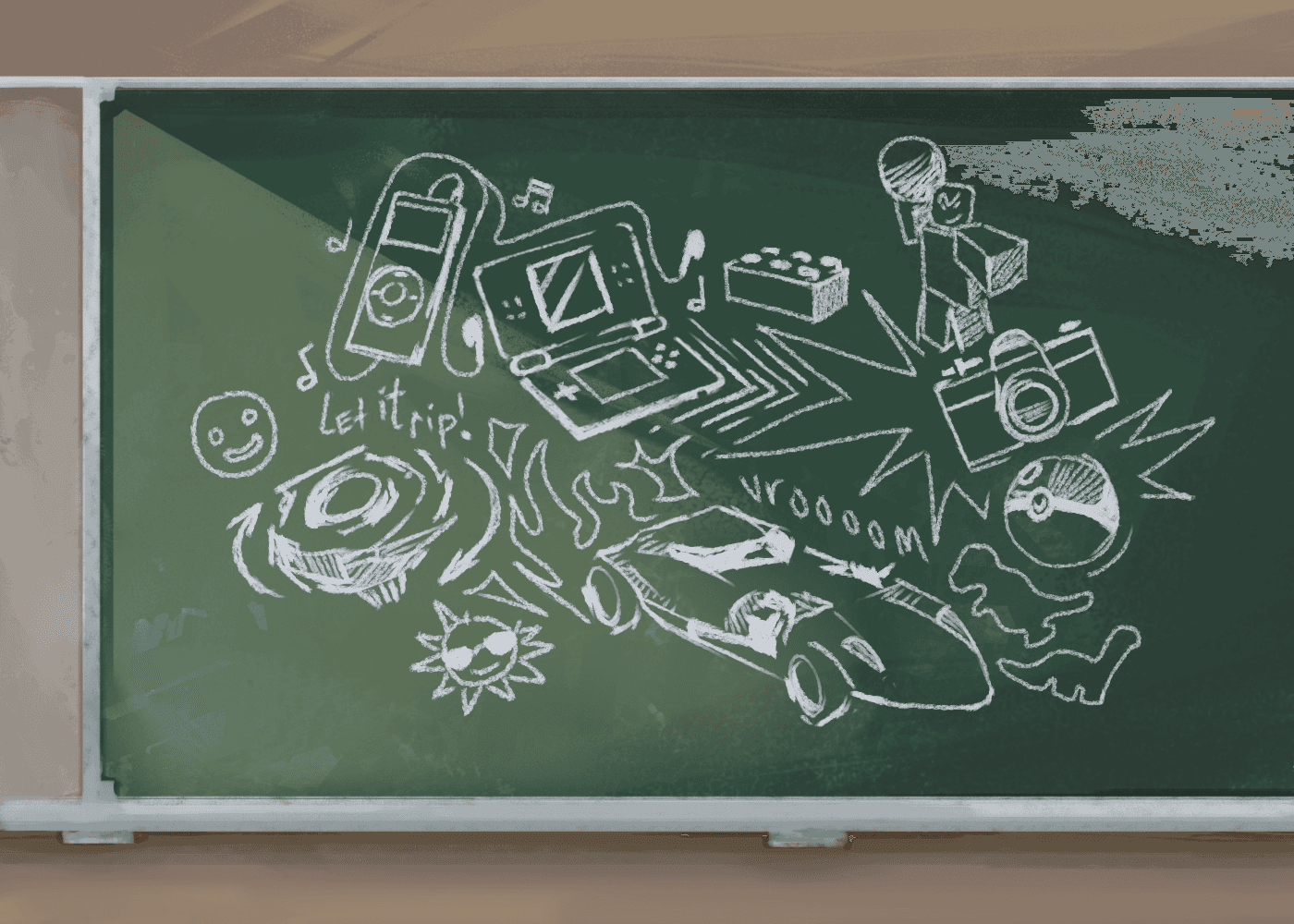
The glossy sameness of modernism contrasts with the diverse, chromatic atmosphere that existed in the 90s and early 2000s. That’s why we’re so obsessed now with film cameras, camcorders and blurry editing on professional photos; it feels like memories, and is a more visceral representation than Snapchat filters. The unfathomable jubilation of juvenescence continues to blanket us as we forgo walking barefoot on country trails and face the cusp of adulthood.
We remember our past — our childhood — through glimpses of faded sun and fuzzy recollection. The detailed faces of friends long ago have dimmed, and it’s become harder to remember their once chirping voice as it deepens with age.
And, before we know it, we begin to reject the minimalism of today the same way our parents did with the era they grew up in. It’s a repetitive cycle we repudiate — yet, we are all the same. With modernity comes change, and, with change, comes the alteration of the things we cherish the most.
In a parallel universe, we can remain in the sticky heat of August, where board games cluster the dining table, grandparents sing happy birthday and we wake to the solace of mourning doves.
Through our embrace of vintage styles and retro aesthetics, we long to resonate with the eccentricity of our past and to replicate the luminosity that once inhabited the world. The resurgence of the 90s and 2000s isn’t just a trend; it’s a collective crave for when life felt slower — when it wasn’t filtered through screens or modest branding designed to mute emotion. There’s comfort in the low resolution of faint photos, scratched CDs and dirt under our fingernails.
As the world progresses, our hearts grasp for familiarity. It’s common to endure this, yet it’s also important to balance remembrance with renewal. The past can color our lives so that we forget to be present. There is true beauty in infusing that same nostalgia, vibrancy and intensity into our lives that formerly defined them.
Written by: Nevaeh Karraker — nakarraker@ucdavis.edu
Disclaimer: The views and opinions expressed by individual columnists belong to the columnists alone and do not necessarily indicate the views and opinions held by The California Aggie.