






Davis Joint Unified School District hosts outreach events to discuss district redesign
The district faces a potential loss of 1,000 students over the next 10 years
By MADELYN SEVIGNY — city@theaggie.org
On Oct. 30, the Davis Joint Unified School District (DJUSD) announced a community outreach series to discuss and receive feedback from the community about a possible district-wide redesign.
Any potential adjustments are in response to declining enrollment, with the district expected to lose around 1,000 students in the next 10 years if residential developments in the City of Davis are not passed by voters in 2026. The school board is expected to make its decision by the spring of 2027, with the changes set to go into effect for the 2028-2029 school year.
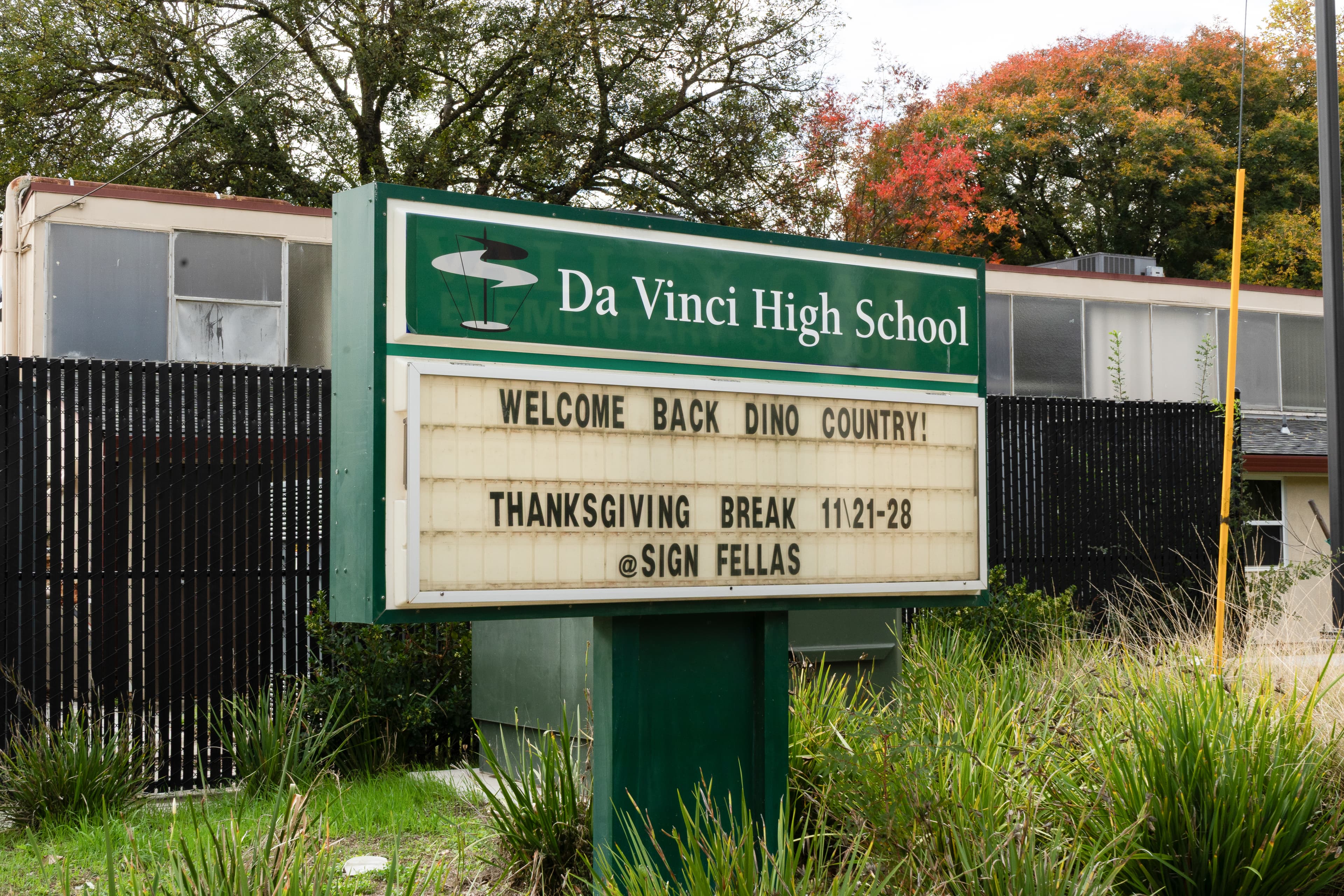
The DJUSD outreach events were meant to gather input from the community on how best to cope with the possible challenges the district will face. DJUSD held three meetings, one on Nov. 3 at Davis Senior High School, one on Nov. 5 at Emerson Junior High and the last on Nov. 13 at Da Vinci Charter Academy.
The Nov. 5 meeting started with a presentation by DJUSD Chief Strategy Officer Maria Clayton and DJUSD Superintendent Matt Best. Clayton began the presentation with a review of the issue of declining enrollment, with the projected loss of 1,000 students representing the “worst-case scenario.”
Clayton offered several reasons for this potential loss, which included a declining birth rate and the expensive housing costs in Davis; she described the housing market as “very competitive.” For context, the median sale price of a home in Davis being $764,000, according to Redfin.
The City of Davis is currently reviewing two major affordable housing developments: Village Farms and Willowgrove, which, if passed, would mitigate much of the student population decline. Clayton explained that things remain uncertain as the housing projects continue to be reviewed by the city.
“We know the projection is that we’re declining, but we also know there’s these huge potential housing projects that, if they’re built, would bring a bunch of kids into a very confined area,” Clayton said. “So, we have the flip side of two problems: one is that you either have not enough students to sustain or we’re going to have enough students […] It’s all happening in real time and we need to plan for the worst, so that’s what this activity is about.”
Clayton also provided her perspective on the reasons for the decline in young families in Davis.
“Over time, there was nothing new built, and so there was a pressure as UC Davis got bigger, a lot of the students were moving into housing that was being vacated by [families],” Clayton said.
Best proposed two options to address the potential loss of students.
Concept A includes the closure of Patwin Elementary School in the 2028-2029 school year and the relocation of the Davis School for Independent Study (DSIS) to the Patwin campus. Under this plan, there is a high likelihood that additional school closures would be required in the future.
Concept B involves a district-wide redesign. It proposes the closure of both Patwin Elementary School and Birch Lane Elementary School in 2028; transitioning all sixth-grade students in DJUSD to junior-high campuses; moving Da Vinci Junior High students to the Da Vinci High School campus; and relocating Davis School for Independent Study (DSIS) to either the Patwin or Birch Lane campus. The plan would also require the addition of up to 12 portable classrooms in order to accommodate additional student enrollment at the remaining campuses.
Best spoke about the future impacts of implementing the Concept B plan.
“A key difference with Concept B is that, under the current projections, this approach would likely not require a junior-high closure within the decade,” Best said in a summary video presentation on the DJUSD website.
Best also shared six assumptions that the district used when developing the concepts. These include that the district has enough identified funds to cover the facilities needs; elementary schools with fewer than 350 students are not viable; consistent school models are applied across town; the district will attempt to maintain existing choice programs; the district will not close the campus with the greatest number of students furthest from opportunity; and the district will not increase the number of grade-level transitions.
Families, teachers and members of the community were then asked to participate in a feedback activity, in which they visited various stations that focused on concepts such as instructional programs, finances and student support. At each station, they had the opportunity to ask staff members questions about the specific concept, engage in discussion and provide feedback via sticky notes.
Amanda Rayls, president of the Davis Teachers Association and first-grade teacher at Willet Elementary, explained how the potential school closure would affect teachers and students.
“My site would absorb some students, […] so that does have an impact because then it means more students on campus,” Rayls said. “There are also contractual things as far as class size goes and as far as transfers and re-assignments. So, when we’re looking at a school closing, it’s not necessarily that those teachers will lose their jobs; it’s how they get transferred and placed around the district according to what our bargaining agreement says.”
The main union for DJUSD is the Davis Teachers Association, which handles matters of collective bargaining. Their bargaining agreement outlines conditions of employment, including reassignments.
Chris Theg, a parent of two students at Patwin Elementary, shared how his family would be impacted if their school were to close.
“Our whole family is involved with the school,” Theg said. “My kids would have to switch in the middle of their elementary school career and all their friends would go to different schools […]. I live about a five-minute walk from the school, and that’s part of the reason I bought my house. So, it would be very disruptive for us.”
Theg also explained his thoughts on the district’s current course of action.
“We need more options, and we need to have a values discussion. There were some assumptions that were used to make these options, and the assumptions haven’t been vetted or discussed with the community.”
To watch a recording of the presentation and share feedback on the proposals, visit the DJUSD website.
Written By: Madelyn Sevigny — city@theaggie.org