






Students and advocacy groups express disappointment following veto of SB 509
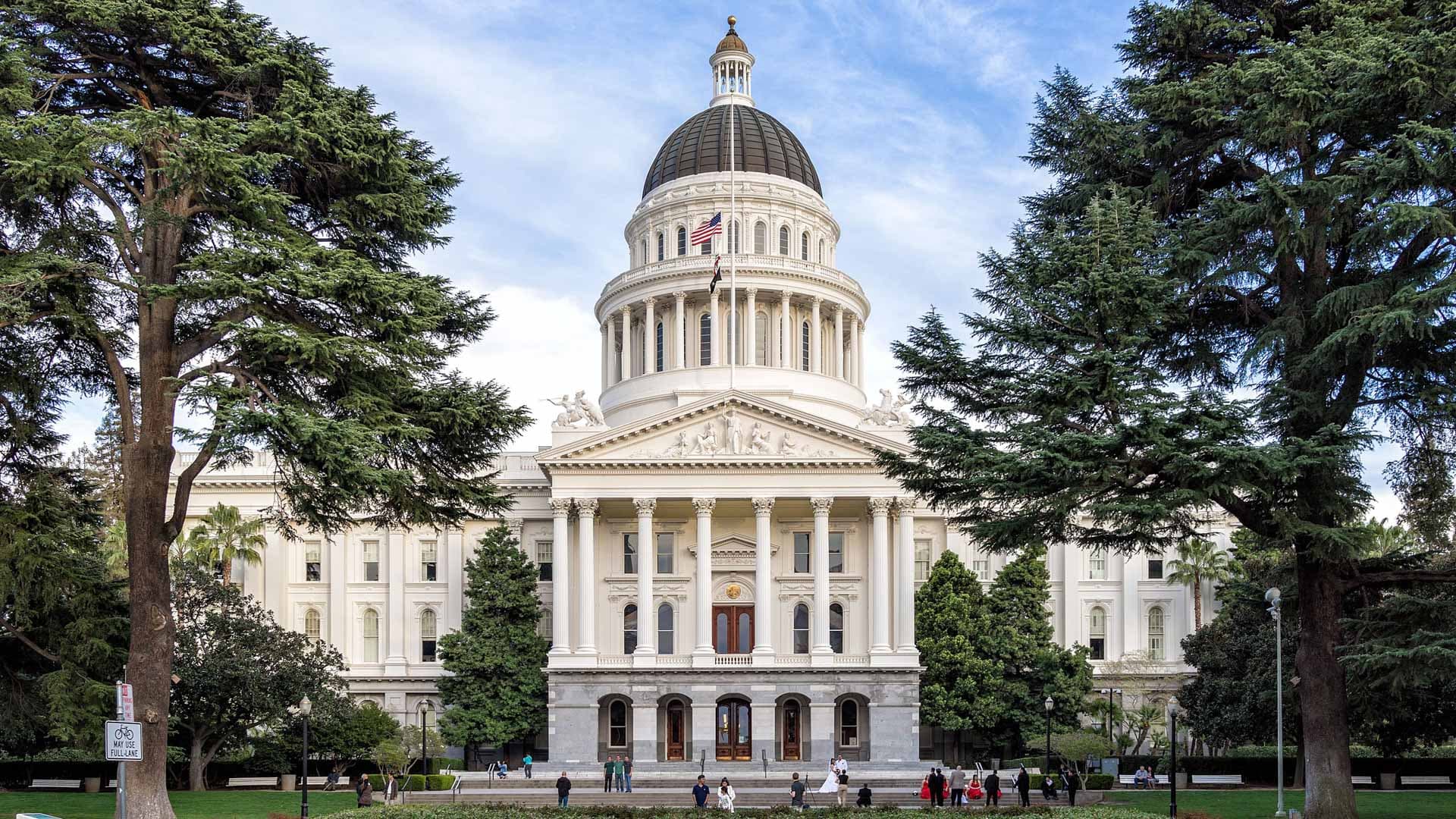
Governor Newsom recently vetoed the bill that would have aimed to address transnational repression
By KHADEEJAH KHAN — campus@theaggie.org
With activists facing stalking to threats of violence, transnational repression (TNR) has been on the rise throughout California’s Central Valley. For UC Davis members of the Sikh Punjabi diaspora like Harshpartap Dhillon, a second-year biological sciences major and ASUCD senator, advocating for diaspora students is an action that is more essential than ever.
“We need to instill within our community the importance of organizing and mobilizing, and how important it is to actually understand these bigger things going on in the world,” Dhillon said. “Our liberty and rights are never guaranteed. They have to be acquired and worked toward.”
The FBI defines TNR as cases of foreign governments extending beyond their borders to intimidate, harass or silence members of their diasporas or exile communities. Transnational repression has impacted various diaspora communities, including the Sikh Punjabi community.
California is home to 250,000 Sikhs, with the majority residing in the Central Valley — comprising roughly 40% of the Indian American diaspora population in the state. In India, Sikhs are a minority, making up less than 2% of the population.
At the statewide level, SB 509, a bill aimed at addressing transnational repression, was vetoed by Governor Gavin Newsom in October. SB 509 would have provided training to California law enforcement to recognize and respond to TNR. It would not create a new class or type of crime, but rather provide ways to respond to TNR.
The bill was supported by various advocacy groups, including Sikh American Legal Defense and Education Fund, Sikh Coalition and the Jakara Movement. Prior to the veto, SB 509 passed the California Assembly by a unanimous vote of 47-0.
In a statement explaining the veto, Newsom expressed his belief that federal authorities working alongside state administrators are best equipped to address TNR, citing that the bill could impede on the state’s flexibility.
“While I appreciate the author’s intent to enhance the state’s ability to identify and respond to transnational repression, this issue is best addressed through administrative action in coordination with federal agencies,” Newsom said. “By codifying definitions related to this training, this bill would remove the state’s flexibility and ability to avoid future inconsistencies related to this work, especially since no unified federal definition exists.”
Prior to the veto, ASUCD passed SR #2 in support of SB 509 in an effort to encourage Newsom to sign. The resolution was co-authored by Senator Dhillon.
For ASUCD President Amrita Julka, a third-year political science major who co-sponsored SR #2, passing the senate resolution felt like a recognition of not only the Sikh Punjabi community at UC Davis today, but the community’s historical role in California.
“The Punjabi Sikh community has been on the Davis campus for a very long time,” Julka said. “But it’s a community that does not often get a lot of recognition. For us to recognize [transnational repression] — I think it is really impactful for those students whose lives are impacted by it, especially students from the Central Valley.”
With TNR impacting the community on a statewide scale, Dhillon believes the veto of SB 509 represents how students often have to protect one another during times when the state cannot.
“We passed a resolution through the Senate emergency resolution, encouraging Governor Newsom to sign the bill, but he didn’t,” Dhillon said. “I think it shows me that we can’t rely on these systems to come in and protect us, because a government is supposed to protect the rights and the liberties of its citizens. I think sometimes, as minorities, we don’t feel that we are being protected.”
SB 509 emerged as a reintroduction of a similar assembly bill, AB 3027. The former was authored by Assemblymember Jasmeet Bains following the June 2023 killing of prominent Canadian Sikh activist Hardeep Singh Nijjar outside a gurdwara, a Sikh place of worship, in British Columbia.
Nijjar’s activism was part of a movement to create an independent Sikh homeland called Khalistan. Following the incident, then-Canadian Prime Minister Justin Trudeau announced that Canada was investigating “credible allegations” of Indian government agents being involved in the murder.
The impact of Nijjar’s killing rippled into California, with The Sacramento Bee reporting that Sikh activists in the Central Valley received threats just days after the shooting.
The Sikh Coalition, a nonprofit advocacy group, expressed disappointment after the bill’s veto, which followed community support and solidarity by Iranian, Muslim, Kashmiri, Japanese and other diasporic communities who have supported this advocacy.
“This is not the end of our advocacy work on Indian transnational repression, whether in California or elsewhere,” the Sikh Coalition wrote in a statement. “We are committed to continuing to support bills to combat transnational repression at the state and local level, but also to investing in non-legislative options like law enforcement training, policymaker briefings and more.”
As students like Dhillon look to the future of community activism, the veto doesn’t signal an end to advocacy, but rather, a point to mobilize in the future.
“I wouldn’t say it’s a defeat for us,” Dhillon said. “If anything, it just gave an impetus to our cause and to the community. It just encourages the community to do more to mobilize, to unite and to not rely on a single person or a single politician, but to rely on the power of the community and the power of the people as a whole.”
Written by: Khadeejah Khan — campus@theaggie.org